Growing up in my parents’ Sichuan restaurant, I saw my dad—a chef for over 30 years—work magic under pressure. But after a long, chaotic service, he wouldn’t make something complex for himself. He’d make something like this: quick, sizzling, and packed with flavor.
This Salt and Scallion Pork is exactly that. It’s not a showy, complicated dish. It’s a kuai chao (快炒), a lightning-fast stir-fry that relies on good technique and a few perfect ingredients. It’s the kind of dish I learned to make for myself, a 15-minute meal that tastes better than most things you can get delivered.
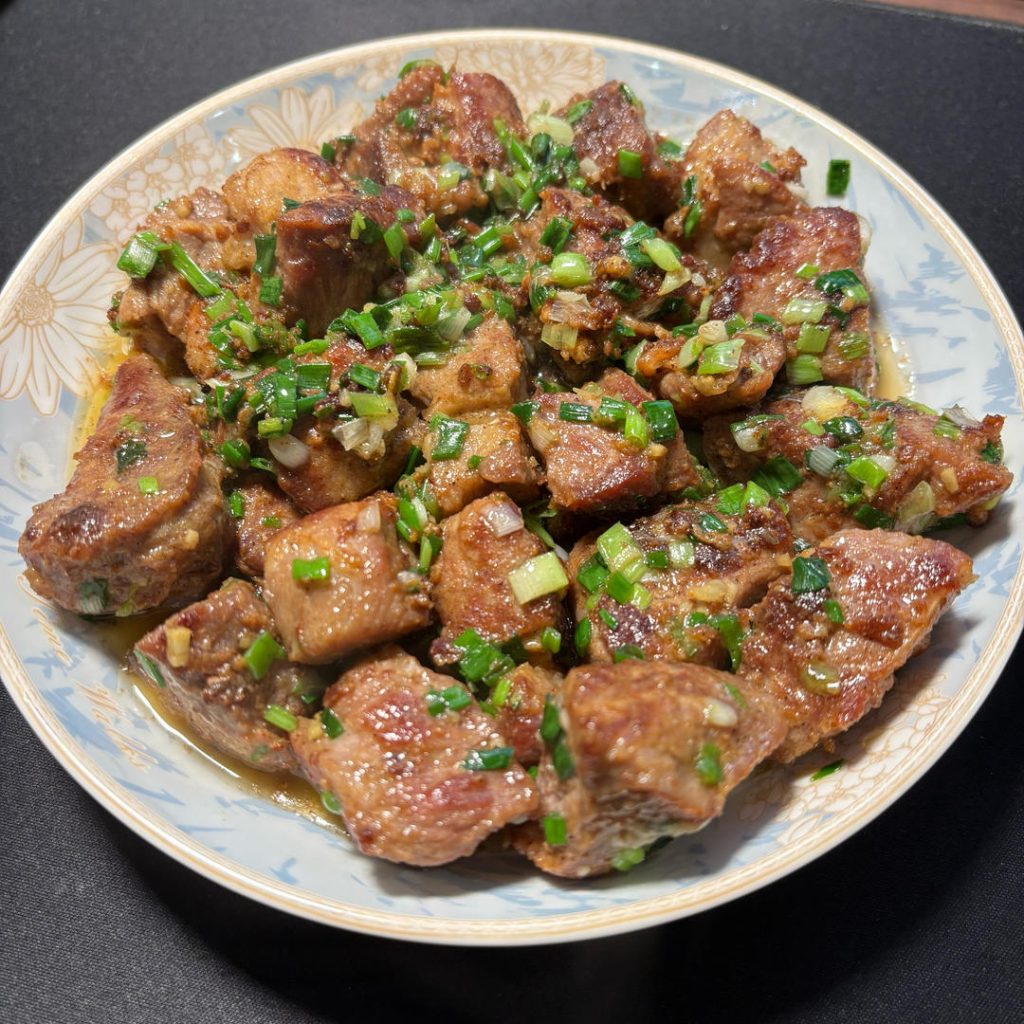
The real star here isn’t a heavy sauce but the fresh, punchy “salt scallion” mixture that gets tossed in right at the end, hitting the hot pork and releasing an incredible aroma. It’s a homestyle classic that, once you try, might just become your new weeknight go-to.
🥢 What is Salt and Scallion Pork?
This dish, Yán Cōng Méihuā Ròu (盐葱梅花肉), translates to “Salt Scallion Pork Shoulder.” It’s a simple, savory pan-fried dish. Unlike many saucy stir-fries, this recipe uses a “dry” seasoning.
We first sear whole pork steaks to develop a deep, savory crust and lock in the juices. Then, we slice them into bite-sized pieces and toss them in a fresh, aromatic mixture of scallions, ginger, garlic, and sesame oil. The final 30-second “steaming” with the lid on isn’t to cook, but to instantly infuse the hot pork with the scallion’s fragrance.

❤️ Why You’ll Love This Recipe
- Incredibly Fast: From prep to plate, this can be done in about 15-20 minutes.
- Big Flavor, Few Ingredients: You get a massive flavor payoff from pantry staples.
- The “Sear Whole, Cut Later” Technique: I’ll show you my favorite trick for getting pork that’s both crusty and incredibly juicy.
- Better than Takeout: It’s a fresh, vibrant, and satisfying meal that isn’t heavy or greasy.
📋 Ingredient Notes
The beauty of this dish is its simplicity. Getting the right cut of pork is the most important step!
The Best Cut: Pork Shoulder (梅花肉)
In Chinese, the cut we use is Méihuā Ròu (梅花肉), or “plum blossom meat.” This is the pork shoulder, also known as pork collar or Boston butt.
- Why it’s the best: This cut is beautifully marbled with fat. When you sear it, the fat renders out, keeping the meat tender and juicy. It’s almost impossible to overcook.
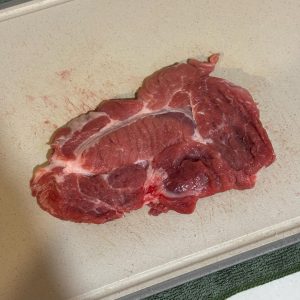
- What to look for: Ask your butcher for 1-inch thick, boneless pork shoulder steaks. If you can only find a whole pork shoulder, just slice it into steaks yourself.
Ingredient Substitutions & Options
- Pork Loin: You can use pork loin, but you must be very careful. It has almost no fat and will become tough and dry if you cook it for even 30 seconds too long. If using loin, the pounding step is mandatory.
- Pork Belly: This will also work, but the dish will be much richer and fattier.
- Shaoxing Wine: An essential in Chinese cooking for removing any “porky” taste. You can substitute a dry sherry or even a Japanese sake.
- Oyster Sauce: This adds a savory, umami depth. I recommend Lee Kum Kee brand. If you need a substitute, use 1/2 tsp more sugar and 1/2 tsp more soy sauce.
- MSG (味精): The original recipe uses a pinch. It’s optional, but it does add a restaurant-level savory boost.
🍳 How to Make Salt and Scallion Pork
This recipe moves fast, so I highly recommend prepping all your ingredients before you even think about turning on the stove. This is the secret to a successful stir-fry, a practice we call mise en place.
Step 1: Prepare the Pork
First, lay your pork steaks on a cutting board. Using the back of your knife, a meat mallet, or even a heavy rolling pin, give the pork a good pounding.
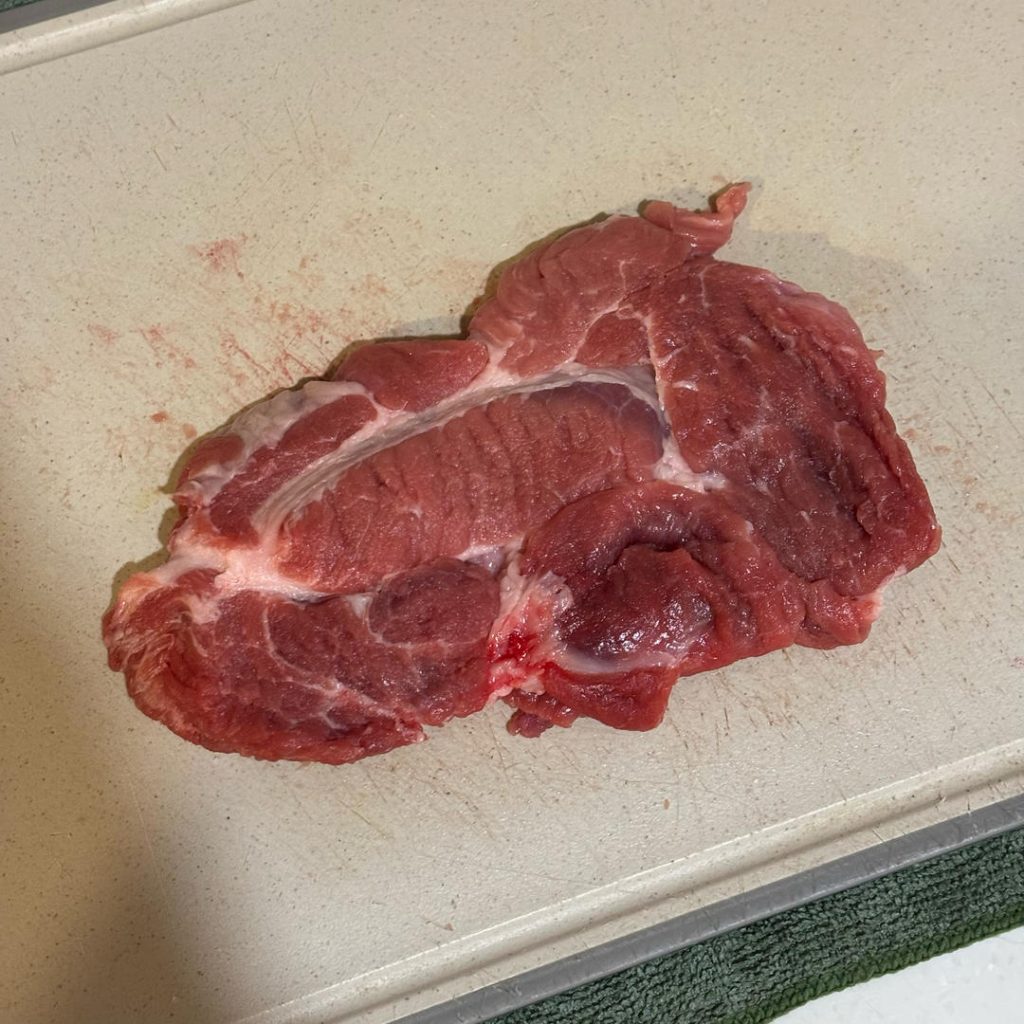
Why do we do this? This step, a classic Chinese technique, physically breaks down the muscle fibers. This not only makes the pork more tender but also helps it absorb the marinade much faster.
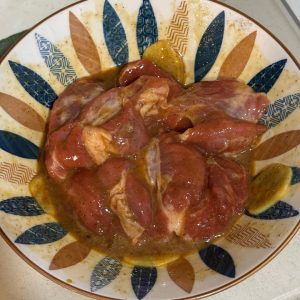
Cut the ginger into thin slices. In a medium bowl, combine the pounded pork steaks, light soy sauce, oyster sauce, Shaoxing wine, black pepper, and ginger slices. Mix well and set aside to marinate for at least 15 minutes (or up to 30) while you prep the sauce.
Step 2: Make the Salted Scallion Sauce
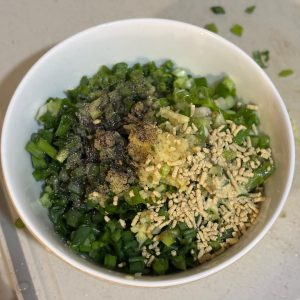
Finely chop your scallions (the thinner the better!). Mince the ginger and garlic.
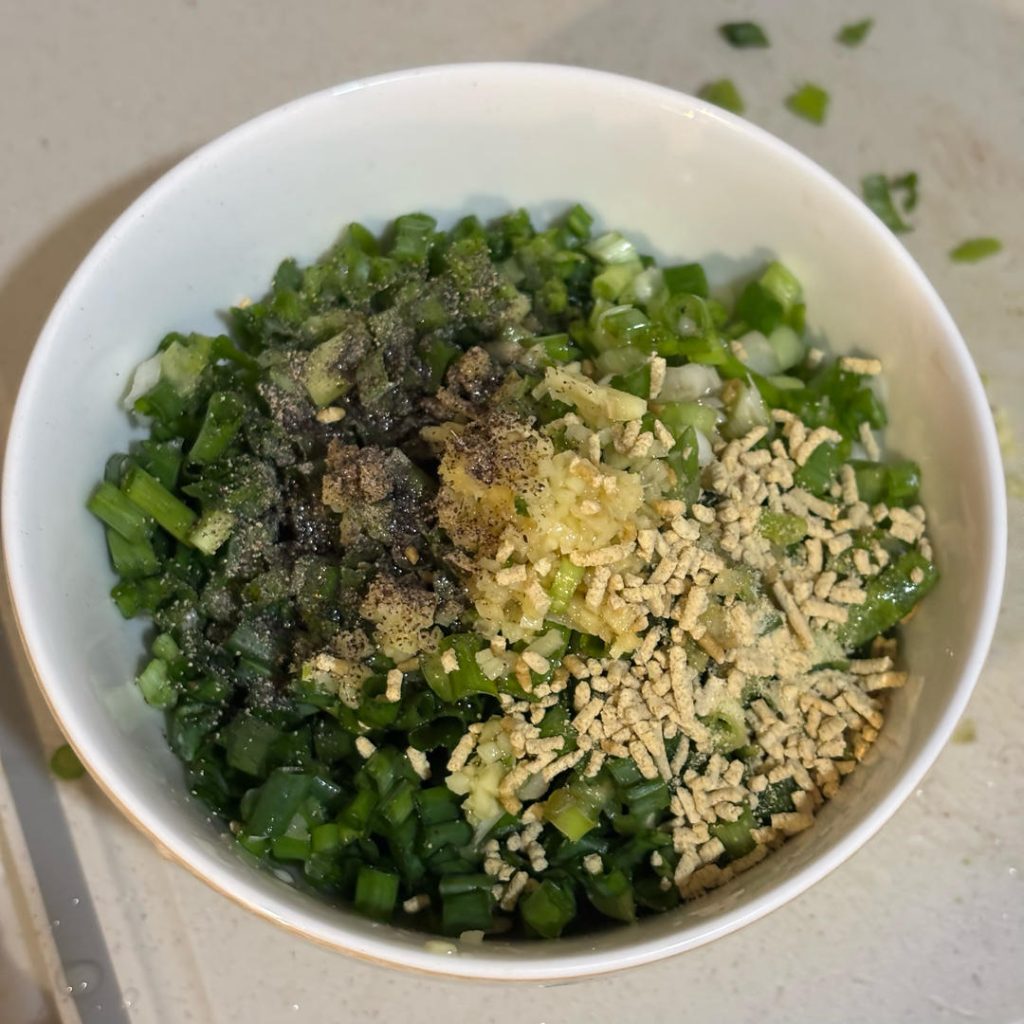
In a small bowl, combine the chopped scallions, minced ginger, minced garlic, salt, sugar, sesame oil, and optional MSG. Stir it all together and set it aside. This is your flavor-blasting finishing sauce!
Step 3: Create the “Velvet” Coating
Go back to your marinating pork. Remove the ginger slices.
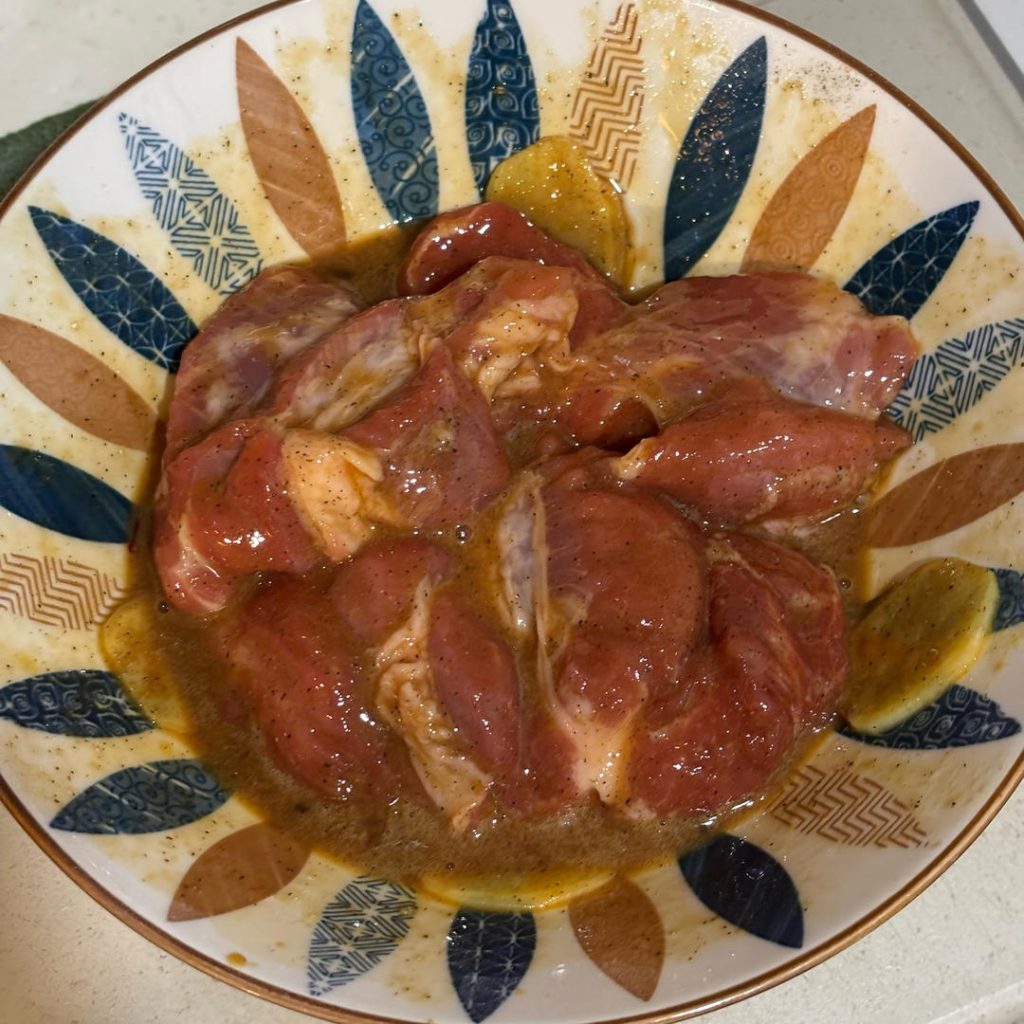
Add the single egg white and the cornstarch to the bowl. Mix it thoroughly with your hands until the pork is coated in a light, sticky slurry.
A Deeper Dive: The Starch “Velvet” This step is a simplified form of “velveting.” The egg white and cornstarch create a thin, protective coating. When this hits the hot oil, it forms a light crust that locks in moisture, ensuring the pork stays tender and juicy inside.
Food Safety Tip: Be careful not to use too much egg white! You want a light coating, not a thick batter. Too much will “scramble” in the pan and prevent the pork from getting a good sear.
Step 4: Sear the Pork Steaks
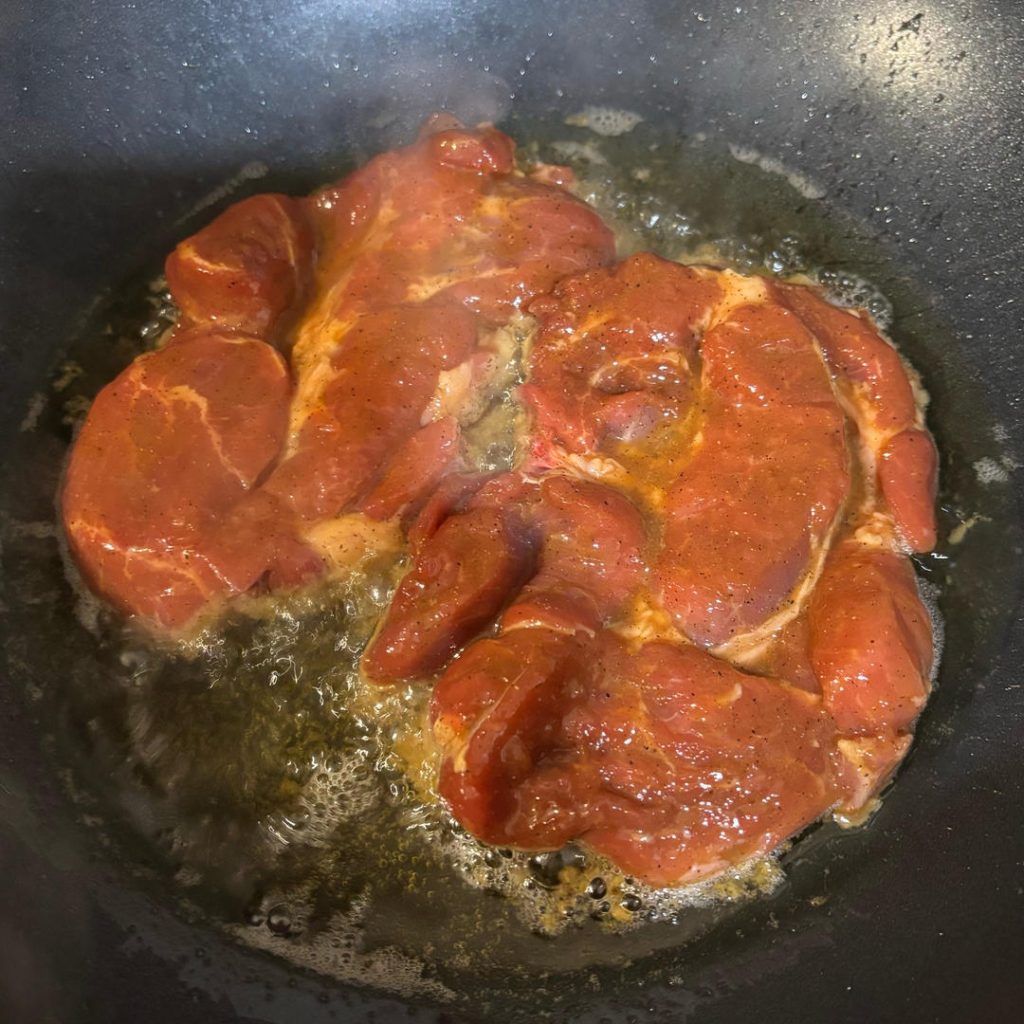
Place a large skillet or wok over medium-high heat. Add a good splash of cooking oil (about 2 tablespoons) and let it get hot until it’s shimmering.
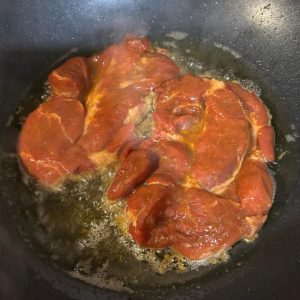
Carefully place the marinated pork steaks in the pan. Don’t move them! Let them sear, undisturbed, for 2-3 minutes, until a deep golden-brown crust forms. Flip the steaks and sear the other side for another 2-3 minutes.
Step 5: Cut and Finish Cooking
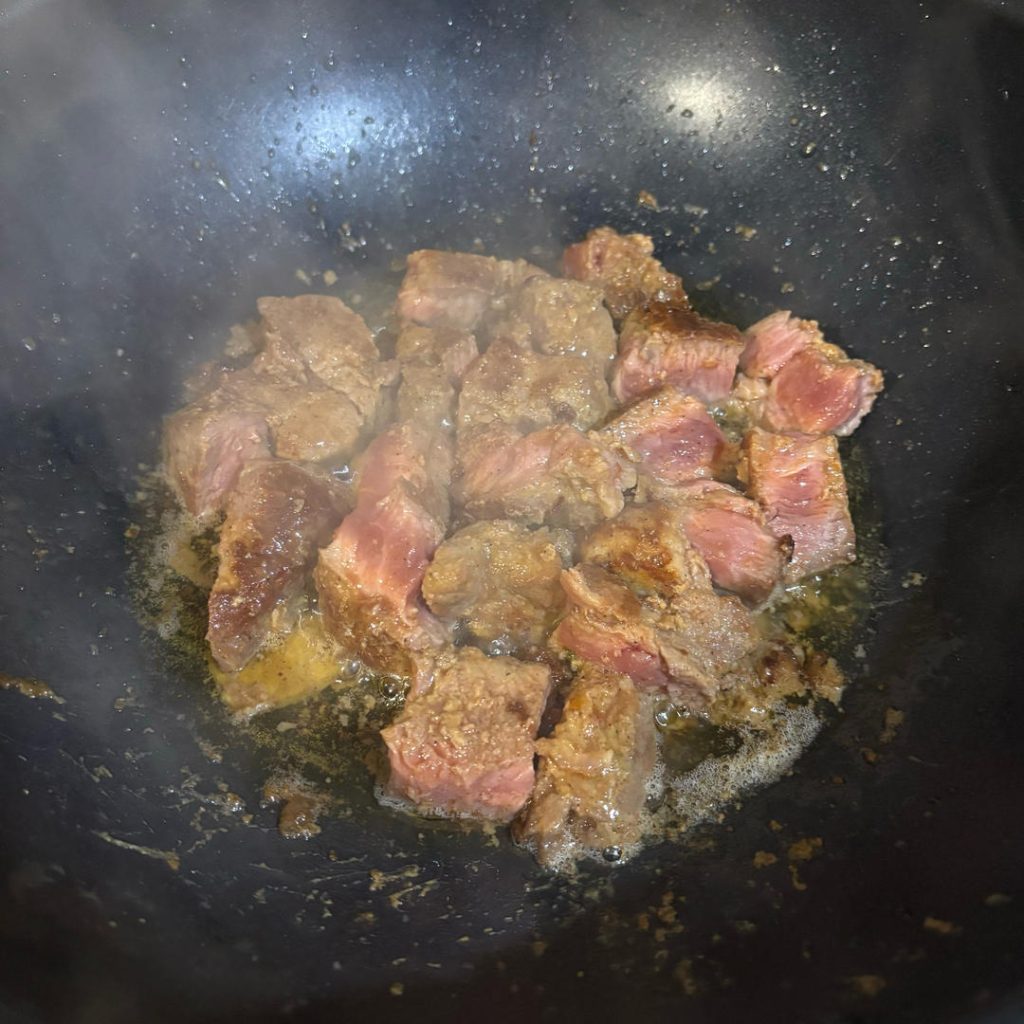
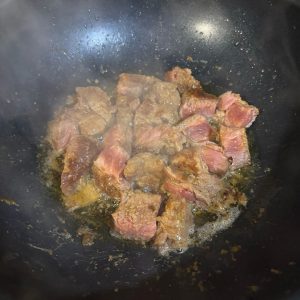
Once both sides are beautifully seared, turn the heat down to low. You can either remove the steaks to a cutting board or (if you’re feeling like a pro) use kitchen shears to cut the pork directly in the pan.
Cut the steaks into bite-sized 1-inch (2.5 cm) cubes.
Why sear whole first? This is my favorite part of the technique. Searing the pork as whole steaks creates a way better crust (more surface area!) and seals in the juices. If you cut it into small cubes first, all that moisture leaks out during marinating and cooking, leading to dry, sad pork.
Turn the heat back up to medium-low and continue to toss the pork cubes for another 1-2 minutes, or until the pork is just cooked through.
Food Safety: Pork is safely cooked when it reaches an internal temperature of 145°F (63°C). It should be opaque with clear juices.
Step 6: The Finishing Touch
This is important: Tilt your pan and use a spoon to remove and discard any excess oil from the pan. This ensures your final dish is fragrant, not greasy.
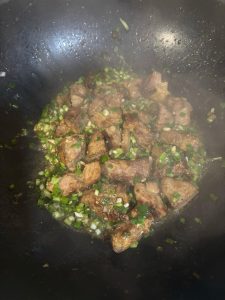
Add your prepared Salted Scallion Sauce all over the pork. Turn the heat up to medium-high and toss everything quickly for 30 seconds to combine.
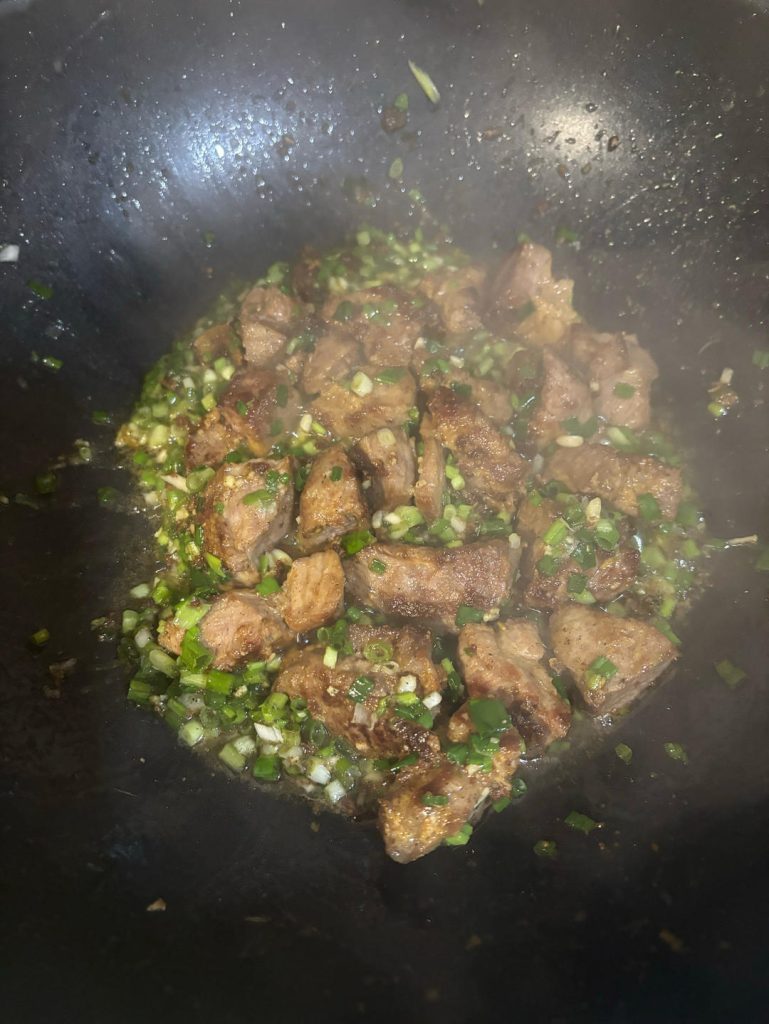
Place a lid on the pan, turn off the heat, and let it sit for exactly 30 seconds. The residual heat will “steam” the scallions, releasing their amazing aroma without overcooking them.
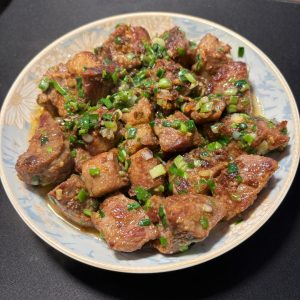
That’s it! Uncover, give it one last toss, and serve immediately.
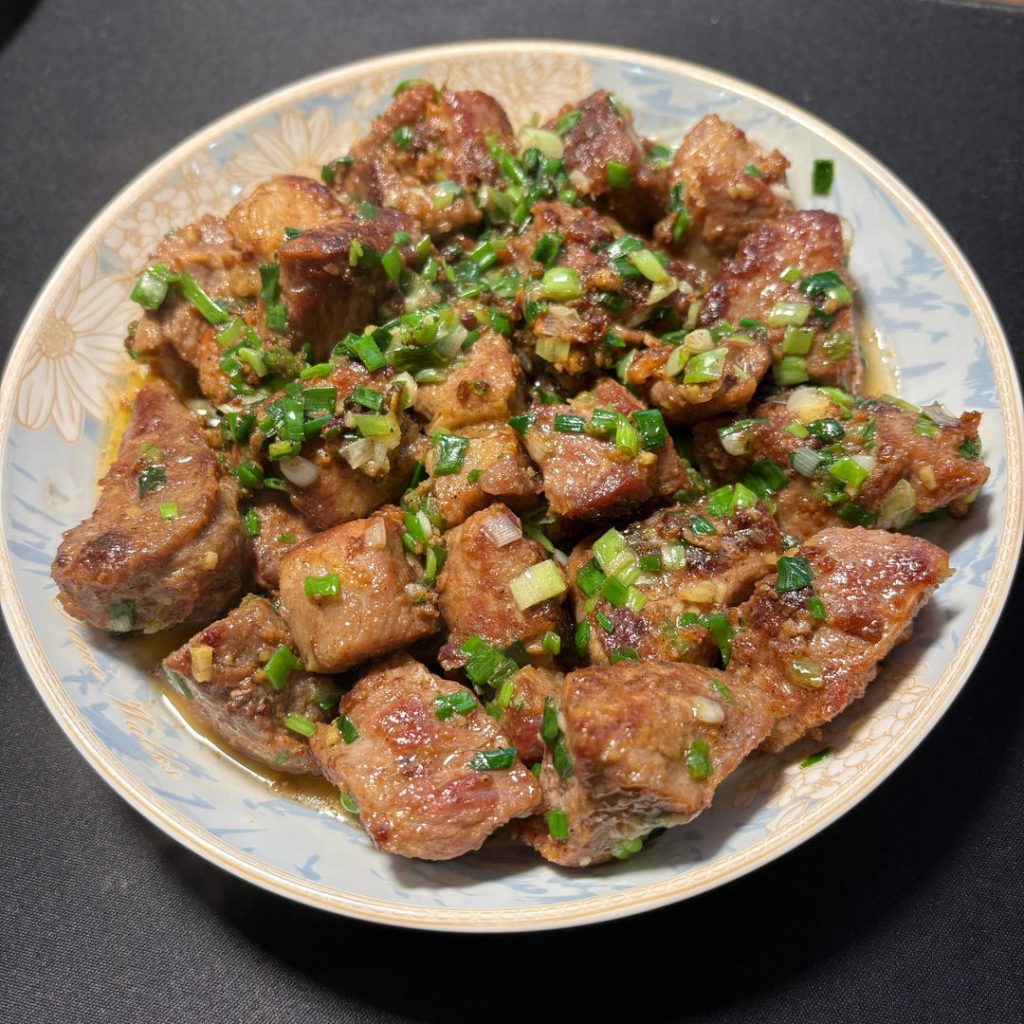
🍽️ How to Serve
This dish is powerful and savory, so it demands simple pairings.
- Steamed Rice: This is non-negotiable. You need a bowl of fluffy steamed rice to soak up all the delicious pan juices.
- A Crisp Vegetable: To cut through the richness, serve it alongside a bright, crunchy vegetable. My go-to is always a Smashed Cucumber Salad. A simple stir-fried bok choy or Stir-fried Lettuce with Garlic is also perfect.
Storage
Leftovers are unlikely, but if you have them, store them in an airtight container in the fridge for up to 2 days. Reheat in a hot pan or in the microwave. The texture is best enjoyed fresh.
💡 Test Kitchen Notes & Troubleshooting
- On Pork Cuts: I tested this with pork loin. I don’t recommend it. While it can work if you pound it paper-thin and cook it for less than 60 seconds total, it has zero fat and is incredibly unforgiving. Pork shoulder is the key to a juicy, tender result every time.
- To Cut or Not to Cut?: The original recipe notes you can cut the pork into cubes before marinating. I tried this, and it’s simply not as good. The cubes lose more moisture and don’t get that same beautiful, dark crust. Trust the process—sear whole!
- “My coating is gummy!” This can happen for two reasons: 1) You used too much egg white, or 2) Your pan wasn’t hot enough. Make sure your oil is shimmering before the pork goes in.
❓ Frequently Asked Questions
1. Why is my pork tough and dry?
You likely either used pork loin (which has no fat) or you overcooked it. Pork shoulder is very forgiving, but if cooked for too long at a high heat, it will eventually dry out. Remember to sear hot and fast, then just finish cooking through.
2. Can I make this gluten-free?
Absolutely. Use a gluten-free Tamari instead of light soy sauce, and a gluten-free oyster sauce (Lee Kum Kee makes one). Cornstarch is naturally gluten-free.
3. The final step says to cover and “炕” (kàng) for 30s. What does that mean?
This is a cool, quick technique! “炕” (kàng) means to dry-fry or sear. In this context, by adding the fresh sauce, covering, and turning off the heat, you’re using the residual heat of the pan to flash-steam the scallions. This blooms their flavor and wilts them perfectly without turning them brown and mushy.
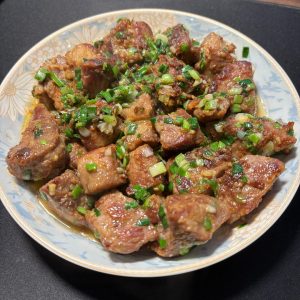
Salt and Scallion Pork Steaks (Yán Cōng Méihuā Ròu)

Equipment
- Large Skillet or Wok
- Meat Mallet (or back of knife)
- Kitchen Shears (optional)
Ingredients
For the Pork & Marinade:
- 1 lb boneless pork shoulder (pork collar or Boston butt) (approx 450g), sliced into 1-inch thick steaks
- 1 tbsp Shaoxing wine or dry sherry
- 1 tbsp light soy sauce e.g., Kikkoman or Pearl River Bridge
- 1 tsp oyster sauce
- 1 inch ginger sliced
- 1/4 tsp black pepper
- 1 large egg white use only 1, not more
- 1 tbsp cornstarch
For the Salted Scallion Sauce:
- 1 cup scallions finely chopped (about 5-6 scallions)
- 1 tsp ginger finely minced
- 1 tsp garlic finely minced (about 1-2 cloves)
- 1 tbsp toasted sesame oil
- 1/2 tsp salt
- 1/2 tsp sugar
- 1/4 tsp MSG (monosodium glutamate) optional, but recommended for restaurant flavor
For Cooking:
- 2 tbsp vegetable oil or other neutral cooking oil
Instructions
- Prep Pork: Place pork steaks on a cutting board. Using a meat mallet or the back of a heavy knife, pound the pork all over to tenderize it. This breaks down fibers and helps it absorb the marinade.

- Marinate: In a medium bowl, combine the pork steaks, Shaoxing wine, light soy sauce, oyster sauce, sliced ginger, and black pepper. Mix well. Let it marinate for 15-30 minutes.
- Prep Scallion Sauce: While the pork marinates, prepare the sauce. In a small bowl, combine all the ‘Salted Scallion Sauce’ ingredients (chopped scallions, minced ginger, minced garlic, sesame oil, salt, sugar, and optional MSG). Stir and set aside.
- Bind (Velvet): Remove and discard the ginger slices from the pork. Add the egg white and cornstarch to the bowl. Mix thoroughly until the pork is coated in a light, sticky slurry. Do not add more egg white; a light coating is key.
- Sear Steaks: Heat a large skillet or wok over medium-high heat. Add the vegetable oil and swirl to coat. Once shimmering, add the pork steaks in a single layer (cook in batches if needed). Sear undisturbed for 2-3 minutes until a deep golden-brown crust forms.
- Flip and Sear: Flip the steaks and sear the other side for 2-3 minutes until equally browned.
- Cut and Finish Cooking: Turn heat to low. Using kitchen shears or a knife on a cutting board, cut the seared steaks into 1-inch (2.5 cm) bite-sized pieces. Return them all to the pan. Turn heat to medium-low and toss for 1-2 minutes, until the pork is cooked through (internal temp of 145°F / 63°C).
- Drain Oil: Tilt the pan and carefully spoon out any excess rendered fat and oil. This step is crucial for a clean, fresh-tasting dish.
- Finish with Sauce: Add the prepared Salted Scallion Sauce to the pan. Turn the heat to medium-high and toss everything vigorously for 30 seconds to combine and warm the sauce.

- Infuse: Immediately cover the pan with a lid, turn OFF the heat, and let it sit for 30 seconds. This flash-steams the scallions, releasing their aroma without overcooking them. Uncover, serve immediately with steamed rice.
Notes
Recipe Notes
- Pork Cut is Key: Do not substitute pork loin unless you are an expert at not overcooking it. Pork shoulder (collar/Boston butt) is essential for a juicy, tender result.
- Don’t Overdo the Egg: The egg white and starch create a light ‘velvet’ coating. Using too much (e.g., a whole egg) will cause the coating to scramble and turn gummy instead of creating a light crust.
- Searing Whole: Searing the pork as steaks before cutting is the secret. It creates a flavorful crust while keeping the inside juicy, which is harder to achieve if you cube the pork first.








Leave a Reply