There is a particular sound that tells you a batch of pan-fried eggplant dumplings is going to be good: a low, insistent sizzle that settles into a crackle as the water cooks away. That crackle is the whole point. Underneath it sits a lacy, deep-golden crust, and above it a soft, chewy dough that gives way to a filling so juicy it steams when you bite in.
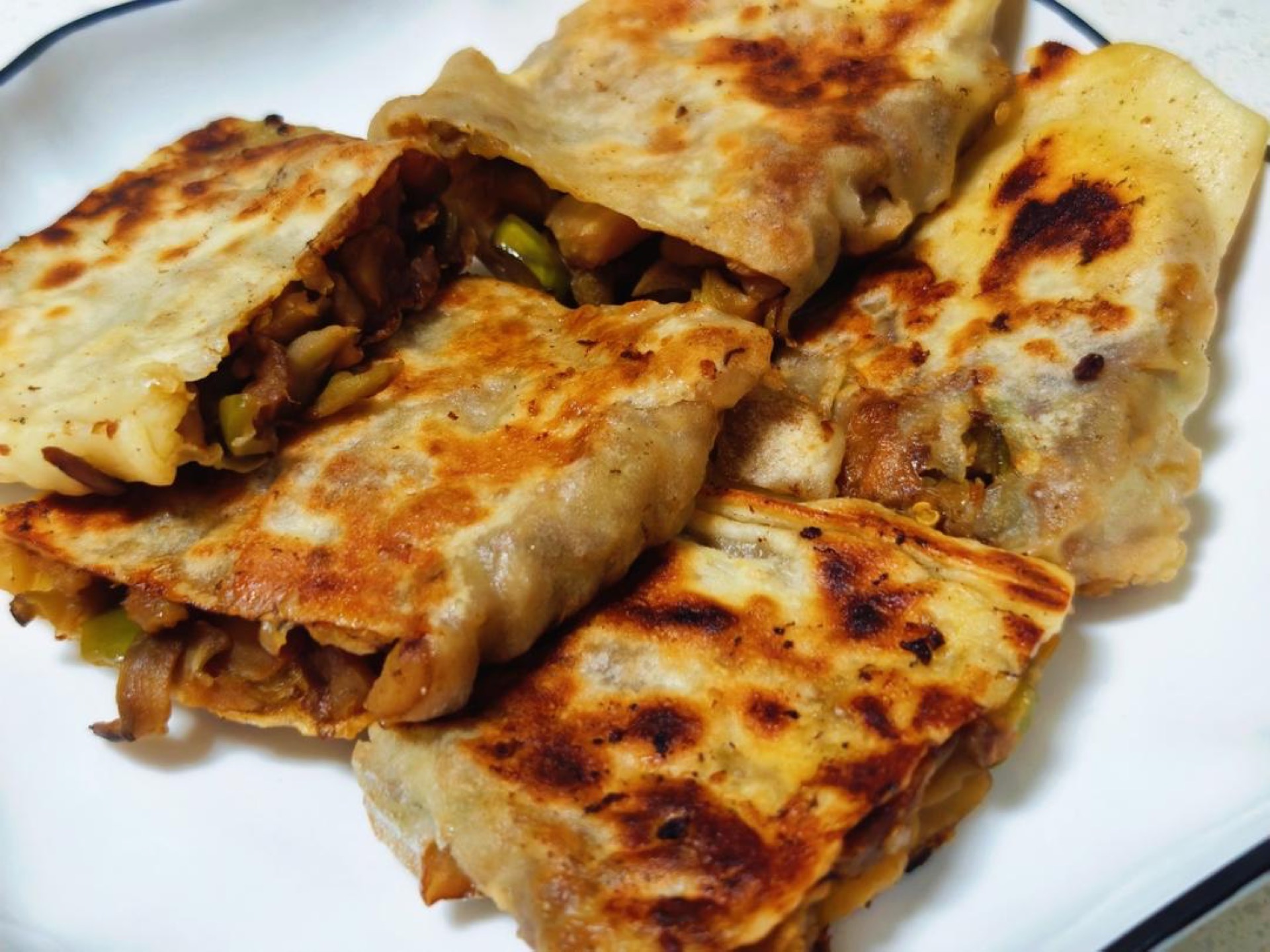
Eggplant is an odd hero for a dumpling filling, and that is exactly why it works. It has no strong flavor of its own, so it drinks up soy sauce, oyster sauce, and thirteen-spice like a sponge, and once the water is salted out of it, it holds a loose, almost creamy texture that stays moist even after a hard sear. What you get is a dumpling that eats like a meat dumpling in richness but costs a fraction of the price.
This version is deliberately lazy. Instead of rolling dozens of small wrappers and pleating each one, you roll a single large sheet, spread the filling over half of it, fold, pinch, and cut the whole thing into pieces. It is the same trick home cooks across northern China use when they want guotie on a weeknight, and it turns a two-hour project into something you can get on the table in about half an hour of hands-on work.
What Is 茄子锅贴?
锅贴 (guōtiē) literally means “pot stick” — dumplings laid into an oiled pan and cooked without being moved until their bottoms fuse into a crisp, browned shell. The technique is closely related to potstickers and to the Japanese gyoza, and it belongs to the same northern Chinese family of wheat-dough foods that includes jiaozi and baozi. The difference is the cooking method: jiaozi are boiled, while guotie are fried and then steam-finished in the same pan, which gives you two textures in one bite.
茄子锅贴 is simply the eggplant version. In northern households it is a thrifty filling, made when eggplant is cheap and abundant in late summer. The eggplant is diced small, salted to pull out its water, squeezed dry, then seasoned with soy sauce, oyster sauce, and thirteen-spice powder (十三香), a warm blended spice mix that is a staple of the region’s home cooking. Because the filling is soft, the rolled-and-folded sheet method is common — there is nothing to pleat around, so you just seal and cut.
If you enjoy the deep, slow-simmered flavors of northern home cooking, another dish worth keeping in rotation is Five-Finger Peach Pork Rib Soup, a gentle, earthy Cantonese-style rib soup that pairs beautifully alongside a plate of these dumplings.
Five-Finger Peach Pork Rib Soup is a soothing, slow-simmered bowl that balances the crisp richness of pan-fried dumplings — a natural next recipe to try.
If you enjoy this kind of cooking, Five-Finger Peach Pork Rib Soup is a good next step — Five-Finger Peach Pork Rib Soup.
The salt-and-squeeze step is not optional. Raw eggplant is roughly 90 percent water, and if that water stays in the filling it will steam the dough from the inside, leaving you with soggy bottoms and a filling that tastes flat and diluted.
1Five-Finger Peach Pork Rib Soup (五指毛桃排骨汤): Herbal, Sweet, DeeplyFive-Finger Peach Pork Rib Soup is a Cantonese herbal classic that simmers pork ribs with wuzhimaotao root until the broth turns sweet and fragrant. The result is a clean, comforting soup with tender meat and a gentle coconut-vanilla aroma.Check out this recipe
Why This Recipe Works
Three things make this recipe reliable, and each one solves a specific problem.
The dough rests before it is rolled. A 15-minute rest lets the gluten relax, so the sheet rolls thin without snapping back. If you skip it, you will fight the dough the whole way and end up with thick, chewy edges.
The eggplant is salted and squeezed. Twenty minutes of salt draws out a surprising amount of liquid. Squeezing it out by hand concentrates the eggplant’s flavor and keeps the filling from weeping into the dough. This is the single most important step for a crisp bottom.
The steam-fry finish does double duty. Adding water and covering the pan cooks the dough through from the top while the oiled bottom fries. When the water is gone, the bottom is already set and golden, so the last minute of frying only crisps it further. If you have ever made chinese cooking techniques for absolute beginners, you will recognize this as the same water-and-cover move used for potstickers and steamed-then-crisped buns.
Finally, the fold-and-cut method means every piece has a sealed, crimped edge rather than a pleated one. Sealed edges are thicker and slightly chewier than pleats, which is exactly what you want against a soft eggplant filling — it gives the bite some structure.
Ingredients
Here is what you need. Full amounts are in the recipe card at the bottom of this post.
- All-purpose flour — 500 g, plus extra for dusting. Plain flour gives a tender, slightly chewy dough. Bread flour makes it tougher; cake flour makes it too fragile to roll thin.
- Warm water — about 260 ml. Warm, not hot. Hot water will partially cook the flour and give you a sticky, tacky dough.
- Eggplant — 1 whole, roughly 500 g. A young, slender eggplant has thin skin and few seeds, so it needs no peeling. An older, larger one with thick skin and brown seeds is better peeled.
- Light soy sauce — 1 tbsp. Salty and savory, this is the backbone of the filling.
- Dark soy sauce — 1 tbsp. Mostly for color. Without it the filling looks pale and unappetizing.
- Oyster sauce — 1 tbsp. Adds body and a rounded, slightly sweet depth. Vegetarian oyster sauce works fine.
- Thirteen-spice powder — 1 tbsp. A northern Chinese blend of star anise, cinnamon, fennel, clove, and more. Five-spice is a reasonable substitute.
- Salt — for the dough and for drawing water out of the eggplant.
- Neutral oil and water — for the pan-fry and the steam.
Cooking Process
Step 1 — Make the Dough
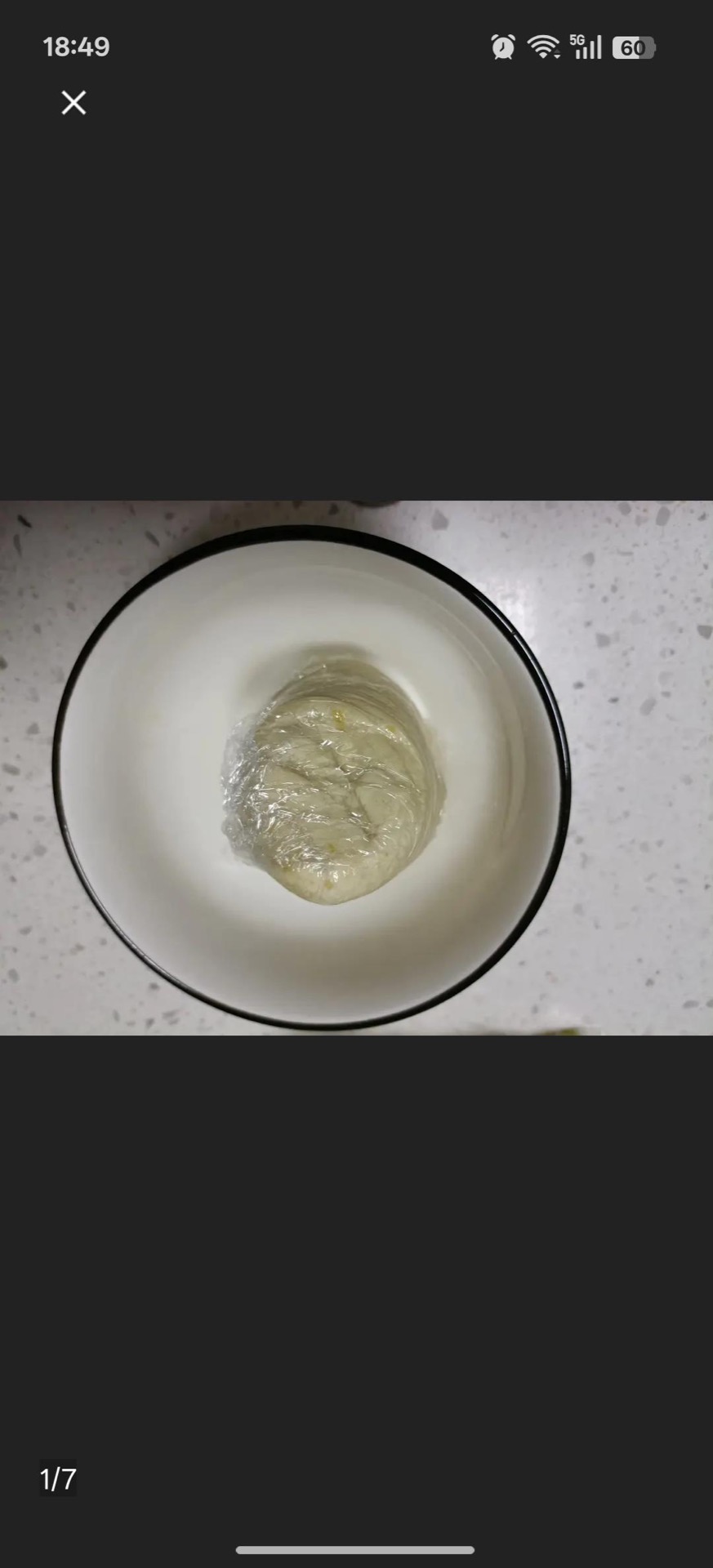
Find an empty bowl, add the flour and a little salt, then pour in the water a little at a time, mixing and kneading until you have a smooth dough. Wrap it in plastic wrap and let it rest for 15 minutes.
Step 2 — Salt and Squeeze the Eggplant
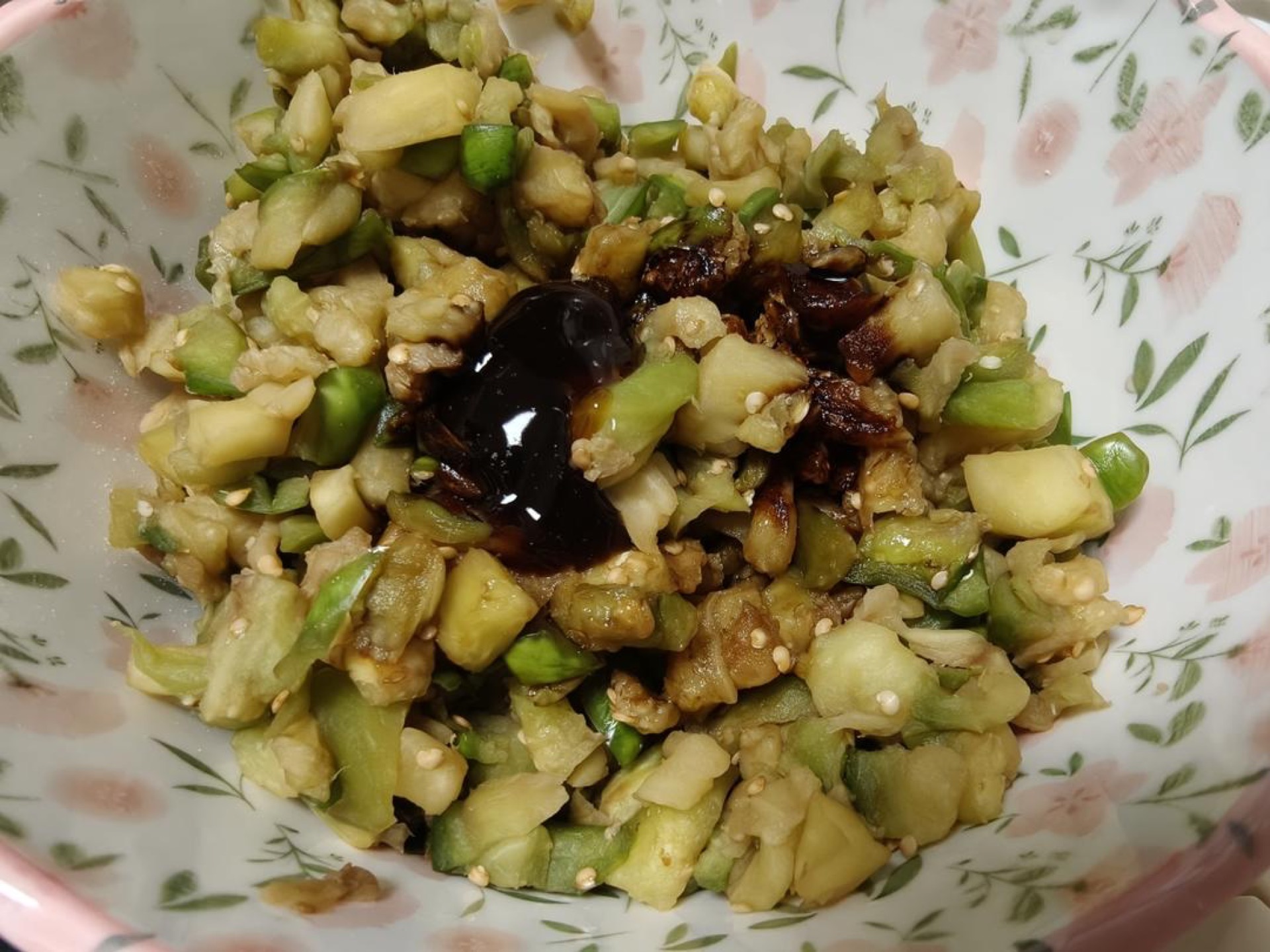
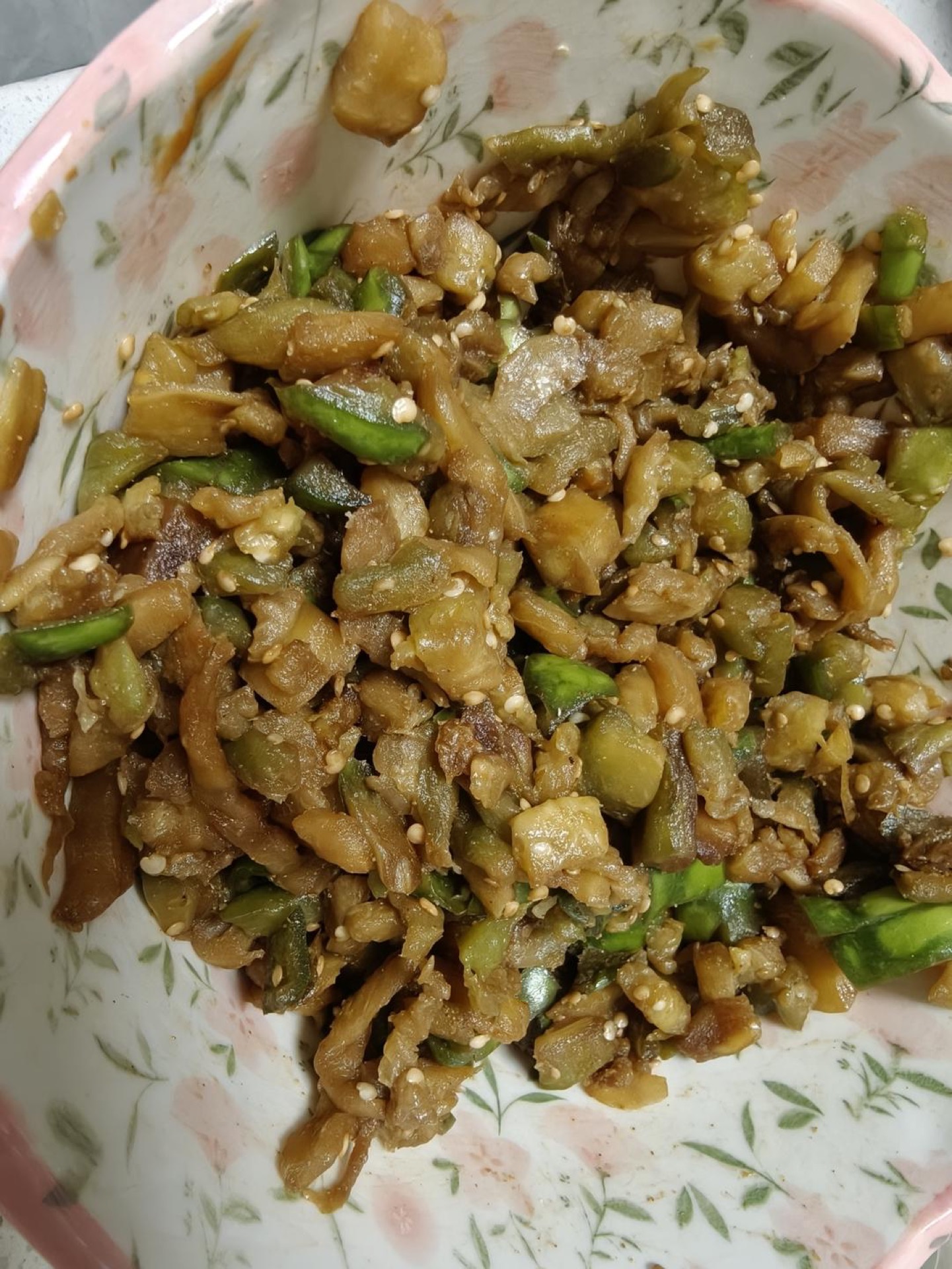
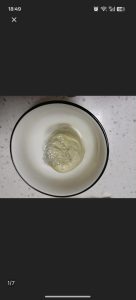
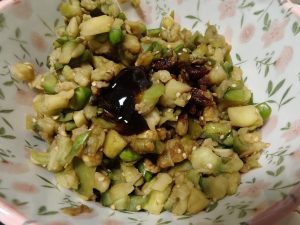
Wash the eggplant clean — a young eggplant does not need peeling (an older one can be peeled). First cut it into slices, then into strips, and finally into small dice, put them in an empty bowl, add salt and mix well. Let it sit for 20 minutes to draw out the water. Then squeeze the water out with your hands. Find a clean container, put the diced eggplant in, and add the seasonings one by one (salt has already been added, so you can skip it).
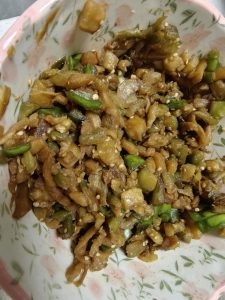
Step 3 — Mix the Filling
Stir everything together evenly and set it aside.
Step 4 — Flour the Board and Dough
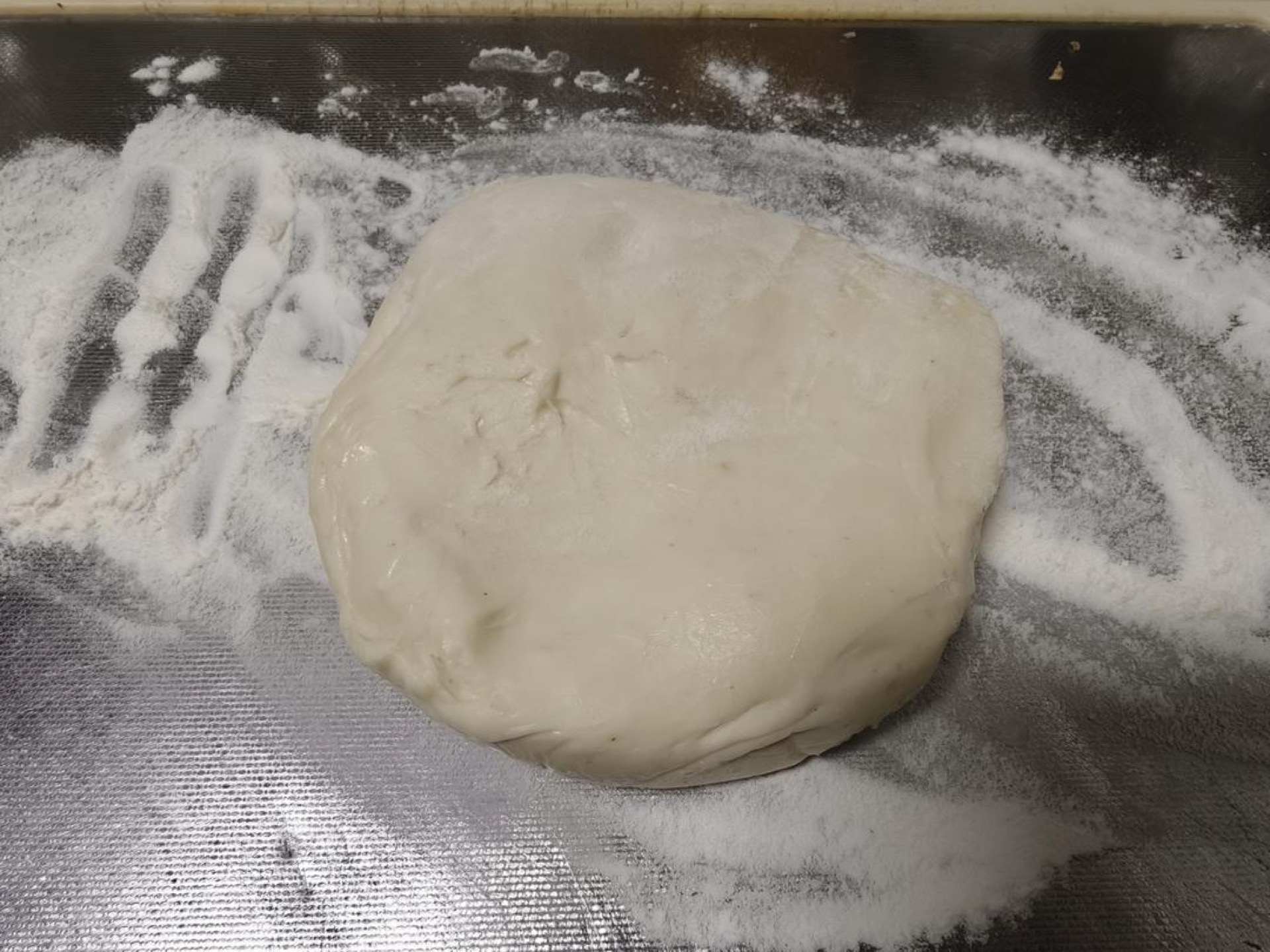
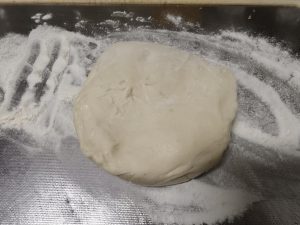
Next, sprinkle dry flour over the cutting board and put the dough on the board. If the dough is too big, cut it into smaller pieces.
Step 5 — Roll Out Thin Sheets
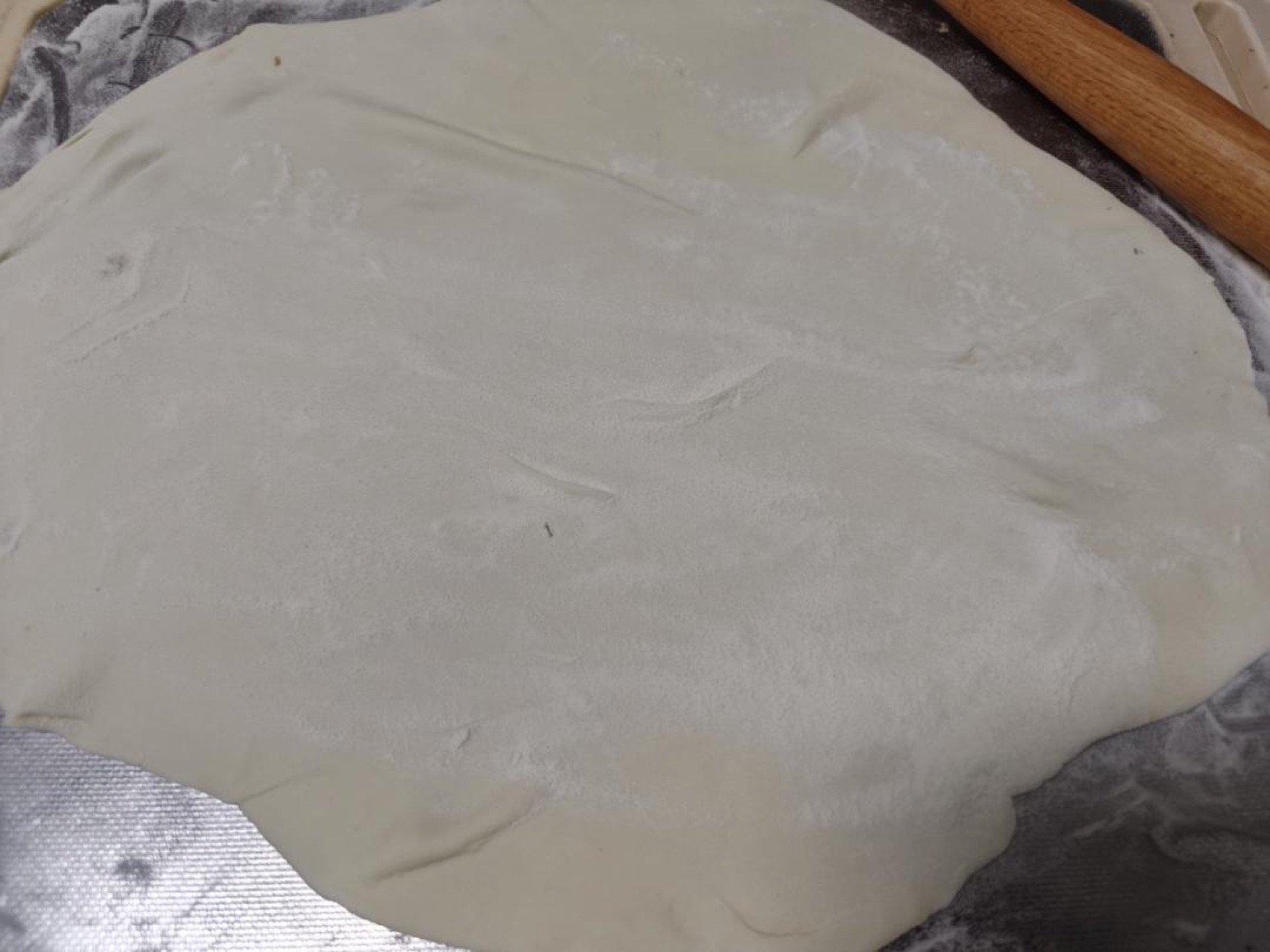
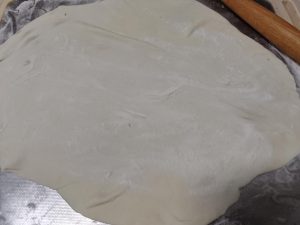
Then roll it into thin sheets (while rolling, there must be dry flour on both the top and bottom so it does not stick — you can flip and roll both sides).
Step 6 — Cut Through the Middle
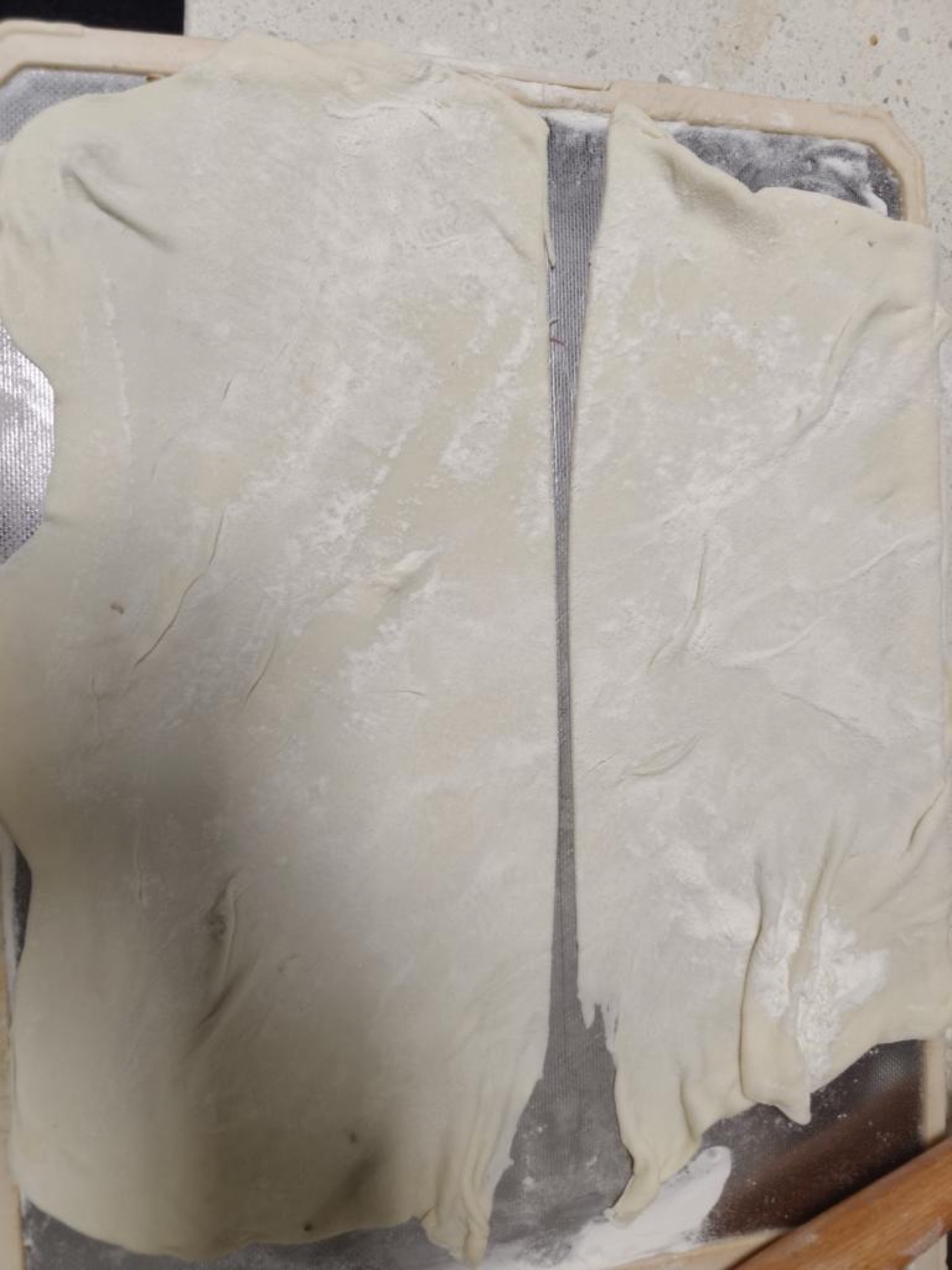
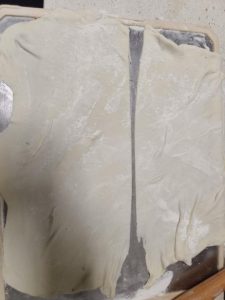
Then cut through from the middle.
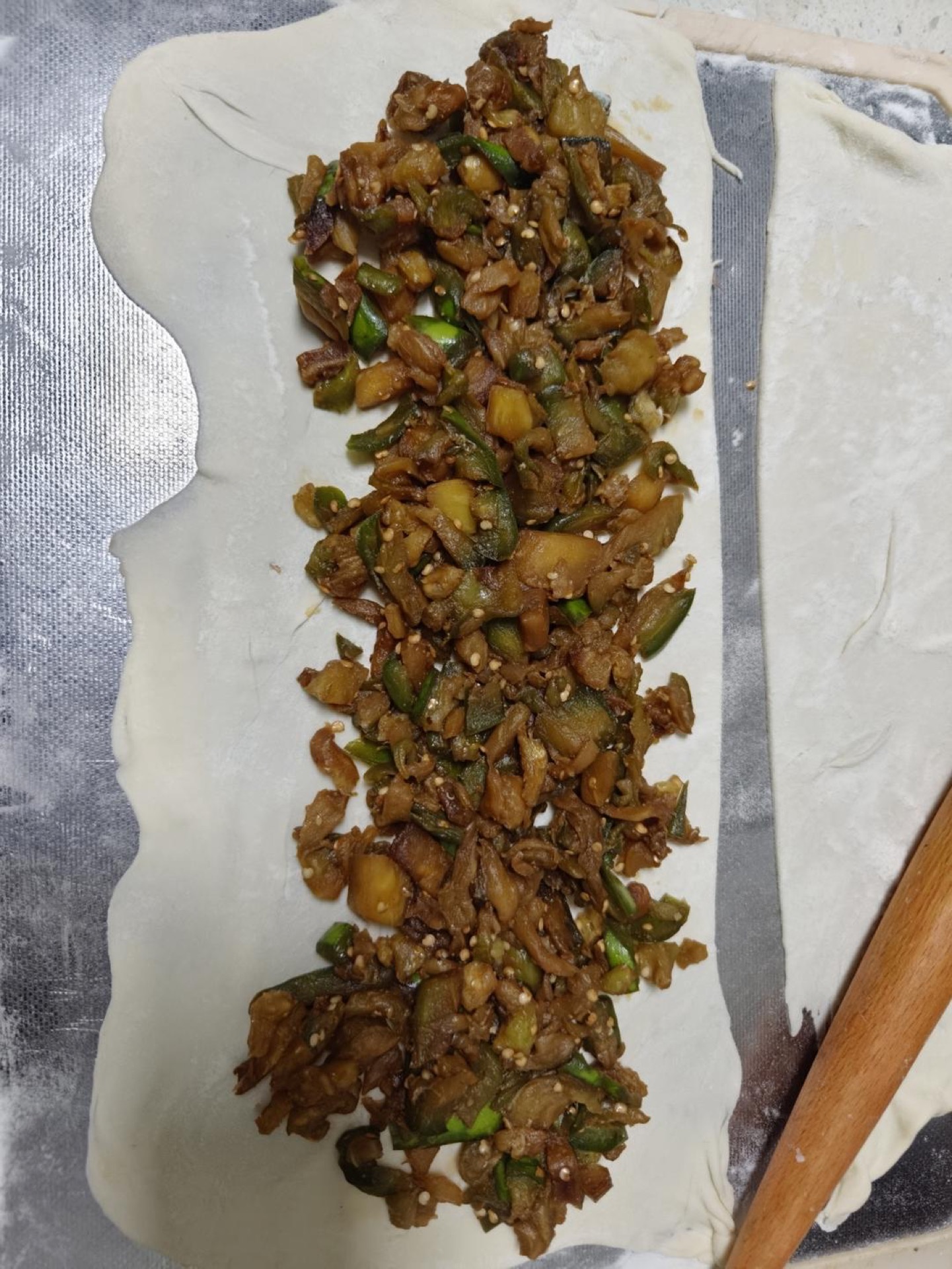
Step 7 — Add the Eggplant Filling
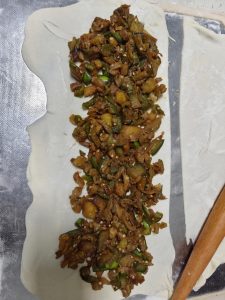
Spread plenty of eggplant filling over the upper half of the dough sheet (you can also spread filling over the whole sheet and cover it with the other half — that just makes a bigger flatbread).
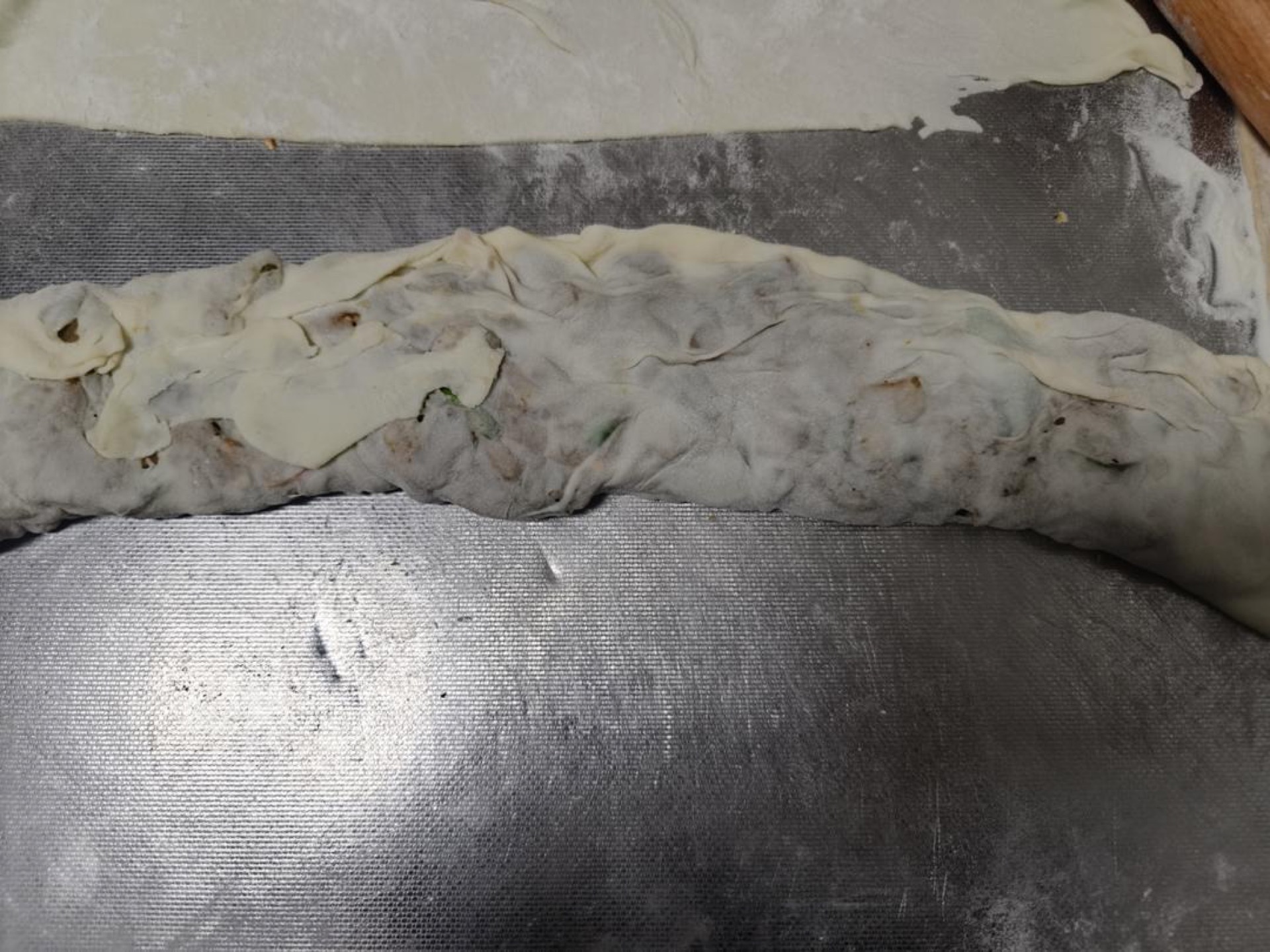
Step 8 — Fold and Seal the Edges
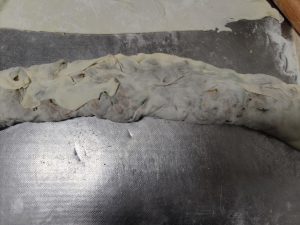
Then fold the half without filling over, and pinch the edges tightly closed.
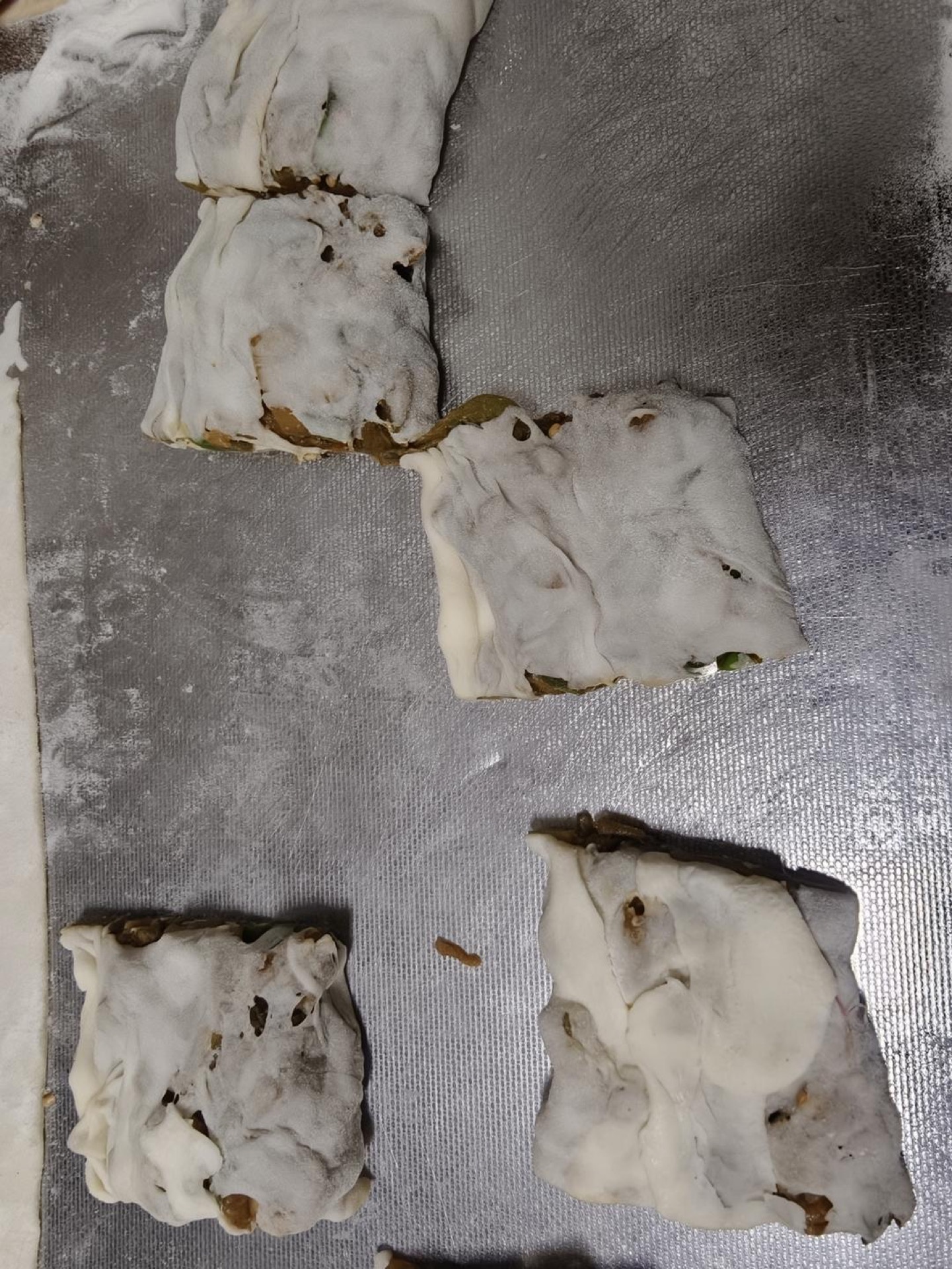
Step 9 — Cut into Pieces
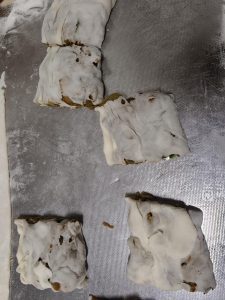
Then cut it into small pieces.
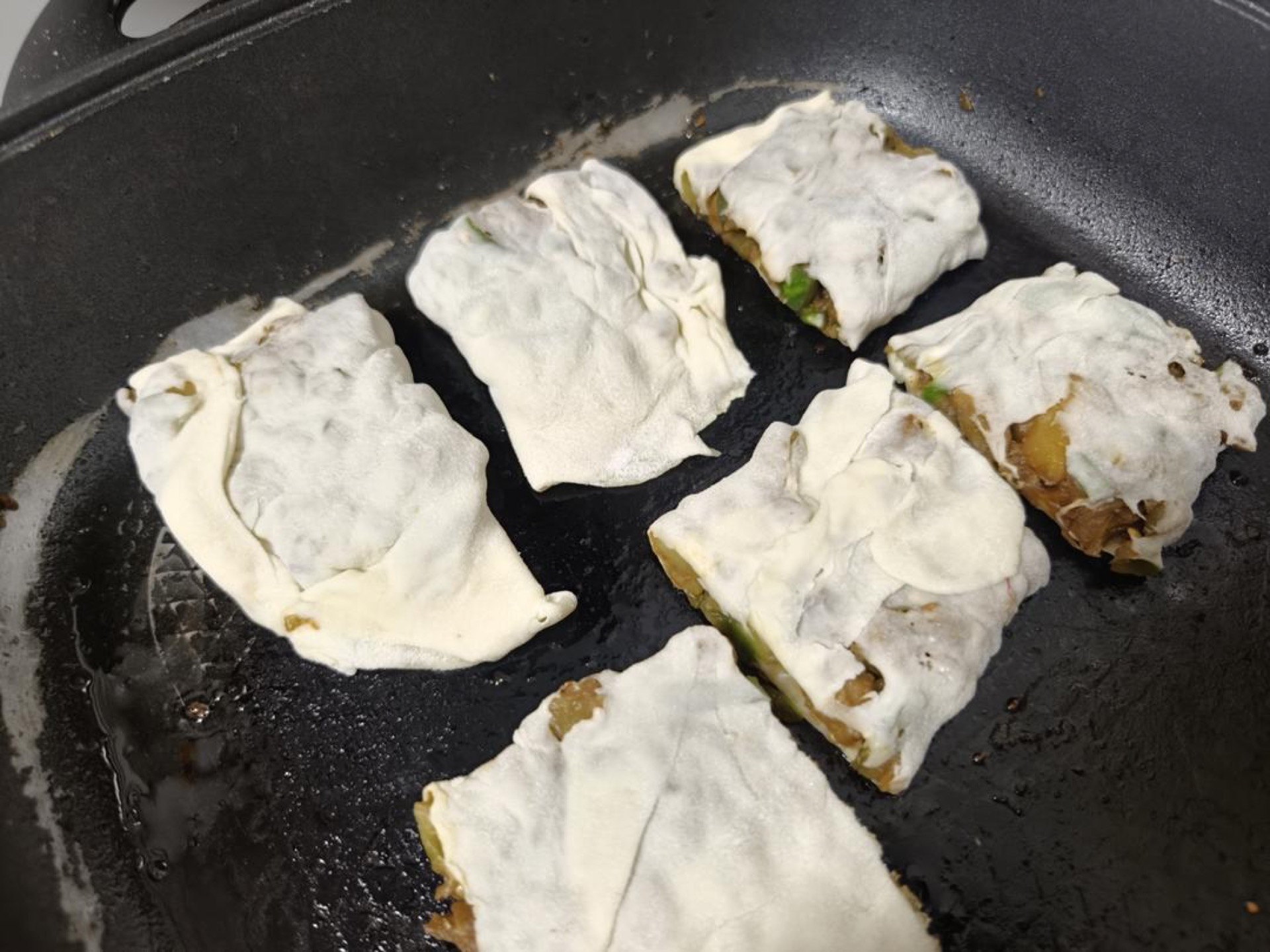
Step 10 — Pan-Fry the Dumplings
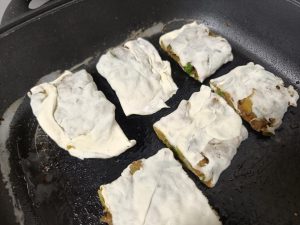
Brush a layer of oil into a flat-bottomed pan, turn on medium heat, and put the pieces in.
Step 11 — Add Water and Steam
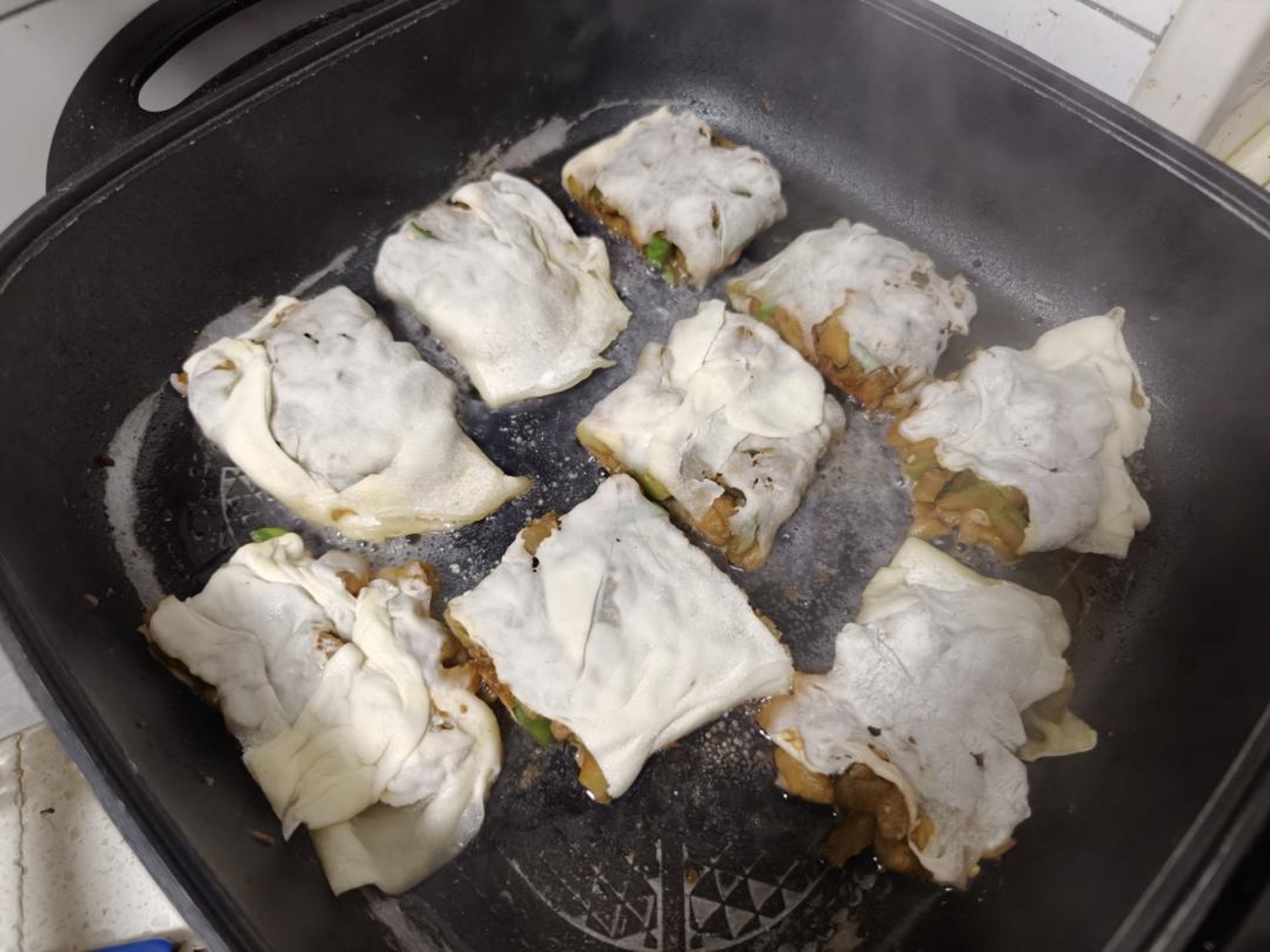
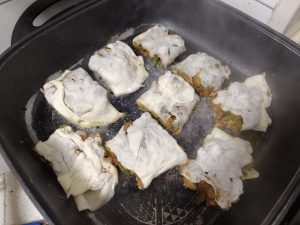
Once the bottom has set, add clean water, just enough to cover about one third of the pieces, cover with a lid and cook for 5 minutes.
Step 12 — Flip and Finish
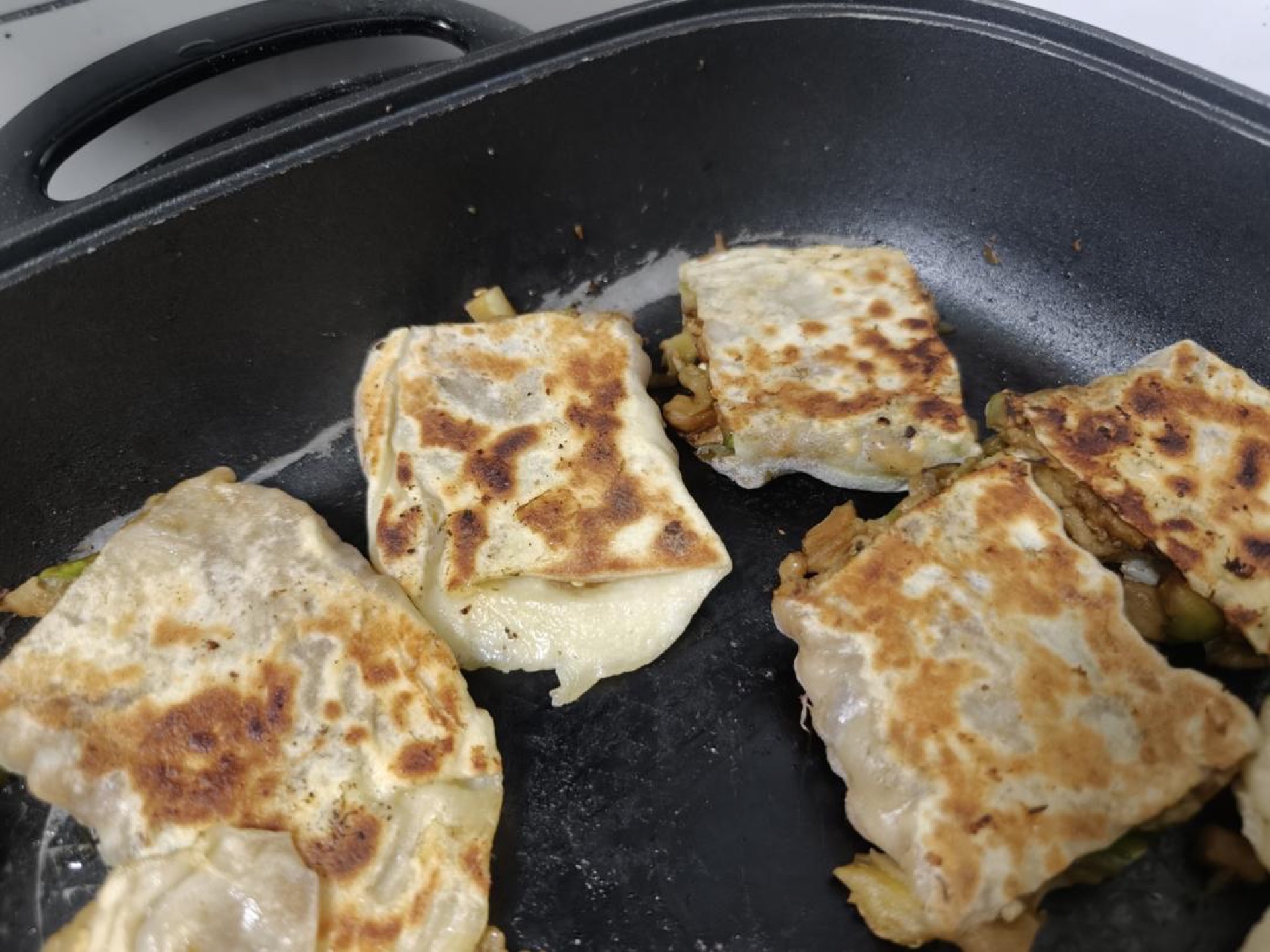
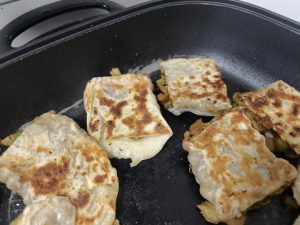
Fry one side until it is golden brown, then flip and fry the other side. Once both sides are done, they are ready to come out of the pan — super fragrant.
Common Mistakes When Making Pan-Fried Eggplant Dumplings
1. Not squeezing the eggplant hard enough. This is the mistake that ruins the most batches. Salting draws the water out, but it does not remove it — you have to physically squeeze it out in handfuls. If your filling looks wet and glossy after mixing, squeeze it again. Cause: under-salted or under-squeezed eggplant. Fix: salt for a full 20 minutes, then squeeze in a clean kitchen towel or with your hands until the eggplant feels dense and slightly sticky, not slippery.
2. Rolling the dough too thick. A thick sheet will not cook through in the steam phase and will taste raw and doughy in the middle. Cause: rolling timidly because the dough feels sticky. Fix: flour both sides generously and roll until the sheet is thin enough that you can almost see your hand through it — roughly 2 mm.
3. Adding the water before the bottom has set. If you pour water in while the dough is still raw and pale, the bottom will never crisp — it will just turn pale and soft. Cause: impatience. Fix: wait until you can see a golden ring forming around the base of each piece and the dough no longer looks wet.
4. Crowding the pan. Pieces touching each other steam instead of fry, and the bottoms come out pale and patchy. Cause: trying to cook a whole batch at once. Fix: cook in two batches, leaving at least a finger’s width between pieces.
5. Adding too much water for the steam. More water means a longer cook, which means the bottom crust softens and the dough gets gummy. Cause: guessing instead of measuring. Fix: use about one third the height of the pieces — roughly 180 ml for a standard pan. It should be gone in about 5 minutes.
6. Flipping too early. If you flip before the crust releases on its own, you will tear the bottom off and leave it stuck to the pan. Cause: checking too soon. Fix: shake the pan gently — when the pieces slide freely, they are ready to turn.
How to Serve
These dumplings are best straight from the pan, while the bottom is still crackling. A classic northern dipping sauce is the right move: equal parts black vinegar and light soy sauce, a few drops of sesame oil, and a spoonful of chili oil if you like heat. A pile of thinly sliced cucumber or a simple smashed cucumber salad cuts the richness beautifully.
For a fuller table, serve them alongside a bowl of braised tofu with mushrooms and pork — the soft, saucy tofu is a natural contrast to the crisp dumpling bottoms, and both dishes share the same savory soy-and-aromatic flavor profile.
If you are feeding a crowd and want something heartier on the side, lamb liver fried rice makes a substantial companion, and spicy stir fried clams adds a briny, garlicky note that works surprisingly well next to eggplant.
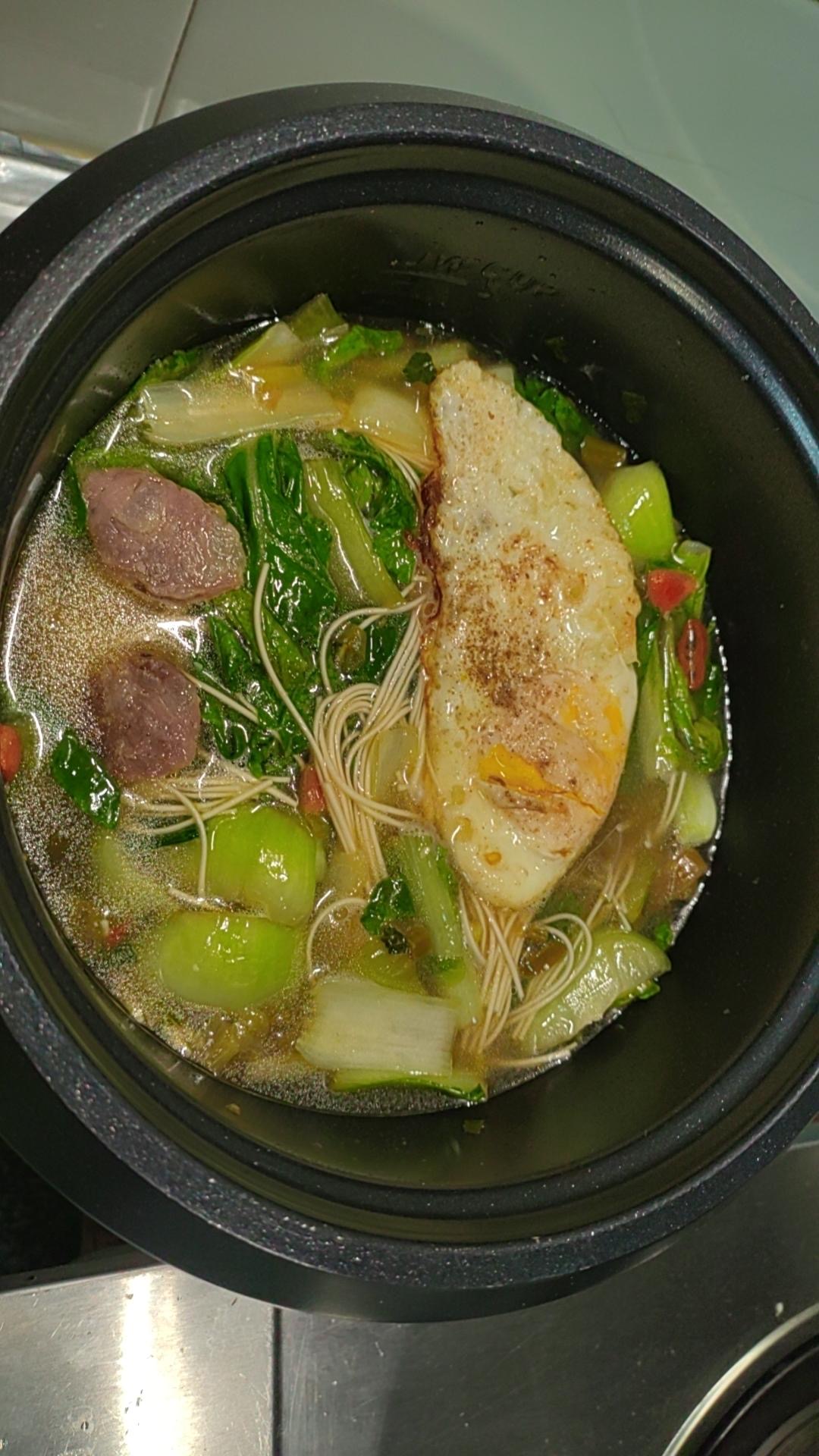
Serve it alongside Rice Cooker Sausage Veggie Noodles for a two-dish table.
Storage & Reheat
Pan-fried dumplings are at their best within an hour of cooking, but they keep well. Store leftovers in an airtight container in the refrigerator for up to 3 days. The bottoms will lose their crunch in the fridge no matter what you do — that is the nature of a fried crust.
To reheat, the best method is a dry nonstick pan over medium heat. Add the dumplings in a single layer and heat for 3 to 4 minutes, turning once, until the bottoms re-crisp. A quick splash of water with the lid on for the first minute will reheat the filling through without drying it out, then uncover to crisp.
An air fryer at 375°F (190°C) for 5 to 6 minutes also works well and brings the bottom back to a respectable crunch. Avoid the microwave unless you have no other option — it turns the dough rubbery and the crust soft.
Raw assembled dumplings freeze beautifully. Freeze them on a floured tray in a single layer until solid, then transfer to a freezer bag. They will keep for up to 2 months. Cook from frozen, adding 1 to 2 minutes to the steam phase.
Allergen Notice
This recipe contains wheat (gluten) from the all-purpose flour and soy from the soy sauces and oyster sauce. If you are cooking for someone with a soy allergy, check the labels on your thirteen-spice blend and oyster sauce as well — some brands include soy or wheat as a filler.
To make the recipe gluten-free, substitute a gluten-free all-purpose flour blend for the dough and use tamari instead of both soy sauces. Note that gluten-free dough behaves differently: it is more fragile and does not stretch, so roll it a little thicker and handle it gently.
To make it soy-free, replace the soy sauces with coconut aminos and the oyster sauce with a mushroom-based sauce. The color will be lighter, and you may want an extra pinch of salt.
Nutrition Disclaimer
Nutrition information is calculated using an ingredient database and should be considered an estimate. In cases where multiple ingredient alternatives are given, the first listed is calculated for nutrition. Garnishes and optional ingredients are not included.
About the Author & Recipe Development
Hi, I’m Lin — I grew up in a northern Chinese household where dumplings were a weekend ritual and a pan of guotie was the reward for helping roll wrappers. I started woksoflove.com to write down the home cooking I grew up with, in the amounts and methods that actually work in a Western kitchen.
This recipe came from a late-summer problem: too much eggplant and not enough time. The traditional version of 茄子锅贴 has you roll and pleat each dumpling individually, which is lovely on a Sunday and impossible on a Tuesday. The rolled-and-folded sheet method here is the shortcut my family actually uses — one sheet, one fold, one cut, and you have a dozen pieces ready for the pan.
I tested this recipe with both slender Chinese eggplants and standard globe eggplants. The Chinese eggplant wins on texture, but the globe version works if you peel it. I also tested salting times from 10 to 30 minutes and settled on 20 as the point where the eggplant releases most of its water without becoming mushy.
For a deeper look at the techniques behind this dish — from dough resting to the steam-fry finish — see our guide to chinese cooking techniques for absolute beginners. And if you are growing your own vegetables, our guide to how to grow mung bean sprouts is a good companion project for a dumpling-heavy kitchen.
If you liked this, spicy ginger pork knuckle is worth cooking next.
If you liked this, braised tofu with mushrooms and pork is worth cooking next.
If you liked this, lamb liver fried rice is worth cooking next.
If you liked this, chili garlic cold noodles is worth cooking next.
Authoritative References
For safe internal cooking temperatures, see the USDA safe minimum internal temperature chart. For food storage and refrigeration guidance, see the FDA refrigerator and food safety guidance. For general food safety principles on cooling and reheating cooked foods, see the WHO food safety fact sheet.
For a deeper look at how eggplant behaves when salted — the osmosis that draws water out of the flesh — see this food-science explainer on salting eggplant.
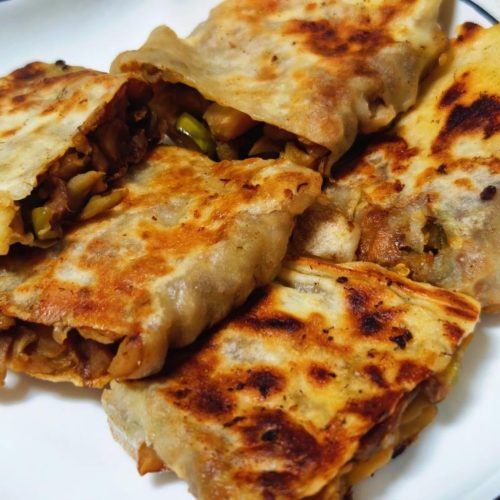
Pan-Fried Eggplant Dumplings (茄子锅贴): Crispy Bottom, Tender

Equipment
- Wok
- Cutting Board
- Slotted Spoon
Ingredients
For the Dough
- 500 g all-purpose flour plus extra for dusting
- 1 tsp salt fine salt
- 260 ml warm water added gradually
For the Filling
- 1 whole eggplant about 500 g, young eggplant needs no peeling
- 1 tbsp light soy sauce or tamari
- 1 tbsp dark soy sauce for color
- 1 tbsp thirteen-spice powder or five-spice
- 1 tbsp oyster sauce or vegetarian oyster sauce
- 1 tsp salt for drawing water out of the eggplant
For Pan-Frying
- 2 tbsp neutral oil for the pan
- 180 ml water for the steam-fry
Instructions
- Find an empty bowl, add the flour and a little salt, then pour in the water a little at a time, mixing and kneading until you have a smooth dough. Wrap it in plastic wrap and let it rest for 15 minutes.

- Wash the eggplant clean — a young eggplant does not need peeling (an older one can be peeled). First cut it into slices, then into strips, and finally into small dice, put them in an empty bowl, add salt and mix well. Let it sit for 20 minutes to draw out the water. Then squeeze the water out with your hands. Find a clean container, put the diced eggplant in, and add the seasonings one by one (salt has already been added, so you can skip it).

- Stir everything together evenly and set it aside.

- Next, sprinkle dry flour over the cutting board and put the dough on the board. If the dough is too big, cut it into smaller pieces.
- Then roll it into thin sheets (while rolling, there must be dry flour on both the top and bottom so it does not stick — you can flip and roll both sides).
- Then cut through from the middle.
- Spread plenty of eggplant filling over the upper half of the dough sheet (you can also spread filling over the whole sheet and cover it with the other half — that just makes a bigger flatbread).
- Then fold the half without filling over, and pinch the edges tightly closed.
- Then cut it into small pieces.
- Brush a layer of oil into a flat-bottomed pan, turn on medium heat, and put the pieces in.
- Once the bottom has set, add clean water, just enough to cover about one third of the pieces, cover with a lid and cook for 5 minutes.
- Fry one side until it is golden brown, then flip and fry the other side. Once both sides are done, they are ready to come out of the pan — super fragrant.












Leave a Reply