There is a Cantonese home cook’s boast that gets thrown around every autumn, when winter melons the size of a toddler appear in the market: 这样做出来的冬瓜比肉还好吃 — “prepared this way, the winter melon is better than meat.” It sounds like an exaggeration until you try it. The melon soaks up soy and oyster sauce, softens into something silky, and the little crumbles of pork and sand ginger turn the whole pot into a dish you eat with a spoon, standing at the stove.
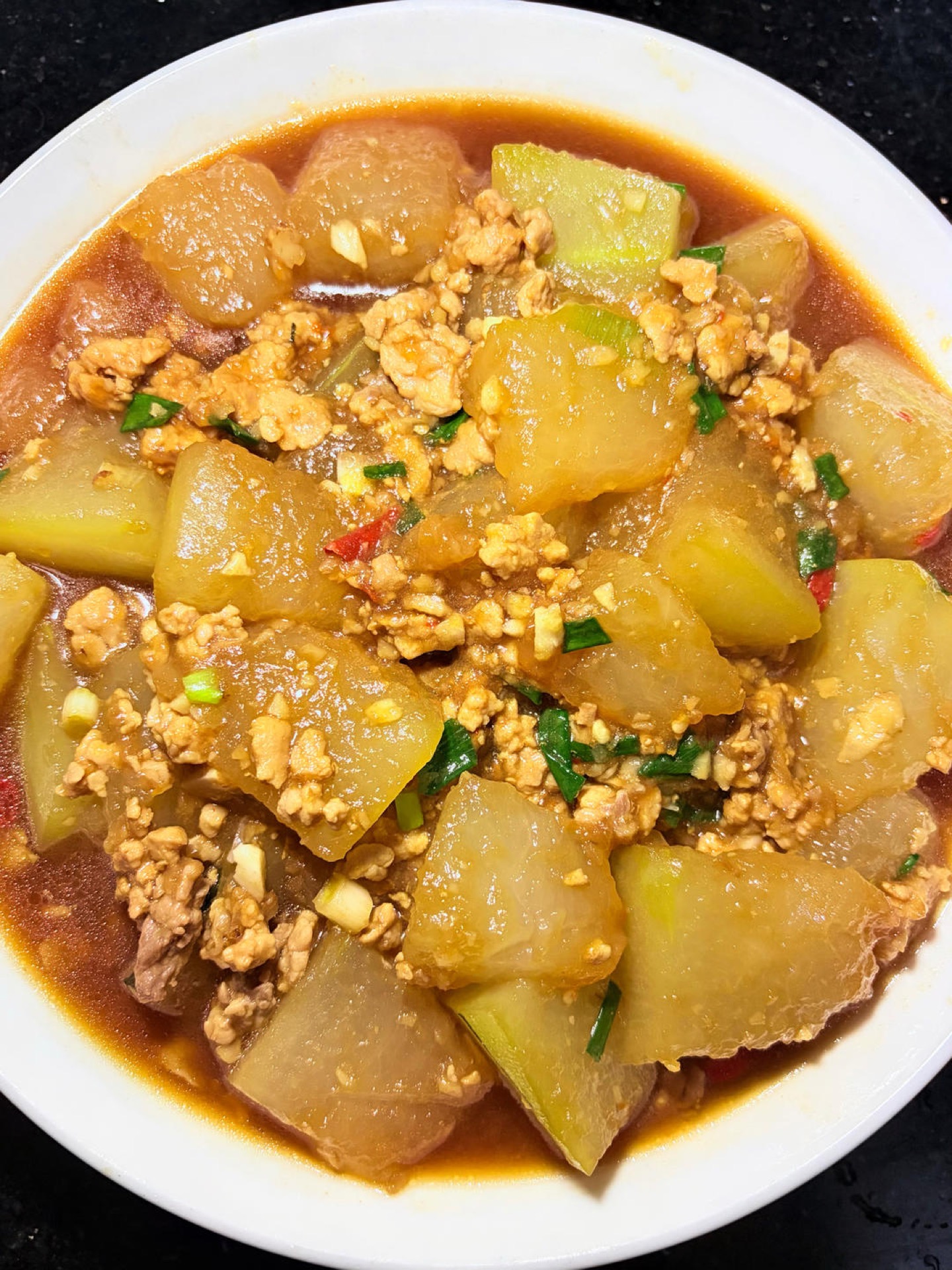
Winter melon is the quiet workhorse of the Chinese kitchen. It is cheap, enormous, almost calorie-free, and on its own it tastes like nothing much — which is exactly why cooks fight over it. Like tofu, it is a blank canvas that takes on whatever you braise it in, and it gives back a texture no other vegetable can copy: tender enough to cut with a spoon, but still holding its shape, with a faint cool sweetness underneath all that savory sauce. This version is the everyday one, the one that shows up on a Cantonese weeknight table in a battered clay pot with a lid still rattling.
The technique is almost embarrassingly simple. You bloom sand ginger, garlic and chili in oil, brown a handful of minced pork, drop in big cubes of melon, splash in a little water, season with three sauces, and let the lid do the work. Ten minutes later the melon has gone glassy at the edges and the sauce has thickened to a glaze. There is no starch slurry, no long marinade, no special skill — just a good pot, a patient ten minutes, and the willingness to leave the lid alone.
What makes this dish worth writing down is how much it overdelivers. It costs a few dollars. It takes half an hour. And it consistently beats the meat dishes next to it on the table, which is why I make it at least twice every time winter melon season rolls around.
What Is Braised Winter Melon with Minced Pork?
Braised winter melon with minced pork — 冬瓜炒肉末, sometimes written as 肉末冬瓜 — is a home-style Cantonese and southern Chinese dish of cubed winter melon braised briefly with seasoned ground pork and aromatics. Despite the “炒” (stir-fry) in the name, it is really a quick braise: the melon is added with a splash of water, covered, and left to steam and soften in the savory liquid the pork and sauces create. The result sits somewhere between a stew and a stir-fry, with a loose, glossy sauce that clings to each cube.
The dish belongs to the same family as clay pot rice toppings and other braised clay pot cooking, where the pot itself is part of the flavor. Sand ginger (沙姜, also called kaempferia galanga) is the signature aromatic here rather than the more common ginger. It has a sharper, more floral, almost medicinal bite that cuts through the pork fat and makes the melon taste brighter. If you have only ever had winter melon in soup, this is the version that will change your mind about it.
Winter melon itself is a wax-gourd, harvested at full size and prized for its neutral flesh and high water content. That water is the whole trick: it becomes the braising liquid, so you barely need to add any. Cooks who drown the pot in water end up with a thin, pale sauce and mushy melon — the single most common way this dish goes wrong.
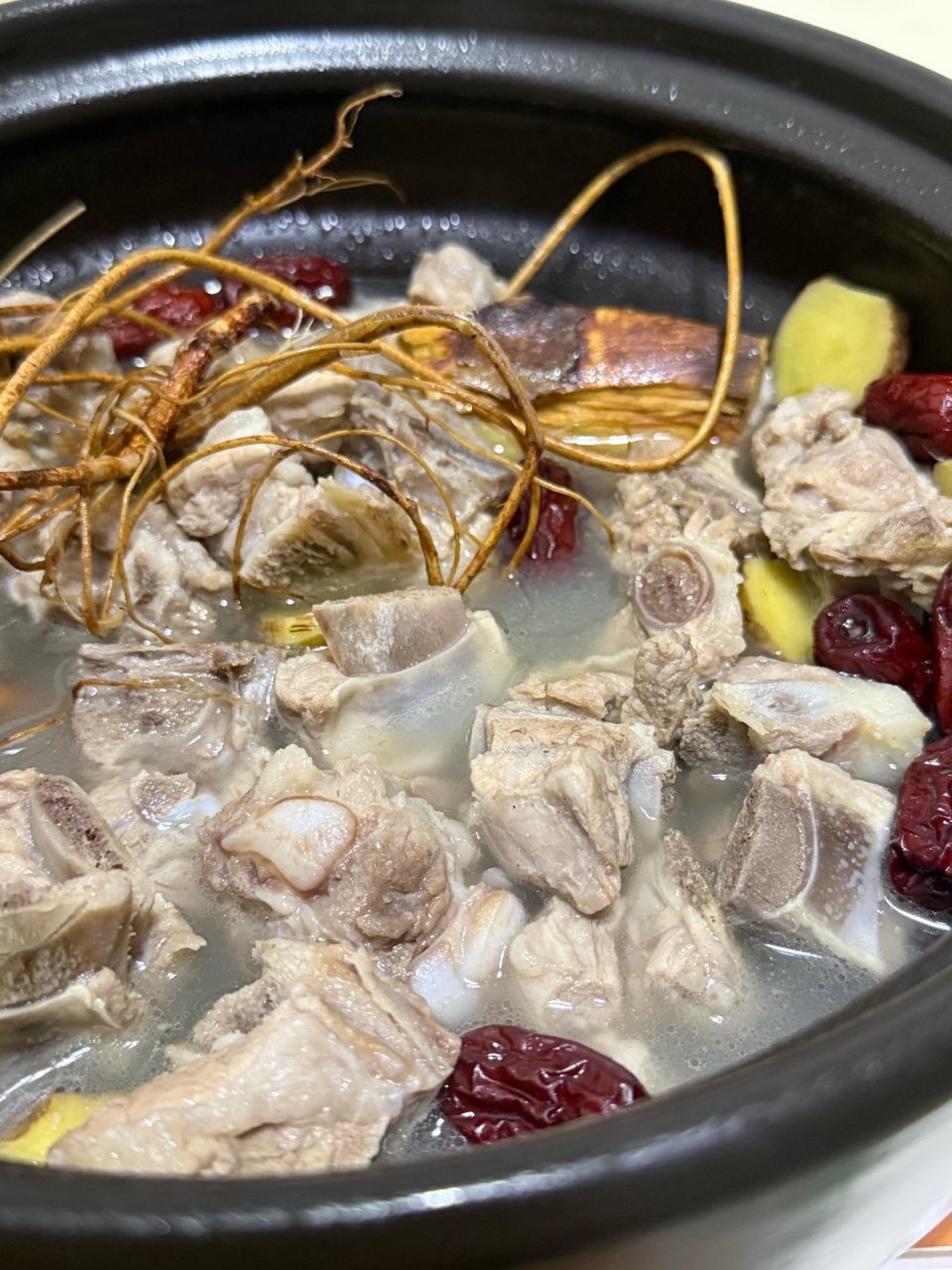
If you enjoy pork simmered low and slow with aromatics until the broth turns sweet and clear, you will like this Five-Finger Peach Pork Rib Soup, a gentle Cantonese soup that builds its flavor the same patient way.
1Five-Finger Peach Pork Rib Soup (五指毛桃排骨汤): Herbal, Sweet, DeeplyFive-Finger Peach Pork Rib Soup is a Cantonese herbal classic that simmers pork ribs with wuzhimaotao root until the broth turns sweet and fragrant. The result is a clean, comforting soup with tender meat and a gentle coconut-vanilla aroma.Check out this recipe
Ingredient Notes
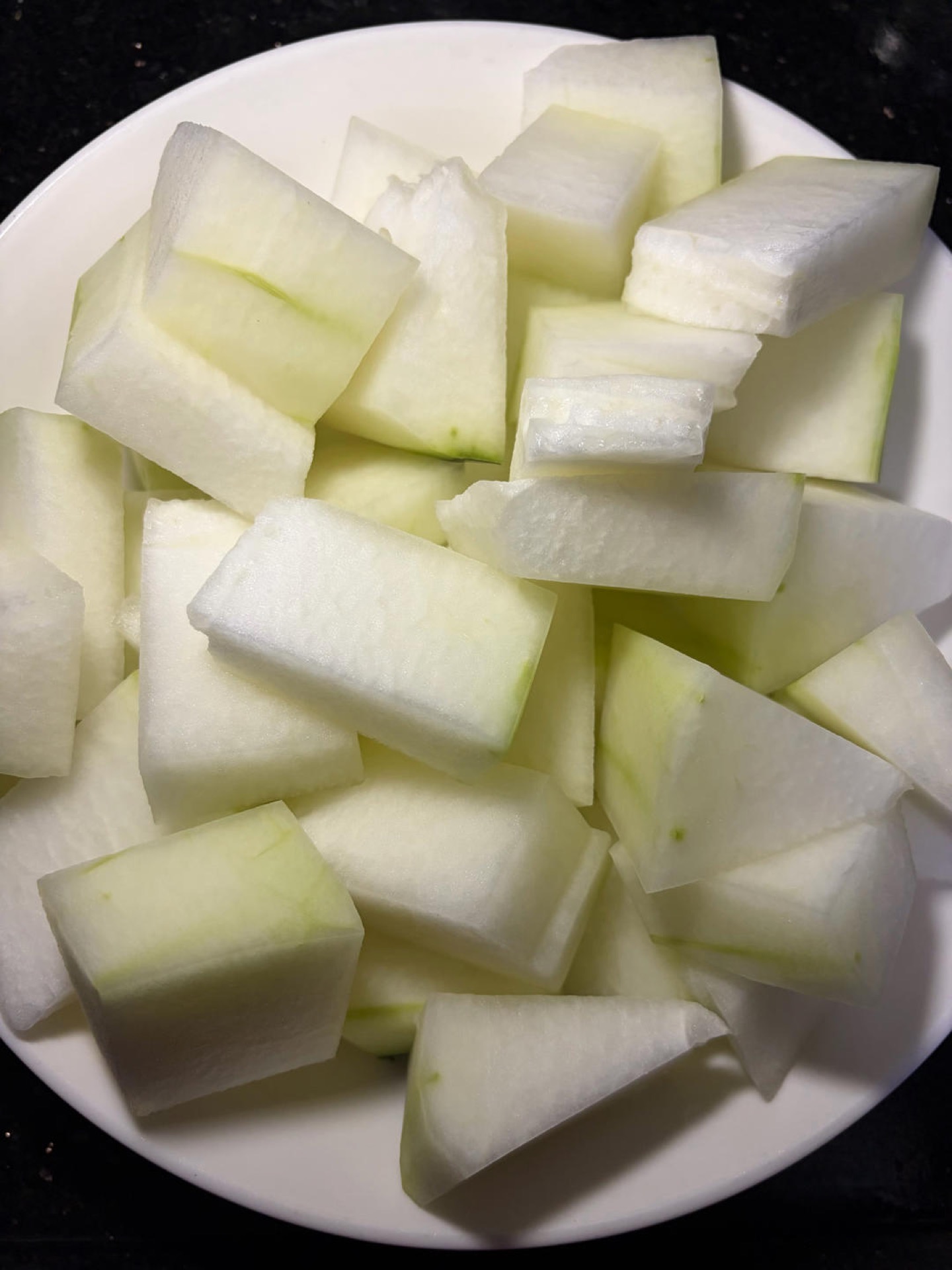
Winter melon (冬瓜). Look for a firm, heavy wedge with pale green flesh and no soft spots. A thick skin and a waxy white bloom on the outside are good signs. When you peel it, cut away the spongy seed core completely — that part never softens properly and turns watery in the pot. Cut the flesh into generous cubes, about 1½ inches, because they shrink by roughly a third as they braise.
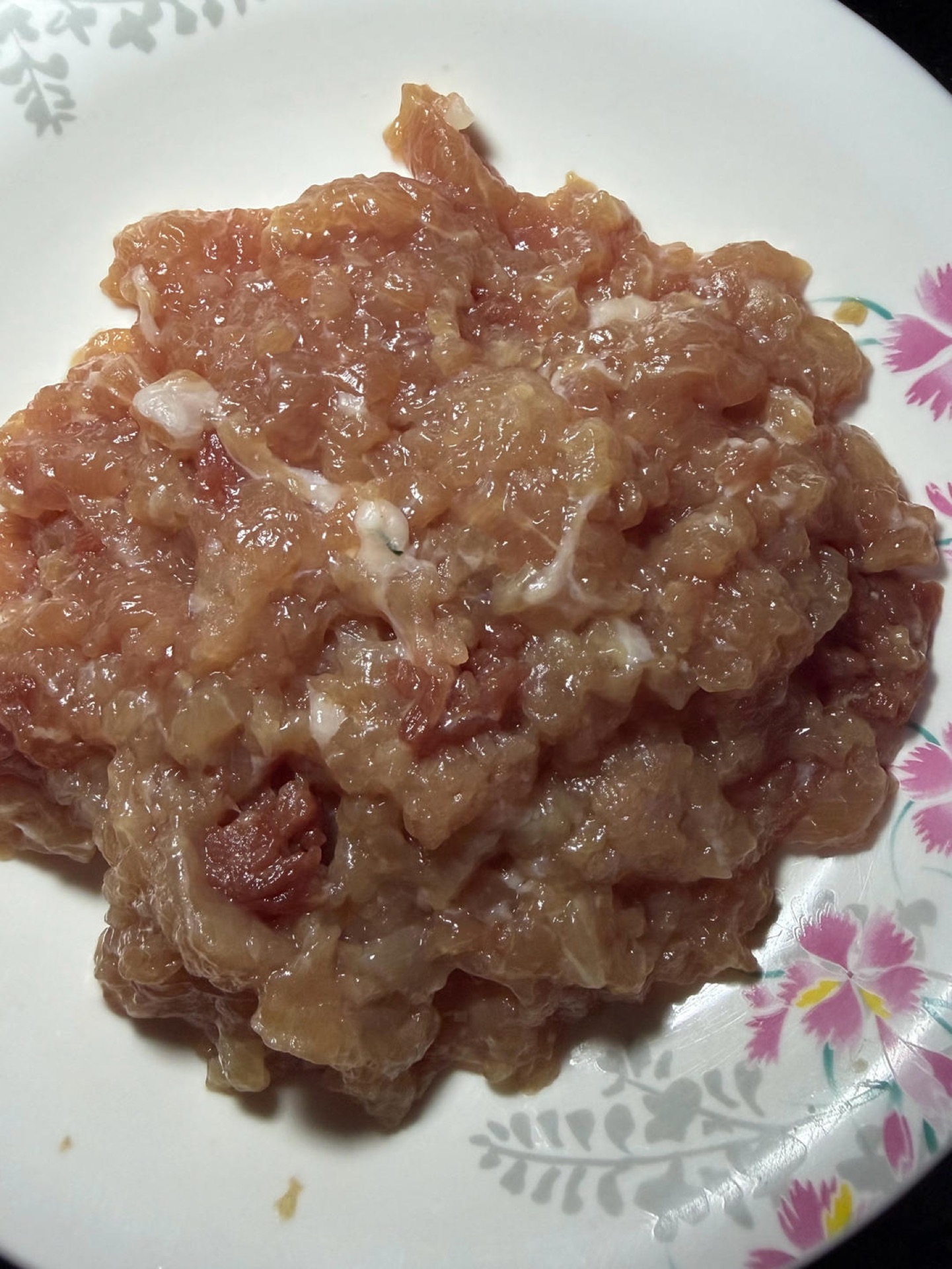
Lean pork (瘦肉). The source recipe calls for lean pork, not fatty pork belly, and that is deliberate. The melon already provides a soft, rich texture, so the pork is there for savory depth and little chewy bursts of meat, not for fat. Hand-chopping gives you control: you want coarse, uneven crumbles that stay distinct in the sauce, not a paste. If you buy pre-ground pork, choose the leanest you can find and break it up well in the pot.
Sand ginger (沙姜). This is the ingredient that makes the dish taste like itself. It looks like small knobs with a tan skin, and you do not peel it — just smash each piece with the flat of your knife and chop it roughly. Sand ginger is sharper and more aromatic than regular ginger, with a flavor somewhere between ginger, camphor and black pepper. If you truly cannot find it, use regular ginger plus a pinch of ground white pepper, but understand that the dish will taste like a cousin rather than the original.
Garlic. Three cloves, smashed and chopped, not minced to a paste. Bigger pieces toast in the oil without burning, which is what you want in a clay pot.
Fresh red chili (小米椒). One small chili, sliced into rings with the seeds left in. This is not a spicy dish — the chili is there to lift the richness, and one small one barely registers as heat. Use two if you like a real tingle, or leave it out entirely for kids.
Scallion. Sliced thin and scattered at the very end, off the heat, so it stays green and crisp. It is a garnish, but a necessary one: the raw allium bite against the sweet braised melon is the last thing that makes the dish taste finished.
Light soy sauce, oyster sauce, dark soy sauce. Three sauces, three jobs. Light soy is your salt and umami base, oyster sauce adds body and a round sweetness, and dark soy is there almost purely for color — it is what turns the melon from pale green to a deep lacquered amber. Do not swap dark soy for more light soy; you will end up with a salty dish and no color. Vegetarian oyster sauce works fine if you are cooking for a plant-forward table, and tamari makes a good gluten-free stand-in for the light soy.
Salt. A small spoon goes in before the sauces, so it can penetrate the melon cubes from the outside in. Taste at the end before adding more — the sauces are salty and the melon releases water as it cooks, so the final seasoning is always a little lighter than it tastes mid-cook.
Ingredients
Everything here is measured for four people as part of a multi-dish Chinese meal, which is how this dish is normally eaten — a small bowl of melon and pork alongside rice and one or two other plates. If you are serving it as the main event for two, double everything.
- 1.1 lb (500g) winter melon, peeled, seeded, cut into large cubes
- 7 oz (200g) lean pork, hand-chopped or coarsely ground
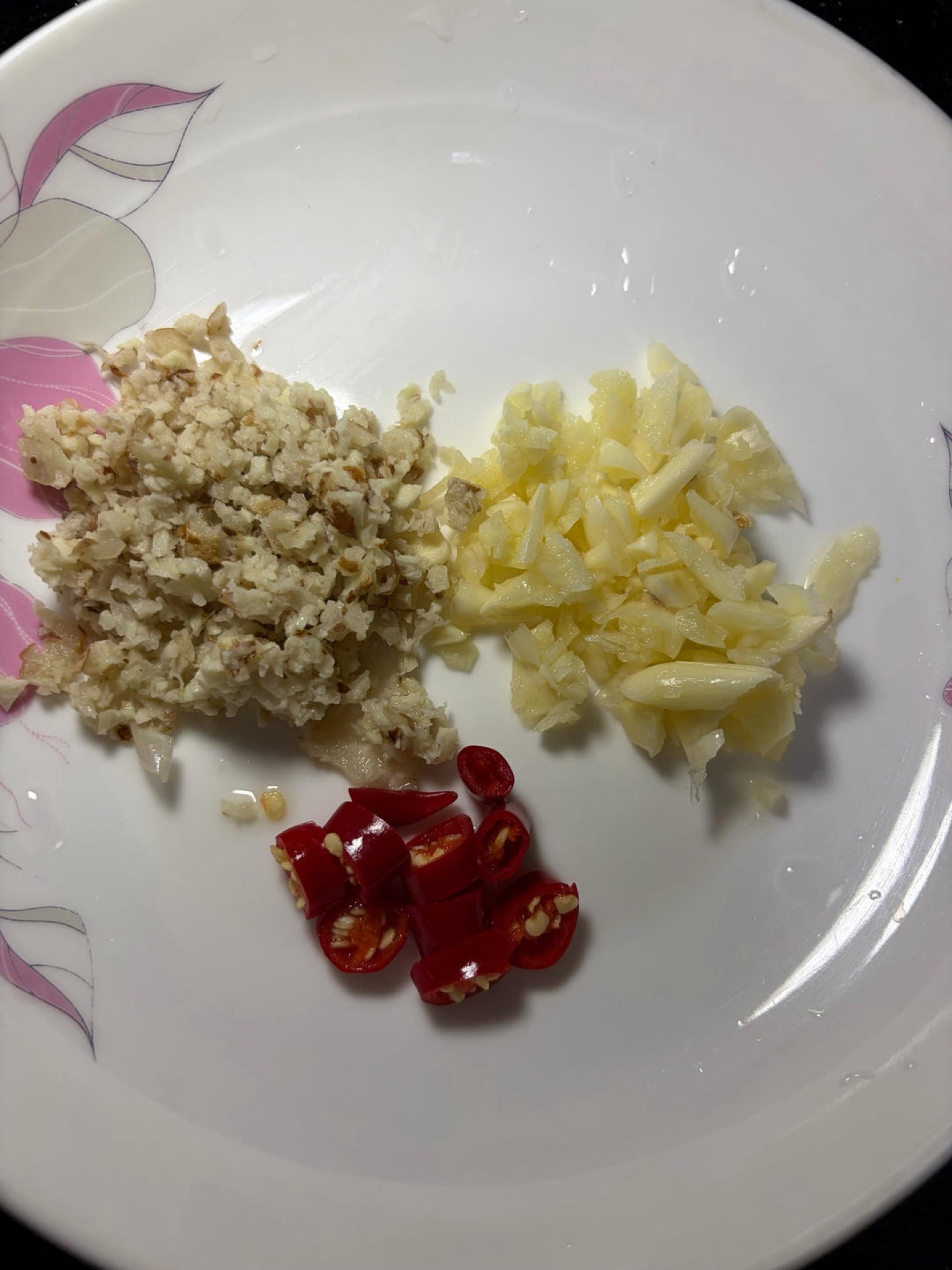
- 3 small pieces sand ginger, smashed and chopped, unpeeled
- 3 cloves garlic, smashed and chopped
- 1 fresh red chili, sliced into rings
- 1 stalk scallion, thinly sliced
- 1 tbsp neutral oil
- 1 tsp salt
- 1 tbsp light soy sauce (or tamari)
- ½ tbsp oyster sauce
- ½ tbsp dark soy sauce
- ½ cup (120ml) water, plus more only if needed
Equipment Needed
A clay pot (砂锅) is the traditional vessel and the one I recommend, because its thick walls hold heat evenly and let the melon soften gently rather than boil hard. Any heavy pot with a tight lid will work: a Dutch oven, a small enameled cast-iron pot, or a deep saucepan. A wok works too, provided it has a lid, though the wide surface means you will lose more liquid and may need an extra splash of water.
- Clay pot or heavy lidded pot — 1.5 to 2 quart capacity is plenty for this quantity
- Cutting board and knife — a cleaver makes short work of the winter melon’s thick skin
- Slotted spoon — for lifting the pork and aromatics without dragging excess oil around
- Small bowls — for holding the prepped aromatics and the mixed sauces
One note on clay pots: if yours is unglazed or new, season it first by simmering water in it for ten minutes, and never move a hot clay pot straight onto a cold counter. Thermal shock cracks them, and a cracked clay pot is a sad thing.
Why This Recipe Works
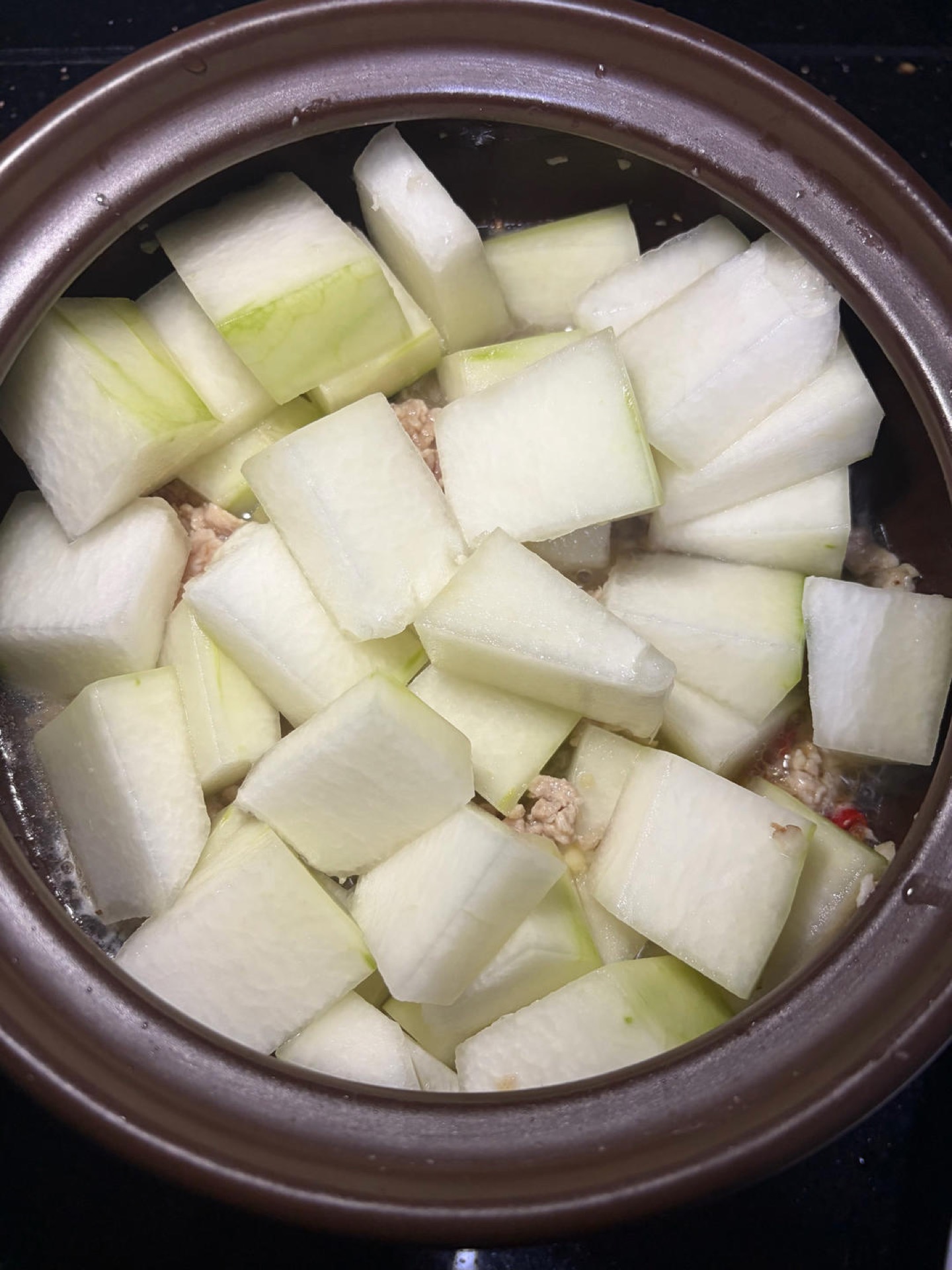
The melon braises in its own water. Winter melon is roughly 96 percent water. Adding only half a bowl of liquid means the sauce that forms is concentrated melon juice, pork drippings and soy — not diluted broth. That is the difference between a glazed dish and a soupy one.
Low heat, covered, for ten minutes. Winter melon cooks fast, but it needs gentle, even heat to turn translucent all the way through without collapsing at the edges. A hard boil breaks the cubes down into mush and makes the sauce cloudy. Medium-low with the lid on gives you cubes that hold their shape and a clean, glossy sauce.
Sand ginger instead of regular ginger. Sand ginger’s sharper, more aromatic oils cut the richness of the pork and give the melon a savory backbone. It is the single change that makes this taste like a restaurant clay pot rather than a plain vegetable stir-fry.
Browning the pork before the melon goes in. Those few minutes over medium-low heat develop the Maillard flavors that make the finished sauce taste like it simmered for an hour. Skip it and the dish tastes flat, no matter how good the sauces are.
This is the same chemistry behind almost every great braise: browning meat first creates hundreds of new aroma compounds, and those compounds dissolve into the braising liquid, which the vegetable then absorbs. Harold McGee’s explanation of Maillard browning is a good plain-language walkthrough if you want to understand why the pork step matters so much.
Finally, the three-sauce combination does something no single sauce can. Light soy provides salinity and fermented depth, oyster sauce adds glutamates and a syrupy body that helps the sauce cling, and dark soy supplies color without extra salt. Together they season, thicken and lacquer the melon in one step — no cornstarch slurry needed.
Prep & Mise en Place
This dish moves fast once the pot is hot, so prep everything before you turn on the flame. Total hands-on time is about fifteen minutes, and the braise itself is ten. Here is the order I use:
- Cut the melon first. Peel the winter melon, halve it, and scoop out the seeds and the spongy core with a spoon. Cut the firm flesh into large cubes, about 1½ inches (4cm). Keep them as even as you can — uneven cubes mean some turn to mush before others are tender.
- Chop the pork. Hand-chop the lean pork into coarse crumbles, or pulse briefly in a food processor. Stop before it becomes a paste. Set it in its own bowl.
- Prep the aromatics. Smash the sand ginger pieces with the flat of your knife and chop them roughly — leave the skin on. Do the same with the garlic. Slice the chili into rings. Put all three together in one small bowl, since they go into the pot at the same moment.
- Mix the sauces. Combine the light soy, oyster sauce and dark soy in a small bowl so you can pour them in one motion later. Measure the salt separately.
- Slice the scallion and set it aside somewhere you can reach at the very end.
- Measure the water — about half a cup — and have it within arm’s reach. Everything is now ready.
If you are cooking rice to go with this, start it before you begin the braise. The dish is done in twenty minutes and rice takes about the same, so timing them together means everything lands hot at once.
Cooking Process
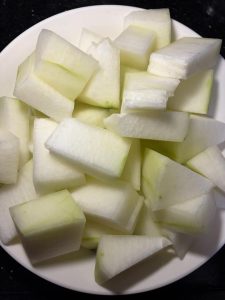
Step 1 — Peel and Cube the Melon
Peel the winter melon, scoop out the seeds and spongy center, and cut the flesh into large, even cubes.
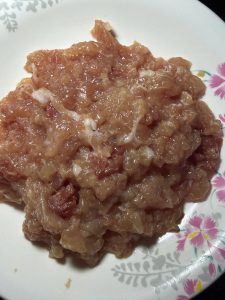
Step 2 — Chop the Pork
Chop the lean pork finely with a knife, or pulse it briefly, until it looks like coarse mince; set it aside.
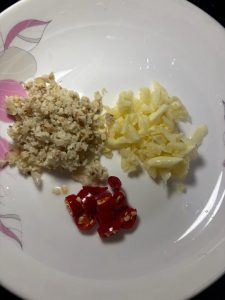
Step 3 — Prep the Aromatics
Smash and chop the three pieces of sand ginger without peeling them, smash and chop the three garlic cloves, and slice the red chili into rings.
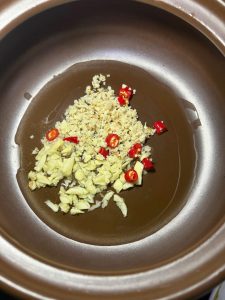
Step 4 — Bloom the Aromatics
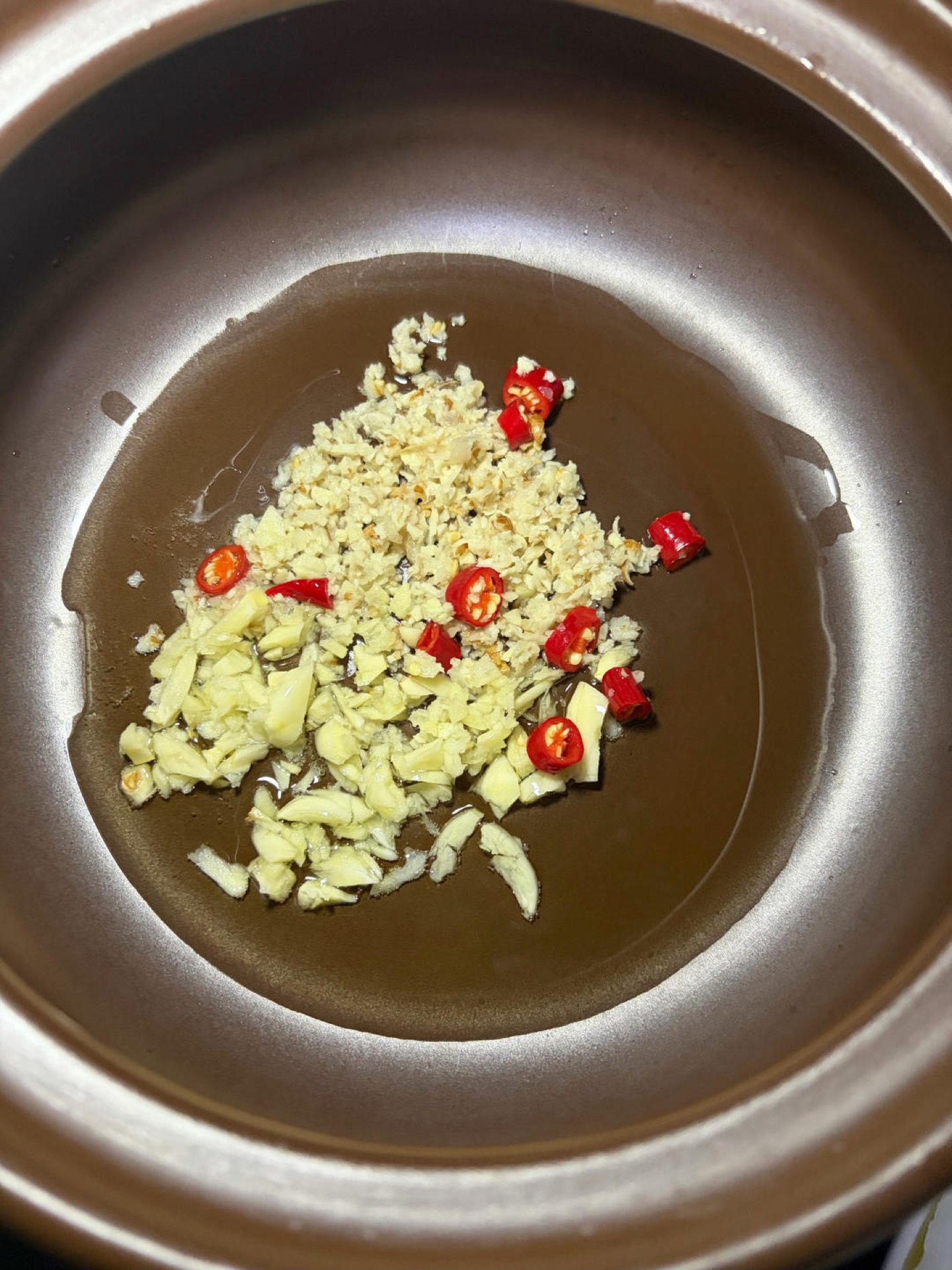
Preheat the clay pot, add the oil, tip in all the aromatics, and fry them over low heat until fragrant.
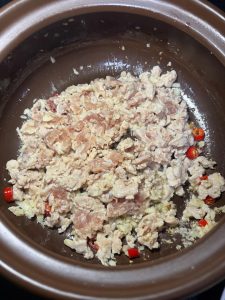
Step 5 — Brown the Pork
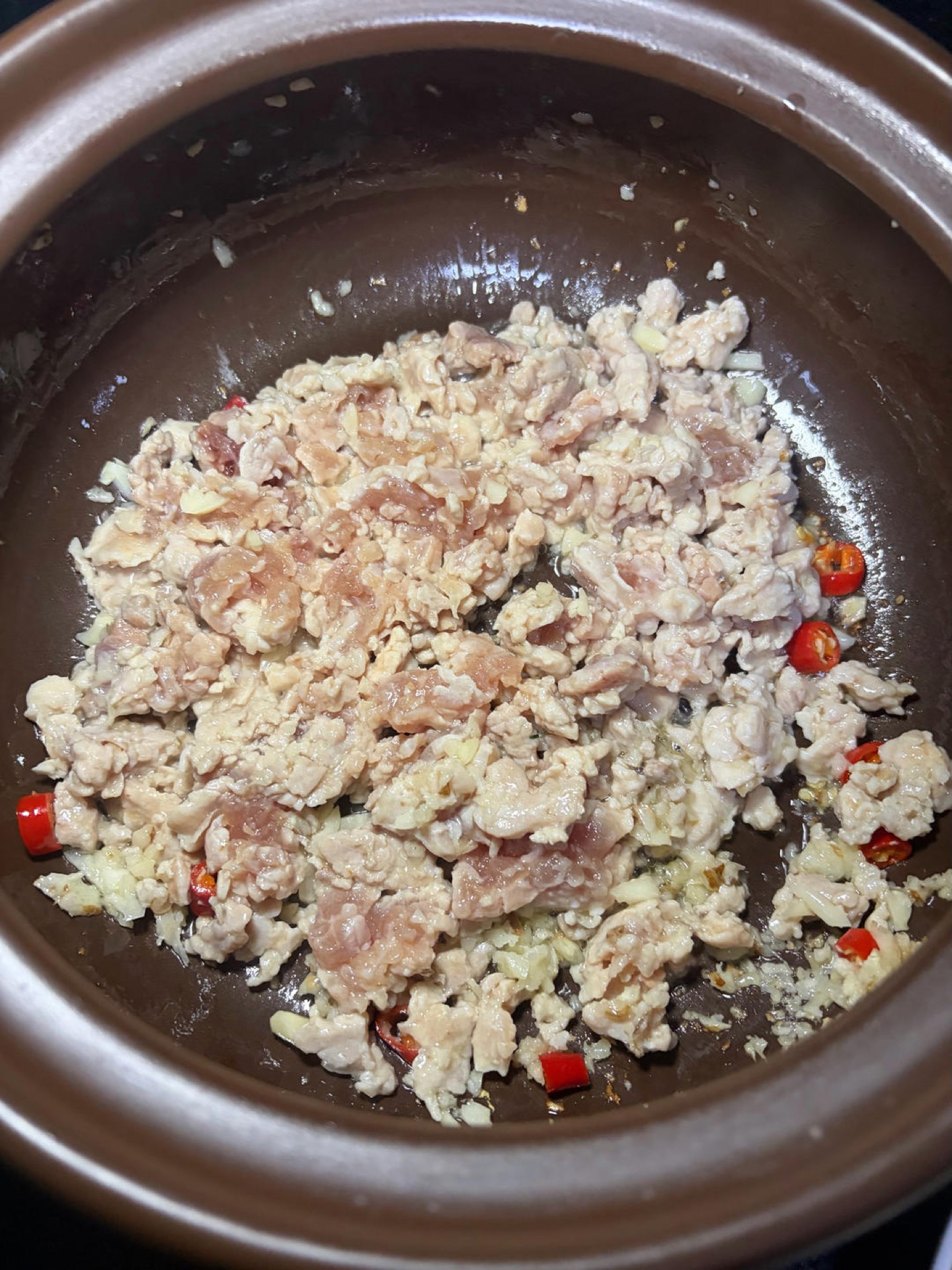
Add the minced pork and stir-fry over medium-low heat until the surface turns lightly golden.
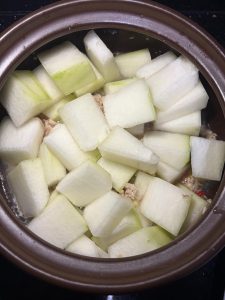
Step 6 — Add the Melon
Add the winter melon cubes and pour in about half a bowl of water, no more, because the melon will release its own liquid.
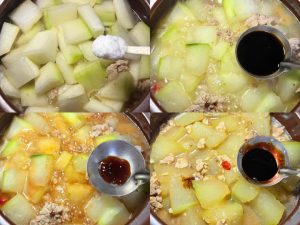
Step 7 — Season and Braise
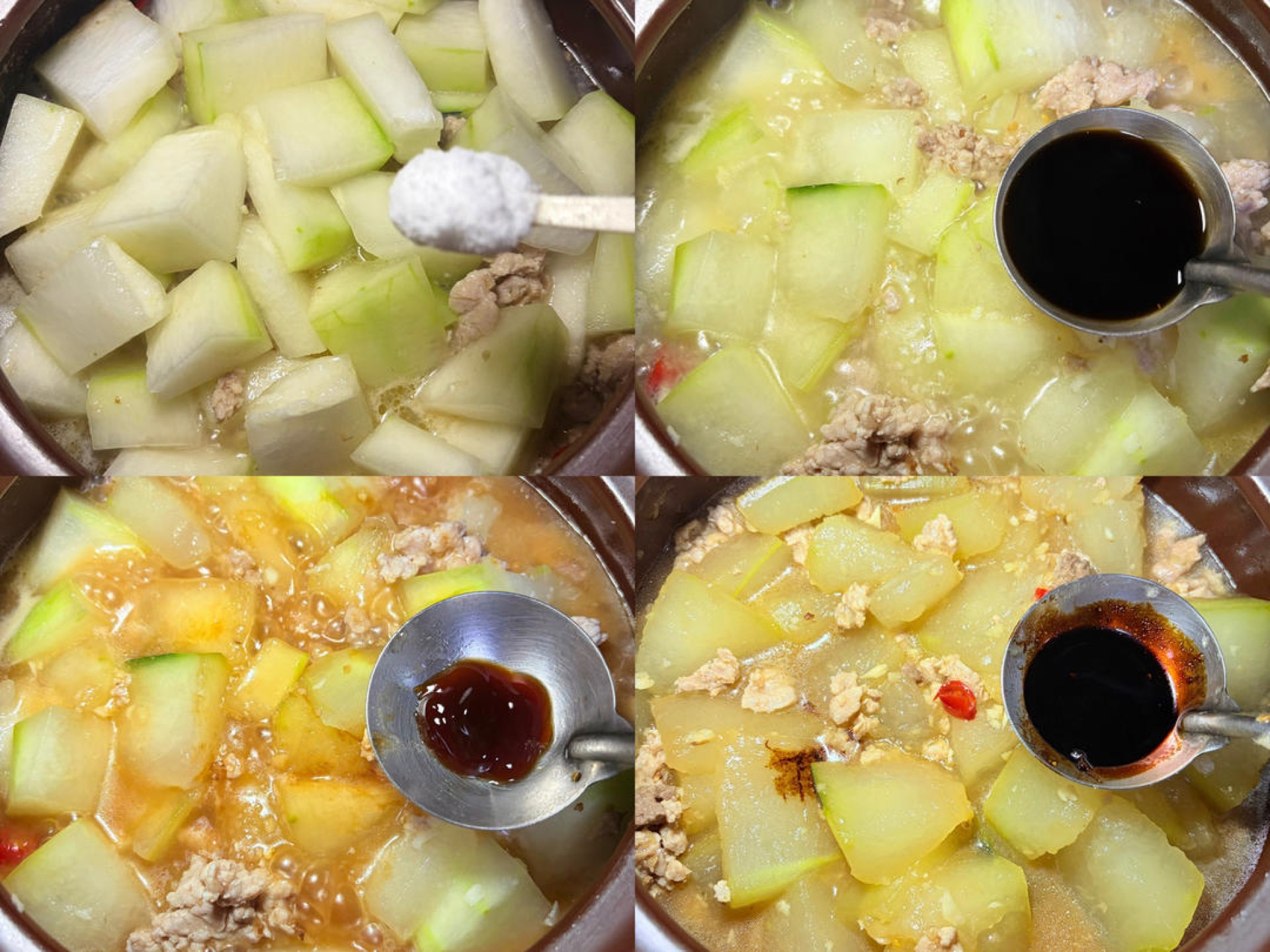
Add a small spoon of salt and toss, then add the light soy sauce, oyster sauce and dark soy sauce, mix well, cover the pot and braise over medium-low heat for about 10 minutes.
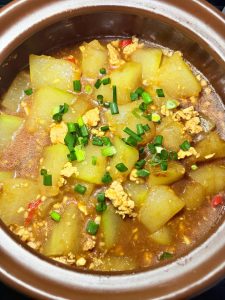
Step 8 — Finish with Scallion
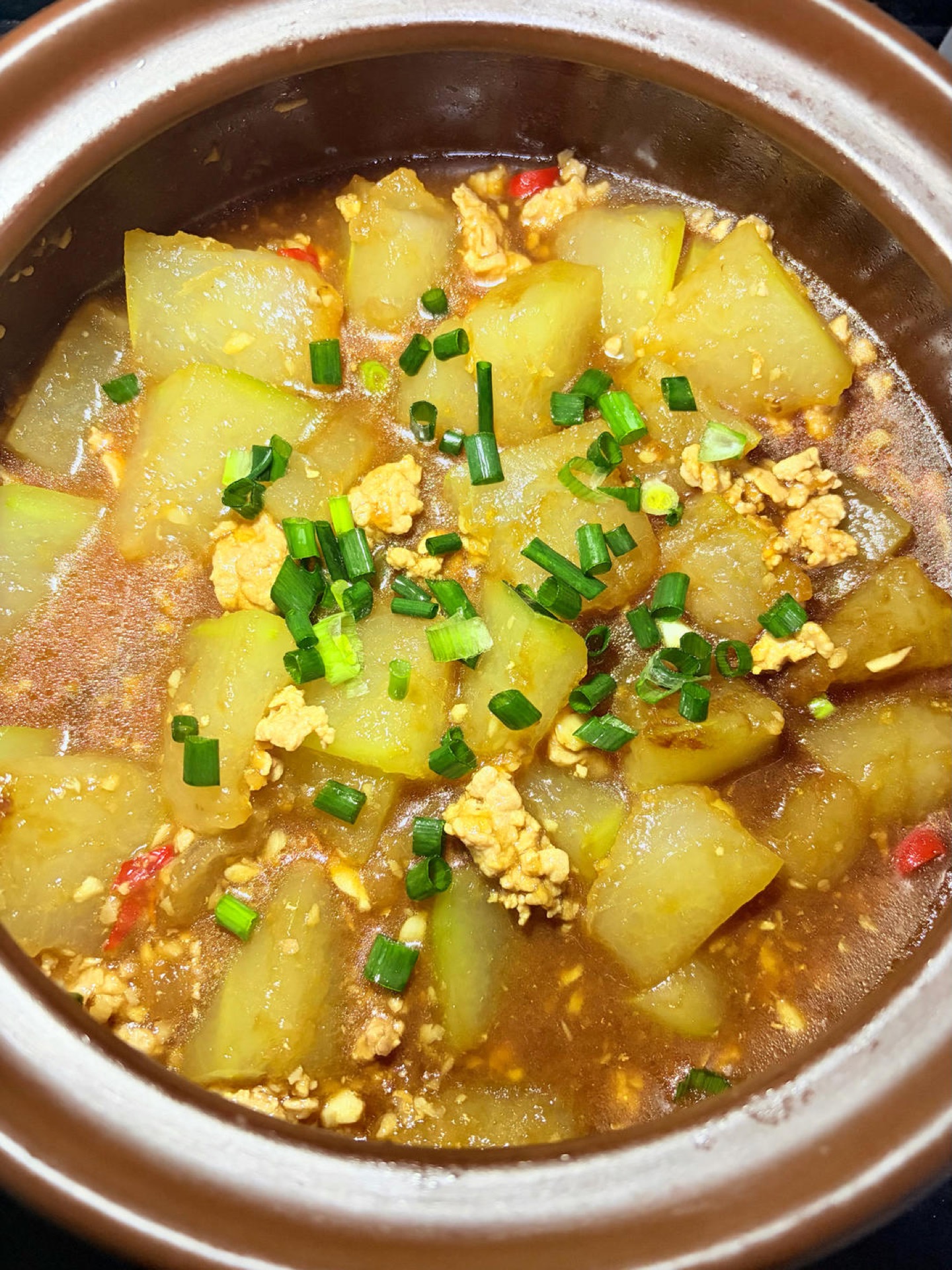
Scatter the sliced scallion over the top and serve straight from the pot.
Common Mistakes When Making Braised Winter Melon with Minced Pork
1. Adding too much water. This is the mistake that ruins the dish most often. Winter melon releases a surprising amount of liquid as it cooks, so half a cup is usually all you need, and sometimes less. If you fill the pot like a soup, the melon steams into mush and the sauce never reduces. Fix: start with half a cup, keep the lid on, and only add a splash more if the pot looks dry at the five-minute mark.
2. Cutting the melon too small. Small cubes cook through in three minutes and then keep going, breaking down into a soft, shapeless mass. Fix: cut generous 1½-inch cubes. They will shrink to roughly an inch by the time they are done, which is exactly the right bite.
3. Leaving the spongy seed core in. The soft, fibrous center around the seeds never gets tender and tastes watery. It also releases a lot of extra liquid. Fix: scoop it out completely with a spoon before cubing. If you are short on time, at least remove the seeds and the loosest fibers.
4. Burning the aromatics. Sand ginger, garlic and chili are all easy to scorch, and burnt garlic turns the whole pot bitter. Fix: keep the heat low when the aromatics go in, and stir constantly for just 30 to 45 seconds, until they smell fragrant but have not taken on color.
5. Skipping the browning on the pork. Pale, gray pork gives you a pale, flat sauce. The few extra minutes over medium-low heat build the flavor base for everything that follows. Fix: spread the pork in an even layer, let it sit undisturbed for a minute at a time, and only stir when the underside is lightly golden.
6. Stirring too often during the braise. Every time you lift the lid and stir, you lose heat and break up the softening cubes. Fix: cover the pot, set a timer for ten minutes, and leave it alone. One gentle toss at the halfway point is plenty.
7. Adding the dark soy too early or too generously. Dark soy is intensely colored and slightly sweet; a little goes a long way. Overpouring gives you a black, bitter sauce. Fix: measure the half tablespoon, and add it with the other sauces rather than at the start.
8. Salting before tasting. The three sauces are already salty, and the melon dilutes them as it releases water. Fix: add the small spoon of salt as directed, then taste the sauce at the end and adjust. Nine times out of ten it needs nothing more.
Variations
With dried shrimp. Soak a small handful of dried shrimp in warm water for ten minutes, chop them, and add them with the aromatics. They add a deep seafood savoriness that pairs beautifully with the sweet melon — this is a common Cantonese upgrade.
With glass noodles. Soak a bundle of mung bean vermicelli until pliable and lay it in the pot under the melon before the lid goes on. The noodles soak up the sauce and turn the dish into a one-pot meal. Add an extra quarter cup of water to account for what the noodles drink.
With fermented black beans. Rinse and mash a teaspoon of fermented black beans and add them with the garlic. The result is saltier, funkier and more intensely savory — a good match for steamed rice.
With pork belly instead of lean pork. If you want the richer, fattier version, use skinless pork belly cut into small dice rather than mince, and render it slowly before adding the aromatics. The sauce becomes glossier and more decadent; the melon becomes even more melting.
Vegetarian version. Skip the pork entirely and use finely chopped shiitake mushrooms plus a teaspoon of vegetarian oyster sauce. Brown the mushrooms well before adding the melon — they need the same Maillard treatment the pork gets.
Spicier clay pot version. Double the chili, add a teaspoon of chili bean paste with the sauces, and finish with a drizzle of chili oil. This moves the dish toward a Hunan-style profile, which is excellent over plain rice.
If you like the way minced pork behaves in a savory sauce, my savory minced pork sauce is the same idea taken to its logical conclusion — a jar of sauce you keep in the fridge and spoon over everything.
Frequently Asked Questions
Can I make this with regular ginger instead of sand ginger? Yes, but the flavor changes noticeably. Sand ginger is sharper, more floral and slightly peppery; regular ginger is warmer and more citrusy. Use the same quantity of regular ginger and add a pinch of ground white pepper to get closer to the original. If you can find frozen or dried sand ginger at an Asian market, it is worth stocking.
Do I need a clay pot? No, but it helps. A heavy Dutch oven or a deep saucepan with a tight lid gives you the same even, gentle heat. A wok works if it has a lid, though you may need an extra splash of water because of the wider evaporation surface. What matters most is a tight-fitting lid and low, steady heat.
How do I know when the winter melon is done? The cubes should be fully translucent, from the outside all the way to the center, and a chopstick should slide through with almost no resistance. Raw winter melon is opaque white-green in the middle; if you still see a pale core, give it three more minutes covered.
Can I make this ahead of time? Yes, and it reheats well — arguably it tastes even better the next day, once the melon has had time to absorb the sauce fully. Cool it quickly, refrigerate in a sealed container, and reheat gently in a covered pot with a tablespoon of water so the melon does not scorch.
Is winter melon the same as wax gourd or ash gourd? Yes — winter melon, wax gourd, ash gourd and white gourd are all common English names for the same vegetable, Benincasa hispida. It is unrelated to watermelon despite the name; the “winter” refers to its long storage life, not its season.
Why is my sauce watery? Almost always too much added water, or a lid that does not seal. Winter melon provides most of the liquid the dish needs. If your sauce is thin at the end, take the lid off and simmer for two or three minutes over medium heat to reduce it — do not add starch.
How to Serve
This dish belongs in the middle of a table, not on a plate by itself. Serve it with steamed jasmine rice and one or two other dishes — a green vegetable, a quick egg dish, something cold and pickled. The melon is soft and saucy enough to spoon directly over rice, which is how most people at a Cantonese table actually eat it.
If you are building a clay pot–themed meal, my Cantonese clay pot rice makes a natural centerpiece, with this melon and pork as the vegetable alongside it. For a lighter, faster table, a plate of minced pork with baby bok choy plus this dish gives you two pork-and-vegetable plates in under forty minutes total. And if you want something cold and bright to cut the richness, a plate of orange winter melon shrimp balls uses the same gourd in a completely different register.
The dish is also excellent over plain congee for a soft, comforting breakfast, and it holds up as a lunchbox item because it does not need to be piping hot to taste good.
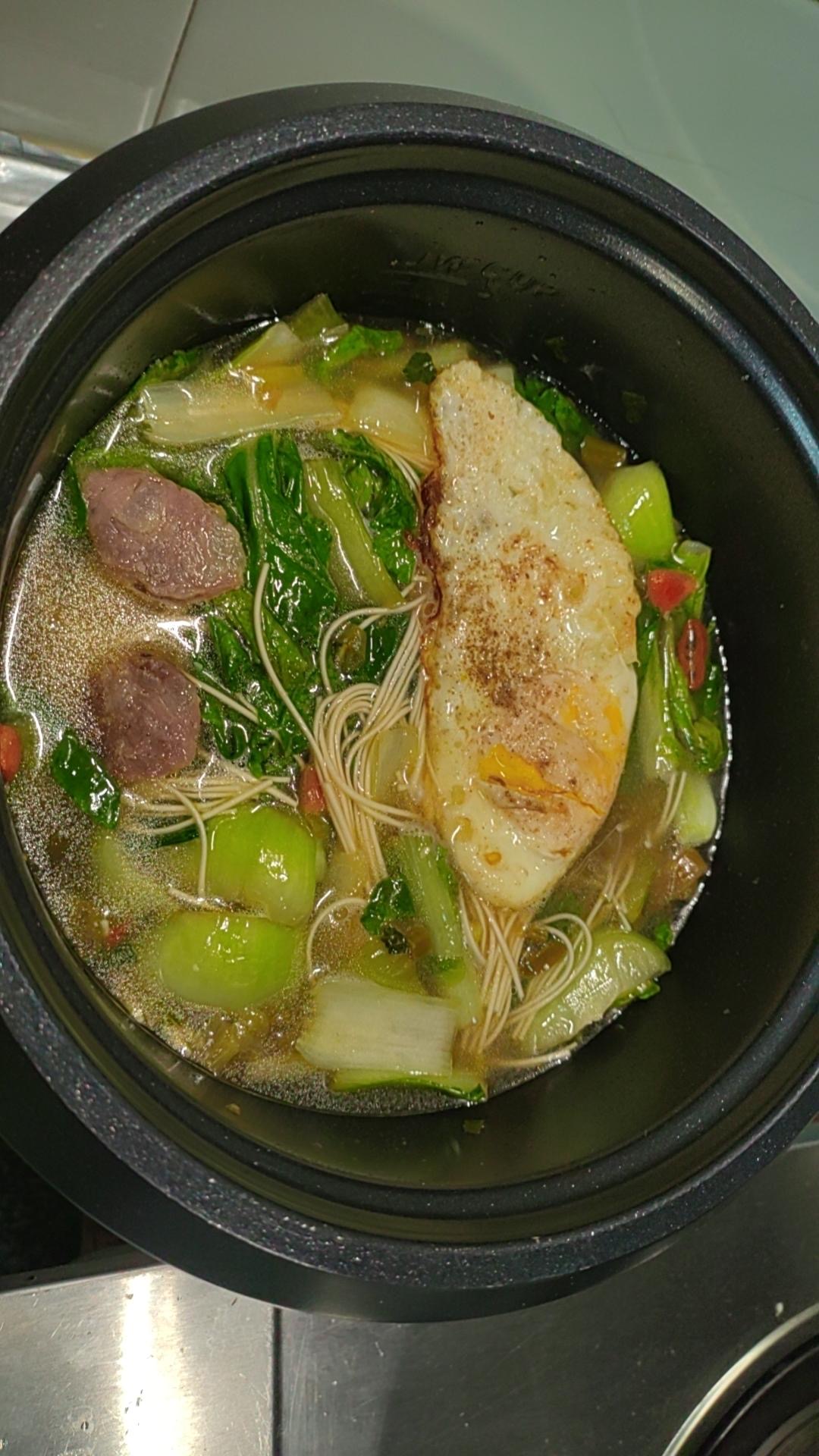
Serve it alongside Rice Cooker Sausage Veggie Noodles for a two-dish table.
Storage & Reheat
Cool the dish within an hour of cooking, then transfer it to a shallow, sealed container. It keeps in the refrigerator for up to three days. Because the melon continues to soften in the sauce, day-two leftovers are softer than day-one — still delicious, but expect the cubes to give way more easily.
Reheat in a covered pot or saucepan over medium-low heat with a tablespoon of water to prevent sticking, stirring once or twice, until the sauce is bubbling and the melon is hot all the way through. In the microwave, cover and heat in one-minute bursts, stirring between them. Aim for 165°F (74°C) throughout.
I do not recommend freezing this dish. Winter melon’s cell walls are already fully softened by braising, and freezing turns the cubes into spongy, waterlogged pieces that lose their delicate texture entirely. Eat it fresh or within three days.
Allergen Notice
This recipe contains soy, from both the light soy sauce and the dark soy sauce. Oyster sauce is made from oysters and often contains wheat, so it carries both a shellfish and a possible gluten concern — check the label, or substitute a vegetarian oyster sauce made from mushrooms, which usually contains soy but no shellfish. If you need a gluten-free version, use tamari in place of light soy sauce, a gluten-free dark soy, and a gluten-free oyster sauce. The dish is naturally free of dairy, eggs, peanuts and tree nuts.
Nutrition Disclaimer
Nutrition information is calculated using an ingredient database and should be considered an estimate. In cases where multiple ingredient alternatives are given, the first listed is calculated for nutrition. Garnishes and optional ingredients are not included.
About the Author & Recipe Development
I’m Lin, and I cook and write about Chinese home cooking at Woks of Love. I grew up watching my mother and grandmother cook the way most southern Chinese home cooks do — by feel, by sound, and by the look of a sauce rather than by a timer. This recipe comes from that tradition: a thrifty clay pot dish built around a cheap gourd, seasoned with whatever was in the kitchen, and judged by one standard only, whether the vegetable tasted better than the meat next to it.
For this version I tested the dish with both hand-chopped pork and store-bought ground pork, at three different water amounts, and with regular ginger versus sand ginger. The version below reflects what consistently gave the best result: coarser pork, less water than instinct suggests, and sand ginger if you can get it. If you make it, I would love to hear how it turned out — and whether you agree that the melon wins.
Related: nanchang clay pot soup with minced pork egg is a good next cook.
Related: braised tiger skin peppers with minced pork is a good next cook.
Related: silky steamed egg with minced pork is a good next cook.
If you liked this, cantonese clay pot rice is worth cooking next.
If you liked this, mushroom chicken clay pot rice is worth cooking next.
Authoritative References
For safe handling and cooking temperatures for ground pork, see the USDA safe minimum internal temperature chart. For guidance on cooling and storing cooked leftovers, the FDA’s cold food storage guidance is a useful reference. For the browning chemistry that gives this dish its depth, Harold McGee’s plain-language explanation of the Maillard reaction is worth reading.
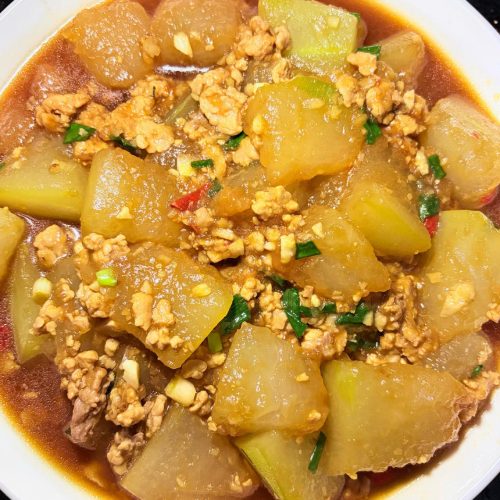
Braised Winter Melon with Minced Pork (冬瓜炒肉末): Tender Melon

Equipment
- Wok
- Cutting Board
- Slotted Spoon
Ingredients
For the Aromatics
- 3 pieces sand ginger about 3 small pieces, smashed and roughly chopped, skin left on
- 3 cloves garlic smashed and roughly chopped
- 1 piece fresh red chili sliced into rings, seeds left in for heat
- 1 stalk scallion thinly sliced, for finishing
For the Dish
- 1.1 lb winter melon about 500g, peeled, seeded, cut into large cubes
- 7 oz lean pork about 200g, hand-chopped or coarsely ground
- 1 tbsp neutral oil for the clay pot or wok
- 1/2 cup water plus more only if the pot runs dry
For the Sauce
- 1 tsp salt plus more to taste
- 1 tbsp light soy sauce or tamari
- 1/2 tbsp oyster sauce vegetarian oyster sauce works too
- 1/2 tbsp dark soy sauce for color, not for salt
Instructions
- Peel the winter melon, scoop out the seeds and spongy center, and cut the flesh into large, even cubes.

- Chop the lean pork finely with a knife, or pulse it briefly, until it looks like coarse mince; set it aside.
- Smash and chop the three pieces of sand ginger without peeling them, smash and chop the three garlic cloves, and slice the red chili into rings.
- Preheat the clay pot, add the oil, tip in all the aromatics, and fry them over low heat until fragrant.
- Add the minced pork and stir-fry over medium-low heat until the surface turns lightly golden.
- Add the winter melon cubes and pour in about half a bowl of water, no more, because the melon will release its own liquid.
- Add a small spoon of salt and toss, then add the light soy sauce, oyster sauce and dark soy sauce, mix well, cover the pot and braise over medium-low heat for about 10 minutes.

- Scatter the sliced scallion over the top and serve straight from the pot.












Leave a Reply