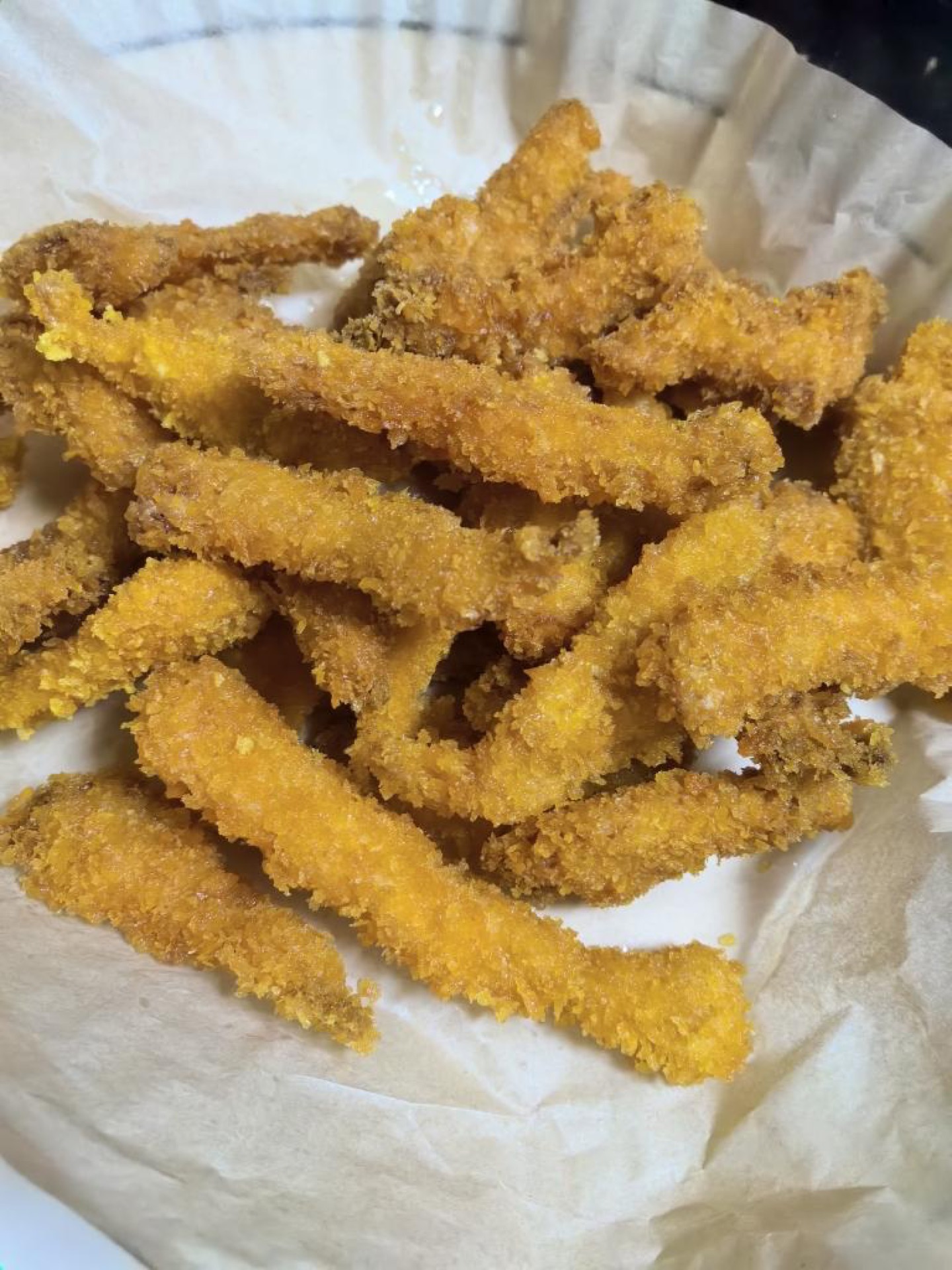
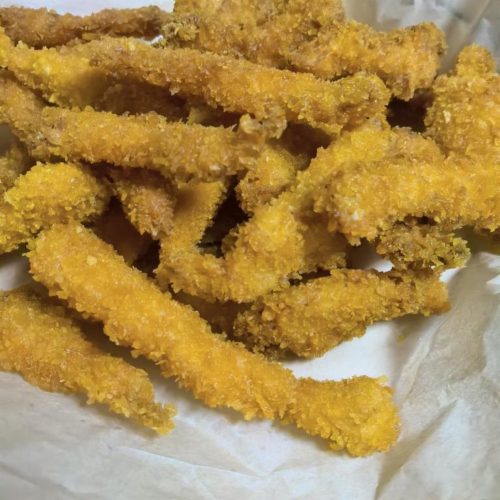
There is a very specific kind of magic to a plate of Orleans-style chicken tenders: the smell of smoky-sweet spice hitting hot oil, the audible crunch when you bite through that craggy panko shell, and the rush of juice from the chicken inside. If you grew up eating 奥尔良 chicken from a Chinese fast-food counter, this is that flavor — recreated at home, with a crust that stays crisp far longer than the takeout version ever does.
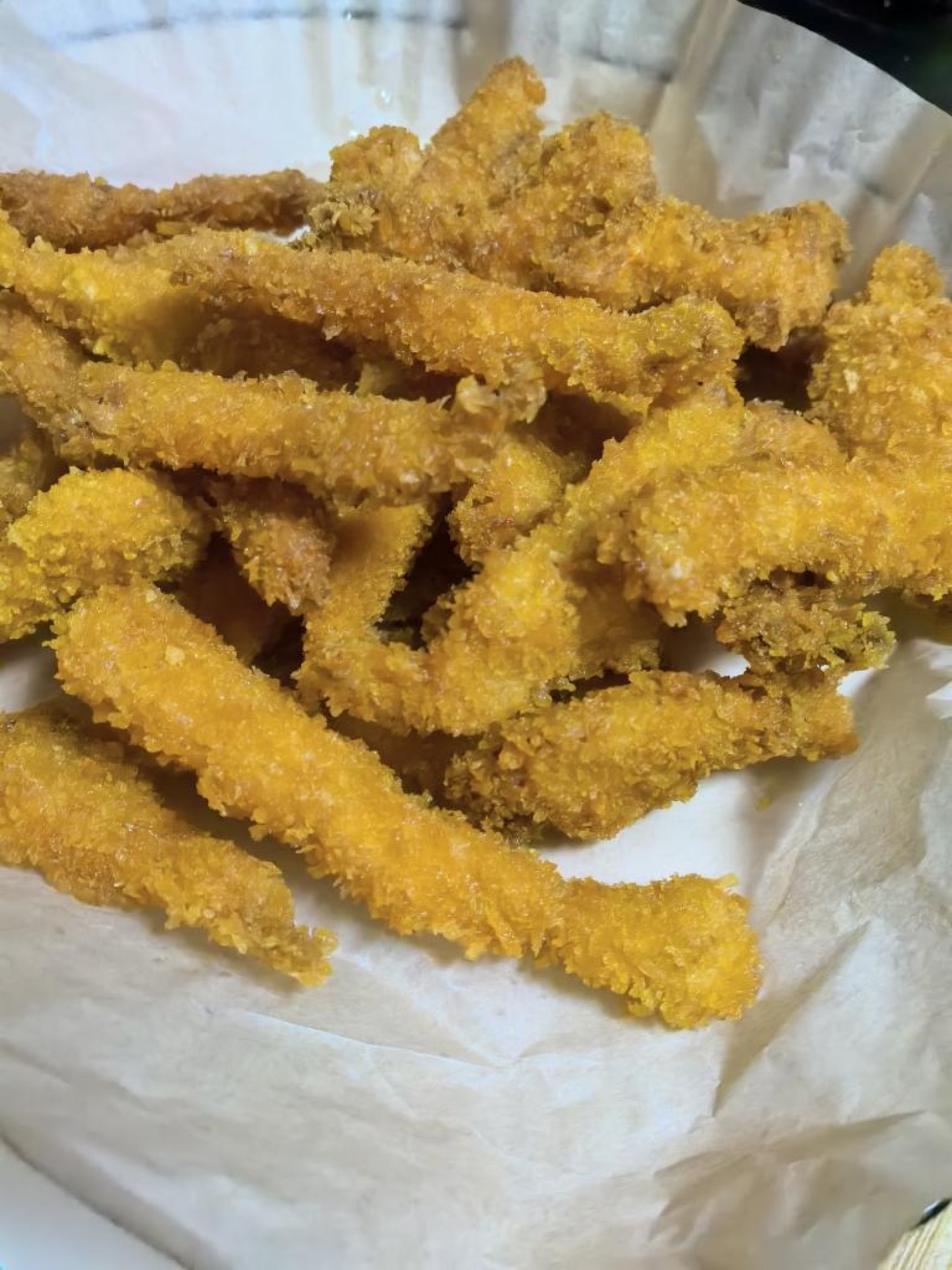
The secret is not a complicated batter. It is a three-step coating — cornstarch, then egg, then panko — and a marinade that does double duty as seasoning and tenderizer. Cornstarch is the quiet hero here: it clings to the wet chicken, dries into a thin shell, and fries into that shattery, glassy crispness that panko alone can never give you. The egg is the glue between the two, and the panko is the crunch you feel in your back teeth.
And because the strips are thin — about the width of your pinky — they cook in under three minutes per batch. That is fast enough that the chicken never has a chance to dry out, which is the usual fate of chicken breast. You get the best of both worlds: a crust with real structure and meat that still tastes like meat.
What Is Orleans-Style Chicken Tenders?
Orleans-style chicken tenders — 奥尔良鸡柳 — are strips of chicken breast marinated in 奥尔良 seasoning, coated in starch, egg and breadcrumbs, and deep-fried until golden. The name has nothing to do with New Orleans, Louisiana. “奥尔良” (Ào’ěrliáng) is the Chinese transliteration of “Orleans,” and it became the shorthand in China for a specific sweet-smoky-spicy seasoning blend — paprika, garlic, onion, black pepper, a little sugar, a little chili — that KFC popularized on grilled chicken in the 2000s. It is now one of the most recognizable flavors in Chinese fast food, sold as a powder in every supermarket and used on everything from wings to 鸡柳.
The 鸡柳 part means “chicken willow strips” — thin, tender cuts of breast meat. Put the two together and you have a snack that sits right at the intersection of Chinese street food and American fried chicken: familiar, a little sweet, a little smoky, and dangerously easy to eat by the handful.
If you want the same crispy coating technique applied to other cuts, our air fryer chicken breast with garlic cumin uses a chicken breast version of the classic 小酥肉 method, and our crispy sesame chicken bites swap panko for a sesame-flecked shell. And for an air-fryer route to juicy chicken, these air fryer chicken breast recipes with garlic cumin are a great place to start.
13 Easy Air Fryer Chicken Breast Recipes (Garlic, Cumin & Crispy)Say goodbye to dry chicken. Here are three chef-tested ways to cook juicy chicken breast in the air fryer: Garlic Sesame, Cumin BBQ, and Crispy Sichuan Style. Perfect for meal prep or a quick Chinese dinner.Check out this recipe
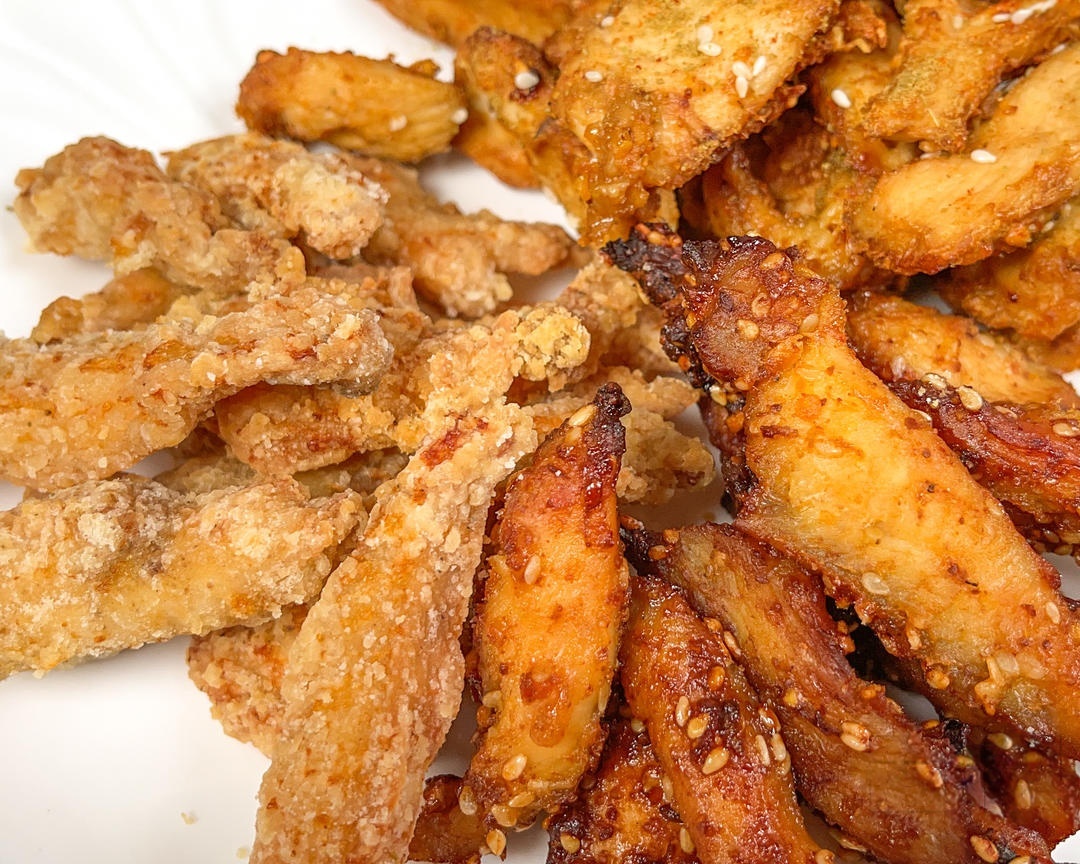
Cooked this way once, you will want the next one too: Sichuan crispy fried chicken starts from the same base and the same pan.
2Sichuan Crispy Fried Chicken (Xiao Su Rou) – Chicken Breast VersionA lighter twist on the Sichuan classic. Juicy chicken breast strips coated in a crispy beer and sweet potato starch batter, infused with toasted Sichuan peppercorns. Double-fried for extra crunch.Check out this recipe

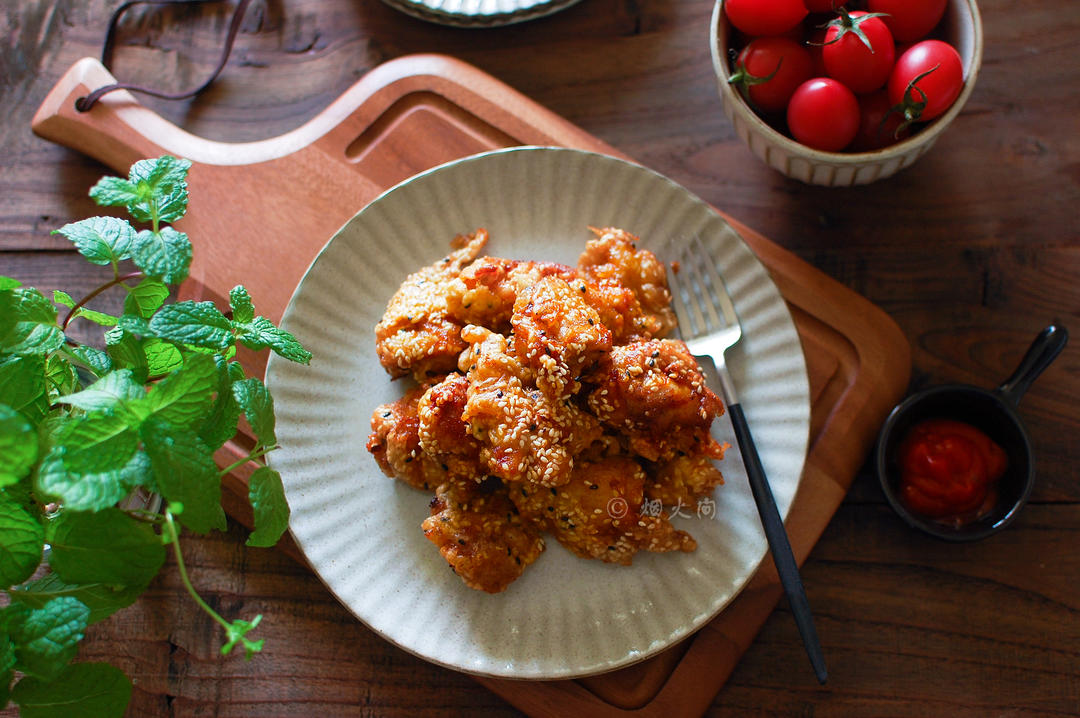
For the next cook from the same playbook, crispy sesame chicken bites is the recipe I point people to.
3Crispy Sesame Chicken BitesThese fragrant, golden-fried chicken bites feature a crunchy sesame-infused batter encasing juicy, tender thigh meat. A double-fry technique ensures they stay crispy, better than any takeout!Check out this recipe
Ingredient Notes
Chicken breast. One large breast, about 1 lb (450 g), is enough for four servings once it is sliced into strips. Look for a breast without a thick band of sinew running down the middle; if you find one, trim it out. You can substitute chicken thigh, but the texture will be softer and the strips will need an extra minute or so in the oil.
Orleans seasoning (奥尔良料). Sold in Chinese supermarkets as a powder packet, usually 20-35 g. The blend is built on paprika, sugar, garlic powder, onion powder, black pepper, salt, and a touch of chili and tomato powder. If you cannot find it, mix 1 tbsp paprika, 2 tsp sugar, 1 tsp garlic powder, 1 tsp onion powder, 1/2 tsp black pepper, 1/2 tsp salt, and 1/4 tsp cayenne. The result is close enough to be worth making.
Cornstarch. Not optional and not interchangeable with flour here. Cornstarch (玉米淀粉) fries into a lighter, crisper shell than wheat flour and gives the panko something to grab onto. Potato starch works too.
Panko. Japanese-style coarse breadcrumbs. Their flaky, jagged shape is what creates the craggy crust. Standard fine breadcrumbs will work but will produce a denser, less shattery coating.
Egg. One large egg, beaten until completely uniform. If your egg is small, add a teaspoon of water.
Oil for frying. A neutral oil with a high smoke point — peanut, canola, or rice bran oil. You need enough to submerge the strips, roughly 4 cups in a wok or 2 inches in a deep saucepan.
Ingredients
Here is everything you need, in US measures with metric equivalents where it matters:
- 1 lb (450 g) chicken breast, sinew removed, sliced 1 cm thick then into pinky-width strips
- 1 packet (about 20 g / 2 tbsp) Orleans seasoning
- 1/2 cup (60 g) cornstarch
- 1 large egg, beaten
- 1 cup (60 g) panko breadcrumbs
- 4 cups neutral oil, for frying
That is the entire list — five ingredients plus oil. The flavor comes from the seasoning blend, not from a long ingredient roster.
Equipment Needed
- Wok or deep saucepan — for deep frying. A wok’s wide surface gives you more room to fry in batches without the oil temperature dropping.
- Cutting board and sharp knife — for trimming sinew and cutting even strips.
- Three shallow bowls — one for cornstarch, one for egg, one for panko. This is the coating station.
- Slotted spoon or spider — for lifting the strips out and letting oil drain back.
- Kitchen thermometer — the single most useful tool here. 6成热 translates to roughly 320-340°F (160-170°C), and guessing is how you end up with burnt crusts and raw centers.
- Wire rack set over a sheet pan — for draining. Paper towels steam the crust; a rack keeps it crisp.
Why This Recipe Works
Three things are doing the heavy lifting.
First, the cut. Pinky-width strips of chicken breast are thin enough to cook through in about 2-3 minutes at 320-340°F. That short window means the meat never passes the point where it starts squeezing out its own moisture and turning chalky. Thick nuggets need longer, and longer means dryer.
Second, the starch layer. Cornstarch on wet meat does something flour cannot: it gelatinizes and then dehydrates into a thin, brittle film. That film is what makes the first bite audibly crack. It also creates a rough surface for the egg to cling to, which in turn holds the panko.
Third, the double-coat architecture. Starch-then-egg-then-panko is a sandwich. The egg is not just glue — it is a moisture barrier that keeps the panko from going soggy from the inside while the outside fries. And panko’s coarse flakes mean less surface contact between crumbs, so oil drains away instead of pooling.
Why does cornstarch fry crisper than flour? Because starch granules gelatinize and then set into a rigid, low-protein film, while flour’s gluten network stays slightly elastic and absorbs more oil. Harold McGee’s On Food and Cooking covers the starch-versus-gluten distinction in detail.
One more thing: the marinade is doing more than flavoring. Orleans seasoning contains salt and sugar. The salt seasons the meat and lightly denatures surface proteins so they hold water; the sugar caramelizes slightly during frying and deepens the color. Thirty minutes is enough for thin strips — you do not need overnight.
Prep & Mise en Place
Get everything ready before the oil goes on, because once frying starts you will not have a free hand.
- Trim and slice the chicken. Remove any sinew or connective tissue from the breast. Slice the breast into pieces about 1 cm thick, then cut those into strips the width of your pinky finger. Even sizing matters more than perfect shape.
- Marinate. Toss the strips with the Orleans seasoning until every piece is coated. Cover and rest for 30 minutes at room temperature, or up to 4 hours refrigerated.
- Set up the coating station. Put cornstarch in the first shallow bowl, beaten egg in the second, panko in the third. Line them up left to right in the order you will use them.
- Set up the draining station. Wire rack over a sheet pan, positioned next to the stove.
- Preheat the oil. Bring 4 cups of oil to 320-340°F (160-170°C). If you do not have a thermometer, drop in a single panko flake: it should sink briefly, then rise and sizzle steadily without instantly browning.
If you are making a larger batch, keep the coated raw strips on a parchment-lined tray in the fridge while you fry the first round. Do not stack them.
Cooking Process
Step 1 — Slice the Chicken
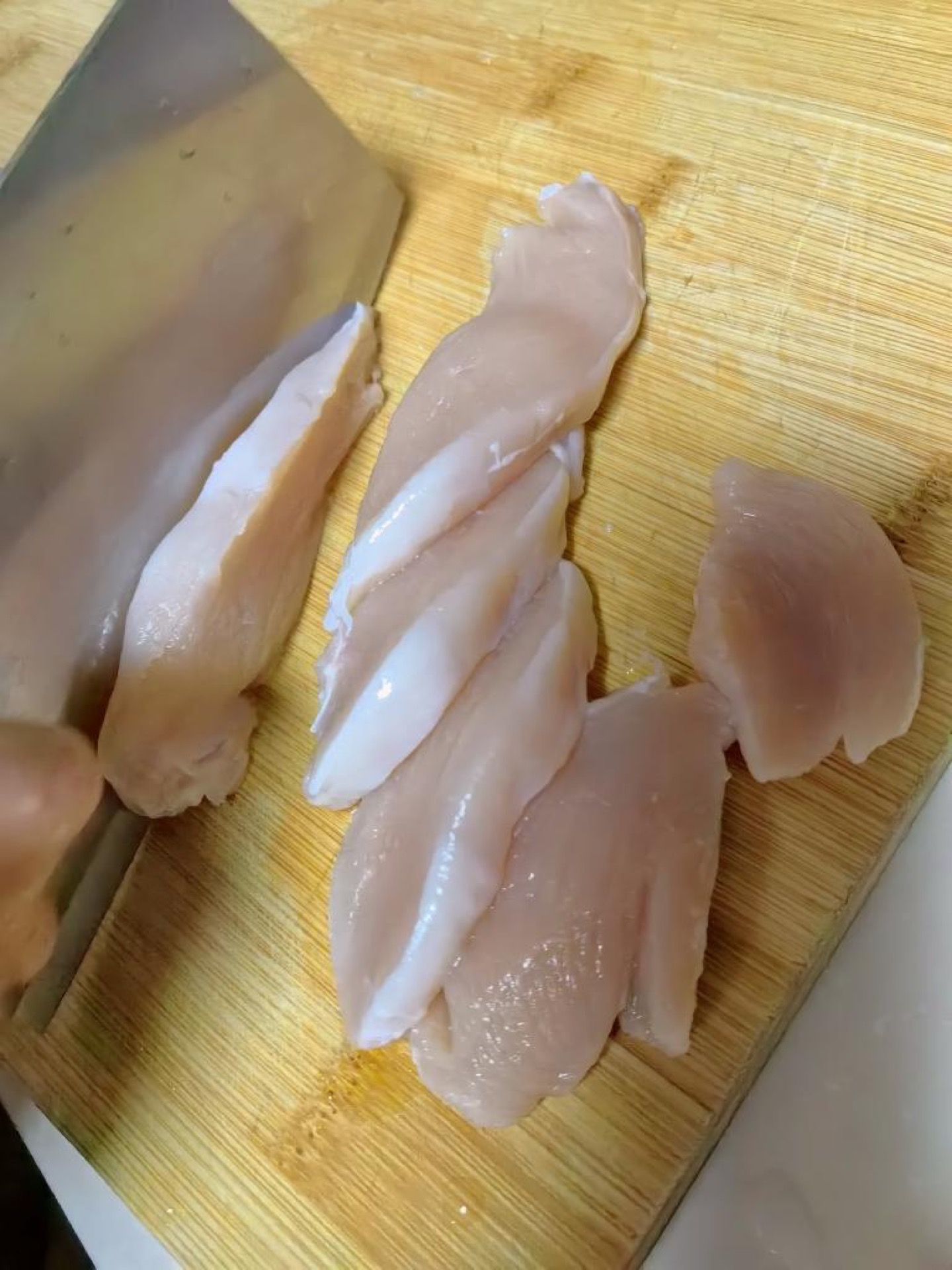
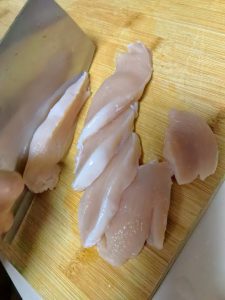
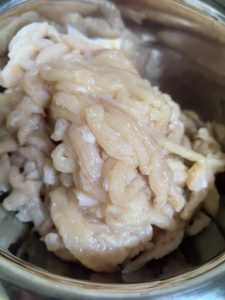
Remove the sinew from the chicken breast, slice it into pieces about 1 cm thick, then cut them into strips the width of a pinky finger.
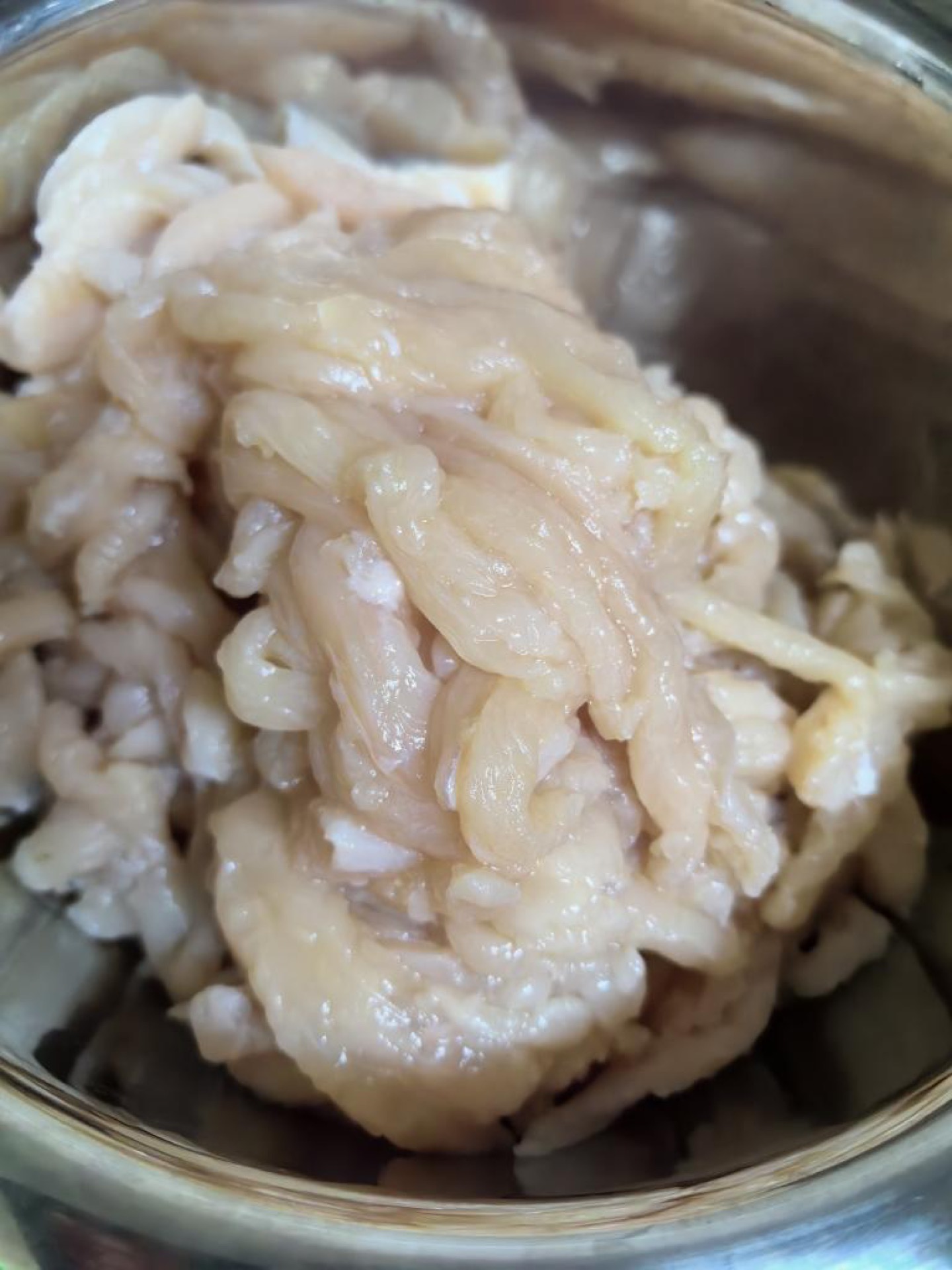
Step 2 — Check the Cut
The strips should be even in size so they cook at the same rate — this is what the pieces should look like.
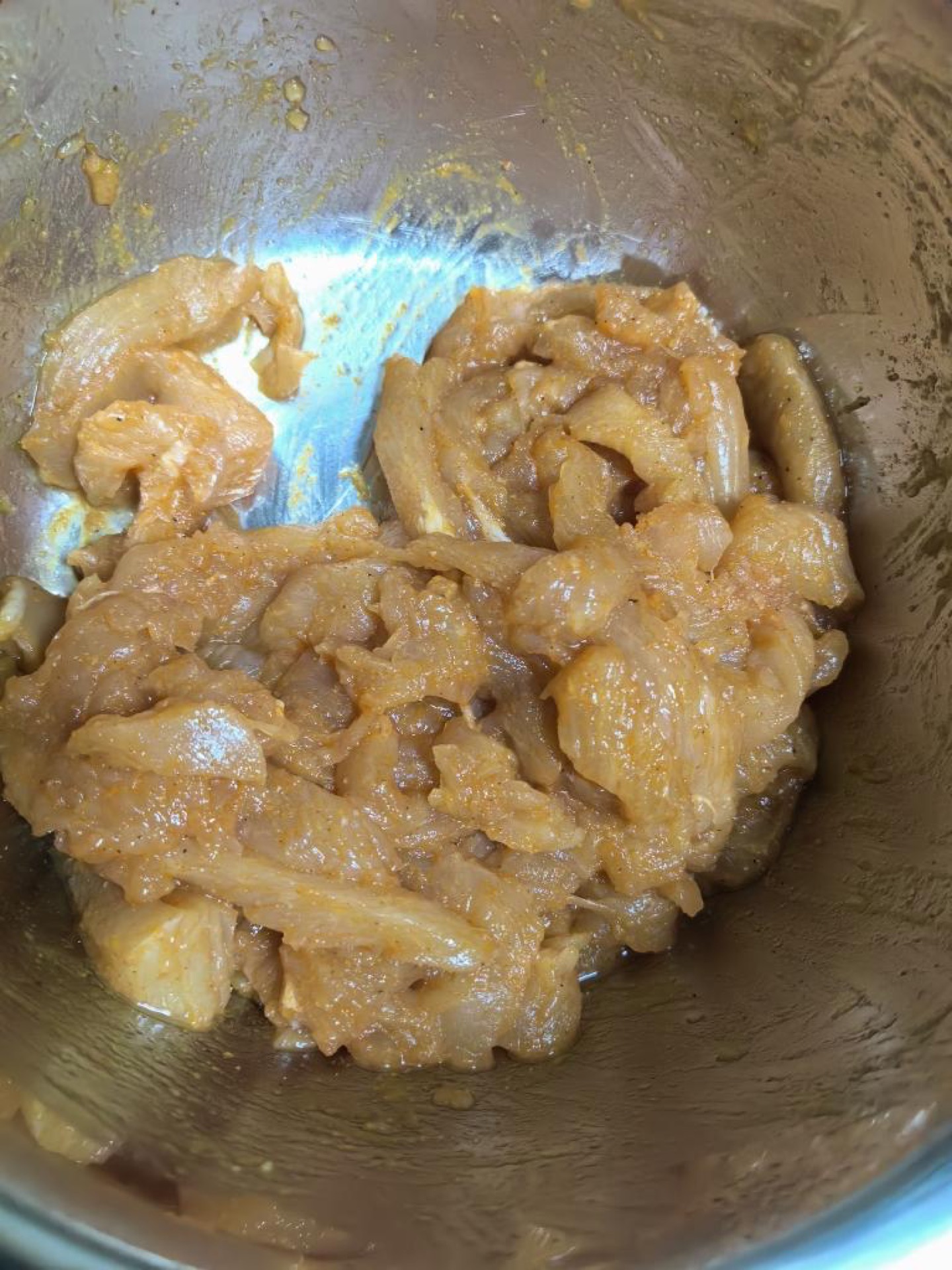
Step 3 — Marinate
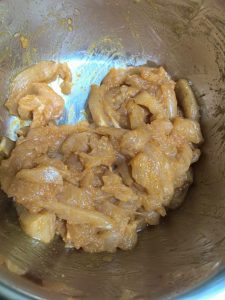
Add the Orleans seasoning to the chicken strips, mix well, and marinate for 30 minutes.
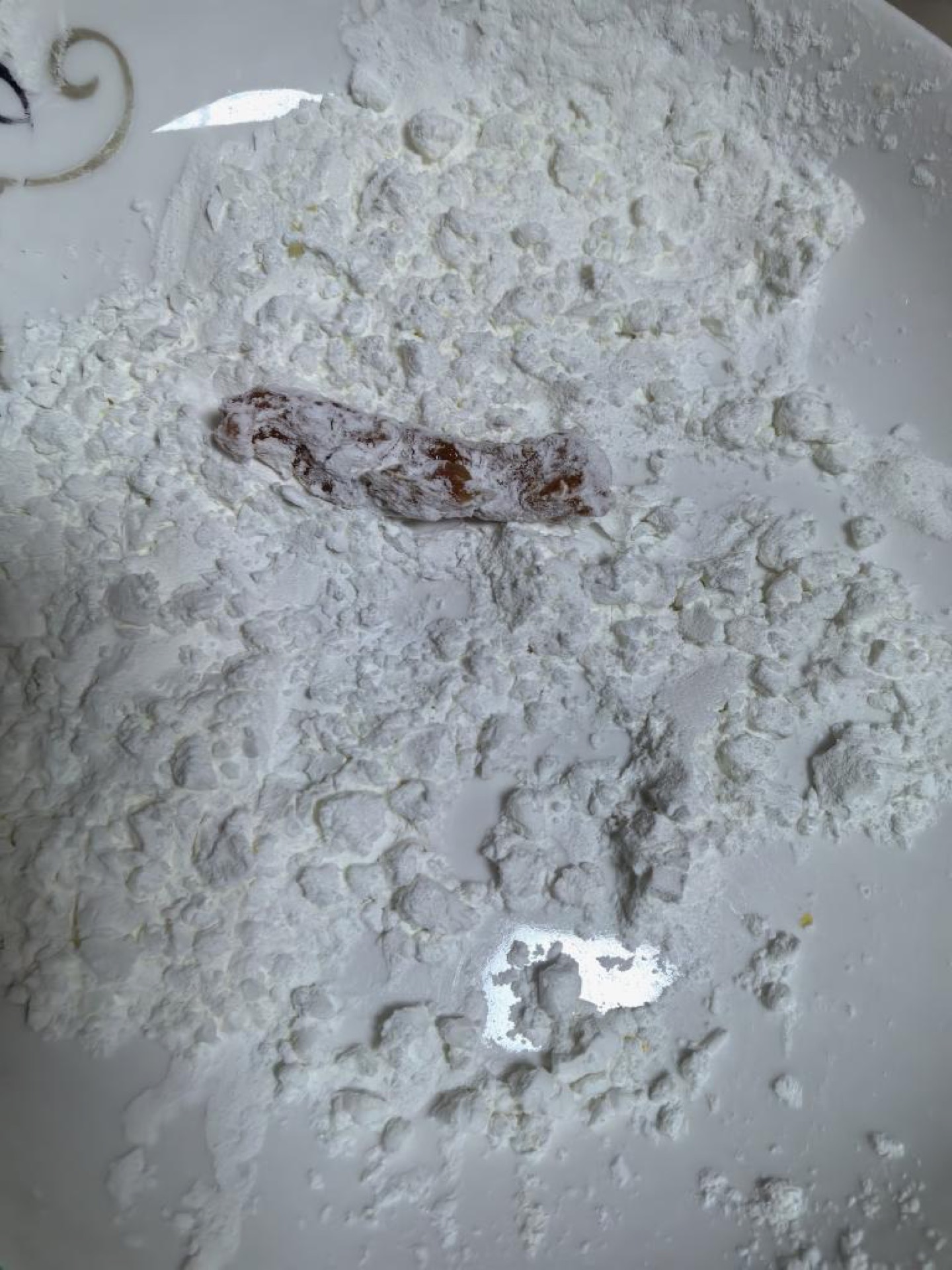
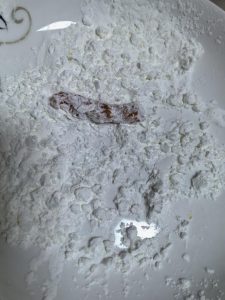
Step 4 — Dredge in Starch
Coat each marinated strip in cornstarch.
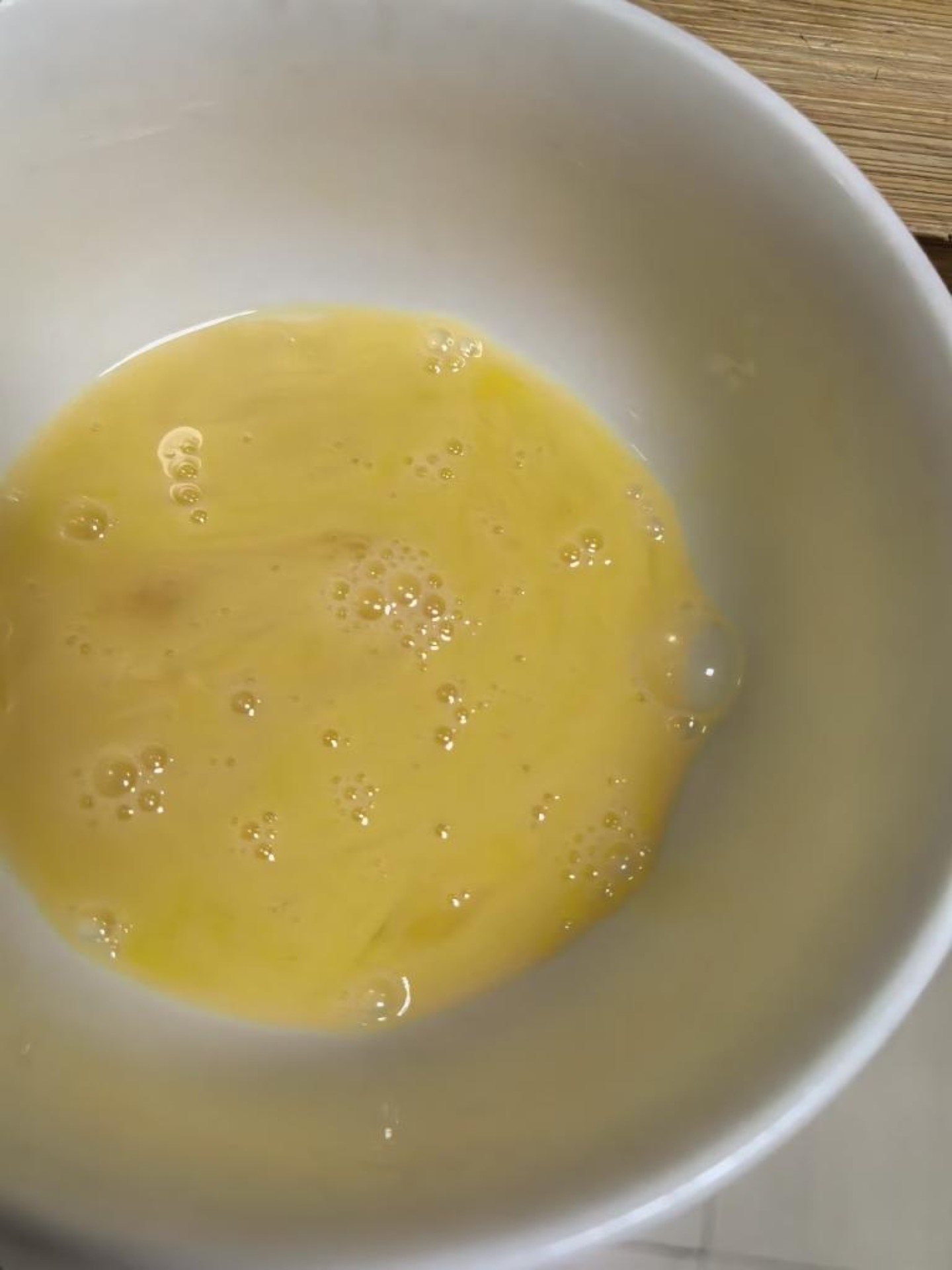
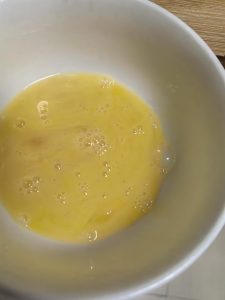
Step 5 — Dip in Egg
Roll the starch-coated strip through the beaten egg.
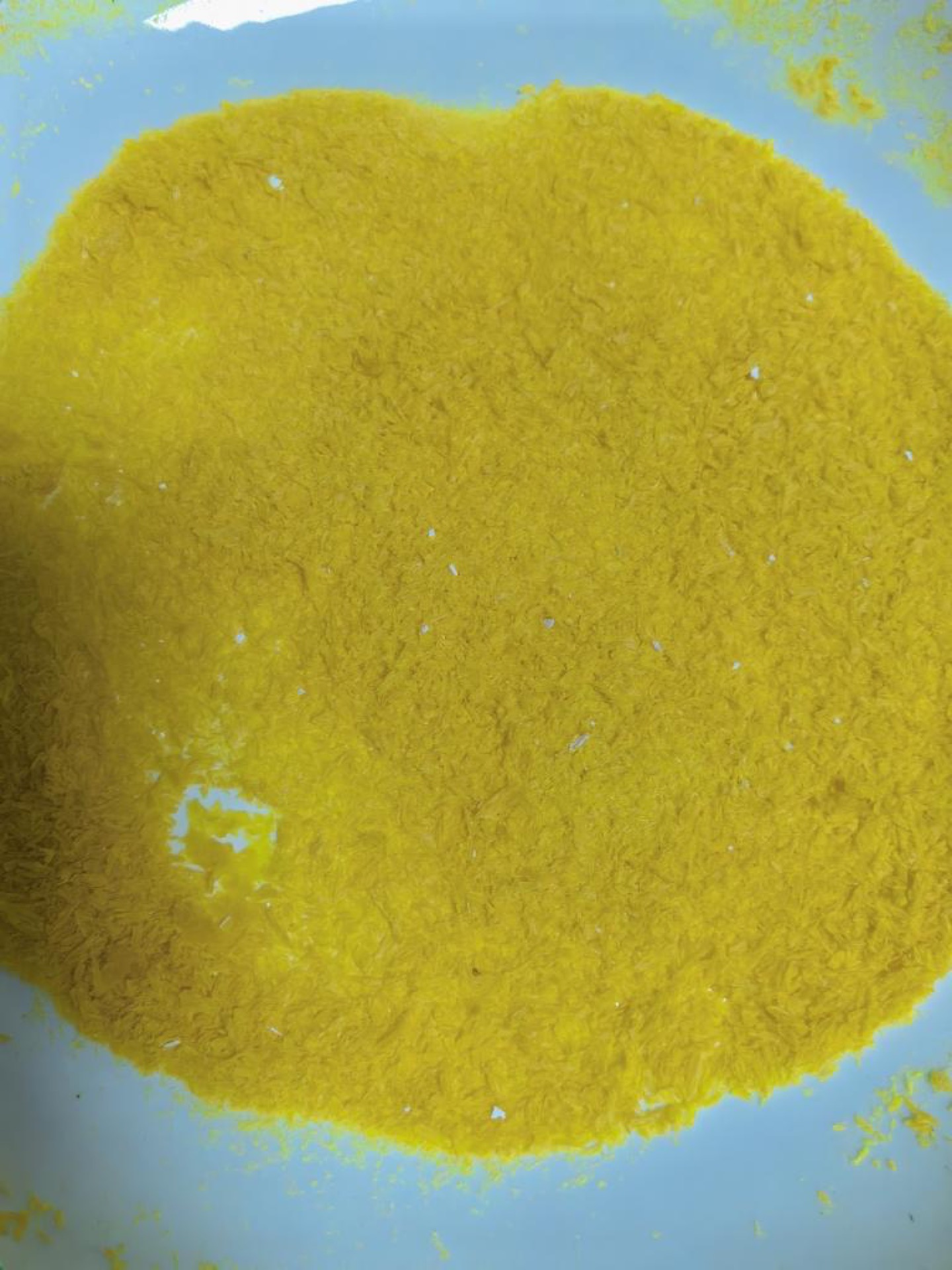
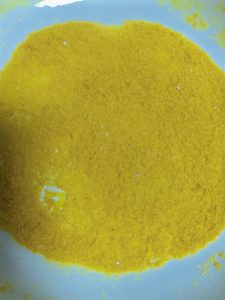
Step 6 — Coat in Panko
Press the egg-coated strip into the panko breadcrumbs until fully covered.
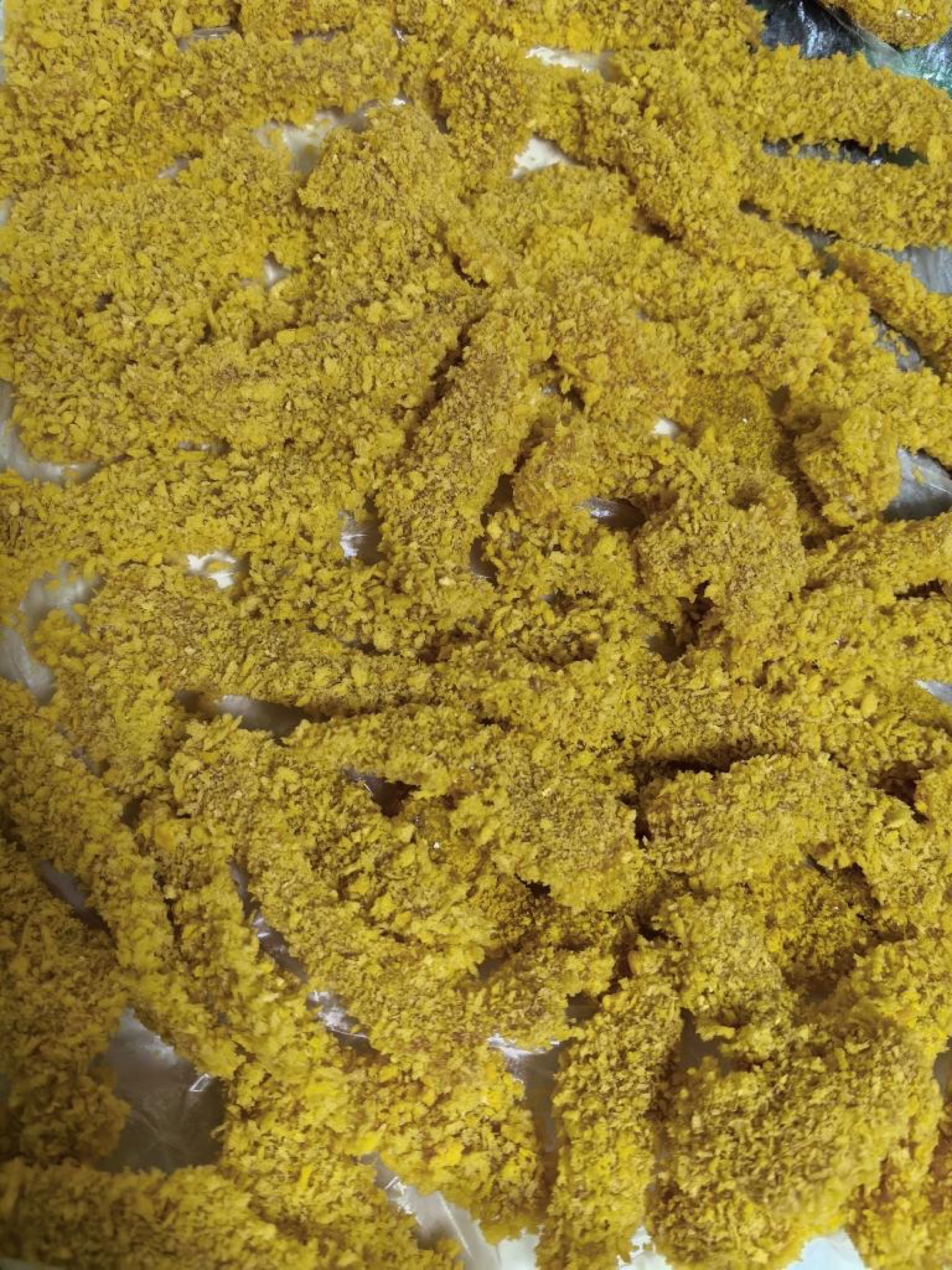
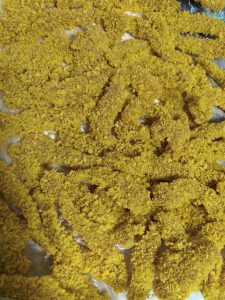
Step 7 — Arrange the Strips
Lay the coated strips out in a single layer so they are ready to fry.
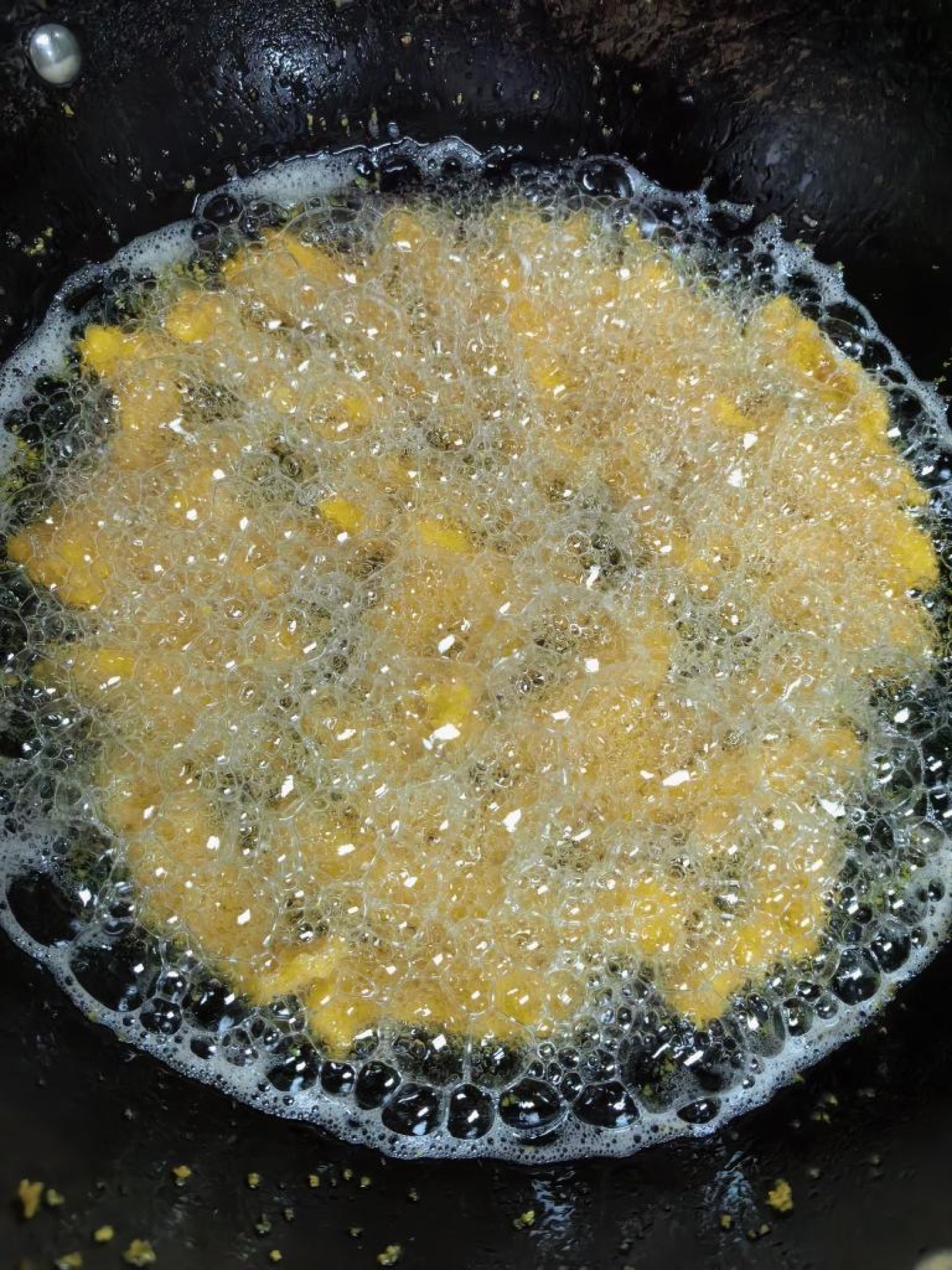
Step 8 — Fry
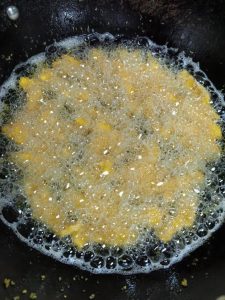
Heat the oil to 6成热 (about 320-340°F/160-170°C) and slide the strips in.
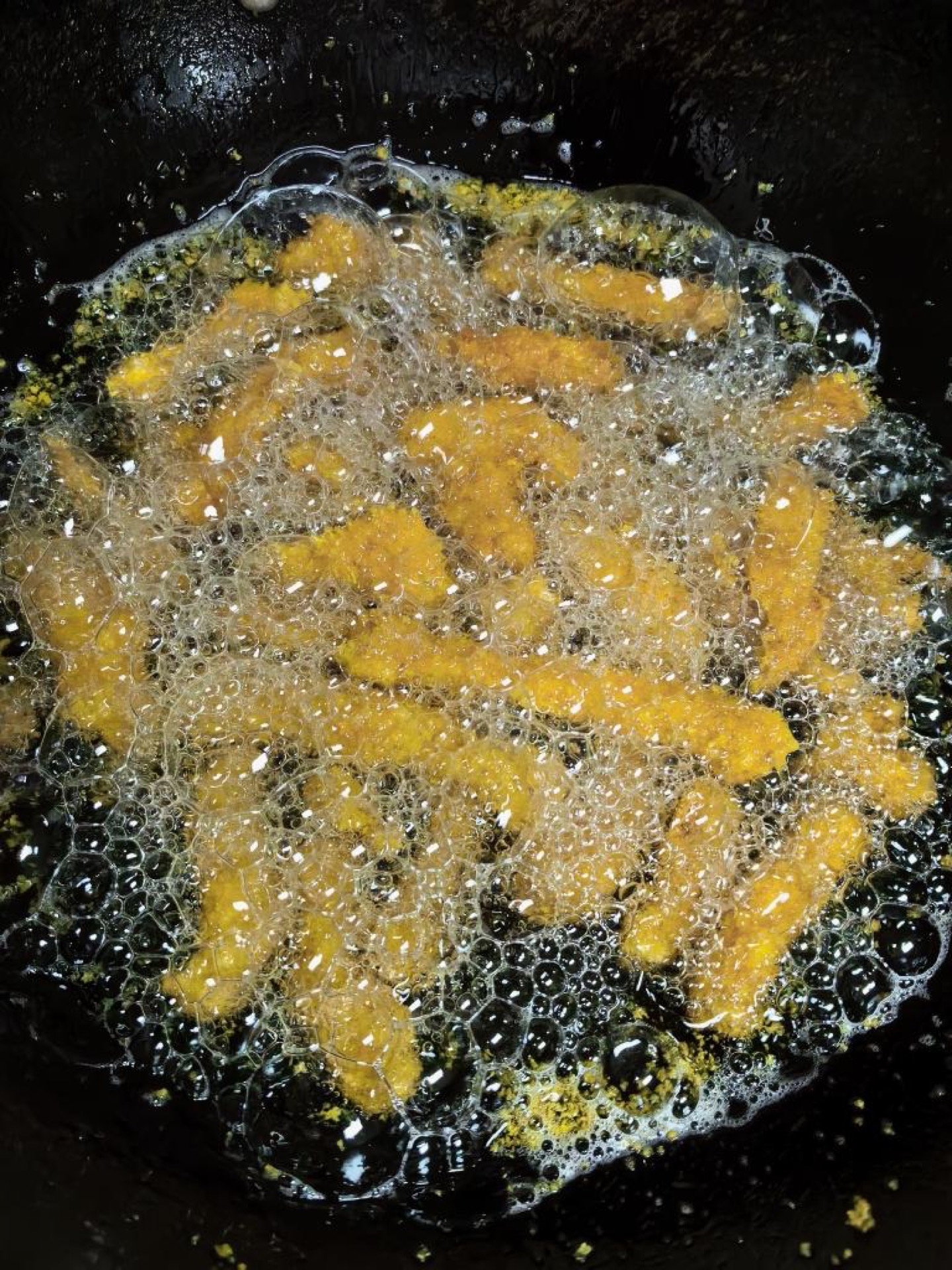
Step 9 — Fry Until Golden
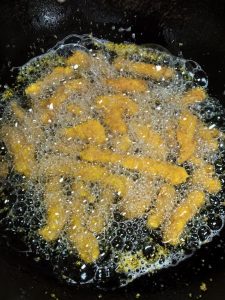
Fry until both sides are golden brown.
Step 10 — Drain and Serve
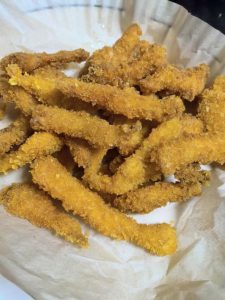
Remove the strips with a slotted spoon and drain — the chicken tenders are ready.
Common Mistakes When Making Orleans-Style Chicken Tenders
1. Marinating for only a few minutes. The seasoning needs time to dissolve into the surface of the meat. Five minutes gives you seasoning on the outside only; 30 minutes gives you seasoned chicken. Cause: impatience. Fix: slice the chicken first, marinate, then set up your coating station while you wait.
2. Leaving the marinated strips wet. Orleans seasoning pulls moisture out of the chicken, so after 30 minutes the strips are slick. If you dredge a wet strip in cornstarch, you get paste, not a coating. Cause: skipping the blot. Fix: pat each strip dry with paper towel before it goes into the starch.
3. Oil too hot. At 375°F and above, the panko browns in 45 seconds while the center is still raw. Cause: heating oil on high and eyeballing it. Fix: use a thermometer and hold 320-340°F (160-170°C). If the oil climbs, pull the pan off the heat for 30 seconds.
4. Crowding the wok. Adding too many strips at once drops the oil temperature by 50°F or more, and the crust absorbs oil instead of sealing. Cause: wanting to finish faster. Fix: fry in batches of 5-6 strips, letting the oil come back to temperature between rounds.
5. Draining on paper towels. Paper towels trap steam against the crust and turn it soft within minutes. Cause: habit. Fix: drain on a wire rack so air circulates underneath.
6. Pressing the panko on too hard. Packing the crumbs compacts them into a dense shell that fries unevenly and can slide off in one piece. Cause: over-handling. Fix: press gently, once, and let the egg do the work.
7. Frying from cold. Strips straight out of the fridge drop the oil temperature and cook unevenly. Cause: prepping ahead and forgetting. Fix: let coated strips sit at room temperature for 10 minutes before frying, or fry them in smaller batches to compensate.
Variations
Air fryer version. Coat the strips the same way, spray generously with oil on all sides, and air fry at 400°F (200°C) for 8-10 minutes, flipping halfway. The crust will be less shattery but still crisp, and you use a fraction of the oil.
Baked version. Place coated strips on a rack over a sheet pan, drizzle with 2 tbsp melted butter or spray with oil, and bake at 425°F (220°C) for 12-15 minutes, turning once. Best with panko; fine breadcrumbs go leathery.
Shallow-fried version. Use just 1 inch of oil in a skillet and fry 2 minutes per side. You will need to turn the strips, which can knock off crumbs, but it uses far less oil and works well for small batches.
Different seasoning. Swap the Orleans blend for Cajun seasoning, five-spice plus sugar, or a simple garlic-paprika mix. The technique is seasoning-agnostic.
Chicken thigh version. Thigh meat stays juicier but the strips need 3-4 minutes per batch and benefit from a slightly lower oil temperature, around 310°F (155°C).
Frequently Asked Questions
Can I make these ahead of time? You can coat them up to 2 hours ahead and keep them refrigerated in a single layer, but do not fry them ahead and expect the same crunch. Fried tenders are best within 20 minutes of coming out of the oil.
Why did my coating fall off in the oil? Almost always because the chicken was too wet when it went into the cornstarch, or the panko was pressed on too thinly. Pat the marinated strips dry, coat completely, and let them rest 10 minutes before frying so the egg sets.
What is 6成热 in Fahrenheit? Roughly 320-340°F, or 160-170°C. It is the stage where a panko flake sizzles steadily and rises to the surface without instantly browning. Use a thermometer if you have one.
Can I use regular breadcrumbs instead of panko? Yes, but the crust will be finer and denser rather than craggy. If that is all you have, toast them lightly first to dry them out.
How do I keep them crispy for a party? Fry them fully, drain on a rack, then hold in a 200°F (95°C) oven on a rack — not a tray — for up to 30 minutes. The dry heat keeps the crust from steaming.
How to Serve
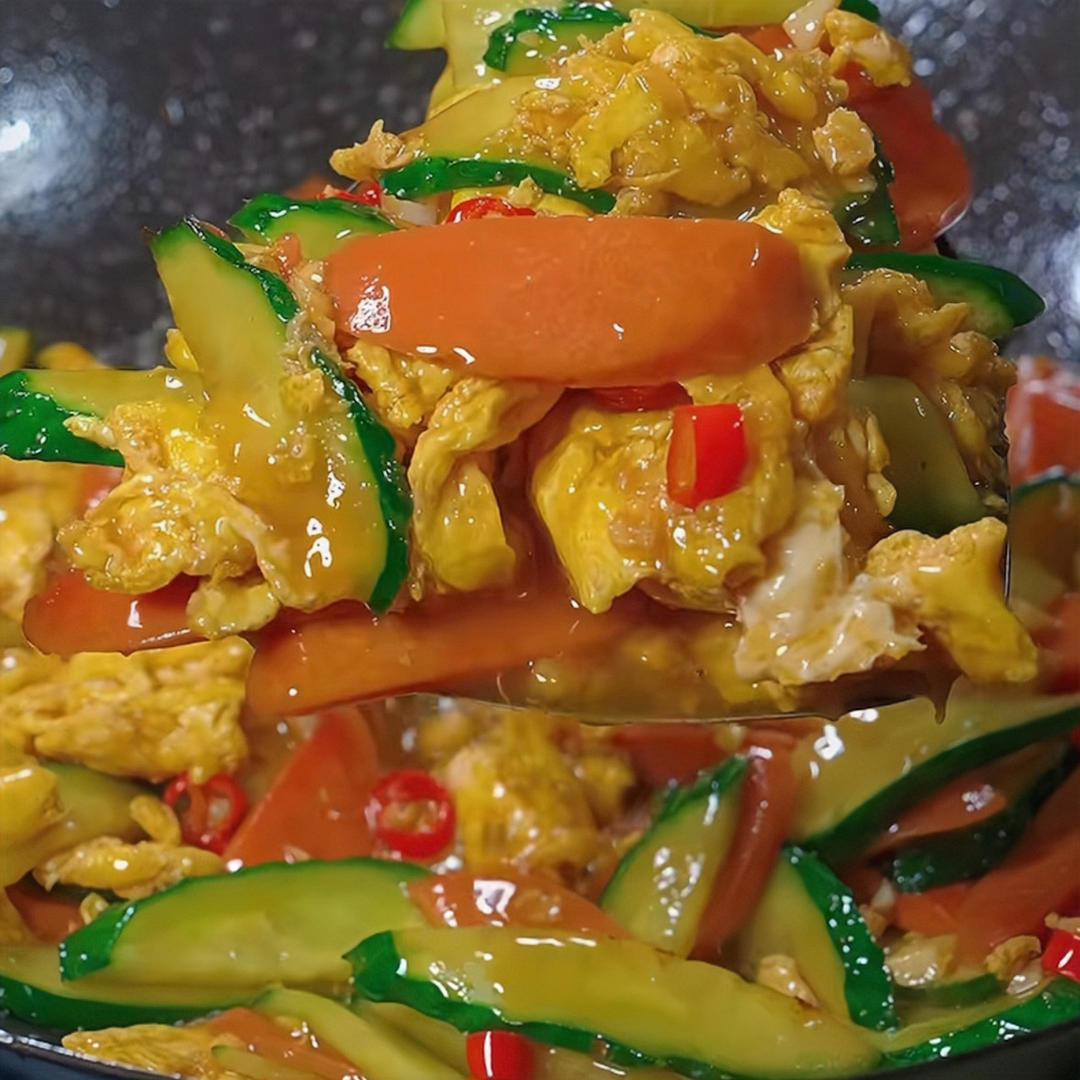
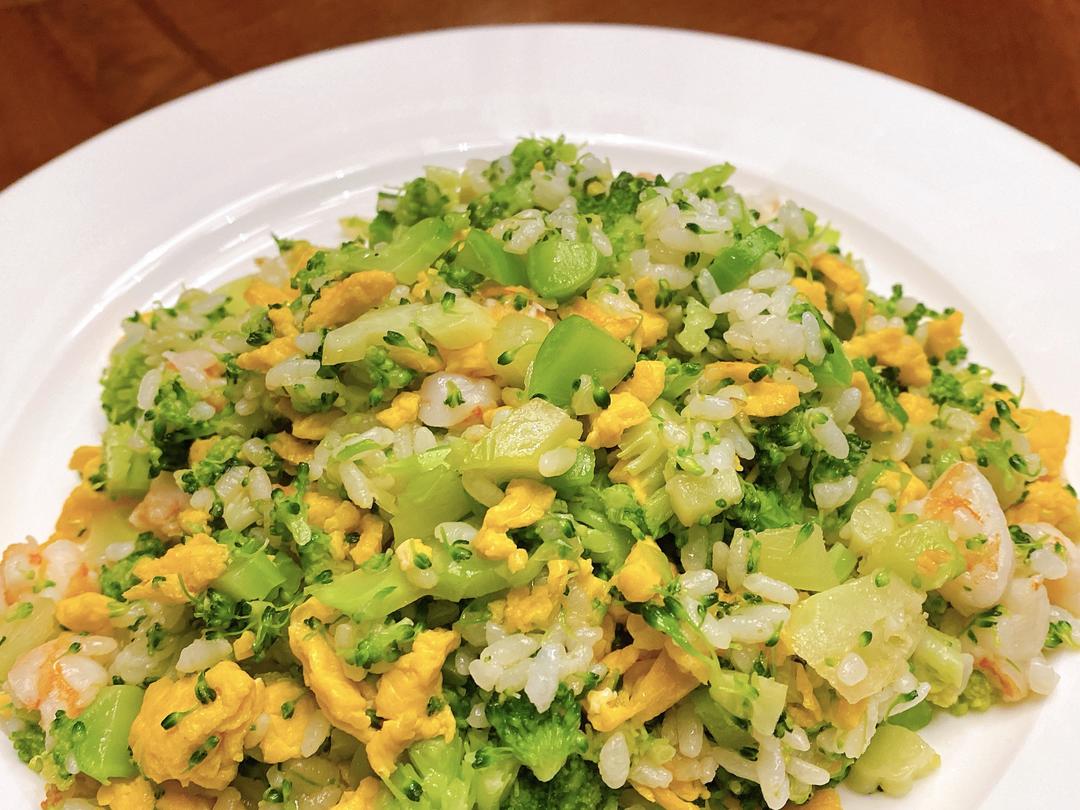
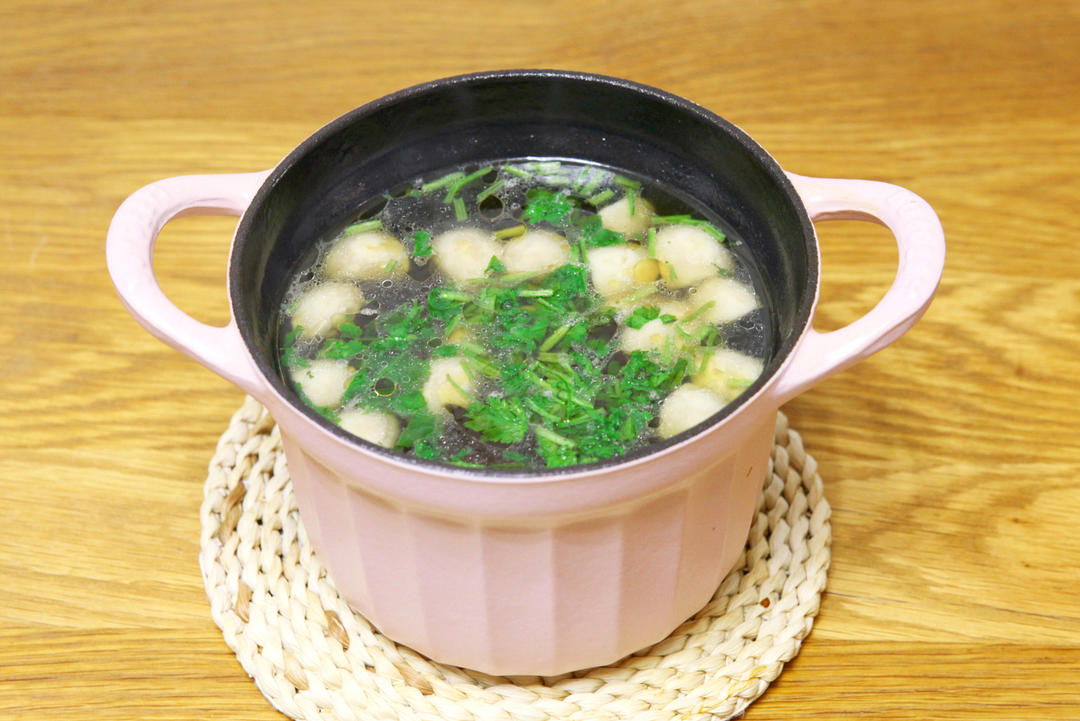
Orleans-style chicken tenders are a snack as much as a meal, so the best pairings are things that cut through the richness. A plate of cucumber and egg stir fry with ham gives you a cool, clean counterpoint, and a bowl of broccoli egg fried rice turns the tenders into a full dinner. If you want something warmer and more savory alongside, Chinese mushroom soup is a gentle, earthy match.
They also work as a topping for rice bowls, sliced into a salad, or packed into a lunchbox with a small container of dipping sauce — ketchup, honey mustard, or a chili-mayo all work. Serve with a squeeze of lime if you want to sharpen the smoky sweetness.
Storage & Reheat
Cool any leftovers within 2 hours of frying. Store in an airtight container in the refrigerator for up to 3 days. The crust will soften — that is unavoidable — but the flavor holds.
To reheat, the oven or air fryer is the only method worth using. Spread the tenders on a rack or in the air fryer basket and heat at 375°F (190°C) for 6-8 minutes, until the crust re-crisps and the center reaches 165°F (74°C). Microwaving will steam them into soggy strips.
Do not refreeze cooked tenders. If you want to freeze ahead, freeze them raw and fully coated on a parchment-lined tray, then transfer to a bag once solid. Fry from frozen, adding 1 minute to the cook time.
Allergen Notice
This recipe contains egg and wheat (from the panko breadcrumbs). Most commercial Orleans seasoning packets are free of both, but some blends include wheat flour, milk powder, or soy — check the label if you are cooking for someone with allergies. If you need a wheat-free version, use gluten-free panko or crushed cornflakes, and confirm your seasoning blend is certified gluten-free.
For anyone avoiding egg, a slurry of 3 tbsp cornstarch plus 4 tbsp water can replace the beaten egg as the binder, though the coating will be slightly less adhesive.
Nutrition Disclaimer
Nutrition information is calculated using an ingredient database and should be considered an estimate. In cases where multiple ingredient alternatives are given, the first listed is calculated for nutrition. Garnishes and optional ingredients are not included.
About the Author & Recipe Development
Lin is the cook, writer, and recipe developer behind Woks of Love, where she has been documenting Chinese home cooking — the weeknight stir-fries, the festival dishes, the takeout favorites rebuilt for a home kitchen — for years. Her approach is simple: keep the technique honest, keep the ingredient list realistic, and explain the why behind each step so you can cook without the recipe open.
This version of Orleans-style chicken tenders came out of a long stretch of testing coating ratios. The source recipe used a straight starch-egg-panko sequence, and after trying flour instead of starch, double-dipping, and a wet batter, the original three-step method won every time — it produced the crispiest shell and the juiciest interior. The only changes made here were measurement precision (grams alongside cups) and a note on oil temperature, since 6成热 is easy to overshoot without a thermometer.
For another dish in the same spirit, spicy orleans chicken wraps is worth cooking next.
For another dish in the same spirit, Cantonese steamed sea bass is worth cooking next.
Authoritative References
For safe cooking temperatures and food handling guidance, see the FDA Food Code and the USDA’s safe minimum internal temperature chart, which lists 165°F (74°C) for poultry. For the food science behind starch-based coatings and frying, Harold McGee’s On Food and Cooking is the standard reference.
Orleans-Style Chicken Tenders (奥尔良鸡柳): Juicy Chicken, Crispy

Equipment
- Wok
- Cutting Board
- Slotted Spoon
- Shallow bowls
- Kitchen Thermometer
Ingredients
For the Chicken
- 1 lb chicken breast about 1 large breast, sinew removed, sliced 1 cm thick then into pinky-width strips
- 1 packet Orleans seasoning about 20 g (2 tbsp), or homemade blend
- 1 large egg beaten
- 1/2 cup cornstarch for dredging
- 1 cup panko breadcrumbs for coating
For Frying
- 4 cups neutral oil for deep frying
Instructions
- Remove the sinew from the chicken breast, slice it into pieces about 1 cm thick, then cut them into strips the width of a pinky finger.

- The strips should be even in size so they cook at the same rate — this is what the pieces should look like.
- Add the Orleans seasoning to the chicken strips, mix well, and marinate for 30 minutes.
- Coat each marinated strip in cornstarch.
- Roll the starch-coated strip through the beaten egg.
- Press the egg-coated strip into the panko breadcrumbs until fully covered.
- Lay the coated strips out in a single layer so they are ready to fry.
- Heat the oil to 6成热 (about 320-340°F/160-170°C) and slide the strips in.
- Fry until both sides are golden brown.
- Remove the strips with a slotted spoon and drain — the chicken tenders are ready.












Leave a Reply