There is a particular kind of comfort that only comes from an old-style rice cooker — the kind with one lever, a cook light and a warm light, and no buttons in between. You press it down, you walk away, and forty minutes later the whole kitchen smells like a farmhouse in southern China. That is exactly what this 洋芋焖饭, or potato rice, is built for.
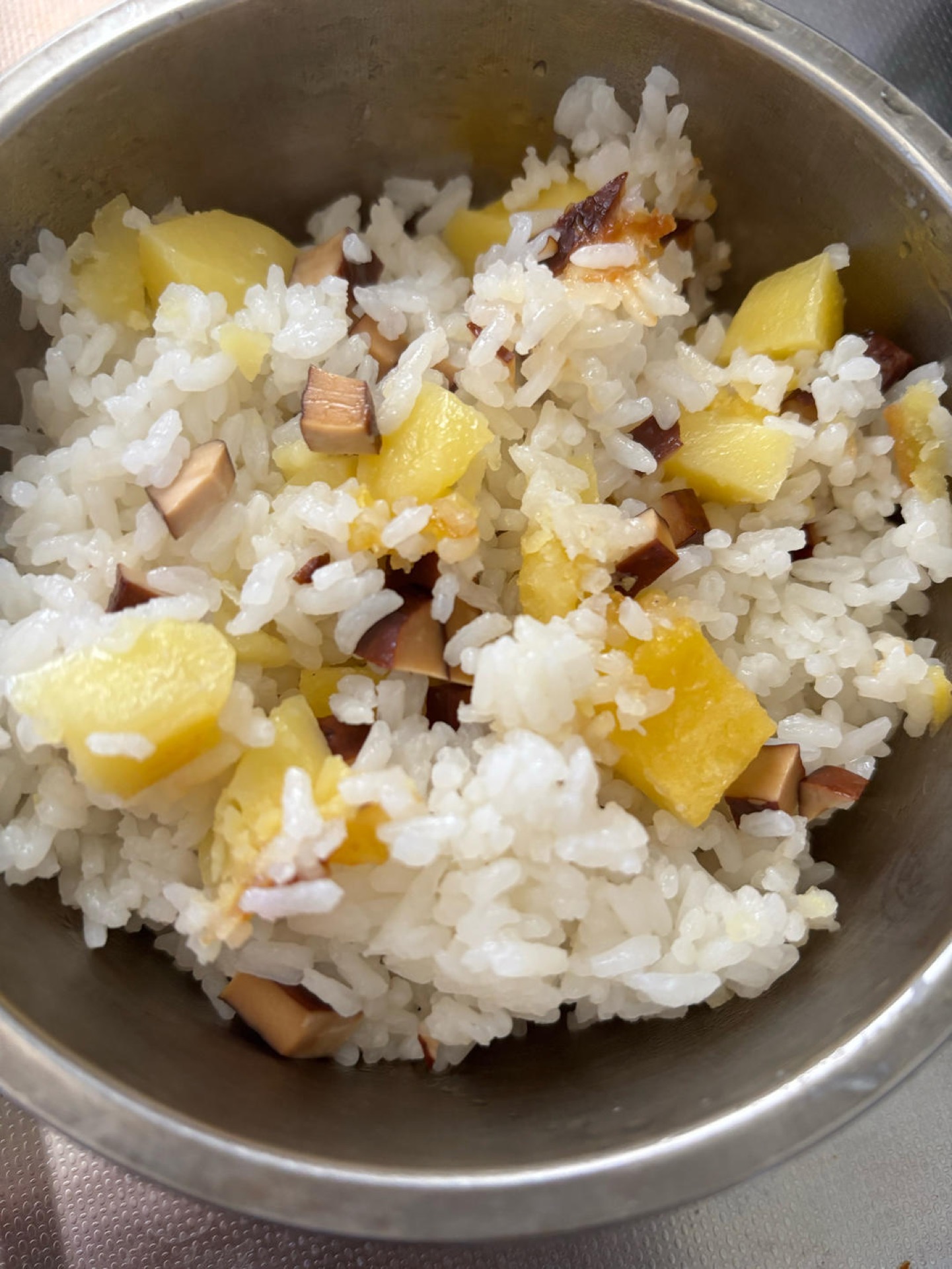
Most people think of a rice cooker as a one-trick appliance: rice goes in, rice comes out. But in Yunnan and Sichuan farmhouses, the rice cooker has always been a braising pot, a steamer, and a one-pot dinner machine. This recipe leans on that idea hard. You are not cooking rice and then adding potatoes. You are cooking the potatoes first, letting them caramelize against the bottom of the pot, and then burying them under rice so the steam finishes the job.
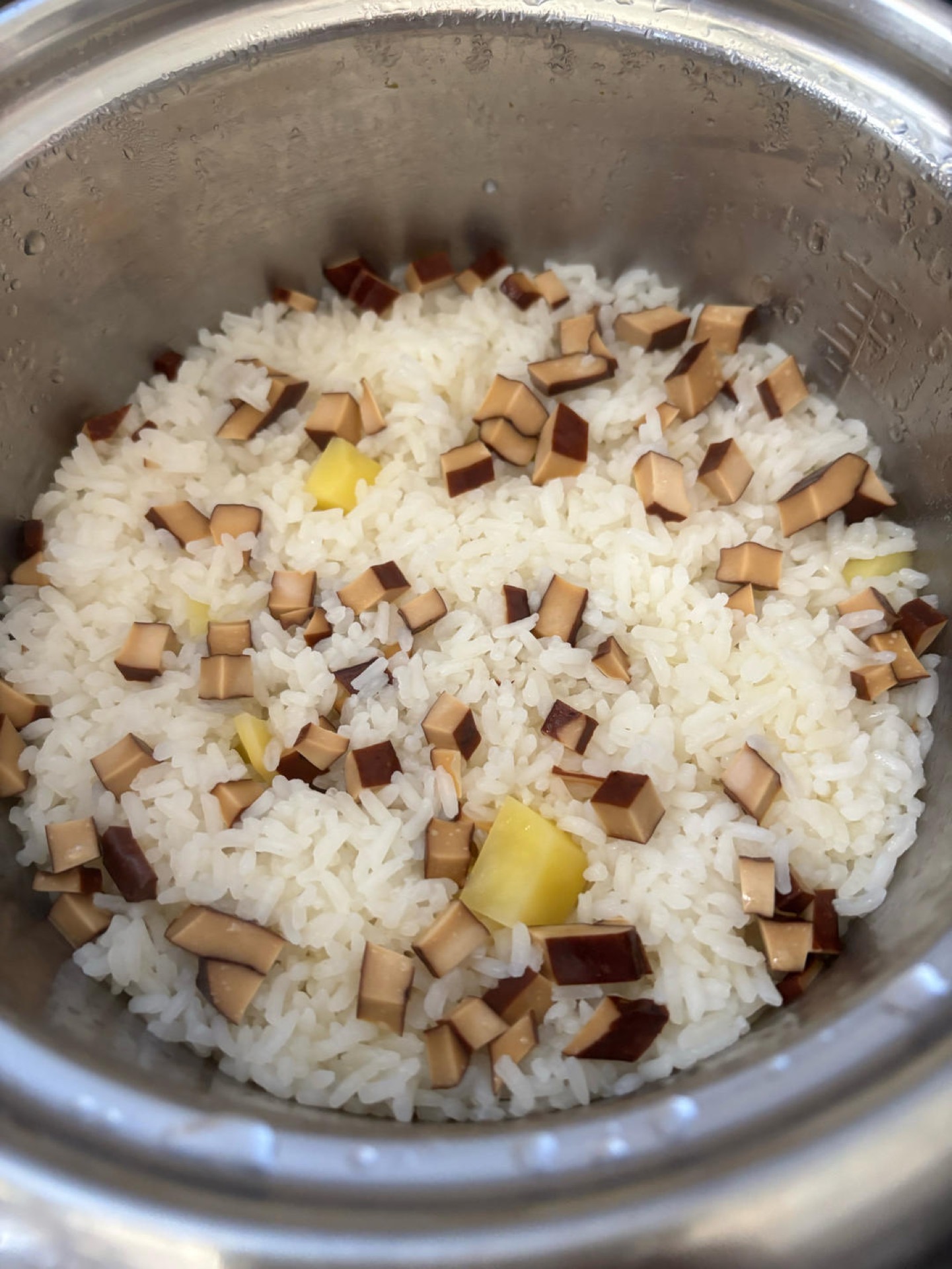
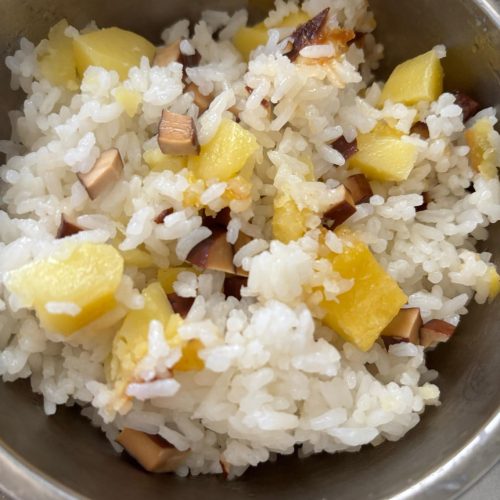
The payoff is a pot with two distinct textures. The top is loose, separate, faintly sweet jasmine rice. The bottom is a layer of soft, savory potato with a lightly crisped, almost roasted edge where it met the hot metal. The smoked tofu — 香干 — hides in between, giving little bursts of firm, salty chew. It is the kind of dish that costs almost nothing and tastes like it cost a lot more.
If you grew up with a modern fuzzy-logic rice cooker, don’t worry. This method works on those too, and there is a note below on how to adapt the timing. But if you have an old cooker gathering dust in a cupboard, this is the recipe that will make you love it again.
What Is Rice Cooker Potato Rice?
洋芋焖饭 (yáng yù mèn fàn) is a rustic one-pot rice dish from southwestern China, most closely associated with Yunnan and Sichuan home cooking. The name is beautifully literal: 洋芋 means potato, 焖 means to braise or steam with a lid on, and 饭 means rice. In the countryside, it was traditionally made in a heavy cast-iron wok or clay pot over a wood fire, where the bottom layer of potato would catch and crisp against the hot metal — the best part, and the part everyone fought over.
The modern home version swaps the wood fire for a rice cooker, and honestly, it loses almost nothing. A basic rice cooker holds steady, gentle heat for a long time, which is exactly what braising potatoes and steaming rice need. The dish sits somewhere between a pilaf and a clay-pot rice, and it belongs to the same broad family as lap cheong fan, clay pot rice, and other one-pot rice cooker meals where the rice and the topping cook together and trade flavors.
What makes it distinctly 洋芋焖饭 rather than just “rice with potatoes” is the order of operations. The potatoes go in first, alone, with oil. They get a head start. Only after they have softened and taken on color does the raw rice go on top. This is why the dish tastes layered rather than muddy.
If you have never cooked rice and a topping together in one pot, start with this dish. It is the most forgiving introduction to the technique, because potatoes are nearly impossible to overcook into mush when they are protected by a layer of rice.
If you enjoy this style of one-pot cooking, there are a few other recipes on the site worth trying in the same spirit. Chinese sausage and potato rice cooker meal is the closest cousin, swapping smoked tofu for sweet cured lap cheong. Chinese sausage and potato rice takes the same idea in a slightly richer, more savory direction. And if you want to branch out from pork and potato entirely, rice cooker braised pork ribs with tofu is a heartier, saucier take on the same one-pot logic.
1Chinese Sausage and Potato Rice Cooker Meal (Lap Cheong Fan)This easy one-pot Chinese Sausage and Potato Rice is a weeknight lifesaver. Savory Lap Cheong, caramelized onions, and tender potatoes cooked perfectly in a rice cooker.Check out this recipe
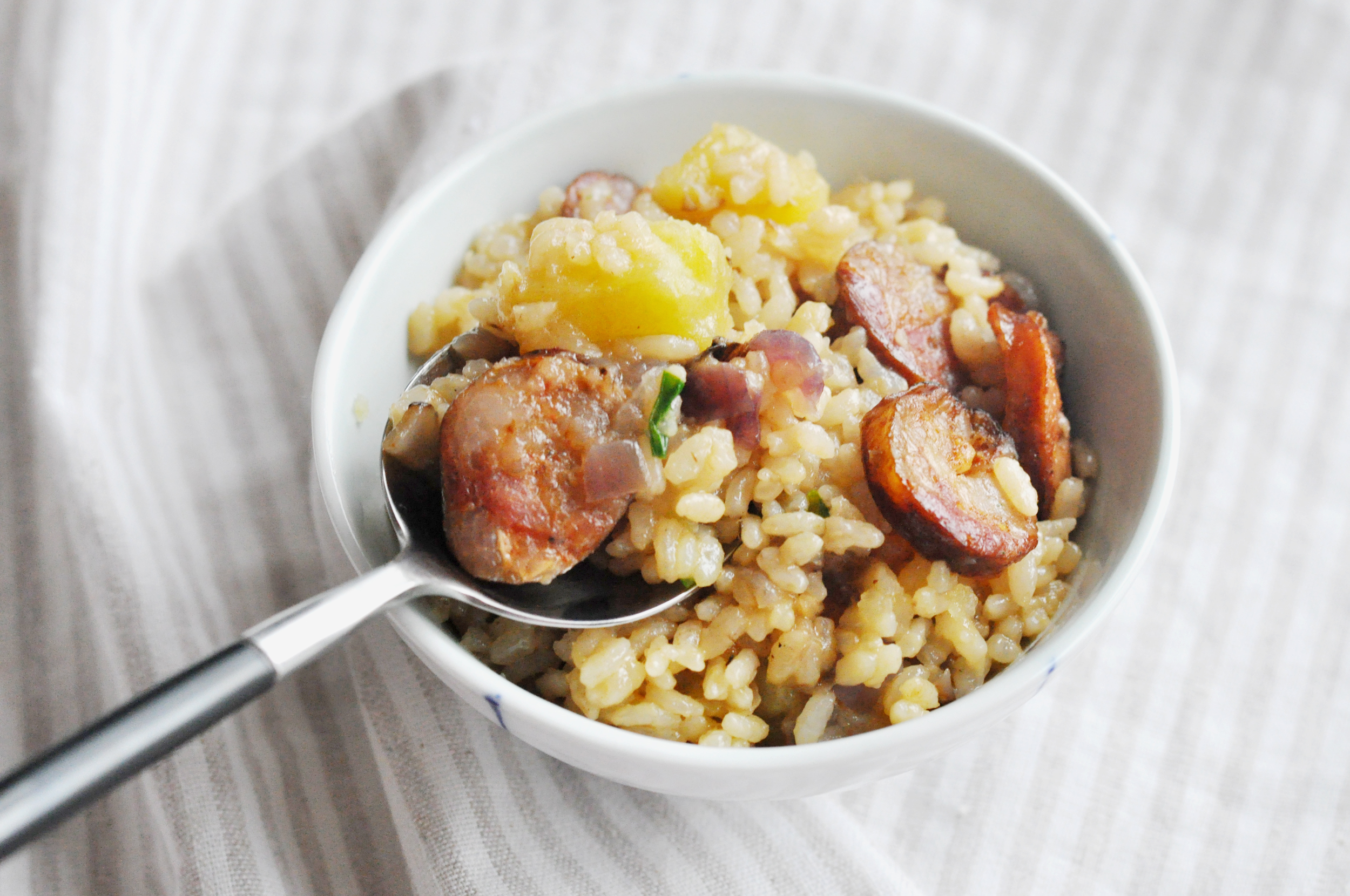
Cooked this way once, you will want the next one too: Chinese sausage and potato rice starts from the same base and the same pan.
2Chinese Sausage and Potato Rice (Rice Cooker One-Pot Meal)This easy Rice Cooker Chinese Sausage and Potato Rice (Lap Cheong Fan) is a savory, smoky, one-pot meal. It features the sweet and savory flavors of Chinese Sausage combined with creamy potatoes and umami-rich mushrooms. Ready in 40 minutes with minimal cleanup, it's the perfect comfort food for busy nights.Check out this recipe
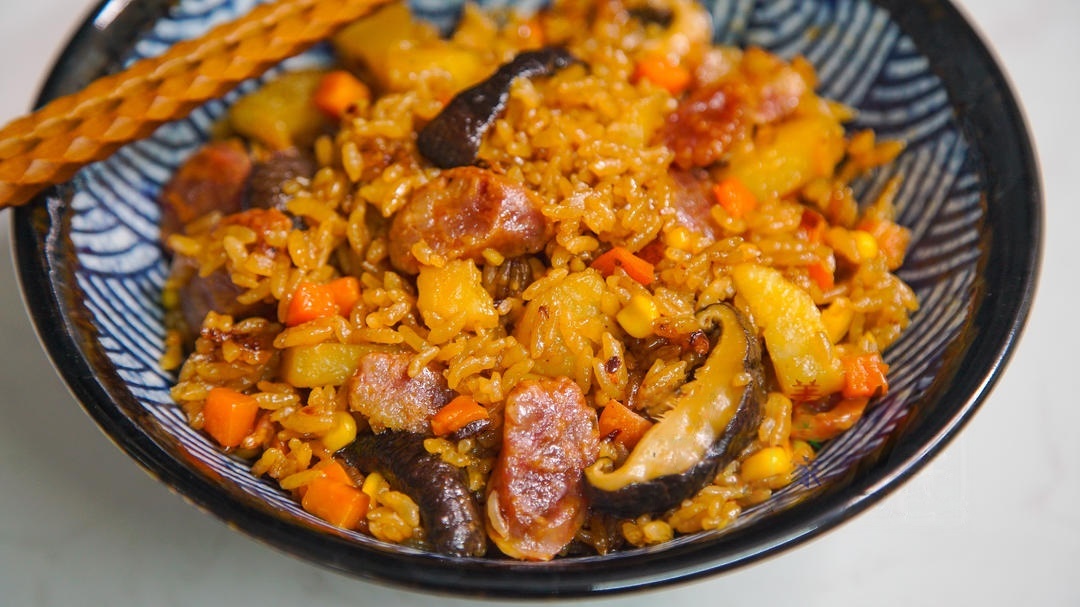
For the next cook from the same playbook, rice cooker braised pork ribs with tofu is the recipe I point people to.
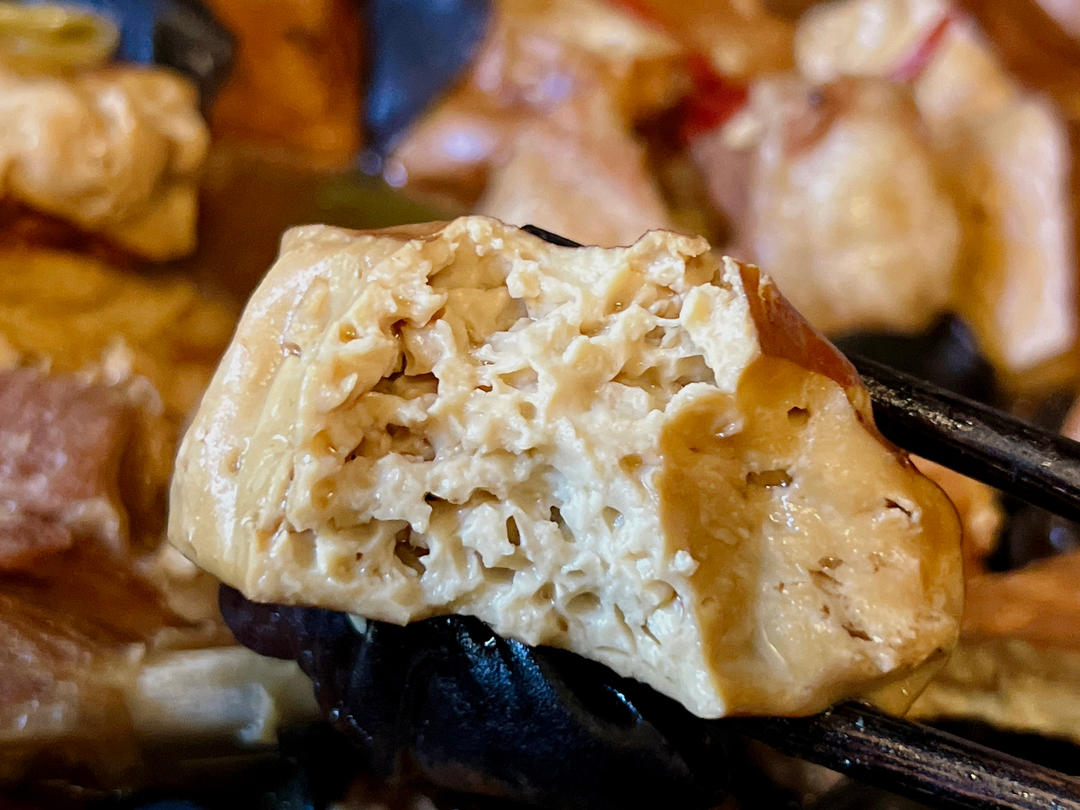
3Easy Rice Cooker Braised Pork Ribs with TofuA comforting, authentic Chinese recipe packed with rich, savory flavors. The rice cooker does all the hard work to tenderize the meat, while the thick dried tofu absorbs the delicious broth.Check out this recipe
Why This Recipe Works
The single most important thing happening in this recipe is the two-stage cook. Most one-pot rice dishes dump everything in at once and hope for the best, which is why so many of them end up with undercooked vegetables and gluey rice. Here, the potatoes get a full cook cycle on their own, sitting directly on the oiled floor of the pot. That does three things at once: it softens them through, it drives off excess water so they do not dilute the rice later, and it develops browning on the surfaces that touch the metal.
The second thing is the water ratio. Because the potatoes have already released their moisture and been cooked once, the water you add at the rice stage is doing only one job — hydrating the rice. You are not compensating for potato water, which means you can use a clean, predictable ratio and get consistently separate grains.
Third, the rest period at the end matters more than it looks. When the cooker trips to warm, the rice is cooked but the starch is still tight and the grains are still clinging to each other. Ten minutes of undisturbed sitting lets the residual steam redistribute and the grains relax. Skip it and you get rice that tastes fine but clumps.
Finally, the smoked tofu is doing quiet heavy lifting. It is firm enough to survive two cook cycles without disintegrating, and it brings salt, smoke, and a slightly pressed, chewy texture that plain tofu cannot. It also seasons the potatoes around it as it sits.
Equipment Needed
The whole point of this recipe is that it needs almost nothing. You do not need a wok, a steamer basket, or a rice cooker with a dozen presets. Here is what actually matters:
- An old-style rice cooker with a simple cook/warm lever. This is ideal because the cook cycle runs long and hot, which is what gives you the potato crust. If you only have a modern fuzzy-logic cooker, see the Variations section for the timing adjustment.
- A cutting board and a sharp chef’s knife. You want potato chunks of even size — about 1 inch — so they cook at the same rate. Uneven chunks mean some turn to paste while others stay firm.
- Measuring cups and spoons. Rice and water ratios are the one place in this recipe where eyeballing will bite you.
- A wooden spoon or spatula. Use it to spread the potatoes flat and later to fluff the finished rice without scratching the nonstick coating of the pot.
- A serving bowl. Optional, but fluffing the rice in the pot and then transferring it makes for a nicer table.
One small note on the pot itself: if your rice cooker’s inner pot has a scratched or worn nonstick coating, be careful with the metal spatula. Use wood or silicone. The potato crust is not stuck-on burnt food — it releases easily — so there is no need to scrape aggressively.
Ingredients
The ingredient list for this dish is short enough to memorize, which is part of its charm. Everything here is a pantry or refrigerator staple in a Chinese home kitchen.
Jasmine rice. One cup of raw rice. Jasmine is the standard choice for southern Chinese one-pot rice dishes because it is aromatic and cooks up light rather than sticky. Short-grain rice will work but will give you a softer, more glutinous result.
Waxy yellow potatoes. Two medium potatoes, roughly one pound total. In Chinese markets these are often sold as “new potatoes” or simply as yellow potatoes. They are lower in starch than russets and hold their shape through a long cook.
Mushroom oil (菌子油). One tablespoon. This is a Yunnan specialty — neutral oil infused with wild or cultivated mushrooms — and it is the single ingredient that makes this dish taste like it came from a mountain farmhouse rather than a suburban kitchen. If you cannot find it, a good toasted sesame oil or even a garlic-infused oil will work, though the flavor will be different.
Smoked tofu (香干). Two blocks or pieces, diced small. This is pressed, smoked, firm tofu, sometimes sold as “dried tofu” or “baked tofu.” It is salty and dense and does not fall apart.
Salt. Half a teaspoon, plus more to taste at the end.
Water. One cup plus two tablespoons, or enough to cover the ingredients by about half an inch.
Light soy sauce. Optional, one tablespoon, if you want a deeper color and a touch more savoriness in the rice.
Ingredient Notes
On the potatoes: the variety matters more than most people expect. Russets and other high-starch potatoes will break down into a grainy slurry over two cook cycles. You want waxy or all-purpose yellow potatoes — the kind that hold together in a potato salad. If all you have are russets, cut them into larger chunks, about 1.5 inches, to give them more structural integrity.
On the mushroom oil: this is worth seeking out. Yunnan mushroom oil is made by slowly infusing oil with dried porcini, chanterelle, or local wild mushrooms, and it carries an intense, earthy, almost meaty aroma. A little goes a long way. If you are substituting, do not use plain vegetable oil — the fragrance is doing real work here. Toasted sesame oil, though stronger in flavor, is a better substitute than a neutral oil.
On the smoked tofu: look for the firm, brown-edged blocks sold vacuum-sealed in the refrigerated section of an Asian grocery. They are already seasoned, so you do not need to press or marinate them. If you can only find plain firm tofu, press it for 30 minutes and add an extra pinch of salt and a few drops of liquid smoke.
On the rice: rinse it until the water runs clear, and if you have time, soak it for 30 minutes before cooking. Soaking shortens the cook time slightly and gives you noticeably fluffier, more separated grains. This is optional but it is the difference between good rice and excellent rice.
On the water: if you soaked the rice, drain it well before adding, and use the lower end of the water range. Soaked rice holds onto some water already.
Prep & Mise en Place
This dish moves fast once the cooker is on, so get everything ready before you press the lever. Total prep is about fifteen minutes, and most of that is knife work.
Step one: rinse and soak the rice. Put the jasmine rice in a bowl, cover it with cold water, and swirl it with your hand until the water turns cloudy. Pour it off and repeat three or four times, until the water is mostly clear. Then cover with fresh water and let it soak for 30 minutes if you have the time. Drain well before using.
Step two: peel and cut the potatoes. Peel the potatoes and cut them into roughly 1-inch chunks. Try to keep them uniform — this is the single biggest factor in whether they cook evenly. As you cut, set them aside on the board. Do not soak them in water; you want their surface starch to help them brown.
Step three: dice the smoked tofu. Cut the smoked tofu into small dice, about 1/4 inch. You will use most of it in the first layer and save a small handful for scattering on top later.
Step four: measure everything else. Have your tablespoon of mushroom oil, your half teaspoon of salt, and your cup of water standing by. If you are using soy sauce, have it ready too.
Once the board is clear and everything is within arm’s reach of the cooker, you are ready to start.
Cooking Process
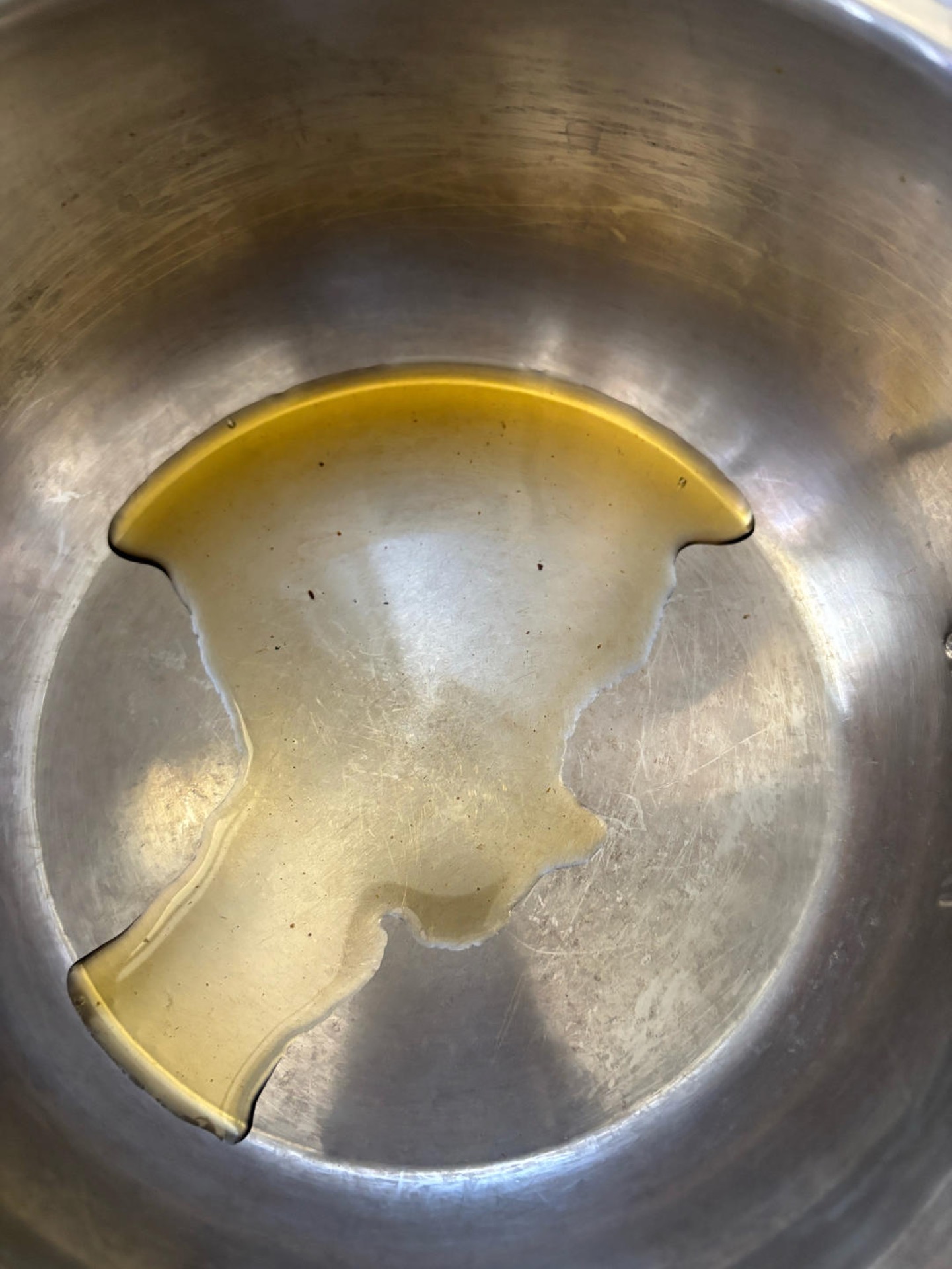
Step 1 — Warm the Mushroom Oil
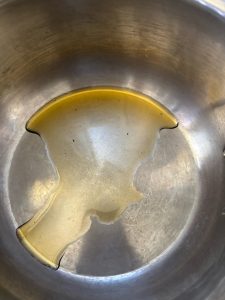
Pour the mushroom oil into the rice cooker pot and swirl it around so the base is evenly coated.
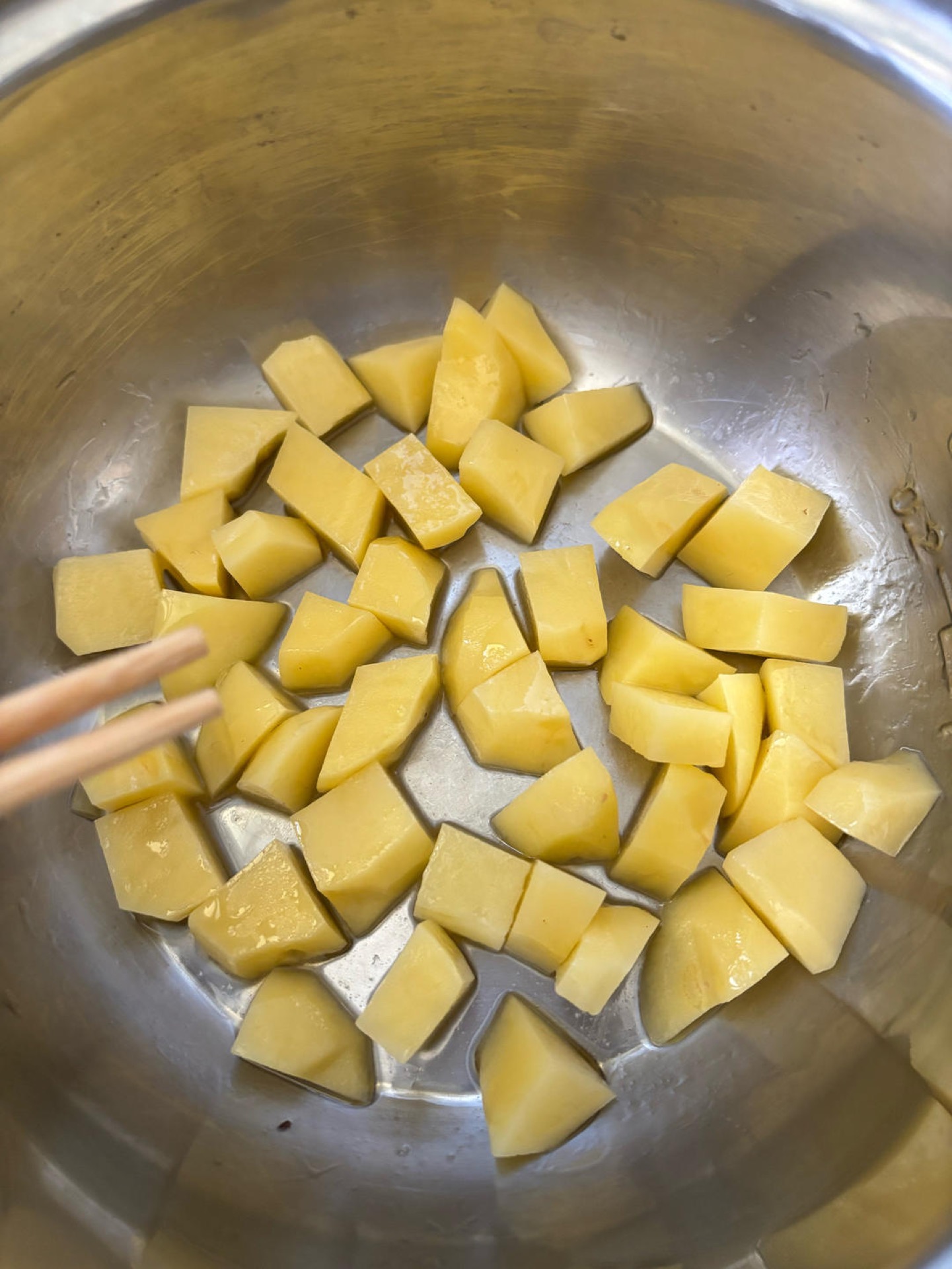
Step 2 — Layer the Potatoes
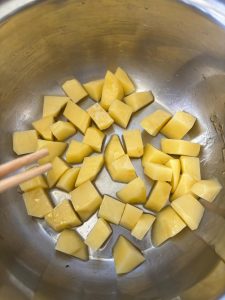
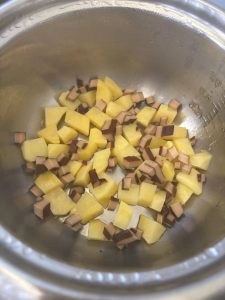
Peel the potatoes, cut them into 1-inch chunks, add them to the pot, and toss so every piece is slicked with oil, then spread them into a flat, even layer across the bottom.
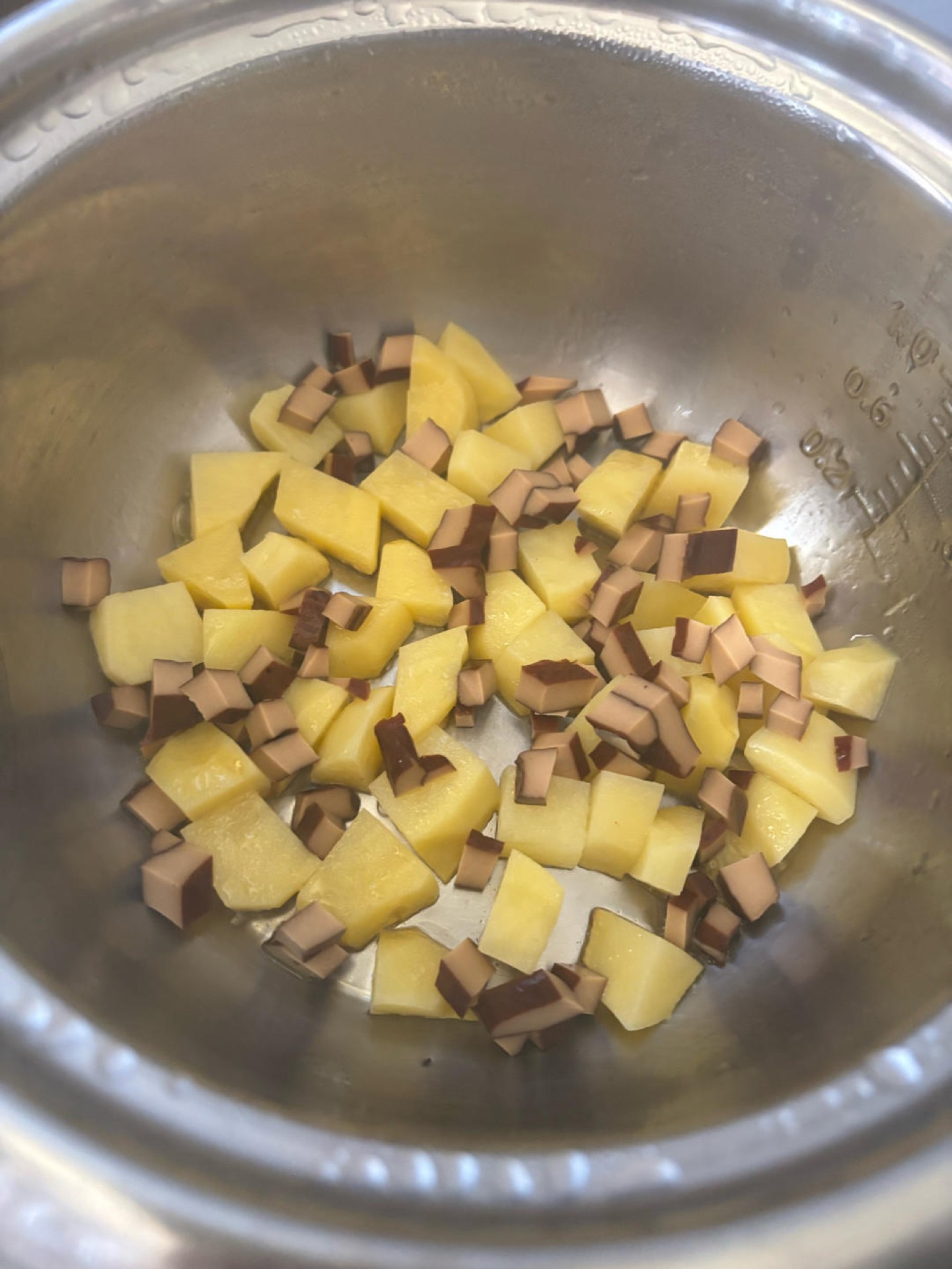
Step 3 — Add the Smoked Tofu
Cut the smoked tofu into small dice and scatter them over the potato chunks.
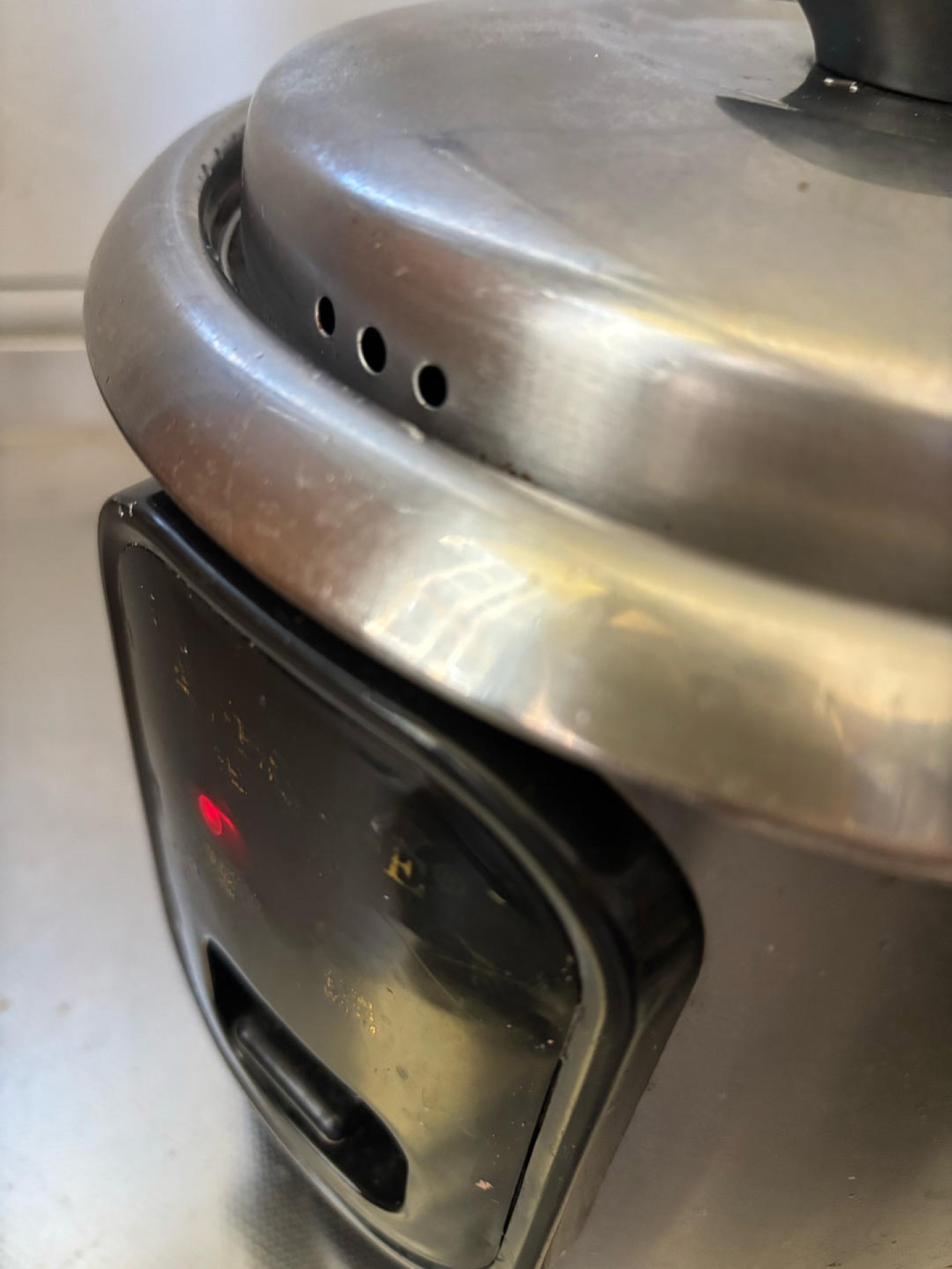
Step 4 — First Covered Cook
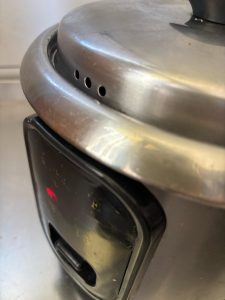
Put the lid on the rice cooker and let the potatoes steam for about ten minutes.
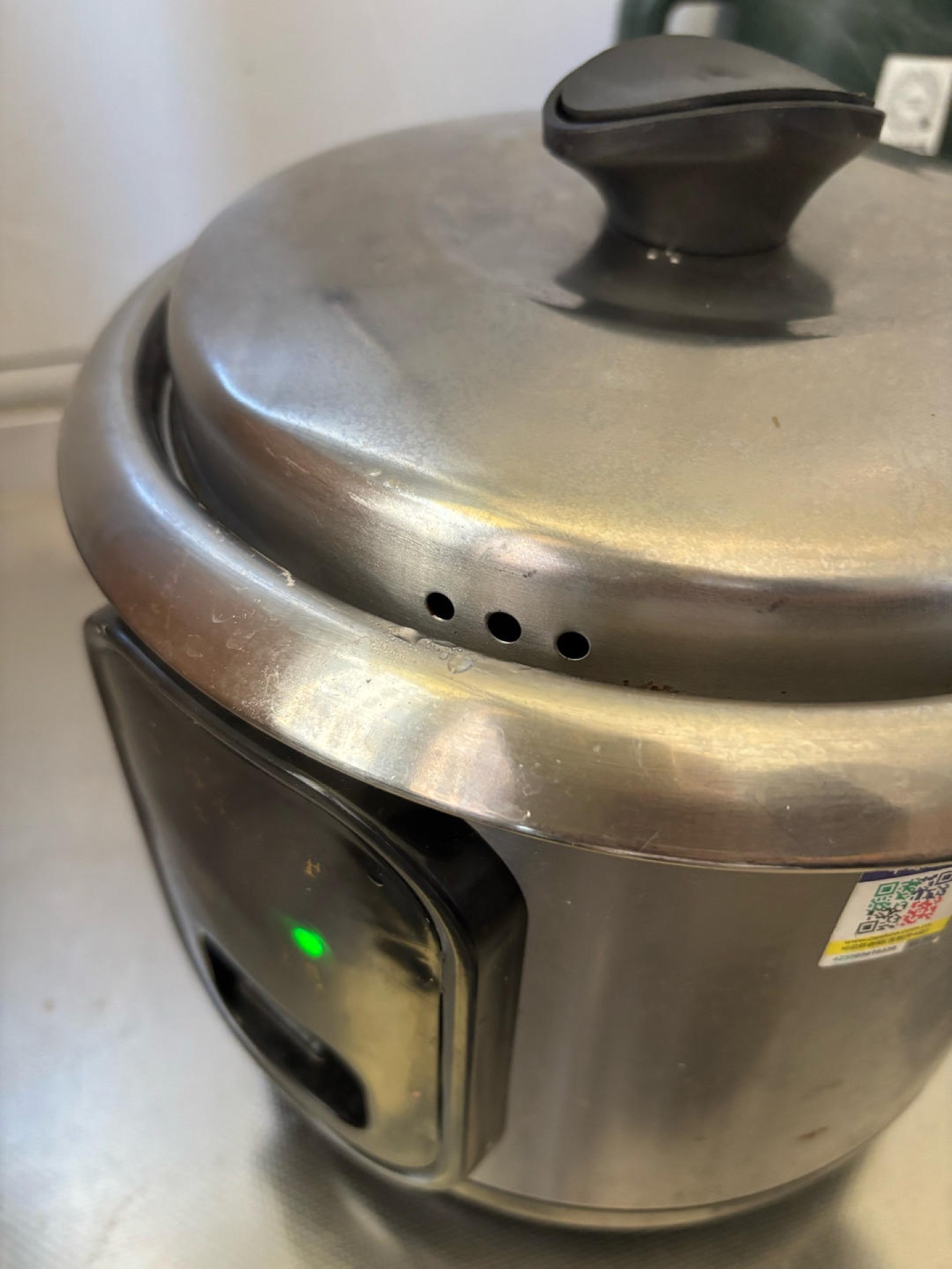
Step 5 — Cook to the Warm Switch
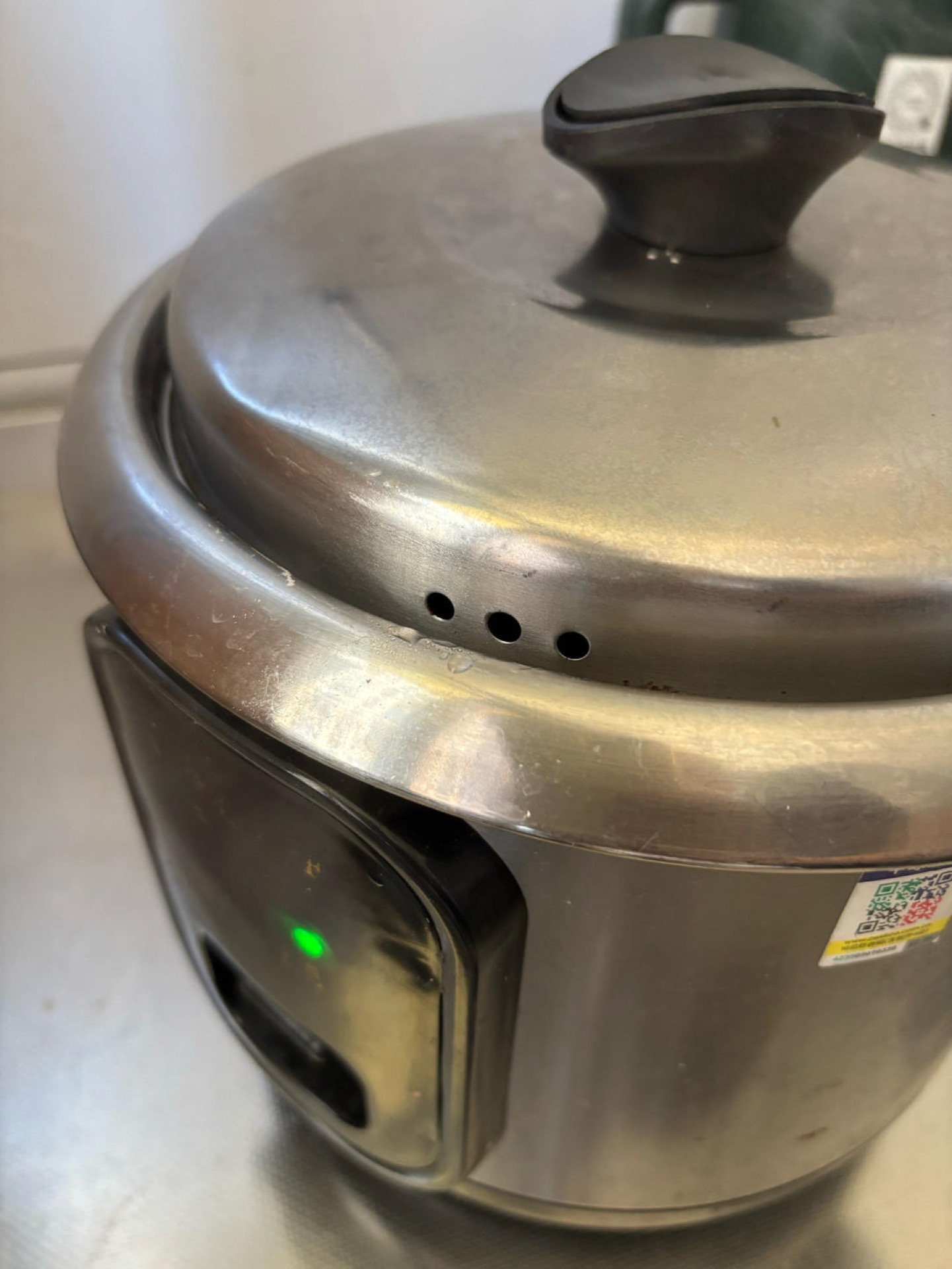
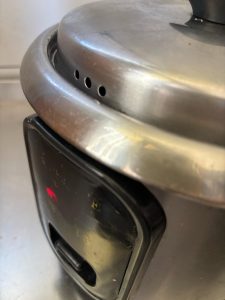
On an old-style rice cooker, keep cooking until the switch pops from cook to warm.
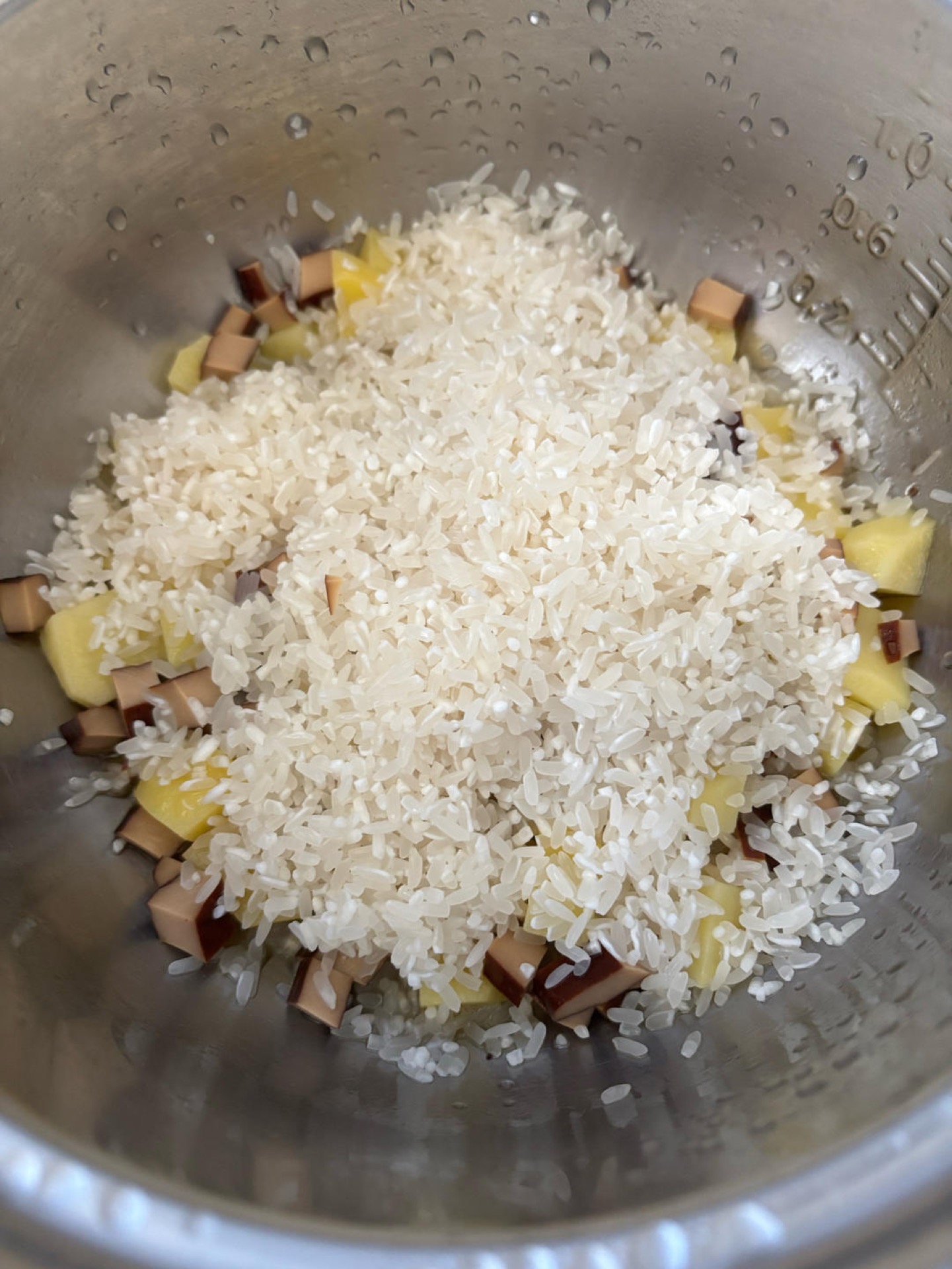
Step 6 — Open and Add the Rice
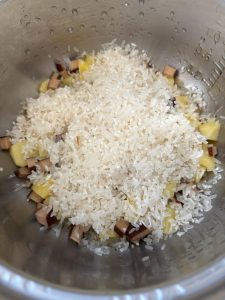
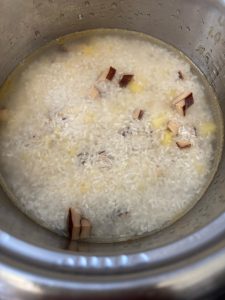
As soon as the switch flips to warm, lift the lid and pour in the rinsed rice — rinsing it and soaking it for half an hour beforehand gives an even fluffier result.
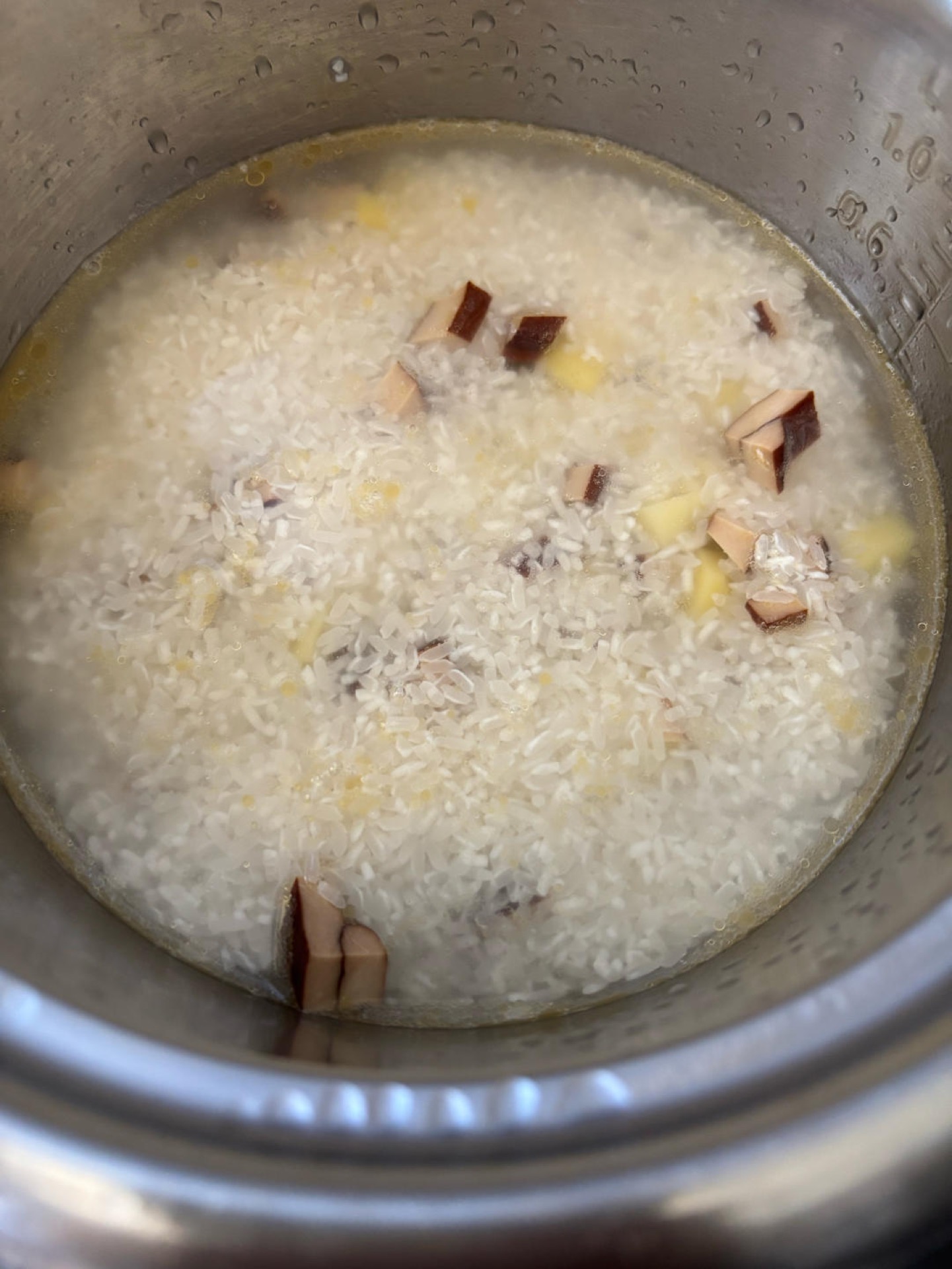
Step 7 — Add the Water
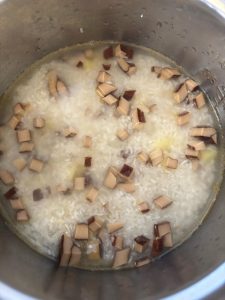
Pour in the water until it sits about half an inch above all the ingredients in the pot.
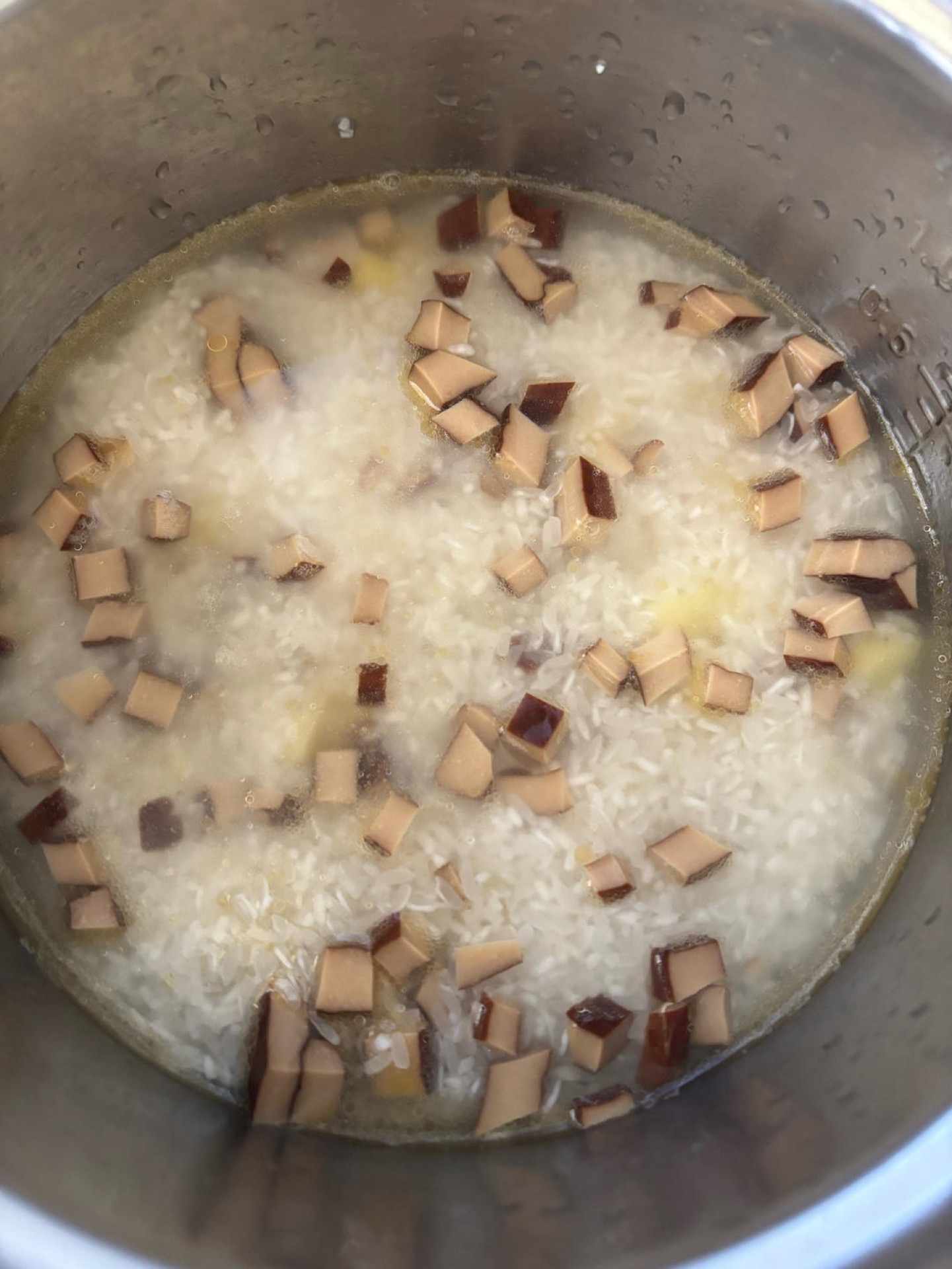
Step 8 — Second Tofu Scatter
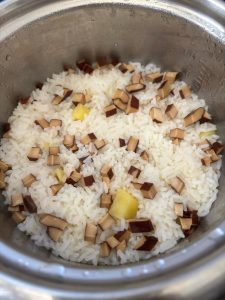
Sprinkle a few more diced smoked tofu pieces over the top for texture.
Step 9 — Second Cook Cycle
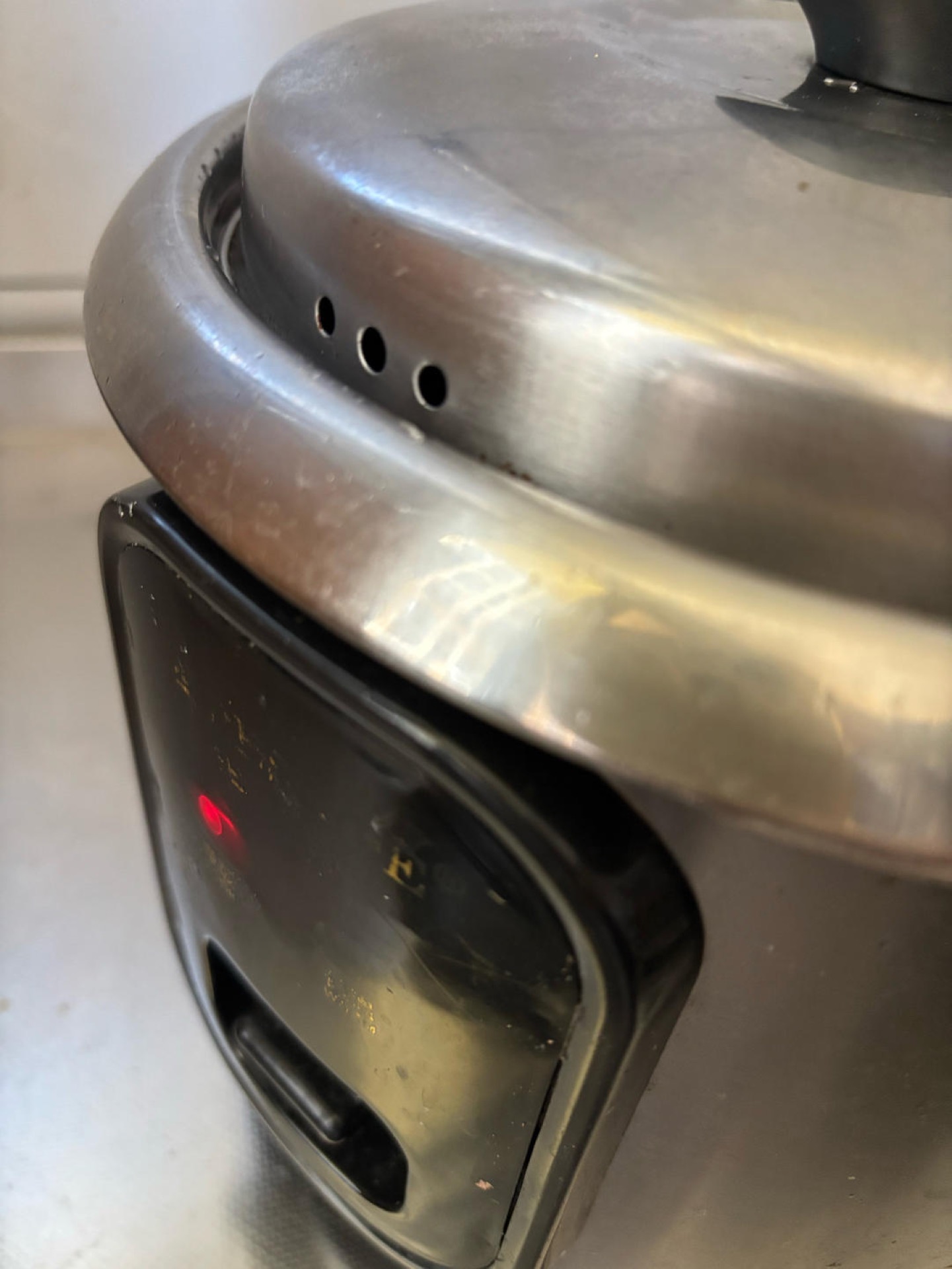
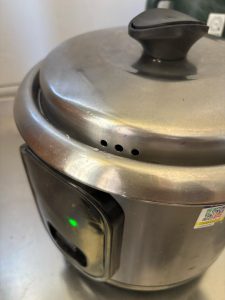
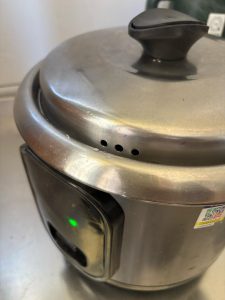
Replace the lid, press the cook button, and let it run for about forty minutes.
Step 10 — Rest Off the Heat
Let the old-style rice cooker run until it trips to warm again, then unplug it and leave the pot undisturbed for another ten minutes or so.
Step 11 — Open and Serve
Take off the lid, fluff the rice and potatoes together, and serve.
Common Mistakes When Making Rice Cooker Potato Rice
1. Adding the rice at the same time as the potatoes. This is the most common mistake and it ruins the texture of both components. If everything goes in together, the potatoes never get their head start, so they stay firm and watery while the rice overcooks into a paste. The fix: always cook the potatoes through one full cycle first, then add the rice on top.
2. Using starchy russet potatoes. Russets are wonderful for mashing and terrible for this. Over two long cook cycles they collapse and turn the whole pot gluey. The fix: use waxy yellow potatoes, or if you only have russets, cut them much larger and reduce the first cook cycle slightly.
3. Not enough oil. A dry pot means the potatoes steam instead of brown, and you lose the crisp bottom layer that makes this dish special. The fix: use a full tablespoon of mushroom oil and make sure every potato chunk is coated before you spread them out.
4. Lifting the lid during the rice cycle. Every time you open the lid, you release a large amount of trapped steam, and the rice needs that steam to finish cooking evenly. The fix: trust the cooker. Do not peek. If you must check, wait until the switch trips.
5. Skipping the rest after the switch trips. The rice is technically cooked the moment the cooker flips to warm, but the grains are still tight and clinging. The fix: unplug the cooker and let it sit, lid on, for ten minutes. The residual heat finishes the job and the grains separate beautifully.
6. Over-salting because of the smoked tofu. Smoked tofu is already salty, and it releases that salt into the potatoes as it sits. If you season the potatoes aggressively at the start, the finished dish will be too salty. The fix: use only the half teaspoon called for, then taste and adjust at the table. If you do overshoot, a squeeze of acid — rice vinegar or lime — will help, and our guide on why sauce tastes too salty and how to fix it applies here too.
Variations
Modern fuzzy-logic rice cooker. If your cooker has presets, use the “mixed rice” or “brown rice” setting for the second cycle, which runs longer and hotter than a plain white rice setting. For the first potato cycle, run a plain white rice cycle and then, if the potatoes are still firm, run a second short cycle before adding the rice.
Add cured meat. A few slices of lap cheong or cured pork belly laid over the potatoes before the first cycle adds fat and sweetness. If you go this route, cut the mushroom oil back to two teaspoons, since the cured meat will render its own.
Make it vegetarian with more depth. Swap the smoked tofu for rehydrated shiitake mushrooms plus a tablespoon of vegetarian oyster sauce. The mushrooms bring a similar chewy texture and a deep savory note.
Add greens at the end. Baby bok choy or shredded napa cabbage can be stirred in during the final ten-minute rest. The residual heat wilts them perfectly without turning them to mush.
Spicier version. A teaspoon of chili crisp or a spoonful of doubanjiang stirred into the mushroom oil at the start gives the whole pot a warm, fermented heat that works beautifully with the smoked tofu.
Swap the potato. Sweet potato works surprisingly well here, though it will caramelize more and give a sweeter finished dish. Taro is another traditional option and gives a lovely creamy contrast.
Frequently Asked Questions
Can I make this in a regular pot instead of a rice cooker? Yes. Use a heavy-bottomed pot or Dutch oven with a tight-fitting lid. Cook the potatoes over medium-low heat for about 12 minutes, then add the rice and water, bring to a boil, cover, and cook on the lowest heat for 20 minutes. Rest off the heat for 10 minutes before opening.
Why did my rice come out mushy? Almost always too much water. If you soaked the rice, you need less water than you think, because the grains already absorbed some. Next time, use just enough water to sit half an inch above the ingredients, and drain the soaked rice thoroughly.
Can I use brown rice? Yes, but brown rice needs significantly more water and a longer cook. Use 1 1/4 cups water and extend the second cycle by 15 minutes, or use your cooker’s brown rice setting.
My potatoes are still firm after the first cycle. What went wrong? Your chunks were probably too large, or your cooker runs cooler than most. Cut them smaller next time, and if needed, run a second short cook cycle before adding the rice.
Is this dish good cold the next day? It is excellent cold, and even better reheated in a hot pan with a little oil, which brings back the crisp potato edge. See the storage section below.
How to Serve
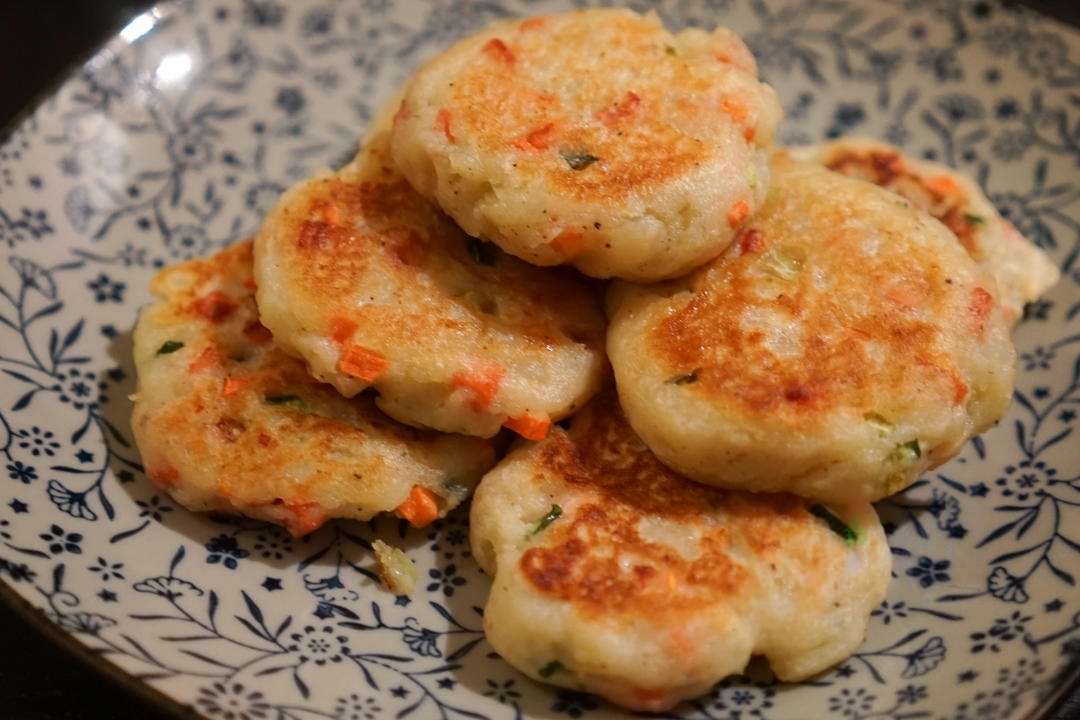
洋芋焖饭 is a complete meal on its own, but it shines alongside a few simple things. A bowl of light soup, some quick-pickled cucumber, or a plate of steamed greens all work. If you want to build out a fuller table, pork floss buns make a lovely soft, savory accompaniment, and mashed potato pancakes with ham and vegetables are a great way to use up any extra potatoes you have on hand. For something richer alongside, creamy coconut curry beef brisket is a wonderful contrast to the clean, savory rice.

Storage & Reheat
Cool any leftovers within two hours of cooking. Transfer the rice and potatoes to a shallow container so they cool quickly, then refrigerate for up to three days. Do not leave it sitting in the rice cooker on warm overnight — the warm setting holds food at a temperature that is safe for a few hours but not indefinitely.
To reheat, the best method is a hot skillet with a teaspoon of oil. Spread the rice and potatoes in a single layer, press down slightly, and let them sit without stirring for three to four minutes so the bottom crisps again. Then stir and continue until heated through to 165°F (74°C). The microwave works in a pinch — cover with a damp paper towel and heat in one-minute bursts — but you lose the crisp edge.
This dish does not freeze well. The potatoes become grainy and watery once thawed, so plan to eat it fresh or within three days.
Allergen Notice
This recipe contains soy, from both the smoked tofu and the optional light soy sauce. If you are cooking for someone with a soy allergy, omit the smoked tofu and use a soy-free seasoning instead. Mushroom oil is generally safe for most people, but if you have a mushroom allergy, substitute toasted sesame oil. As always, check the labels on any packaged ingredient — smoked tofu and infused oils can contain unexpected additives.
Nutrition Disclaimer
Nutrition information is calculated using an ingredient database and should be considered an estimate. In cases where multiple ingredient alternatives are given, the first listed is calculated for nutrition. Garnishes and optional ingredients are not included.
About the Author & Recipe Development
This recipe comes from Lin at Woks of Love, where the goal has always been to document Chinese home cooking as it is actually practiced — not restaurant versions, but the everyday dishes that families make on a Tuesday night. 洋芋焖饭 is a perfect example: it comes from rural Yunnan and Sichuan kitchens, where a rice cooker or a heavy iron pot was the only tool available, and where the cook needed something filling, cheap, and deeply satisfying.
This version was developed and tested in a basic old-style rice cooker with a single cook/warm lever, because that is the appliance most people actually have. Every timing note and water ratio here reflects what happened in that pot, not a theoretical ideal. If your cooker behaves differently, the Variations section has adjustments, and the comments below are always open.
Authoritative References
For safe handling and reheating of cooked rice and potatoes, see the FDA guidance on handling food safely and the USDA food safety guidance on leftovers. For internal temperature targets, the USDA safe minimum internal temperature chart is the standard reference used throughout this site.
Old-Style Rice Cooker Potato Rice (洋芋焖饭): Fluffy Rice, Tender

Equipment
- Old-style rice cooker with a simple cook/warm switch
- Cutting Board
- Chef’s knife
- Measuring cups and spoons
- Wooden spoon or spatula
- Serving bowl
Ingredients
For the Base Layer
- 1 tbsp mushroom oil or any fragrant neutral oil
- 2 medium potatoes about 1 lb total, waxy yellow variety, peeled and cut into 1-inch chunks
- 1/2 tsp salt fine salt, plus more to taste
- 2 pieces smoked tofu 香干, cut into small dice
For the Rice Layer
- 1 cup jasmine rice rinsed until the water runs clear
- 1 cup water plus 2 tbsp, or enough to cover the ingredients by 1/2 inch
- 1 tbsp light soy sauce optional, for a deeper color
For Serving
- 1 stalk scallion thinly sliced, optional
Instructions
- Pour the mushroom oil into the rice cooker pot and swirl it around so the base is evenly coated.

- Peel the potatoes, cut them into 1-inch chunks, add them to the pot, and toss so every piece is slicked with oil, then spread them into a flat, even layer across the bottom.
- Cut the smoked tofu into small dice and scatter them over the potato chunks.
- Put the lid on the rice cooker and let the potatoes steam for about ten minutes.
- On an old-style rice cooker, keep cooking until the switch pops from cook to warm.
- As soon as the switch flips to warm, lift the lid and pour in the rinsed rice — rinsing it and soaking it for half an hour beforehand gives an even fluffier result.
- Pour in the water until it sits about half an inch above all the ingredients in the pot.
- Sprinkle a few more diced smoked tofu pieces over the top for texture.
- Replace the lid, press the cook button, and let it run for about forty minutes.
- Let the old-style rice cooker run until it trips to warm again, then unplug it and leave the pot undisturbed for another ten minutes or so.
- Take off the lid, fluff the rice and potatoes together, and serve.












Leave a Reply