Some dishes earn their place at the table by being fancy. 肉烧豆腐 earns it by being the opposite — a single wok, a piece of pork, and a block of tofu that together taste like far more than the sum of their parts. The pork renders down until it is tender and glossy, the tofu drinks in the soy-and-spice braising liquid, and what comes out is a deep amber, faintly smoky, quietly rich plate of food that disappears fast over rice.
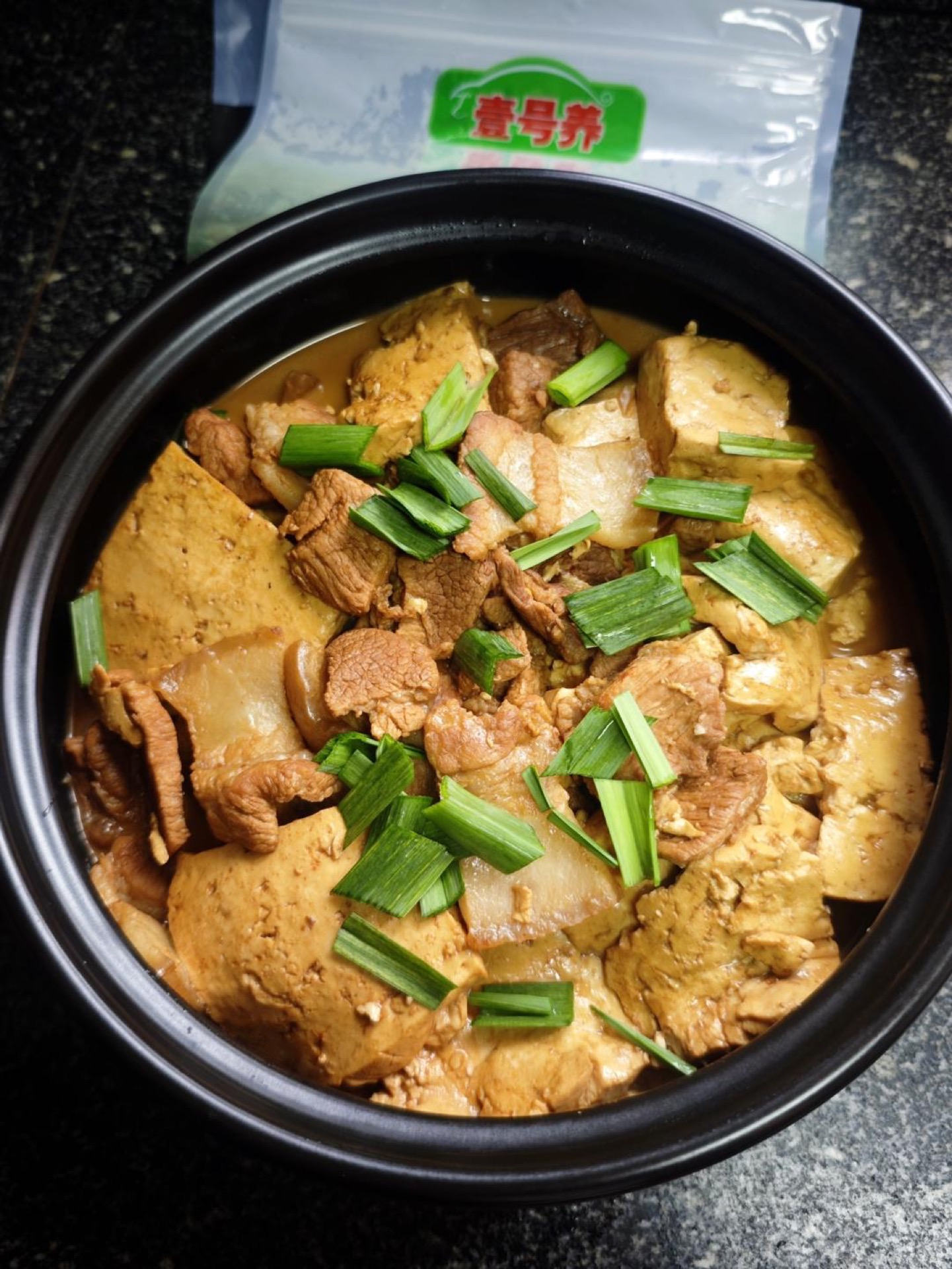
This is the kind of dish that shows up in home kitchens across southern China on an ordinary Tuesday, not a holiday. It is forgiving, it is cheap, and it rewards a little patience at the wok. If you have ever wondered what to do with a block of firm tofu and a modest chunk of pork, this is the answer.
What Is Braised Pork with Tofu?
肉烧豆腐 (ròu shāo dòufu) is a home-style Chinese braise of pork and firm tofu, cooked together in a savory sauce built from soy sauce, rice wine, ginger, garlic, and warm spices. The name is literal: 肉 means meat, 烧 means to braise or cook down in sauce, and 豆腐 is tofu. Unlike mapo tofu, which is a quick, spicy stir-fry, this is a slower, gentler braise where the tofu is added partway through and left to soak up the flavor of the pork.
The technique is what gives the dish its character. The fatty pieces of pork go into the wok first to render, so the sauce is built on pork fat rather than a neutral oil. That fat carries the aromatics and clings to the tofu, which is why the finished dish tastes deep rather than thin. Firm tofu — often sold as 老豆腐, “old tofu,” at Chinese markets — is the right choice here because it holds its shape through a long simmer while still absorbing sauce.
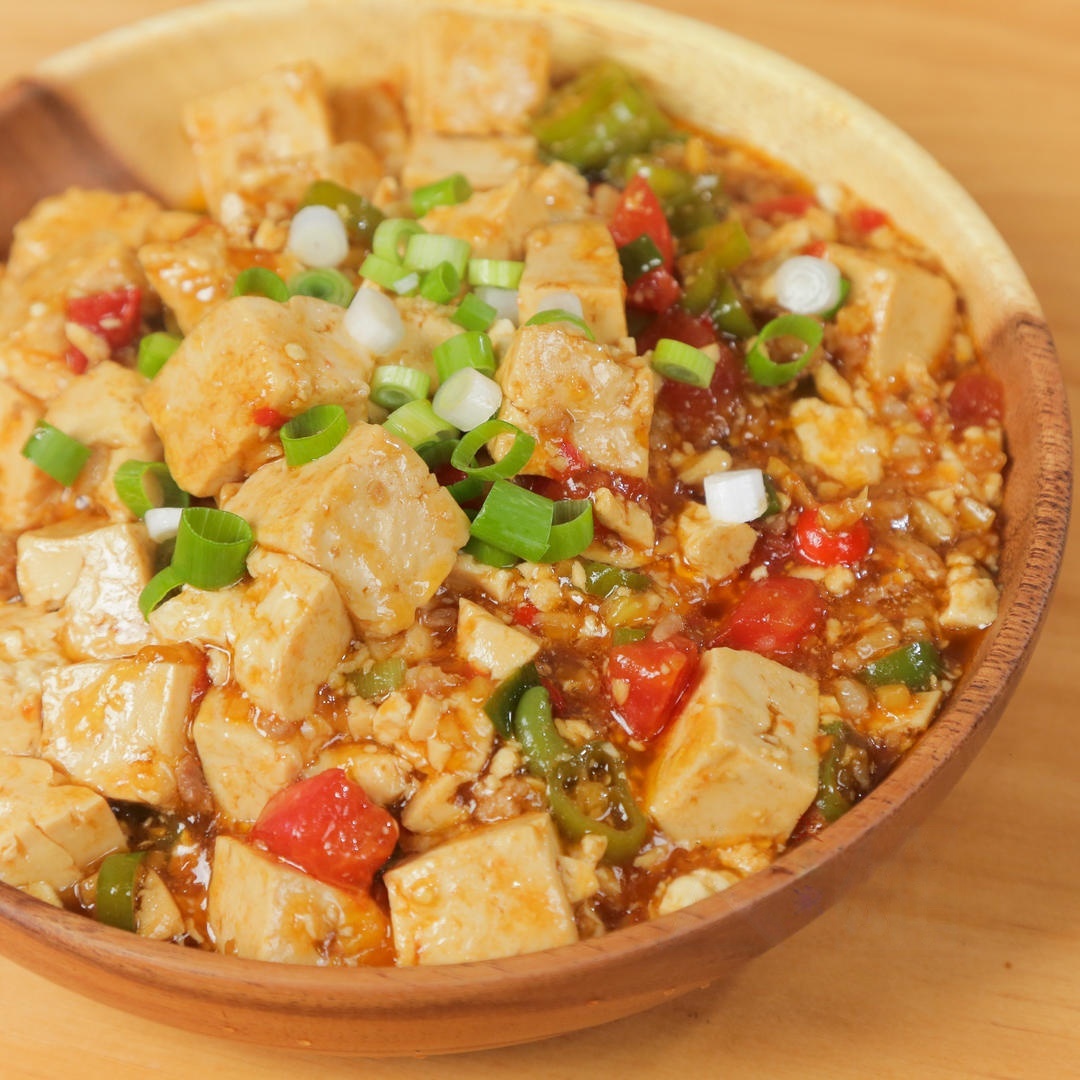
If you like the idea of tofu that actually tastes like something, this is the family of dishes to explore. braised tofu with fresh chilis and minced pork takes the same braising logic in a spicier direction.
1Fresh Chili Tofu with Minced Pork (鲜椒肉末豆腐)A fast, 15-minute Sichuan homestyle favorite. Silky tofu and savory minced pork braised with fresh chilis and tomatoes for a bright, ‘rice-killing’ flavor profile.Check out this recipe
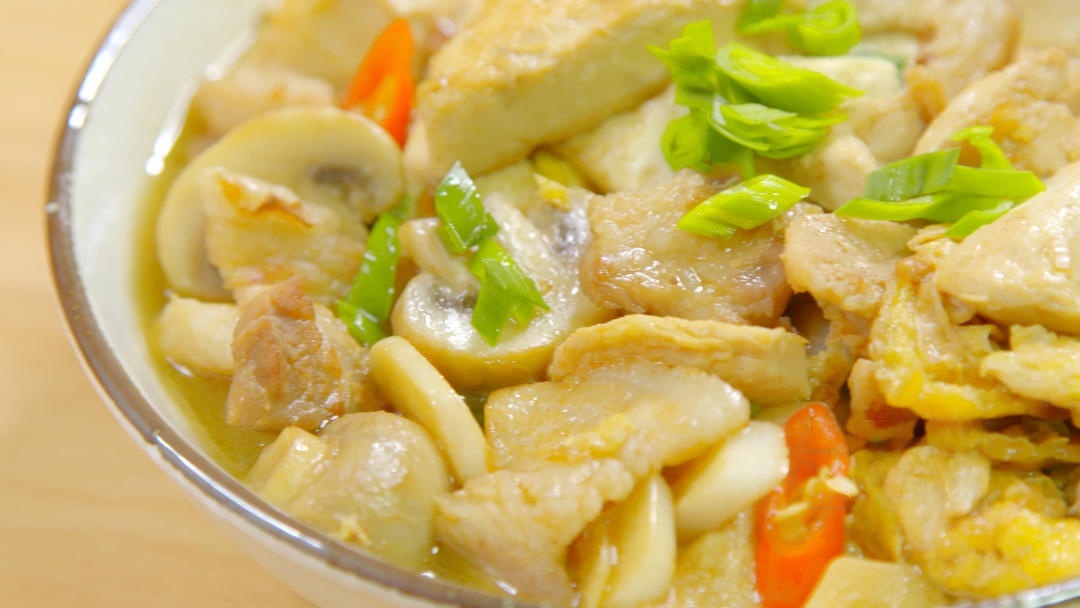
There is a whole cluster of these braises on the site, and they all share the same backbone: sear the meat, build the sauce, add the tofu, and let it simmer until everything is glossy. braised tofu with mushrooms and pork swaps in mushrooms for an earthy, almost meaty depth that works beautifully alongside the pork.
2Braised Tofu with Mushrooms and Pork (Rou Pian Kou Mo Shao Dou Fu)A savory, comforting dish featuring egg-coated silken tofu, sliced pork belly, and button mushrooms braised in a rich umami sauce. Perfect for a weeknight family meal.Check out this recipe
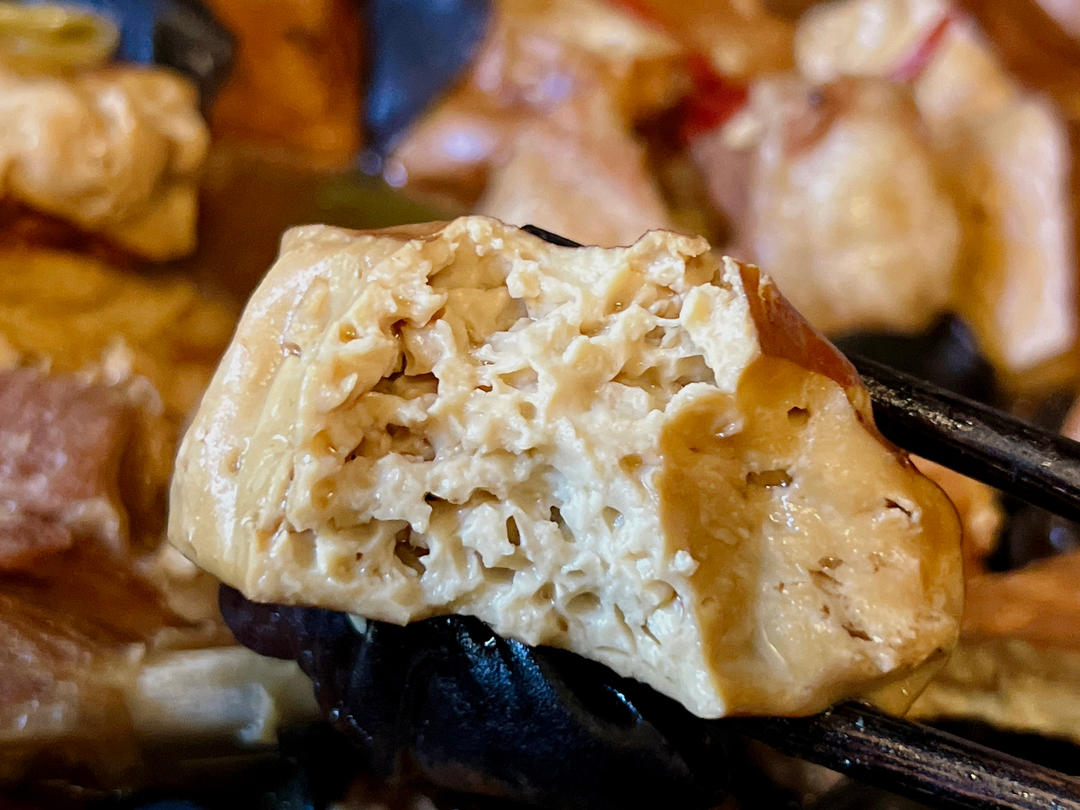
And if you would rather let an appliance do the work, rice cooker braised pork ribs with tofu applies the same idea to ribs with almost no supervision at all.
3Easy Rice Cooker Braised Pork Ribs with TofuA comforting, authentic Chinese recipe packed with rich, savory flavors. The rice cooker does all the hard work to tenderize the meat, while the thick dried tofu absorbs the delicious broth.Check out this recipe
Why This Recipe Works
The single most important decision in this recipe is the order of operations. Fatty pork goes in first, alone, so it has time and direct contact with the hot wok to render. If you dump all the meat in at once, the lean pieces release water and the whole pan steams instead of sears. Rendering first means the wok is coated in pork fat by the time the lean meat and aromatics go in, and that fat is the flavor base for everything that follows.
The second decision is the vinegar. A small splash of vinegar added down the side of a hot wok does two things: the acid helps tenderize the pork during the braise, and it reacts with the soy sauce to round off the sharp saltiness into something more complex. Because the amount is small and it cooks off, you will not taste vinegar in the finished dish — you will just notice that the sauce tastes more finished.
Acid and salt together change how we perceive seasoning. Vinegar’s acetic acid reacts with the amino acids and sugars in soy sauce during heating, producing new aromatic compounds and softening the harsh edge of the salt — which is why a splash of vinegar in a braise reads as “deeper,” not “sour.” The FDA’s food safety resources are also a good reminder that any braise containing meat should be handled with proper temperature control from wok to fridge.
Finally, boiling water — never cold — goes into the wok. Cold water shocks the meat and stalls the braise, and it can make the pork seize up and turn tough. Hot water keeps the temperature steady and the pork relaxed.
Equipment Needed
A wok is the right vessel here, ideally a carbon steel one that has been seasoned. Its sloped sides let you push the tofu gently without flipping it, and its wide surface reduces the sauce quickly at the end. If you do not have a wok, a wide, heavy-bottomed skillet or a Dutch oven will work — you will just need a little more time to reduce the sauce.
You will also want a cutting board for the pork and tofu, a slotted spoon or spider for lifting the rendered pork, and a clay pot (砂锅) if you have one for serving. The clay pot is not strictly necessary, but it holds heat beautifully and keeps the braise bubbling at the table, which is exactly how this dish is meant to be eaten. A pair of chopsticks is genuinely useful at the end for nudging tofu cubes without breaking them.
Ingredients
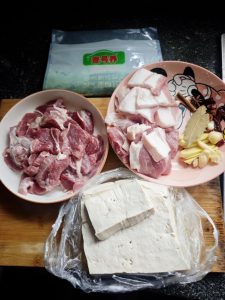
For the full ingredient list with exact amounts, see the recipe card at the bottom of this post. Here is what you are working with and why each piece matters.
The pork is the backbone. A cut with some fat and some connective tissue — pork shoulder, or pork belly if you want it richer — braises into something tender rather than dry. Firm tofu, ideally the kind labeled 老豆腐, holds up to a 20-minute simmer without turning to custard.
The aromatics are the usual southern Chinese braise lineup: ginger, garlic, dried chili, star anise, cinnamon bark, and a bay leaf. A spoonful of stone-ground chili paste (石磨辣椒酱) adds a fermented, slightly smoky heat that is hard to substitute — but it is optional, and the dish is excellent without it. Rice wine or Shaoxing wine goes in down the side of the hot wok, where it sizzles and lifts the fond off the bottom. Light soy sauce seasons, dark soy sauce colors, and a little vinegar tenderizes. Garlic sprouts go on at the very end, raw, as a fresh garnish.
Ingredient Notes
Tofu. Buy firm or medium-firm tofu, not silken. Silken tofu will disintegrate the moment it hits the braise. If your tofu comes packed in water, drain it and pat it dry; some cooks press it for 15 minutes, which helps it absorb more sauce, but it is not essential for firm tofu.
Pork. Pork belly gives the richest result because the fat renders into the sauce. Pork shoulder is leaner and a little more forgiving if you are watching fat. Whichever you choose, cut the pieces into uniform 1-inch cubes so they cook evenly, and separate the fatty from the lean pieces before you start — the recipe depends on that separation.
Soy sauce. Light soy sauce (生抽) is for salt and umami; dark soy sauce (老抽) is thicker, less salty, and mostly for color. Do not swap one for the other. If you are gluten-free, use tamari in place of both, and note that the finished color will be a little lighter.
Chili paste. Stone-ground chili paste is fermented and savory, not just hot. If you cannot find it, a teaspoon of doubanjiang or a pinch of chili powder will get you in the right neighborhood. Skip it entirely if you want a mild braise.
Vinegar. Rice vinegar or black vinegar both work. Black vinegar is maltier and slightly sweeter; rice vinegar is cleaner. Either way, use just a teaspoon — this is a seasoning move, not a flavor statement.
Prep & Mise en Place
This dish moves quickly once the wok is hot, so set everything up before you turn on the burner. Cut the pork into 1-inch cubes and separate the fatty pieces from the lean ones into two piles. Drain and cut the tofu into slabs about 1 inch thick — thick enough to hold together, thin enough to absorb sauce.
Slice the ginger into five coins, smash the garlic cloves with the flat of your knife, and measure out the dried chili, star anise, cinnamon bark, and bay leaf onto a small plate. Combine the light soy sauce, dark soy sauce, and vinegar in a small bowl so you can pour them in one motion. Put the chili paste within reach, and fill a kettle or small pot with water so you have boiling water ready the moment you need it.
Finally, slice the garlic sprouts and set them aside for garnish. If you are serving this with rice, start the rice now — the braise will be ready in about 35 minutes, and you want them to land at the same time.
Cooking Process
Step 1 — Prep the Meat and Aromatics
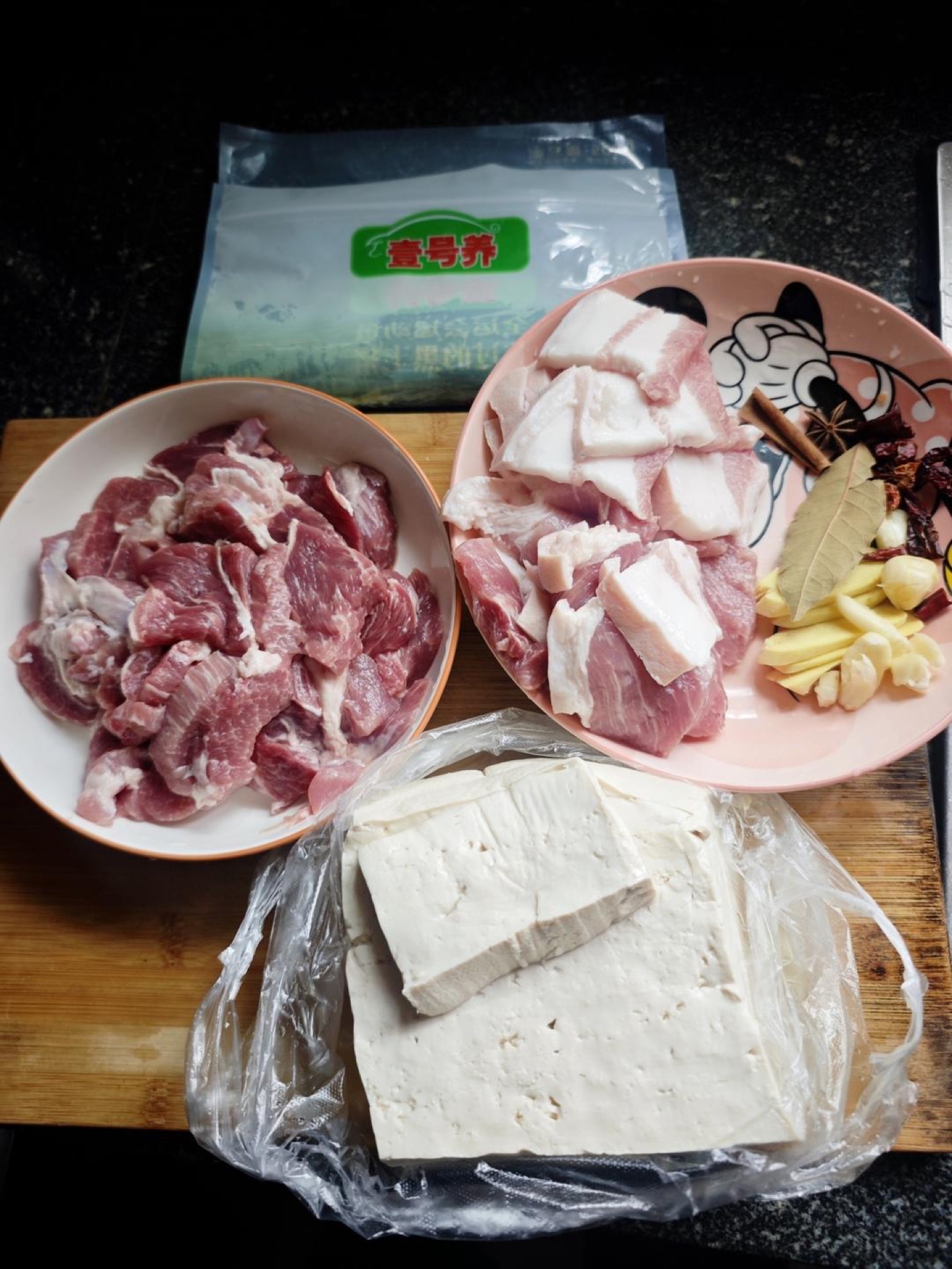
Cut the pork into bite-sized pieces, keeping the lean and fatty portions separate, and line up the ginger, garlic, dried chili, star anise, cinnamon bark, bay leaf, and chili paste.
Step 2 — Render the Fatty Pork
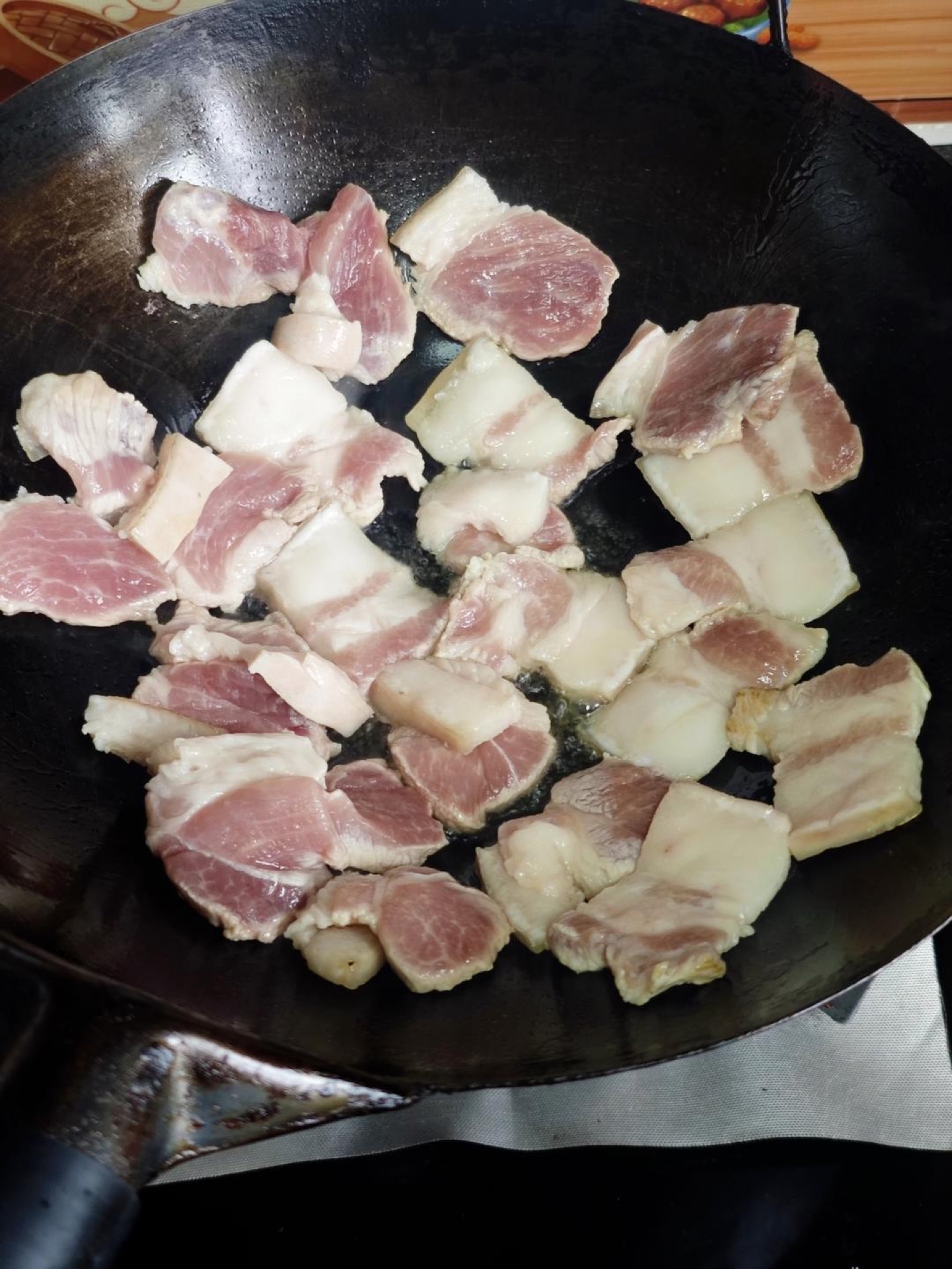
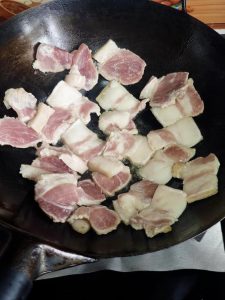
Heat the wok, add a little oil to coat it, then add the fatty pork pieces and sear them until one side is golden before turning to sear the other side.
Step 3 — Add the Lean Pork
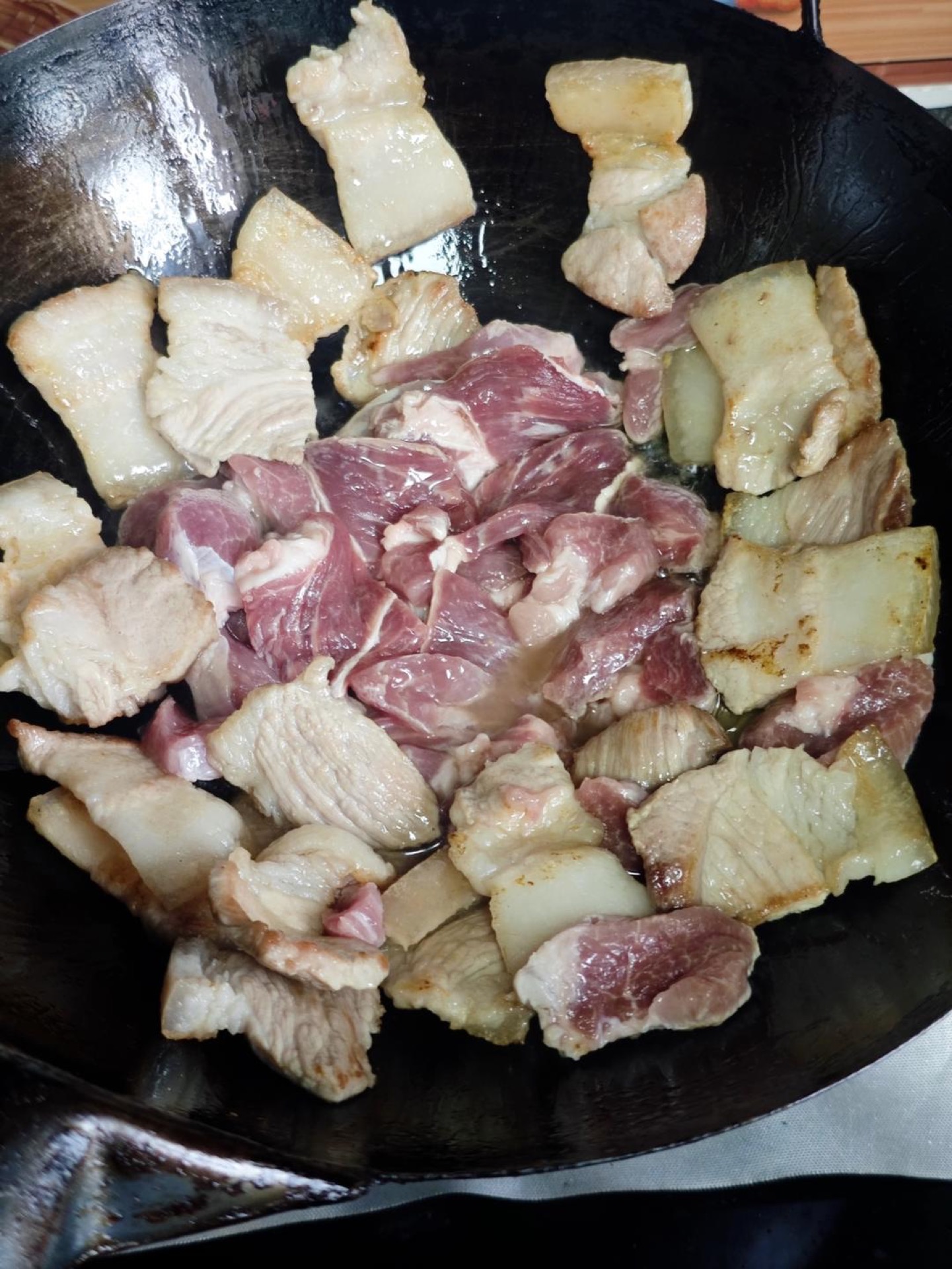
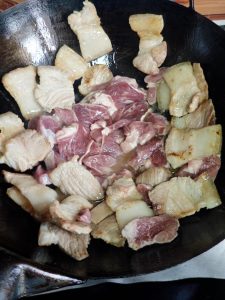
Once both sides are browned, add the lean pork and stir-fry until it changes color.
Step 4 — Deglaze and Add Aromatics
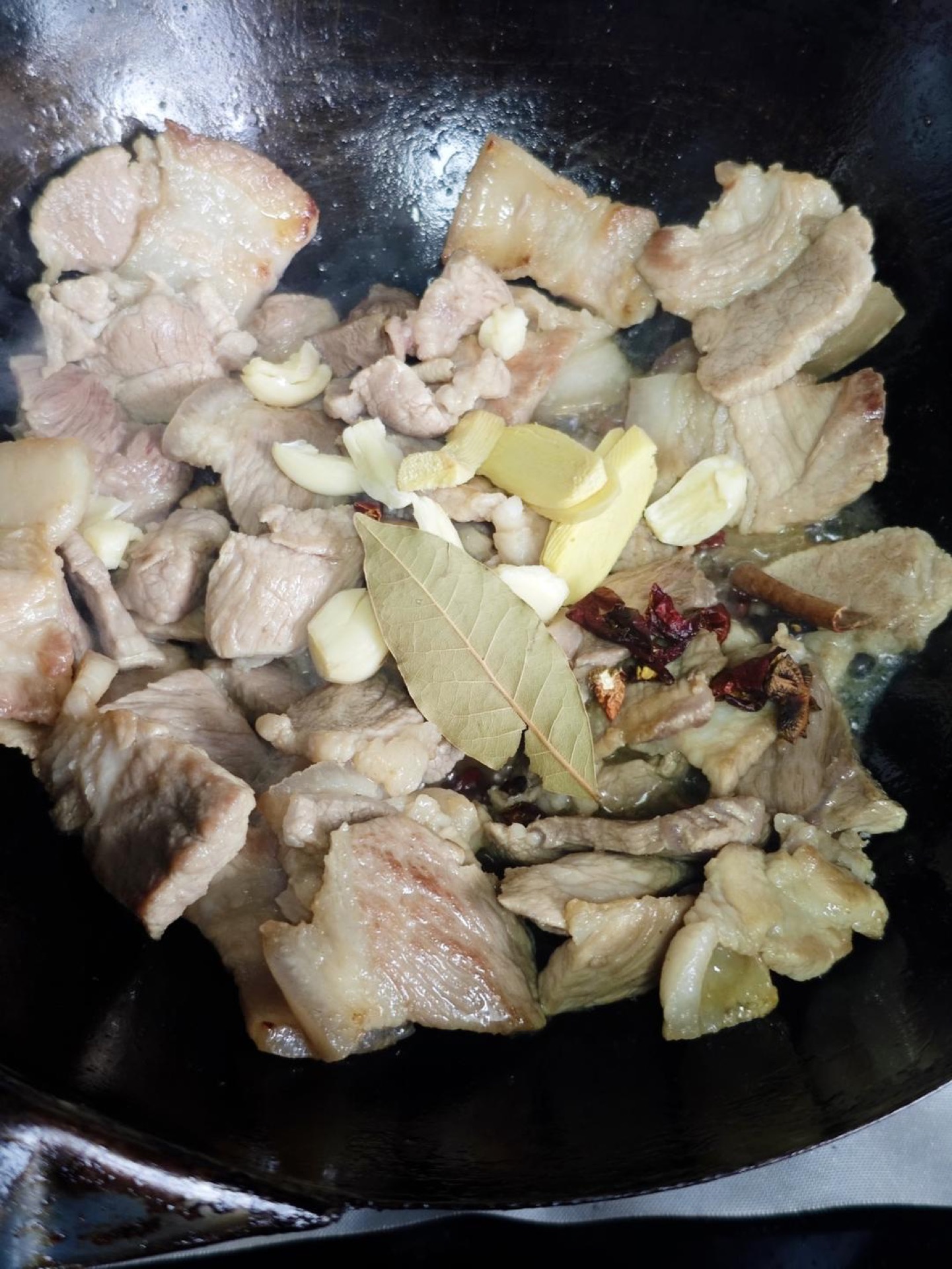
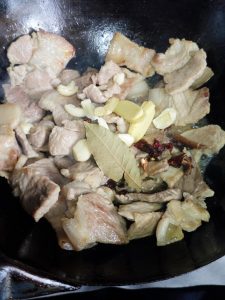
When the oil in the wok turns clear, pour the rice wine or cooking wine down the side of the wok, then add the ginger and the rest of the aromatics and stir-fry.
Step 5 — Season the Braise
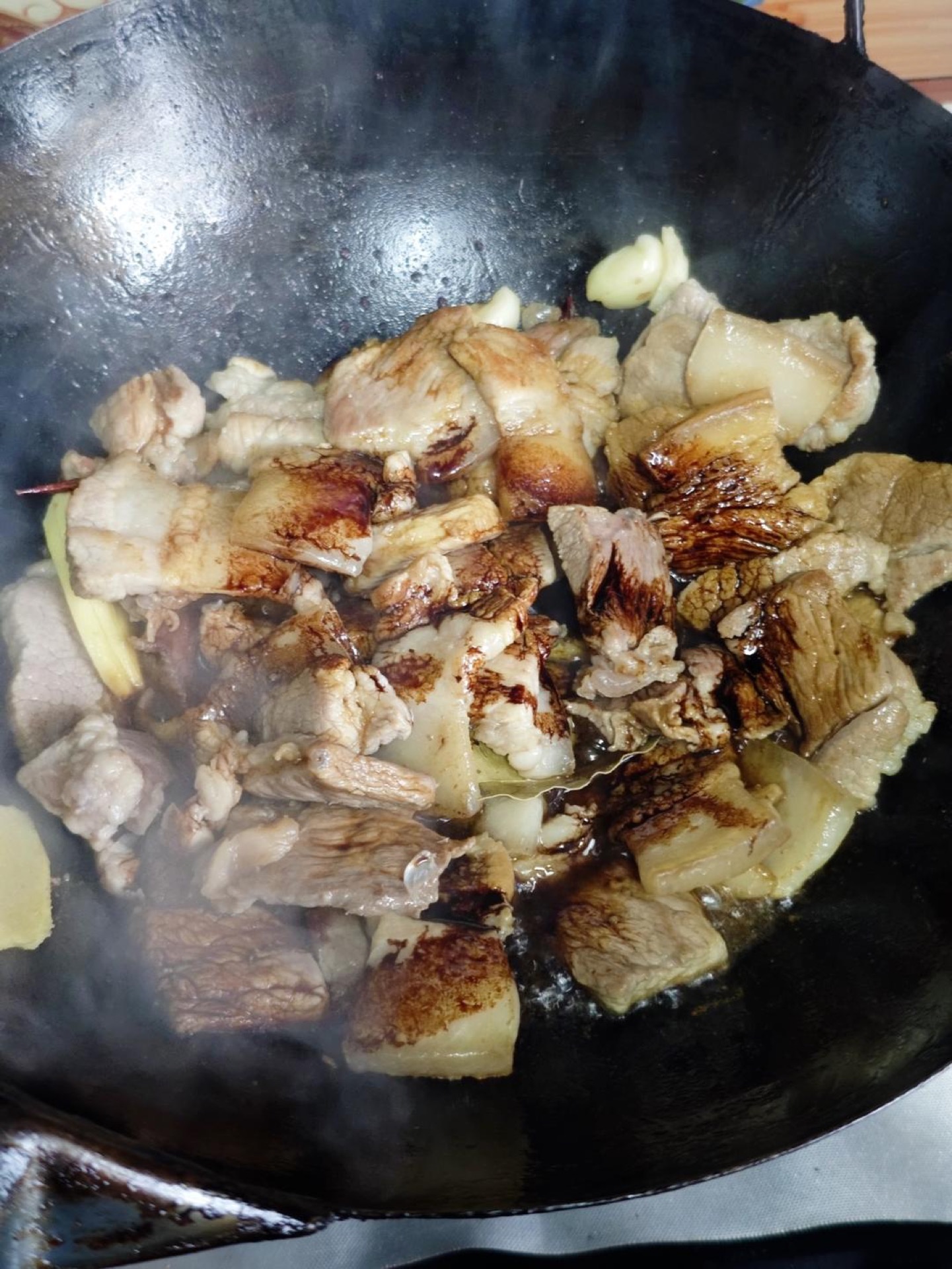
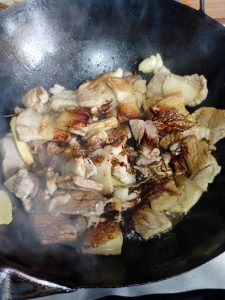
Pour in the light soy sauce for seasoning and the dark soy sauce for color, splash a little vinegar down the side of the wok (it tenderizes the meat and reacts with the soy sauce — a small amount leaves no vinegar taste), then add a spoonful of stone-ground chili paste, or leave it out and add chili powder if you like heat.
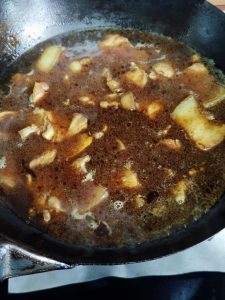
Step 6 — Simmer the Pork
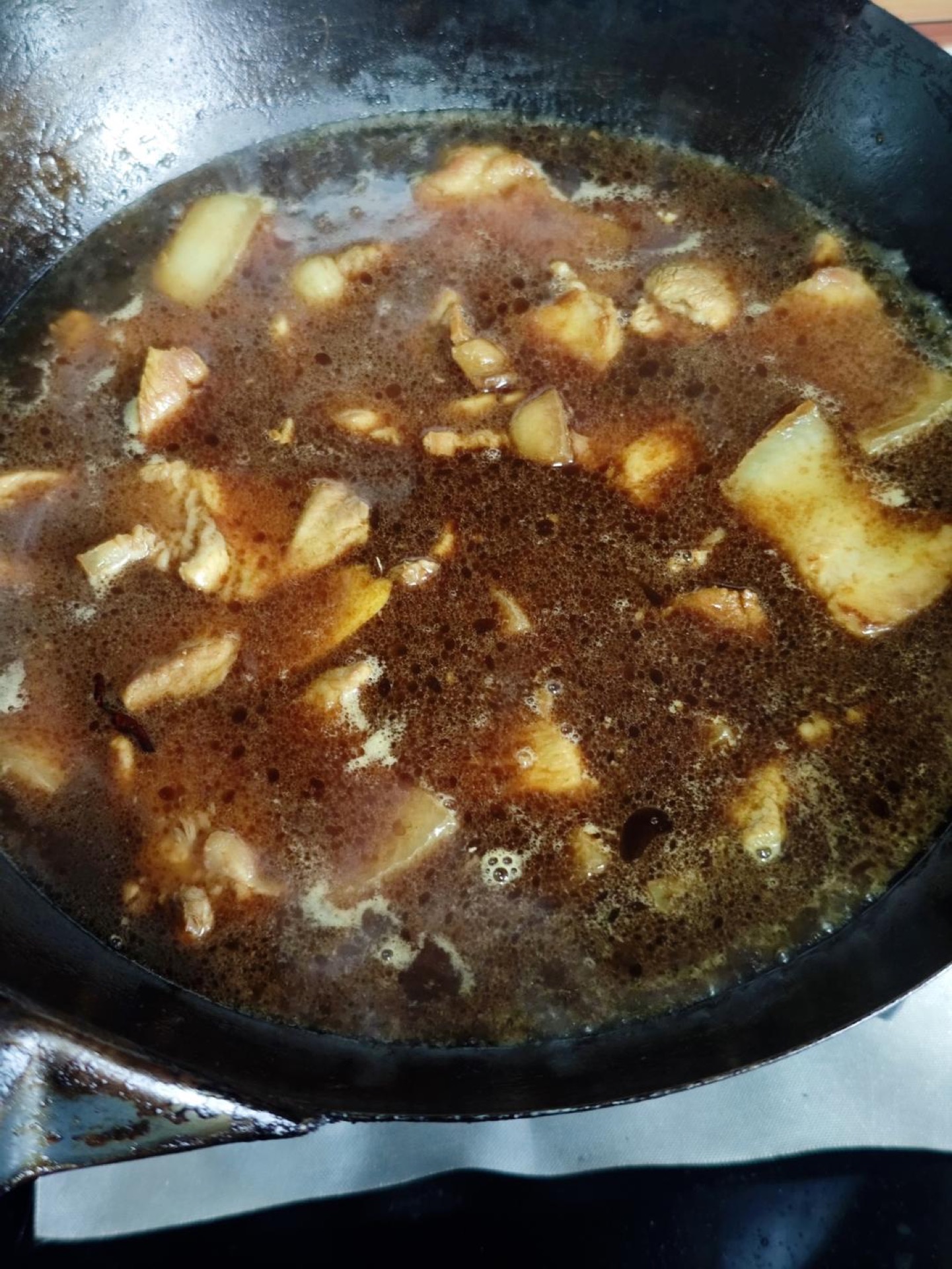
Pour in boiling water to cover the meat, bring to a boil, cover, and turn the heat to medium-low for 10 minutes.
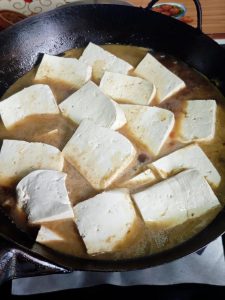
Step 7 — Add the Tofu
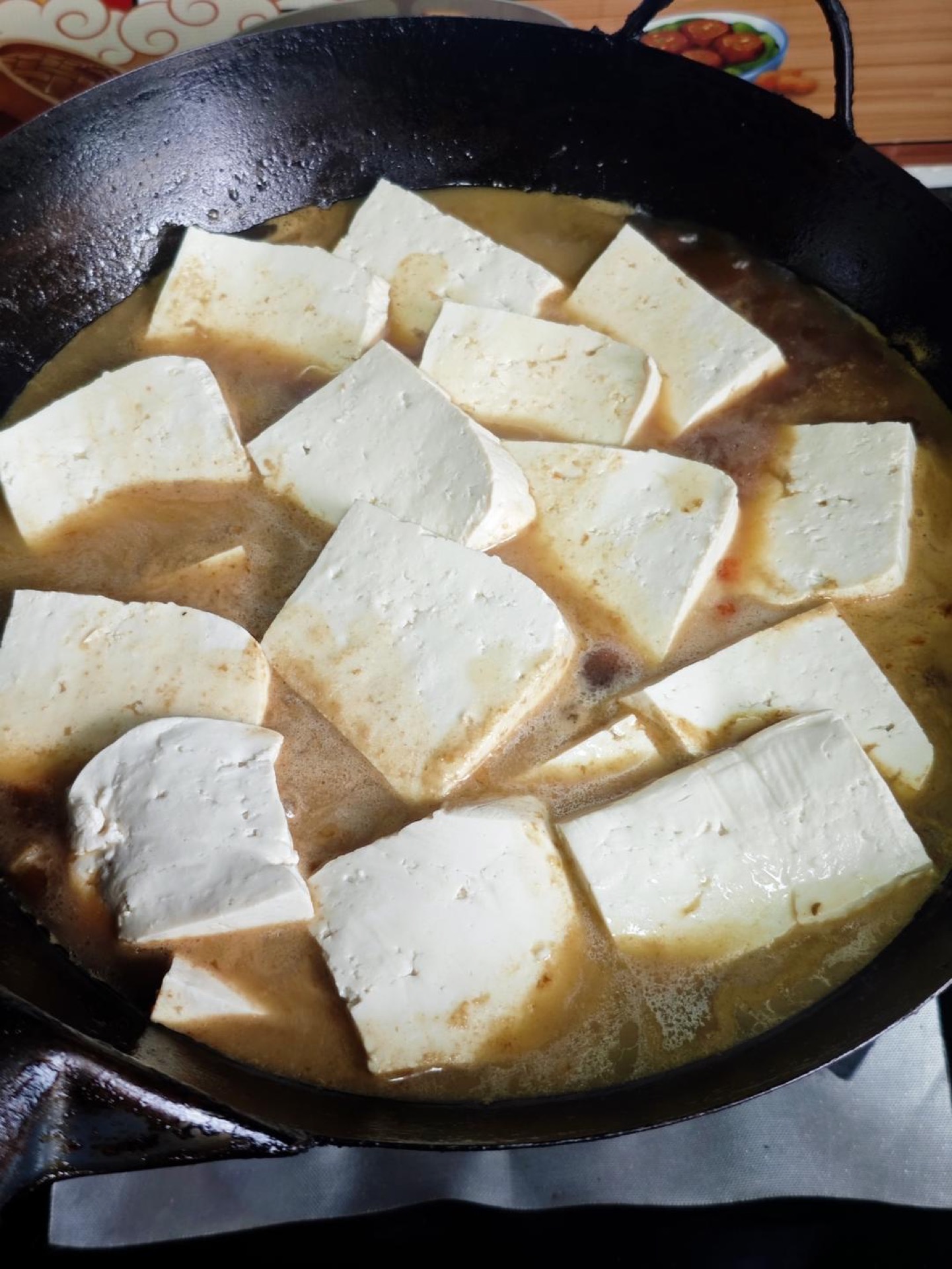
Add the cut tofu and lay the pieces out in an even layer.
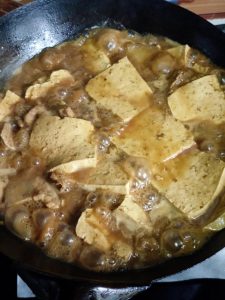
Step 8 — Braise the Tofu
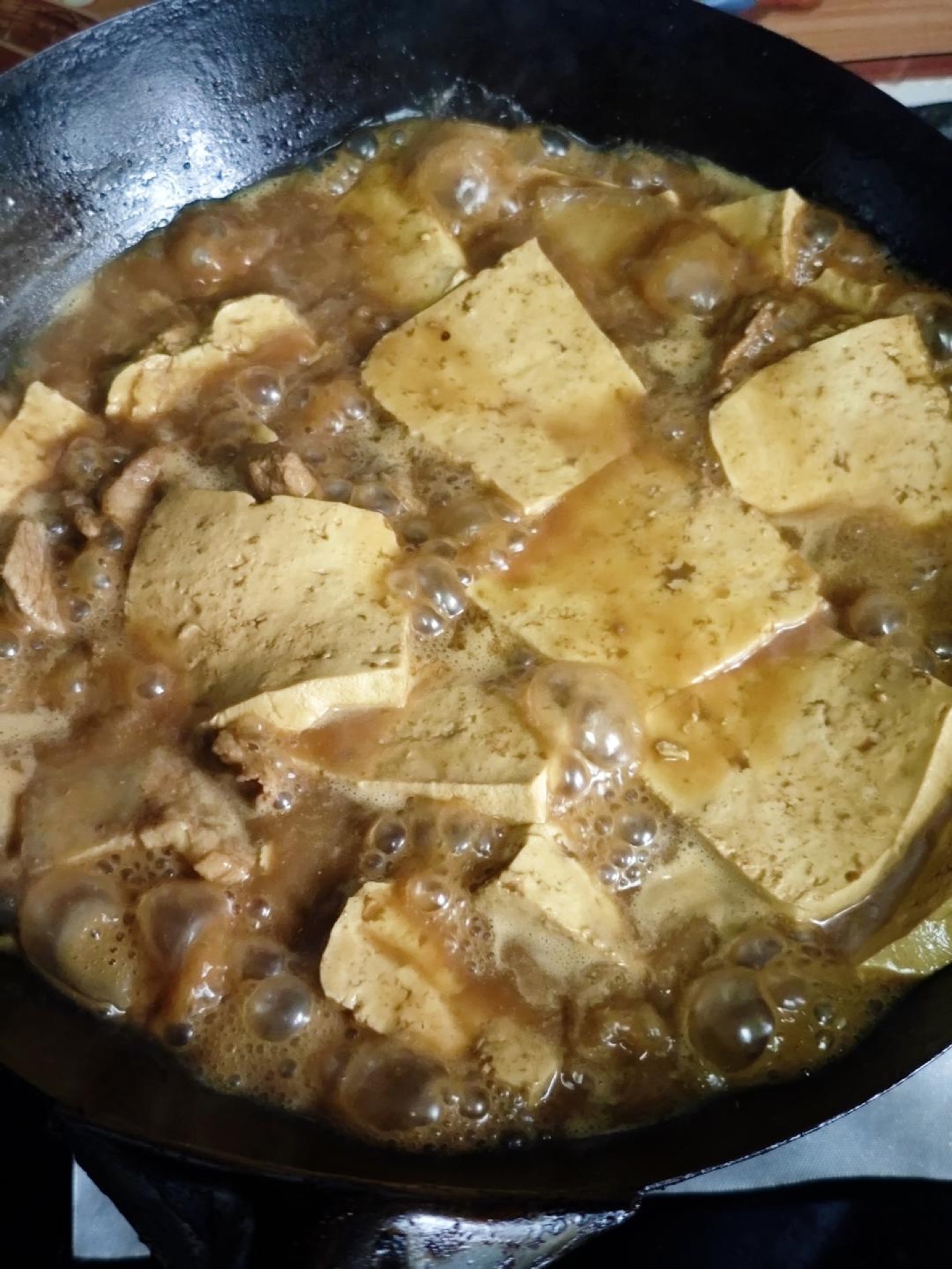
Use the spatula to spoon the braising liquid over the tofu so it soaks up the flavor, cover, and simmer for 15 to 20 minutes, watching the liquid so it does not dry out; taste and add a little MSG or salt if needed, then reduce the sauce over high heat, pushing the tofu with the spatula or chopsticks instead of flipping it so it does not stick or break.
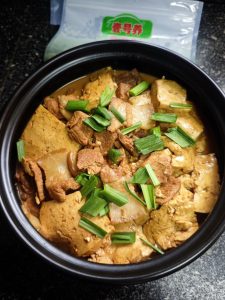
Step 9 — Finish and Serve
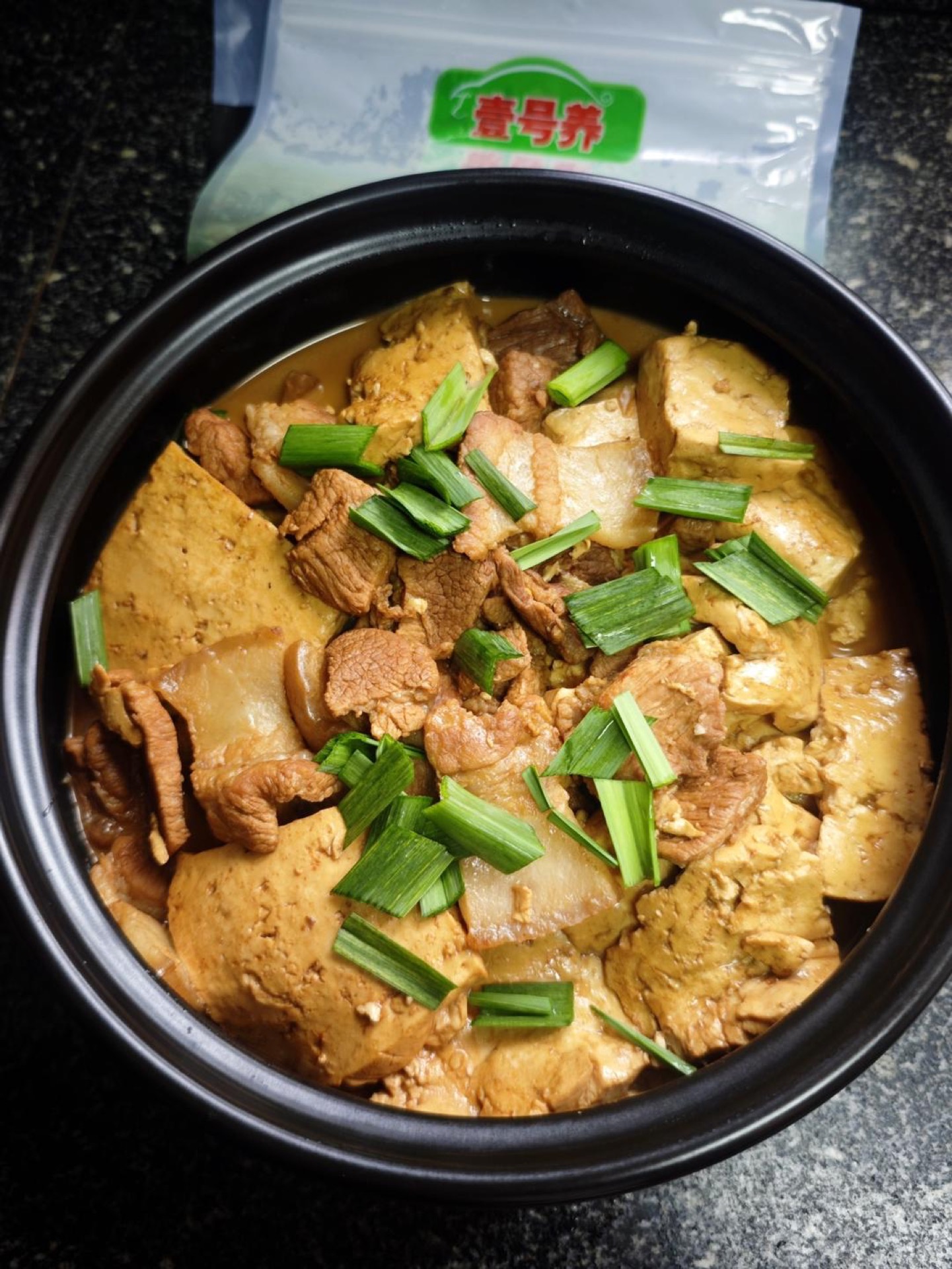
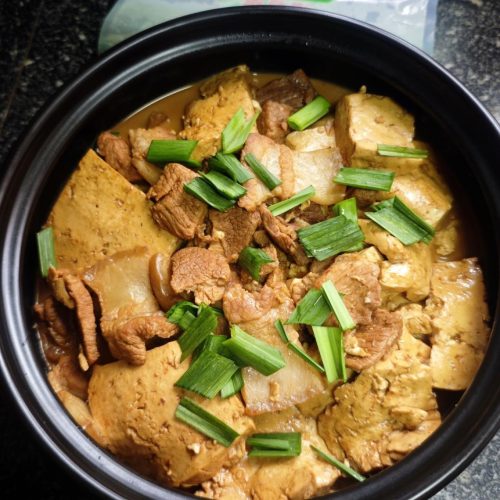
Transfer everything to a clay pot to keep it warm and snip a little garlic sprout over the top as a garnish.
Common Mistakes When Making Braised Pork with Tofu
1. Adding all the pork at once. If the fatty and lean pieces go in together, the lean meat releases water and the wok drops in temperature, so nothing browns. The fix is simple: render the fatty pieces first until they are golden on both sides, then add the lean pork. The rendered fat is what makes the sauce taste like something.
2. Using cold water for the braise. Cold water shocks the pork and can make it seize up and turn tough, and it stalls the simmer. Always use boiling or very hot water, added straight from a kettle, so the temperature of the braise never drops.
3. Skipping the vinegar. It seems like an odd addition to a soy-based braise, but a teaspoon of vinegar down the side of a hot wok tenderizes the pork and rounds off the saltiness of the soy sauce. Leave it out and the sauce tastes flatter and harsher.
4. Stirring the tofu. Once the tofu goes in, do not stir it with the spatula. Tofu is fragile and a stir will break the cubes into crumbs. Instead, spoon the braising liquid over the top of each piece, and when you need to move things around, push the tofu gently with the spatula or a pair of chopsticks.
5. Not watching the liquid. Tofu releases water as it braises, and the sauce can go from “just right” to “scorched” in a couple of minutes. Check the pan every few minutes during the 15-to-20-minute simmer and add a splash of hot water if the bottom looks dry.
6. Forgetting to taste at the end. Soy sauce brands vary wildly in saltiness, and the sauce reduces and concentrates as it cooks. Taste before you serve, then adjust with a pinch of salt or a little MSG. This is the difference between a good braise and a great one.
Variations
With mushrooms. Add a handful of sliced shiitake or button mushrooms along with the aromatics. They soak up the braising liquid and add an earthy note that plays well with the pork. Our braised tofu and mushrooms is built on exactly that idea.
Spicier. Double the dried chili and add a second spoonful of chili paste. If you want heat without the fermented funk, a teaspoon of chili powder stirred into the sauce at the end works well.
With scallions instead of garlic sprouts. Garlic sprouts can be hard to find out of season. Sliced scallions, added at the very end, give a similar fresh allium lift. The technique in this braised tofu with scallions is a good reference for how much scallion to use.
Leaner. Swap the pork belly for pork loin or a trimmed shoulder. You will need a little more oil in the wok at the start, since there is less fat to render, and the braise will be slightly less rich — but still very good.
Meatball version. If you happen to have ground pork and tofu on hand, the same flavors show up in crispy fried pork and tofu meatballs, which is a fun way to use up the last of a block of tofu.
Frequently Asked Questions
Can I use silken tofu instead of firm tofu? No — silken tofu will break apart during the 15-to-20-minute braise. Use firm or medium-firm tofu, ideally the kind sold as 老豆腐. If firm tofu is all you can find, that is perfect.
Do I have to use pork belly? No. Pork shoulder is a great substitute and is a little leaner. Just add an extra teaspoon of oil to the wok at the start, since shoulder renders less fat than belly.
What if I do not have stone-ground chili paste? Leave it out, or substitute a teaspoon of doubanjiang or a pinch of chili powder. The dish is excellent without any chili at all — the aromatics and soy sauce carry it.
Can I make this ahead of time? Yes, and it is arguably better the next day. Cool it quickly, refrigerate within 2 hours, and reheat gently on the stovetop with a splash of water. The tofu will have absorbed even more sauce.
Why did my sauce turn out too salty? Soy sauce brands vary a lot in sodium, and the sauce concentrates as it reduces. Next time, start with a little less light soy sauce and taste before serving. A pinch of sugar or a splash of hot water can rescue a sauce that has gone too far.
How to Serve
Braised pork with tofu is a rice dish at heart. Serve it over steamed white rice with the sauce spooned generously on top, and add a simple green vegetable on the side — garlicky stir-fried bok choy or a plate of blistered green beans both work well. A small bowl of braised tofu with minced meat alongside it makes a nice pairing if you are feeding a crowd and want two tofu dishes on the table.
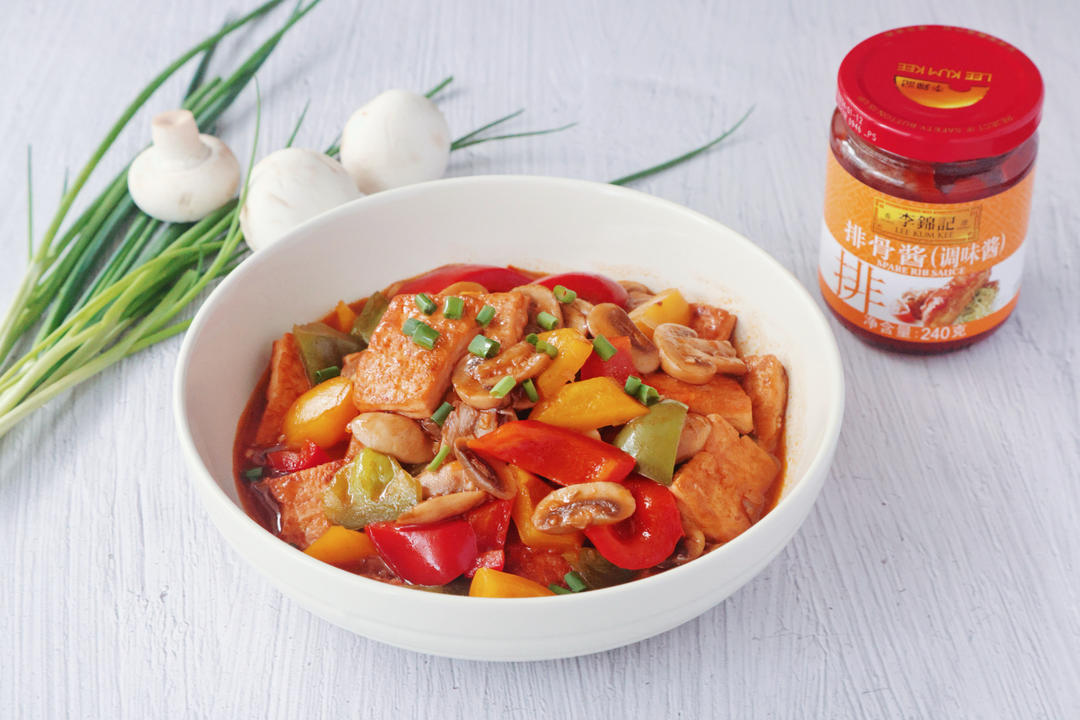
If you want a second braise to round out the meal, braised tofu and mushrooms shares the same soy-and-aromatic backbone and reheats beautifully. Serve both with rice and a pot of hot tea, and you have a proper home-style Chinese dinner.

Storage & Reheat
Cool leftovers within 2 hours of cooking and refrigerate in an airtight container for up to 3 days. The flavors deepen overnight, so day-two leftovers are often better than day one. Reheat gently in a covered pan on the stovetop over medium-low heat, adding a splash of water to loosen the sauce; a microwave works in a pinch but can toughen the pork. Do not freeze this dish — tofu becomes spongy and grainy after freezing and thawing, and the texture never fully recovers.
Allergen Notice
This recipe contains soy and wheat, both from the soy sauce. If you are gluten-free, use tamari in place of both the light and dark soy sauce. If you are avoiding soy entirely, coconut aminos can substitute, though the flavor will be noticeably different and the sauce will not darken the same way. Always check the labels on your chili paste and rice wine, as some brands contain added wheat or soy.
Nutrition Disclaimer
Nutrition information is calculated using an ingredient database and should be considered an estimate. In cases where multiple ingredient alternatives are given, the first listed is calculated for nutrition. Garnishes and optional ingredients are not included.
About the Author & Recipe Development
Lin is the recipe developer and writer behind Woks of Love, where she has been documenting home-style Chinese cooking for years — the kind of food that shows up on family tables rather than in restaurants. This recipe was developed from a home cook’s approach to 肉烧豆腐, the everyday southern Chinese braise of pork and firm tofu, and tested to make sure the timing and seasoning work in a Western home kitchen with supermarket ingredients.
Every recipe on the site is cooked, tasted, and adjusted before it is published. If you make this one, the notes in the comments help other readers — and they help us keep improving the recipe.
Authoritative References
For safe handling and cooking temperatures for pork, see the FDA food safety guidance and the USDA’s safe minimum internal temperature chart. For more on how acid and salt interact in cooking, Harold McGee’s On Food and Cooking is the standard reference and a genuinely useful read for anyone who braises often.
Braised Pork with Tofu (肉烧豆腐): Tender Pork, Savory Tofu

Equipment
- Wok
- Cutting Board
- Slotted Spoon
Ingredients
For the Pork and Tofu
- 1 lb pork shoulder or pork belly, skin on if using belly, cut into 1-inch cubes
- 14 oz firm tofu 老豆腐, drained and cut into 1-inch slabs
- 1 tbsp neutral oil for the wok
For the Aromatics
- 5 slices ginger about 1 inch total
- 5 cloves garlic smashed
- 1 tsp dried chili flakes or 3 dried chilies, to taste
- 1 whole star anise
- 1 small piece cinnamon bark about 2 inches
- 1 whole bay leaf
- 1 tbsp stone-ground chili paste optional
For the Sauce
- 2 tbsp light soy sauce
- 1 tsp dark soy sauce for color
- 2 tbsp rice wine or Shaoxing wine
- 1 tsp rice vinegar or black vinegar
- 1 cup hot water plus more as needed
- 1 stalk garlic sprouts sliced, for garnish
- 1 pinch MSG optional
- 1 pinch salt to taste
Instructions
- Cut the pork into bite-sized pieces, keeping the lean and fatty portions separate, and line up the ginger, garlic, dried chili, star anise, cinnamon bark, bay leaf, and chili paste.

- Heat the wok, add a little oil to coat it, then add the fatty pork pieces and sear them until one side is golden before turning to sear the other side.
- Once both sides are browned, add the lean pork and stir-fry until it changes color.
- When the oil in the wok turns clear, pour the rice wine or cooking wine down the side of the wok, then add the ginger and the rest of the aromatics and stir-fry.
- Pour in the light soy sauce for seasoning and the dark soy sauce for color, splash a little vinegar down the side of the wok (it tenderizes the meat and reacts with the soy sauce — a small amount leaves no vinegar taste), then add a spoonful of stone-ground chili paste, or leave it out and add chili powder if you like heat.
- Pour in boiling water to cover the meat, bring to a boil, cover, and turn the heat to medium-low for 10 minutes.
- Add the cut tofu and lay the pieces out in an even layer.
- Use the spatula to spoon the braising liquid over the tofu so it soaks up the flavor, cover, and simmer for 15 to 20 minutes, watching the liquid so it does not dry out; taste and add a little MSG or salt if needed, then reduce the sauce over high heat, pushing the tofu with the spatula or chopsticks instead of flipping it so it does not stick or break.
- Transfer everything to a clay pot to keep it warm and snip a little garlic sprout over the top as a garnish.












Leave a Reply