There is a whole category of Chinese home cooking that never shows up in restaurants, and this is one of them. 小白菜熬猪肉 — baby bok choy simmered with pork — is what a northern Chinese family puts on the table on an ordinary Tuesday: a little meat, a lot of greens, a block of tofu, a handful of glass noodles, and enough savory broth to spoon over rice. The word 熬 (áo) is the key. It does not mean a quick stir-fry or a long, fancy red braise. It means to simmer patiently in liquid until everything in the pot softens into one another.
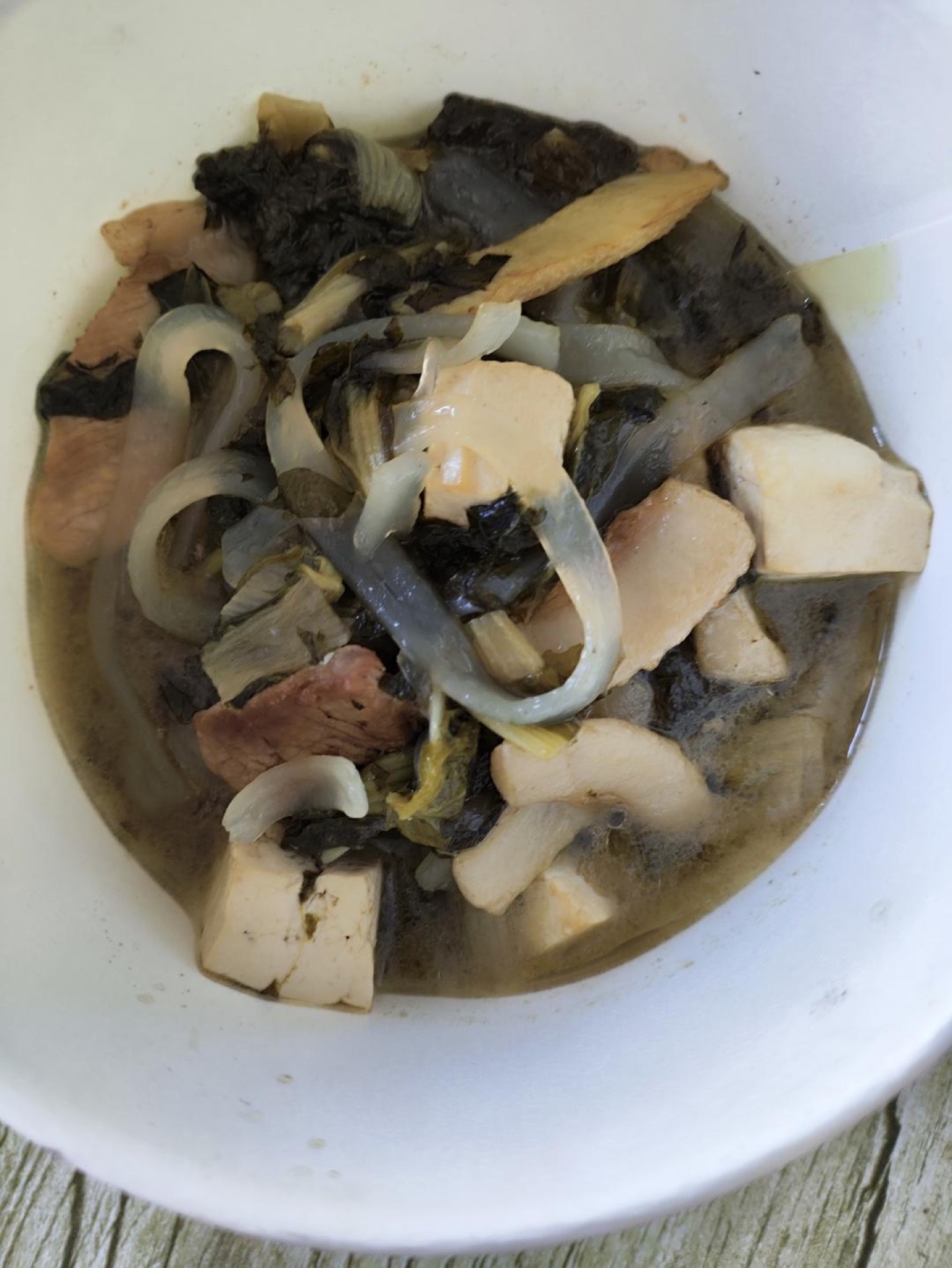
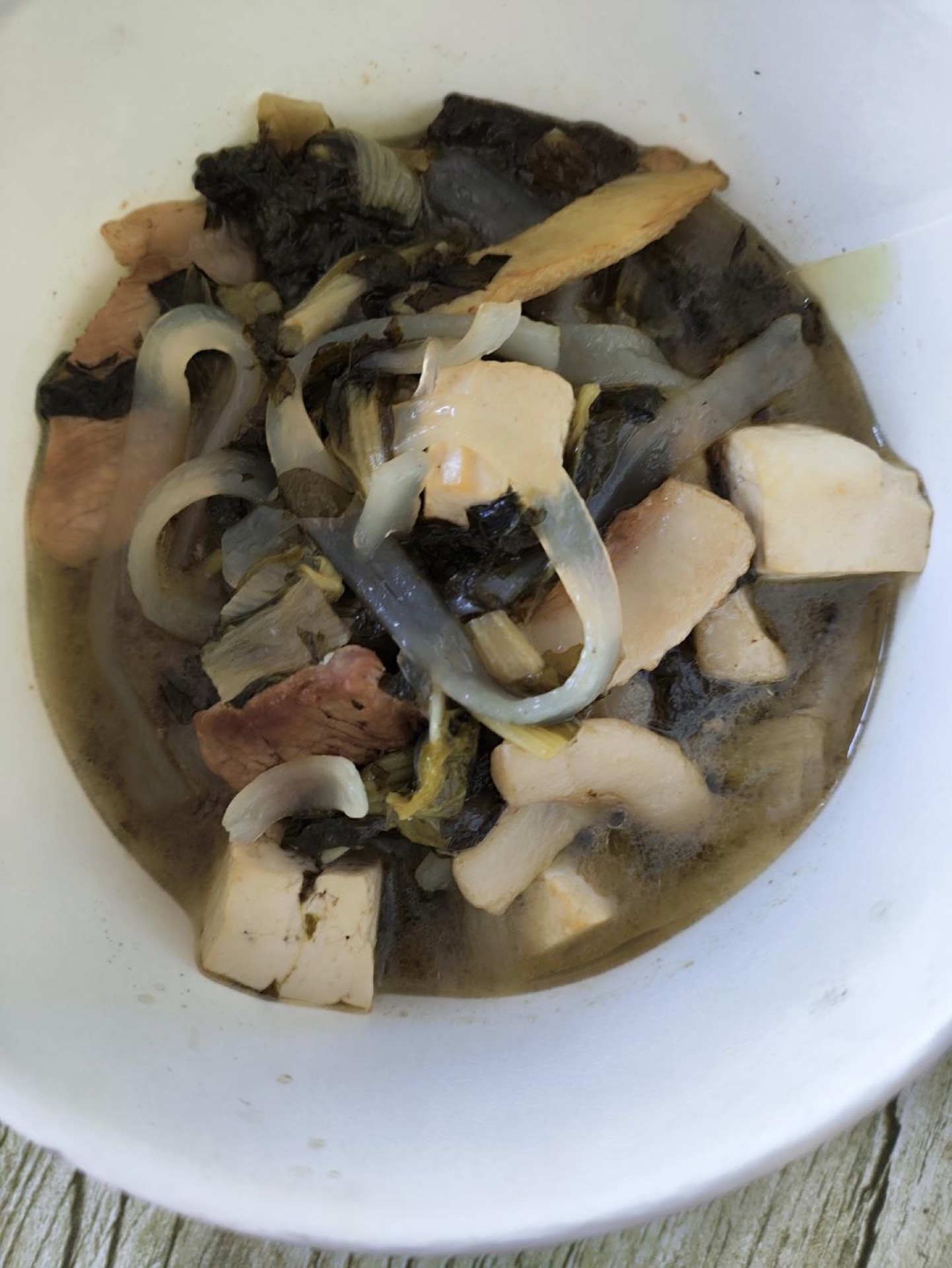
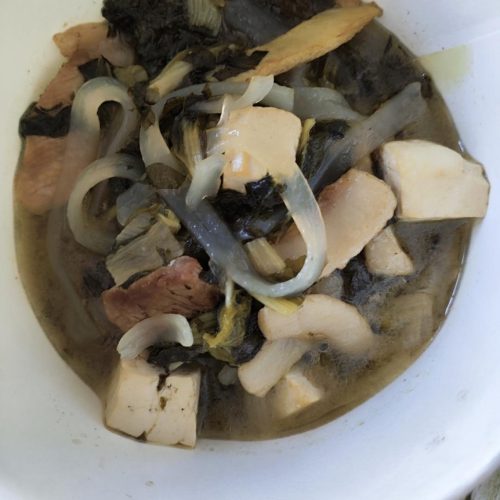
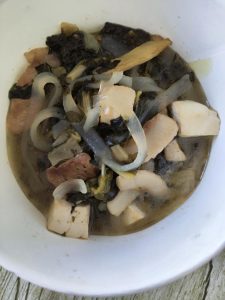
What you get is a bowl that is somehow both light and deeply comforting. The pork slices stay tender because they are cut thin and barely cooked through before the liquid goes in. The bok choy gives up its sweetness to the broth. The tofu drinks up the soy. And the glass noodles, laid on top at the very end, turn translucent and slippery, catching the sauce in every strand. It is a one-wok dinner that costs very little and tastes like someone’s grandmother made it.
What Is 小白菜熬猪肉?
小白菜熬猪肉 is a northern Chinese braised dish — literally “baby bok choy simmered with pork.” It belongs to the same family of everyday home braises as braised tofu with scallions: humble ingredients, a soy-based broth, and a slow simmer that lets everything trade flavor. Unlike 红烧 (red-braised) dishes, which are built on sugar and caramel color, an 熬 dish is savory and brothy rather than sticky and glossy.
The structure is simple and forgiving. Aromatics — Sichuan peppercorns, star anise, ginger — bloom in oil. Thin pork slices go in and get seasoned with three sauces in a deliberate ratio: the most light soy, the second most dark soy, the least black vinegar. Then the blanched greens, then water, then a lid. At the end, glass noodles and tofu are layered on top and left to steam until tender. That is the whole dish.
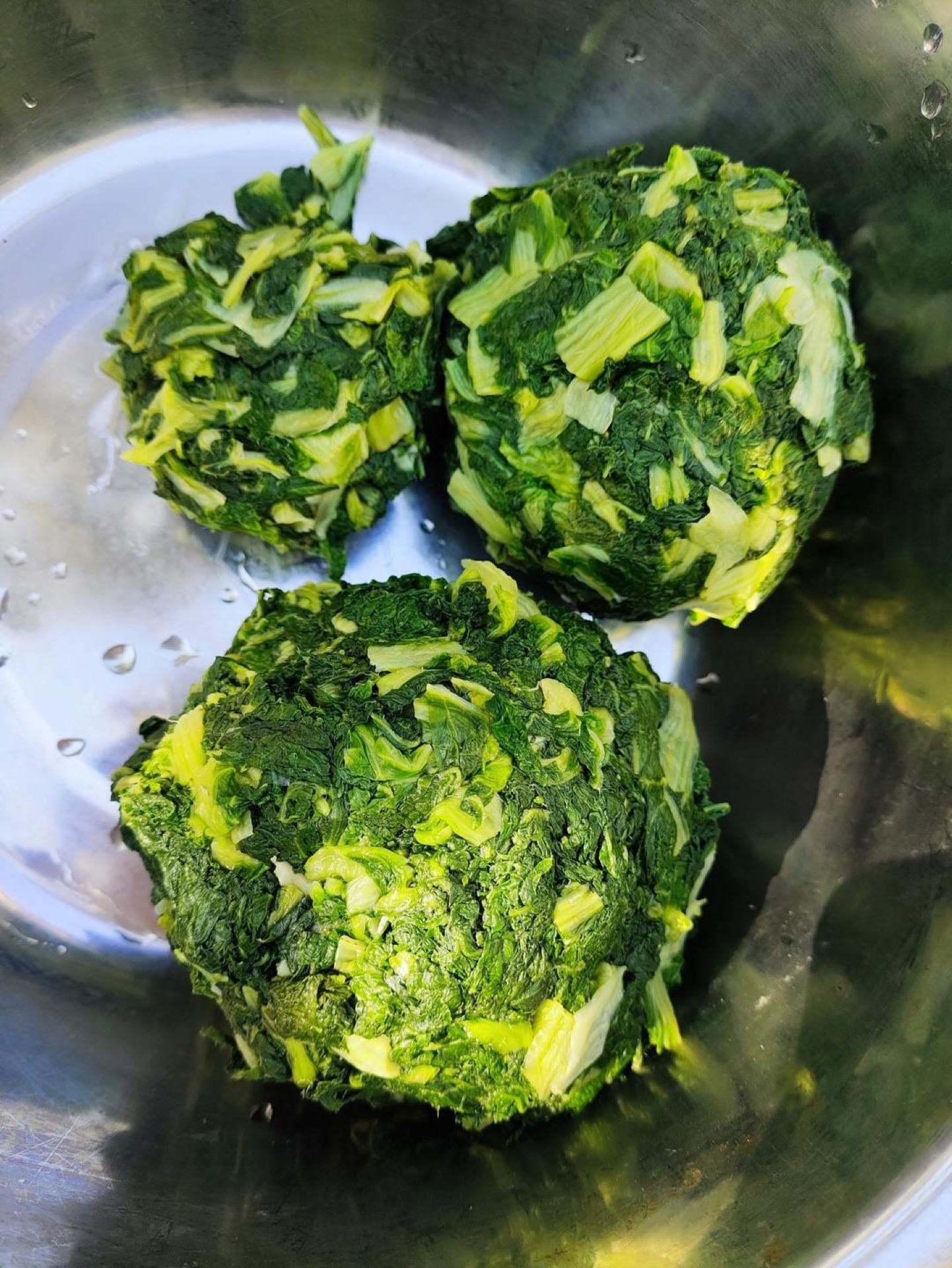
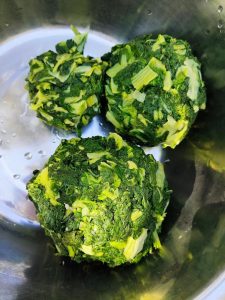
Why blanch the bok choy first? Baby bok choy holds a fair amount of water and a faint raw bitterness. A quick blanch in boiling water, followed by squeezing it dry, removes both — and it means the greens will not water down the braise or turn to mush during the simmer. Squeezing matters as much as blanching: wet greens dilute the soy broth you just built.
If you enjoy this style of cooking, the same logic shows up in braised tofu with fresh chilis and minced pork, where a little meat and a savory sauce turn a plain block of tofu into dinner. The technique is identical in spirit: build a seasoned liquid, then let a mild ingredient absorb it.
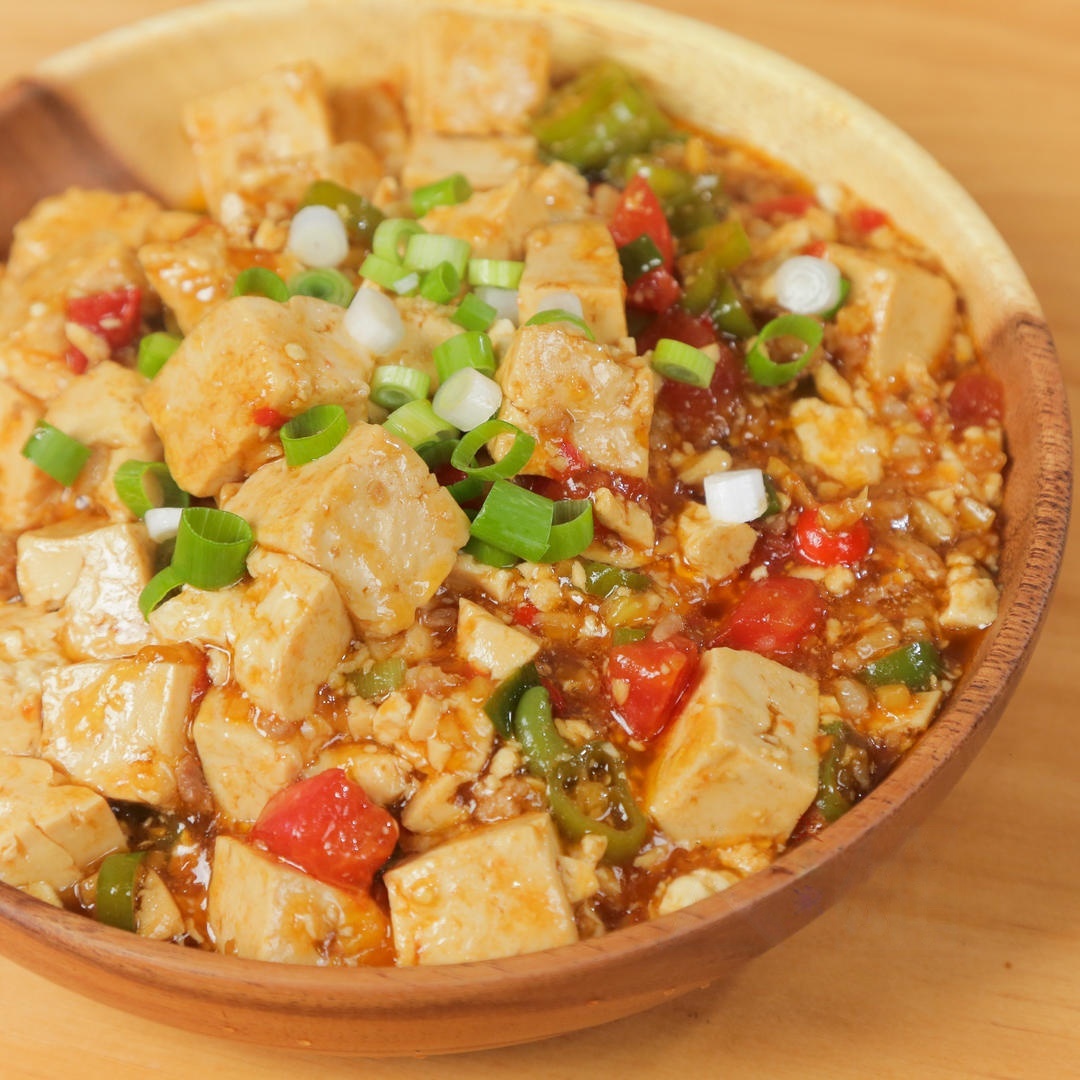
1Fresh Chili Tofu with Minced Pork (鲜椒肉末豆腐)A fast, 15-minute Sichuan homestyle favorite. Silky tofu and savory minced pork braised with fresh chilis and tomatoes for a bright, ‘rice-killing’ flavor profile.Check out this recipe
For a version that swaps chili heat for gentle savoriness, braised tofu with mushrooms and pork uses mushrooms to add the deep, meaty backbone that this bok choy braise gets from its long simmer.
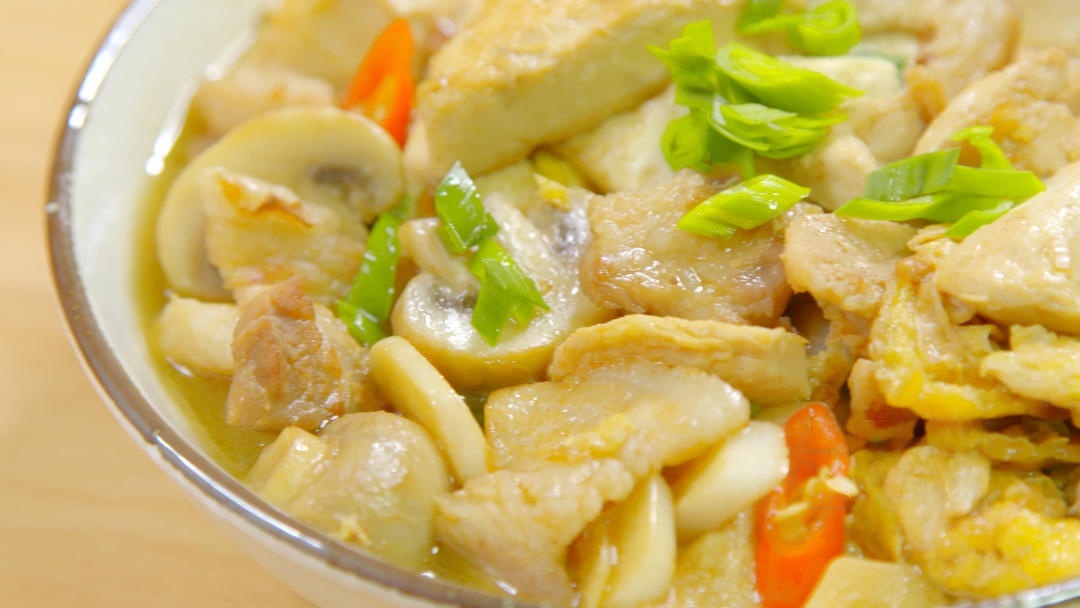
2Braised Tofu with Mushrooms and Pork (Rou Pian Kou Mo Shao Dou Fu)A savory, comforting dish featuring egg-coated silken tofu, sliced pork belly, and button mushrooms braised in a rich umami sauce. Perfect for a weeknight family meal.Check out this recipe
And if you want the same pork-and-tofu pairing with almost no hands-on time, rice cooker braised pork ribs with tofu proves the combination works just as well when the appliance does the braising.
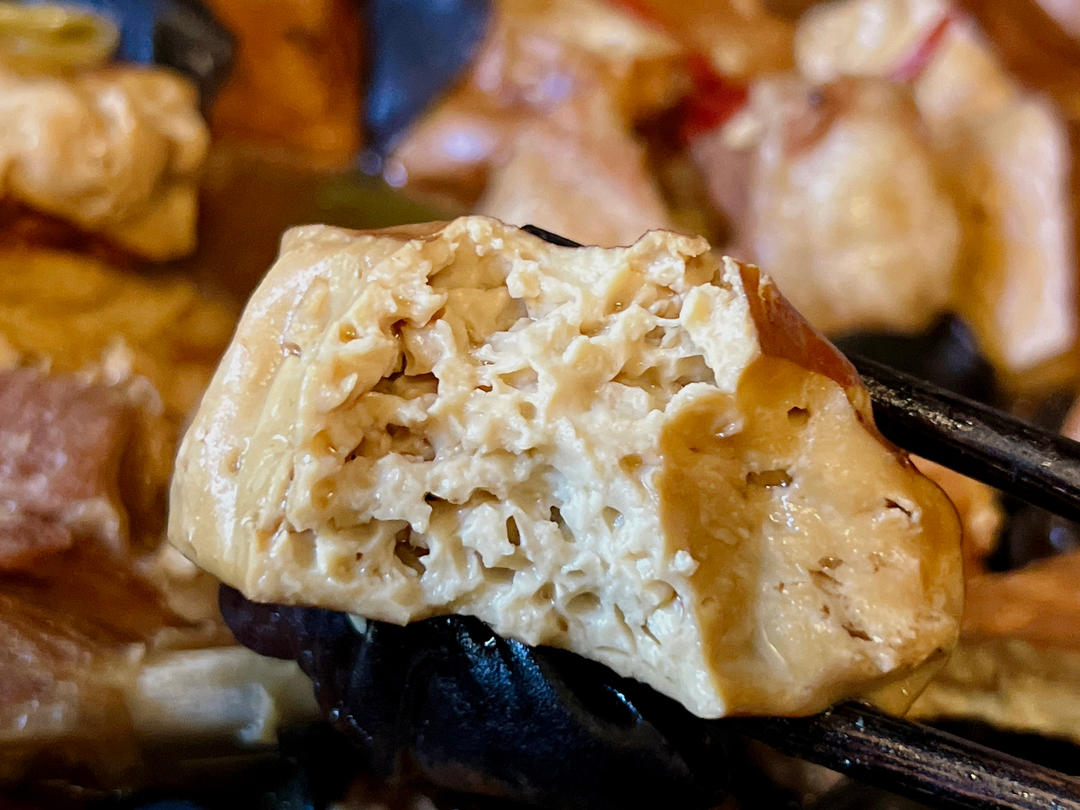
3Easy Rice Cooker Braised Pork Ribs with TofuA comforting, authentic Chinese recipe packed with rich, savory flavors. The rice cooker does all the hard work to tenderize the meat, while the thick dried tofu absorbs the delicious broth.Check out this recipe
Why This Recipe Works
Three small decisions do most of the work here, and none of them are difficult.
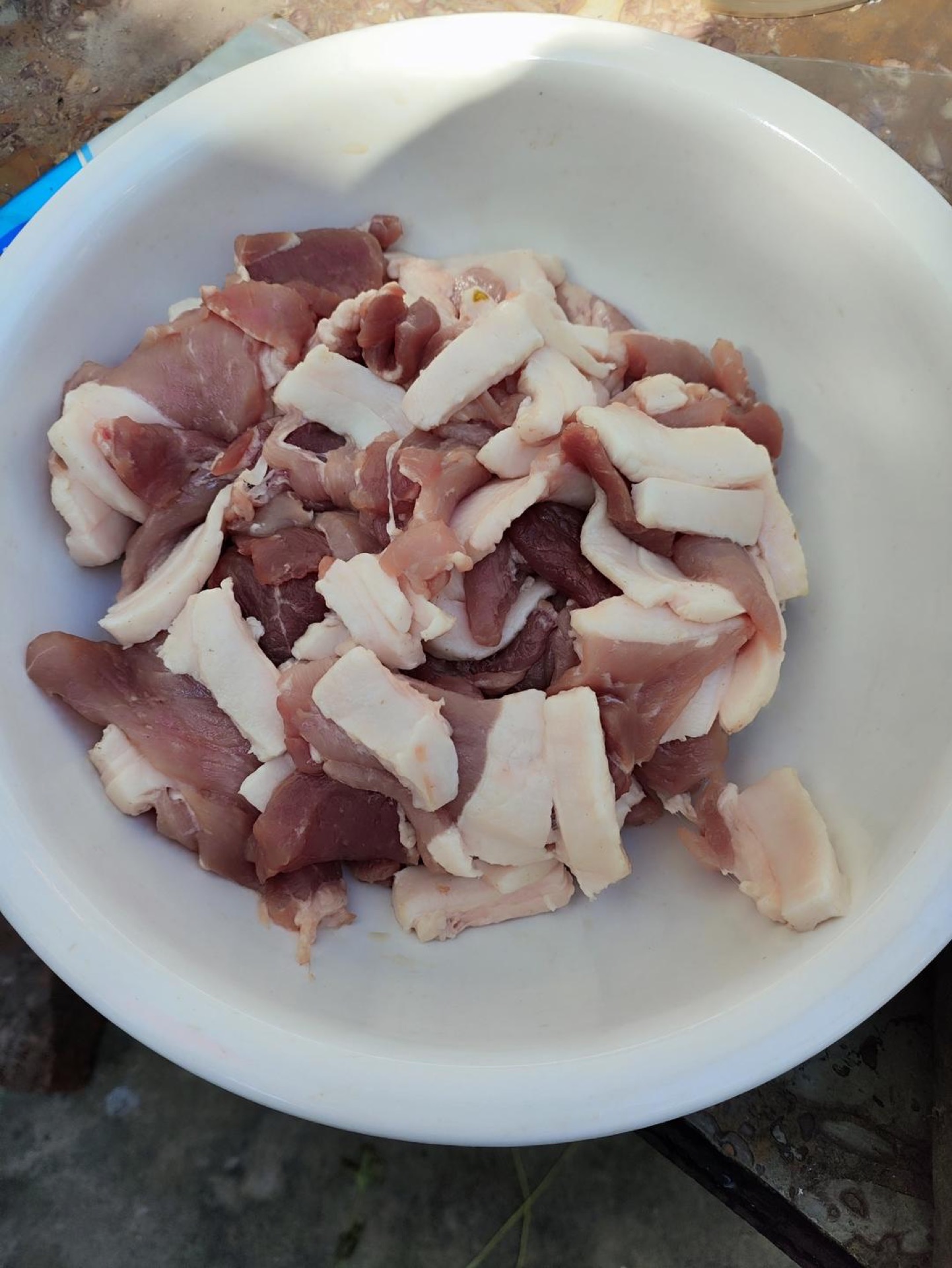
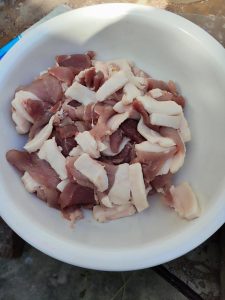
Thin pork slices. The source recipe is emphatic about this: 片越薄越入味 — the thinner the slice, the more flavor it takes on. A thin slice of pork shoulder cooks in minutes, stays juicy, and gives the broth its porky backbone without needing hours. If your slices are thick, the meat will be chewy no matter how long you simmer it.
A deliberate sauce ratio. The recipe gives an order, not just amounts: light soy sauce the most, dark soy sauce second, black vinegar third. Light soy brings salt and umami, dark soy brings color and a molasses-like depth, and the small splash of vinegar cuts through the fat and brightens everything. Getting that hierarchy right is what makes the broth taste layered rather than flat.
Layering, not stirring. The glass noodles and tofu go on top and are left alone. Stir them in and the noodles break into paste and the tofu crumbles into the broth. Left in an even layer, they steam gently and hold their shape.
Equipment Needed
A wok is the traditional vessel and the one that works best, because its wide, sloped sides let the pork sear hard at the bottom while the greens and noodles sit higher up in the steam. A deep skillet or a Dutch oven will also work — you just want something with a lid that can hold everything without crowding.
Beyond that, you need very little: a cutting board and a sharp knife for the pork and ginger, a slotted spoon or spider for lifting the blanched greens out of the boiling water, and a lid that fits. If you have a pair of chopsticks for spreading the noodles and tofu into an even layer, that is genuinely the best tool for the job.
Ingredients
The full measured list is in the recipe card below, but here is what you are working with: thinly sliced pork shoulder, baby bok choy, firm tofu, mung bean glass noodles, Sichuan peppercorns, star anise, ginger, light soy sauce, dark soy sauce, Chinkiang (black) vinegar, peanut oil, salt, and a small marinade of soy, white pepper, cornstarch and oil for the pork.
Ingredient Notes
Pork shoulder or pork loin. You want a cut you can slice thin without it falling apart. Shoulder has a little more fat and stays juicier; loin is leaner and slices beautifully if your knife is sharp. Either works. If the meat is soft and hard to slice, put it in the freezer for 20 minutes first — firm meat cuts far thinner.
Baby bok choy (小白菜). The source calls it 白菜小时候 — “cabbage when it was little” — which is exactly what baby bok choy is. Look for small, compact heads with bright green leaves and pale, crisp stems. Regular bok choy works too; just cut the stems smaller than the leaves so they cook evenly.
Firm tofu, not silken. The tofu here sits on top of the braise and needs to hold its shape for 20 minutes of steaming. Firm or medium-firm tofu is right. Silken tofu will dissolve into the broth.
Glass noodles (粉丝). Mung bean threads are the standard. They need only a rinse before going in — they will soften completely in the steam. Do not soak them in hot water first or they will turn to mush. If you are avoiding gluten, check the label, since some brands blend in wheat starch.
The three sauces. Light soy sauce (生抽) is your salt and umami workhorse. Dark soy sauce (老抽) is thicker, slightly sweet, and mostly there for color — use more than a splash and the dish turns muddy. Chinkiang vinegar (香醋) is a malty black rice vinegar; balsamic is not a substitute, but rice vinegar with a pinch of sugar is a reasonable stand-in.
Sichuan peppercorns. A dozen or so, bloomed in hot oil, gives a gentle citrus-tinged warmth rather than real numbing heat. Toast them in the oil until fragrant — about 20 seconds — and pull them out if you like, or leave them in for a more rustic bowl.
Prep & Mise en Place
This dish moves quickly once the wok is hot, so set everything up before you turn on the burner.
First, marinate the pork. In a bowl, combine the sliced pork with one spoon of light soy sauce, a third of a spoon of white pepper, a third of a spoon of salt, one spoon of cornstarch and half a spoon of cooking oil, and mix well. Let it sit while you prepare everything else — even ten minutes makes a difference, and the cornstarch is what keeps the slices tender under heat.
Next, bring a pot of water to a boil and blanch the chopped baby bok choy for about 30 seconds, just until it wilts and turns deep green. Lift it out with a slotted spoon, let it cool enough to handle, then squeeze it firmly in your hands or in a clean towel until no more water runs out. Set it aside. Julienne the ginger into fine threads and have your star anise and Sichuan peppercorns measured and ready.
Rinse the glass noodles under cold water and drain them. Cut the tofu into 1-inch blocks. Measure your light soy, dark soy and vinegar into small bowls — you will be adding them in quick succession, and there is no time to measure once the pork is in the wok.
Cooking Process
Step 1 — Blanch the Greens
Wash the baby bok choy, chop it, blanch it briefly in boiling water, then squeeze out the excess water and set it aside; julienne the ginger.
Step 2 — Slice the Pork Thin
Wash the pork and slice it thinly — the thinner the slices, the more flavor they absorb; the pieces in the photo are on the large side, so go thinner if you can.
Step 3 — Bloom the Aromatics
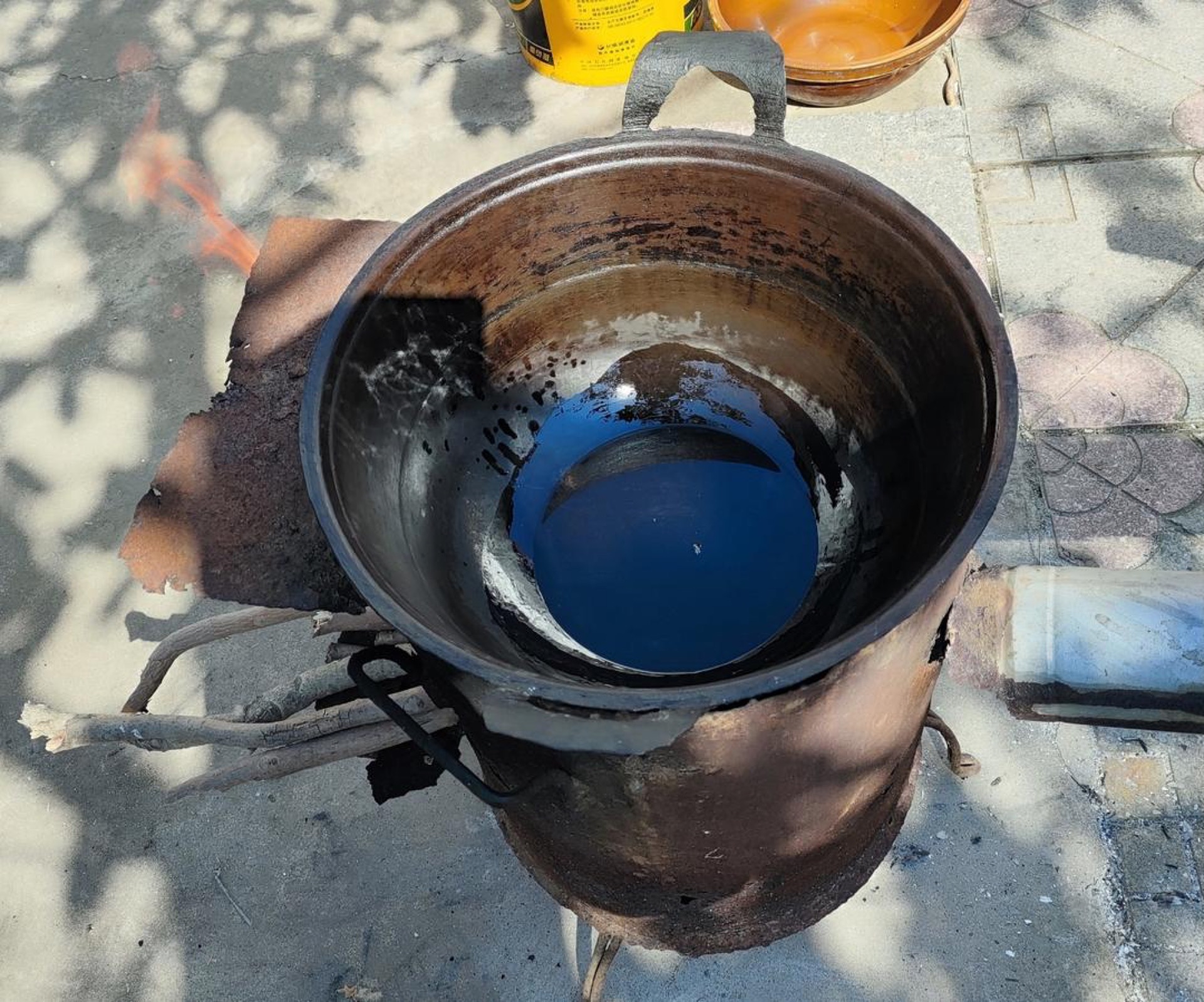
Heat the wok until hot, add the peanut oil, and once the oil is hot add the Sichuan peppercorns and star anise and fry them for a moment, then add the ginger threads and salt, stir a couple of times, and add the pork slices and stir-fry.
Step 4 — Season the Pork
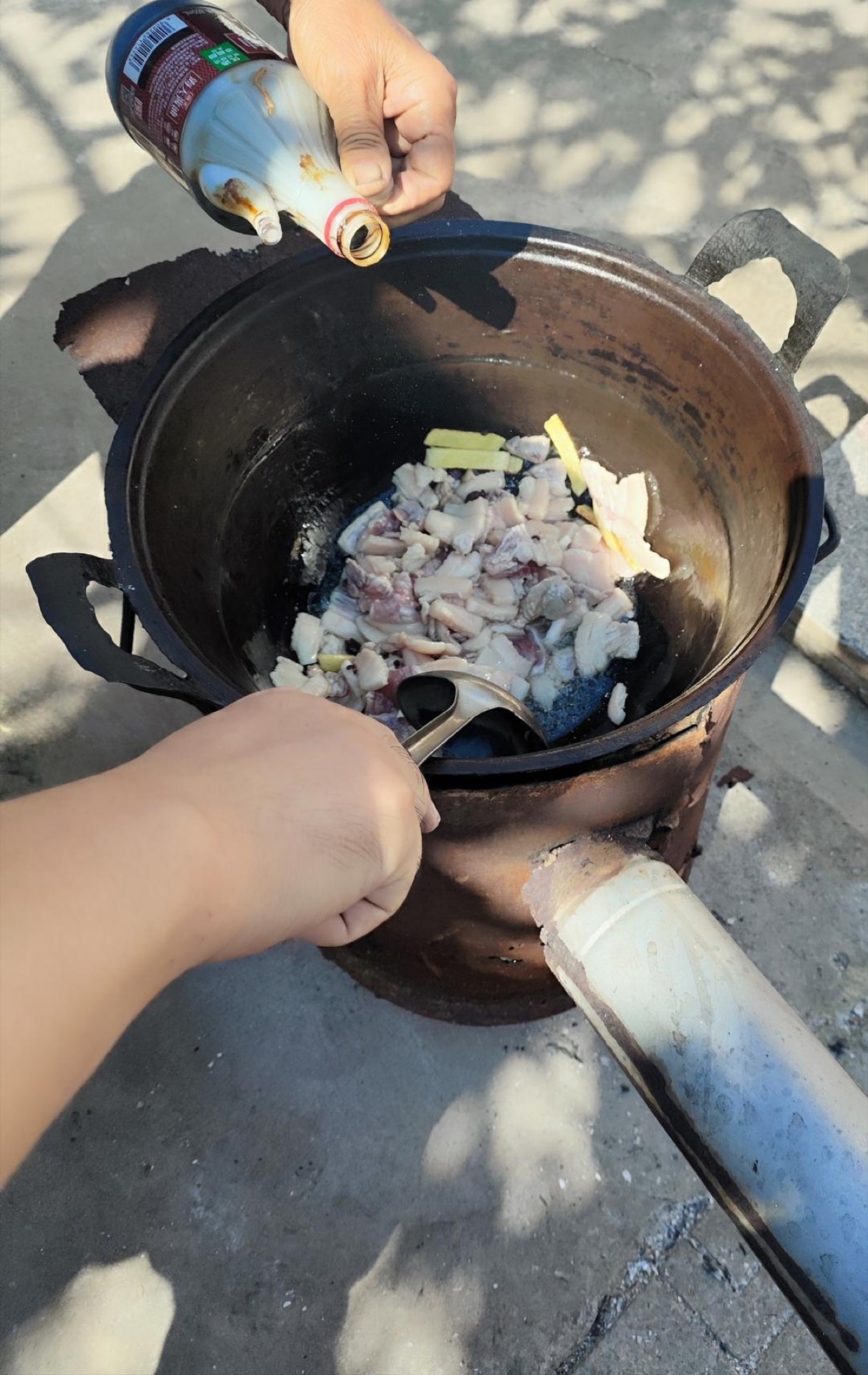
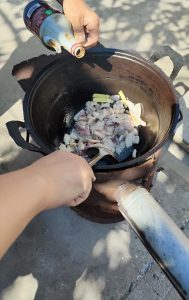
Add the dark soy sauce and the vinegar and stir-fry a few times, then add the light soy sauce and salt and stir-fry for a few minutes, using the most light soy sauce, the second most dark soy sauce, and the least vinegar.
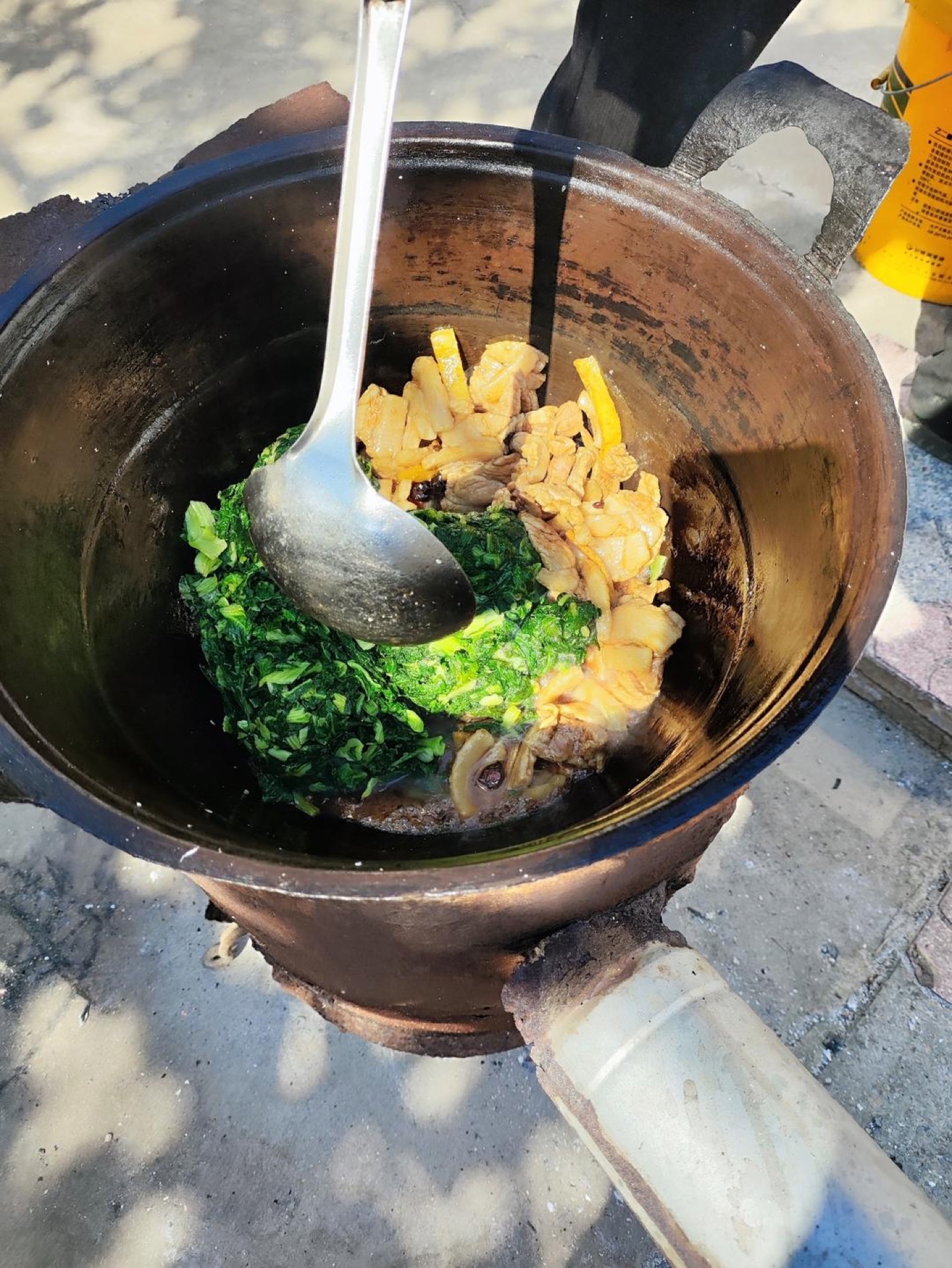
Step 5 — Add the Bok Choy
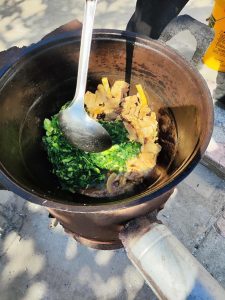
Add the baby bok choy and stir-fry.
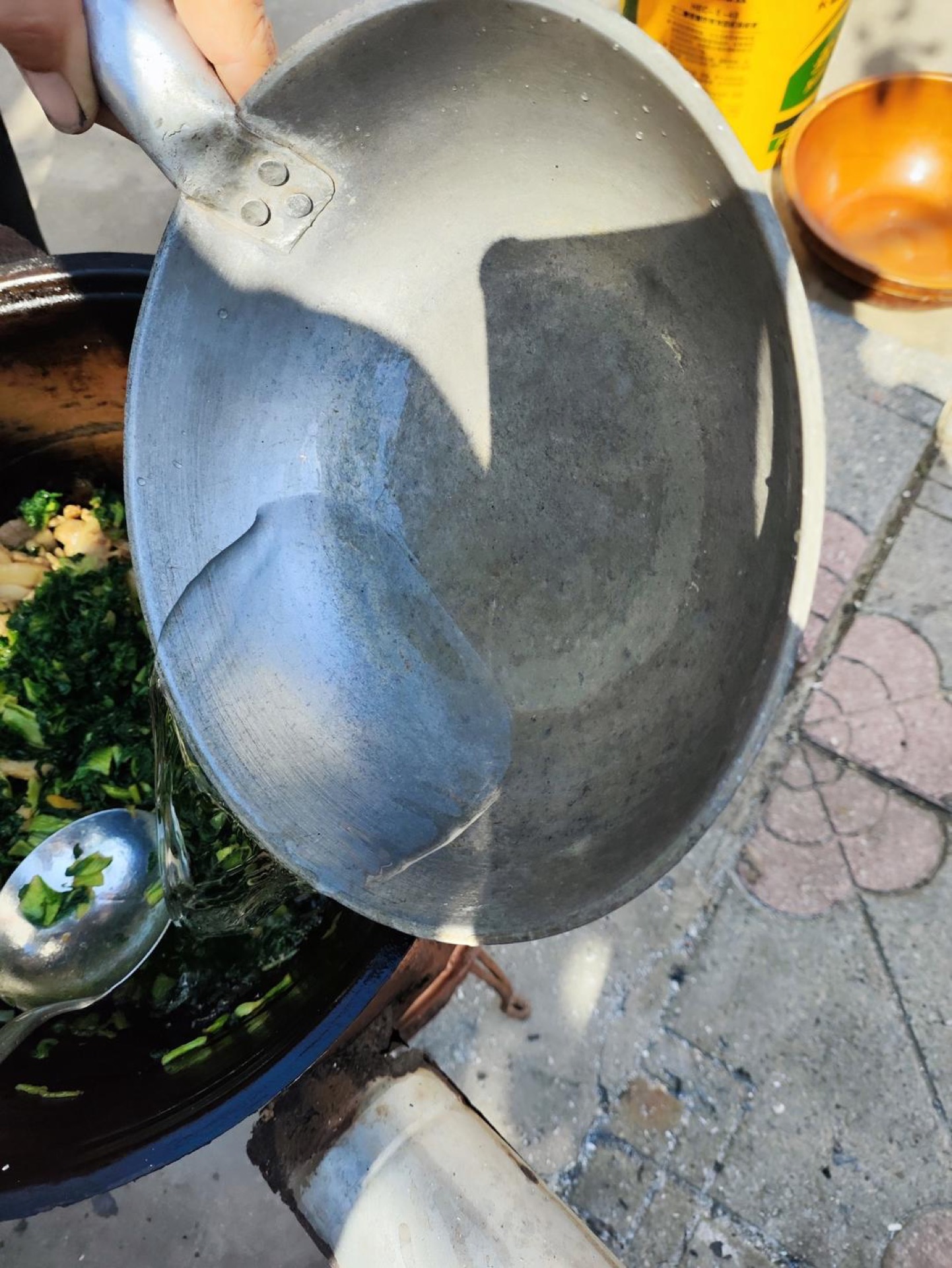
Step 6 — Add Water and Simmer
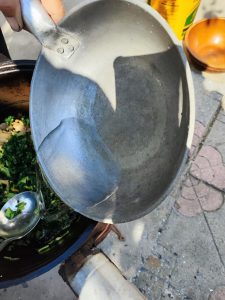
Add 2 ladles of water so the water covers the vegetables, then cover the wok with the lid and braise.
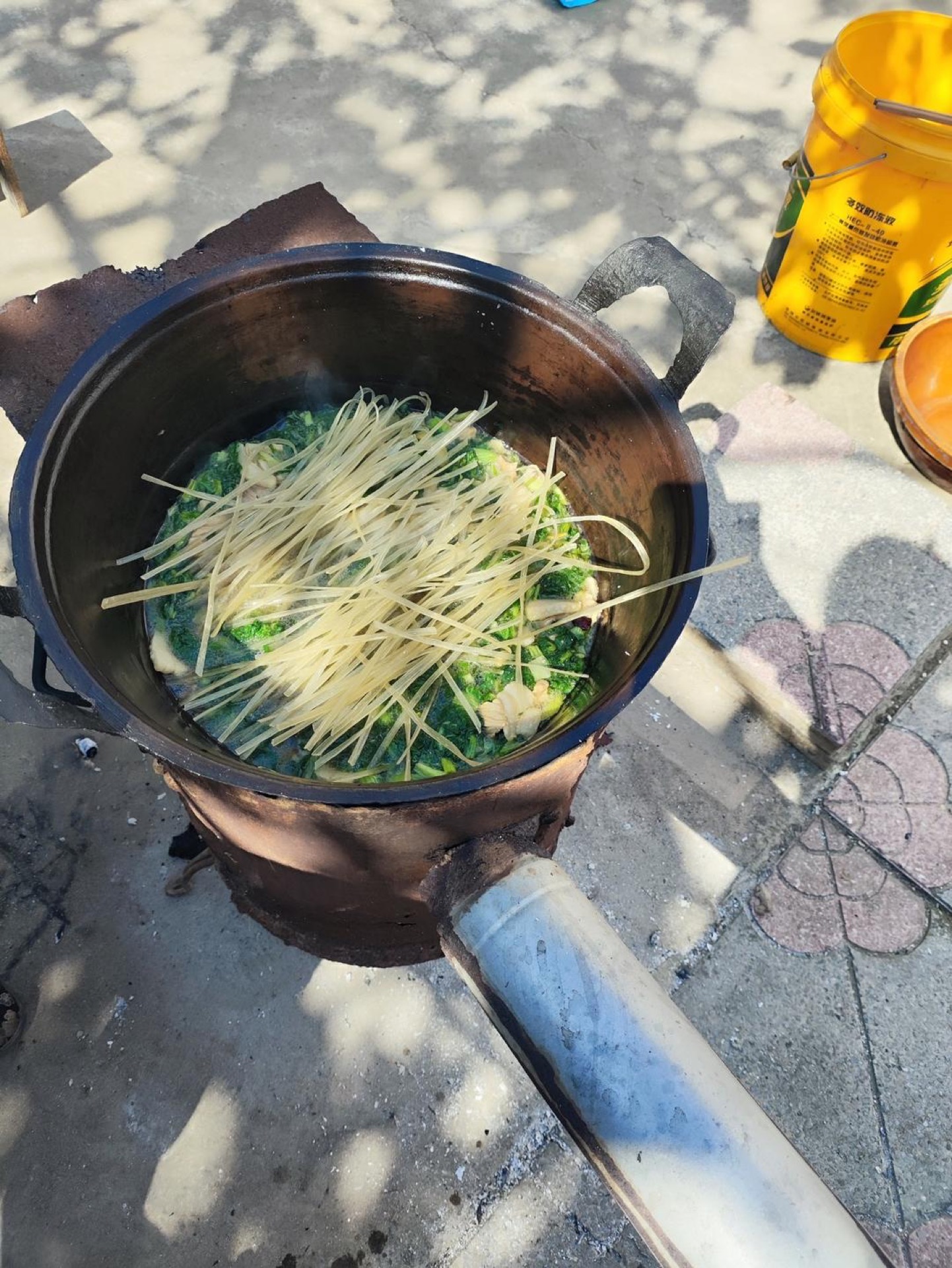
Step 7 — Lay In the Glass Noodles
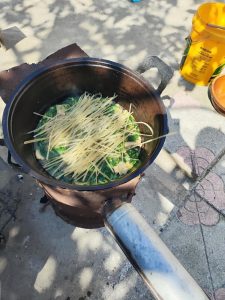
Rinse the glass noodles clean and spread them over the top layer and let them simmer for a while.
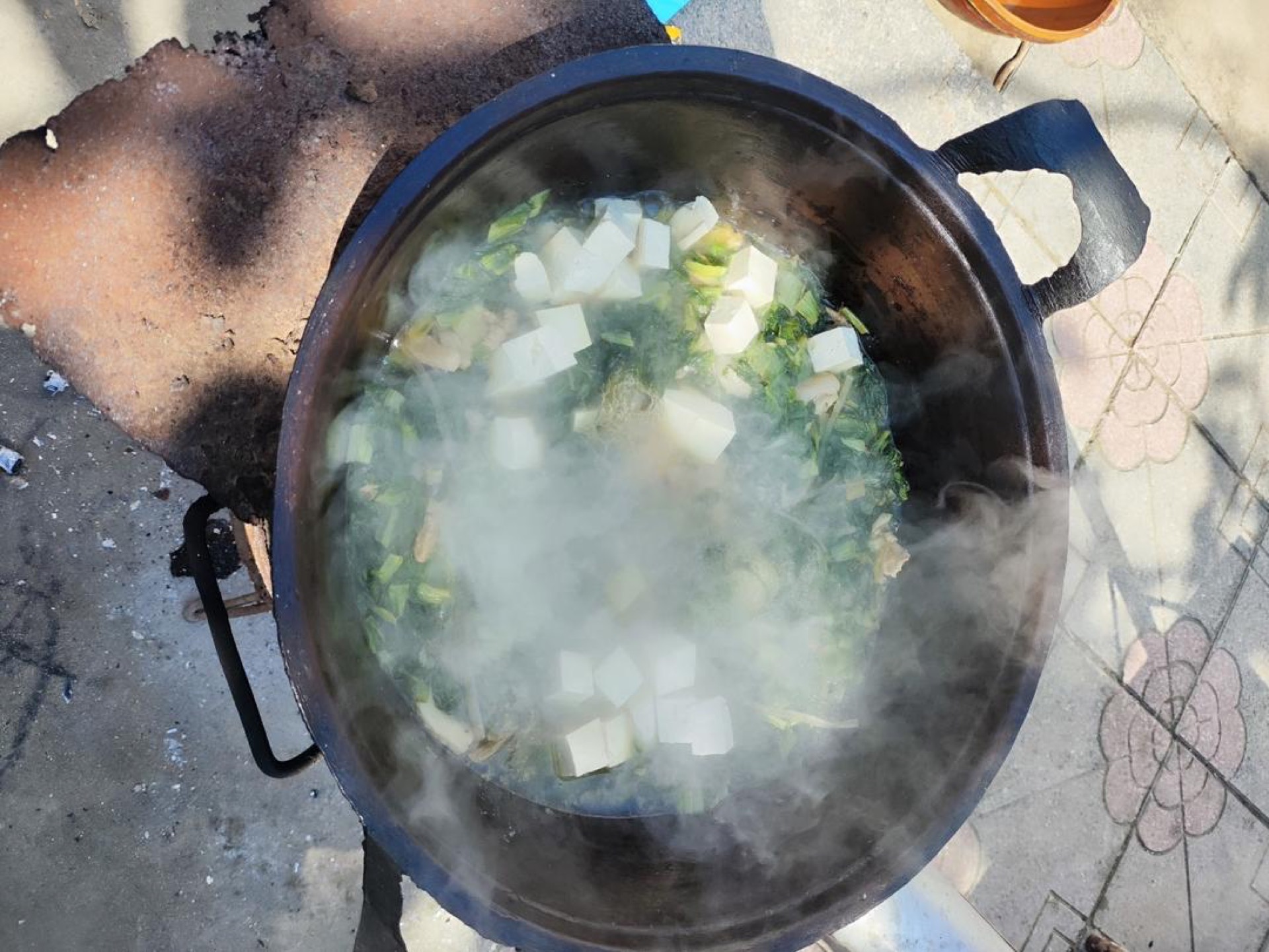
Step 8 — Add the Tofu and Finish
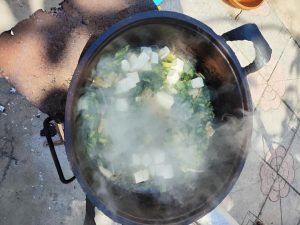
Cut the tofu into blocks and spread them evenly over the top layer, cover the wok and braise for about 20 minutes, then taste it and take it off the heat once everything is cooked through.
Step 9 — Marinate the Pork First
Marinate the pork slices first, in this order: one spoon of light soy sauce, 1/3 spoon of pepper, 1/3 spoon of salt, one spoon of cornstarch, and half a spoon of cooking oil, mix well and set aside.
Common Mistakes When Making 小白菜熬猪肉
1. Slicing the pork too thick. Thick slices stay chewy no matter how long they simmer, and they release less flavor into the broth. The fix: freeze the pork for 20 minutes before slicing, and cut against the grain at about 1/8 inch. If you can see through a slice when you hold it up, you have it right.
2. Skipping the squeeze after blanching. Wet greens dump water into the wok, diluting the soy broth you just built and turning the braise thin and pale. The fix: after blanching, let the greens cool slightly and squeeze them hard — really hard — in a clean kitchen towel until they stop dripping.
3. Burning the aromatics. Sichuan peppercorns and star anise go from fragrant to bitter in seconds, and ginger scorches even faster. The fix: heat the oil until it shimmers, add the peppercorns and star anise, count to twenty, then add the ginger and salt and stir immediately before the pork goes in.
4. Getting the sauce ratio backwards. If dark soy sauce dominates, the dish turns almost black and tastes flat and slightly bitter. The fix: follow the order the recipe gives — the most light soy sauce, the second most dark soy sauce, the least vinegar. The vinegar should be a whisper, not a note.
5. Stirring the noodles and tofu into the braise. This is the single most common way to ruin the texture: the glass noodles break into sticky clumps and the tofu disintegrates. The fix: spread them in an even layer on top of the simmering liquid and leave them alone. They cook in the steam, not in the stir.
6. Adding too much water. The source says two ladles, just enough to cover the greens. More than that and you are making soup, not a braise, and the flavors never concentrate. The fix: add water to just cover, and if it looks wet at the end, simmer uncovered for a few minutes to reduce.
Variations
With pork belly. Swap the shoulder for thinly sliced pork belly and you get a richer, fattier braise. Sear it a little longer at the start to render some of the fat, then proceed as written. If you love that cut, our braised pork belly is the deep-dive version of what pork and soy sauce can do together.
With mushrooms. Add a handful of soaked shiitake mushrooms along with the bok choy. They amplify the savoriness and make the dish taste like it simmered twice as long. Our braised tofu and mushrooms takes that idea in a saucier direction.
Extra spicy. Add a few dried chilies to the oil with the peppercorns, or finish the bowl with a spoon of chili oil. For a completely different, cold-and-numbing treatment of tofu, see spicy cold tofu.
Rice cooker version. Everything except the bok choy can go into a rice cooker and cook on the white-rice cycle. Add the blanched greens in the last ten minutes. The approach in our one pot rice cooker pork ribs and rice translates directly.
With egg tofu. Swap firm tofu for egg tofu, which is silkier and slightly richer. Add it in the last 8 minutes rather than 20 so it does not fall apart. Our pork and egg tofu stir fry is a good next step if you like that pairing.
Frequently Asked Questions
Can I use regular bok choy instead of baby bok choy? Yes. Cut the thick stems into half-inch pieces and keep the leaves larger, then blanch the stems for 30 seconds before adding the leaves for another 15 seconds. Squeeze everything dry as usual.
Do I have to blanch the greens? It is strongly recommended. Blanching removes the raw bitterness and the excess water that would otherwise thin out the braise. If you skip it, expect a paler, wetter dish with a slightly grassy edge.
How thin should the pork really be? About 1/8 inch, or roughly the thickness of a coin. The recipe itself notes that the pieces in the photo are on the large side and can go thinner. Thinner slices cook faster and absorb more of the soy broth.
Can I make this ahead? Yes, and it is arguably better the next day once the flavors settle. Cool it quickly, refrigerate, and reheat gently on the stovetop with a splash of water. The glass noodles will absorb liquid overnight, so add a little water when reheating.
What if I cannot find Chinkiang vinegar? Use rice vinegar with a small pinch of sugar, or a half-and-half mix of rice vinegar and balsamic. The goal is a mild, malty acidity — not the sharp bite of plain white vinegar.
How to Serve
This braise is at its best over a bowl of plain white rice, with the broth spooned over the top so it soaks in. A small dish of chili oil on the side is welcome but not necessary. If you want to build the meal out further, mapo tofu makes a natural companion — both dishes are built on tofu and a savory, spoonable sauce, and they share the same table chemistry. For something a little richer alongside, apple braised pork steaks bring a sweet-savory note that plays well against the clean, brothy bok choy.


Storage & Reheat
Cool any leftovers within two hours of cooking and transfer them to a shallow, airtight container. The braise keeps in the refrigerator for up to 3 days. Because the glass noodles continue to drink up the broth as it sits, expect the dish to be thicker the next day — that is normal, and a splash of water fixes it.
Reheat gently on the stovetop over medium-low heat, adding a tablespoon or two of water and stirring as little as possible so the tofu stays intact. You can also reheat in the microwave, covered, in 1-minute bursts. Reheat until the dish is steaming throughout, or to an internal temperature of 165°F (74°C).
This dish does not freeze well — the tofu becomes spongy and the glass noodles break down completely — so plan to eat it fresh or within a few days.
Allergen Notice
This recipe contains soy, in the form of light soy sauce, dark soy sauce and the soy sauce in the pork marinade. Glass noodles are typically made from mung bean starch and are naturally gluten-free, but some brands blend wheat starch, so check the label if you are cooking for someone with celiac disease or a wheat allergy. Peanut oil can be replaced with any neutral oil if you have a peanut allergy. Tofu is a soy product as well.
Nutrition Disclaimer
Nutrition information is calculated using an ingredient database and should be considered an estimate. In cases where multiple ingredient alternatives are given, the first listed is calculated for nutrition. Garnishes and optional ingredients are not included.
About the Author & Recipe Development
This recipe comes from Lin at Woks of Love, adapted from a northern Chinese home cook’s method for 小白菜熬猪肉 — the kind of dish that gets written down on a scrap of paper and never appears on a menu. The proportions here follow the source closely, including its unusual final step: the pork marinade, which the original cook listed last but which belongs first in practice. We have kept the steps in their original order and noted that sequencing in the recipe card so nothing is lost in translation.
The development notes are simple. We tested the sauce hierarchy — light soy the most, dark soy second, vinegar third — because it is the backbone of the flavor and easy to get wrong. We tested the layering of the glass noodles and tofu, and confirmed that leaving them undisturbed on top is what keeps both intact. And we tested the blanch-and-squeeze on the bok choy, which is the difference between a concentrated braise and a watery one.
Authoritative References
For safe handling and cooking temperatures for pork, see the USDA safe minimum internal temperature chart. For guidance on cooling and storing cooked leftovers, see the FDA’s food safety guidance on refrigerators and leftovers. For general principles on foodborne illness prevention, see the WHO food safety fact sheet.
Braised Pork with Baby Bok Choy (小白菜熬猪肉): Tender Pork, Silky Bok

Equipment
- Wok
- Cutting Board
- Slotted Spoon
Ingredients
For the Pork
- 1 lb pork shoulder thinly sliced, about 1/8-inch thick
- 1 tbsp light soy sauce for marinating
- 1 tsp ground white pepper for marinating
- 1 tsp salt for marinating
- 1 tbsp cornstarch for marinating
- 1 tbsp peanut oil for marinating
For the Braise
- 3 tbsp peanut oil for the wok
- 12 pieces Sichuan peppercorns about 1 tsp
- 2 whole star anise
- 4 slices ginger julienned
- 1 tsp salt for the base
- 1 tbsp dark soy sauce for color
- 2 tsp Chinkiang vinegar black vinegar
- 3 tbsp light soy sauce the largest measure of the three sauces
For the Vegetables and Add-Ins
- 3 heads baby bok choy washed, chopped, blanched, squeezed dry
- 4 oz glass noodles mung bean threads, rinsed
- 8 oz firm tofu cut into 1-inch blocks
- 2 cups water enough to just cover the greens
Instructions
- Wash the baby bok choy, chop it, blanch it briefly in boiling water, then squeeze out the excess water and set it aside; julienne the ginger.

- Wash the pork and slice it thinly — the thinner the slices, the more flavor they absorb; the pieces in the photo are on the large side, so go thinner if you can.
- Heat the wok until hot, add the peanut oil, and once the oil is hot add the Sichuan peppercorns and star anise and fry them for a moment, then add the ginger threads and salt, stir a couple of times, and add the pork slices and stir-fry.

- Add the dark soy sauce and the vinegar and stir-fry a few times, then add the light soy sauce and salt and stir-fry for a few minutes, using the most light soy sauce, the second most dark soy sauce, and the least vinegar.

- Add the baby bok choy and stir-fry.
- Add 2 ladles of water so the water covers the vegetables, then cover the wok with the lid and braise.
- Rinse the glass noodles clean and spread them over the top layer and let them simmer for a while.
- Cut the tofu into blocks and spread them evenly over the top layer, cover the wok and braise for about 20 minutes, then taste it and take it off the heat once everything is cooked through.

- Marinate the pork slices first, in this order: one spoon of light soy sauce, 1/3 spoon of pepper, 1/3 spoon of salt, one spoon of cornstarch, and half a spoon of cooking oil, mix well and set aside.













Leave a Reply