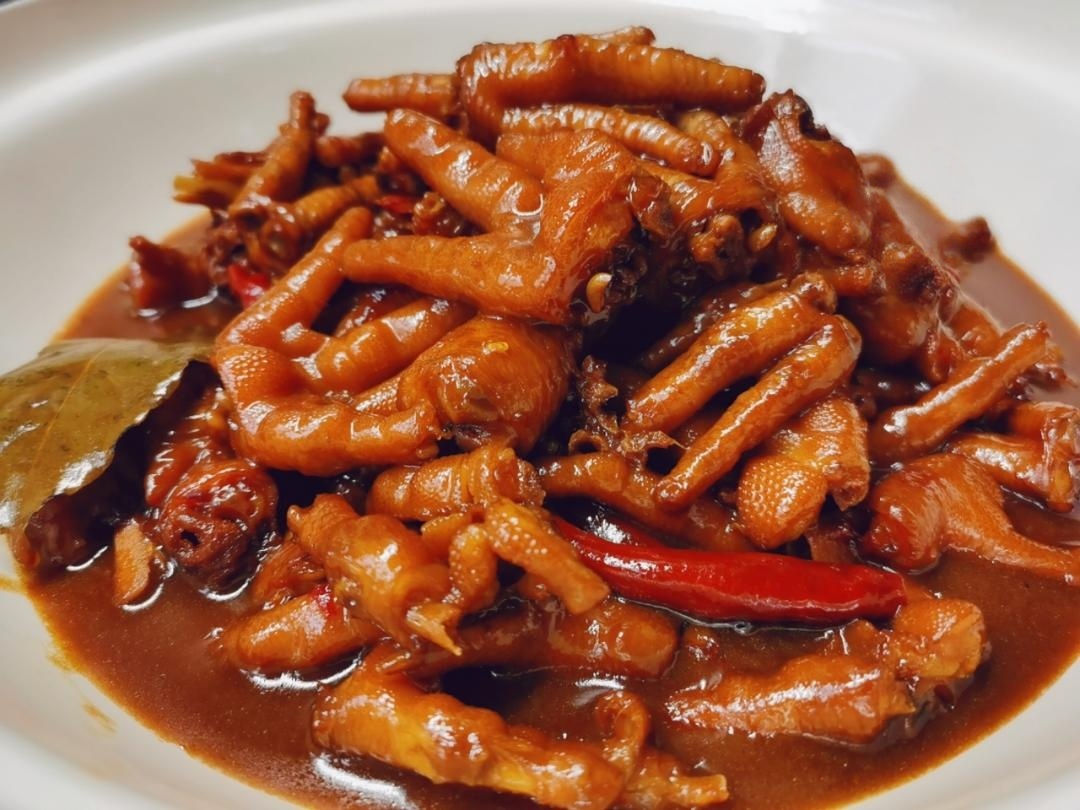
There is a dish in China that people queue two hours for, and it is not fancy. It is a bubbling black pot of chicken feet, chicken, and shrimp, buried under potatoes and carrots, all lacquered in a dark, glossy sauce that smells of fermented chili and shrimp. That dish is 鸡爪煲 — jizhuabao — and the chain that made it famous, 胖哥俩, has built an empire on it.
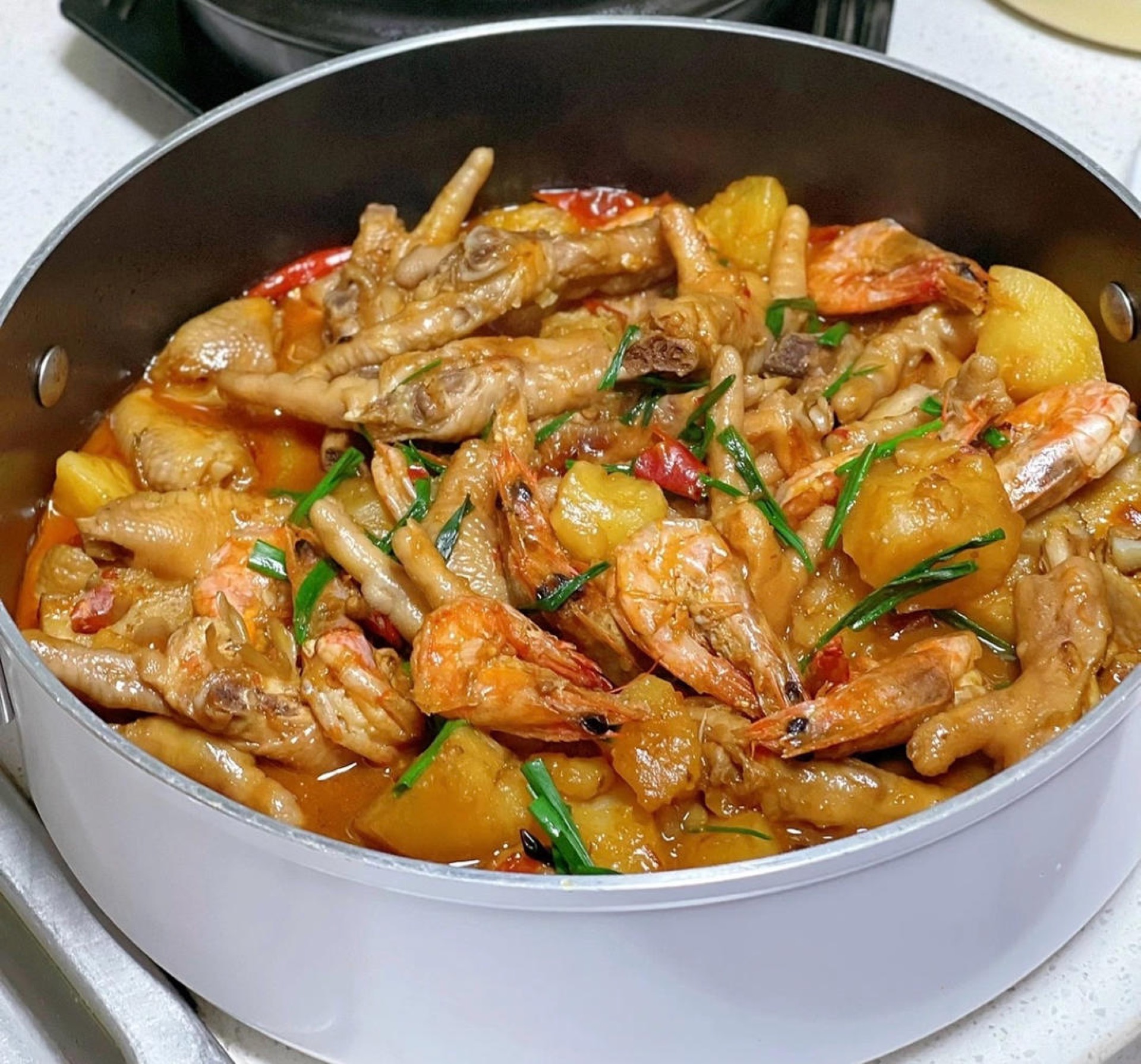
The first time I made this at home, I understood the queue. Chicken feet braised this long turn into something between meat and jelly — you eat them with your hands, and the sauce gets on everything. The shrimp heads fry down into the oil until it is practically a sauce on its own. And underneath it all, the potatoes soak up so much flavor that they quietly become the best thing in the pot.
This is not a delicate dish. It is a loud one, and it is meant to be shared, ideally with a bowl of rice and someone willing to fight you for the last chicken foot.
What Is Braised Chicken Feet and Shrimp Pot?
Jizhuabao (鸡爪煲) is a one-pot braise from the 煲 tradition — a category of Chinese cooking where everything goes into one vessel and comes out as both dish and sauce. The base is chicken feet, which are prized not for their meat but for their collagen: braised long enough, they turn gelatinous and sticky, and that gelatin is what gives the sauce its body.
Layered on top are chicken pieces, shrimp, and whatever root vegetables the cook has on hand. The seasoning backbone is doubanjiang, the fermented broad-bean chili paste from Sichuan, plus soy sauces and thirteen-spice powder. The result is savory, faintly sweet, mildly spicy, and intensely aromatic.
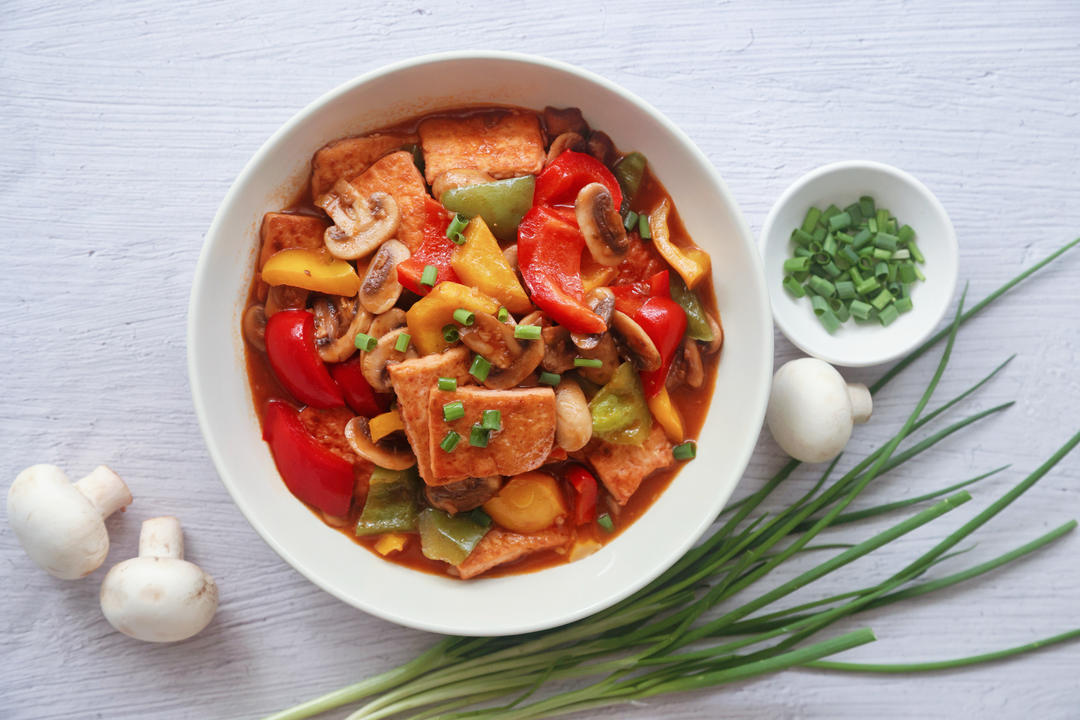
The 胖哥俩 chain turned jizhuabao into a national phenomenon, but the home version is genuinely simple: one wok, one round of braising, and a final toss of shrimp and greens at the end. If you like this style of cooking, our braised tofu and mushrooms uses the same savory-sauce logic on a vegetarian canvas.
1Braised Tofu and Mushrooms with Savory SauceThis Braised Tofu and Mushrooms recipe uses a secret weapon—Spare Rib Sauce—to create a rich, savory, vegetarian dish that tastes even better than meat. It features pan-fried firm tofu and juicy button mushrooms braised in a glossy, umami-packed glaze.Check out this recipe
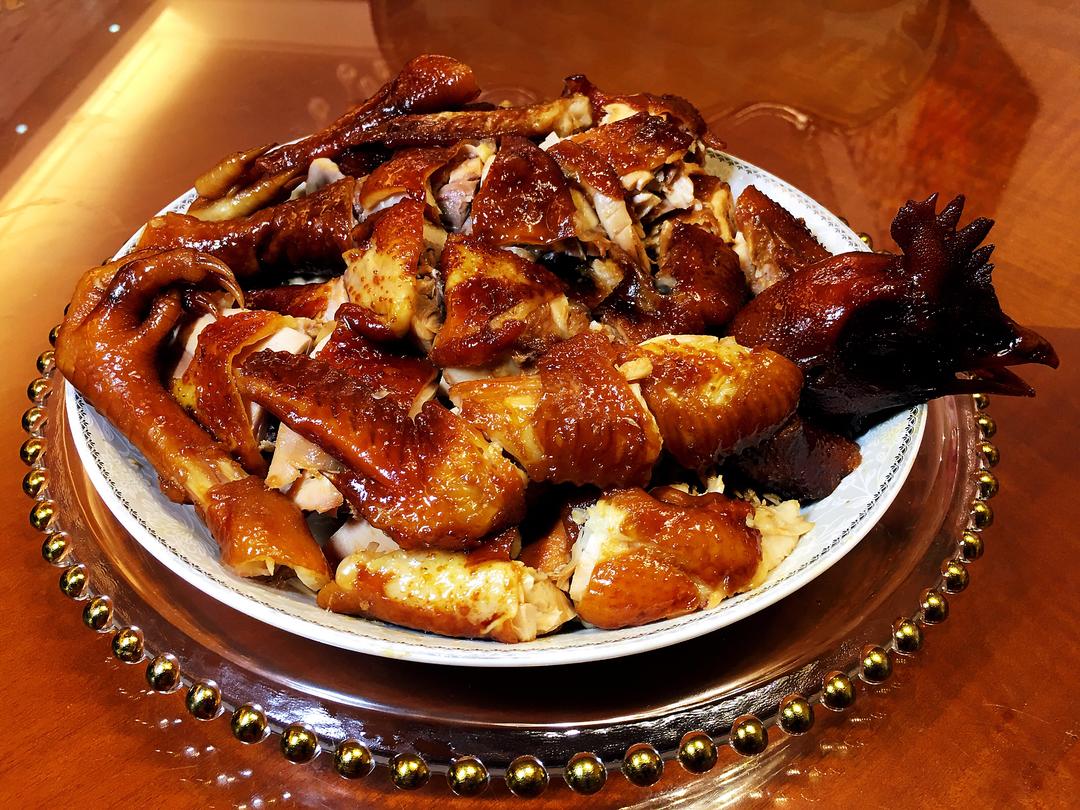
For a Cantonese take on the same glossy soy braise, cantonese soy sauce chicken is the gentler, sweeter cousin of this pot.
2Cantonese Soy Sauce Chicken (Si You Ji)A classic Cantonese dish featuring whole chicken poached in a savory-sweet master stock of soy sauce, rose wine, and rock sugar. It results in silky meat and glossy, amber-colored skin.Check out this recipe
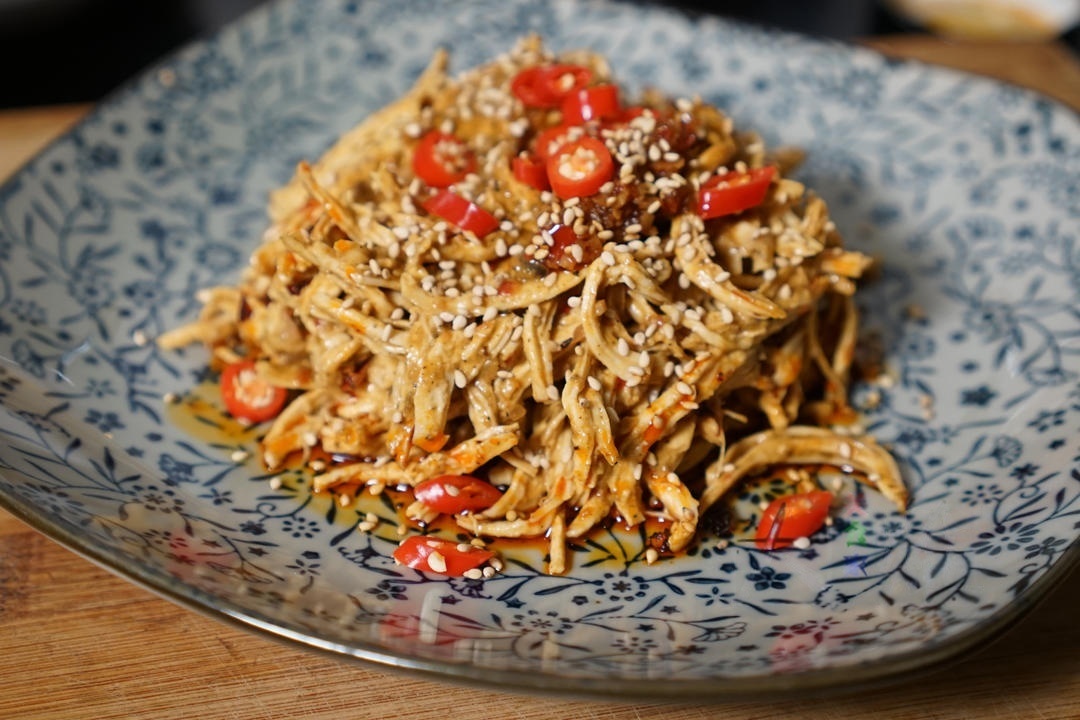
And if you like the idea of a bold sauce poured over cold protein, mouth watering chicken is the Sichuan classic you should try next.
3Mouth-Watering Chicken (Kou Shui Ji)This authentic Sichuan Mouth-Watering Chicken (Kou Shui Ji) features tender poached chicken tossed in a "killer" sauce made of sesame paste, chili oil, and Sichuan peppercorns. It’s nutty, spicy, savory, and addictive.Check out this recipe
Why This Recipe Works
Three things make this pot taste like the restaurant version rather than a generic braise. First, frying the shrimp heads in lard extracts the fat-soluble flavor compounds from the shells — this is what gives the sauce its orange-red color and its seafood depth. Second, the chicken feet are blanched before braising, which removes the impurities that would otherwise cloud the sauce and leave a gamey note. Third, the root vegetables go in before the shrimp, so they braise in the sauce while the shrimp only get a final eight minutes — enough to cook through, not enough to turn rubbery.
The sauce itself is a balance of three soy products plus doubanjiang: light soy for salt, dark soy for color, oyster sauce for sweetness and body, and doubanjiang for fermented heat. That combination is not accidental. It is the same ratio used across countless Chinese braises, and it works because each element covers a different axis.
Equipment Needed
A wok is the traditional vessel here, and it is genuinely the right tool — its wide surface lets the shrimp heads fry fast and the sauce reduce evenly. If you only have a deep skillet or a Dutch oven, that works too; just expect slightly slower reduction.
- Wok — carbon steel or cast iron preferred, for high-heat frying
- Cutting board — one for raw chicken, one for vegetables if you have them
- Slotted spoon — for skimming foam during blanching and lifting ingredients out
- Lid — for the 20-minute braise
You will also want a large serving bowl or a clay pot to bring to the table. This dish is designed to be eaten family-style, straight from the center.
Ingredients
Here is what goes into the pot. The vegetable list is flexible — see the notes below.
- 500 g chicken feet, nails trimmed, cut in half
- 250 g chicken (half a chicken or wings), cut into pieces
- 250 g shrimp, heads and bodies separated
- 1 carrot, cut into rolling chunks
- 3 potatoes, peeled and cut into rolling chunks
- 3 chili peppers, cut into pieces
- 1/2 onion, sliced
- 200 g king oyster mushrooms (optional)
- 200 g greens or lettuce leaves (optional)
- 4 slices ginger
- 1 bunch scallions, cut into segments
- 1 tbsp Sichuan peppercorns
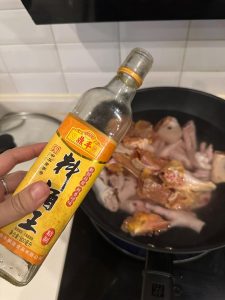
- 3 tbsp Shaoxing wine
- 3 tbsp dark soy sauce
- 1 tbsp oyster sauce
- 2 tbsp doubanjiang
- 1 tbsp thirteen-spice powder (or cinnamon, star anise, bay leaf)
- 1 tbsp light soy sauce (optional, for extra salt)
Ingredient Notes
Chicken feet. Buy them cleaned and trimmed if you can. If not, trim the nails yourself with kitchen shears — they are unpleasant to bite into and do not soften. Cutting each foot in half helps them cook faster and makes them easier to eat.
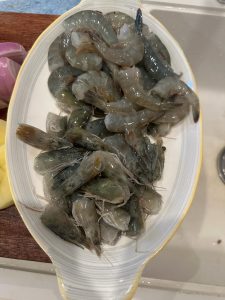
Shrimp. Use whole head-on shrimp. The heads are not a garnish here; they are an ingredient. Frozen head-on shrimp work if thawed properly, but fresh is noticeably better.
Doubanjiang. This is the soul of the dish. Buy the Sichuan kind (Pixian doubanjiang is the gold standard) rather than a generic bean paste. If you want a deeper dive, our guide to doubanjiang covers the differences.
Thirteen-spice powder. A blend of thirteen aromatics, sold in most Asian groceries. If you do not have it, a small piece of cinnamon, two star anise, and a bay leaf simmered in the pot will get you close.
Lard. Optional but traditional. It carries the shrimp flavor better than vegetable oil and adds a roundness that is hard to replicate. If you do not have it, any neutral oil works.
Vegetables. Potatoes and carrots are the base, but this pot is forgiving. King oyster mushrooms, shiitake, lettuce stems, lotus root slices, and corn all work. Just cut them into similar-sized pieces so they cook evenly.
Prep & Mise en Place
This dish moves fast once the wok is hot, so set everything up before you turn on the burner. Trim and halve the chicken feet, cut the chicken into pieces, and have them ready together. Separate the shrimp heads from the bodies and keep them in two bowls.
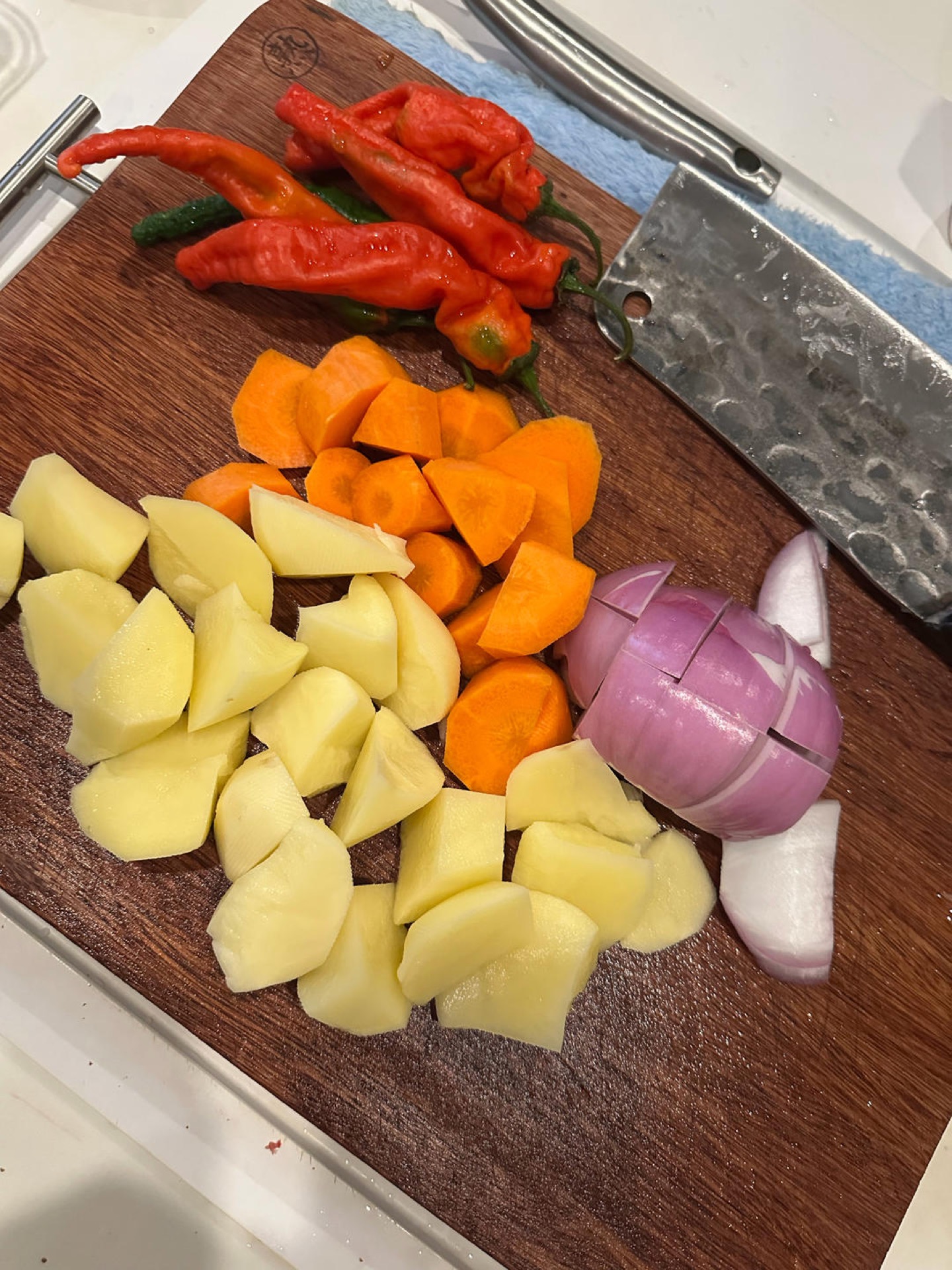
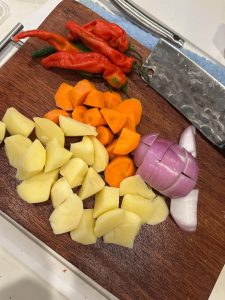
Cut the onion, potatoes, and carrot into rolling chunks — the Chinese technique of cutting at an angle while rotating the vegetable, which creates more surface area for sauce to cling to. Cut the chili peppers into pieces. If you are using mushrooms or greens, prep those too.
Finally, mix the sauce: three tablespoons light soy, two tablespoons dark soy, one tablespoon oyster sauce, two tablespoons doubanjiang, and one tablespoon thirteen-spice powder in a small bowl. Having it ready means you can pour it in one motion instead of measuring over a screaming wok.
Cooking Process
Step 1 — Blanch the Chicken
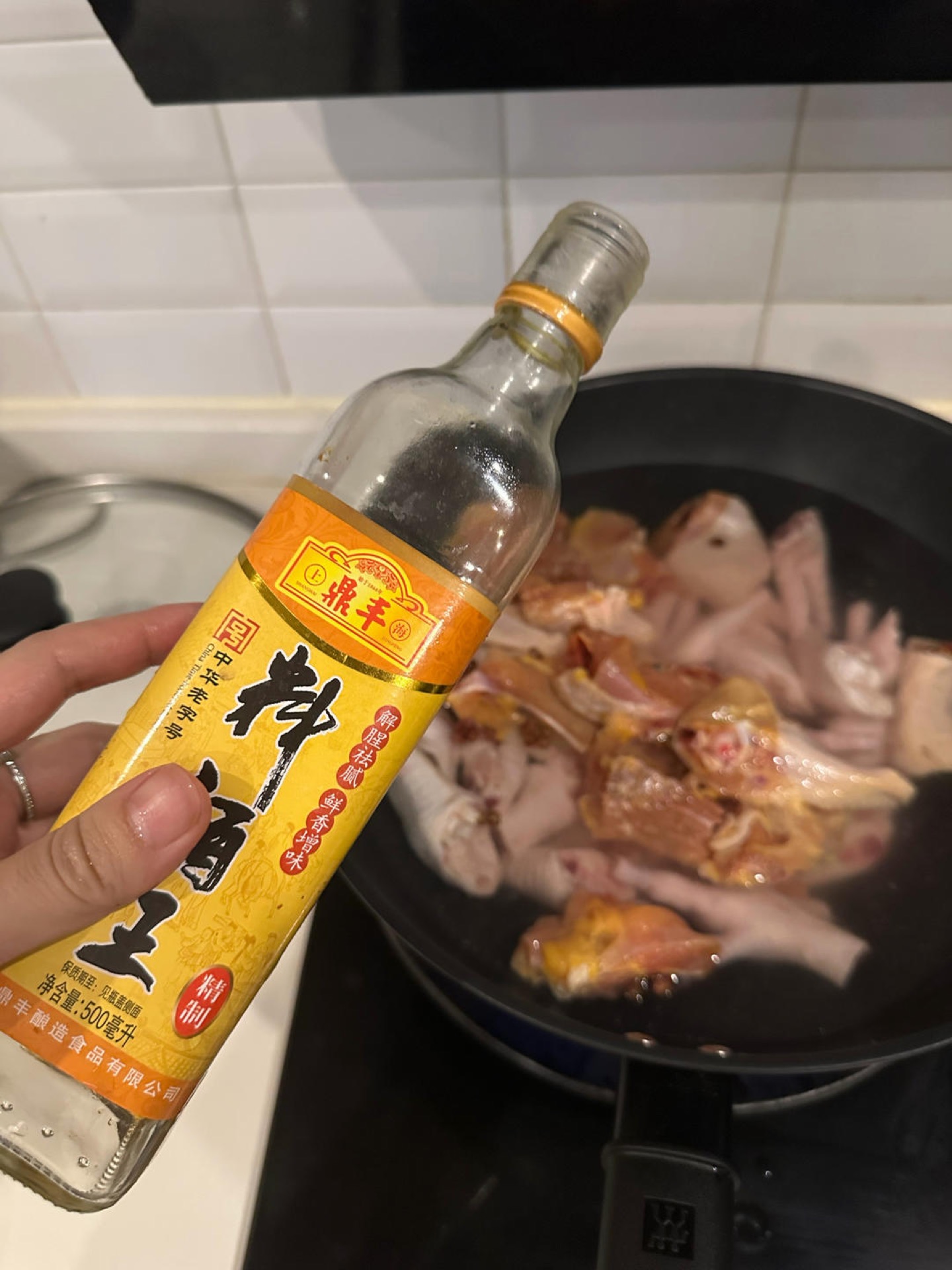
Trim the nails from the chicken feet, cut them in half, and place them in a pot of cold water with the chicken pieces. Add ginger slices, Sichuan peppercorns, scallion segments, and Shaoxing wine. Bring to a boil over high heat, skim off the foam, then remove and rinse clean with warm water.
Step 2 — Cut the Vegetables
Cut the onion, potatoes, and carrot into rolling chunks, and the chili peppers into pieces. (King oyster mushrooms, shiitake mushrooms, lettuce stems, lotus root slices, and corn can all be added — just cut a little less of each.)
Step 3 — Separate the Shrimp
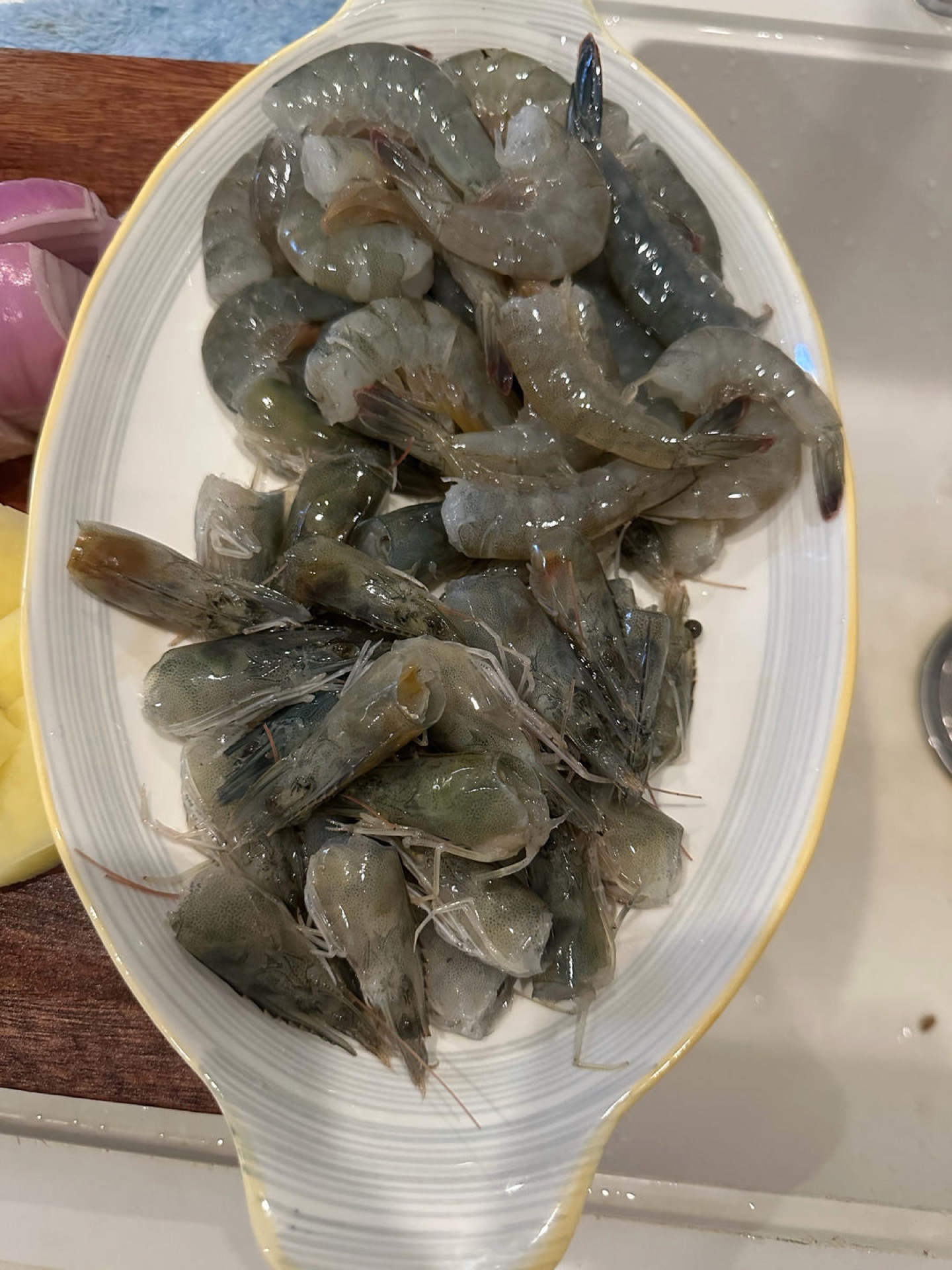
Separate the shrimp heads from the shrimp bodies and set both aside.
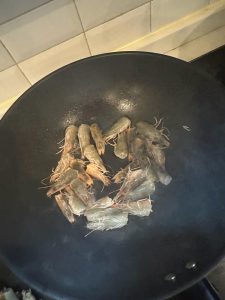
Step 4 — Fry the Shrimp Heads
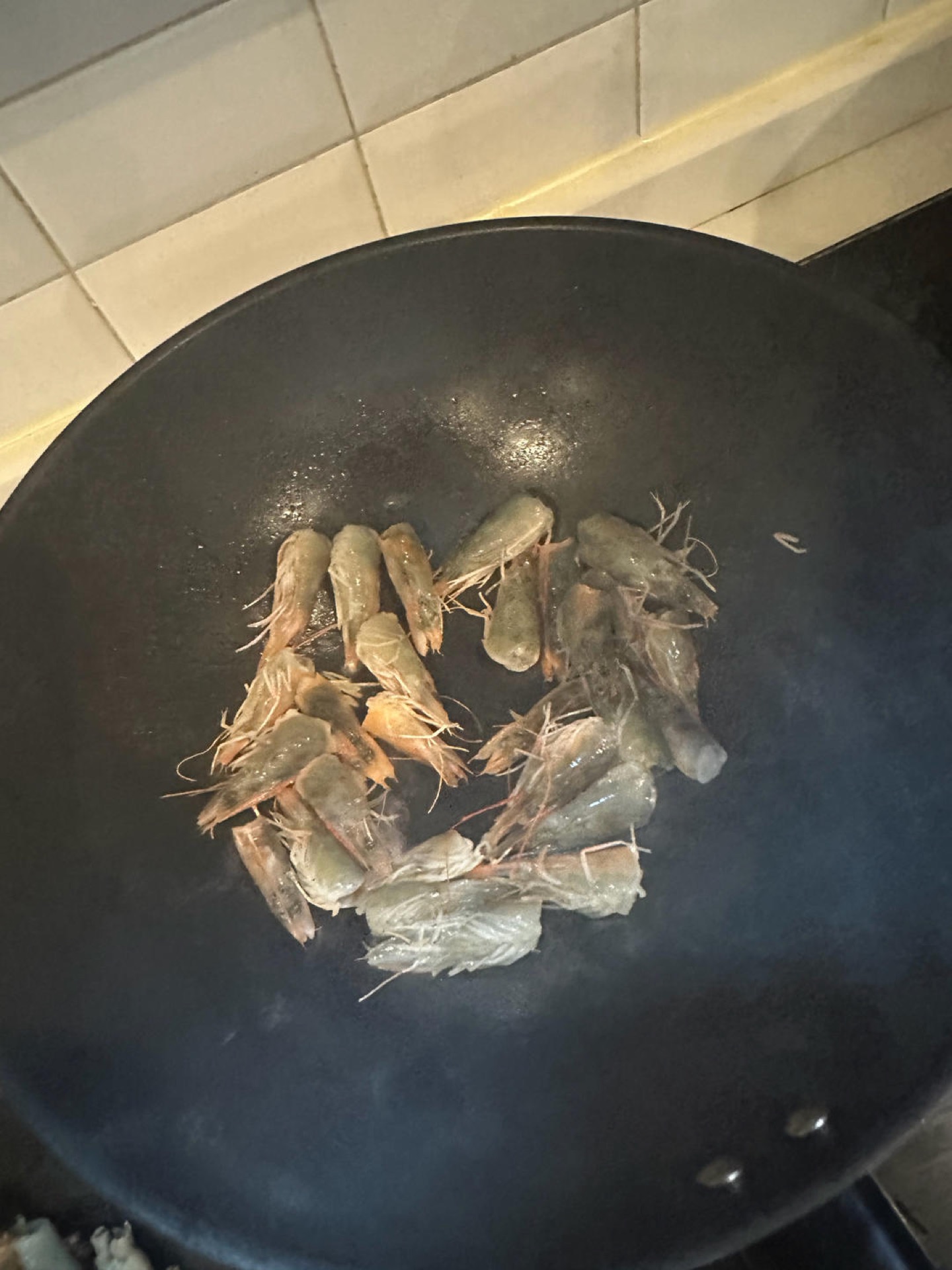
Heat a wok and add lard for a richer flavor — any oil works if you do not have lard. Fry the shrimp heads until fragrant and the oil turns orange-red.
Step 5 — Stir-Fry the Chicken
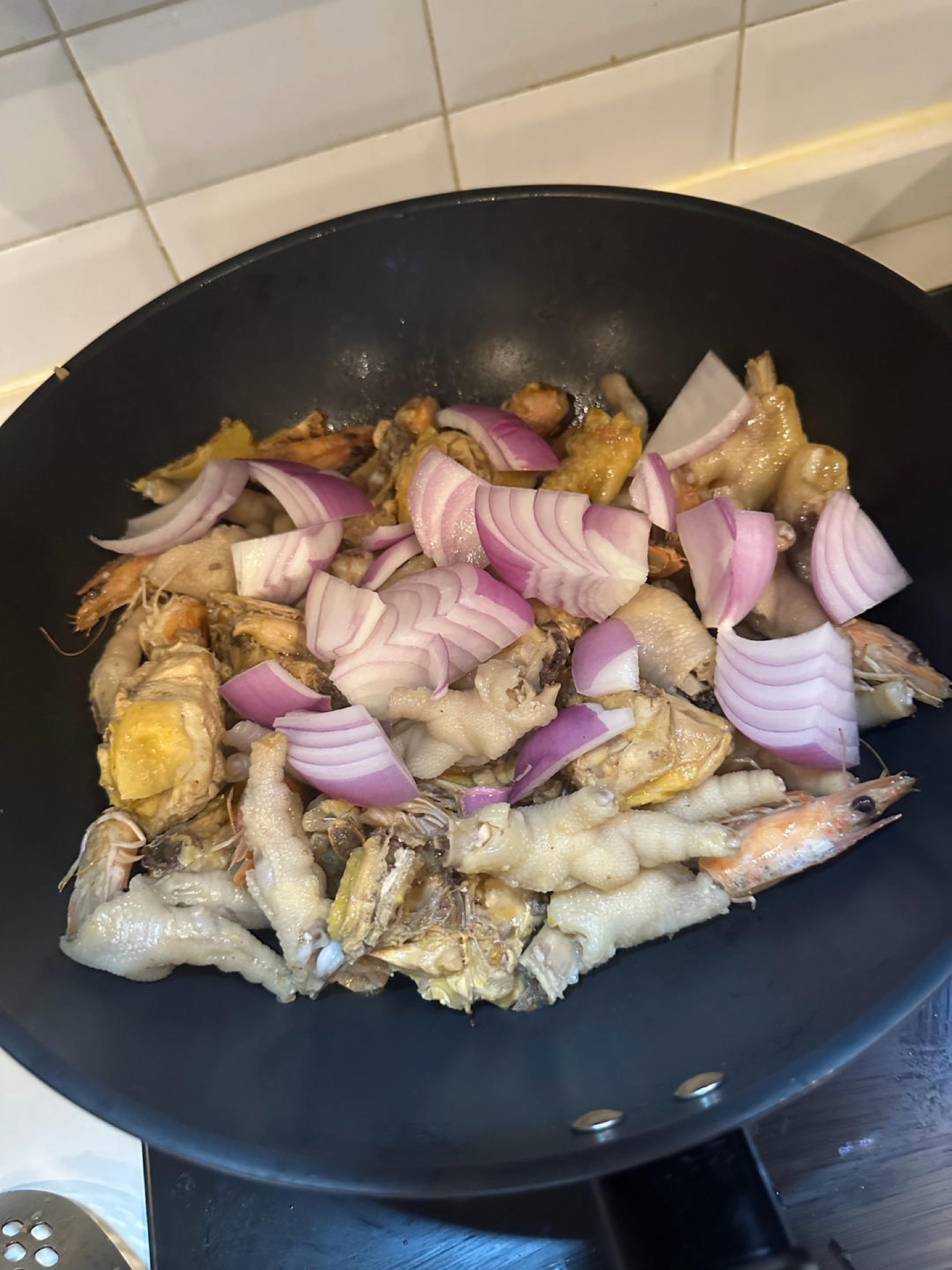
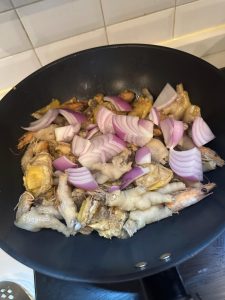
Add the chicken feet, chicken, and onion to the wok and stir-fry over high heat until fragrant.
Step 6 — Add the Doubanjiang
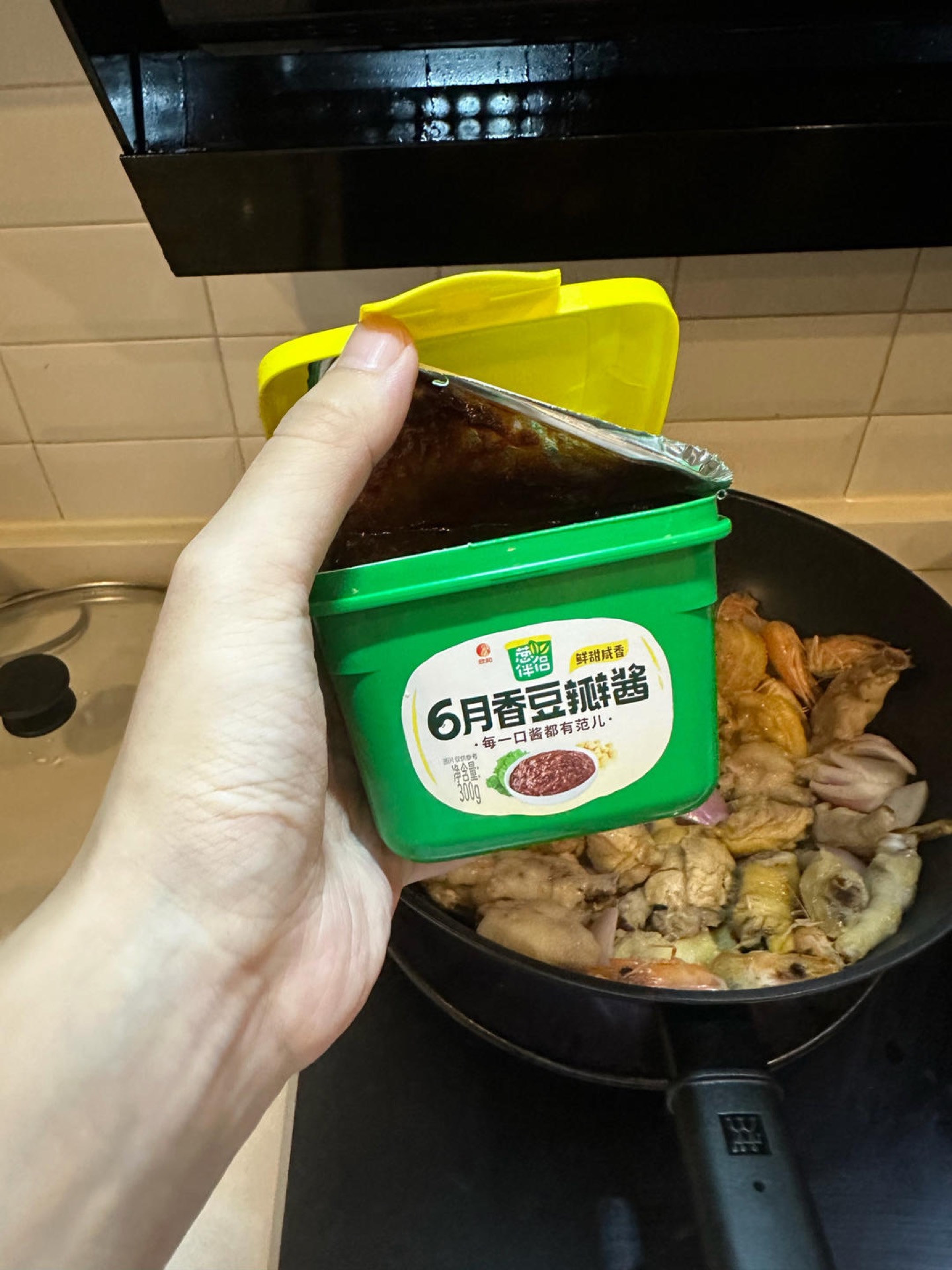
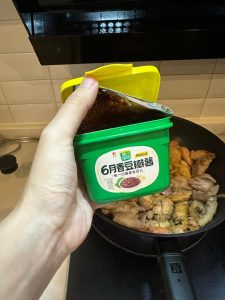
Add the doubanjiang and stir-fry until it smells rich and the oil reddens.
Step 7 — Add Boiling Water and Light Soy
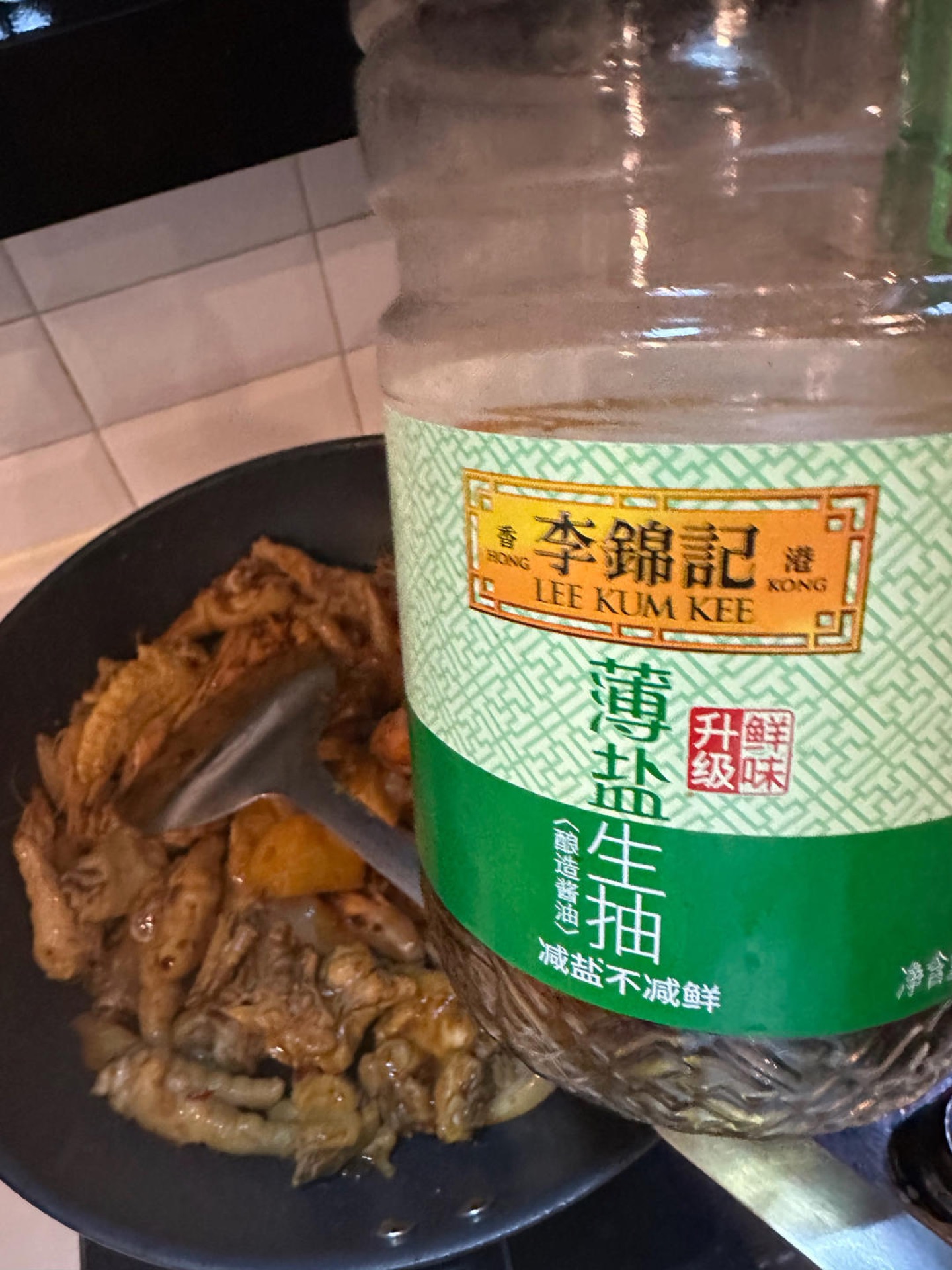
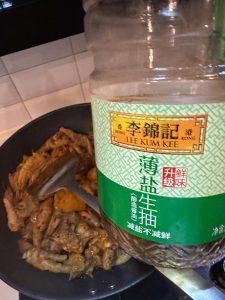
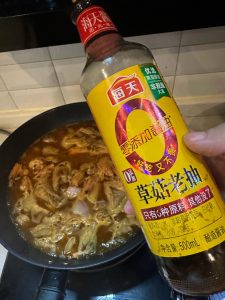
Pour in boiling water to cover the ingredients, then add three tablespoons of light soy sauce.
Step 8 — Add Dark Soy Sauce
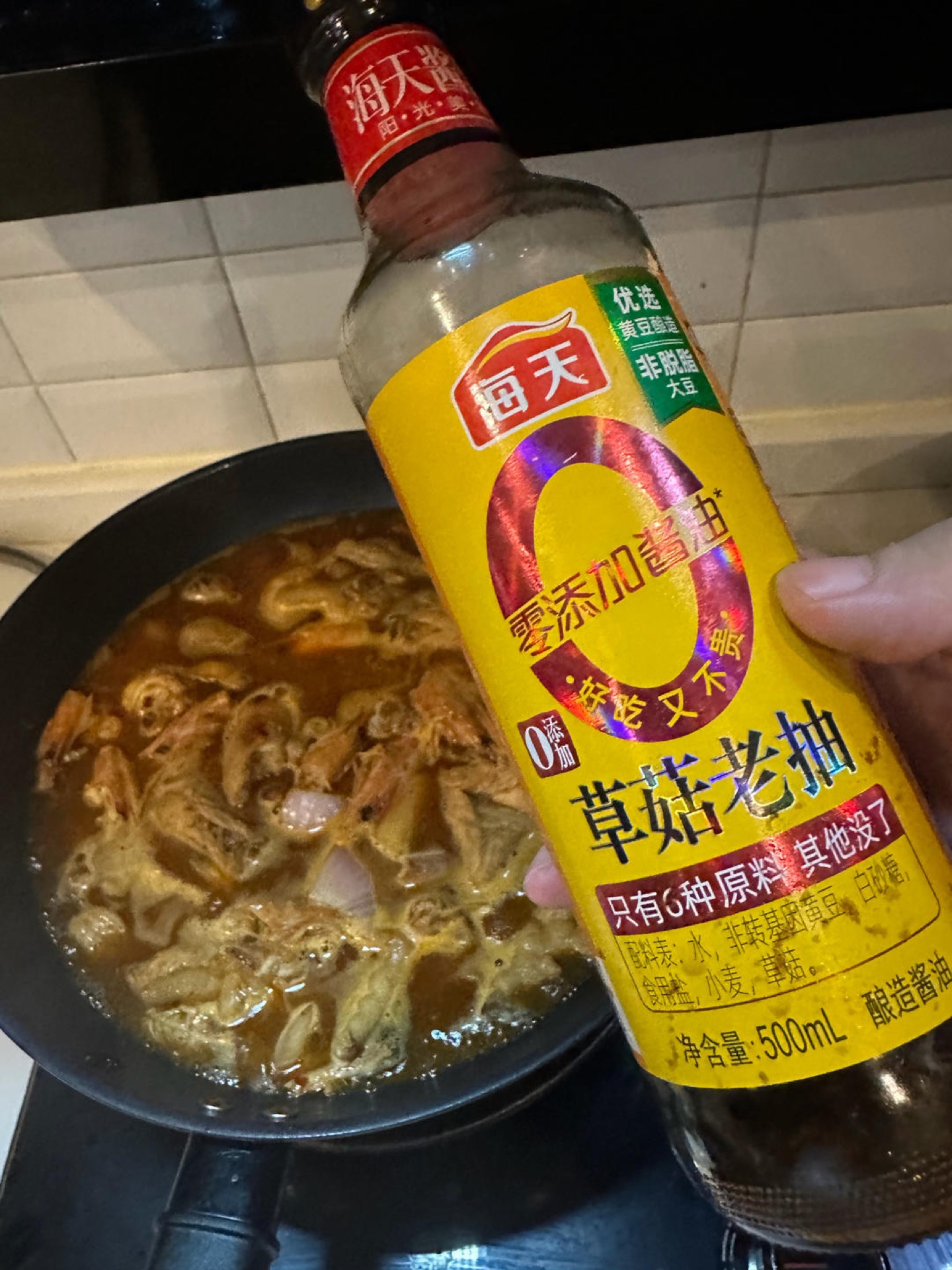
Add two tablespoons of dark soy sauce for color.
Step 9 — Add Thirteen-Spice
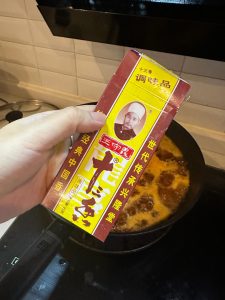
Add one tablespoon of thirteen-spice powder. (If you want to save effort, mix the sauce in a bowl ahead of time; if you have a lot of ingredients, add one more spoon of light soy sauce.)
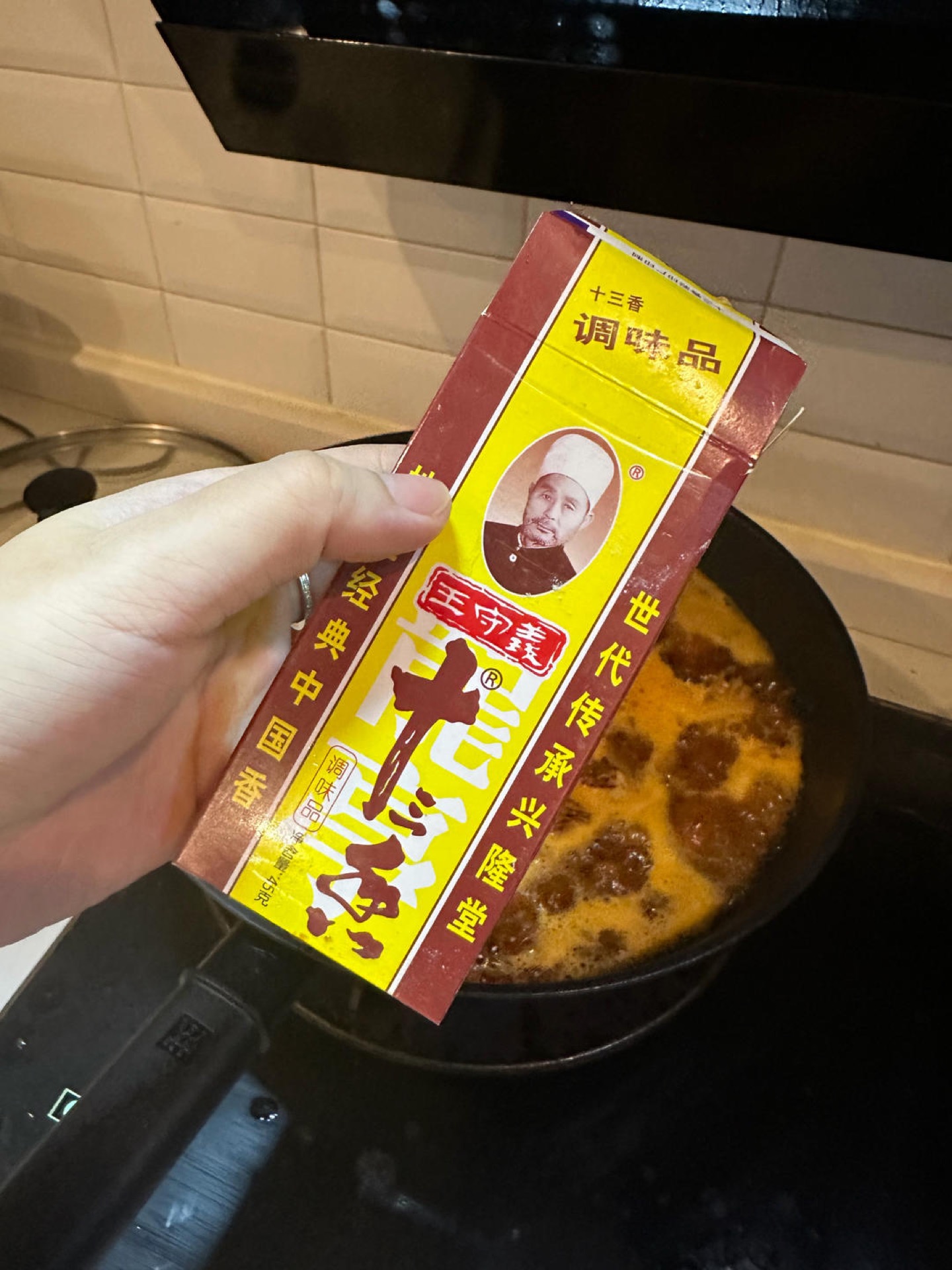
Step 10 — Braise the Root Vegetables
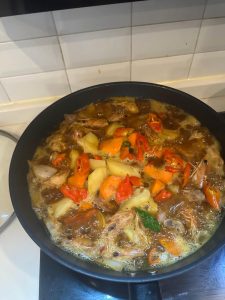
Add the potatoes, carrot, and chili peppers (plus king oyster mushrooms, shiitake mushrooms, lettuce stems, lotus root slices, or corn). Braise over high heat for 20 minutes, adding a small amount of boiling water if the liquid runs low.
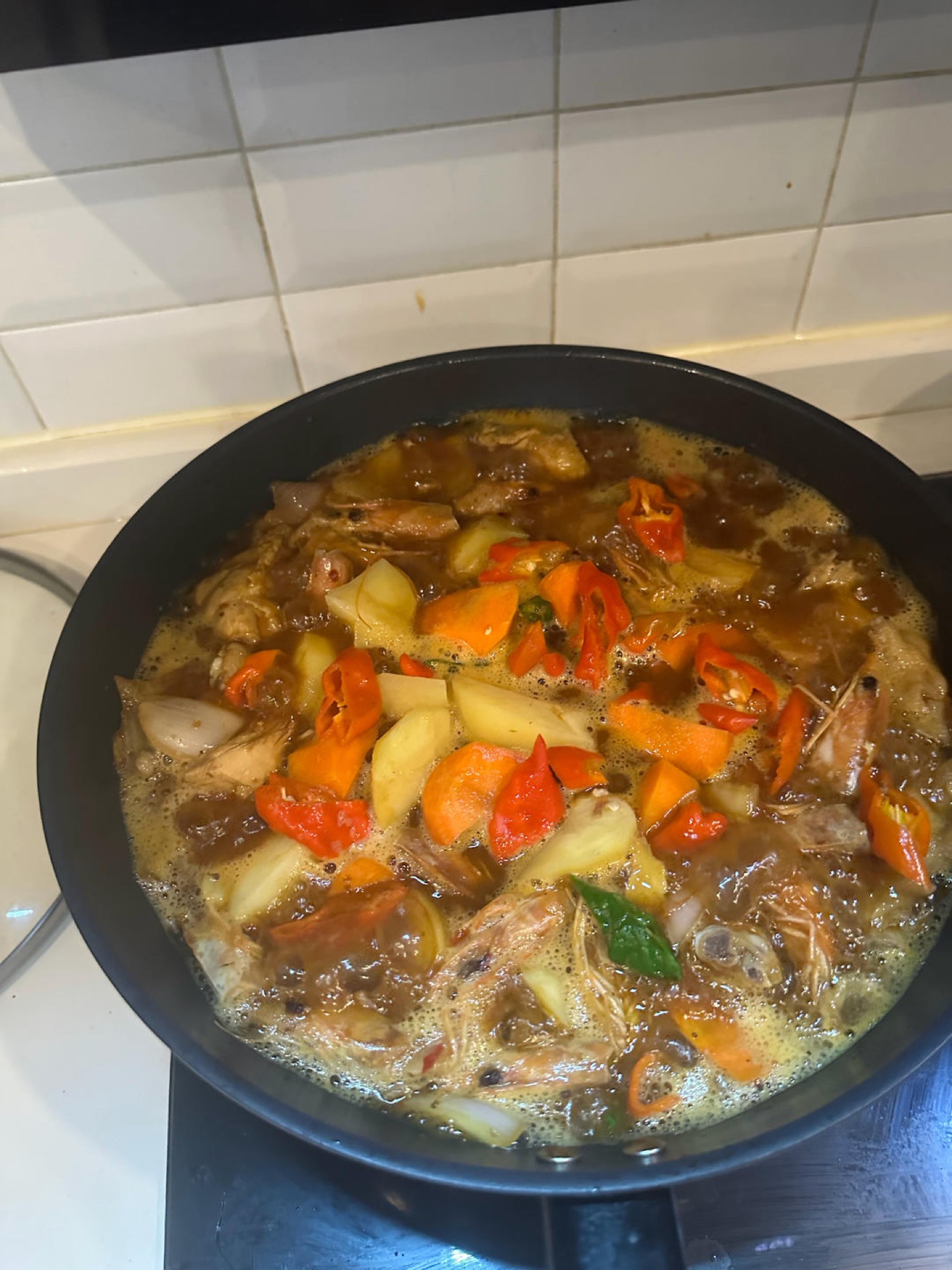
Step 11 — Add the Shrimp and Greens
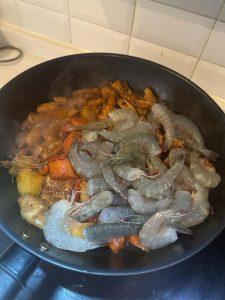
Add the shrimp and any greens you like, stir-fry for 8 minutes, then plate. If you like sesame, scatter a ring of sesame seeds over the top.
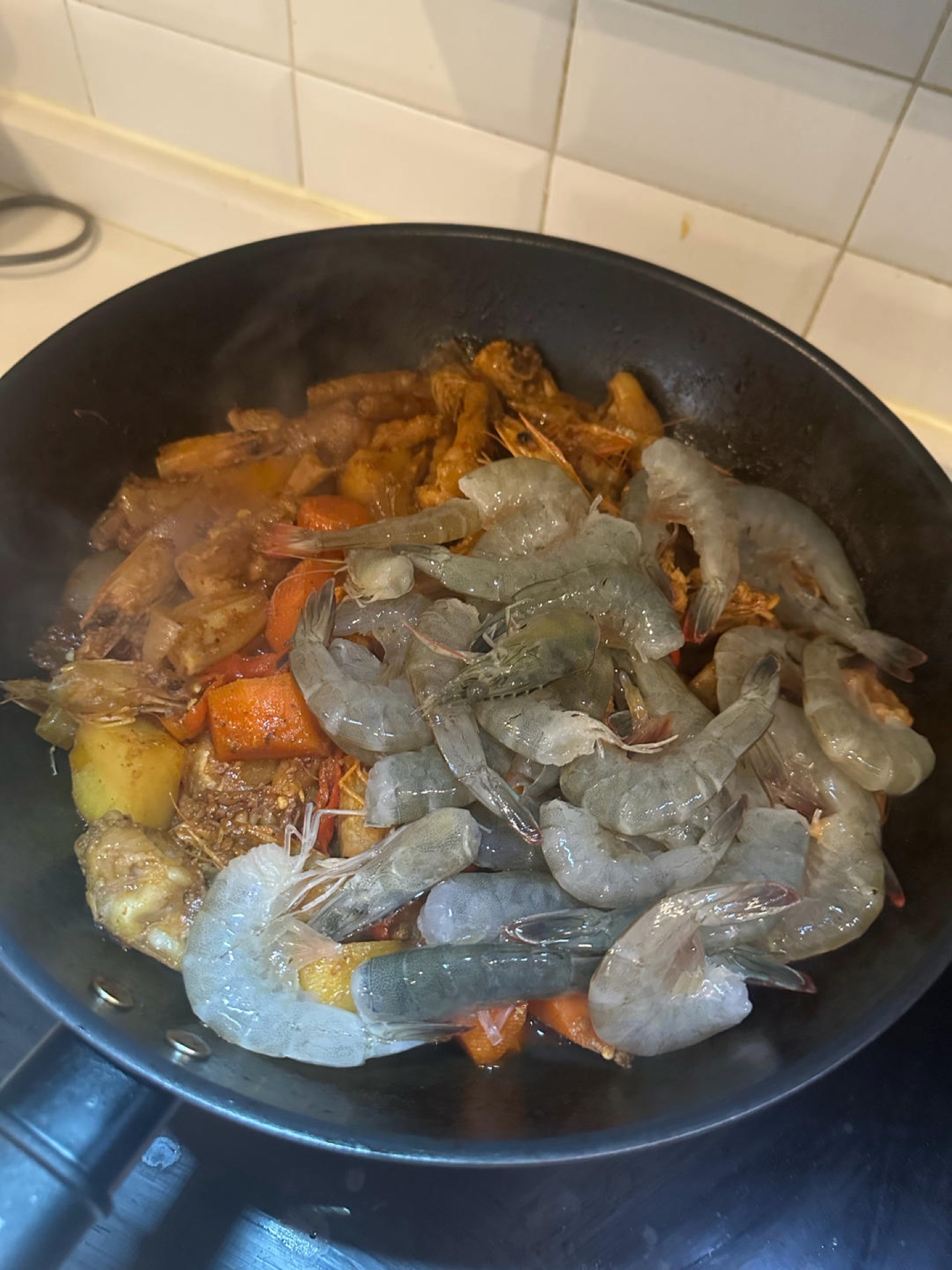
Common Mistakes When Making Braised Chicken Feet and Shrimp Pot
1. Skipping the blanch. Chicken feet release a lot of impurities. If you skip the cold-water blanch, those impurities end up in your sauce and it tastes muddy. Cause: impatience. Fix: blanch from cold water, skim thoroughly, and rinse with warm — not cold — water so the collagen does not seize.
2. Discarding the shrimp heads. This is the most common mistake and the most costly. Cause: assuming heads are waste. Fix: fry them in the oil first, press them with your spatula to release the tomalley, and leave them in the pot through the braise. They are the flavor backbone.
3. Adding cold water mid-braise. Cold water shocks the collagen and can make the sauce seize. Cause: not watching the liquid level. Fix: keep a kettle of boiling water nearby and top up with that.
4. Overcooking the shrimp. Shrimp added at the start turn to rubber. Cause: treating shrimp like the chicken feet. Fix: add them only in the last eight minutes, after the braise is done.
5. Not enough fat. This dish is meant to be rich. If you use too little oil, the doubanjiang will not bloom properly and the sauce will taste flat. Cause: fear of fat. Fix: use the full amount of lard or oil called for.
6. Cutting vegetables too small. Potatoes that are diced rather than chunked dissolve into the sauce and turn it to paste. Cause: habit from other recipes. Fix: keep everything in generous rolling chunks.
Variations
Spicier version. Double the doubanjiang and add a spoonful of chili oil at the end. If you like heat-forward chicken feet, our spicy braised chicken feet is built entirely around that idea.
No shrimp. The pot works without shrimp, but you lose the seafood depth. If you go this route, add an extra tablespoon of oyster sauce to compensate.
Beer instead of water. Replacing half the braising liquid with lager adds a malty sweetness that plays well with doubanjiang. Reduce the light soy slightly to compensate.
Vegetable-forward. Add more lotus root, corn, and mushrooms and reduce the chicken to 150 g. The sauce is robust enough to carry a mostly-vegetable pot.
Pressure cooker shortcut. If you are short on time, pressure-cook the chicken feet and chicken with the sauce for 15 minutes, then finish in a wok with the vegetables and shrimp. The texture is slightly less silky but the flavor holds.
Frequently Asked Questions
Do I have to use chicken feet? They are the point of the dish — their collagen is what thickens the sauce. If you truly cannot find them, chicken wings work, but the sauce will be thinner and you may want to reduce it longer.
How do I eat chicken feet? With your hands. Pick one up, bite the meaty pad and the skin, and spit out the small bones. It is informal food, and that is part of the appeal.
Can I make this ahead? Yes. The braise actually improves overnight as the gelatin sets and the flavors meld. Reheat gently on the stove, adding a splash of water, and add the shrimp fresh.
Is this dish very spicy? It is mildly spicy, not aggressively so. Doubanjiang brings fermented heat rather than raw chili burn. For more heat, add fresh chilies or chili oil.
What if I cannot find thirteen-spice powder? Substitute a small cinnamon stick, two star anise, and a bay leaf, simmered in the pot and fished out before serving.
How to Serve
This pot is a meal on its own with steamed white rice, but it also works as the centerpiece of a larger table. If you want to build a full spread, our red braised chicken feet makes a natural companion — the two share a braising logic but land on very different flavors. For a richer, more decadent plate alongside, braised chicken feet with tiger skin eggs brings the same sticky, glossy sauce to a different protein. And if you want a cold dish to cut through the richness, mouth watering chicken is served chilled and brings a bright, numbing contrast.

Storage & Reheat
Cool the pot completely, then transfer to an airtight container. It keeps in the refrigerator for up to three days. The gelatin will set into a firm jelly overnight — this is normal and actually a sign of a good braise. Reheat gently on the stovetop over medium-low heat, adding a splash of water or stock to loosen the sauce. Do not microwave the chicken feet; they toughen.
For longer storage, freeze for up to two months. Thaw overnight in the refrigerator before reheating. Cooked shrimp do not freeze well — if you plan to freeze, add the shrimp fresh on the day you serve.
Allergen Notice
This recipe contains soy (soy sauce, doubanjiang, oyster sauce), shellfish (shrimp), and wheat (soy sauce and doubanjiang). If you garnish with sesame seeds, it also contains sesame. Oyster sauce contains shellfish, so anyone with a shellfish allergy should omit both the shrimp and the oyster sauce. Check your doubanjiang label for wheat if you are cooking gluten-free.
Nutrition Disclaimer
Nutrition information is calculated using an ingredient database and should be considered an estimate. In cases where multiple ingredient alternatives are given, the first listed is calculated for nutrition. Garnishes and optional ingredients are not included.
About the Author & Recipe Development
Lin is the cook and writer behind Woks of Love, where she has been documenting Chinese home cooking for over a decade. This recipe was developed by recreating the 胖哥俩 jizhuabao at home, testing the sauce ratio across several batches until the balance of doubanjiang, dark soy, and oyster sauce matched what she remembered from the restaurant. The shrimp-head frying step and the late shrimp addition come directly from that testing — they are the two changes that made the biggest difference.
Authoritative References
For safe internal temperatures for poultry and seafood, see the USDA safe temperature chart. For food storage and leftover guidance, see the FDA refrigerator and food safety guidance. For background on doubanjiang and fermented bean pastes, see the Wikipedia entry on doubanjiang.
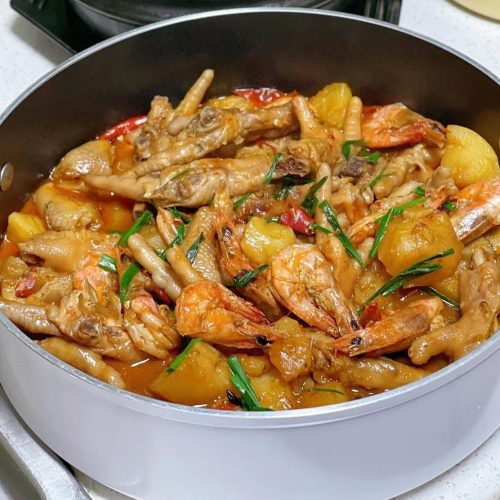
Braised Chicken Feet and Shrimp Pot (鸡爪煲): Rich Savory Sauce,

Equipment
- Wok
- Cutting Board
- Slotted Spoon
Ingredients
For the Aromatics
- 4 slices ginger
- 1 bunch scallions cut into segments
- 1 tbsp Sichuan peppercorns
- 3 tbsp Shaoxing wine
For the Pot
- 500 g chicken feet nails trimmed, cut in half
- 250 g chicken half a chicken or wings, cut into pieces
- 250 g shrimp heads and bodies separated
- 1 whole carrot cut into rolling chunks
- 3 whole potatoes peeled, cut into rolling chunks
- 3 whole chili peppers cut into rolling chunks
- 1/2 whole onion sliced
- 200 g king oyster mushrooms optional
- 200 g greens or lettuce leaves optional
For the Sauce
- 3 tbsp dark soy sauce
- 1 tbsp oyster sauce
- 2 tbsp doubanjiang
- 1 tbsp thirteen-spice powder or cinnamon, star anise, bay leaf
- 1 tbsp light soy sauce optional, for extra salt
Instructions
- Trim the nails from the chicken feet, cut them in half, and place them in a pot of cold water with the chicken pieces. Add ginger slices, Sichuan peppercorns, scallion segments, and Shaoxing wine. Bring to a boil over high heat, skim off the foam, then remove and rinse clean with warm water.

- Cut the onion, potatoes, and carrot into rolling chunks, and the chili peppers into pieces. (King oyster mushrooms, shiitake mushrooms, lettuce stems, lotus root slices, and corn can all be added — just cut a little less of each.)
- Separate the shrimp heads from the shrimp bodies and set both aside.
- Heat a wok and add lard for a richer flavor — any oil works if you do not have lard. Fry the shrimp heads until fragrant and the oil turns orange-red.
- Add the chicken feet, chicken, and onion to the wok and stir-fry over high heat until fragrant.
- Add the doubanjiang and stir-fry until it smells rich and the oil reddens.
- Pour in boiling water to cover the ingredients, then add three tablespoons of light soy sauce.
- Add two tablespoons of dark soy sauce for color.
- Add one tablespoon of thirteen-spice powder. (If you want to save effort, mix the sauce in a bowl ahead of time; if you have a lot of ingredients, add one more spoon of light soy sauce.)
- Add the potatoes, carrot, and chili peppers (plus king oyster mushrooms, shiitake mushrooms, lettuce stems, lotus root slices, or corn). Braise over high heat for 20 minutes, adding a small amount of boiling water if the liquid runs low.
- Add the shrimp and any greens you like, stir-fry for 8 minutes, then plate. If you like sesame, scatter a ring of sesame seeds over the top.












Leave a Reply