There is a moment in late autumn when the markets here fill with two things at once: heavy, dark-green kabocha squash and fat, ivory lily bulbs still packed in their papery wrappers. That pairing is the whole idea behind this baked pumpkin with lily bulbs, a clay pot dish from the Cantonese home kitchen that tastes far more elegant than its four-ingredient sauce would suggest. The pumpkin goes in first and turns fluffy and caramelized at the edges; the lily bulb petals go in for the last six minutes and stay just crisp enough to bite. The glaze is nothing more than soy sauce, a little sugar, and a spoon of oyster sauce, and it is exactly enough to make the whole pot taste sweet, clean, and never heavy.
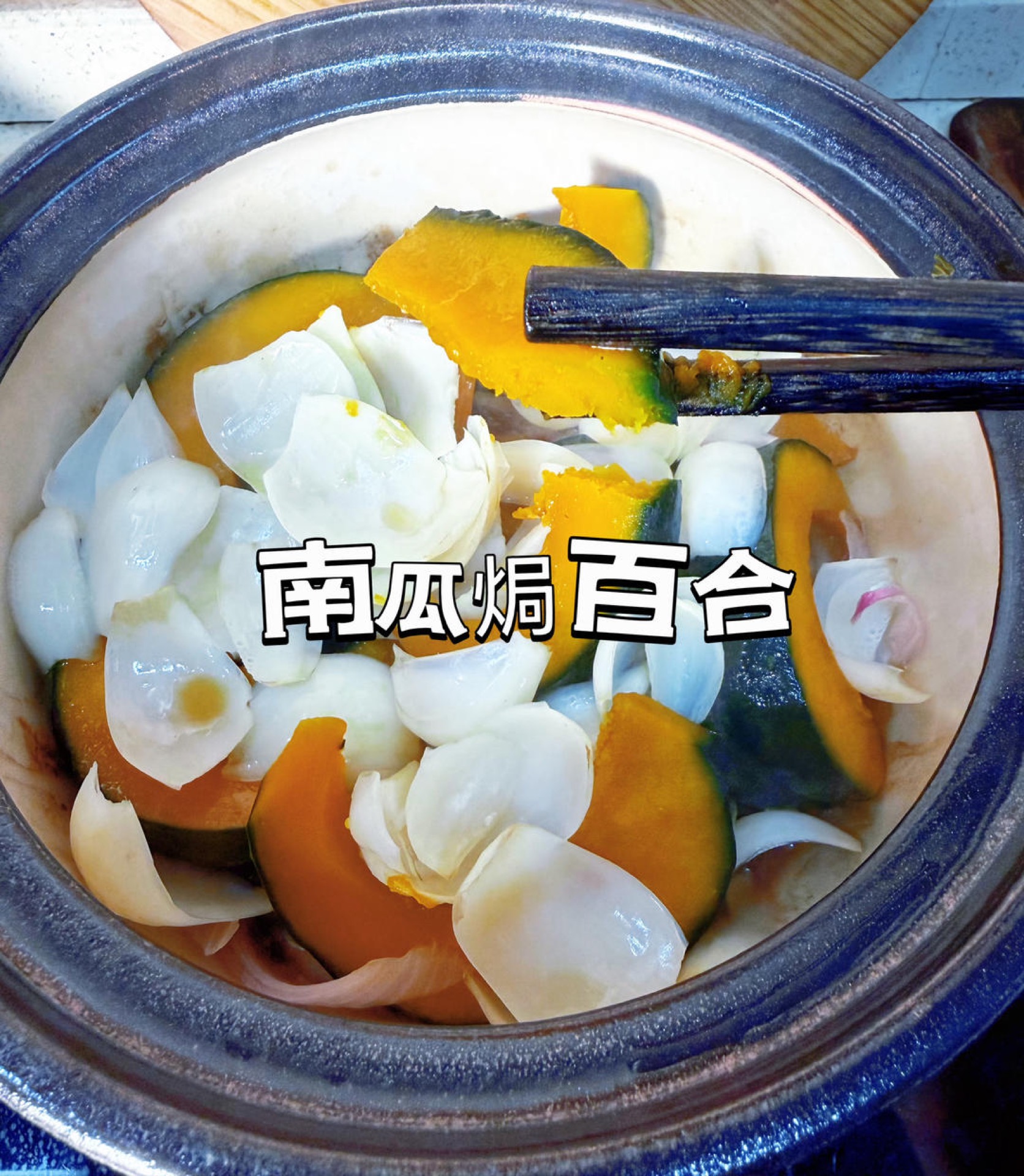
If you have never cooked with fresh lily bulbs, this is the recipe to start with. They are not starchy or bitter the way dried lily is; fresh Lanzhou bulbs are crisp, faintly sweet, and mild enough to eat raw, which is why they only need a few minutes in the pot. Paired with a squash that is naturally sweet and dense, they create a dish that reads as a vegetable side but eats like something you would order at a banquet.
It also happens to be one of the easiest things you can make in a clay pot. There is no searing, no reducing, no last-minute sauce work. You cut, you layer, you cover, and you let the pot do the work in two short timed bursts. If you have been looking for a way to use the kabocha sitting on your counter that is not soup, this is it.
What Is Baked Pumpkin with Lily Bulbs?
Baked pumpkin with lily bulbs (南瓜焗百合, nangua jubaihe) is a Cantonese-style clay pot dish in which wedges of sweet kabocha squash and fresh lily bulb petals are cooked together in a shallow, savory-sweet soy glaze. Despite the word “baked” in the English name, the traditional method uses a clay pot (砂锅) over a low flame, which is why the dish is often translated as “baked” — the covered pot bakes the squash in its own steam and caramelizes the glaze against the pot’s hot sides. The result is pumpkin that is tender and slightly sticky at the edges, and lily petals that stay intact, crisp-tender, and clean-tasting.
Fresh lily bulbs are the star ingredient and the reason this dish is worth seeking out. A fresh lily bulb looks like a fat white garlic bulb made of overlapping, curved petals. The Lanzhou variety (兰州鲜百合) is the most prized: it is sweet, crunchy, and free of the bitterness that dried lily can carry. In Chinese cooking, fresh lily is considered a cooling, gentle ingredient, which is why it is so often paired with sweet squash in autumn dishes.
The pairing works because the two ingredients cook on completely different clocks. Kabocha is dense and needs a long, moist eight minutes to go fluffy, while fresh lily petals are thin and delicate and will collapse into mush if cooked that long. Adding the lily only for the final six minutes is what keeps the dish texturally interesting — soft against crisp.
If you enjoy pumpkin cooked this way, the same sweet-savory logic shows up in other dishes on this site. There is a baked pumpkin souffle in kabocha, which uses the whole squash as its own baking vessel and leans even further into the natural sweetness of the vegetable.
1Easy Baked Pumpkin Soufflé (Inside a Kabocha!)A light, fluffy soufflé baked right inside a kabocha pumpkin! This easy recipe features a sweet soufflé top over a creamy, savory pumpkin puree. A perfect, simple, and elegant dessert or side dish.Check out this recipe
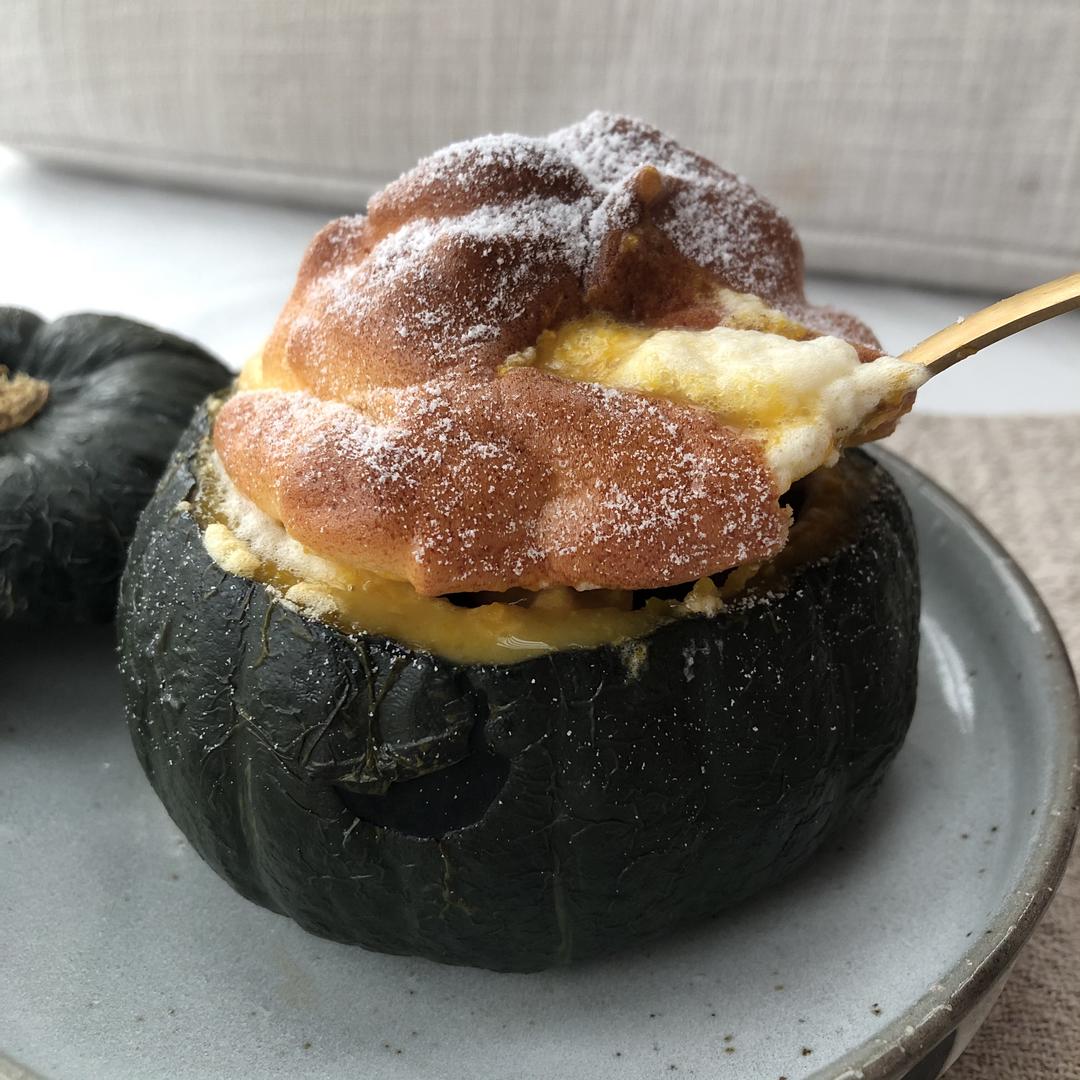
For a savory, dinner-table version of pumpkin, try this savory chicken and pumpkin mash, which braises ground chicken with pumpkin until everything melds into a soft, spoonable topping for rice.
2Savory Chicken and Pumpkin Mash (Ji Rou Nan Gua Ni)A comforting, healthy, and low-calorie Chinese breakfast or light meal. This Savory Chicken and Pumpkin Mash combines tender chicken breast, crunchy enoki mushrooms, and sweet pumpkin into a creamy, satisfying bowl that’s ready in 15 minutes. It’s the perfect warm alternative to cold salads for weight loss or healthy eating.Check out this recipe
And if you would rather end the meal with pumpkin than start it, this pumpkin chestnut pound cake folds roasted pumpkin and chestnut into a dense, buttery loaf that keeps for days.
3Easy Pumpkin Chestnut Pound Cake (Nan Gua Li Zi Dan Gao)A simple, moist, low-sugar Pumpkin Chestnut Pound Cake! This easy fall recipe uses simple ingredients like pumpkin puree and cooked chestnuts and is perfect for a cozy breakfast or dessert.Check out this recipe

Ingredient Notes
Four ingredients do almost all the work here, and each one has a version that will make or break the dish. Read this section before you shop, especially if you are substituting.
Kabocha squash (贝贝南瓜). The recipe calls for half of a small kabocha, sometimes sold as “贝贝南瓜” or baby kabocha. Kabocha is the right choice because it is dense, dry-fleshed, and genuinely sweet — it holds its shape in the pot instead of dissolving. Butternut squash will work but will be wetter and softer; acorn squash is a decent substitute but less sweet. Avoid sugar pumpkin or jack-o’-lantern pumpkins, which are watery and stringy. Leave the skin on: kabocha skin is thin and edible, and it helps the wedges hold together.
Fresh lily bulbs (鲜百合). Look for firm, heavy, unblemished bulbs with tight petals. Lanzhou lily is the gold standard — sweet and crisp with no bitterness. Avoid bulbs that are soft, brown at the tips, or already separating into loose petals. Dried lily (干百合) is not a substitute here; it needs a long soak and cooks into a soft, slightly bitter texture that changes the dish completely. If you can only find dried, soak it in warm water for 8 hours and treat it as a different recipe.
Light soy sauce. Use light (thin) soy sauce, not dark soy, which would turn the glaze almost black and add a molasses-like heaviness. Tamari works for a gluten-free version and is slightly richer, so reduce the sugar a touch. If you only have dark soy, use half the amount and add a splash of water.
Oyster sauce. This is what gives the glaze its round, savory depth and slight viscosity. Vegetarian oyster sauce made from mushrooms is a fine swap. If you skip it entirely, add an extra half teaspoon of sugar and a pinch of salt, and expect a thinner, brighter glaze.
Sugar. Just a teaspoon. Kabocha is already sweet, so the sugar is there to balance the salt in the soy sauce, not to sweeten the dish. If your squash is exceptionally sweet, cut it to half a teaspoon.
Onion. Half an onion, sliced into thin wedges, goes under the pumpkin as a bed. It steams, sweetens, and keeps the squash from sticking. Yellow or white onion both work; shallots are a lovely upgrade.
Ingredients
Here is everything you need for four servings as a side dish, or two as a light main with rice. All amounts are given in US measures with metric equivalents in parentheses.
- 1 lb (450 g) kabocha squash — about half a small kabocha, cut into ¾-inch wedges, skin on
- 2 bulbs fresh lily bulbs (about 6 oz / 170 g total) — Lanzhou variety preferred, roots trimmed, separated into petals
- ½ whole onion (about 3 oz / 85 g) — cut into thin wedges
- 1 tbsp (15 ml) neutral oil — for the pot
- 1½ tbsp (22 ml) light soy sauce — or tamari
- 1 tbsp (15 ml) oyster sauce — optional; skip for vegan
- 1 tsp (4 g) granulated sugar — or ½ tsp if your pumpkin is very sweet
- 2 tbsp (30 ml) water
- 1 tsp (5 ml) toasted sesame oil — optional, for aroma
- 1 tbsp thinly sliced scallion — for garnish
Optional but very good: a pinch of white pepper in the sauce, and a few toasted sesame seeds scattered at the end.
Equipment Needed
You do not need much, but the pot matters more than anything else in this list.
- A clay pot (砂锅) or a heavy-bottomed oven-safe pot — a 2- to 3-quart clay pot is traditional. An enameled cast-iron Dutch oven or a heavy stainless pot with a tight lid works just as well. The key is a heavy base that holds steady, gentle heat and a lid that traps steam.
- A cutting board and a sharp chef’s knife — kabocha skin is tough, so a sharp knife is a safety issue, not just a convenience.
- A small bowl — for whisking the sauce before the pot goes on.
- A slotted spoon or spatula — for lifting the wedges without breaking them.
- A pastry brush (optional) — for brushing glaze over the cut faces of the pumpkin at the end.
If you are new to clay pot cooking, the technique is genuinely simple, but a few habits make it easier — this guide to how to cook with wok covers heat control and pot handling that translate directly to clay pot work. And if you are choosing cookware for this kind of low, covered cooking, this piece on the pan for stir fry explains why heavy bases behave better than thin ones.
Why This Recipe Works
Three small decisions carry this dish, and each one is easy to get wrong.
The two-stage cook. Kabocha and fresh lily have completely different cook times. The squash needs about eight minutes under a lid to go from raw to fluffy. The lily needs about six. Cooking them together from the start would give you mushy lily and underdone squash. Staging them is the entire trick, and it costs you nothing but a timer.
A low, covered heat. The pot is never hotter than medium-low. That gentle, indirect heat lets the squash steam through while the bottom faces slowly caramelize against the pot. Turn the heat up and you get scorched bottoms and raw centers.
A glaze that is more savory than sweet. One and a half tablespoons of soy sauce against one teaspoon of sugar is a deliberately restrained ratio. The pumpkin brings its own sugar; the sauce is there to season it and give it a glossy, sticky finish. This is why the dish tastes clean instead of candied.
If you like this style of cooking — a few ingredients, a covered pot, and a sauce that does exactly one job — the same approach shows up in this braised tofu and mushrooms, where a savory sauce is built to flatter mild ingredients rather than overpower them.
Prep & Mise en Place
This dish moves fast once the pot is on, so do all your cutting first. Total prep is about fifteen minutes.
1. Soak the lily bulbs. Separate the lily into individual petals, trim the root end and any brown tips, then rinse in cold water. Soak the petals in cold water for 5 minutes to loosen any grit, then drain and pat dry. This is the “soaking time” in the recipe card; five minutes is plenty, and longer is fine if you are prepping ahead.
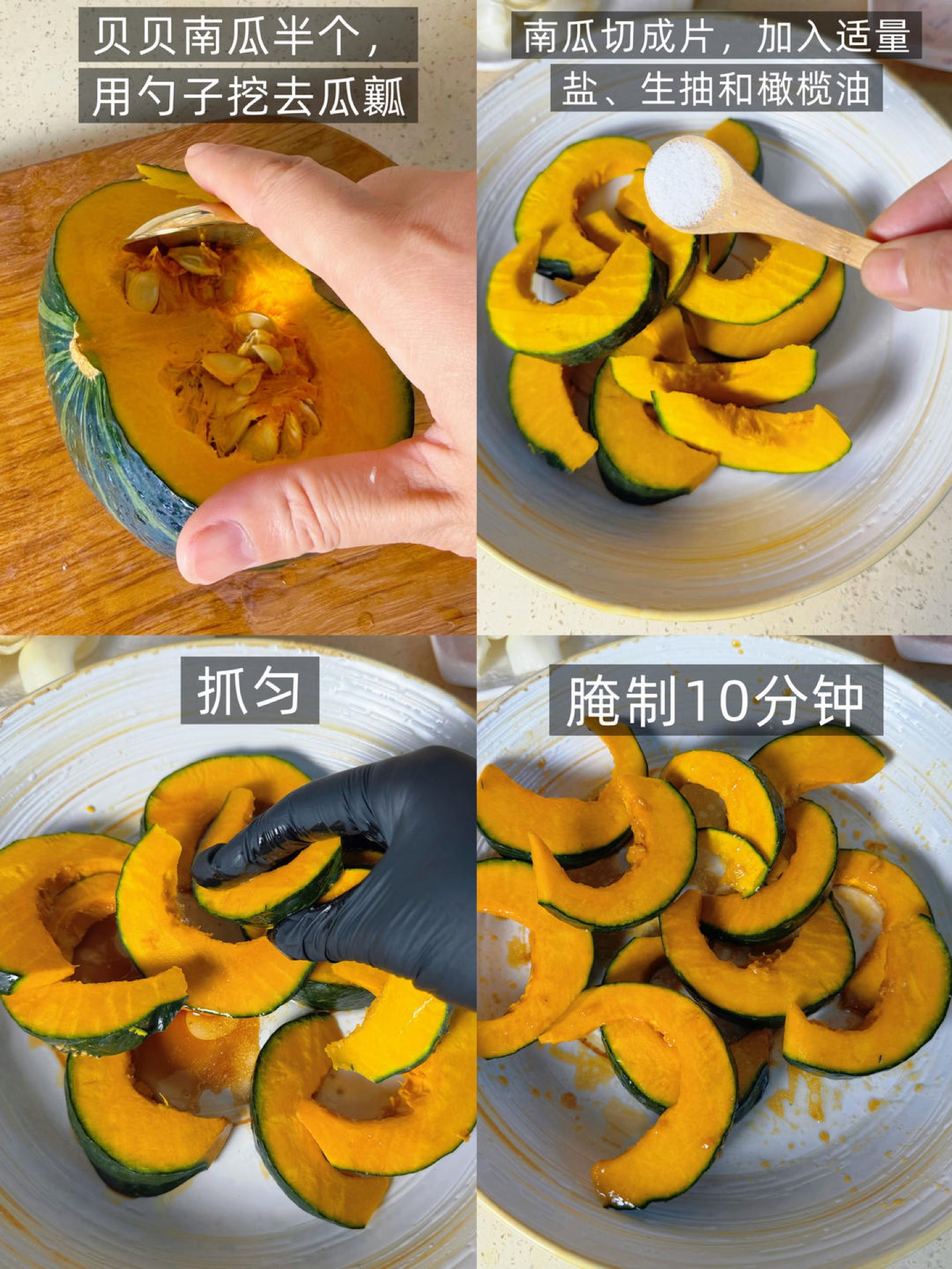
2. Cut the kabocha. Halve the squash, scoop out the seeds and any spongy fibers, and cut into ¾-inch wedges. Leave the skin on. Try to keep the wedges roughly the same thickness so they finish at the same time.
3. Slice the onion. Cut half an onion into thin wedges, about ¼ inch thick at the root end.
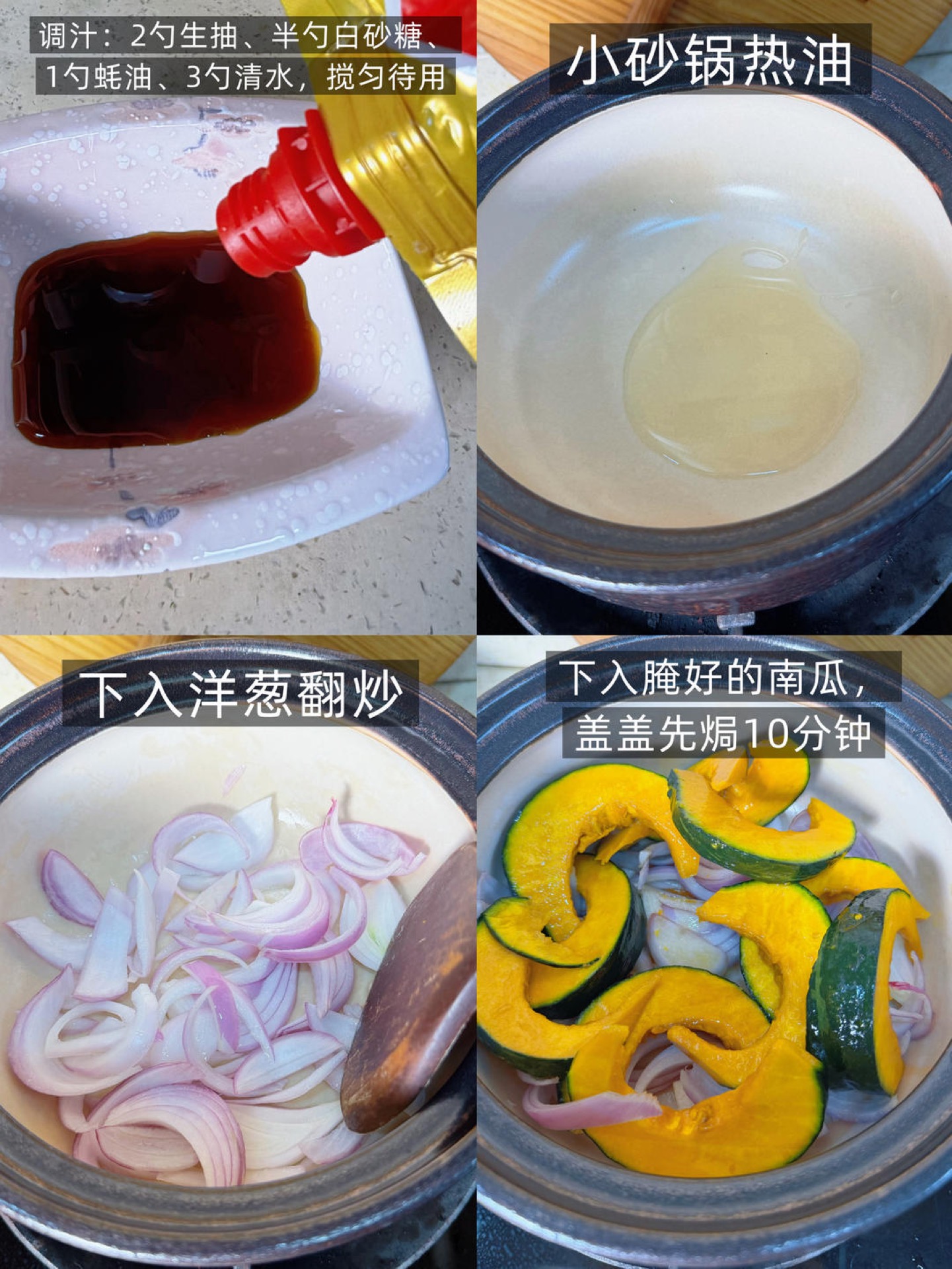
4. Mix the sauce. Whisk the soy sauce, oyster sauce, sugar, water, and sesame oil in a small bowl until the sugar dissolves. Taste it — it should be salty with a sweet edge, not sweet with a salty edge. Adjust now, not later.
5. Set up your station. Put the pot on the stove, the pumpkin wedges in a bowl, the lily petals in another, and the sauce within arm’s reach. Once the onion hits the oil, you will not want to be chopping anything.
Cooking Process
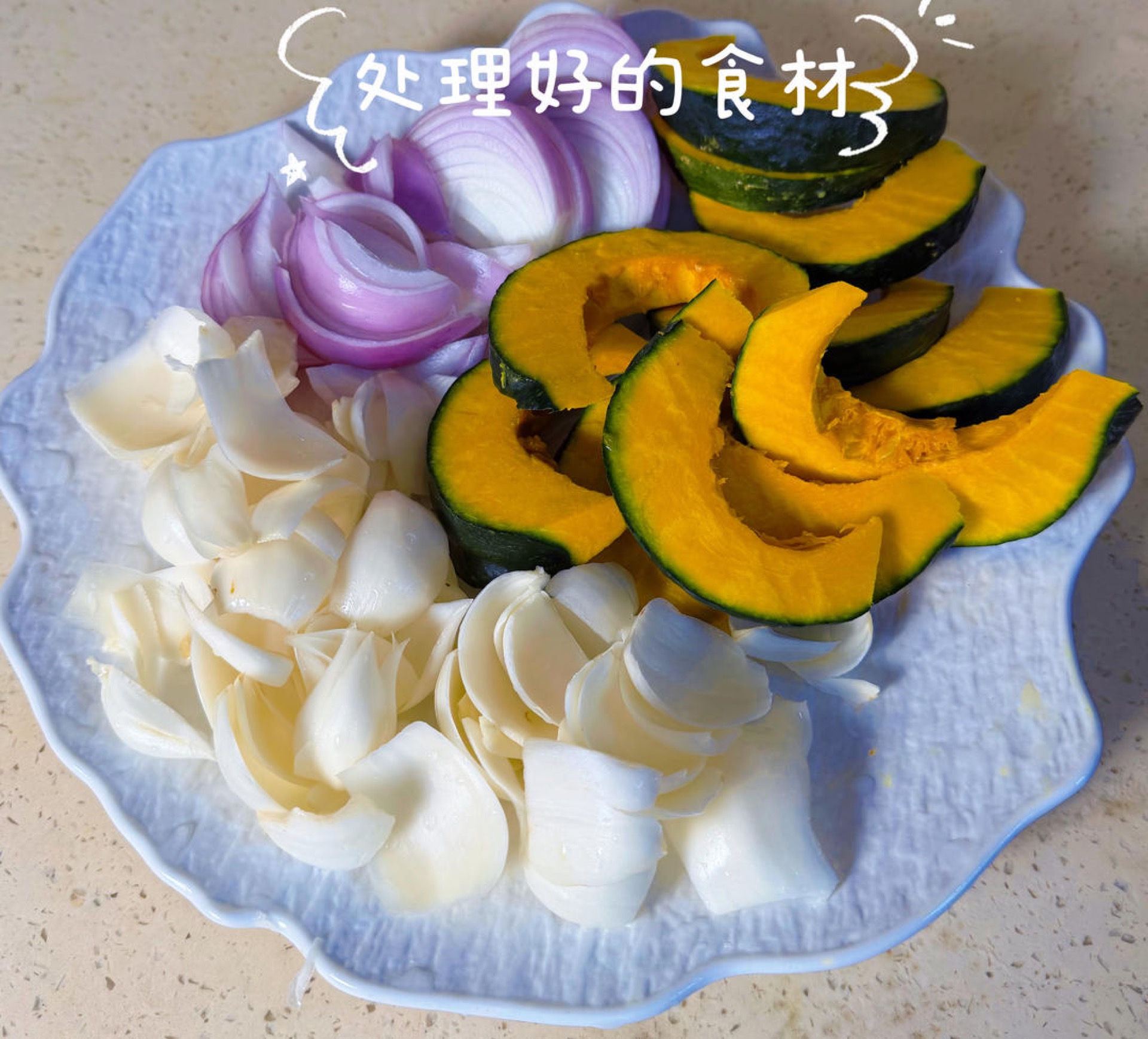
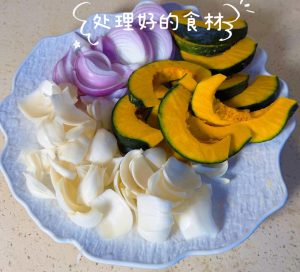
Step 1 — Gather and Prep Everything
Arrange all the prepared ingredients on a board: kabocha wedges, separated lily petals, sliced onion, and the mixed sauce so everything is within reach before the pot goes on the heat.
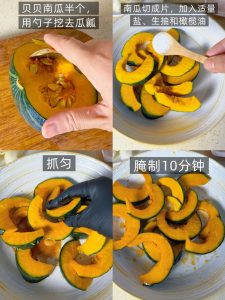
Step 2 — Cut the Kabocha
Cut the kabocha into ¾-inch wedges, leaving the skin on, and trim away any spongy or fibrous center so each piece cooks evenly.
Step 3 — Mix the Sauce and Start the Pot
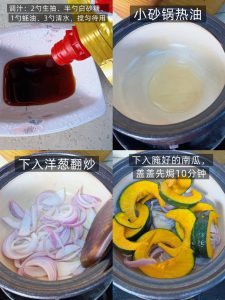
Whisk the soy sauce, oyster sauce, sugar, water, and sesame oil in a small bowl, then set a clay pot over medium-low heat with the neutral oil and onion.
Step 4 — Bake the Pumpkin, Then the Lily
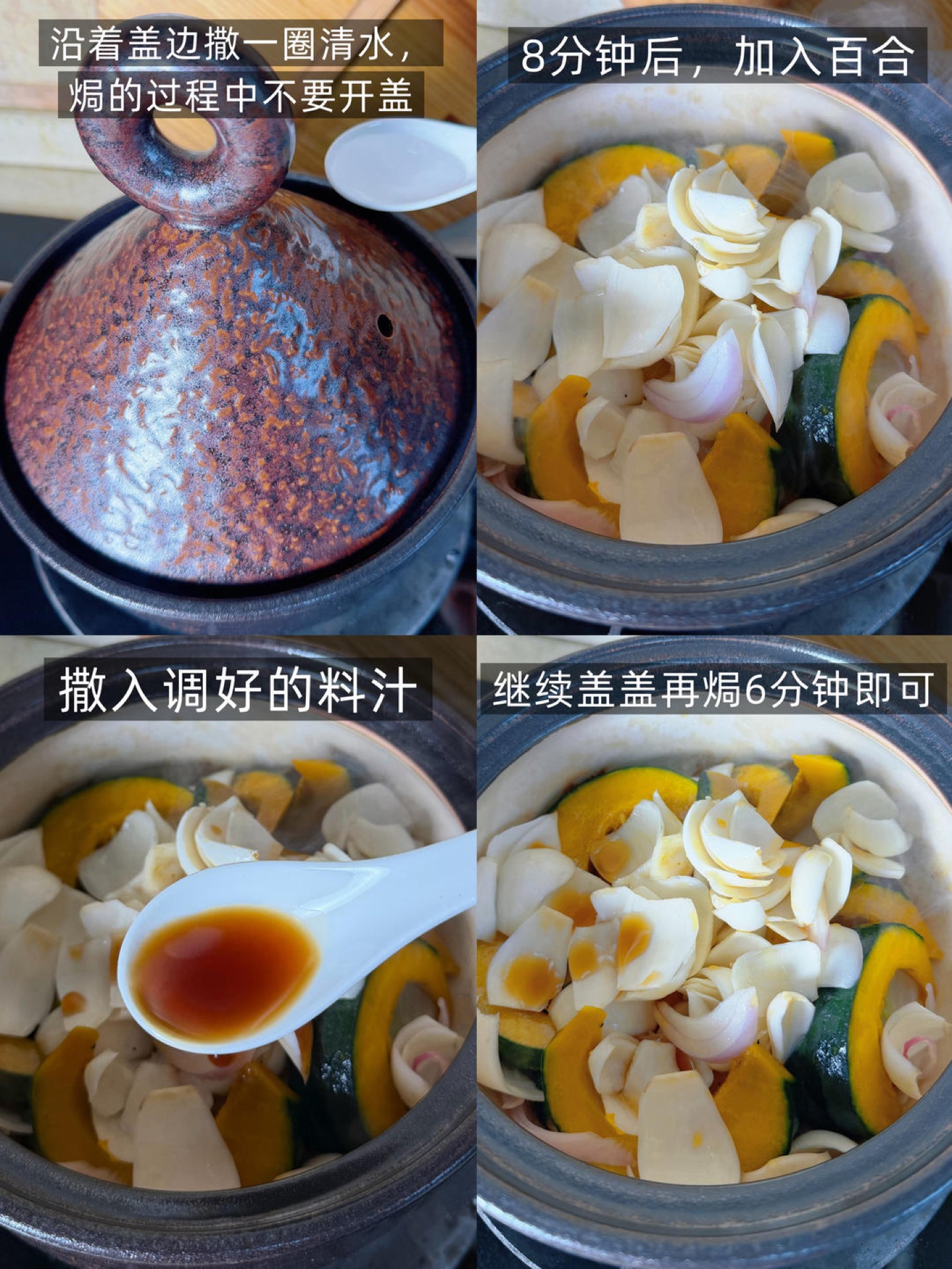
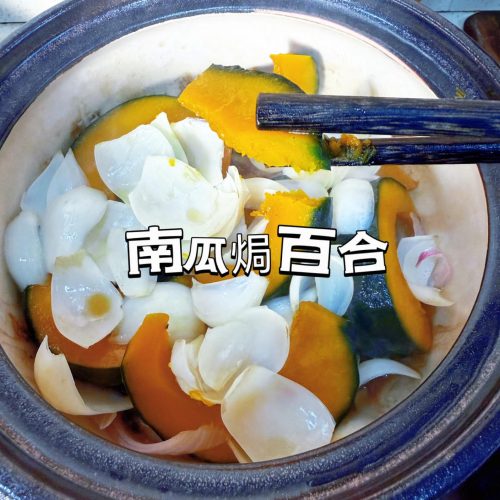
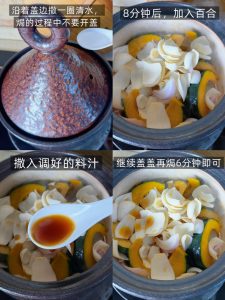
Lay the kabocha wedges cut-side down in the pot, cover, and bake for 8 minutes; then add the lily petals and pour the sauce over everything and bake for another 6 minutes.
Step 5 — Finish and Serve
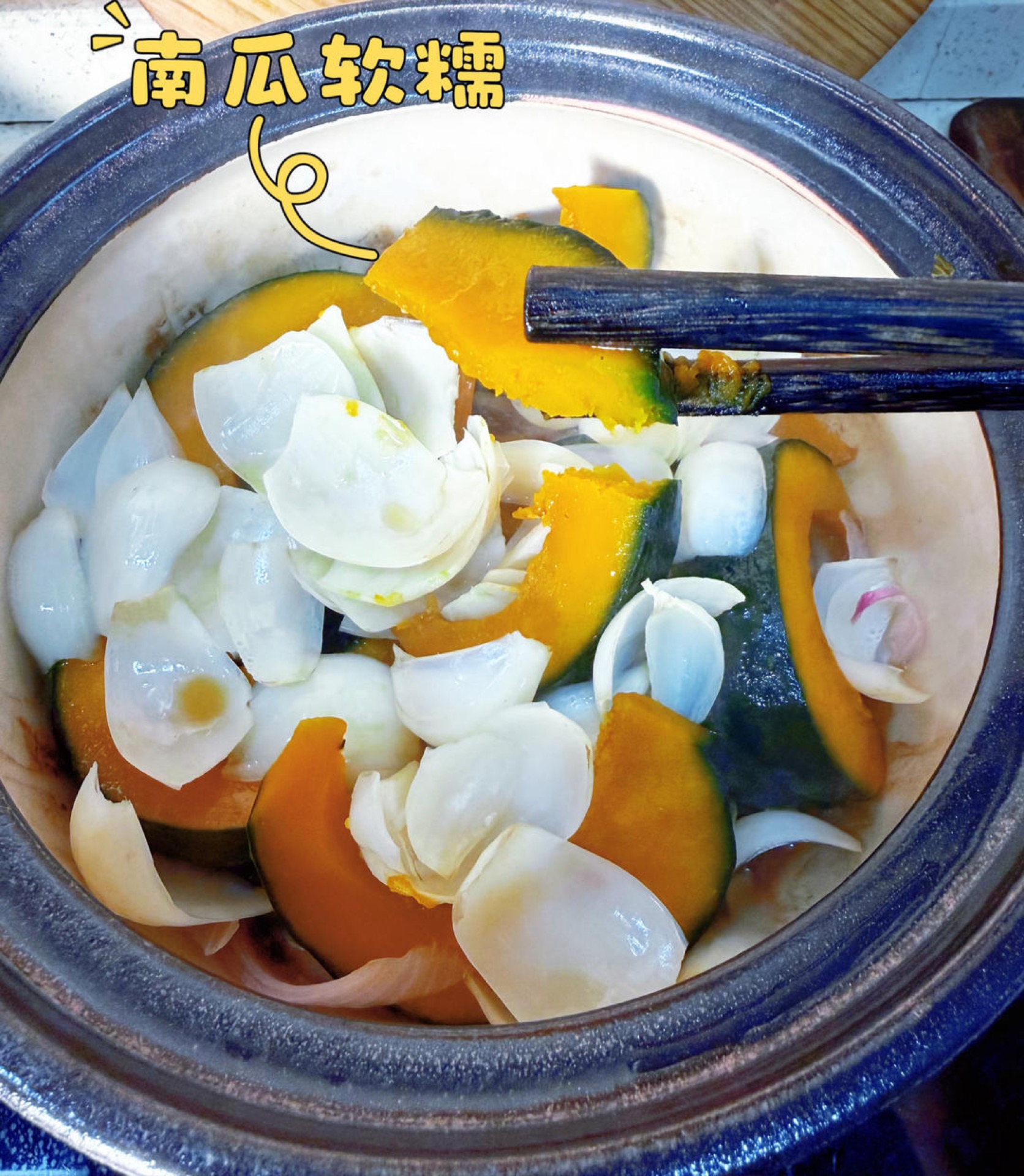
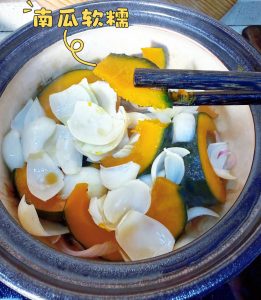
Uncover, spoon the glaze over the pumpkin and lily, scatter the scallion over the top, and serve hot straight from the pot.
Common Mistakes When Making Baked Pumpkin with Lily Bulbs
These are the five things that most often go wrong, and how to avoid each one.
1. Adding the lily too early. The mistake: putting the lily petals in with the pumpkin at the start. Why it happens: it seems efficient to cook everything at once. The fix: hold the lily back until the last six minutes. Fresh lily petals are thin and will collapse into a soft, watery mass if they cook for the full fourteen minutes. They should still have a slight bite when the pot comes off the heat.
2. Using dried lily instead of fresh. The mistake: grabbing a bag of dried lily from the pantry and treating it like fresh. Why it happens: the names are similar and dried lily is easier to find. The fix: dried lily needs an 8-hour soak and still cooks to a much softer, slightly bitter texture. It is a fine ingredient, but it makes a different dish. Buy fresh bulbs for this recipe.
3. Cutting the pumpkin too thick or unevenly. The mistake: wedges that range from ½ inch to 1½ inches. Why it happens: kabocha is hard to cut and it is tempting to stop early. The fix: aim for a uniform ¾ inch. Thin pieces will scorch and fall apart while thick pieces stay raw in the middle. If your pieces are uneven, sort the thick ones toward the center of the pot and the thin ones toward the edges.
4. Cooking over high heat. The mistake: turning the burner up to speed things along. Why it happens: the pot seems to be doing nothing. The fix: keep it at medium-low and trust the lid. High heat scorches the onion and the bottom of the squash before the centers cook through. If you hear aggressive sizzling rather than a gentle simmer, lower the heat.
5. Over-salting the glaze. The mistake: seasoning the sauce as if it were a stir-fry. Why it happens: soy sauce and oyster sauce are both salty, and the small volume of liquid hides how concentrated it is. The fix: mix the sauce, taste it, and remember it will be spread across a pound of squash. It should taste a little too salty on its own, but only a little. If it is aggressively salty, add another tablespoon of water.
If you want to round out the meal with something from the same kitchen, a batch of vegetable steamed dumplings steams on the stovetop while the pot bakes, and the two dishes share the same clean, vegetable-forward profile.
Variations
Once you have made the base recipe once, these are the changes worth trying.
Garlic and ginger version. Add two smashed cloves of garlic and three thin slices of ginger to the oil with the onion. Let them sizzle for 30 seconds before adding the pumpkin. The glaze picks up a warm, aromatic edge that plays well with the sweetness.
Miso glaze. Replace the oyster sauce with one tablespoon of white miso and reduce the soy sauce to one tablespoon. The glaze becomes earthier and slightly deeper in color, and the dish reads more like a modern izakaya side.
Vegan version. Skip the oyster sauce and use a mushroom-based vegetarian oyster sauce, or simply add an extra half teaspoon of sugar and a pinch of salt. Use tamari instead of soy sauce if you are avoiding wheat. The dish is otherwise naturally plant-based.
Add protein. A handful of cooked, peeled chestnuts or a few cubes of firm tofu added with the pumpkin turn this into a heartier main. If you use tofu, press it first so it does not release water into the pot. For a meat version, brown small pieces of chicken thigh in the pot before adding the onion, then proceed — this mirrors the technique in this potato braised chicken.
Spiced version. A tiny pinch of allspice or five-spice in the sauce adds a warm, autumnal note that complements kabocha beautifully. Use no more than a small pinch — both are potent, and the point of this dish is restraint.
Frequently Asked Questions
Can I make this in a regular oven instead of a clay pot? Yes. Use a covered Dutch oven or a baking dish with a tight lid, and bake at 375°F (190°C). Add the pumpkin and onion with the sauce, cover, and bake for 15 minutes; then add the lily and bake uncovered for 6 to 8 minutes more. The stovetop clay pot version gives a slightly stickier glaze on the bottom, but the oven version is very close and completely hands-off.
Can I eat fresh lily bulbs raw? Yes. Fresh Lanzhou lily is crisp, sweet, and mild, and it is commonly eaten raw in salads and cold dishes. That is exactly why it needs so little cooking here — six minutes softens it just slightly while keeping its texture.
What can I use instead of kabocha? Butternut squash is the closest widely available substitute, though it is wetter and will need about two extra minutes and a slightly uncovered finish. Acorn squash works but is less sweet. Delicata is excellent and needs no peeling, but it cooks faster, so check it at six minutes.
Why did my lily bulbs turn brown? Fresh lily oxidizes quickly once the petals are separated and exposed to air. Keep the separated petals in a bowl of cold water until you are ready to use them, and pat them dry just before they go into the pot. A brief soak also helps rinse away any grit trapped between the petals.
Is this dish supposed to be sweet? It is gently sweet, not dessert-sweet. The sweetness comes mostly from the kabocha itself, with just one teaspoon of sugar in the glaze to balance the salt. If yours tastes candied, your squash was very ripe — reduce the sugar to a half teaspoon next time.
How to Serve
This dish is at its best straight from the pot, while the pumpkin is still steaming and the lily still has its bite. Serve it as a side dish alongside steamed rice and a simply cooked green vegetable, or as part of a larger spread where its sweetness balances saltier braises. It is also excellent at room temperature, which makes it a good candidate for a buffet table.
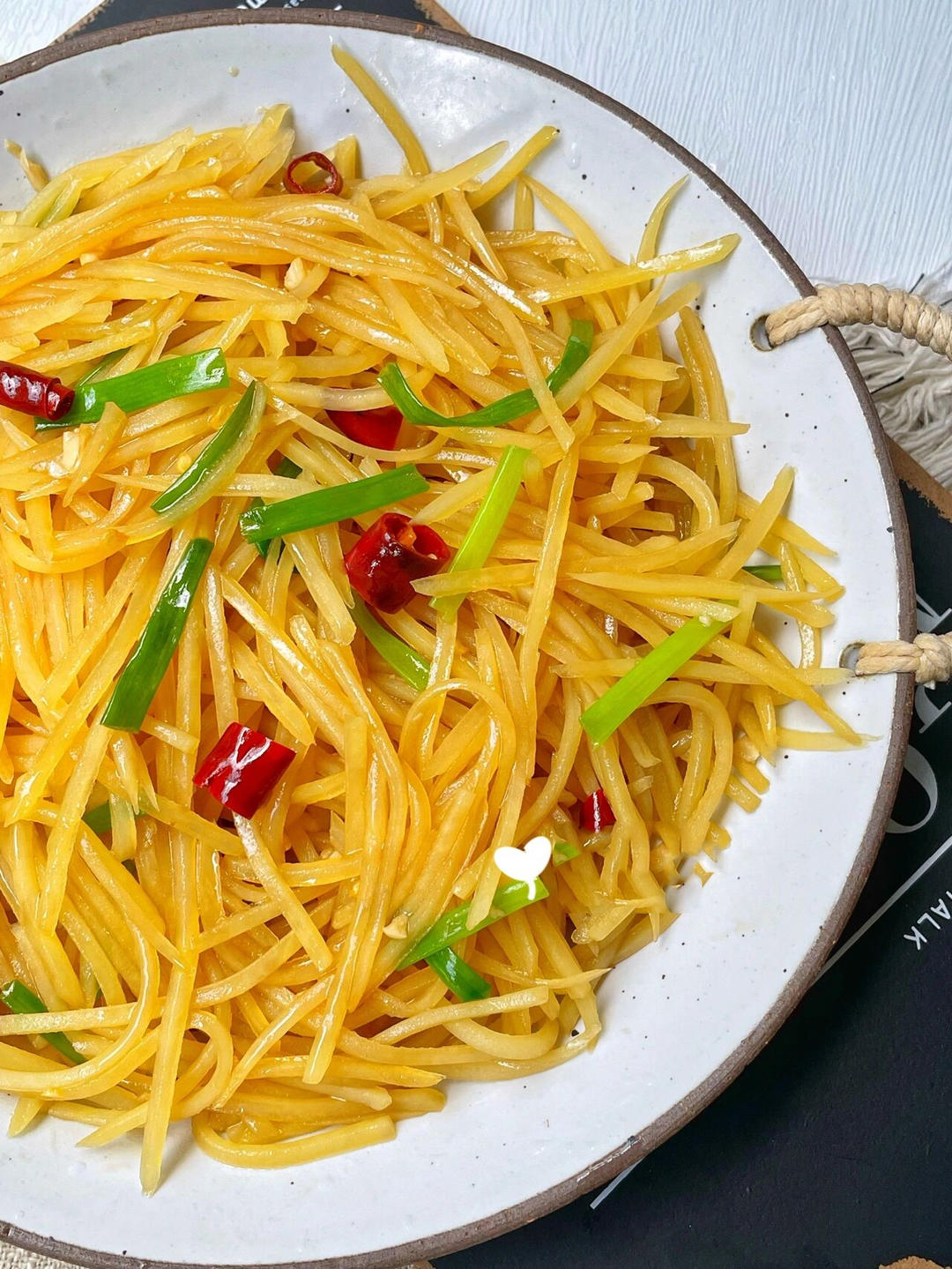
For a heartier meal, pair it with a bowl of lamb liver fried rice, whose savory, iron-rich flavor contrasts nicely with the clean sweetness of the pumpkin. If you want a second vegetable on the table, hot and sour shredded potatoes with oyster sauce brings a bright, tangy crunch that keeps the whole meal from feeling too soft.

Storage & Reheat
This dish keeps better than most clay pot cooking because there is very little liquid to separate. Cool it to room temperature within two hours, then transfer to an airtight container and refrigerate for up to 3 days. The lily will soften noticeably on day two, which is normal — the flavor holds, but the texture changes.
To reheat, the stovetop is best. Return everything to a covered pot over medium-low heat with a splash of water, and warm for 5 to 7 minutes, stirring gently once or twice. A microwave works in a pinch: cover and heat in 30-second bursts until the center is steaming. Reheat to an internal temperature of 165°F (74°C) for food safety. I do not recommend freezing this dish — kabocha becomes watery and grainy after freezing and thawing.
Allergen Notice
This recipe contains soy from the light soy sauce, and it contains mollusks, wheat, and soy if you use conventional oyster sauce. If you are gluten-free, use tamari and a certified gluten-free oyster sauce or skip the oyster sauce entirely. Sesame appears if you use the toasted sesame oil. There are no dairy, egg, peanut, or tree nut ingredients in the base recipe, but check every label on your sauces, since brands vary widely in what they add.
Nutrition Disclaimer
Nutrition information is calculated using an ingredient database and should be considered an estimate. In cases where multiple ingredient alternatives are given, the first listed is calculated for nutrition. Garnishes and optional ingredients are not included.
About the Author & Recipe Development
Lin is the cook, writer, and photographer behind Woks of Love, where she has been documenting Chinese home cooking for years. Her approach is simple: start from the way a dish is actually made in a home kitchen, then write it down clearly enough that someone who has never cooked Chinese food can make it on the first try. Every recipe on the site is tested in her own kitchen, adjusted until it is reliable, and photographed as it is actually cooked — no styling tricks, no ingredients you cannot buy.
This recipe was developed from a Cantonese clay pot home dish that pairs sweet autumn squash with fresh lily bulbs. The version here keeps the traditional two-stage cook and restrained sauce, and adds precise timings and metric equivalents so it works the same way in any kitchen. It was tested with both a traditional clay pot and an enameled Dutch oven, and with kabocha from both a farmers’ market and a supermarket, to make sure the results hold up either way.
Authoritative References
For safe handling and reheating temperatures, the FDA Food Code guidance on food safety sets the 165°F (74°C) reheating standard for leftovers. The USDA food safety guidance on leftovers is the source for the 2-hour rule and the 3-to-4-day refrigeration window. For general produce handling and storage, the FDA produce safety advice is a useful reference. Finally, for a food-science explanation of why dense squash cooks more evenly with moist, covered heat, this Serious Eats guide to roasting squash is a helpful companion read.
Baked Pumpkin with Lily Bulbs (南瓜焗百合): Sweet, Clean, and Never

Equipment
- Clay pot or heavy-bottomed oven-safe pot
- Cutting Board
- Chef’s knife
- Small Bowl
- Slotted Spoon
- Pastry Brush
Ingredients
For the Sauce
- 1.5 tbsp light soy sauce or tamari for gluten-free
- 1 tbsp oyster sauce optional; skip for vegan
- 1 tsp granulated sugar or ½ tsp if your pumpkin is very sweet
- 2 tbsp water to loosen the glaze
- 1 tsp toasted sesame oil optional, for aroma
For the Dish
- 1 lb kabocha squash about half a small kabocha, cut into ¾-inch wedges
- 2 bulbs fresh lily bulbs Lanzhou variety, roots trimmed, separated into petals
- 1/2 whole onion cut into thin wedges
- 1 tbsp neutral oil for the pot
- 1 tbsp scallion thinly sliced, for garnish
Instructions
- Arrange all the prepared ingredients on a board: kabocha wedges, separated lily petals, sliced onion, and the mixed sauce so everything is within reach before the pot goes on the heat.

- Cut the kabocha into ¾-inch wedges, leaving the skin on, and trim away any spongy or fibrous center so each piece cooks evenly.

- Whisk the soy sauce, oyster sauce, sugar, water, and sesame oil in a small bowl, then set a clay pot over medium-low heat with the neutral oil and onion.
- Lay the kabocha wedges cut-side down in the pot, cover, and bake for 8 minutes; then add the lily petals and pour the sauce over everything and bake for another 6 minutes.
- Uncover, spoon the glaze over the pumpkin and lily, scatter the scallion over the top, and serve hot straight from the pot.













Leave a Reply