In the vast world of seasoning, few ingredients are as misunderstood as allspice. Despite its name suggesting a pre-mixed blend of several different spices, allspice is actually a single, dried berry from a tropical evergreen tree. Known for its intoxicating aroma that bridges the gap between sweet and savory, it has earned its place as a “secret weapon” in kitchens from the Caribbean to the heart of Asia. Whether you are simmering a hearty stew or baking a seasonal cake, allspice provides a complex warmth that few other spices can replicate.
What Is Allspice?
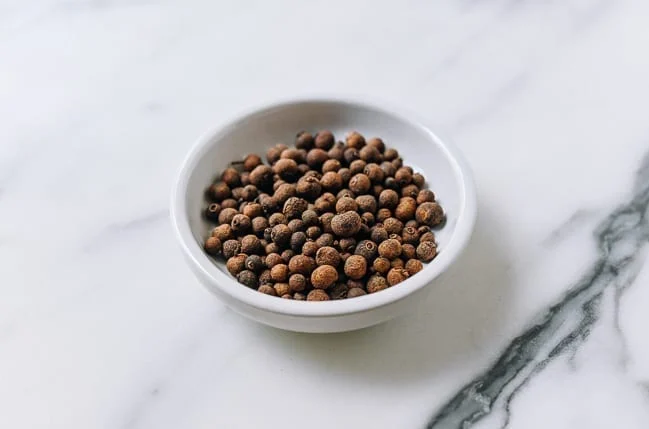
Allspice is the dried, unripened fruit of the Pimenta dioica tree, a member of the myrtle family. According to botanical records from the Britannica Encyclopedia, this tree is indigenous to the Caribbean (specifically Jamaica), Southern Mexico, and Central America.
- Chinese Name & Pinyin: 多香果 (duō xiāng guǒ)
- Appearance: The berries are small, circular, and dark brown, resembling oversized white pepper or smooth peppercorns.
- History: When Christopher Columbus arrived in the Caribbean in the late 15th century, he mistook these berries for black pepper. This led to its alternative name, “Jamaican pepper.” By the 1600s, English traders coined the name “allspice” because the berry remarkably embodied the flavors of cinnamon, nutmeg, and cloves all at once.
The Flavor Profile: A Fragrant Trio
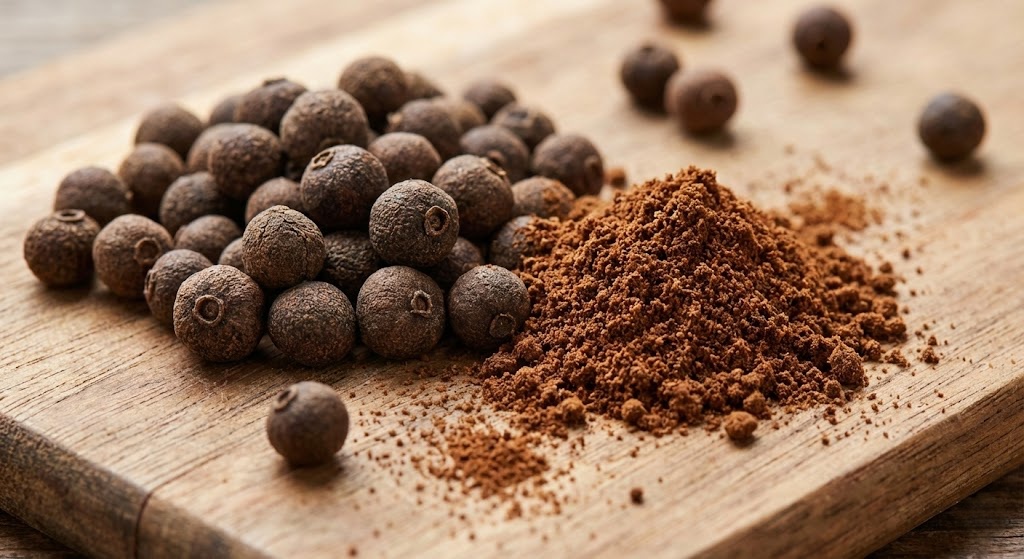
The unique magic of allspice lies in its chemical composition. It is rich in eugenol, the same essential oil found in cloves. This gives allspice its signature warm, pungent, and slightly numbing quality.
On the palate, it starts with a sweet, woody note reminiscent of cinnamon. This is quickly followed by the earthy depth of nutmeg and the medicinal snap of cloves. Unlike black pepper, it doesn’t provide intense heat but rather a lingering “glow” that enhances the natural sweetness of meats and vegetables. In the hierarchy of spices, allspice usually acts as a “bridge,” harmonizing bolder ingredients like star anise or ginger.
Culinary Applications: From Jerk Chicken to Chinese Nian Gao
While allspice is the backbone of Caribbean cuisine—essential for authentic Jamaican jerk seasoning—its utility extends far beyond the islands.
1. Traditional Caribbean and Western Usage
Historically, the Arawak people used allspice to cure meats on a wooden framework called a boucan. This technique eventually gave us the word “buccaneer” and the Spanish term barbacoa, the ancestor of our modern “barbecue.” Today, it is a staple in pickling brines, mulled ciders, and even Scandinavian meatballs.
2. Allspice in the Chinese Kitchen
While not a traditional member of the “Ancient Chinese Spice Cabinet,” allspice has been adopted into modern Chinese “fusion” braising liquids and desserts.
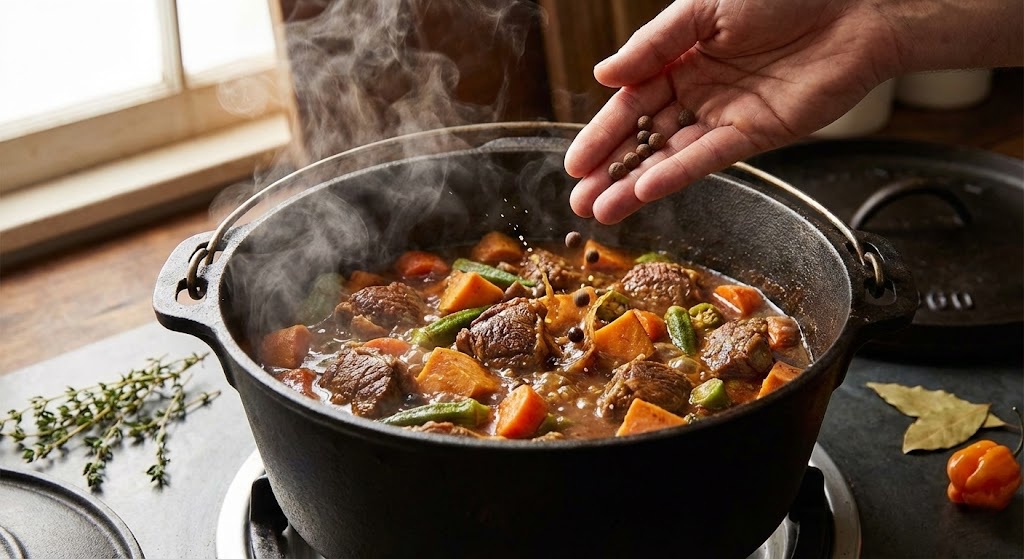
- Braised Meats: Adding 2-3 whole berries to a red-braised pork dish alongside Shaoxing wine adds a sophisticated floral top note that cuts through the fat.
- Festive Sweets: It is a surprising but delightful addition to Nian Gao (年糕), providing a warm contrast to the sweet glutinous rice.
3. Spice Pairings for Beginners
For those new to allspice, think of it as a teammate. It works exceptionally well when combined with:
- Salt and Sugar: For basic dry rubs.
- Five Spice Powder: Though not an original ingredient, adding a pinch of allspice to five-spice dishes boosts the “aromatic” profile.
- Ground Ginger Powder: Perfect for autumnal baking or spiced poultry.
Buying and Storing Guide
To ensure you are getting the best quality, follow these professional tips:
- Whole vs. Ground: Always prefer whole berries. Like most spices, allspice contains volatile oils that dissipate quickly once ground. Grinding them fresh with a mortar and pestle just before use will result in a much more potent flavor.
- Where to Buy: You can find allspice in most major supermarkets, but for the freshest crop, look for “Jamaican Allspice” in specialized spice shops or Caribbean markets.
- Selection: High-quality berries should be uniform in color, heavy for their size, and aromatic even through the packaging.
- Storage: Store in an airtight glass jar in a cool, dark cupboard. Whole berries will retain their potency for 3–4 years, whereas ground allspice begins to fade after 6 months.
Substitutes for Allspice
If a recipe calls for allspice and your pantry is bare, you can create a DIY “allspice” blend by mixing the spices it was named after:
- The Golden Ratio: 1/2 tsp Cinnamon + 1/4 tsp Cloves + 1/4 tsp Nutmeg. This mixture mimics the aromatic complexity of a single allspice berry quite accurately.
Authoritative References
- The National Center for Biotechnology Information (NCBI): On the aromatic compounds of Pimenta dioica and Eugenol.
- britannica: General Spices and Common Names guidance.
- Kew Royal Botanic Gardens: Plant profile for Pimenta dioica.
Related Articles
- The Ultimate Guide to Chinese Spices
- How to Use Star Anise in Stir-Fries
- Cinnamon vs. Cassia: What’s the Difference?
About the Author: Woks of Love is dedicated to demystifying traditional and modern Chinese cooking, providing home chefs with the tools, techniques, and cultural context needed to create restaurant-quality meals at home. All our spice guides are vetted by culinary experts to ensure accuracy and flavor excellence.



Leave a Reply