There is a certain kind of hunger that only a bowl of fried sauce noodles can fix — the salty, glossy pork sauce clinging to springy strands, the sharp bite of raw garlic and chili cutting through the richness. This quick fried sauce noodles recipe, or 炸酱面, is the northern Chinese answer to a fast weeknight dinner: a savory pork sauce stir-fried in minutes and tossed over noodles, no long simmering, no complicated braise.
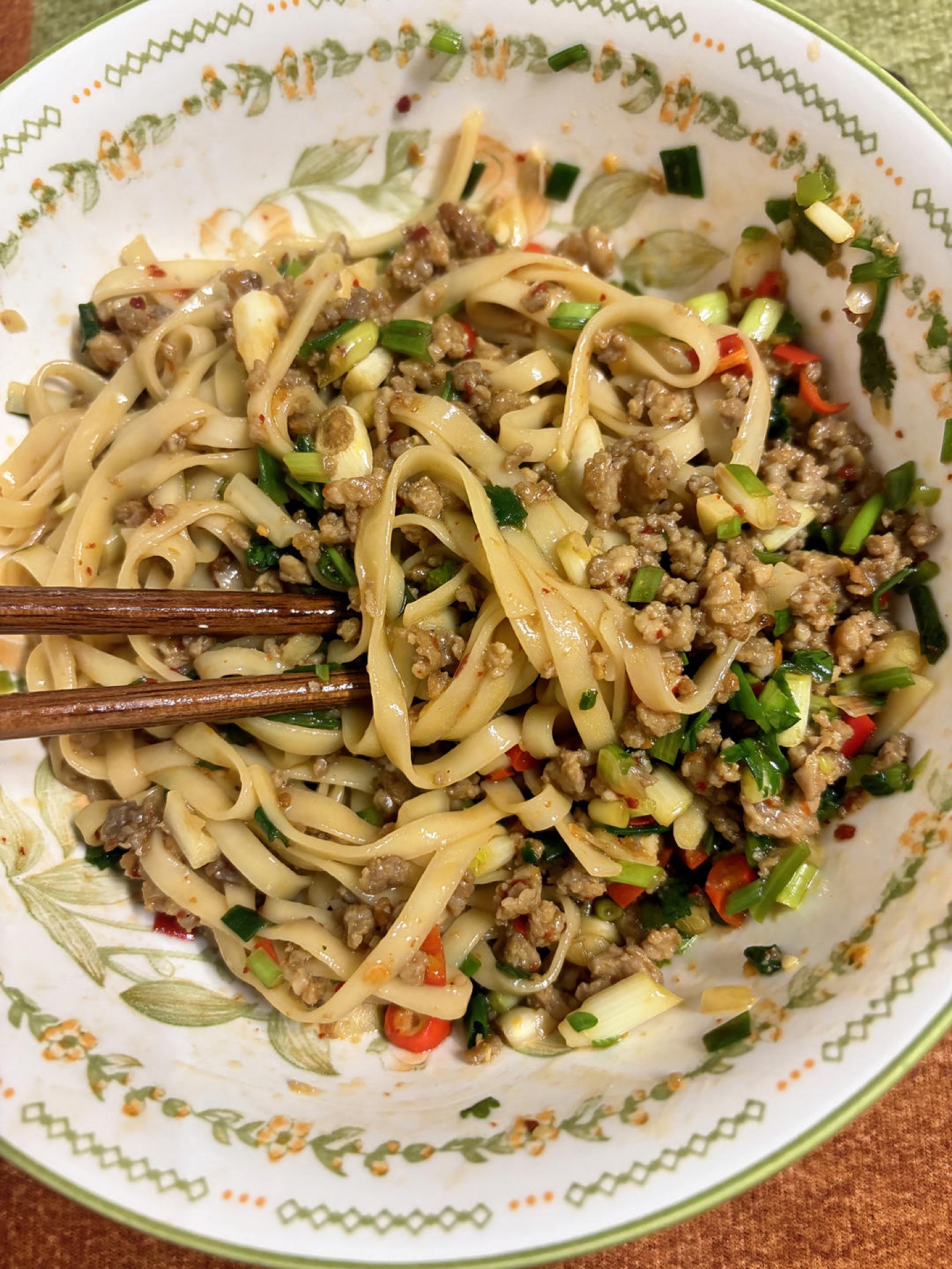
Classic zhajiangmian can take an hour or more, with a fermented bean paste sauce cooked down low and slow. This version flips that on its head. The pork is stir-fried with chili powder, soy sauce, and white pepper until the fat renders and the edges caramelize, then spooned over noodles with a base of raw aromatics and a splash of hot water. The result is bright, punchy, and deeply savory — the kind of bowl you make when you want dinner on the table in half an hour and still want it to taste like a noodle shop made it.
If you have ever ordered zhajiangmian at a restaurant and wondered why yours never tastes the same, the answer is usually in the sauce-to-noodle ratio and the freshness of the aromatics. Here, the sauce is generous — “炸酱管够,” as the saying goes, plenty of fried sauce — and the garlic and scallion go in raw, blooming in the residual heat of the noodles. That contrast between hot, oily sauce and cool, sharp aromatics is what makes this dish sing.
What Is Fried Sauce Noodles?
Fried sauce noodles, known in Mandarin as zhajiangmian (炸酱面), is a northern Chinese noodle dish built on a savory, salty sauce made from ground meat stir-fried with fermented bean paste or soy-based seasonings. The name breaks down simply: zhà (炸) means “fried,” jiàng (酱) means “sauce” or “paste,” and miàn (面) means “noodles.” Despite the “fried” in the name, the sauce is not deep-fried — it is stir-fried until the meat renders and the paste darkens, which is where the deep, caramelized flavor comes from.
The dish is most closely associated with Beijing, where it is a beloved everyday meal and a point of regional pride. Traditional Beijing versions use a fermented soybean paste called huangjiang, cooked slowly with diced pork belly until the sauce turns glossy and thick, then served over hand-pulled noodles with a colorful array of fresh vegetable toppings called cai ma. This quick version keeps the spirit of the dish — savory pork, springy noodles, fresh aromatics — but swaps the long simmer for a fast stir-fry, making it weeknight-friendly without losing the essential character.
The key to a good fried sauce noodle bowl is balance: the sauce should be salty and rich, but the noodles and fresh aromatics should keep it from becoming heavy. A splash of hot water loosens the base so the sauce coats every strand instead of clumping at the bottom of the bowl.
If you enjoy this style of noodle, there are several close cousins worth trying. Each one takes the same fried-sauce idea in a slightly different direction, and they are all built for the same kind of fast, satisfying meal.
For a version that leans on earthy mushrooms for depth, try these mushroom pork fried sauce noodles, where shiitake adds a savory, almost meaty richness to the sauce.
1Mushroom Pork Fried Sauce Noodles (Zhajiangmian)A comforting homestyle noodle dish featuring diced pork, earthy shiitake mushrooms, and fluffy eggs in a savory soybean sauce. A family favorite that’s ready in 30 minutes.Check out this recipe
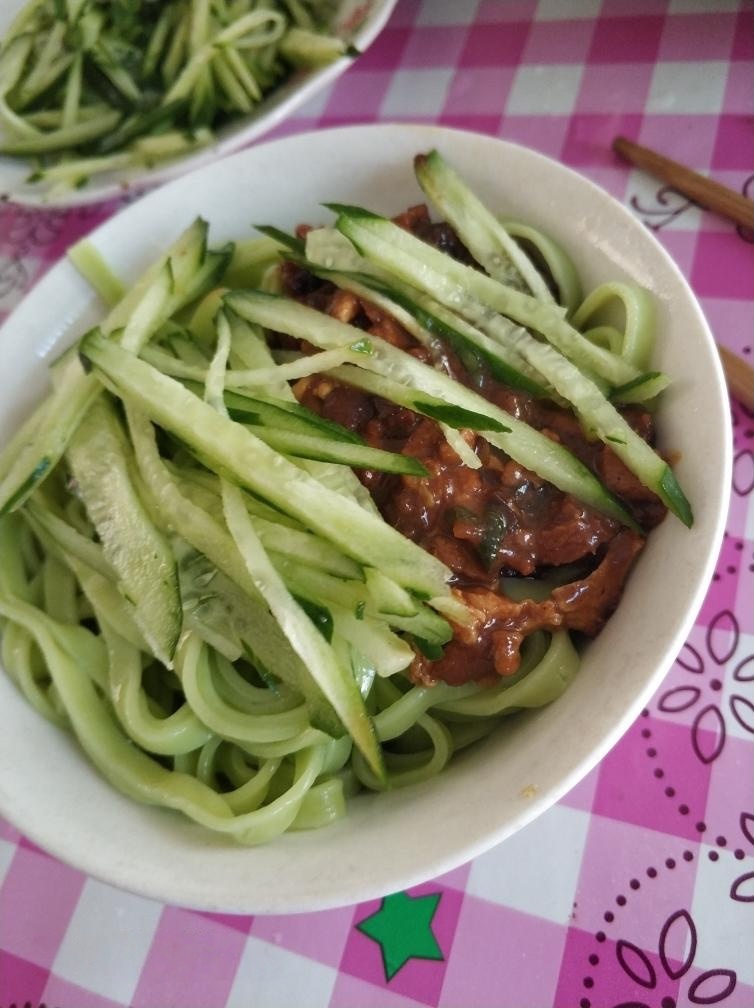
If you want the classic template with a slightly more traditional sauce, this zha jiang mian walks through the essential technique step by step.
2Easy Zha Jiang Mian (Fried Sauce Noodles)A quick, homestyle version of the classic Chinese Zha Jiang Mian. This recipe features a savory pork meat sauce enriched with soybean paste, sweet bean paste, and a secret touch of tomato for balance. Perfect for a weeknight dinner.Check out this recipe
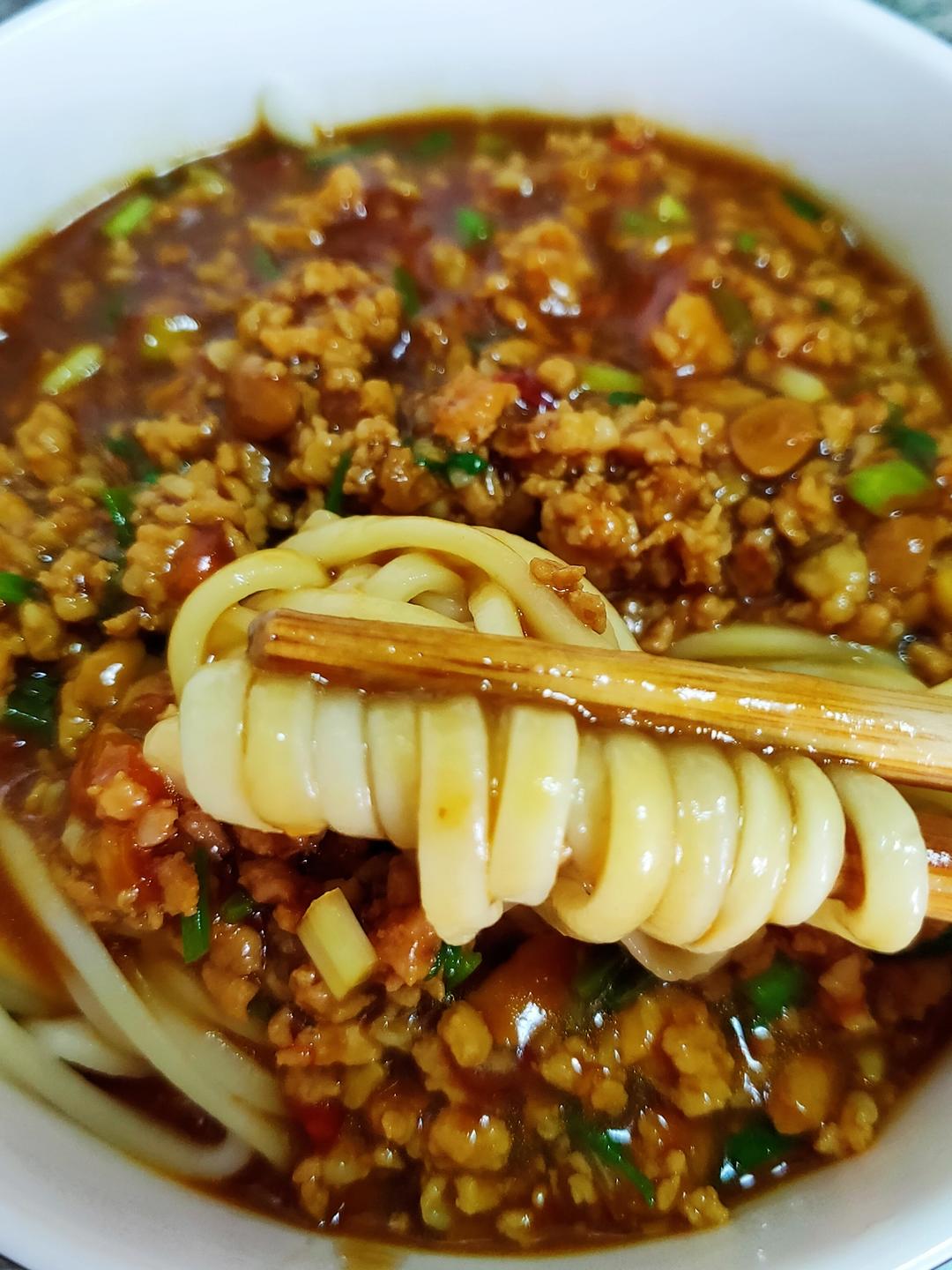
And for the full Beijing-style experience with the traditional vegetable toppings, this old Beijing zha jiang mian is the one to make when you have a little more time.
3Old Beijing Fried Sauce Noodles (Zha Jiang Mian)An authentic recipe for Old Beijing Zha Jiang Mian, featuring hand-diced pork belly rendered in its own fat and simmered with a blend of soybean pastes. A savory, rich classic.Check out this recipe
Ingredient Notes
The ingredients here are short and simple, but each one earns its place. Ground pork shoulder is the star: it has just enough fat to render and keep the sauce from turning dry, which is the single biggest difference between a good fried sauce and a sad one. If you can only find lean ground pork, add a teaspoon of neutral oil to the wok to compensate.
Chili powder brings color and gentle heat. Use a fine, bright red chili powder rather than a smoky or coarse one — the goal is a warm glow, not a campfire. Light soy sauce provides the salt and umami backbone; dark soy sauce would muddy the color here, so stick with light. Oyster sauce adds a rounded, briny sweetness that deepens the base, while white pepper gives a clean, sharp warmth that black pepper cannot match in this context.
The aromatics — garlic, scallion, and bird’s eye chili — go in raw at the bottom of the bowl. They are not cooked, and that is intentional. The heat of the noodles and sauce gently warms them, releasing their fragrance without dulling their bite. MSG is optional but recommended; a small pinch amplifies the meaty, savory notes and is a standard move in Chinese home cooking. Cilantro is entirely optional, and if you are one of those people who tastes soap, leave it out without guilt.
Ingredients
Here is what you will need to make this quick fried sauce noodles recipe. The list is short, and most of it is probably in your pantry already.
- 400 g pork shoulder, ground (slightly fatty)
- 1 tbsp fine chili powder
- 2 tbsp light soy sauce, plus more to taste
- 1/2 tbsp oyster sauce
- 1/4 tsp white pepper
- 1/4 tsp MSG (optional)
- 1 serving fresh or dried wheat noodles
- 6 cloves garlic, minced
- 6 bird’s eye chilies, sliced
- 2 scallions, chopped
- 1 handful cilantro (optional)
For the noodles, fresh wheat noodles give the best springy chew, but dried noodles work perfectly well. If you are unsure which style to buy, this guide to types of Chinese noodles breaks down the differences between fresh, dried, and alkaline noodles so you can pick the right one for the texture you want.
Equipment Needed
You do not need much for this recipe, which is part of its appeal. A wok is ideal because its high, sloped sides make stir-frying ground meat fast and easy, and the wide surface helps the fat render quickly. A large skillet works in a pinch, but you may need to cook the pork in two batches to avoid steaming it.
Beyond the wok, you need a cutting board and knife for the aromatics, a pot for boiling the noodles, and a slotted spoon or spider to lift the noodles out without dragging along too much starchy water. A wok spatula — the flat, shovel-shaped kind — is genuinely useful here, because the recipe calls for adding water in “four flat scoops” to loosen the base. If you do not have one, a measuring cup works fine: four scoops is roughly 1/2 cup of hot water.
Why This Recipe Works
The genius of this dish is its layering. Instead of cooking everything together into a single homogeneous sauce, the recipe builds flavor in distinct stages. The pork is seasoned and fried until the fat renders and the chili powder blooms in the oil, creating a rich, aromatic sauce. Meanwhile, the raw garlic, scallion, chili, soy sauce, and oyster sauce wait at the bottom of the serving bowl as a “base.”
When the hot noodles and sauce hit that base, the residual heat gently wakes up the aromatics, and the splash of hot water turns everything into a glossy, clinging sauce. This two-part approach means you get both cooked, caramelized depth from the pork and fresh, pungent brightness from the raw aromatics — the contrast that makes restaurant noodle bowls taste so alive.
The technique also solves a common problem: dry, clumpy fried sauce. By loosening the base with hot water before the noodles go in, the sauce stays fluid enough to coat every strand evenly. And because the pork shoulder has a little fat, the sauce stays moist rather than turning chalky. It is a small detail that makes a big difference in the final bowl.
Prep & Mise en Place
Before you turn on the heat, get everything ready. This recipe moves fast once the wok is hot, so having your ingredients prepped and within arm’s reach is the difference between a smooth cook and a scramble.
Start by preparing the pork. If you are grinding your own, cut the shoulder into cubes and run it through a grinder, or ask your butcher to grind it for you — there is no need to hand-chop. Season the ground pork with a pinch of salt and set it aside. Mince the garlic, slice the bird’s eye chilies, and chop the scallions. If using cilantro, pick the leaves and set them aside.
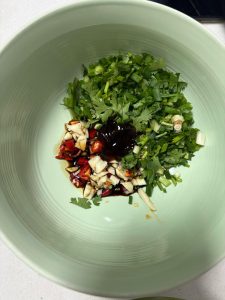
In the bowl you will serve from (or a large heatproof bowl), combine the light soy sauce, oyster sauce, MSG, garlic, scallion, and chili. This is your base. Do not add salt here — the soy and oyster sauce are salty enough, and the pork is already seasoned. Have your noodles measured and ready, and put a pot of water on to boil. Once the water is rolling, you are ready to cook.
Cooking Process
Step 1 — Prep the Pork
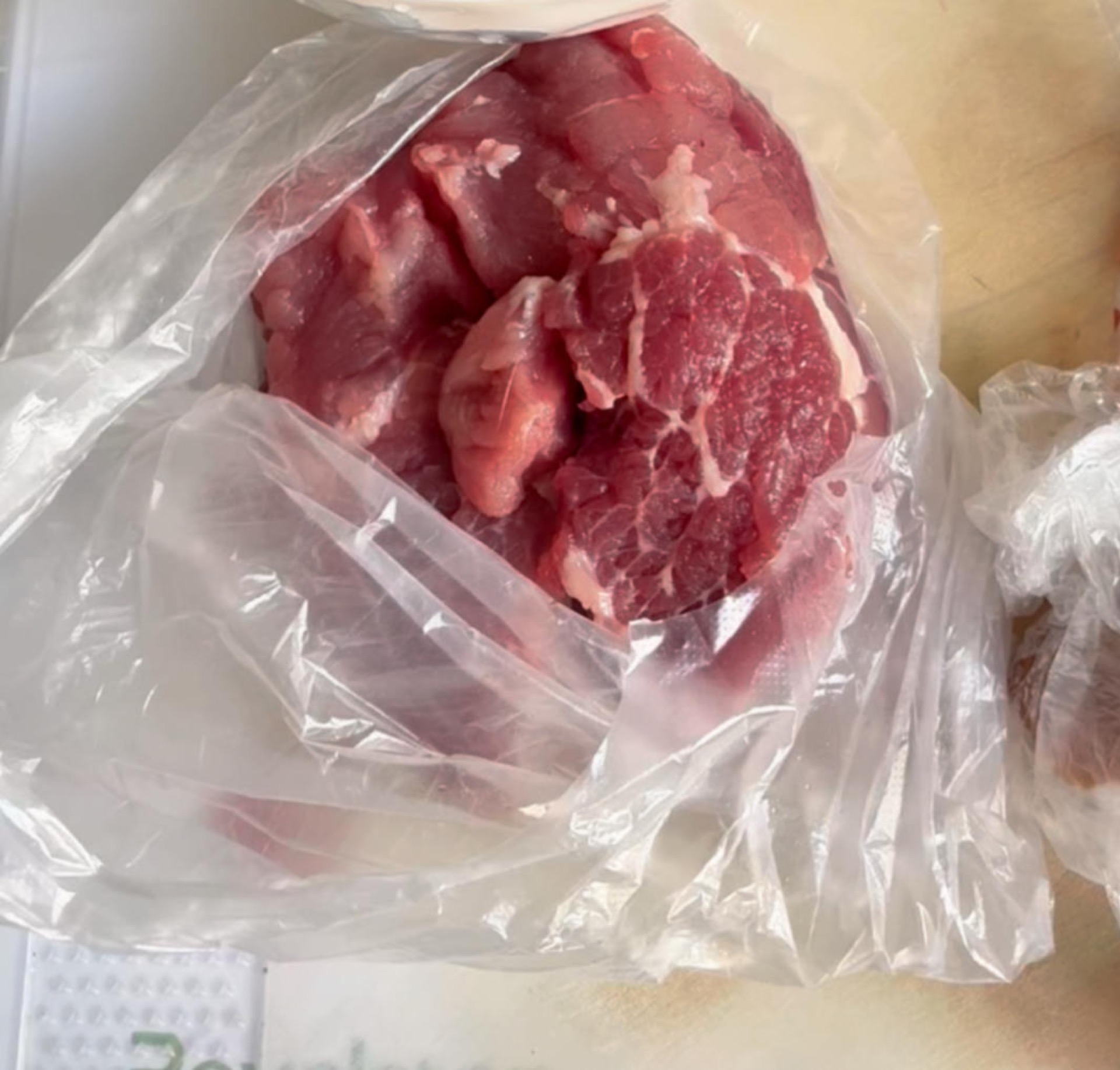
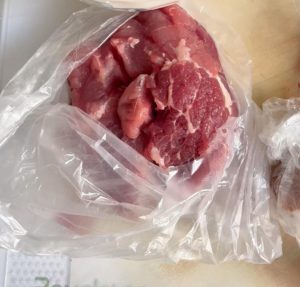
Prepare the pork shoulder, which has a little fat and is the best choice for fried sauce because the sauce does not turn dry. The ground meat can be minced in a grinder or handled by the butcher, no hand chopping needed, saving effort.
Step 2 — Fry the Meat
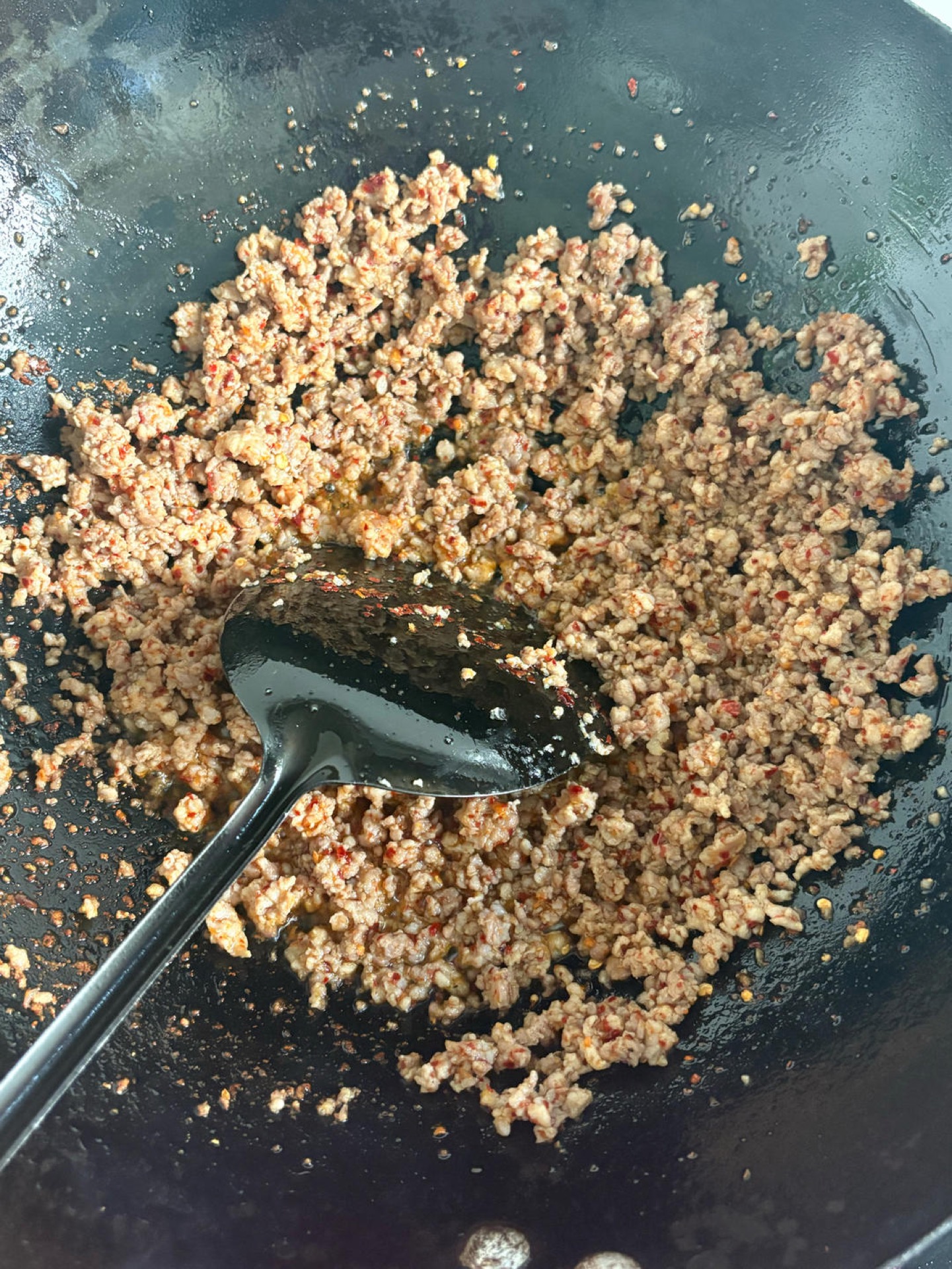
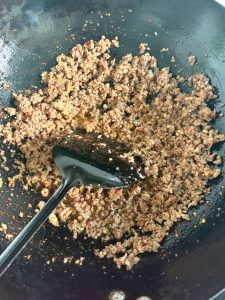
Heat the wok with cool oil, add the ground meat seasoned ahead with a little salt, and stir-fry until the fat renders, then add the fine chili powder, light soy sauce, and white pepper.
Step 3 — Finish the Sauce
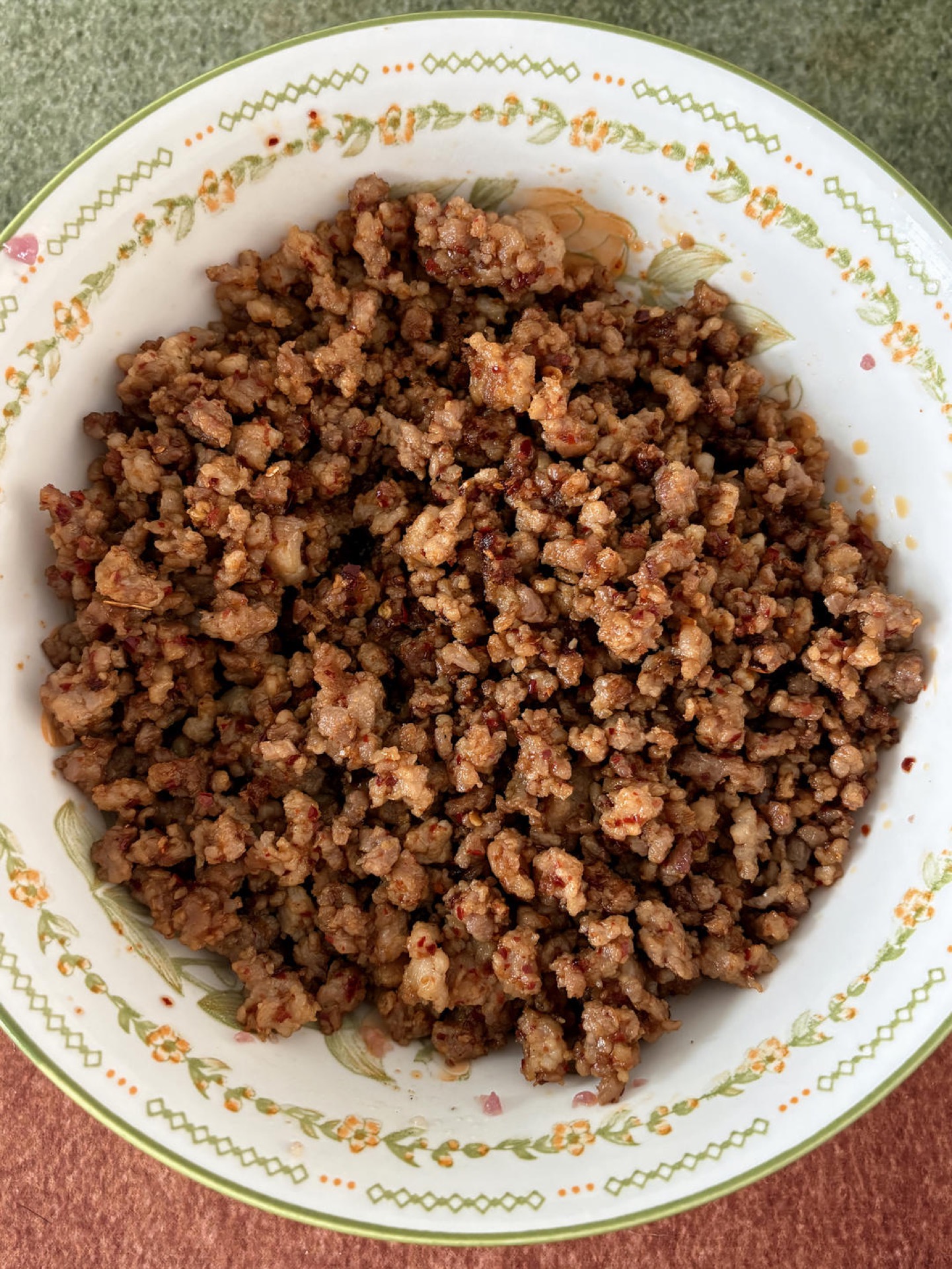
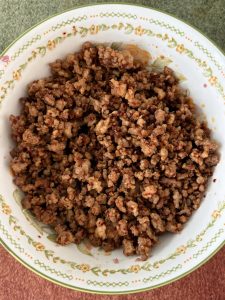
Turn to medium heat and keep stir-frying for 2 minutes, then remove from the wok, the color looks beautiful.
Step 4 — Build the Base
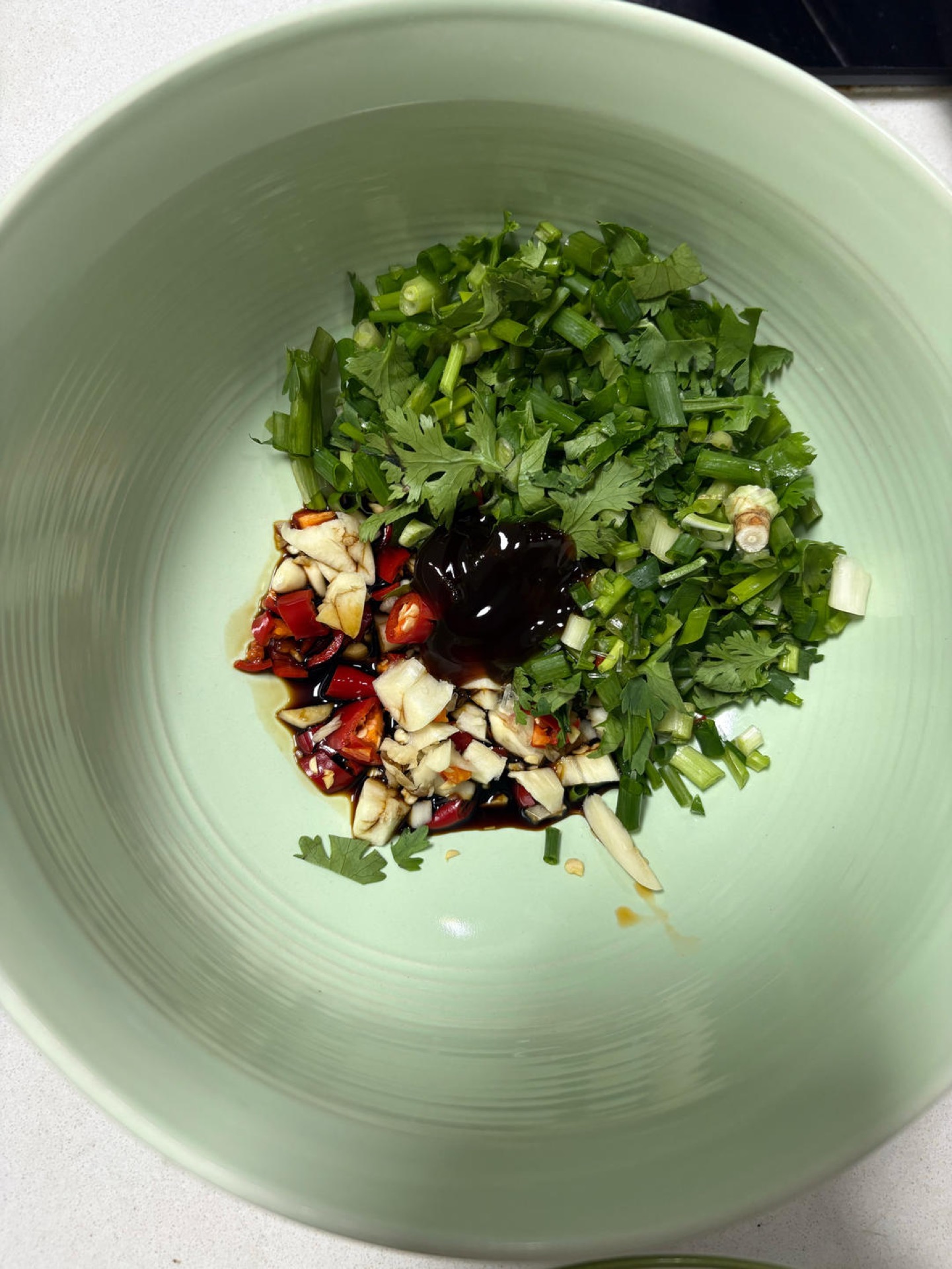
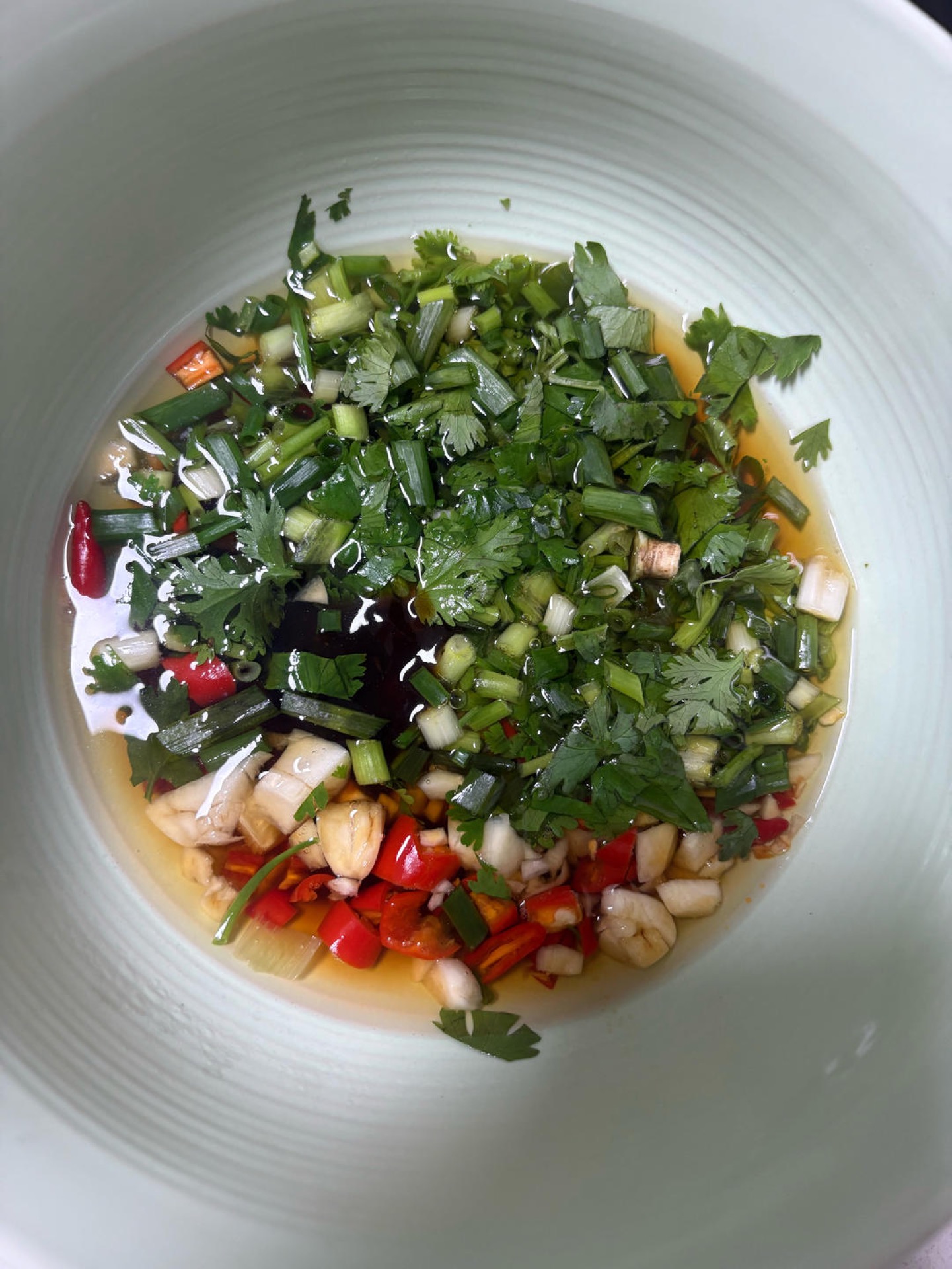
For the noodle base, use 2 tablespoons light soy sauce, half a tablespoon oyster sauce, and a little MSG, no salt. If you do not like cilantro you can leave it out, but try not to skip the chopped scallion and garlic, they bring out the flavor.
Step 5 — Loosen the Base
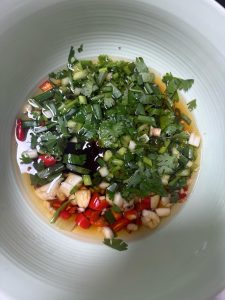
When the water boils, use the wok spatula to add four scoops of water to soak the base ingredients first.
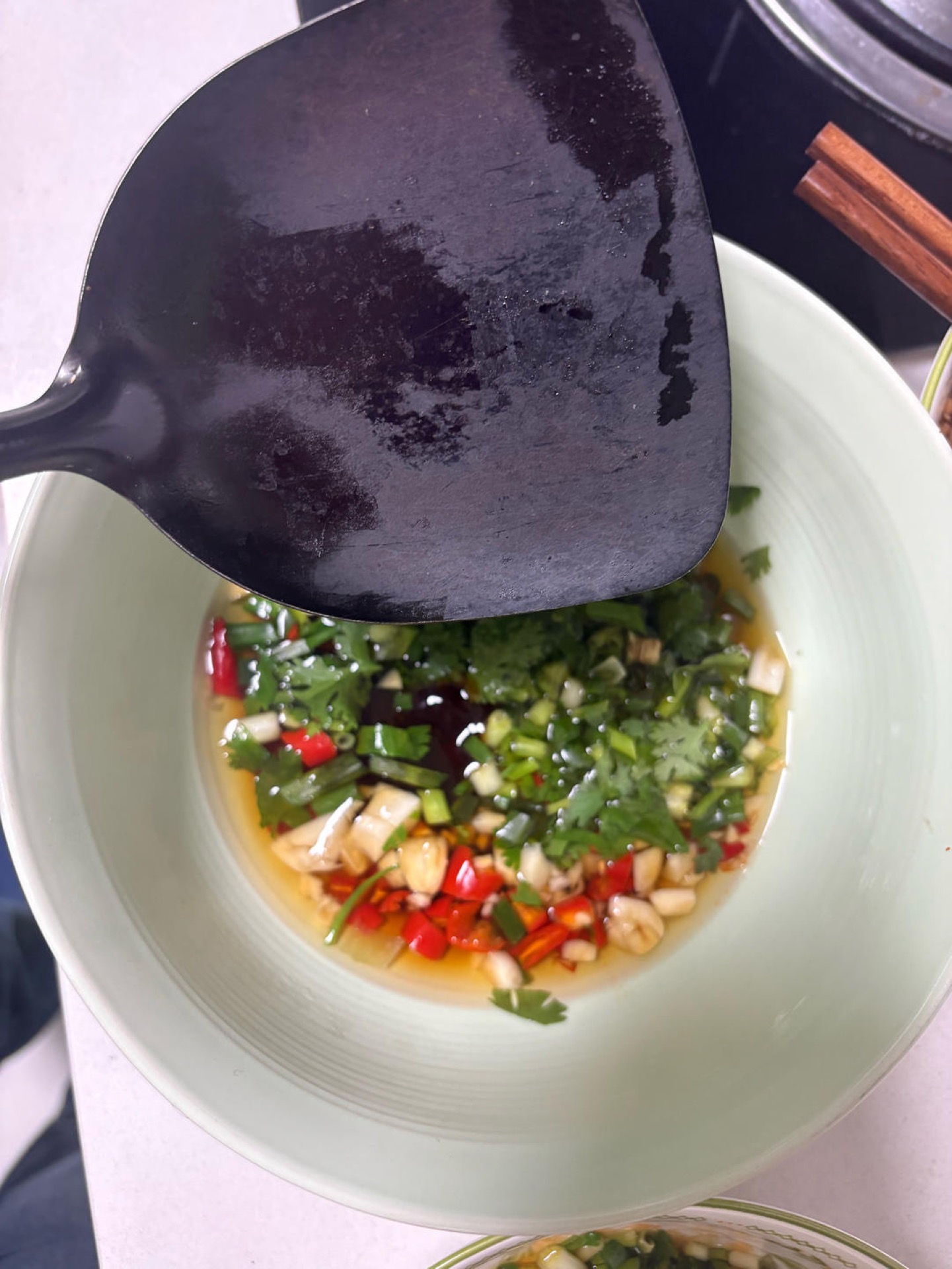
Step 6 — Add the Water
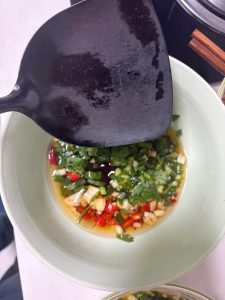
With this kind of wok spatula, just add four flat scoops of boiling water.
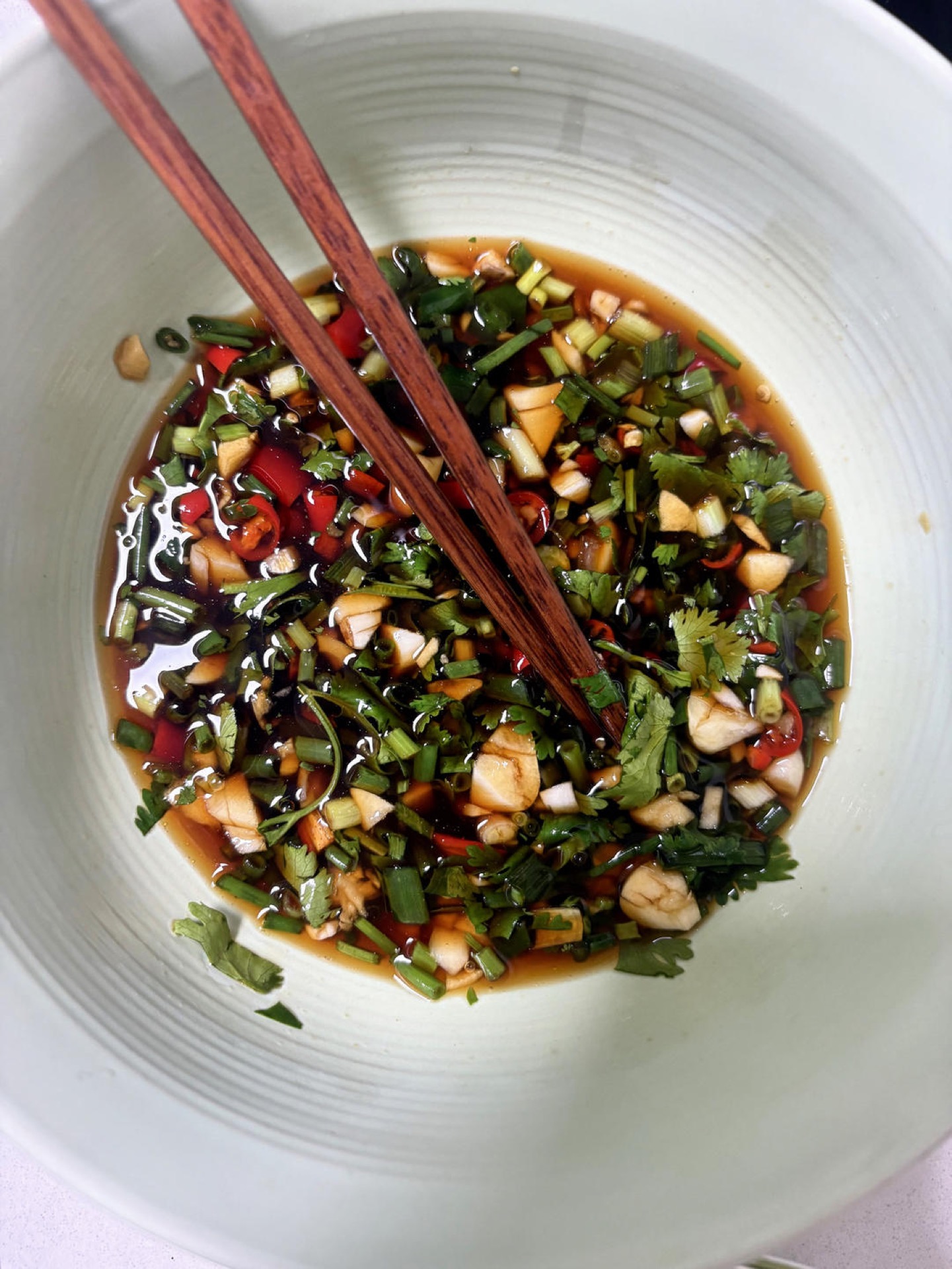
Step 7 — Stir It In
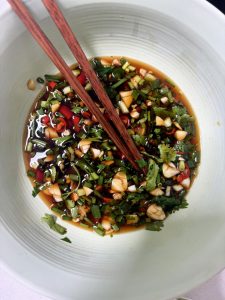
After adding the water, stir it evenly.
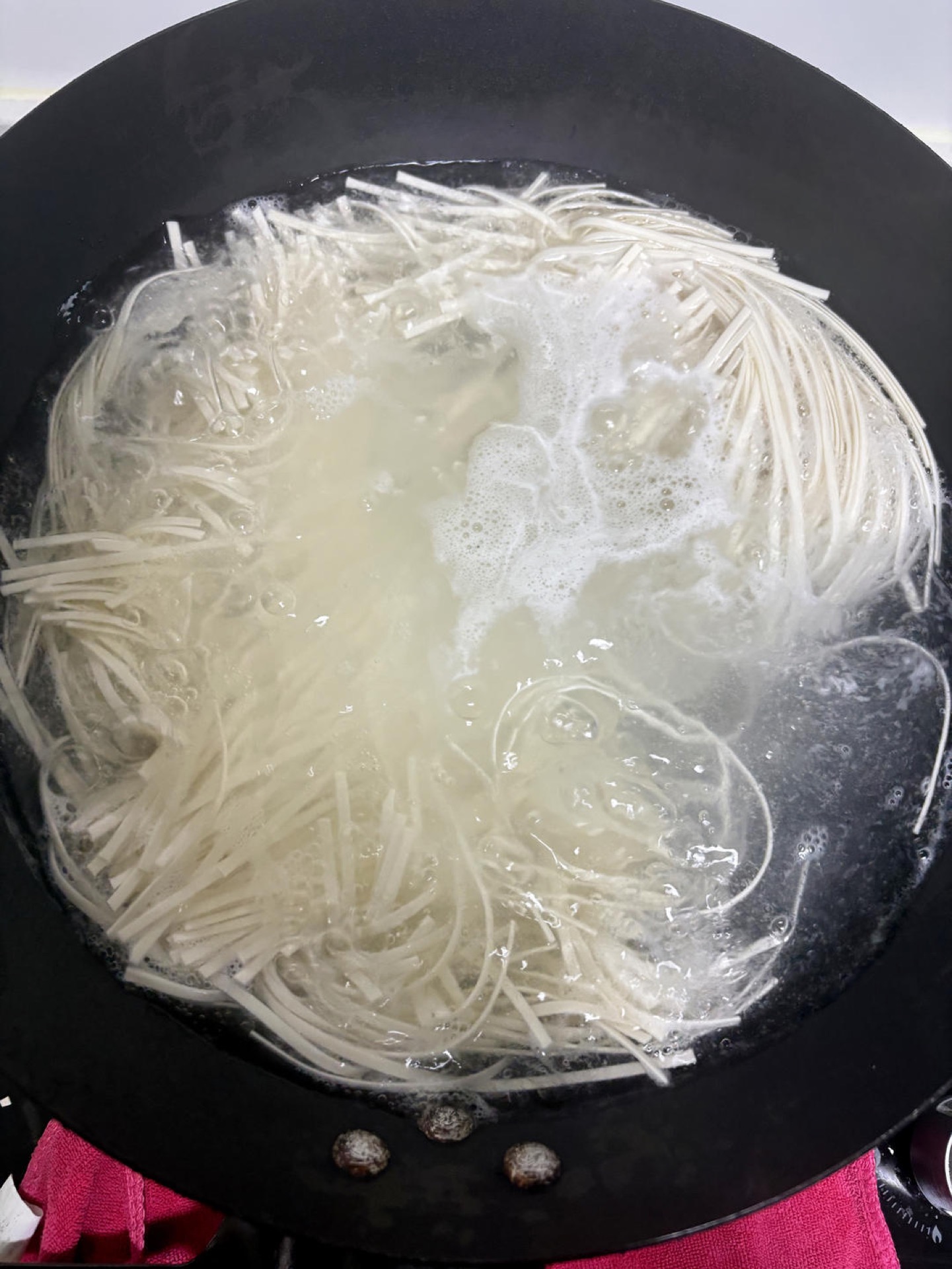
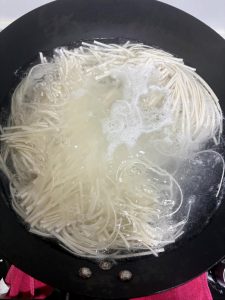
Step 8 — Cook the Noodles
Add the noodles, according to your appetite, and add a little salt here for seasoning.
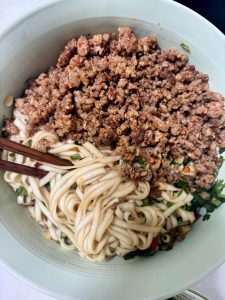
Step 9 — Plate the Noodles
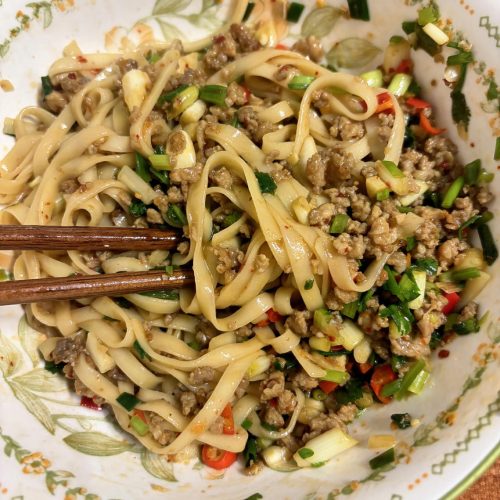
Lift the noodles out and lay them over the base, with plenty of fried sauce.
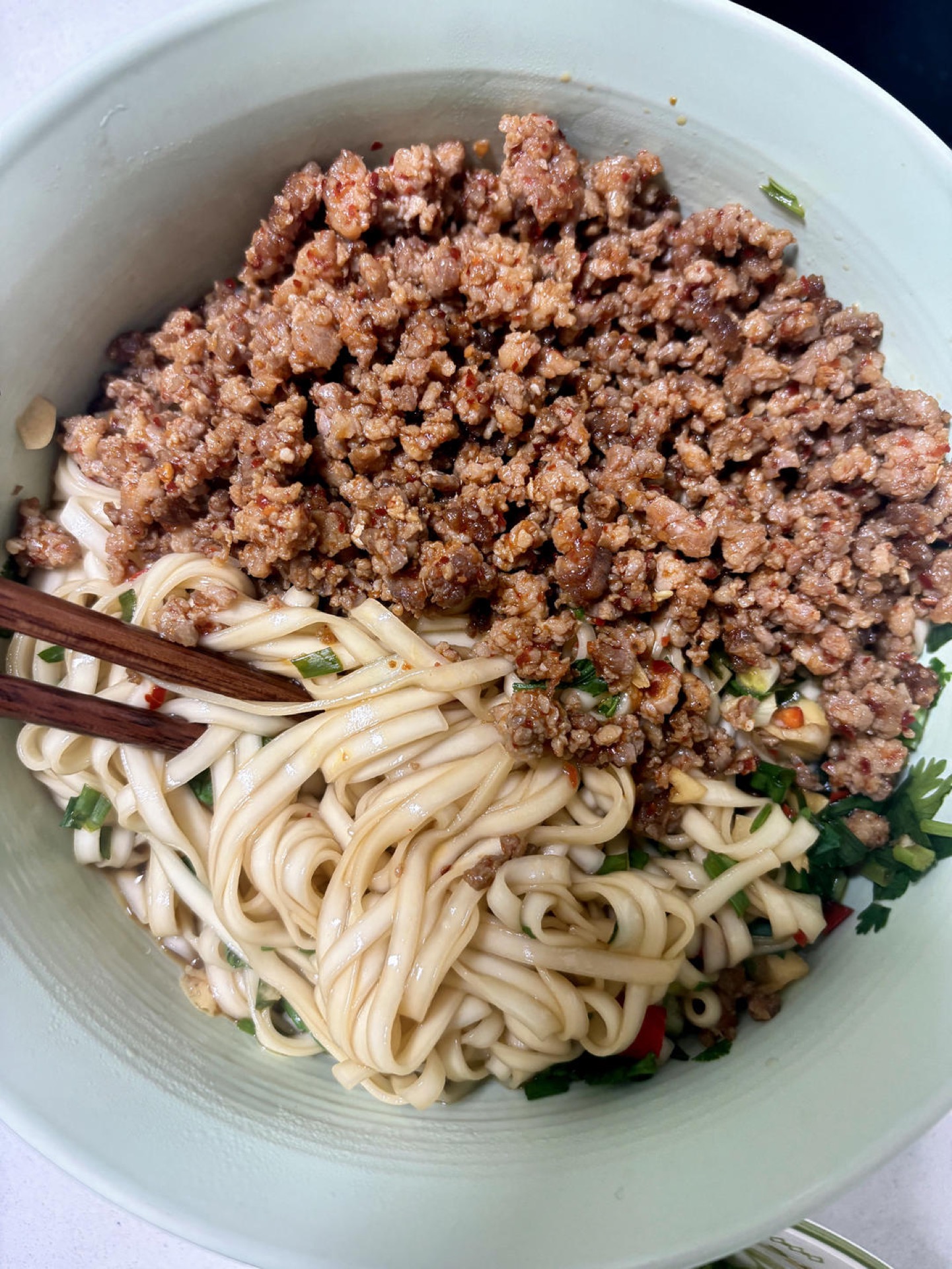
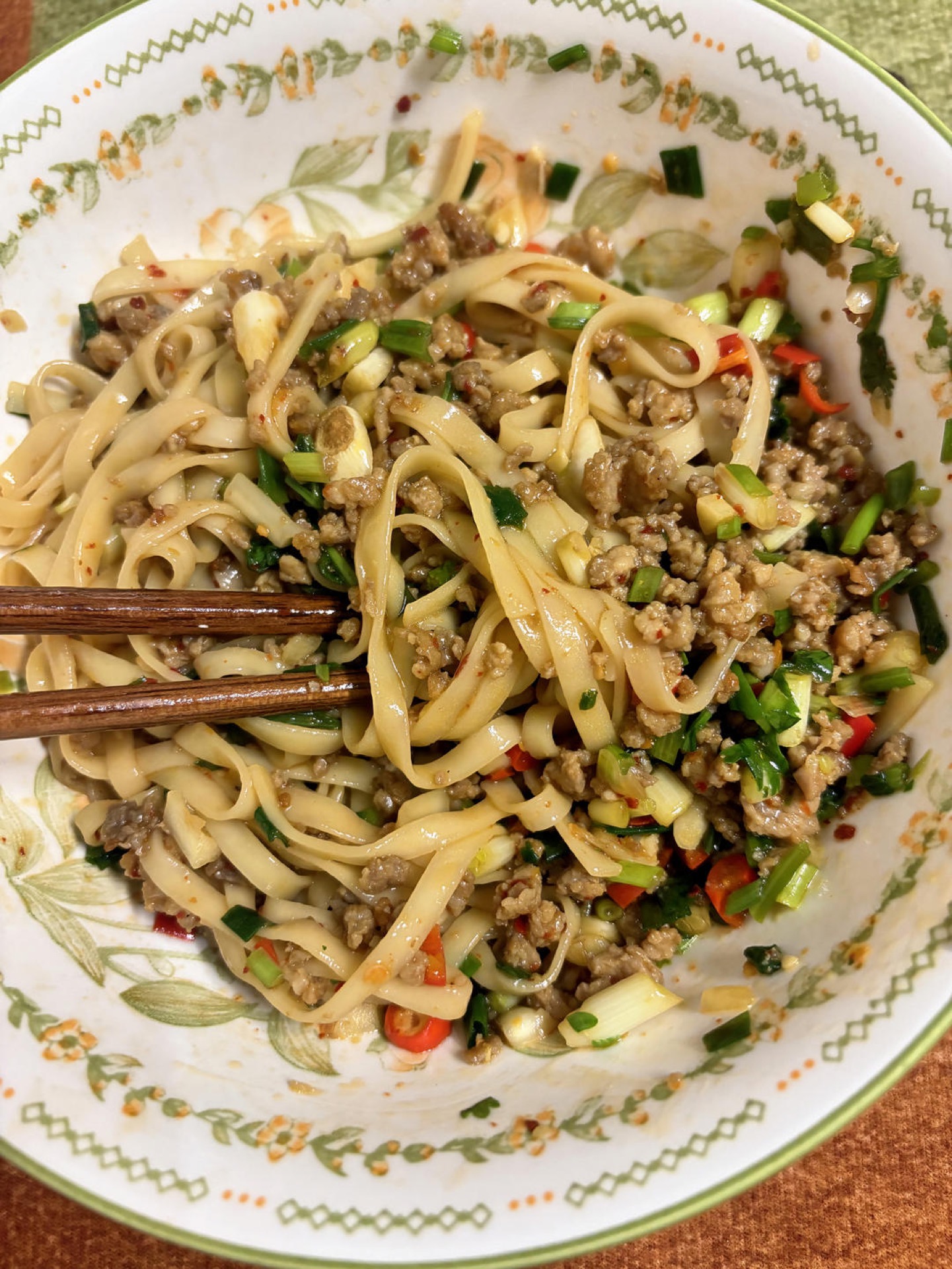
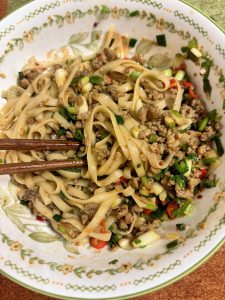
Step 10 — Toss and Serve
Toss everything together evenly and dig in. Quick, tasty, healthy, and the flavor is no less than a noodle shop’s.
Common Mistakes When Making Fried Sauce Noodles
1. Using lean ground pork. Lean pork dries out and turns crumbly, leaving the sauce grainy and dull. The fix: choose pork shoulder with visible fat, or add a teaspoon of neutral oil to the wok before frying to keep the meat moist.
2. Burning the chili powder. Chili powder scorches quickly in a hot wok, turning bitter and acrid. The fix: add it after the meat has rendered and the wok has cooled slightly, and keep the heat at medium rather than high.
3. Skipping the hot water. Without that splash of hot water, the base stays thick and pasty, and the sauce clumps at the bottom of the bowl instead of coating the noodles. The fix: add about 1/2 cup of hot water to the base and stir before the noodles go in.
4. Overcooking the noodles. Soft, mushy noodles cannot hold up to the sauce and turn the whole bowl into a sticky mess. The fix: cook the noodles just until they are springy, then drain and toss immediately.
5. Omitting the raw aromatics. The garlic and scallion are not a garnish — they are the fresh counterpoint that balances the rich pork. The fix: never skip them, and add them raw to the base rather than cooking them into the sauce.
6. Adding salt to the base. The soy sauce and oyster sauce already carry plenty of sodium, and the pork is seasoned. The fix: taste before you salt, and if anything, add a splash more soy sauce rather than straight salt.
Variations
One of the best things about fried sauce noodles is how adaptable they are. Once you have the basic technique down, you can swap ingredients freely to match what is in your fridge or what you are craving.
Mushroom version: Replace half the pork with finely chopped shiitake mushrooms for an earthy, slightly lighter sauce. This is a great option if you want to stretch the meat or go partially meatless. Our mushroom pork fried sauce noodles show how well the two ingredients play together.
Extra vegetables: Traditional Beijing zhajiangmian is served with a spread of fresh vegetable toppings — shredded cucumber, blanched bean sprouts, radish, and edamame. Adding a handful of any of these turns the bowl into a more complete meal and adds crunch.
Different protein: Ground chicken or turkey works, though you will want to add a little oil since both are leaner than pork. For a beefy twist, try this minced pork noodles variation, which uses a similar sauce-building technique with a slightly different flavor profile.
Spicier or milder: Adjust the bird’s eye chilies to your tolerance. For a milder bowl, use just one or two and remove the seeds. For a serious kick, add a spoonful of chili oil at the table.
Frequently Asked Questions
Can I use dried noodles instead of fresh? Yes. Dried wheat noodles work perfectly — just cook them according to the package directions until they are just tender, then drain and toss with the sauce. Fresh noodles have a slightly springier chew, but the difference is minor.
Do I really need MSG? No, it is optional. That said, a small pinch adds a savory depth that is hard to replicate otherwise, and it is a standard ingredient in Chinese home cooking. If you prefer to avoid it, the dish will still taste good without it.
How do I keep the sauce from clumping? The hot water is the key. Adding about 1/2 cup of hot water to the base before the noodles go in loosens everything into a glossy sauce that coats evenly. Also, toss the noodles and sauce together thoroughly rather than just pouring the sauce on top.
Can I make this ahead of time? You can cook the pork sauce up to 3 days ahead and store it in the refrigerator. Reheat it in a wok or skillet with a splash of water before tossing with freshly cooked noodles. The raw aromatics should be prepared fresh.
Is this dish very spicy? It has a gentle warmth from the chili powder and fresh chilies, but it is not overwhelmingly hot. You can easily dial the heat up or down by adjusting the amount of bird’s eye chili you use.
How to Serve
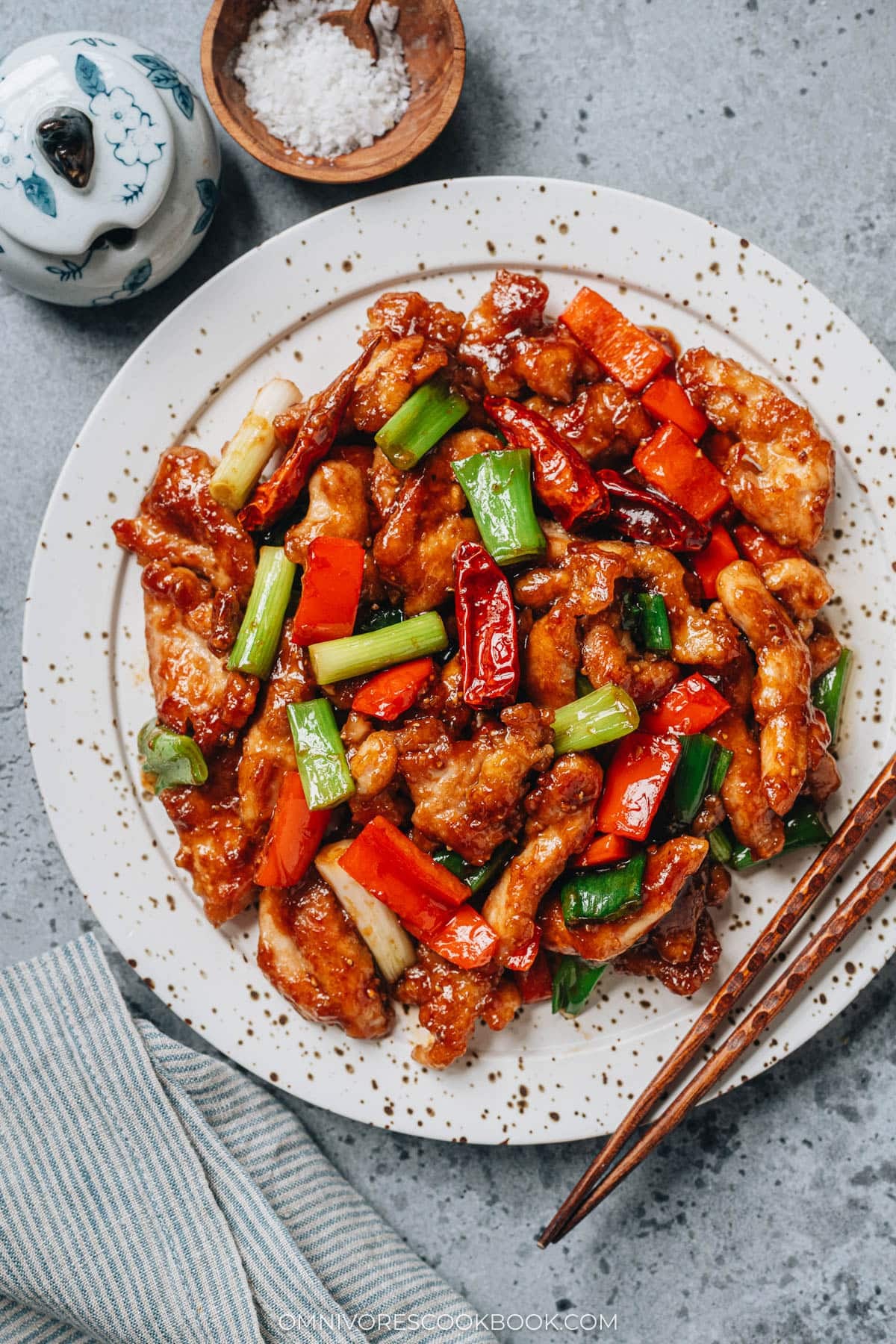
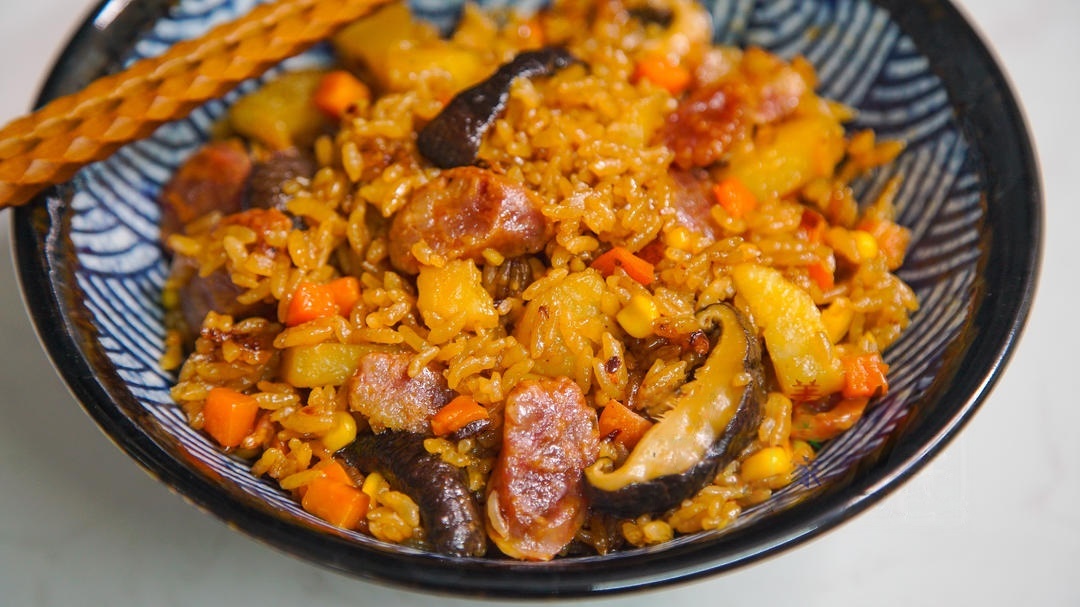
Fried sauce noodles are a complete meal on their own, but they pair beautifully with a few simple sides. A crisp, quickly stir-fried vegetable is the classic accompaniment — something like this stir-fried luffa adds a fresh, juicy contrast to the rich pork sauce. If you want to round out the table with another protein, a plate of Mongolian chicken stir fry brings a sweet-savory note that complements the noodles without competing. And for a heartier spread, a bowl of Chinese sausage and potato rice turns the meal into a full northern-style feast.
Storage & Reheat
The pork sauce stores well. Keep it in an airtight container in the refrigerator for up to 3 days, or freeze it for up to 2 months. To reheat, warm it in a wok or skillet over medium heat with a splash of water to loosen it back to a glossy consistency. Noodles are best cooked fresh, but if you have leftovers, store them separately from the sauce and reheat them briefly in boiling water or a hot wok.
Do not store the assembled bowl with the raw aromatics mixed in — the garlic and scallion will lose their brightness and turn sharp. Keep the base components separate and assemble fresh for the best flavor.
Allergen Notice
This recipe contains soy (soy sauce), wheat (noodles, soy sauce), and shellfish (oyster sauce). If you are avoiding shellfish, substitute the oyster sauce with an additional tablespoon of soy sauce plus a pinch of sugar. For a gluten-free version, use tamari and gluten-free noodles.
Nutrition Disclaimer
Nutrition information is calculated using an ingredient database and should be considered an estimate. In cases where multiple ingredient alternatives are given, the first listed is calculated for nutrition. Garnishes and optional ingredients are not included.
About the Author & Recipe Development
This recipe was developed by Lin for Woks of Love, a site dedicated to honest, approachable Chinese home cooking. Lin grew up watching her mother and grandmother cook northern Chinese food, and this quick fried sauce noodle recipe is a streamlined version of the bowls she ate as a child — faster than the traditional braise, but with all the same savory, satisfying character. Every recipe on the site is tested in a home kitchen with ingredients you can find at your local supermarket or Asian grocery.
Authoritative References
For safe handling and cooking of ground pork, the USDA recommends cooking to an internal temperature of 160°F (71°C). See the USDA safe minimum internal temperature chart for details. General food safety guidance on storage and reheating is available from the FDA Food Code and home food safety guidance.
Quick Fried Sauce Noodles (炸酱面): Savory Pork Sauce Over Springy

Equipment
- Wok
- Cutting Board
- Slotted Spoon
Ingredients
For the Pork Sauce
- 400 g pork shoulder ground, slightly fatty
- 1 tbsp chili powder fine
- 2 tbsp light soy sauce plus more to taste
- 1/2 tbsp oyster sauce
- 1/4 tsp white pepper
- 1/4 tsp MSG optional
For the Noodles and Base
- 1 serving fresh noodles or dried wheat noodles
- 6 cloves garlic minced
- 6 bird’s eye chilies sliced
- 2 scallions chopped
- 1 handful cilantro optional
Instructions
- Prepare the pork shoulder, which has a little fat and is the best choice for fried sauce because the sauce does not turn dry. The ground meat can be minced in a grinder or handled by the butcher, no hand chopping needed, saving effort.

- Heat the wok with cool oil, add the ground meat seasoned ahead with a little salt, and stir-fry until the fat renders, then add the fine chili powder, light soy sauce, and white pepper.

- Turn to medium heat and keep stir-frying for 2 minutes, then remove from the wok, the color looks beautiful.
- For the noodle base, use 2 tablespoons light soy sauce, half a tablespoon oyster sauce, and a little MSG, no salt. If you do not like cilantro you can leave it out, but try not to skip the chopped scallion and garlic, they bring out the flavor.
- When the water boils, use the wok spatula to add four scoops of water to soak the base ingredients first.
- With this kind of wok spatula, just add four flat scoops of boiling water.
- After adding the water, stir it evenly.
- Add the noodles, according to your appetite, and add a little salt here for seasoning.
- Lift the noodles out and lay them over the base, with plenty of fried sauce.
- Toss everything together evenly and dig in. Quick, tasty, healthy, and the flavor is no less than a noodle shop’s.












Leave a Reply