Steamed cakes were the first thing I learned to love about my parents’ restaurant kitchen — not the fancy banquet desserts, but the humble ones that steamed all morning: brown sugar cakes, date cakes, millet cakes, each one soft and warm and faintly sweet. This 红糖发糕 (brown sugar steamed cake) from xiachufang is exactly that kind of cake, and it is the easiest one I have found to make at home: milk warmed with brown sugar, an egg, flour, and yeast, poured into a pan and steamed until it puffs into a tender, golden-brown cake studded with red dates.
What makes this cake so good is the contrast between the dark, caramel-like sweetness of the brown sugar and the airy, springy crumb. Because it is steamed rather than baked, the cake stays moist and soft — closer to a Chinese mantou than to an oven cake, but sweet enough to eat on its own. It takes about an hour and a half from bowl to table, most of it rising time, and it needs no oven at all.
What Is Brown Sugar Steamed Cake (红糖发糕)?
Brown sugar steamed cake, or 红糖发糕, is a Chinese yeasted cake made from flour, milk, eggs, and brown sugar, then steamed instead of baked. The name 发糕 means “risen cake” — the yeast and a brief fermentation make the batter puff up into a soft, spongy cake with an open crumb, typically studded with red dates or other dried fruit on top.
Unlike Western steamed puddings, which are dense, 发糕 is light and springy, more like a very tender bread. The brown sugar gives it a deep caramel color and a gentle molasses sweetness, while the milk and egg keep the crumb soft. It is a staple breakfast and snack cake across China, eaten warm with tea or milk, and it is the kind of cake that proves you do not need an oven to bake.
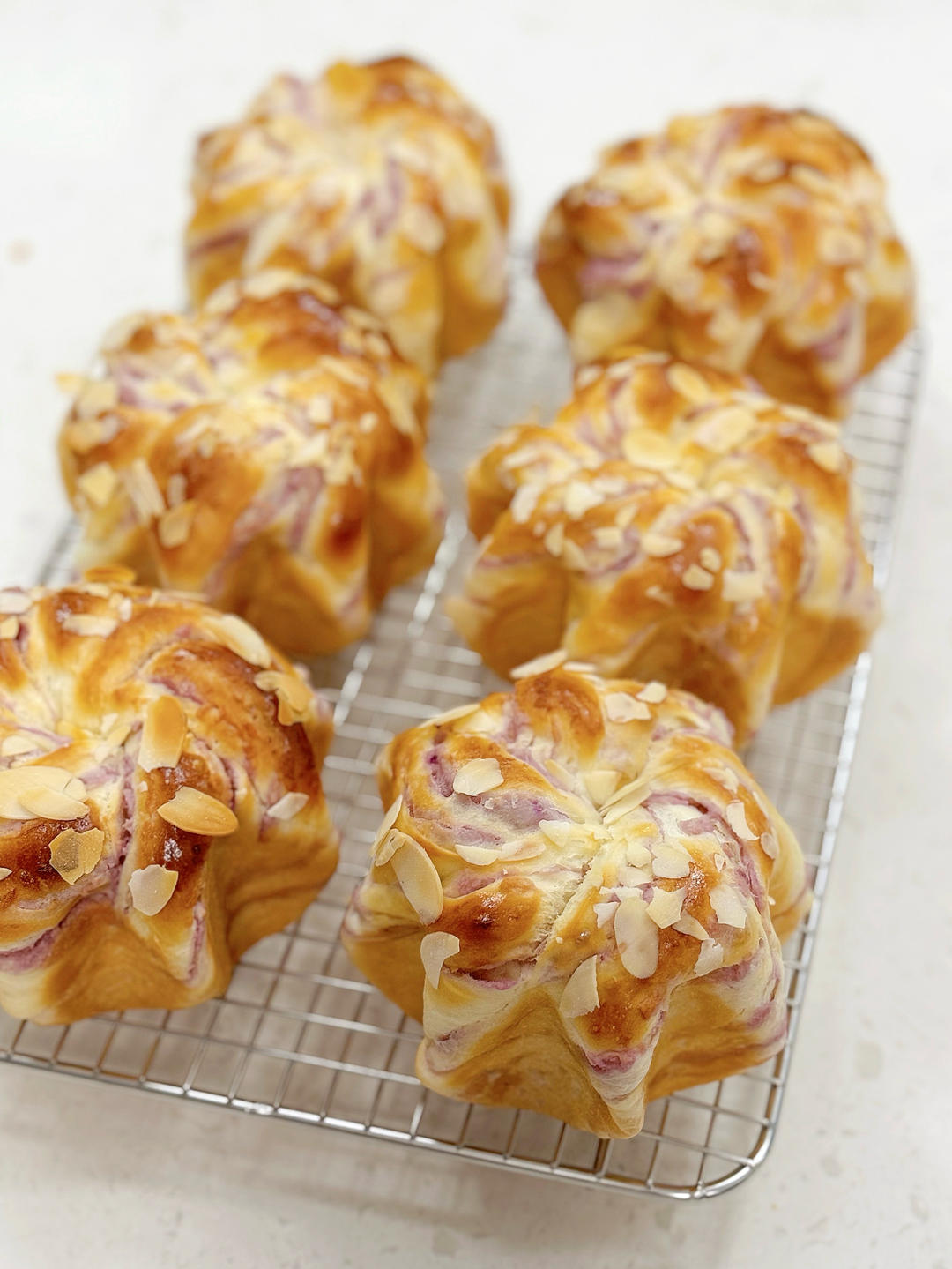
If you enjoy soft, steamed Chinese bakes, my taro paste star buns are another gentle steamed treat with a sweet filling.
1Taro Paste Star Buns (Nai Xiang Yu Ni Xing Xing Bao): StarsTaro paste star buns: a soft milk dough wrapped around sweet taro paste, pinched into five-point stars, proofed until puffed, brushed with egg, and baked golden – the pull-apart bakery favorite at home.Check out this recipe
Why This Recipe Works
- Brown sugar is melted into warm milk first. Dissolving the sugar completely ensures an even color and sweetness with no gritty crystals in the cake.
- The milk must cool below 38°C (100°F) before the yeast goes in. The recipe is explicit: hot milk would kill the yeast and leave you with a flat, dense cake.
- Eggs and flour make a pourable, glossy batter. A quick high-speed stir (or a few extra minutes with chopsticks) blends everything until no lumps remain.
- One rise to eight-tenths full is enough. The batter puffs in the pan, then again in the steamer, into a soft, springy crumb.
- Steaming from cold water gives a gentle, even rise. Starting the cake in cold water and steaming for 30 minutes cooks it through without a hard crust.
Equipment Needed
- 8-inch (20 cm) round cake pan or steamer dish
- Parchment paper or oil for the pan
- Large steamer with a lid
- Mixing bowl and whisk (or electric beaters)
- Serrated knife for slicing
Ingredients
- 320 g (2.5 cups) all-purpose flour (普通面粉)
- 245 g (1 cup) milk, divided
- 100 g (1/2 cup) brown sugar (红糖)
- 2 large eggs
- 4 g (1 tsp) instant yeast (酵母粉)
- 6 red dates (红枣), halved and pitted, for the top
Ingredient Notes
Brown sugar (红糖). Chinese brown sugar is darker and more molasses-forward than light brown sugar; if using Western brown sugar, use the dark kind for a deeper color. The recipe calls for 100 g, which gives a pleasantly sweet but not cloying cake.
Milk temperature matters. Warm 200 g of the milk with the sugar until dissolved, then cool it to below 38°C (100°F) — the recipe warns the yeast will die in hotter liquid. The remaining 45 g of milk is used to dissolve the yeast.
Yeast. Instant yeast is stirred into the extra milk and added with the eggs and flour. Check that your yeast is fresh; old yeast is the most common reason a 发糕 fails to rise.
Red dates. Halved, pitted dates are pressed into the top before steaming. Dried cranberries, raisins, or goji berries all work as substitutes.
Prep & Mise en Place
Line an 8-inch cake pan or steamer dish with parchment paper, or grease it well, so the cake releases cleanly. Halve and pit the red dates. Warm the milk and sugar together until the sugar dissolves, then set it aside to cool — this is the step that needs patience, since the yeast cannot go in until the liquid is below 38°C (100°F). Dissolve the yeast in the remaining cold milk while you wait.
Cooking Process
Step 1 — Dissolve the Brown Sugar in Warm Milk
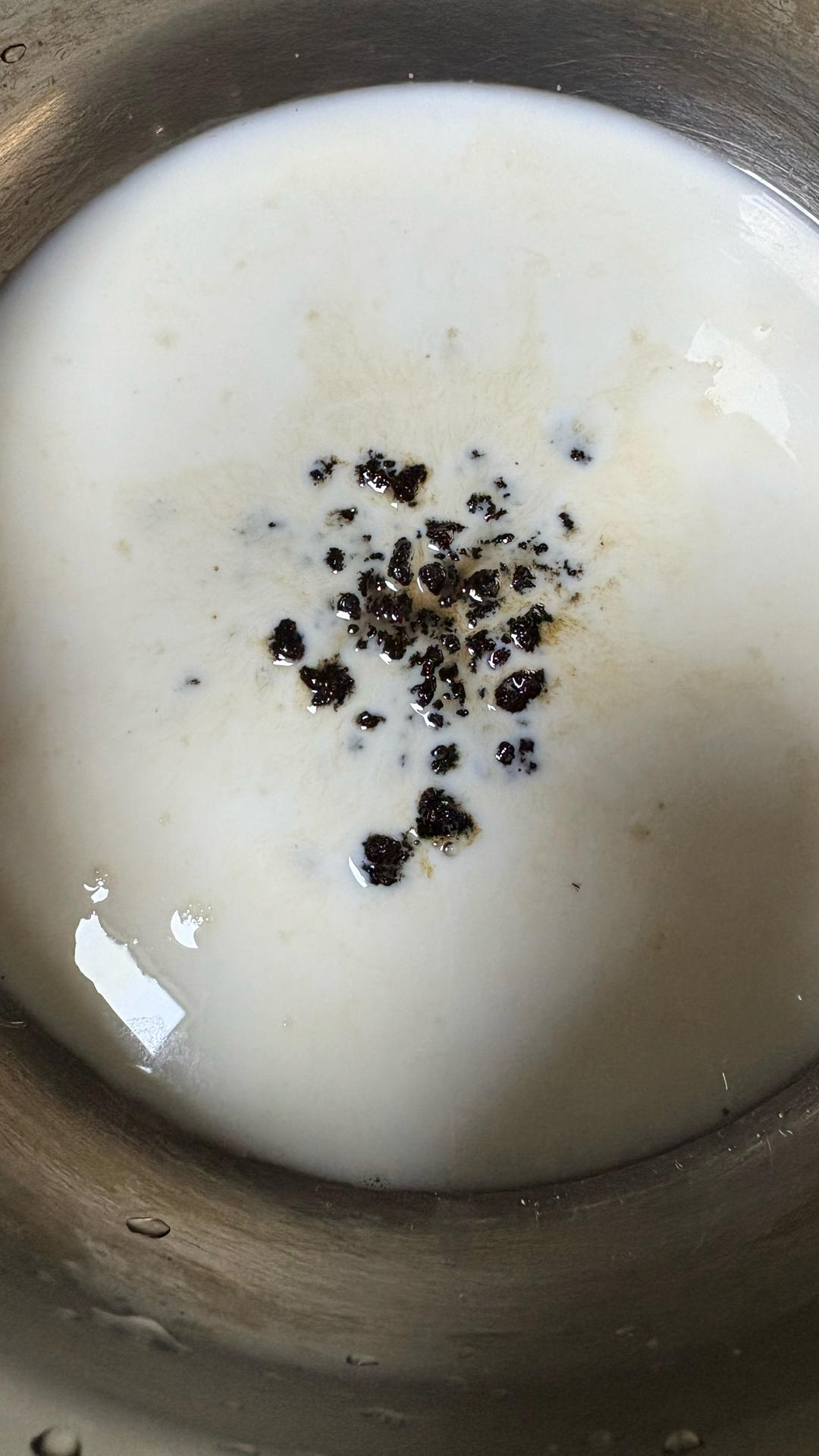
Add the brown sugar to 200 g of warm milk and stir until it dissolves completely. Let the mixture cool until it is below 38°C (100°F) so it will not kill the yeast.
Step 2 — Dissolve the Yeast in the Remaining Milk
Stir 4 g of yeast into the remaining 45 g of milk until it dissolves.
Step 3 — Mix the Batter
Crack the 2 eggs into the cooled sugar milk, add the flour and the yeast mixture, and beat with an electric mixer on high for about ten seconds, or stir vigorously with chopsticks, until there are no visible lumps.
Step 4 — Pour Into the Lined Pan
Line an 8-inch pan with parchment paper or grease it well, pour in the batter, and cover it to ferment.
Step 5 — Ferment Until Eight-Tenths Full
Let the batter rise until it reaches about eight-tenths of the way up the pan — puffy and domed but not overflowing. Halve the red dates, remove the pits, and arrange them on top. Dried cranberries, raisins, or goji berries also work.
The eight-tenths rule is the difference between a light cake and a dense one. 发糕 relies on steam, not oven spring, for its final lift, so the batter needs to be nearly risen before it goes into the steamer — but not so full that the expanding steam forces it to spill over the pan.
Step 6 — Steam From Cold Water for 30 Minutes, Rest 5
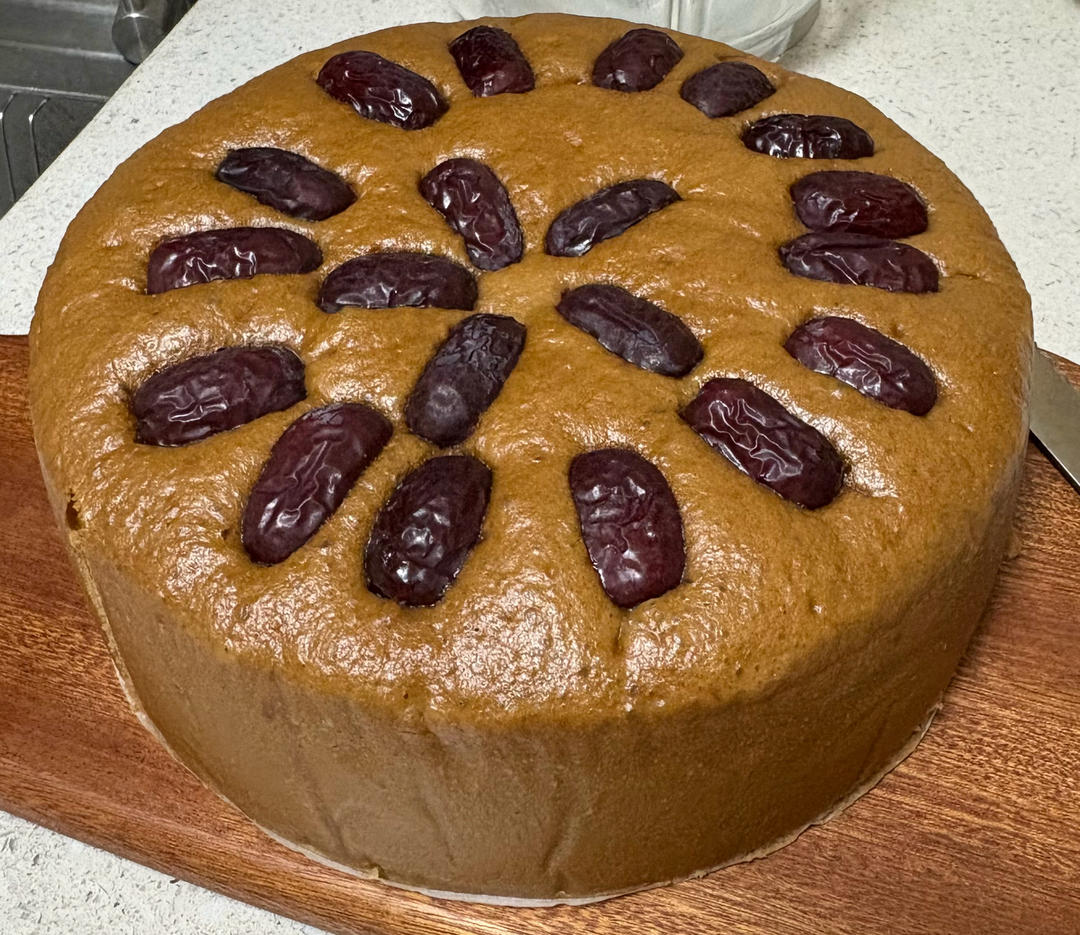
Place the pan in the steamer, add cold water, and steam from cold. Once the water boils and steam rises, cook for 30 minutes, then turn off the heat and rest, covered, for 5 minutes before opening the lid so the cake does not collapse.
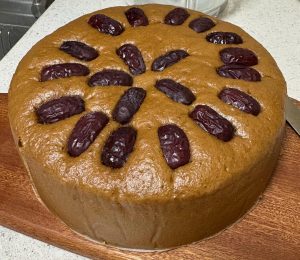
Step 7 — The Perfectly Steamed Cake
Open the lid to a tall, golden-brown, beautifully domed cake with glossy red dates on top.
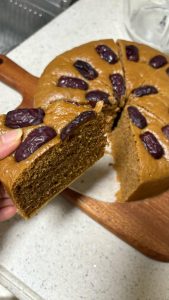
Step 8 — Slice With a Serrated Knife
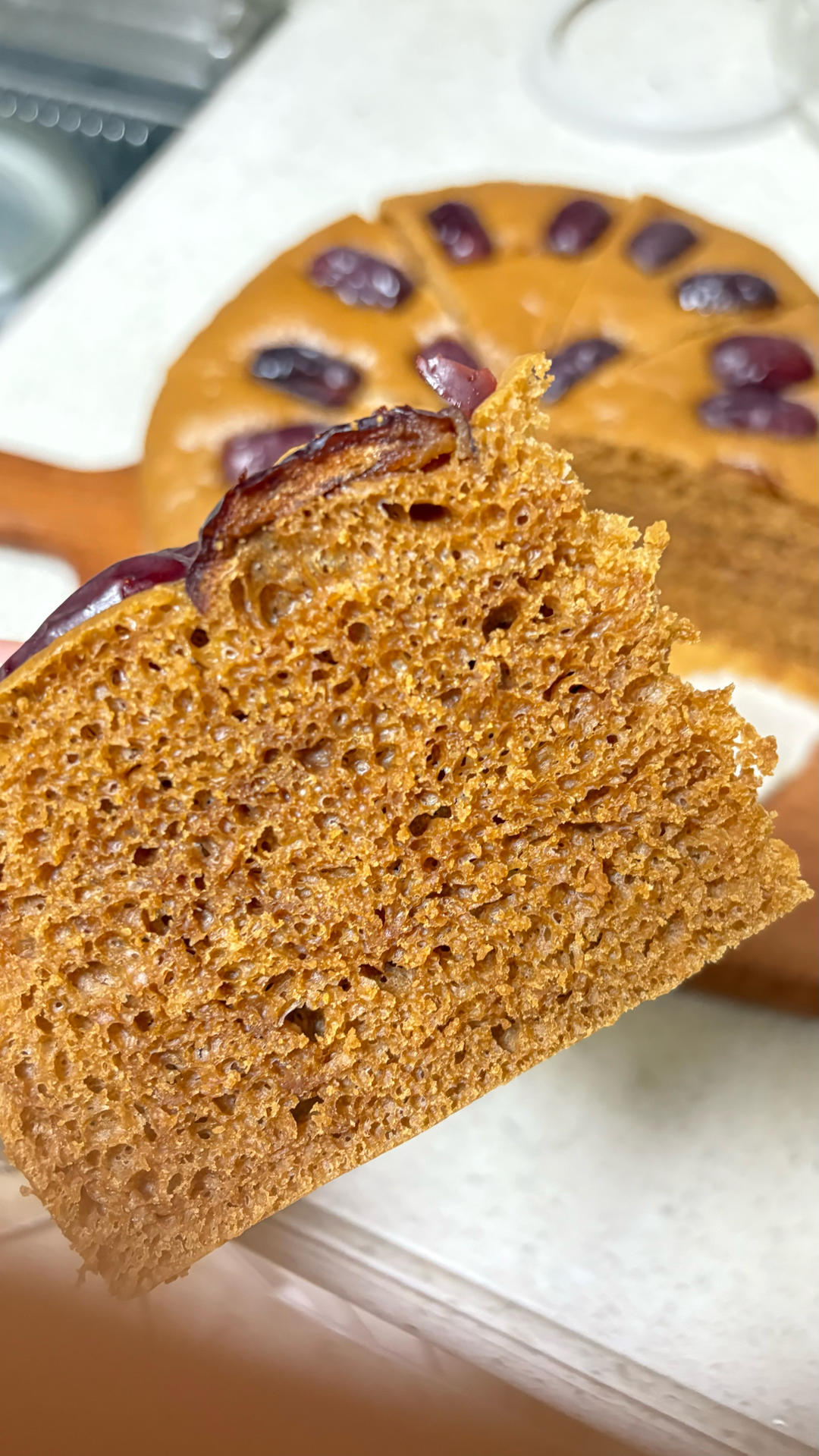
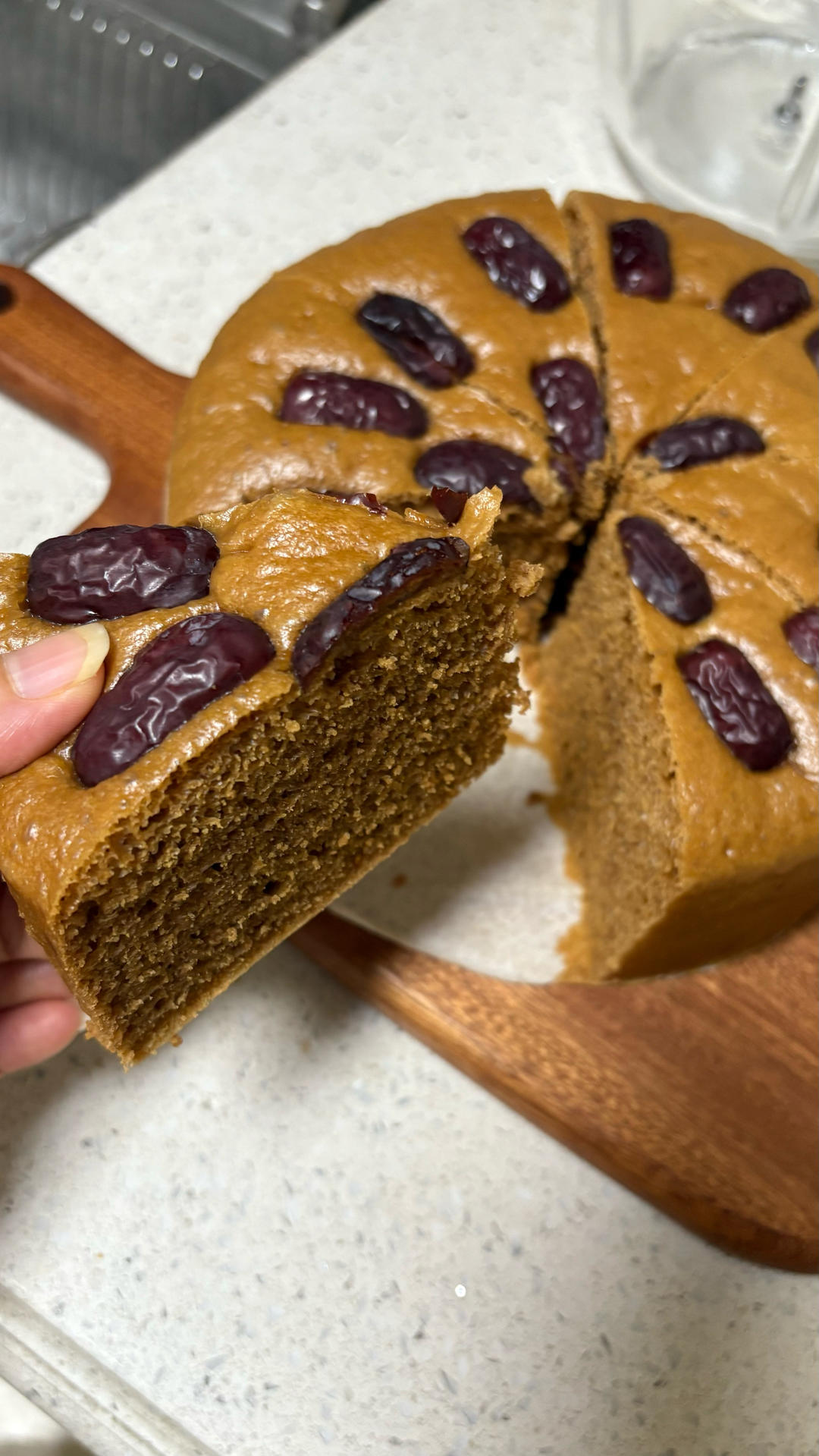
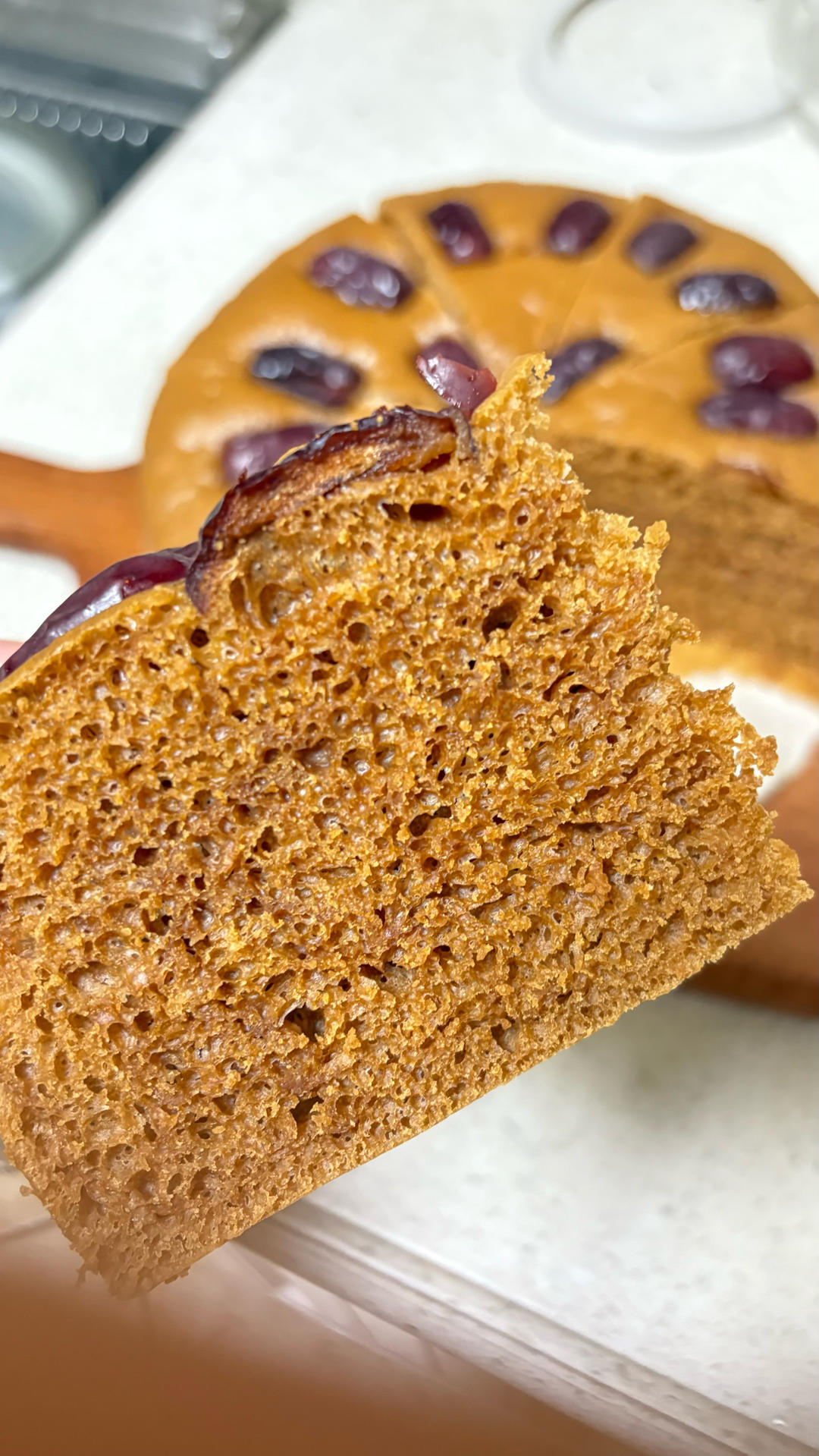
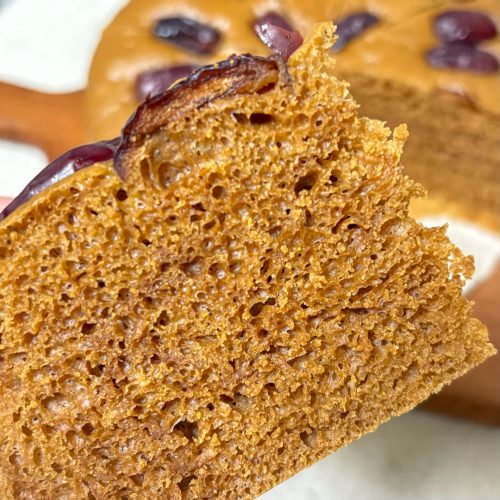
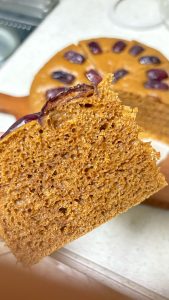
Let the cake cool slightly, then slice it with a serrated knife to reveal the soft, springy, honeycomb crumb inside.
Step 9 — Enjoy the Warm Cake
Serve the cake warm — soft, gently sweet, and impossible to stop eating.
Common Mistakes When Making Brown Sugar Steamed Cake
1. The cake is dense and flat. Cause: the milk was too hot and killed the yeast, or the yeast was old. Fix: cool the sugar milk below 38°C (100°F) and use fresh yeast.
2. The batter has lumps. Cause: not mixing enough. Fix: beat on high for about ten seconds, or stir with chopsticks until completely smooth.
3. The cake collapses when the lid opens. Cause: opening the steamer too soon. Fix: rest the covered cake for 5 minutes off the heat before lifting the lid.
4. The bottom sticks. Cause: no lining or grease. Fix: line the pan with parchment paper or grease it well before pouring in the batter.
5. The cake is gummy in the middle. Cause: under-steaming or a pan that is too deep. Fix: steam for the full 30 minutes once the water boils, and keep the cake no thicker than about 8 cm (3 in).
Variations
Date cake style. Fold chopped dates into the batter as well as the top, like my Chinese date cake.
Millet twist. Swap half the flour for millet flour for a heartier texture, echoing my millet sticky rice cake.
Lighter sweetness. Reduce the brown sugar to 80 g and serve with extra dates for natural sweetness.
Classic mantou pair. Serve it next to pumpkin steamed buns for a steamed-bread breakfast spread, or alongside brown sugar sticky rice for a molasses-sweet double treat.
Frequently Asked Questions
Can I bake this instead of steaming? Yes — bake at 170°C (340°F) for about 30 minutes, but the texture will be more like a muffin than the classic soft steamed cake.
Do I need a special steamer? No — any pot with a tight lid and a rack works, as long as it is tall enough for the cake to rise.
Why is the batter poured into a pan rather than divided? A single pan gives the classic domed 发糕 shape; the recipe notes you can use smaller molds and shorten the steaming time.
How long does it keep? Wrapped well, the cake keeps at room temperature for 2 days or refrigerated for 4; re-steam briefly to restore softness.
Can I make it without eggs? Yes — replace each egg with 60 ml (1/4 cup) of milk plus 1 tablespoon of oil; the cake will be slightly less tender.
How to Serve
Serve the cake warm with tea or a glass of milk for breakfast, or pack a slice with red bean and black rice porridge for a comforting morning. It also makes a lovely snack alongside pumpkin steamed buns when you want a spread of soft steamed treats, or paired with soft milk bread rolls for a bakery-style brunch board.
Storage & Reheat
Wrap the cooled cake in plastic or keep it in an airtight container at room temperature for up to 2 days, or refrigerate for up to 4 days. To restore softness, re-steam slices for 3 to 4 minutes, or microwave for 20 seconds. The cake contains egg and milk, so do not leave it out in a warm room for more than a day.
Allergen Notice
Contains wheat (flour), egg, and dairy (milk). Red dates are not a common allergen. For a dairy-free version, use water or oat milk instead of milk.
Nutrition Disclaimer
Nutrition information is calculated using an ingredient database and should be considered an estimate. In cases where multiple ingredient alternatives are given, the first listed is calculated for nutrition. Garnishes and optional ingredients are not included.
About the Author & Recipe Development
I am Lin, and I grew up in my parents’ restaurant kitchen in Chengdu, where the steamers were never empty — buns on the bottom rack, cakes on the top, filling the kitchen with the smell of warm flour. This brown sugar steamed cake from xiachufang took me straight back there. I tested it twice: the first batch I added the yeast to milk that was still too warm, and the cake came out flat as a pancake; the second time, after cooling the sugar milk properly, it rose into a tall, golden, springy cake. The 5-minute rest before opening the lid is not optional — it is what keeps the dome from falling.
Authoritative References
King Arthur Baking on yeast for proofing temperatures and troubleshooting, and USDA Safe Temperature Chart for storing egg-based baked goods safely.
Brown Sugar Steamed Cake (红糖发糕): Soft Chinese Fa Gao

Equipment
- Steamer
- 8-inch cake pan
- Mixing Bowl
Ingredients
For the Cake
- 2.5 cups all-purpose flour 320 g
- 1 cup milk, divided 245 g total
- 0.5 cup brown sugar 100 g
- 2 large eggs
- 1 tsp instant yeast 4 g
- 6 red dates, halved and pitted for the top
Instructions
- Dissolve the brown sugar in 200 g of warm milk, then cool it below 38°C (100°F).

- Stir the yeast into the remaining 45 g of milk until dissolved.
- Add the eggs, flour, and yeast milk to the cooled sugar milk and beat on high for about ten seconds (or stir well with chopsticks) until smooth.
- Pour the batter into a parchment-lined or greased 8-inch pan and cover.
- Ferment until the batter reaches eight-tenths of the way up the pan. Halve and pit the red dates and arrange them on top.
- Steam from cold water; once boiling, steam for 30 minutes, then rest covered for 5 minutes before opening the lid.
- Open the lid to a tall, golden-brown domed cake.

- Cool slightly and slice with a serrated knife to reveal the soft crumb.
- Serve the cake warm.




Leave a Reply