The burger bun is the most underrated bread in a home baker’s rotation. Anyone can make the patty — the bun is what separates a homemade burger from a fast-food one, and most homemade buns turn into sad, dense disks by day two. This tangzhong burger bun recipe from xiachufang solves that with a technique Chinese bakeries have used for years: a paste of flour scalded with boiling water (烫种), mixed into the dough, keeps the buns soft and moist for days instead of hours.
I have made these buns three times now, and the method is genuinely simple. The tangzhong needs two hours in the fridge, but the mixing is a straight dough — flour, milk, egg, sugar, yeast, and butter — kneaded until it passes the windowpane test. The dough rises once, divides into eight 81 g buns, proofs again, and bakes at 180°C (350°F) for seventeen minutes. The result is a glossy, sesame-dotted bun that is soft enough to squish and sturdy enough to hold a burger.
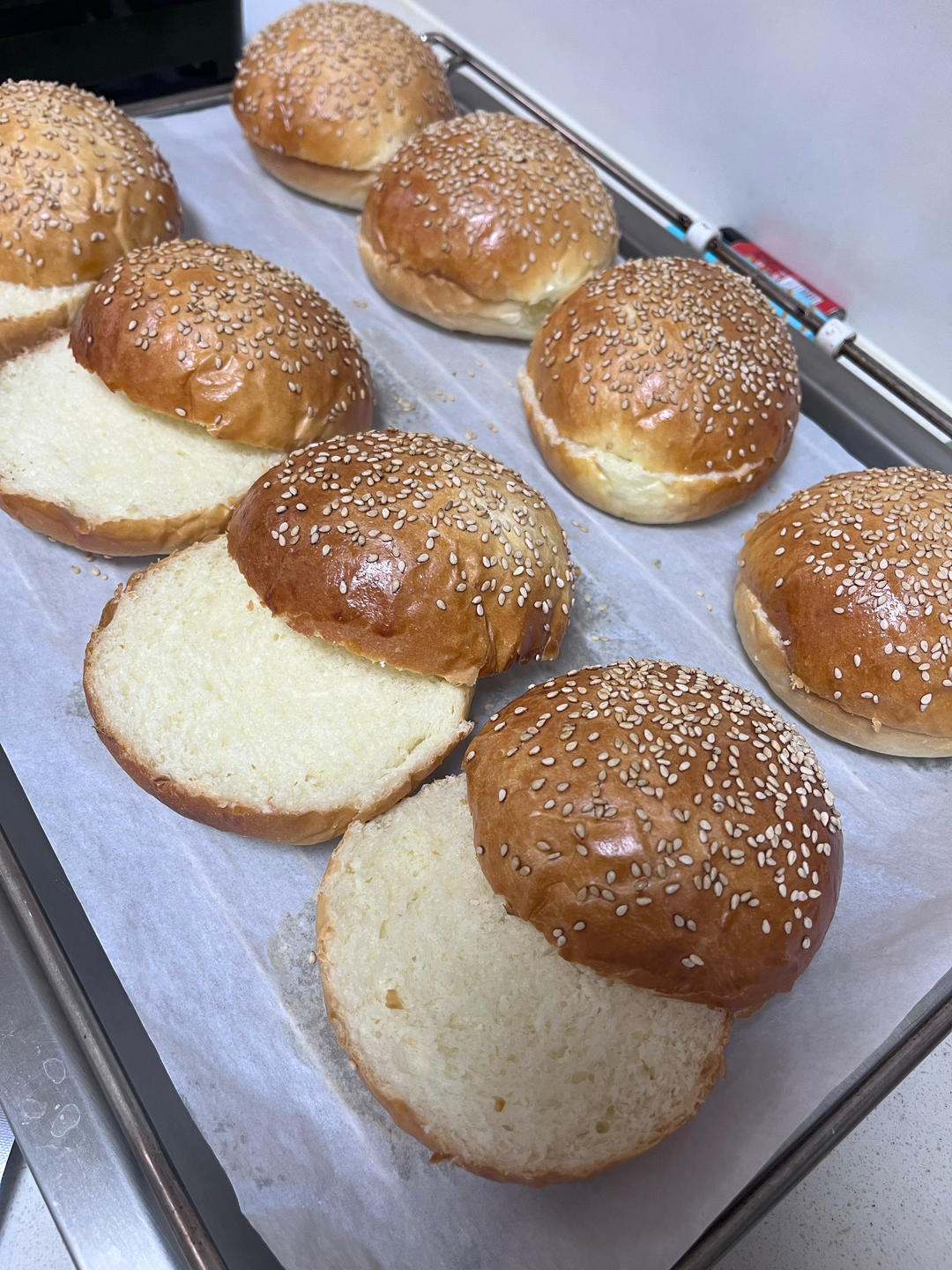
What Are Tangzhong Burger Buns (烫种汉堡胚)?
Tangzhong burger buns are soft hamburger buns made with a tangzhong — a water roux of flour cooked with boiling water into a thick paste before being added to the dough. The scalded starch holds extra moisture, which slows the bread from staling and gives it the pillowy, tear-soft texture associated with Asian bakery breads.
This recipe is built for practical home baking. The main dough combines bread flour with a little cake flour, milk, egg, sugar, milk powder, yeast, and butter; after the tangzhong is mixed in, the dough kneads to a thin, translucent membrane (the classic “glove” stage) and rises once before shaping. Each bun weighs about 81 g, making eight evenly sized buns that bake glossy and golden with a sesame-dusted top.
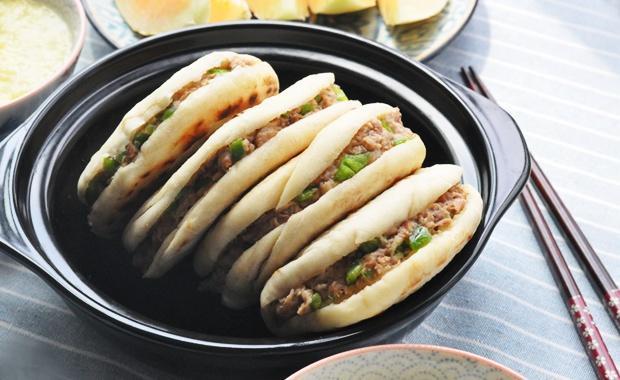
If you like handheld Chinese breads, my rou jia mo is the classic Chinese “hamburger” — a flatbread that loves the same fillings.
1Rou Jia Mo (Chinese Hamburger)This authentic Rou Jia Mo recipe features crispy, chewy homemade flatbreads stuffed with savory, melt-in-your-mouth braised pork belly. A classic Chinese street food adapted for your home kitchen.Check out this recipe
Why This Recipe Works
- The tangzhong locks in moisture. Scalding part of the flour with boiling water gelatinizes its starch, which traps water in the dough and keeps the buns soft for days.
- A 2-hour chill develops the paste. Resting the tangzhong in the fridge lets it firm up and integrate cleanly into the dough.
- Bread flour plus a little cake flour balances chew and softness. The blend gives buns that are sturdy enough for a burger but tender as milk bread.
- Kneading to the windowpane stage builds structure. A thin, stretchy membrane means the gluten is developed enough to trap the gas for a light crumb.
- One proof, then shaping, keeps it simple. After the first rise the dough divides into eight equal buns, proofs briefly, and bakes.
Equipment Needed
- Small saucepan for the tangzhong
- Stand mixer with dough hook
- Kitchen scale
- Baking sheet lined with parchment
- Pastry brush for the egg wash
Ingredients
- For the tangzhong: 20 g (2.5 tbsp) bread flour, 80 g (1/3 cup) water
- 270 g (2.25 cups) bread flour
- 50 g (1/3 cup plus 1 tbsp) cake flour
- 40 g (3 tbsp) sugar
- 15 g (2 tbsp) milk powder
- 4 g (1 tsp) salt
- 3.5 g (1 tsp) instant yeast
- 1 large egg
- 105 g (1/2 cup minus 1 tsp) milk
- 40 g (3 tbsp) unsalted butter, softened
- Egg wash and white sesame seeds, for the tops
Ingredient Notes
Tangzhong (烫种). The scalded-flour paste is the star. Cook 20 g of flour with 80 g of water over low heat, stirring constantly, until it thickens into a sticky, translucent paste, then chill it for 2 hours before mixing the dough.
Bread flour + cake flour. The combination is what makes these buns soft yet structured. Bread flour gives the chew; cake flour softens it. If you only have all-purpose flour, use 320 g and expect a slightly firmer crumb.
Milk powder (奶粉). Adds richness and a subtle dairy sweetness that makes the buns taste like bakery bread. It is optional but worth including if you have it.
Butter. Added after the dough reaches about 80% development — the standard enriched-dough order that lets the gluten form before the fat coats it.
Prep & Mise en Place
Make the tangzhong first: whisk the flour and water in a small saucepan over low heat until it becomes a thick, gluey paste, then transfer it to a bowl, cover, and refrigerate for at least 2 hours (overnight is fine). Weigh all the main-dough ingredients before you start, soften the butter, and line a baking sheet with parchment so the shaped buns can go straight onto it.
Cooking Process
Step 1 — Make the Tangzhong and Chill It 2 Hours
Combine the tangzhong flour and water in a nonstick pan and cook over low heat, stirring constantly, until it thickens into a sticky semi-solid paste. Transfer to a bowl and refrigerate for 2 hours.
Step 2 — Knead the Dough to a Glove Membrane
Mix the main dough ingredients (all except the butter) with the chilled tangzhong and knead until about 80% developed, then add the butter and knead until the dough stretches into a thin, translucent membrane (手套膜). Let it rise once until doubled.
Step 3 — Divide Into 81 g Pieces
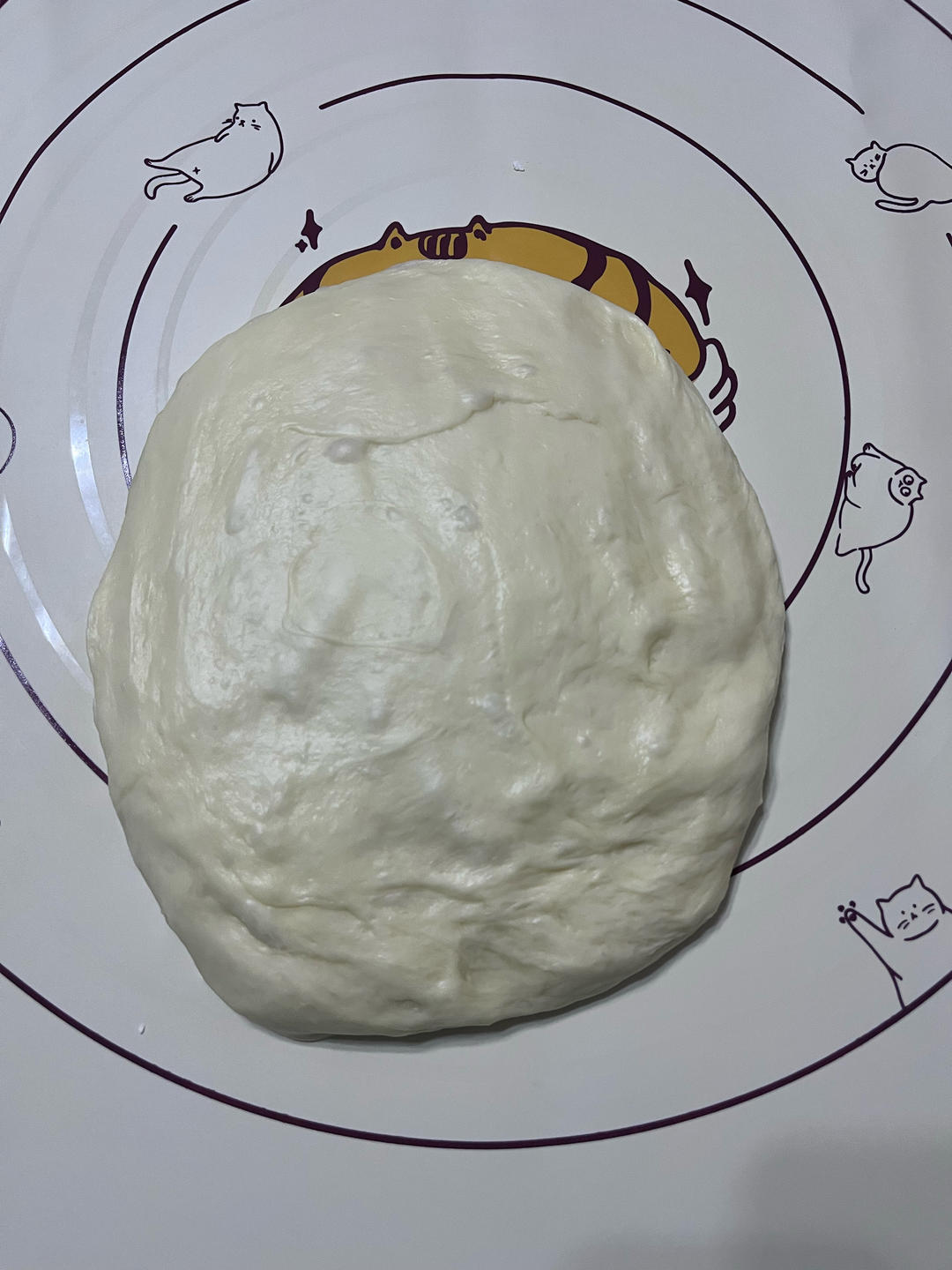
Punch down the risen dough, turn it out, and divide it into 8 equal pieces of about 81 g each.
Step 4 — Round, Proof 30 Minutes, and Top With Sesame
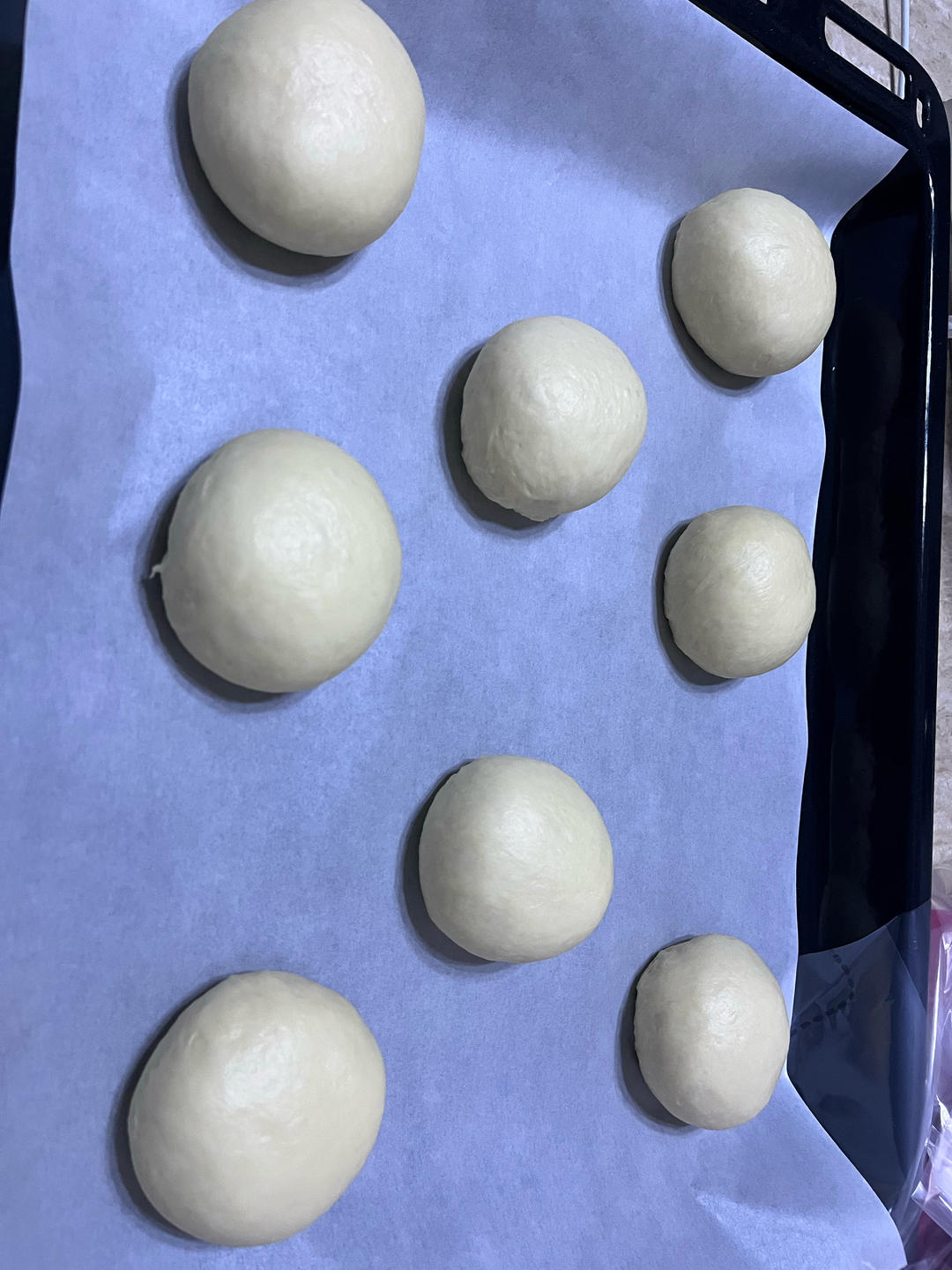
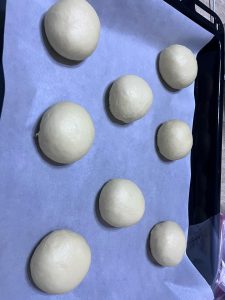
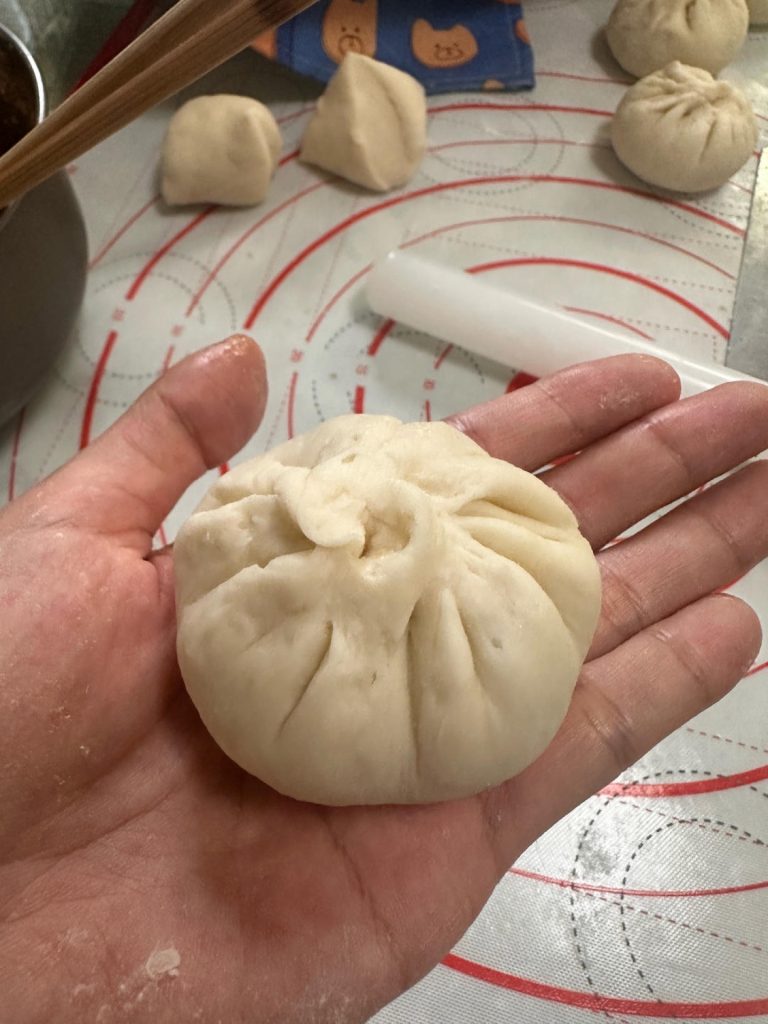
Round each piece into a smooth ball, arrange them on the lined baking sheet, and proof for 30 minutes. Brush the tops with egg wash and sprinkle with white sesame seeds. Meanwhile, preheat the oven to 180°C (350°F).
Step 5 — Bake at 180°C for 17 Minutes
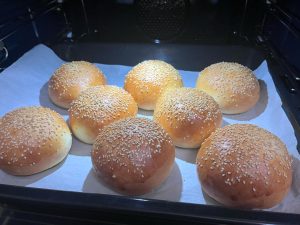
Bake the buns at 180°C (350°F) on the middle-lower rack for 17 minutes, turning the pan around at the 10-minute mark for even browning.
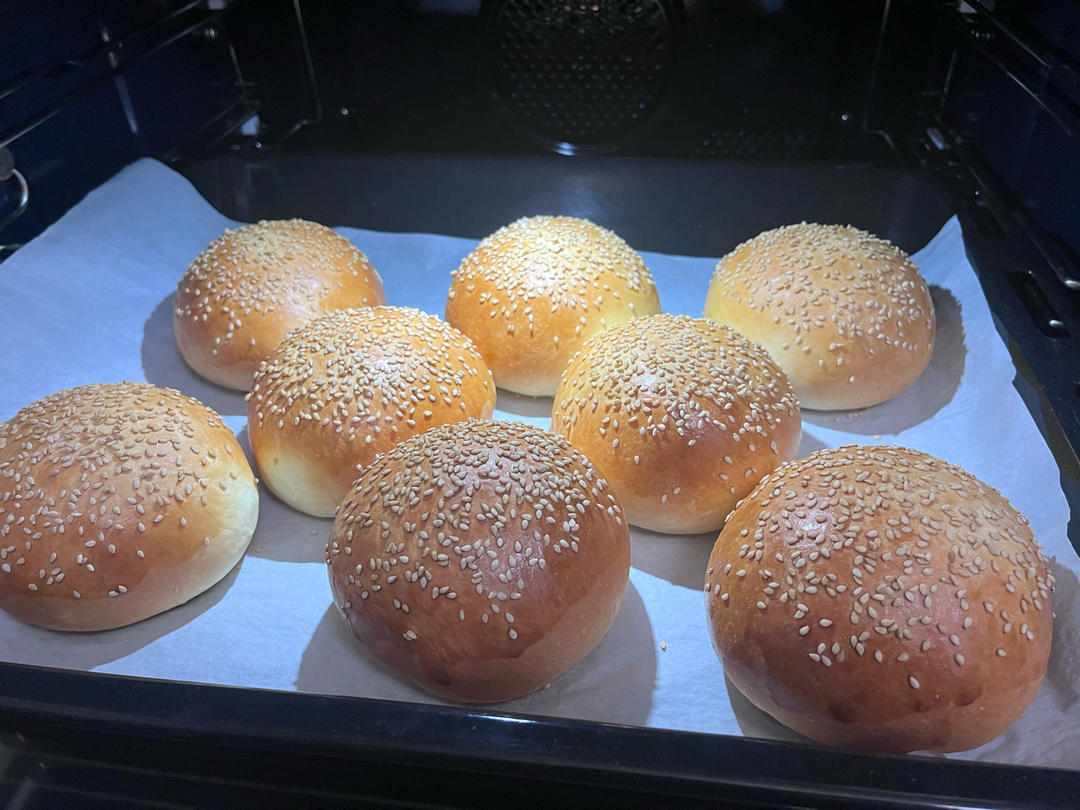
Rotating the pan halfway through is not fuss — it is insurance. Home ovens run hotter at the back, and a single extra minute on one side is the difference between buns that are evenly golden and buns that are pale on one edge and dark on the other.
Step 6 — Cool, Split, and Freeze
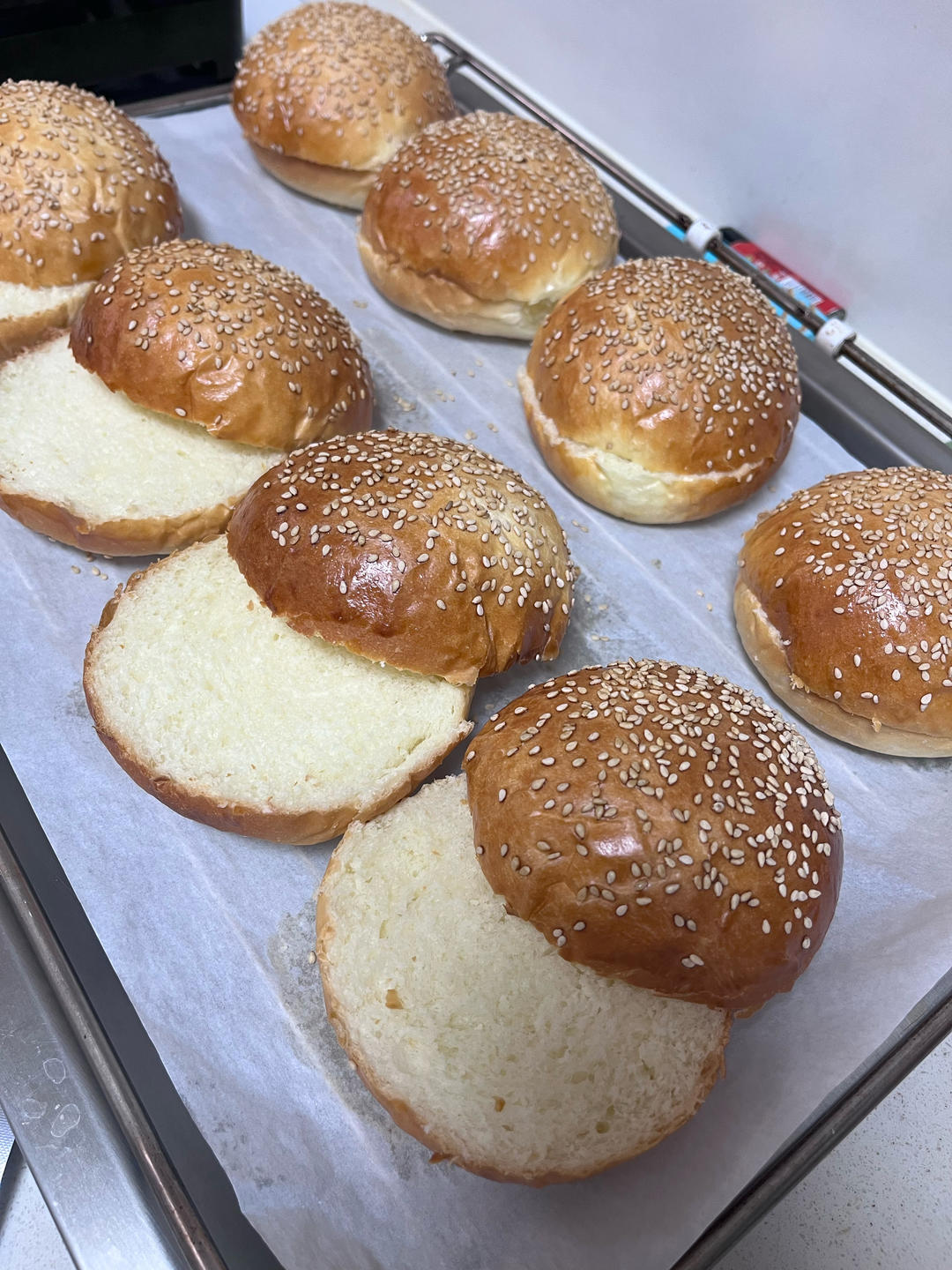
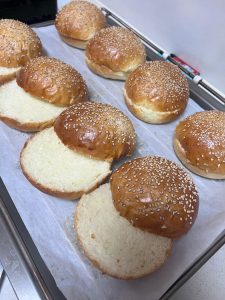
Let the buns cool completely, then split, fill, or portion them. They freeze beautifully — the recipe suggests slicing and freezing so you can toast a fresh bun whenever you want one.
Common Mistakes When Making Tangzhong Burger Buns
1. The buns come out dense. Cause: under-kneading or skipping the tangzhong chill. Fix: knead until the dough passes the windowpane test and chill the tangzhong the full 2 hours.
2. The dough is too sticky to shape. Cause: adding the butter too early or a humid kitchen. Fix: add the butter only after the dough is 80% developed and dust your hands lightly with flour.
3. The tops burn before the centers bake. Cause: oven too hot or the pan too high. Fix: bake at 180°C (350°F) on the middle-lower rack and rotate the pan at 10 minutes.
4. The buns deflate in the oven. Cause: over-proofing. Fix: stop the second proof at 30 minutes, when the buns are puffy but not doubled.
5. They go stale by the next day. Cause: skipping the tangzhong. Fix: the scalded-flour paste is what keeps these buns soft — do not substitute a plain dough.
Variations
Classic bao-style filling. Fill the buns with the same savory pork you would put in savory sauce pork buns for a baked version of the steamed classic.
Meat floss buns. Brush the baked buns with mayonnaise and roll them in pork floss, like my pork floss buns.
Pan-fried style. For a crisp-bottomed handheld, shape the dough into sheng jian bao instead of baking it.
Whole wheat. Swap up to half the bread flour for whole wheat, following the ratio in my whole wheat buns.
Frequently Asked Questions
Can I skip the tangzhong? You can, but the buns will be firmer and stale faster — the tangzhong is the whole point of this recipe.
Do I need a stand mixer? No — knead by hand for 15 to 20 minutes until the dough passes the windowpane test.
Can I freeze the buns? Yes — cool completely, slice, and freeze for up to 2 months; toast straight from frozen.
Why is my dough not passing the windowpane test? Keep kneading — enriched doughs need more time than lean ones, and the butter slows gluten development until it is fully incorporated.
Can I make hamburger-sized buns? These are 81 g each, perfect for standard burgers; scale the portions up or down to change the size.
How to Serve
Use the buns for burgers, of course, but they are equally good as sandwich rolls, toasted with butter for breakfast, or filled the rou jia mo way with braised pork. Pair them with pumpkin steamed buns for a bread basket, or serve warm slices with soft milk bread rolls for a bakery-style brunch spread.
If you are filling the buns with meat, my guide to a juicy pork filling works for burgers too — and for a crisper handheld, shape some of the dough into sheng jian bao.
Storage & Reheat
Store the buns in an airtight bag at room temperature for up to 3 days, or freeze for up to 2 months. Reheat a thawed or frozen bun in a toaster or 160°C (325°F) oven for 5 to 6 minutes to restore the fresh-baked softness.
Allergen Notice
Contains wheat (flour), dairy (milk, butter, milk powder), and egg (in the dough and egg wash). Sesame seeds are used on top.
Nutrition Disclaimer
Nutrition information is calculated using an ingredient database and should be considered an estimate. In cases where multiple ingredient alternatives are given, the first listed is calculated for nutrition. Garnishes and optional ingredients are not included.
About the Author & Recipe Development
I am Lin, and I grew up in my parents’ restaurant kitchen in Chengdu, where bread meant bao and the western hamburger bun was something I only learned to appreciate later, as a professional chef. This tangzhong recipe from xiachufang is the one that finally made burger buns worth baking at home. I tested it twice: the first batch I rushed the tangzhong chill and the buns were fine but unremarkable; the second, with the full 2-hour rest, they came out soft as milk bread and stayed that way for three days. Now I make a double batch and keep half in the freezer — the best burger buns are always the ones you already have.
Authoritative References
King Arthur Baking on the tangzhong method for the science behind scalded-flour doughs, and USDA Safe Temperature Chart for storing egg-enriched breads safely.
Tangzhong Burger Buns (烫种汉堡胚): Soft Bakery-Style Buns

Equipment
- Stand mixer
- Small Saucepan
- Baking Sheet
- Kitchen Scale
Ingredients
For the Tangzhong
- 2.5 tbsp bread flour 20 g
- 0.33 cup water 80 g
For the Dough
- 2.25 cups bread flour 270 g
- 0.4 cup cake flour 50 g
- 3 tbsp sugar 40 g
- 2 tbsp milk powder 15 g
- 1 tsp salt 4 g
- 1 tsp instant yeast 3.5 g
- 1 large egg
- 0.45 cup milk 105 g
- 3 tbsp unsalted butter, softened 40 g
- 1 splash egg wash for the tops
- 1 sprinkle white sesame seeds for the tops
Instructions
- Cook the tangzhong flour and water over low heat, stirring constantly, until thick and sticky. Chill for 2 hours.
- Mix the main dough ingredients except the butter with the chilled tangzhong; knead to about 80% development, add the butter, and knead to a thin membrane. Rise until doubled.
- Punch down and divide the dough into 8 pieces of about 81 g each.

- Round each piece, proof for 30 minutes, brush with egg wash, and sprinkle with sesame. Preheat the oven to 180°C (350°F).
- Bake at 180°C (350°F) on the middle-lower rack for 17 minutes, turning the pan at 10 minutes.

- Cool completely, then split, fill, or slice and freeze for later.




Leave a Reply