Pumpkin leaf thick soup is what happens when a handful of garden greens meets a hot wok and a spoonful of starch: a silky, jade-green geng that coats the spoon but still tastes light and fresh. It is one of those dishes that looks like it took an hour and actually takes about twenty minutes, and most of that is rinsing leaves.
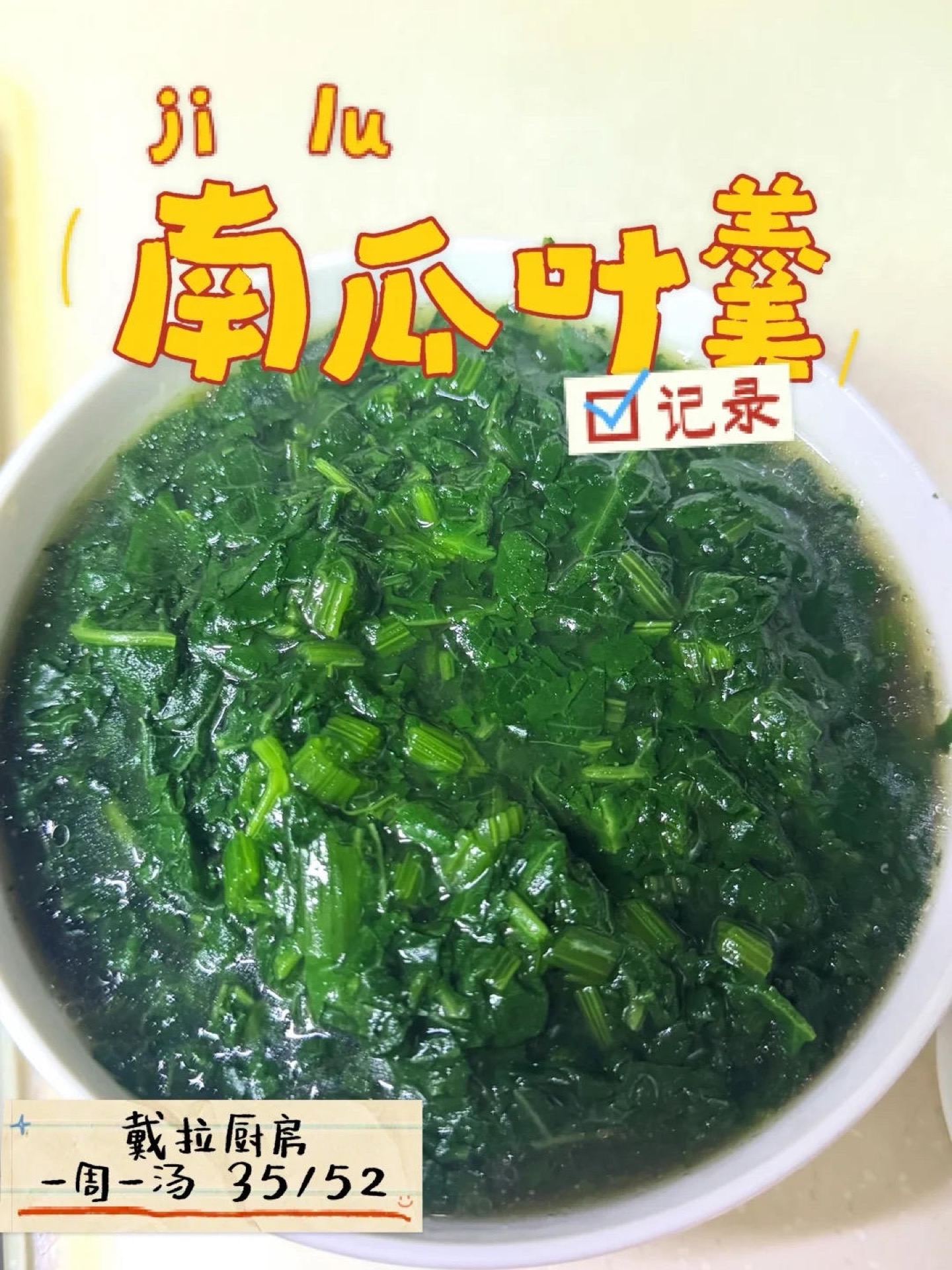
In southern China, 羹 (gēng) is a whole category of soup — thicker than a broth, thinner than a porridge, always lightly bound with starch so it feels smooth on the tongue. Pumpkin leaf geng is the summer version, made when the vines are running and the tender shoots are everywhere. The leaves themselves are mild and slightly sweet, closer to spinach than to pumpkin, and they turn a brilliant green the moment they hit the wok.
What makes this version worth cooking is how little it asks of you. No stock, no long simmer, no aromatics to chop. Just leaves, water, salt, a little starch, and a small spoon of lard at the end that makes the whole bowl taste rounder. It is a weeknight soup, a rice-companion soup, and a very good way to eat more greens without feeling like you are eating a salad.
What Is Pumpkin Leaf Thick Soup?
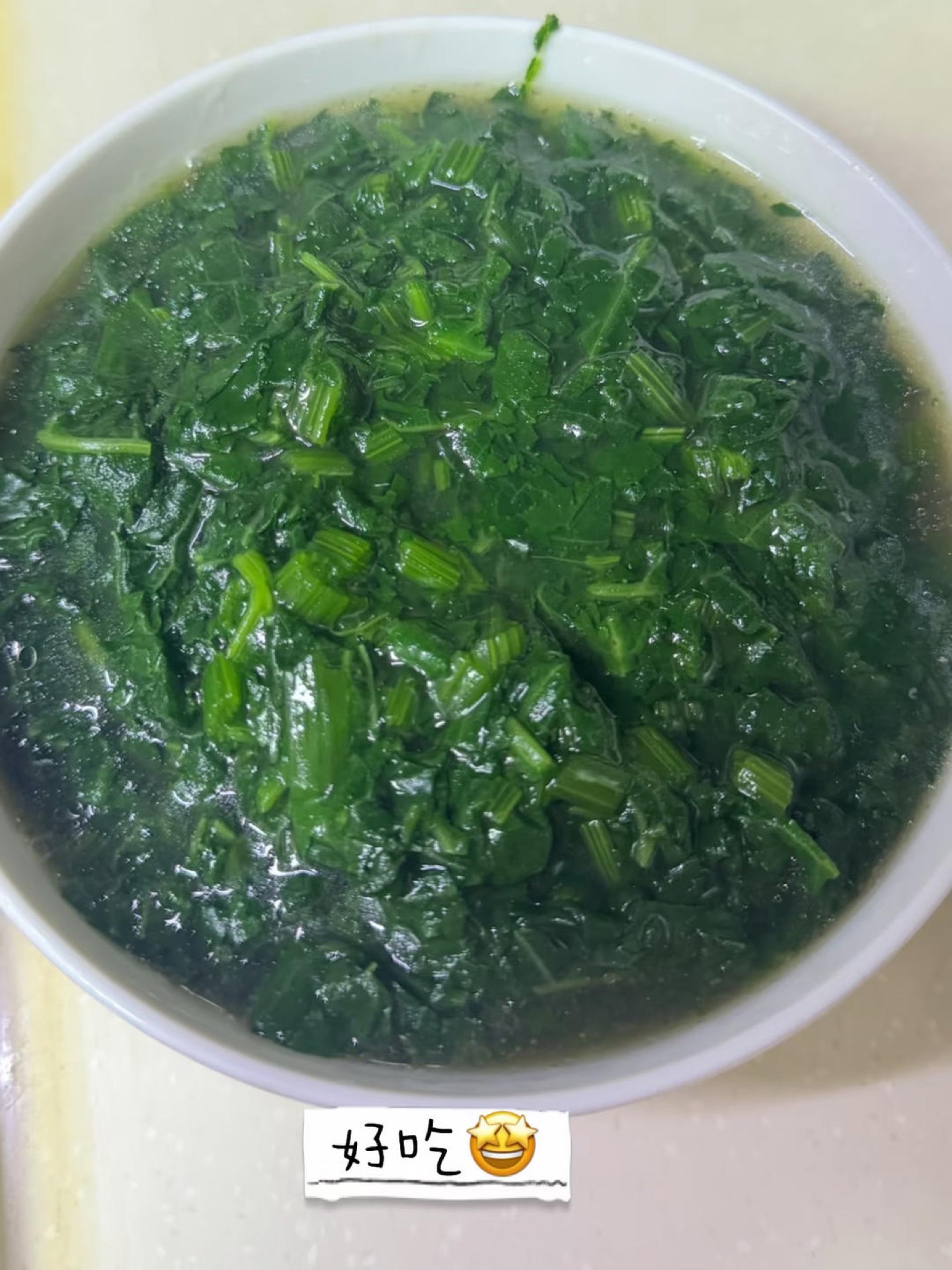
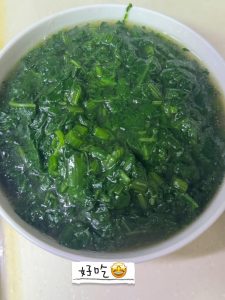
Pumpkin leaf thick soup, called 南瓜叶羹 (nánguā yè gēng) in Chinese, is a light, starch-thickened green soup made from the tender leaves and shoot tips of the pumpkin plant. The leaves are chopped fine, wilted briefly in a wok, simmered in water with a pinch of salt, then bound with a tapioca or cornstarch slurry until the broth turns glossy and slightly viscous. It is finished off the heat with a little lard and chicken bouillon, which is what gives it that savory, rounded, almost buttery finish.
It belongs to the same family of dishes as other Chinese geng soups — the thin, silky, spoonable soups that sit somewhere between a broth and a gravy. Unlike a Western cream soup, there is no dairy and no roux; the body comes entirely from starch, and the flavor comes entirely from the greens themselves. That is why the quality of the leaves matters so much here.
The best pumpkin leaves for this soup are the ones you would eat raw in a salad: small, tender, and bright, with stems that snap instead of bend. Older leaves are edible but stringy, and they will not break down into that soft, silky texture the soup is known for.
If you enjoy this style of light Chinese soup, there are a few others on the site worth cooking next. light chinese celery soup is the closest cousin, a clean, pale geng built on celery and a light starch thickener, and it has the same delicate, restorative feel. Pickled mustard green noodle soup with pork takes that same sour-green soup instinct in a heartier direction, with noodles and shredded pork to make it a full meal. And 10-minute restaurant-style egg drop soup is the fastest possible entry point into the world of silky, starch-bound Chinese soups.
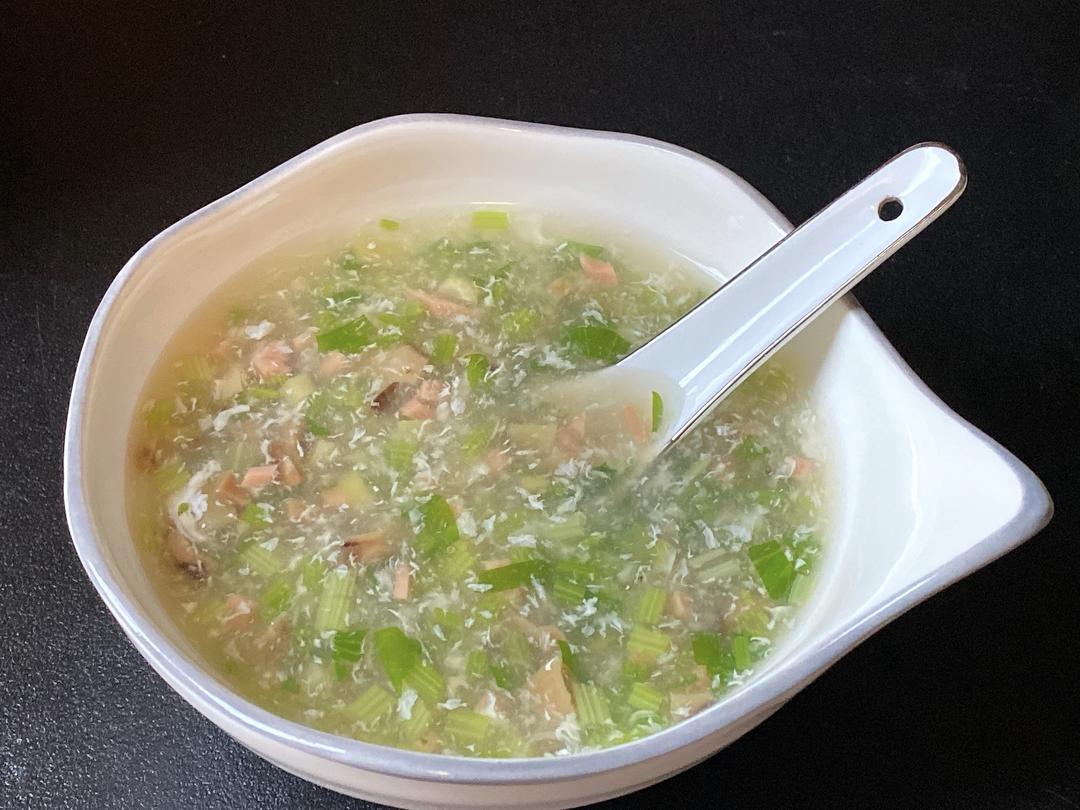
115-Minute Light Chinese Celery Soup (Qing Dan Qin Cai Geng)A zero-difficulty, 15-minute light Chinese celery soup that requires no heavy seasonings. The natural umami of shiitake and Zha Cai makes it flavorful, while the blanched celery stays vibrant and crisp.Check out this recipe
Cooked this way once, you will want the next one too: pickled mustard green noodle soup starts from the same base and the same pan.
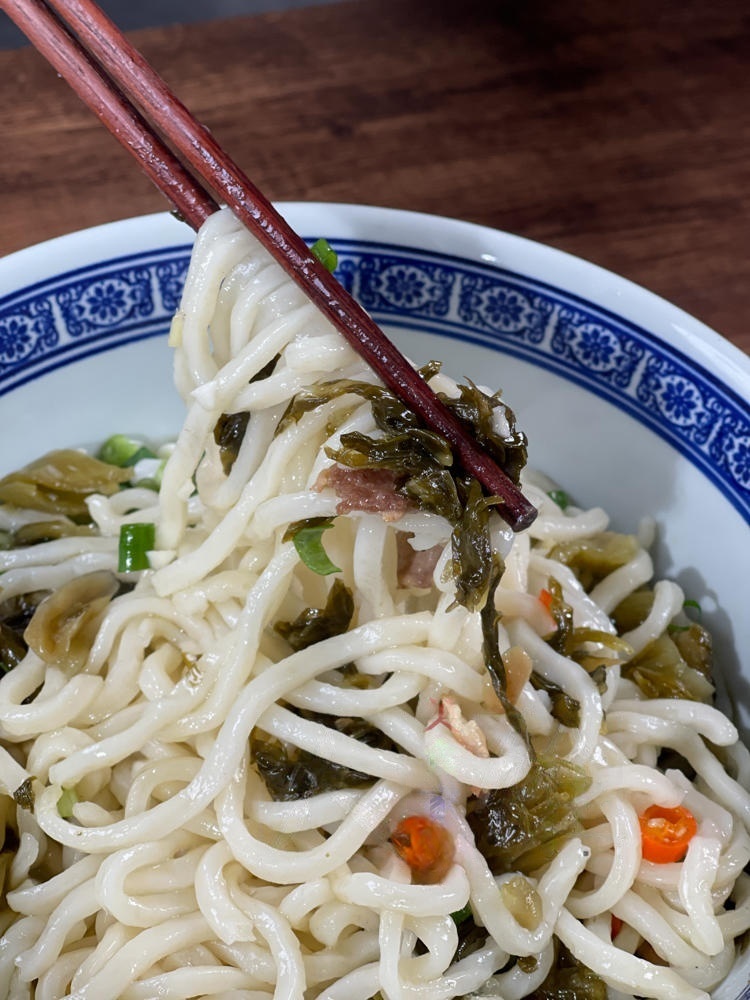
2Pickled Mustard Green Noodle Soup with Pork (Suan Cai Rou Si Mian)A comforting, 15-minute staff meal favorite from Sichuan. This authentic noodle soup features savory rendered pork belly, tangy pickled mustard greens, and fresh noodles in a rich, appetizing broth.Check out this recipe
For the next cook from the same playbook, style egg drop soup is the recipe I point people to.
310-Minute Restaurant-Style Egg Drop Soup (Dan Hua Tang)A quick and authentic Chinese Egg Drop Soup featuring silky egg ribbons in a savory, seasoned chicken broth. Perfect as a starter or a light meal.Check out this recipe

Why This Recipe Works
The technique here is deliberately minimal, and every step earns its place. Wilting the leaves in a dry hot wok before adding water drives off raw wateriness and concentrates their green flavor, so the finished soup tastes of pumpkin leaf rather than of boiled water. Adding the starch slurry to a fully boiling pot, in a thin stream and with constant stirring, is what keeps the thickener smooth instead of lumpy — starch granules need heat and agitation to swell evenly.
Finishing off the heat matters too. Lard and chicken bouillon are both aromatic and volatile, and boiling them hard for several minutes flattens them. Stirring them in at the end, with the residual heat of the soup, keeps the aroma bright. The result is a soup that tastes seasoned and rich even though it contains almost nothing.
Finally, the starch choice is intentional. Tapioca starch gives a glossy, slightly stretchy, almost glassy body that is classic in Cantonese-style geng. Cornstarch works perfectly well and is more widely available, but it produces a slightly more opaque, less shiny finish. Either is fine — just do not skip the slurry, because without it this is a plain bowl of greens and water.
Equipment Needed
You need very little for this recipe, which is part of its charm. A wok is ideal because its wide, curved surface lets the chopped leaves wilt quickly without steaming, but a large skillet or a wide saucepan will also work. A cutting board and a sharp knife make short work of the leaves, though you can also chop them directly in a large bowl with kitchen shears if you prefer.
A slotted spoon or a ladle is useful for serving, and a small bowl or cup for mixing the starch slurry keeps things tidy. If you have a wire skimmer, it is handy for lifting the wilted leaves out of the wok to check their texture, though it is not required. A lid is not needed at any point in this recipe.
Ingredients
The ingredient list is short enough to memorize: pumpkin leaves, water, salt, tapioca starch, lard, and chicken bouillon. Everything else is optional. Here is what each one is doing.
Pumpkin leaves. The star of the dish. Use only the tender young leaves and the soft shoot tips. If you are buying them at an Asian market, look for bunches with small, unblemished leaves and pliable stems. If you are growing pumpkins, harvest the tips throughout the season to encourage more growth.
Tapioca starch. This is the thickener. It gives the soup its signature glossy, slightly elastic body. Cornstarch is a fine substitute and behaves almost identically, though the finished soup will be a touch less shiny.
Lard. A small amount of lard is traditional and does something no oil quite replicates: it coats the tongue and makes the soup taste richer and more rounded. Neutral oil works, and so does a teaspoon of toasted sesame oil added at the very end for aroma.
Chicken bouillon. Just a pinch. This is not a chicken soup, so the bouillon is there to add a savory backbone, not to dominate. A small amount of MSG works in the same role, and if you are vegetarian, a pinch of mushroom bouillon or a few drops of light soy sauce will do the job.
Salt. Add it in stages. The leaves are mild, and it is easy to oversalt a soup this simple.
Ingredient Notes
Pumpkin leaves are not the same as pumpkin flesh, and they are not the same as squash blossoms. The leaves have a mild, slightly sweet, faintly grassy flavor and a texture that softens beautifully with brief cooking. Young leaves are tender enough to eat after a two-minute simmer; older leaves have a fibrous bite and a slightly rougher flavor, and they are better saved for longer-cooked dishes or simply discarded.
If you cannot find pumpkin leaves, sweet potato leaves (红薯叶) are the closest substitute and are used in almost exactly the same way in southern Chinese cooking. Spinach, amaranth greens, and tender pea shoots will also work, though each brings its own flavor — spinach in particular will taste more mineral and less sweet. Adjust the salt accordingly, since spinach releases more water than pumpkin leaves.
Tapioca starch and cornstarch can be swapped one for one in this recipe. Do not use potato starch, which can turn gluey, or wheat flour, which will make the soup cloudy and pasty. Always dissolve the starch in cold water first — adding dry starch directly to a hot pot guarantees lumps.
Prep & Mise en Place
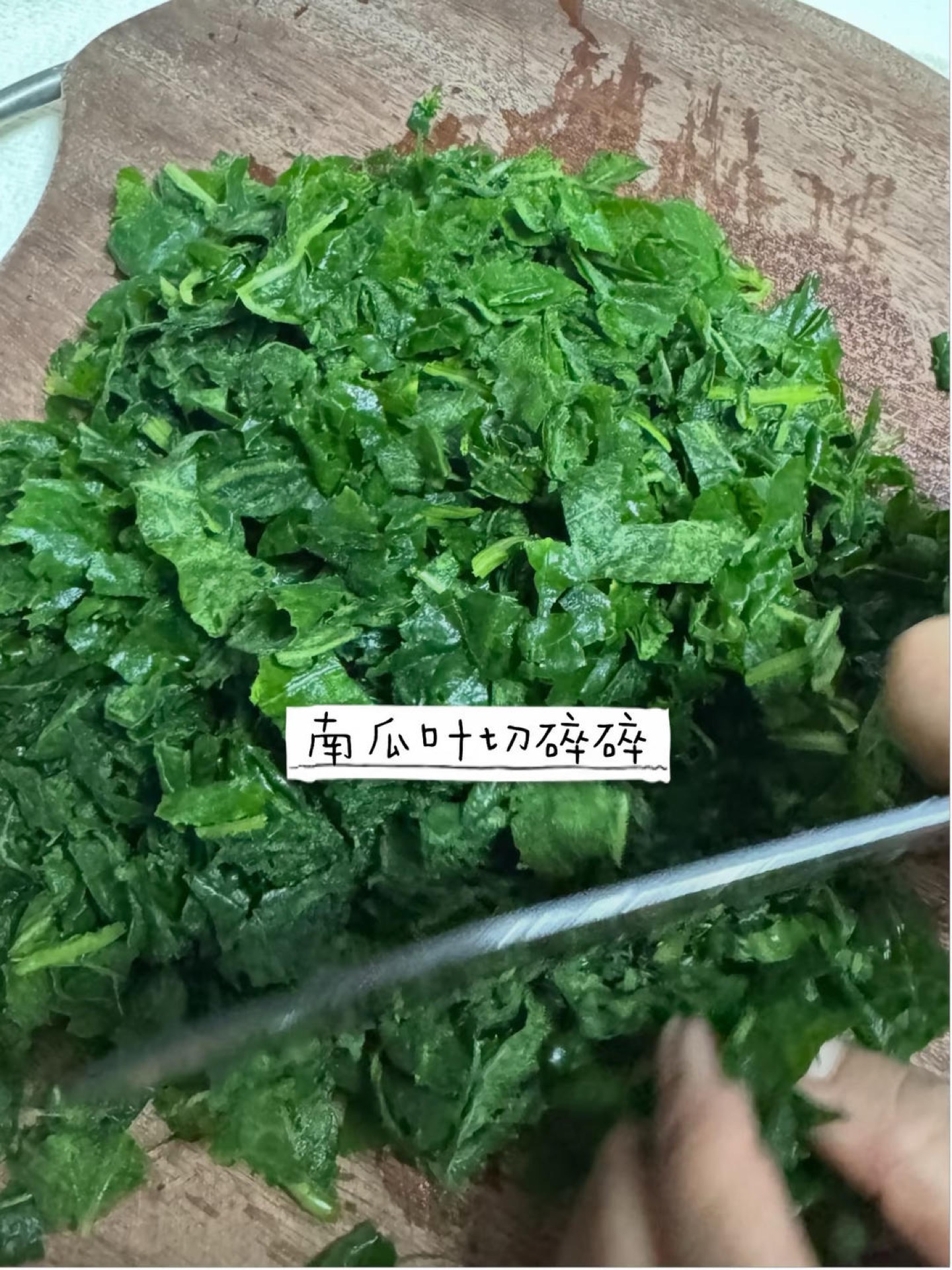
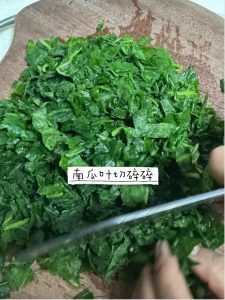
Before the wok goes on the heat, get everything ready. Rinse the pumpkin leaves thoroughly in a basin of cold water, swishing them around to loosen any grit, then drain them well. Strip the tender leaves from the tough stems and discard the fibrous parts. Chop the leaves and soft tips finely — roughly a quarter-inch pieces — so they distribute evenly through the soup rather than clumping.
Measure out your water, salt, and bouillon so they are within reach. Mix the tapioca starch with two tablespoons of cold water in a small bowl and stir until it is completely smooth with no dry pockets at the bottom. Have the lard ready in a small dish next to the stove, because it goes in at the very end and you will not have time to measure it once the soup is boiling.
This whole setup takes about ten minutes, and it means the actual cooking happens fast and without scrambling. Once the wok is hot, the soup comes together in under ten minutes, so having everything prepped is not fussiness — it is the difference between a smooth, glossy geng and a lumpy, over-cooked one.
Cooking Process
Step 1 — Chop the Pumpkin Leaves
Rinse the pumpkin leaves well, strip the tender leaves and soft shoot tips away from any tough fibrous stems, then chop them finely and set them aside.
Step 2 — Wilt the Leaves in the Wok
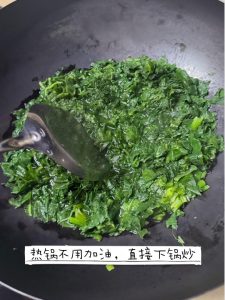
Heat a wok over medium-high heat, add the chopped pumpkin leaves straight into the dry wok, and stir them around briefly for about a minute until they collapse and turn a deeper green.
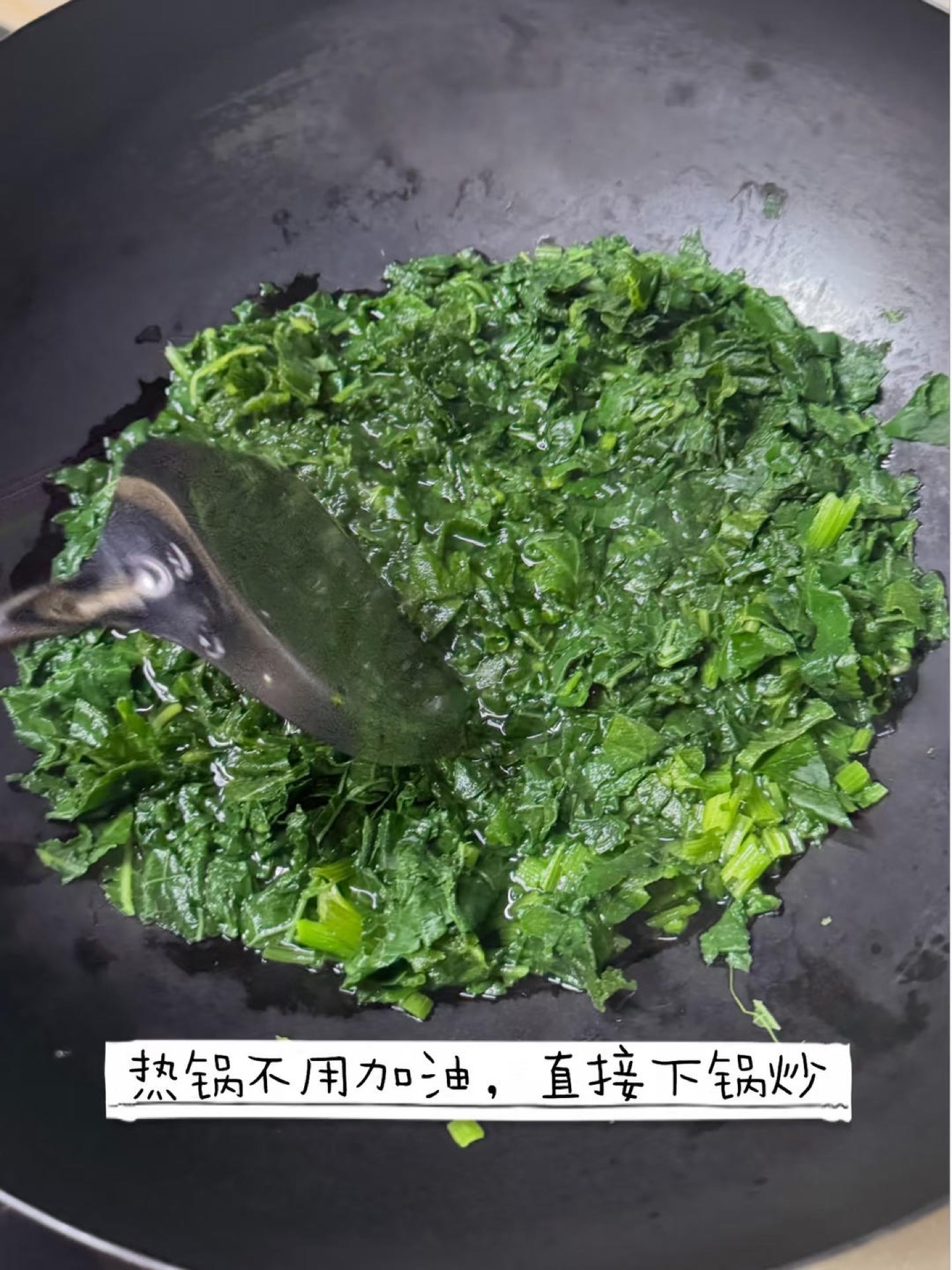
Step 3 — Add Water and Boil
Pour in the water and bring it to a full boil, then add a pinch of salt and let the leaves simmer for about 2 minutes until fully tender.
Step 4 — Thicken the Soup
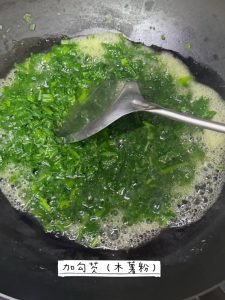
Stir the tapioca starch into the cold water, then pour the slurry into the boiling soup in a thin stream while stirring, and keep stirring until the broth turns glossy and lightly thickened into a geng; add more water if you would rather have a thinner soup.
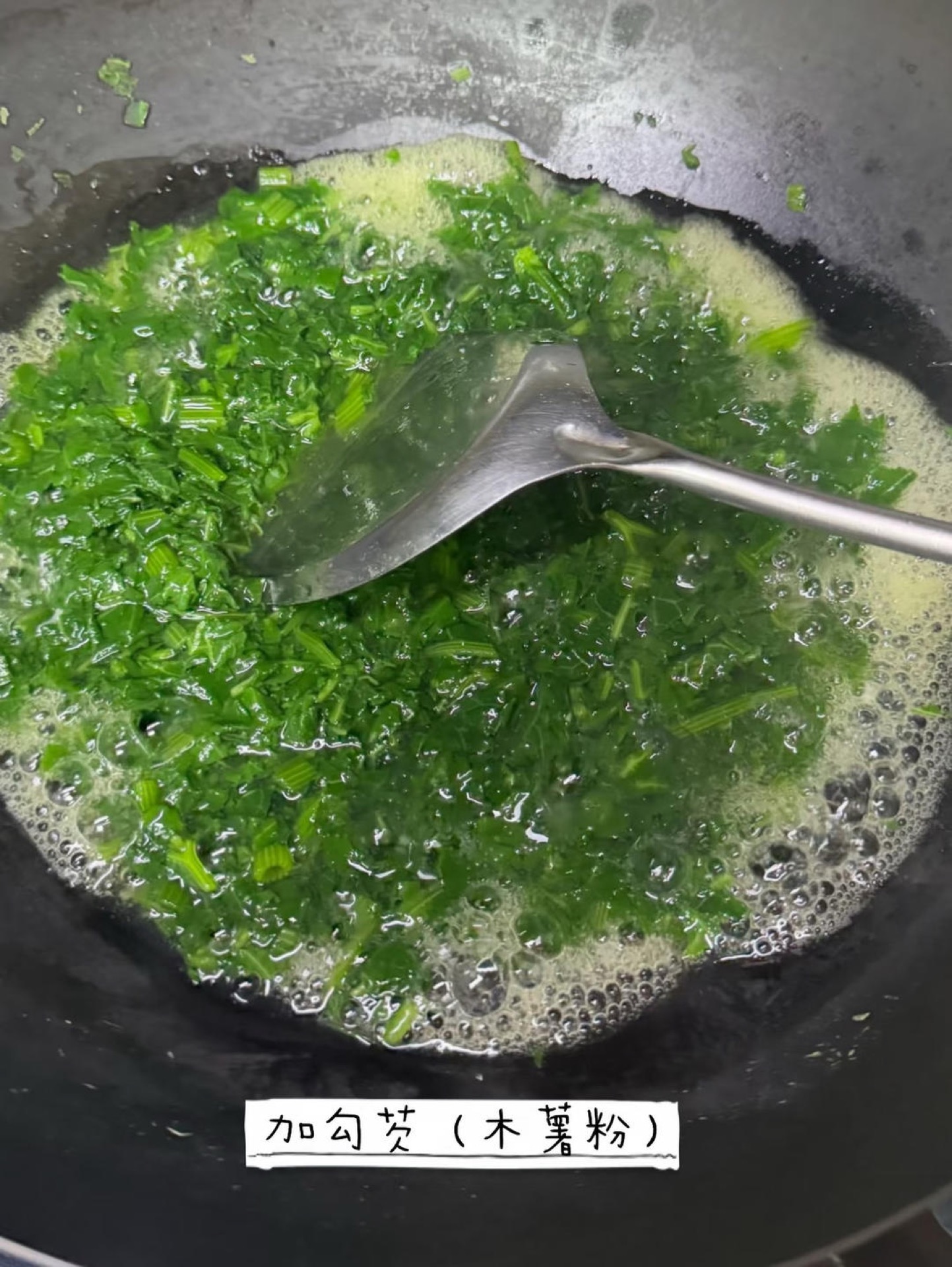
Step 5 — Finish with Lard and Bouillon
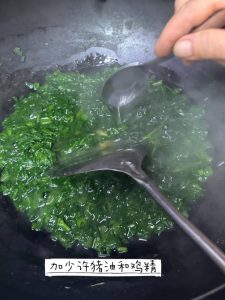
Turn off the heat, stir in the small amount of lard and chicken bouillon, and taste for salt.
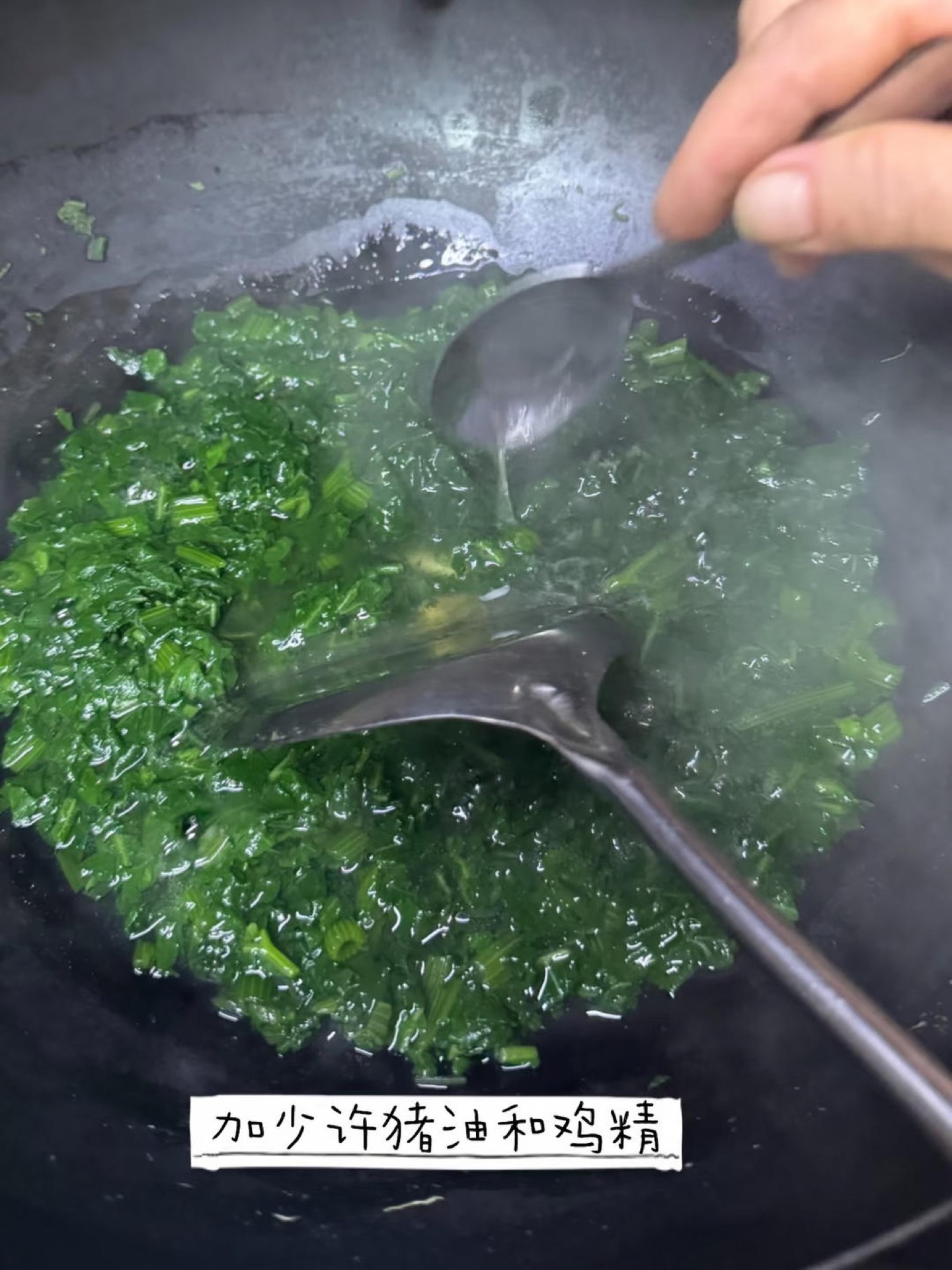
Step 6 — Serve
Ladle the soup into bowls and serve it hot.
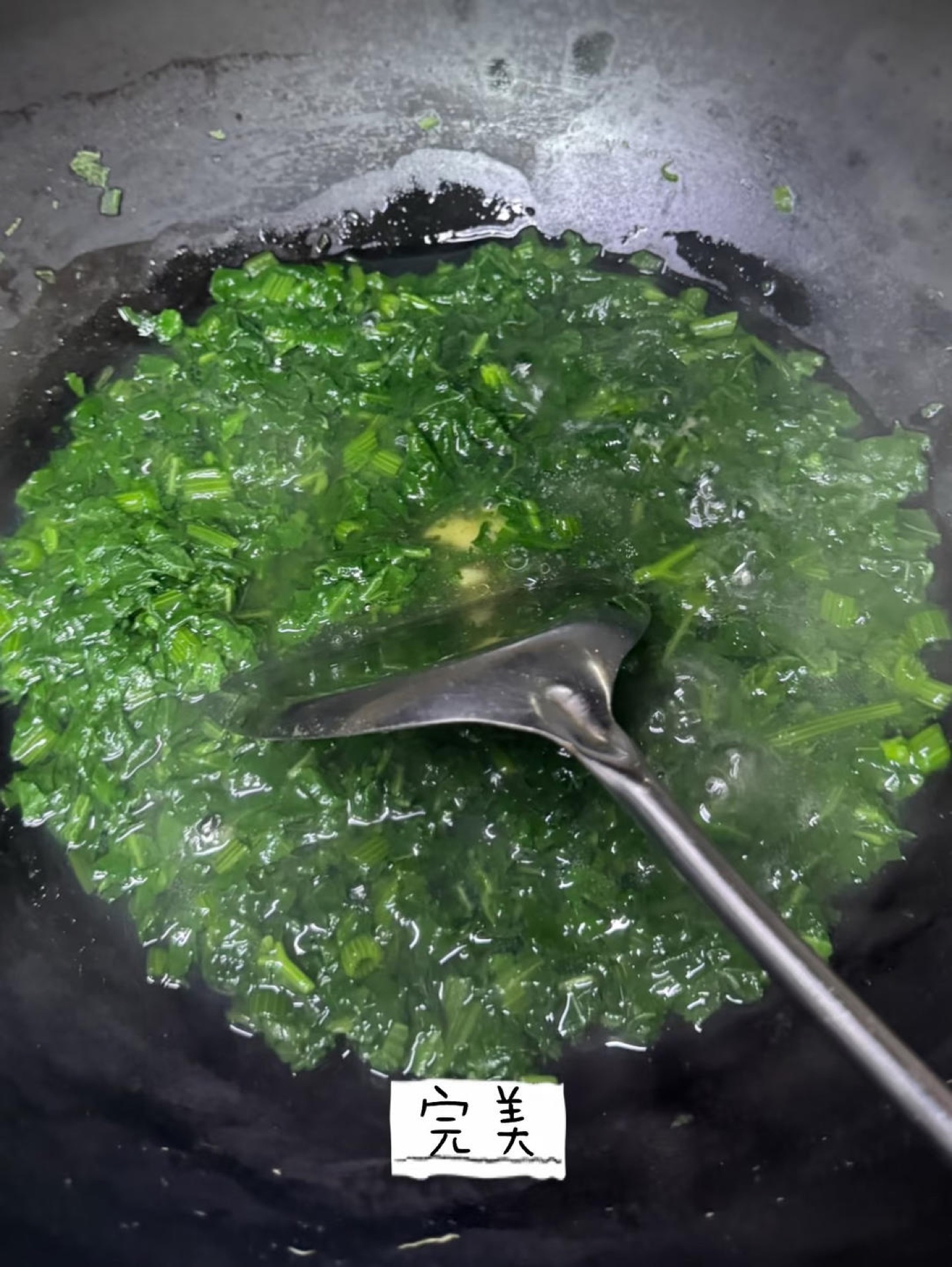
Step 7 — Enjoy
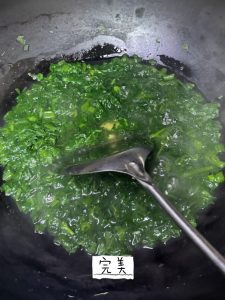
Serve it right away while it is hot, glossy, and green.
Common Mistakes When Making Pumpkin Leaf Thick Soup
1. Using tough, older leaves. The most common reason this soup turns out stringy and chewy is that the leaves were too mature. Older pumpkin leaves have thick fibers in the stems and veins that no amount of simmering will soften. The fix is simple: use only small, tender leaves and soft shoot tips, and strip away every stem that does not snap easily between your fingers.
2. Adding the starch slurry to a pot that is not boiling. Starch needs a rolling boil to swell and thicken properly. If you pour the slurry into a pot that is only simmering, or worse, one that has been taken off the heat, the starch will sit at the bottom and turn into a gluey layer instead of thickening the soup. The fix: bring the soup to a full, vigorous boil, stir the slurry once more, and pour it in a thin stream while stirring constantly.
3. Dumping the slurry in all at once. Even in a boiling pot, a single large addition of slurry can seize into lumps before it disperses. The fix is to pour slowly, in a thin ribbon, with one hand while the other stirs the soup in a steady circular motion. If lumps do form, press them against the side of the wok with the back of your ladle and keep stirring.
4. Over-thickening the soup. A geng should be silky and spoonable, not stiff. Tapioca starch keeps thickening as it cooks, so a slurry that looks too thin at first can turn gluey two minutes later. The fix: add about two-thirds of the slurry, stir, and wait thirty seconds before deciding whether you want more. If it gets too thick, simply stir in a splash of hot water.
5. Boiling the soup after adding the lard and bouillon. These two are added off the heat for a reason. Boiling them hard drives off their aroma and can make the soup taste flat. The fix: turn off the burner, then stir in the lard and bouillon and let the residual heat melt and disperse them.
6. Undersalting a very simple soup. With so few ingredients, salt is doing most of the flavor work, and a bland pumpkin leaf geng tastes like nothing at all. The fix: taste after the bouillon goes in and add salt in small pinches until the green flavor suddenly pops forward. That is the moment the soup is seasoned correctly.
Variations
Thinner, broth-style version. If you would rather have a soup than a geng, simply add more water and use less starch — or skip the slurry entirely. The leaves, salt, lard, and bouillon make a perfectly good clear green broth, and it is a nice way to stretch a small bunch of leaves further.
With egg ribbons. Once the soup is thickened and off the heat, slowly drizzle in one beaten egg while stirring gently in one direction. The egg sets into delicate ribbons and turns this into a heartier bowl that eats almost like a meal.
With tofu or minced pork. A handful of silken tofu cubes added with the water, or a tablespoon of browned minced pork stirred in at the end, adds protein and makes the soup more substantial. If you use pork, brown it first in the wok before the leaves go in and use the rendered fat in place of the lard.
With garlic and ginger. A couple of smashed garlic cloves or a few thin slices of ginger added to the wok before the leaves gives the soup a warmer, more aromatic base. This is not traditional for the plain version, but it is a very good cold-weather adaptation.
With dried shrimp or scallop. A few dried shrimp, soaked and minced, simmered with the water adds a deep savory note that pairs beautifully with the sweet greens. Reduce the bouillon slightly if you go this route, since dried seafood is already salty.
Frequently Asked Questions
Can I use frozen pumpkin leaves? Yes, though the texture will be softer and less defined. Do not thaw them first — drop them into the hot wok straight from frozen and add an extra minute to the wilting stage to drive off the extra water they release.
Why did my soup turn out lumpy? Almost always because the slurry went into a pot that was not at a full boil, or it was poured in too fast. Both are easy to avoid: boil hard, stir constantly, and pour in a thin stream. If it has already happened, strain the soup or press the lumps out against the side of the wok.
Can I make this soup ahead of time? You can, but starch-thickened soups thicken further as they cool and sit, so the texture will be denser than when freshly made. Reheat gently with a splash of water and stir well, and the consistency comes back nicely.
Is this soup supposed to be sweet? Slightly, yes. Pumpkin leaves have a natural mild sweetness, and that is part of what makes the soup so pleasant. If yours tastes flat rather than sweet, it usually needs more salt rather than more sugar.
Do I have to use lard? No. Neutral oil works, and so does a teaspoon of sesame oil added at the end for aroma. That said, lard is what makes the traditional version taste the way it does, and a single tablespoon is enough to change the whole bowl.
How to Serve
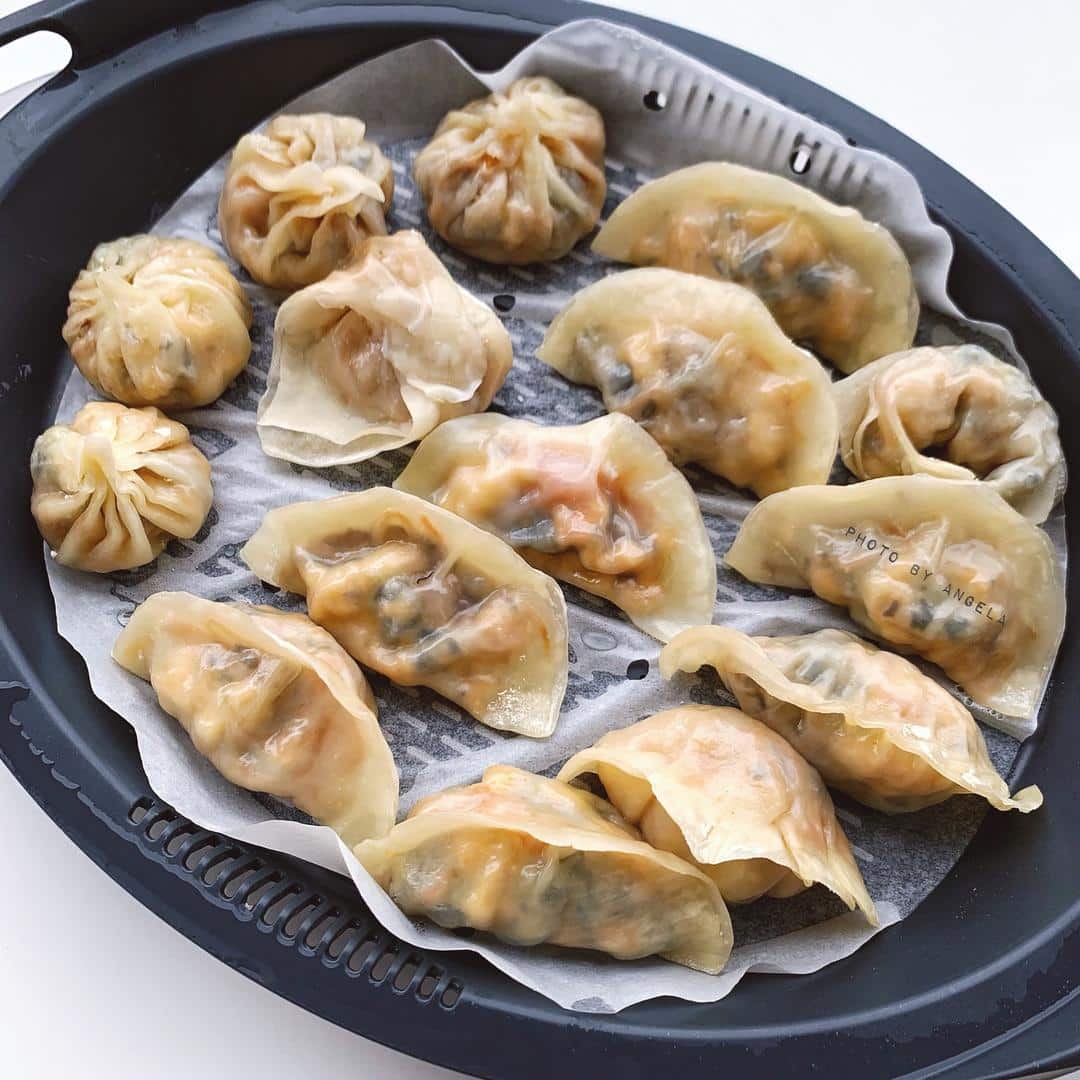
Pumpkin leaf thick soup is a rice-table soup, which means it is served alongside a meal rather than as a course on its own. It is especially good next to rich, salty braises, where its clean green flavor cuts through the fat — try it with apple braised pork steaks for a weeknight plate that balances sweet, savory, and green. If you are already making a bigger Chinese spread, it also works well with kung pao chicken, where the cool, silky soup is a nice contrast to the heat and crunch of the peanuts. And for a lighter meal, serve it with vegetable steamed dumplings for a simple, mostly-vegetable dinner that still feels complete.


Storage & Reheat
Store any leftover soup in an airtight container in the refrigerator for up to three days. Because the starch continues to set as it chills, the soup will be noticeably thicker when cold — this is normal and not a sign that anything went wrong. Reheat it gently on the stovetop over medium heat, stirring often, and add a splash of water or stock to loosen it back to a spoonable consistency.
This soup does not freeze well. Tapioca and cornstarch both break down when frozen and thawed, and the soup will separate into a watery liquid with a grainy sediment. If you want to make it ahead, cook the leaves and broth without the starch, refrigerate that for up to three days, and thicken it fresh when you reheat. That way the texture is right every time.
Reheat only what you plan to eat. Repeated heating and cooling breaks down the starch further and dulls the green color, so a single gentle reheat gives the best result.
Allergen Notice
The core ingredients in this recipe — pumpkin leaves, water, salt, tapioca starch, and lard — are not common allergens. The one ingredient to check is the chicken bouillon, since many commercial brands contain soy, wheat, or celery, and some contain small amounts of dairy. If you are cooking for someone with a soy or gluten allergy, use a bouillon you have verified, or replace it with a pinch of MSG or a few drops of a gluten-free soy sauce alternative.
If you add optional ingredients such as egg, tofu, or dried shrimp, the allergen profile changes accordingly. Egg and soy are both major allergens, and shellfish is one of the most common allergens worldwide. Always disclose any additions to your guests, and when in doubt, leave the optional ingredients out — the soup is excellent with nothing but the basics.
Nutrition Disclaimer
Nutrition information is calculated using an ingredient database and should be considered an estimate. In cases where multiple ingredient alternatives are given, the first listed is calculated for nutrition. Garnishes and optional ingredients are not included.
About the Author & Recipe Development
This recipe was developed and tested in the Woks of Love kitchen by Lin, who grew up eating geng soups like this one at the family table and has spent years documenting the everyday home cooking of southern China. The goal here was to keep the dish as close to its home-kitchen original as possible: no added stock, no cream, no fuss — just the leaves, a hot wok, and enough starch to make the broth silk.
Testing focused on two things. First, the wilting stage: how long the leaves should stay in the dry wok before the water goes in, and how that affects both color and flavor. Second, the slurry: how much starch is needed for a true geng texture without tipping into gluey, and how the soup behaves after chilling and reheating. The version here reflects what worked consistently across multiple batches with both tapioca starch and cornstarch.
If you cook this soup and find your leaves need more or less time depending on their size and freshness, that is expected — pumpkin leaves vary a lot. Adjust by texture, not by the clock, and the soup will come out right every time.
For another dish in the same spirit, braised chicken feet with tiger skin eggs is worth cooking next.
For another dish in the same spirit, pan fried pork belly Chinese BBQ style is worth cooking next.
Authoritative References
For safe handling and storage of cooked vegetable soups, the FDA guidance on refrigerator thermometers and cold food storage is a useful reference, and the USDA leftovers and food safety page covers the three-to-four-day refrigerator window for cooked dishes like this one. For a deeper look at how starch thickens liquids, Serious Eats’ guide to thickening with starches explains why a boiling pot and constant stirring are essential for a smooth slurry.
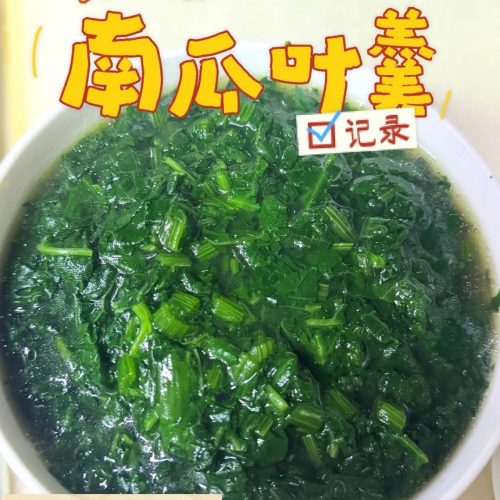
Pumpkin Leaf Thick Soup (南瓜叶羹): Silky Green Soup, Light and

Equipment
- Wok
- Cutting Board
- Slotted Spoon
Ingredients
For the Soup
- 1 lb pumpkin leaves tender shoots and young leaves only, tough stems discarded
- 4 cups water plus more to thin the soup if you prefer
- 1 tsp salt plus more to taste
- 1 tbsp tapioca starch or cornstarch, mixed with 2 tbsp cold water
- 1 tbsp lard or neutral oil
- 1/2 tsp chicken bouillon or 1/4 tsp MSG
For the Slurry
- 2 tbsp cold water for dissolving the starch
Instructions
- Rinse the pumpkin leaves well, strip the tender leaves and soft shoot tips away from any tough fibrous stems, then chop them finely and set them aside.

- Heat a wok over medium-high heat, add the chopped pumpkin leaves straight into the dry wok, and stir them around briefly for about a minute until they collapse and turn a deeper green.
- Pour in the water and bring it to a full boil, then add a pinch of salt and let the leaves simmer for about 2 minutes until fully tender.
- Stir the tapioca starch into the cold water, then pour the slurry into the boiling soup in a thin stream while stirring, and keep stirring until the broth turns glossy and lightly thickened into a geng; add more water if you would rather have a thinner soup.
- Turn off the heat, stir in the small amount of lard and chicken bouillon, and taste for salt.
- Ladle the soup into bowls and serve it hot.
- Serve it right away while it is hot, glossy, and green.












Leave a Reply