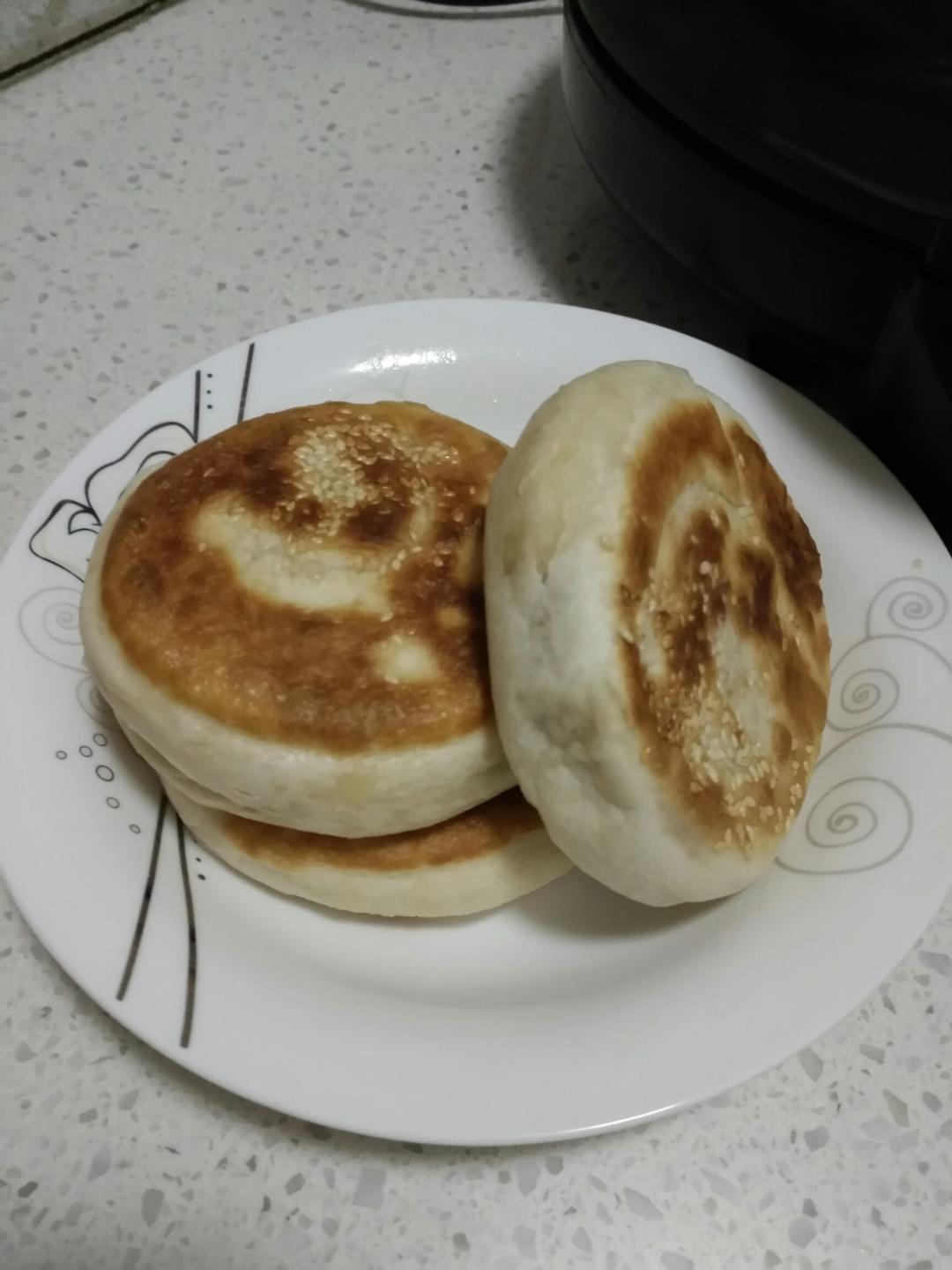
The bread my grandfather carried to the fields was this one – a flat disc of half-proofed dough, folded with a scraped spoon of spiced oil paste, and griddled until it puffed into a hollow pocket. This home cook writes the method twice, two ways to shape the same bread, with the plain instruction that the dough should be only half-proofed, because bread for stuffing should not be bread that springs back. I made it as written, and it is the most useful bread I have ever made: cut open, it is a built-in pita.
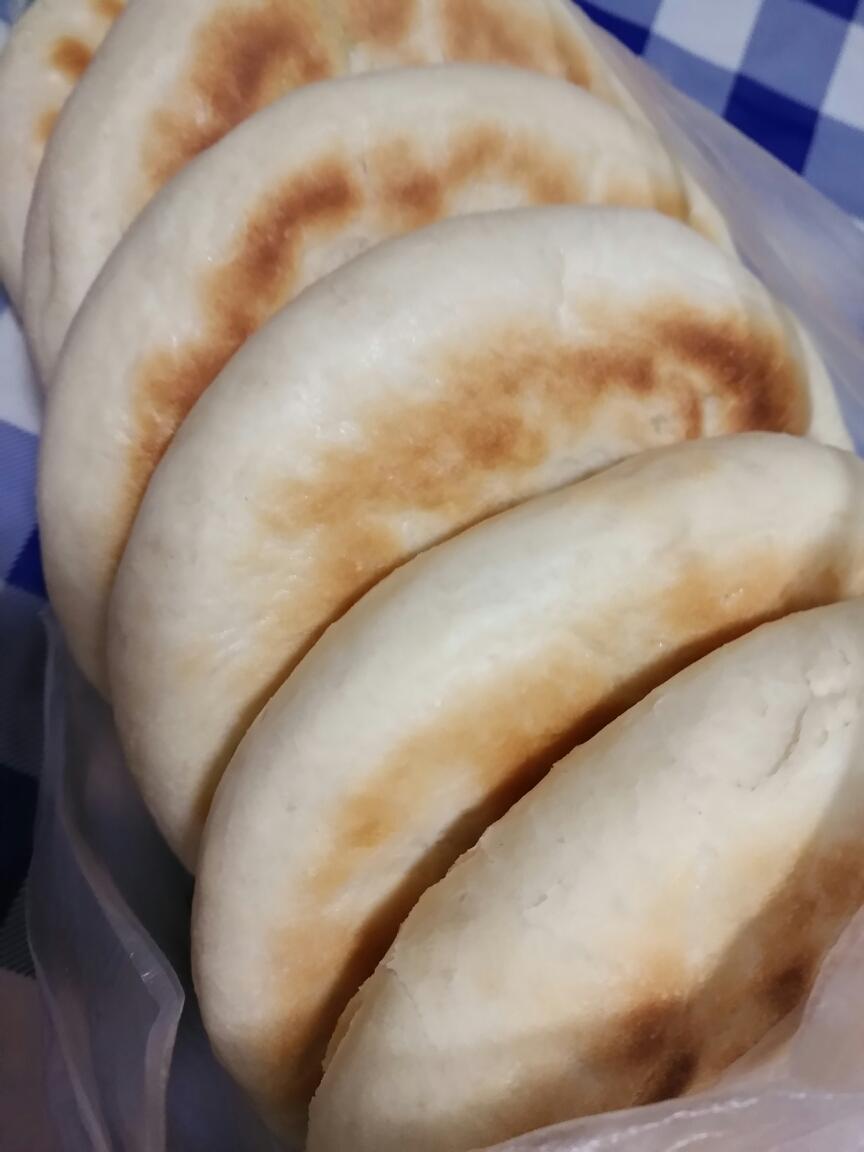
Kou dai da bing (口袋大饼) is pocket bread – a Chinese griddled flatbread of flour, yeast, and water, folded with an oil paste seasoned with salt, five-spice, and scallion, then cooked on an electric griddle until it puffs into a hollow pocket. The original is a 17-step recipe that teaches two shaping methods and insists on the same rule for both: the dough is half-proofed, not fully risen.
What Is Pocket Bread (Kou Dai Da Bing)?
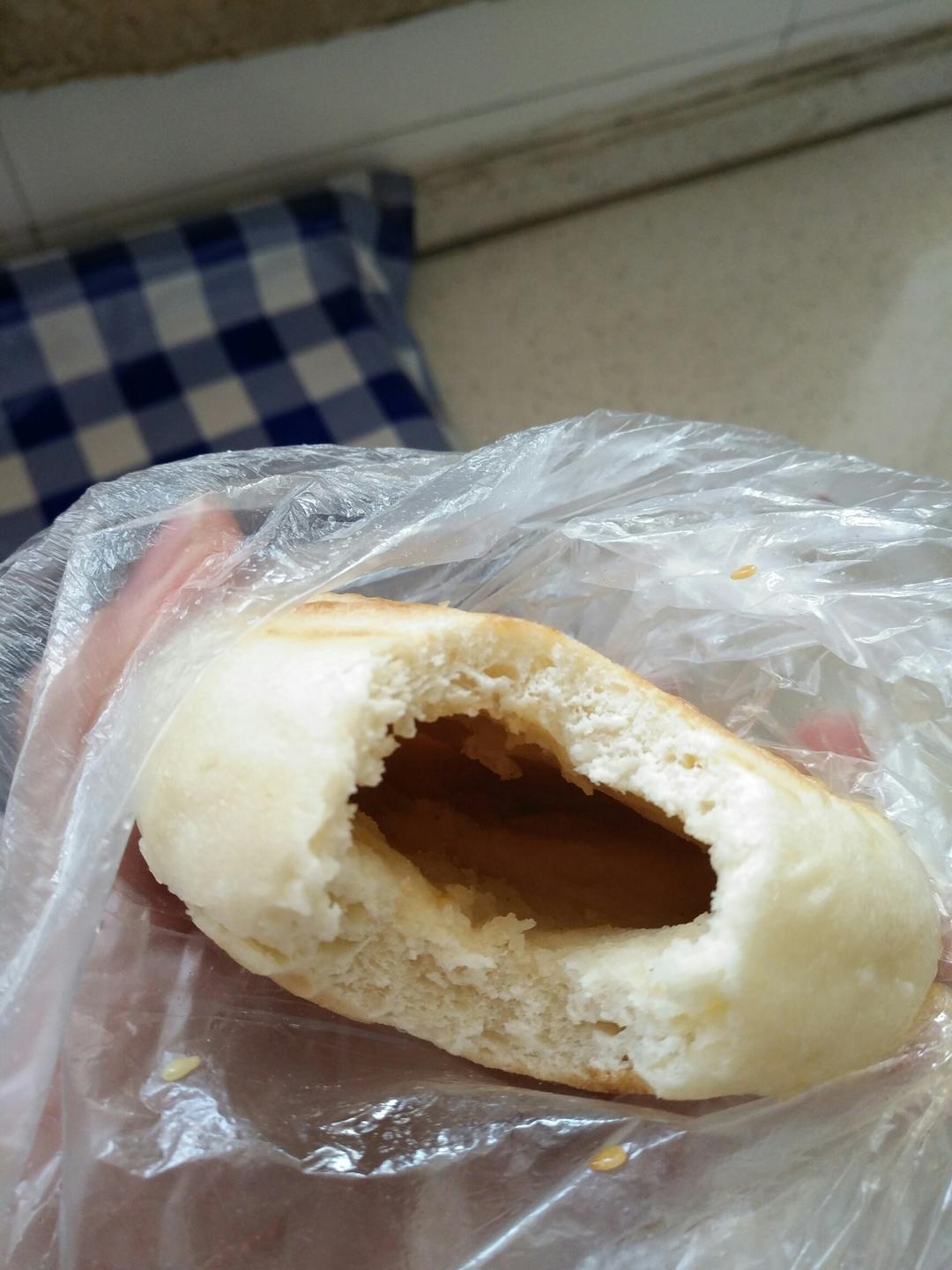
Kou dai da bing (口袋大饼) is a home-style Chinese flatbread: a soft, half-proofed dough rolled around a paste of flour, cooked oil, salt, five-spice, and scallion, then pressed flat and cooked on a griddle (electric or stovetop) until golden on both sides and hollow in the middle. Cut open, the bread forms a natural pocket – the original’s point – ready to be stuffed with whatever you like, or eaten plain because the seasoned oil paste already carries flavor.
The technique is two lessons in one. First, half-proofing: the recipe warns not to let the dough fully rise, because the pocket needs a dough that will still spread and puff in the pan, not one that springs back at you. Second, the oil paste: flour mixed with cooked oil (and salt, five-spice, scallion if you want flavor) is what separates the dough into two skins – when the bread hits the heat, the layers balloon apart into a pocket. The two shaping methods – a simple sealed disc and a rotated, thumb-pressed ball – both end at the same place: a golden, hollow flatbread.
For the flaky, laminated side of the Chinese griddle, my flaky scallion pancakes are the sibling of this pocket bread.
1Flaky Scallion Pancakes (Cong You Bing / 葱油饼)A classic Chinese street food made easy. This recipe yields incredibly flaky and layered scallion pancakes that are crispy on the outside, chewy on the inside, and stay wonderfully soft even when they cool down.Check out this recipe

Why This Version Works
- Half-proofed is the rule. The dough rests only partway – fully risen dough springs back and refuses to form the pocket. The original says it plainly: we want the half-proofed state.
- The oil paste makes the pocket. Flour + cooked oil (with salt, five-spice, and scallion) forms the separating layer that balloons into the hollow.
- Warm water + a little sugar wakes the yeast. Dissolved and rested five minutes before mixing – the original’s starter step.
- Two shaping methods, one bread. The sealed-disc method and the rotated-ball method are both taught, and both end at the same golden pocket.
- The griddle does the puffing. Dry heat on an electric griddle (or a heavy pan) turns the two skins into one hollow – no oven needed.
Equipment Needed
- An electric griddle or a heavy stovetop pan
- A mixing bowl
- A rolling pin (optional – hands work)
- A spatula
Ingredients
- 500 g (3 3/4 cups) all-purpose flour
- 3-5 g (1-1 1/2 tsp) active dry yeast
- 250 g (1 cup) warm water
- A little sugar, for the yeast water
- A little neutral oil, for the dough
- For the oil paste: flour + cooked neutral oil + salt, five-spice powder, and scallion to taste
Ingredient Notes
Flour: 500 g (3 3/4 cups) of all-purpose (中筋) flour. The bread is soft and chewy, not enriched – plain flour is the point.
Yeast: 3-5 g (1-1 1/2 tsp) active dry yeast, dissolved in warm water with a pinch of sugar and rested five minutes until it bubbles – the original’s step one.
The oil paste: A few spoonfuls of flour mixed with cooked (warm) oil until it forms a thin paste. Salt, five-spice, and chopped scallion make it flavorful – the original suggests all three. My pork and onion guokui uses the same seasoned-paste idea.
Prep & Mise en Place
Dissolve the yeast in warm water with a little sugar and rest 5 minutes. Mix the flour, add the yeast water gradually (the recipe’s water is a guide – you want a very soft dough), add a little oil, and knead smooth. While it rests, make the oil paste.
The critical note: let the dough rise only to the half-proofed stage – the recipe warns against over-proofing, because this bread is made to be pressed flat and puffed, not springy.
Cooking Process
Step 1 – Wake the Yeast
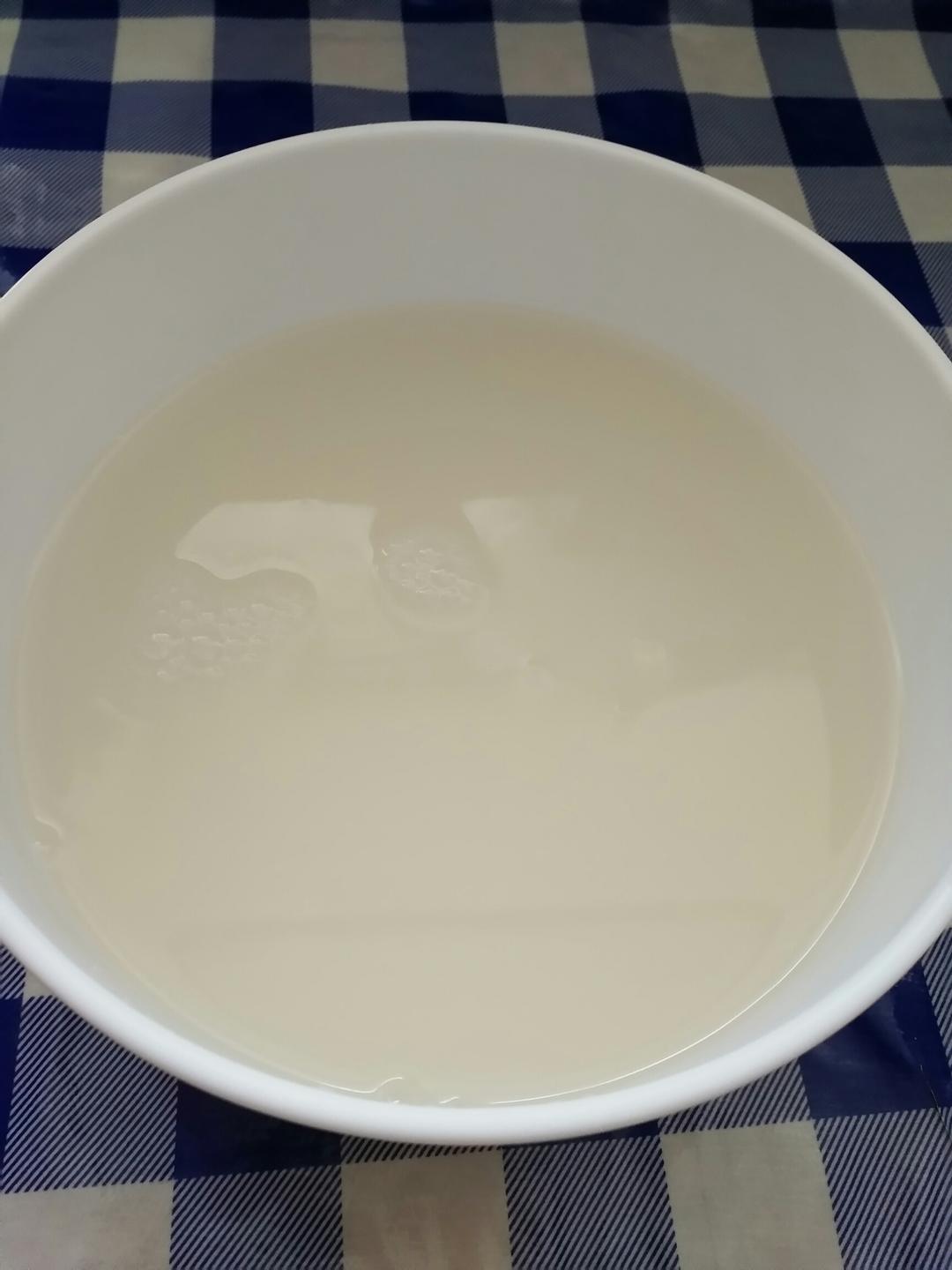
Dissolve the yeast and a little sugar in warm water, stir, and let it sit about five minutes until it wakes and bubbles – the original’s first step.
Step 2 – Mix the Dough
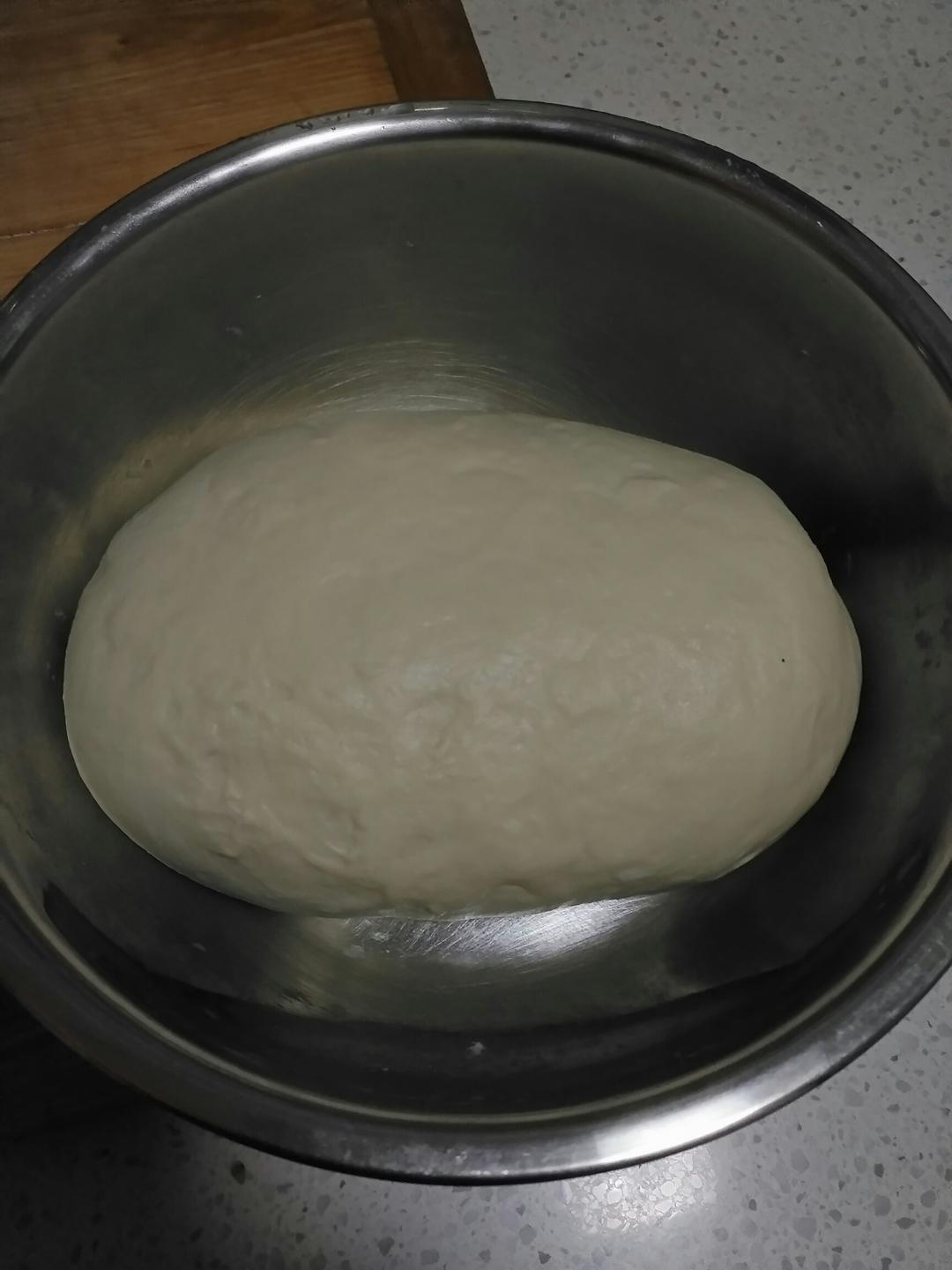
Add the yeast water gradually to the flour, stirring with chopsticks until shaggy, add a little oil, then knead into a smooth, soft dough – the original’s method.
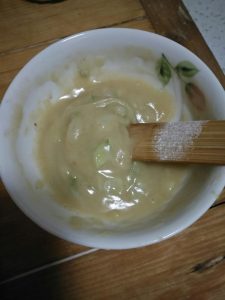
Step 3 – Make the Seasoned Oil Paste
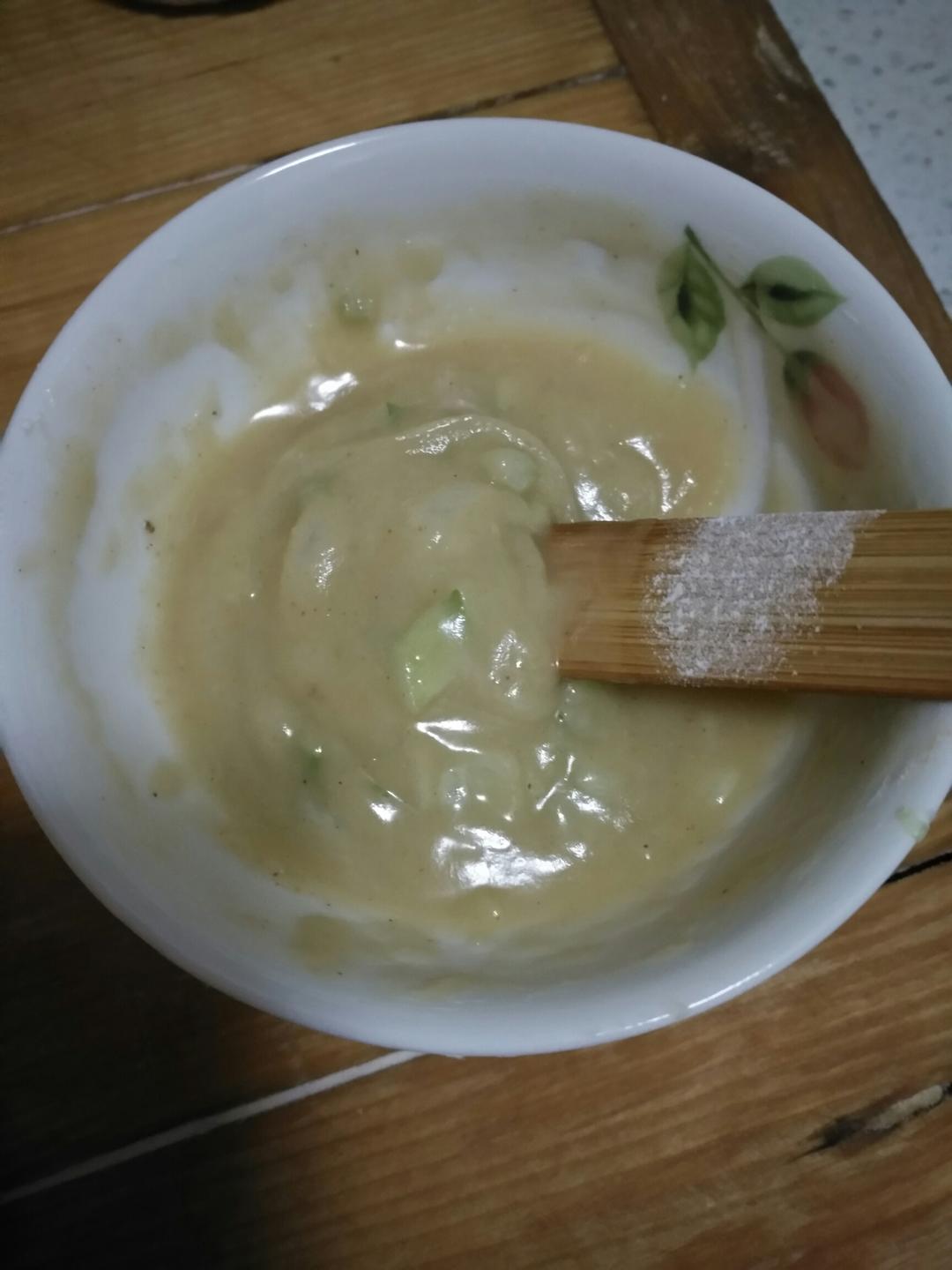
While the dough rests, mix flour with cooked oil until it forms a thin paste. Add salt, five-spice, and chopped scallion for flavor – the layer that becomes the pocket.
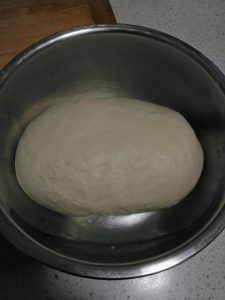
Step 4 – Rest to Half-Proofed, Not More
Let the dough rest only until half-proofed – the original’s firm instruction. Bread for stuffing should still spread and puff, not spring back at you. Do not over-proof.
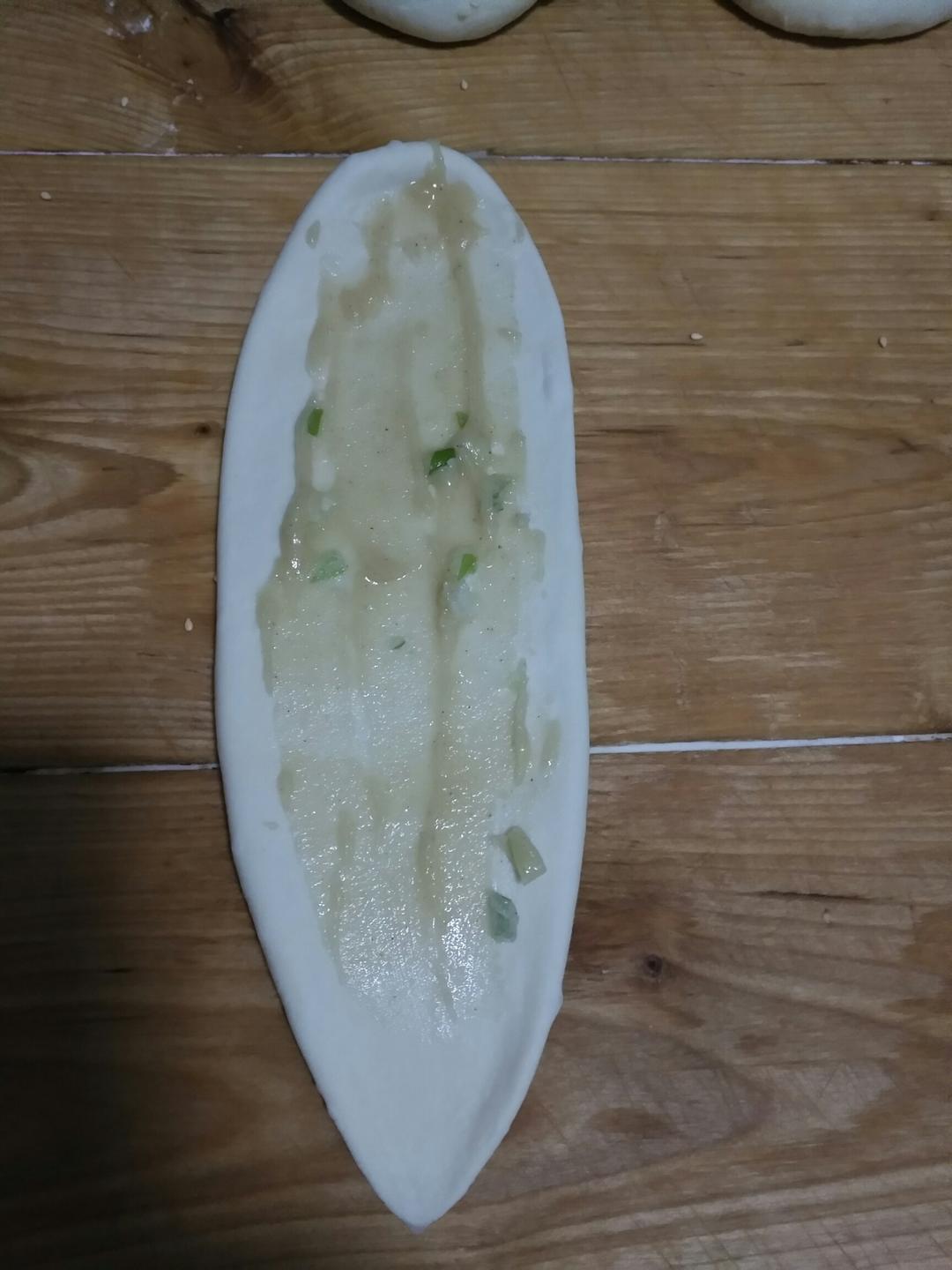
The counterintuitive detail: this bread asks you to UNDER-proof the dough. A fully risen dough has built the gluten strength to spring back when pressed – exactly what you do not want when pressing it flat for the griddle. The half-proofed dough stays relaxed, spreads thin, and puffs into the pocket; the over-proofed dough fights you and bakes dense. Half is the whole point.
Step 5 – Method One: Seal the Disc
Pull off a piece of dough the size you would use for a steamed bun. Press the two sides gently with your palm to seal – the first shaping method’s start.
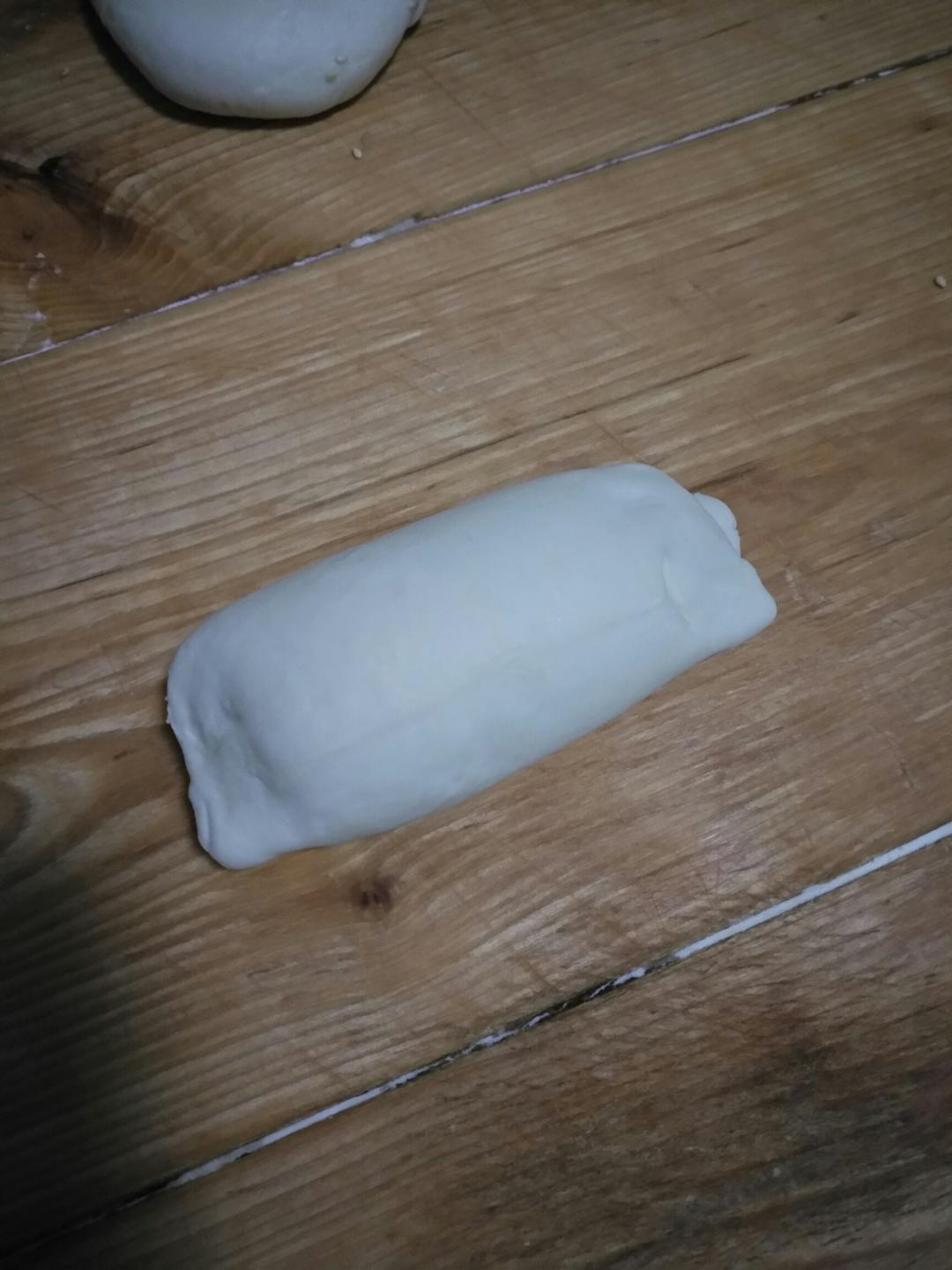
Step 6 – Stand It Up
Stand the piece up on its sealed edge – this helps the dough keep its round shape as you work.
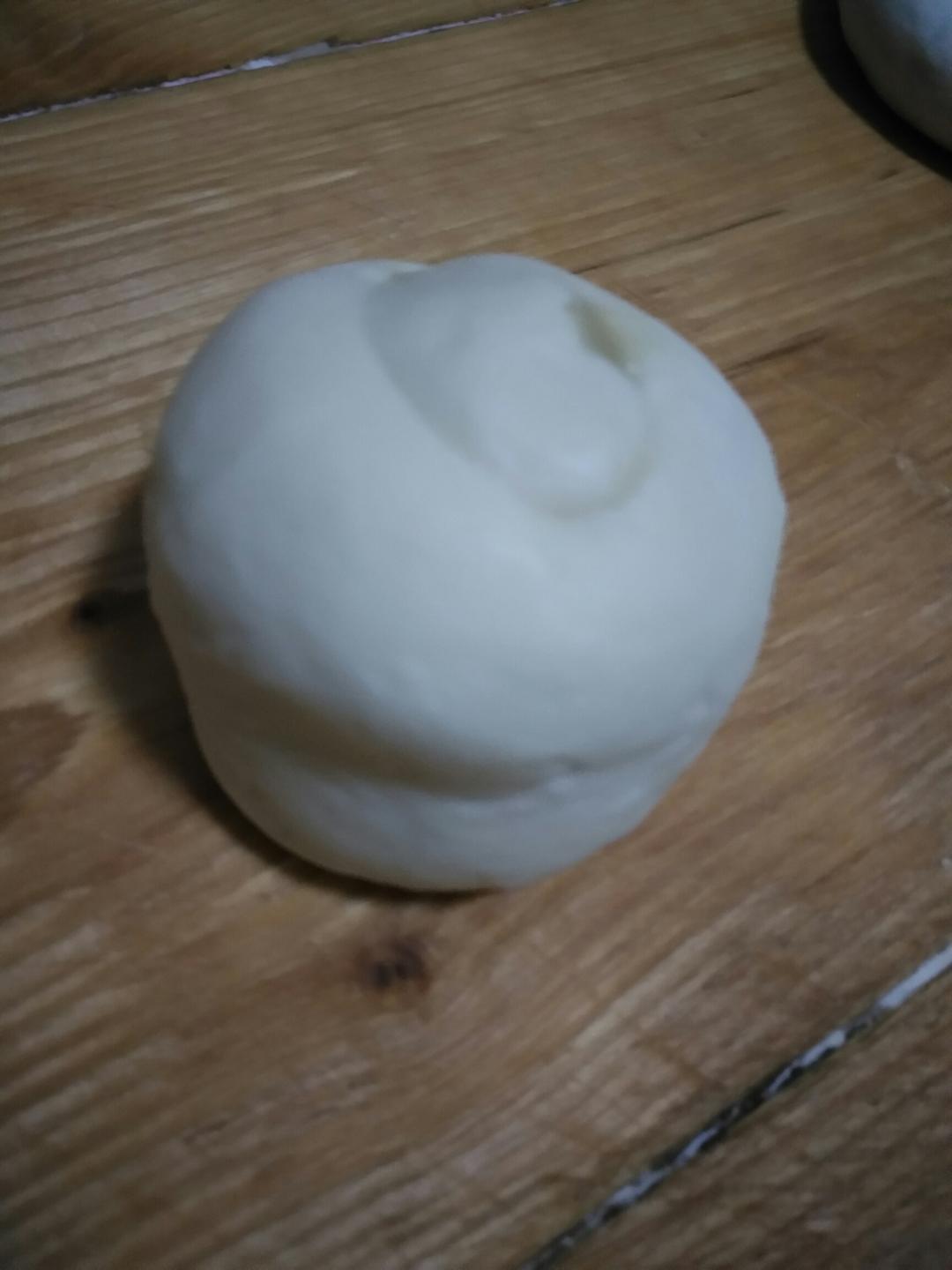
Step 7 – Press It Flat
Press it flat again with the palm – gently, so the layers stay intact. The pocket needs its two skins to stay separated.
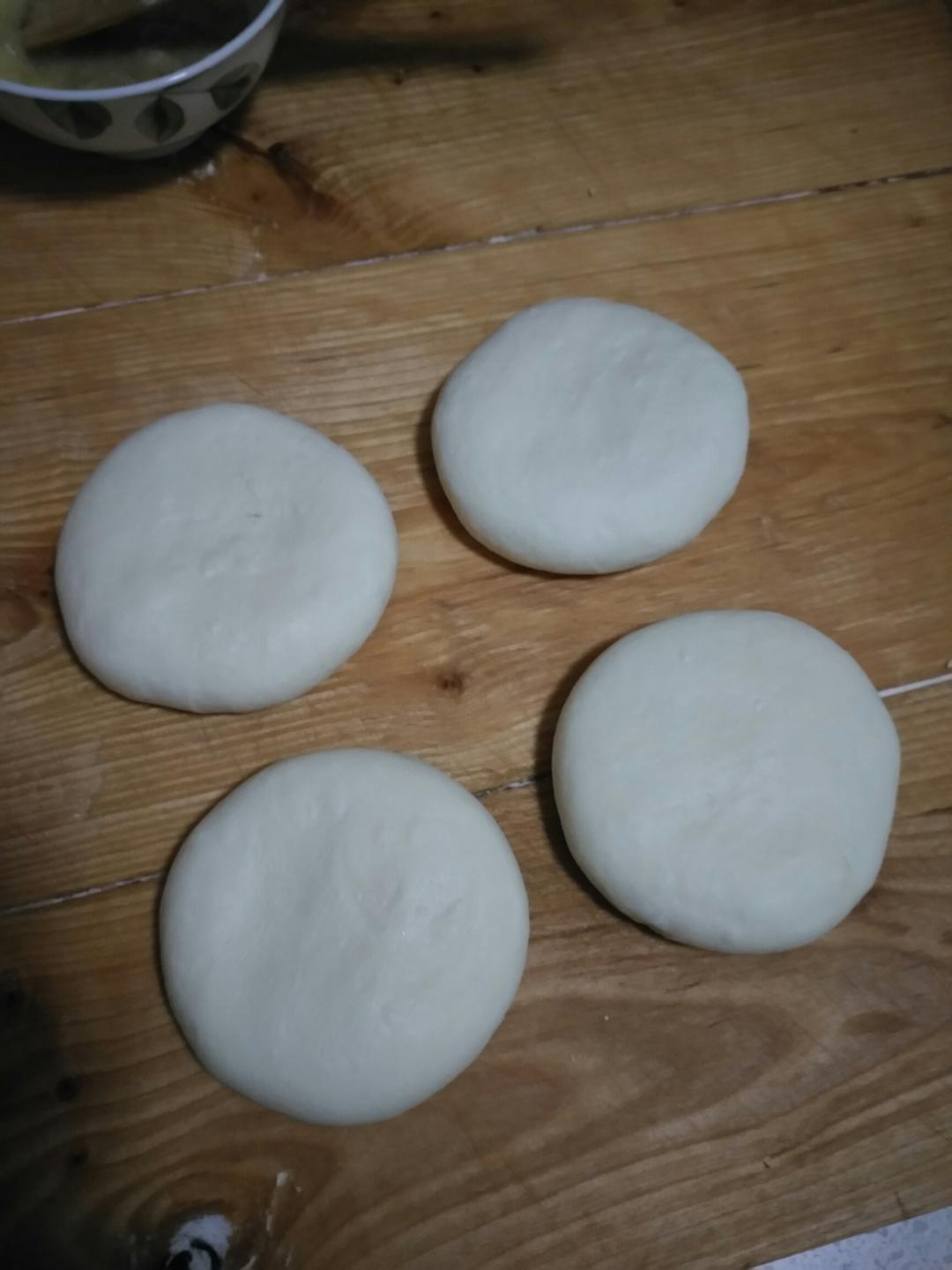
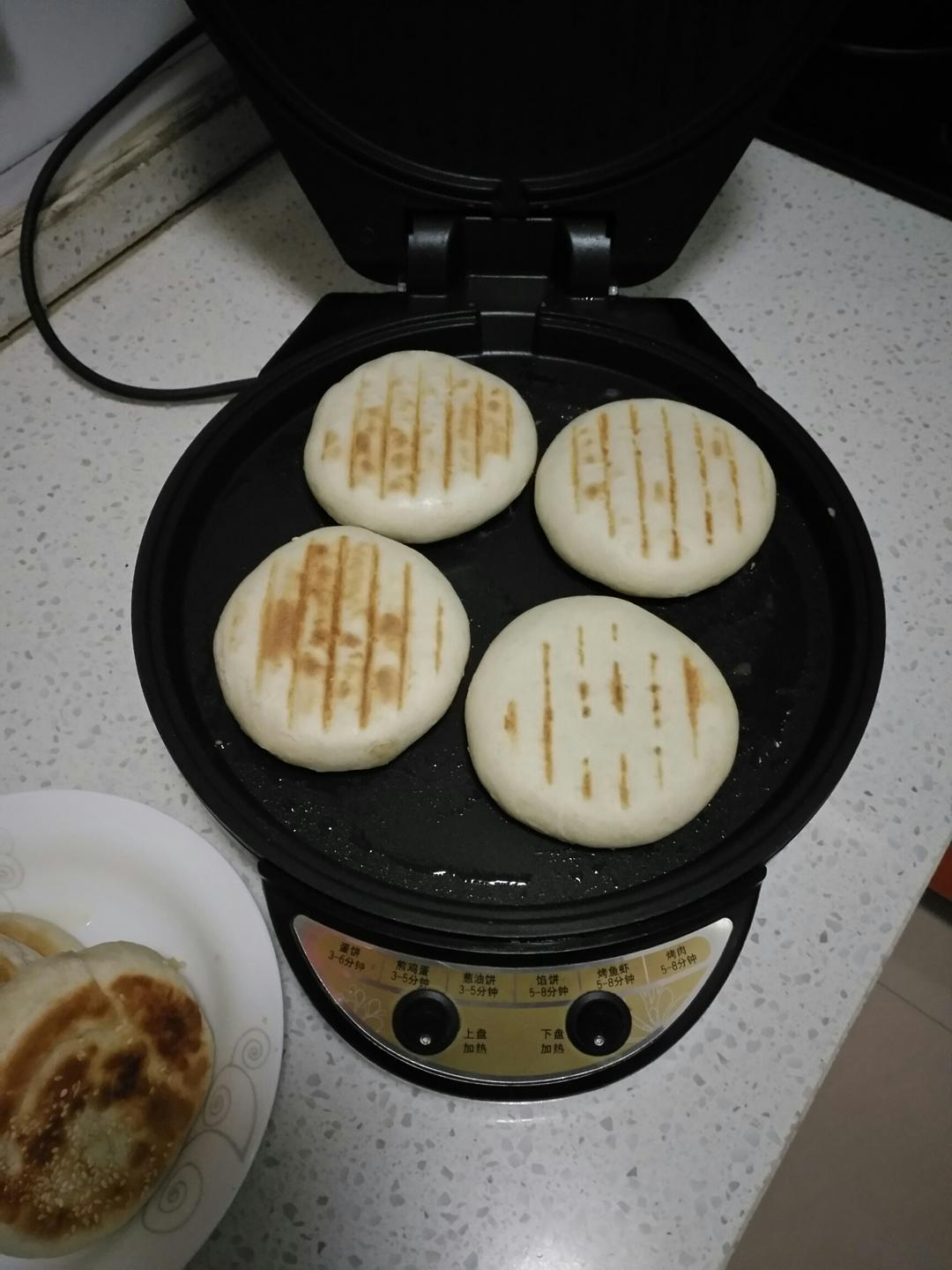
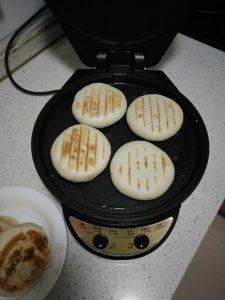
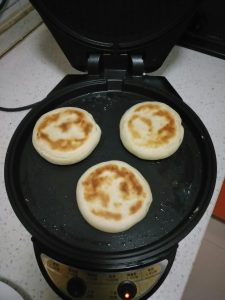
Step 8 – Griddle Until One Side Colors, Then Flip
Place it on the preheated electric griddle. When one side turns golden, flip it – the original’s timing.
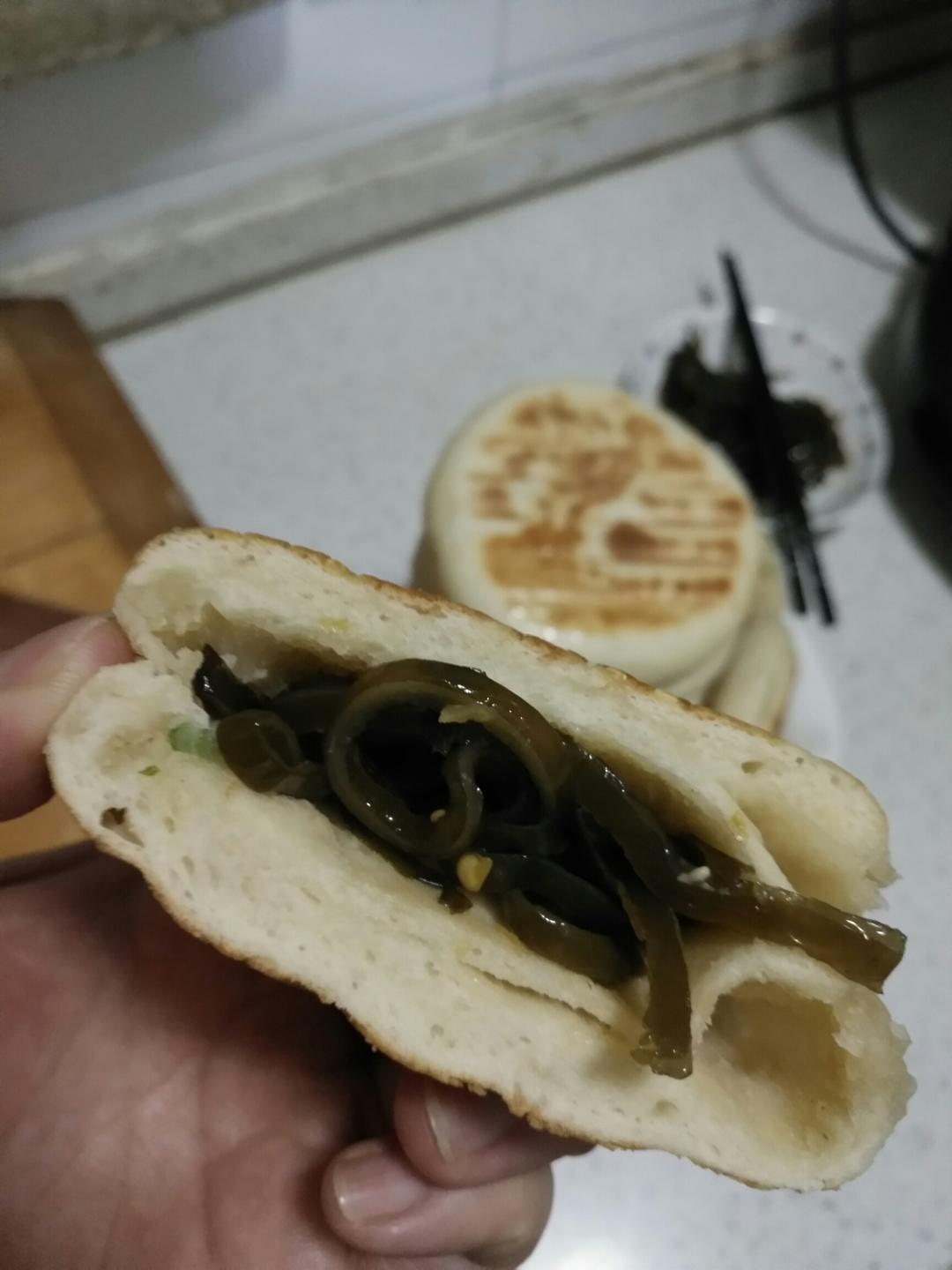
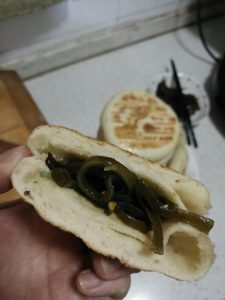
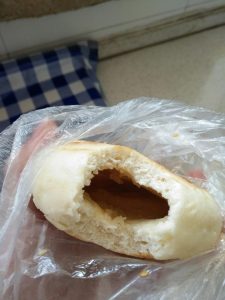
Step 9 – Cut It Open: The Pocket
Cut the finished bread open from the middle – see how easy the filling goes in? And because the paste is seasoned, even plain it tastes good – the original’s note.
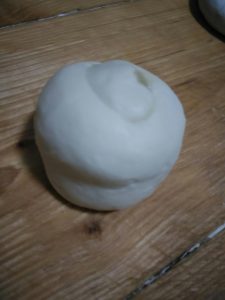
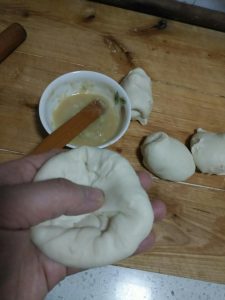
Step 10 – Method Two: The Rotated Ball
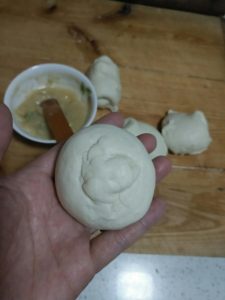
The second way: take a portion of dough and rotate it slowly between two hands while pressing the center with both thumbs, drawing out a smooth face – the same bread, a different start.
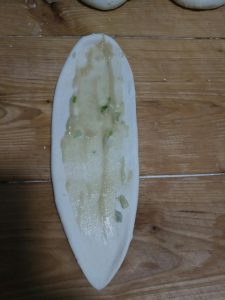
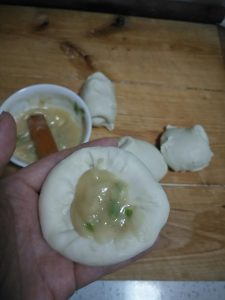
Step 11 – Fill the Well With Oil Paste
Set the oil paste in the little well at the center – the layer that will become the pocket.
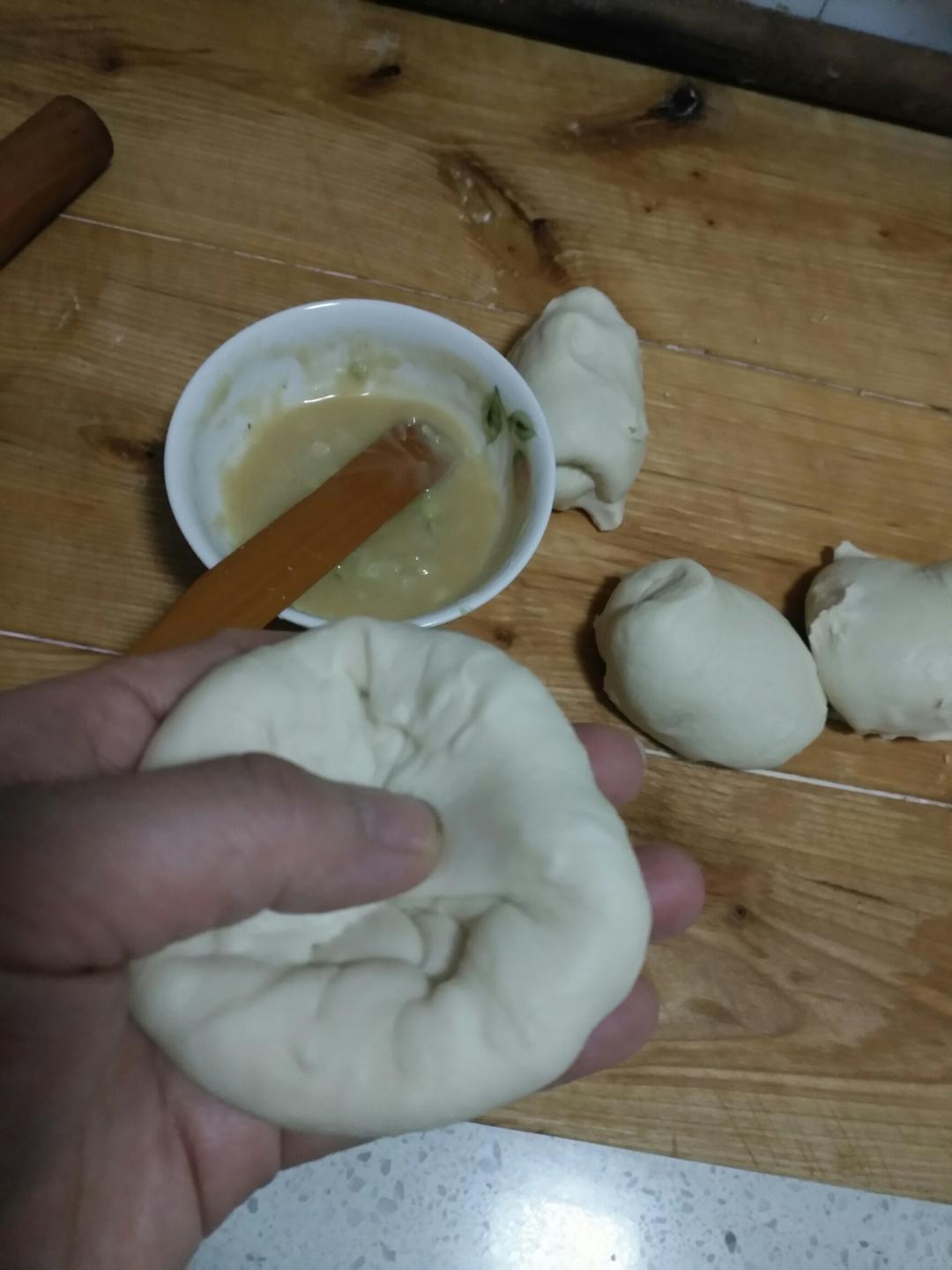
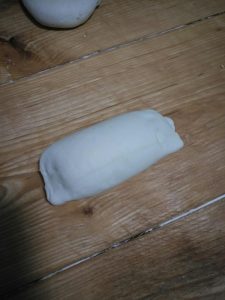
Step 12 – Seal It Closed
Gather the edges and seal – the paste is now sealed inside the two skins.
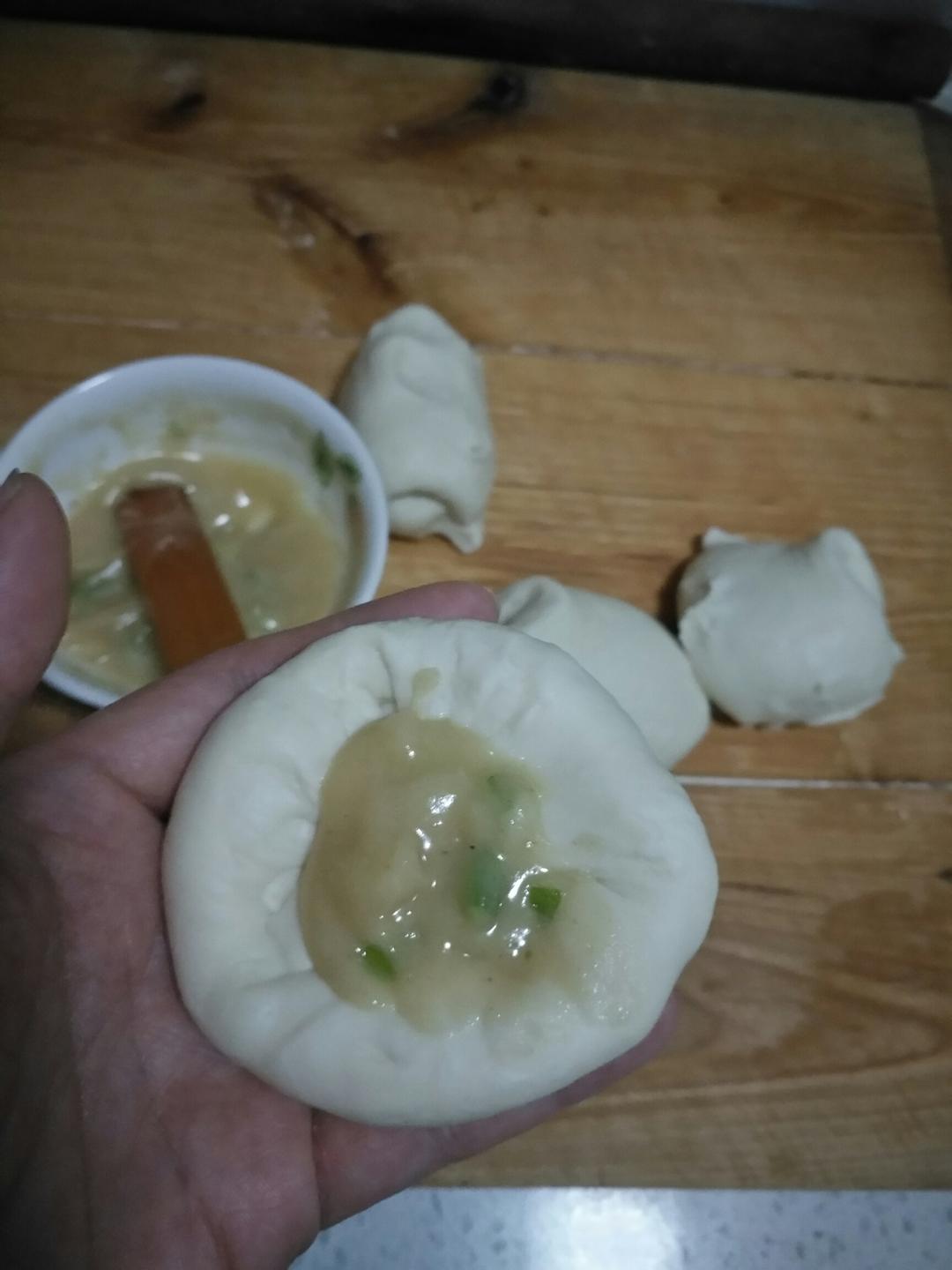
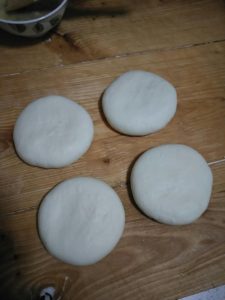
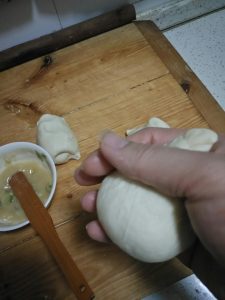
Step 13 – Press Flat, Not Too Thin
Press the sealed tail flat with the palm, then gently flatten the whole piece – but not too thin, the original warns. The pocket needs some body.
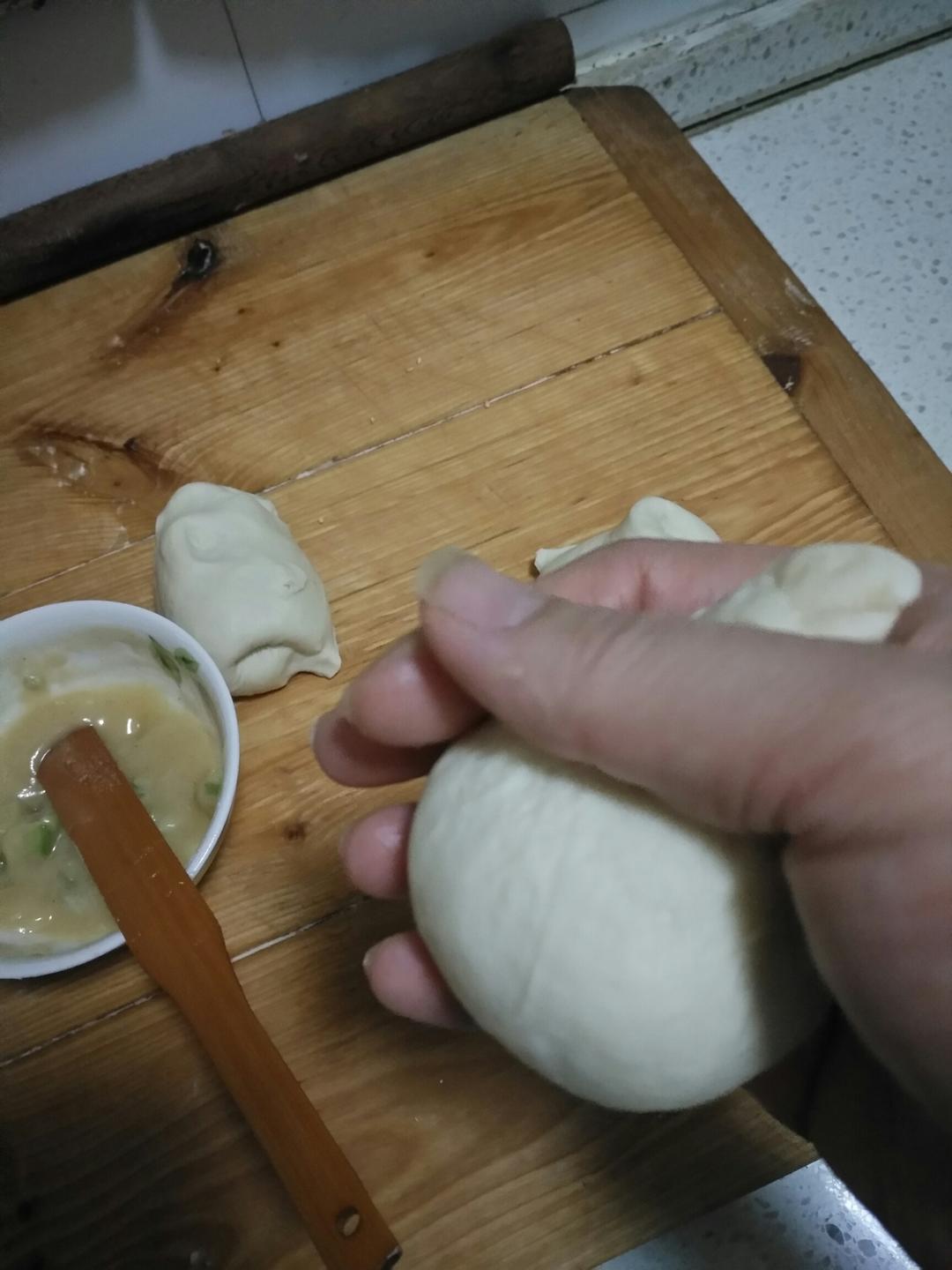
Step 14 – Griddle the Second Way
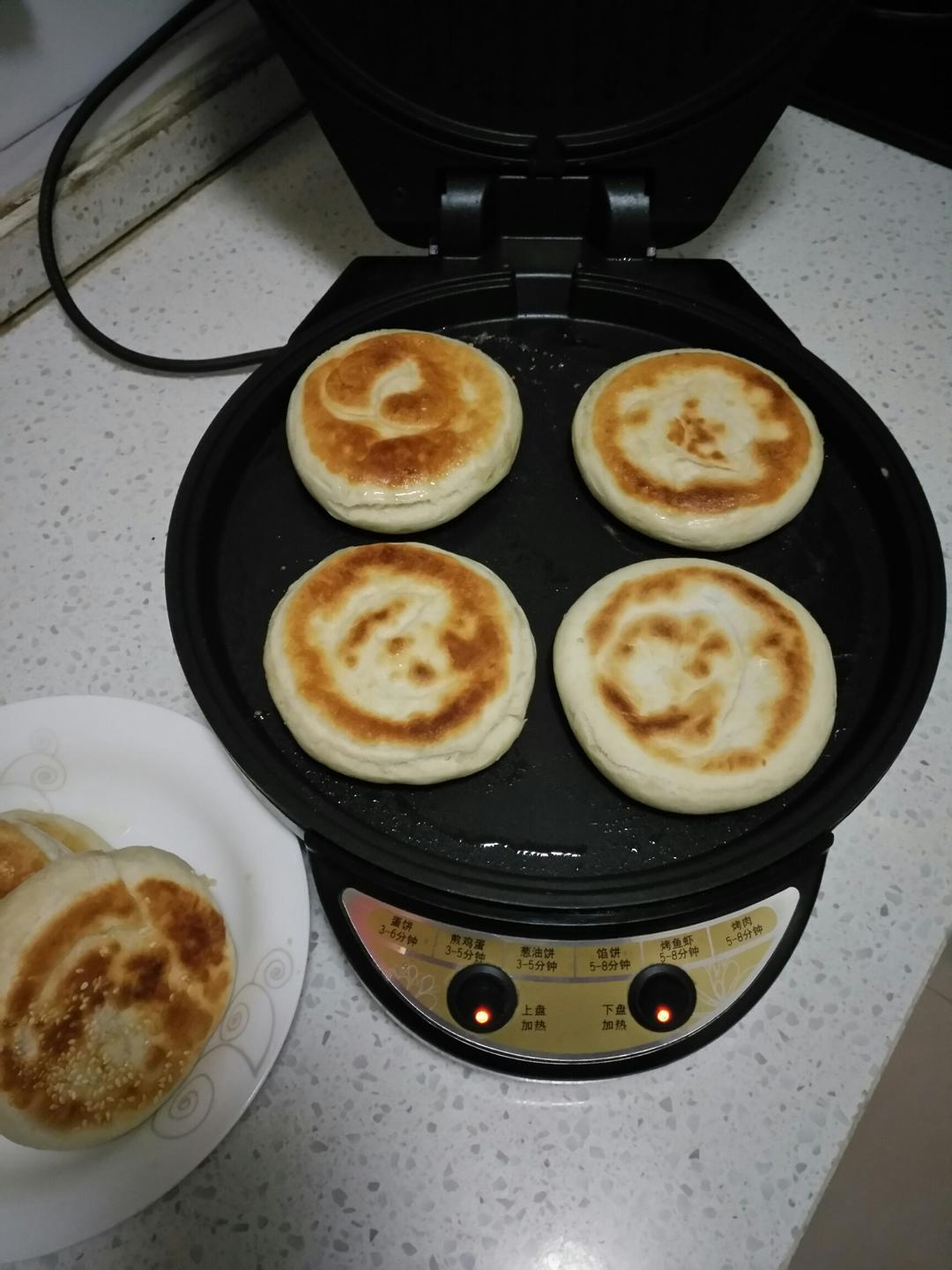
Griddle it the same way – golden on both sides, puffed in the middle.
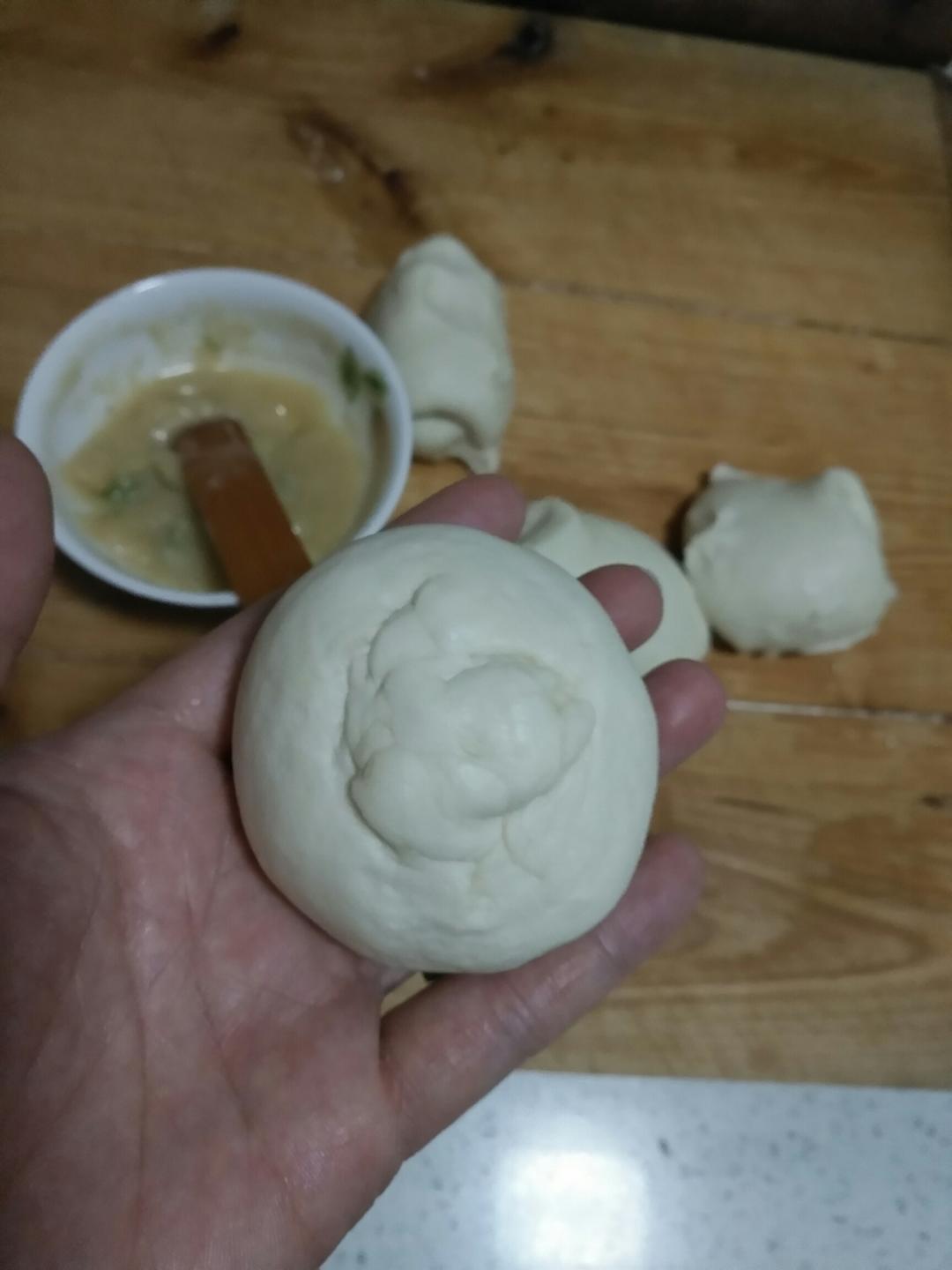
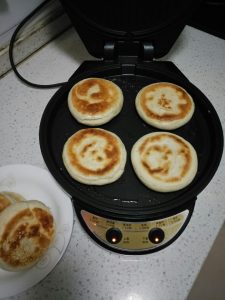
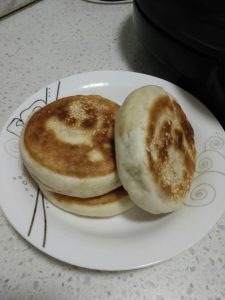
Step 15 – Out of the Pan
Out it comes, golden and steaming – the second method’s bread, ready for the same cut-and-stuff treatment.
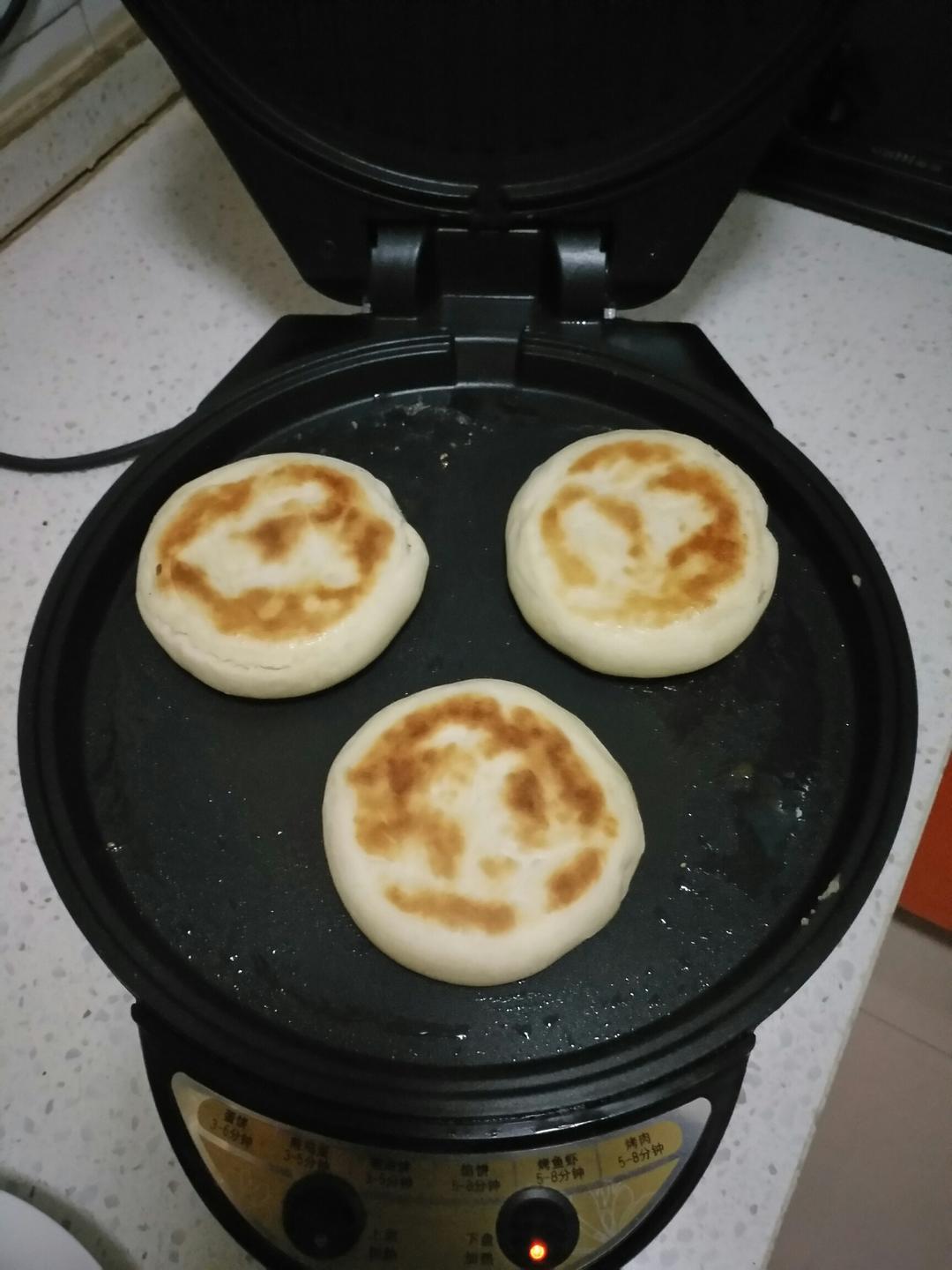
Step 16 – Bite and Check the Pocket
Bite a corner – see how easy the filling goes in? Fill it with whatever you love, and go.
Step 17 – The Stuffed Bite
Load your favorite dish into the pocket and eat. The original’s final line is the whole recipe: “put in the delicious dishes you like, and dig in.”
Common Mistakes When Making Pocket Bread
1. The bread springs back and will not flatten. Cause: the dough over-proofed. Fix: half-proofed only – the original’s explicit rule.
2. No pocket forms. Cause: the oil paste layer missing or too thin. Fix: paste generously – the separated layer is what balloons.
3. Dense, heavy bread. Cause: pressed too thin or the paste squeezed out. Fix: press gently, not too thin, and keep the seal intact.
4. Raw center. Cause: the griddle too hot. Fix: medium heat and give both sides time – the puff needs the interior to steam.
5. The dough tears when sealing. Cause: too little rest. Fix: half-proofed dough is relaxed; work gently and reseal.
6. A bland bread. Cause: unseasoned paste. Fix: salt, five-spice, and scallion in the paste – the original’s flavor layer.
Variations
Fillings: Stir-fried pork, egg, or vegetables – anything goes into the pocket. My thousand-layer meat pie shows the filled-bread family.
Whole wheat: Replace half the flour with whole wheat for a nuttier bread – expect a slightly firmer pocket.
Sesame: Press white sesame onto the face before griddling for a toasty crust.
The flatbread family: For more pan breads, my black pepper garlic pancake roll and pork and onion guokui fill out the griddle. For the steamed side, my Beijing-style xiao long bao and char siu bao round out a bread day.
Frequently Asked Questions
Why half-proofed? Fully risen dough springs back and fights the flattening; half-proofed dough stays relaxed and puffs into the pocket – the recipe’s core rule.
Can I use a regular pan? Yes – a heavy skillet on medium heat works; the electric griddle is just the original’s tool.
How long do they keep? Sealed at room temperature, 2 days; re-crisp on the dry griddle before eating.
Can I freeze the dough? Yes – freeze the shaped, ungriddled discs; griddle straight from frozen, adding a couple of minutes.
Do I need the scallion in the paste? No – salt and five-spice alone work; the scallion is the original’s flavor bonus.
How to Serve
Serve the bread warm, cut open and stuffed – with pork and onion guokui and flaky scallion pancakes for a full bread board, or with broccoli carrot egg pancakes for a breakfast spread.
Storage & Reheat
Store sealed at room temperature for 2 days, or freeze the shaped discs for a month. Reheat on a dry griddle or pan over medium heat until the crust re-crisps. Do not microwave – it steams the crust soft.
Allergen Notice
This recipe contains gluten (flour) and sesame (if using the sesame variation). It is free of soy, nuts, dairy, egg, and shellfish.
Nutrition Disclaimer
Nutrition information is calculated using an ingredient database and should be considered an estimate. In cases where multiple ingredient alternatives are given, the first listed is calculated for nutrition. Garnishes and optional ingredients are not included.
About the Author & Recipe Development
I am Lin, a professional Chinese chef and food writer with a decade in restaurant kitchens before turning to recipes. This xiachufang home cook’s pocket bread is my grandfather’s field bread, and the half-proofing rule is the recipe’s soul – I tested both shaping methods as written and confirmed that the under-proofed dough is exactly what makes the pocket. I have not tested the whole-wheat or sesame variations, so those are your experiments, not my claims.
Authoritative References
USDA Food Safety and Inspection Service – Safe Temperature Chart for dough and baked-good storage guidance.
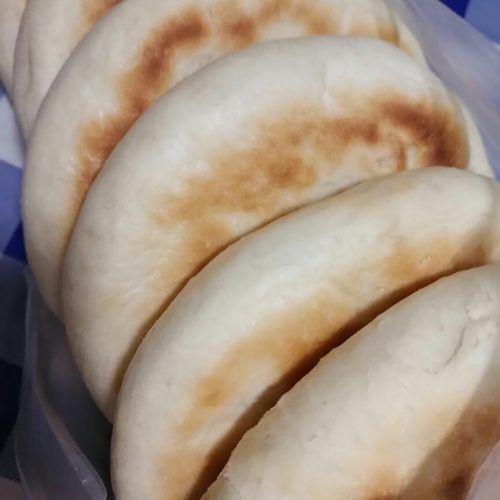
Pocket Bread (Kou Dai Da Bing): Half-Proofed Griddle Bread

Equipment
- Electric griddle or heavy pan
- Mixing Bowl
- Spatula
Ingredients
For the Dough
- 500 g all-purpose flour 3 3/4 cups
- 3-5 g active dry yeast 1-1 1/2 tsp
- 250 g warm water 1 cup, for the dough
- 1 pinch sugar for the yeast water
- 1 tbsp neutral oil for the dough
For the Oil Paste
- 3 tbsp all-purpose flour
- 3 tbsp cooked neutral oil warm
- to taste salt
- to taste five-spice powder
- 1 scallion, chopped optional
Instructions
- Dissolve the yeast and sugar in warm water; rest 5 minutes until it bubbles.

- Add the yeast water gradually to the flour, add a little oil, and knead into a soft smooth dough.
- Mix flour with cooked oil into a thin paste; season with salt, five-spice, and scallion.
- Rest the dough to half-proofed only – not fully risen.
- Method one: take a piece, press the sides gently to seal.
- Stand it up on its sealed edge.
- Press it flat again with the palm, gently.
- Griddle until one side colors, then flip.
- Cut open – the pocket is ready to stuff.
- Method two: rotate the dough and press the center with both thumbs to draw out a smooth face.
- Set the oil paste in the center well.
- Seal the dough closed around the paste.
- Press flat with the palm – not too thin.
- Griddle until golden on both sides and puffed.
- Out of the pan – golden and steaming.
- Cut or bite open to check the pocket.
- Stuff with your favorite dish and eat.












Leave a Reply