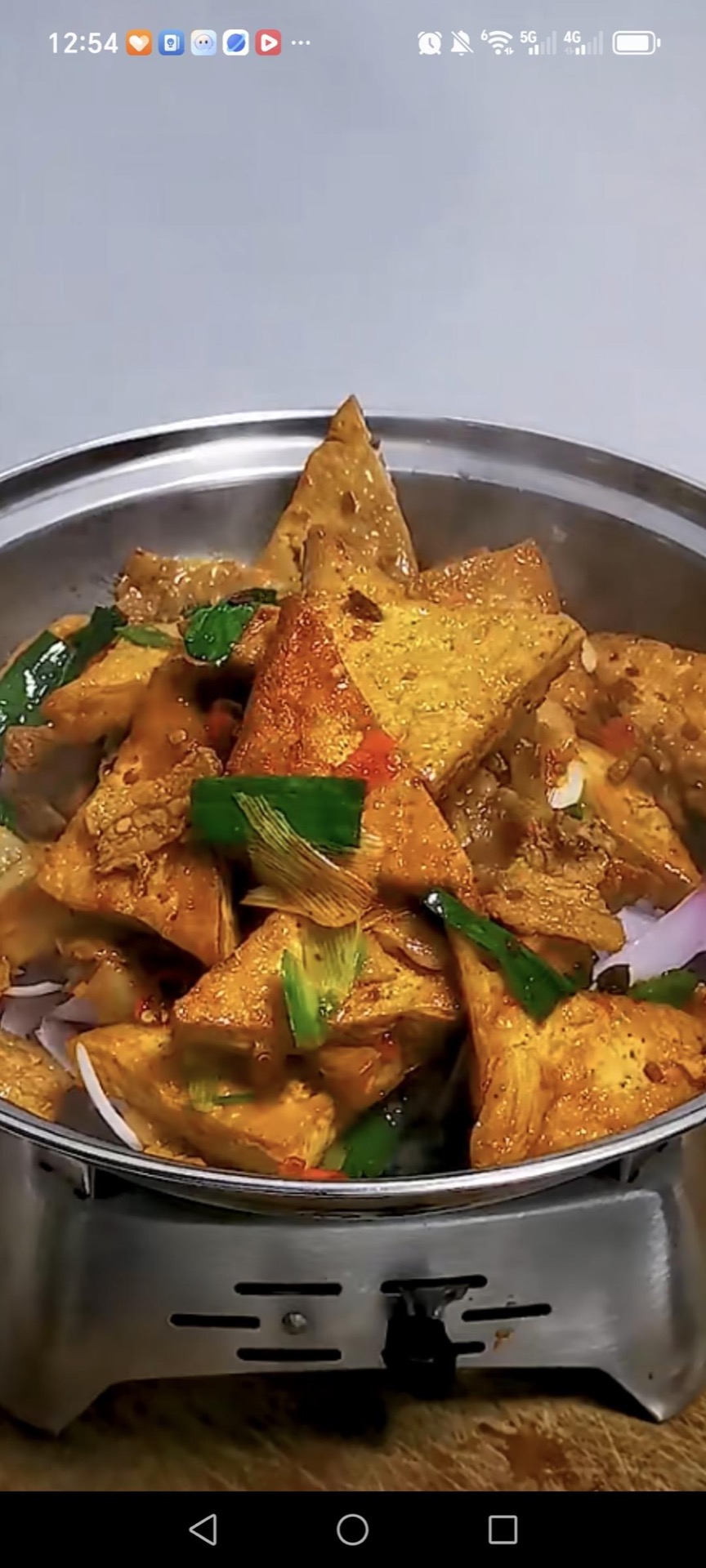
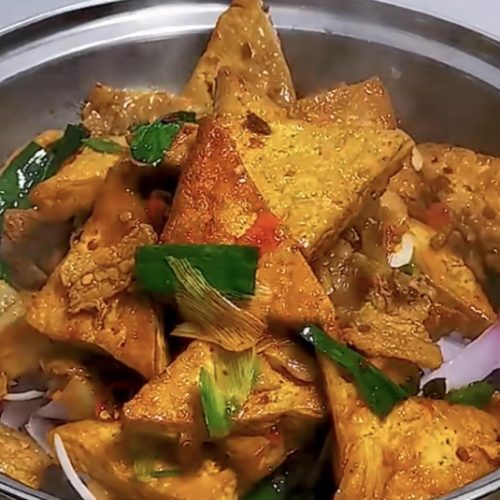
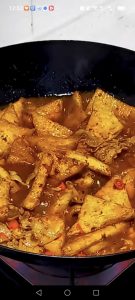
Dry pot tofu — 干锅豆腐 — is the dish that convinces skeptical eaters that tofu belongs on the same table as pork belly. The tofu is pan-fried until each triangle wears a golden, slightly chewy crust, then simmered briefly in a glossy sauce built from Sichuan chili bean paste, garlic, ginger, and fresh chilies. The pork belly crisps at the edges and gives every bite a rich, savory backbone, while the garlic sprouts and a last-second splash of black vinegar keep the whole thing bright rather than heavy.
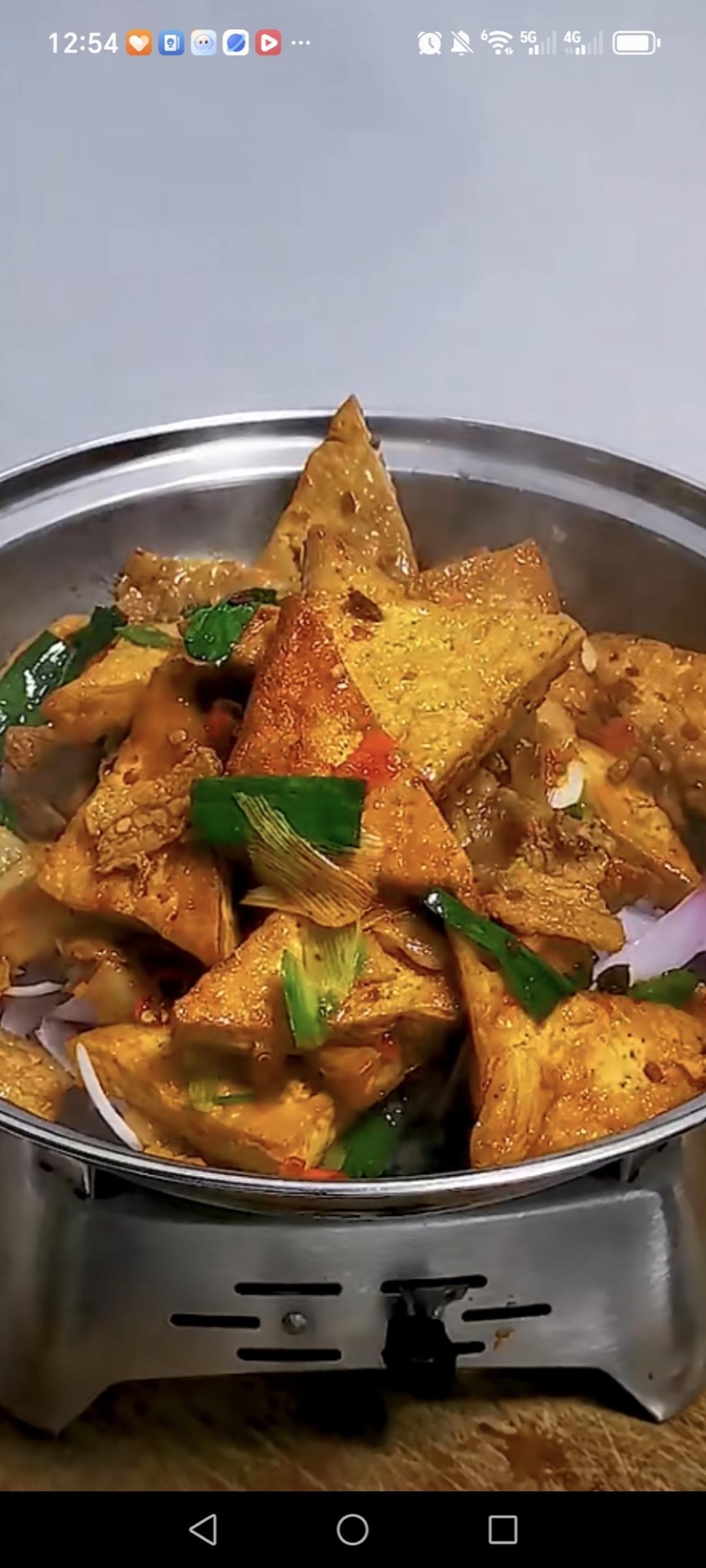
What makes this version worth cooking at home is the order of operations. Most home cooks dump everything into the wok at once and end up with soft tofu and soggy pork. Here, the tofu fries first and waits, the pork crisps and drains, and the sauce is built in a clean wok before the two are reunited for a short, flavor-loading simmer. That sequence is what gives 干锅豆腐 its signature texture — crisp at the edges, custardy at the center, and coated rather than drowned.
It is also a genuinely fast weeknight dish once the tofu is pressed. From the moment the wok hits the flame to the moment you carry it to the table, you are looking at about twenty minutes of active cooking. The rest is patience: pressing the tofu, marinating the pork, and letting the bean paste bloom properly in the oil.
What Is Dry Pot Tofu?
Dry pot, or 干锅, is a Sichuan cooking style built around a wok or small pot that arrives at the table with almost no liquid — the name literally means “dry pot.” Instead of a brothy braise, the ingredients are cooked down until a concentrated, oily, intensely seasoned sauce clings to each piece. The classic dry pot treatment is applied to cauliflower, chicken, potatoes, and — in this recipe — tofu.
Dry pot tofu (干锅豆腐) is a home-style variation that layers crisp pork belly with pan-fried tofu. The tofu is the star, but the pork belly is what makes the dish taste complete: its rendered fat carries the chili bean paste and gives the sauce body without any thickener. A bed of raw sliced onion goes into the serving vessel first, and the hot tofu and pork are spooned over it, so the onion gently softens and perfumes the dish from below as it sits on the table.
If you have ever ordered dry pot at a Sichuan restaurant and wondered why the vegetables stay crisp and the sauce stays glossy, the answer is high heat and a short cooking time. Dry pot is not a stew — it is a stir-fry that finishes in a shallow pool of seasoned oil.
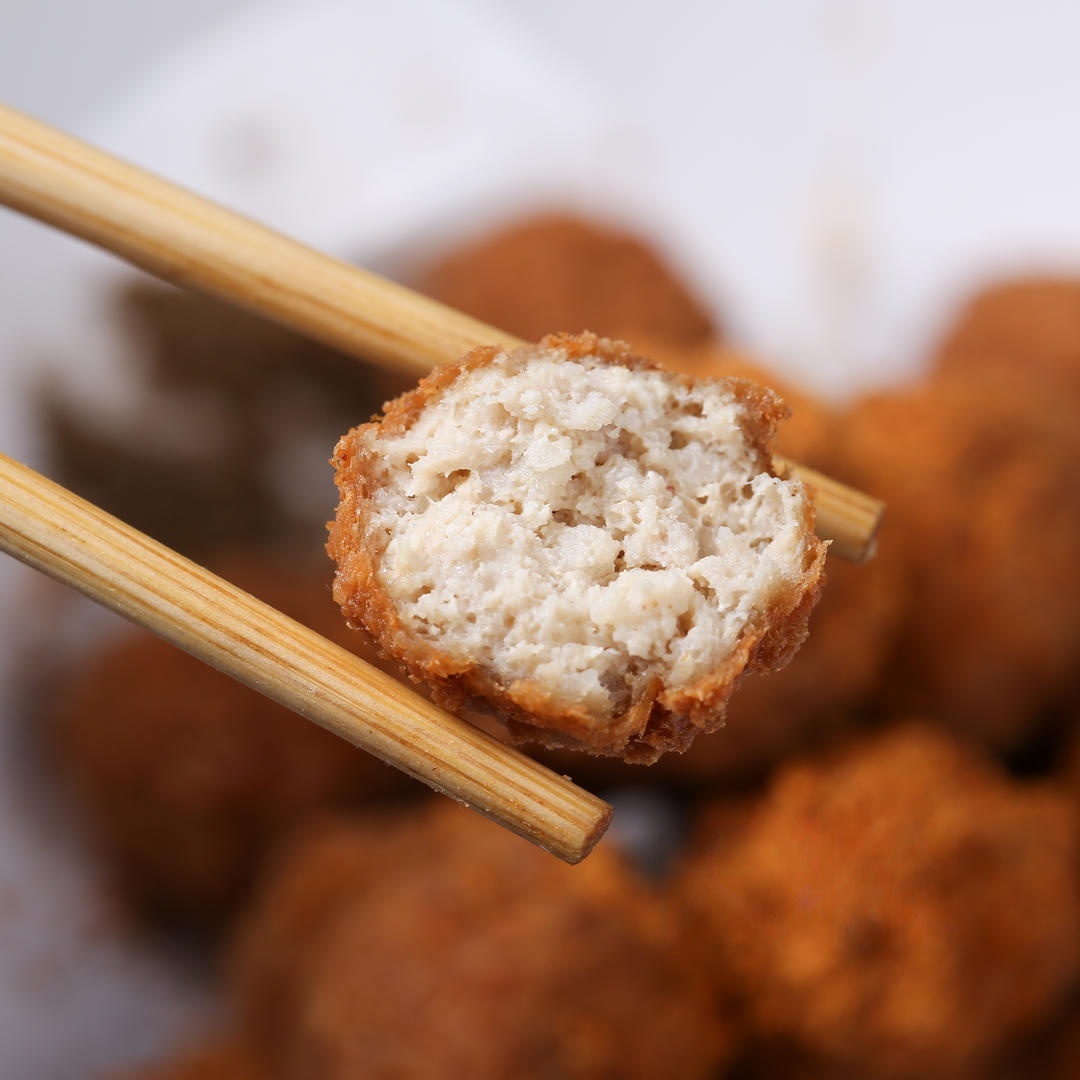
If you enjoy the combination of tofu and pork in this style, our crispy fried pork and tofu meatballs take the same pairing in a completely different direction, with a lacy, crackling crust.
1Crispy Fried Pork and Tofu Meatballs (Ganzha Wanzi)Crispy on the outside and tender on the inside, these Chinese meatballs combine ground pork with tofu for a lighter, fluffier texture. Perfect as an appetizer or side dish.Check out this recipe
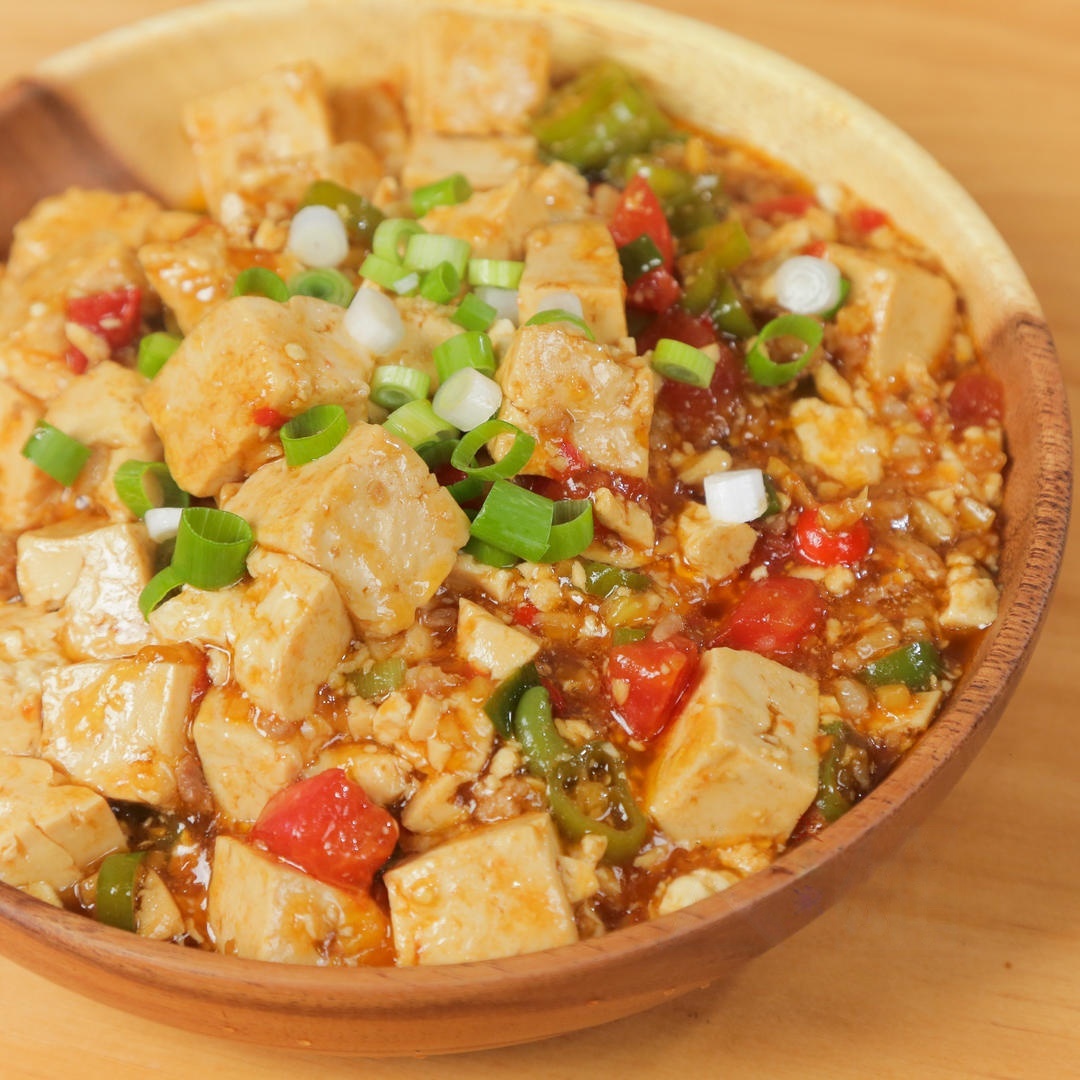
For a braise that keeps the pork and tofu tender instead of crisp, our braised tofu with fresh chilis and minced pork is the gentler, saucier cousin of this dish.
2Fresh Chili Tofu with Minced Pork (鲜椒肉末豆腐)A fast, 15-minute Sichuan homestyle favorite. Silky tofu and savory minced pork braised with fresh chilis and tomatoes for a bright, ‘rice-killing’ flavor profile.Check out this recipe
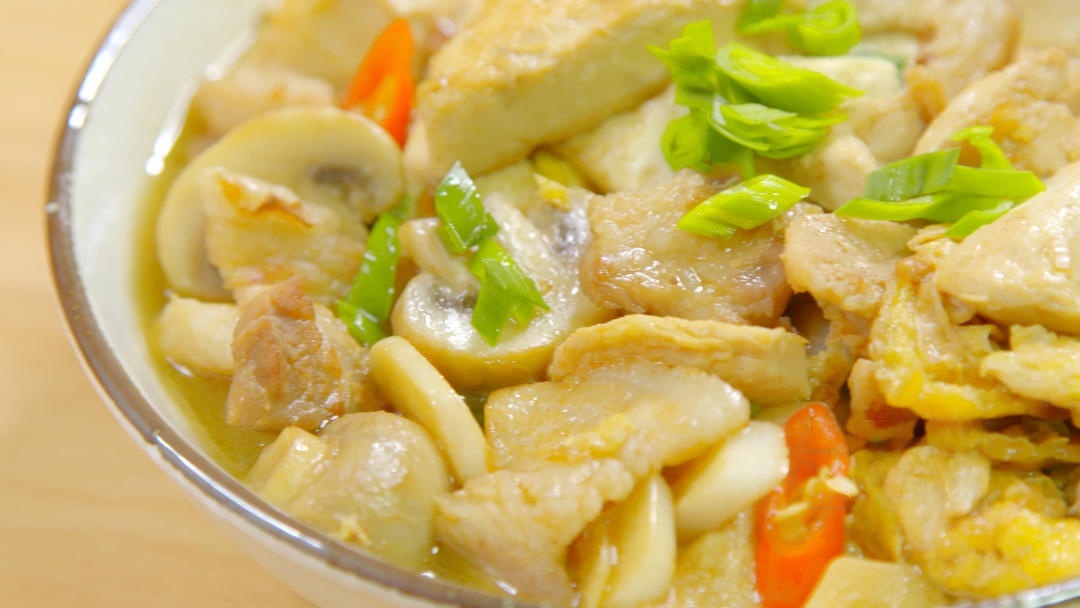
And if you like the earthy depth that mushrooms bring to tofu, our braised tofu with mushrooms and pork is a slower, deeply savory alternative worth keeping in rotation.
3Braised Tofu with Mushrooms and Pork (Rou Pian Kou Mo Shao Dou Fu)A savory, comforting dish featuring egg-coated silken tofu, sliced pork belly, and button mushrooms braised in a rich umami sauce. Perfect for a weeknight family meal.Check out this recipe
Why This Recipe Works
Three decisions separate a good dry pot tofu from a disappointing one, and this recipe is built around all three.
First, the tofu is pressed and pan-fried before it ever meets the sauce. Firm tofu holds a lot of water, and water is the enemy of browning. Pressing removes enough of it that the surface can actually sear, and the golden crust that forms acts as a sponge for the chili oil later. Without this step, the tofu steams in the wok and the sauce slides off.
Second, the pork belly is crisped and drained separately. Pork belly releases a lot of fat as it cooks. If you leave it in the wok and build the sauce on top of it, you end up with an oily, muddy dish and pork that has gone soft. By scooping it out and draining it, you keep the slices crisp and you keep control of how much fat ends up in the final sauce.
Third, the bean paste is bloomed in oil, not in liquid. Doubanjiang is fermented and packed with flavor compounds that are fat-soluble. Frying it in hot oil for thirty to sixty seconds unlocks a deep red color and a rounded, savory heat that simply stirring it into water cannot produce. This is the same principle behind the red oil in a proper hot and sour soup, where chili oil carries the aroma through the bowl.
The finishing vinegar matters more than its small volume suggests. Chinkiang vinegar added along the hot wok rim evaporates slightly on contact, so what reaches the dish is aroma rather than sharp acidity. It cuts through the richness of the pork belly and makes the whole plate taste lighter.
Equipment Needed
A wok is the ideal vessel here because its curved walls let you push ingredients up and out of the hottest zone while you build the sauce in the center. A large, heavy skillet works as a substitute, though you may need to cook in slightly smaller batches to avoid crowding.
You will also want a cutting board and a sharp knife for the tofu and pork belly, and a slotted spoon for lifting the crisped pork out of the rendered fat. A small rack or a plate lined with paper towels is useful for draining. For serving, a small cast-iron dry pot, a shallow clay pot, or any heavy serving dish will do — the point is simply to have a vessel that holds heat so the dish keeps sizzling at the table.
Finally, a good pair of tongs or a wok spatula makes it much easier to turn delicate tofu triangles without tearing them. If your tofu is very soft, use a thin metal spatula instead.
Ingredients
Every ingredient in this dish earns its place, so substitutions are worth thinking through rather than improvising.
Firm tofu (老豆腐): Use firm or medium-firm block tofu, not silken. Silken tofu will fall apart during frying and turn the dish into a slurry. Look for a block labeled firm or extra-firm, and if you can find the denser “old tofu” sold at Chinese markets, even better.
Pork belly (五花肉): Skin-on pork belly gives the best contrast — the skin crisps while the meat stays tender. Slice it thin, about an eighth of an inch, so it renders quickly.
Sichuan chili bean paste (四川豆瓣酱): This is the backbone of the dish. Look for a brand from Pixian if possible; the fermented broad beans and chilies give a funkier, more complex heat than a generic chili paste.
Fresh red chilies (小米辣): These add bright, sharp heat. Adjust the quantity to your tolerance — four chilies gives a pleasant warmth that most people can handle.
Garlic sprouts (蒜叶): Also sold as garlic shoots or garlic scapes depending on the season. They bring a mild, sweet allium flavor that scallions can approximate but not quite match.
Chinkiang vinegar (陈醋): A Chinese black vinegar with a malty, slightly sweet depth. Balsamic is not a good substitute here; rice vinegar with a pinch of sugar is closer.
Seasonings: Light soy sauce, Shaoxing wine, white pepper, chicken bouillon, salt, and a pinch of MSG round out the sauce. MSG is optional but traditional and makes a noticeable difference in a dish this savory.
Ingredient Notes
On pressing tofu: Thirty minutes under a weighted plate is the sweet spot. Much longer and the tofu becomes dry and crumbly; much shorter and it will sputter and stick in the pan. If you are short on time, wrap the block in clean towels and press it with your palms for a couple of minutes — better than nothing.
On pork belly thickness: Thin slices crisp; thick slices stew. If your pork belly is more than a quarter inch thick, ask your butcher to slice it, or partially freeze it for twenty minutes to make thin slicing easier at home.
On doubanjiang: Different brands vary wildly in salt and heat. Taste a small amount before you commit the full two tablespoons, and adjust the salt in the sauce accordingly. If your bean paste is very coarse, chop it briefly on the board so it distributes evenly.
On Sichuan peppercorns: Whole peppercorns in the marinade infuse the pork with a citrusy numbness. If you prefer a smoother texture, crush them lightly first, or use a pinch of ground toasted peppercorn at the end instead.
On white pepper: Freshly ground white pepper is far more aromatic than the pre-ground kind. It is worth grinding your own if you cook Chinese food regularly.
Prep & Mise en Place
Dry pot cooking moves fast once the wok is hot, so set everything out before you turn on the flame. Press and cut the tofu into triangles and have them on a plate near the stove. Slice the pork belly and get it marinating in a bowl with the soy sauce, Sichuan peppercorns, and Shaoxing wine.
Next, smash and peel the garlic, slice the ginger into thin coins, and slice the fresh red chilies on a diagonal. Cut the garlic sprouts into two-inch lengths and keep the white and green parts together — they cook quickly enough that separating them is unnecessary. Thinly slice the onion and scatter it across the bottom of your serving vessel.
Finally, measure the sauce ingredients into a small bowl or, if you are confident at the wok, line them up next to the stove so you can add them one at a time. Have the vinegar within arm’s reach, because it goes in at the very last second. A little prep now means the actual cooking takes about fifteen minutes.
Cooking Process
Step 1 — Press and Cut the Tofu
Use firm or medium-firm tofu, drain it, and press it under a weighted plate for about 30 minutes to squeeze out excess water, then cut the block into triangular wedges about 1/2 inch thick.

Step 2 — Cut Into Triangles
Cut each pressed slab on the diagonal into even triangular blocks so every piece has a flat face that will make good contact with the wok.

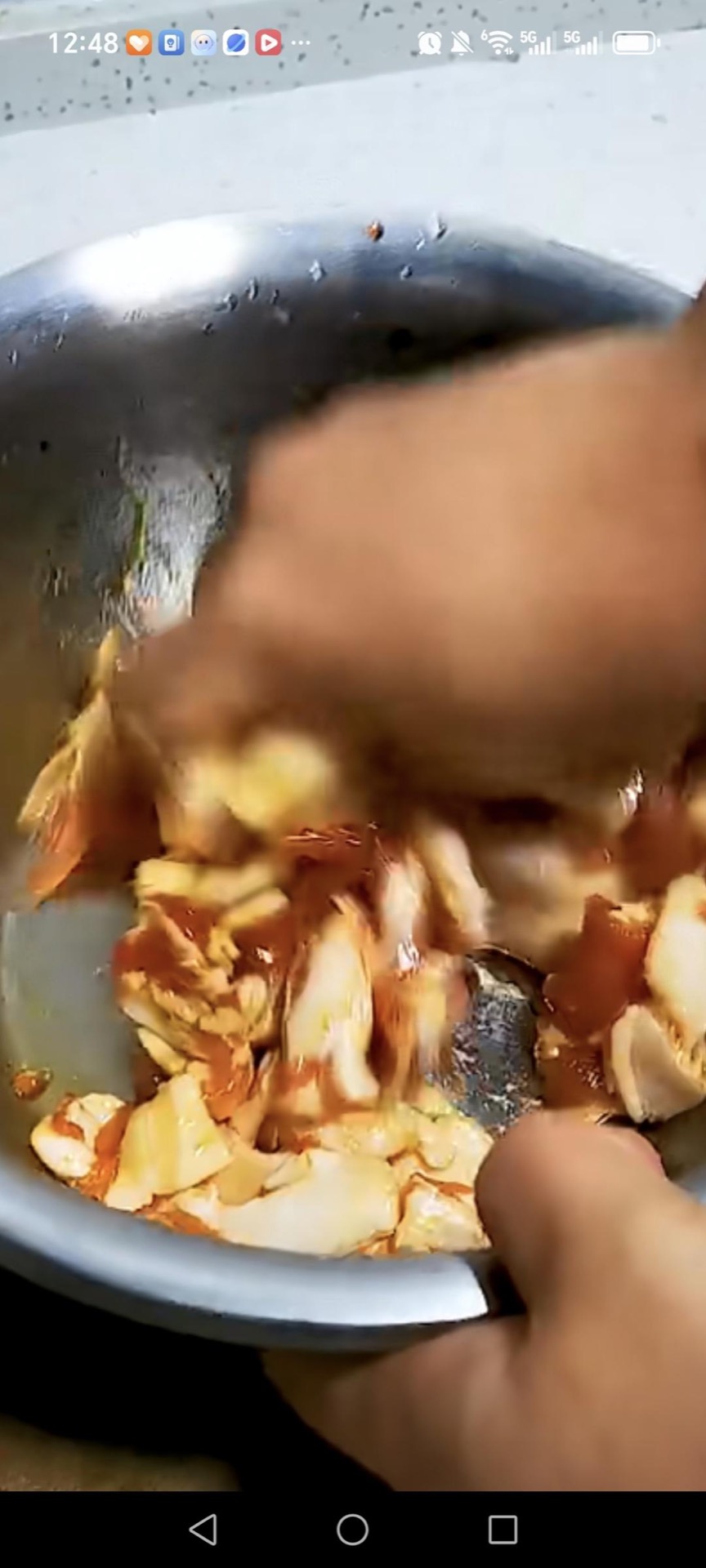
Step 3 — Marinate the Pork Belly
Slice the pork belly thinly, then toss it with light soy sauce, whole Sichuan peppercorns, and Shaoxing wine, mixing with your hands until every slice is coated, and let it marinate for 15 to 20 minutes.
Step 4 — Pan-Fry the Tofu
Heat a thin layer of oil in a wok over medium heat, lay the tofu triangles in a single layer, and fry until both sides are golden and crisp, about 3 to 4 minutes per side, then lift them out and set them aside.

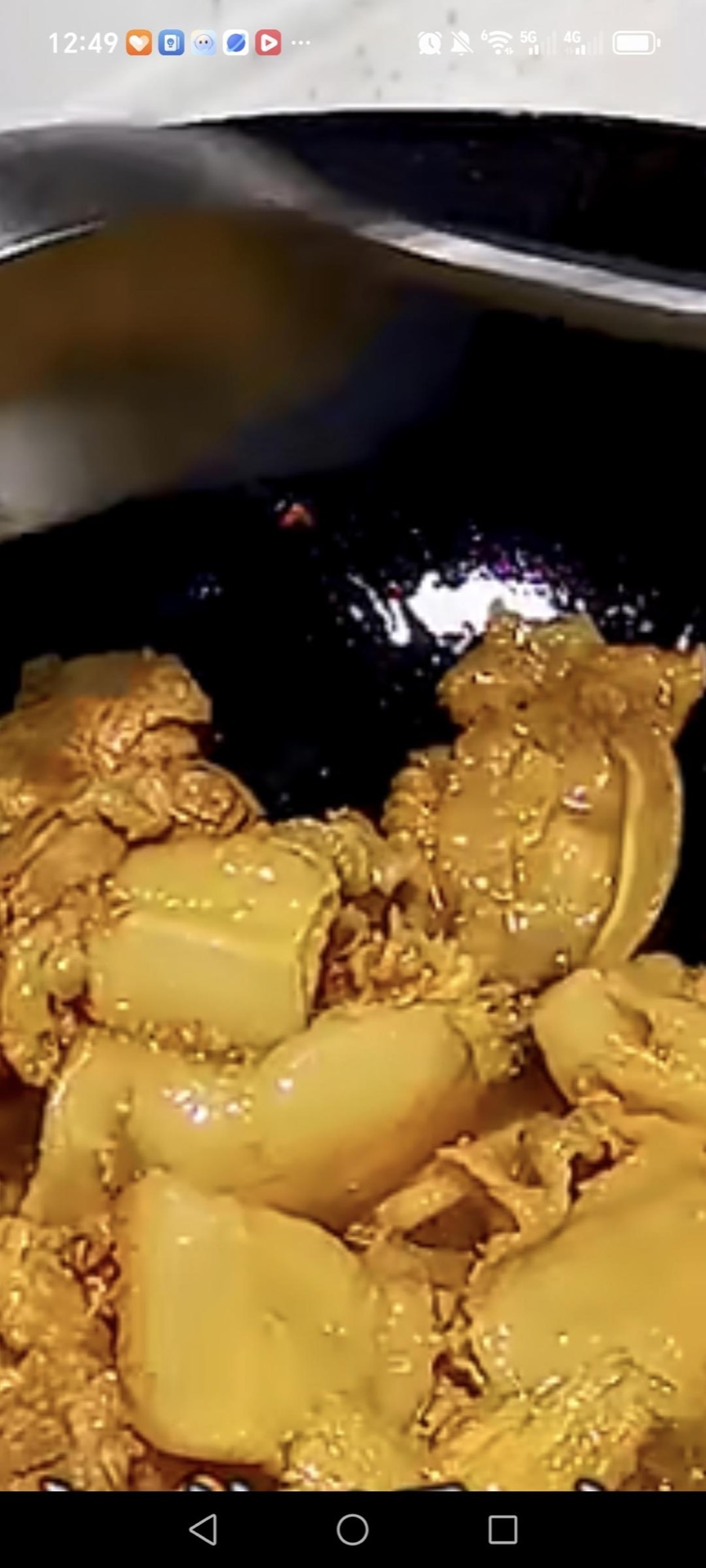
Step 5 — Crisp the Pork Belly
Wipe the wok, heat it until it is smoking lightly, add the marinated pork belly, and stir-fry over medium-high heat until the slices render their fat and the edges turn golden and slightly charred.
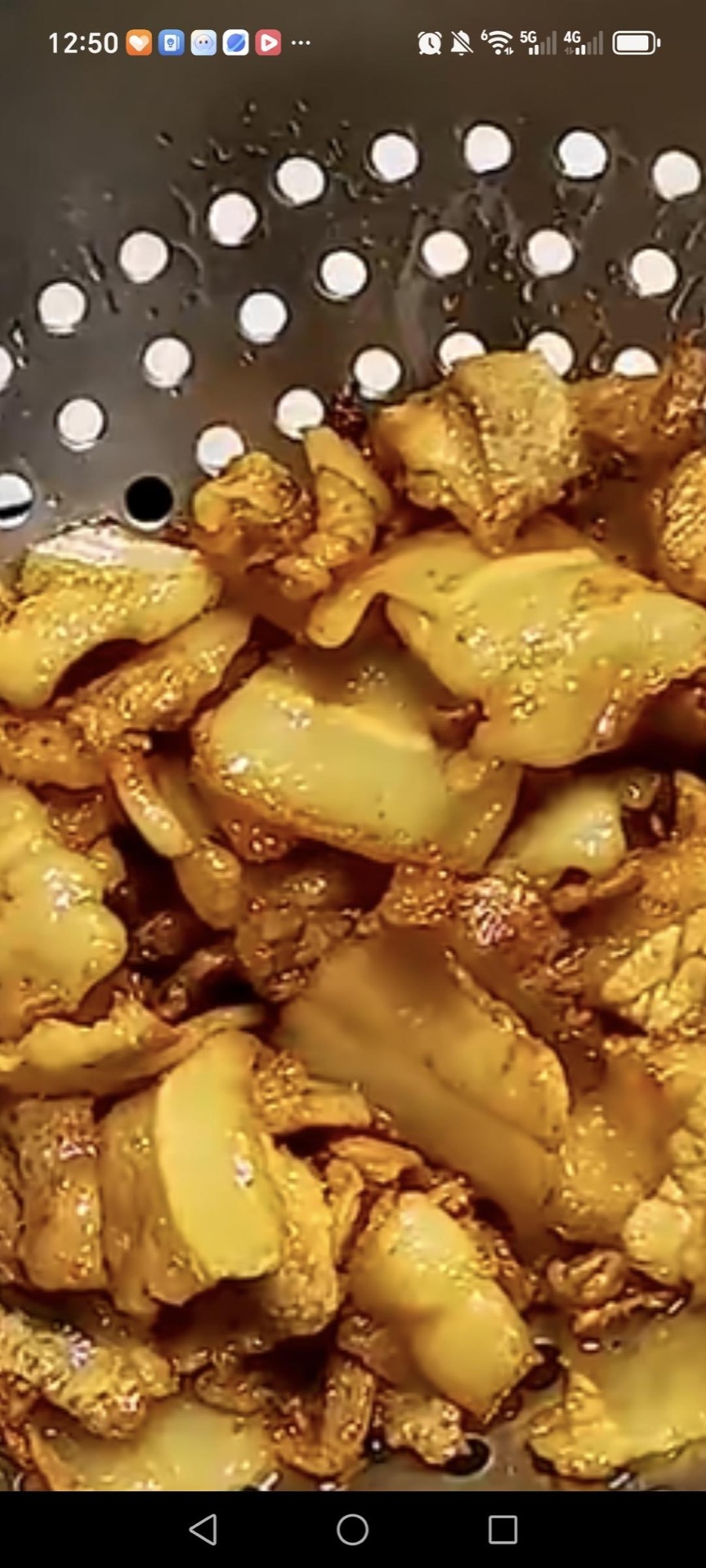
Step 6 — Drain the Pork
Scoop the crisped pork belly out with a slotted spoon and let it drain on a rack or paper towel so it stays crisp instead of steaming in its own fat.
Step 7 — Bloom the Aromatics
Add a generous pour of oil to the hot wok, add the sliced ginger and smashed garlic, stir until fragrant, then add the Sichuan chili bean paste and fry until the oil turns a deep red.

Step 8 — Add the Fresh Chilies
Toss the sliced fresh red chilies into the red oil and stir them briefly so they soften without losing their bright color.

Step 9 — Stir to Combine
Keep everything moving in the wok so the aromatics and chilies cook evenly and the bean paste does not catch and burn on the metal.

Step 10 — Return the Pork
Slide the crisped pork belly back into the wok and toss it through the aromatics until every slice is coated in the glossy red oil.

Step 11 — Build the Sauce
Pour in the water, bring it to a boil, then season with Shaoxing wine, light soy sauce, ground white pepper, chicken bouillon, and salt, tasting as you go.

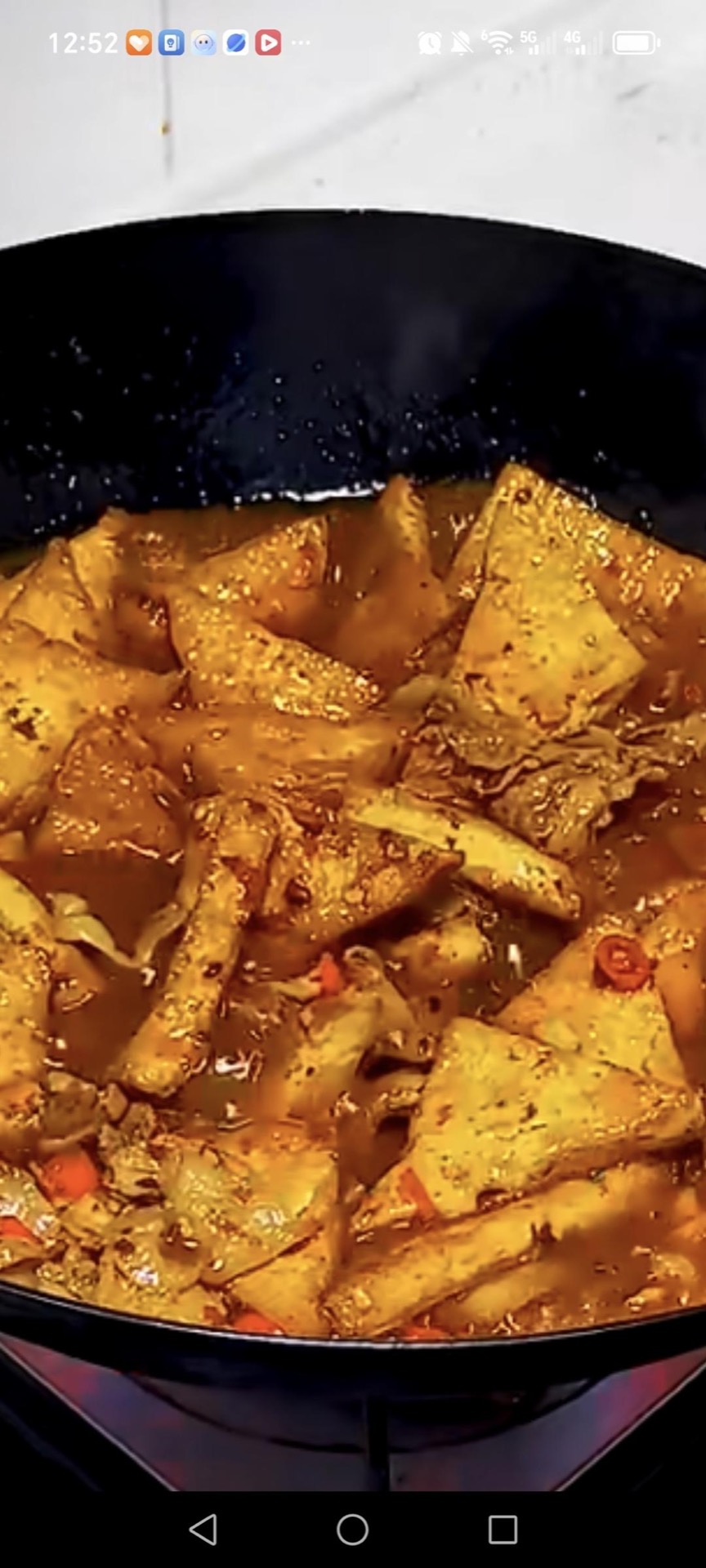
Step 12 — Simmer the Tofu
Add the fried tofu triangles back to the wok and simmer over medium-low heat for about 4 minutes, spooning the sauce over the pieces so they soak up the flavor.
Step 13 — Add the Garlic Sprouts
Drop in the garlic sprouts and fold them through the simmering sauce until they just begin to wilt and turn bright green.
Step 14 — Reduce and Finish
Toss everything over high heat until the sauce reduces to a glaze, stir in the MSG, and pour the Chinkiang vinegar down the side of the hot wok right before it comes off the heat.

Step 15 — Plate Over Onion
Scatter the thinly sliced onion over the bottom of a dry pot or serving dish, spoon the tofu and pork over it, and serve immediately while the onions soften under the hot sauce.
Common Mistakes When Making Dry Pot Tofu
1. Skipping the press. Tofu straight from the package is loaded with water. If you fry it wet, the oil spatters, the surface never browns, and the pieces break apart when you stir. Press it for thirty minutes and pat it dry before it touches the wok.
2. Using silken tofu. Silken tofu is wonderful in soups and steamed dishes, but it has no structure for pan-frying. The cause is simply buying the wrong block; the fix is to check the label for “firm” or “extra-firm” and save the silken tofu for another recipe.
3. Crowding the pan during frying. When tofu pieces touch each other, they steam instead of sear. Fry in a single layer with space between the triangles, and work in two batches if your wok is small. The extra two minutes are worth it.
4. Leaving the pork belly in the wok. Pork belly keeps rendering fat the longer it sits, and if it stays in the pan through the sauce-building stage, the dish turns greasy and the meat loses its crisp edge. Crisp it, scoop it out, and drain it — then return it at the end.
5. Burning the doubanjiang. Bean paste scorches quickly once the oil is very hot, and burnt chili paste turns bitter and acrid. The cause is oil that is too hot or a distracted cook; the fix is to lower the heat slightly before adding the paste and to stir it constantly for just thirty to sixty seconds, until the oil reddens.
6. Reducing the sauce too far before the tofu goes in. The tofu needs a few minutes of simmering to absorb flavor, and if the sauce is already a glaze when it goes in, the tofu stays bland. Keep the sauce loose enough to spoon over the pieces, then reduce at the end.
7. Forgetting the vinegar. Without that splash of Chinkiang vinegar, the dish can taste flat and heavy. Add it along the side of the wok, not into the middle of the food, so it flashes into aroma rather than pooling in one spot.
Variations
Vegetarian dry pot tofu: Skip the pork belly entirely and double the aromatics. Add sliced shiitake mushrooms and a handful of pressed, sliced firm tofu skin for body, and use a vegetarian mushroom bouillon in place of the chicken bouillon. The bean paste and chilies still carry the dish.
Dry pot tofu with cauliflower or potato: The classic dry pot treatment often includes vegetables. Add blanched cauliflower florets or par-boiled potato slices along with the tofu in the final simmer, and give them an extra minute or two to absorb the sauce.
Extra-spicy version: Add a tablespoon of dried red chilies, torn and seeded, to the oil along with the aromatics. They release a smoky heat that fresh chilies do not provide.
Seafood swap: Replace the pork belly with peeled shrimp or sliced squid. Sear them quickly and remove them before building the sauce, then return them at the very end so they stay tender. Our shrimp and tofu stir fry follows a similar logic with a lighter sauce.
Milder family version: Halve the bean paste and omit the fresh chilies, replacing them with a sliced red bell pepper for color. The dish loses some of its Sichuan character but becomes very approachable for kids.
Frequently Asked Questions
Can I use a different kind of tofu? Firm or extra-firm block tofu is essential. Medium tofu can work if you press it thoroughly and handle it gently, but silken tofu will disintegrate. If firm tofu is all you have, freeze it overnight and thaw it — the texture becomes spongier and it holds up beautifully in the wok.
How do I keep the tofu from sticking to the wok? Three things: press the tofu dry, heat the wok properly before adding oil, and do not move the pieces until they release on their own. A well-seasoned carbon steel wok or a nonstick skillet both work well. If a piece resists when you nudge it, give it another thirty seconds.
Is dry pot tofu very spicy? It has a moderate, warming heat. The doubanjiang provides most of it, and the fresh chilies add brightness. You can dial it down by halving the bean paste and omitting the fresh chilies, or dial it up with dried chilies and a drizzle of chili oil at the end.
Can I make this ahead of time? You can press and cut the tofu, slice and marinate the pork, and chop all the aromatics up to a day in advance and refrigerate them in separate containers. The finished dish, however, is best eaten right away — the tofu loses its crisp edge as it sits.
What can I use instead of garlic sprouts? Scallions are the easiest substitute — use the white parts with the aromatics and the green parts at the end. Thinly sliced leeks or the green tops of young garlic also work well. If you use scallions, add an extra handful since their flavor is milder.
How to Serve
Dry pot tofu is a main course in its own right when served over steamed white rice, and the rice is genuinely useful here — it soaks up the seasoned oil left at the bottom of the pot. A simple stir-fried green vegetable and a light soup round out the table nicely. If you want another protein on the table, our pork and egg tofu stir fry shares the same pantry staples and comes together in about the same amount of time.
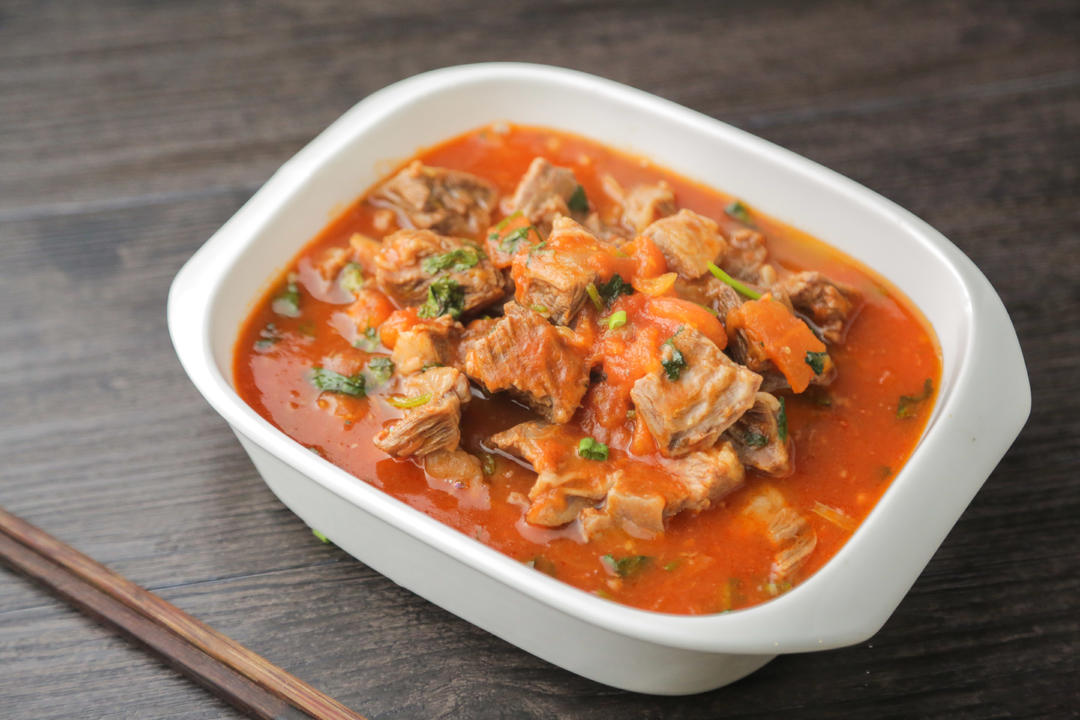
For a heartier, colder-weather spread, pair it with a bowl of Chinese tomato beef stew and a plate of plain rice. The tomato stew’s gentle sweetness balances the heat of the dry pot beautifully.
And if you are feeding a crowd and want a noodle dish to go alongside, beef chow fun is a natural companion — both dishes are wok-driven, deeply savory, and best eaten hot from the pan.


Storage & Reheat
Dry pot tofu is at its best straight from the wok, but leftovers keep reasonably well. Cool the dish to room temperature within two hours, then transfer it to an airtight container and refrigerate for up to three days. The tofu will soften and the pork will lose its crispness, but the flavor actually deepens overnight.
To reheat, warm the contents in a wok or skillet over medium heat with a splash of water to loosen the sauce, tossing gently until everything is hot through. Reheat to an internal temperature of 165°F (74°C). Avoid the microwave if you can — it makes the tofu rubbery and the pork belly chewy.
This dish does not freeze well. Tofu that has been fried and then simmered becomes spongy and watery after freezing, and the texture of the pork belly suffers badly. If you have a large batch, consider halving the recipe rather than freezing the surplus.
Allergen Notice
This recipe contains soy in several forms: the tofu itself, the light soy sauce, and the Sichuan chili bean paste, which is made from fermented broad beans and wheat. Depending on the brand, doubanjiang and soy sauce may also contain wheat, so anyone avoiding gluten should choose a gluten-free soy sauce (tamari) and a gluten-free bean paste, or substitute a chili paste that is certified gluten-free.
The dish is otherwise free of dairy, egg, peanut, and tree nut ingredients as written. If you are cooking for someone with a soy allergy, this recipe is not easily adaptable — the tofu and the fermented bean paste are both central to the flavor. Always check the labels of your specific brands, since formulations vary between manufacturers.
Nutrition Disclaimer
Nutrition information is calculated using an ingredient database and should be considered an estimate. In cases where multiple ingredient alternatives are given, the first listed is calculated for nutrition. Garnishes and optional ingredients are not included.
About the Author & Recipe Development
This recipe was developed and tested in the Woks of Love kitchen by Lin, who grew up cooking Cantonese and Sichuan home food and has spent the last decade translating family wok techniques into recipes that work in a Western home kitchen. The goal with this dry pot tofu was to keep the restaurant-style texture — crisp tofu, crisp pork, glossy sauce — while using equipment and ingredients that are easy to find.
Testing focused on two variables: how long to press the tofu, and whether the pork belly should be crisped before or after the sauce is built. Pressing for thirty minutes and crisping the pork first both won clearly in side-by-side tastings. The final recipe was cooked four times to confirm the timing and seasoning levels before publishing.
If you cook this dish, we would love to hear how it turned out — especially if you tried one of the variations. Comments and questions are always welcome, and they help shape future recipes.
Authoritative References
For safe handling and cooking temperatures for pork, see the USDA safe minimum internal temperature chart, which lists 145°F (63°C) for fresh pork with a three-minute rest. For general food storage and leftover guidance, the FDA refrigerator and food safety guidance recommends refrigerating perishable leftovers within two hours. For background on the Sichuan dry pot cooking style and its regional context, see the overview of Sichuan cuisine.
Dry Pot Tofu (干锅豆腐): Crispy Tofu, Savory Pork Belly

Equipment
- Wok
- Cutting Board
- Slotted Spoon
Ingredients
For the Pork Belly Marinade
- 8 oz pork belly skin on, thinly sliced
- 1 tbsp soy sauce light soy, or tamari
- 1 tsp Sichuan peppercorns whole
- 1 tbsp Shaoxing wine or dry sherry
For the Tofu
- 1 block firm tofu 14–16 oz, drained and pressed
- 3 tbsp neutral oil for pan-frying
For the Aromatics
- 3 tbsp neutral oil for the wok
- 4 cloves garlic smashed
- 1 thumb ginger sliced
- 2 tbsp doubanjiang Sichuan chili bean paste
- 4 fresh red chilies sliced (millet chilies)
For the Sauce
- 1 cup water or unsalted stock
- 1 tbsp Shaoxing wine or dry sherry
- 1 tbsp soy sauce light soy, or tamari
- 1/4 tsp white pepper ground
- 1 tsp chicken bouillon or mushroom powder
- 1/2 tsp salt to taste
To Finish
- 3 oz garlic sprouts cut into 2-inch lengths (or scallions)
- 1/2 tsp MSG optional
- 1 tsp Chinkiang vinegar black vinegar, for the wok rim
- 1 onion halved and thinly sliced, for the dry pot base
Instructions
- Use firm or medium-firm tofu, drain it, and press it under a weighted plate for about 30 minutes to squeeze out excess water, then cut the block into triangular wedges about 1/2 inch thick.

- Cut each pressed slab on the diagonal into even triangular blocks so every piece has a flat face that will make good contact with the wok.
- Slice the pork belly thinly, then toss it with light soy sauce, whole Sichuan peppercorns, and Shaoxing wine, mixing with your hands until every slice is coated, and let it marinate for 15 to 20 minutes.
- Heat a thin layer of oil in a wok over medium heat, lay the tofu triangles in a single layer, and fry until both sides are golden and crisp, about 3 to 4 minutes per side, then lift them out and set them aside.
- Wipe the wok, heat it until it is smoking lightly, add the marinated pork belly, and stir-fry over medium-high heat until the slices render their fat and the edges turn golden and slightly charred.
- Scoop the crisped pork belly out with a slotted spoon and let it drain on a rack or paper towel so it stays crisp instead of steaming in its own fat.
- Add a generous pour of oil to the hot wok, add the sliced ginger and smashed garlic, stir until fragrant, then add the Sichuan chili bean paste and fry until the oil turns a deep red.
- Toss the sliced fresh red chilies into the red oil and stir them briefly so they soften without losing their bright color.
- Keep everything moving in the wok so the aromatics and chilies cook evenly and the bean paste does not catch and burn on the metal.
- Slide the crisped pork belly back into the wok and toss it through the aromatics until every slice is coated in the glossy red oil.
- Pour in the water, bring it to a boil, then season with Shaoxing wine, light soy sauce, ground white pepper, chicken bouillon, and salt, tasting as you go.
- Add the fried tofu triangles back to the wok and simmer over medium-low heat for about 4 minutes, spooning the sauce over the pieces so they soak up the flavor.
- Drop in the garlic sprouts and fold them through the simmering sauce until they just begin to wilt and turn bright green.
- Toss everything over high heat until the sauce reduces to a glaze, stir in the MSG, and pour the Chinkiang vinegar down the side of the hot wok right before it comes off the heat.
- Scatter the thinly sliced onion over the bottom of a dry pot or serving dish, spoon the tofu and pork over it, and serve immediately while the onions soften under the hot sauce.
























Leave a Reply