There is an old Chinese saying: “Jiu yue jiu, xiang po kou” (September leeks are so fragrant they break the mouth). Growing up in a culinary family in Sichuan, we strictly followed the seasons. When autumn arrived, my father would bring home bundles of fresh Chinese chives (often called leeks in translation), knowing they were at their peak flavor—tender, spicy, and incredibly aromatic.

While many Westerners are familiar with the deep-fried, thin-skinned Cantonese spring rolls, today I am sharing a more homestyle Northern variation using a “Chun Bing” (Spring Pancake) wrapper. These wrappers are steamed first to create a chewy-tender texture, then filled with a savory egg and chive mixture, and finally pan-fried to golden perfection. It is a texture contrast that store-bought wrappers simply cannot match.
Why This Recipe Works
- Homemade Wrappers: Unlike brittle store-bought skins, these homemade wrappers use a “steamed dough” technique. This results in a wrapper that is soft on the inside but crisps up beautifully when pan-fried.
- Layering Technique: We use an oil-layering method to steam 10 wrappers at once. This is efficient and ensures the wrappers remain thin and pliable.
- Moisture Control: The filling technique prevents the dreaded “soggy spring roll” by adding oil to the vegetables first, sealing in their moisture before adding salt.
What Are Leek and Egg Spring Rolls?
In China, spring rolls (Chun Juan) are not just a dim sum item; they are a celebration of fresh spring (or autumn) vegetables. This specific version features a vegetarian filling of scrambled eggs and garlic chives (Jiu Cai). The wrapper is essentially a “Chun Bing”—a thin wheat pancake.
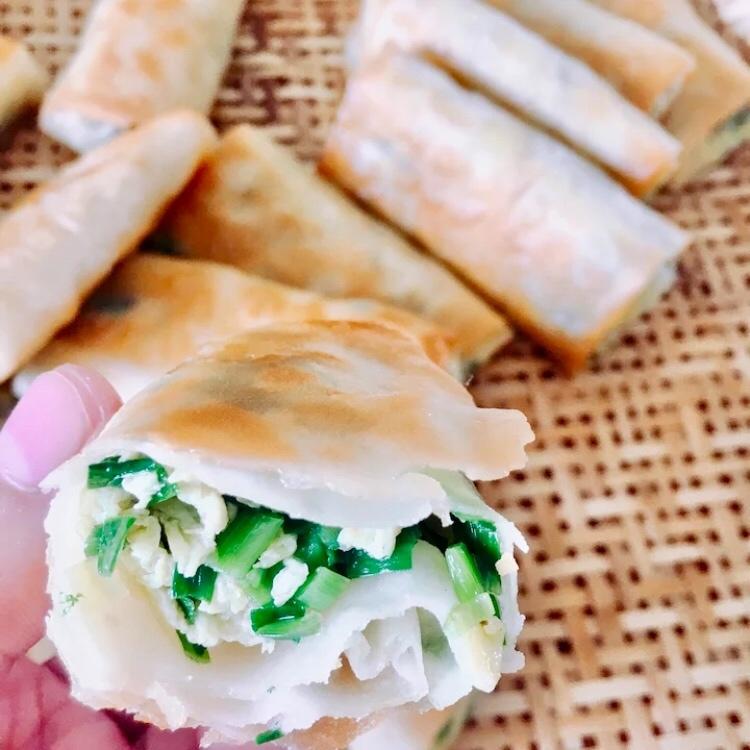
By steaming the wrappers first, we cook the dough through. The final pan-frying step is just to heat the filling and crisp the exterior, giving you a safe, golden crust without deep-frying in inches of oil.
Key Ingredients
- Chinese Chives (Jiu Cai): Also known as Garlic Chives. These are flat, broad, and have a distinct garlicky flavor. They are the star of the show. If you cannot find them, you can substitute with regular chives mixed with scallions, though the flavor profile will be milder.
- All-Purpose Flour: The recipe calls for medium-gluten flour (All-Purpose), which provides the perfect balance of structure and tenderness.
- Eggs: Used for the filling. We scramble them into small pieces to mix with the chives.
- Oil: Essential for both the dough layering process (to prevent sticking) and for pan-frying.
Ingredients
For the Spring Roll Wrappers:
- All-Purpose Flour: 1⅔ cups (200g)
- Water: ½ cup minus 1 tsp (105g) — Note: Water amount may vary slightly depending on humidity.
- Oil: 2 tbsp (for brushing between layers)
For the Leek and Egg Filling:
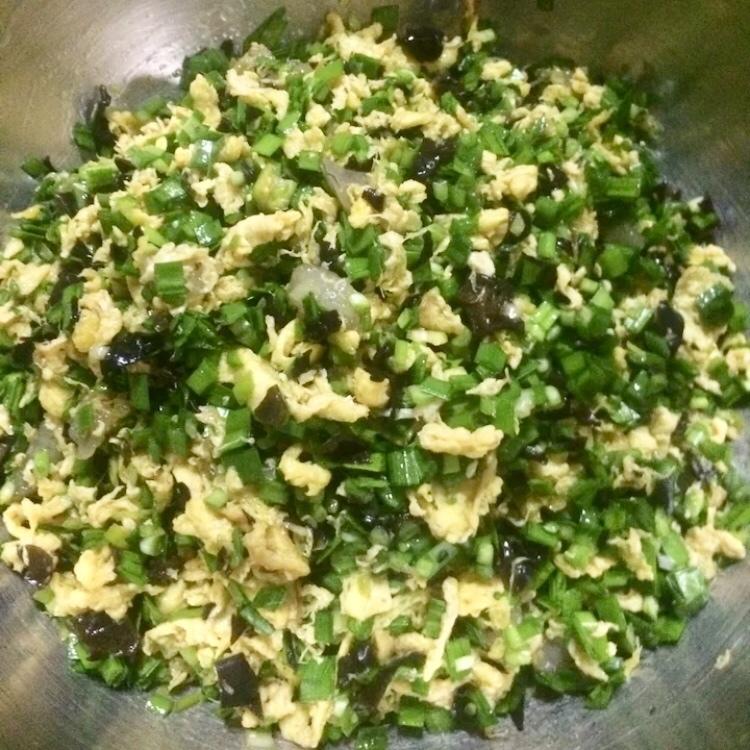
- Chinese Chives (Garlic Chives): 7 oz (200g), washed and dried thoroughly
- Eggs: 3 large
- Salt: ½ tsp (adjust to taste)
- Cooking Oil: 1 tbsp (plus more for scrambling eggs)
- Asian Sesame Oil: 1 tsp (optional, for aroma)
Recipe Notes Before You Begin
- Hydration Matters: The dough ratio is roughly 2:1 flour to water. This creates a soft, pliable dough. If your dough feels too dry, add a few drops of water; if too sticky, a dusting of flour.
- Cooling Time: You must let the steamed wrappers cool slightly before peeling them apart. If they are too hot, they will tear; if too cold, they might stick. Warm to the touch is perfect.
- Equipment: You will need a steamer (bamboo or metal) and a flat pan (skillet or griddle) for frying.
Mise en Place / Prep
- Wash and Dry Chives: Wash the Chinese chives thoroughly and let them drain completely. Any excess water will ruin the filling. Slice them finely (about 1/4 inch pieces).
- Scramble Eggs: Crack eggs into a bowl, whisk well. Heat a wok with oil, scramble the eggs until fully cooked and broken into small distinct pieces. Let them cool completely before mixing with chives.
How to Make Leek and Egg Spring Rolls
Step 1: Make the Dough
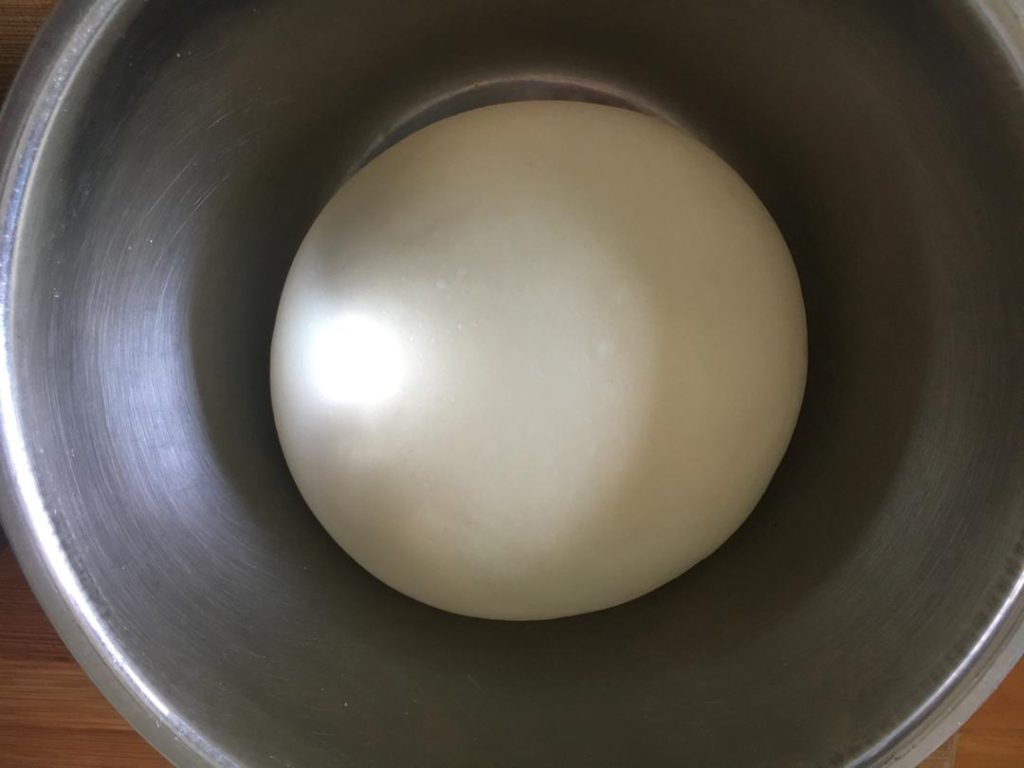
In a mixing bowl, gradually add the water (105g) to the flour (200g). Mix until a dough forms, then knead until it is smooth and delicate. Cover the dough and let it “rest” (wake up) for 20 minutes.
Why? Resting allows the gluten network to relax, making the dough easier to roll out later without shrinking back.
Step 2: Shape the Dough
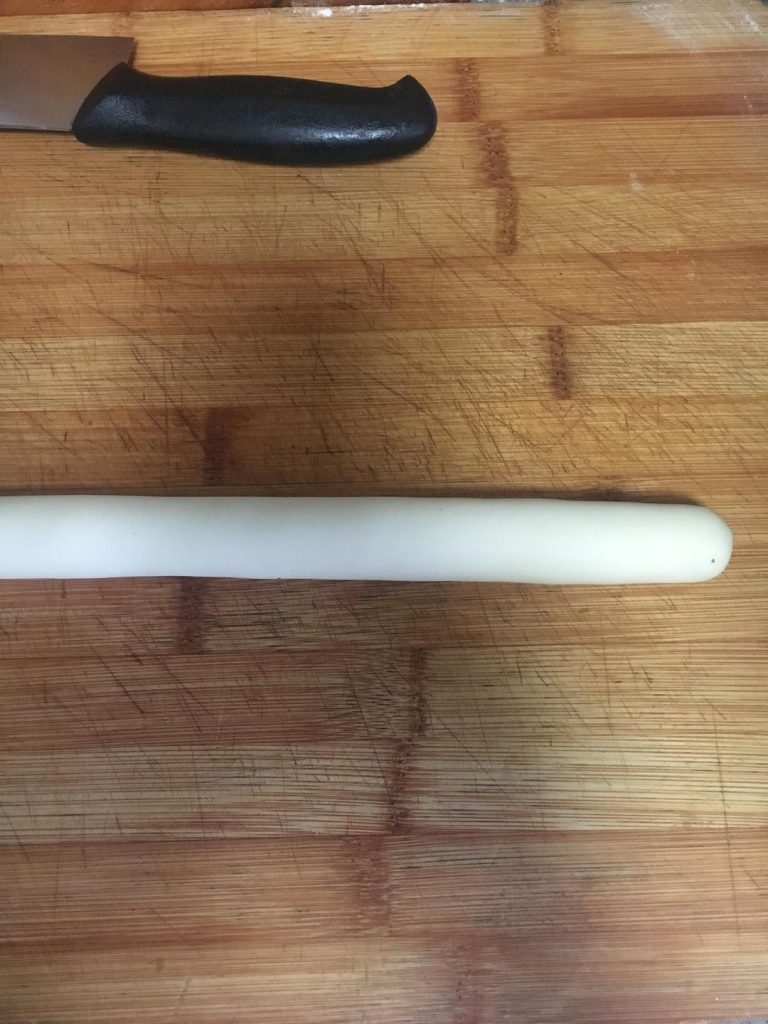
Once rested, roll the dough into a long log. Cut the log into equal portions, weighing approximately 30g each. This is slightly larger than a standard dumpling wrapper dough ball.
Tip: Using a scale ensures every spring roll is the same size, which helps with even cooking.
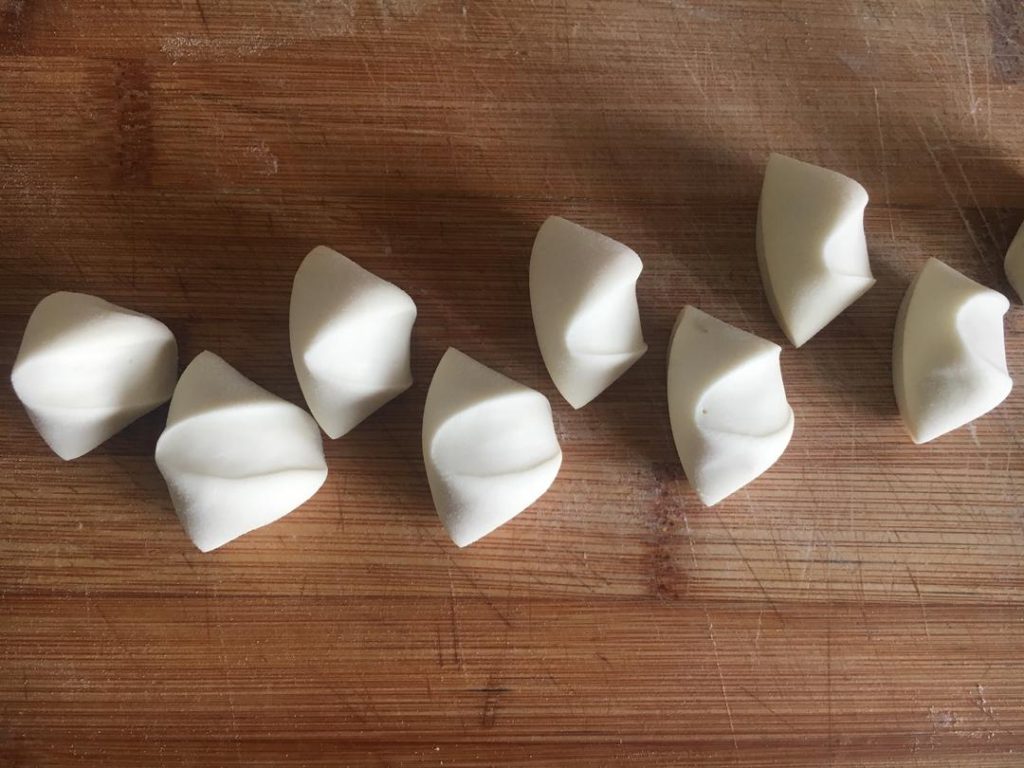
Step 3: Create the Layers
Flatten each dough ball into a small disc. Roll them out slightly so they are thick in the center and thinner at the edges. Make sure they are consistent in size.
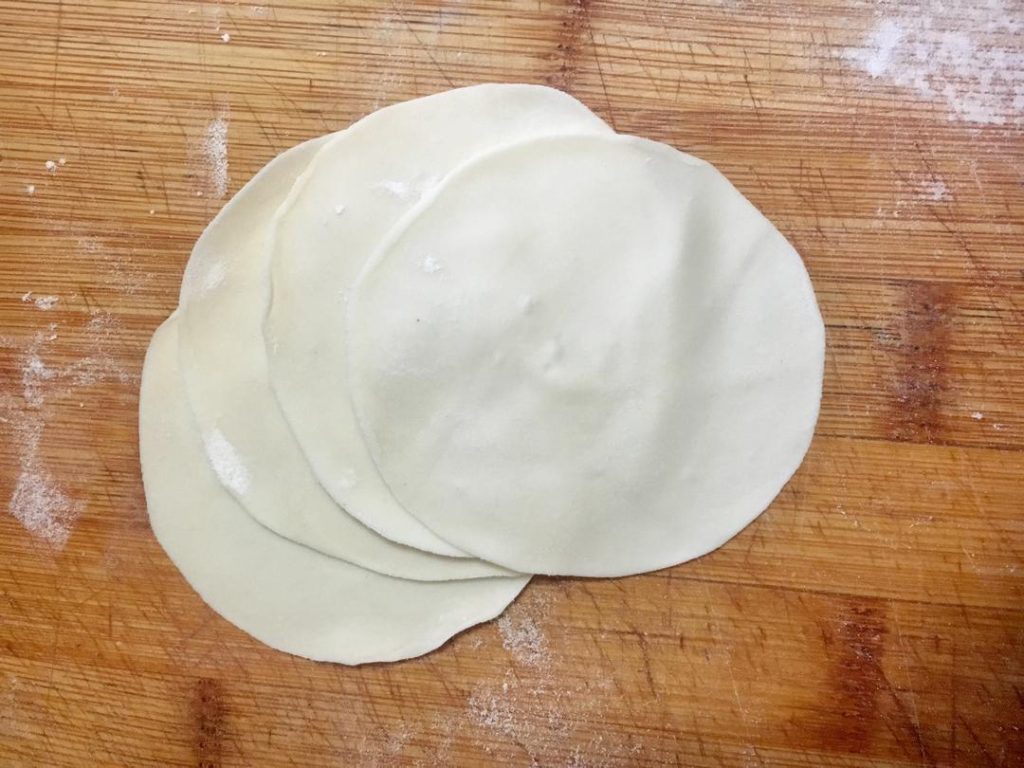
Step 4: The Oil Stacking Method
Group the wrappers into sets of 10. Take one disc, brush the top surface generously with oil. Place another disc on top. Repeat until you have a stack of 10.
- Crucial Step: You must ensure the oil covers the entire surface, especially the edges. If you miss a spot, the wrappers will fuse together during steaming and you won’t be able to peel them apart.
- Note: Make the bottom-most and top-most wrappers slightly larger to cover the stack.
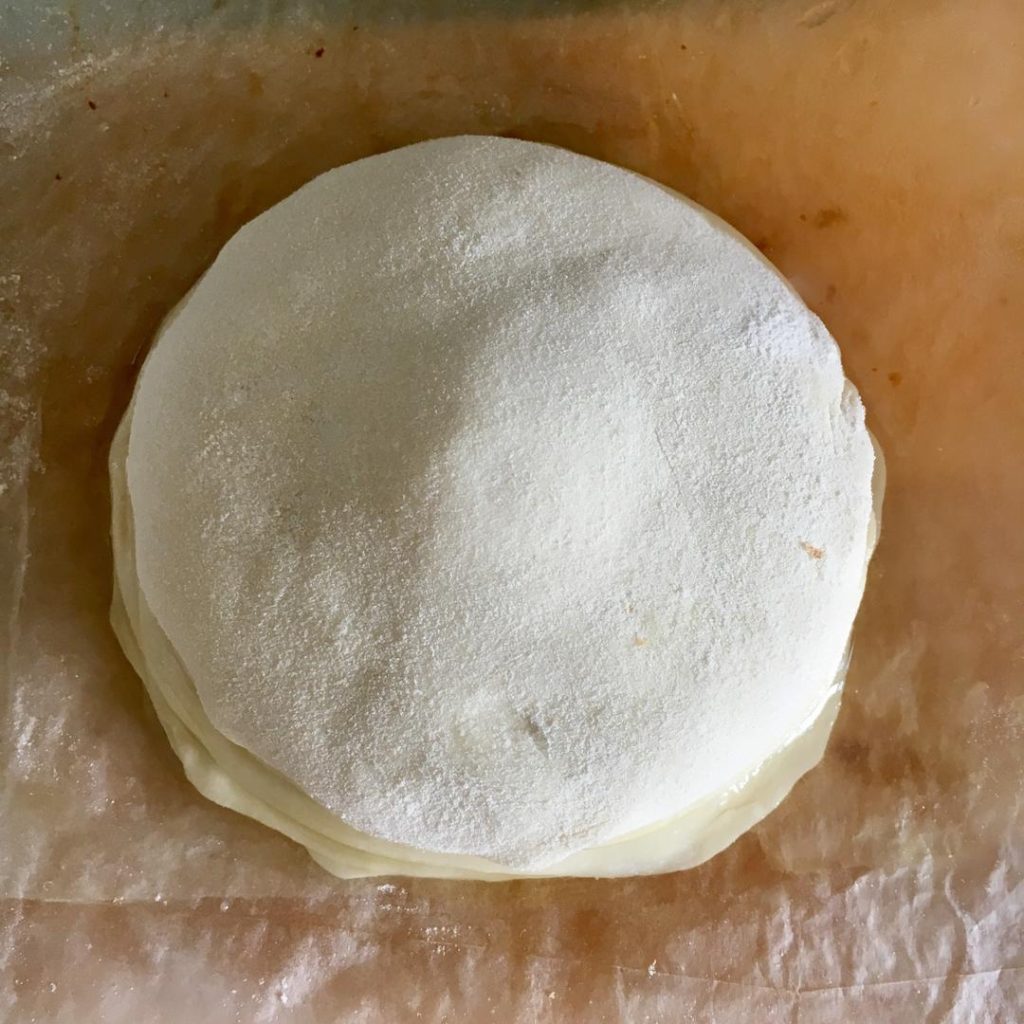
Step 5: Roll and Steam
Take a rolling pin and gently press down on the stack of 10 discs. Roll gently from the center outwards. Flip the stack over and roll the other side to ensure the top and bottom layers expand evenly. Roll until the stack is about 8 inches (20cm) in diameter. Place the stack in a steamer over cold water. Turn heat to high. Once steam creates, steam for 16 minutes.
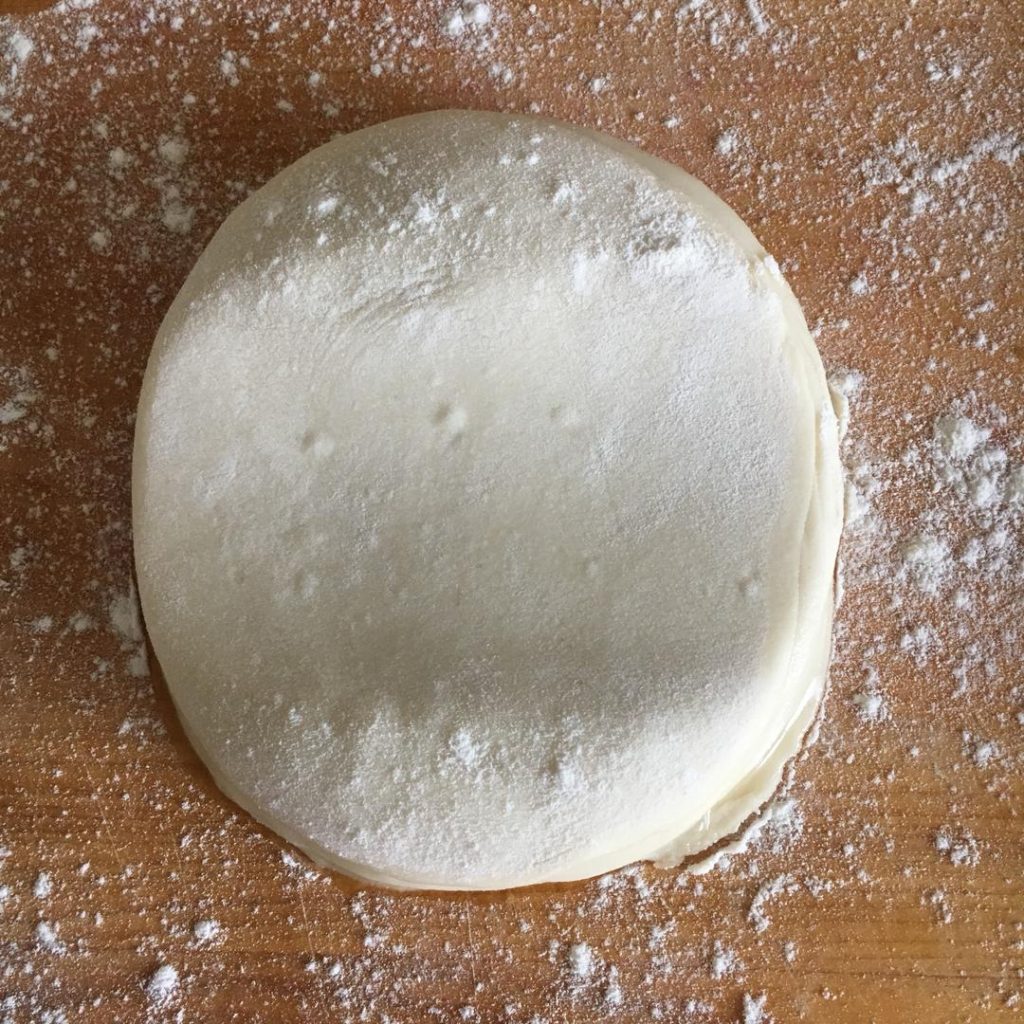
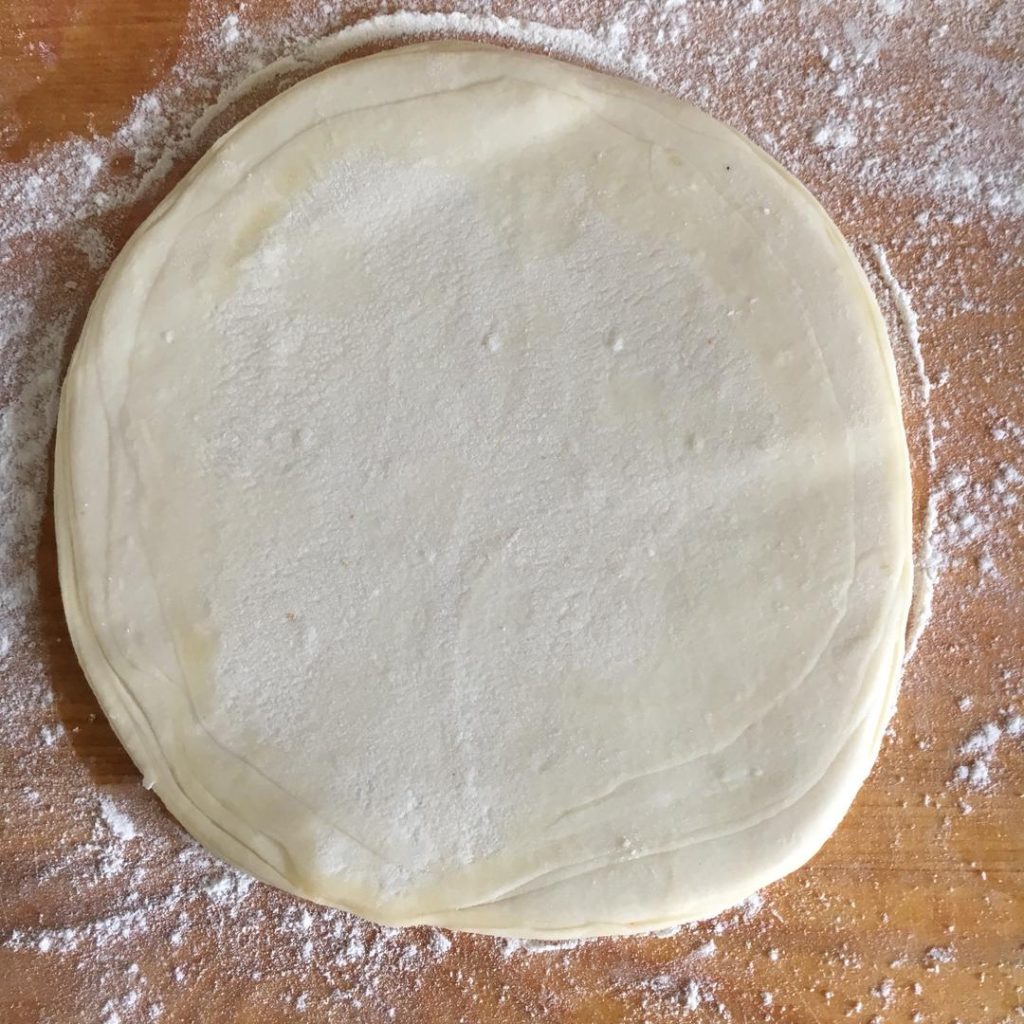
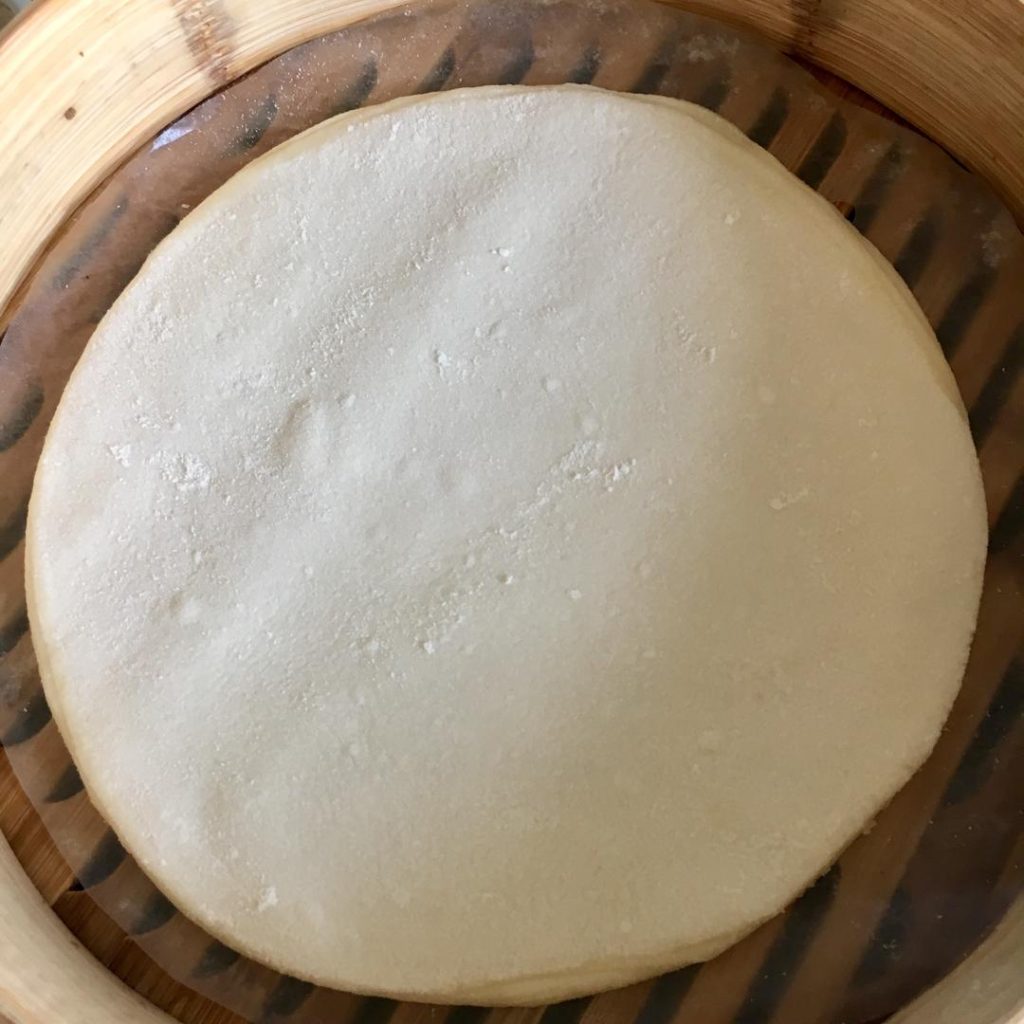
Step 6: Separate Wrappers
Once steamed, remove the stack. When they are cool enough to handle (but still warm), gently peel the layers apart. You will now have 10 thin, translucent, and cooked spring pancake wrappers.
Reference: For a different wrapper style, check out our Homemade Spring Roll Wrappers.
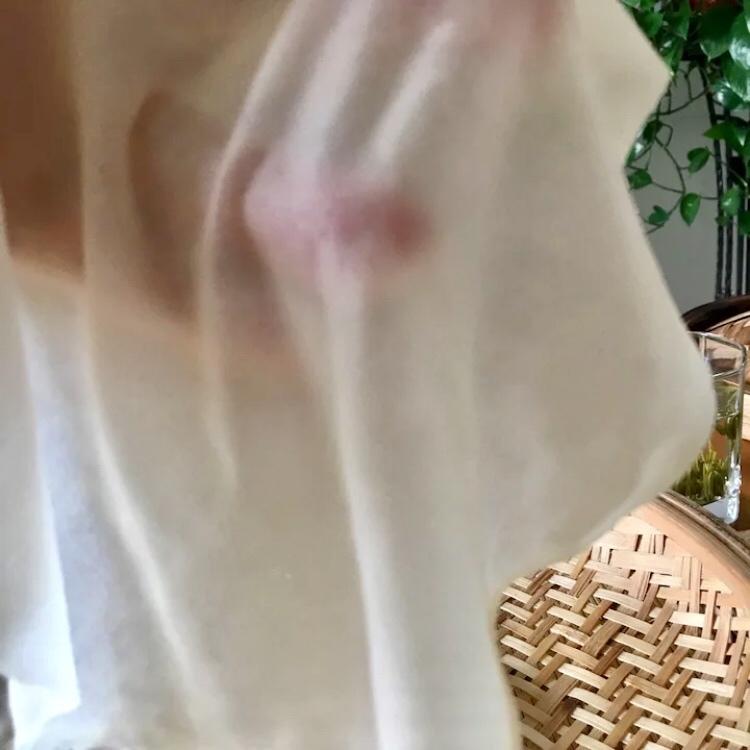
Step 7: Prepare the Filling
In a large bowl, combine the cooled scrambled eggs and chopped chives.
Chef’s Secret: Mix the oil into the chopped chives first to coat them, then mix in the eggs. Add salt only right before wrapping. This prevents the salt from drawing moisture out of the chives, keeping the filling fresh (鲜) and dry.
Step 8: Wrap (Fold the Quilt)
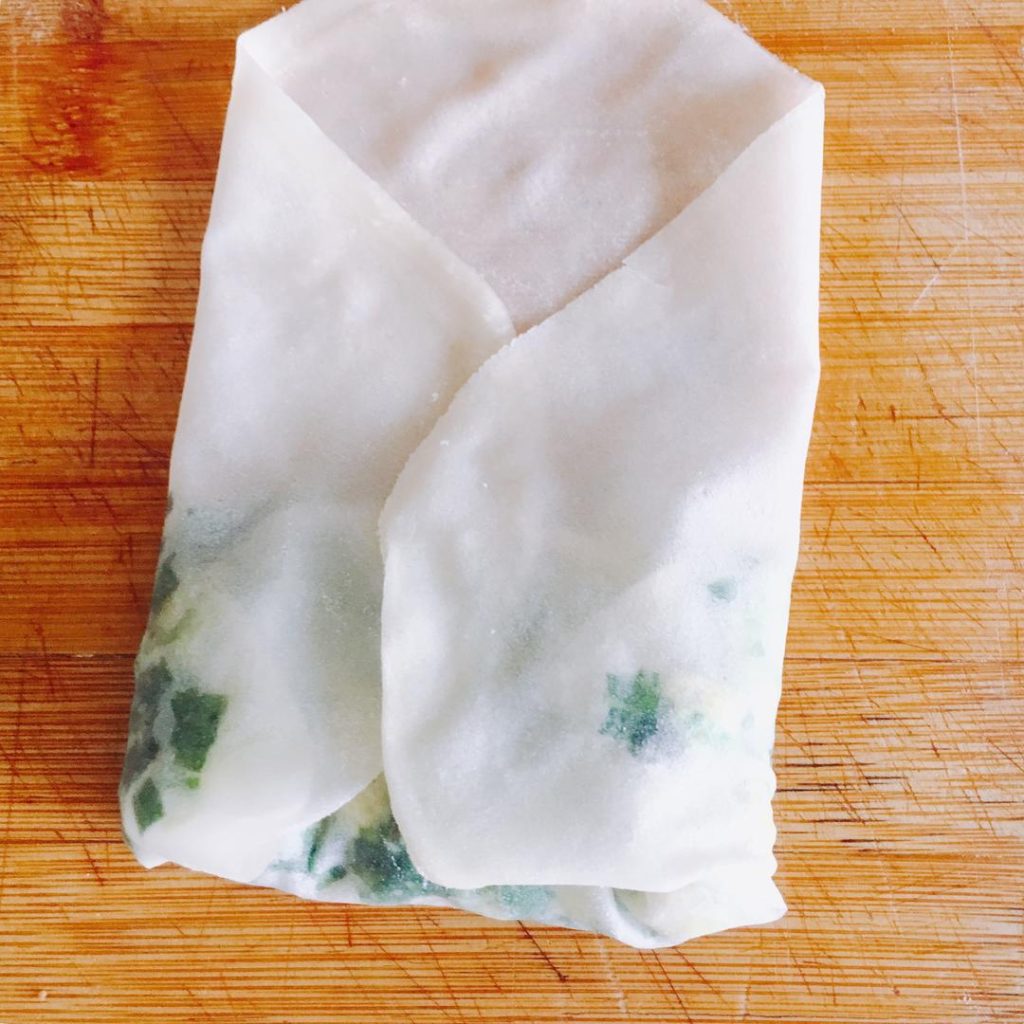
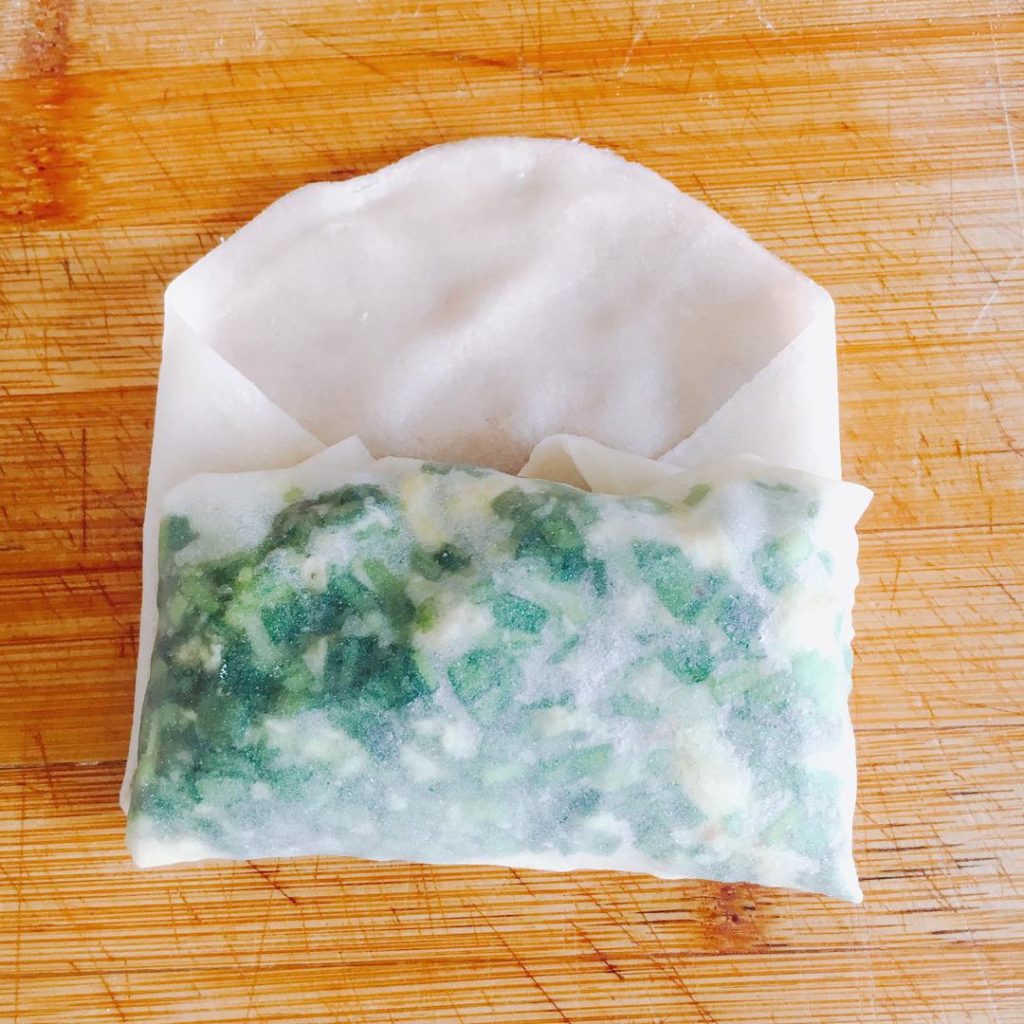
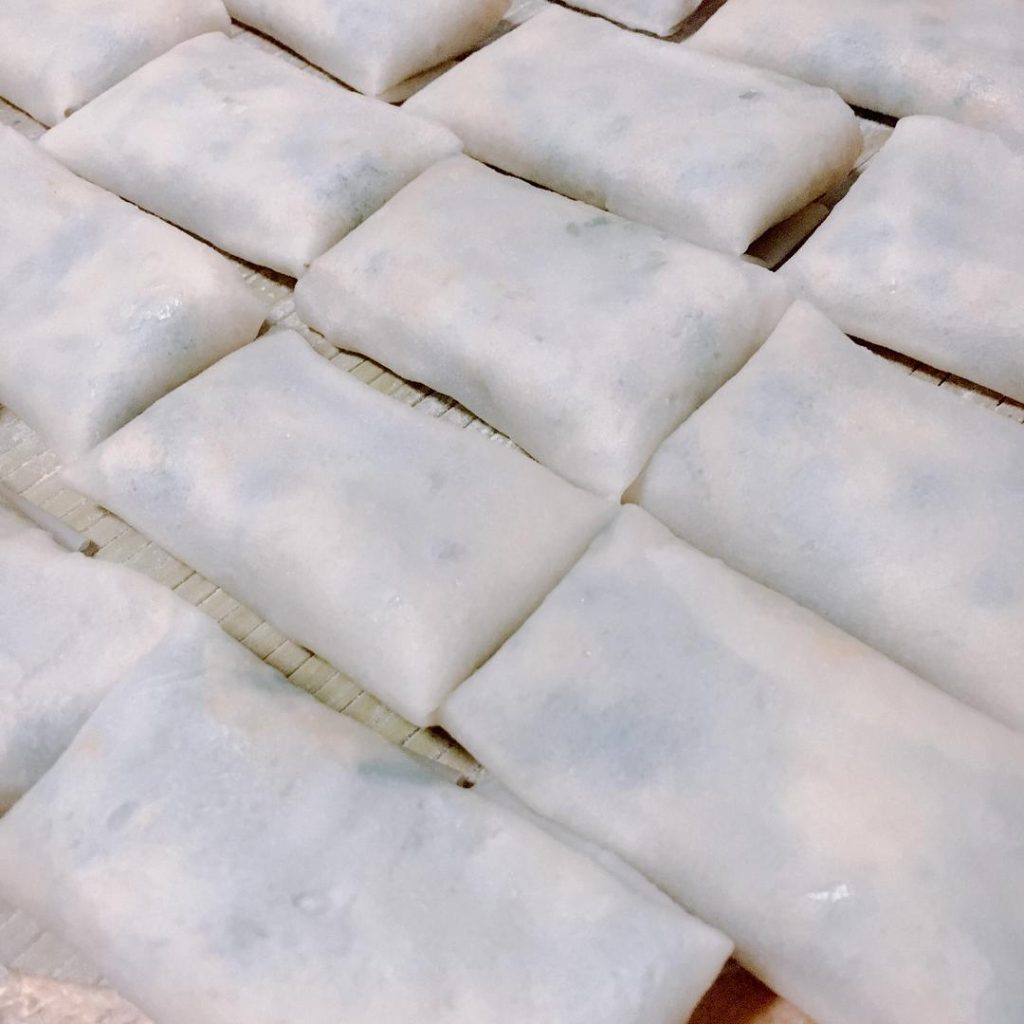
Lay a wrapper flat. Place a portion of the filling on the bottom 1/3 of the wrapper. Fold the bottom up over the filling. Fold the left and right sides in towards the center (like folding a quilt). Roll upwards. Dab a little water on the top edge to seal the roll.
Note: If you love this filling, you might also enjoy our Chinese Chives and Eggs stir-fry.
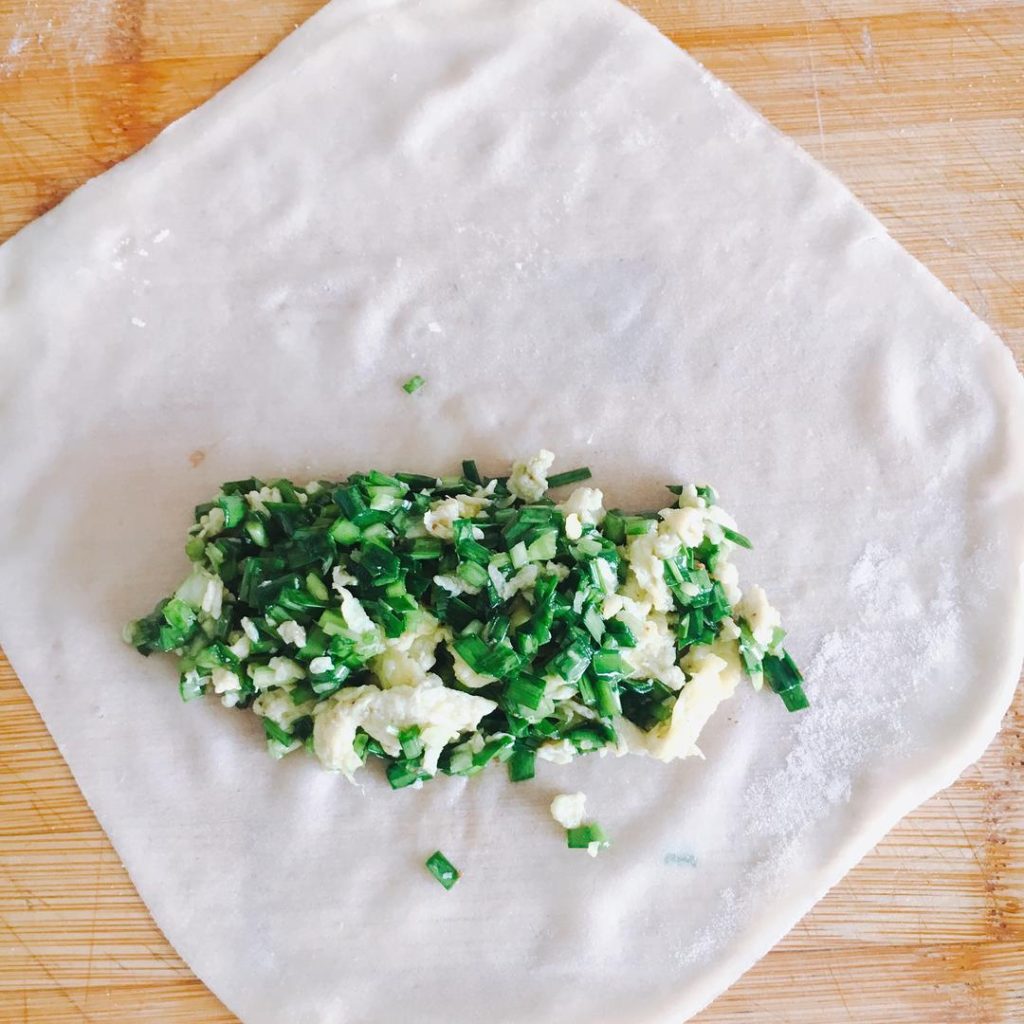
Step 9: Pan-Fry
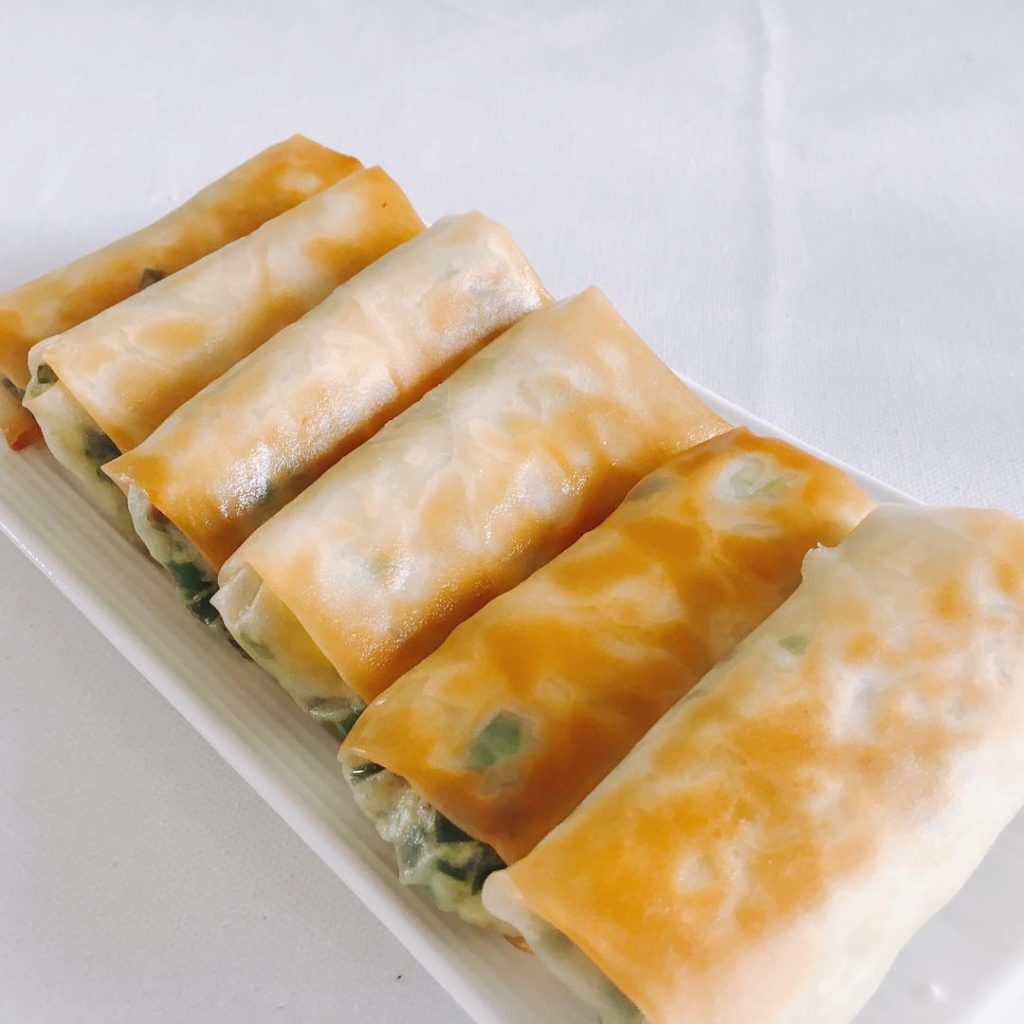
Heat a flat-bottomed pan with a tablespoon of oil over medium heat. Place the spring rolls seam-side down first to seal them. Fry until golden brown on both sides.
Visual Cue: The wrapper should blister slightly and turn a beautiful golden color.
Step 10: Serve
Bite into the crispy skin to reveal the savory, aromatic leek and egg filling. The taste is incredibly fresh (鲜).
Troubleshooting
- Wrappers stuck together? This usually happens if not enough oil was used between layers, or if they were rolled too thinly with too much pressure. Be generous with oil next time.
- Filling is watery? You likely added salt too early. Remember: Oil first, salt last!
- Wrapper cracked during rolling? The dough might have been too dry. Ensure you stick to the 105g water to 200g flour ratio, and don’t skip the resting period.
What to Serve With It
These spring rolls are hearty enough to be a light meal or a substantial appetizer.
- Pairing: Serve with a bowl of Tomato Egg Drop Soup or Hot and Sour Soup for a classic Chinese comfort meal.
- Dipping: They are delicious on their own, but a dip of black vinegar and chili oil works wonders.
Storage and Reheating
- Storage: These are best eaten fresh. If you have leftovers, store them in an airtight container in the fridge for up to 2 days.
- Reheating: Do not microwave, or they will become soggy. Reheat them in a toaster oven, air fryer (350°F for 3-4 mins), or dry pan to restore the crispiness.
Nutrition Information and Safety Reminders
Nutrition Information (Estimate per Roll):
- Calories: ~180 kcal
- Carbohydrates: 22g
- Protein: 6g
- Fat: 8g
- Saturated Fat: 1.5g
- Cholesterol: 55mg
- Sodium: 280mg
- Fiber: 1g
- Sugar: 1g
Disclaimer: Nutrition information is calculated using an ingredient database and should be considered an estimate. Garnishes and optional items are not included. Actual values vary based on the specific brand of ingredients used and the amount of oil absorbed during pan-frying.
Food Safety & Preparation:
- Egg Safety: Ensure the eggs in the filling are fully scrambled and cooked before mixing with the chives to prevent any risk of salmonella, especially since the final pan-frying is brief.
- Steam Burns: When removing the wrapper stack from the steamer, be extremely cautious. The steam trapped between the layers can cause serious burns. Let them cool slightly before handling.
- Allergen Note: This recipe contains wheat (gluten) and eggs. If serving to guests with soy allergies, check your cooking oil source.
Recipe Notes
Chef’s Note on Wrappers: The secret to the “10-layer steam” technique lies in the oil. Be generous when brushing oil between the dough discs, ensuring you reach the very edges. If the edges are dry, they will fuse together during steaming, making them impossible to peel apart without tearing. Additionally, rolling the stack of 10 requires a gentle hand—roll from the center out, flip the stack, and roll again. This ensures the top and bottom wrappers stretch at the same rate, preventing the inner layers from bunching up.












Leave a Reply