If you have ever stood at a night-market stall in Chengdu or Changsha, plastic glove on one hand and a little bowl of cold, glistening chicken feet in the other, you already know the appeal. These camellia oil hot and sour boneless chicken feet take that exact pleasure and make it at home: tender poached feet, chilled until firm, hand-deboned, then drowned overnight in a sour, garlicky, chili-forward dressing that clings to every curve.
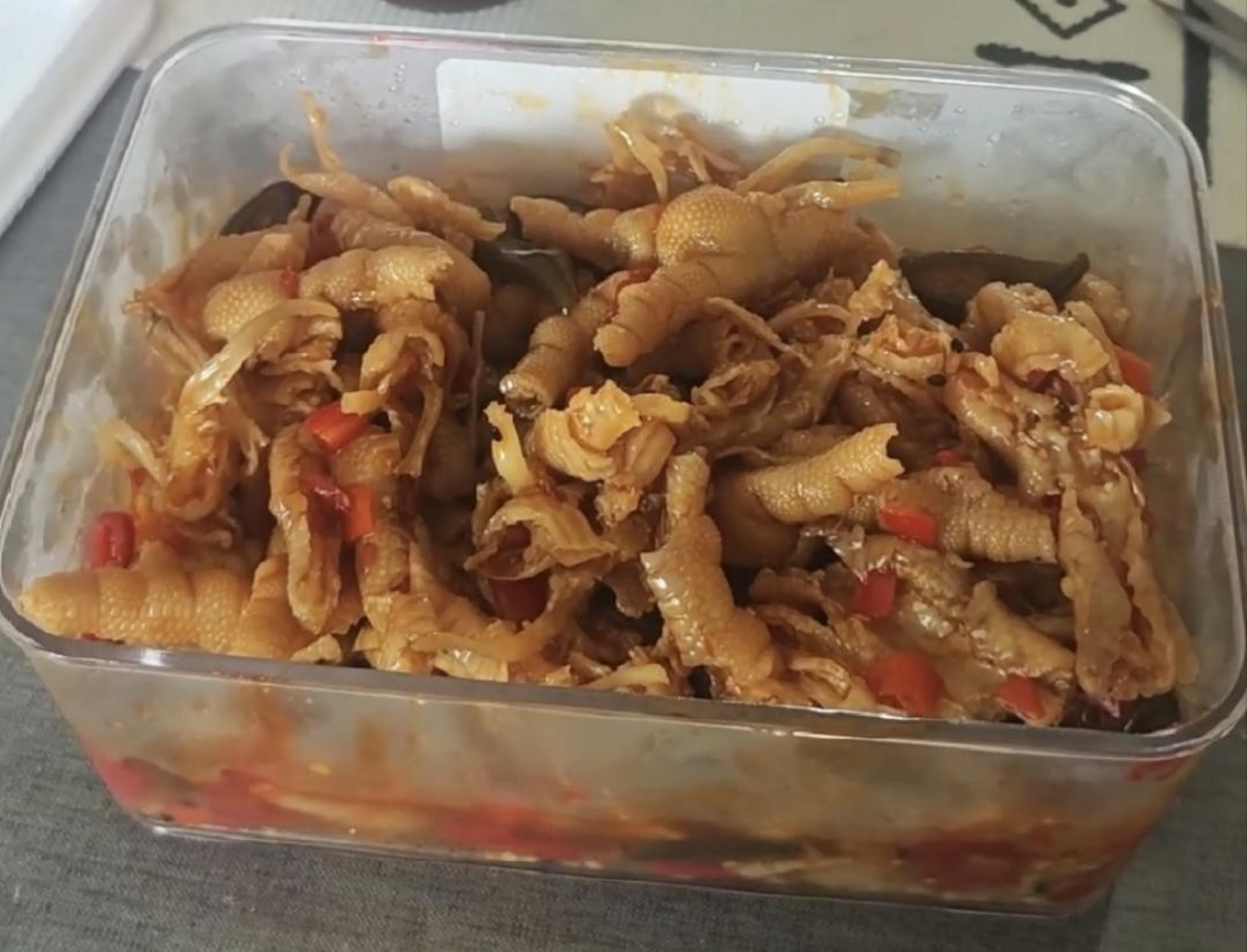
The magic is in the contrast. The feet themselves are mild and bouncy, all texture and no strong flavor, which makes them the perfect sponge for a dressing built on black vinegar, hand-chopped chili paste, sesame oil, and a slick of camellia oil chili crunch. The nutty, almost buttery camellia oil rounds off the vinegar’s sharp edge and carries the chili aroma in a way plain vegetable oil cannot.
This is a cold-tossed dish, which means almost all the work happens ahead of time. You poach, you chill, you debone, you toss, and then you wait. The waiting is not optional — it is the recipe. Overnight in the fridge, the feet drink up the sauce and turn from “good” into “I cannot stop eating these.”
What Is 山茶油版酸辣无骨鸡爪?
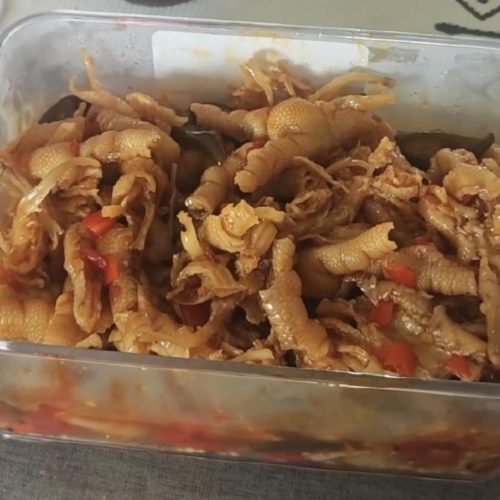
山茶油版酸辣无骨鸡爪 is a cold-tossed Chinese chicken feet dish — the name translates roughly to “camellia oil version hot and sour boneless chicken feet.” It belongs to the family of Chinese cold appetizers known as liang cai, the small plates that open a meal or sit on a table with drinks. The feet are simmered until tender, chilled, deboned by hand, then marinated overnight in a dressing of black vinegar, sugar, soy sauce, sesame oil, hand-chopped chili paste, and camellia oil chili crunch.
The “hot and sour” in the name is suan la, the same sour-and-spicy pairing you find across Sichuan and Hunan cooking. What makes this version distinctive is the camellia oil — a delicate, nutty oil pressed from camellia seeds, prized in southern China for its clean flavor and high smoke point. Here it is used as a chili crunch, and only the infused oil is spooned into the dressing, so the feet get a glossy, aromatic coating without any gritty solids.
The dish is a staple of street stalls and cold-dish counters, and it has exploded in popularity online because it is genuinely fun to eat: no bones to spit out, just a chewy, springy bite that delivers a hit of sour, sweet, garlicky heat. Once you learn to debone a foot, the whole thing becomes almost meditative.
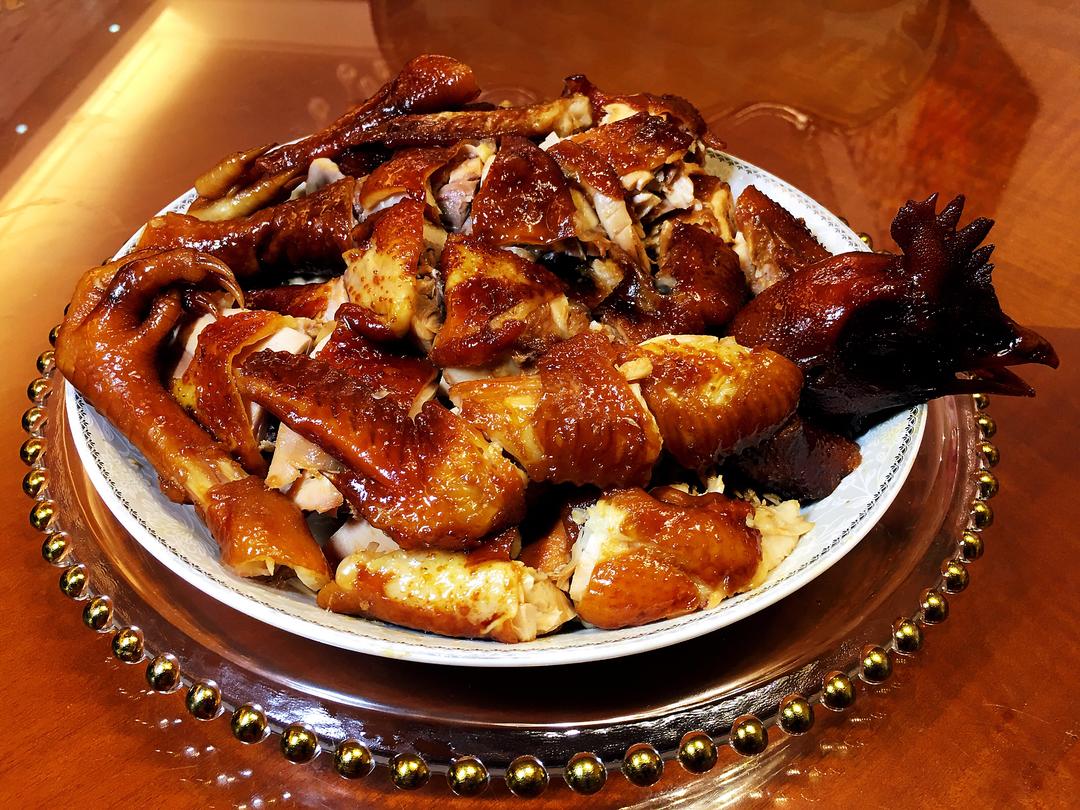
If you enjoy this style of cold, sauce-soaked poultry, our cantonese soy sauce chicken is a gentler, soy-forward cousin that shares the same make-ahead, serve-cold rhythm.
1Cantonese Soy Sauce Chicken (Si You Ji)A classic Cantonese dish featuring whole chicken poached in a savory-sweet master stock of soy sauce, rose wine, and rock sugar. It results in silky meat and glossy, amber-colored skin.Check out this recipe
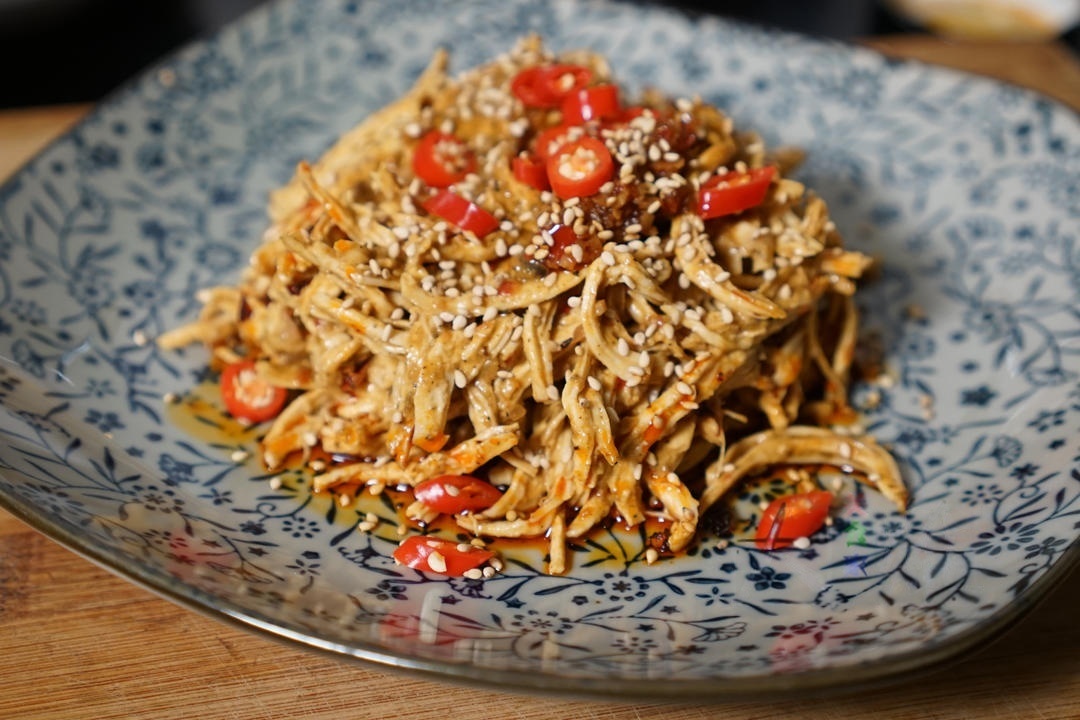
For a Sichuan classic that leans even harder into the chili-and-vinegar pairing, try our mouth watering chicken — the “killer sauce” there is built on the same sour, numbing, garlicky foundation as this dressing.
2Mouth-Watering Chicken (Kou Shui Ji)This authentic Sichuan Mouth-Watering Chicken (Kou Shui Ji) features tender poached chicken tossed in a "killer" sauce made of sesame paste, chili oil, and Sichuan peppercorns. It’s nutty, spicy, savory, and addictive.Check out this recipe
And if you want a lighter, poached-and-dipped approach to the same cut of poultry, our poached chicken wings with secret dipping sauce shows how far a good dipping sauce can carry a simple poach.
3Poached Chicken Wings with Secret Dipping Sauce (Bai Shui Zhu Ji Chi)A healthy, tender chicken wing recipe paired with a savory, spicy, and tangy Sichuan secret dipping sauce. This authentic Chinese home cooking dish features silky poached meat and a robust dipping sauce.Check out this recipe

Ingredient Notes
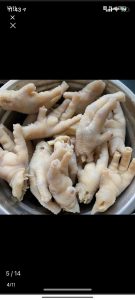
Chicken feet. Look for plump, pale feet with intact skin and no dark bruising. Fresh is best, but frozen feet are perfectly fine — thaw them overnight in the fridge, never on the counter. Twenty feet yields roughly four generous appetizer portions once deboned.
Hand-chopped chili paste (剁椒酱). This is the backbone of the dressing, and it is already salted, which is why the recipe adds no extra salt. Brands vary wildly in heat and salt level, so taste yours before you commit. If yours is very salty, cut back slightly and add a little more cool boiled water.
Black vinegar (香醋). Use a Chinkiang-style black vinegar for its malty, slightly sweet depth. Rice vinegar works in a pinch but tastes flatter and sharper, so you may want a touch more sugar.
Camellia oil chili crunch (山茶油坚果油辣子). This is the star. Camellia oil has a clean, faintly nutty flavor and a high smoke point, and when it is infused with chilies and nuts it makes a chili oil that is aromatic rather than just hot. Spoon off only the oil — the nutty solids are delicious but will make the dressing grainy. If you cannot find camellia oil chili crunch, a good homemade chinese chili oil is the closest substitute.
Pickled pepper brine (泡椒水). Optional but transformative. The brine from a jar of pickled peppers adds a fermented, tangy depth that plain vinegar cannot replicate, plus it stretches the sauce so the feet stay submerged. If you skip it, just add more cool boiled water.
Sugar. Do not skip it. Sugar is not there to make the dish sweet; it balances the vinegar and rounds out the chili so the sourness reads as bright instead of harsh.
Ingredients
Here is everything you need. The full measured list with amounts is in the recipe card at the bottom of this post.
- 20 chicken feet, nails trimmed
- 6–7 slices fresh ginger
- 2–3 tbsp Shaoxing wine
- 6 tbsp hand-chopped chili paste
- 3–4 tbsp sugar
- 3 tbsp toasted sesame oil
- 6–7 tbsp black vinegar
- 3 tbsp light soy sauce
- 2 tbsp camellia oil chili crunch (oil only)
- Half a bowl of cool boiled water (about 120 ml)
- 4–5 tbsp pickled pepper brine (optional)
- Optional: a handful of sea pine mushrooms or other crunchy add-ins
Equipment Needed
- A wok or a deep pot for poaching — a wok works well because the wide surface lets you skim foam easily
- A cutting board and a small paring knife for scoring and deboning
- A slotted spoon for lifting the feet out of the poaching liquid
- A large bowl for the ice-water chill
- A mixing bowl with a lid, or a container you can cover with plastic wrap
- Disposable kitchen gloves for tossing the feet in the dressing
- Paper towels for patting the chilled feet dry
Nothing here is specialty equipment. The one thing worth having is a genuinely sharp paring knife — deboning chicken feet is a small, precise job, and a dull blade makes it frustrating and messy.
Why This Recipe Works
It separates texture from flavor. Chicken feet have almost no flavor of their own, which is exactly why they work so well in a bold dressing. The poaching step is purely about texture and cleanliness; all the flavor comes from the cold marinade.
The chill-before-debone step is the whole trick. Warm, freshly poached feet are floppy and the skin tears. Chilling them in ice water for an hour (or cold water in the fridge for three) firms up the collagen and skin so the bones slide out in clean pieces. This is the single biggest difference between a smooth deboning session and a frustrating one.
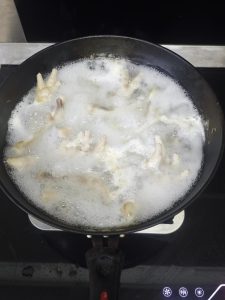
Skimming the scum genuinely matters. That gray foam is blood and impurities, and if it stays in the pot it re-absorbs into the feet and leaves a gamy, muddy taste that no amount of vinegar can cover. Skim it early and often.
Overnight marinating builds layered flavor. The feet are dense and gelatinous, so they absorb the dressing slowly. An hour gives you a decent snack; overnight gives you the real thing, where the sour, sweet, garlicky, and chili notes have all settled into balance.
There is real food science behind the chill step: collagen in the skin and tendons sets into a firm gel as it cools, which is why chilled feet hold their shape and release from the bone cleanly, while warm feet stay soft and tear. The same principle is why gelatin desserts must be fully chilled before unmolding.
Prep & Mise en Place
Get everything ready before you turn on the heat, because once the feet are chilling, the rest is assembly.
- Soak and trim. Soak the feet in cold water for 30 minutes, rinse, then snip off all the nails with kitchen shears. Nails are tough and unpleasant to bite into, so do not skip this.
- Measure the dressing. Combine the chili paste, sugar, sesame oil, black vinegar, soy sauce, camellia oil chili crunch, cool boiled water, and pickled pepper brine (if using) in a bowl and stir until the sugar dissolves. Taste it — it should be aggressively sour, a little sweet, and quite salty. It will mellow once it meets the feet.
- Set up your chill station. Fill a large bowl with ice water, or clear space in the fridge for a bowl of cold water.
- Prepare add-ins. If using sea pine mushrooms or another crunchy vegetable, rinse and drain them well so they do not water down the dressing.
If you are new to working with chicken feet, give yourself a little extra time on the deboning step the first round. It goes quickly once you have done two or three.
Cooking Process
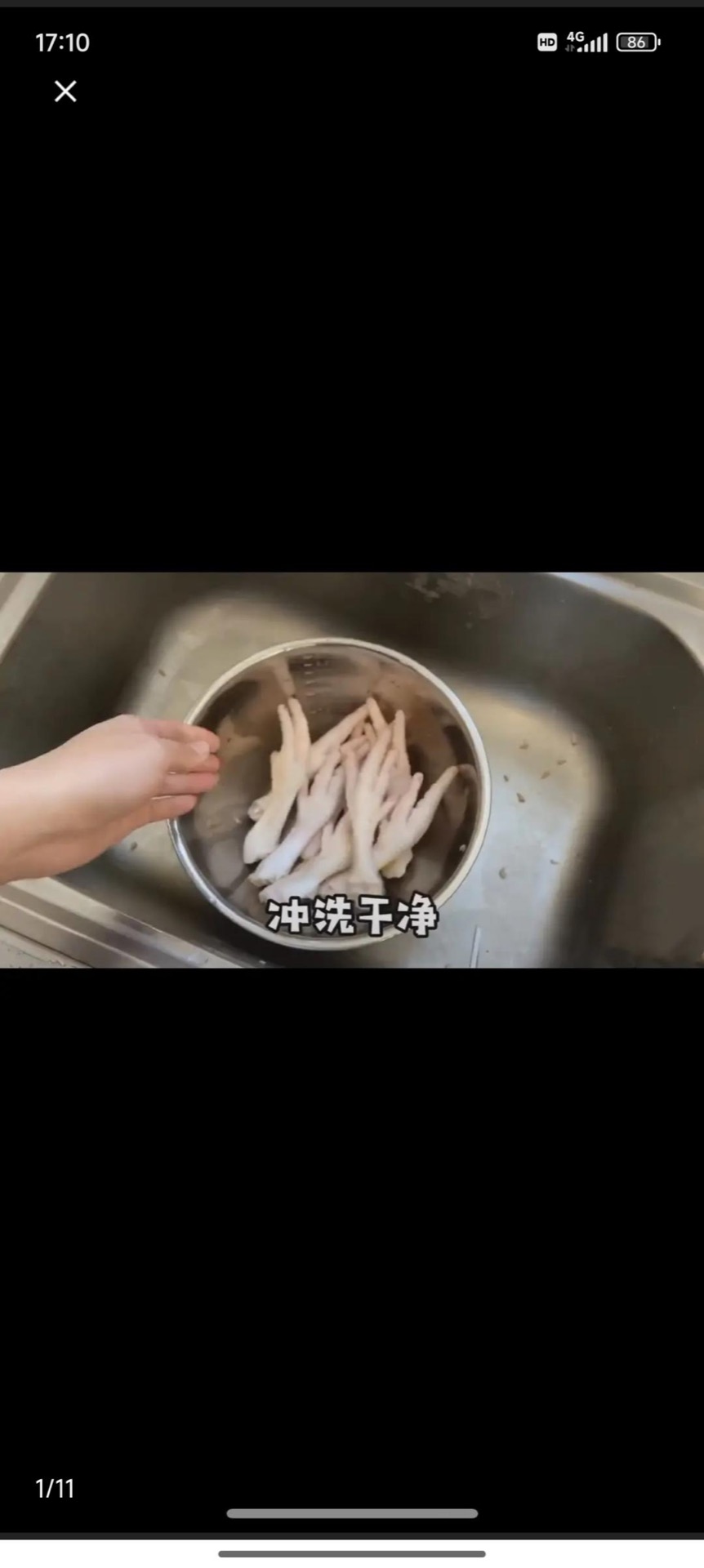
Step 1 — Soak the Feet
Soak the chicken feet in cold water for half an hour to draw out the blood, then rinse them clean.
Step 2 — Trim the Nails
Snip off the nails on each foot with kitchen shears.
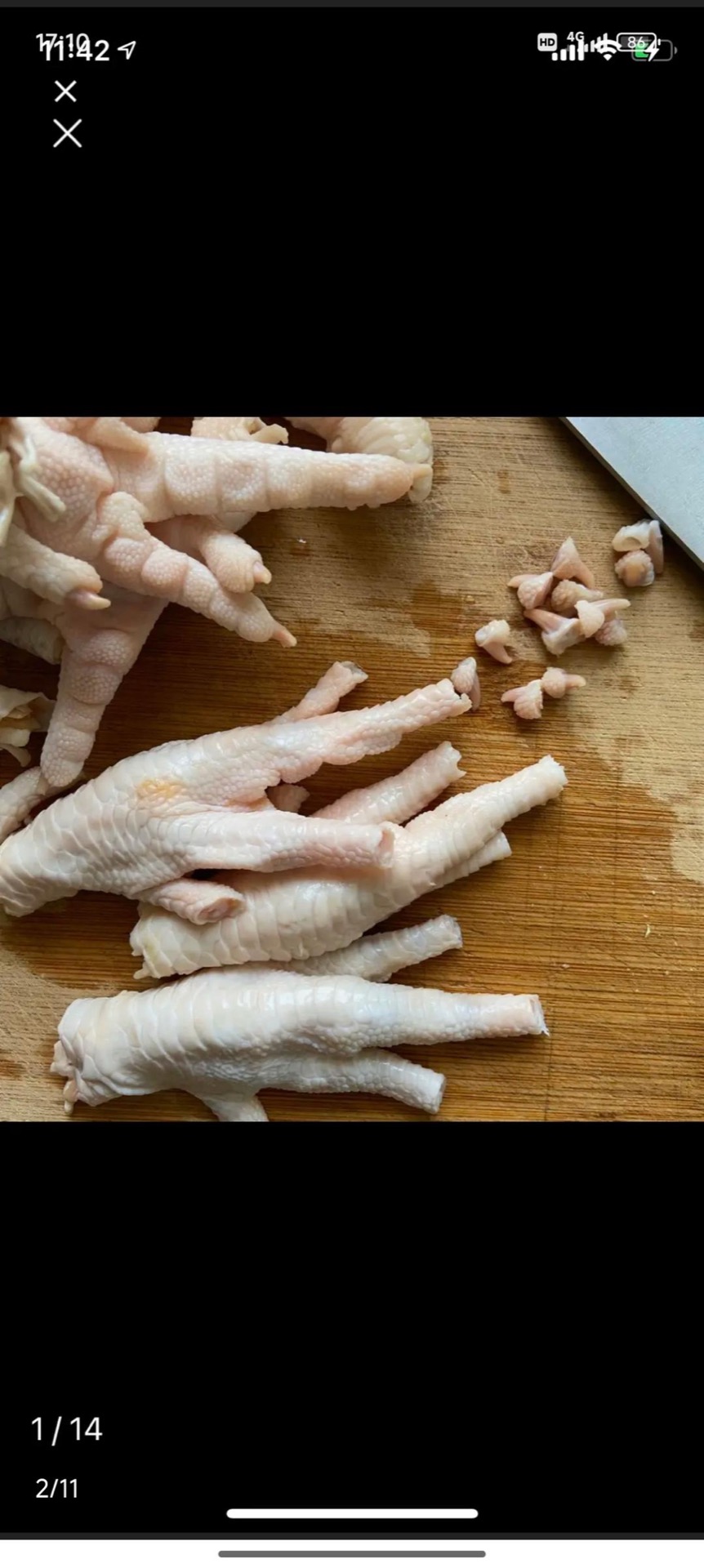
Step 3 — Poach with Aromatics
Put the feet in a pot of cold water, bring to a boil over medium-high heat, then simmer for 15 minutes with the ginger and Shaoxing wine to remove the funk.
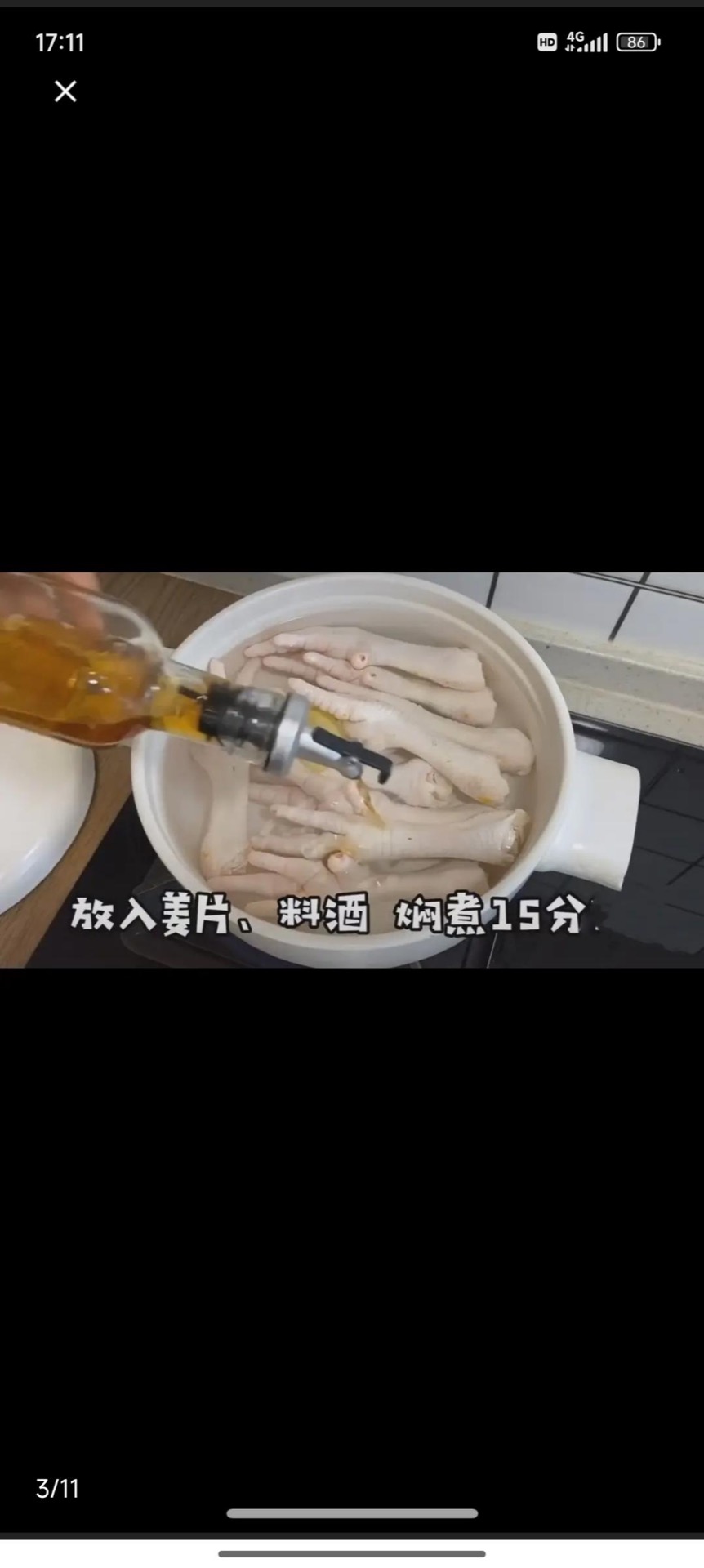
Step 4 — Skim the Scum
A layer of foam will rise during cooking and must be skimmed off — it is mostly blood and impurities, and if you leave it the feet will carry a gamy smell that ruins the hot and sour flavor once they soak in the chilled dressing.
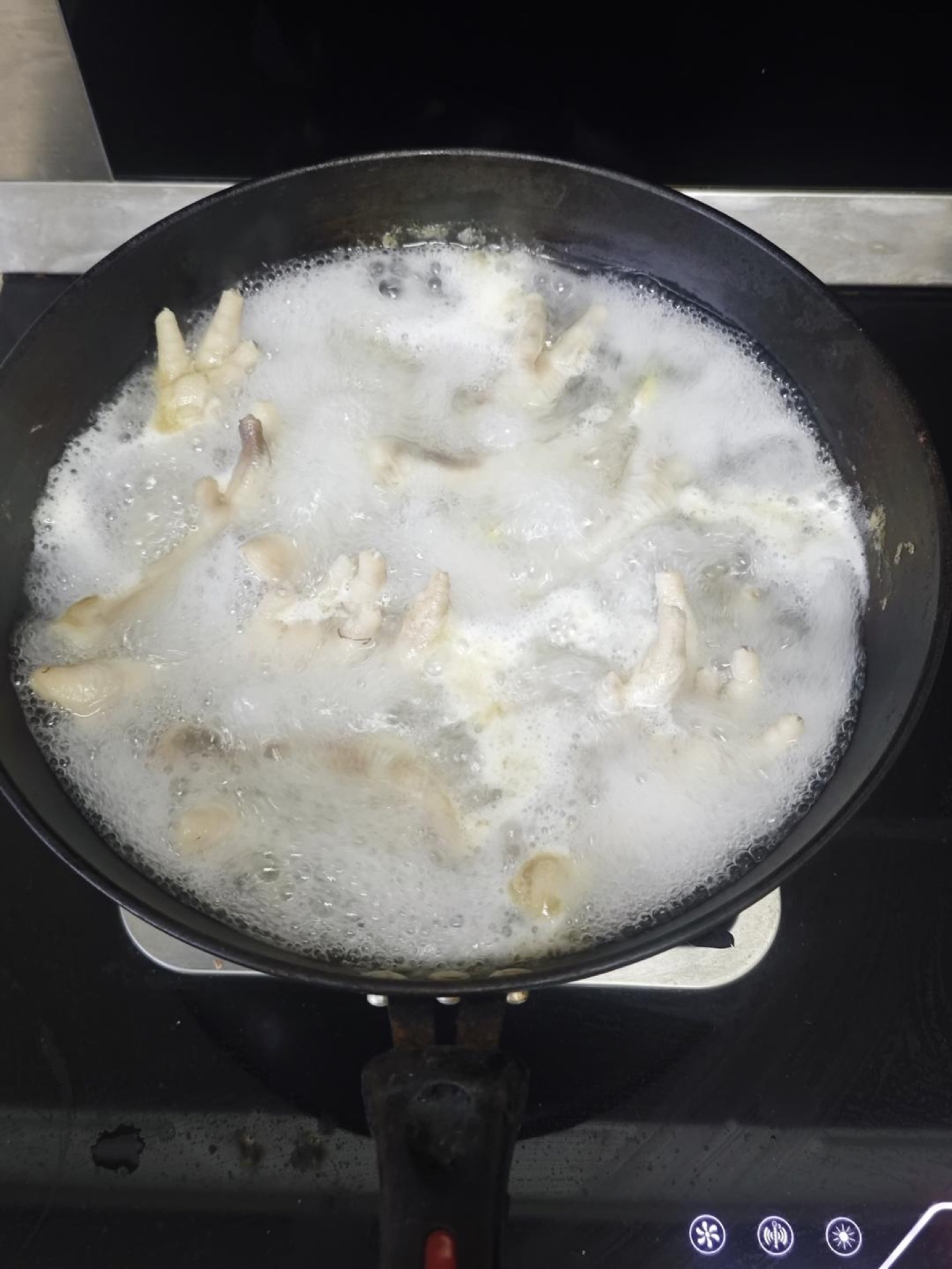
Step 5 — Chill for Deboning
After 15 minutes of simmering, turn off the heat and let the feet sit for 5 more minutes, then scoop them out, rinse under clean water, and chill in ice water for 1 hour, or in plain cold water in the fridge for 3 hours — chilling firms them up so the bones come out cleanly. Pat the chilled feet dry with paper towels; pulling the bones straight out of the water makes the feet slippery and hard to grip, though if you are in a hurry you can drain the water and debone them directly.
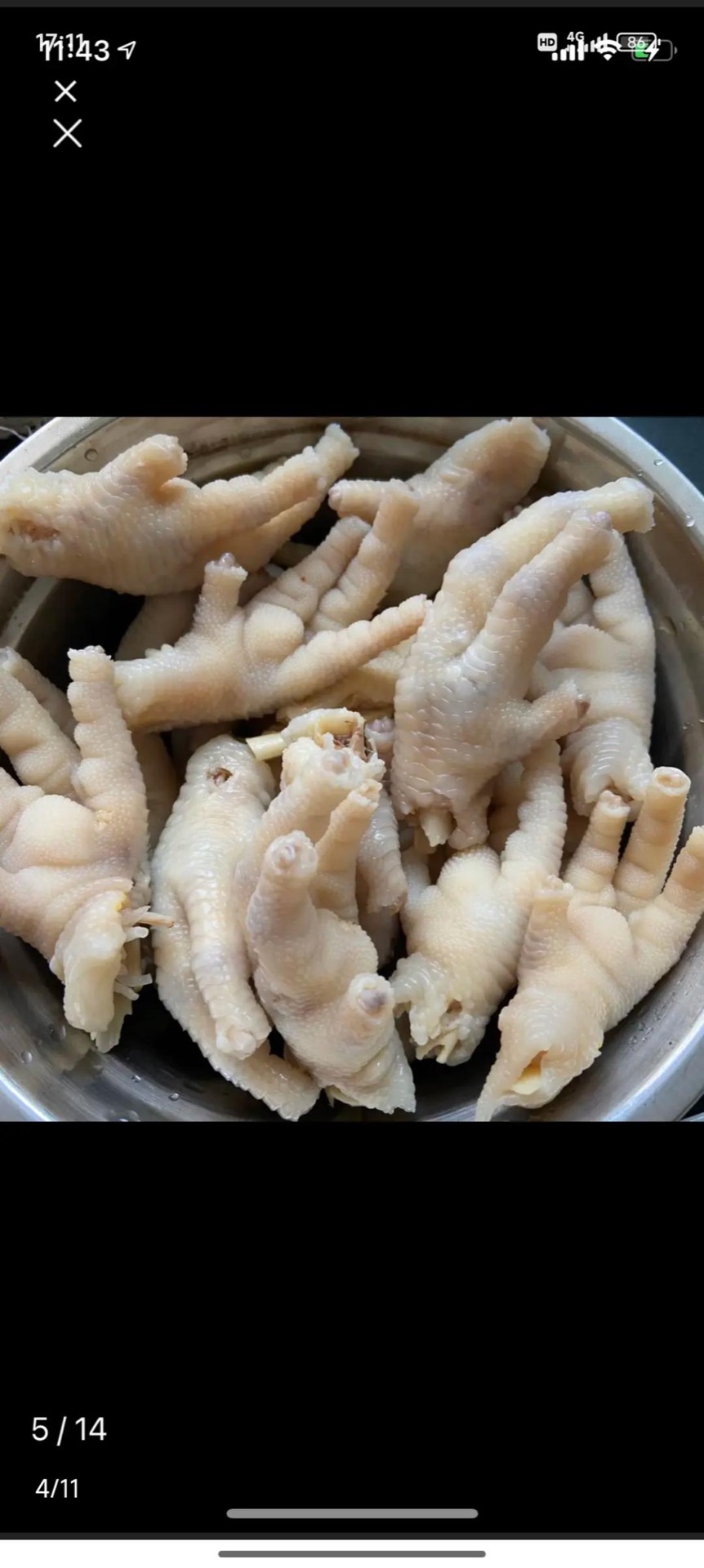
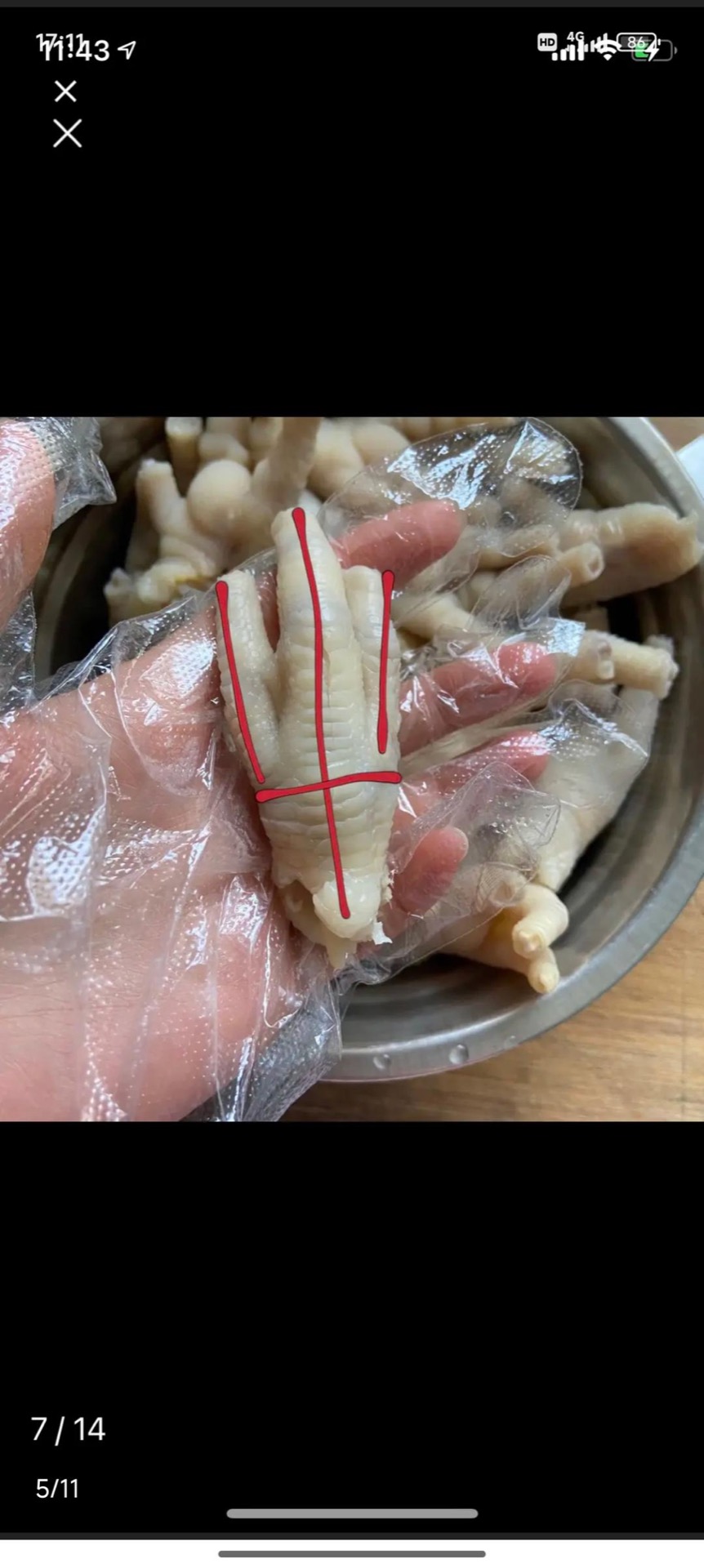
Step 6 — Score and Debone
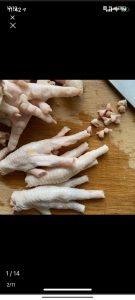
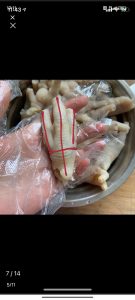
Use a small paring knife to score along the feet as shown in the photos, then follow the illustrated deboning process — if you have never done it, just work along the lines in the pictures.
Step 7 — Toss in the Dressing
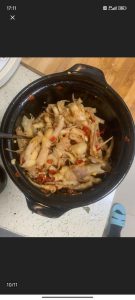
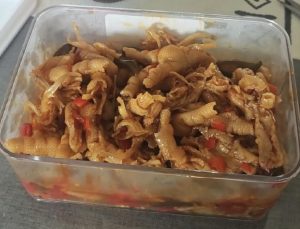
Put the deboned feet in a container and add 6 tbsp hand-chopped chili paste (to your taste), 3–4 tbsp sugar, 3 tbsp sesame oil, 6–7 tbsp black vinegar, 3 tbsp light soy sauce, 2 tbsp camellia oil chili crunch (use only the oil, leaving the nutty solids behind), and half a bowl of cool boiled water — if you have it, add another half bowl of pickled pepper brine, otherwise plain cool boiled water is fine. Put on disposable gloves and toss everything together, cover with plastic wrap, and refrigerate overnight; the longer it sits the deeper the flavor. I usually taste it the next day and add a splash more vinegar if it needs more sourness, adjusting to my own preference.
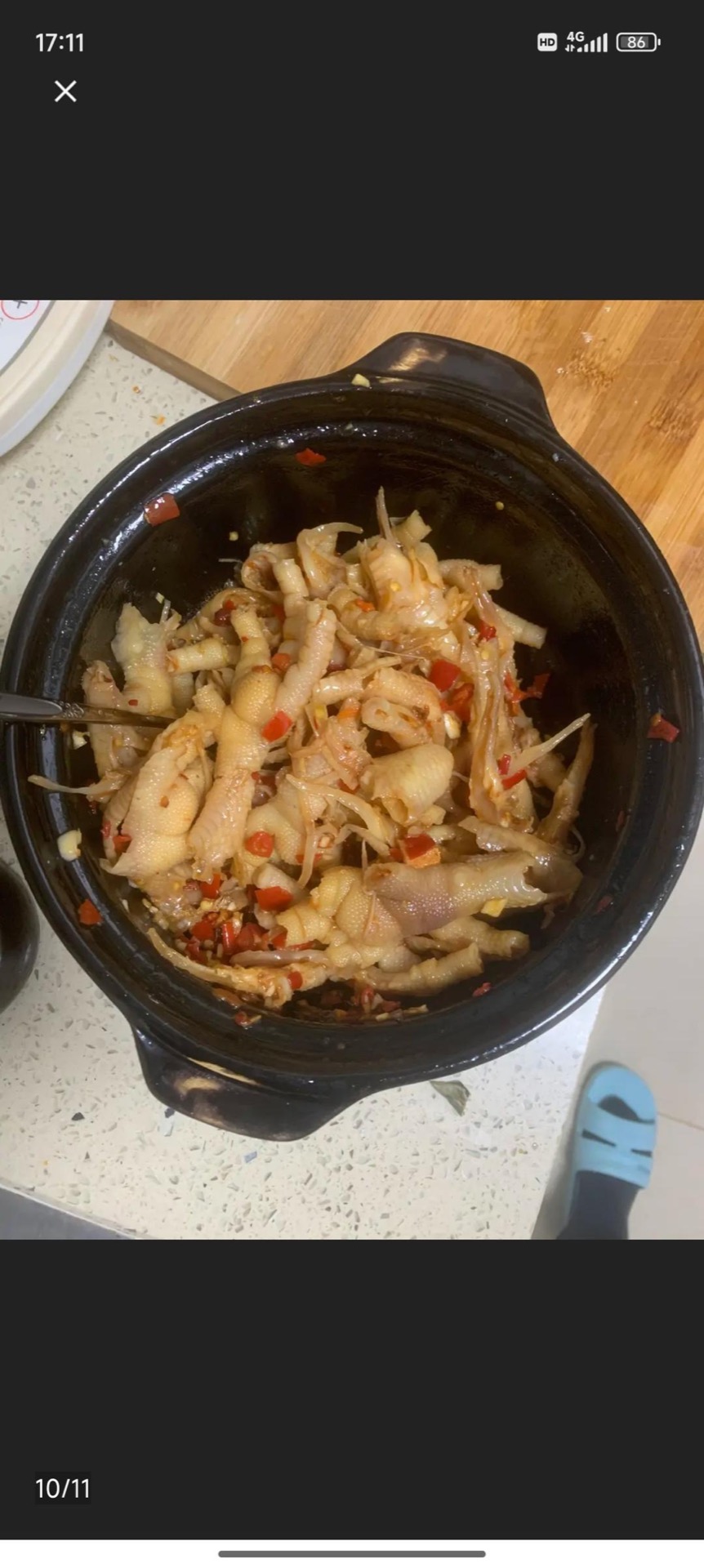
Step 8 — Add Crunchy Vegetables
Besides the feet you can add other side ingredients — I put in some sea pine mushrooms — and the point of the cool boiled water and pickled pepper brine is to build up the sauce, because without enough liquid the feet will not soak properly.
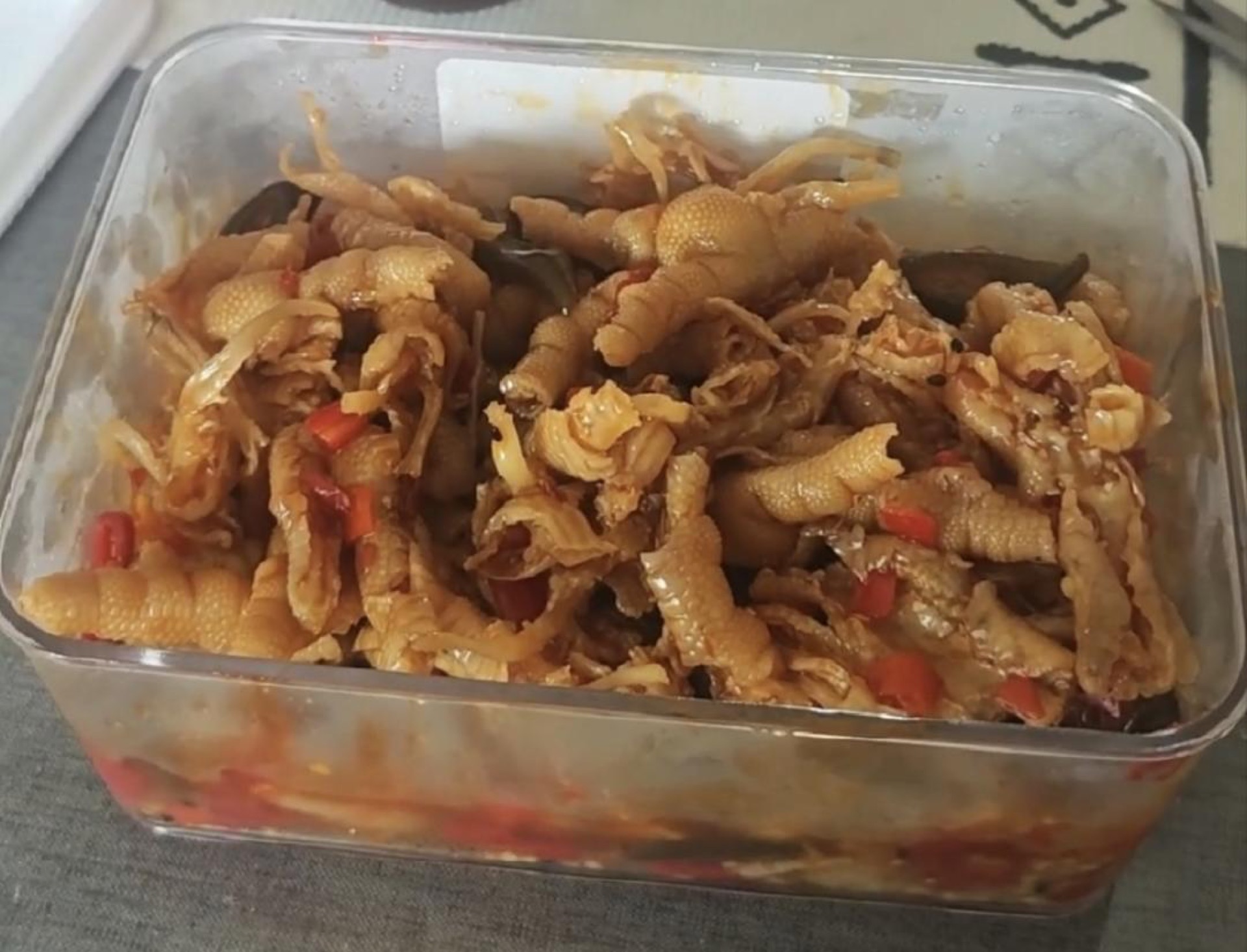
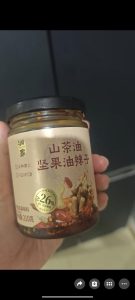
Step 9 — The Camellia Oil Used
This is the brand of camellia oil used in the recipe.
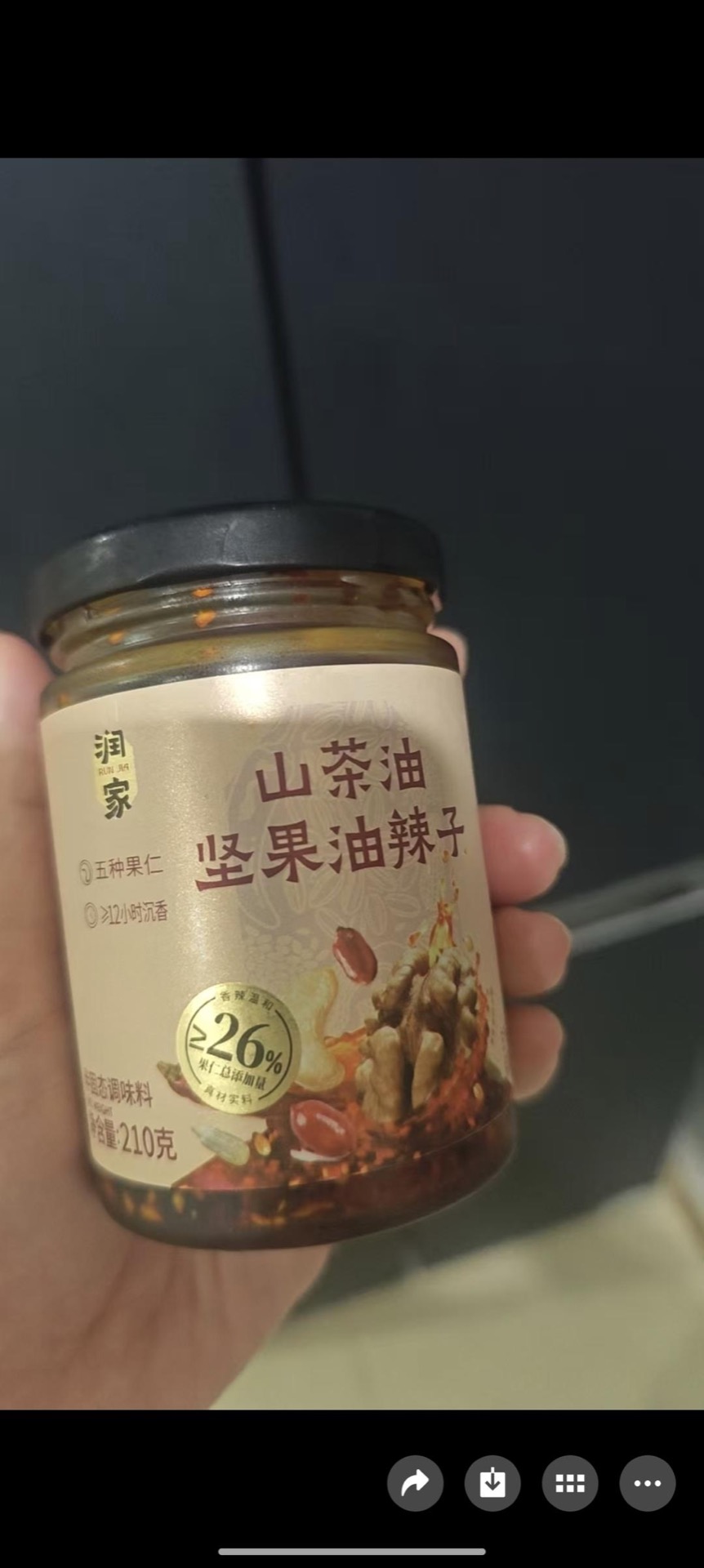
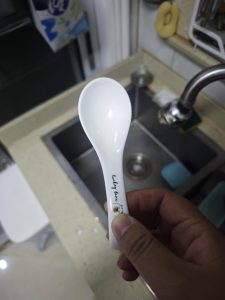
Step 10 — The Spoon Standard
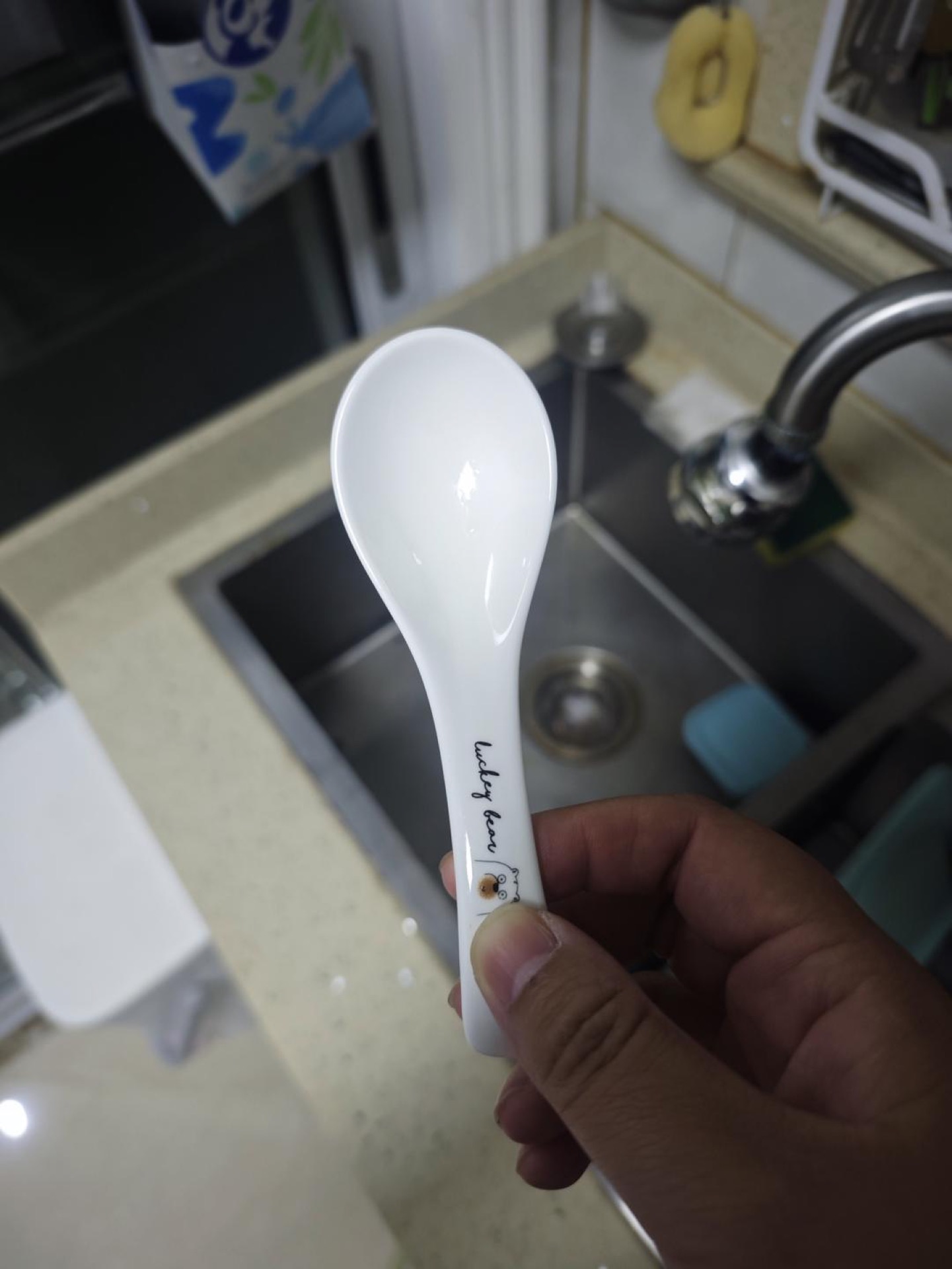
Every spoon measurement in this recipe refers to this kind of soup spoon.
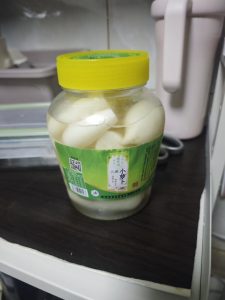
Step 11 — The Pickled Pepper Brine
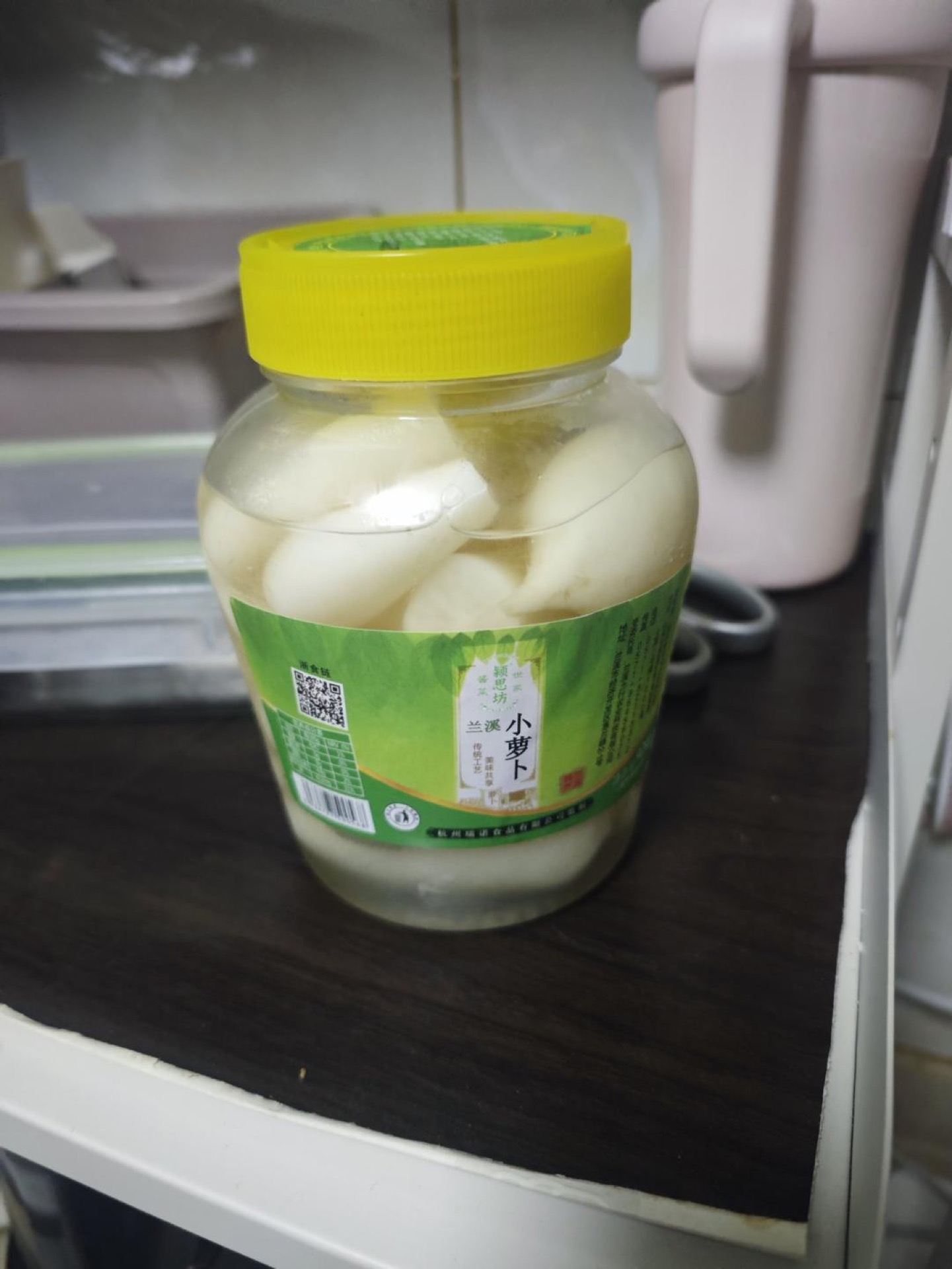
The brine used here comes from this jar of pickled peppers, though any brand you like is fine.
Common Mistakes When Making Boneless Chicken Feet
1. Skipping the cold soak at the start. Going straight from package to pot leaves blood in the feet, which turns into scum and a gamy aftertaste. Soaking in cold water for 30 minutes draws out most of it. Fix: if you are short on time, soak for at least 15 minutes and rinse under running water until it runs clear.
2. Not skimming the foam. The gray scum is blood and impurities, and if you leave it, it re-absorbs during the rest and gives the feet a muddy, gamy smell. Fix: keep a slotted spoon or fine skimmer in hand and remove foam every few minutes during the simmer.
3. Trying to debone while the feet are still warm. This is the most common failure. Warm skin is soft and tears, and the bones cling. Fix: chill in ice water for a full hour, or in the fridge for three hours, and pat them dry before you start. Cold feet are firm and the bones pop out cleanly.
4. Adding salt on top of the chili paste. Hand-chopped chili paste is already heavily salted, and so is soy sauce and pickled pepper brine. Adding salt makes the whole dish inedibly salty. Fix: taste the dressing before adding anything, and if it is too salty, add a splash more cool boiled water and a pinch of sugar.
5. Using too little liquid. The feet need to be mostly submerged to marinate evenly. A dressing that only coats the bottom of the bowl leaves the top layer bland. Fix: use the full half bowl of cool boiled water, plus the pickled pepper brine if you have it, and toss a few times during the marinating period.
6. Eating it immediately. Straight out of the mixing bowl, the dressing tastes raw and separate. Fix: give it at least four hours, ideally overnight. The flavor needs time to settle and the feet need time to absorb.
Variations
Extra heat. Add a spoonful of the chili solids from your camellia oil chili crunch, or a pinch of ground Sichuan peppercorn for a numbing edge. For a more aromatic, layered heat, a spoon of chinese chili oil works beautifully alongside the camellia oil.
Lemon or lime version. Swap 2 tbsp of the black vinegar for fresh lemon or lime juice for a brighter, more tropical sourness. This is closer to a Southeast Asian cold chicken preparation, and it is excellent in summer.
Crunchy vegetable add-ins. Sea pine mushrooms, sliced cucumber, celery, or shredded carrot all work. Add them the same day you plan to eat, so they stay crisp rather than going soft in the marinade.
Less sour, more sweet. If you prefer a milder profile, reduce the vinegar to 4 tbsp and increase the sugar to 4 tbsp. Taste the next day and adjust — this dressing is designed to be tuned.
Bone-in shortcut. If deboning is not your thing, you can serve the poached feet bone-in with the exact same dressing. They will need to marinate a bit longer to absorb the flavor, and eating them is messier, but the taste is identical.
Frequently Asked Questions
Can I make this without deboning the chicken feet? Yes. The dressing works exactly the same on bone-in feet. Deboning is what makes them a pleasure to eat cold and what makes them absorb the marinade faster, but it is not required for flavor.
How long do boneless chicken feet need to marinate? A minimum of four hours, but overnight is strongly recommended. The feet are dense, so the dressing penetrates slowly. After 12 hours the flavor is noticeably deeper, and after 24 hours it is at its best.
My chicken feet taste gamy. What went wrong? Almost always one of two things: the feet were not soaked before cooking, or the scum was not skimmed during the simmer. Both leave blood and impurities that read as gamy. A third possibility is undercooking — if the feet are still tough and pink near the bone, simmer them longer.
Can I use regular chili oil instead of camellia oil chili crunch? Yes, and it will still be delicious. Camellia oil brings a distinctly clean, nutty note, but a good-quality chili oil is a fine substitute. Use the oil only and leave the solids behind.
How do I know the chicken feet are fully cooked? The meat and skin should be tender enough to bite through easily, and the internal temperature should reach 165°F (74°C). If the feet still feel tight and rubbery, simmer them another 5 minutes before the rest.
How to Serve
Serve these cold, straight from the fridge, in a shallow bowl so the dressing pools around the feet. They are a natural fit for a cold-plate spread, a drinks table, or the opening of a larger Chinese meal.
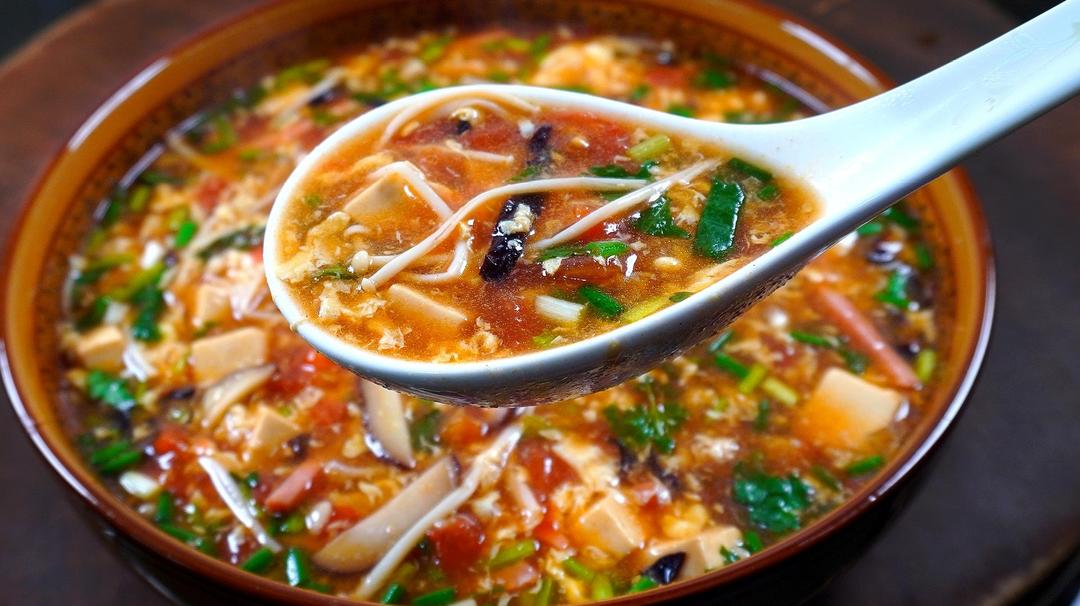
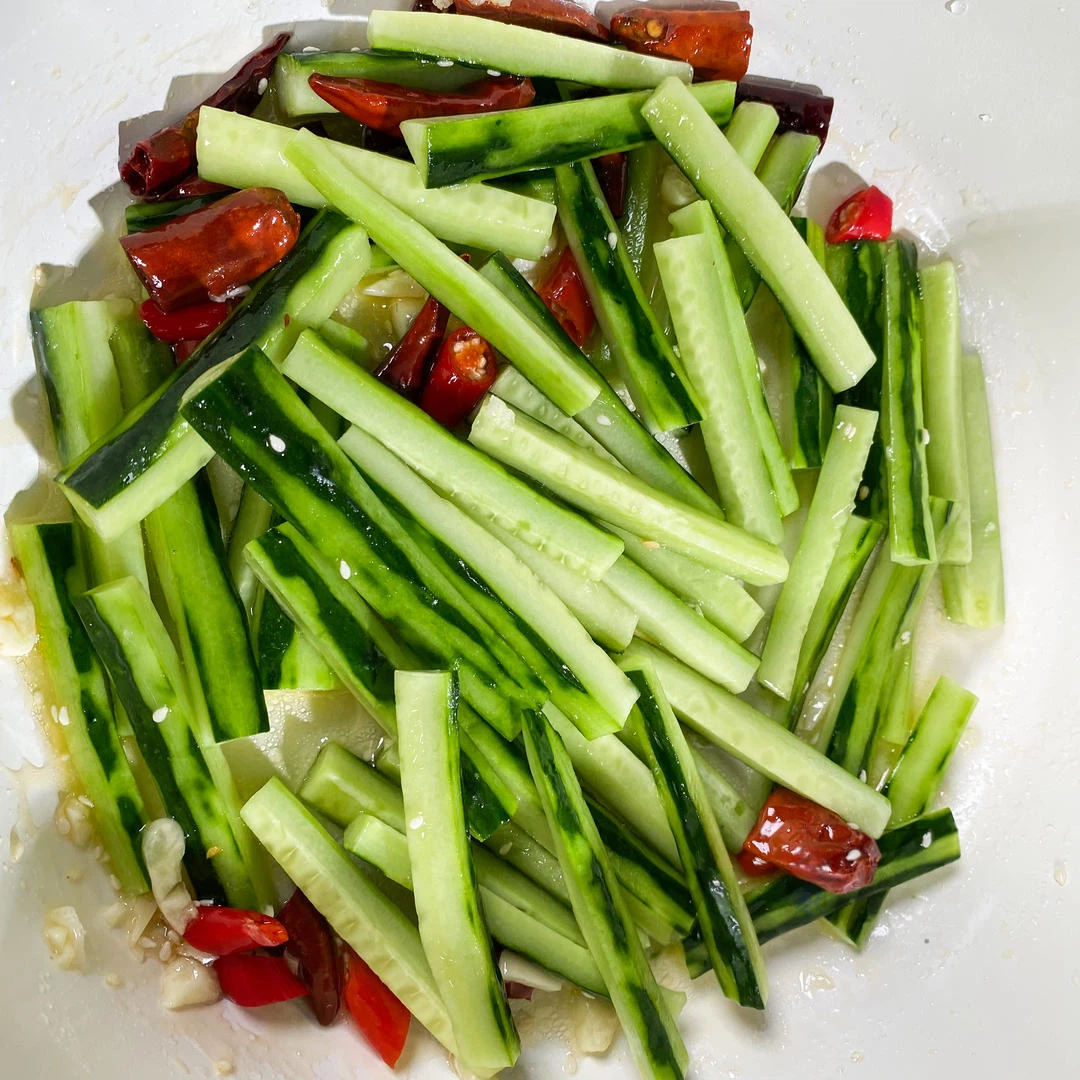
Because the flavor is so sour and spicy, it pairs beautifully with milder, starchier dishes that soak up the sauce. Our hot and sour soup is a natural thematic match for a sour-and-spicy menu, and a plate of hot and sour cucumber strips gives you a crisp, cool counterpoint to the chewy feet.
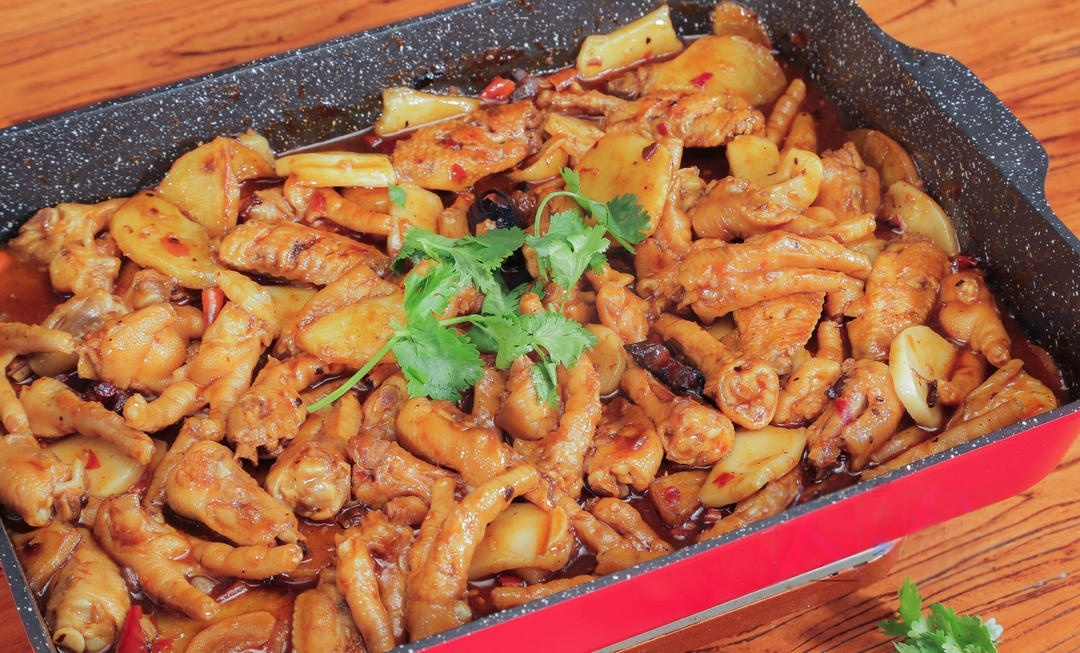
For a bigger spread, these feet sit happily next to a spicy chicken feet casserole — one hot and braised, one cold and tangy, the same ingredient two completely different ways. And if you want a seafood dish with the same sour-spicy profile, our hot and sour lemon shrimp rounds out the table.
Storage & Reheat
This is a cold dish, so there is no reheating. Store it in a sealed container in the refrigerator, with the feet pressed down into the marinade so they stay coated. It keeps for up to 4 days, and honestly the flavor peaks on day two.
If you added crunchy vegetables, they will soften over time — eat those within the first day or two. If the dressing thickens in the fridge (the gelatin from the feet will set it slightly), let the container sit at room temperature for 10 minutes and stir, or add a spoonful of cool boiled water to loosen it.
Do not freeze the finished dish. Freezing ruins the bouncy, gelatinous texture of the skin and turns it spongy. You can, however, freeze the poached and deboned feet plain, before dressing, for up to 2 months — thaw overnight in the fridge, pat dry, and dress as normal.
Allergen Notice
This dish contains soy (from the soy sauce), sesame (from the sesame oil), and possibly wheat, depending on the brand of soy sauce and chili paste you use. Always check the labels on your chili paste, pickled pepper brine, and chili crunch, since these vary a lot between brands. If you need it soy-free, use a certified soy-free tamari and a chili paste without soy. If you need it gluten-free, confirm your soy sauce and chili paste are wheat-free.
Nutrition Disclaimer
Nutrition information is calculated using an ingredient database and should be considered an estimate. In cases where multiple ingredient alternatives are given, the first listed is calculated for nutrition. Garnishes and optional ingredients are not included.
About the Author & Recipe Development
Hi, I’m Lin, the cook and writer behind Woks of Love. I grew up watching my grandmother poach and dress chicken feet for cold plates at family gatherings, and this camellia oil version is my adaptation of the street-stall style that became popular online — built around the hand-chopped chili paste and black vinegar I always keep in the pantry.
I tested this recipe across several batches to nail down the chilling time and the dressing ratios. The biggest lesson: the chill before deboning is not a suggestion. I also found that the pickled pepper brine, while optional, makes a real difference in depth, so I now keep a jar on hand specifically for this dish. If you make it, I would love to hear how you tuned the sourness and heat.
Authoritative References
For safe handling and cooking temperatures for poultry, I rely on the USDA safe minimum internal temperature chart, which lists 165°F (74°C) for all poultry including chicken feet. For cold-storage and leftover guidance, the FDA refrigerator and food safety guidance is a useful reference for the 4-day refrigerator window used here.
Camellia Oil Hot and Sour Boneless Chicken Feet (酸辣无骨鸡爪): Tangy, Cold & Addictive

Equipment
- Wok
- Cutting Board
- Slotted Spoon
- Small paring knife
- Mixing Bowl
- Plastic gloves
Ingredients
For the Chicken Feet
- 20 pieces chicken feet fresh or thawed, nails trimmed
- 6 slices ginger for blanching
- 3 tbsp Shaoxing wine for blanching
For the Hot and Sour Dressing
- 6 tbsp hand-chopped chili paste already salted, so no extra salt needed
- 3 tbsp sugar adjust to taste
- 3 tbsp sesame oil toasted
- 6 tbsp black vinegar Chinkiang-style
- 3 tbsp light soy sauce or tamari
- 2 tbsp camellia oil chili crunch oil only, nuts strained out
- 1/2 bowl cool boiled water about 120 ml
- 4 tbsp pickled pepper brine optional, for extra tang
For the Optional Add-Ins
- 1 handful sea pine mushrooms or other crunchy vegetable
Instructions
- Soak the chicken feet in cold water for half an hour to draw out the blood, then rinse them clean.

- Snip off the nails on each foot with kitchen shears.
- Put the feet in a pot of cold water, bring to a boil over medium-high heat, then simmer for 15 minutes with the ginger and Shaoxing wine to remove the funk.
- A layer of foam will rise during cooking and must be skimmed off — it is mostly blood and impurities, and if you leave it the feet will carry a gamy smell that ruins the hot and sour flavor once they soak in the chilled dressing.

- After 15 minutes of simmering, turn off the heat and let the feet sit for 5 more minutes, then scoop them out, rinse under clean water, and chill in ice water for 1 hour, or in plain cold water in the fridge for 3 hours — chilling firms them up so the bones come out cleanly. Pat the chilled feet dry with paper towels; pulling the bones straight out of the water makes the feet slippery and hard to grip, though if you are in a hurry you can drain the water and debone them directly.
- Use a small paring knife to score along the feet as shown in the photos, then follow the illustrated deboning process — if you have never done it, just work along the lines in the pictures.
- Put the deboned feet in a container and add 6 tbsp hand-chopped chili paste (to your taste), 3–4 tbsp sugar, 3 tbsp sesame oil, 6–7 tbsp black vinegar, 3 tbsp light soy sauce, 2 tbsp camellia oil chili crunch (use only the oil, leaving the nutty solids behind), and half a bowl of cool boiled water — if you have it, add another half bowl of pickled pepper brine, otherwise plain cool boiled water is fine. Put on disposable gloves and toss everything together, cover with plastic wrap, and refrigerate overnight; the longer it sits the deeper the flavor. I usually taste it the next day and add a splash more vinegar if it needs more sourness, adjusting to my own preference.
- Besides the feet you can add other side ingredients — I put in some sea pine mushrooms — and the point of the cool boiled water and pickled pepper brine is to build up the sauce, because without enough liquid the feet will not soak properly.

- This is the brand of camellia oil used in the recipe.
- Every spoon measurement in this recipe refers to this kind of soup spoon.
- The brine used here comes from this jar of pickled peppers, though any brand you like is fine.













Leave a Reply