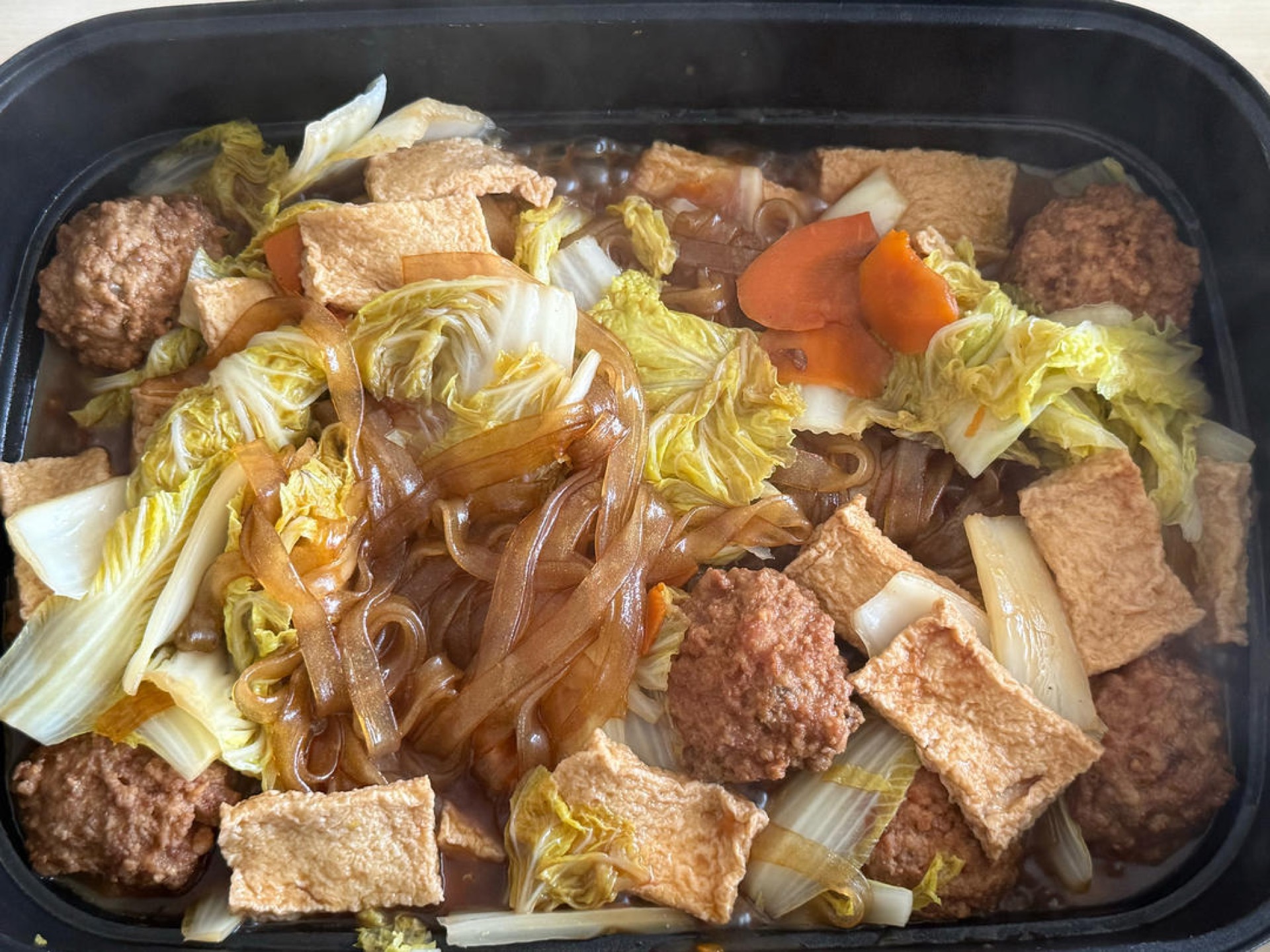
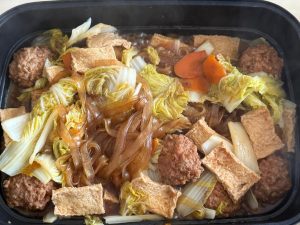
There is a very specific kind of lunch that office workers in northern China know well: a foil container of braised cabbage and glass noodles, a couple of lion’s head meatballs buried underneath, and a sauce so savory you tilt the box to get the last of it. It costs almost nothing, it comes together in one pan, and it tastes far better than it has any right to. This braised cabbage vermicelli with meatballs is that lunch, made at home on purpose.
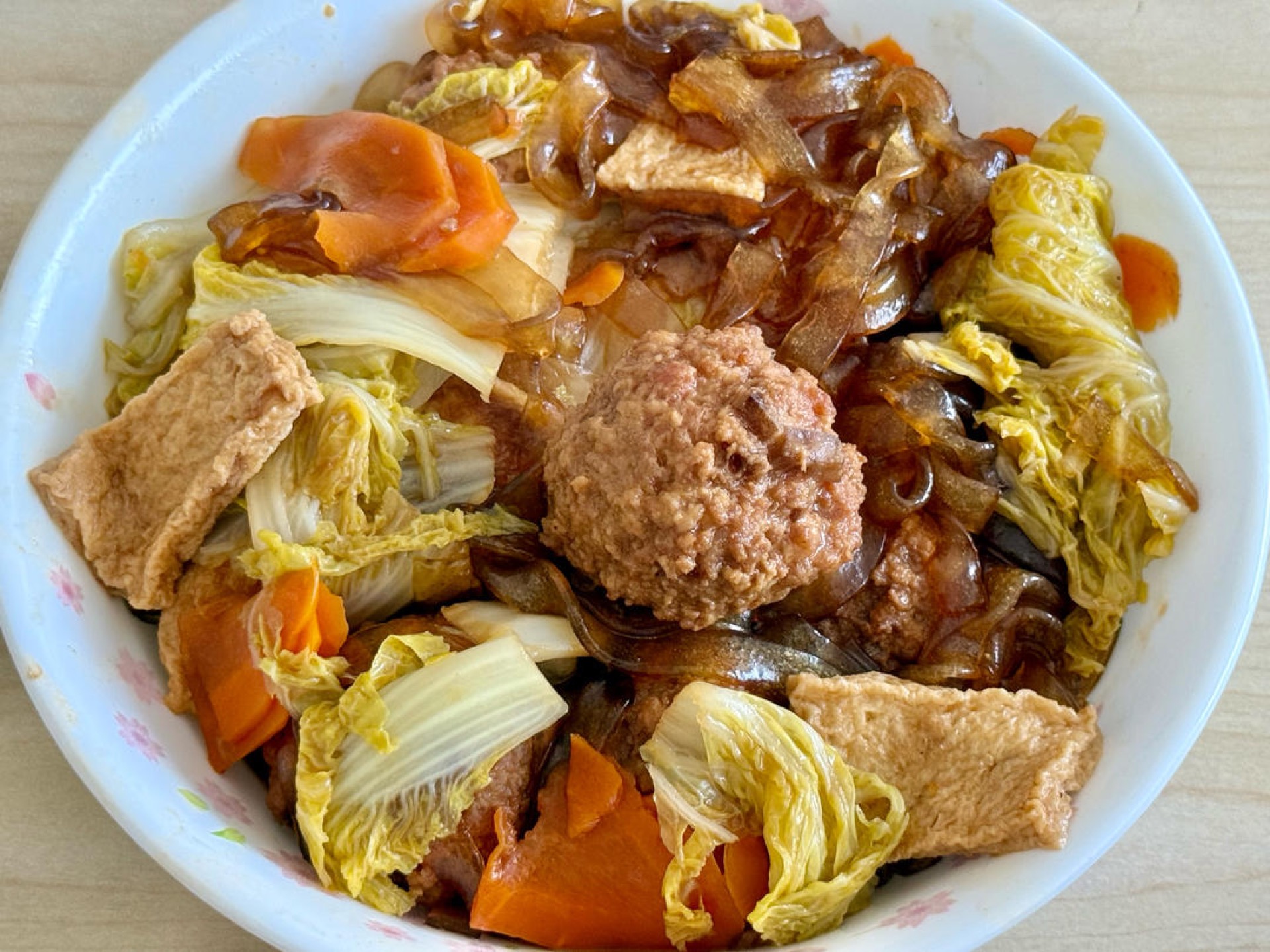
The whole thing leans on three things: sweet napa cabbage that melts into the broth, springy sweet potato vermicelli that drink up every drop of sauce, and juicy pork meatballs that season everything around them. You do not need a clay pot, a long braise or a list of exotic ingredients. You need a covered pan, twenty minutes, and a willingness to let the cabbage do its quiet work.
It is also genuinely flexible. The meatballs can be store-bought takeout leftovers or made from scratch. The tofu is there for body, not obligation. And the vermicelli — well, once you learn how to treat them, you will keep a bundle in the pantry at all times.
What Is Braised Cabbage Vermicelli with Meatballs?
Braised cabbage vermicelli with meatballs (白菜粉条烧狮子头) is a northern Chinese home braise built from three humble components: napa cabbage, sweet potato starch vermicelli, and lion’s head meatballs — the oversized, tender pork meatballs usually simmered in broth or soy sauce. Everything goes into one pot in stages, the cabbage releases its sweet liquid, the sauce reduces, and the noodles soak up what is left.
The dish belongs to the same family as the dry-braised noodle dishes of the north — the ones where noodles and vegetables are cooked together until the sauce clings instead of pooling. It is not a soup, even though it looks wet when it first comes off the heat; give it two minutes and the vermicelli will absorb almost everything.
If you like the idea of chewy noodles drinking up a savory braise, start with this braised green beans and noodles, which uses the same dry-braise logic with a different vegetable.
1Braised Green Beans and Noodles (Dou Jiao Men Mian)An authentic Northern Chinese one-pot meal featuring chewy fresh noodles steam-braised over a savory stew of pork belly and crisp green beans. The perfect balance of carbs, protein, and veggies.Check out this recipe
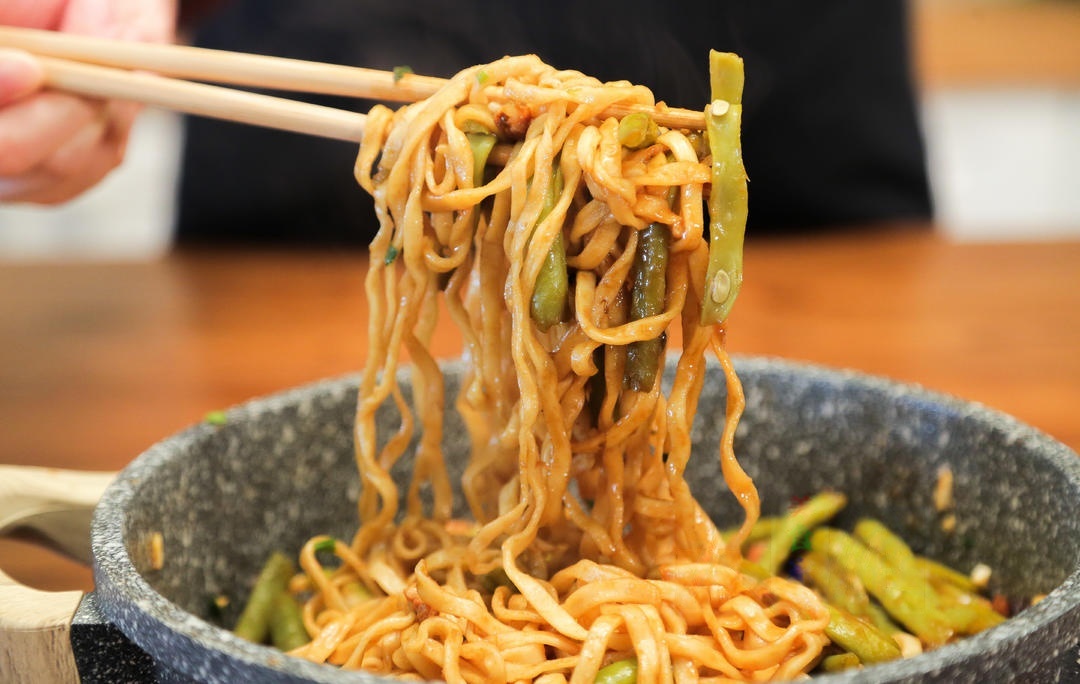
For a heartier version with more pork in the mix, try this braised green beans and noodles with pork, where the meat is cooked straight into the sauce.
2Braised Green Beans and Noodles (Men Mian)This traditional Northern Chinese Braised Green Beans and Noodles (Men Mian) creates chewy, flavorful noodles by steaming them directly on top of a savory stew of pork, potatoes, and tomatoes. It is a hearty one-pot meal that captures the essence of home cooking.Check out this recipe

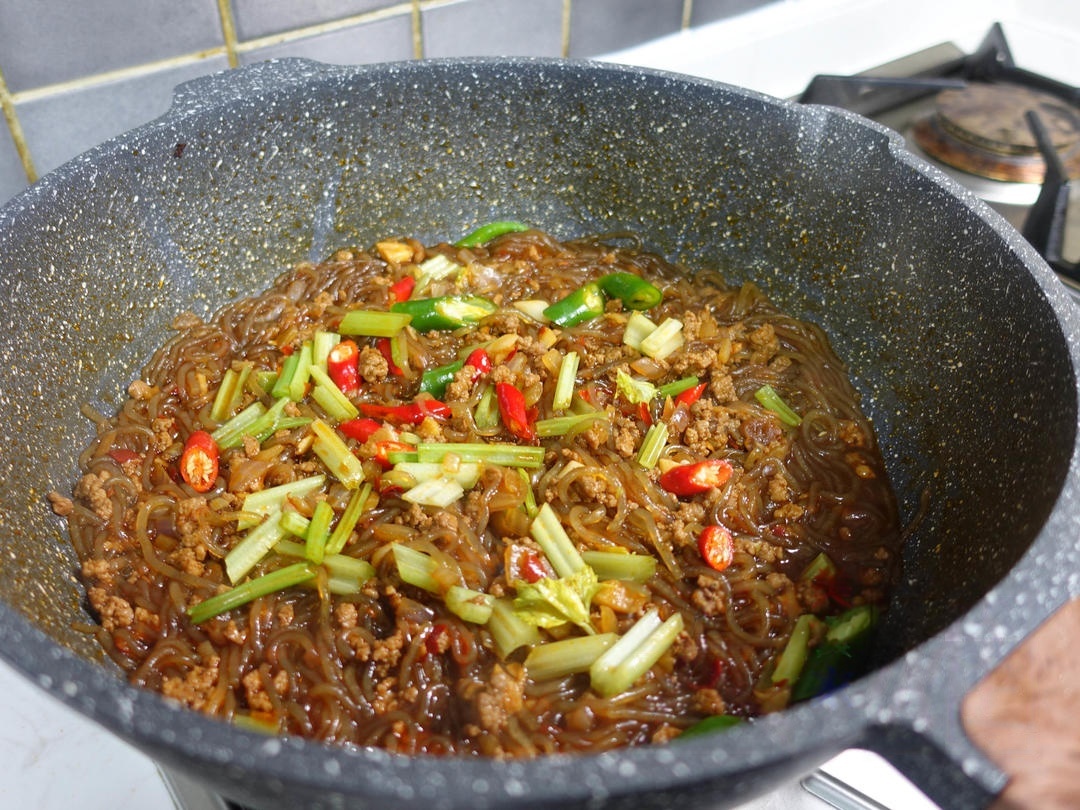
And if you want to see the vermicelli technique on its own, this braised vermicelli with minced pork is the closest cousin to the noodle half of this dish.
3Braised Vermicelli with Minced PorkA rich, savory Sichuan dish featuring chewy sweet potato noodles braised with minced pork and spicy broad bean paste. A perfect comfort meal ready in 30 minutes.Check out this recipe
Ingredient Notes
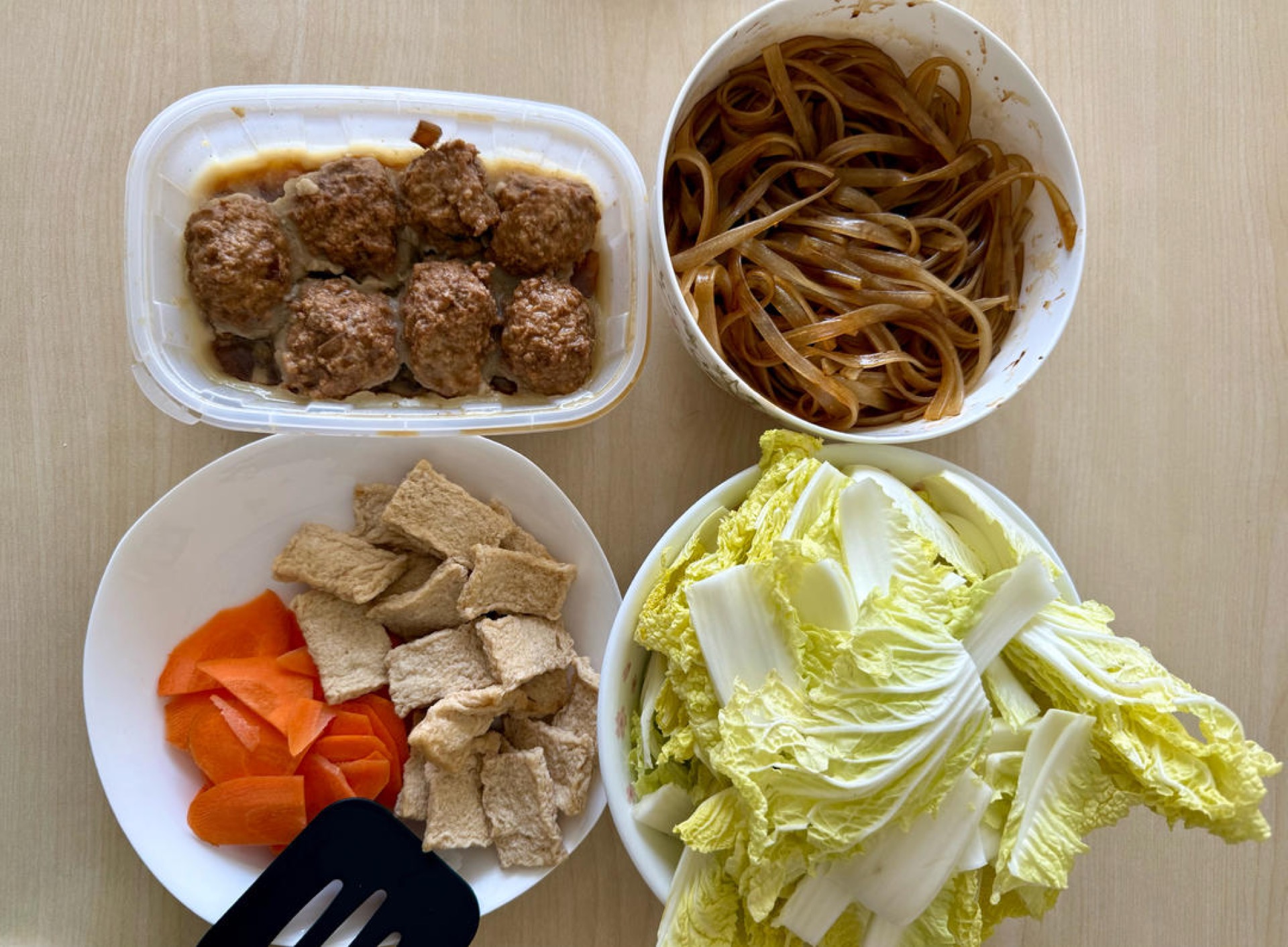
Napa cabbage (白菜 or 娃娃菜). Baby napa is sweeter and more tender, and it cooks faster, so if you use it, shave a minute or two off the stem stage. Regular napa works too — just cut the thick stems smaller than the leafy tops so they finish at the same time.
Lion’s head meatballs (狮子头). Store-bought takeout meatballs are the shortcut this recipe was built around, and they are already seasoned and cooked, so they only need to warm through. If you are making them yourself, brown them first so they hold their shape. If you cannot find lion’s head meatballs, any large tender pork meatball works; avoid tiny, bouncy ones that will not slice into the sauce.
Sweet potato vermicelli (粉条). These are the wide, grayish, slightly translucent starch noodles sold in bundles, not the thin rice vermicelli used for spring rolls. They are chewy and they hold their bite, which is exactly what you want here. Mung bean vermicelli works in a pinch but turns softer faster.
Carrot and dried tofu (胡萝卜 and 豆干). These are the supporting cast — the carrot brings sweetness and color, and the dried tofu brings a firm, meaty chew that contrasts with the soft cabbage. Firm regular tofu can stand in, but press it first and add it later so it does not fall apart.
Oyster sauce and soy sauce. Oyster sauce gives the braise its glossy, rounded savoriness. Light soy sauce brings salt and umami; dark soy sauce is used only on the noodles, for color. If you are cooking vegetarian, use vegetarian oyster sauce or a mushroom stir-fry sauce and skip the meatballs.
Ingredients
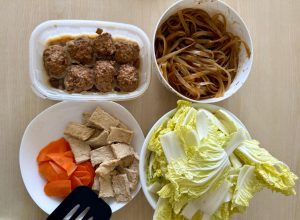
Here is everything you need for four servings. The full measured list is in the recipe card at the bottom of this post.
- 7 oz (200 g) sweet potato vermicelli
- 1 tbsp dark soy sauce, for the noodles
- 1 lb (450 g) napa cabbage or baby napa
- 8 oz (225 g) lion’s head meatballs
- 1 medium carrot, thinly sliced
- 4 oz (110 g) firm or dried tofu, sliced
- 1 tbsp oyster sauce
- 1 tbsp light soy sauce, plus more to taste
- 1 tsp salt, adjust to taste
- 1 cup (240 ml) water, plus more as needed
Equipment Needed
You need a wide, deep pan with a lid — a wok with a lid, a braising pan, or a shallow clay pot all work. A lid matters more than the pan itself, because the cabbage steams under it before it braises. Beyond that, a cutting board, a knife, a slotted spoon for moving the meatballs without breaking them, and a pair of kitchen scissors or a sharp knife for cutting the vermicelli bundle in half. That last one is not a joke: those bundles are long, and cutting them makes the dish far easier to eat.
Why This Recipe Works
The staging is the whole trick. Cabbage stems go in first because they are dense and need time; the leaves go in later because they collapse in minutes. If you dump everything in at once, you get a pot of uneven, watery cabbage instead of a silky braise.
The second trick is the dark soy sauce on the noodles. Tossing the drained vermicelli with a spoonful of dark soy before they hit the pan does two things: it colors them a deep, appetizing amber, and it seasons them from the inside rather than only on the surface. This is standard practice in northern Chinese cooking, and it is the difference between noodles that taste like the sauce and noodles that taste like nothing.
The reason this dish thickens without cornstarch is the starch on the vermicelli itself. As the noodles simmer, they shed a little surface starch into the braising liquid, which gives the sauce a natural, glossy body — the same principle behind starchy pasta water emulsifying a sauce. That is also why you should not rinse the soaked noodles after draining: you would wash away the very thing that thickens the dish.
Finally, the meatballs. Because they are already cooked and seasoned, they act like a flavor base rather than a protein to be cooked. Letting them sit in the pot while the cabbage steams means their savory juices seep into the liquid, so the cabbage tastes of meat even before the sauce is seasoned.
Prep & Mise en Place
Soak the vermicelli first, because they need the most time. Hot tap water or just-boiled water, fully submerged, until they bend without snapping — usually 8 to 10 minutes for sweet potato vermicelli, less for thinner ones. Drain them well, then toss with the dark soy sauce and set aside.
While they soak, cut the cabbage. Separate the thick white stems from the leafy tops, cutting the stems into roughly 1-inch pieces and the leaves into wider ribbons. Slice the carrot thinly on a slight bias so the coins cook evenly. Slice the tofu into ¼-inch planks. If your meatballs are chilled, let them sit out for ten minutes so they warm through faster in the pan.
Measure the oyster sauce, light soy sauce, salt and water into a small bowl so you can add them without scrambling. Everything should be within arm’s reach of the stove before you turn on the heat — this dish moves quickly once it starts.
Cooking Process
Step 1 — Soak and Prep
Soak the vermicelli in hot water until pliable, drain, and toss with dark soy sauce to color; cut the baby napa into chunks and slice the carrot.
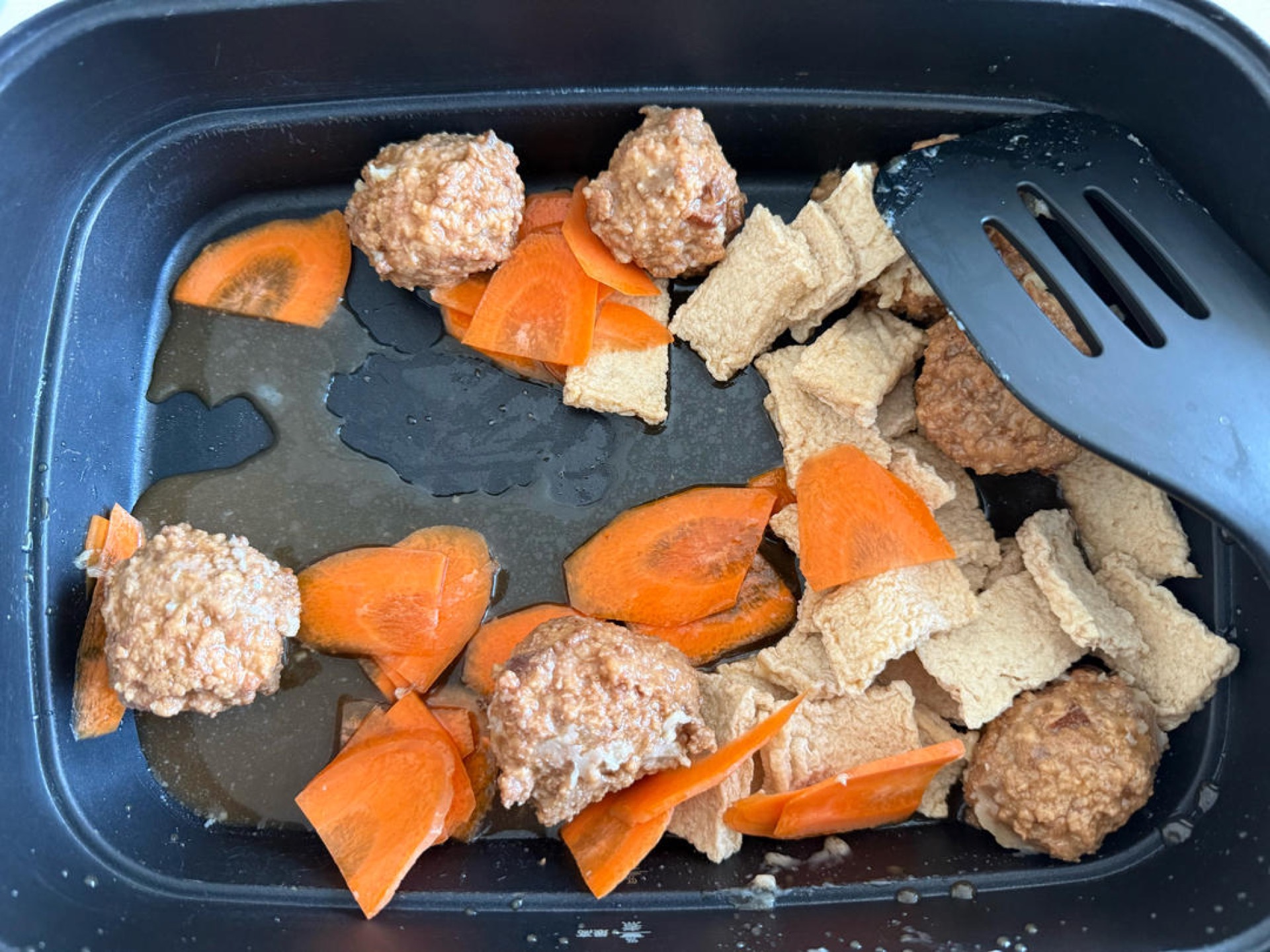
Step 2 — Build the Base
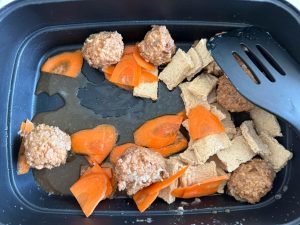
Heat the pot, add the meatballs, carrot and dried tofu, and let them warm through and pick up a little color.
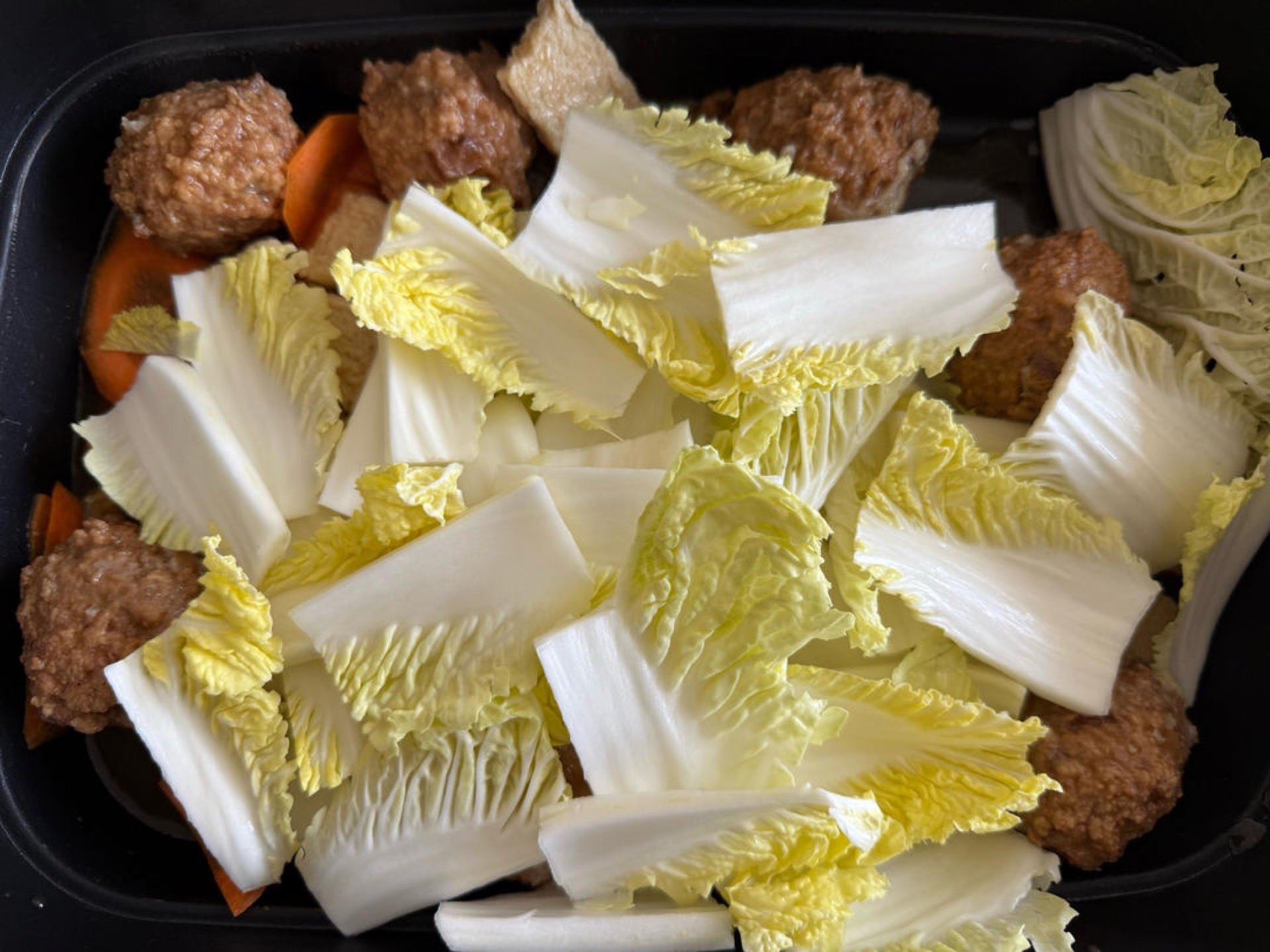
Step 3 — Braise the Stems
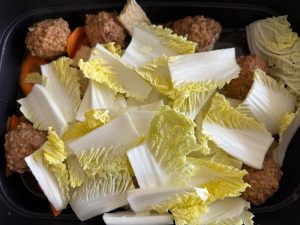
Add the cabbage stems, cover with the lid, and let them steam and soften for a few minutes.
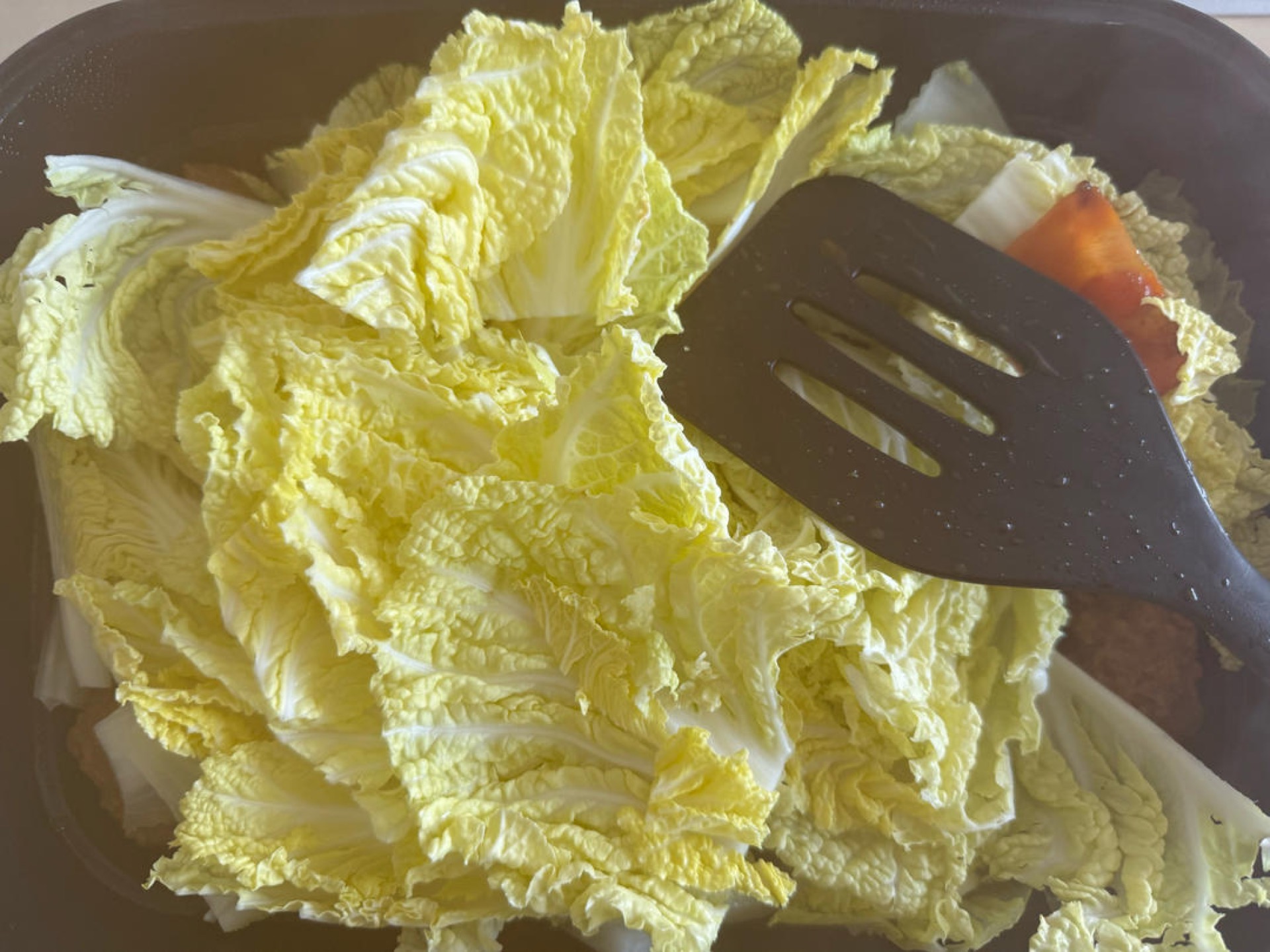
Step 4 — Add the Leaves
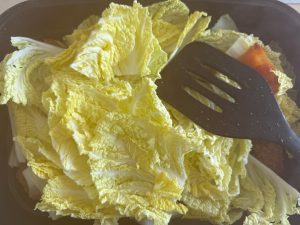
Lay the cabbage leaves on top, add a splash of water to the pot, and continue cooking until they wilt.
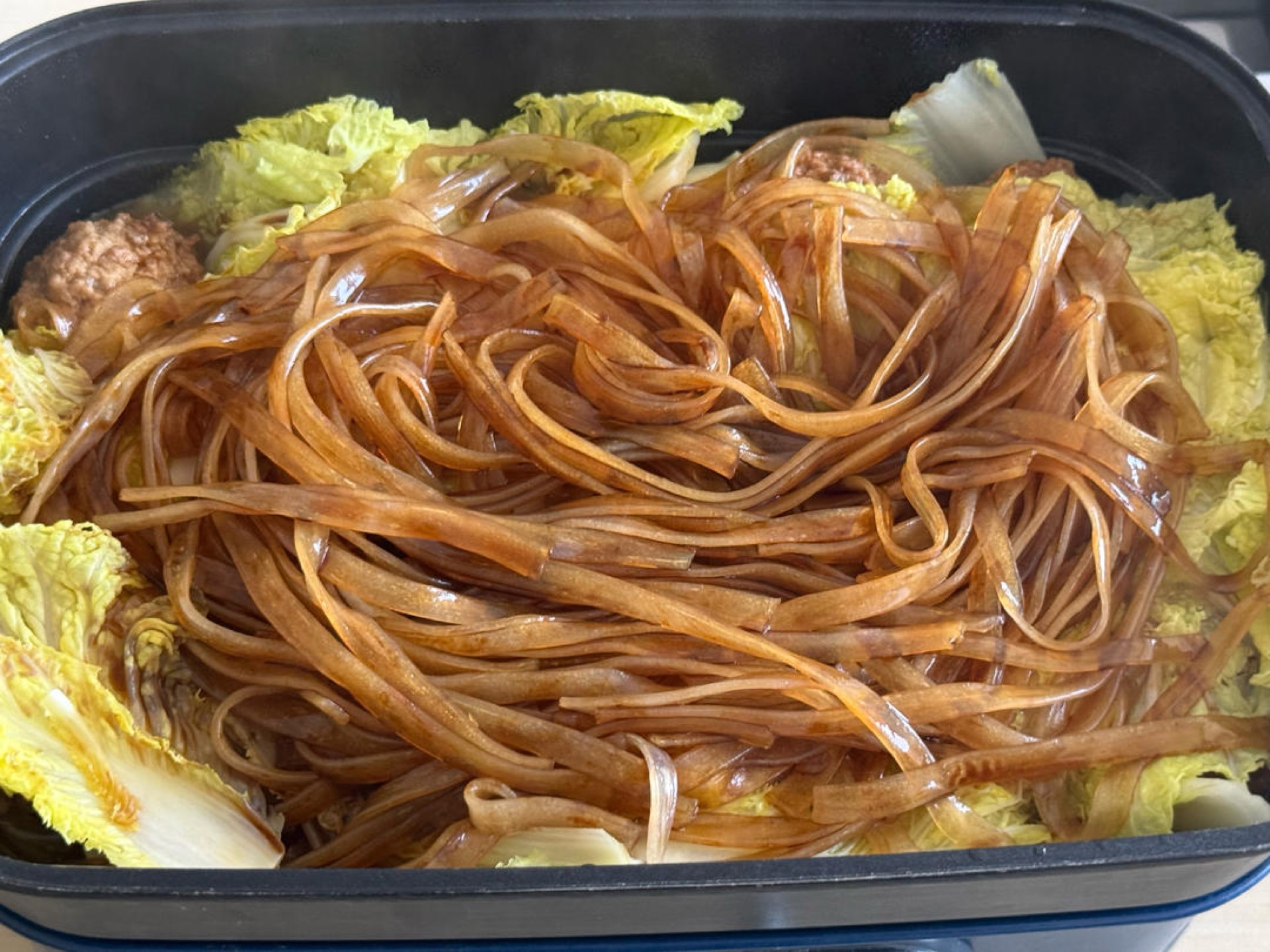
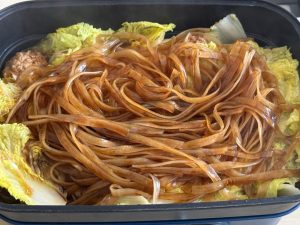
Step 5 — Add the Vermicelli
Add the soaked vermicelli and a little light soy sauce, then cover and simmer a few more minutes.
Step 6 — Finish
Once the vermicelli are soft and have soaked up the sauce, taste, adjust the seasoning, and serve.
Common Mistakes When Making Braised Cabbage Vermicelli with Meatballs
1. Oversoaking the vermicelli. If the noodles are fully soft and slippery before they hit the pan, they will dissolve into mush by the time the dish is done. Soak only until pliable, with a faint firmness at the center, and let the braise finish the job.
2. Adding all the cabbage at once. Stems and leaves have completely different cooking times. Stems first, lid on, until they start to turn translucent; leaves after, just until wilted. Skipping this gives you crunchy stems and disintegrated leaves in the same bite.
3. Not using a lid. The cabbage needs trapped steam to soften and release its sweetness before the sauce reduces. Cooking uncovered the whole time means you keep adding water and end up boiling the flavor out of the vegetables.
4. Drowning the pot in water. This is a braise, not a soup. Add water a splash at a time — a cup total is usually plenty — and remember the cabbage will release its own liquid as it cooks. Too much water and the vermicelli turn to paste before the sauce thickens.
5. Stirring the meatballs to pieces. Lion’s head meatballs are tender by design and break apart easily. Use a slotted spoon or a gentle push of the spatula, and move them as little as possible. They only need to heat through, not be tossed around.
6. Seasoning before tasting. Oyster sauce, soy sauce and store-bought meatballs all carry salt. Hold back on the salt, taste at the end once the sauce has reduced, and adjust then. Reduced sauce is always saltier than it tasted at the start.
Variations
Vegetarian version. Skip the meatballs and double the dried tofu, or add rehydrated shiitake mushrooms for the same savory depth. Use vegetarian oyster sauce or mushroom sauce, and add an extra teaspoon of light soy sauce to compensate.
With fresh pork instead of meatballs. Thinly sliced pork belly or ground pork browned at the start works beautifully — brown it first, then proceed with the carrot and tofu. If you want a different meatball format entirely, these crispy fried pork and tofu meatballs hold up well in a braise.
Extra heat. A teaspoon of doubanjiang or a few dried chilies added with the carrot gives the braise a gentle northern-style warmth. Add them early so the oil blooms the flavor.
With rice cakes instead of vermicelli. Sliced Korean rice cakes soak up the sauce in the same way and give a chewier result. Soak them in cold water for ten minutes first, and add a little extra water to the pot.
Mushroom-forward. A handful of fresh shiitake or oyster mushrooms added with the cabbage stems deepens the umami and makes the dish feel meatier without more meat.
Frequently Asked Questions
Can I use rice vermicelli instead of sweet potato vermicelli? You can, but the texture will be very different. Rice vermicelli are thinner and softer, and they will break down quickly in a braise. If that is all you have, soak them briefly and add them at the very end, off the heat, so they warm through without collapsing.
Do I need to soak the vermicelli at all? Yes, unless you want to add a lot more liquid and a lot more time. Soaking hydrates the starch evenly so the noodles cook through in the sauce instead of staying chalky in the middle.
Can I make this ahead of time? It is best fresh, because the vermicelli keep absorbing liquid as they sit. If you must, cook it up to the point before adding the noodles, cool and refrigerate, then reheat with a splash of water and add the soaked noodles at the end.
How do I keep the vermicelli from sticking together? Drain them well, toss with the dark soy sauce while still warm, and do not pile them tightly. A teaspoon of neutral oil in the toss helps too, though it slightly reduces how much sauce they absorb.
Is this dish spicy? Not as written. The base is savory and gently sweet from the cabbage and carrot. Add chilies or doubanjiang if you want heat.
How to Serve
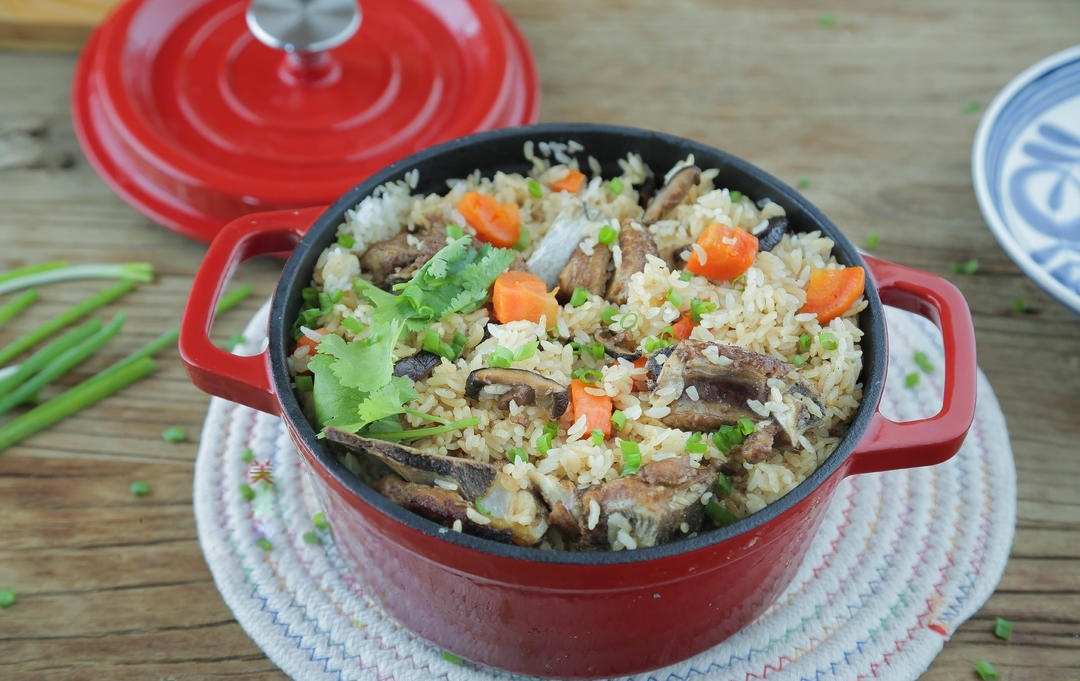
Serve this straight from the pot with steamed white rice, or on its own with a spoon for the sauce. A crisp cucumber salad or quick-pickled radish cuts through the richness nicely. If you want a heartier table, a bowl of one pot pork ribs and rice alongside turns it into a full meal, and the rice soaks up any sauce left behind.
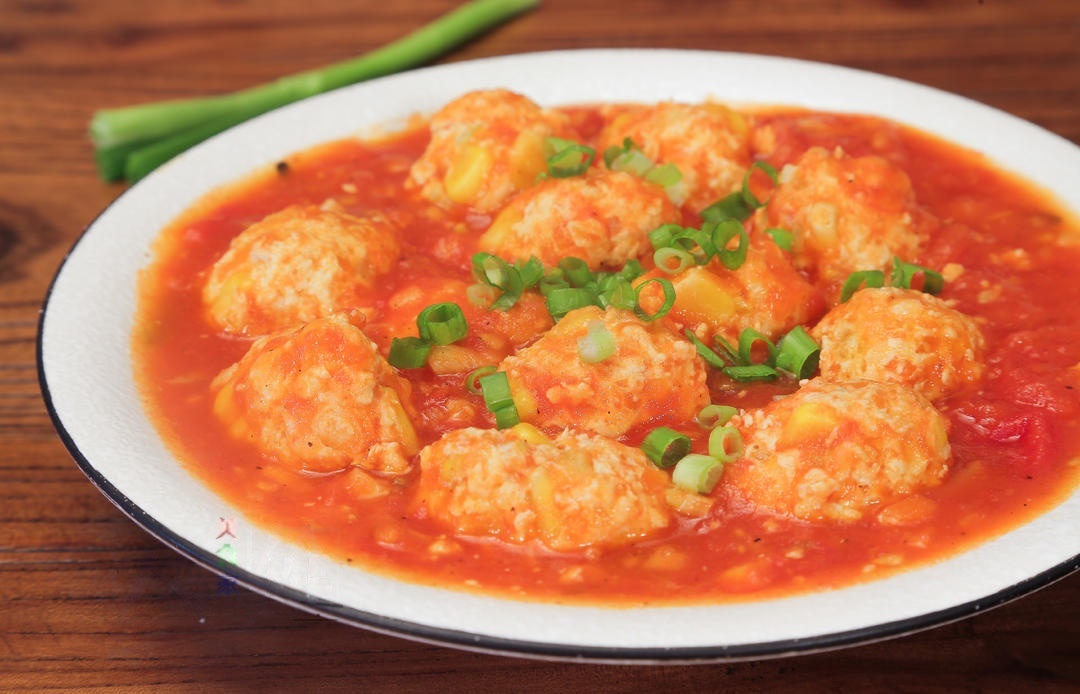
For a lighter, faster pairing, this tomato corn chicken meatballs dish brings a bright, sweet contrast that balances the deep soy braise. And if you are feeding a crowd and want a second protein on the table, a plate of crispy fried pork meatballs is always welcome next to it.

Storage & Reheat
Leftovers keep in an airtight container in the refrigerator for up to 3 days. Expect the vermicelli to have absorbed most of the liquid by the next day — this is normal, and it is why the dish is arguably even better reheated.
Reheat gently in a covered pan over medium-low heat with a splash of water, stirring once or twice, until steaming hot all the way through (165°F / 74°C). The microwave works too; cover the bowl and add a teaspoon of water per serving. Do not freeze this dish — the vermicelli turn grainy and the cabbage goes limp.
Allergen Notice
This recipe contains soy and wheat from the soy sauces and oyster sauce, and may contain shellfish (oyster) depending on the brand. Check your meatball and vermicelli packaging for gluten, egg, shellfish and soy cross-contact. For a soy-free version, use coconut aminos and a soy-free mushroom sauce, and confirm your meatballs are soy-free.
Nutrition Disclaimer
Nutrition information is calculated using an ingredient database and should be considered an estimate. In cases where multiple ingredient alternatives are given, the first listed is calculated for nutrition. Garnishes and optional ingredients are not included.
About the Author & Recipe Development
This recipe comes from the Woks of Love kitchen, where Lin cooks and tests Chinese home food with an emphasis on weeknight practicality and honest, layered flavor. This particular braise was developed from the office-lunch version — the kind assembled from takeout lion’s head meatballs, a head of cabbage and a bundle of pantry vermicelli — then refined so the cabbage keeps its sweetness and the noodles stay springy instead of turning to paste.
Every recipe on this site is tested in a home kitchen with ingredients that are actually available, and instructions are written the way a cook would want to read them: in order, with the reason behind each step. If you make this one, the notes at the bottom of the recipe card are the best place to tell us how it went.
Authoritative References
For safe handling and cooking temperatures for pork, see the USDA safe minimum internal temperature chart. For general food safety guidance on leftovers and reheating, see the FDA guidance on refrigerator thermometers and cold food storage. For more on how starch thickens a braising liquid, see this explainer on how starches thicken sauces.
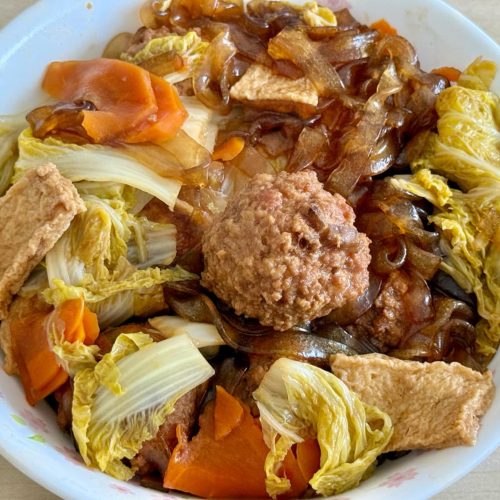
Braised Cabbage Vermicelli with Meatballs (白菜粉条烧狮子头): Savory

Equipment
- Wok
- Cutting Board
- Slotted Spoon
Ingredients
For the Vermicelli
- 7 oz sweet potato vermicelli about 200 g, soaked in hot water
- 1 tbsp dark soy sauce for tossing the noodles
For the Braise
- 1 lb napa cabbage about 450 g, or baby napa, cut into chunks
- 8 oz lion’s head meatballs about 225 g, store-bought or homemade
- 1 medium carrot thinly sliced
- 4 oz firm tofu or dried tofu about 110 g, sliced
- 1 tbsp oyster sauce or vegetarian oyster sauce
- 1 tbsp light soy sauce plus more to taste
- 1 tsp salt adjust to taste
- 1 cup water plus more as needed
Instructions
- Soak the vermicelli in hot water until pliable, drain, and toss with dark soy sauce to color; cut the baby napa into chunks and slice the carrot.

- Heat the pot, add the meatballs, carrot and dried tofu, and let them warm through and pick up a little color.

- Add the cabbage stems, cover with the lid, and let them steam and soften for a few minutes.
- Lay the cabbage leaves on top, add a splash of water to the pot, and continue cooking until they wilt.
- Add the soaked vermicelli and a little light soy sauce, then cover and simmer a few more minutes.
- Once the vermicelli are soft and have soaked up the sauce, taste, adjust the seasoning, and serve.












Leave a Reply