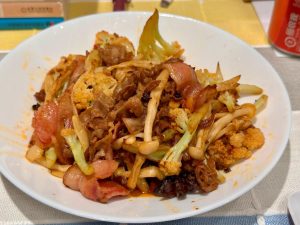
Dry pot cooking is one of those Sichuan home techniques that looks complicated and tastes like it took all day, but is really just a wok, a hot flame, and a patient hand. This dry pot bacon and mushroom stir-fry is the fast version: cauliflower and seafood mushrooms are blanched, then dry-fried until their moisture is gone, and finally tossed with smoky bacon, meat rolls, and a spoonful of dry pot sauce. The whole thing comes together in about thirty-five minutes, and most of that is chopping.
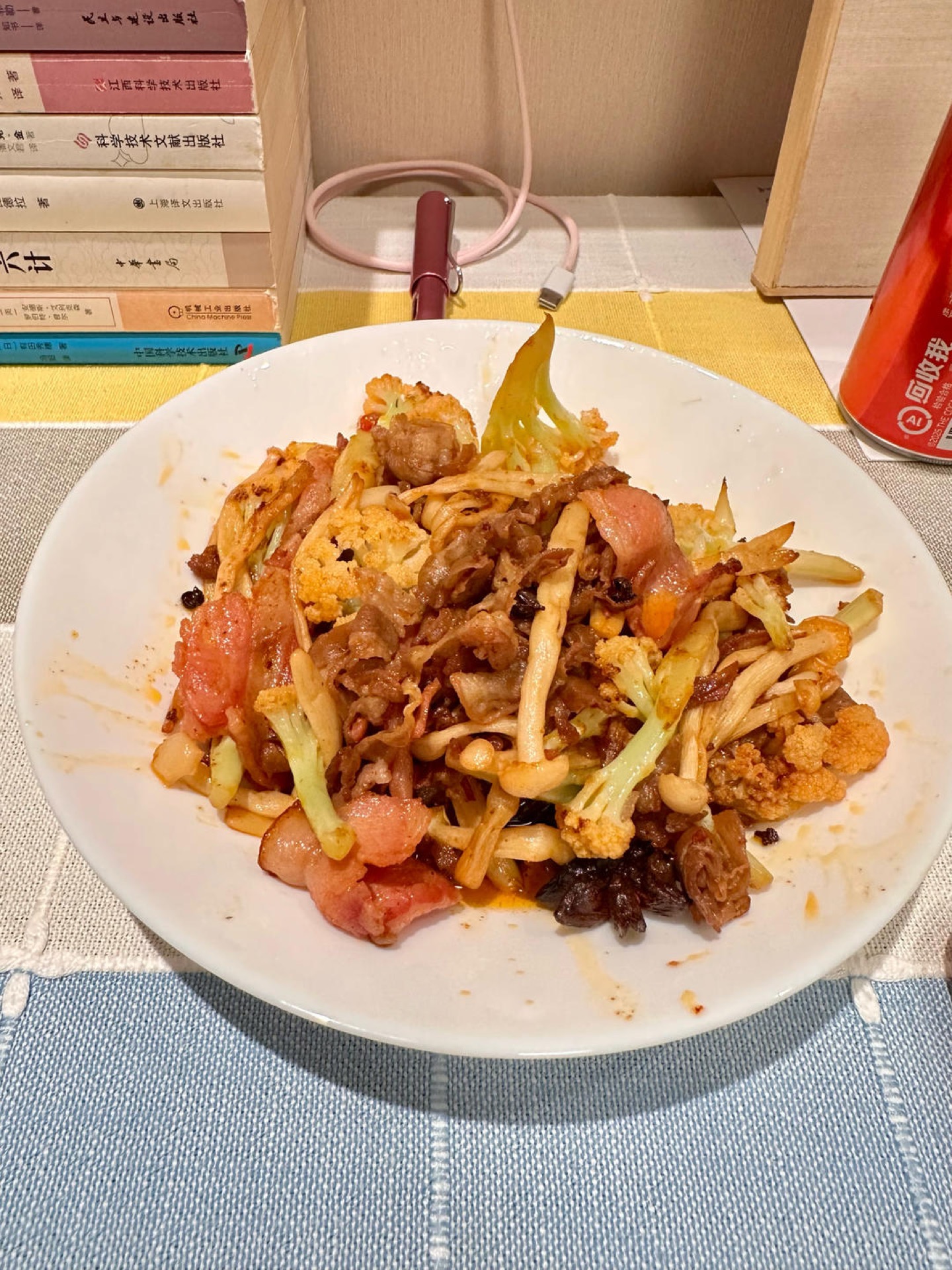
What makes this version quick is that it borrows the logic of a classic gan guo without demanding a long list of dried spices. The dry pot sauce does the heavy lifting, the bacon brings its own smoke and fat, and the mushrooms soak up everything around them. If you have ever ordered a dry pot at a Sichuan restaurant and wondered why the vegetables taste so much more intense than a regular stir-fry, this is why: the water is driven off first, so the seasoning has somewhere to go.
It is also a very forgiving recipe. You can swap the cauliflower for broccoli or potato slices, use sliced pork belly instead of bacon, or leave the meat out entirely and add a second kind of mushroom. The method stays the same, and the result stays savory, slightly numbing, and deeply satisfying over rice.
What Is Dry Pot Bacon and Mushroom Stir-Fry?
Dry pot, or gan guo (干锅), is a Sichuan cooking style in which ingredients are cooked in a wok until their surface moisture has evaporated, then seasoned so the sauce clings directly to the food. Unlike a stew or a braise, there is no liquid pooling at the bottom of the pot — the dish is “dry” in the sense that the sauce is a coating, not a broth. The name refers to the pot itself, which traditionally sits over a small flame at the table and keeps cooking the food as you eat.
This particular version is a quick home adaptation. Instead of the long list of aromatics and dried chilies you might find in a restaurant, it leans on a jar of dry pot sauce, whole Sichuan peppercorns, and star anise for that signature numbing, aromatic backbone. Bacon and pork meat rolls replace the more traditional pork belly or intestines, which makes it faster and easier to source. Cauliflower and seafood mushrooms are the vegetables, and both are chosen because they hold their shape and absorb sauce well.
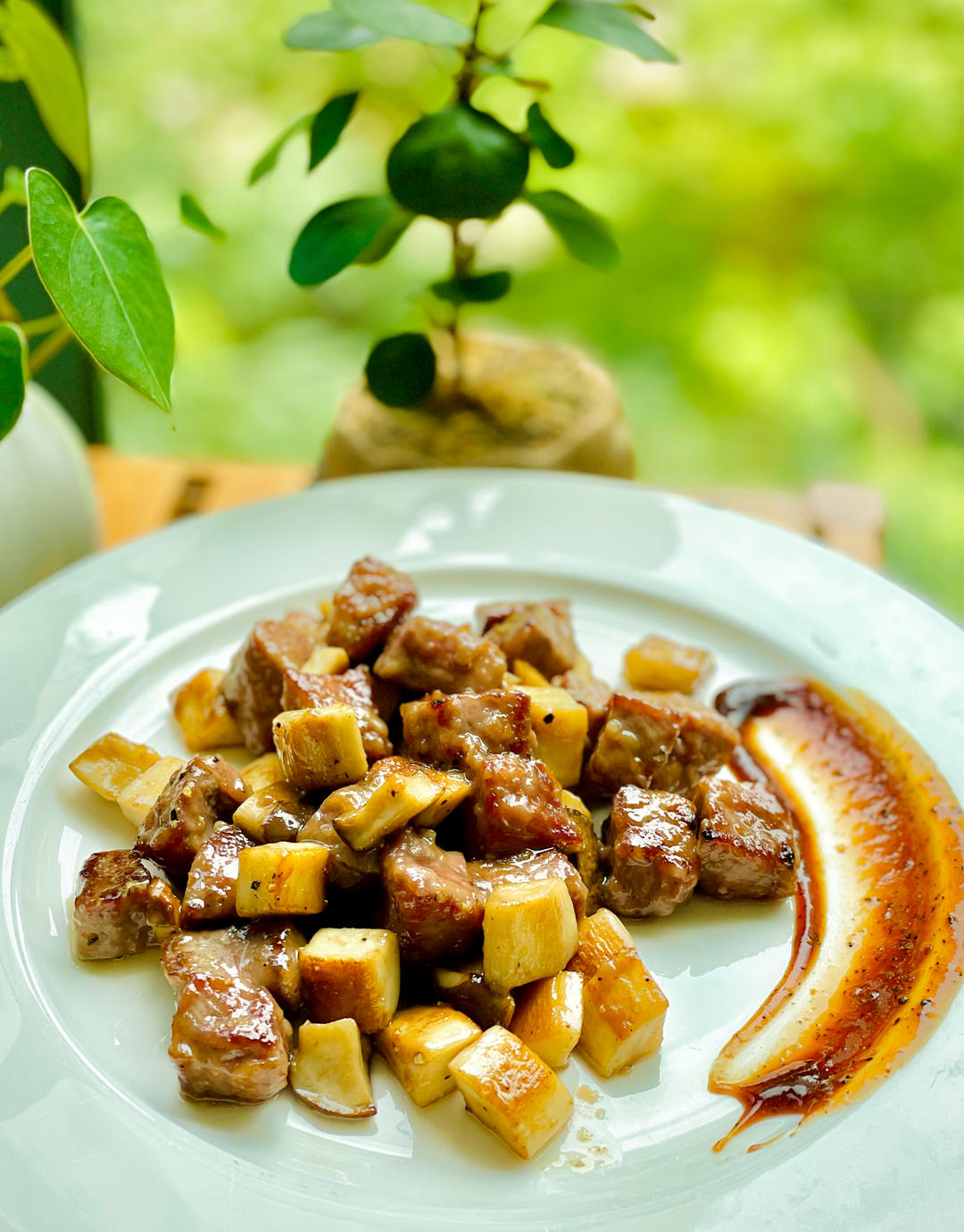
For a version built around chicken instead of pork, this black pepper beef and king oyster mushroom stir fry shares the same mushroom-forward, high-heat approach and works beautifully with the same wok.
1Black Pepper Beef and King Oyster Mushroom Stir-FryA quick, healthy, and incredibly tender 20-minute Chinese stir-fry featuring cubed beef tenderloin and hearty king oyster mushrooms, seasoned with fresh black pepper.Check out this recipe
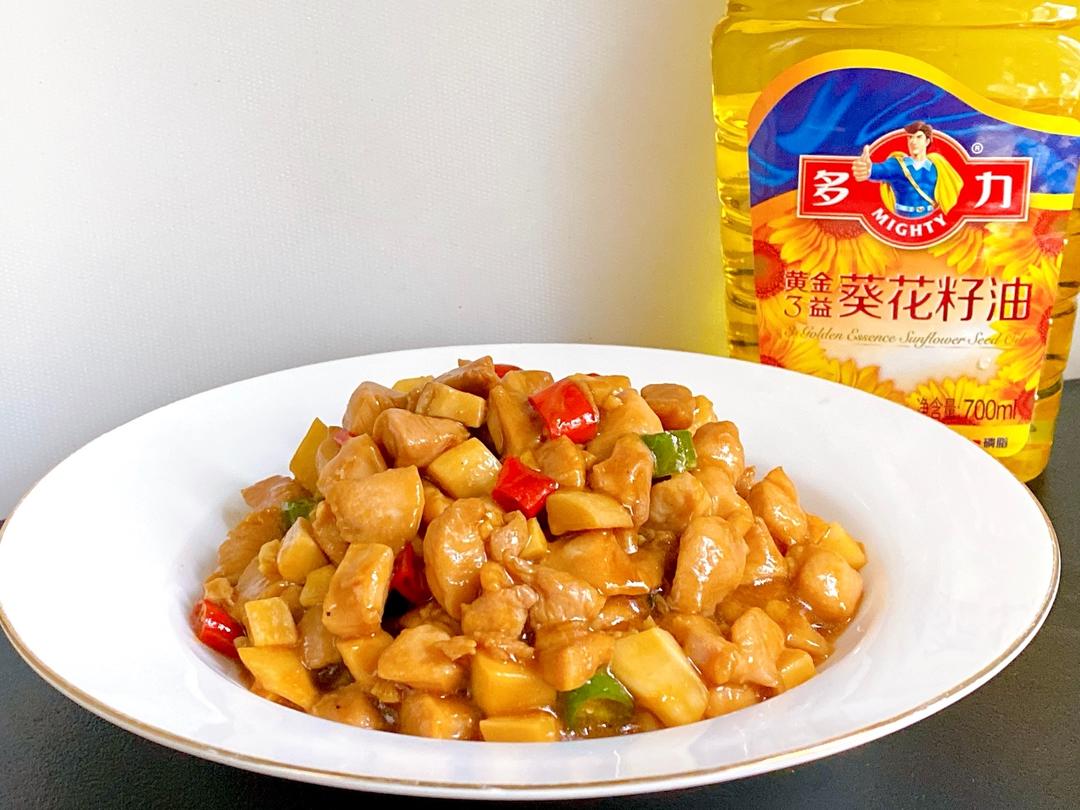
And if you want another quick mushroom stir-fry to keep in rotation, this chicken and king oyster mushroom stir fry is a great weeknight companion to this dry pot.
2Easy Chicken and King Oyster Mushroom Stir-fryLearn how to make authentic Chicken and King Oyster Mushroom Stir-fry (杏鲍菇炒鸡丁). Tender chicken and meaty mushrooms in a savory sauce. Ready in 20 minutes!Check out this recipe
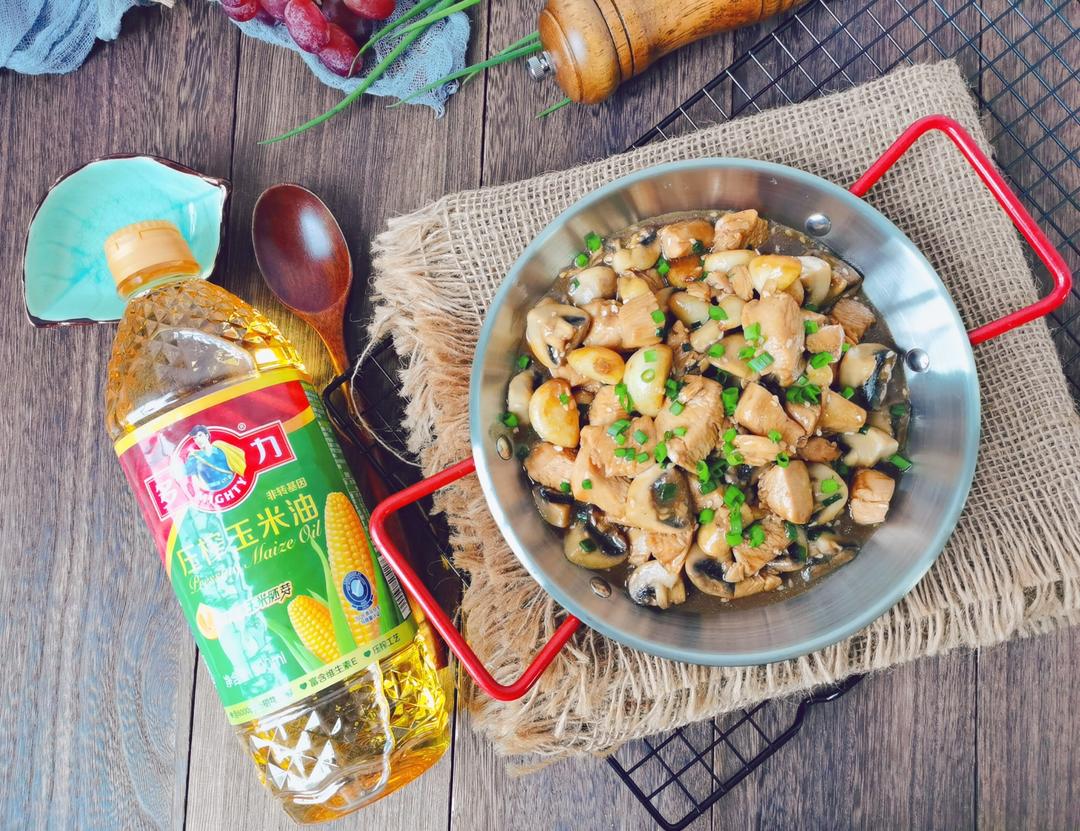
For the next cook from the same playbook, garlic mushroom chicken stir fry is the recipe I point people to.
3Garlic Mushroom Chicken Stir-fry (Suan Xiang Gu Mu Shao Ji)A high-protein, umami-packed stir-fry featuring tender chicken breast, earthy button mushrooms, and sweet, golden garlic cloves.Check out this recipe
Why This Recipe Works
The core trick here is a two-stage dry-fry. Cauliflower and seafood mushrooms are both high in water, and if you throw them straight into a wok with sauce, they will release that water and steam instead of fry. By blanching them first and then cooking each one separately until its surface moisture is gone, you build a fond on the wok and give the sauce something to grab onto. This is the same principle behind the dry pot potato slices on the site.
Second, the aromatics go in before the meat, not after. Whole Sichuan peppercorns and star anise need a few seconds in hot oil to release their oils, and the bacon then cooks in that flavored fat. This is why the finished dish tastes layered rather than flat, even though the ingredient list is short.
Third, the dry pot sauce is added in two stages — once to the mushrooms and cauliflower, and once to the bacon and meat rolls. This sounds fussy, but it means each component gets seasoned on its own before they meet, so nothing tastes raw or under-seasoned at the end. If you only add the sauce at the very end, the vegetables stay bland and the meat carries all the flavor.
According to the FDA Food Code, pork products such as bacon and meat rolls should reach a minimum internal temperature of 145°F (63°C), which is why the recipe calls for cooking them just until they change color before combining.
Ingredients
The ingredient list is short, but each item has a job. Cauliflower provides structure and sweetness, seafood mushrooms bring a springy texture and soak up sauce, bacon and pork meat rolls add smoke and richness, and dry pot sauce supplies the spicy, fermented, aromatic base. Sichuan peppercorns and star anise are the two whole spices that make it taste like a real gan guo rather than a generic stir-fry.
Light soy sauce rounds out the salt, and a drizzle of toasted sesame oil at the end adds a nutty finish. If you cannot find seafood mushrooms, shimeji or even sliced king oyster mushrooms will work, though the texture will be slightly different. The full measurements are in the recipe card at the bottom of this post.
Cooking Process
Step 1 — Blanch the Cauliflower
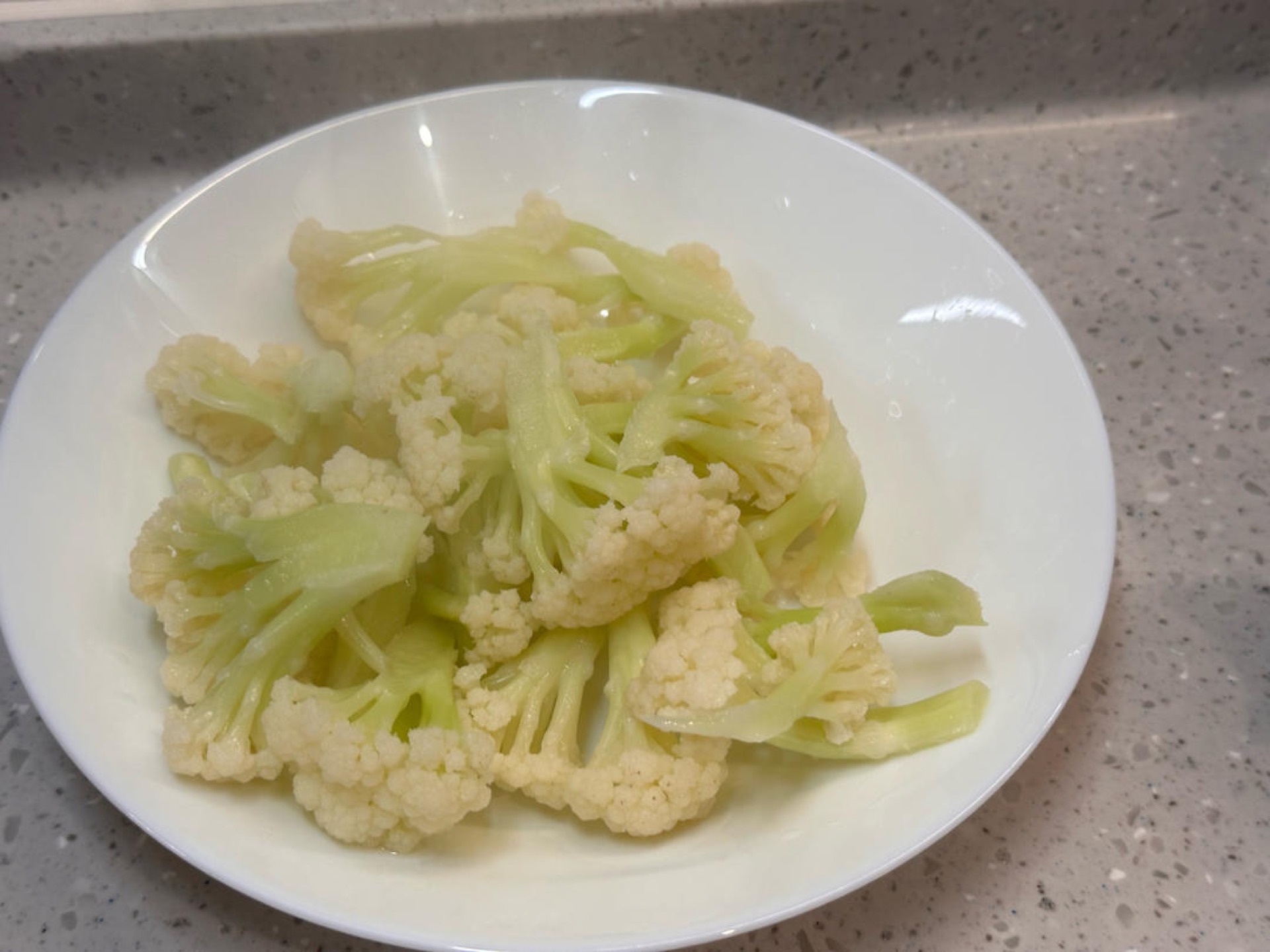
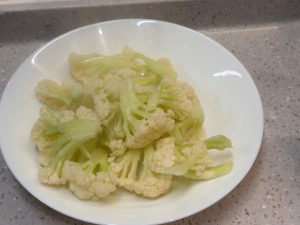
Wash the cauliflower and blanch it in boiling water.
Step 2 — Blanch the Mushrooms
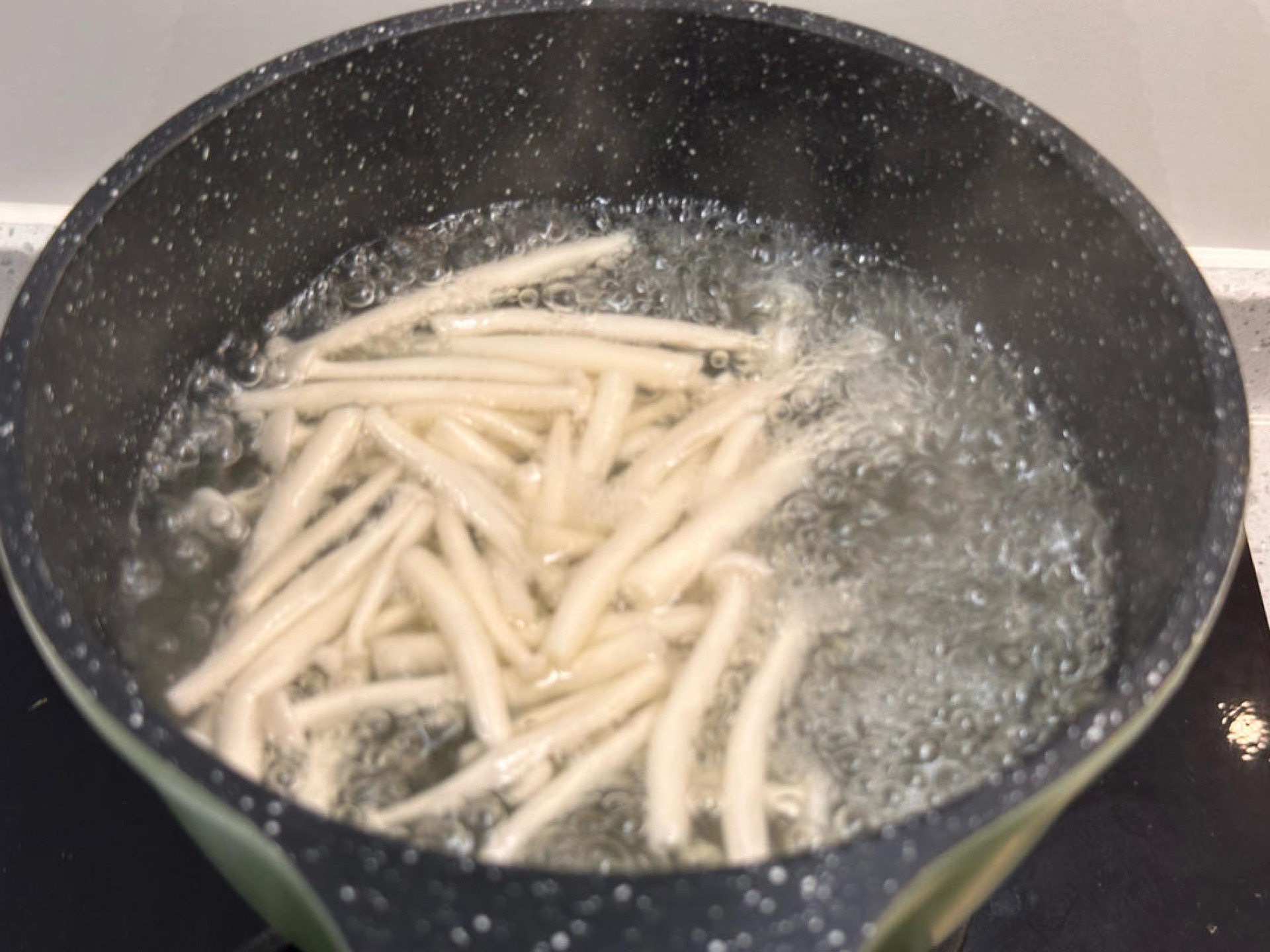
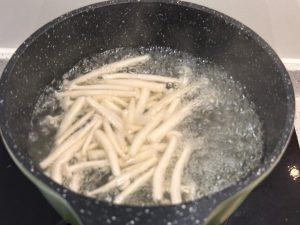
Wash the seafood mushrooms and blanch them in boiling water.
Step 3 — Dry-Fry the Mushrooms
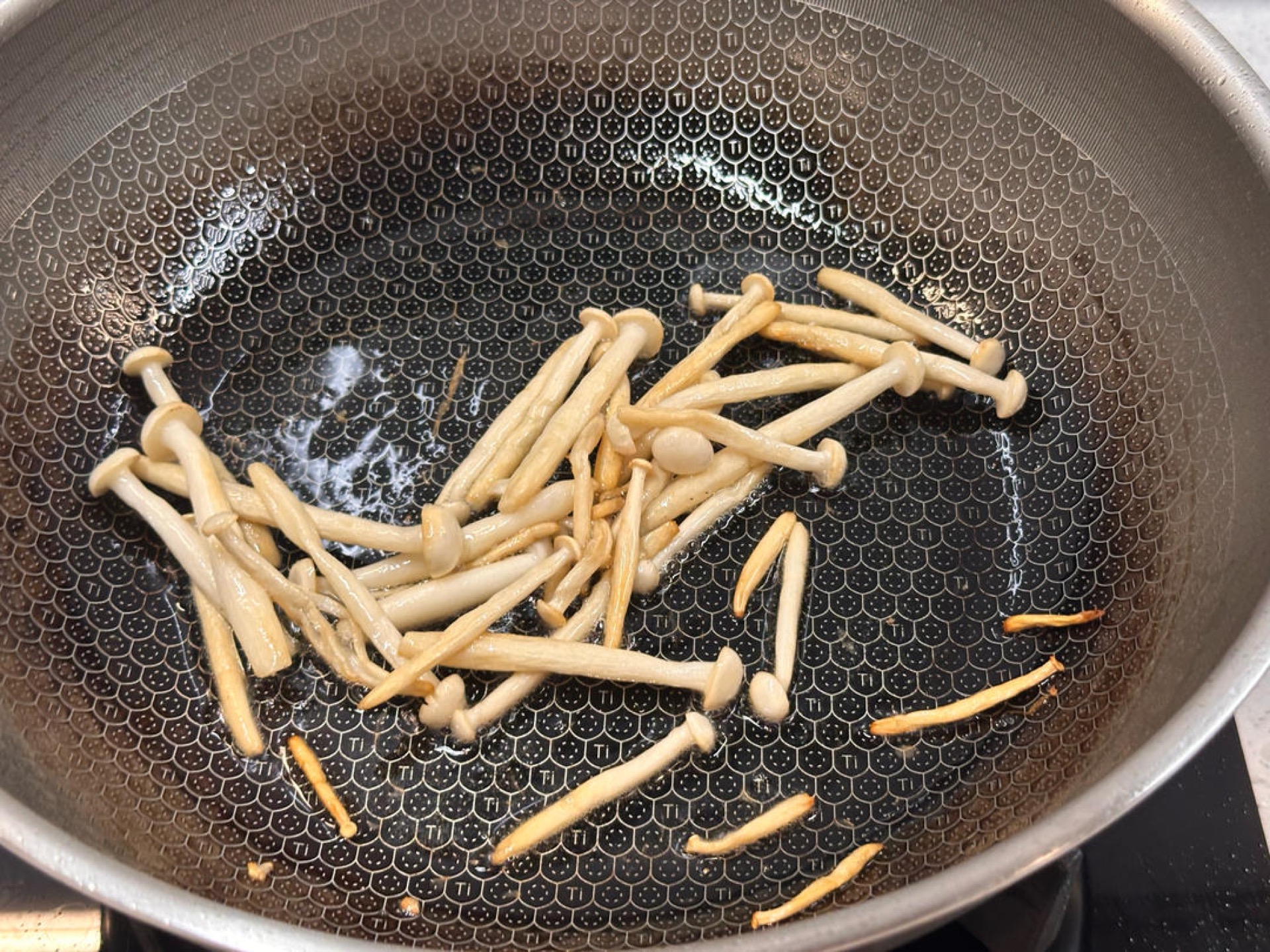
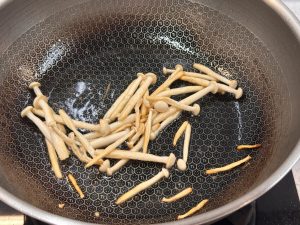
Heat the wok with cold oil, add the seafood mushrooms and stir-fry until no moisture remains, then remove and set aside.
Step 4 — Fry the Cauliflower and Combine
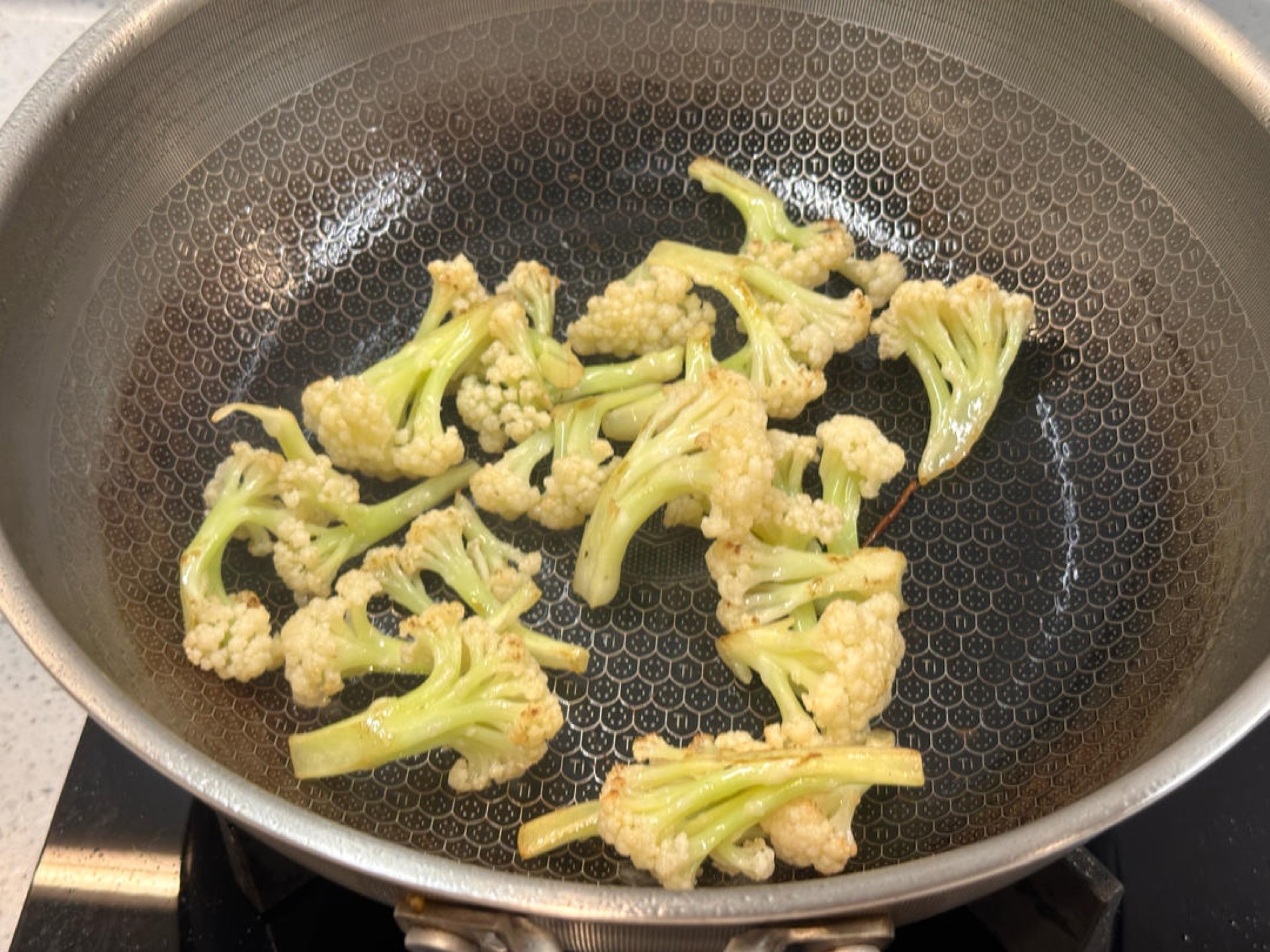
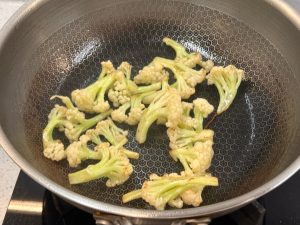
Add a little more oil, add the cauliflower and stir-fry until no moisture remains, then return the cooked seafood mushrooms to the wok, add an appropriate amount of dry pot sauce, and stir-fry.
Step 5 — Bloom the Aromatics
Add a little more oil to the wok, add the Sichuan peppercorns and star anise, and if you do not mind the extra step, add the scallions, ginger, and garlic too.
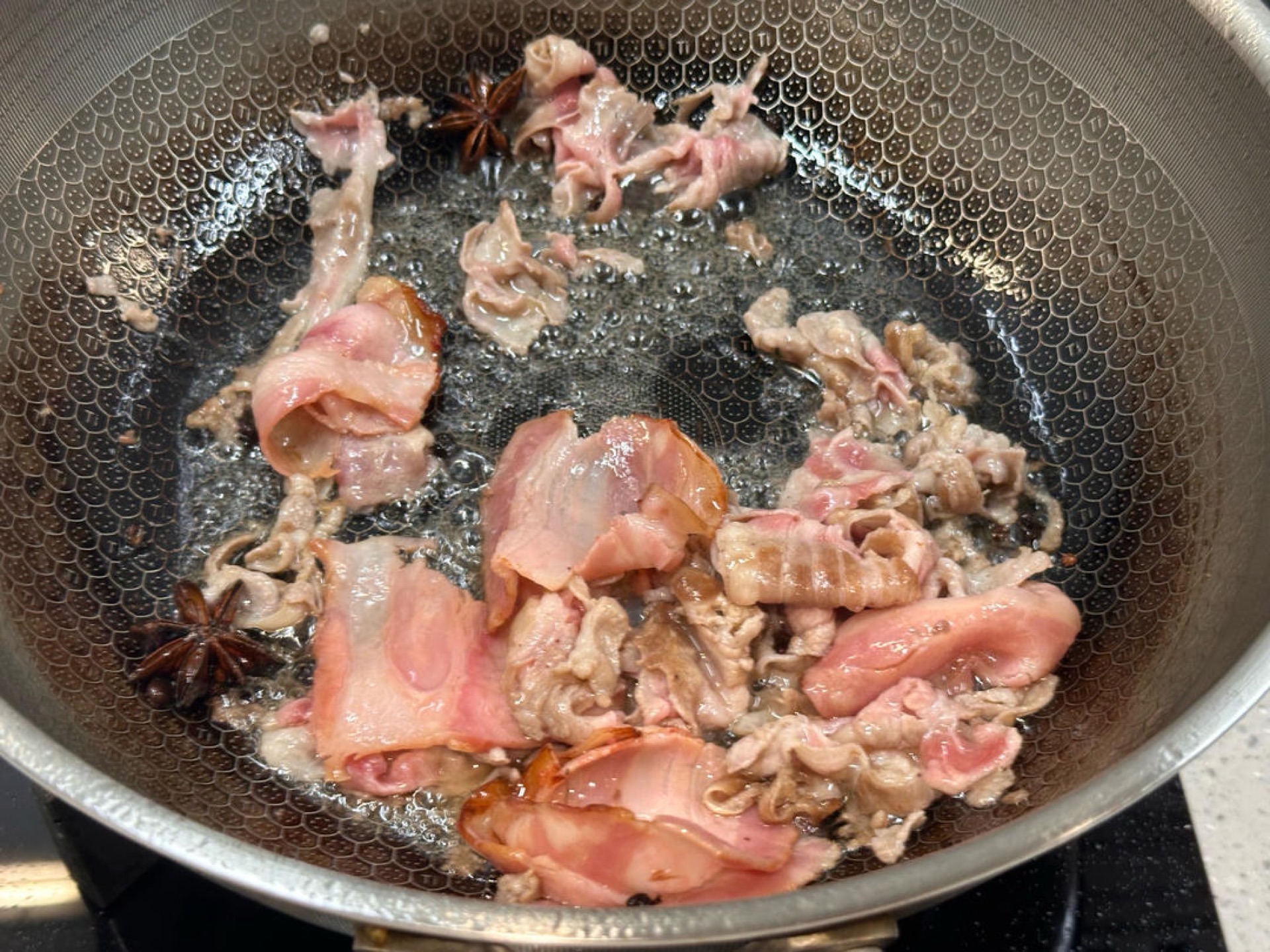
Step 6 — Cook the Bacon and Meat Rolls
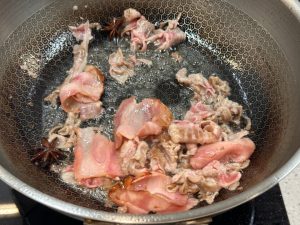
Add the bacon and meat rolls, stir-fry until they just begin to change color, then add an appropriate amount of dry pot sauce and stir-fry.
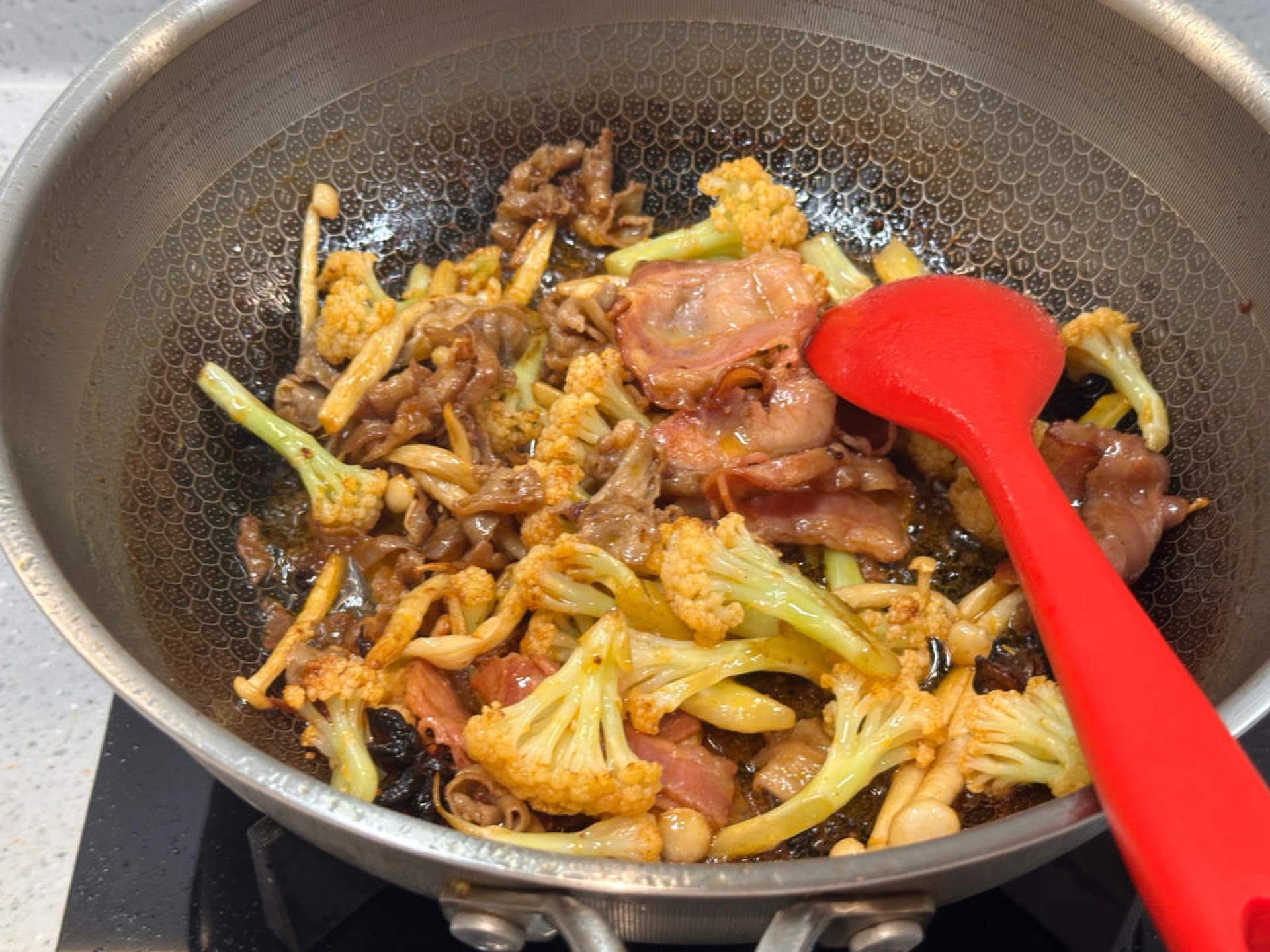
Step 7 — Combine and Serve
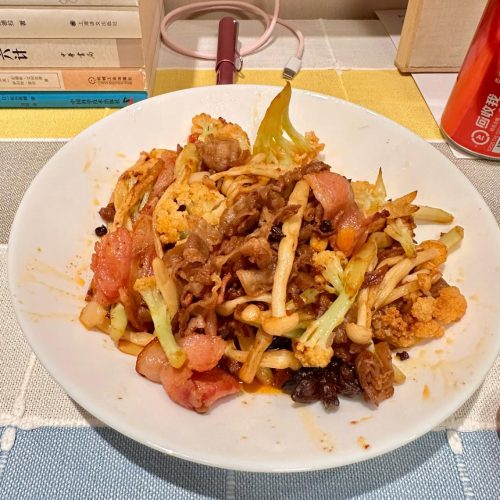
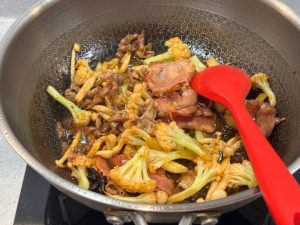
Pour the previously cooked cauliflower and seafood mushrooms back into the wok, stir-fry, then plate it up and the dry pot is done.
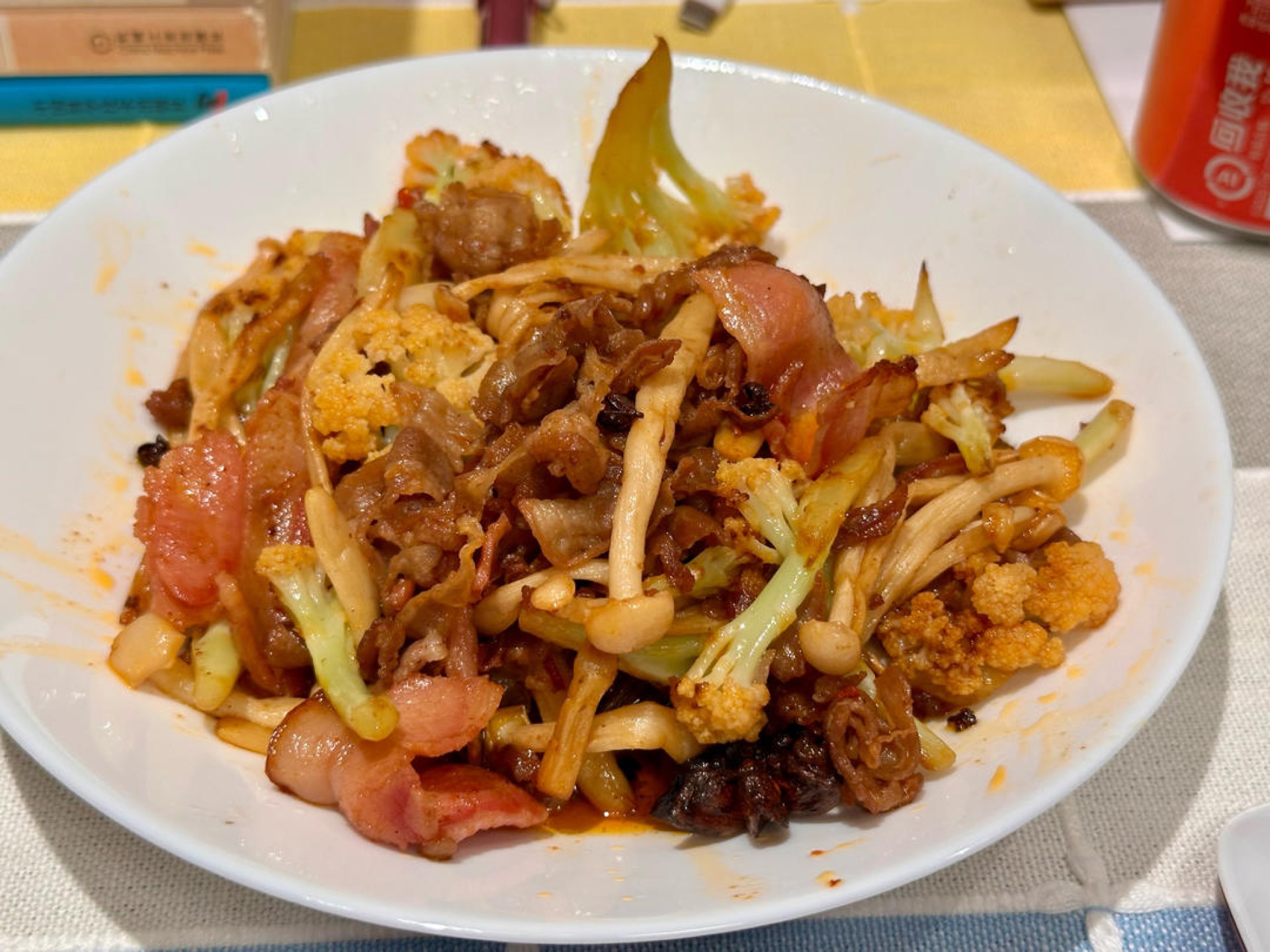
Common Mistakes When Making Dry Pot Bacon and Mushroom Stir-Fry
1. Skipping the dry-fry step. If you add the sauce before the mushrooms and cauliflower have released their water, the dish steams and the sauce slides off. The fix is to cook each vegetable separately until its surface looks dry and slightly browned before adding any sauce.
2. Crowding the wok. Too much food in the pan lowers the temperature and creates steam. Cook the cauliflower in two batches if your wok is small, and remove each batch before starting the next.
3. Burning the Sichuan peppercorns. Peppercorns need only a few seconds in hot oil. If they turn dark brown or black, they will make the whole dish bitter. Pull the wok off the heat briefly if you are worried, then add the meat.
4. Adding all the sauce at the end. This is the most common shortcut, and it is why home dry pots often taste flat. Season the mushrooms and cauliflower first, then season the bacon and meat rolls separately, and combine at the end.
5. Using wet vegetables. Any water clinging to the cauliflower or mushrooms after washing will need to cook off before browning can begin. Dry them with a clean kitchen towel or a salad spinner after blanching.
6. Overcooking the bacon. Bacon continues to cook after it is removed from the wok, and it will tighten up when it goes back in with the vegetables. Cook it just until it changes color, not until it is crisp.
How to Serve
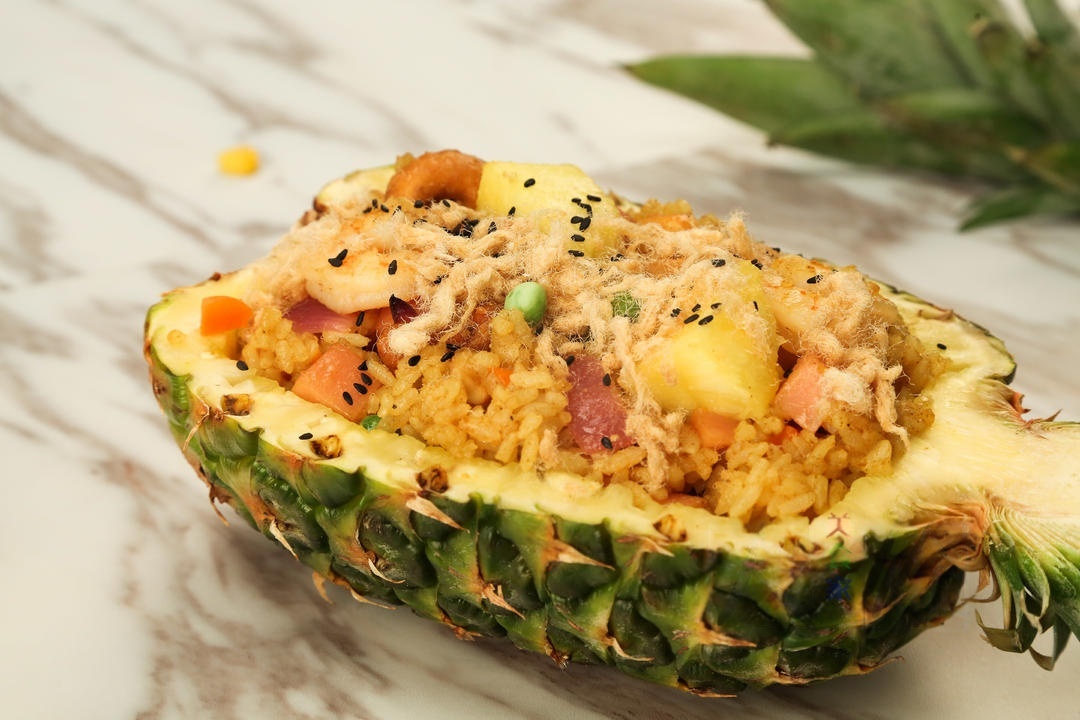
Dry pot is traditionally served with steamed white rice, which balances the salt and heat. It also works well as part of a larger spread, alongside a lighter vegetable dish and a soup. If you want a heartier pairing, serve it with pineapple fried rice, whose sweetness cuts through the spicy sauce nicely.
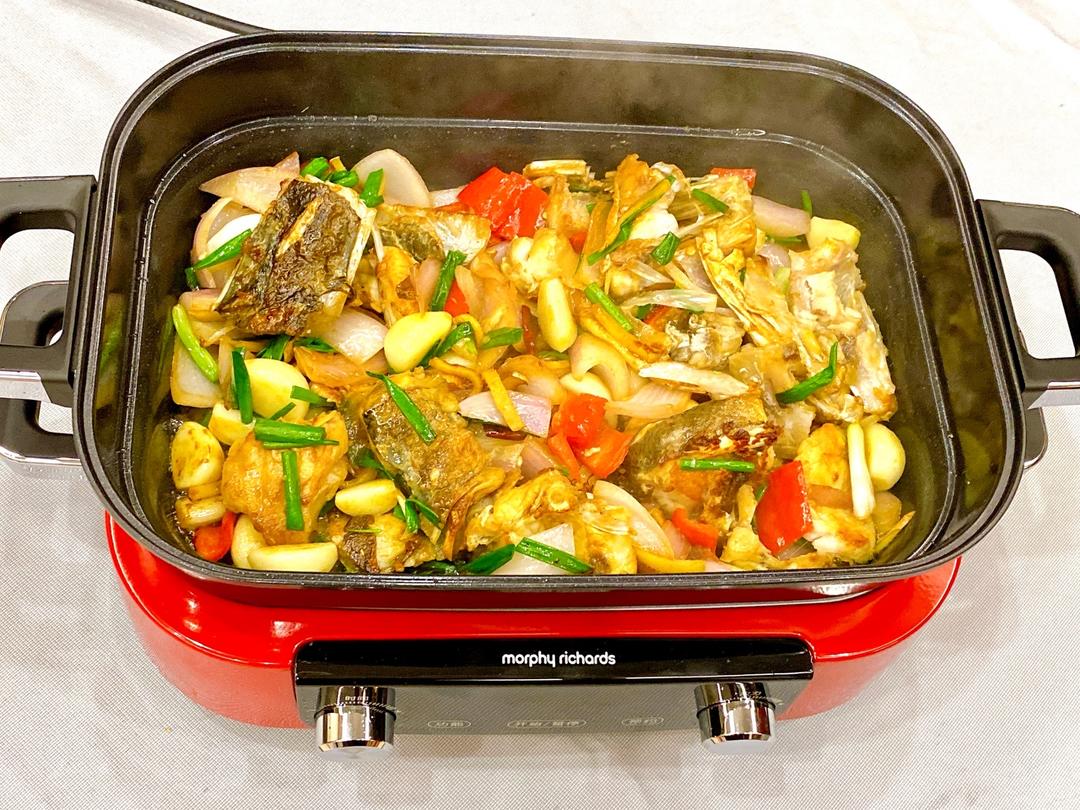
For a richer, more classic Sichuan meal, pair it with Chongqing spicy chicken and a simple cucumber salad. And if you want to keep the dry pot theme going, serve it next to sizzling dry pot fish head for a full gan guo table.

Storage & Reheat
Store leftovers in an airtight container in the refrigerator for up to three days. The vegetables will soften slightly, but the flavor actually deepens overnight. Reheat in a hot wok or skillet over medium-high heat for three to four minutes, stirring occasionally, until the internal temperature reaches 165°F (74°C).
Avoid reheating in the microwave if you can — it steams the vegetables and makes the bacon rubbery. If you must use a microwave, cover the bowl loosely and heat in thirty-second bursts, then finish in a dry skillet for a minute to crisp the edges back up. This dish does not freeze well because the cauliflower becomes mushy after thawing.
Allergen Notice
This recipe contains soy and wheat from the soy sauce and most commercial dry pot sauces, and it may contain sesame from the toasted sesame oil. Some dry pot sauces also contain shellfish or fish derivatives, so check the label if you are cooking for someone with a seafood allergy. Bacon and pork meat rolls are pork products and are not suitable for vegetarian, halal, or kosher diets unless specifically substituted.
Nutrition Disclaimer
Nutrition information is calculated using an ingredient database and should be considered an estimate. In cases where multiple ingredient alternatives are given, the first listed is calculated for nutrition. Garnishes and optional ingredients are not included.
About the Author & Recipe Development
Lin is the cook and writer behind Woks of Love, where she shares home-style Chinese recipes tested in a ordinary home kitchen with a well-used wok. This dry pot bacon and mushroom stir-fry was developed as a faster answer to the restaurant-style gan guo, using ingredients that are easy to find in a Western supermarket while keeping the dry-frying technique that gives the dish its character.
The recipe was tested with both store-bought and homemade dry pot sauce, and with thick-cut and thin-cut bacon, to make sure the timing works either way. The two-stage sauce addition and the separate dry-frying of the vegetables are the two details that made the biggest difference in testing, and they are the reason this version tastes closer to a restaurant dry pot than a standard stir-fry.
Authoritative References
For safe cooking temperatures for pork and pork products, see the FDA Food Code. For general food safety guidance on leftovers and reheating, see the FoodSafety.gov cold food storage chart.
For a deeper look at the science of stir-frying and why drying ingredients before frying matters, see this explainer from Serious Eats on wok heat management.
Dry Pot Bacon and Mushroom Stir-Fry (炒干锅快手菜): Savory Dry Pot with

Equipment
- Wok
- Cutting Board
- Slotted Spoon
- Chef’s knife
- Small Bowl
Ingredients
For the Dry Pot Sauce
- 2 tbsp dry pot sauce store-bought or homemade
- 1 tbsp light soy sauce or tamari
- 1 tsp toasted sesame oil optional
For the Dish
- 1 lb cauliflower cut into small florets
- 8 oz seafood mushrooms trimmed and separated
- 6 oz bacon sliced into 1-inch pieces
- 4 oz pork meat rolls or thinly sliced pork belly
- 2 tbsp neutral oil divided
- 1 tsp Sichuan peppercorns whole
- 1 whole star anise optional
- 2 cloves garlic minced
- 1 inch ginger minced
- 2 whole scallions cut into 2-inch lengths
Instructions
- Wash the cauliflower and blanch it in boiling water.

- Wash the seafood mushrooms and blanch them in boiling water.
- Heat the wok with cold oil, add the seafood mushrooms and stir-fry until no moisture remains, then remove and set aside.
- Add a little more oil, add the cauliflower and stir-fry until no moisture remains, then return the cooked seafood mushrooms to the wok, add an appropriate amount of dry pot sauce, and stir-fry.
- Add a little more oil to the wok, add the Sichuan peppercorns and star anise, and if you do not mind the extra step, add the scallions, ginger, and garlic too.
- Add the bacon and meat rolls, stir-fry until they just begin to change color, then add an appropriate amount of dry pot sauce and stir-fry.
- Pour the previously cooked cauliflower and seafood mushrooms back into the wok, stir-fry, then plate it up and the dry pot is done.












Leave a Reply