Chinese sesame paste (芝麻酱, zhī ma jiàng) is one of the most “high impact” ingredients you can keep in a Chinese pantry. It’s thick, tan to light brown, and made from roasted sesame seeds ground into a smooth, spoonable paste—similar in texture to natural peanut butter, but with a deeper toasted aroma and a richer, slightly smoky finish.

In everyday Chinese cooking, this is the ingredient behind that unmistakable creamy, nutty sauce in Sesame Noodles, and it’s also a key component in classic “strange flavor” (怪味) sauces like Bang Bang Chicken. Once you understand how to buy and use it, you’ll find it works across cold dishes, noodles, dipping sauces, and even some marinades—often alongside staples like Light Soy Sauce, Chinkiang Vinegar, and a splash of Shaoxing Wine for depth.
What is Chinese sesame paste?
Chinese sesame paste is typically made from toasted white sesame seeds, ground until smooth. Some brands use a little oil to help with texture, and many jars naturally separate over time (oil rises to the top, solids settle). That separation is normal and usually a sign of a less processed product.
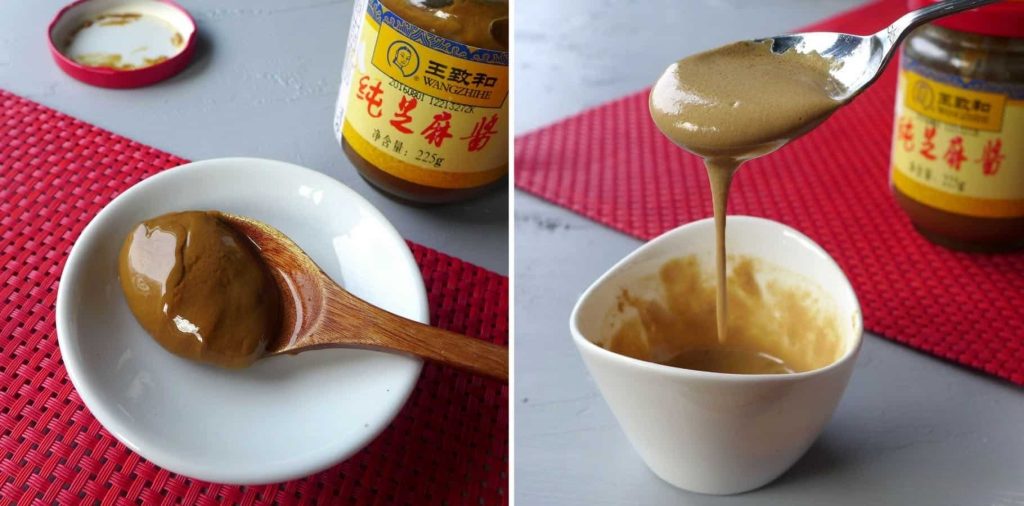
You may also see black sesame paste on shelves. In Chinese cooking, black sesame paste is usually used in desserts (sweet soups, fillings, pastries), while roasted white sesame paste is the everyday savory workhorse.
Sesame paste vs. tahini: they are not the same
This is the biggest point of confusion for Western home cooks.
- Tahini is commonly made from hulled, unroasted sesame seeds. It tastes lighter, more grassy and sharp, and it’s often used in Mediterranean and Middle Eastern cooking.
- Chinese sesame paste is made from roasted seeds (often not fully hulled), so it’s darker, smokier, and rounder—and it behaves differently in sauces.
If a recipe is written for Chinese sesame paste, using plain tahini will usually taste “thin” and a bit too sharp. You can still make a delicious dish, but it won’t be the same flavor profile.
How it’s made (and what that means for flavor)
The basic process is straightforward:
- Sesame seeds are cleaned and dried
- Seeds are toasted until aromatic
- They’re milled into a smooth paste
That roasting step is everything. It creates the deep nutty aroma that makes sesame paste so effective in sauces—especially cold sauces, where there’s no cooking time to “develop” flavor.
What it tastes like
Expect a flavor that is:
- intensely toasted and nutty
- richer and smokier than peanut butter
- slightly bitter in a pleasant way (like well-toasted nuts), but not burnt
If your jar tastes harshly bitter or smells stale, it may be old or made with lower-quality seeds.
How to use Chinese sesame paste
1) Make a noodle sauce that tastes restaurant-level
The most iconic use is noodle sauce—especially for Sesame Noodles. The key technique is to thin the paste gradually with warm water (or broth) until it turns silky. If you dump in liquid all at once, it can seize and turn grainy.
For seasoning and balance, sesame paste pairs naturally with:
- Light Soy Sauce for savory saltiness
- Chinese Black Vinegar (often Chinkiang Vinegar) for a clean tang that cuts richness
- a touch of heat like Chili Garlic Sauce
2) Build creamy “liang cai” dressings for cold dishes
Chinese sesame paste is also a strong base for cold salad-style dishes. It adds body the way mayo might in Western salads—but with a toasted sesame profile.
It works especially well with crisp, refreshing dishes like Smashed Cucumber Salad when you want to make a “creamy” version that still tastes clean and bright (especially with black vinegar).
3) Use it as a dipping sauce component
Sesame paste can turn simple dips into something more filling and complex—great with dumplings and dim sum.
Try it with:
A small amount goes a long way; too much can overpower delicate wrappers and fillings.
4) Make “strange flavor” style sauces
In Sichuan cooking, sesame paste often shows up in complex sauces where the goal is layered flavor: savory, sour, sweet, numbing, spicy, and nutty.
A great example to study is Bang Bang Chicken. The sesame paste doesn’t taste like “sesame noodles”—it becomes part of a broader flavor system, often supported by vinegar and soy.
5) Pair it with toasted sesame oil—strategically
A small drizzle of toasted sesame oil can make sesame paste taste even more aromatic. If you keep sesame oil on hand, use it like a finishing seasoning rather than a cooking oil. (If you need the full pantry guide, use your dedicated post: Sesame Oil.)
Substitutions
If you must substitute, here are workable options:
Best “close enough” substitute
- 50% tahini + 50% natural peanut butter, plus a few drops of toasted sesame oil
This combo mimics both the roasted sesame flavor and the rounded richness.
If you only have tahini
- Use tahini, but expect a lighter, sharper flavor.
To bring it closer, add a few drops of Sesame Oil and (optionally) a pinch of sugar to round it out.
Avoid sweetened commercial peanut butter; the added sugar and stabilizers can throw off savory sauces.
How to buy Chinese sesame paste (what to look for)
There are two common styles on the shelf:
- Pure sesame paste (100% sesame)
- deeper aroma, cleaner finish, more versatile
- Blended paste (sesame + peanuts)
- cheaper, often sweeter and less fragrant
For savory cooking, I strongly recommend pure sesame paste when you can get it. On the ingredient list, you want to see sesame as the only ingredient (or the clear primary ingredient). Separation in the jar is normal—just stir thoroughly.
Where to buy: most Chinese and Asian grocery stores carry it, and it’s commonly available online.
Storage and shelf life
- Unopened: store in a cool, dark pantry.
- Opened: store in the refrigerator for best freshness, ideally up to 6 months.
- Always use a clean spoon; sesame paste can pick up off flavors easily.
If the paste smells flat or rancid, or the flavor turns harshly bitter, it’s time to replace it.
recipe suggestions
- Sesame Noodles (the classic use)
- Bang Bang Chicken (complex sauce application)
- For a balanced pantry ecosystem, cross-reference how sesame paste sauces often rely on Light Soy Sauce + Chinkiang Vinegar (or broader Chinese Black Vinegar) for structure and balance.












Leave a Reply