Some dishes earn their place at the table not with fireworks but with quiet, steady comfort — and braised tofu with potatoes is exactly that kind of dish. A block of humble tofu gets pan-fried until each cube wears a golden, chewy jacket, then it settles into a savory braise alongside buttery chunks of potato, star anise, dried chilies, and a spoonful of soybean paste. Twenty minutes under a lid later, the sauce has thickened, the potatoes have gone soft and yielding, and the tofu has drunk up all that deep, glossy flavor.
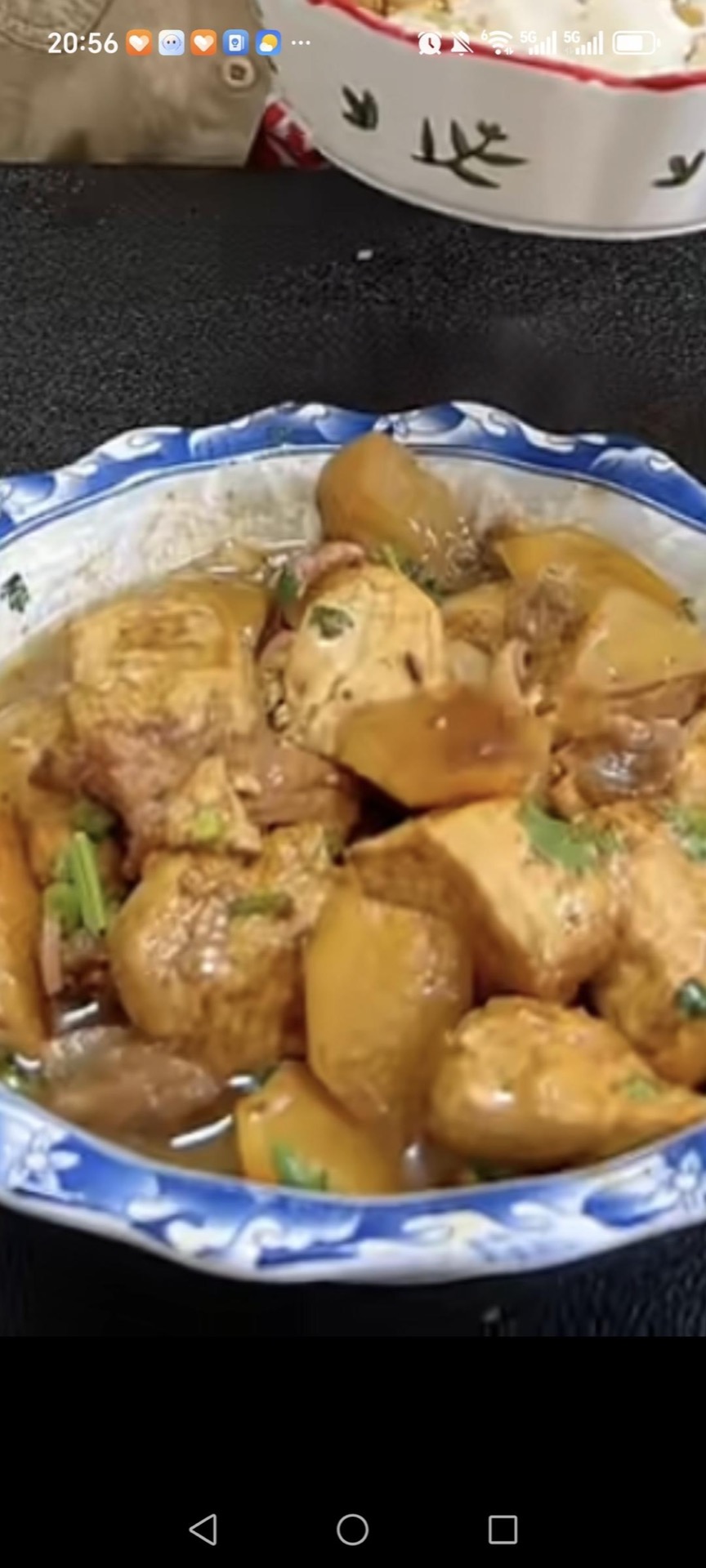
This is home cooking in the truest sense. In northern China, 土豆炖豆腐 shows up on weeknight tables all winter long, made with whatever pork or aromatics happen to be in the kitchen. It is inexpensive, forgiving, and deeply satisfying — the kind of dish where the last spoonful of sauce scraped over a bowl of rice might be the best bite of the whole meal.
If you have ever wondered what to do with a block of tofu and a couple of potatoes, this recipe is your answer. It comes together in one wok, needs no special technique beyond a patient pan-fry, and rewards you with a braise that tastes like it simmered far longer than it did.
What Is Braised Tofu with Potatoes?
土豆炖豆腐 (tǔdòu dùn dòufu) is a northern Chinese home-style braise — “dùn” means to stew or braise slowly, “tǔdòu” is potato, and “dòufu” is tofu. It belongs to the same family of thrifty, sauce-heavy one-pot dishes that define everyday cooking across Shandong, Hebei, and Dongbei kitchens, where a little meat is used to season a lot of vegetables rather than to star on its own.
The technique has three movements. First, tofu is pan-fried until golden so it develops a firm, slightly chewy skin that will hold its shape through a long simmer. Second, aromatics — star anise, dried chilies, and a spoonful of soybean paste — are fried in rendered pork fat until the whole kitchen smells like a restaurant. Third, potatoes and tofu go back into the wok with water, soy sauce, and spices, and everything braises under a lid until the potatoes are tender and the sauce clings.
The result is a dish with two contrasting textures: tofu that is crisp-edged outside and custardy within, and potatoes that are soft, starchy, and completely saturated with savory braising liquid. It is served as a main course over rice, or as one of several dishes in a larger Chinese meal.
The name of the game here is umami layering. Soybean paste brings fermented depth, light soy sauce brings salt and savor, a whisper of dark soy sauce brings that mahogany color, and thirteen-spice powder brings a warm, aromatic hum in the background. Sugar rounds the edges, and the pork — even a small amount — gives the whole braise a rich, meaty backbone.
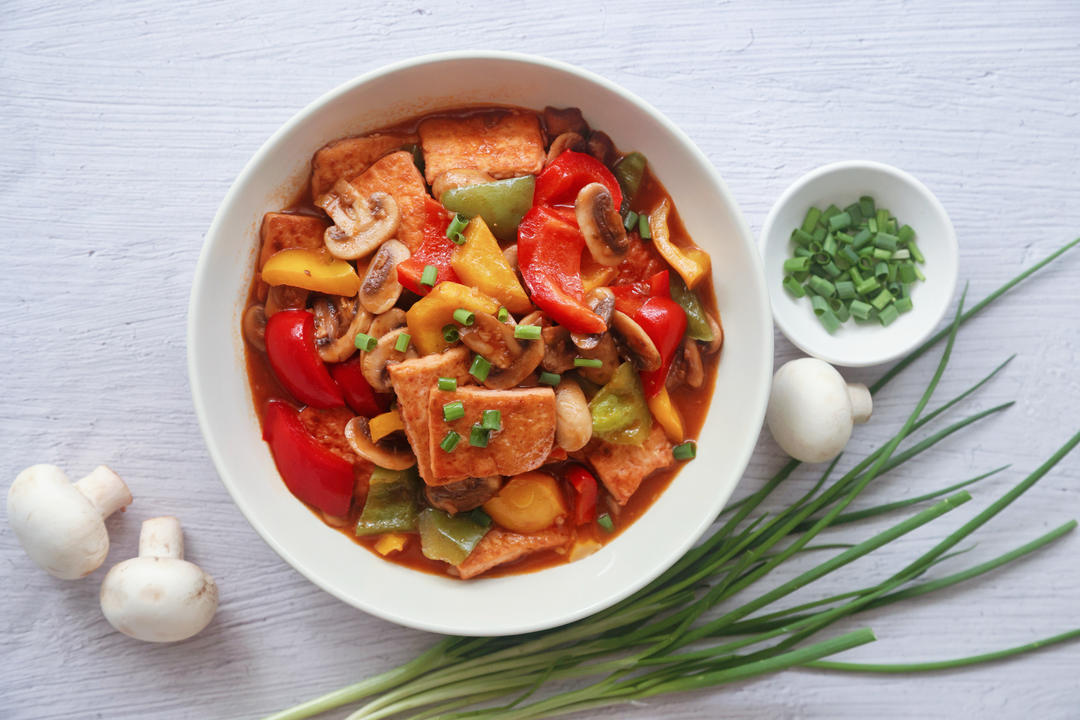
If you love this style of tofu cookery, there are several dishes on the site that share its DNA. For a mushroom-forward take on the same braising technique, try braised tofu and mushrooms, where shiitakes and wood ears soak up a glossy jiang-shao sauce.
1Braised Tofu and Mushrooms with Savory SauceThis Braised Tofu and Mushrooms recipe uses a secret weapon—Spare Rib Sauce—to create a rich, savory, vegetarian dish that tastes even better than meat. It features pan-fried firm tofu and juicy button mushrooms braised in a glossy, umami-packed glaze.Check out this recipe
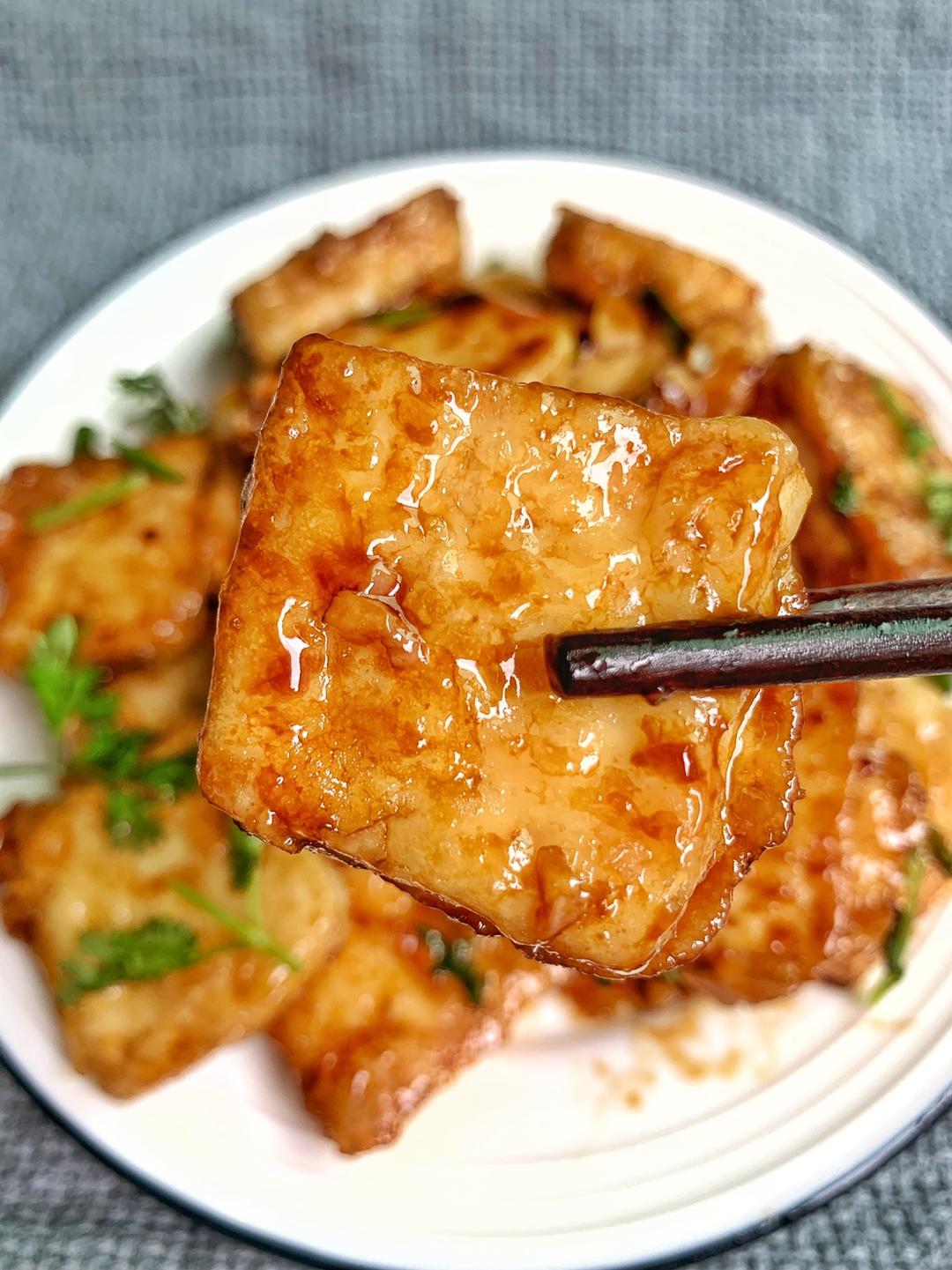
For something faster and punchier, pan fried tofu with garlic sauce keeps the golden-crusted tofu but finishes it with a sharp, garlicky pour-over sauce instead of a long braise.
2Easy Pan-Fried Tofu with Garlic Sauce (香煎豆腐)This 15-minute recipe creates unbelievably crispy pan-fried tofu cubes tossed in a rich, savory, and glossy garlic soy sauce. It’s a homestyle Chinese dish that’s fast, easy, and better than takeout.Check out this recipe
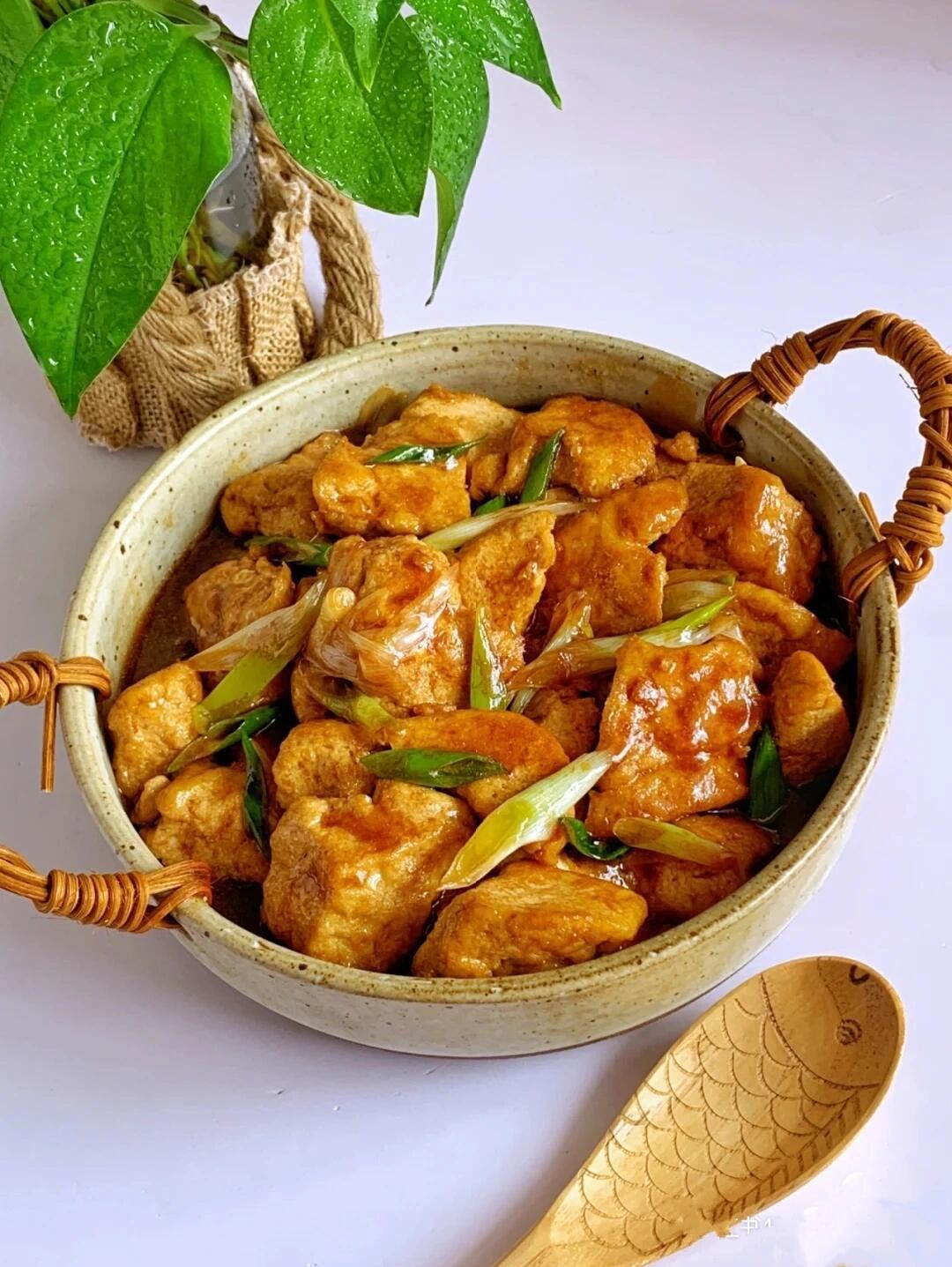
And if you want the simplest possible version of the braise itself, braised tofu with scallions shows how far a handful of scallions and good soy sauce can carry a block of tofu.
3Braised Tofu with Scallions (Cong Shao Doufu)A super simple, 15-minute Chinese home-style dish. Tender pan-fried tofu is braised in a rich, savory scallion-infused sauce. An easy and delicious “rice thief”!Check out this recipe
Ingredient Notes
Firm tofu (老豆腐). Use firm or medium-firm tofu, not silken. You want a block that holds its shape when cubed and can survive a pan-fry. If your only option is soft tofu, you can still make this dish, but fry it gently and handle it with a slotted spoon. For more on the different types, the texture matters more than the brand.
Potatoes. Waxy or all-purpose potatoes both work, but a starchy russet will break down slightly and thicken the braise, which many cooks consider the ideal outcome. Cut them into even 1-inch chunks so they cook at the same rate as the tofu.
Pork belly and pork shoulder. The source recipe uses both — belly for rendered fat and crispness, shoulder for lean meat. This is optional; the dish is excellent vegetarian if you skip the pork and add an extra tablespoon of oil plus a splash more soy sauce. If you do use pork, slice it thinly so it cooks fast.
Star anise (八角). One whole star is enough. It is the signature warm note in northern braises and pairs beautifully with soy. Do not crush it; fish it out at the end if you like, or leave it in as a visual cue that this is a proper dùn dish.
Dried red chilies. These bring gentle heat and aroma rather than fire. Snip them into segments and shake out some of the seeds if you want a milder braise.
Soybean paste (黄豆酱) or doubanjiang. This is the flavor engine of the dish. Soybean paste is milder and slightly sweet; doubanjiang is spicier and more fermented. Either works, and the source recipe explicitly says to use whichever you prefer. Fry it until it smells nutty — that step is not optional.
Shaoxing wine. A splash deglazes the wok and adds a subtle fermented complexity. Dry sherry is the closest substitute.
Light and dark soy sauce. Light soy sauce seasons; dark soy sauce colors. Use them in roughly a 4:1 ratio, and do not swap one for the other entirely — dark soy alone will taste muddy and light soy alone will leave the braise pale.
Thirteen-spice powder (十三香). A northern Chinese blend that includes star anise, cinnamon, fennel, and clove. A little goes a long way. If you cannot find it, a pinch of five-spice plus a pinch of white pepper is a reasonable stand-in.
Chicken bouillon and sugar. Both are flavor balancers. The sugar is not there to make the dish sweet; it is there to soften the salt and round out the fermented notes.
Ingredients
Here is everything you need for four servings. Full measurements are in the recipe card at the bottom of this post.
- 1 block firm tofu (about 14 oz / 400 g), drained and cubed
- 2 medium potatoes (about 1 lb / 450 g), peeled and cut into 1-inch chunks
- 2 oz (55 g) pork belly, thinly sliced (optional)
- 3 oz (85 g) pork shoulder, thinly sliced (optional)
- 1 whole star anise
- 3 dried red chilies, snipped into segments
- 1/2 tbsp soybean paste or doubanjiang
- 1 tbsp Shaoxing wine
- 1/2 tbsp light soy sauce
- 1 tsp dark soy sauce
- 1/2 tsp thirteen-spice powder
- 1/4 tsp chicken bouillon
- 1 tsp sugar
- 2 cups (480 ml) water, plus more as needed
- 2 scallions, thinly sliced
- 2 small green chilies, sliced
- 1 small handful cilantro, roughly chopped
- Neutral oil and a pinch of salt, for frying
Equipment Needed
You do not need much for this dish, which is part of its appeal.
- A wok or a wide, deep skillet. A wok gives you the best surface for frying tofu and the best shape for a shallow braise, but a 12-inch skillet with a lid works fine.
- A lid that fits. The 20-minute braise needs a tight cover so the liquid does not evaporate away.
- A cutting board and a sharp knife. You will be cubing tofu and chunking potatoes, so a stable board matters.
- A slotted spoon or spider. Essential for lifting the fried tofu out of the oil without splashing, and for serving without dragging all the sauce along.
- Paper towels. For blotting the tofu dry before frying — this is the single biggest factor in getting a good golden crust.
If you are new to wok cooking, the main thing to remember is to have everything cut and within arm’s reach before you turn on the heat. This dish moves quickly once the oil is hot. Our guide on how to stir fry vegetables without overcooking covers the same mise en place discipline that makes this braise easy.
Why This Recipe Works
The tofu is fried first, not added raw. Raw tofu dropped into a braise turns watery and disintegrates. Frying it first drives off surface moisture, creates a golden skin, and gives the cubes a spongy, sauce-loving texture. That single step is the difference between a limp dish and a great one.
Salt in the frying oil. This is a classic Chinese home-cooking trick. The salt creates a microscopic barrier between the tofu and the pan, which dramatically reduces sticking. It also seasons the crust from the outside in.
The soybean paste is fried, not stirred in. Fermented pastes need heat and oil to bloom. Frying the paste for 30 to 60 seconds until it smells nutty unlocks flavors that would otherwise stay locked inside the jar.
Pork fat carries the aromatics. Rendering pork belly first means the star anise, chilies, and paste all fry in flavorful fat rather than neutral oil. That is where the depth comes from — and it is why a small amount of pork goes such a long way.
Potatoes thicken the sauce naturally. As the potatoes braise, their surface starch sloughs off into the liquid. By the time the lid comes off, the sauce has body and clings to the tofu without any added thickener.
Two soy sauces, two jobs. Light soy sauce provides the salt and savor; dark soy sauce provides the color. Using both gives you a braise that tastes seasoned and looks like it came from a restaurant kitchen.
Prep & Mise en Place
Fifteen minutes of prep is all this dish asks, and doing it properly makes the cooking feel effortless.
Step one: press and cube the tofu. Drain the block, wrap it in paper towels or a clean kitchen towel, and press gently for 5 to 10 minutes to remove excess water. Cut it into 1-inch cubes and blot the cubes again. Dry tofu browns; wet tofu steams.
Step two: peel and chunk the potatoes. Peel them and cut into 1-inch chunks. Try to keep the pieces uniform — irregular chunks mean some turn to mush while others stay firm. If you are not cooking immediately, hold the chunks in a bowl of cold water so they do not brown, then drain and pat dry before use.
Step three: slice the pork. If using pork belly and shoulder, slice both thinly — about 1/8 inch. Thin slices render and cook quickly, which keeps the timing tight.
Step four: prepare the aromatics. Snip the dried chilies into segments, measure out the star anise, and have the soybean paste ready in a small dish. Once the wok is hot, there is no time to go hunting in the pantry.
Step five: mix the sauce. In a small bowl, combine the Shaoxing wine, light soy sauce, dark soy sauce, thirteen-spice powder, chicken bouillon, and sugar. Stir to dissolve the sugar and bouillon so they distribute evenly when they hit the wok.
Step six: chop the finishing herbs. Slice the scallions, slice the small green chilies, and roughly chop the cilantro. Set them aside in a small bowl — they go in at the very end, off the heat or just before serving.
With everything prepped, the actual cooking takes about 20 minutes of active time plus the covered braise. This is a good moment to start your rice cooker, because the dish is ready the moment the lid comes off.
Cooking Process
Step 1 — Prep the Tofu
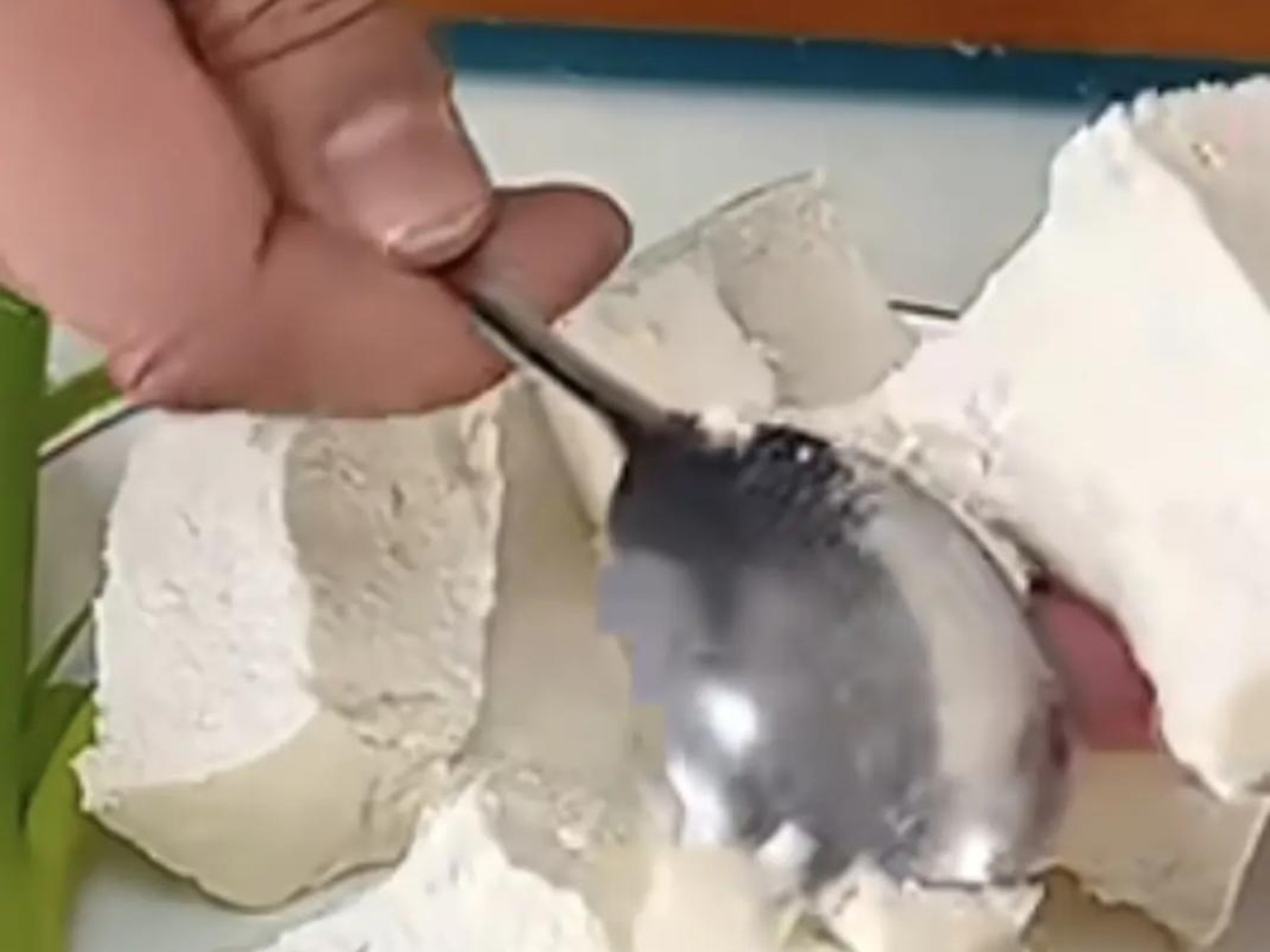
Have 1 block of firm tofu ready, drained and cut into 1-inch cubes.
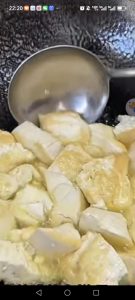
Step 2 — Fry the Tofu
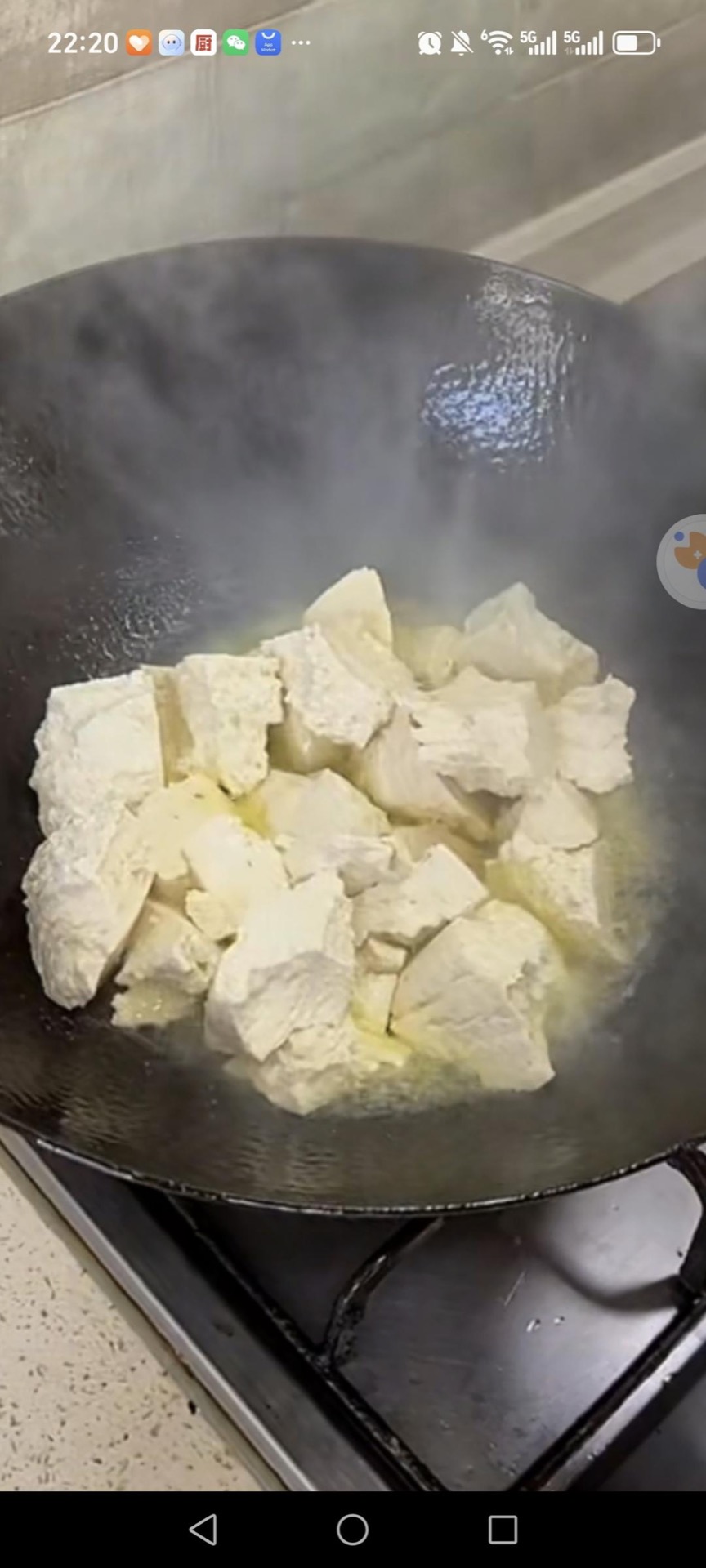
Heat a wok with oil, sprinkle in a pinch of salt, and slide the tofu cubes in to pan-fry.
Step 3 — Set the Tofu Aside
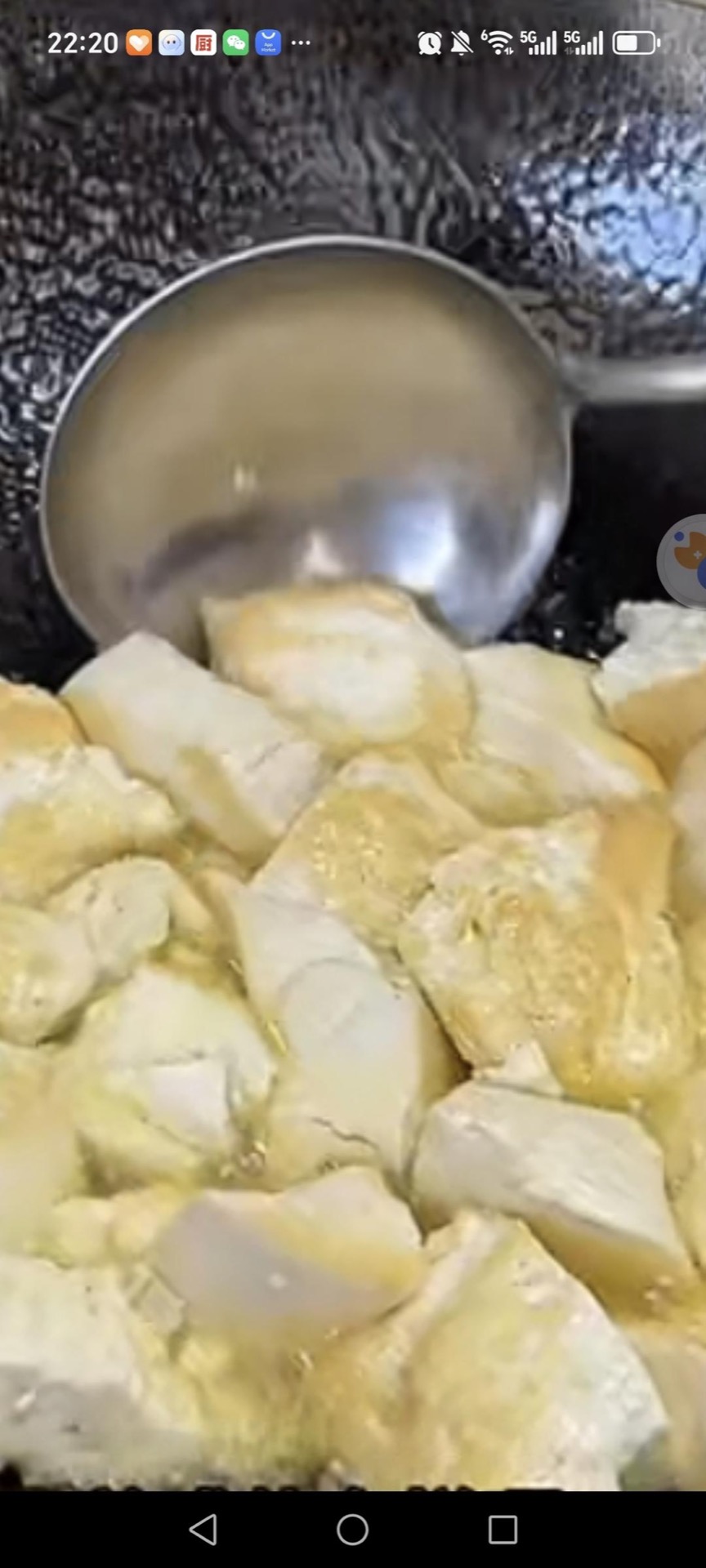
Fry the tofu until golden on both sides, then scoop it out and set it aside.
Step 4 — Render the Fat
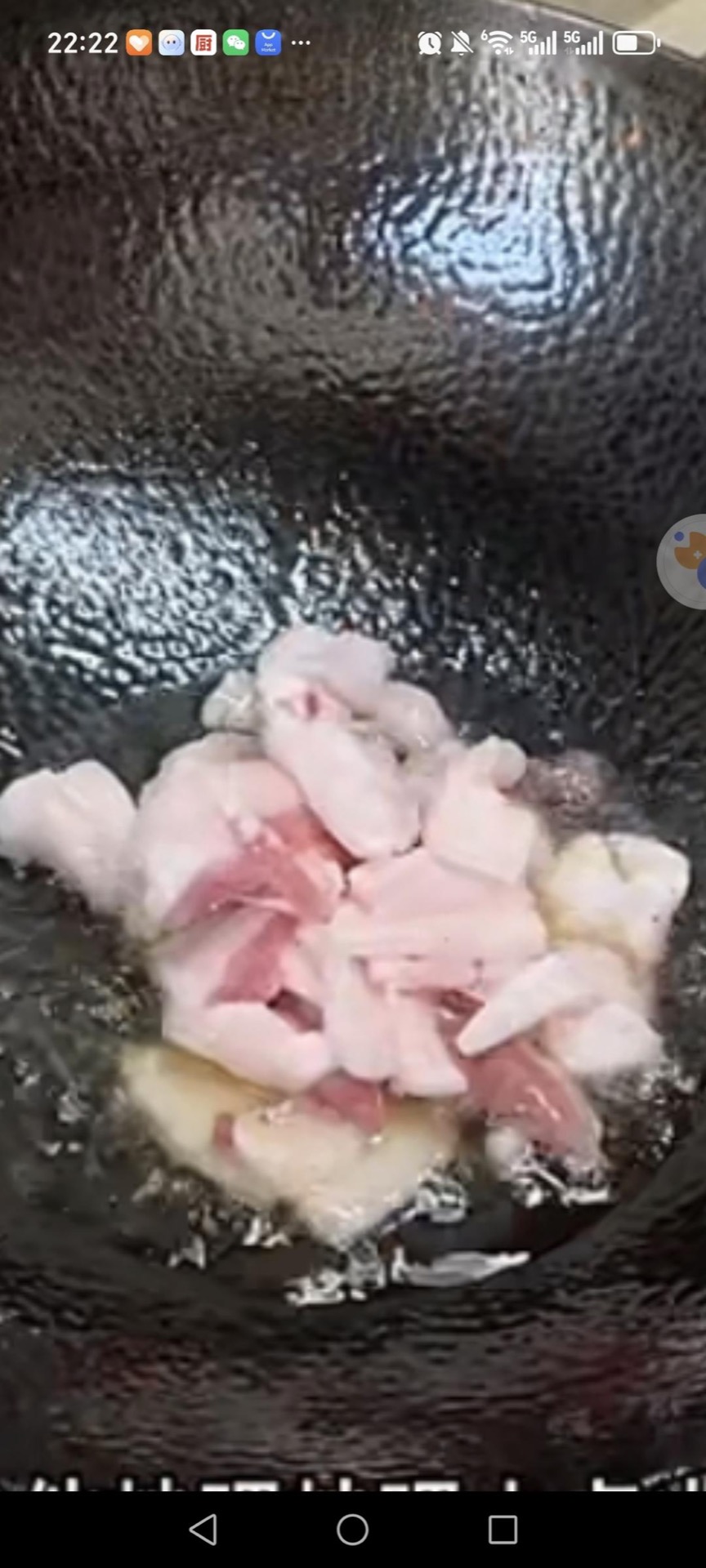
Add a little more oil to the wok, then add the sliced pork belly and fry it until it turns crisp and browned.
Step 5 — Cook the Lean Pork
Add the sliced lean pork and stir-fry until it is cooked through.
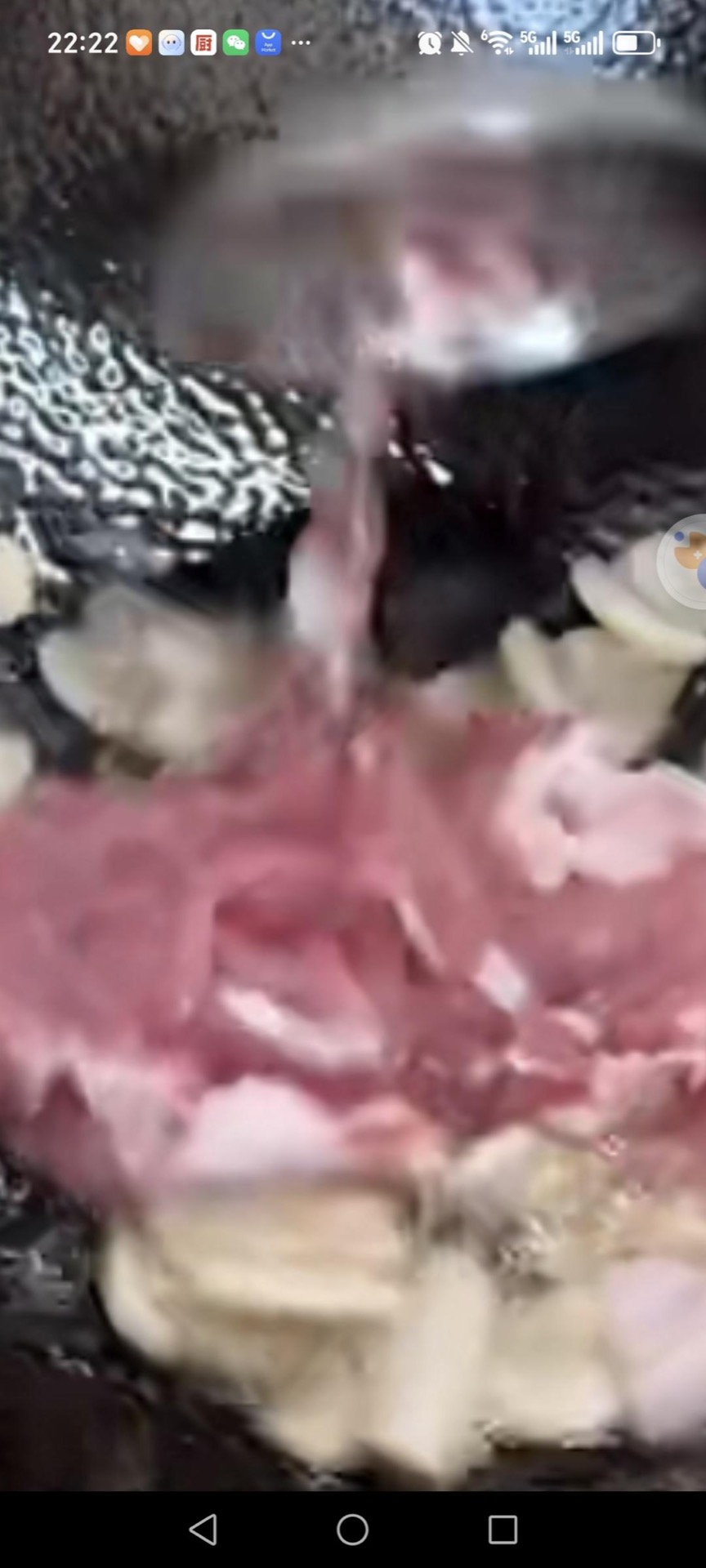
Step 6 — Bloom the Aromatics
Add the star anise and dried chili segments and stir-fry until fragrant.
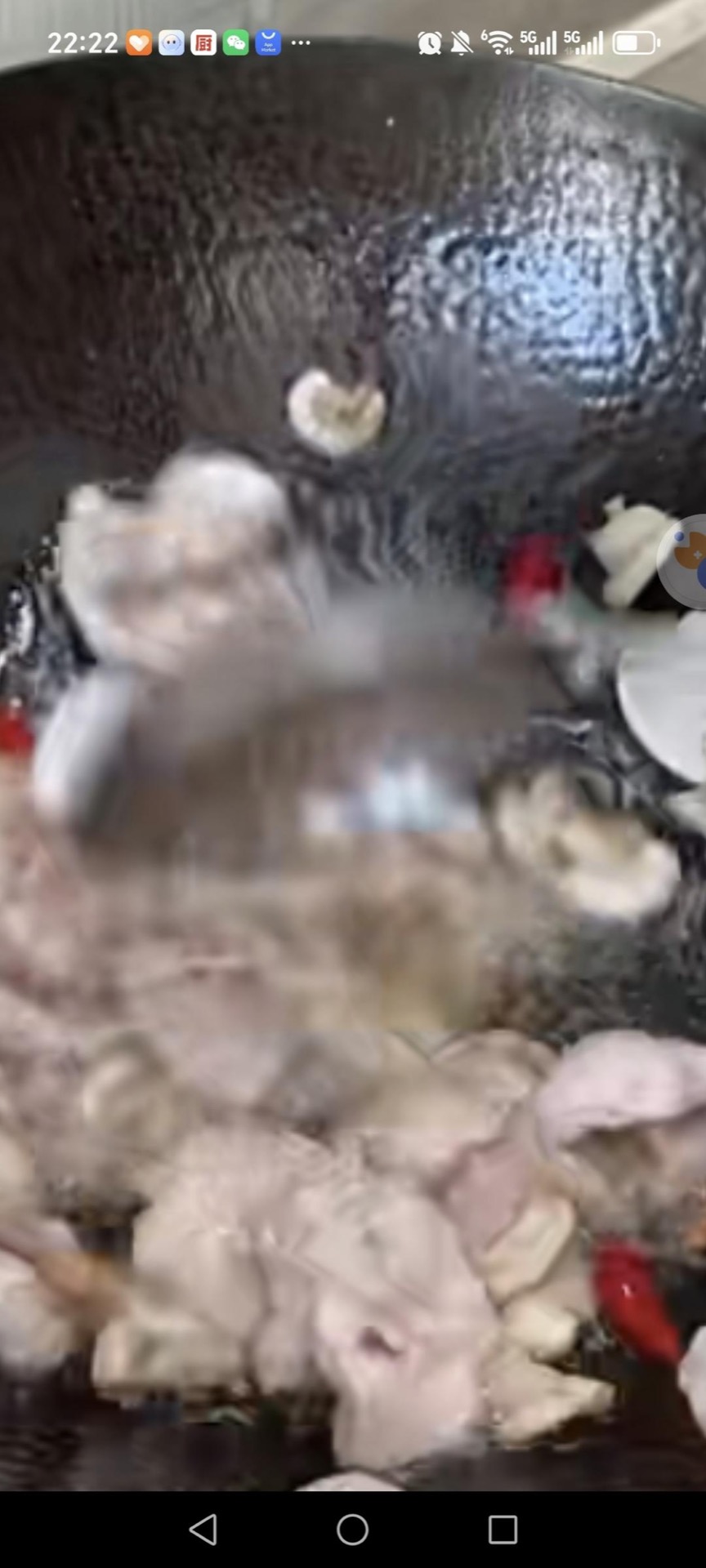
Step 7 — Fry the Soybean Paste
Add half a spoonful of soybean paste (Sichuan doubanjiang works too if you prefer) and fry until the paste smells savory and aromatic.
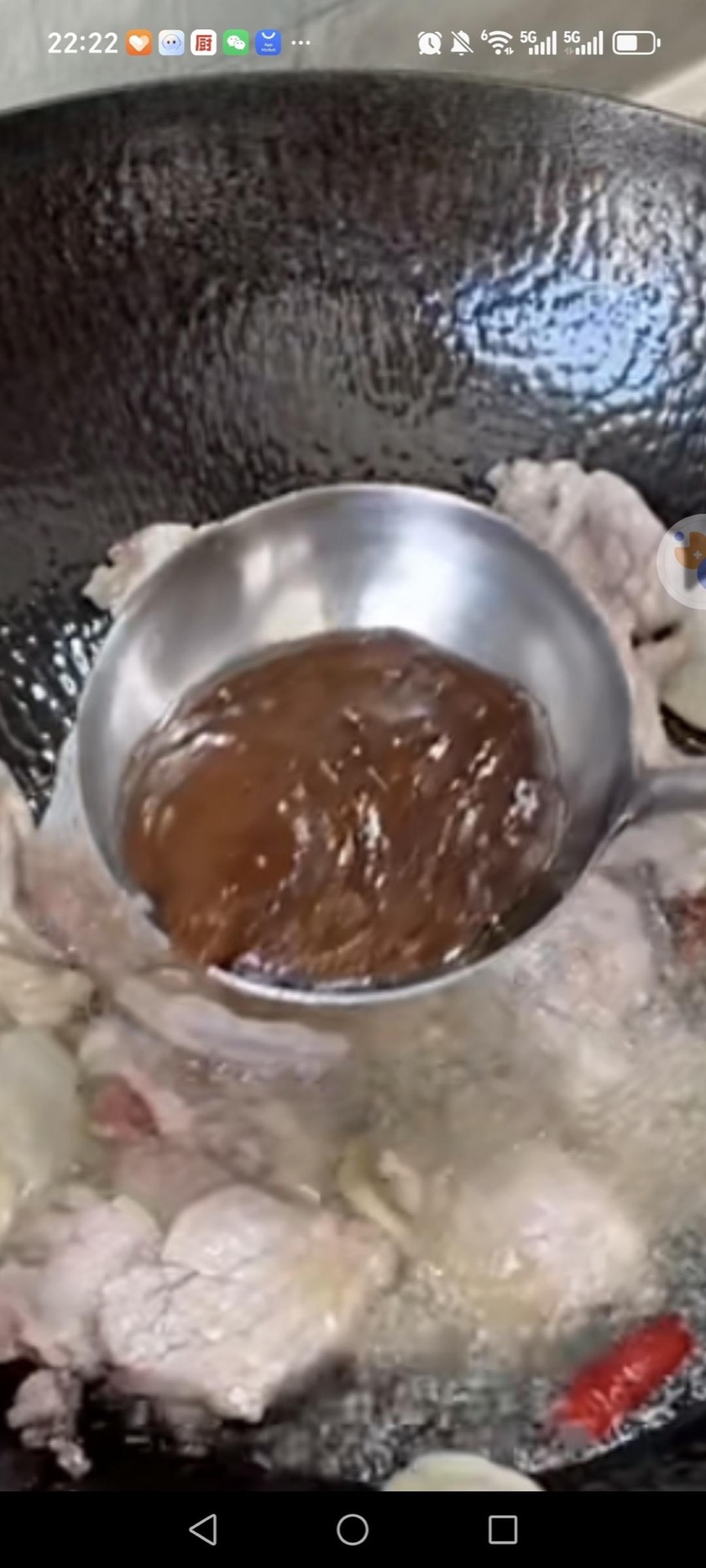
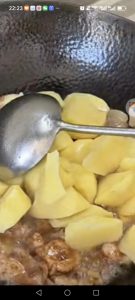
Step 8 — Add the Potatoes
Add the potato chunks to the wok.
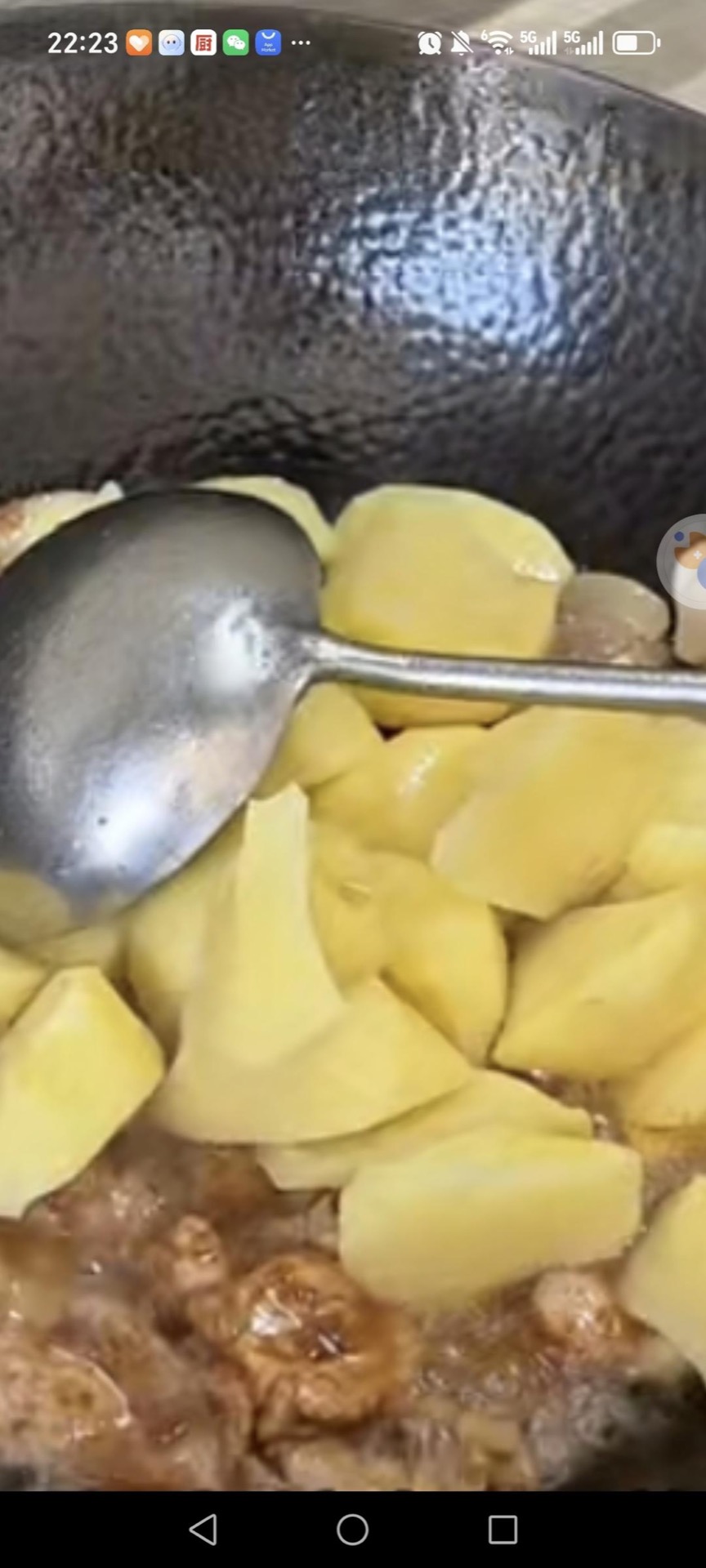
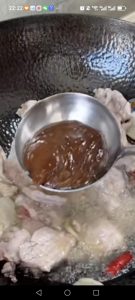
Step 9 — Season the Braise
Splash in the Shaoxing wine, then add the light soy sauce, a little dark soy sauce, thirteen-spice powder, chicken bouillon, and sugar, and stir everything together evenly.
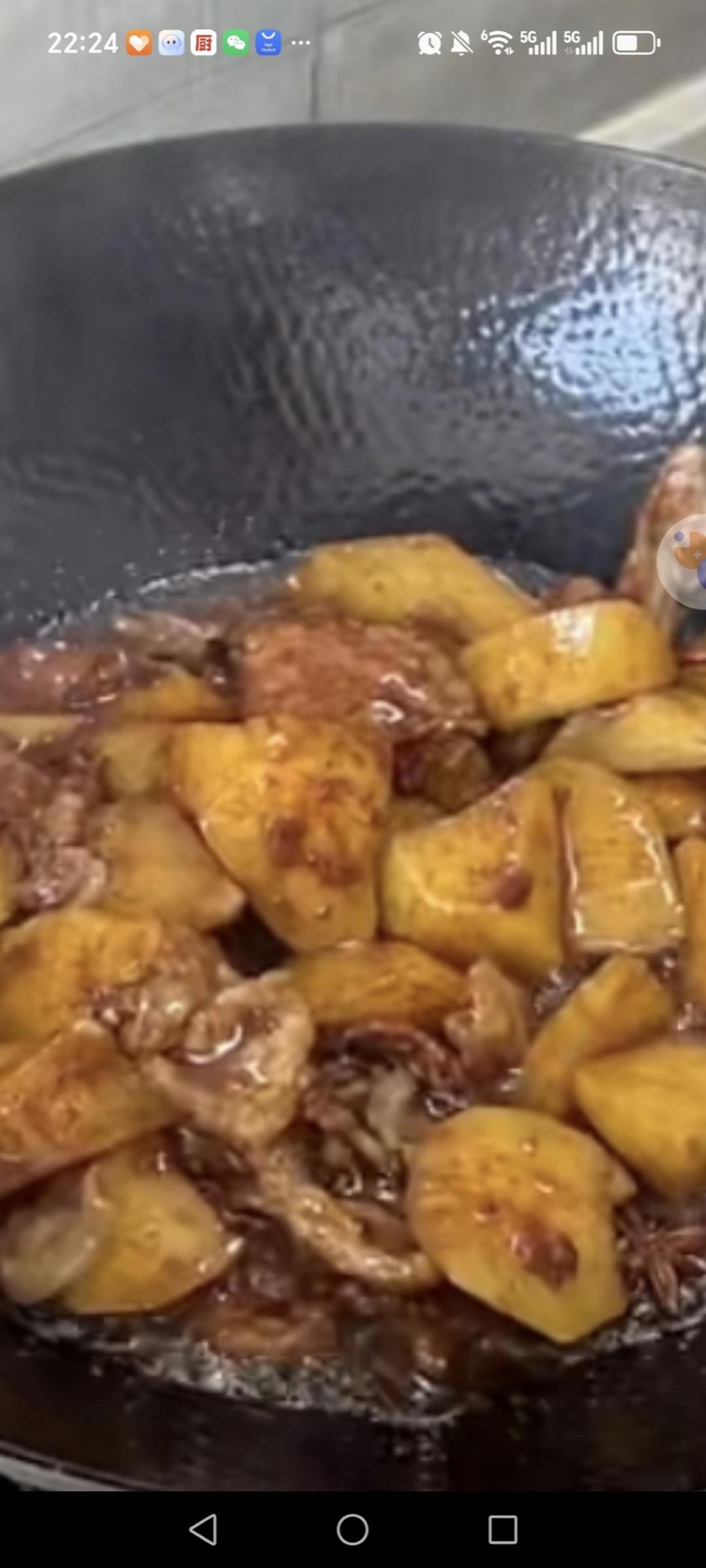
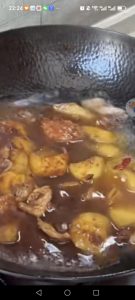
Step 10 — Add the Water
Pour in an appropriate amount of water.
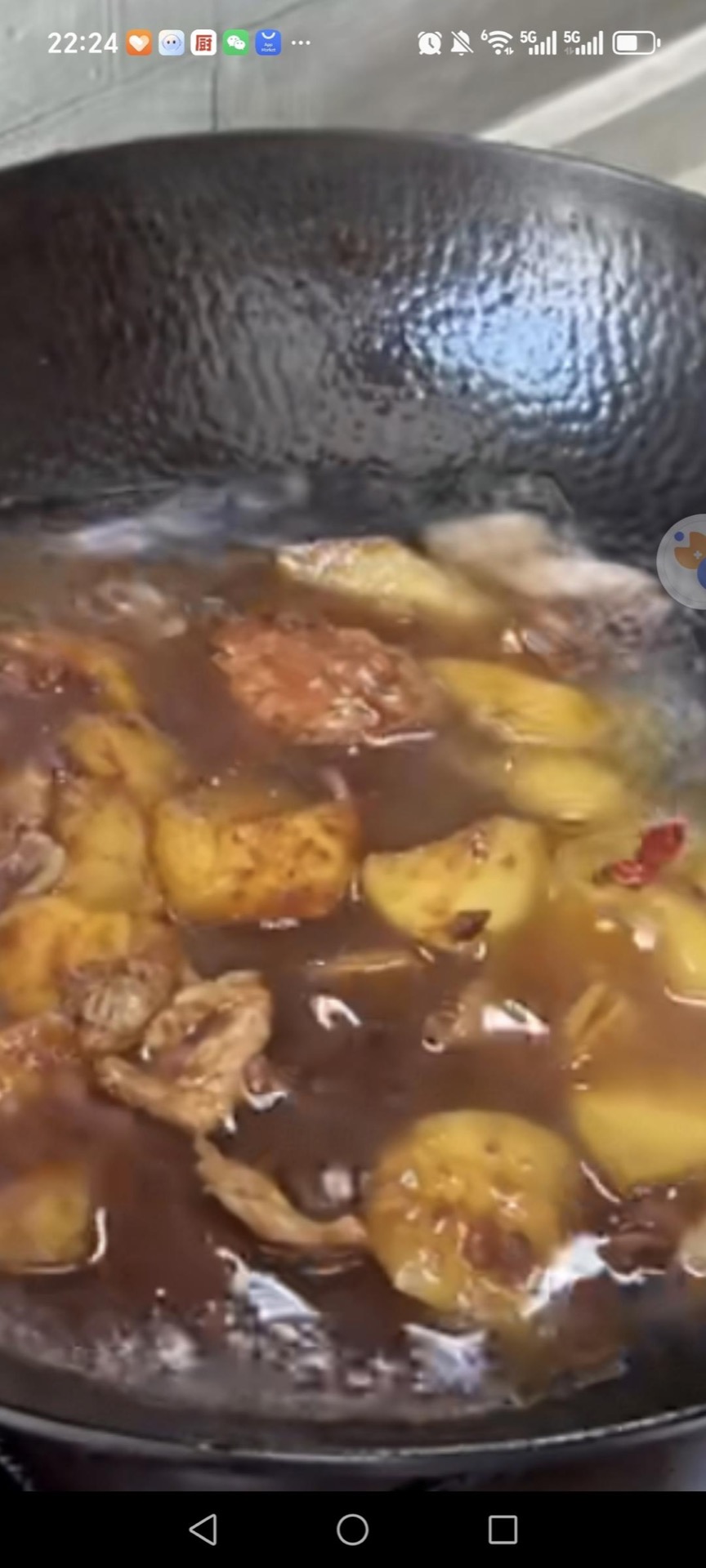
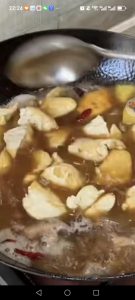
Step 11 — Return the Tofu
Add the fried tofu back into the wok.
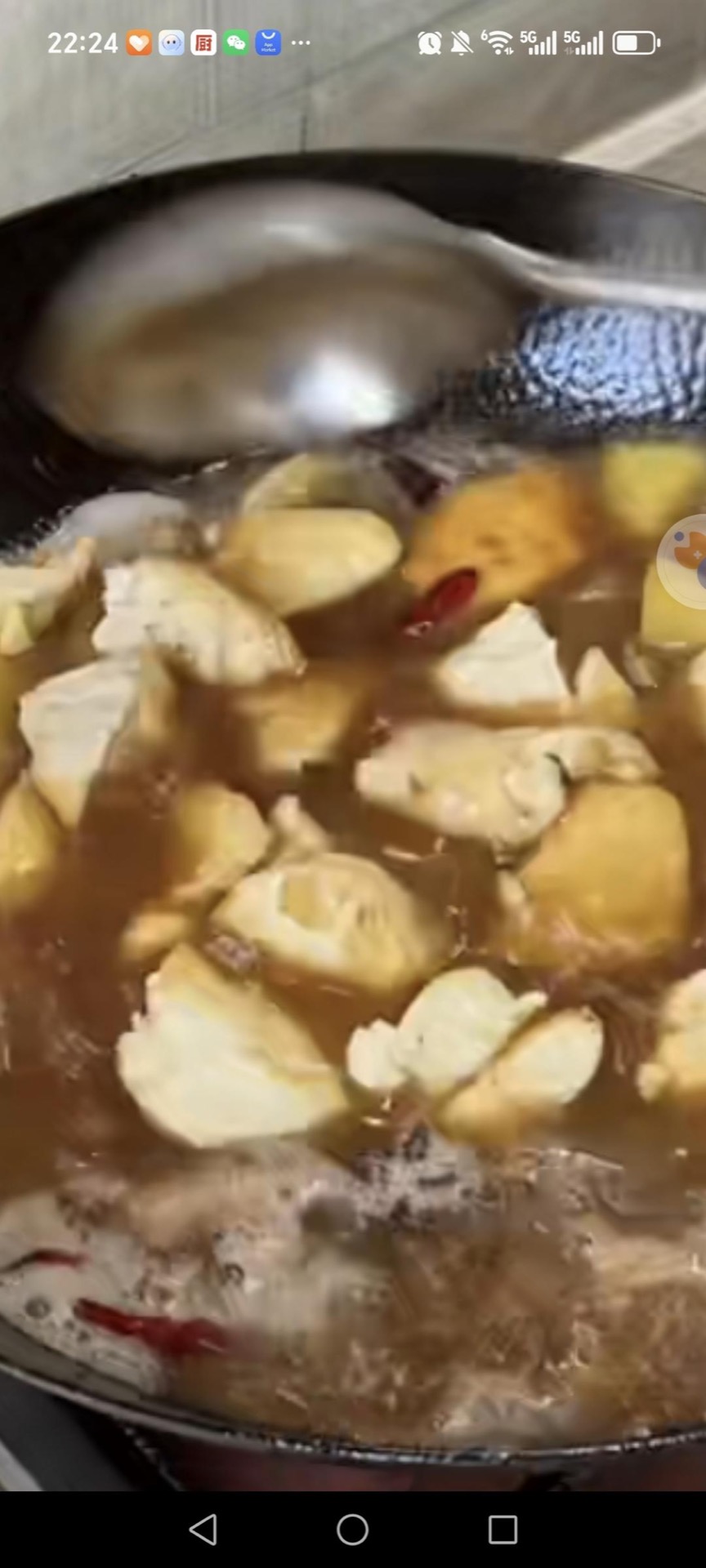
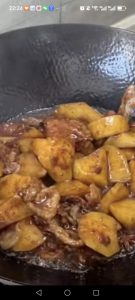
Step 12 — Braise Covered
Cover the wok with a lid and braise for 20 minutes.
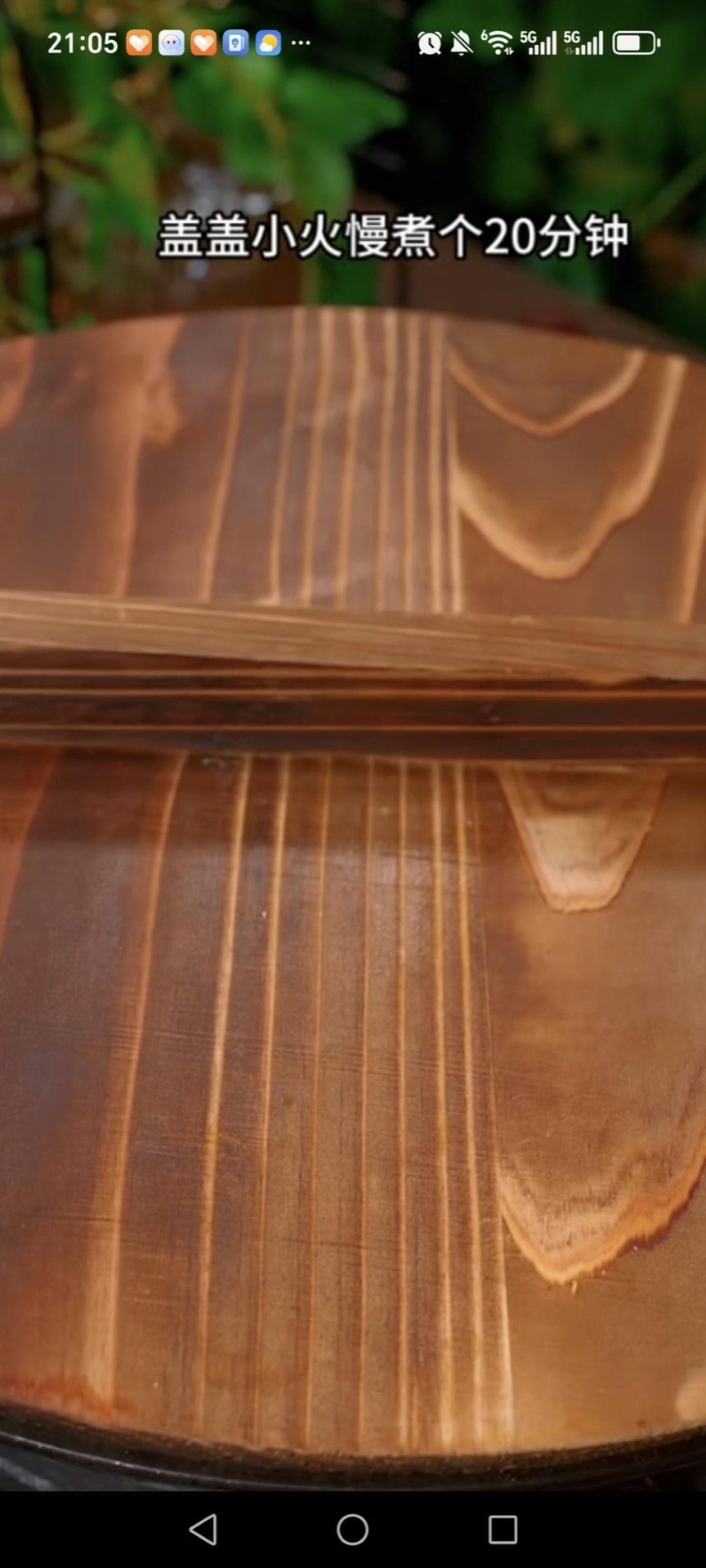
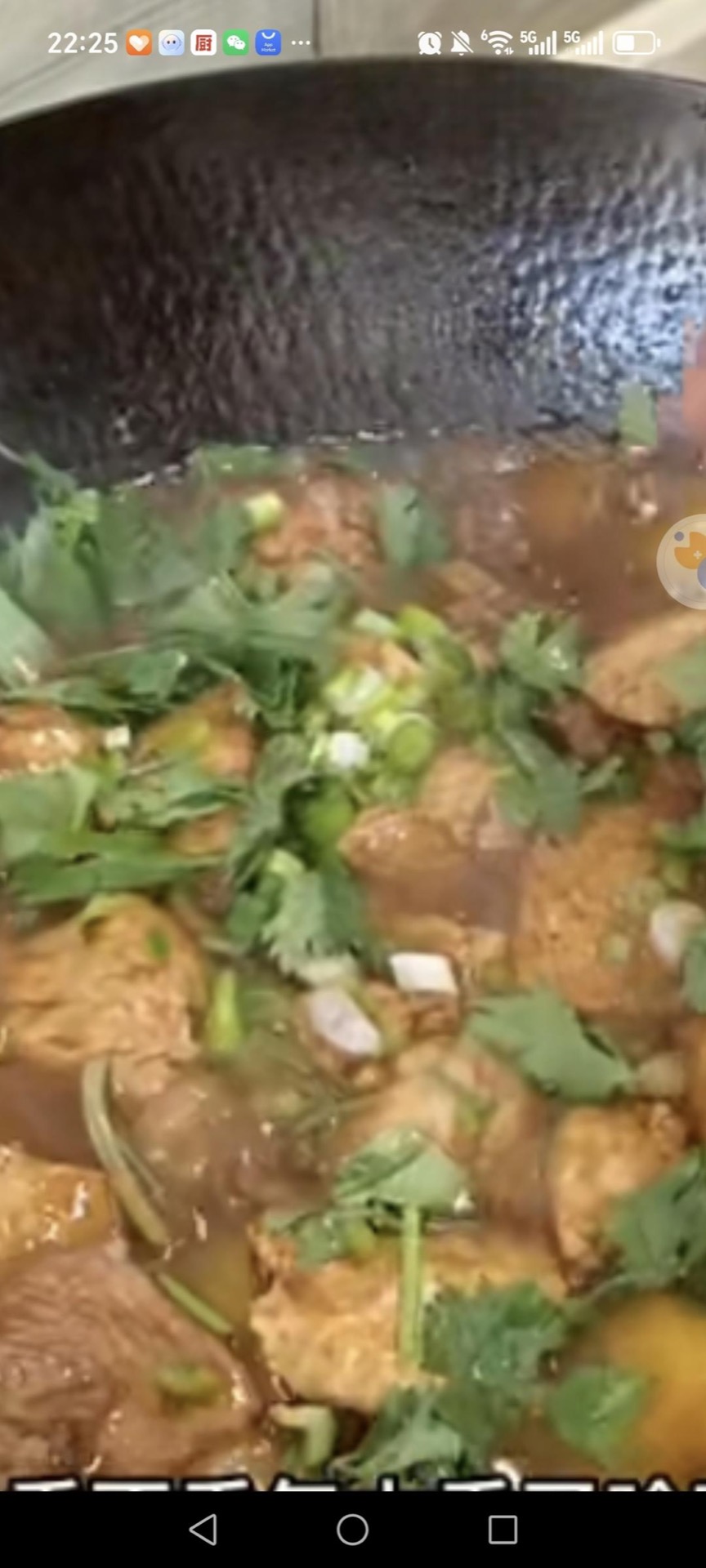
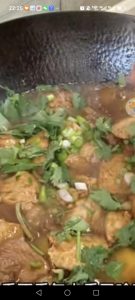
Step 13 — Finish with Herbs
Uncover the wok and scatter over the scallions, small green chilies, and cilantro.
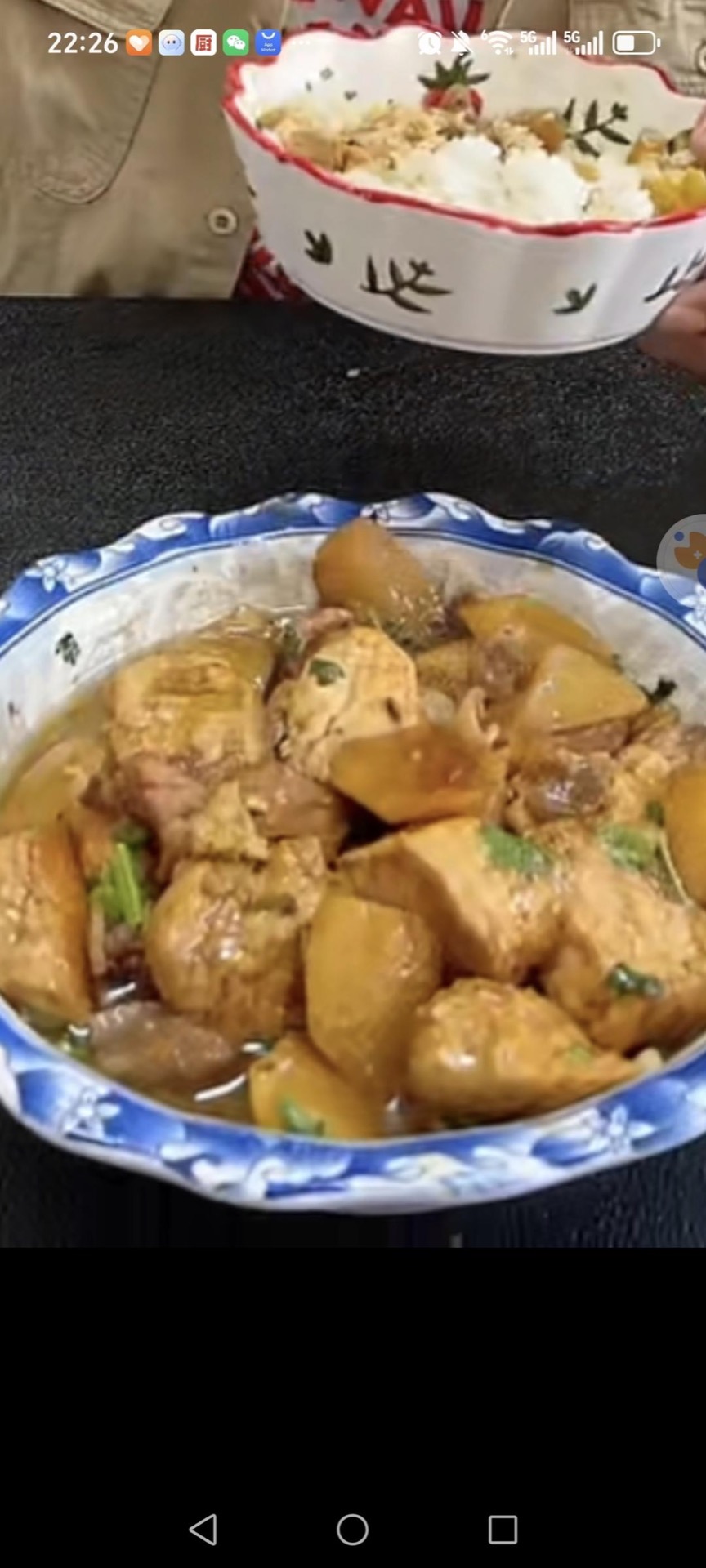
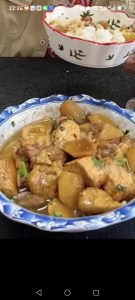
Step 14 — Serve
Transfer everything to a large bowl, and the potato-braised tofu is ready.
Common Mistakes When Making Braised Tofu with Potatoes
1. Using wet tofu. If you skip pressing and blotting, the tofu will spit and steam in the pan instead of browning, and it will never develop that golden crust. Fix: Press the block for at least 5 minutes and pat every cube dry before it touches oil.
2. Crowding the wok during the fry. Too many tofu cubes at once drop the oil temperature and the cubes steam each other. Fix: Fry in two batches if necessary, and give each cube space. The salt-in-oil trick only works when the pan stays hot.
3. Adding the soybean paste to a cold pan. Paste that never fries tastes raw, beany, and flat. Fix: Add it after the aromatics are fragrant and stir it constantly for 30 to 60 seconds until it darkens slightly and smells nutty.
4. Cutting the potatoes too small or unevenly. Tiny pieces dissolve into the sauce and leave you with potato mush. Fix: Aim for 1-inch chunks and keep them uniform so they all finish at the same time.
5. Adding too much water. This is a braise, not a soup. Too much liquid means a thin, watery sauce that never clings to the tofu. Fix: Start with about 2 cups — enough to come halfway up the ingredients — and add more only if the pan dries out during the braise.
6. Skipping the dark soy sauce. Without it, the braise tastes fine but looks pale and unappetizing. Fix: Add the full teaspoon. It is a coloring agent as much as a seasoning, and a little goes a long way.
7. Lifting the lid repeatedly. Every time you uncover the wok, you release steam and slow the braise. Fix: Set a timer for 20 minutes and resist the urge. If you must check, check once at the 15-minute mark.
Variations
Vegetarian version. Skip the pork entirely and add an extra tablespoon of neutral oil for frying the aromatics. Add a teaspoon of mushroom seasoning or a splash of extra light soy sauce to make up for the lost meaty depth. The dish is still deeply satisfying.
Spicier braise. Swap the soybean paste for Sichuan doubanjiang and add an extra dried chili or two. You can also leave the small green chilies in during the braise rather than scattering them at the end.
Mushroom addition. A handful of fresh shiitake caps, sliced thick, added with the potatoes, brings an earthy note that plays beautifully with the star anise. It also moves the dish closer to a braised tofu and mushrooms style braise.
With minced pork instead of sliced. If you prefer a finer texture, use ground pork instead of sliced shoulder. Brown it well before adding the aromatics. This pushes the dish toward a braised tofu with minced meat profile, which is saucy and spoonable.
Add heat and pork together. For a punchier, chili-forward braise, add sliced fresh chilies with the aromatics and use ground pork — the result is close to braised tofu with fresh chilis and minced pork.
Potato swap. Taro, sweet potato, or even thick slices of daikon can stand in for the potato. Adjust the braising time slightly — daikon cooks faster, taro about the same, sweet potato a touch faster.
Extra sauce for rice. If you like a saucier braise to spoon over rice, increase the water to 2 1/2 cups and add an extra teaspoon of light soy sauce. Let it reduce uncovered for the last 3 minutes.
Frequently Asked Questions
Can I use silken tofu instead of firm tofu? You can, but the result will be very different. Silken tofu cannot be pan-fried into golden cubes — it will break apart. If silken is all you have, skip the frying step and slide the tofu gently into the braise during the last 5 minutes of cooking.
Do I have to use pork? No. The pork adds richness and depth, but the dish is excellent without it. Use a little extra oil and consider adding a dried shiitake mushroom to the braise for meaty umami.
Why did my tofu stick to the wok? Almost always because the tofu was wet, the pan was not hot enough, or both. Pat the cubes dry, heat the oil until it shimmers, sprinkle in the pinch of salt, and do not move the cubes until they release on their own.
How do I know when the potatoes are done? Pierce a chunk with a chopstick or the tip of a knife. It should slide in with almost no resistance. If there is any firmness at the center, braise for another 3 to 5 minutes.
Can I make this ahead of time? Yes, and many cooks think it tastes even better the next day once the tofu has fully absorbed the sauce. Cool it completely, refrigerate, and reheat gently on the stovetop with a splash of water.
How to Serve
Braised tofu with potatoes is a main course in its own right, but it is happiest with a bowl of steamed white rice underneath it. The starchy, savory sauce is made for soaking into grains, and a spoonful of the braise over rice is the way most northern Chinese families eat it.
If you want to build a fuller table, pair it with a simple green vegetable and a cold dish. A cucumber salad, some blanched bok choy with oyster sauce, or a plate of smashed cucumbers all cut through the richness nicely. A light soup, like a tomato and egg drop soup, rounds out the meal without competing for attention.
For a heartier spread, serve this alongside yangzhou fried rice, which brings its own savory, eggy richness to the table. If you want another braised dish to share the spotlight, a braised salmon head casserole makes a striking centerpiece for a larger Chinese meal.
It also works beautifully as a side dish in a multi-course dinner, where it sits comfortably next to a stir-fried green, a steamed fish, and a plate of sliced cold meat. Because it holds well and reheats gently, it is a good candidate for potlucks and make-ahead dinners.
One last serving note: do not forget the finishing herbs. The scallions, small green chilies, and cilantro scattered over the top at the end are not decoration — they add a fresh, bright counterpoint to the deep, slow-cooked braise, and the dish tastes flatter without them.


Storage & Reheat
Refrigerator: Cool leftovers completely, then transfer to an airtight container. Braised tofu with potatoes keeps for up to 3 days in the refrigerator. The flavors deepen overnight, and the tofu becomes even more saturated with sauce.
Freezer: Freezing is not recommended. Tofu that has been fried and braised turns spongy and watery after freezing and thawing, and the potatoes become grainy. If you must freeze it, freeze only the sauce and potato portion and add fresh tofu when reheating.
Reheating on the stovetop: This is the best method. Transfer the braise to a small pan, add a splash of water (1 to 2 tablespoons), cover, and warm over medium-low heat for 5 to 8 minutes, stirring gently once or twice. The water revives the sauce without diluting the flavor.
Reheating in the microwave: Works in a pinch. Cover the bowl loosely and heat in 1-minute bursts, stirring between each, until steaming hot. The tofu may firm up slightly, which is normal.
Reheating temperature: Reheat leftovers to 165°F (74°C) throughout. Do not reheat more than once, and do not leave the dish at room temperature for more than 2 hours.
Allergen Notice
This recipe contains soy in several forms: firm tofu, light soy sauce, dark soy sauce, and soybean paste (or doubanjiang). If you are cooking for someone with a soy allergy, this dish as written is not suitable.
If you use chicken bouillon, check the label for allergens — some brands contain soy, wheat, or dairy. Shaoxing wine is typically gluten-free, but some brands add wheat; check if you are cooking for someone with celiac disease. If you add pork, no additional allergens are introduced, but always check any pre-seasoned or marinated products.
Nutrition Disclaimer
Nutrition information is calculated using an ingredient database and should be considered an estimate. In cases where multiple ingredient alternatives are given, the first listed is calculated for nutrition. Garnishes and optional ingredients are not included.
About the Author & Recipe Development
Hi, I’m Lin — I grew up in a Chinese household where dinner was almost always a spread of small dishes, and 土豆炖豆腐 was one of the regulars on cold nights. It is the kind of food that does not photograph like a restaurant dish but tastes like home, and it is exactly the sort of recipe I love to share on Woks of Love: honest, thrifty, technique-driven Chinese home cooking.
This version was developed from a home-cooking method that uses both pork belly and lean pork to build a savory base, then lets the potatoes thicken the braise naturally. I tested it with firm tofu, medium-firm tofu, and a vegetarian variation, and the version you see here is the one that consistently produced the best balance of golden, chewy tofu and deeply seasoned sauce. The finishing herbs are non-negotiable in my kitchen — they wake the whole dish up.
If you make this, I would love to hear how it turned out. Adjust the chili level to your taste, and do not be shy with the sauce over rice.
Authoritative References
For safe handling and storage of the pork used in this recipe, see the USDA safe minimum internal temperature chart, which lists 145°F (63°C) for fresh pork with a 3-minute rest.
For general food safety guidance on cooling and reheating leftovers, the FDA food safety guidance on refrigerator thermometers and cold storage covers the 2-hour rule and refrigerator holding temperatures used in the storage section above.
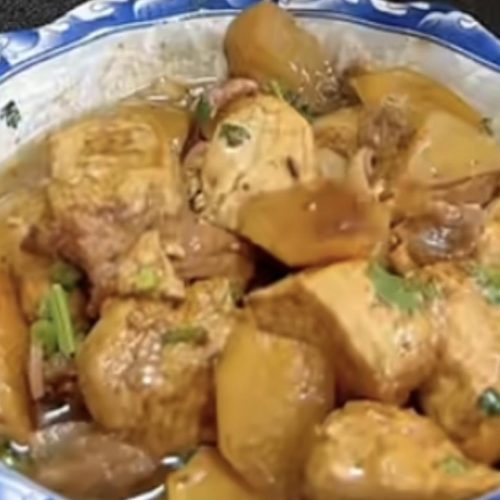
Braised Tofu with Potatoes (土豆炖豆腐): Golden Tofu, Savory Braised

Equipment
- Wok
- Cutting Board
- Slotted Spoon
Ingredients
For the Tofu
- 1 block firm tofu about 14 oz, drained and cut into 1-inch cubes
- 2 tbsp neutral oil for pan-frying
- 1 pinch salt sprinkled into the frying oil
For the Braise
- 1 tbsp neutral oil for the aromatics
- 2 oz pork belly thinly sliced, optional
- 3 oz pork shoulder thinly sliced, optional
- 1 whole star anise
- 3 whole dried red chilies snipped into segments
- 1/2 tbsp soybean paste or Sichuan doubanjiang
- 2 medium potatoes about 1 lb, peeled and cut into 1-inch chunks
- 1 tbsp Shaoxing wine
- 1/2 tbsp light soy sauce
- 1 tsp dark soy sauce
- 1/2 tsp thirteen-spice powder
- 1/4 tsp chicken bouillon
- 1 tsp sugar
- 2 cups water plus more if needed
For the Finish
- 2 whole scallions thinly sliced
- 2 whole small green chilies sliced
- 1 handful cilantro roughly chopped
Instructions
- Have 1 block of firm tofu ready, drained and cut into 1-inch cubes.

- Heat a wok with oil, sprinkle in a pinch of salt, and slide the tofu cubes in to pan-fry.

- Fry the tofu until golden on both sides, then scoop it out and set it aside.
- Add a little more oil to the wok, then add the sliced pork belly and fry it until it turns crisp and browned.
- Add the sliced lean pork and stir-fry until it is cooked through.
- Add the star anise and dried chili segments and stir-fry until fragrant.
- Add half a spoonful of soybean paste (Sichuan doubanjiang works too if you prefer) and fry until the paste smells savory and aromatic.
- Add the potato chunks to the wok.
- Splash in the Shaoxing wine, then add the light soy sauce, a little dark soy sauce, thirteen-spice powder, chicken bouillon, and sugar, and stir everything together evenly.
- Pour in an appropriate amount of water.
- Add the fried tofu back into the wok.
- Cover the wok with a lid and braise for 20 minutes.
- Uncover the wok and scatter over the scallions, small green chilies, and cilantro.
- Transfer everything to a large bowl, and the potato-braised tofu is ready.

















Leave a Reply