If you grew up in China or have visited classic Shanghai-style restaurants, you know that “Borscht” means something very different in Chinese cuisine than it does in Eastern Europe. We call it Luo Song Tang (罗宋汤).

Growing up, my father—a professional chef—often made this for us when we wanted something “Western” yet comforting. Unlike the traditional Russian version which relies on beets for its deep purple hue, the Chinese version relies entirely on tomatoes and ketchup for a vibrant red color and a distinct sweet-and-sour flavor profile.
This recipe is special to me because it bridges that gap between home comfort and restaurant technique. It uses butter to sauté the aromatics (a technique my dad insisted on for that rich, milky aroma) and combines the convenience of a pressure cooker to get the beef shank melt-in-your-mouth tender in a fraction of the time.
What is Chinese Borscht(Luo Song Tang)?
Luo Song Tang is derived from the Russian “Borscht.” It was brought to Shanghai by Russian expatriates in the early 20th century. Over time, local chefs adapted the recipe to suit local ingredients and palates. Beets were hard to find, so tomatoes became the star. The result is a soup that is savory, tangy, slightly sweet, and incredibly hearty.

Key Ingredients & Substitutions
- Beef Shank (300g / 10.5 oz): This is the gold standard for Chinese soups. It has connective tissue that breaks down into gelatin, giving the broth body.
- Substitution: You can use beef chuck or brisket, cut into 1-inch cubes. If you love beef soups, you might also enjoy my Tomato Beef Stew.
- Tomatoes (3 medium): Use ripe tomatoes for the best flavor. We cut them into chunks so they break down into the soup.
- Ketchup (2 tbsp): This might sound like a cheat, but it is essential for authentic Luo Song Tang. It provides concentrated sweetness, acidity, and color that fresh tomatoes alone cannot achieve.
- Butter (1 knob, approx 20g): Using butter instead of vegetable oil to sauté the onions creates a creamy, aromatic base that defines this dish.
- Vegetables: We use onions, potatoes, carrots, and cabbage. This “holy quartet” provides sweetness and texture.
- Ham Sausage (1 link): A classic addition in home-style versions. It adds a different texture compared to the beef. You can omit this if you prefer.
Recipe Notes Before You Start
- The Pressure Cooker Advantage: This recipe uses a pressure cooker (or Instant Pot) to tenderize the beef quickly. If you don’t have one, you will need to simmer the beef on the stove for 1.5 to 2 hours before adding the vegetables.
- Blanching is Mandatory: Never skip blanching the beef. It removes impurities and blood foam, ensuring your final soup is clean-tasting, not muddy.
- Sugar Balance: The acidity of tomatoes varies. We add sugar to balance the sourness. Taste as you go!
Ingredients
- 10.5 oz (300g) Beef shank, cut into chunks
- 3 Medium tomatoes, cut into chunks
- 1 Potato, peeled and diced
- 1 Carrot, peeled and diced
- 1/2 Onion, diced
- 1/2 head Cabbage, torn or roughly chopped
- 1 Ham sausage, sliced or diced
- 1 knob (approx. 1.5 tbsp) Unsalted butter
- 2 tbsp Ketchup
- 2 tbsp Sugar (white granulated)
- 1 tbsp Salt (adjust to taste)
- Aromatics: 2 slices ginger, 1 scallion (white part), 2 bay leaves, 1 tbsp cooking wine (Shaoxing wine) for blanching.
- Water: Enough to cover beef in the pressure cooker.
- Garnish: Fresh parsley or cilantro.
How to Make Chinese Borscht
Step 1: Blanch the Beef
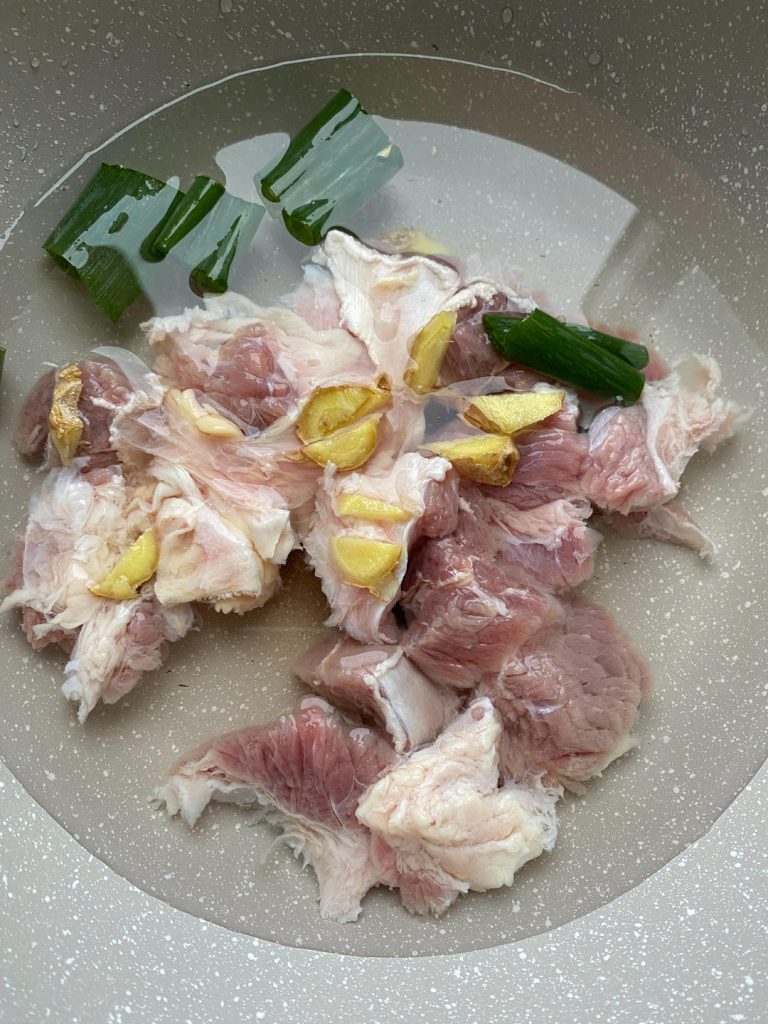
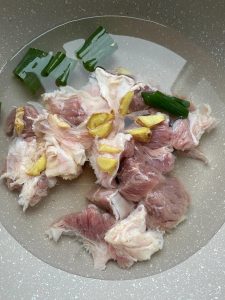
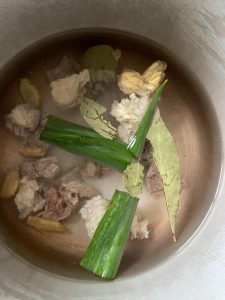
Place the cut beef shank into a pot of cold water. Add the scallion segments, ginger slices, and a splash of cooking wine. Bring to a boil. Let it boil for 2-3 minutes until the gray foam floats to the surface.
Why do we do this? Starting with cold water allows the blood and impurities to release slowly as the temperature rises. If you drop meat into boiling water, the proteins seize up, trapping the impurities inside.
Step 2: Tenderize the Beef
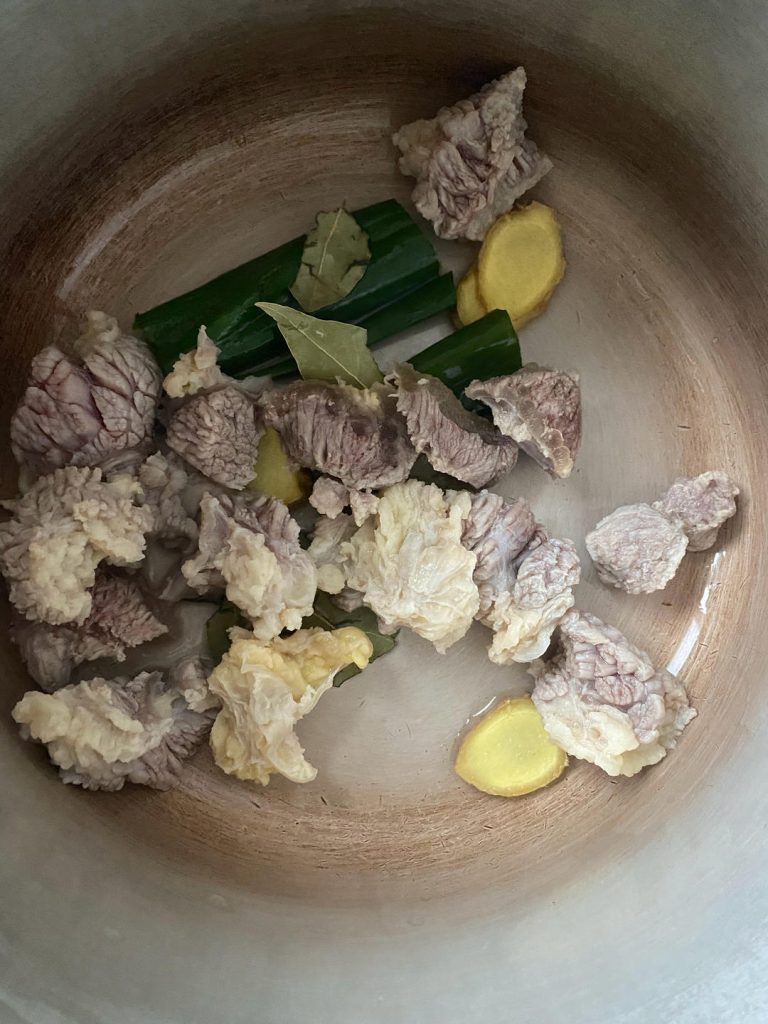
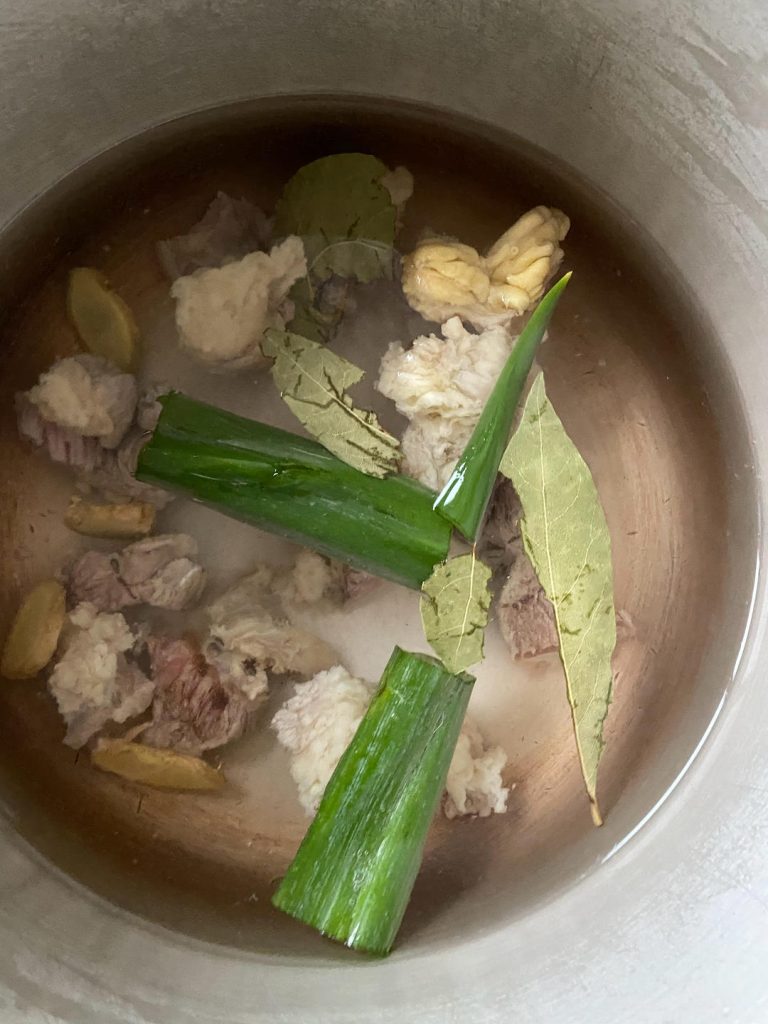
Remove the beef and rinse it under warm water to wash off any scum. Place the clean beef into a high-pressure cooker. Add fresh scallion, ginger, and the bay leaves. Pour in enough water to cover the beef (about 4-5 cups).
- Cook: Seal the lid and cook for 15 minutes (after pressure is reached) until the beef is thoroughly cooked and tender.
- Note: Do not discard the liquid! This is your rich beef stock.
Step 3: Create the Soup Base
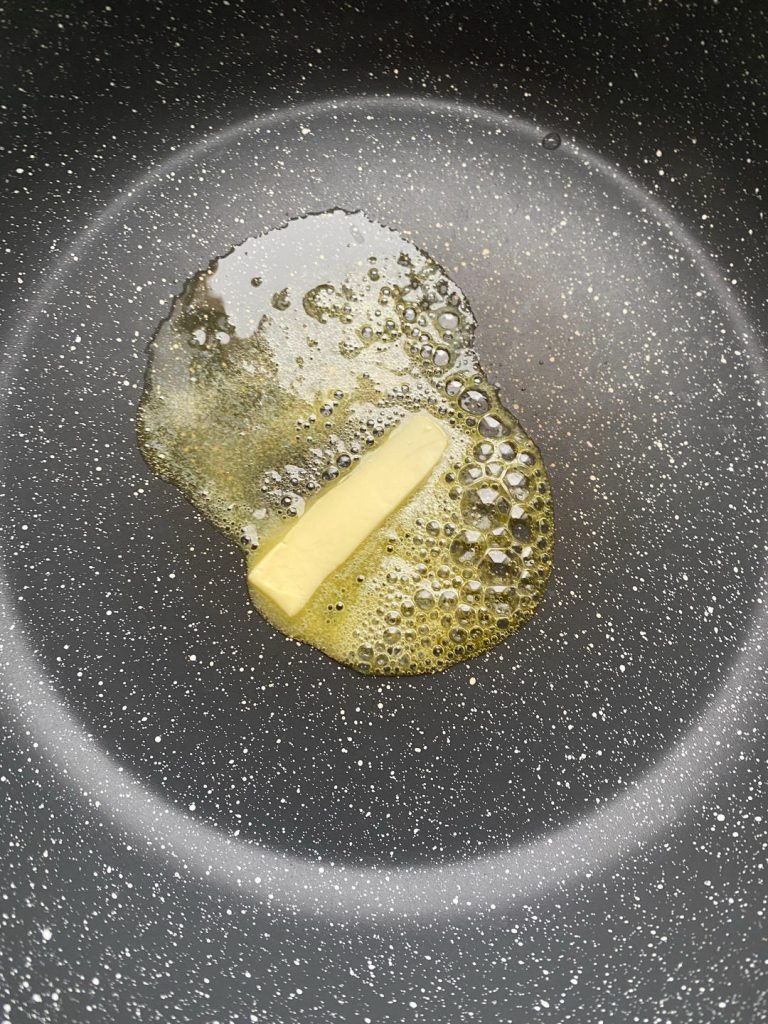
While the beef is cooking, prepare your vegetables. Place a wok or soup pot over low heat and add the butter. Let it melt gently.
- Expert Tip: Butter burns easily. Keep the heat low. We use butter here for that rich, milky aroma that distinguishes Luo Song Tang from a standard Braised Beef Brisket with Potatoes.
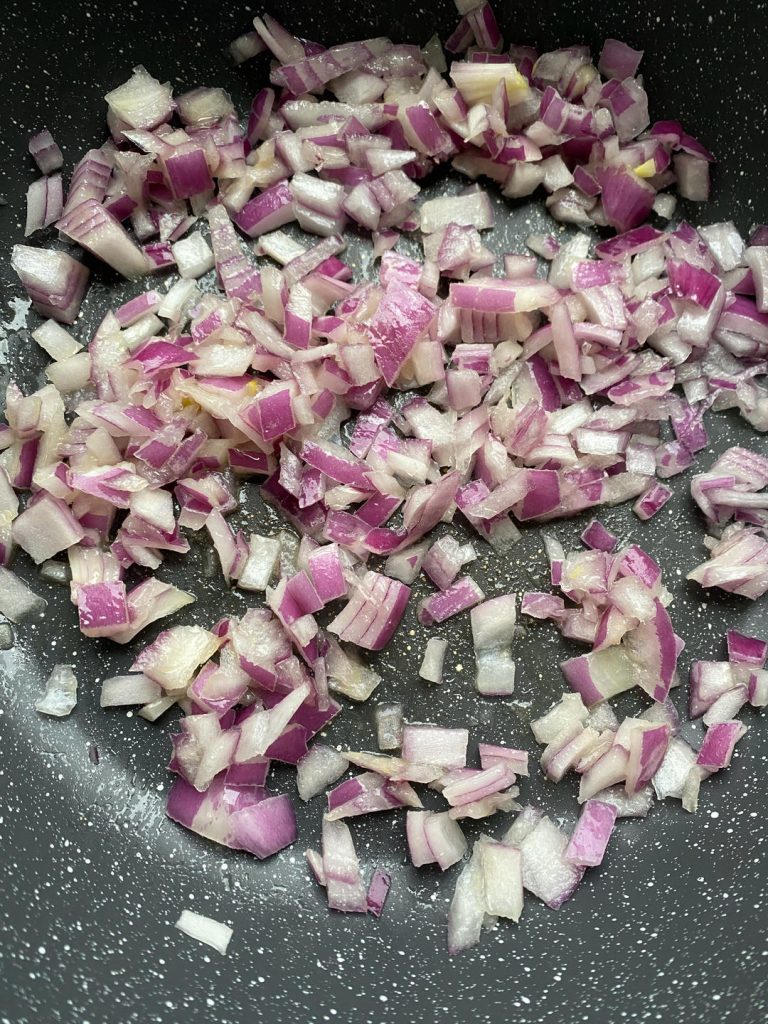
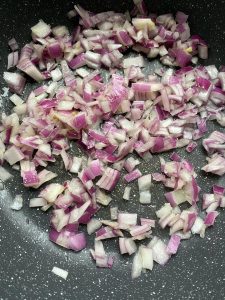
Add the diced onion and stir-fry until fragrant and translucent.
Step 4: Sauté Vegetables
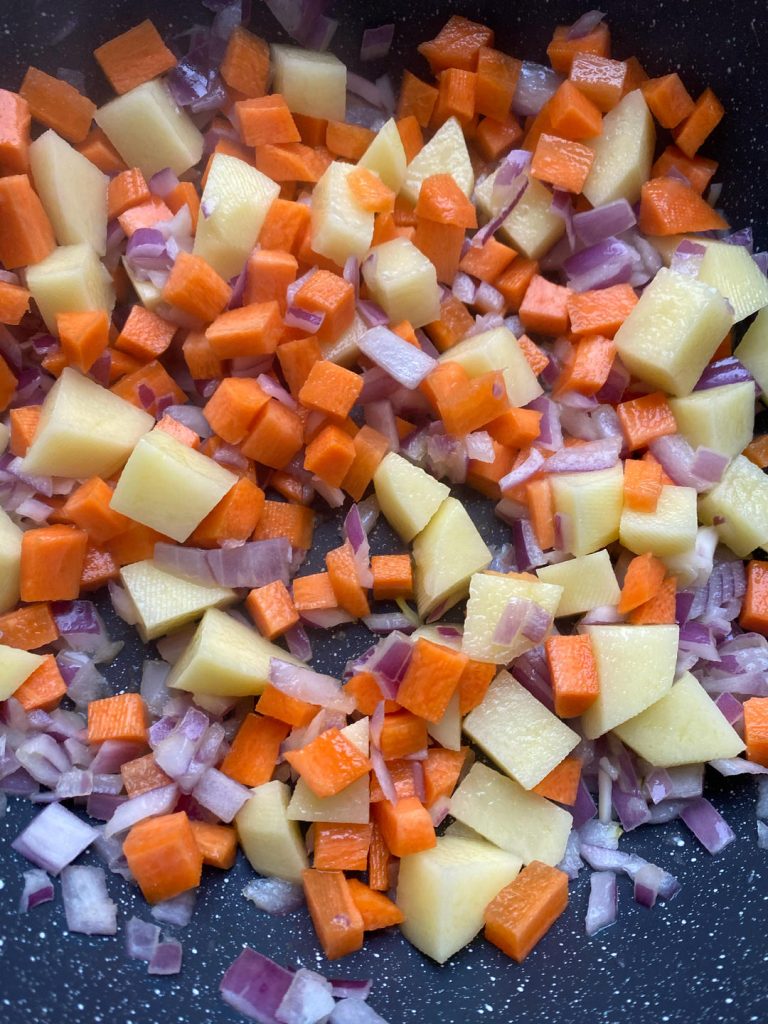
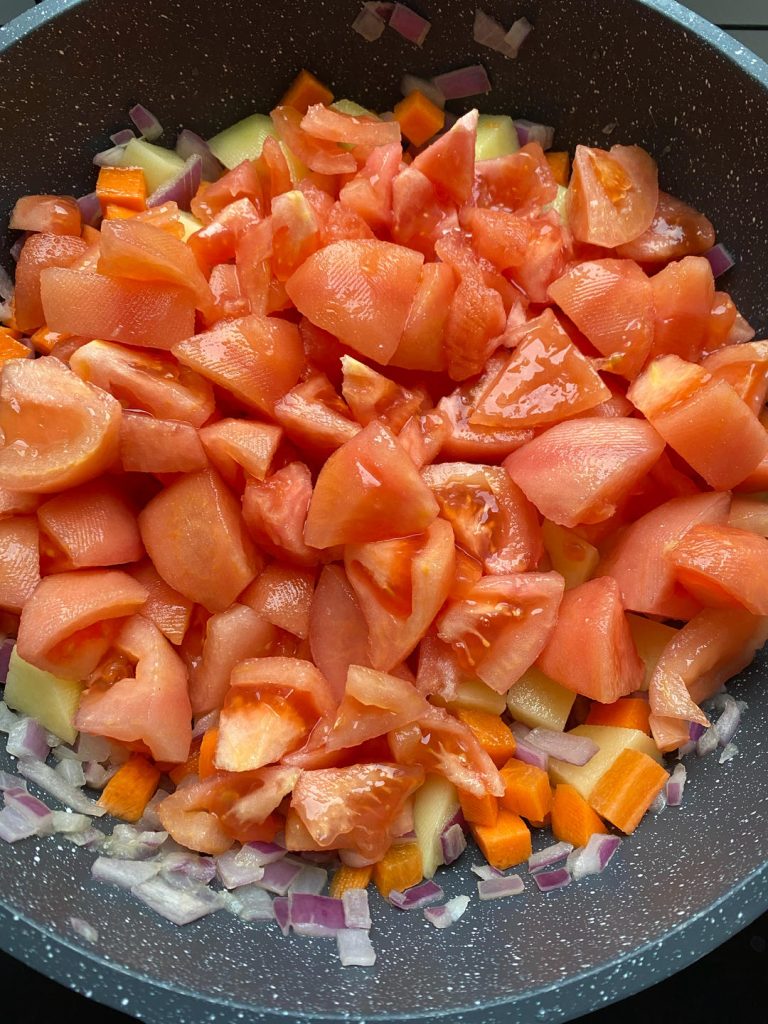
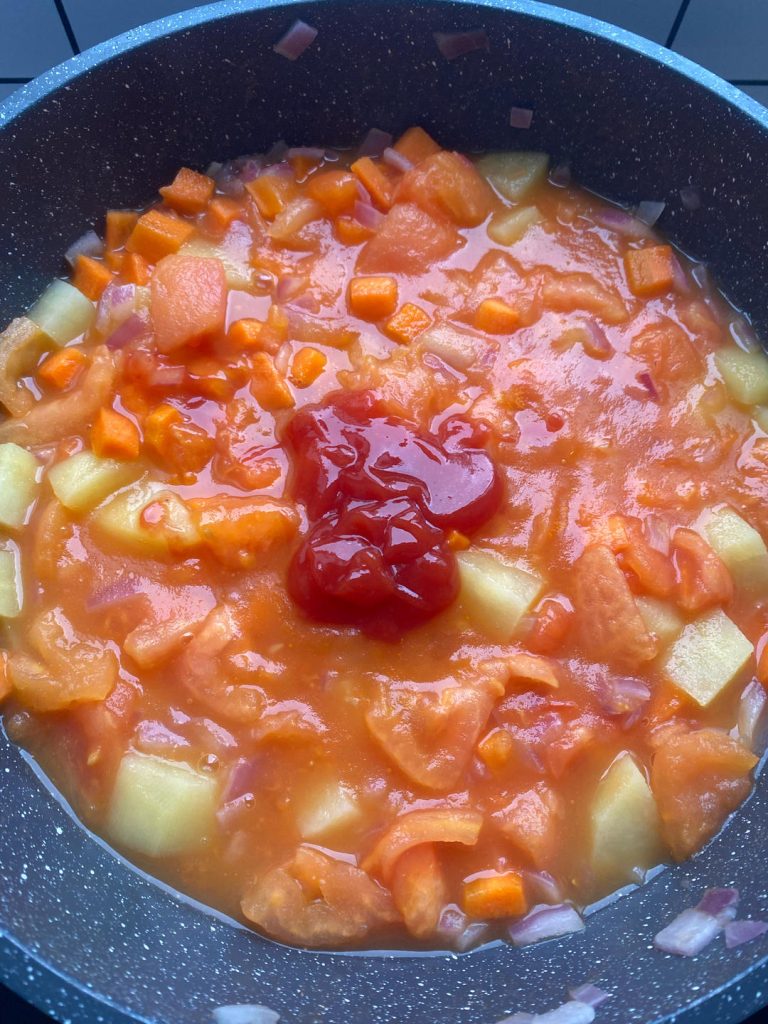
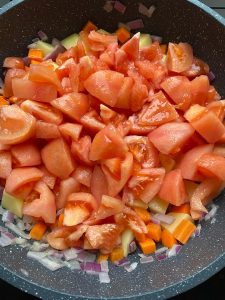
Add the carrot and potato cubes to the onions. Stir-fry for 2-3 minutes until the edges start to soften. Next, add the tomato chunks. Stir-fry until the tomatoes begin to soften and release their red juices.
Step 5: Season and Simmer
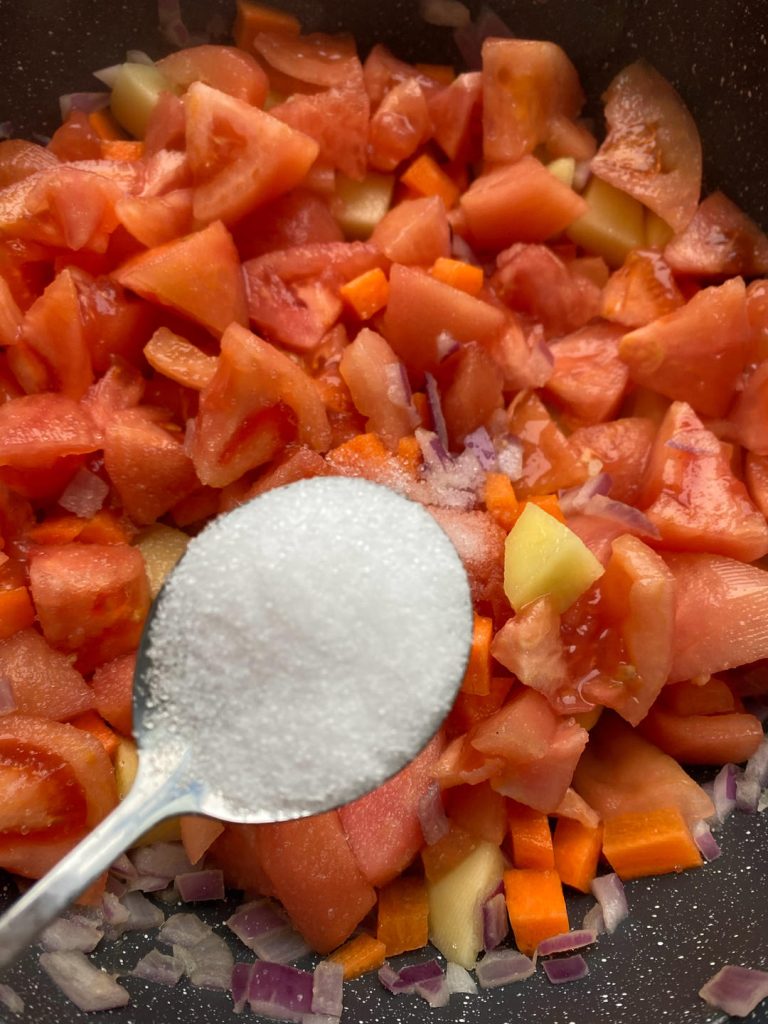
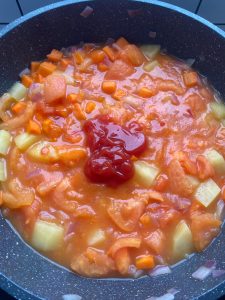
Add 1 tablespoon of salt, 2 tablespoons of sugar, and 2 tablespoons of ketchup to the pot. Stir well to combine. The ketchup should coat the vegetables and create a vibrant red hue.

Step 6: Combine and Stew
Pour the cooked beef and the beef broth from the pressure cooker into the pot with the vegetables. Bring to a boil, then reduce heat to medium-low. Cover and simmer for about 10-15 minutes, or until the tomatoes have broken down and the potatoes and carrots are fully soft.

Step 7: Final Touches
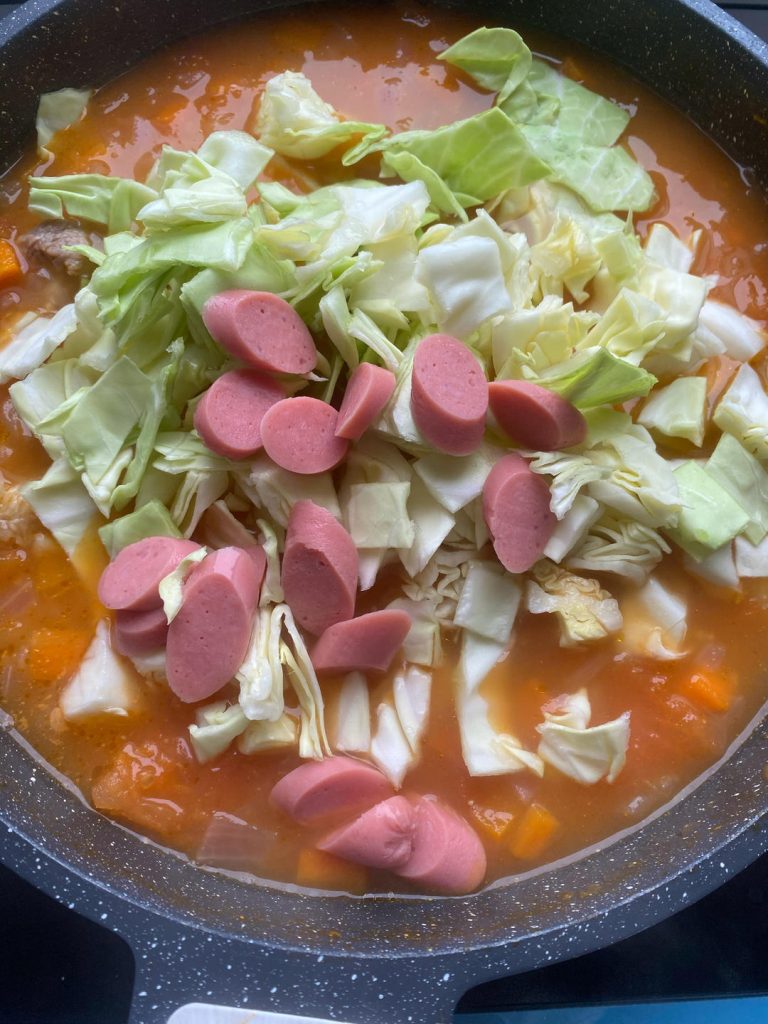
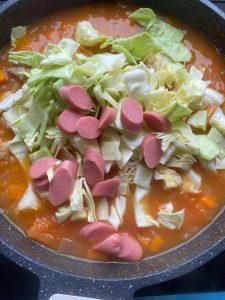
Add the chopped cabbage and diced ham sausage. Stir well. Simmer for another 3 minutes.
Why add cabbage last? Cabbage cooks very quickly. Adding it at the end preserves a bit of its crunch and sweetness, preventing it from turning into mush.

Step 8: Serve
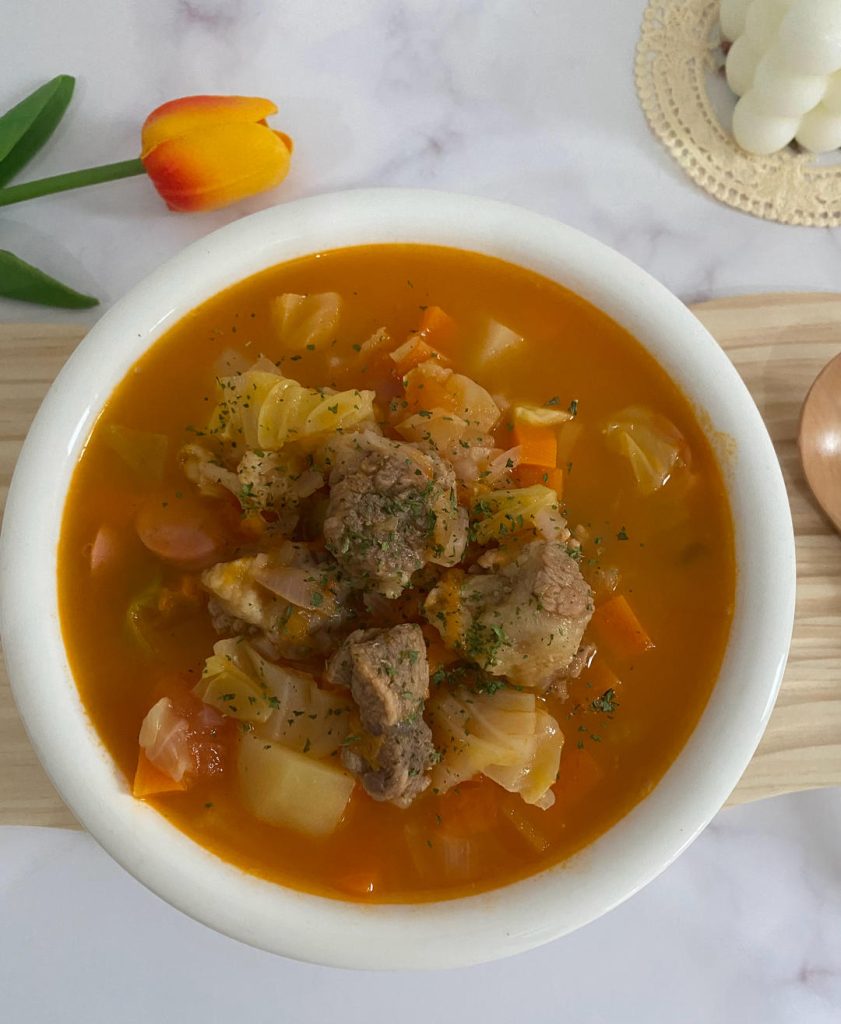
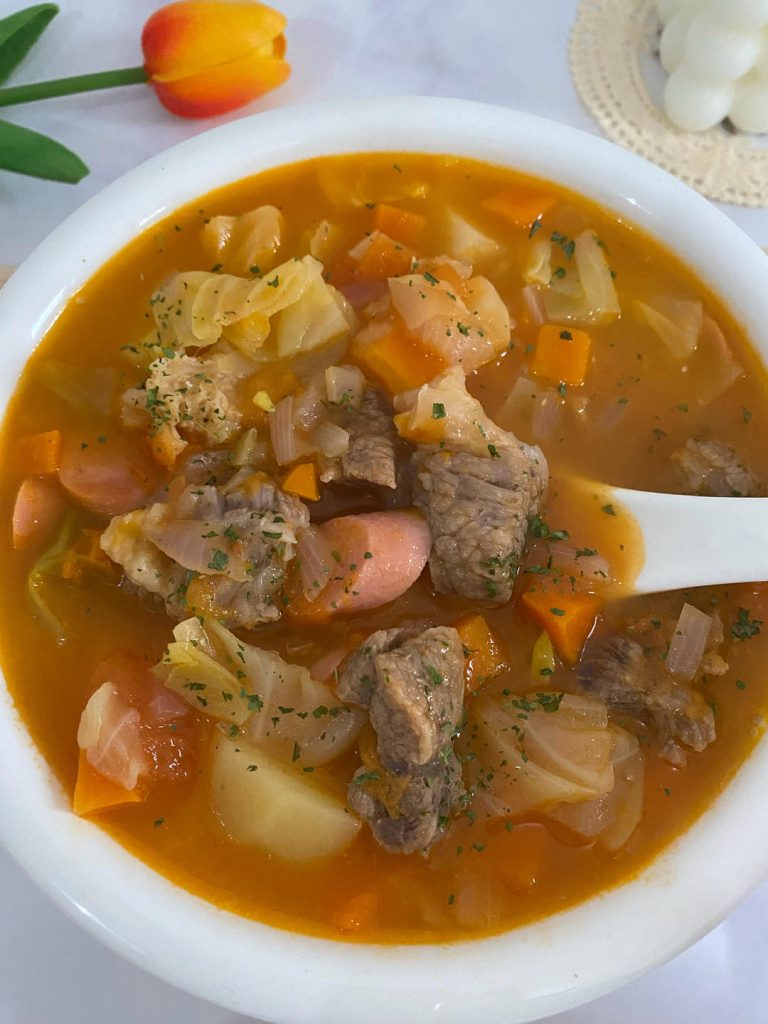
Taste the soup. It should be a balance of savory, sweet, and tangy. Adjust with more salt or sugar if needed. Ladle into bowls and garnish with chopped parsley (or cilantro).
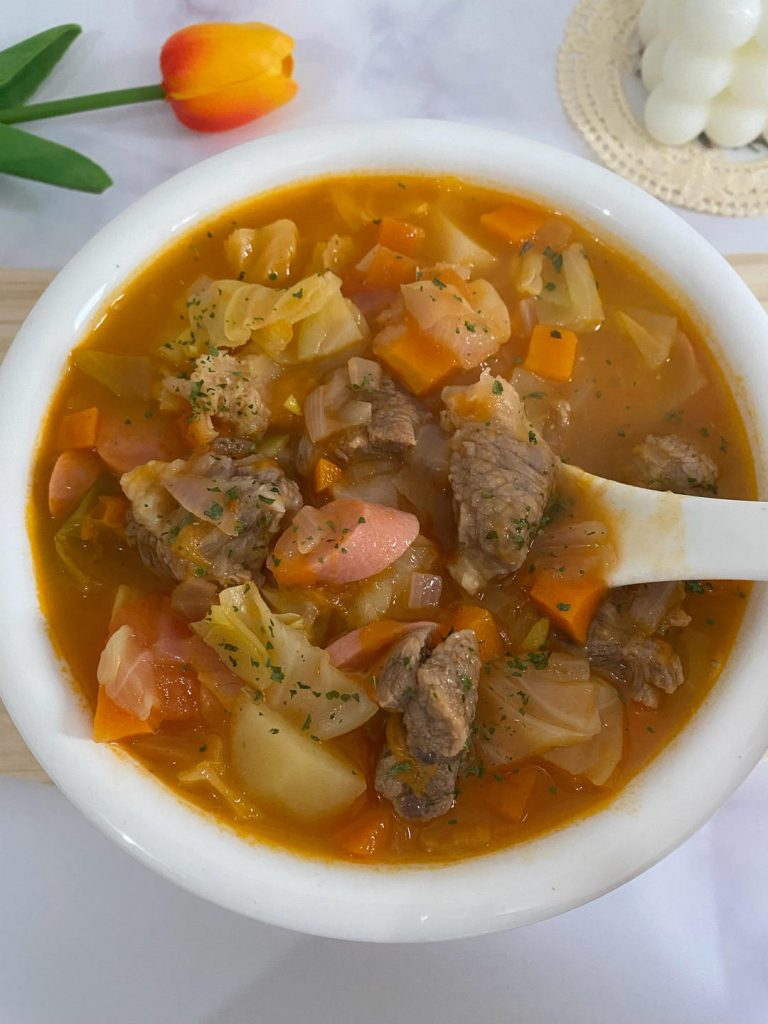
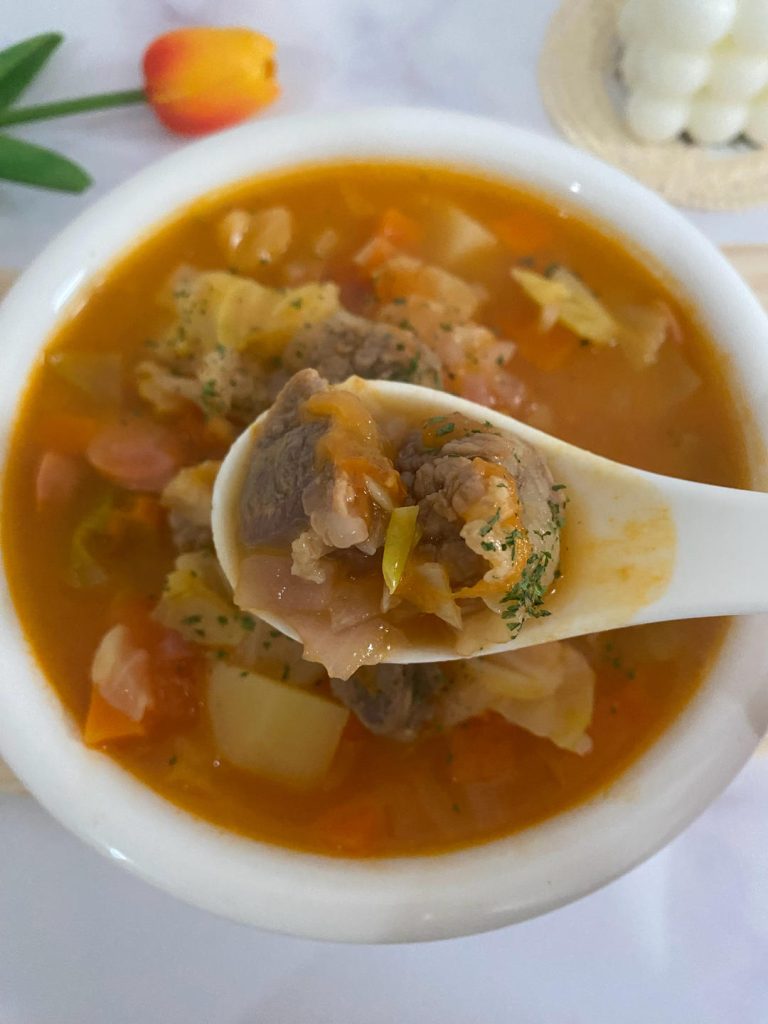
Tips for Success
- The “Fried” Flavor: Sautéing the ketchup with the vegetables (Step 5) before adding the liquid helps caramelize the sugars in the ketchup and tomatoes, deepening the flavor and color.
- Texture Contrast: Cut your potatoes and carrots into similar sizes so they cook evenly.
- Make it Richer: For an even richer broth, you can add a tablespoon of flour to the butter and onions in Step 3 to create a slight roux, which will thicken the soup.
Serving Suggestions
This soup is a meal in itself, loaded with protein, starch, and vegetables. It pairs perfectly with crusty bread for dipping, or a bowl of steamed rice. If you are planning a larger meal, this soup goes wonderfully alongside a dry dish like Dry Pot Potato Slices or something savory like Black Pepper Beef Cubes.
FAQ / Troubleshooting
Q: The soup is too sour. What should I do?
A: Tomatoes can vary in acidity. If it’s too sour, add a little more sugar, 1 teaspoon at a time, until balanced.
Q: Can I use vegetable oil instead of butter?
A: Yes, you can, but you will lose that signature “Shanghai-style” milky fragrance. If you are dairy-free, use a neutral oil.
Q: Can I freeze this soup?
A: Yes, but be aware that the texture of the potatoes may change slightly (becoming grainier) after freezing and reheating.
Food Safety & Preparation Notes
- Pressure Cooker Safety: Always follow your manufacturer’s instructions for releasing pressure. Natural release is safer for soups to prevent sputtering.
- Beef Handling: Ensure raw beef is kept separate from ready-to-eat vegetables during prep to avoid cross-contamination. Cook beef to an internal temperature of at least 145°F (63°C), though for this recipe, we cook it much longer for tenderness.
- Allergens: This recipe contains Dairy (butter) and Soy/Gluten (ham sausage, cooking wine). Check your ketchup labels for high fructose corn syrup if you are avoiding it.
Nutrition Information (Estimate)
- Serving Size: 1 bowl (approx 350g)
- Calories: 320 kcal
- Protein: 22g
- Fat: 14g
- Carbohydrates: 28g
- Sugar: 12g
- Sodium: 980mg
- Fiber: 4g
Disclaimer: Nutrition information is calculated using an ingredient database and should be considered an estimate. Garnishes and optional items are not included. Actual values vary based on specific brands used.
Authoritative References
- United States Department of Agriculture (USDA) – Safe Minimum Internal Temperature Chart
- The Woks of Life – Chinese Ingredients Glossary (Excellent resource for understanding cuts of beef like shank).
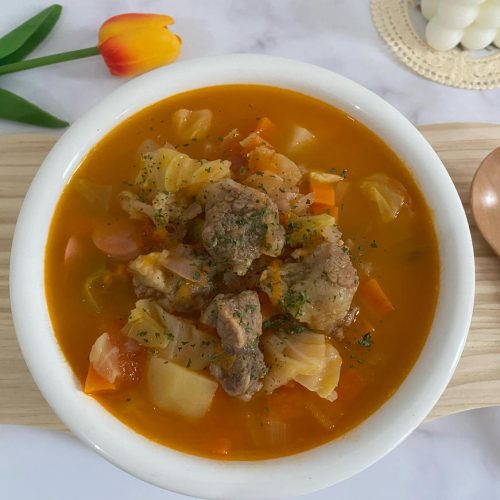
Chinese Borscht (Luo Song Tang)

Equipment
- Pressure Cooker or Instant Pot
- Large Soup Pot or Wok
Ingredients
- 10.5 oz Beef Shank approx 300g, cut into chunks
- 1/2 Onion diced
- 1 Potato peeled and diced
- 1 Carrot peeled and diced
- 1.5 tbsp Butter approx 20g
- 2 tbsp Ketchup
- 1 tbsp Salt adjust to taste
- 3 medium Tomatoes cut into chunks
- 1/2 head Cabbage chopped
- 1 link Ham Sausage sliced
- 2 tbsp Sugar
- 5 cups Water approx, for boiling beef
- Aromatics Ginger slices, scallion segments, bay leaves, cooking wine
Instructions
- Clean the beef: Cut the beef shank into chunks. Place in a pot of cold water with scallions, ginger, and cooking wine. Bring to a boil to blanch and remove impurities. Rinse the beef with warm water.

- Cook the beef: Place the rinsed beef in a pressure cooker with fresh scallions, ginger, and bay leaves. Add enough water to cover. Cook for 15 minutes (under pressure) until tender. Reserve the beef soup.
- Prepare the base: In a separate soup pot or wok, melt the butter over low heat. Add diced onions and stir-fry until fragrant.
- Sauté veggies: Add the diced carrots, potatoes, and tomatoes to the pot. Stir-fry until the tomatoes soften and release their juices.
- Season: Add salt, sugar, and ketchup to the vegetables. Stir well to combine.
- Simmer: Pour the cooked beef and the beef broth from the pressure cooker into the vegetable pot. Simmer covered for 10-15 minutes until potatoes and carrots are soft.
- Finish: Add the chopped cabbage and ham sausage. Stir evenly and simmer for another 3 minutes. Garnish with parsley and serve.

Notes
Calories: 320 kcal | Protein: 22g | Fat: 14g | Carbs: 28g | Sodium: 980mg Disclaimer: Nutrition information is calculated using an ingredient database and should be considered an estimate. Garnishes and optional items are not included. Actual values vary. Safety Note: Be careful when releasing steam from the pressure cooker. Ensure beef is cooked to a safe internal temperature.





Leave a Reply