We all love a good steak at a restaurant, but making one at home can be intimidating. I’ve heard so many friends complain that their homemade steaks turn out dry, tough, or gray.

However, cooking a steak is actually quite simple once you understand the technique. Growing up with a father who has been a Chinese chef for over 20 years, I learned early on that heat control is everything. You don’t need fancy equipment—just a good pan and a little practice to find the doneness that you prefer.
Since every stove, pan, and cut of meat is different, experience plays a big role. But don’t worry! If you follow this method, practice a few times, and trust the process, you will be making steaks that rival your favorite steakhouse.
This recipe relies on the classic pan-sear and butter-baste method. It creates a beautiful crust via the Maillard reaction while keeping the inside tender and juicy.
Why This Recipe Works
- High Heat Sear: We use a cast iron skillet to maintain high heat, ensuring a crusty, brown exterior without steaming the meat.
- Butter Basting: Adding butter, herbs, and garlic at the end (a technique French chefs call arrosé) adds a rich, nutty flavor without burning the milk solids during the initial sear.
- Resting is Mandatory: Wrapping the steak in foil and letting it rest allows the muscle fibers to relax and reabsorb the juices, preventing a dry steak.
What is “Shang Nao” Beef? (Choosing Your Cut)
In the original recipe, I used Australian Beef “Shang Nao” (上脑). In Western butchery, this cut is often known as the Chuck Eye Steak or sometimes the High Rib. It comes from the shoulder area, right next to the Ribeye.
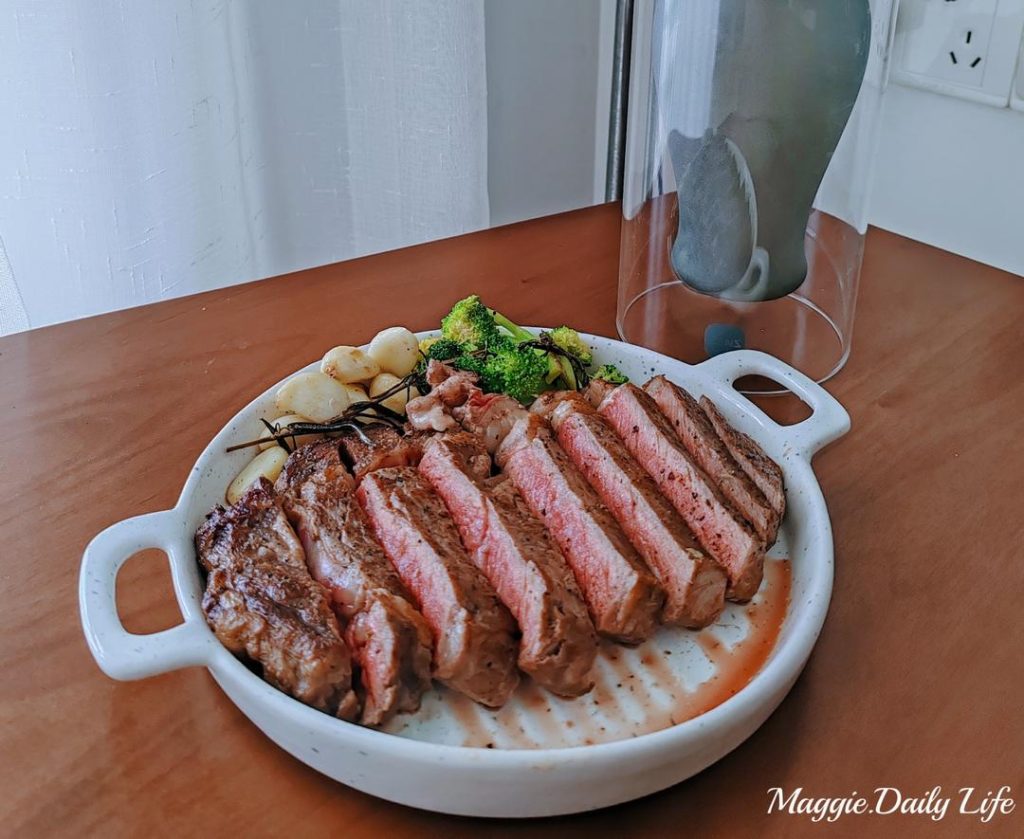
Because it is an extension of the Ribeye muscle, it has excellent marbling and flavor but costs significantly less. It is often called the “poor man’s Ribeye.”
Best Substitutes: If you cannot find Chuck Eye Steaks, Ribeye or New York Strip are the best standard options for pan-searing because they have enough fat content to stay juicy. Australian beef is a great choice if available, as it is often free of artificial additives and growth hormones, offering a natural, tender taste.
Key Ingredients & Substitutions
- Steak: 1 thick-cut steak (about 1 inch / 2.5cm thick). Ribeye, New York Strip, or Chuck Eye.
- Sea Salt & Black Pepper: Use coarse sea salt and freshly cracked black pepper. Do not use fine table salt if possible, as it makes it harder to control the salinity.
- Oil: The original recipe suggests olive oil. However, for high-heat searing, I recommend Avocado Oil or Grapeseed Oil because they have a higher smoke point. If using olive oil, use “regular” olive oil, not Extra Virgin, to avoid burning.
- Butter: Unsalted butter is best so you can control the salt level. This is added at the end for basting.
- Aromatics: A spring of fresh Rosemary adds a piney, woodsy aroma. You can substitute with Thyme. Fresh Garlic (optional) adds a savory punch.
Recipe Notes Before You Start
- The Pan Matters: You need a pan that holds heat well. A Cast Iron Skillet is the gold standard here. A thick-bottomed stainless steel pan is a good second choice. Avoid non-stick pans, as they cannot safely reach the high temperatures needed for a hard sear.
- Defrosting: If your steak is frozen, slow-thaw it in the refrigerator. If the meat looks dark red or smells slightly fermented upon opening, don’t panic. This is usually due to a lack of oxygen in vacuum packaging. Let it “bloom” in the air for a few minutes, and the bright red color will return.
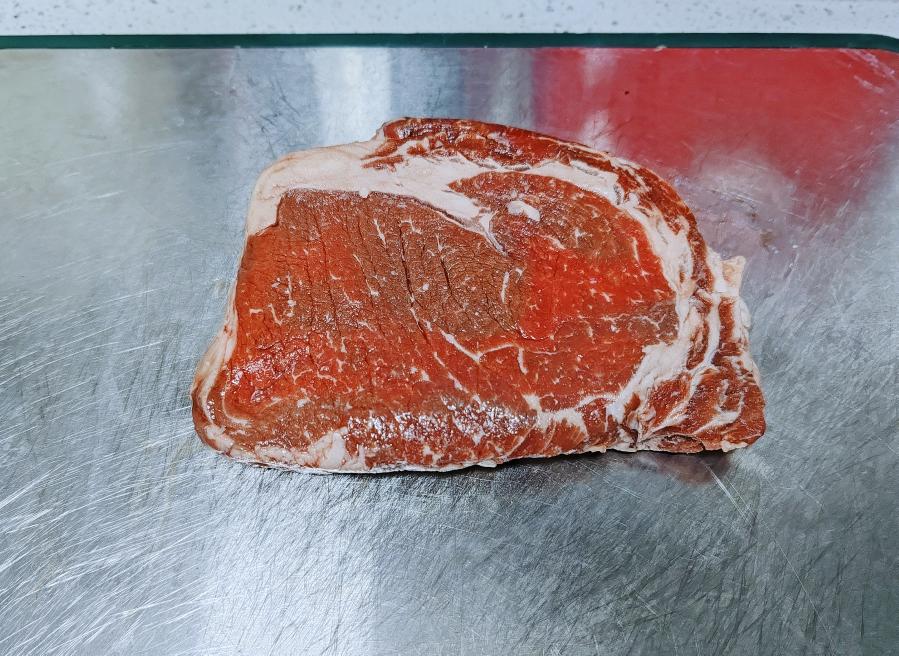
- Room Temperature: Take the steak out of the fridge about 20-30 minutes before cooking. A cold steak cooks unevenly.
Mise en Place
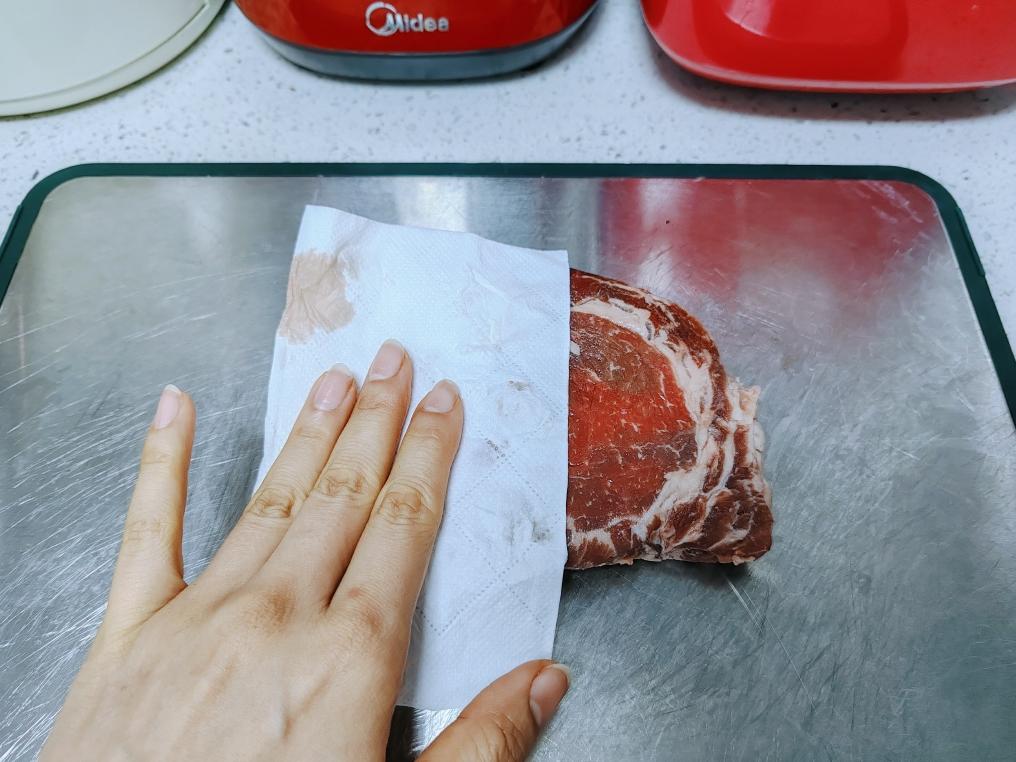
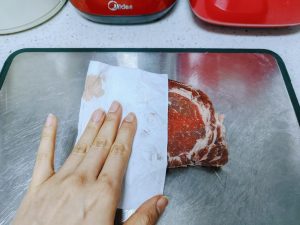
- Dry the Meat: Remove the steak from the packaging. Do not wash it. Use paper towels to pat every surface completely dry. Moisture is the enemy of a good crust; wet meat steams instead of sears.
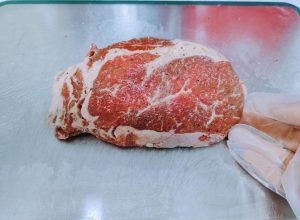
- Season: You do not need to marinate this ahead of time. Just before you are ready to cook, season both sides generously with sea salt and black pepper.
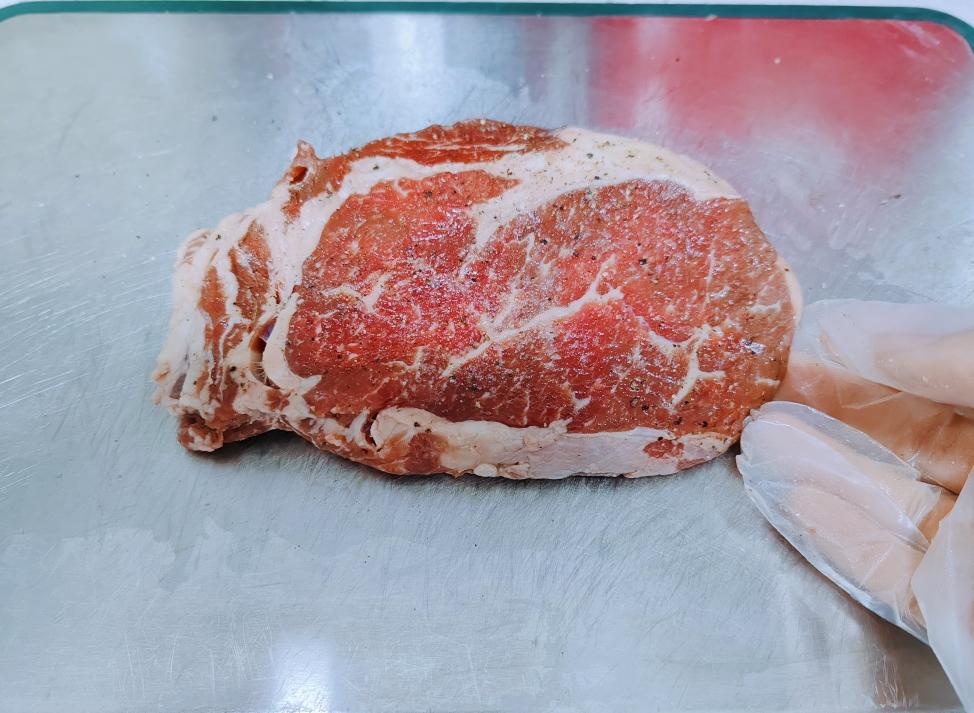
- Oil: If your steak is very lean (like a Filet Mignon), rub a little oil on the meat itself. If using a fatty cut like Ribeye or Chuck Eye, you can skip oiling the meat, as it will render its own fat.
How to Make Pan-Seared Steak
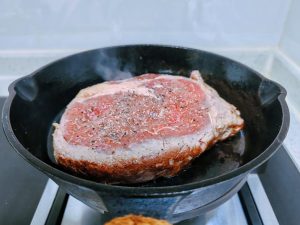
Step 1: Heat the Pan Place your cast iron skillet over high heat. It needs to be very hot. If your skillet is well-seasoned, you may not need extra oil, but adding a teaspoon of high-heat oil ensures good contact.
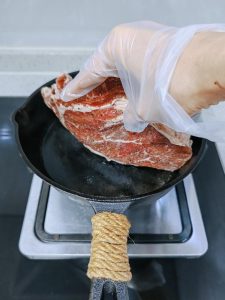
Step 2: Render the Fat Cap (Sealing the Edge) Using tongs, hold the steak vertically and press the strip of fat on the edge (the fat cap) against the hot pan. Sear for about 30 seconds. This renders liquid fat into the pan for cooking and makes that chewy fat delicious.
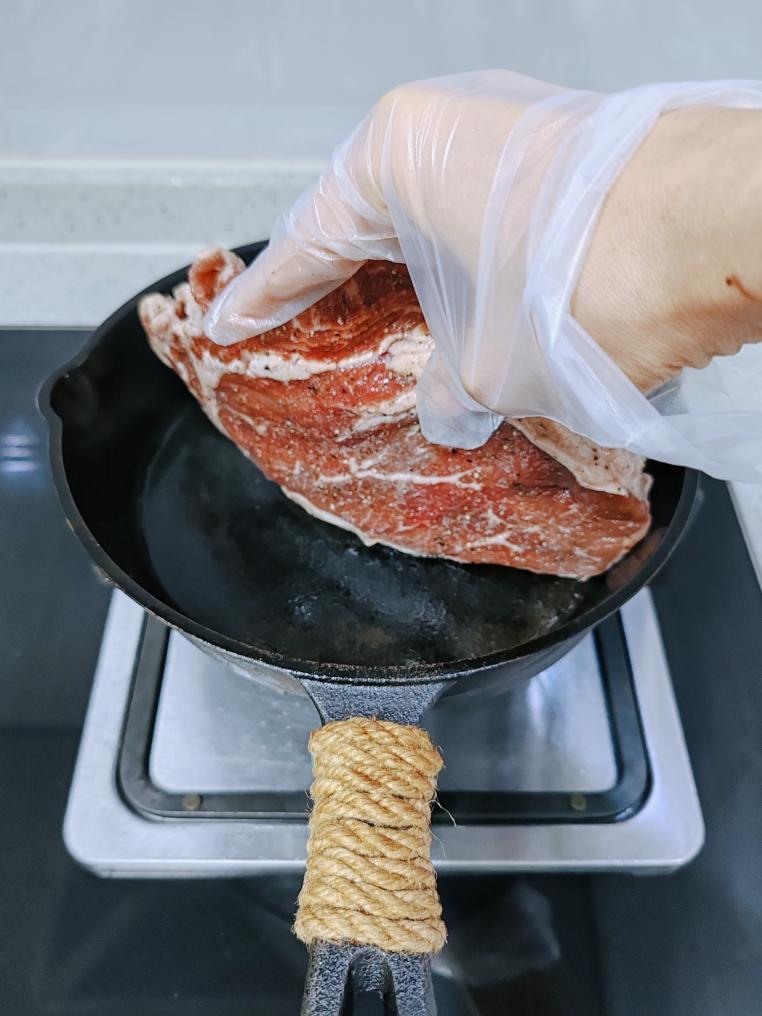
Step 3: The First Sear Lay the steak flat in the pan. Do not touch it! Let it sear undisturbed to build a crust. For a 1-inch (2.5cm) steak cooked to medium-rare/medium, sear for approximately 1 minute 20 seconds to 1 minute 30 seconds. Note: Time varies based on thickness and pan heat. Use visual cues—look for a deep brown crust.
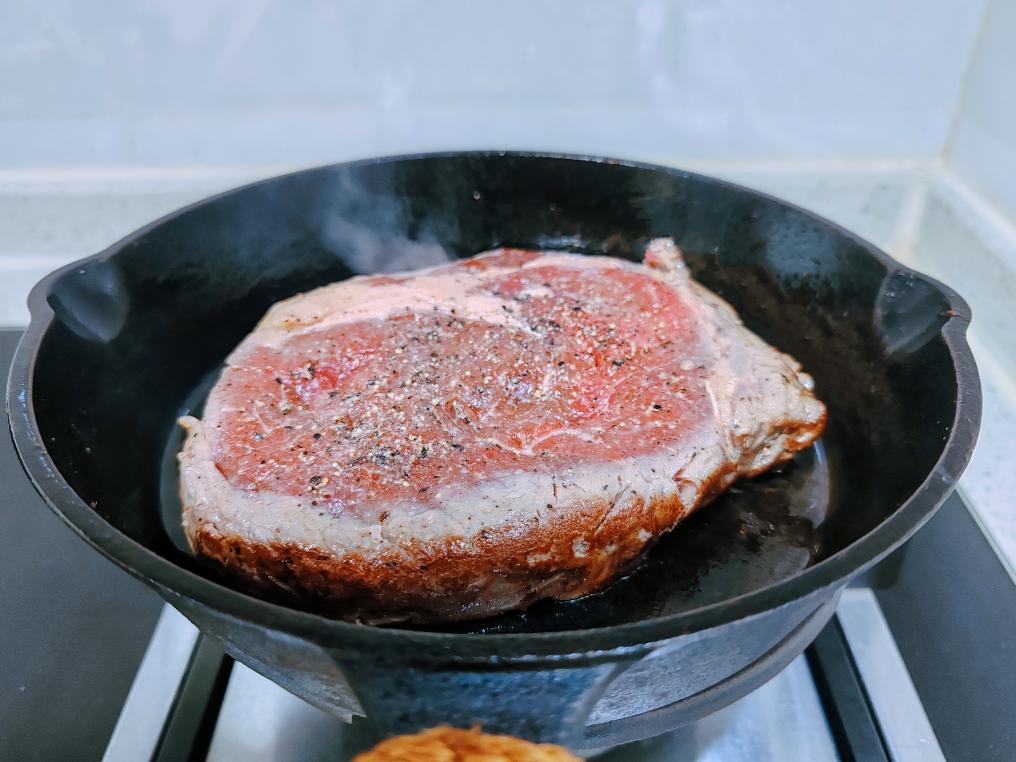
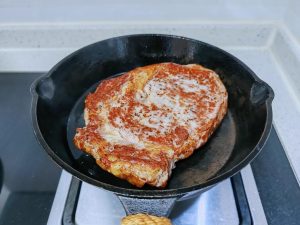
Step 4: Flip and Baste Flip the steak. You should see a beautiful “Maillard reaction” (browning). Immediately add the butter, rosemary, and garlic cloves (if using) to the pan.
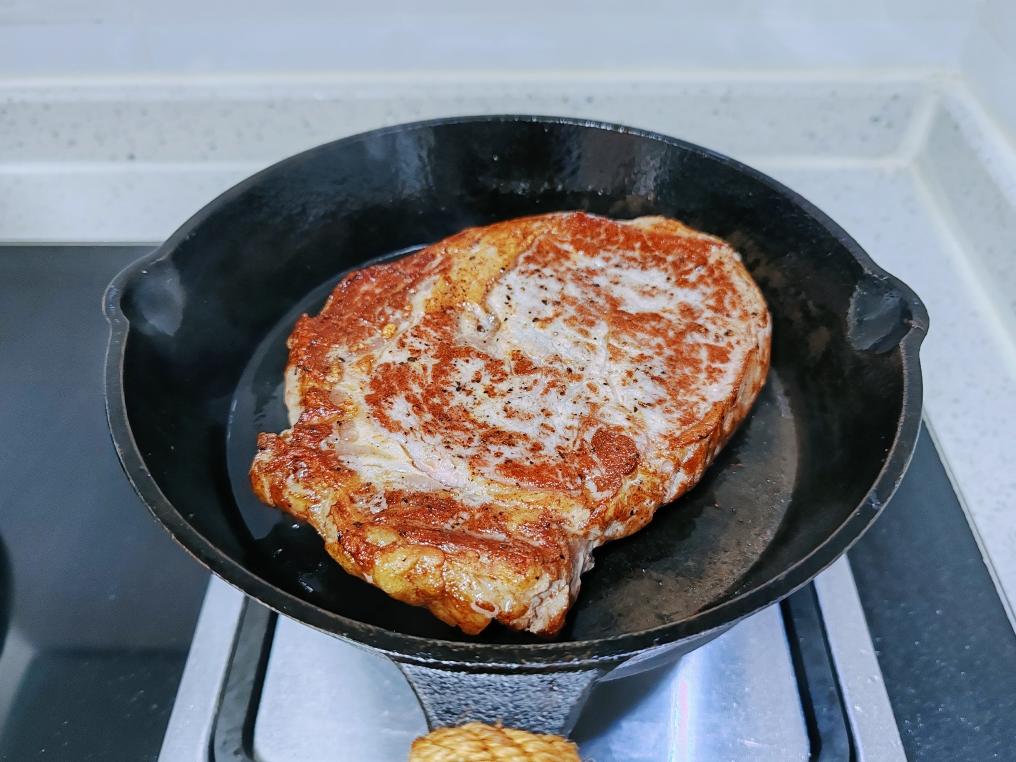
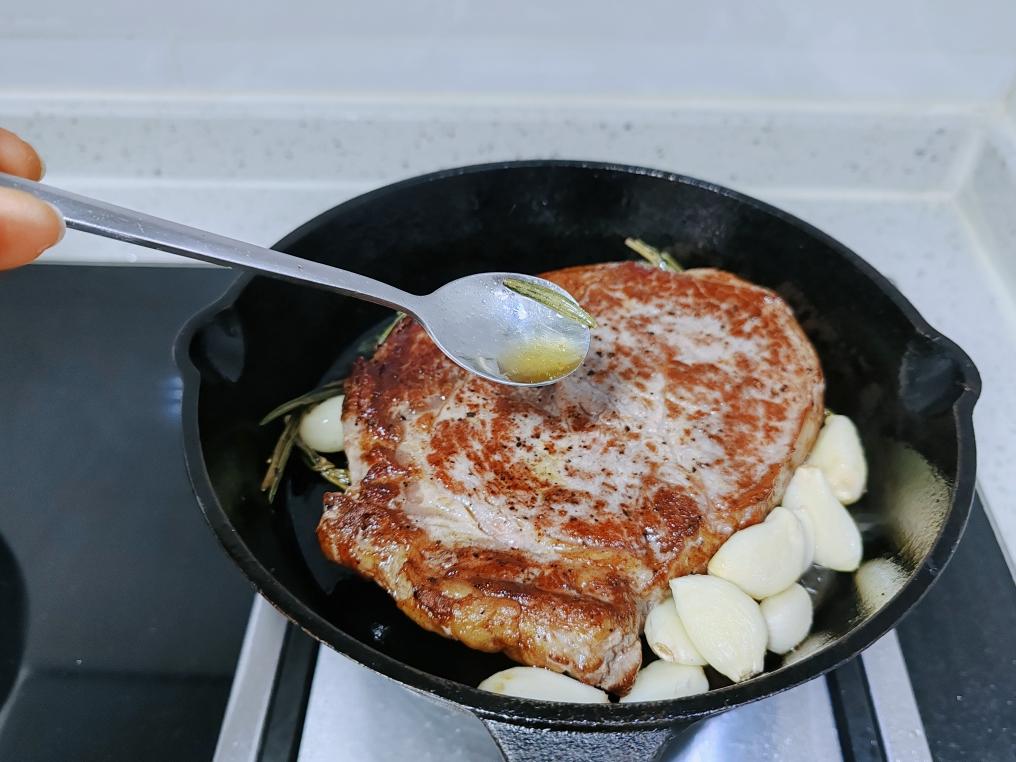
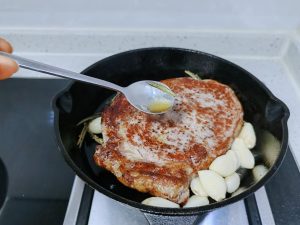
Step 5: Butter Baste Tilt the pan slightly so the melting butter pools at the bottom with the herbs. Use a large spoon to continuously scoop the hot, foaming butter over the steak. Cook this side for another 1 minute 20 seconds to 1 minute 30 seconds.
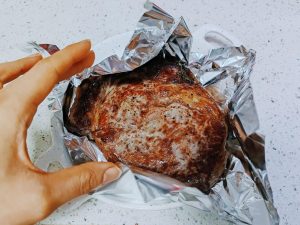
Step 6: Rest the Meat Remove the steak from the pan and immediately wrap it loosely in aluminum foil. Let it rest for 2 to 3 minutes. Why? Resting allows the muscle fibers to relax and the juices to redistribute throughout the steak. If you cut it immediately, the juice will run out, and the meat will be dry.
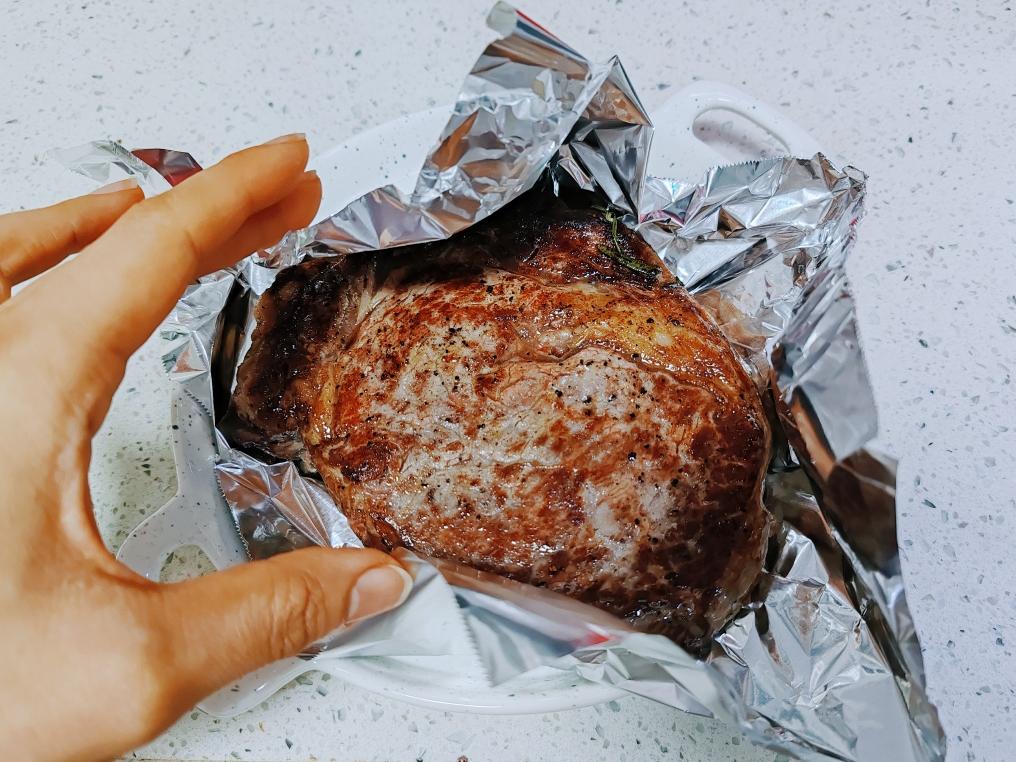
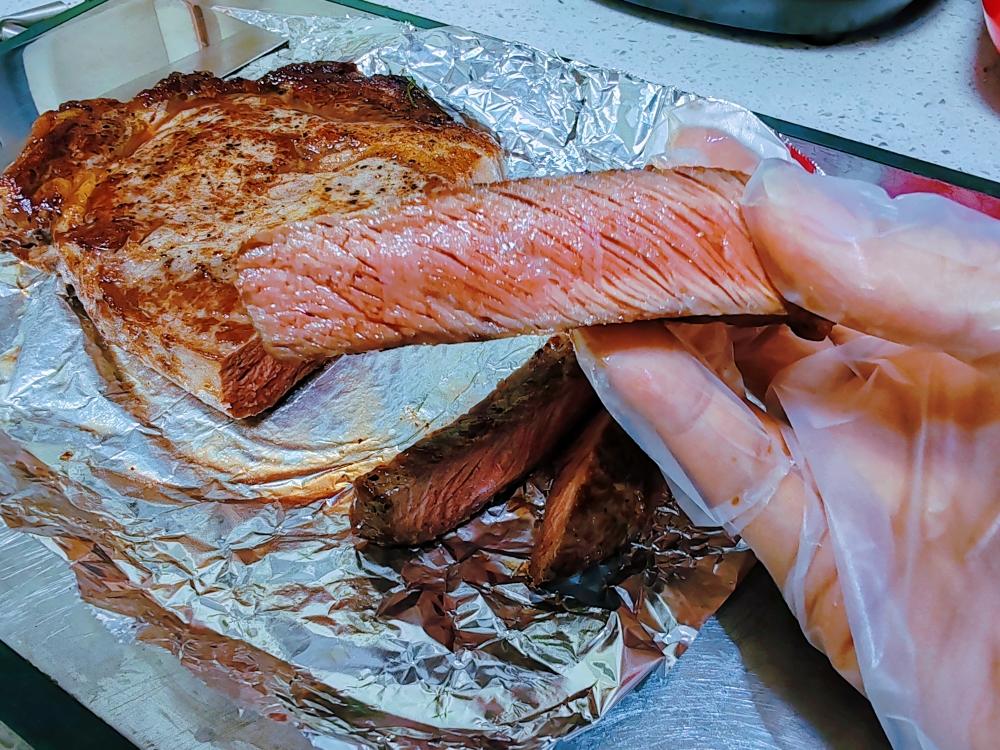
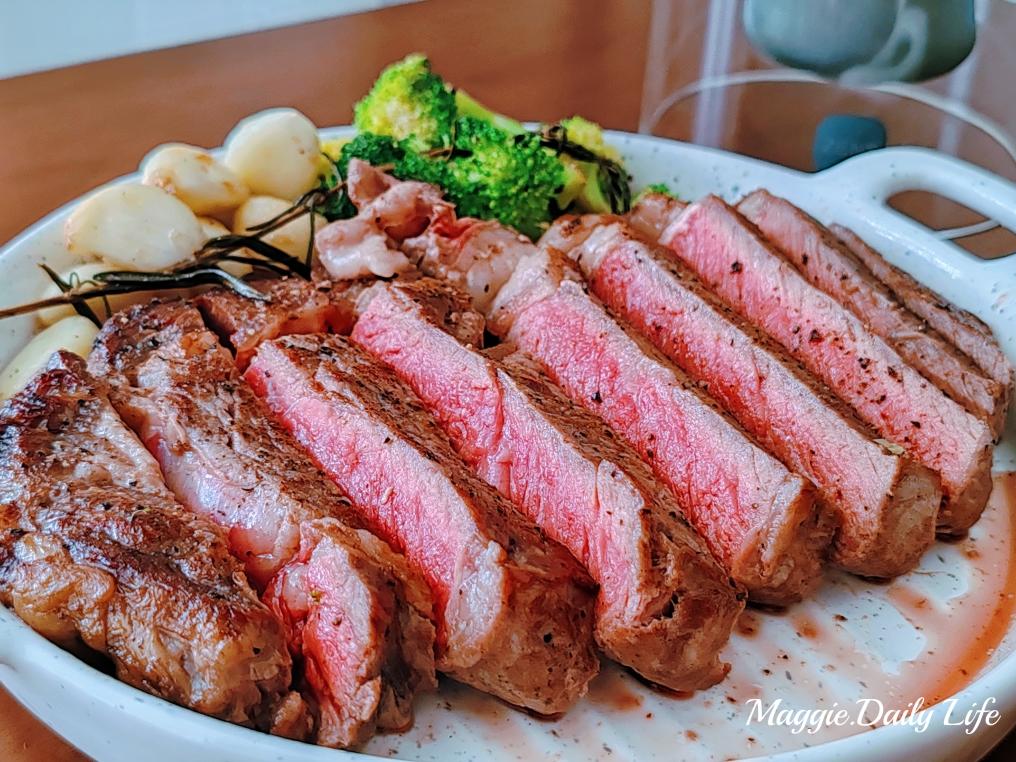
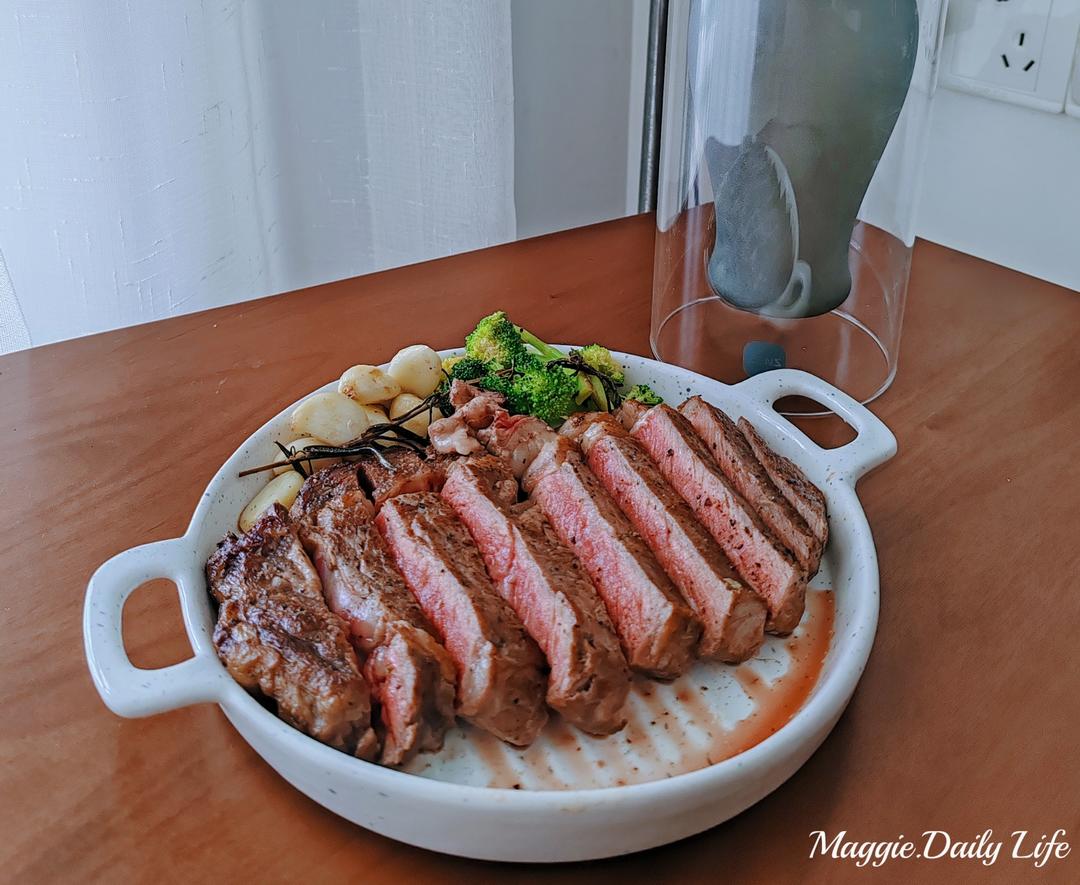
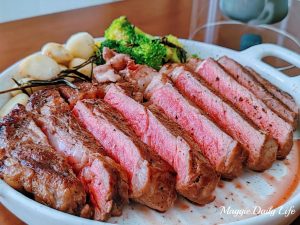
Step 7: Serve Slice the steak against the grain. The inside should be tender and juicy.
Pro Tip: While the steak rests, you can use the leftover beef fat and butter in the pan to quickly stir-fry some vegetables like asparagus or mushrooms!
Expert Tips for Success
- Don’t Overcrowd: If cooking more than one steak, make sure there is plenty of space between them. If the pan is too crowded, the temperature drops, and the meat boils in its own juices.
- Warm Your Plates: I suggest warming your serving plates in a low oven beforehand. Cold plates can cause the beef fat to coagulate instantly, which leaves an unpleasant waxy mouthfeel.
- Trust the Touch: Beginners can use a meat thermometer (aim for 130°F-135°F / 54°C-57°C for medium-rare), but over time, try to learn by touch. A soft cheek feel is rare; the tip of your nose is medium; your forehead is well done.
Notes:
- Nutrition Disclaimer: Nutrition information is calculated using an ingredient database and should be considered an estimate.
- Safety: The USDA recommends cooking whole cuts of beef to an internal temperature of 145°F (63°C) with a 3-minute rest time for safety, though many chefs prefer 130°F-135°F for medium-rare texture. Consuming raw or undercooked meats may increase your risk of foodborne illness.
- Equipment: A cast iron skillet is highly recommended for the best crust.
Serving Suggestions
This steak is rich and savory, so it pairs well with lighter sides or starches that can soak up the juices.
- Classic Sides: Garlic mashed potatoes or roasted green beans.
- Asian Twist: Try serving this with my Black Pepper Beef Cubes style sauce or alongside a Potato and Green Bean Stir-fry for a fusion dinner.
- Similar Dishes: If you enjoy beef, you might also like my Pan-Seared Sirloin Steak recipe which uses a similar technique but different seasoning profile.
Troubleshooting & FAQ
Q: Why is my steak tough and chewy?
A: This usually happens for two reasons: either the steak was overcooked, or it wasn’t rested long enough. Make sure to pull the steak off the heat before it looks fully done, as it continues cooking while resting.
Q: My butter burned and turned black. What happened?
A: The pan was likely too hot when you added the butter. Add the butter only after you flip the steak, and if the pan is smoking excessively, turn the heat down to medium-high for the basting stage.
Authoritative References
For safe minimum internal temperature guidelines for beef, refer to the USDA Food Safety and Inspection Service.
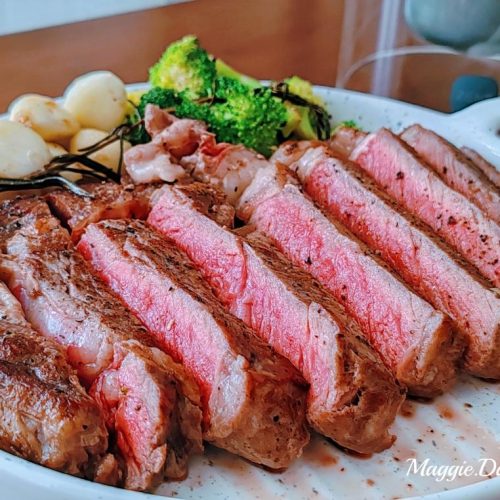
Pan-Seared Steak with Garlic Butter

Equipment
- Cast Iron Skillet
- Tongs
Ingredients
The Steak
- 1 steak (Ribeye, Chuck Eye, or Strip) approx 1 inch / 2.5cm thick
- sea salt to taste
- black pepper freshly cracked, to taste
- 1 tsp olive oil or avocado oil
Basting Ingredients
- 1 tbsp unsalted butter
- 1 sprig fresh rosemary
- 2 cloves garlic smashed (optional)
Instructions
- Prep the meat: If frozen, thaw carefully. Remove the steak from packaging and let it bloom (regain color) for a few minutes. Do not wash the meat. Use paper towels to pat the steak completely dry on all sides.

- Season: Right before cooking, season both sides generously with sea salt and black pepper. If the steak is very lean, rub it with the olive oil. If it is fatty (like Ribeye), you can skip oiling the meat directly.

- Render fat cap: Heat your cast iron skillet over high heat. Using tongs, hold the steak vertically and press the fatty edge against the pan for about 30 seconds to render the fat.

- First Sear: Lay the steak flat in the pan. Sear undisturbed for about 1 minute 20 seconds to 1 minute 30 seconds (for a medium-rare target on a 1-inch steak).
- Flip and Add Aromatics: Flip the steak. You should see a brown crust. Immediately add the butter, rosemary, and garlic cloves to the pan.
- Baste: Tilt the pan slightly so the butter pools with the herbs. Use a spoon to continuously scoop the hot butter over the steak (basting) while it cooks for another 1 minute 20 seconds to 1 minute 30 seconds.
- Rest: Remove the steak from the pan and wrap it securely in aluminum foil. Let it rest for 2 to 3 minutes. This step is crucial for juicy meat. You can use the leftover fat in the pan to stir-fry vegetables while waiting.
- Serve: Slice and serve immediately, preferably on a warmed plate to prevent the fat from congealing.
Notes
Disclaimer: Nutrition information is calculated using an ingredient database and should be considered an estimate. Safety Warning: The USDA recommends cooking beef to a minimum internal temperature of 145°F (63°C) with a 3-minute rest. Consuming raw or undercooked meats may increase your risk of foodborne illness. Note on Butter: Add the butter only after flipping the steak. If added too early at high heat, it will burn and taste bitter.




Leave a Reply