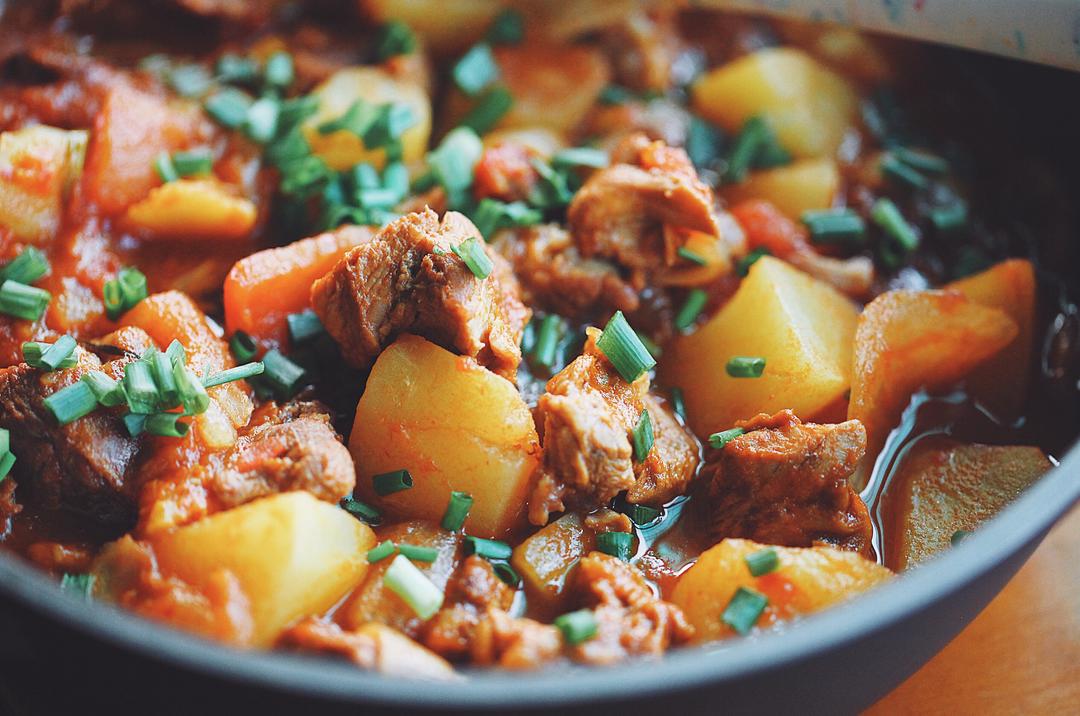
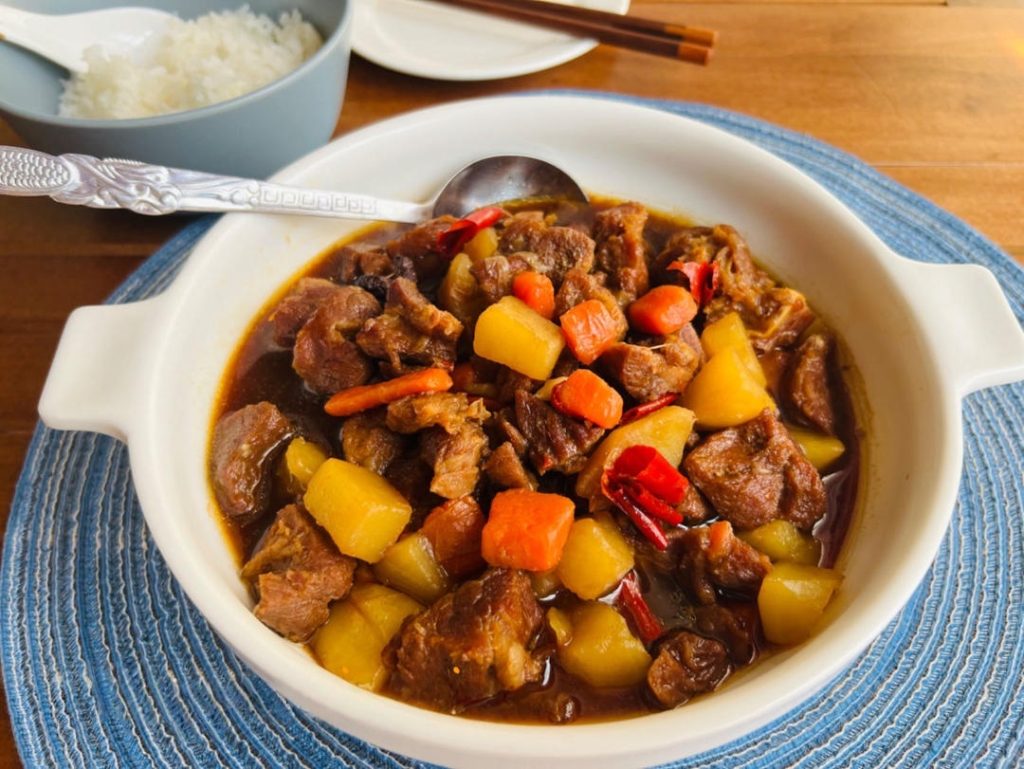
If there is one dish that defines “comfort” in my household, it is this Braised Beef Brisket with Potatoes. The original portion for this recipe was smaller, but every time I made it, it simply wasn’t enough! The combination of tender beef and soft, flavor-soaked potatoes is irresistible. So, for this version, I have doubled the quantities to ensure everyone leaves the table satisfied.

This dish features the classic “Red Braised” (Hong Shao) flavor profile—savory, slightly sweet, and deeply aromatic. It is incredibly versatile; the rich sauce is perfect spooned over steamed rice, but it also makes a phenomenal beef noodle soup. If you love hearty stews like our Tomato Beef Stew, you will adore this.
What Is Braised Beef Brisket with Potatoes?
In China, Niu Nan Dun Tu Dou is a staple home-cooked meal. “Niu Nan” refers to the beef brisket (specifically the flank or rough flank), which has layers of fat and connective tissue that break down during long cooking. “Dun” means to stew or braise.
Unlike Western beef stews that often use flour for thickening and herbs like rosemary, this Chinese version relies on soy sauce, rock sugar, and dried aromatics like star anise and cinnamon for its distinct flavor. While restaurant versions might use heavy oil or MSG, this homestyle recipe relies on time and simple seasonings to create a lush, naturally thickened sauce.
The combination of tender brisket and potatoes is a timeless Chinese comfort classic. However, if you’re looking to cut through the richness of the beef with a bright, tangy profile, you should check out my Hearty Tomato and Potato Beef Stew
. It uses a ‘two-stage’ tomato method to ensure the gravy is deeply infused with umami while still maintaining those beautiful, softened potato chunks we all love.1Hearty Tomato and Potato Beef Stew (Fan Qie Tu Dou Dun Niu Rou)A classic Chinese comfort dish featuring tender beef, fluffy potatoes, and a rich, tangy tomato gravy. High in EEAT and flavor!Check out this recipe
Why This Recipe Works
- The Warm Water Rinse: We use a specific technique of rinsing the blanched meat with warm water, not cold. This prevents the protein fibers from seizing up, ensuring the final result is tender, not chewy.
- Sugar Coloring (Tang Se): Caramelizing the rock sugar in oil before adding the meat provides a glossy red shine and a depth of flavor that soy sauce alone cannot achieve.
- Starch Management: By rinsing the cut potatoes before adding them to the stew, we prevent the sauce from becoming gluey or muddy, allowing the natural beef flavors to shine.
Key Ingredients & Substitutions
- Beef Brisket (Niu Nan): You want a cut with alternating layers of meat and fat. The fat renders out and keeps the lean meat moist.
- Substitute: If you cannot find brisket, beef chuck roast is a good alternative, though brisket offers the best texture.
- Rock Sugar: This gives the dish a glossy sheen (known as the “red” in red-braised) and a mellow sweetness.
- Comparison: Rock Sugar vs. White Sugar. I recommend rock sugar for braises because it is less sweet than granulated white sugar and gives the sauce a superior, jewel-like glaze. If you must use white sugar, reduce the amount slightly.
- Sichuan Peppercorns & Star Anise: These are the soul of the aroma.
- Note: If you are sensitive to the texture of peppercorns, you can put them in a spice bag, but frying them directly in the oil releases the most flavor.
- Dark Soy Sauce (Mushroom variety favored): This provides the dark amber color.
- Oyster Sauce: Adds savory umami depth.
- Shaoxing Wine: Essential for removing gamey odors.
- Substitute: Dry sherry can be used in a pinch.
Recipe Notes Before You Start
- Defrost Properly: If using frozen brisket, soak it in cold water to defrost naturally. This helps purge some blood water initially.
- Prepare Hot Water: Have a kettle of boiling water ready before you start braising. Adding cold water to hot meat will seize the fibers.
- Equipment: A heavy-bottomed pot (like a Dutch oven) or a wok with a lid is ideal for maintaining steady heat.
Mise en Place / Prep
Cooking moves fast once the sugar melts, so preparation is key.
- Soak the Beef: If using frozen beef, let it soak in cold water to thaw.
- Aromatics: Slice the ginger (keep 4 slices for blanching, 4 for the stir-fry). Peel the garlic. Cut the scallion into sections.
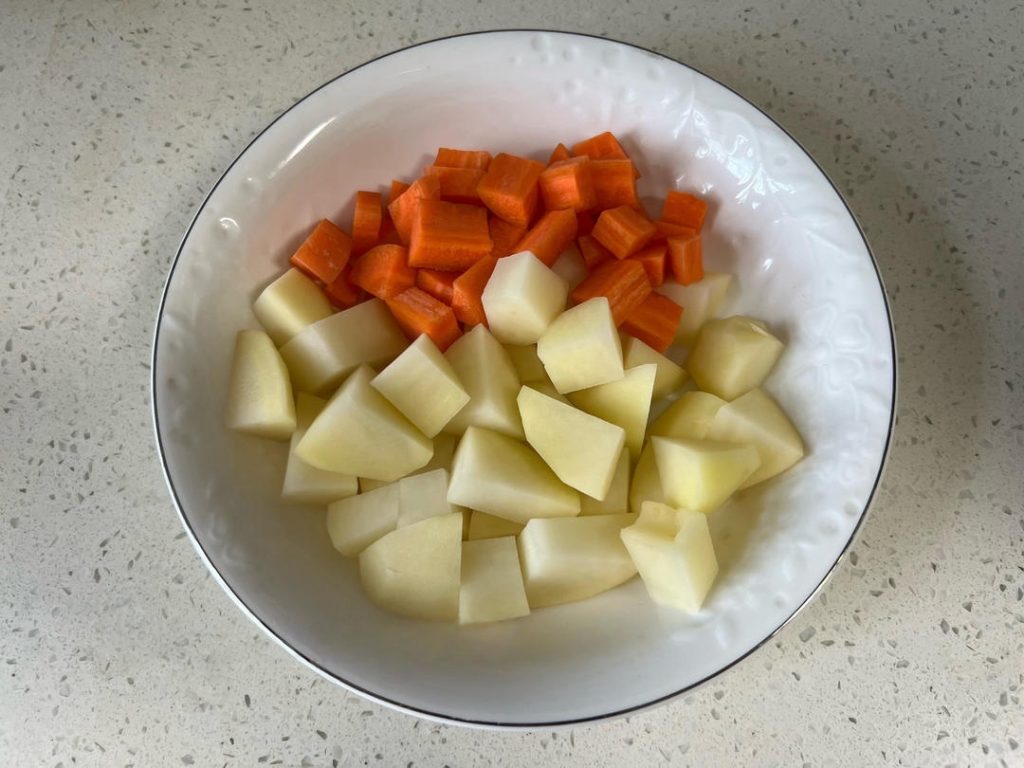
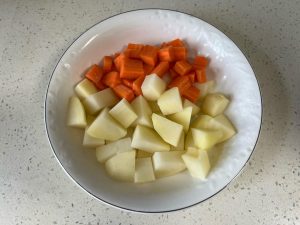
- Vegetables: Peel the potato and carrot and cut them into chunks.
- Tip: Rinse the potato chunks in water to remove excess surface starch. This ensures they keep their shape better during the stewing process.
How to Make Braised Beef Brisket with Potatoes
Step 1: Blanch the Beef
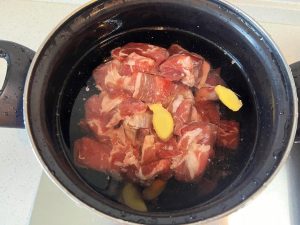
Place the beef brisket in a pot and cover with cold water. Add 1 tablespoon (15ml) of the cooking wine and 4 slices of ginger. Bring to a boil.
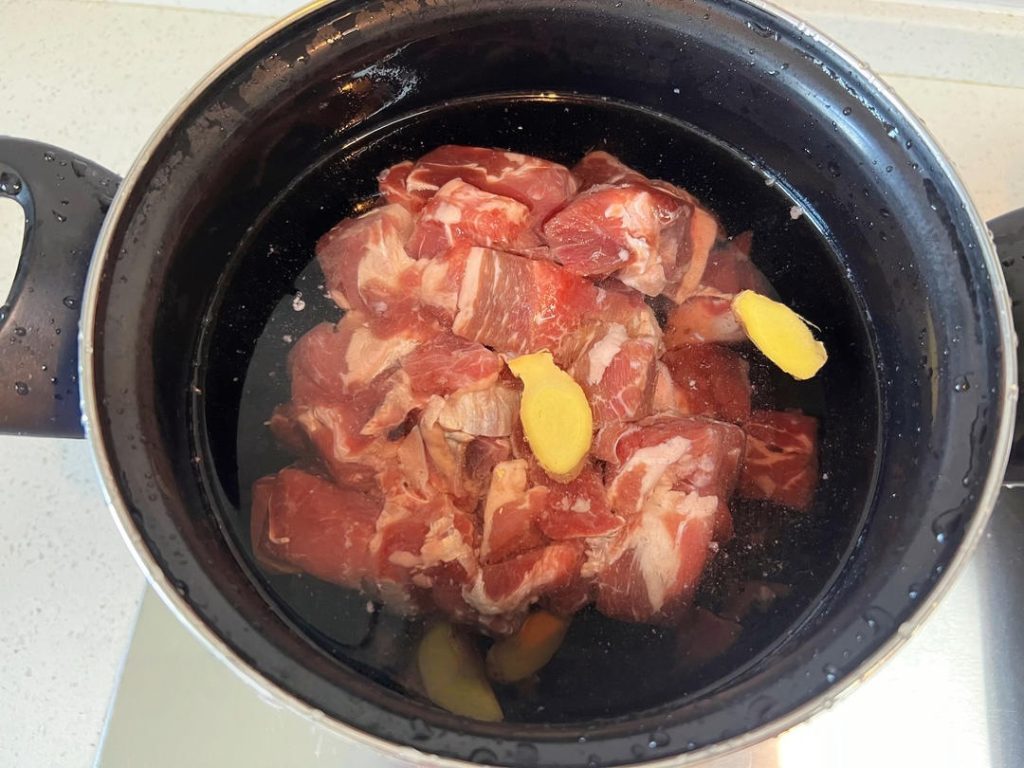
- Why cold water? Starting cold allows the blood and impurities to release slowly as the water heats up.
Step 2: The Crucial Warm Rinse
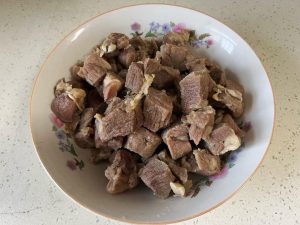
Once boiling, skim off the scum. Remove the beef immediately—do not overcook it. Transfer the beef to a colander and rinse it thoroughly with warm water.
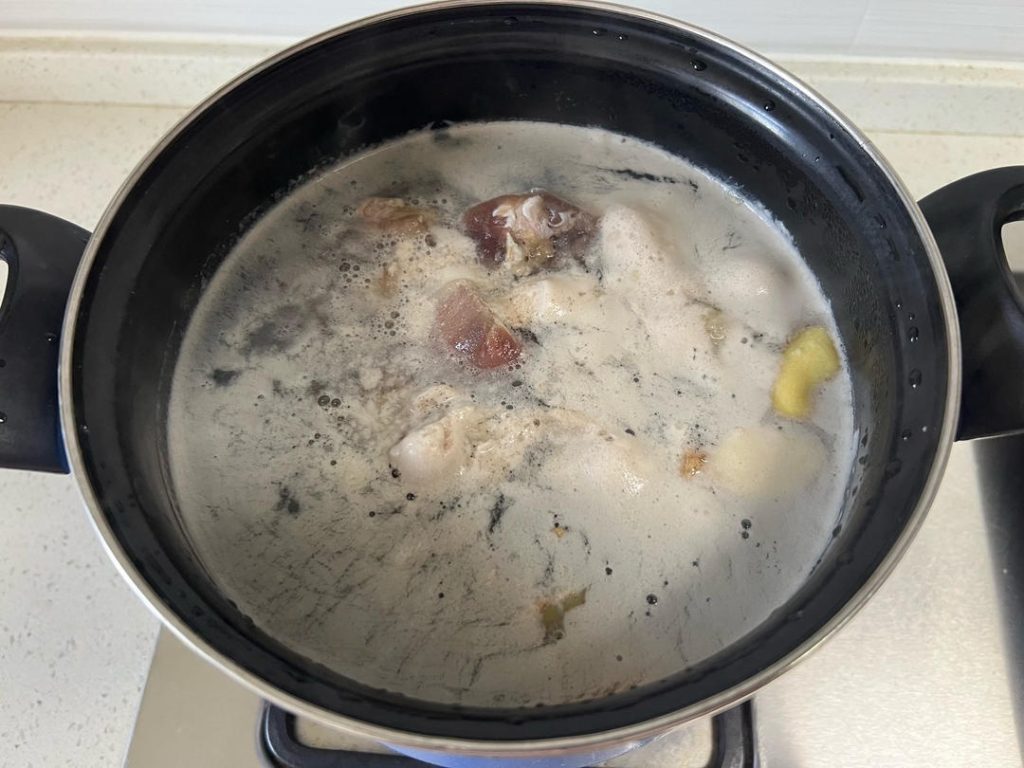
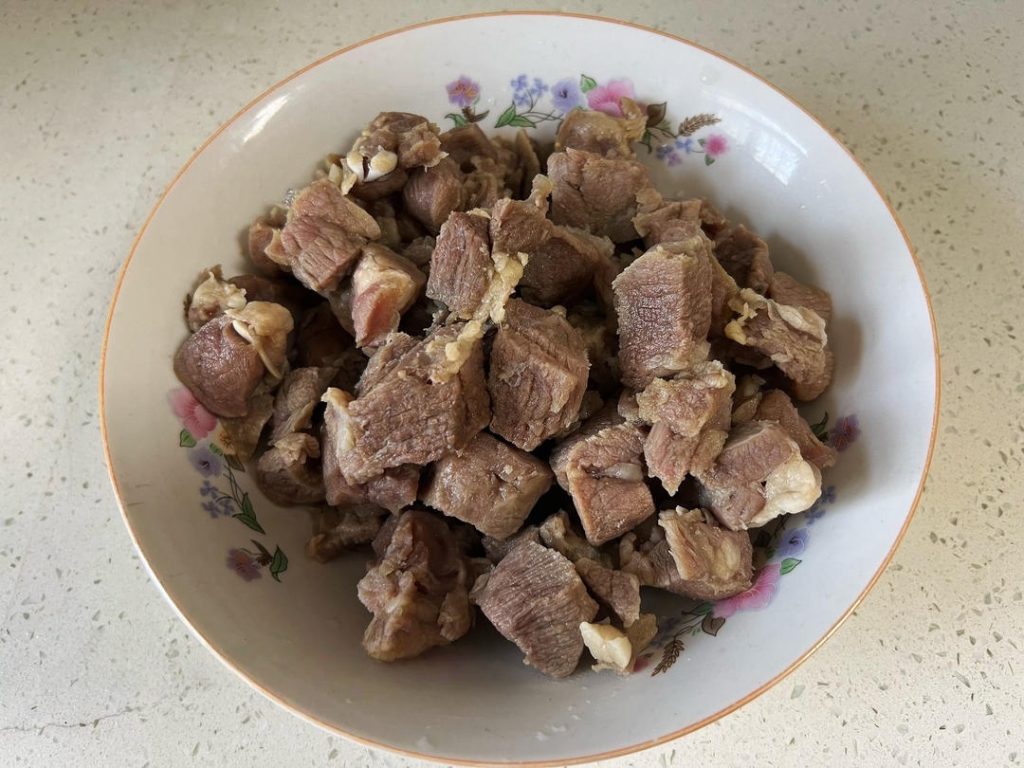
- Chef’s Tip: Never use cold water to rinse hot meat. The sudden temperature drop causes the muscle fibers to contract tightly, making the beef tough and difficult to braise tender.
Step 3: Fry the Sugar (Sugar Coloring)
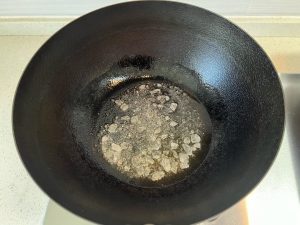
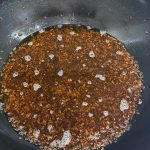
In your wok or pot, add the oil and the rock sugar (crush it slightly so it melts faster). Turn the heat to low-medium. Stir gently until the sugar melts and turns a light amber/yellow color.
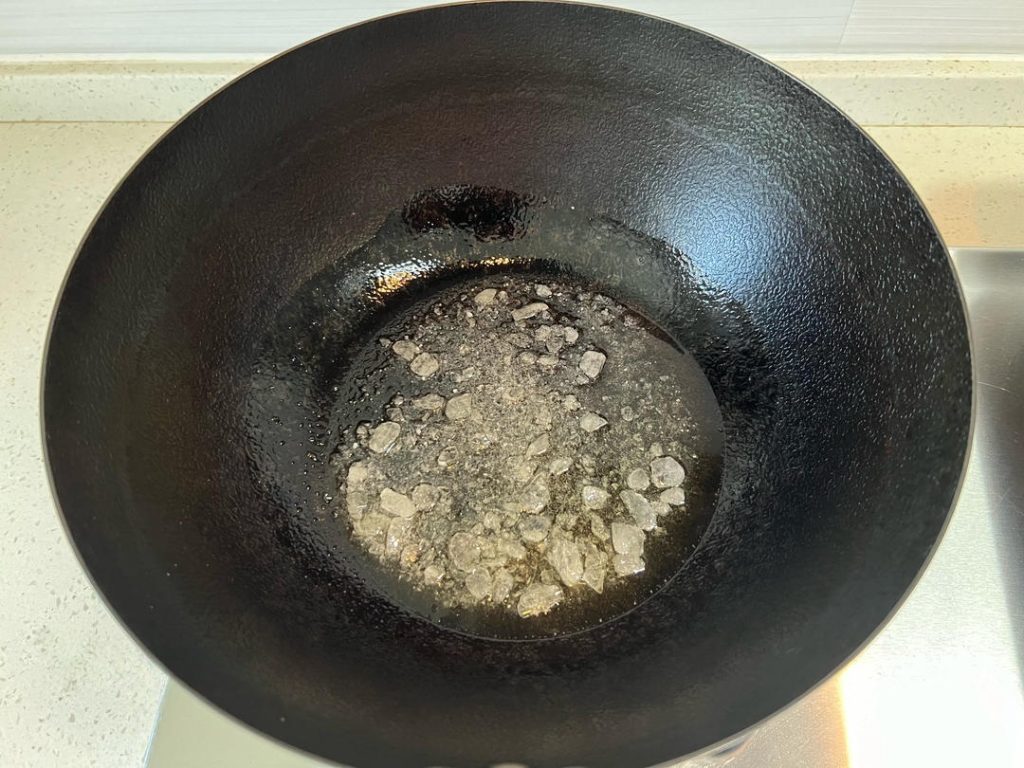
- Note: Since my brisket was quite lean this time, I used about 2 tablespoons of oil. If your beef is very fatty, you can use slightly less.
Step 4: Sear and Color
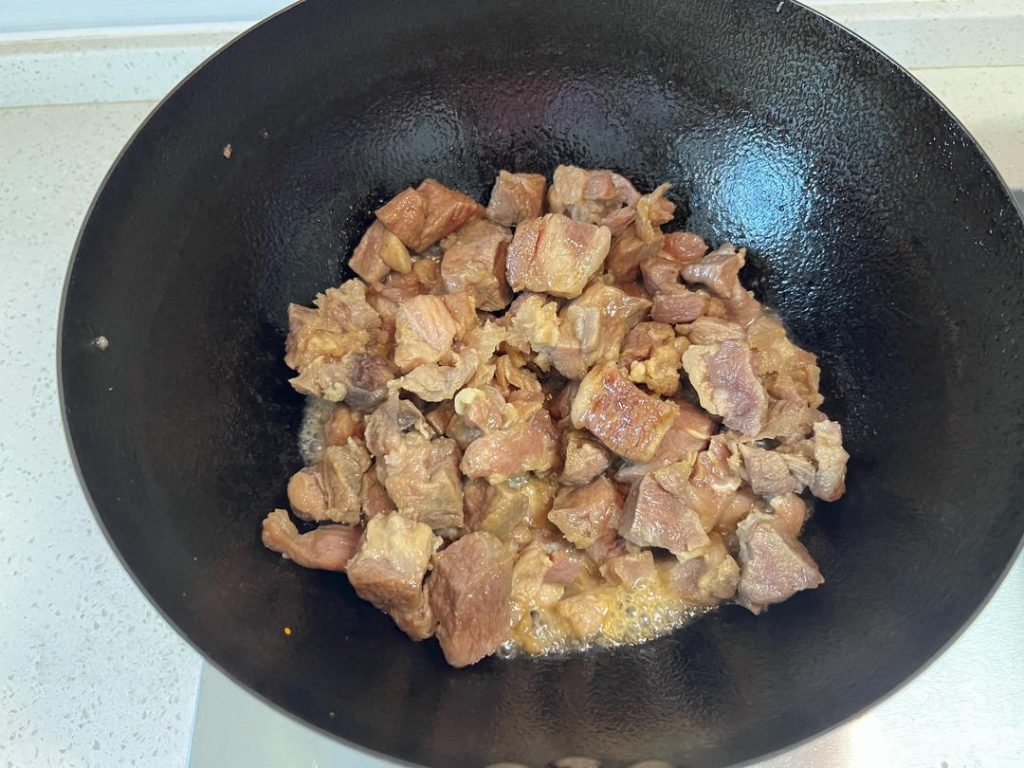
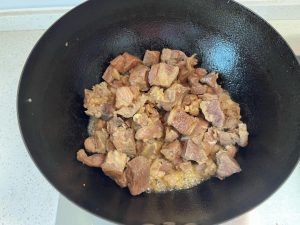
As soon as the sugar turns yellow, immediately add the drained beef chunks. Stir-fry rapidly to coat the beef in the caramelized sugar. This step locks in the color.
Step 5: Add Aromatics
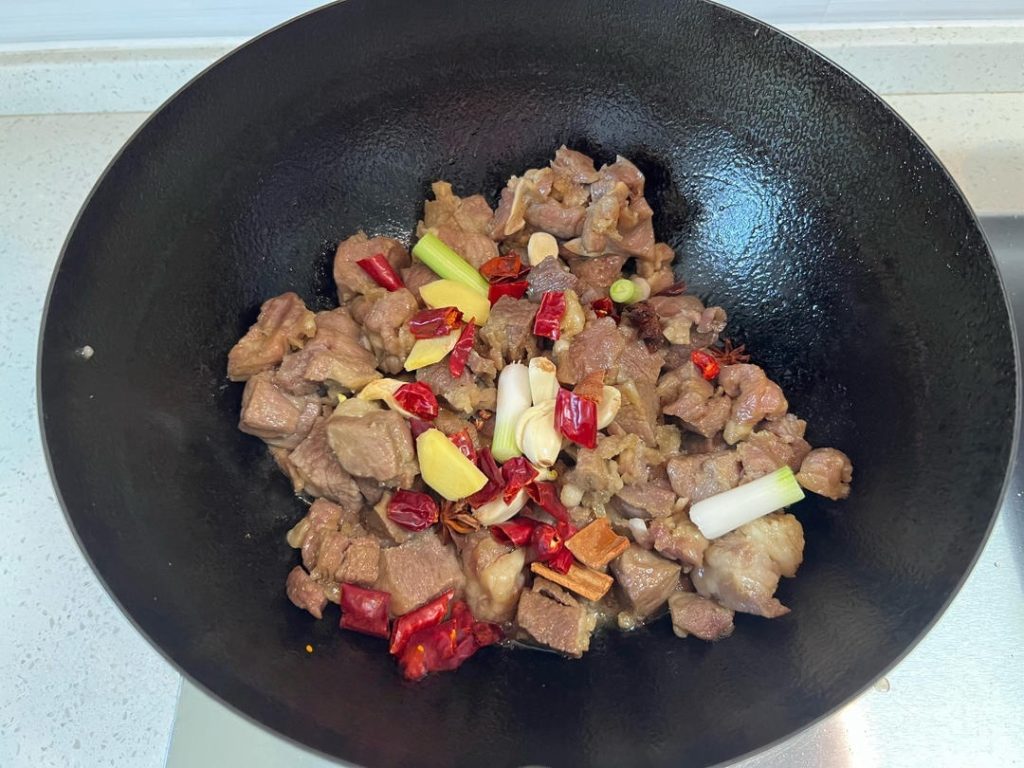
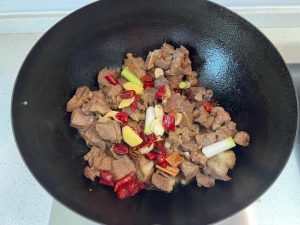
Add the scallion sections, remaining 4 slices of ginger, garlic cloves, dried chilies, star anise, cinnamon, and Sichuan peppercorns. Stir-fry for about 1 minute until the spices release their fragrance.
Step 6: Season
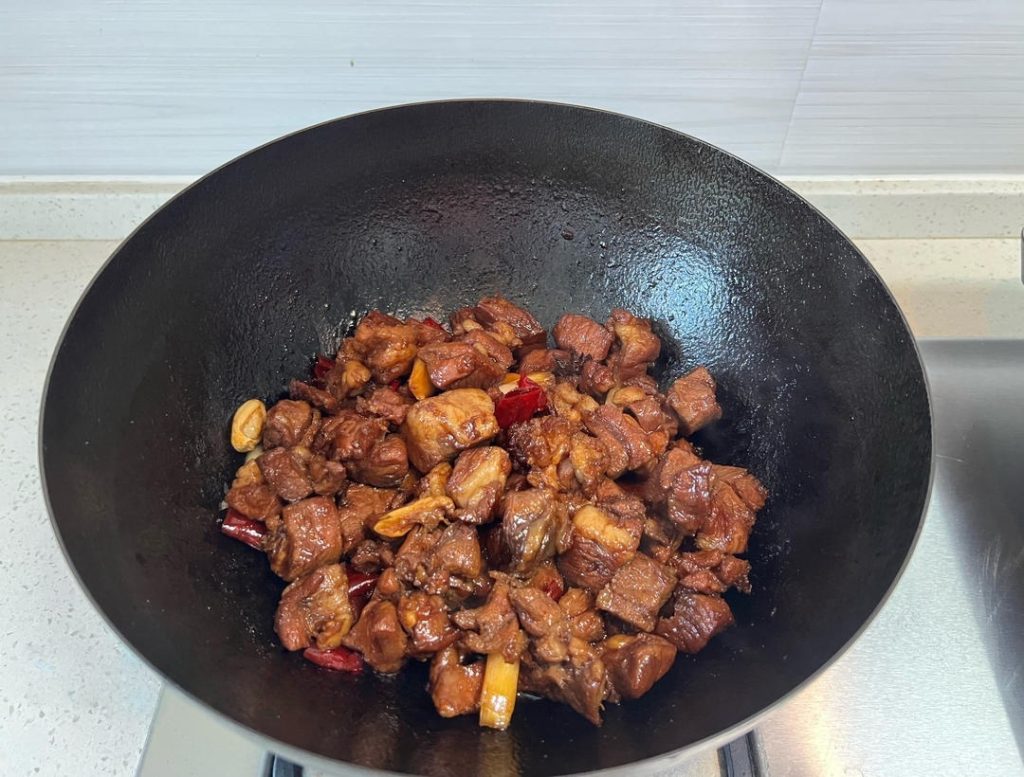
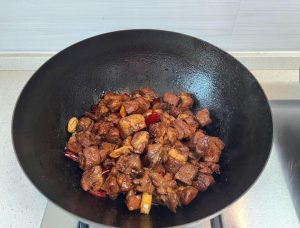
Add the salt, dark soy sauce, light soy sauce, oyster sauce, and the remaining cooking wine. Stir-fry quickly for another minute to ensure the beef is evenly colored and the soy sauce aroma is “cooked out” (removing the raw bean smell).
Step 7: The Braise
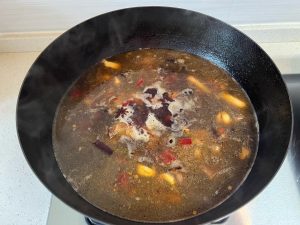
Pour in roughly 5 cups (1200ml) of boiling water. The water should fully cover the beef.
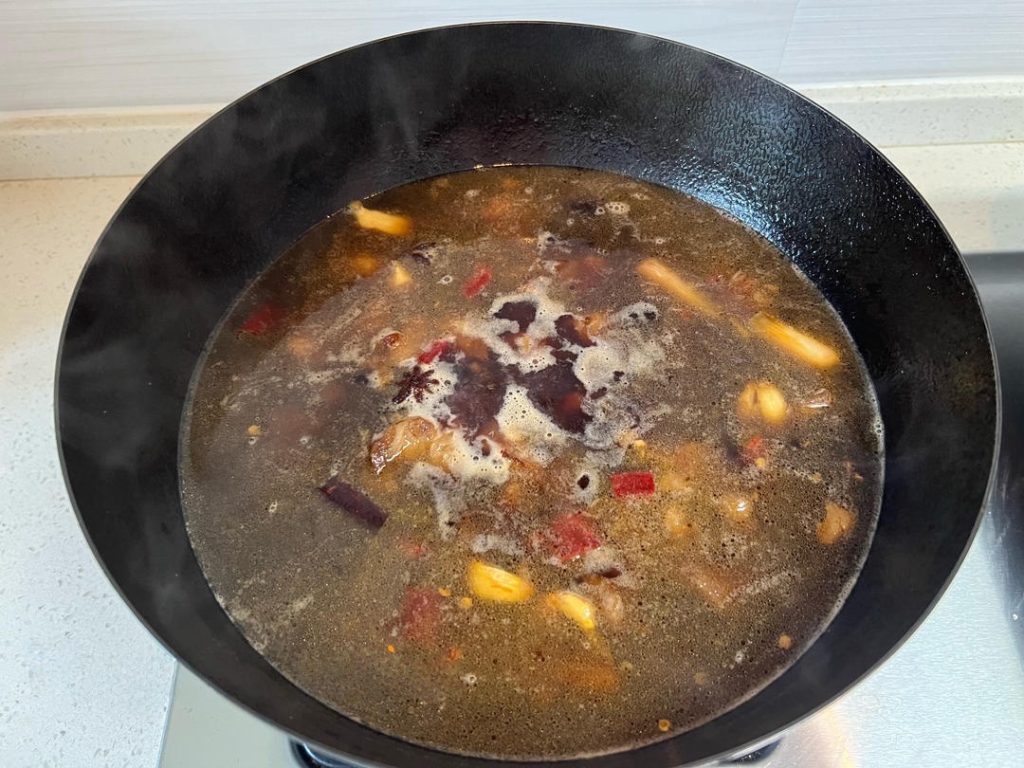
- Note: The amount of water depends on your pot size and evaporation rate. 1200ml works for my setup, but ensure the meat is submerged. Cover the lid and simmer on low-medium heat for 1 hour and 30 minutes. The time may vary depending on the size of your beef chunks.
Step 8: Add Vegetables
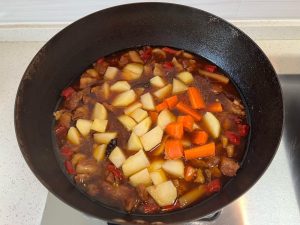
After 1.5 hours, uncover the pot. Add the potato and carrot chunks. Cover and continue to simmer for another 10 to 15 minutes until the vegetables are fork-tender but not falling apart.
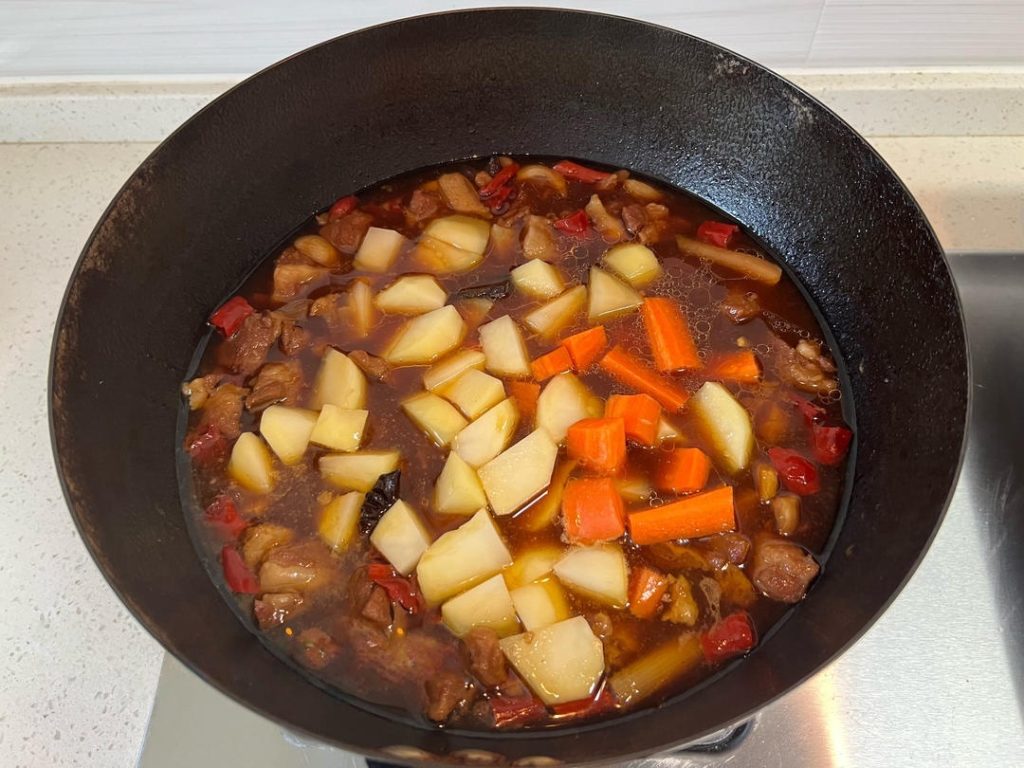
- Note: Taste the broth at this stage. Since soy sauce brands vary in saltiness, adjust by adding a pinch more salt if needed.
Step 9: Finish
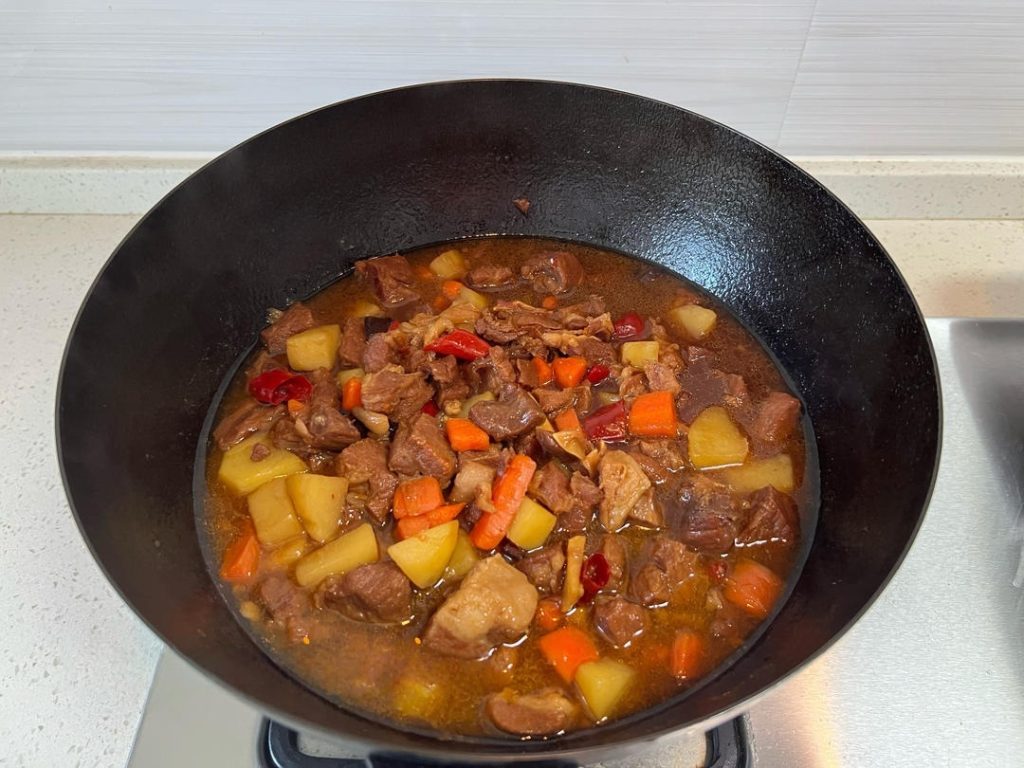
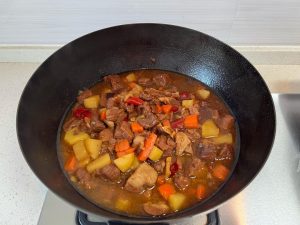
Finally, drizzle in the sesame oil for shine and aroma. If you like, add a pinch of chicken essence for an extra umami boost (optional). Turn off the heat.
FAQ / Troubleshooting
- Why is my beef tough after 2 hours? This usually happens for two reasons: either the heat was too high (boiling forcefully makes meat tough), or you rinsed the hot blanched meat with cold water (thermal shock). Ensure a gentle simmer and use warm water for rinsing.
- Can I use this sauce for noodles? Absolutely! This recipe is actually the base for a great Braised Beef Noodle Soup. If you plan to eat it with noodles, I recommend adding a little extra salt or soy sauce to the broth, as the noodles will dilute the flavor.
- The sauce tastes bitter. What happened? The sugar was likely burnt during Step 3. When melting rock sugar, keep the heat low. Once it turns amber/yellow, add the meat immediately. If it turns black or smokes, start over, or the dish will be bitter.
- Why did my potatoes disappear? If the potatoes are cut too small or cooked too long, they will dissolve. Cut them into large rolling chunks (roll-cutting) and only add them in the last 15 minutes.
- Can I skip the spicy ingredients? Yes. If you are cooking for children or prefer mild food, you can omit the dried chilies. The Sichuan peppercorns add aroma rather than heavy heat, but they can also be reduced or omitted if necessary.
Tips for Success
- Pot Choice: A cast iron pot or clay pot retains heat best for braising, keeping the simmer gentle and even.
- Sauce Consistency: We intentionally leave a good amount of soup in this recipe to mix with rice. If you prefer a sticky, dry coating, uncover the pot at the very end and turn the heat to high to reduce the sauce further.
- Resting: Like many stews, this tastes even better the next day as the flavors penetrate deeper into the meat.
Serving Suggestions
Serve piping hot in a deep bowl. This dish is designed to be eaten with plenty of steamed white rice to soak up the rich, savory sauce.
What to Serve With It
To create a balanced meal, pair this rich meat dish with lighter vegetable sides:
- Smashed Cucumber Salad (The acidity cuts through the richness).
- Stir-Fried Lettuce with Garlic (A simple, crisp green).
- Potato and Green Bean Stir-fry (If you have leftover potatoes!).
How to Store & Reheat
- Fridge: Store in an airtight container for up to 3 days.
- Freezer: The beef freezes well for up to 2 months, but potatoes tend to become mealy when frozen. I recommend eating the potatoes first and freezing only the meat and sauce.
- Reheat: Reheat in a pot on the stove over medium heat until bubbling. Ensure the beef reaches an internal temperature of at least 165°F (74°C) for safety.
Nutrition Information (Estimate)
- Calories: 450 kcal
- Protein: 28g
- Carbohydrates: 18g
- Fat: 32g
- Sodium: 1100mg
- Allergens: Soy, Gluten (in soy sauce), Sesame.
- Disclaimer: Nutrition information is calculated using an ingredient database and should be considered an estimate. Garnishes and optional items are not included. Actual values vary.
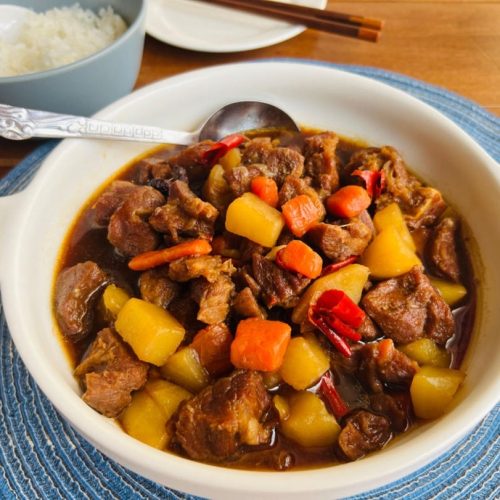
Braised Beef Brisket with Potatoes (Niu Nan Dun Tu Dou)

Equipment
- Wok or Heavy Pot (Dutch Oven)
- Kitchen Scale
Ingredients
Main Ingredients
- 2.2 lbs beef brisket approx. 1000g, cut into chunks
- 1 large potato peeled and cut into chunks
- 1 section carrot peeled and cut into chunks
Aromatics & Spices
- 1 stalk scallion cut into sections
- 8 slices ginger divided use (4 for blanching, 4 for stewing)
- 6 cloves garlic peeled
- 1 stick cinnamon bark approx 2g
- 30 Sichuan peppercorns
- 2 whole star anise
- 6 dried chili peppers optional for heat
Seasonings
- 2 tbsp oil approx 30g, adjust based on meat fat content
- 25 g rock sugar crushed
- 2 tbsp Shaoxing wine 30g total, divided use
- 2 tsp dark soy sauce 10g, preferably mushroom dark soy
- 2.5 tbsp light soy sauce 35g
- 1 tbsp oyster sauce 12g
- 2 tsp salt 11g, adjust to taste
- 1 tsp sesame oil to finish
- 1/4 tsp chicken essence optional
- 5 cups hot water 1200ml, for braising
Instructions
- Soak the beef brisket in cold water to thaw (if frozen) and release initial impurities.
- Place the beef in a pot with cold water, 1 tbsp (15g) Shaoxing wine, and 4 slices of ginger. Bring to a boil. Skim the scum, then remove the beef immediately.

- Rinse the hot beef thoroughly with WARM water. (Do not use cold water, or the meat will toughen).
- In a wok or pot, heat the oil and crushed rock sugar over low-medium heat. Stir until the sugar melts and turns a light yellow/amber color.
- Immediately add the beef chunks and stir-fry rapidly to coat them in the caramelized sugar.
- Add the scallions, remaining 4 slices of ginger, garlic, dried chilies, star anise, cinnamon, and Sichuan peppercorns. Stir-fry for 1 minute until fragrant.
- Add the salt, dark soy sauce, light soy sauce, oyster sauce, and the remaining Shaoxing wine. Stir-fry quickly to combine.

- Pour in the hot water (approx 1200ml) to cover the beef. Cover with a lid, reduce heat to low-medium, and simmer for 1 hour and 30 minutes.
- Meanwhile, peel and cut the potato and carrot into chunks. Rinse the potato chunks in water to remove excess surface starch.
- After 1.5 hours, add the potato and carrot chunks to the pot. Cover and simmer for another 10-15 minutes until the vegetables are soft.
- Turn off the heat. Stir in the sesame oil and chicken essence (if using). Serve hot with rice or noodles.
Notes
- Calories: 450 kcal
- Protein: 28g
- Carbohydrates: 18g
- Fat: 32g
- Sodium: 1100mg
- Allergens: Soy, Gluten (in soy sauce), Sesame.
- Disclaimer: Nutrition information is calculated using an ingredient database and should be considered an estimate. Garnishes and optional items are not included. Actual values vary.



Leave a Reply