If there’s one food that defines comfort for me, it’s a fluffy, savory steamed bun. Growing up in my parents’ Chinese restaurant in Sichuan, I must have eaten thousands. My dad, a chef for over 30 years, had his own version, but every region in China has its secret.
After I graduated from culinary school and spent 10 years traveling and cooking my way across the country, I tried countless bun fillings. Some were too dry, some too plain. But this recipe? This is the one I “locked in,” as we say.
This is my ultimate recipe for Savory Sauce Pork Buns (酱肉包, Jiàng Ròu Bāo). The secret isn’t just the rich, dark sauce; it’s the Sheng Shu Hun He (生熟混合馅) method—a game-changing technique that combines cooked and raw pork.

This restaurant-level trick guarantees the juiciest, most flavorful, and perfectly tender filling every single time. It’s so much better than what you’ll find in most shops, and I’m so excited to share this family secret with you.
What Are Savory Sauce Pork Buns (酱肉包)?
Unlike the sweet, red Char Siu Bao (BBQ Pork Buns) you might know from dim sum, Jiang Rou Bao are deeply savory. They are filled with a rich, dark, sauce-based pork filling, wrapped in a soft, slightly sweet, fluffy yeast dough, and then steamed to perfection.
The “Jiang” (酱) literally means “sauce,” which in this case refers to a base of sweet bean sauce and soy sauce that gives the filling its signature color and deep umami flavor.
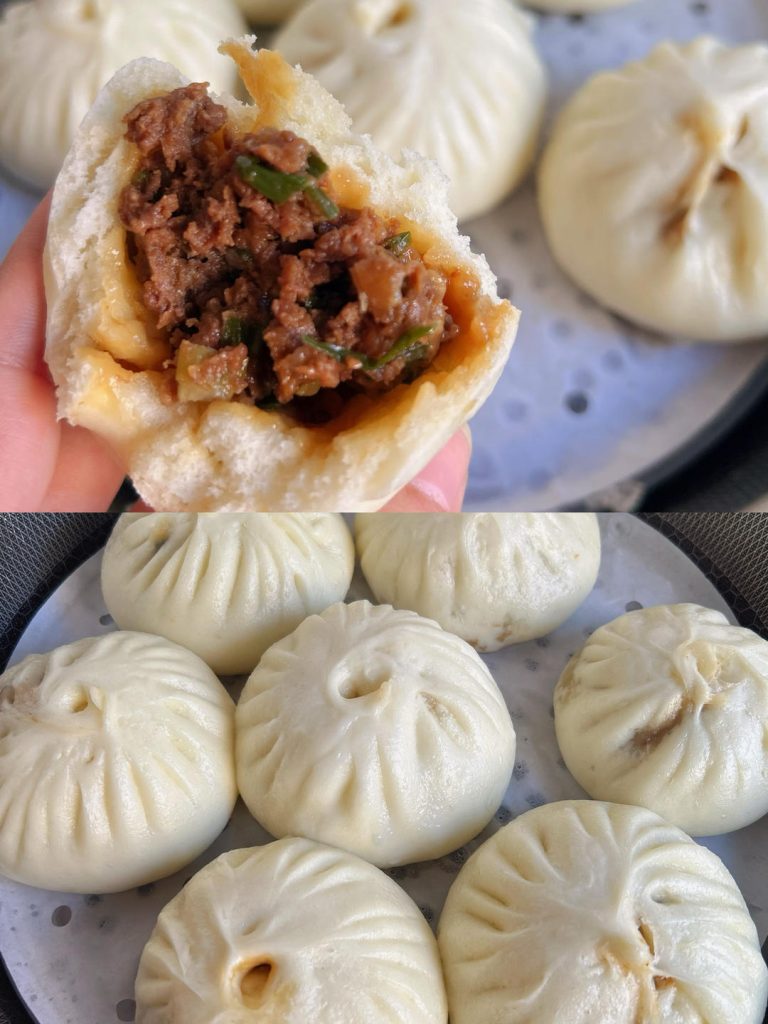
Why This Recipe Works (The “Cooked-Raw” Secret)
The magic of this recipe comes from the unique “cooked-raw” filling. Here’s why it’s the best method:
- Flavor from the Cooked Portion: We fry one-third of the pork with all the sauces first. This does two crucial things: it “blooms” the aromatics and sauces, unlocking a much deeper flavor than just mixing them in raw. It also renders some of the pork fat, which mixes with the sauce.
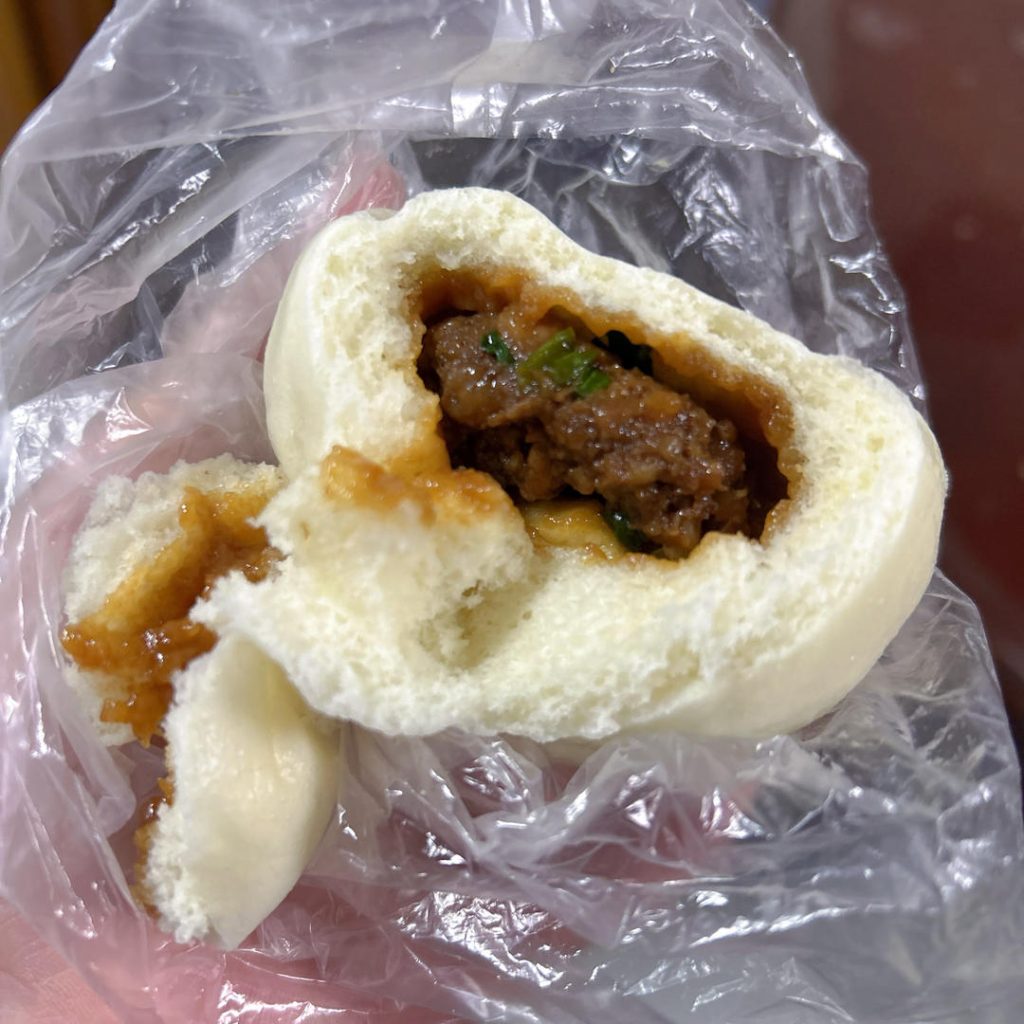
- Juiciness from the Melted Sauce: When this cooked mixture cools, the sauce and rendered fat solidify. Once you steam the bun, this “jellied” sauce melts, creating an incredibly rich, soupy filling that envelops the rest of the meat.
- Tenderness from the Raw Portion: The remaining two-thirds of the pork is mixed in raw. It gently poaches inside the bun as it steams, staying incredibly tender and delicate. It also absorbs all that molten, savory sauce from the cooked portion.
- The Fluffiest Dough: The dough uses a combination of yeast and baking powder for lift, plus a bit of lard (猪油). The lard is a classic baker’s secret that makes the buns whiter, softer, and fluffier (gèng bái gèng xuān ruǎn).
Key Ingredients & Substitutions
You’ll need a few key pantry items to get that authentic, deep flavor.
- Ground Pork: Do not use lean ground pork. The secret to a juicy bun is fat. I recommend using ground pork with at least 20-25% fat. If your supermarket only sells lean, ask the butcher to grind in some pork belly or pork fat.
- Sweet Bean Sauce (甜面酱, tián miàn jiàng): This is the soul of the “sauce” filling. It’s a thick, dark, and salty-sweet paste made from fermented wheat flour.
- Where to Buy: You can find this at any Asian supermarket or online. Look for brands like Lee Kum Kee or Juan Cheng.
- Substitution: It is not the same as Hoisin sauce, but Hoisin is the closest substitute. If you use Hoisin sauce, you may want to reduce the sugar in the recipe slightly, as Hoisin is often sweeter.
- Lard (猪油, zhū yóu): This is the secret to a soft, bright white, professional-looking bun.
- Where to Buy: You can find rendered lard in blocks at most supermarkets, often in the baking aisle or the international/Mexican food section. You can also render your own lard (it’s easy!).
- Substitution: You can substitute with vegetable shortening or solid-state (not melted) coconut oil for a similar texture.
- Thirteen-Spice Powder (十三香, shí sān xiāng): This is a complex, aromatic Chinese spice blend. If you can’t find it, you can substitute Chinese Five-Spice Powder, but use about half the amount as it’s more potent and has a stronger anise flavor.
- Scallion-Ginger Water (葱姜水, cōng jiāng shuǐ): This is a classic restaurant technique. Instead of adding raw, chunky ginger or scallion to the filling (which can have a harsh bite), we infuse warm water with their flavor. This liquid is then beaten into the meat, adding moisture and a clean, subtle aroma.
How to Make Savory Pork Buns (酱肉包)
This recipe is all about the preparation. Once you have your components, the assembly is fun and easy.
Step 1: Prepare the “Mise en Place”
- Make the Scallion-Ginger Water: Finely chop 2-3 scallions and slice 1 inch of ginger. Place them in a small bowl and pour 1 cup (240ml) of warm water over them. Let it steep for at least 20 minutes while you prep other ingredients.
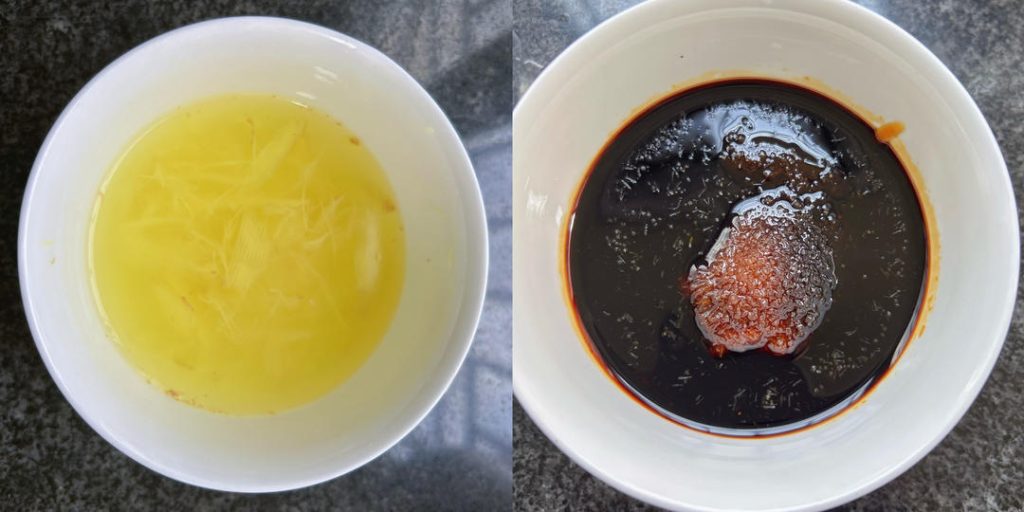
- Make the Sauce Mixture: In a small bowl, whisk together the thirteen-spice powder, sweet bean sauce, oyster sauce, dark soy sauce, light soy sauce, chicken bouillon (if using), and 20g (1.5 tbsp) of sugar.
- Divide the Pork: Separate your 800g of ground pork: 1/3 (about 265g) in a small bowl, and the remaining 2/3 (about 535g) in a very large mixing bowl.
- Chop Aromatics: Finely chop the 1/2 cup of scallions for the final filling and set them aside.
Step 2: Make the “Cooked-Raw” Filling
This is the most important step for the flavor.
- Heat a wok or large skillet over medium-high heat. Add 1 tbsp of neutral oil.
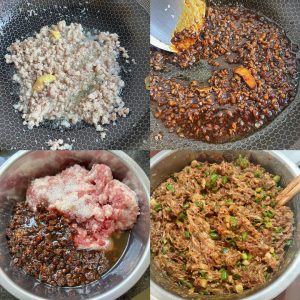
- Add the 1/3 portion of ground pork. Stir-fry, breaking it up with your spatula, until it’s fully cooked and browned.
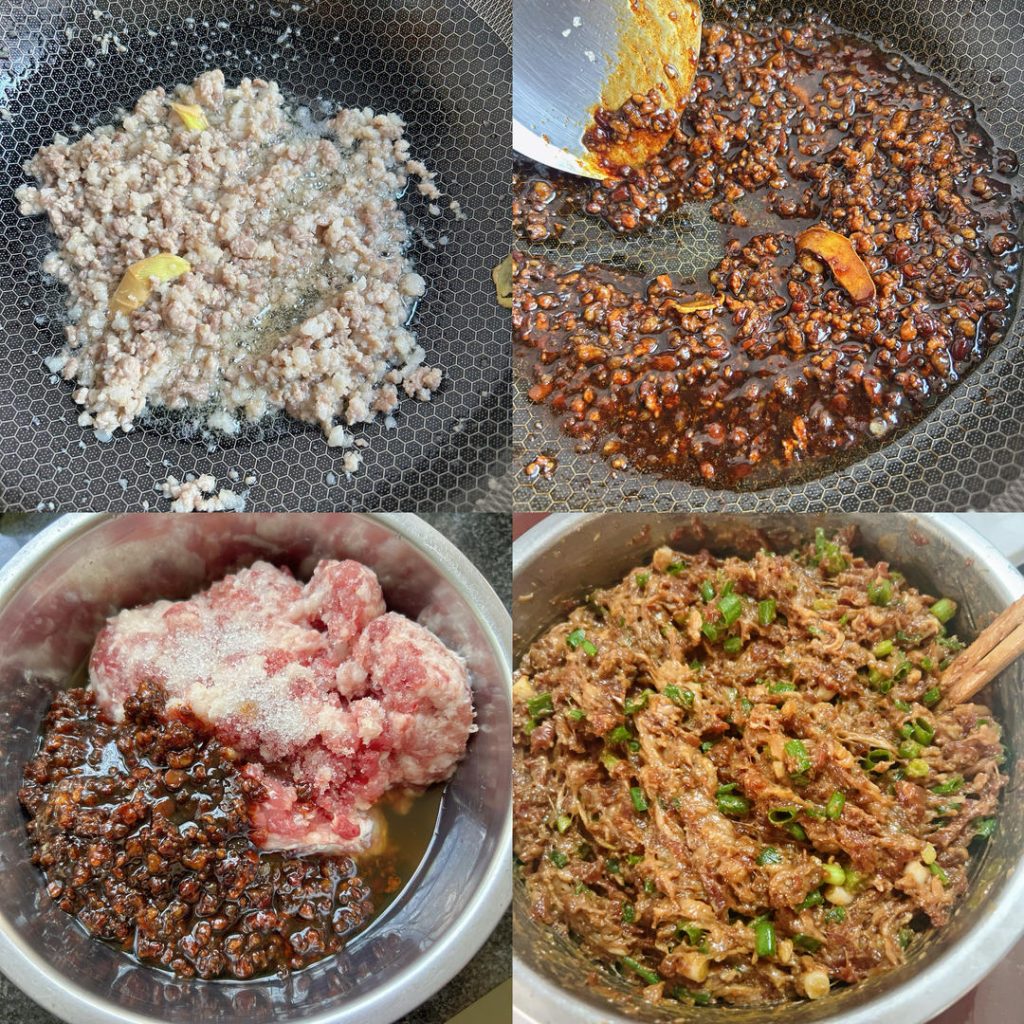
- Pour in the prepared sauce mixture. Turn the heat down to low and let it simmer, stirring constantly, for 3-5 minutes. The sauce will darken, thicken, and the oils will start to separate from the meat. This step, “炒出油脂” (chǎo chū yóu zhī), is crucial for blooming the spices.
- Turn off the heat. Scrape the cooked pork mixture onto a plate and spread it out. Let it cool completely. You can place it in the fridge to speed this up.
- Once cooled, add the cooked pork mixture to the large bowl containing the 2/3 raw pork. Add the 1/2 cup of freshly chopped scallions.
- Now, strain your scallion-ginger water (discard the solids). We’ll use about 1/2 cup (120ml) of this water.
- Add the scallion-ginger water to the meat mixture, a few tablespoons at a time. Using chopsticks or a stiff spatula, stir vigorously in one direction only. Do not add more water until the previous batch is fully absorbed.
- As you stir, the meat will transform from a loose mince into a sticky, light-colored paste that “pulls” from the side of the bowl. This is called “上劲” (shàng jìn), and it’s the technique that locks moisture into the filling.
- Cover the bowl and chill the filling in the refrigerator for at least 30-60 minutes. This solidifies the fats and makes the sticky filling much easier to wrap.
Allergen Note: This recipe contains Gluten (flour, soy sauce, sweet bean sauce) and Soy (soy sauce, oyster sauce).
Step 3: Make the Single-Proof (一发) Dough
In my dad’s restaurant, we used traditional proofing methods. But for home cooks, the “yi fa” or single-proof method is a fantastic time-saver that still results in a wonderfully fluffy bun.
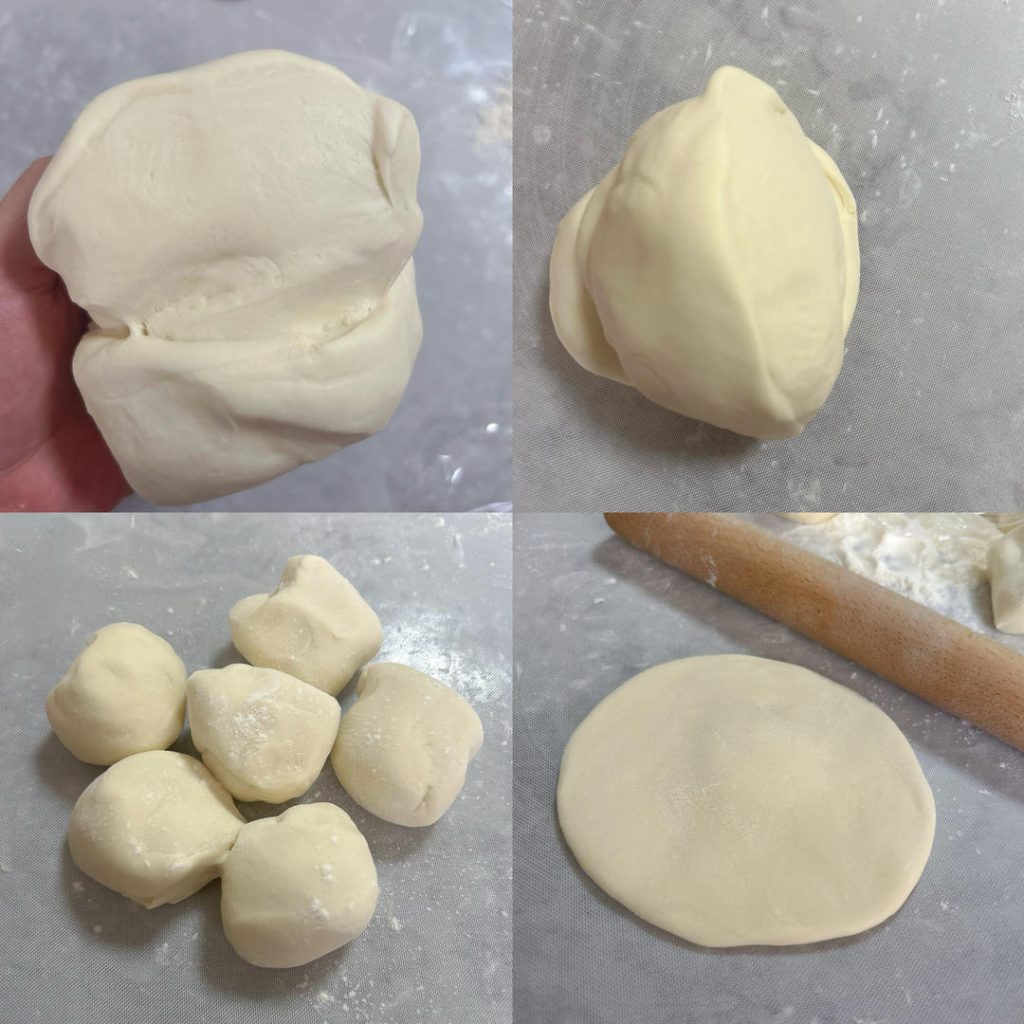
- In the bowl of a stand mixer (or a large bowl), whisk together the all-purpose flour, baking powder, yeast, and 15g (1 tbsp) of sugar.
- Add the lukewarm water (make sure it’s 105-115°F or 40-46°C to activate the yeast) and the softened lard (or shortening).
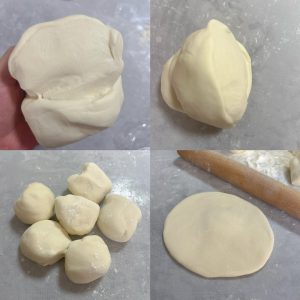
- Mix with a dough hook on low (or by hand) until a shaggy dough forms. Increase the speed to medium-low and knead for 8-10 minutes (or 12-15 minutes by hand on a counter) until the dough is perfectly smooth, soft, and elastic.
- We will not proof the dough in the bowl. Immediately turn it out onto a lightly floured counter.
Step 4: Assemble and Proof the Buns
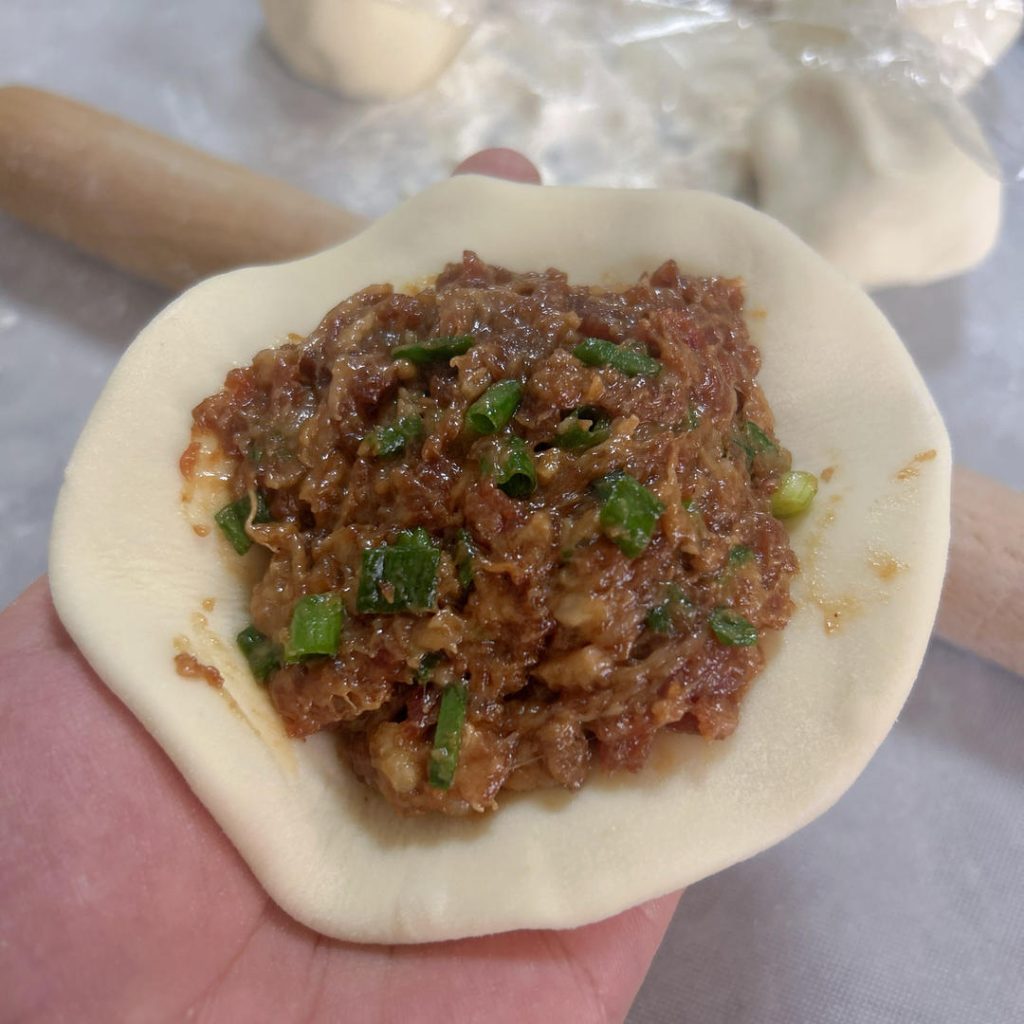
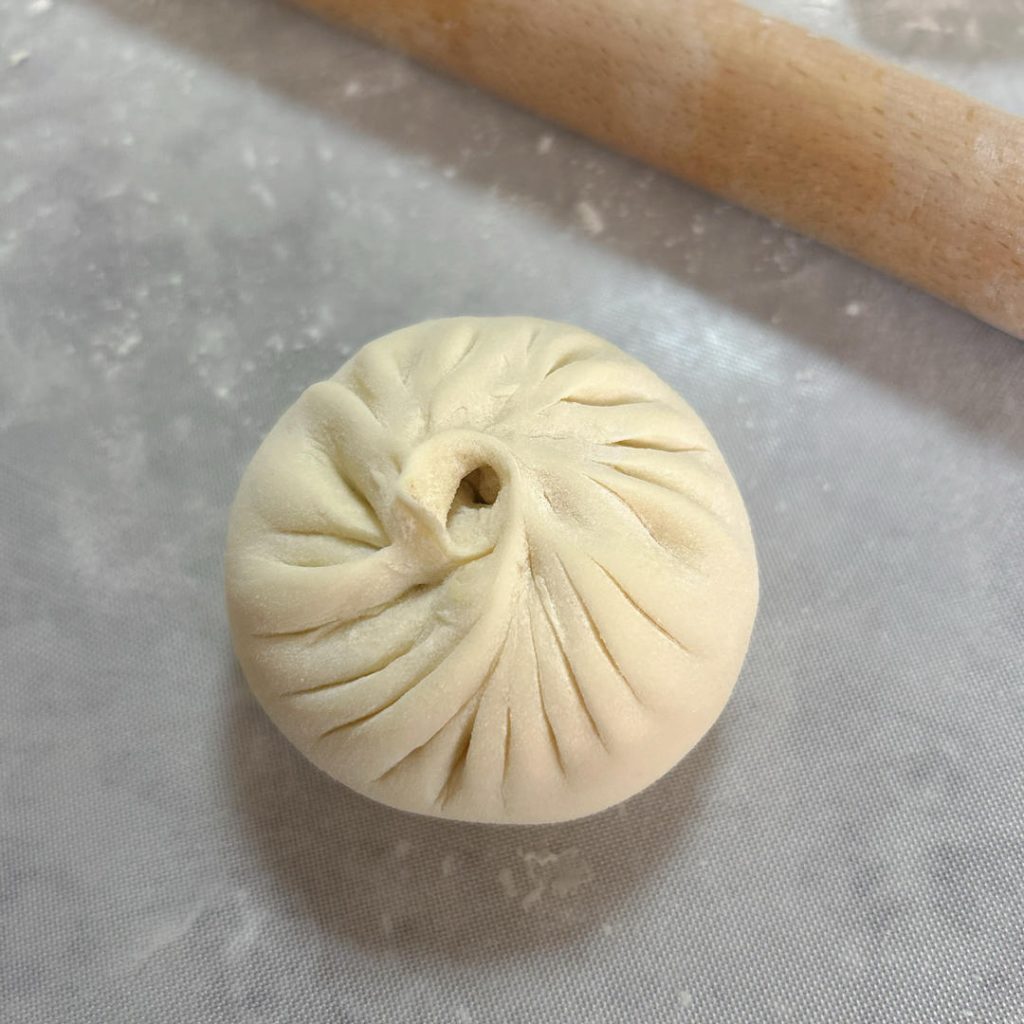
- Roll the dough into a long, even log. Divide it into 18 equal pieces (each will be about 40g). Keep the pieces covered with a damp cloth or plastic wrap so they don’t dry out.
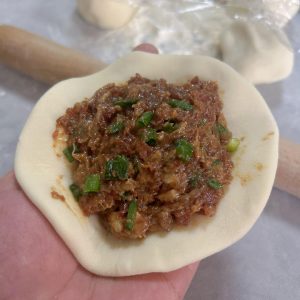
- Take one piece and press it flat. Using a small rolling pin, roll it into a circle about 4 inches (10cm) wide. The key is to roll the edges thin while leaving the center thicker. This “belly” in the middle prevents the saucy filling from leaking.
- Place a generous scoop of the chilled filling (about 2 tbsp, or 40-45g) in the center of the wrapper.
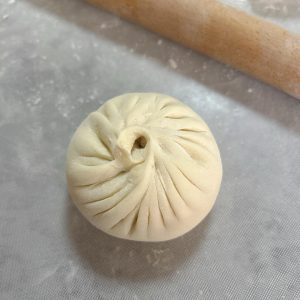
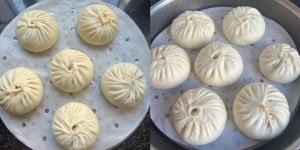
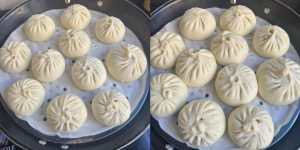
- To wrap, pleat the bun closed. Use your thumb to push the filling down as you use your other hand to pinch and fold the thin edges, rotating the bun as you go. Gather the pleats at the top and pinch the final opening tightly to seal.
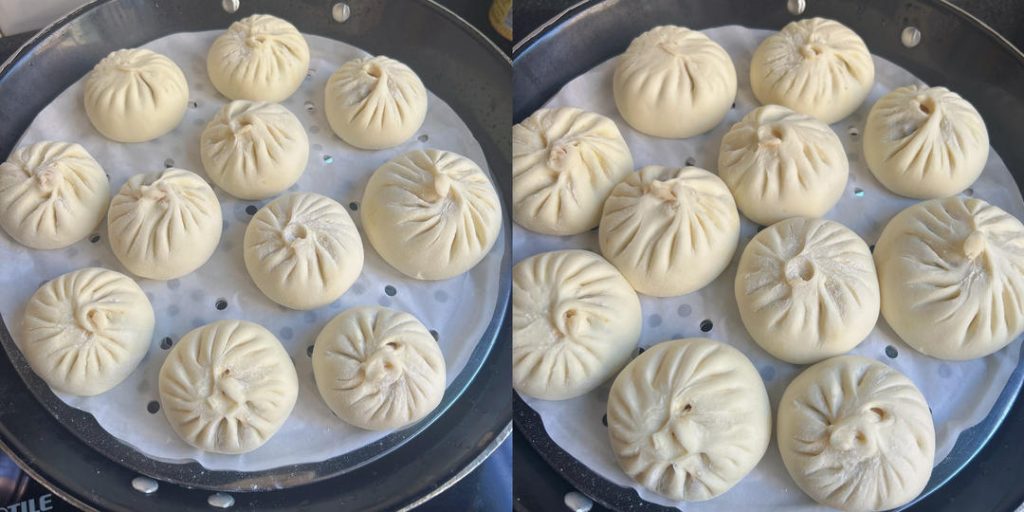
- Cut 18 small squares of parchment paper (about 3×3 inches). Place each finished bun on its own parchment square. This is essential to prevent them from sticking to the steamer.
- Arrange the buns in your steamer basket (bamboo or metal). You will need to work in batches. Make sure to leave at least 2 inches of space between each bun—they will puff up significantly.
- Cover the steamer with its lid. Let the buns proof at room temperature (70-80°F / 21-27°C) for 30-60 minutes. They are ready when they have visibly puffed up, are lighter, and when you gently press one, the indentation springs back slowly.
Step 5: Steam the Buns
- Fill the bottom pot of your steamer (or your wok) with a few inches of cold water.
- Place the steamer basket(s) containing the proofed buns over the cold water.
- Turn the heat on high. Once the water comes to a rolling boil, set a timer for 12 minutes of active steaming. The cold water start gives the yeast a final “oven spring,” making the buns extra fluffy.
- Food Safety: Steaming for 12 minutes at a full boil will ensure the internal temperature of the pork filling easily reaches 160°F (71°C), making it perfectly safe to eat.
- When the timer goes off, turn off the heat.
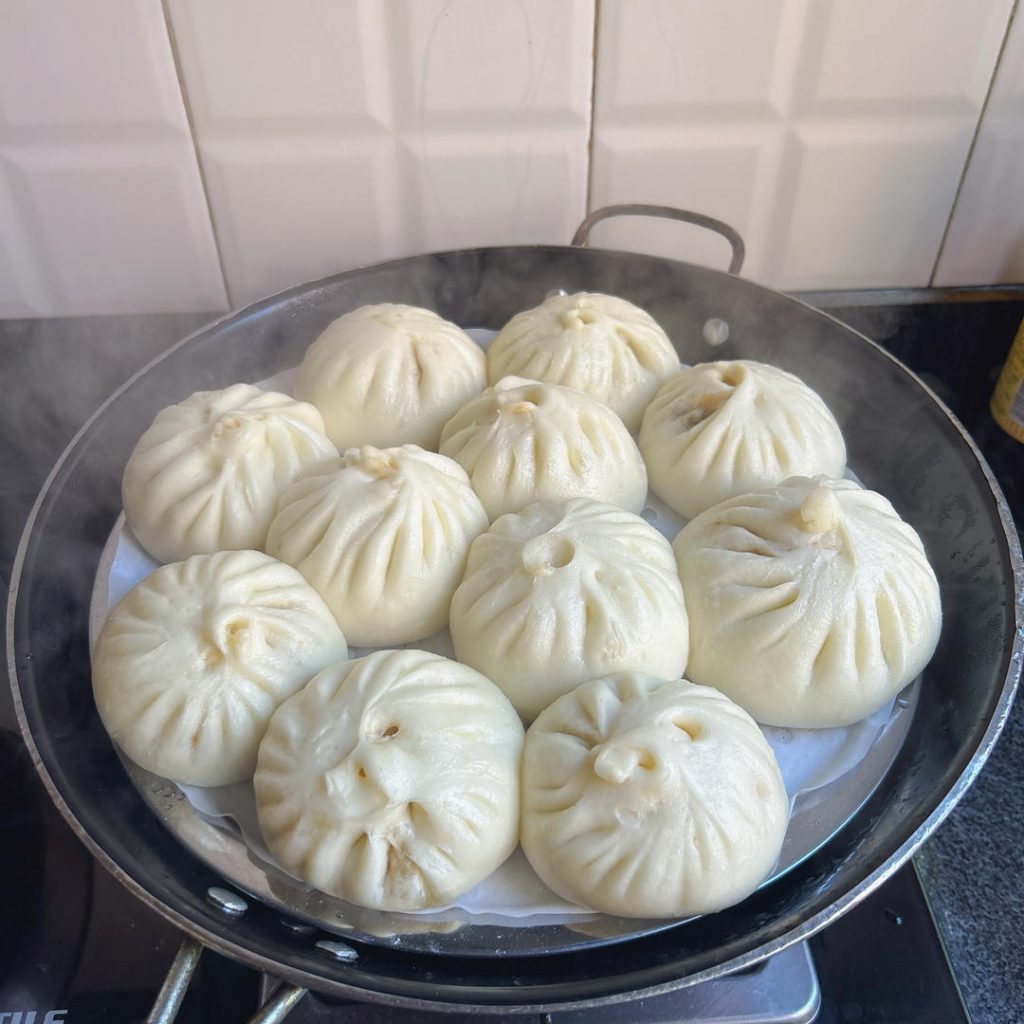
- DO NOT OPEN THE LID. Let the buns rest, undisturbed, for 3-5 minutes. This is the most critical step to prevent them from collapsing. The sudden drop in temperature and pressure will cause a hot, puffed-up bun to shrivel. After 3-5 minutes, you can safely remove the lid.
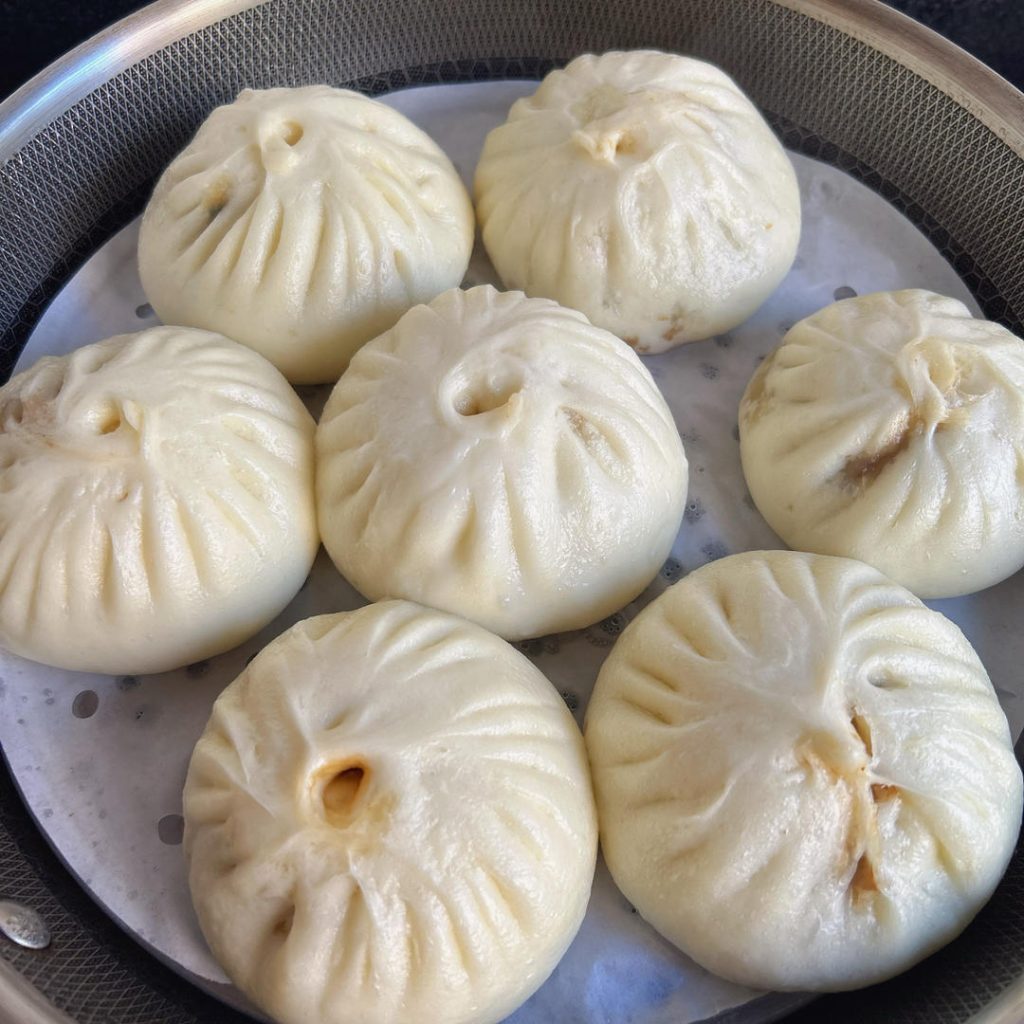
How to Serve and Store Your Buns
Serving: These buns are best served immediately, while they are steaming hot. The filling will be molten and soupy, so be careful on the first bite! They are delicious on their own, but I also like to serve them with a side of Chinese black vinegar or my Homemade Chili Garlic Sauce for dipping.
Storing Leftovers: Once cooled, store leftover steamed buns in an airtight container in the fridge for up to 3 days.
Reheating:
- Best Method (Steam): Re-steam the buns for 5-7 minutes until hot and fluffy again.
- Quick Method (Microwave): Wrap a bun in a damp paper towel and microwave for 45-60 seconds until heated through. The texture won’t be as good as steaming, but it works in a pinch.
Freezing (Make-Ahead): This recipe is perfect for freezing!
- Assemble the buns but do not proof them.
- Place the un-proofed, un-steamed buns on a parchment-lined baking sheet, making sure they don’t touch.
- Freeze until solid, about 1-2 hours.
- Transfer the frozen buns to a freezer bag. They will keep for up to 3 months.
- To cook: Do not thaw! Place the frozen buns directly onto parchment paper in your steamer. Steam over high heat (using the same cold-water-start method) for about 18-20 minutes.
Frequently Asked Questions (FAQ)
Q: Why did my buns collapse and wrinkle after steaming? A: You almost certainly opened the lid too soon! You must let the buns rest off-heat for 3-5 minutes. This allows the internal pressure to equalize. It could also be that your dough was over-proofed (it collapsed when you touched it before steaming).
Q: Why was my filling dry? A: Two likely reasons: 1) You used pork that was too lean. You need fatty pork (20-25% fat) for the juiciness. 2) You didn’t add enough scallion-ginger water, or you didn’t beat it in one direction long enough to properly “lock” the moisture into the meat proteins.
Q: Can I use “bun flour” instead of all-purpose flour? A: Yes. “中筋面粉” (zhōng jīn miàn fěn) is all-purpose flour. However, you can use low-protein “bun flour” (often bleached) if you can find it. It will produce an even whiter and fluffier bun, but all-purpose flour works wonderfully.
Q: My filling was hard to wrap. A: You must chill the filling until it’s firm. The fat and gelatin from the sauce need to solidify. Trying to wrap this filling at room temperature is very difficult.
Authoritative References
- Food Safety: For all ground meat, the USDA (United States Department of Agriculture) recommends cooking to an internal temperature of 160°F (71°C) to ensure it is safe to consume. Steaming for 12-15 minutes at a full boil will reliably achieve this.
- Technique: The da shui (打水) method of beating liquid into meat is a cornerstone of Chinese dumpling and bun making, essential for creating a juicy, tender filling. This technique is detailed by many culinary experts, including Fuchsia Dunlop in her book Land of Fish and Rice.
Savory Sauce Pork Buns (酱肉包)

Equipment
- Steamer Basket (Bamboo or Metal)
- Wok or large pot (for steaming)
- Stand Mixer (Optional, for dough)
- Parchment paper
Ingredients
Bao Dough
- 5 cups all-purpose flour (approx. 640g)
- 1 1/3 cups lukewarm water (approx. 320g or 320ml), 105-115°F or 40-46°C
- 2 tsp baking powder (approx. 7g)
- 2 tsp active dry yeast (approx. 7g), or 20g fresh yeast
- 1 tbsp granulated sugar (approx. 15g)
- 1 tbsp lard or vegetable shortening (approx. 15g), softened
Savory Pork Filling
- 1.75 lbs ground pork (800g), at least 20% fat
- 1/2 cup Scallion-Ginger Water (120ml), see Notes for instructions
- 1 tsp thirteen-spice powder (approx. 3g), or 1/2 tsp five-spice powder
- 2 tbsp sweet bean sauce (30g), NOT hoisin sauce
- 2 tbsp oyster sauce (30g)
- 1 1/2 tbsp dark soy sauce (20g)
- 1 1/2 tbsp light soy sauce (20g)
- 1 tsp chicken bouillon powder (6g), or granulated chicken stock, optional
- 1 1/2 tbsp granulated sugar (20g)
- 1 tbsp neutral oil (e.g., canola or vegetable), for frying
- 1/2 cup scallions finely chopped
Instructions
- Prep Filling Components: Make the Scallion-Ginger Water (see Notes). In a small bowl, mix all sauce ingredients (thirteen-spice through 20g sugar). Divide pork: 1/3 (265g) in a small bowl, 2/3 (535g) in a large mixing bowl.

- Make the Cooked Filling: Heat 1 tbsp oil in a wok or skillet over medium-high heat. Add the 1/3 pork portion and stir-fry until cooked. Add the sauce mixture, turn heat to low, and simmer, stirring, for 3-5 minutes until the sauce thickens and oil begins to separate. Scrape onto a plate and let cool completely.

- Make the Full Filling: Add the cooled cooked pork to the large bowl with the 2/3 raw pork. Add the finely chopped scallions.
- Beat in Water (上劲): Gradually add the 1/2 cup (120ml) of strained Scallion-Ginger Water to the meat mixture, a few tablespoons at a time. Stir vigorously and continuously in one direction until all the water is absorbed and the filling becomes a light-colored, sticky paste. Cover and chill in the refrigerator for at least 30-60 minutes.
- Make the Dough: In a stand mixer (or large bowl), combine all dough ingredients (flour, lukewarm water, baking powder, yeast, 15g sugar, and lard). Knead with a dough hook for 8-10 minutes (or 12-15 mins by hand) until the dough is perfectly smooth and elastic.
- Assemble Buns: Do not let the dough rise. Immediately divide it into 18 equal pieces (about 40g each). Roll each piece into a 4-inch (10cm) circle, keeping the center thick and edges thin. Place a generous scoop (about 2 tbsp or 40-45g) of the chilled filling in the center.
- Wrap: Pleat the edges of the wrapper up and around the filling, pinching the folds together as you rotate the bun. Pinch the final opening at the top tightly to seal completely.
- Proof the Buns: Place each bun on a small square of parchment paper. Arrange them in your steamer basket, leaving at least 2 inches of space between them. Cover the steamer and let the buns proof at room temperature for 30-60 minutes, until they have visibly puffed up and feel light.
- Steam the Buns: Place the steamer basket over a pot or wok filled with cold water. Turn the heat to high. When the water reaches a full, rolling boil, set a timer and steam for 12 minutes.
- Rest (Crucial Step!): Turn off the heat. DO NOT open the lid. Let the buns rest undisturbed for 3-5 minutes. This prevents them from collapsing. After resting, remove the lid, being careful of the hot steam, and serve immediately.
Notes
Recipe Notes
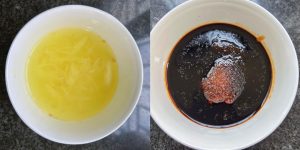
- Scallion-Ginger Water: To make 1/2 cup (120ml) of infused water, steep 3-4 chopped scallions and 1 inch of sliced ginger in 1 cup of warm water for 20 minutes. Strain well before using, pressing on the solids to release all their liquid. Discard the solids.
- Lard Substitute: You can use equal amounts of vegetable shortening or solid-state (not melted) refined coconut oil for a similarly soft and white dough.
- Storage: Store cooled, steamed buns in an airtight container in the fridge for 3-4 days. Reheat by steaming for 5-7 minutes.
- Freezing: Freeze un-proofed, un-steamed buns on a baking sheet until solid, then transfer to a freezer bag. Steam directly from frozen for 18-20 minutes.
- Allergens: Contains Gluten (flour, soy sauce, sweet bean sauce) and Soy (soy sauce, oyster sauce).












Leave a Reply