Garlic chives have a short, glorious window every spring, and braised tofu with chives is what my family makes the moment they show up at the market. The tofu gets pan-fried first until its edges go crisp and golden, then it goes back into the wok with a savory sauce and a handful of chives that wilt in seconds. What lands on the plate is soft, juicy tofu with a glossy, rice-loving sauce and that sweet, faintly oniony bite only fresh chives can give.
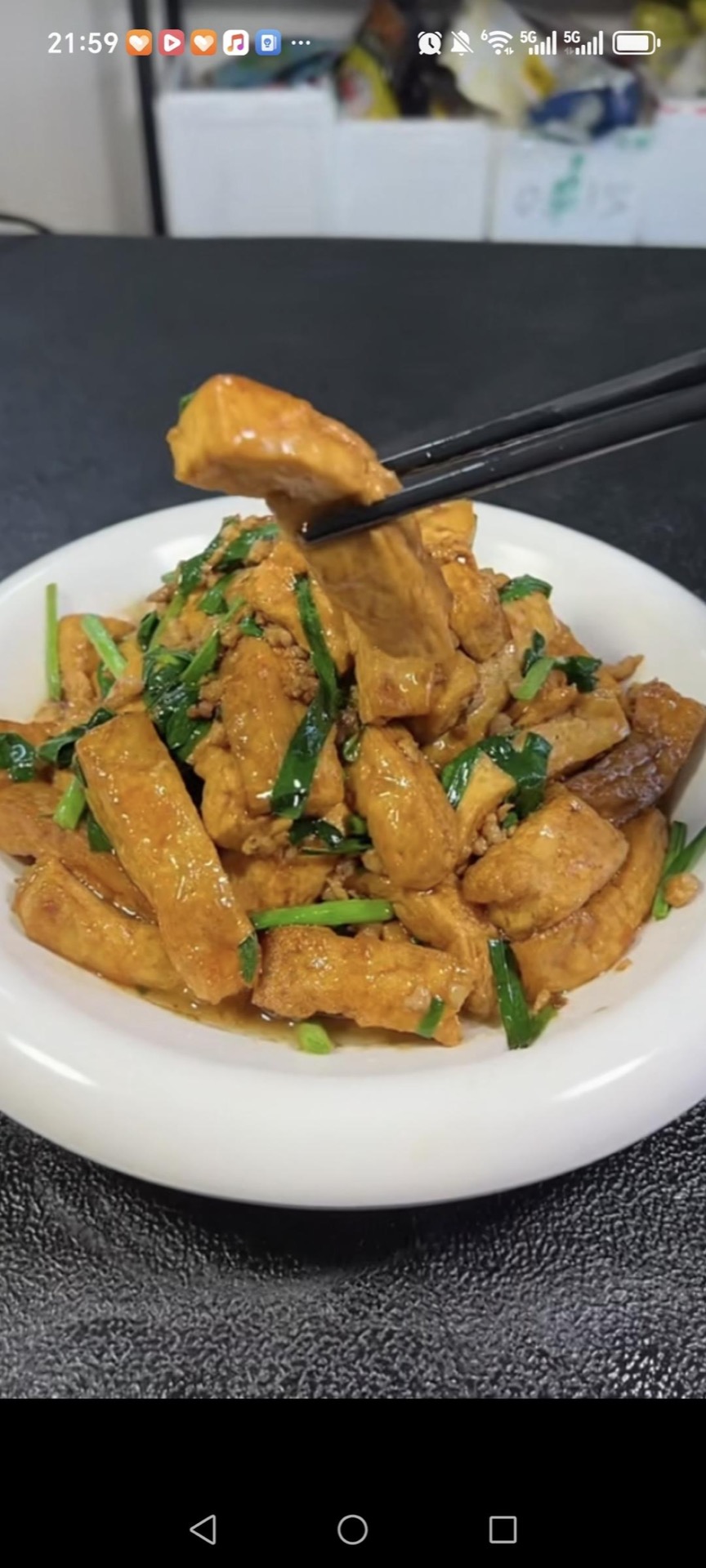
It is one of those dishes that looks like nothing much and then disappears from the table in five minutes. If you already cook Chinese food at home, you probably have every ingredient except the chives. If you do not, this is a very friendly place to start — the technique is simple, the timing is forgiving, and the whole thing comes together in about half an hour.
What makes it worth learning is the texture. Firm tofu straight from the pack is watery and bland, but a quick pan-fry gives it a chewy, golden shell that later drinks up the sauce instead of diluting it. That is the entire trick behind 韭菜烧豆腐, and once you have it, you can apply it to a dozen other tofu dishes.
What Is Braised Tofu with Chives?
Braised tofu with chives — 韭菜烧豆腐, or jiucai shao doufu — is a homestyle northern Chinese dish of pan-fried tofu strips braised briefly in a savory sauce with garlic chives. The name is literal: jiucai means garlic chives, shao means to braise, and doufu is tofu. It belongs to the same family of quick braises as mapo tofu and home-style tofu, but it is milder, sweeter, and far less spicy.
The dish is built on a two-stage method that shows up all over Chinese home cooking. First the tofu is fried, which drives off surface moisture and creates a porous, slightly chewy crust. Then it is simmered in a small amount of seasoned liquid, which the crust absorbs like a sponge. The result is tofu that tastes seasoned all the way through rather than just on the surface.
Garlic chives are the other half of the equation. They are not the same as the thin green onions you might have in the fridge — flat, broad, and mildly garlicky, with a sweetness that sharpens when they are cooked. They take literally thirty seconds to cook, so they go in at the very end. In northern China this dish is a spring specialty, made when the first tender chives of the season appear.
If you like this style of tofu, braised tofu and mushrooms is the same idea with a deeper, earthier sauce — a good next step once you are comfortable with the fry-then-braise method.
For a heartier, meatier version, braised tofu with minced meat keeps the same pan-fried tofu base but leans on pork for richness — the sauce comes out thicker and more intensely savory.
And if you want the simplest possible version of this technique, braised tofu with scallions swaps the chives for scallions and comes together in about fifteen minutes.
If you like this kind of cooking, my braised tofu and mushrooms is the closest recipe on the site — the same technique and the same pantry.
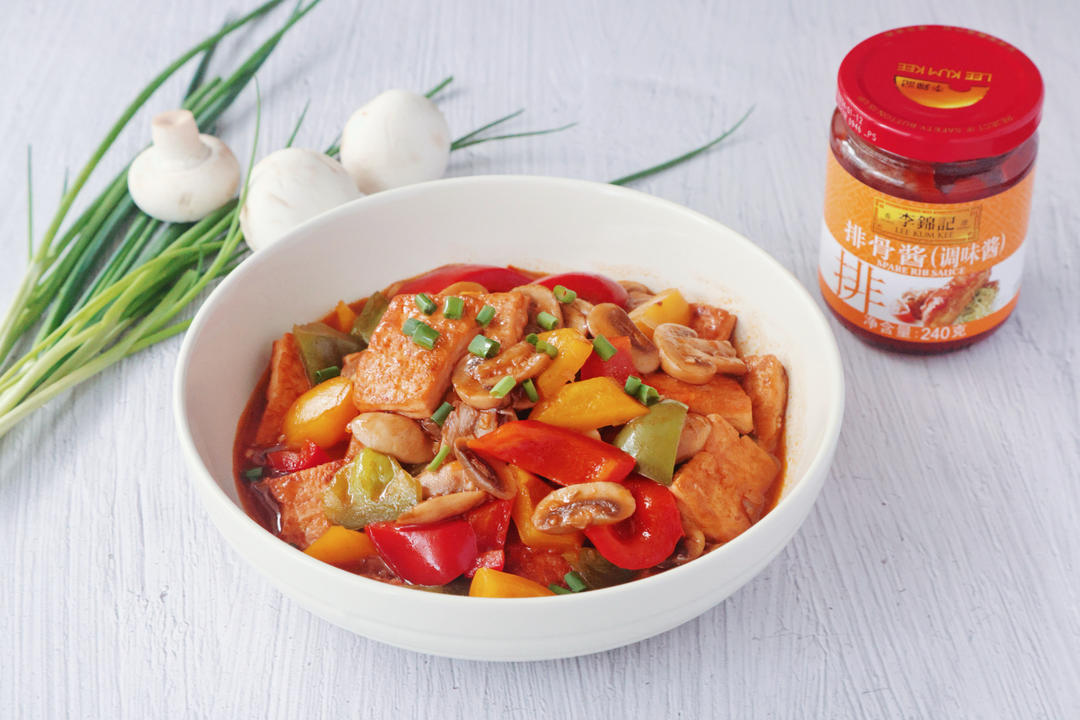
1Braised Tofu and MushroomsA rich, savory vegetarian dish featuring pan-fried tofu and mushrooms braised in a chef-secret Spare Rib sauce. Tastes better than meat!Check out this recipe
Cooked this way once, you will want the next one too: braised tofu with minced meat starts from the same base and the same pan.
2Braised Tofu with Minced Meat (Rou Mo Shao Dou Fu)A savory, slightly spicy Sichuan homestyle dish featuring firm tofu braised with minced meat and rich Doubanjiang sauce. Known as a ‘rice killer’ for its ability to make you eat bowl after bowl of rice!Check out this recipe

For the next cook from the same playbook, braised tofu with scallions is the recipe I point people to.
3Braised Tofu with Scallions (Cong Shao Doufu)A super simple, 15-minute Chinese home-style dish. Tender pan-fried tofu is braised in a rich, savory scallion-infused sauce. An easy and delicious “rice thief”!Check out this recipe
Ingredient Notes
Firm tofu. Use firm or extra-firm block tofu, not silken and not soft. Silken tofu will fall apart the moment it hits the wok, and even medium-firm tends to shred during the toss. Firm tofu holds its shape, browns properly, and has enough structure to soak up sauce without collapsing.
Garlic chives (韭菜). These are flat, wide, dark green blades sold in bundles at Asian markets, usually labeled garlic chives, Chinese chives, or nira. They taste like a cross between a scallion and a mild garlic clove. Regular chives are a poor substitute — too thin and too sharp — and scallions are a different dish entirely, though a workable one in a pinch.
Light soy sauce vs. dark soy sauce. Light soy sauce (生抽) is your everyday seasoning — salty and clean. Dark soy sauce (老抽) is thicker, less salty, and mostly there for color, which is why this recipe uses a full tablespoon of one and only a teaspoon of the other. Skip the dark soy and the dish will still taste right, just paler.
Oyster sauce. This is the quiet workhorse of the sauce, adding body and a rounded briny sweetness. Vegetarian oyster sauce made from mushrooms works well and is what I use when cooking for friends who avoid shellfish.
Shaoxing wine. A splash goes in with the sauces to deglaze and add aroma. Dry sherry is the standard substitute; do not use cooking wine labeled “cooking wine,” which is heavily salted.
Ground pork. Optional but traditional. It contributes fat and savoriness that makes the sauce taste fuller. You can leave it out entirely, or swap in a handful of rehydrated shiitake mushrooms for a vegetarian version.
Cornstarch slurry. One teaspoon of cornstarch mixed with two teaspoons of cold water, stirred in at the end. This is what turns a thin braising liquid into a sauce that clings to the tofu instead of pooling at the bottom of the plate.
Ingredients
Here is everything you need for four servings as part of a multi-dish Chinese meal, or two generous portions over rice.
- 1 block (about 14 oz / 400 g) firm tofu, drained and cut into thick strips
- 2 tbsp vegetable oil, for pan-frying, plus a little more for the second stage
- 1 pinch salt, for the pan
- 4 oz (115 g) ground pork, optional
- 1 bunch (about 6 oz / 170 g) garlic chives, cut into 2-inch lengths
- 2 tbsp light soy sauce
- 1 tsp dark soy sauce
- 1 tbsp oyster sauce
- 1 tbsp Shaoxing wine
- 1 tsp sugar
- 1 tsp chicken bouillon, or 1/4 tsp bouillon powder
- 1/4 cup (60 ml) hot water
- 1 tsp cornstarch mixed with 2 tsp cold water
Equipment Needed
You do not need much for this one, and none of it is specialty equipment.
- A wok or a wide skillet. A carbon steel wok is ideal because its curved sides let you toss the tofu gently without a lot of vertical motion. A 12-inch nonstick or cast iron skillet works perfectly well, and honestly a nonstick skillet is more forgiving for a first attempt since the tofu will not stick.
- A cutting board and a sharp knife. You want clean, even cuts on the tofu so the pieces fry at the same rate. A dull knife crushes tofu rather than slicing it.
- A slotted spoon or spider strainer. Essential for lifting the fried tofu out of the oil and leaving the oil behind.
- A small bowl and a fork. For whisking the cornstarch slurry, which must be mixed fresh right before it goes into the wok.
- Paper towels or a wire rack. For draining the fried tofu.
One note on pans: if you are using a nonstick skillet, keep the heat at medium. Nonstick coatings degrade quickly above their rated temperature, and tofu needs only a moderate, steady heat to brown properly anyway.
Why This Recipe Works
Frying first, braising second. Tofu is roughly 85 percent water, which is why it tastes like nothing straight from the package and why it refuses to brown when you crowd it into a pan. Pan-frying drives off that surface moisture and creates a textured, porous crust. When the tofu then goes into the braising liquid, that crust absorbs sauce instead of repelling it. This is the single most important step in the recipe.
Salting the oil. Sprinkling a pinch of salt into the hot oil before the tofu goes in does two things: it seasons the tofu from the outside as it fries, and it reduces the oil spatter caused by the tofu’s surface moisture. This is a standard home-kitchen move in northern China.
A small amount of liquid. Braising does not mean drowning. A quarter cup of hot water is enough to create steam and carry the seasonings into the tofu, and it reduces down quickly into a glaze. Too much water and you end up boiling the crisp crust off the tofu.
Chives at the very end. Garlic chives are delicate. They release their sweetness and aroma within about thirty seconds of hitting a hot wok, and after a minute they go limp and dull. Adding them together with the slurry — the last thing that happens — keeps them bright green and slightly crisp.
Why hot water and not cold? Adding cold liquid to a hot wok drops the pan temperature sharply and can make the sauce seize before it comes together. Hot water keeps the braise at a steady simmer, so the tofu absorbs seasoning evenly instead of stewing.
Prep & Mise en Place
This dish moves fast once the wok is hot, so get everything ready before you turn on the burner. Total hands-on prep is about fifteen minutes.
1. Drain and press the tofu. Take the block out of its packaging, drain it, and set it on a plate lined with paper towels. Put another layer of paper towels on top and a light weight — a small plate or a can — on top of that. Let it sit for 10 to 15 minutes. You do not need to press it for an hour; you just want the surface dry enough that it browns rather than steams. If you are short on time, pat it thoroughly dry with towels and skip the weight.
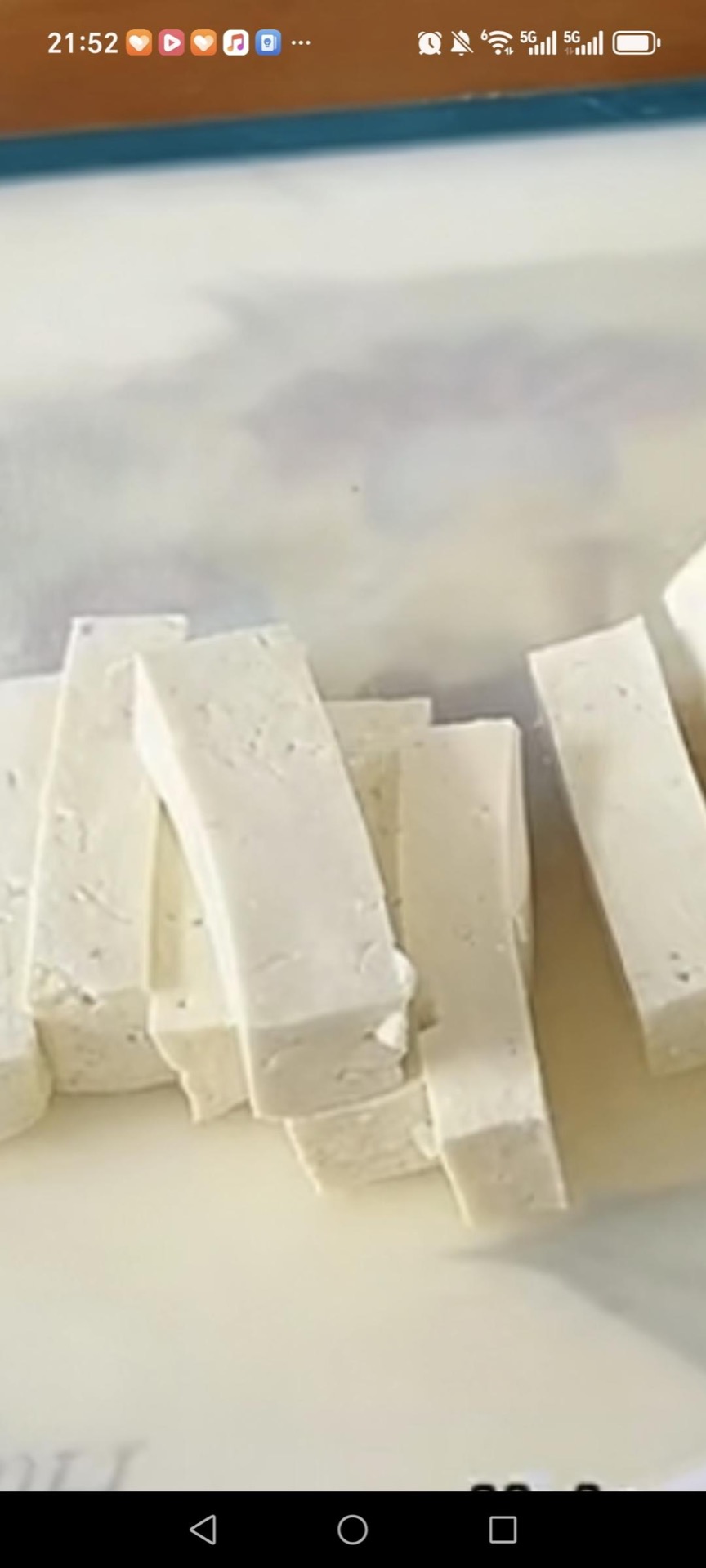
2. Cut the tofu into strips. Slice the block into slabs about 1/2 inch thick, then cut each slab into strips roughly 3 inches long and 1/2 inch wide. Even sizing matters more than exact size here — uneven pieces brown unevenly.
3. Trim and cut the chives. Rinse the chives well, since grit hides between the flat blades. Shake them dry, trim off the root ends and any tough tips, then cut into 2-inch lengths. Keep the thicker white and light green parts separate from the tender green tops if you want to be precise, though for this dish a single pile is fine.
4. Mix the sauce. In a small bowl, combine the light soy sauce, dark soy sauce, oyster sauce, Shaoxing wine, sugar, and chicken bouillon. Stir until the sugar dissolves. Having this pre-mixed means you are not measuring individual bottles over a screaming hot wok.
5. Mix the slurry. In a separate small bowl, whisk the cornstarch with the cold water until smooth. Do this right before you need it — cornstarch settles to a hard layer within a few minutes and needs a fresh stir.
6. Have the water hot. Keep about a quarter cup of hot water ready, either from a kettle or a measuring cup microwaved for 30 seconds.
With the tofu drained, the chives cut, the sauce mixed, and the slurry ready, you are set. From here the cooking takes about ten minutes.
Cooking Process
Step 1 — Cut the Tofu
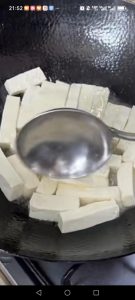
Cut the drained block of firm tofu into thick strips, roughly 3 inches long and 1/2 inch wide, keeping them as even as you can so they brown at the same rate.
Step 2 — Heat the Oil and Salt
Heat a wok over medium heat, add the vegetable oil, and sprinkle in a pinch of salt once the oil starts to shimmer.

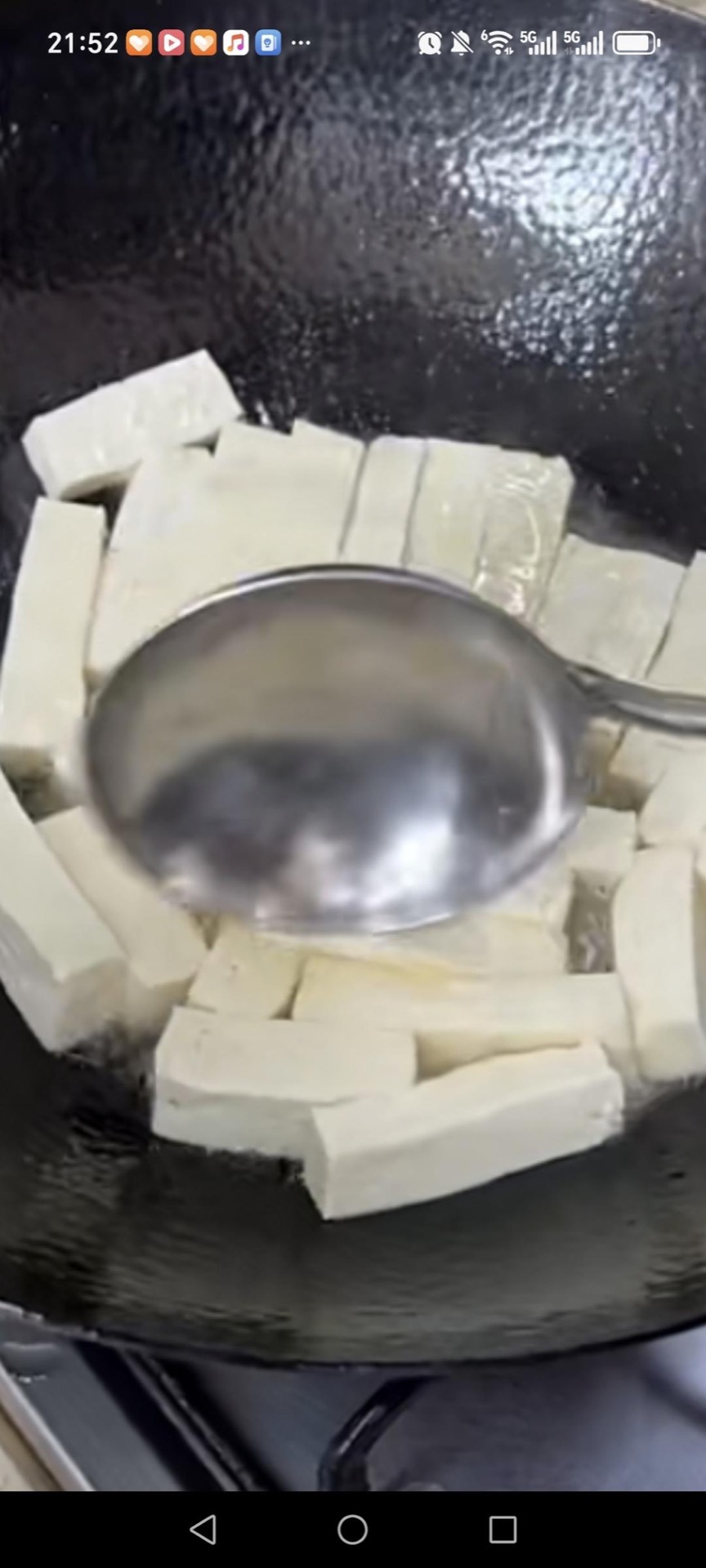
Step 3 — Pan-Fry the Tofu
Slide the tofu strips into the wok in a single layer and pan-fry them, undisturbed, for 2 to 3 minutes per side until the edges turn golden and crisp.
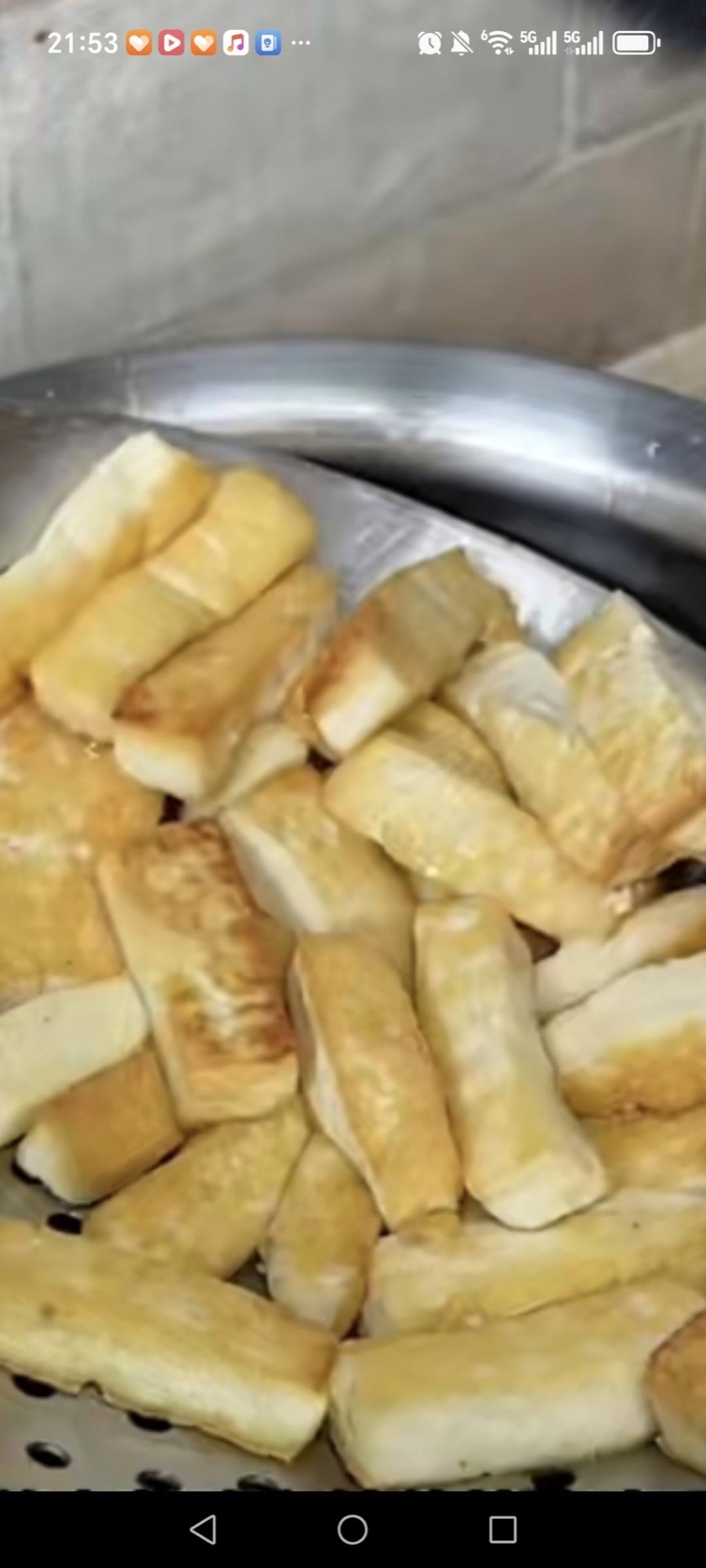
Step 4 — Drain the Tofu
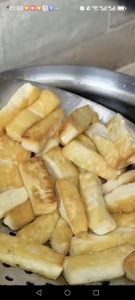
Lift the fried tofu out with a slotted spoon and set it in a strainer or on paper towels to drain off the excess oil.
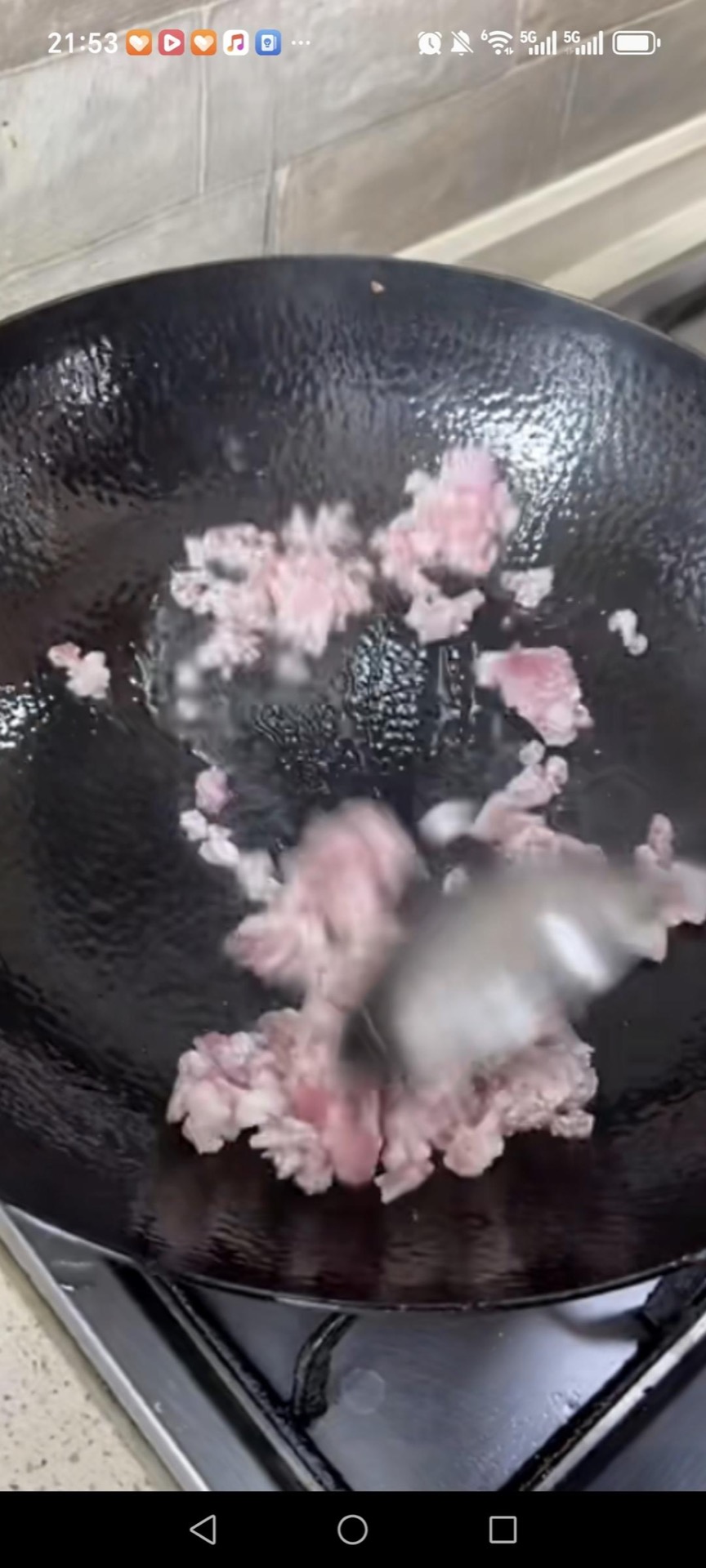
Step 5 — Brown the Pork
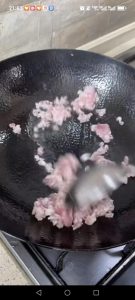
Start a second clean wok over medium-high heat, add a little oil, and add the ground pork, breaking it apart and stir-frying until it is crumbly and fragrant.
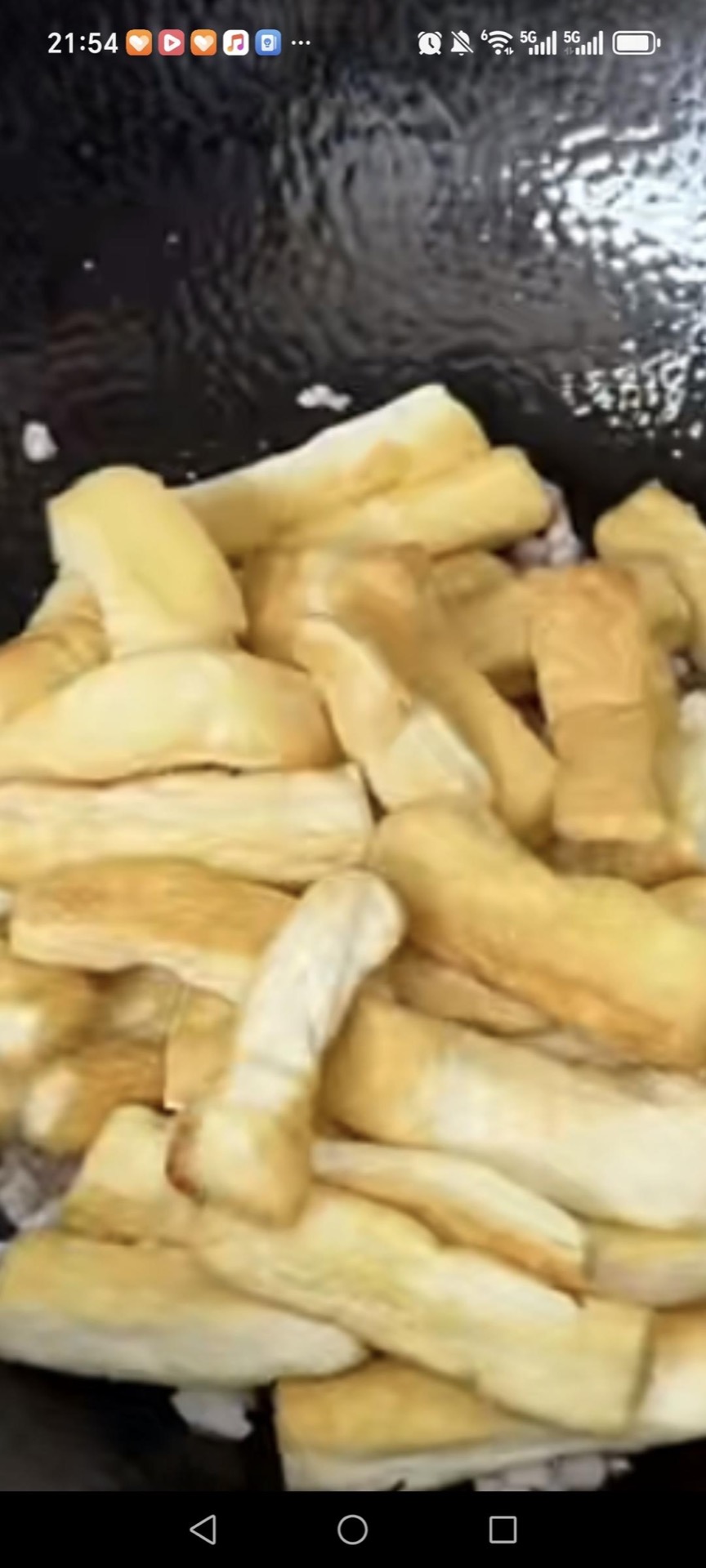
Step 6 — Return the Tofu
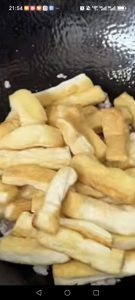
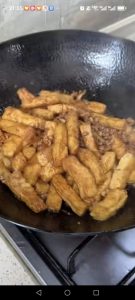
Add the pan-fried tofu back into the wok with the pork and spread everything into an even layer.
Step 7 — Season the Wok
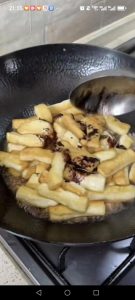
Splash in the Shaoxing wine, then add the light soy sauce, dark soy sauce, and oyster sauce, letting them sizzle around the tofu.
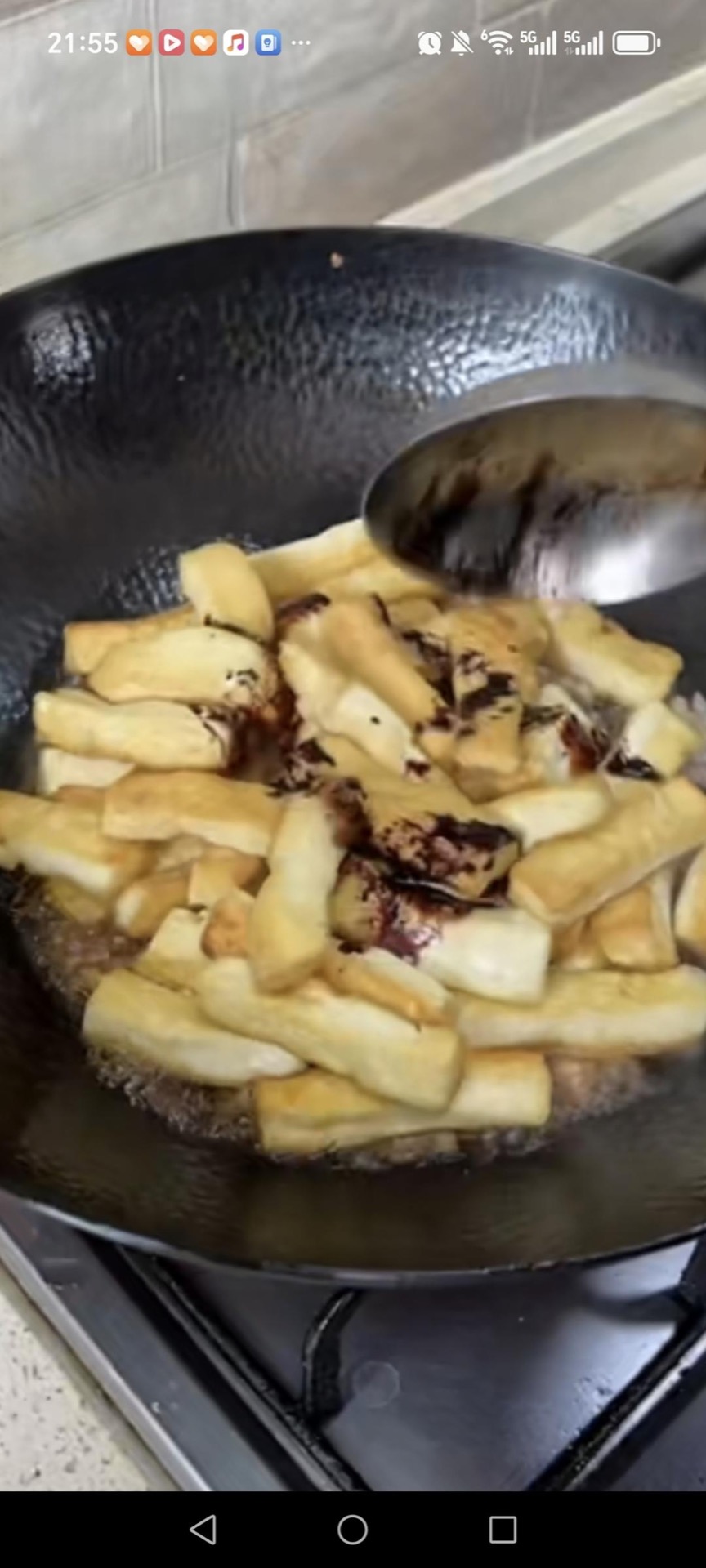
Step 8 — Toss Gently
Toss everything together gently with your spatula so the tofu picks up the sauce without breaking apart.
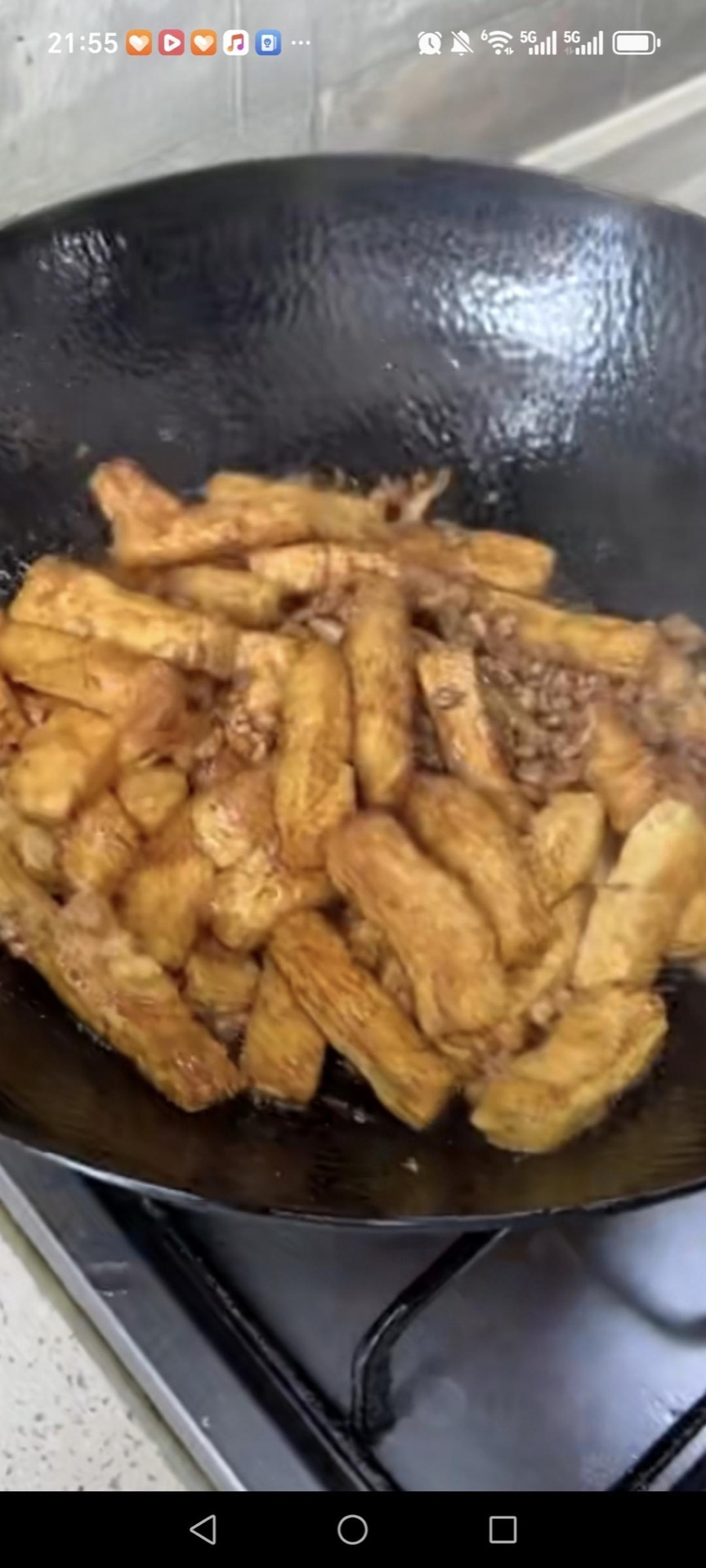
Step 9 — Braise the Tofu
Pour in the hot water, then add the sugar, chicken bouillon, and a small pinch of salt, and simmer over medium heat for a few minutes so the tofu absorbs the sauce.
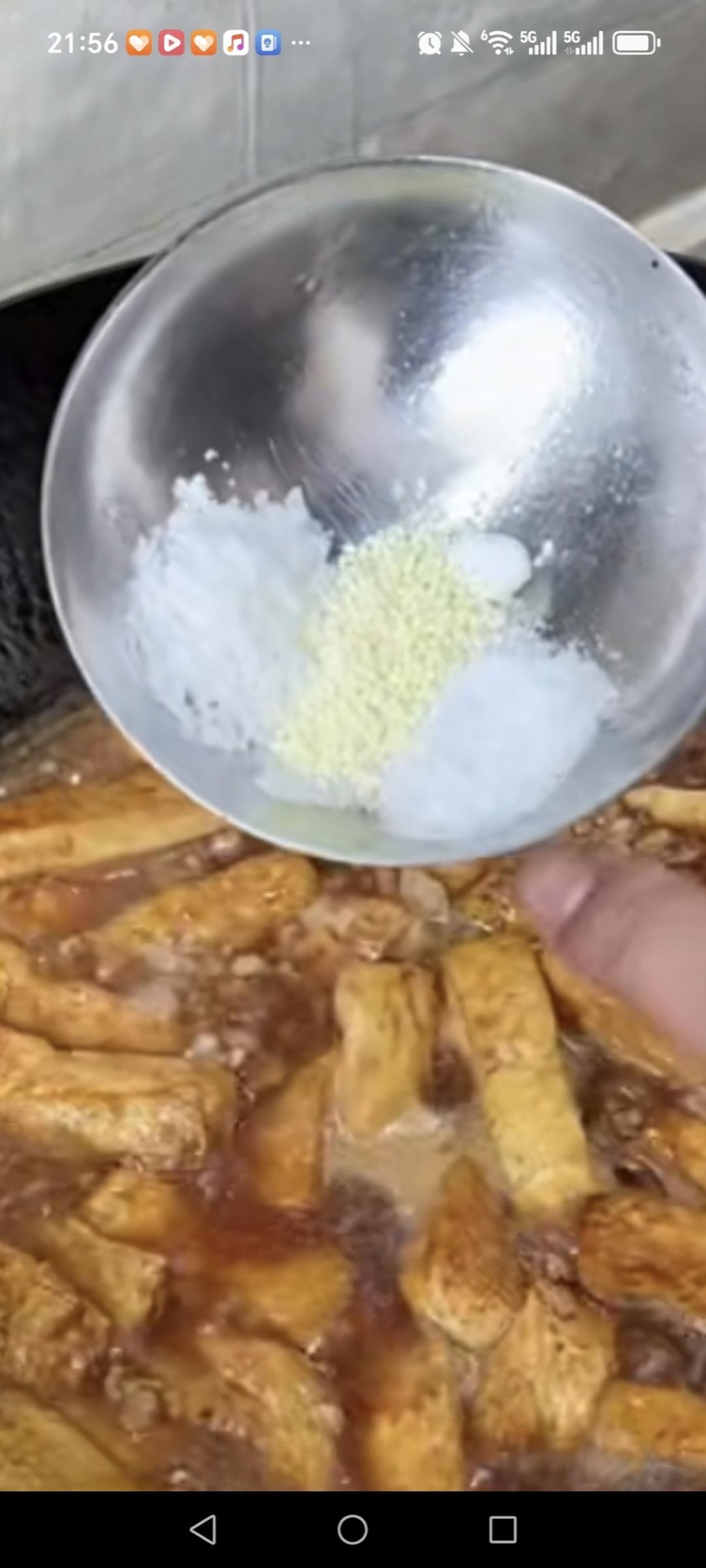
Step 10 — Add Chives and Thicken
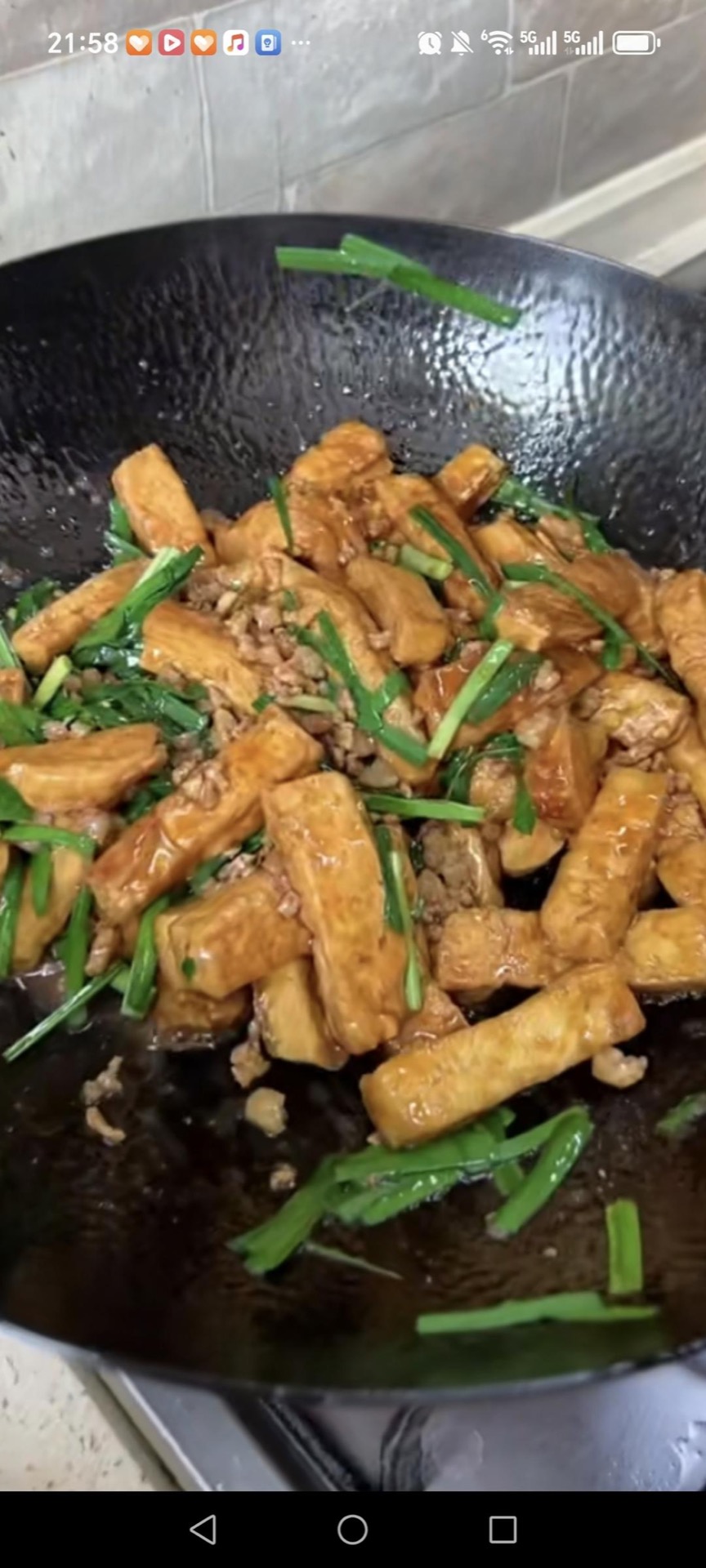
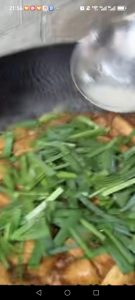
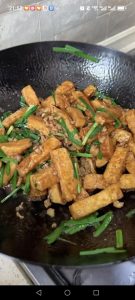
Add the garlic chives and drizzle in the cornstarch slurry, stirring so the sauce thickens around the tofu and the chives just wilt.
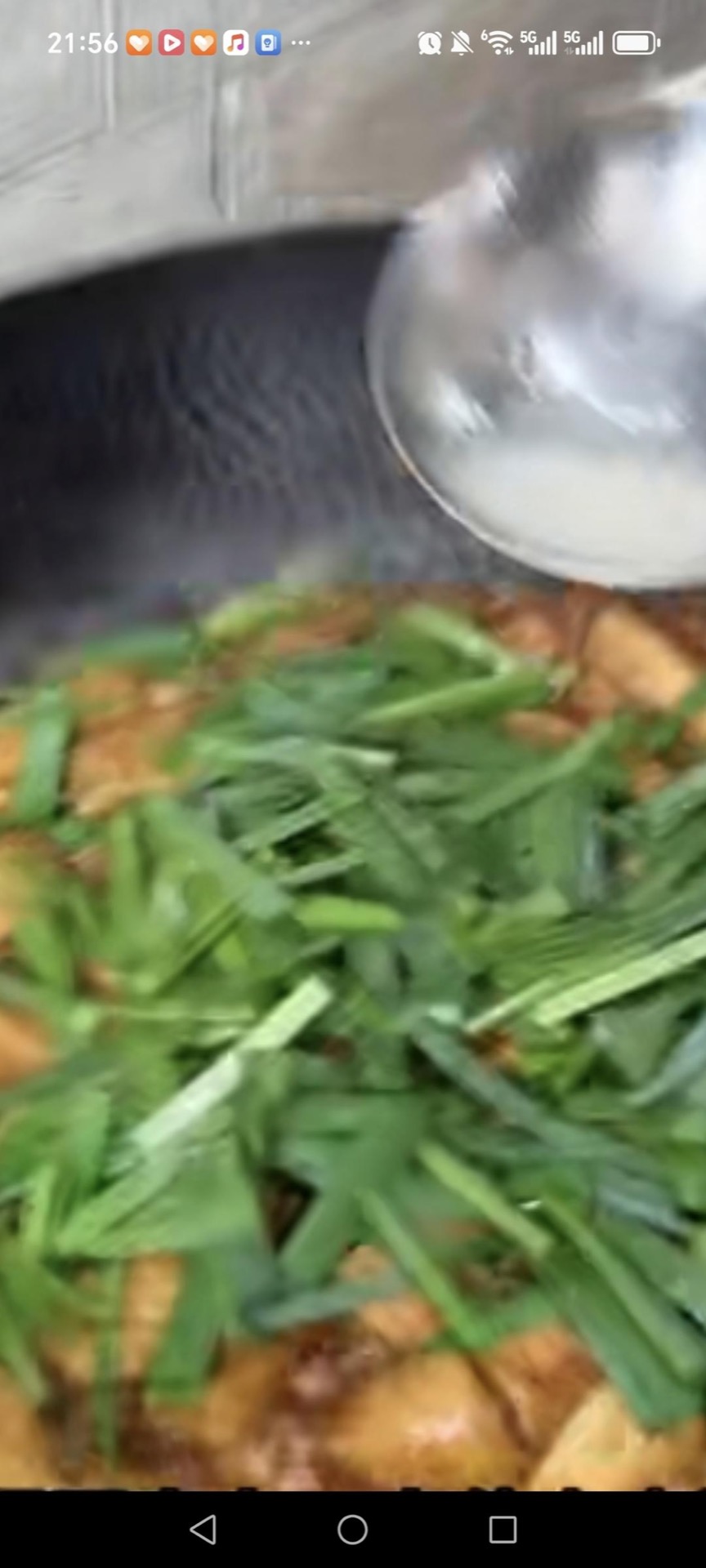
Step 11 — Toss and Finish
Give everything one last gentle toss, coating the tofu and chives in the glossy sauce, and get ready to plate.
Step 12 — Plate and Serve
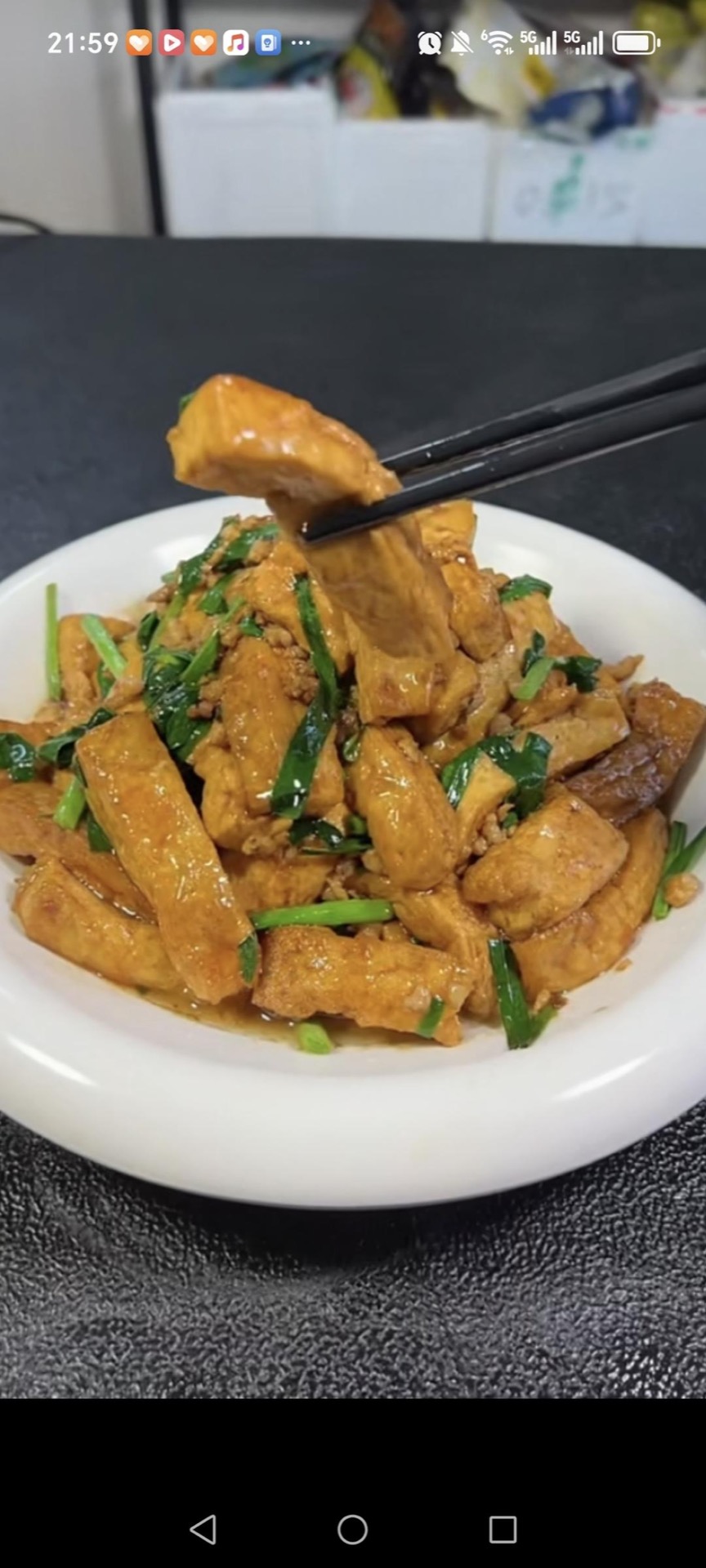
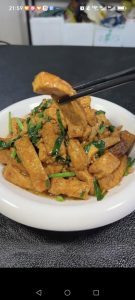
Slide the braised tofu with chives onto a serving plate and serve hot with steamed rice.
Common Mistakes When Making Braised Tofu with Chives
1. Using silken or soft tofu. The most common failure. Silken tofu has a custardy structure with almost no protein network holding it together, so it disintegrates the moment you stir it. Fix: buy firm or extra-firm block tofu. If firm tofu is all you can find and it still feels fragile, freeze it overnight and thaw it — freezing changes the texture to something spongier and much more robust.
2. Not draining the tofu. Wet tofu steams instead of frying. The surface moisture has to evaporate before browning can begin, which means the tofu sits in the pan getting soggy while you wait. Fix: press the block for 10 to 15 minutes under paper towels and a light weight, or at minimum pat every surface thoroughly dry.
3. Crowding the pan. If the tofu strips touch each other, the moisture they release has nowhere to go and they poach in their own steam. Fix: fry in two batches if your pan is smaller than 12 inches. It takes four extra minutes and makes the difference between crisp and flabby.
4. Stirring too hard. Pan-fried tofu strips have crisp edges but soft centers, so aggressive stirring shears them in half. Fix: use a spatula and a gentle folding motion, pushing from the bottom rather than jabbing. A wok helps because you can toss with a light flick rather than a stir.
5. Adding the chives too early. Chives that go in with the sauce cook for three or four minutes and come out limp, olive-drab, and bitter. Fix: add them with the cornstarch slurry at the very end, and pull the wok off the heat as soon as they wilt — about 30 seconds.
6. Skipping the slurry. Without cornstarch, the braising liquid stays thin and runs to the bottom of the plate, leaving the tofu sitting in a puddle. Fix: whisk one teaspoon of cornstarch into two teaspoons of cold water and stir it in at the end. The sauce should coat the back of a spoon.
Variations
Vegetarian version. Leave out the ground pork and use a mushroom-based vegetarian oyster sauce. To replace the savory depth the pork provides, soak four or five dried shiitake mushrooms in hot water for 20 minutes, chop them, and add them to the wok before the tofu. Use the mushroom soaking liquid in place of the hot water for the braise.
With fresh chilis. Add two or three sliced fresh red or green chilis with the ground pork for a version closer to the Hunan style. If you want a dish built around that heat, braised tofu with fresh chilis and minced pork is a good place to look.
With mushrooms and pork. Add a handful of sliced fresh shiitake or cremini mushrooms along with the pork and let them brown before the tofu goes back in. Braised tofu with mushrooms and pork follows this same idea with a richer, darker sauce.
Extra-garlic version. Mince two cloves of garlic and add them to the wok with the pork, just before the sauces go in. Garlic chives are only mildly garlicky, so a little fresh garlic deepens the flavor without overwhelming it.
Spicier sauce. Add a teaspoon of doubanjiang (fermented chili bean paste) with the sauces. It is salty, so reduce the light soy sauce to one tablespoon to compensate.
Frequently Asked Questions
Can I use regular chives or scallions instead of garlic chives? You can, but the dish changes character. Regular chives are much thinner and sharper, and they overcook even faster — add them at the very last second. Scallions are sweeter and more oniony; use the white parts early with the pork and the green parts at the end. Neither is quite the same as garlic chives, but both make a good dinner.
Why did my tofu fall apart in the wok? Almost always one of two things: the tofu was too soft, or it was stirred too aggressively. Firm or extra-firm tofu that has been properly drained will hold together through a gentle toss. If yours is crumbling, try freezing and thawing it next time — the texture becomes spongier and far more durable.
Can I make this dish ahead of time? The tofu can be pan-fried up to two days in advance and stored in the refrigerator in a covered container. Bring it back to room temperature or warm it briefly in the wok before continuing. Do not cut or cook the chives ahead — they lose their aroma within an hour of being cut.
How do I keep the tofu from sticking to the pan? Three things: use a well-seasoned wok or a nonstick skillet, make sure the oil is genuinely hot before the tofu goes in (it should shimmer, and a pinch of salt should sizzle), and do not move the tofu for the first two minutes. It releases on its own once the crust forms. Fighting it early is what tears the crust.
Is this dish spicy? Not at all as written. The sauce is savory and lightly sweet, with no chili at all. If you want heat, add sliced fresh chilis or a teaspoon of doubanjiang with the sauces.
How to Serve
Braised tofu with chives is a center-of-the-table dish, which means it is happiest alongside two or three other things and a big bowl of steamed jasmine rice. The sauce is the point, so plain rice is not optional — it is the delivery system. A simple stir-fried green vegetable and a light soup round out the meal nicely.
If you want to build a slightly bigger Chinese spread, braised tofu with scallions is a natural companion since it uses the same technique with a different allium, and the two look lovely side by side on the table.
For a contrasting dish with more heat and acid, tomato fish soup is a good pairing — it cuts through the richness of the braise and adds a bright note to the table.
Leftovers are honestly excellent cold, straight from the container, though the chives will have lost their color. Reheated over rice with a fried egg on top is my favorite way to eat the second serving.
Storage & Reheat
Refrigerator: Store leftovers in an airtight container for up to 3 days. The tofu will continue to absorb sauce as it sits, so it actually gets more flavorful — though the chives will soften and darken.
Freezer: Not recommended. Tofu that has already been fried and braised becomes spongy and watery after freezing and thawing, and the chives turn to mush. If you want to freeze ahead, freeze the pan-fried tofu before it goes into the sauce, which holds well for up to 2 months.
Reheating: The gentlest method is a covered skillet over medium-low heat with a splash of water, for about 5 minutes, until the tofu is hot through. A microwave works but will soften the tofu further — cover the bowl and heat in 30-second bursts. Reheat to an internal temperature of 165°F (74°C).
One practical note: because the sauce thickens considerably in the refrigerator, you may want to loosen it with a tablespoon or two of water when reheating so it coats the tofu again rather than sitting in a lump.
Allergen Notice
This recipe contains soy (tofu, light soy sauce, dark soy sauce) and shellfish if you use a traditional oyster sauce, since oyster sauce is made from oysters. Many brands of oyster sauce also contain wheat as a thickener, so check the label if you are avoiding gluten. Shaoxing wine is rice-based and typically gluten-free, but some brands add wheat — verify if this matters for you. If you are cooking for someone with a shellfish allergy, use a mushroom-based vegetarian oyster sauce, which is widely available and tastes very close.
To make the dish gluten-free, use tamari in place of both soy sauces, choose a gluten-free oyster sauce or vegetarian oyster sauce, and confirm your Shaoxing wine is wheat-free.
Nutrition Disclaimer
Nutrition information is calculated using an ingredient database and should be considered an estimate. In cases where multiple ingredient alternatives are given, the first listed is calculated for nutrition. Garnishes and optional ingredients are not included.
About the Author & Recipe Development
I am Lin, and I have been cooking and writing about Chinese home food for over a decade here at Woks of Love. This recipe comes from the northern Chinese home kitchen tradition — the kind of dish that shows up on a weeknight table in spring, made with whatever tofu and chives happen to be in the house.
I developed this version by testing the pan-fry stage at three different oil temperatures to find the point where the tofu crust gets genuinely crisp without the interior drying out, and by testing the braise with both cold and hot water to confirm what every northern cook already knows: hot water keeps the simmer steady and the sauce comes together faster. The pork is optional because the dish is genuinely good without it, and I wanted the vegetarian version to be a real recipe rather than an afterthought.
If you make it, I would love to hear how it turned out — especially if you tried the mushroom version, which is my favorite variation.
For another dish in the same spirit, braised tofu and mushrooms is worth cooking next.
For another dish in the same spirit, braised tofu with fresh chilis and minced pork is worth cooking next.
For another dish in the same spirit, braised tofu with mushrooms and pork is worth cooking next.
For another dish in the same spirit, yellow millet sticky rice cake is worth cooking next.
Authoritative References
For safe handling and cooking temperatures of ground meat, see the USDA safe minimum internal temperature chart. For general food safety guidance on leftovers and reheating, the FDA food safety guidance is a useful reference. And for a deeper look at why moisture control determines whether food browns or steams, this explainer on why food steams instead of fries covers the science behind the pan-frying stage.
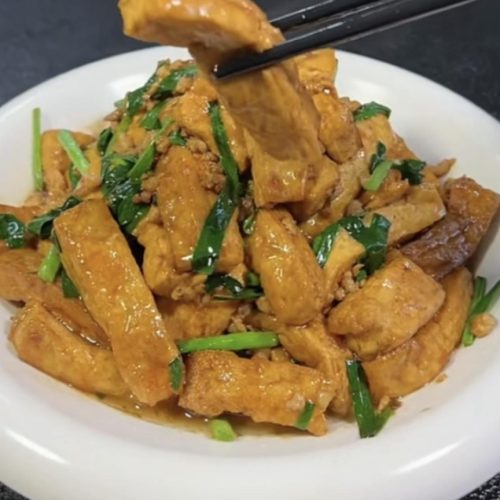
Braised Tofu with Chives (韭菜烧豆腐): Crispy Tofu Soaked in Savory

Equipment
- Wok
- Cutting Board
- Slotted Spoon
Ingredients
For the Tofu
- 1 block firm tofu about 14 oz, drained and cut into thick strips
- 2 tbsp vegetable oil for pan-frying
- 1 pinch salt for the pan
For the Sauce
- 2 tbsp light soy sauce
- 1 tsp dark soy sauce
- 1 tbsp oyster sauce
- 1 tbsp Shaoxing wine
- 1 tsp sugar
- 1 tsp chicken bouillon or 1/4 tsp chicken bouillon powder
- 1/4 cup water hot
- 1 tsp cornstarch mixed with 2 tsp water for the slurry
For the Aromatics and Greens
- 4 oz ground pork optional, or leave out for a vegetarian version
- 1 bunch garlic chives about 6 oz, cut into 2-inch lengths
Instructions
- Cut the drained block of firm tofu into thick strips, roughly 3 inches long and 1/2 inch wide, keeping them as even as you can so they brown at the same rate.

- Heat a wok over medium heat, add the vegetable oil, and sprinkle in a pinch of salt once the oil starts to shimmer.
- Slide the tofu strips into the wok in a single layer and pan-fry them, undisturbed, for 2 to 3 minutes per side until the edges turn golden and crisp.
- Lift the fried tofu out with a slotted spoon and set it in a strainer or on paper towels to drain off the excess oil.
- Start a second clean wok over medium-high heat, add a little oil, and add the ground pork, breaking it apart and stir-frying until it is crumbly and fragrant.
- Add the pan-fried tofu back into the wok with the pork and spread everything into an even layer.
- Splash in the Shaoxing wine, then add the light soy sauce, dark soy sauce, and oyster sauce, letting them sizzle around the tofu.
- Toss everything together gently with your spatula so the tofu picks up the sauce without breaking apart.
- Pour in the hot water, then add the sugar, chicken bouillon, and a small pinch of salt, and simmer over medium heat for a few minutes so the tofu absorbs the sauce.
- Add the garlic chives and drizzle in the cornstarch slurry, stirring so the sauce thickens around the tofu and the chives just wilt.
- Give everything one last gentle toss, coating the tofu and chives in the glossy sauce, and get ready to plate.
- Slide the braised tofu with chives onto a serving plate and serve hot with steamed rice.















Leave a Reply