Some dishes earn their place at the table by being fancy. This one earns it by being honest — a bubbling wok of braised pork intestine with tofu, where chewy, deeply savory intestine and custardy tofu trade flavor back and forth in a glossy, chili-flecked sauce. It is the kind of food that makes a plain bowl of rice disappear before you notice.
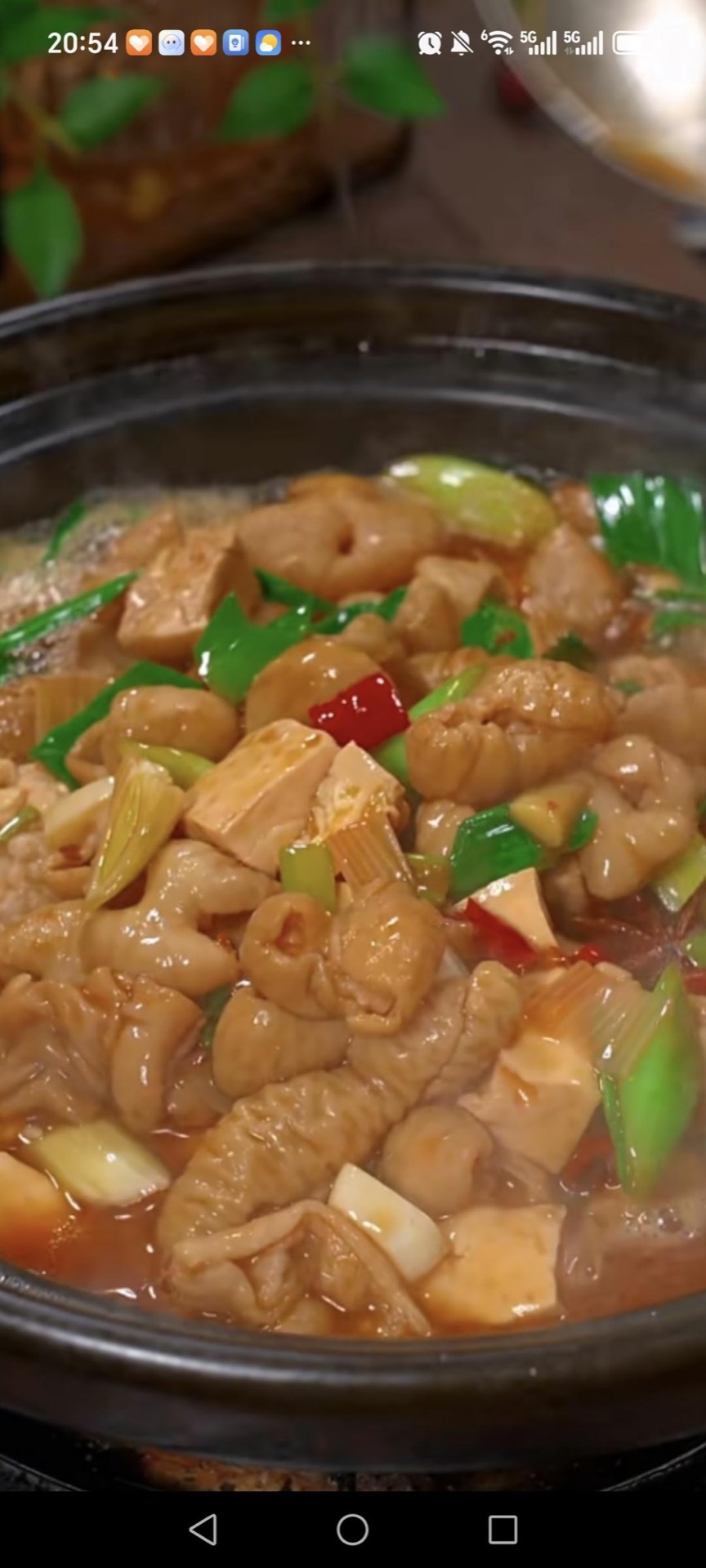
肥肠炖豆腐 — fei chang dun dou fu — belongs to the same family of rustic braises as mapo tofu and home-style braised tofu. It shows up on Sichuan and Hunan dinner tables, in tiny neighborhood restaurants, and in the memories of anyone who grew up watching a grandmother coax an inexpensive cut of meat into something extraordinary.
If you have never cooked intestine at home, this is a forgiving place to start. The doubanjiang, star anise, and rice wine do most of the heavy lifting, and the tofu softens the whole thing into something mellow and comforting. Let’s get into it.
What Is Braised Pork Intestine with Tofu?
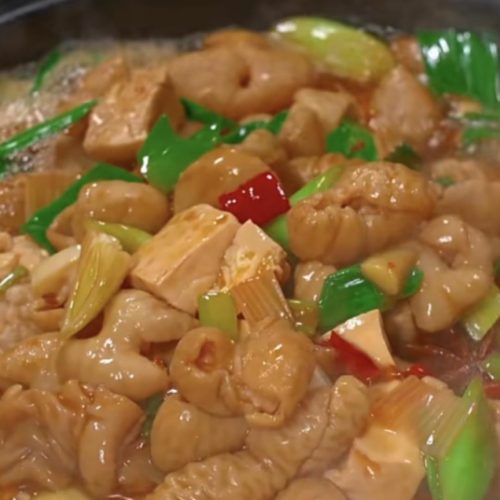
Braised pork intestine with tofu is a Chinese home-style dish in which pre-cooked pork intestine is stir-fried with aromatics and doubanjiang, then simmered with cubes of firm tofu in a savory, lightly spicy sauce. The tofu acts as a sponge, drinking up the braising liquid, while the intestine contributes richness and a satisfying, springy chew.
It sits in the “one-pot comfort food” category rather than the quick stir-fry category. The cooking is mostly hands-off once the lid goes on, and the dish only gets better as the tofu sits in the sauce.
Why blanch tofu before braising? Firm tofu is roughly 80% water by weight, and a two-minute blanch in salted water firms the surface proteins slightly, which helps the cubes hold their shape through a 10-minute simmer instead of crumbling into the sauce.
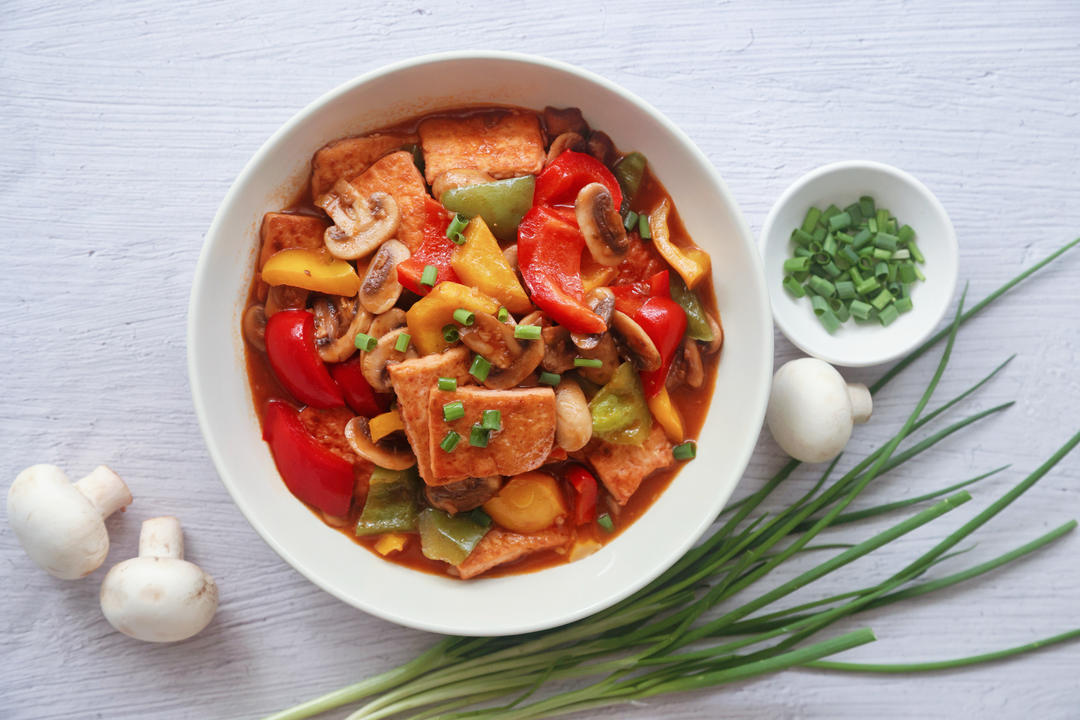
If you enjoy this style of braised tofu, the technique overlaps heavily with braised tofu and mushrooms, which uses the same jiang shao (sauce-braise) approach with a gentler, earthier flavor profile.
1Braised Tofu and Mushrooms with Savory SauceThis Braised Tofu and Mushrooms recipe uses a secret weapon—Spare Rib Sauce—to create a rich, savory, vegetarian dish that tastes even better than meat. It features pan-fried firm tofu and juicy button mushrooms braised in a glossy, umami-packed glaze.Check out this recipe
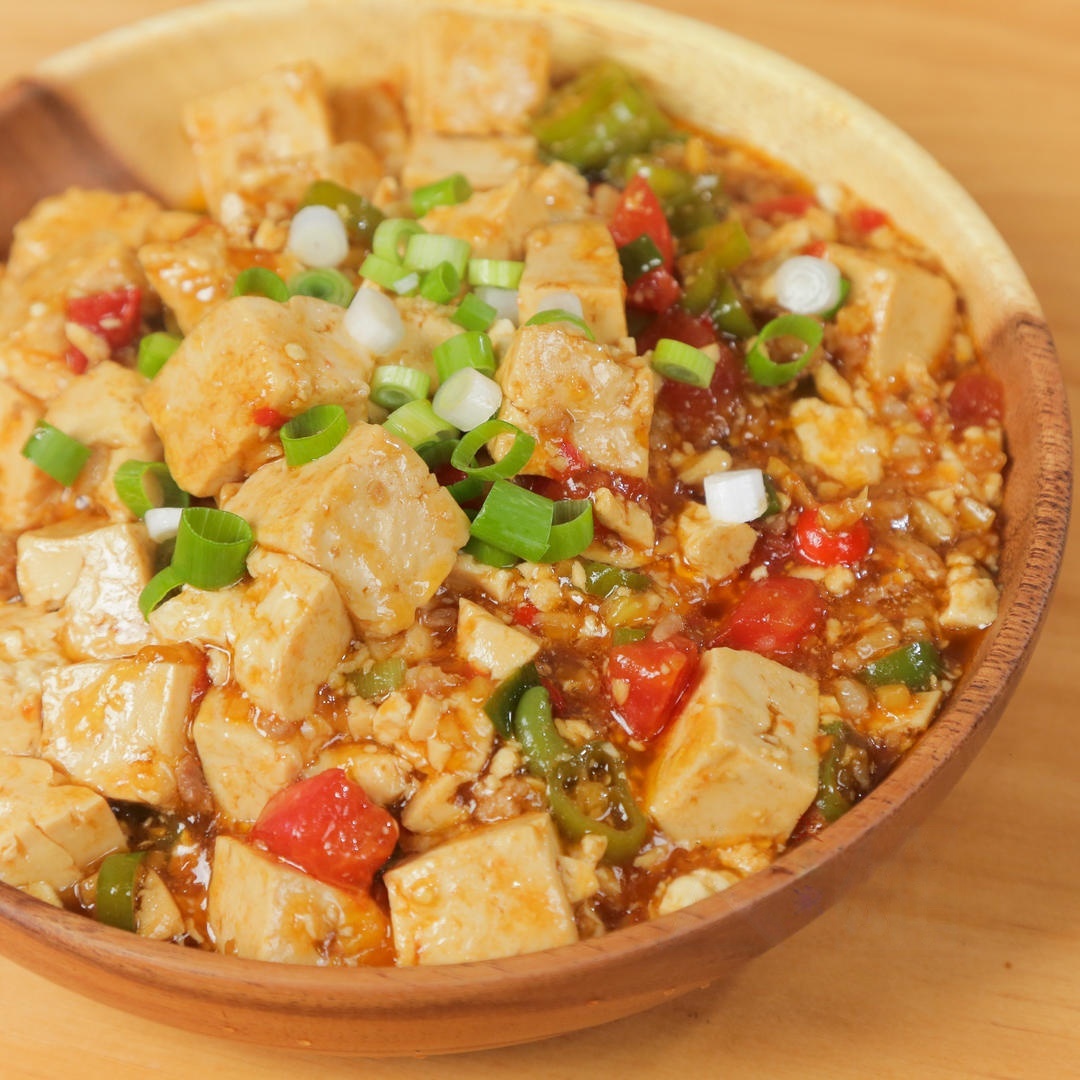
For a version with more heat and a little pork, braised tofu with fresh chilis and minced pork leans on fresh peppers instead of dried ones, giving the sauce a brighter, greener bite.
2Fresh Chili Tofu with Minced Pork (鲜椒肉末豆腐)A fast, 15-minute Sichuan homestyle favorite. Silky tofu and savory minced pork braised with fresh chilis and tomatoes for a bright, ‘rice-killing’ flavor profile.Check out this recipe
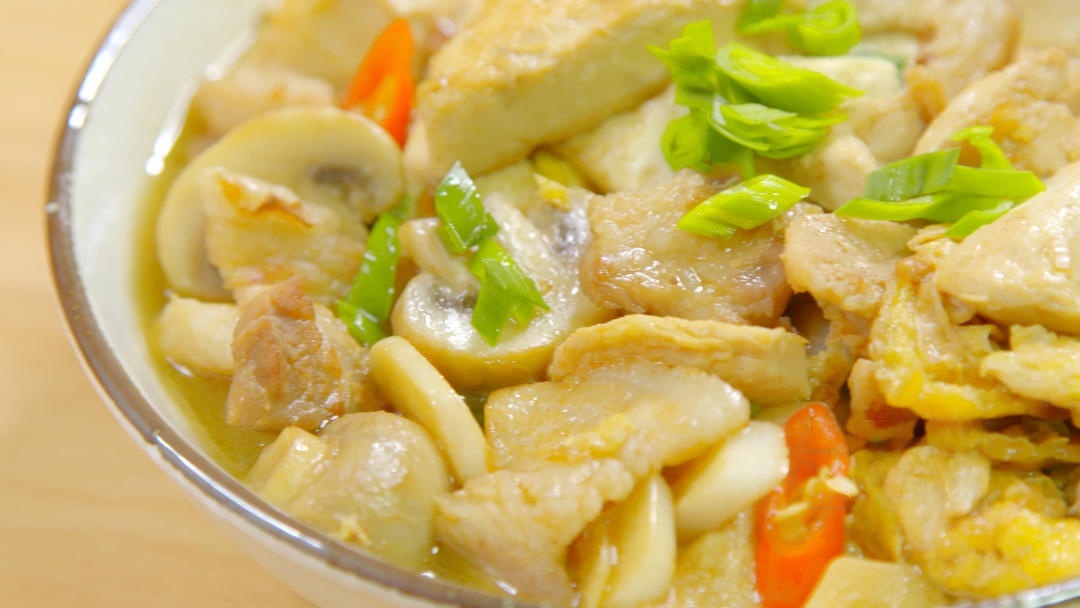
And if you want the mushroom-and-pork combination without the intestine, braised tofu with mushrooms and pork is the closest cousin to this recipe — same sauce logic, different supporting cast.
3Braised Tofu with Mushrooms and Pork (Rou Pian Kou Mo Shao Dou Fu)A savory, comforting dish featuring egg-coated silken tofu, sliced pork belly, and button mushrooms braised in a rich umami sauce. Perfect for a weeknight family meal.Check out this recipe
Why This Recipe Works
Three things make this braise taste like it came from a restaurant wok rather than a home kitchen.
First, the intestine is dry-fried before anything wet goes in. Pre-cooked intestine holds a fair amount of water, and if you add liquid too early you end up steaming it instead of frying it. Cooking off that moisture first concentrates the flavor and gives the pieces a chance to pick up a little browning.
Second, the aromatics go in as a group. Scallion, garlic, dried chili, star anise, and doubanjiang hit the hot oil together, so the chili toasts, the garlic sweetens, and the fermented bean paste fries out its raw edge all at once. That single step is where most of the final flavor is built.
Third, the tofu goes in after the liquid, not before. Adding the tofu to an already-seasoned braising liquid means it absorbs a finished sauce rather than watering down the base. Ten covered minutes is enough for the cubes to turn creamy inside while still holding their edges.
The dark soy sauce is there for color, not salt — a teaspoon is enough to give the sauce that deep mahogany look. The rice wine is there for the opposite reason: it lifts the gamey note that intestine can carry.
Ingredients
Here is what goes into the dish, grouped the way you will actually use it.
- Firm tofu, 1 block (about 14 oz). Firm or medium-firm, not silken. Cut into 1-inch cubes.
- Pork intestine, 1 lb. Cleaned, pre-cooked, and cut into 1-inch pieces. See the notes below on sourcing.
- Scallions, 2 tbsp chopped for the aromatics, plus more for garnish.
- Garlic, 4 cloves sliced. Sliced, not minced, so it sweetens rather than burns.
- Star anise, 1 whole. One is plenty — it can overwhelm fast.
- Dried red chilies, 6, cut into segments. Adjust up or down to taste.
- Sichuan doubanjiang, 1 tbsp. Pixian broad bean paste is the standard. A chunk of hot pot base can be added alongside it if you want a richer, spicier sauce.
- Light soy sauce, 2 tbsp for seasoning, and dark soy sauce, 1 tsp for color.
- Shaoxing rice wine, 1 tbsp. For lifting the gamey note.
- Salt and chicken bouillon, to taste. Go easy on the salt — doubanjiang and soy sauce are already salty.
- Water, about 1 cup, or enough to come halfway up the intestine.
Cooking Process
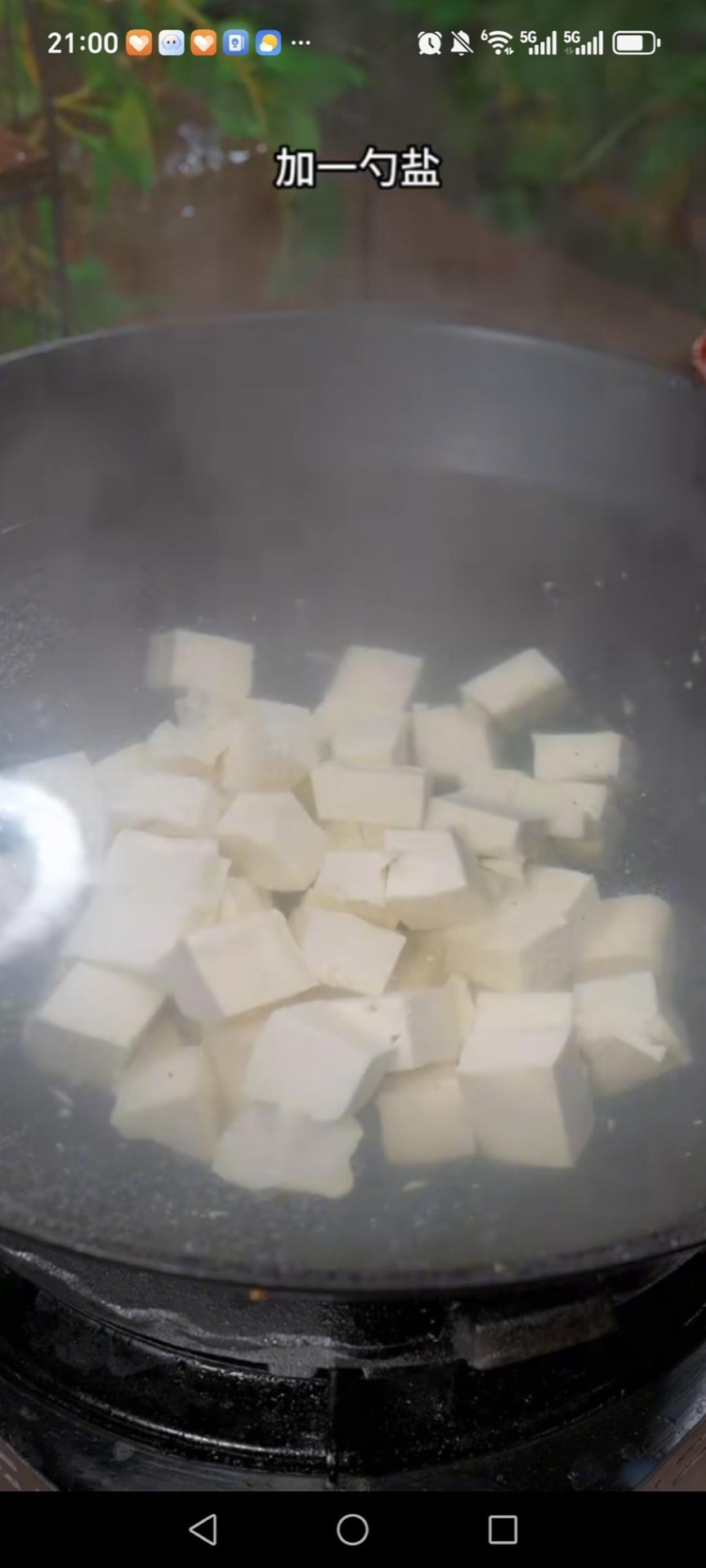
Step 1 — Blanch the Tofu
Bring a pot of water with a pinch of salt to a boil, add the cubed tofu, and blanch for 2 minutes. Lift it out with a slotted spoon and set aside.
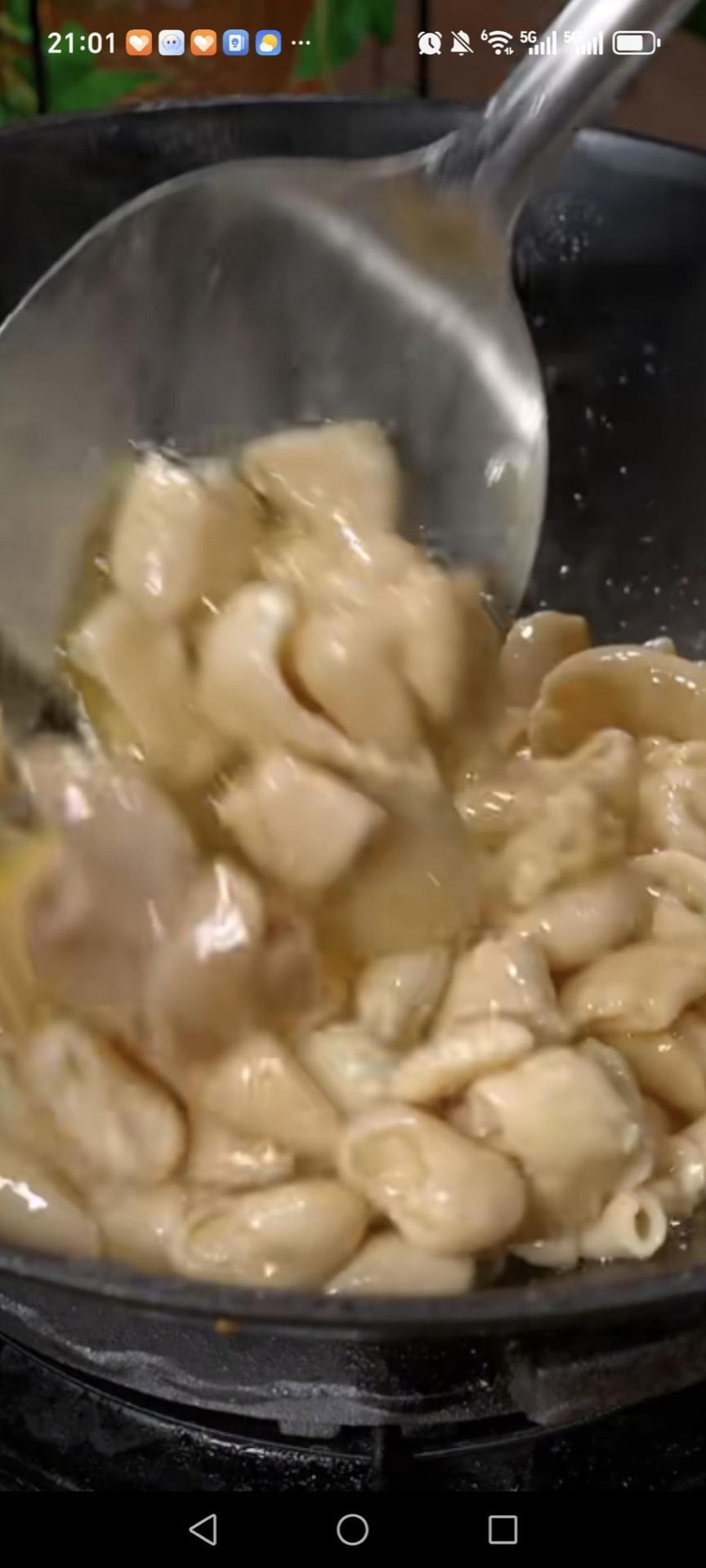
Step 2 — Dry-Fry the Intestine
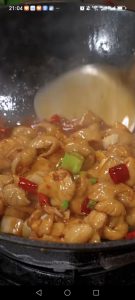
Heat a wok over medium-high heat with a little oil, add the pork intestine, and stir-fry to cook off its excess water.
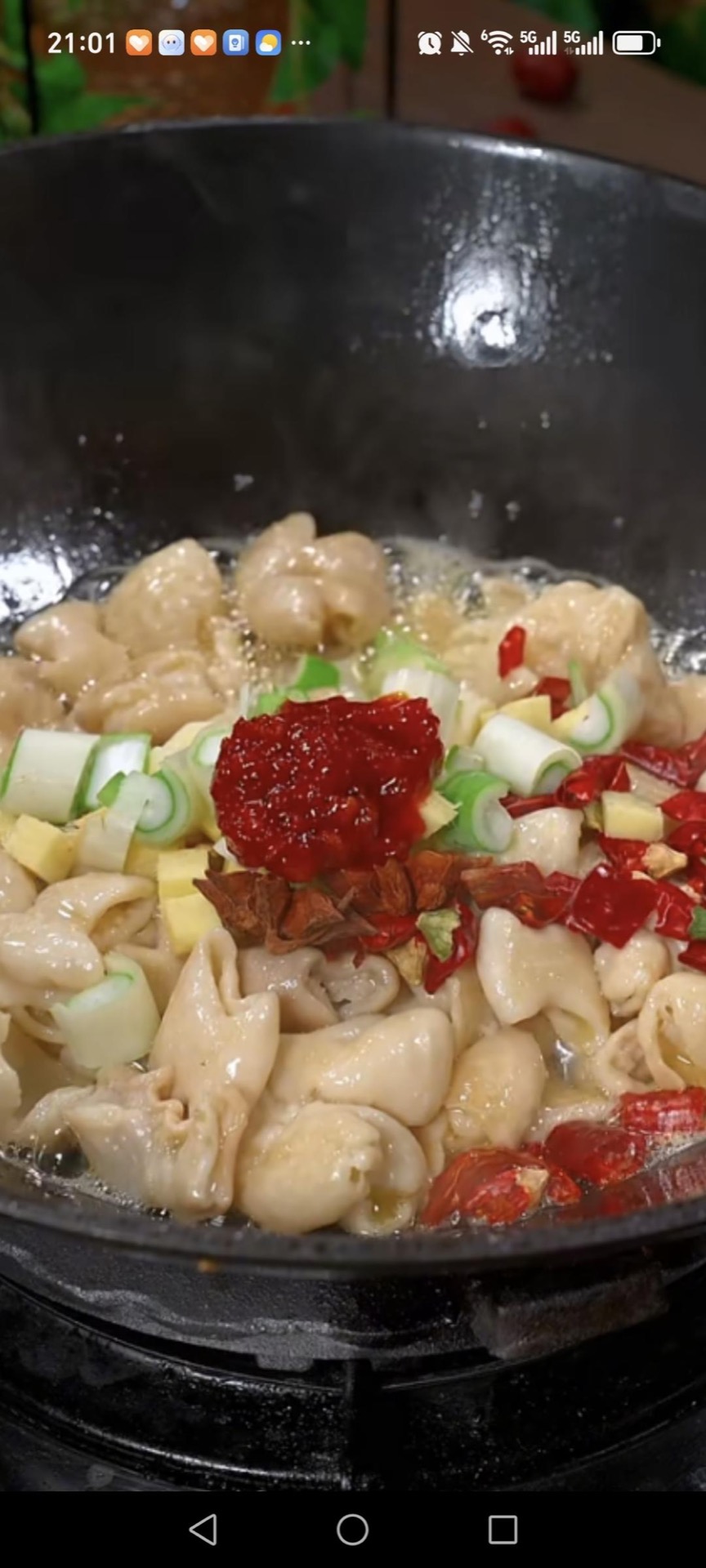
Step 3 — Bloom the Aromatics
Add the scallions, sliced garlic, dried chili segments, star anise, and 1 tablespoon of doubanjiang, stirring until fragrant. A piece of hot pot base can be added too if you like.
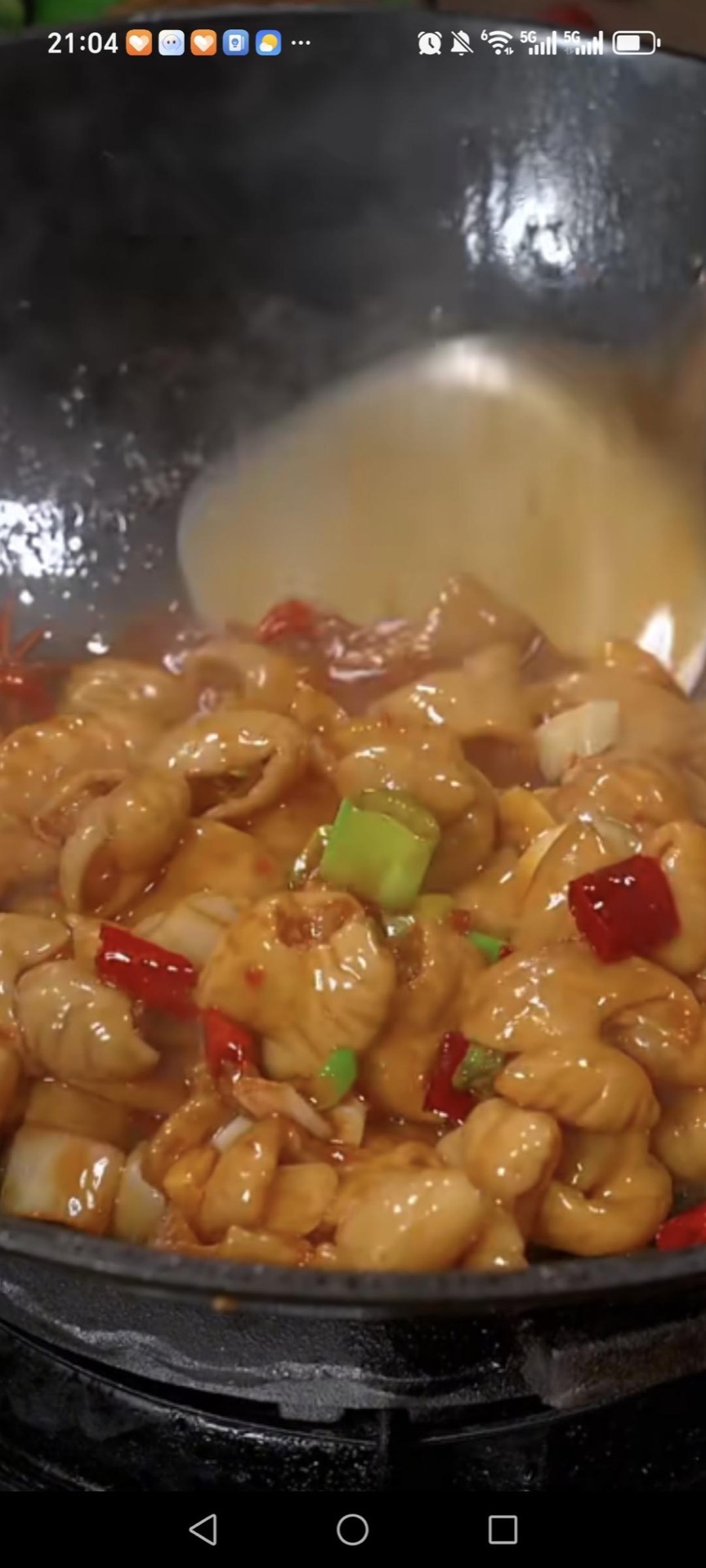
Step 4 — Season the Base
Pour in the light soy sauce, a splash of dark soy sauce, and the Shaoxing rice wine to lift the gamey note.
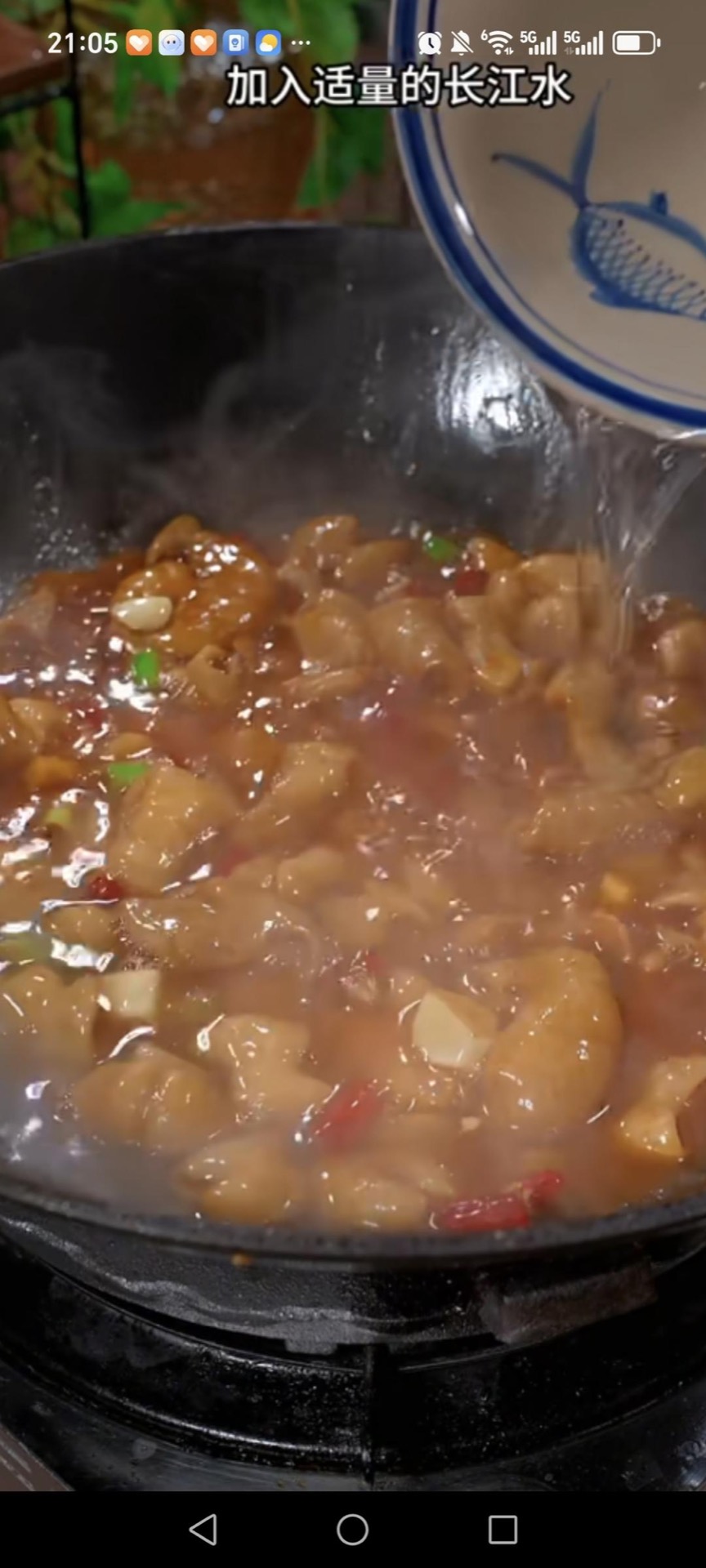
Step 5 — Add Water
Pour in an appropriate amount of water, enough to come about halfway up the intestine.
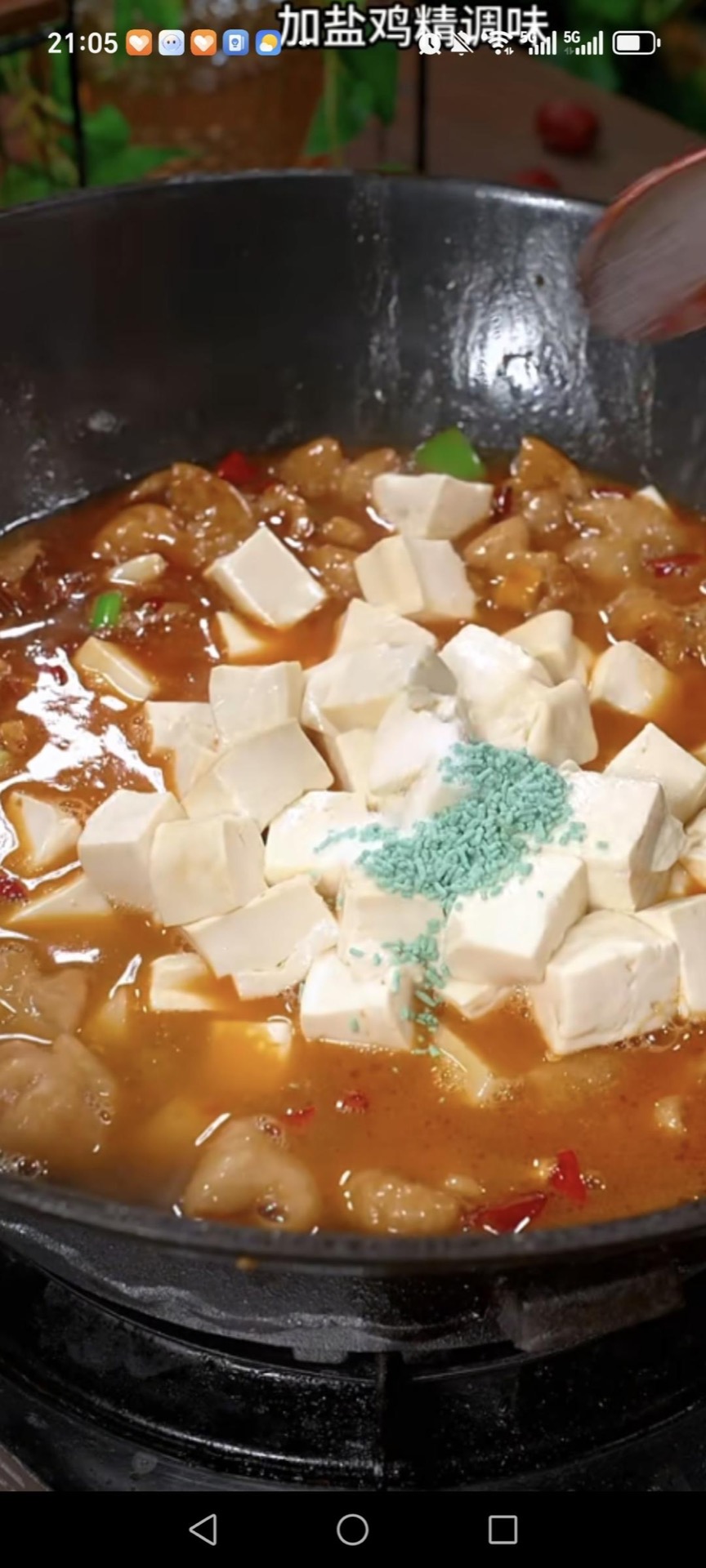
Step 6 — Add the Tofu
Slide in the blanched tofu, then season with salt and chicken bouillon.
Step 7 — Simmer Covered
Cover the wok with a lid and simmer for 10 minutes so the tofu absorbs the sauce.

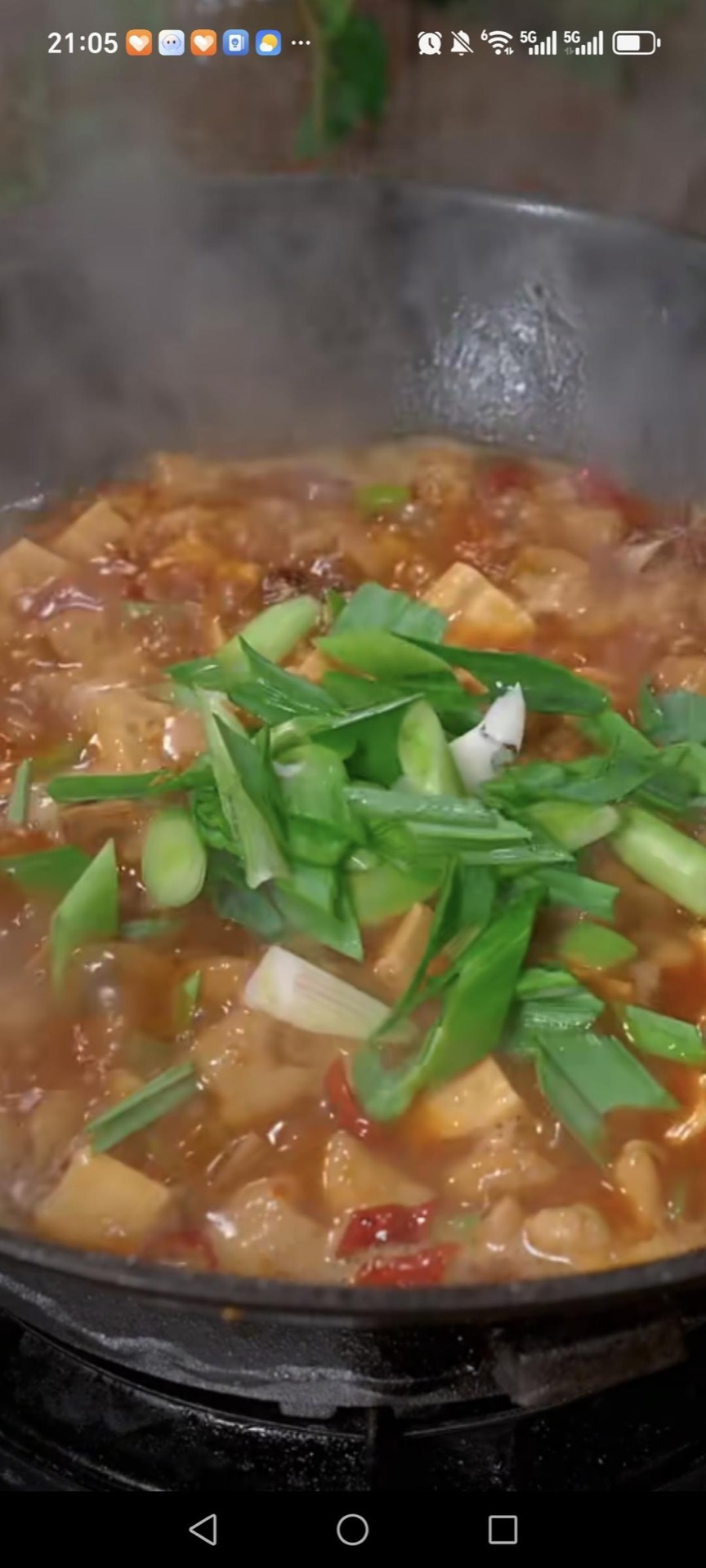
Step 8 — Finish with Scallions
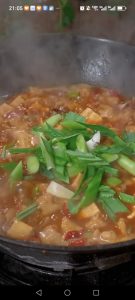
Scatter in the chopped scallions and give everything a final gentle toss.
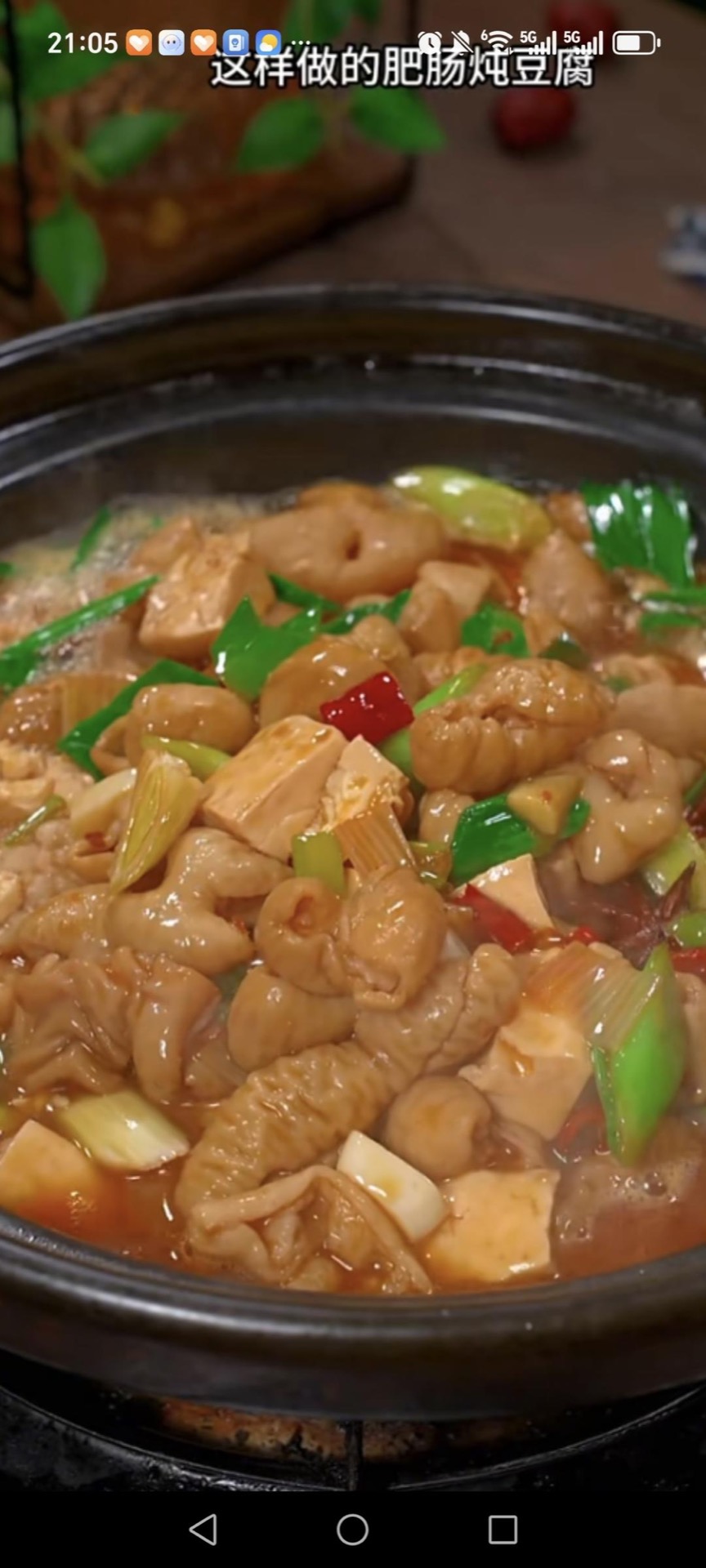
Step 9 — Ready to Serve
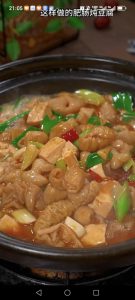
The braised pork intestine with tofu is done — serve it hot straight from the wok.
Common Mistakes When Making Braised Pork Intestine with Tofu
These are the issues that come up most often, and how to sidestep them.
- Skipping the dry-fry. The mistake: Adding water or sauce while the intestine is still wet. Why it happens: It feels faster to dump everything in at once. The fix: Stir-fry the intestine alone for 2–3 minutes first, until the moisture in the wok has cooked off and the pieces start to sizzle rather than steam.
- Burning the doubanjiang. The mistake: Letting the bean paste sit against the hot wok too long. Why it happens: Doubanjiang needs to fry, but it goes from fragrant to bitter in seconds. The fix: Add it with the aromatics and keep everything moving. If it starts to darken sharply, splash in the rice wine immediately to cool the pan.
- Using silken tofu. The mistake: Reaching for the softest tofu on the shelf. Why it happens: Silken tofu is delicious in soup, so it seems like a natural fit. The fix: Use firm or medium-firm tofu, and blanch it in salted water first so the cubes hold together through the simmer.
- Over-salting the braise. The mistake: Seasoning with salt the way you would a plain stew. Why it happens: Doubanjiang and two kinds of soy sauce are already in the pot. The fix: Add salt last, after the tofu has simmered and absorbed the sauce, and taste before adjusting.
- Crowding the wok. The mistake: Trying to fit a full pound of intestine and a whole block of tofu into a small pan. Why it happens: It looks like it will fit until the liquid goes in. The fix: Use a wok or a wide deep skillet, or cook in two batches. Crowding steams the food and dulls the sear.
- Undercooking the intestine. The mistake: Pulling the dish off the heat as soon as the tofu is tender. Why it happens: The tofu is the visible indicator and the intestine is hidden underneath. The fix: Give the covered simmer its full 10 minutes, and check a piece of intestine for a tender, yielding chew before serving.
How to Serve
Braised pork intestine with tofu is a rice dish at heart. Serve it over or alongside plain steamed white rice, and let the sauce run into the grains. A bowl of simply blanched greens — bok choy, gai lan, or spinach — balances the richness nicely.
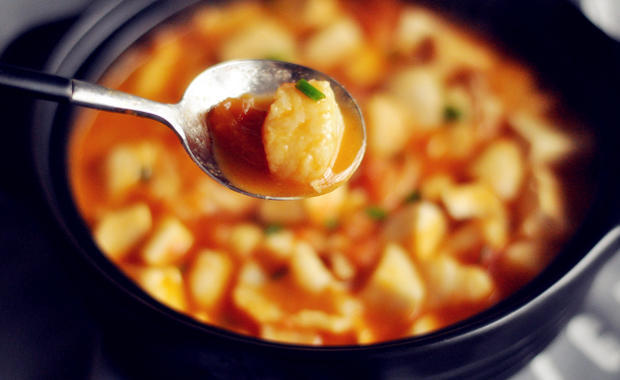
If you want a soup on the table too, tomato fish and tofu stew is a bright, tangy counterpoint that shares the tofu theme without repeating the flavor profile.
For a lighter, cleaner pairing, crab stick tofu stew brings a delicate seafood sweetness that contrasts well with the deep savoriness of the braise.
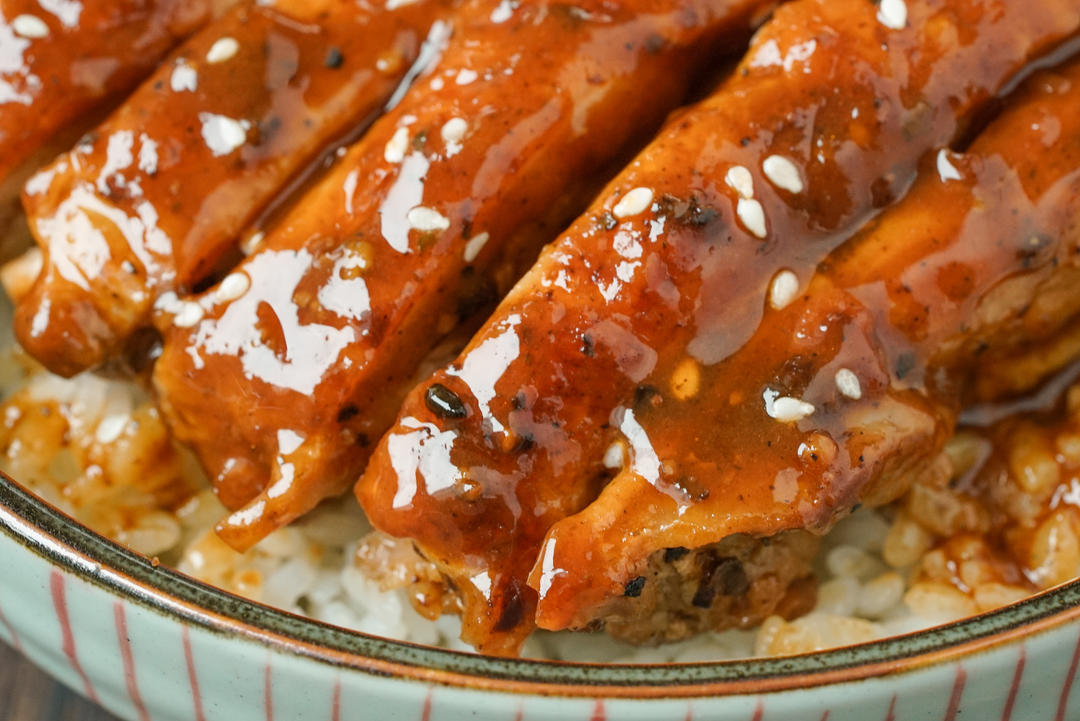
And if you are feeding a crowd and want something heartier on the side, black pepper chicken rice bowls make a satisfying second main that uses a completely different spice palette.

Storage & Reheat
This braise stores beautifully, which makes it a good candidate for cooking a double batch.
Refrigerator. Cool the dish completely, then transfer it to an airtight container. It keeps for up to 3 days. The sauce will thicken and may set slightly in the cold — that is normal and it loosens again on reheating.
Freezer. Freeze for up to 2 months. Tofu changes texture when frozen, becoming spongier and more porous, which some people love and others do not. If you plan to freeze, consider freezing the intestine and sauce only and adding fresh blanched tofu when you reheat.
Reheating. The gentlest method is on the stovetop over medium-low heat with a tablespoon or two of water, covered, until it is bubbling gently. A microwave works in a pinch — cover the bowl and heat in 30-second bursts, stirring between, so the tofu heats through without breaking apart.
Food safety. Pork intestine should reach an internal temperature of 145°F (63°C) and then be simmered until tender. Reheat leftovers to 165°F (74°C). Do not leave the dish at room temperature for more than 2 hours.
Allergen Notice
This recipe contains soy (light soy sauce, dark soy sauce, doubanjiang) and wheat (both soy sauces and most doubanjiang brands contain wheat flour). If you need a soy-free version, substitute coconut aminos for the soy sauces and use a chickpea-based fermented chili paste in place of the doubanjiang, tasting carefully since the salt level will differ.
If you are serving this to guests, it is worth mentioning the intestine as an ingredient up front — it is a beloved cut in Chinese cooking but unfamiliar to some diners.
Nutrition Disclaimer
Nutrition information is calculated using an ingredient database and should be considered an estimate. In cases where multiple ingredient alternatives are given, the first listed is calculated for nutrition. Garnishes and optional ingredients are not included.
About the Author & Recipe Development
Hi, I’m Lin — I grew up in a Chinese household where the wok was always on and offal was never an afterthought. This recipe comes from the home-cooking end of the spectrum: the version made on a weeknight, with a lid on the wok and rice already in the bowl.
I developed this version to be approachable for cooks who have never worked with intestine before. That meant starting with pre-cleaned, pre-cooked intestine, keeping the aromatics simple, and leaning on the dry-fry technique to build flavor without a long braise. I tested it with both firm and medium-firm tofu, with and without hot pot base, and with the chilies left whole versus torn open.
The version here is the one I make most often: gentle heat, deep color, and tofu soft enough to break with a spoon.
If you liked this, salt and scallion pork steaks is worth cooking next.
If you liked this, spicy orleans chicken wraps is worth cooking next.
Authoritative References
For safe handling and cooking temperatures for pork products, see the USDA safe minimum internal temperature chart.
For guidance on cooling and storing cooked leftovers, see the FDA refrigerator and food safety guidance.
For background on fermented bean pastes and their role in Sichuan cooking, the Encyclopaedia Britannica entry on Sichuan cuisine is a useful starting point.
Braised Pork Intestine with Tofu (肥肠炖豆腐): Savory Intestines,

Equipment
- Wok
- Cutting Board
- Slotted Spoon
Ingredients
For the Aromatics
- 1 block firm tofu about 14 oz, cut into 1-inch cubes
- 1 lb pork intestine cleaned, cooked, cut into 1-inch pieces
- 2 tbsp scallions chopped, plus more for garnish
- 4 cloves garlic sliced
- 1 whole star anise
- 6 whole dried red chilies cut into segments
- 1 tbsp Sichuan doubanjiang Pixian broad bean paste
For the Sauce
- 2 tbsp light soy sauce
- 1 tsp dark soy sauce
- 1 tbsp Shaoxing rice wine
- 1 tsp salt or to taste
- 1 tsp chicken bouillon optional
- 1 cup water plus more as needed
Instructions
- Bring a pot of water with a pinch of salt to a boil, add the cubed tofu, and blanch for 2 minutes. Lift it out with a slotted spoon and set aside.

- Heat a wok over medium-high heat with a little oil, add the pork intestine, and stir-fry to cook off its excess water.
- Add the scallions, sliced garlic, dried chili segments, star anise, and 1 tablespoon of doubanjiang, stirring until fragrant. A piece of hot pot base can be added too if you like.
- Pour in the light soy sauce, a splash of dark soy sauce, and the Shaoxing rice wine to lift the gamey note.
- Pour in an appropriate amount of water, enough to come about halfway up the intestine.
- Slide in the blanched tofu, then season with salt and chicken bouillon.
- Cover the wok with a lid and simmer for 10 minutes so the tofu absorbs the sauce.
- Scatter in the chopped scallions and give everything a final gentle toss.
- The braised pork intestine with tofu is done — serve it hot straight from the wok.

















Leave a Reply