There is a specific sound that takes me right back to the chaotic, steam-filled kitchens of my childhood in Sichuan. It’s not the chopping of a cleaver, but the faint crackling and popping sound coming from a clay pot as it sits over a flame.

Growing up with parents who were professional chefs for over 20 years, I learned that Bao Zai Fan (煲仔饭) is more than just dinner; it’s a lesson in patience and heat control. I remember my dad hovering over the stove, tilting the clay pot at different angles to ensure the bottom layer of rice turned into that golden, crunchy masterpiece known as “Guoba” (scorched rice).
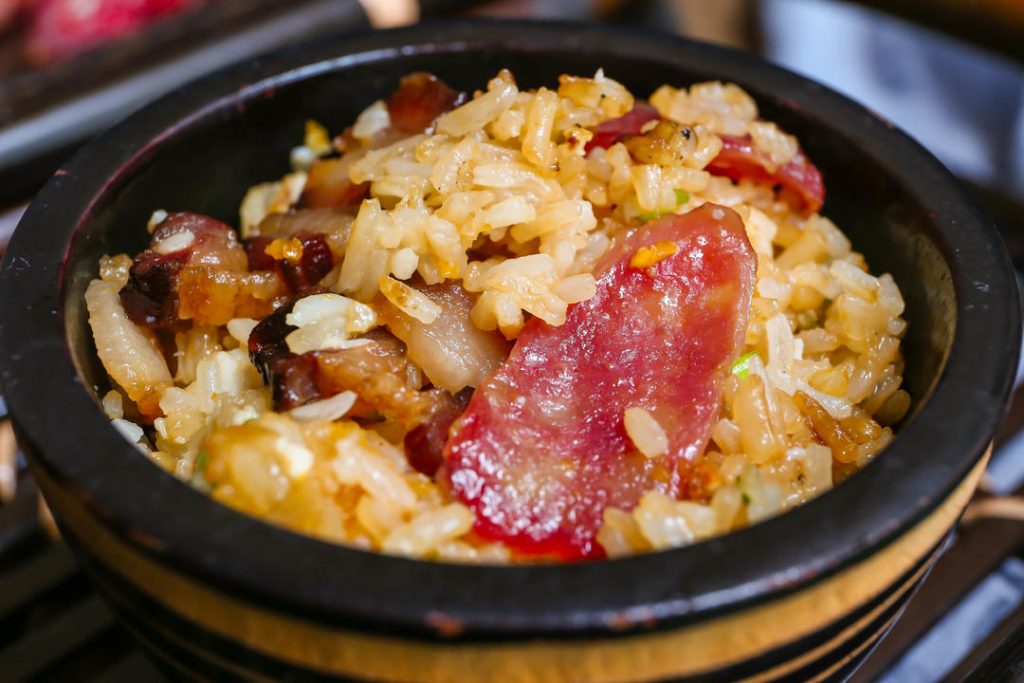
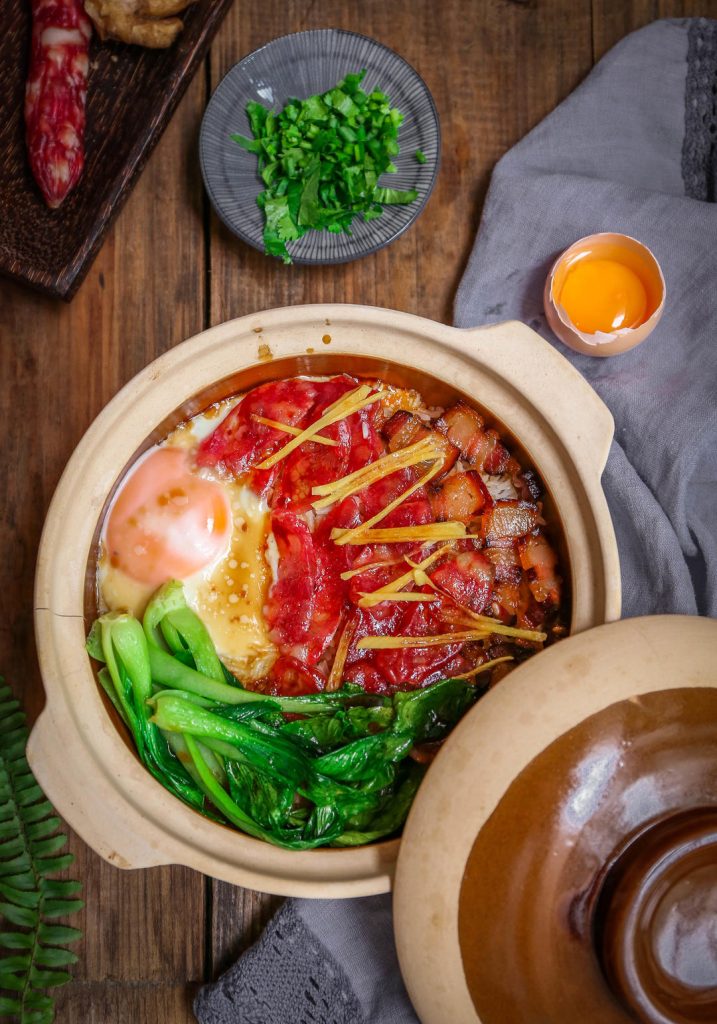
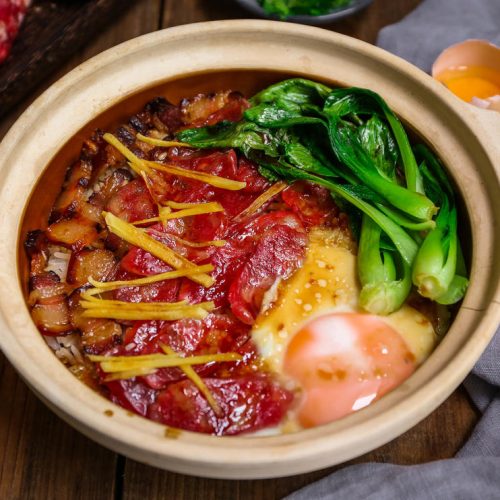
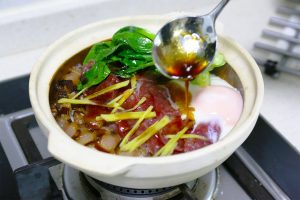
If you’ve never had it, imagine fluffy jasmine rice infused with the savory fats of Chinese cured meats, all topped with a sweet-savory soy sauce and a perfectly steamed egg. While traditional clay pots are preferred, I’ll show you how to recreate this magic in a standard Western kitchen using a Dutch oven.
What is Bao Zai Fan?
Bao Zai Fan literally translates to “Little Pot Rice.” It is a staple of Guangdong province and Hong Kong. Historically, it was a winter dish cooked over charcoal stoves, which gave the rice a distinct smoky flavor. The defining characteristic is the balance between the soft, fluffy upper layer of rice and the crispy, scorched bottom layer.
Why This Recipe Works
- The “Guoba” (Crispy Rice): This recipe uses a specific oil-drizzling technique along the rim of the pot to guarantee that signature crunchy golden crust at the bottom.
- Flavor Infusion: By steaming the cured meats on top of the rice as it cooks, the rendered fat drips down, seasoning every grain of rice naturally.
- Efficient One-Pot Meal: Meat, carbs, and veggies are all handled in one vessel. It’s a complete meal, though it pairs beautifully with a light soup like Seaweed Egg Drop Soup to wash it down.
Ingredients You’ll Need
For the Rice & Meats:
- Rice: 1 cup (approx. 200g) Thai Jasmine Rice. Substitutions: Long-grain white rice works, but Jasmine provides the best fragrance. Do not use brown rice or sticky rice.
- Water: 1.5 cups (375ml). Note: The ratio is roughly 1:1.5 for clay pot cooking because of evaporation.
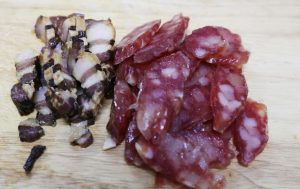
- Cured Pork Belly (Lap Rou): 7 oz (200g), thinly sliced. Substitutions: If you can’t find Chinese cured pork belly, you can use thick-cut smoked bacon or pancetta.
- Chinese Sausage (Lap Cheong): 2 links, sliced diagonally. Substitutions: A high-quality sweet chorizo is a functional alternative.
- Egg: 1 large egg.
- Vegetables: 2-3 heads of Baby Bok Choy (Shanghai Qing).
- Aromatics: 1 tsp Ginger (julienned into thin strips), 1 stalk Scallion (chopped), handful of Cilantro.
For the Sauce (The Soul of the Dish):
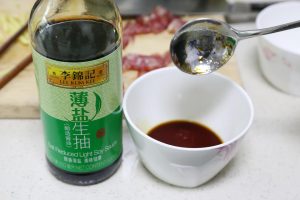
- Soy Sauce: 1 tbsp Light Soy Sauce.
- Oyster Sauce: 1 tbsp.
- Sesame Oil: 1 tbsp.
- Sugar: 1/2 tbsp White Sugar.
- Water: 2 tbsp (hot water to dissolve sugar).
- Oil: 1-2 tbsp Vegetable or Canola oil (crucial for the crust).
Ingredient Deep Dive: Lap Cheong Unlike Western sausages, Lap Cheong is dried, hard, and sweetened with rose water and soy. You can find brands like “Kam Yen Jan” in the dried goods aisle.
Equipment
- Traditional: A Chinese Clay Pot (sand pot).
- Modern/Western: A small Dutch Oven (enamel cast iron) or a heavy-bottomed stainless steel saucepan with a tight-fitting lid.
- Avoid: Non-stick pans (they don’t generate enough heat for the crust) or thin aluminum pots.
How to Make Bao Zai Fan
Phase 1: Prep and Soak
- Soak the Rice: Rinse the jasmine rice until the water runs clear. Place it in a bowl with cold water and let it soak for 15 to 30 minutes.
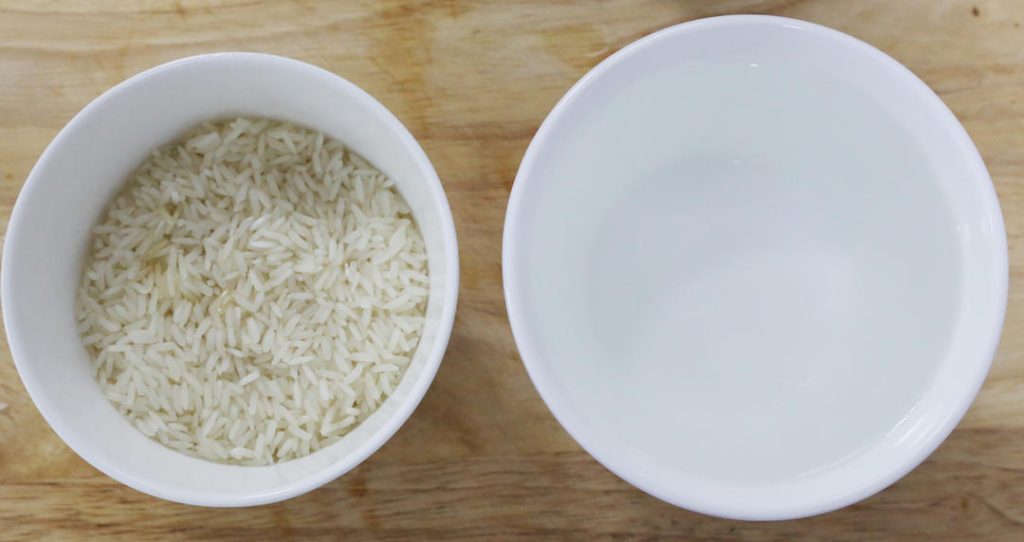
- Why? Clay pot cooking is fast. Soaking prevents the center of the rice from staying raw.
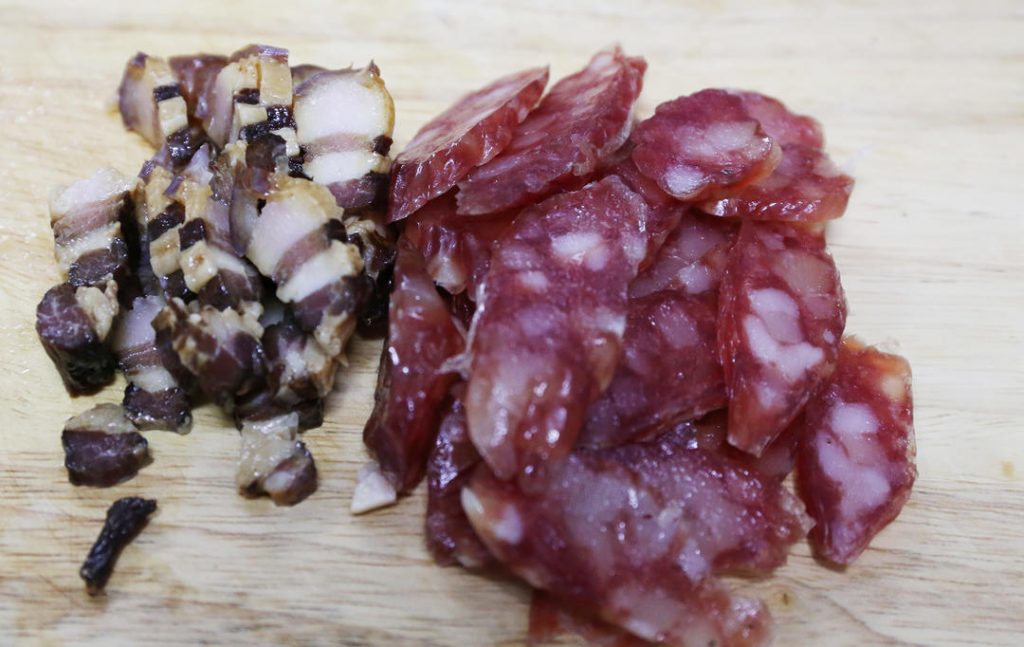
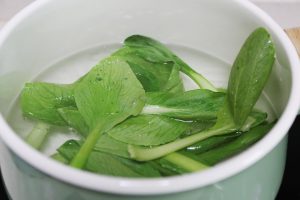
- Prep Ingredients: Slice the sausage and cured pork belly into thin pieces. Julienne the ginger. Blanch your Bok Choy in boiling water with a drop of oil for 30 seconds, then drain.

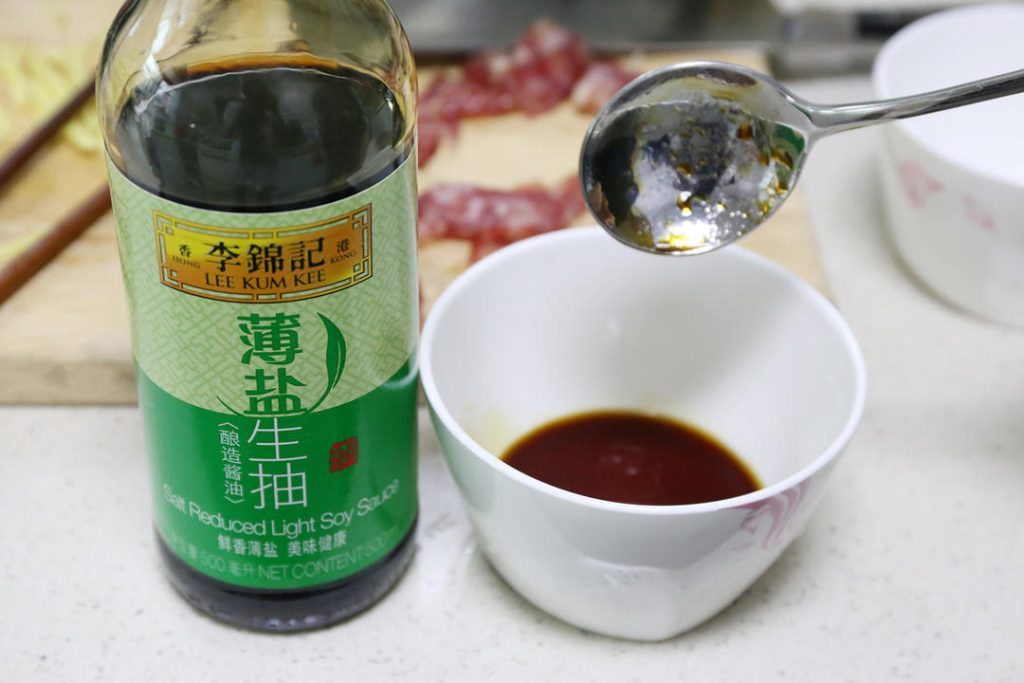
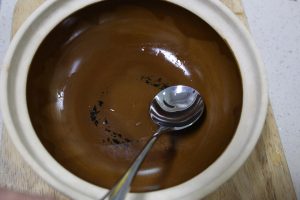
- Make the Sauce: Mix soy sauce, oyster sauce, sesame oil, sugar, and hot water.
Phase 2: The Boil
- Oil the Pot: Brush a thin layer of vegetable oil on the bottom and sides of your pot.

- Start Cooking: Drain the soaked rice and add it to the pot. Add the 1.5 cups of fresh water.
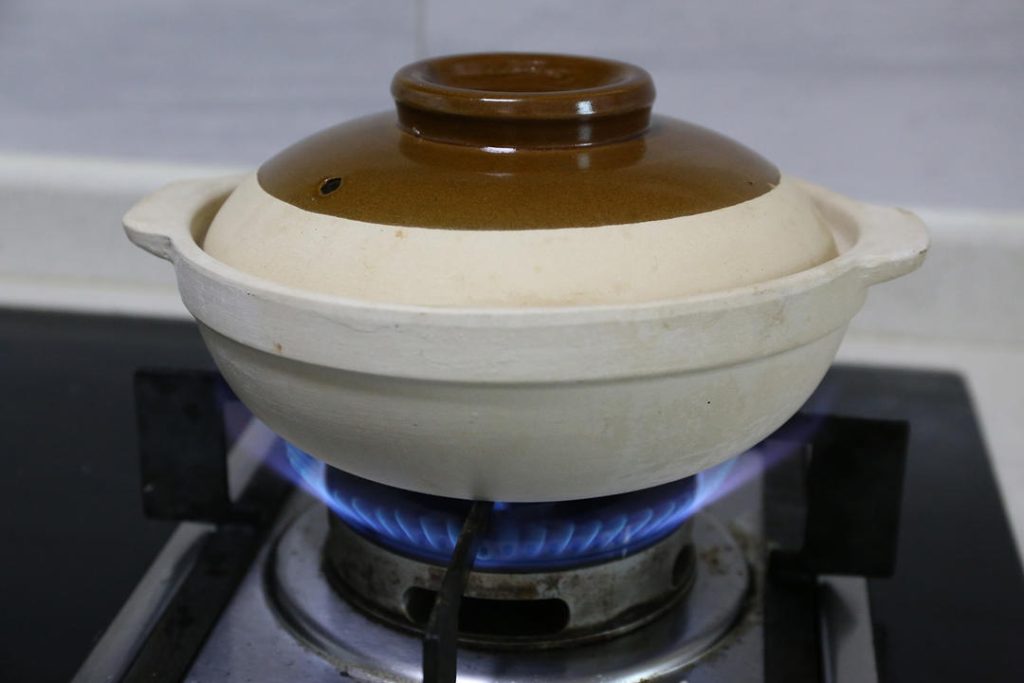
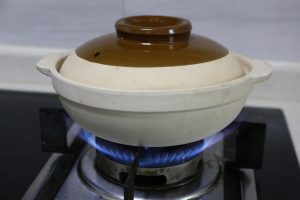
- High Heat: Cover and cook on medium-high heat until boiling. Once boiling, reduce heat to medium.
Phase 3: The “Fish Eye” Stage
- Watch the Rice: After 5-8 minutes, open the lid. You should see the water mostly absorbed and bubbles forming “holes” (fish eyes) in the rice.
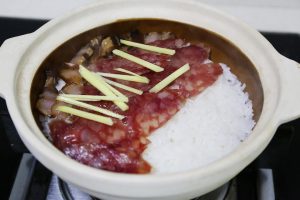
- Add Meats: Quickly layer the sausage, cured pork belly, and ginger on top.
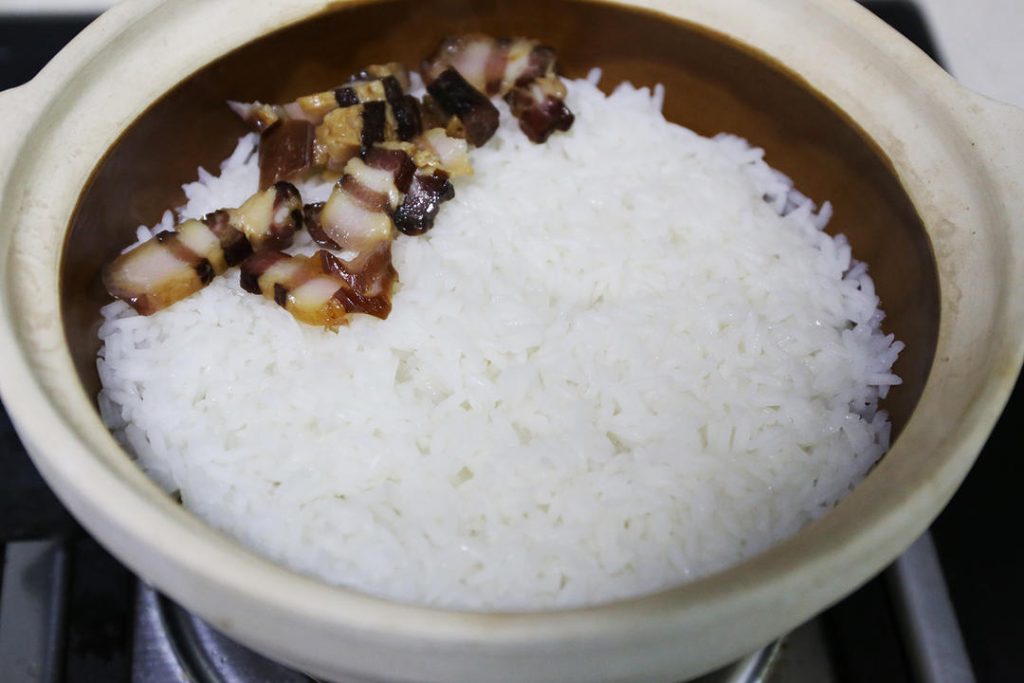
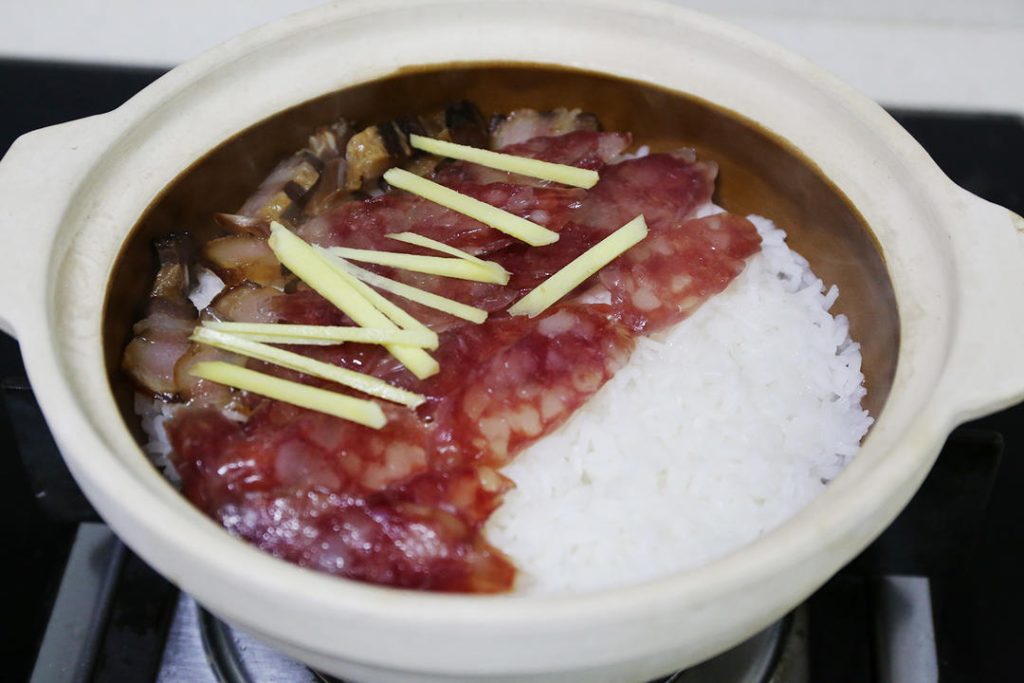
- Cover and Simmer: Cover immediately. Turn heat to low. Simmer for 5-8 minutes.
Phase 4: The Crispy Bottom (Guoba) & Egg
- The Egg: Crack the egg into the center of the pot.
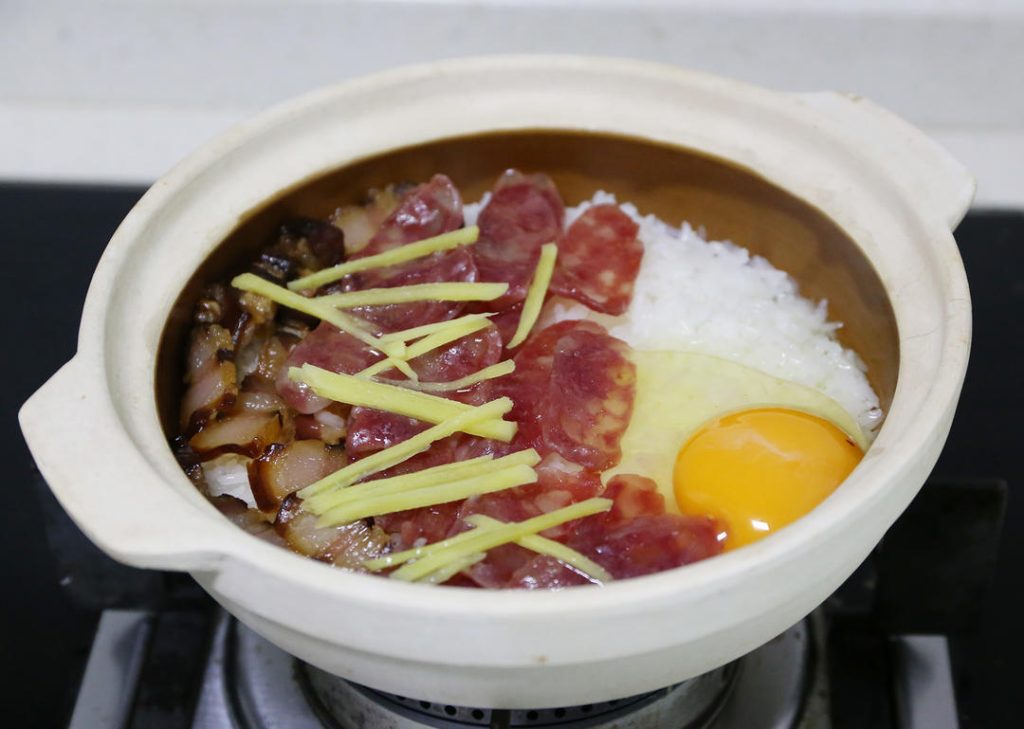
- The Secret Technique: Pour 1 teaspoon of oil along the rim of the pot so it slides down the inner walls to the bottom.
- Scientific Insight: This oil slides under the rice. Combined with heat, it creates the Maillard reaction (browning), forming the Guoba.
- The Crackle: Cover again. Keep on low heat. Rotate the pot slightly every minute for even browning. Listen for a faint crackling sound. This takes 3-5 minutes. Do not let it smell burnt.
- Rest: Turn off heat. Let it rest for 5 minutes (lid on).
Phase 5: Serve
- Open the lid. Arrange the Bok Choy on top. Pour the sauce over everything. Mix and enjoy!

Pro Tips for Success
- Listen to the Pot: The transition from “bubbling” to “crackling” is your cue that the crust is forming.
- Don’t Skip the Oil: You must do the “rim drizzle” in step 11 to get the crust.
- Pairing: While this is a meal in itself, I love serving it with Stir-fried Lettuce with Garlic for a refreshing crunch that cuts through the rich meats.
Troubleshooting / FAQ
- My rice is burnt, not crispy!
- The heat was too high at the end. Once the water evaporates, drop the flame to the absolute minimum.
- My rice is mushy.
- Too much water or you didn’t boil off enough before covering. Let the “fish eye” holes get bigger next time.
- What if I have leftovers?
- You can reheat the rice, but the crust will lose its crunch. If you have leftover chicken stock from another recipe (like our Wonton Soup Broth ), you can turn the leftover rice into a delicious congee/porridge the next morning.
Serving Suggestions
This dish is rich and savory.
- Vegetables: Serve with Stir-fried Lettuce with Garlic or simple blanched broccoli.
- Soup: A light Seaweed Egg Drop Soup balances the saltiness of the cured meats perfectly.
Authentic Cantonese Clay Pot Rice (Bao Zai Fan)

Equipment
- Clay Pot or Dutch Oven
- Small Bowl for Sauce
Ingredients
Rice & Meats
- 1 cup Jasmine Rice rinsed and soaked
- 1.5 cups water
- 2 links Chinese Sausage (Lap Cheong) sliced diagonally
- 7 oz Chinese Cured Pork Belly (Lap Rou) thinly sliced
- 1 inch ginger julienned
- 1 large egg
- 2 heads baby bok choy blanched
The Sauce
- 1 tbsp light soy sauce
- 1 tbsp oyster sauce
- 1 tbsp sesame oil
- 0.5 tbsp sugar
- 2 tbsp hot water for sauce
Instructions
- Rinse the rice and soak in cold water for 15-30 minutes. Slice the sausage and pork belly thinly. Julienne the ginger.

- In a small bowl, mix soy sauce, oyster sauce, sesame oil, sugar, and 2 tbsp hot water until dissolved.

- Blanch the baby bok choy in boiling water for 30 seconds. Drain and set aside.
- Brush a thin layer of oil on the bottom of your clay pot or Dutch oven. Add drained rice and 1.5 cups fresh water.
- Cook on medium-high heat, covered, until boiling. Reduce to medium. Cook until water is mostly absorbed and ‘fish eye’ holes appear in the rice (approx 5-8 mins).
- Quickly arrange the sausage, pork belly, and ginger on top of the rice. Cover, reduce heat to low, and simmer for 5-8 minutes.
- Crack the egg onto the rice. Drizzle 1 tsp of oil along the rim of the pot so it runs down the sides (this creates the crust). Cover and cook on low for 3-5 more minutes. Listen for a faint crackling sound.

- Turn off heat. Keep lid closed and rest for 5 minutes.
- Open lid, add bok choy, pour sauce over everything, garnish with scallions/cilantro, mix and serve.

Notes
- Calories: 650 kcal
- Carbohydrates: 85 g
- Protein: 22 g
- Fat: 24 g
- Saturated Fat: 8 g
- Cholesterol: 185 mg
- Sodium: 1250 mg
- Potassium: 400 mg
- Fiber: 2 g
- Sugar: 6 g
- Vitamin A: 100 IU
- Vitamin C: 10 mg
- Calcium: 60 mg
- Iron: 4 mg




Leave a Reply