If there’s one dish that tastes like my childhood, it’s Kung Pao Chicken. I practically grew up in the kitchen of my parents’ Sichuan restaurant, which they ran for over 20 years. I saw my dad, a chef for over three decades, make the classic restaurant version hundreds of times – a fiery, complex dish with an electrifying mala (numbing-spicy) kick.

But this recipe? This is different. This is the Kung Pao Chicken my mom would whip up for us at home. It’s a gentler, more comforting version, a true homestyle classic that relies on pantry staples to create that iconic sweet, sour, and savory flavor profile. It’s the kind of meal that tells a story of family, flavor, and the simple joy of a home-cooked meal.
After graduating from culinary school and spending a decade cooking professionally across China, I’ve come to appreciate these homestyle recipes even more. They are accessible, forgiving, and capture the heart of everyday Chinese cooking. This is the recipe I make when I’m craving a taste of home, and I’m so excited to share it with you.
What is Kung Pao Chicken?
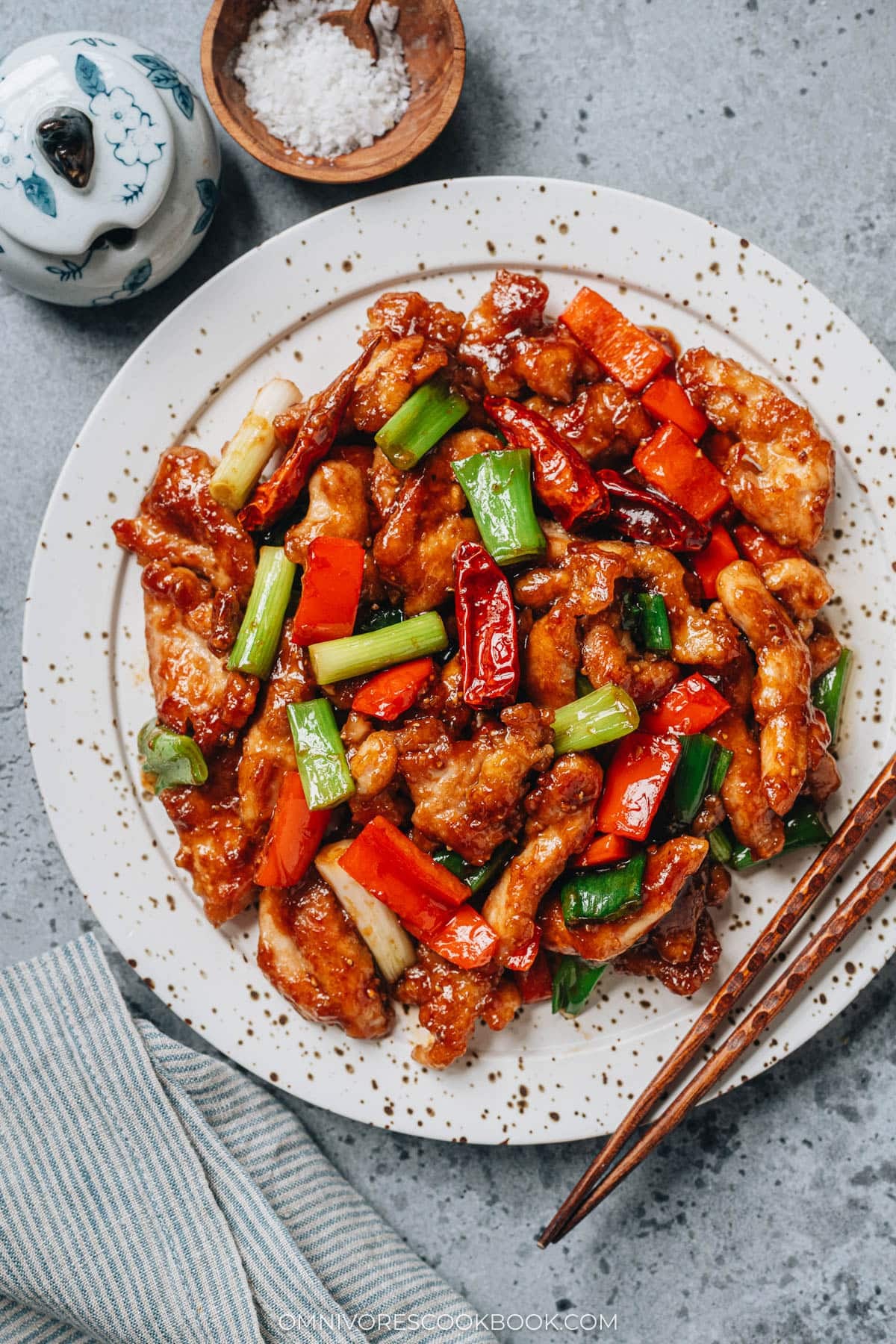
Kung Pao Chicken (宫保鸡丁, Gong Bao Ji Ding) is one of the most famous dishes to come out of Sichuan cuisine. At its core, it’s a stir-fry featuring small pieces of diced chicken, peanuts, and chili peppers. The magic is in its sauce, which balances salty, sweet, sour, and spicy notes. The authentic Sichuan version is known for its bold use of Sichuan peppercorns, which create a tingly, numbing sensation known as mala (麻辣).
It was originally named after Ding Baozhen (丁宝桢), a Qing Dynasty governor of Sichuan province known as “Gong Bao” (Palace Guardian), who adored this dish. Over time, it became one of China’s most iconic exports—appearing on restaurant menus around the world.
This homestyle version tones down the numbing heat slightly but keeps all the addictive, savory-sweet flavors that make the dish a global favorite.
If you love the bold, savory-sweet profile of this classic but are looking for a milder, even faster alternative for a hectic Monday night, you have to try our Better-Than-Takeout Mongolian Chicken. It swaps the numbing Sichuan peppercorns for a glossy ginger-garlic glaze that’s completely kid-friendly and hits the table in just 20 minutes.
1Mongolian Chicken Stir-FryA 20-minute weeknight star featuring tender velveted chicken in a savory-sweet ginger garlic glaze.Check out this recipe
Why This Recipe Works
- Authentic Homestyle Flavor: This recipe skips the deep-frying and complex restaurant techniques, focusing on a simple stir-fry method that you can easily master in a home kitchen.
- Perfectly Tender Chicken: Our simple marinade, a classic Chinese technique called velveting, uses egg white and cornstarch to create a protective layer around the chicken, ensuring it stays incredibly juicy and tender, never dry.
- A Balanced, Addictive Sauce: The sauce is the star. Using a combination of classic pantry staples like soy sauce, vinegar, and a little honey, we create a glossy sauce that coats every single ingredient perfectly.
- Beginner-Friendly: I’ve broken down the process into simple, manageable steps. The key to any good stir-fry is preparation (mise en place), and I’ll walk you through it so the final cook is fast and stress-free.
A Deep Dive into Key Ingredients
While most ingredients are common, a couple are essential for that authentic taste.
- Pixian Doubanjiang (郫县豆瓣酱): This is the heart and soul of many Sichuan dishes. It’s a fermented spicy broad bean paste that provides a deep, savory, and salty flavor. Look for the “Pixian” (a county in Sichuan famous for producing the best paste) on the label at your local Asian market or online. Juan Cheng is a reliable brand. If you can’t find it, a regular chili bean sauce or paste can work in a pinch, but it won’t have the same fermented depth.
- Sichuan Peppercorns (花椒, huā jiāo): These aren’t related to black peppercorns. They have a unique floral, citrusy aroma and create a tingly, numbing sensation on the tongue. This is the famous mala effect. Toast them lightly before use to awaken their fragrance. If you’re new to them, start with a smaller amount. You can find them at Asian grocery stores or online from sources like The Mala Market for premium quality.
- Chinese Black Vinegar (陈醋, chén cù): This vinegar is dark, malty, and slightly sweet. It’s less harsh than white vinegar and provides the essential tangy backbone to the sauce. Chinkiang vinegar is the most common type. If you can’t find it, balsamic vinegar is the next best substitute, though the flavor will be slightly different.
NOTE:
- The intensity of Doubanjiang can vary by brand. This dish is meant to be savory and served with rice. If you are sensitive to salt, you can start with a little less Doubanjiang and adjust at the end.
- Don’t be intimidated by the ingredient list—most items can be found in major supermarkets or on Amazon. I’ve included Western substitutes for everything that’s hard to find.
Equipment You’ll Need
A wok is the traditional tool for this dish. Its shape allows for high-heat stir-frying and easy tossing. However, if you have an electric or induction stove, a large, flat-bottomed skillet (12-inch or larger) will actually work better, as it makes more contact with the heating element. Carbon steel or cast iron are great choices.
You will also need:
- Several small bowls for your mise en place.
- A sharp knife and cutting board.
- A spatula or wok turner.
Mise en Place: Get Ready to Stir-Fry!
Stir-frying is a very fast cooking process, often taking less than 5 minutes. It is absolutely essential to have every single ingredient prepped, measured, and placed within arm’s reach of your stove before you turn on the heat.
Your station should have:
- A bowl with the marinated chicken.
- A small bowl with the mixed sauce ingredients.
- A plate with your chopped vegetables (cucumber and carrot).
- A small dish with your aromatics (Sichuan peppercorns, dried red chilies, and chopped doubanjiang).
- A bowl of your fried peanuts, ready to go.
How to Make Homestyle Kung Pao Chicken
Step 1: Marinate the Chicken (Velveting)
This is the secret to tender, restaurant-quality chicken. The cornstarch and egg white create a silky coating that locks in moisture during the high-heat cooking process.

In a medium bowl, combine the diced chicken breast with Shaoxing wine, light soy sauce, salt, egg white, cornstarch, and sesame oil. Mix with your hands or chopsticks until the chicken is evenly coated and the liquid is absorbed. Let it marinate for at least 30 minutes while you prepare the other ingredients.

Step 2: Prepare the Sauce and Vegetables
In a separate small bowl, whisk together all the “Sauce Ingredients”: Chinese black vinegar, sugar, oyster sauce, Shaoxing wine, honey, stock (or water), chopped scallions, minced garlic, sesame oil, and cornstarch. Stir it well right before you use it, as the cornstarch will settle.

Dice your cucumber and carrots into small, even cubes, similar in size to the chicken. Finely chop the Pixian doubanjiang – this helps it melt into the oil and release its flavor. Snip the dried red chilies into segments, shaking out the seeds if you prefer less heat.

Step 3: Fry the Peanuts
Heat a clean wok or skillet over medium-low heat with a small amount of oil. Add the raw peanuts and stir-fry continuously for 4-5 minutes, until they are golden brown and fragrant. Be careful not to burn them. Remove them from the pan and let them cool completely on a plate. As they cool, they will become wonderfully crispy.

- Safety Tip: Hot oil can splatter. Use a splatter guard if you have one, and never leave the hot pan unattended.
Step 4: The Stir-Fry
Sear the Chicken: Heat your wok or skillet over high heat until it’s very hot, just starting to smoke lightly. Add 1 tablespoon of oil. Swirl to coat the pan. Carefully add the marinated chicken in a single layer. Let it sear, undisturbed, for about 30-40 seconds until golden brown on one side. Then, quickly stir-fry and break it apart for another 10-20 seconds until it’s just cooked through and white. Immediately remove the chicken from the wok and set it aside.

Why we do this: Cooking the chicken separately and quickly prevents it from overcooking and getting tough while you cook the other ingredients.
Bloom the Aromatics: Leave the remaining oil in the wok. Reduce the heat to low. Add the Sichuan peppercorns and dried red chilies. Stir-fry for about 30 seconds until they are fragrant and the oil is infused. This is called “blooming” the spices.
Fry the Doubanjiang: Add the chopped Doubanjiang to the wok. Continue to stir-fry on low heat for about 1 minute until the oil turns a beautiful reddish color and smells incredible. This step is crucial for building the base flavor.
Cook the Vegetables: Add the diced carrots and cucumber to the wok. Turn the heat up to high and stir-fry for 1-2 minutes until they are crisp-tender. You still want them to have a nice bite.
Bring It All Together: Add the cooked chicken back into the wok. Give it a quick toss. Give your pre-mixed sauce one last stir and pour it all around the edges of the wok. The sauce will bubble and thicken almost instantly. Stir-fry everything quickly for about 30 seconds to coat all the ingredients in the glossy sauce.

Final Touch: Turn off the heat. Add the crispy fried peanuts. Give it one final toss to combine. Serve immediately!
How to Serve Kung Pao Chicken
Kung Pao Chicken is best served immediately, piping hot, over a bed of fluffy steamed jasmine rice. The rice is the perfect vessel to soak up every last bit of that incredible sauce.
For a more complete meal, you can pair it with a simple vegetable side dish. A light stir-fry of greens like our Garlic Stir-Fried Baby Bok Choy or a cooling Smashed Cucumber Salad would be perfect complements to the bold flavors of the Kung Pao.
Storing Leftovers
Store any leftovers in an airtight container in the refrigerator for up to 3 days. The peanuts will lose their crunch over time. When reheating, it’s best to do so in a skillet over medium heat or in the microwave.
Allergen Information
- Contains: Peanuts, Soy, Wheat (from soy sauce/doubanjiang), Egg.
- For Gluten-Free: Use tamari instead of soy sauce, ensure your oyster sauce and doubanjiang are gluten-free, and substitute dry sherry for Shaoxing wine.
Frequently Asked Questions (FAQ)
1. Can I use chicken thighs instead of breast?
Absolutely! Chicken thighs are more forgiving and have more flavor. Cut them into slightly larger cubes and follow the recipe exactly.
2. My sauce became too thick and gloopy. What did I do wrong?
This can happen if the heat is too high when you add the sauce or if the cornstarch wasn’t fully dissolved. If it gets too thick, quickly stir in a tablespoon of water or chicken stock to loosen it up before serving.
3. Can I use other vegetables?
Yes! This is a homestyle recipe, so feel free to adapt. Diced bell peppers, celery, or rehydrated wood ear mushrooms would all be delicious additions. Just be mindful of cooking times – add harder veggies first.
4. The dish isn’t as spicy as I’d like. How can I make it spicier?
For more heat, don’t deseed the dried red chilies. You can also add a few more. For an extra kick at the end, a drizzle of high-quality Sichuan Chili Oil is fantastic.

Homestyle Kung Pao Chicken (Gong Bao Ji Ding)

Equipment
- 1 Wok 14-inch or 12-inch large skillet
- 2 Small bowls for prep
- 1 Spatula
Ingredients
For the Chicken & Marinade:
- 1 large chicken breast (about 1/2 lb / 225g), cut into ½-inch (1.5 cm) cubes
- ½ tbsp Shaoxing wine (or dry sherry)
- ½ tbsp light soy sauce
- ¼ tsp salt
- 1 tbsp egg white
- 1 tsp cornstarch
- 1 tsp sesame oil
For the Sauce (碗汁)
- 1 tbsp Chinese black vinegar (Chinkiang vinegar recommended)
- 1 tbsp white sugar
- ½ tbsp oyster sauce
- 1 tbsp Shaoxing wine (or dry sherry)
- 1 tbsp honey
- 2 tbsp water or chicken stock
- 2 scallions finely chopped
- 2-3 cloves garlic minced
- ½ tbsp sesame oil
- 1 tbsp cornstarch
For the Stir-Fry
- ½ cup peanuts (75g)raw, unsalted
- 2 tbsp cooking oil (like canola, vegetable, or avocado), divided
- 1 tsp whole Sichuan peppercorns
- 3-4 dried red chilies (like chiles de árbol), snipped into segments
- 2 tbsp Pixian Doubanjiang (spicy broad bean paste), finely chopped
- ⅓ English cucumber (about ½ cup), diced
- ¼ large carrot (about ⅓ cup), diced
Instructions
- Marinate Chicken: In a medium bowl, combine the chicken cubes with all marinade ingredients (Shaoxing wine, light soy sauce, salt, egg white, cornstarch, sesame oil). Mix well and set aside to marinate for at least 30 minutes.
- Mix Sauce: In a small bowl, whisk together all the sauce ingredients until the cornstarch is dissolved. Set aside.
- Prep Veggies: Dice the cucumber and carrot. Finely chop the doubanjiang. Snip the chilies. Have everything ready by your stove.
- Fry Peanuts: Heat 1 tsp of oil in your wok over medium-low heat. Add peanuts and stir-fry constantly for 4-5 minutes until golden. Remove and cool on a plate. They will crisp as they cool.
- Cook Chicken: Wipe the wok clean. Heat over high heat until smoking. Add 1 tbsp of oil. Add the chicken in a single layer and sear for 30-40 seconds. Stir-fry for another 10-20 seconds until just cooked. Remove and set aside.
- Bloom Aromatics: Reduce heat to low. Add the remaining oil, Sichuan peppercorns, and dried chilies. Stir-fry for 30 seconds until fragrant.
- Build Flavor: Add the chopped doubanjiang and stir-fry on low for 1 minute until the oil is red and aromatic.
- Combine: Turn heat to high. Add the carrots and cucumber and stir-fry for 1-2 minutes. Add the cooked chicken back to the wok.
- Finish: Give the sauce a final stir and pour it into the wok. Stir-fry for 30 seconds as it thickens and coats everything. Turn off the heat, add the crispy peanuts, toss one last time, and serve immediately over steamed rice.
Notes
Allergen Information
- Contains: Peanuts, Soy, Wheat (from soy sauce/doubanjiang), Egg.
- For Gluten-Free: Use tamari instead of soy sauce, ensure your oyster sauce and doubanjiang are gluten-free, and substitute dry sherry for Shaoxing wine.
Homestyle Kung Pao Chicken
Yields: 2-3 servings Prep time: 30 minutes Cook time: 10 minutes Total time: 40 minutesNutrition Info (Disclaimer)
(Per serving, approximately 1/3 of the recipe) Calories: 450 kcal | Carbohydrates: 25g | Protein: 35g | Fat: 22g | Sodium: 980mg Disclaimer: Nutrition information is calculated using an ingredient database and should be considered an estimate. Optional ingredients and different brands can change the nutritional values.Real Comments from Our Readers
⭐⭐⭐⭐⭐
“I finally did it! I made a Kung Pao chicken that tastes like the real deal. I grew up in a Chinese restaurant family too, and this recipe brought back so many memories. The velveting tip for the chicken is a game-changer. It was so tender! This is going into my regular rotation.” – Jessica L.
⭐⭐⭐⭐
“This was delicious and so much easier than I thought. My husband, who is usually scared of Sichuan peppercorns, loved the flavor. I couldn’t find Pixian doubanjiang so I used regular chili garlic sauce, and it was still great, though probably a bit different. Will be hunting for the real stuff next time. Thanks for a great recipe!” – David P.
⭐⭐⭐⭐⭐
“Made this tonight and it was a huge hit! The sauce is perfectly balanced – just the right amount of sweet and tangy. I loved the personal story at the beginning. It really makes you feel connected to the food. I used chicken thighs and added some diced red bell pepper. So, so good over rice.” – Emily R.












Leave a Reply