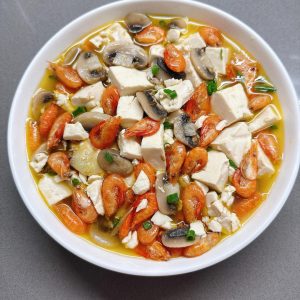
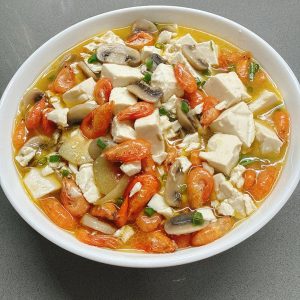
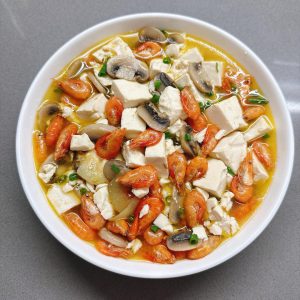
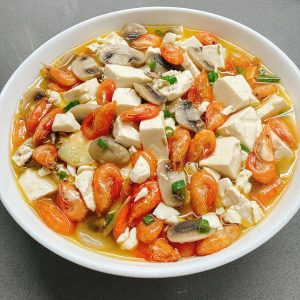
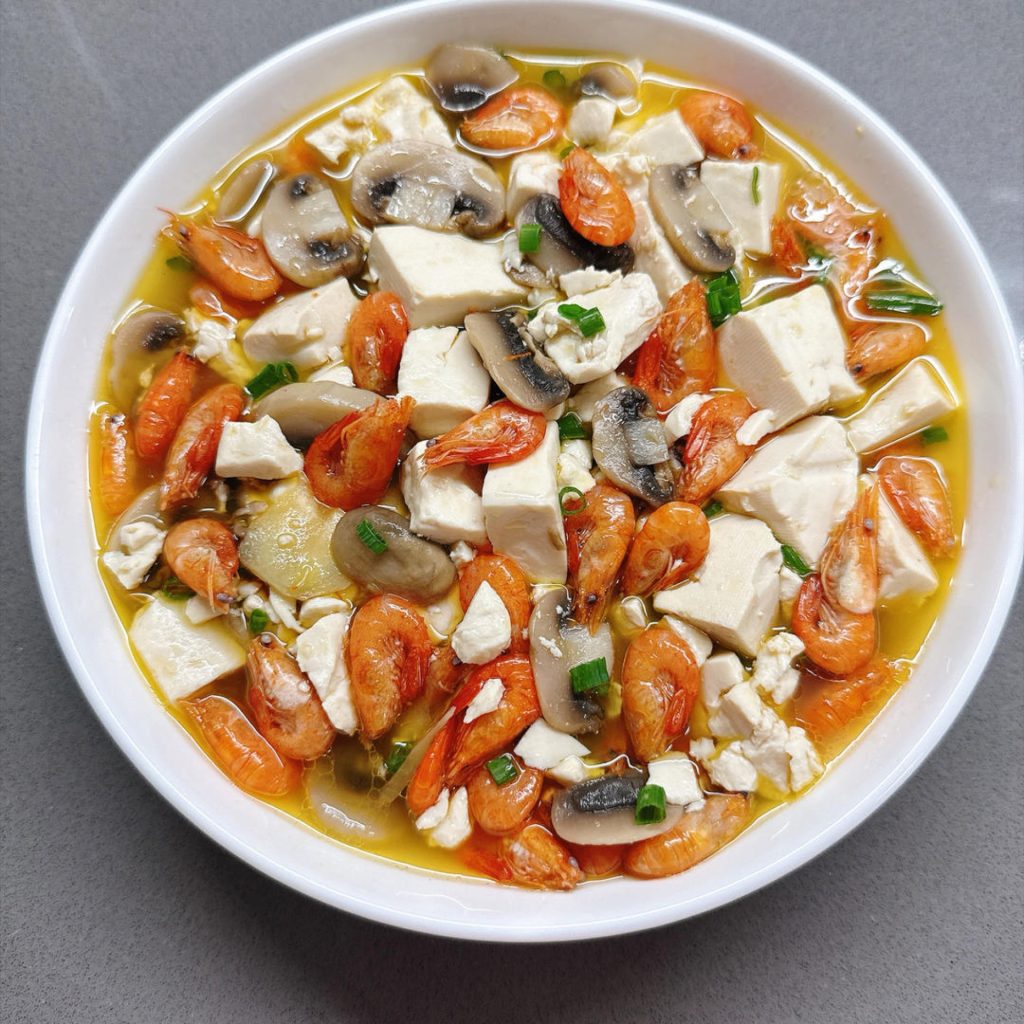
There is a particular kind of Chinese home cooking that never shouts for attention — it just quietly disappears from the table. River shrimp and mushroom braised tofu is exactly that dish: a shallow golden pot of soft tofu cubes, tiny sweet shrimp, and sliced button mushrooms, all suspended in a light, glossy sauce that tastes far bigger than its five ingredients. The shrimp give it a clean, sweet brininess, the mushrooms give it body, and the tofu does what tofu does best — it drinks up everything and turns each spoonful into something silky.
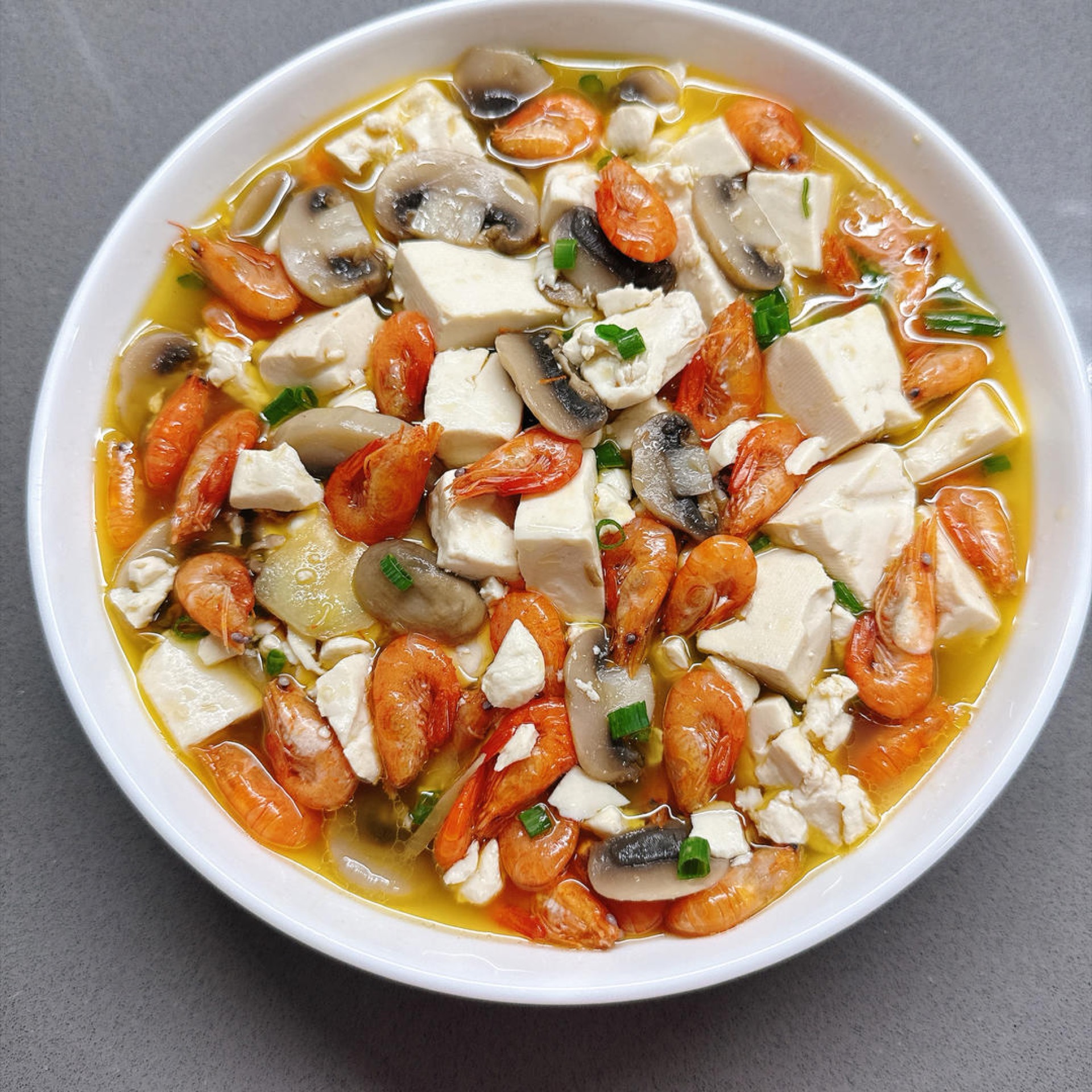
It also happens to be one of the most forgiving braises in the repertoire. There is no long simmering, no braising liquid to reduce for an hour, no tricky technique. You sear mushrooms, flash-cook shrimp, and let tofu warm through in a seasoned broth — three short bursts of heat and you are done. If you have ever wanted a tofu dish that converts the skeptics at the table, this is the one to cook first.
What Is River Shrimp and Mushroom Braised Tofu?
River shrimp and mushroom braised tofu (河虾口蘑烩豆腐) is a Jiangnan-style home dish built on three ingredients that love each other: small freshwater shrimp, fresh button mushrooms (口蘑, literally “mouth mushrooms,” the Chinese name for cremini or white button mushrooms), and soft tofu. “烩” (huì) means to braise or simmer together — a technique where ingredients are briefly cooked in a seasoned liquid so the flavors marry and the sauce thickens slightly around them.
Unlike a long red-braised dish, this is a quick white-style braise. There is no dark soy, no sugar caramel, no star anise. The sauce is built from the oil the shrimp release when they hit the heat, the savory liquid the mushrooms give up, and a small amount of water or stock. Salt and a whisper of white pepper are the only seasonings. What you get is a pale gold, delicate sauce that tastes of the sea and the forest at once.
The version below is written for a Thermomix (小美版, “the Xiaomei version”), which is how many Chinese home cooks make it today — the machine’s reverse-spoon stirring is genuinely gentle on soft tofu. But the same dish works beautifully in a wok, and I have noted where the two methods diverge.
If you love the way soft tofu soaks up a savory sauce, the braised egg tofu with shrimp and tomato is the next pot to try — egg tofu is even silkier, and the tomato gives the sauce a bright, tangy edge.
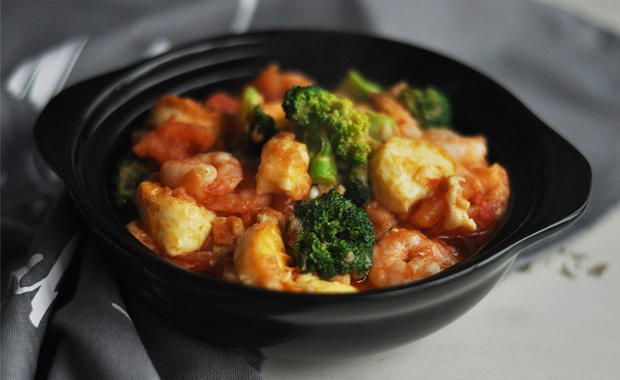
1Braised Egg Tofu with Shrimp and TomatoThis easy 20-minute clay pot style dish combines silky Japanese egg tofu, juicy shrimp, and crunchy broccoli in a savory and tangy tomato sauce. It is a perfect weeknight dinner that pairs beautifully with steamed rice.Check out this recipe
For a hands-off, no-added-water approach, the waterless tomato stew with shrimp and egg tofu lets the vegetables release their own juices — a completely different texture, same sweet shrimp-and-tofu logic.
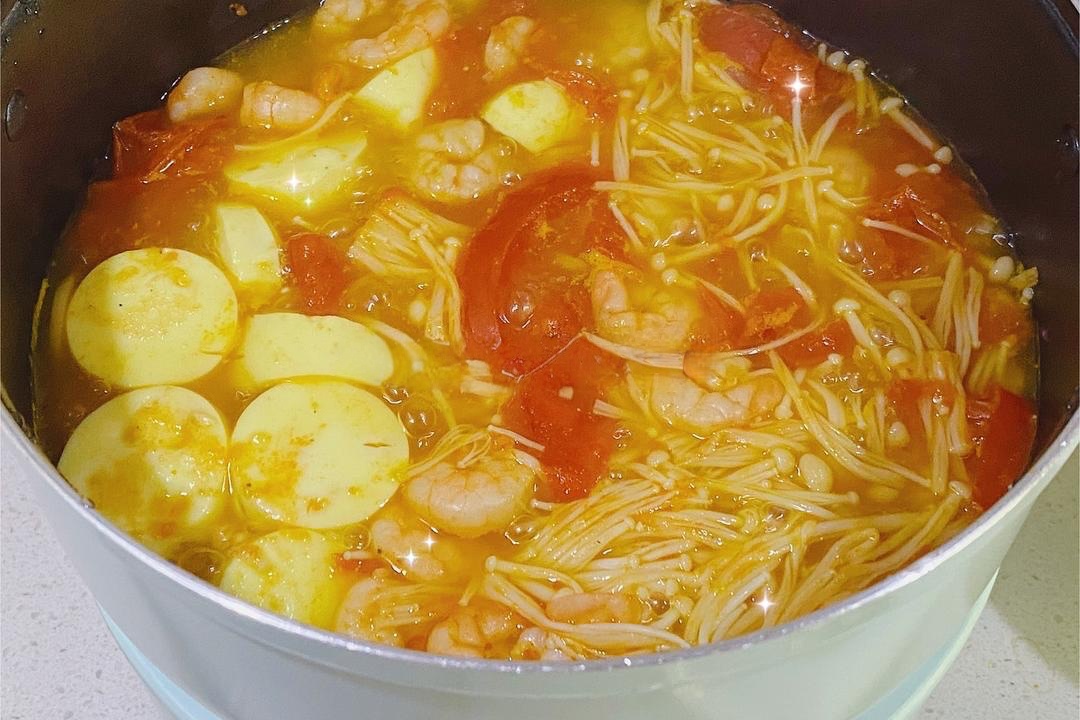
2No-Water Tomato Stew with Shrimp and Egg Tofu (Wushui Fanqie Guo)A magical 15-minute one-pot meal that uses zero added water. Ripe tomatoes and enoki mushrooms create a rich, concentrated broth that steams delicate egg tofu and shrimp to perfection. It is healthy, savory, and bursting with umami.Check out this recipe
And if you want the same flavors with a bit more bite and wok heat, the shrimp and tofu stir fry keeps everything firm and glossy instead of saucy.
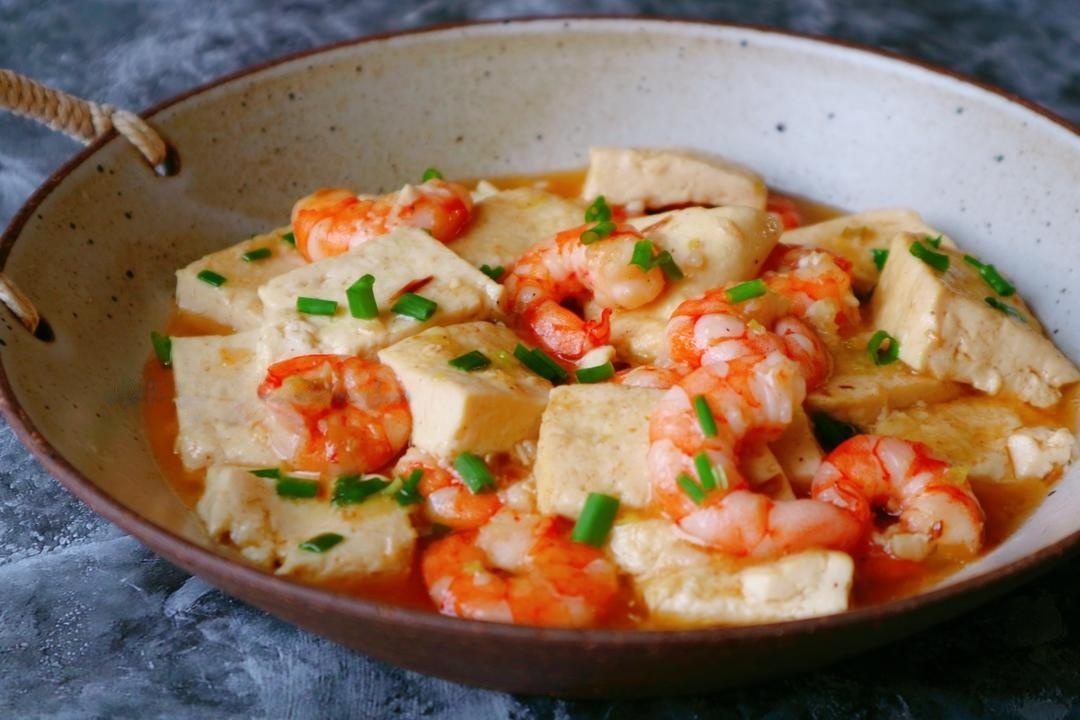
3Easy Shrimp and Tofu Stir-Fry (虾仁老豆腐)This quick and comforting homestyle dish features tender, simmered firm tofu and juicy shrimp in a light, savory garlic sauce. A perfect 15-minute meal.Check out this recipe
Ingredient Notes
River shrimp (河虾). These are small freshwater shrimp, usually 2–4 cm, sold live or very fresh in Chinese markets. They are sweeter and more delicate than farmed white shrimp and they release a gorgeous orange-red oil when fried. If you cannot find them, use the smallest raw shrimp you can get — ideally shell-on, head-on — and add an extra pinch of salt. Do not substitute cooked shrimp; they will turn rubbery.
Soft tofu (嫩豆腐). Use silken or soft tofu, not firm. The point of this dish is that the tofu barely holds together and melts at the edges into the sauce. Firm tofu will stay blocky and never absorb the braise. If soft tofu feels too fragile to you, “medium-soft” is a reasonable compromise.
Button mushrooms (口蘑). Fresh white button or cremini mushrooms, sliced about 4 mm thick. Do not wash them under running water — wipe with a damp paper towel. Waterlogged mushrooms will steam instead of sear, and you will lose the browning that gives the sauce its depth.
Oil. A neutral oil such as peanut, canola, or sunflower. Twenty grams is about 1½ tablespoons, split between the mushrooms and the aromatics. Do not reduce it too much; the oil is what carries the shrimp flavor through the whole dish.
Seasoning. Just salt and white pepper. White pepper, not black, is traditional here — it is warmer and less assertive, and it does not muddy the pale sauce. A small pinch is enough; it should be a background hum, not a flavor.
Water or stock. Fifty grams is only about 3½ tablespoons. Use light chicken stock if you have it, but water is genuinely fine because the shrimp and mushrooms are already providing the flavor. Do not use a dark stock or the sauce will go brown.
Ingredients
- 150 g (5 oz) river shrimp, rinsed
- 300 g (10½ oz) soft tofu, cut into 2 cm cubes
- 100 g (3½ oz) button mushrooms, sliced
- 20 g (1½ tbsp) neutral cooking oil, divided
- 2 slices fresh ginger
- ½ tsp fine salt
- 1 pinch ground white pepper
- 50 g (3½ tbsp) water or light stock
- 1 scallion, finely chopped, to garnish
- Optional: 1 tsp cornstarch mixed with 1 tbsp water, for a light slurry
Equipment Needed
If you are making the Thermomix version, you need the machine, the butterfly whisk (蝴蝶棒), and a spatula. The butterfly whisk is not optional in spirit — it is what keeps the tofu from being smashed by the blades. If you forget it, pause and insert it as soon as you remember, which is exactly what happened during my own test.
For the stovetop version, use a wok or a wide shallow pan with a lid, a cutting board, a sharp knife, and a slotted spoon for lifting the shrimp and mushrooms out without dragging oil with them. A small bowl for the slurry and a serving dish with a little depth are useful too. Nothing here is specialized — this is a weeknight dish.
Why This Recipe Works
The shrimp are cooked twice, on purpose. The first pass at high heat drives out water and starts the Maillard browning that gives shrimp their sweet, roasted note. The second pass, at the end, warms them back through in the sauce without overcooking them. This is the single most important reason the shrimp stay plump instead of turning to rubber.
The mushrooms are seared, not boiled. Searing them first in a dry-ish pan concentrates their flavor and drives off the water that would otherwise dilute the sauce. Mushrooms are full of glutamates and guanylates — the same compounds that make dashi and aged cheese taste savory — and browning builds even more of them. That is why a dish with no stock and no soy sauce still tastes deep.
Browning is chemistry, not magic: the Maillard reaction between amino acids and reducing sugars is what turns pale mushrooms and shrimp into something nutty and golden, and it only happens above roughly 300°F (150°C) — which is why a hot pan and dry surfaces matter so much here.
The tofu goes in with the liquid, not the oil. Soft tofu has a very high water content and a fragile structure. Adding it to a seasoned liquid and warming it gently lets it absorb flavor by diffusion without breaking apart in hot oil. The three-minute warm-through is enough — tofu does not need to be “cooked” in the way meat does.
The starch slurry is optional but transformative. A small amount of cornstarch slurry thickens the sauce just enough that it clings to the tofu instead of pooling at the bottom of the dish. It is the difference between “tofu in broth” and “tofu in sauce.”
Prep & Mise en Place
Everything in this dish happens fast, so set yourself up before you turn on any heat. Rinse the shrimp in a colander and shake them dry — wet shrimp will spit and steam. Pat them with paper towel if you have a minute. Slice the mushrooms 4 mm thick and keep them in one pile. Cut the tofu into 2 cm cubes and leave them on a plate; do not drain them for long or the edges dry out.
Slice two coins of ginger, measure the salt and white pepper into a small dish, and measure the water into a cup. Chop the scallion and set it aside for the very end — it goes on raw. If you are using the slurry, mix it now, because you will not have time later. Have your serving dish out and your slotted spoon ready.
If you are cooking in a Thermomix, confirm the butterfly whisk is clean and within reach before you start, and remember that the reverse-spoon setting (反转小勺) is the one you want for every stirring step. If you are on the stovetop, preheat your wok over medium-high until a drop of water skitters across the surface.
Cooking Process
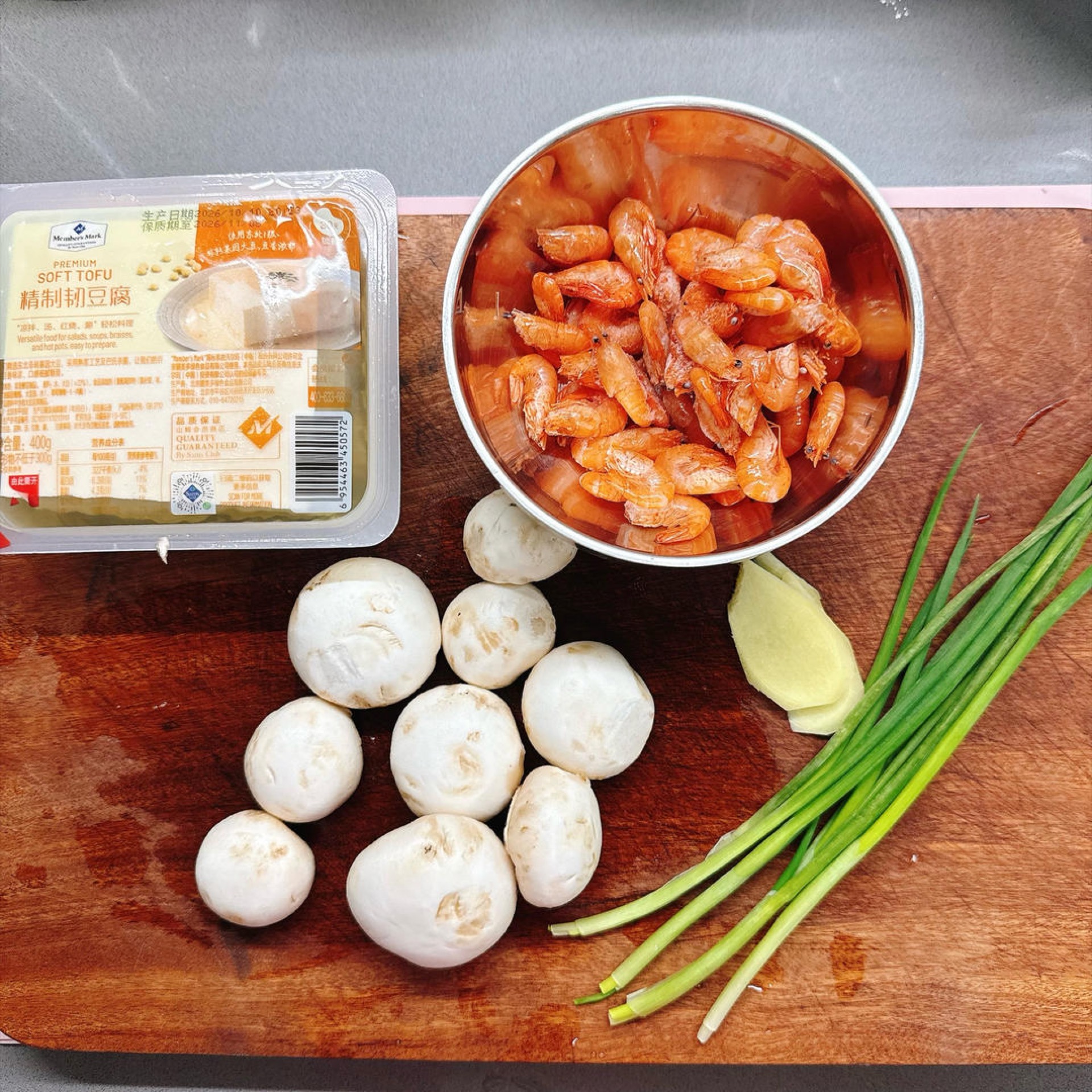
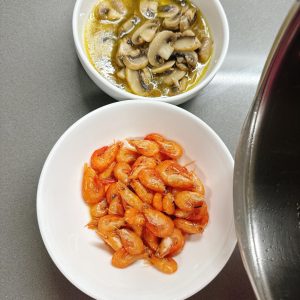
Step 1 — Prepare the Ingredients
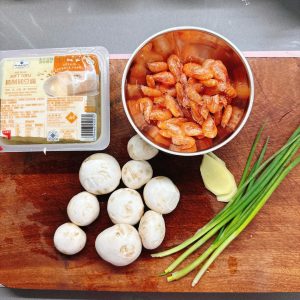
准备食材!
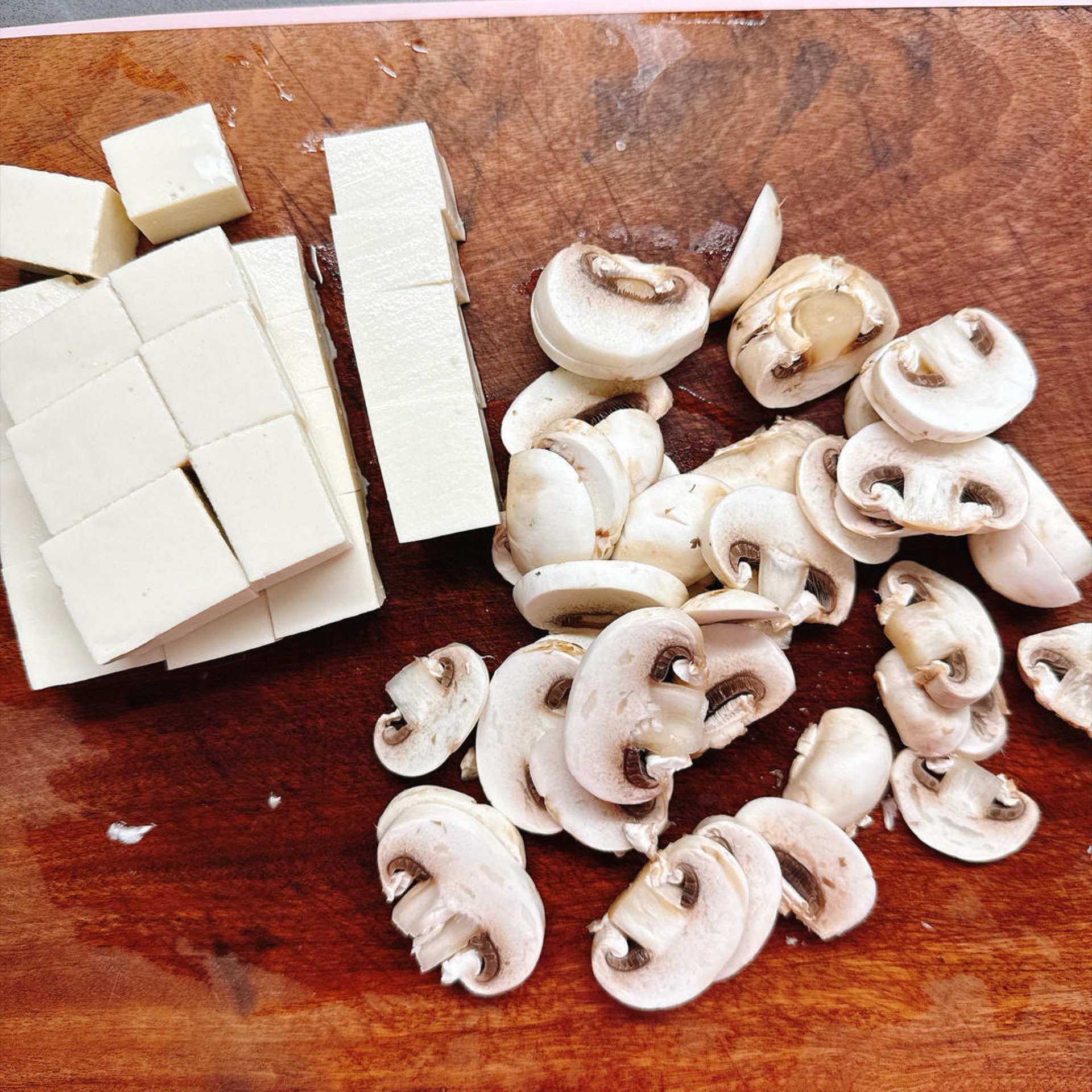
Step 2 — Slice the Mushrooms and Cube the Tofu
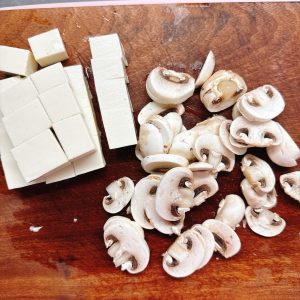
口蘑切片!豆腐切2厘米块!
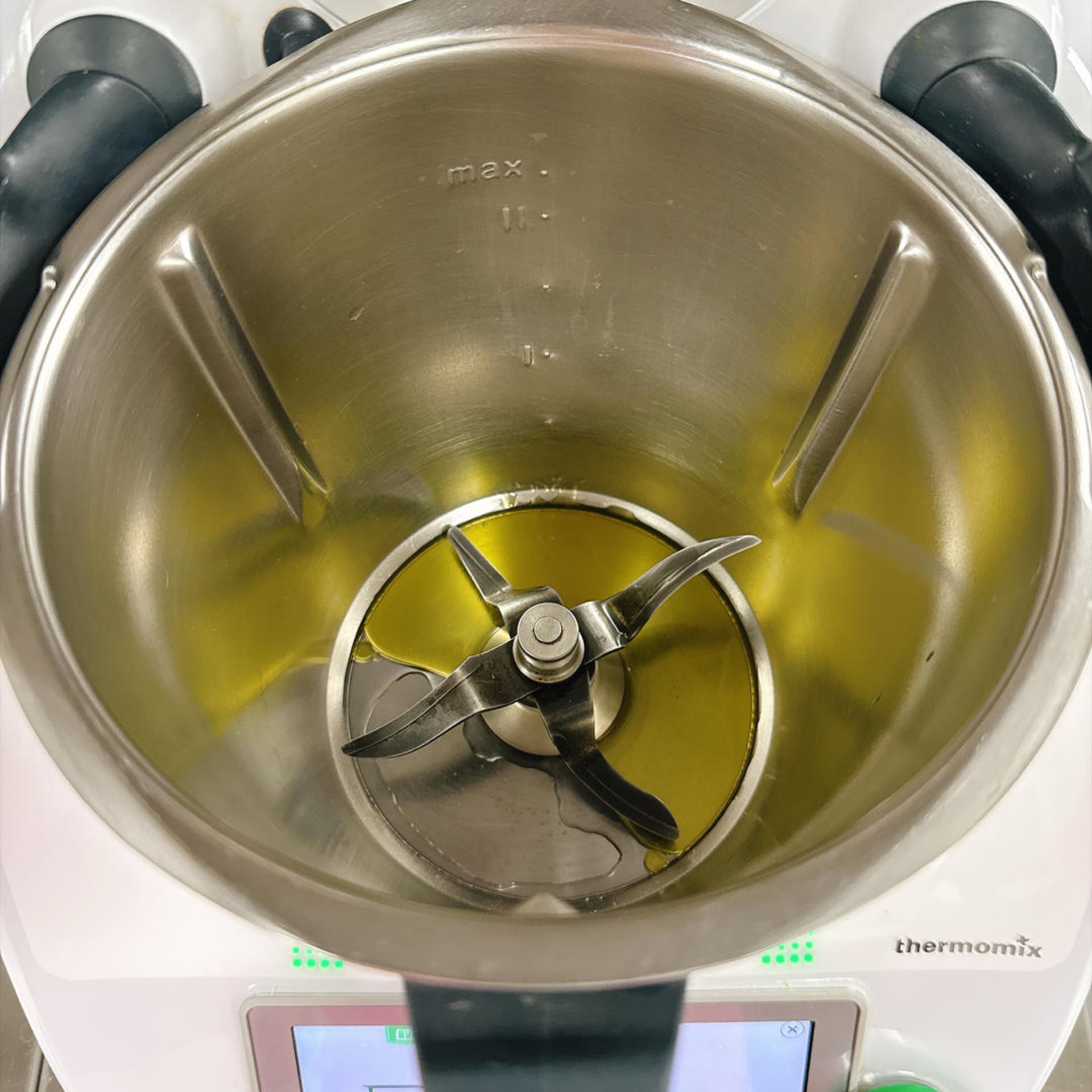
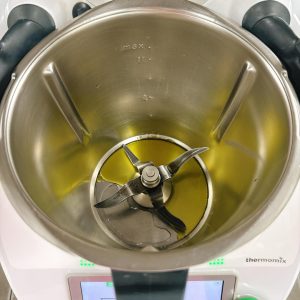
Step 3 — Add Oil to the Main Bowl
主锅加10克油。
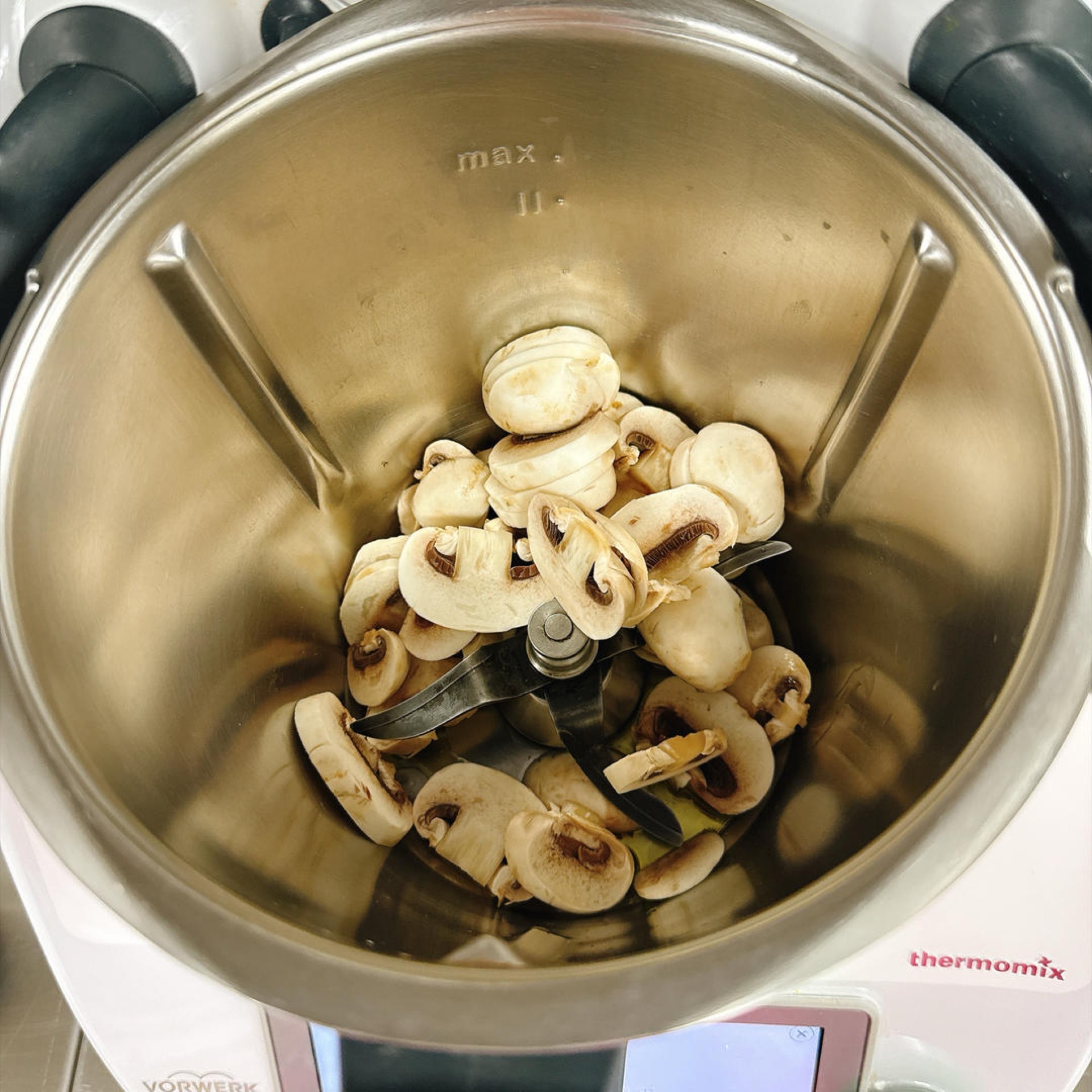
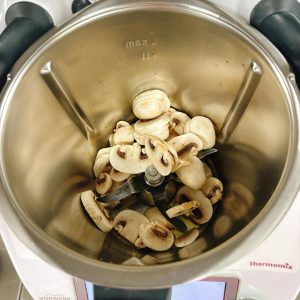
Step 4 — Add the Mushroom Slices
放入口蘑片。
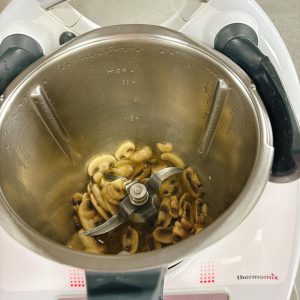
Step 5 — Sauté the Mushrooms
设定5分钟 / 120℃ / 反转小勺,把口蘑煎到微微收缩、出香味。
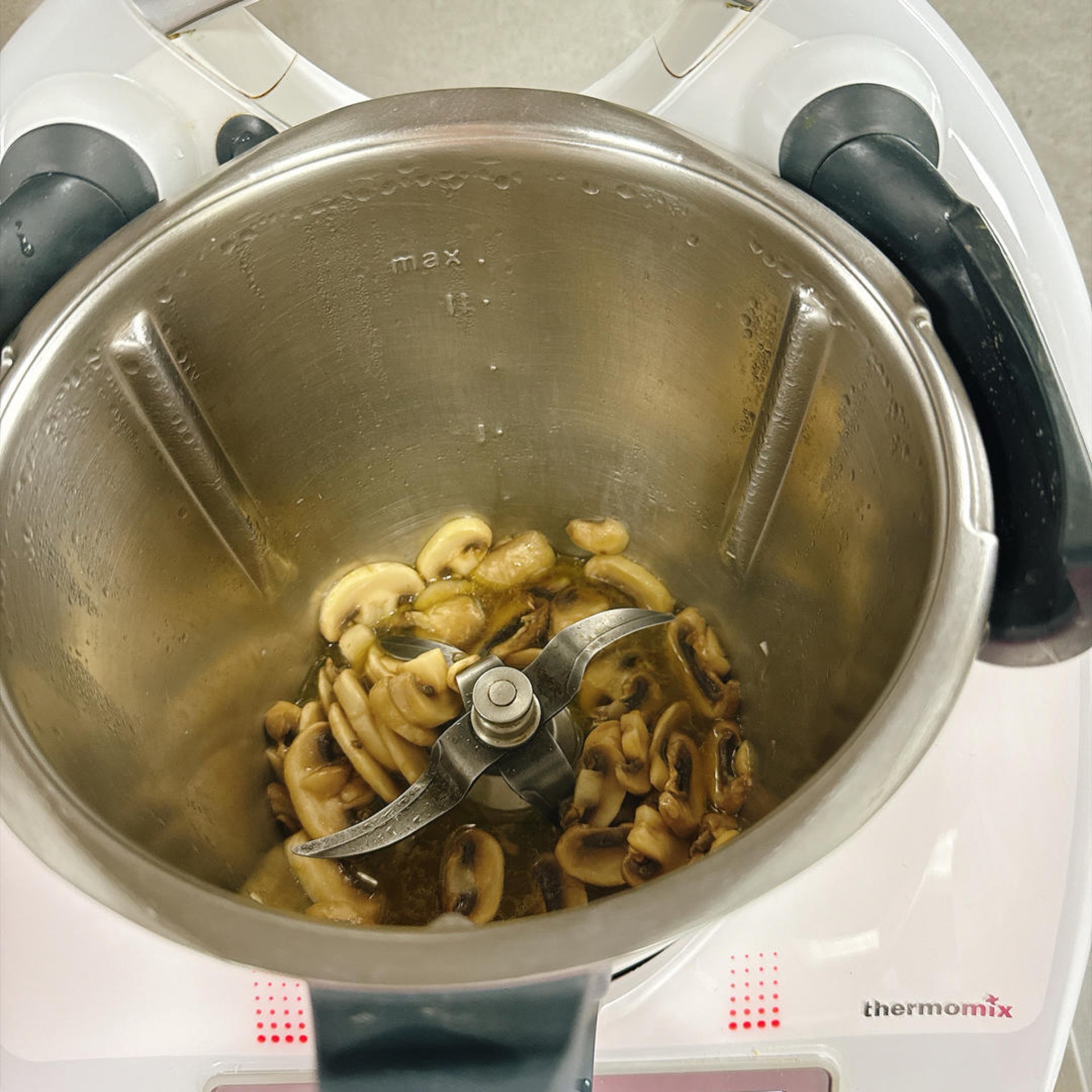
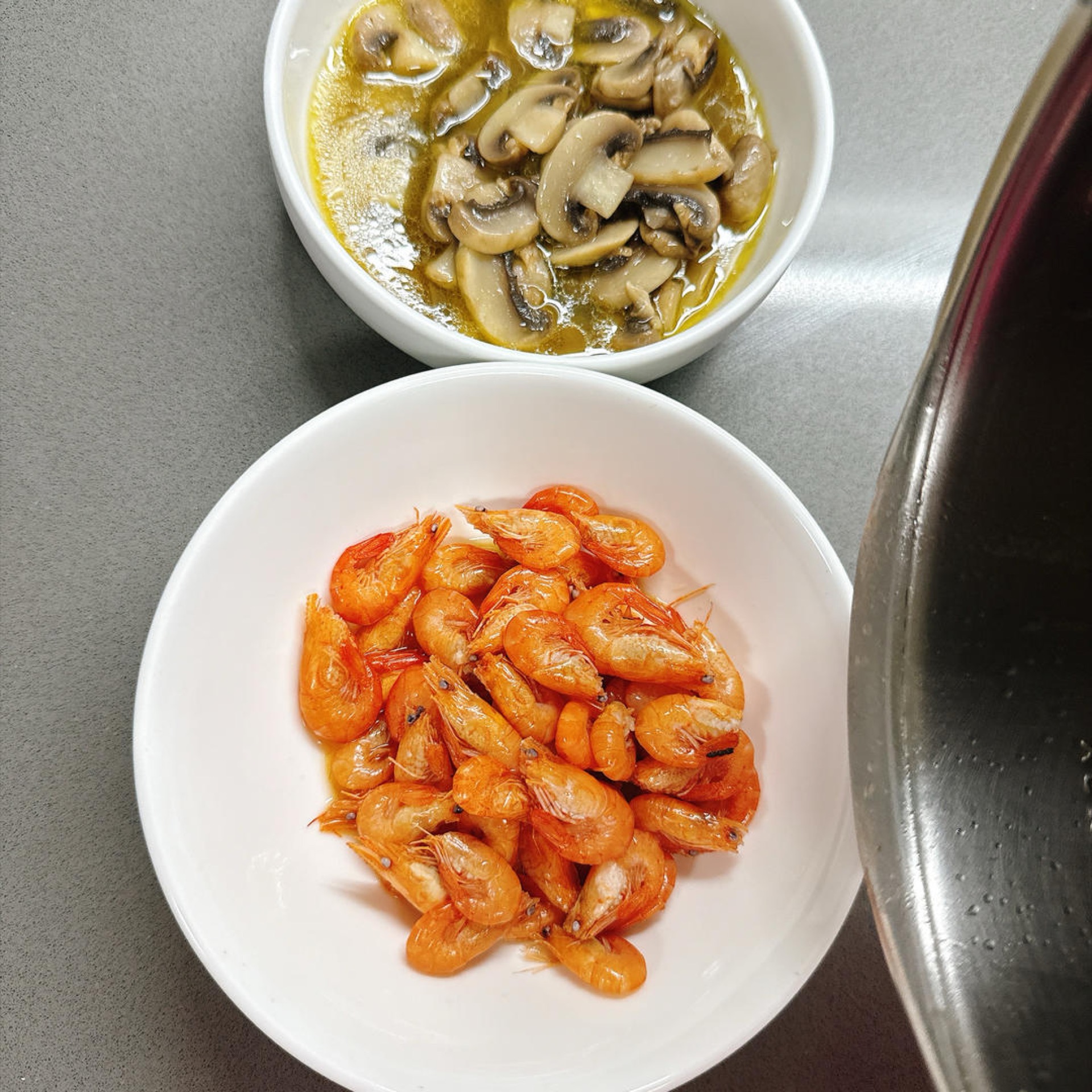
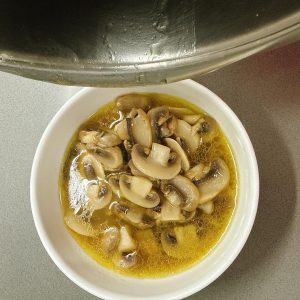
Step 6 — Set the Mushrooms Aside
盛出备用!
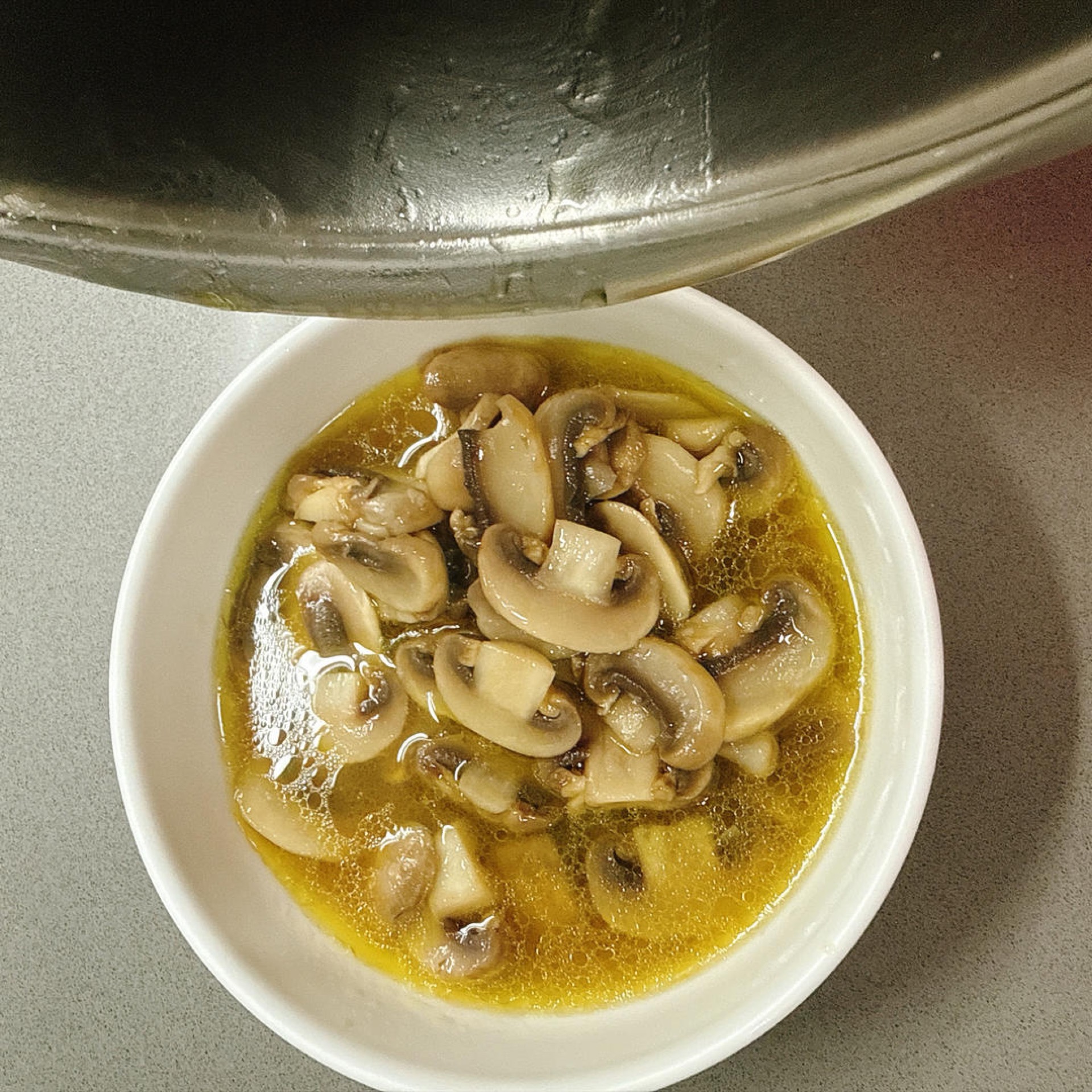
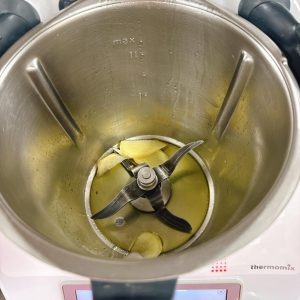
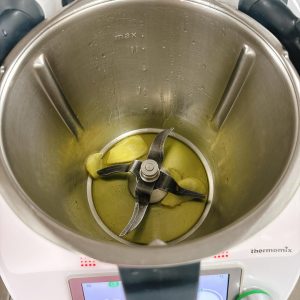
Step 7 — Add the Remaining Oil and Ginger
主锅加剩余10克油和姜片。
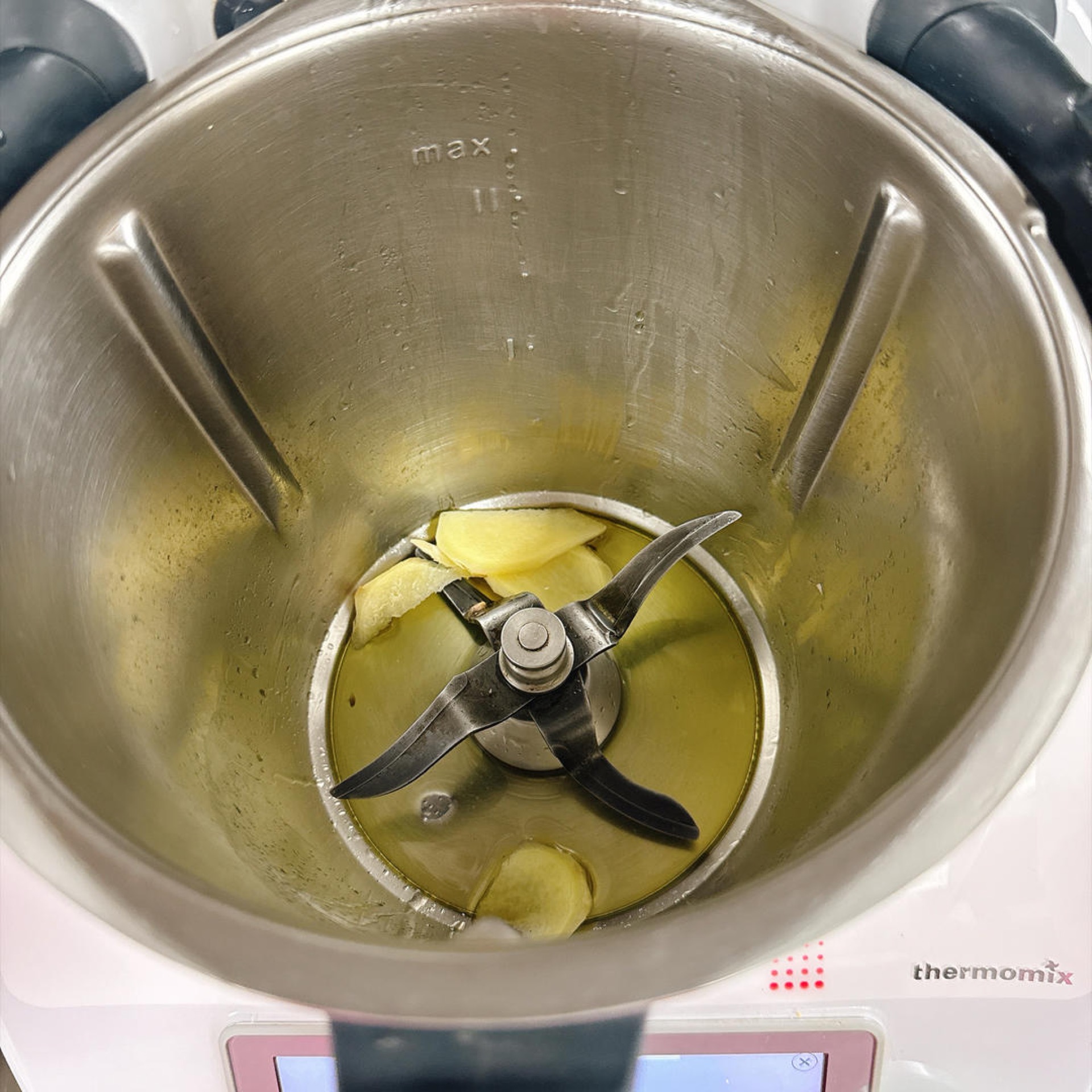
Step 8 — Sauté the Ginger
设定2分钟 / 120℃ / 反转小勺爆香。
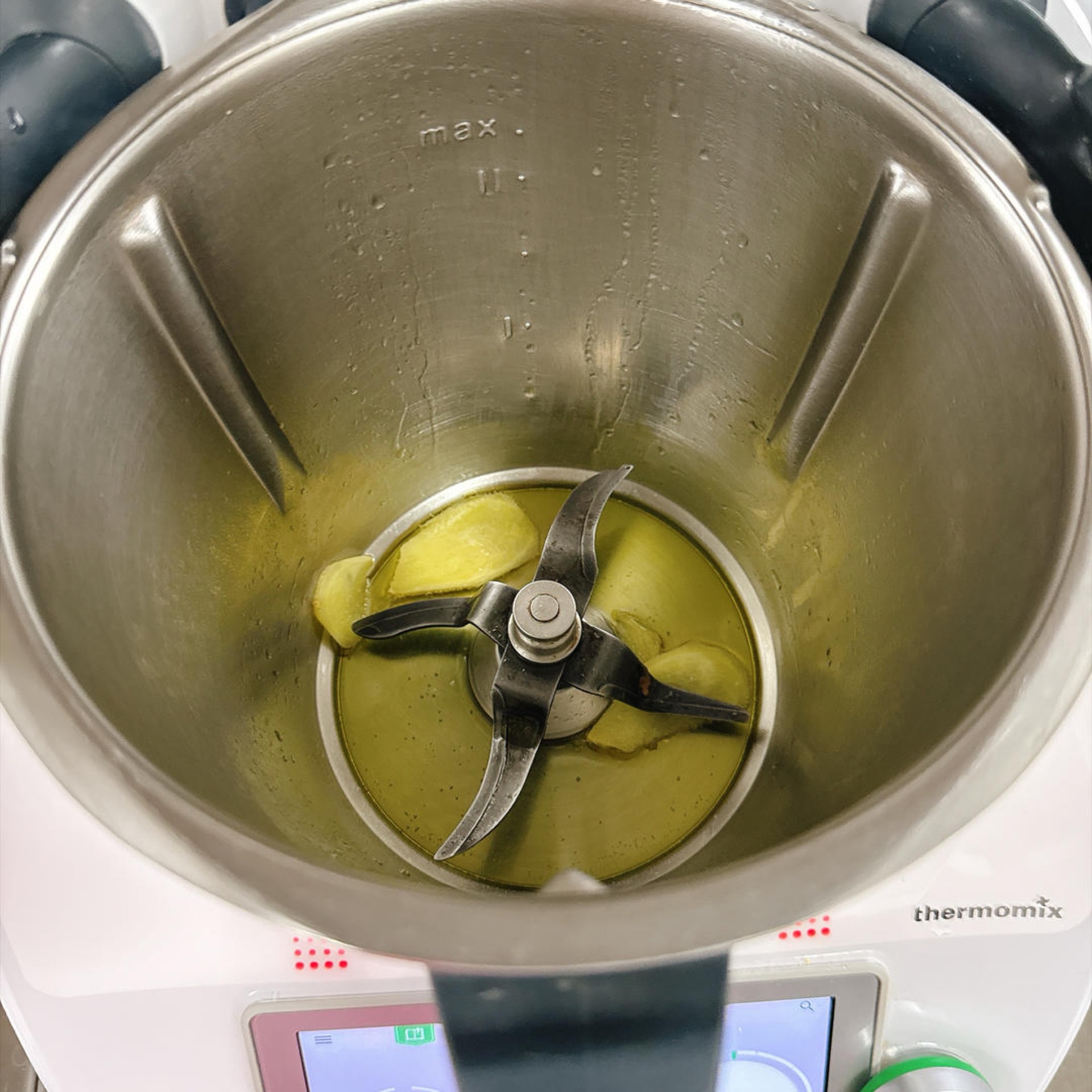
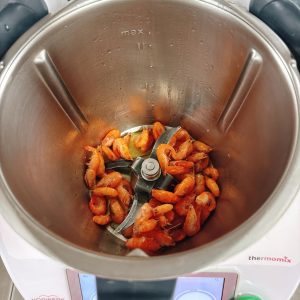
Step 9 — Add the River Shrimp
放入小河虾。
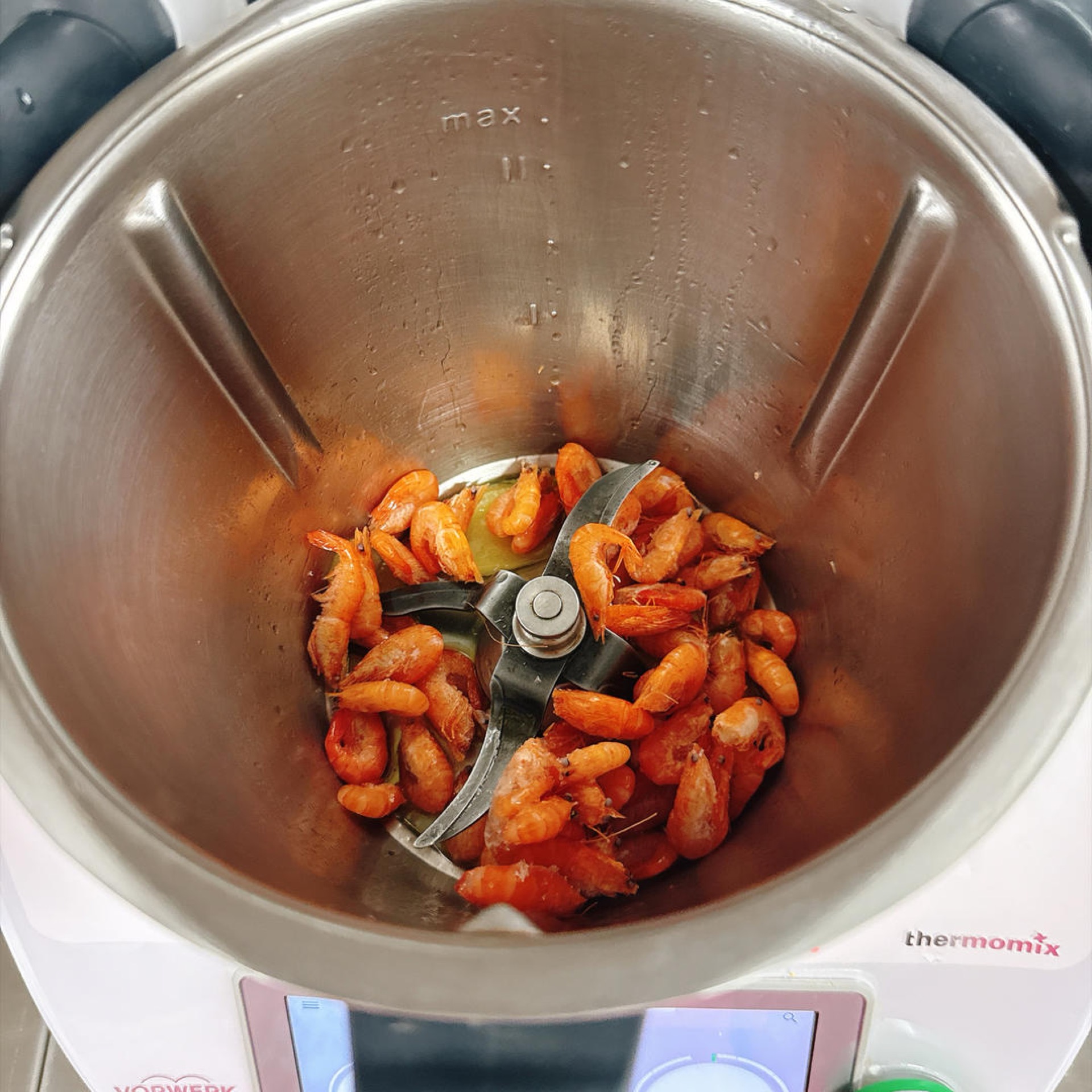
Step 10 — Cook the Shrimp
设定2分钟 / 120℃ / 反转小勺。
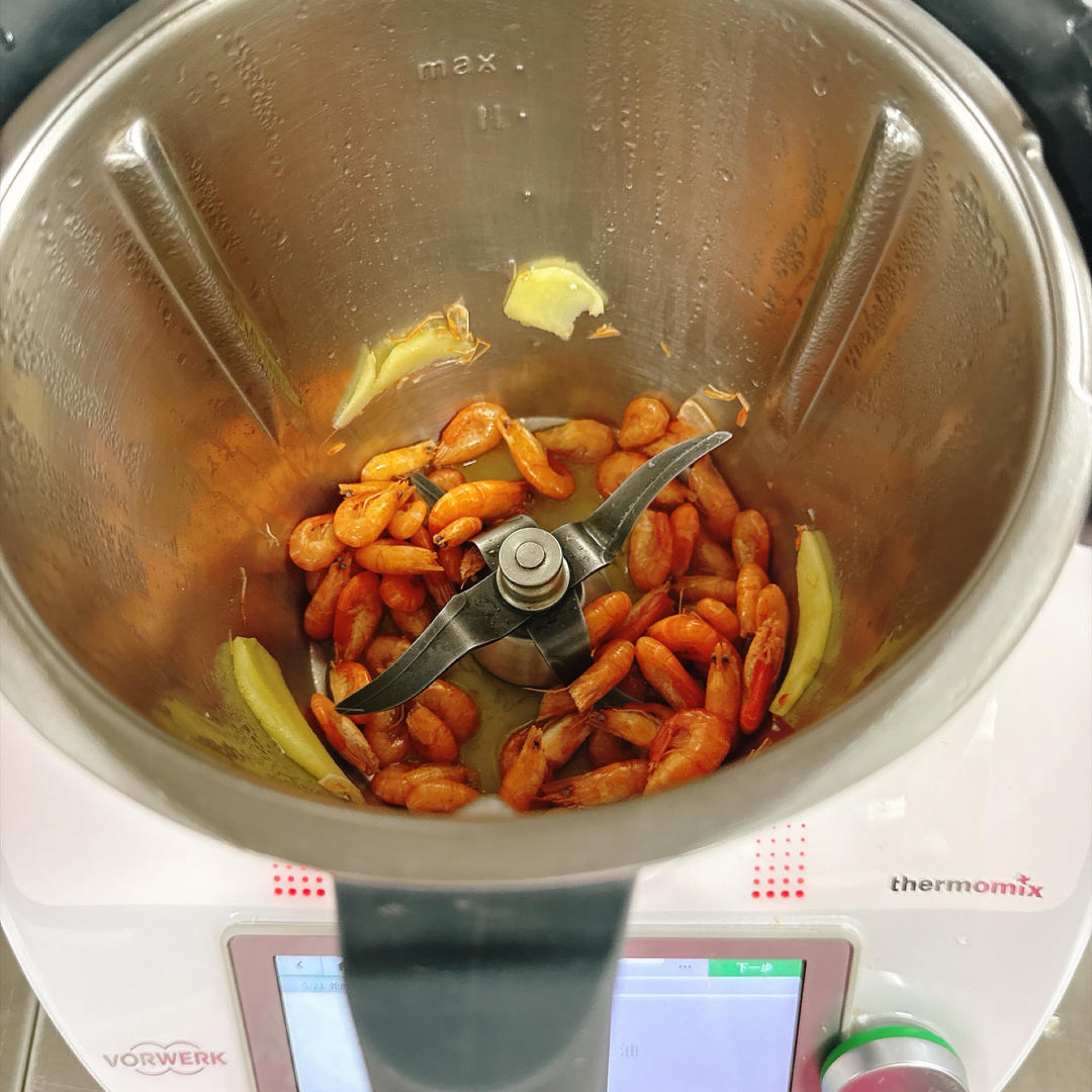
Step 11 — Set the Shrimp Aside
炒到虾变色出香,盛出备用。
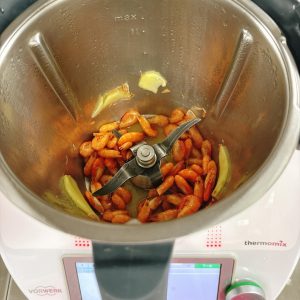
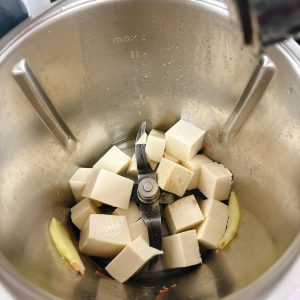
Step 12 — Add Water, Tofu, and Seasoning
主锅加入水(或高汤)50克、豆腐块、盐、白胡椒粉。
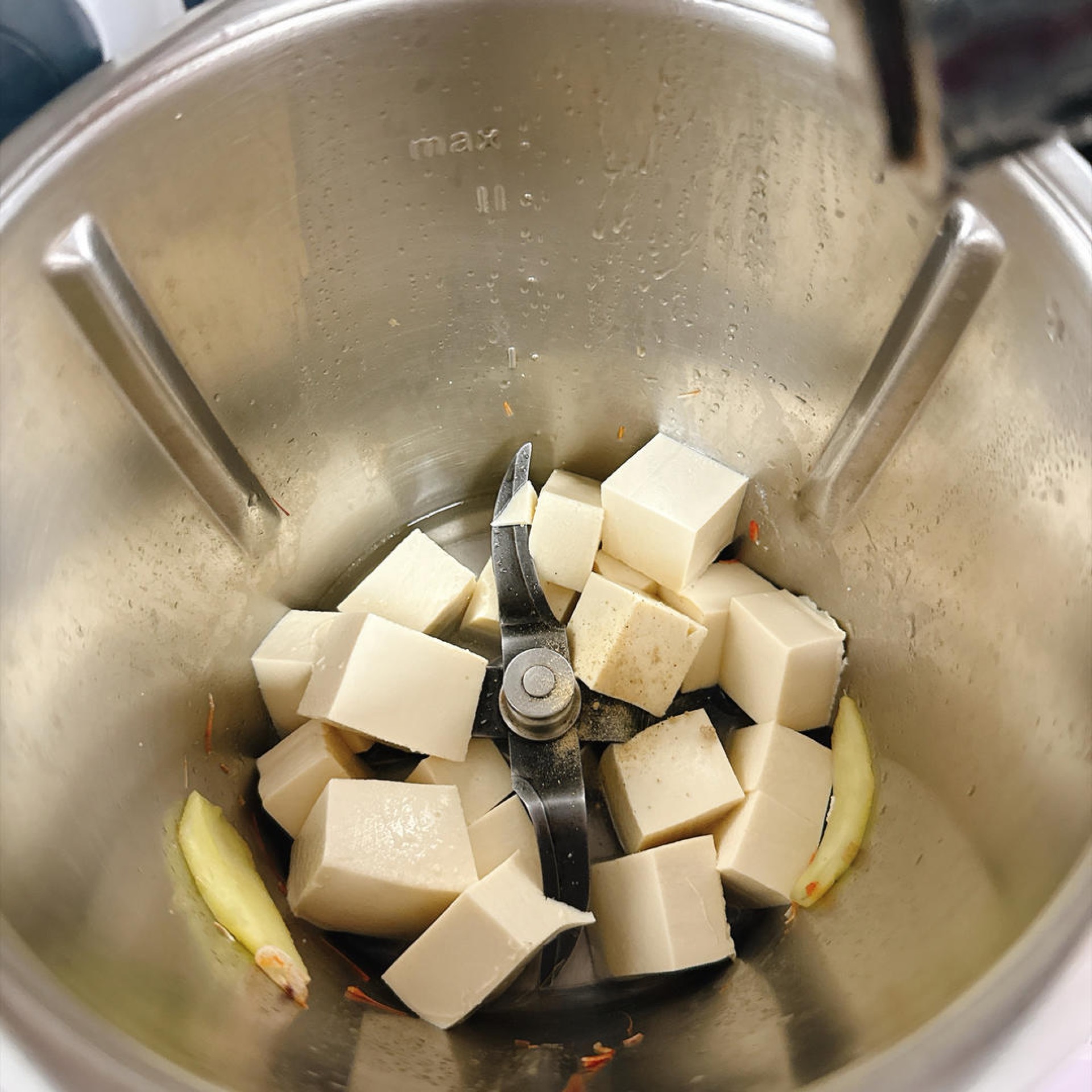
Step 13 — Let the Tofu Absorb the Flavor
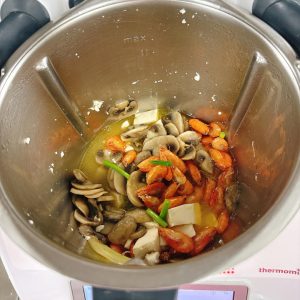
设定3分钟 / 100℃ / 反转小勺,让豆腐初步入味。突然想到应该插蝴蝶棒,立即暂停,已经有些豆腐碎了,还好没全碎。
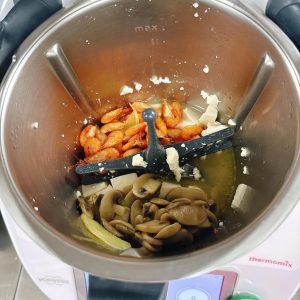
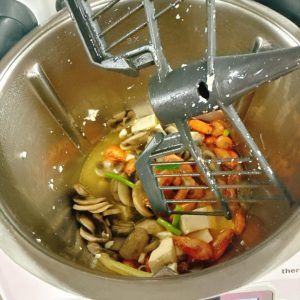
Step 14 — Return Everything and Braise
3分钟后把煎好的口蘑和炒好的河虾倒回主锅,设定3分钟 / 100℃ / 反转小勺,混合烧入味。 喜欢汤汁浓一点,可以用少量水调一点淀粉从主锅孔淋入,勾薄芡。
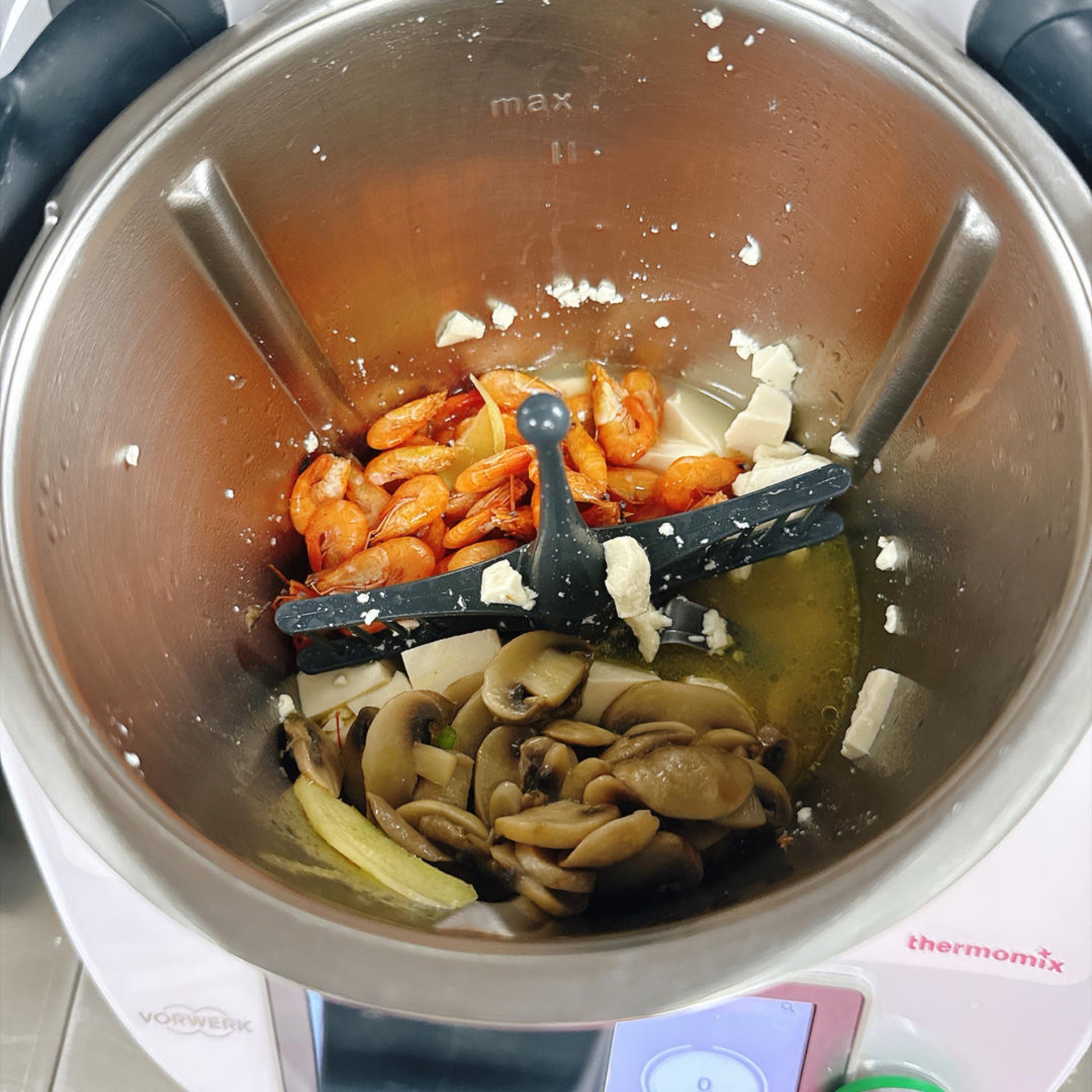
Step 15 — Remove the Butterfly Whisk
取下蝴蝶棒。
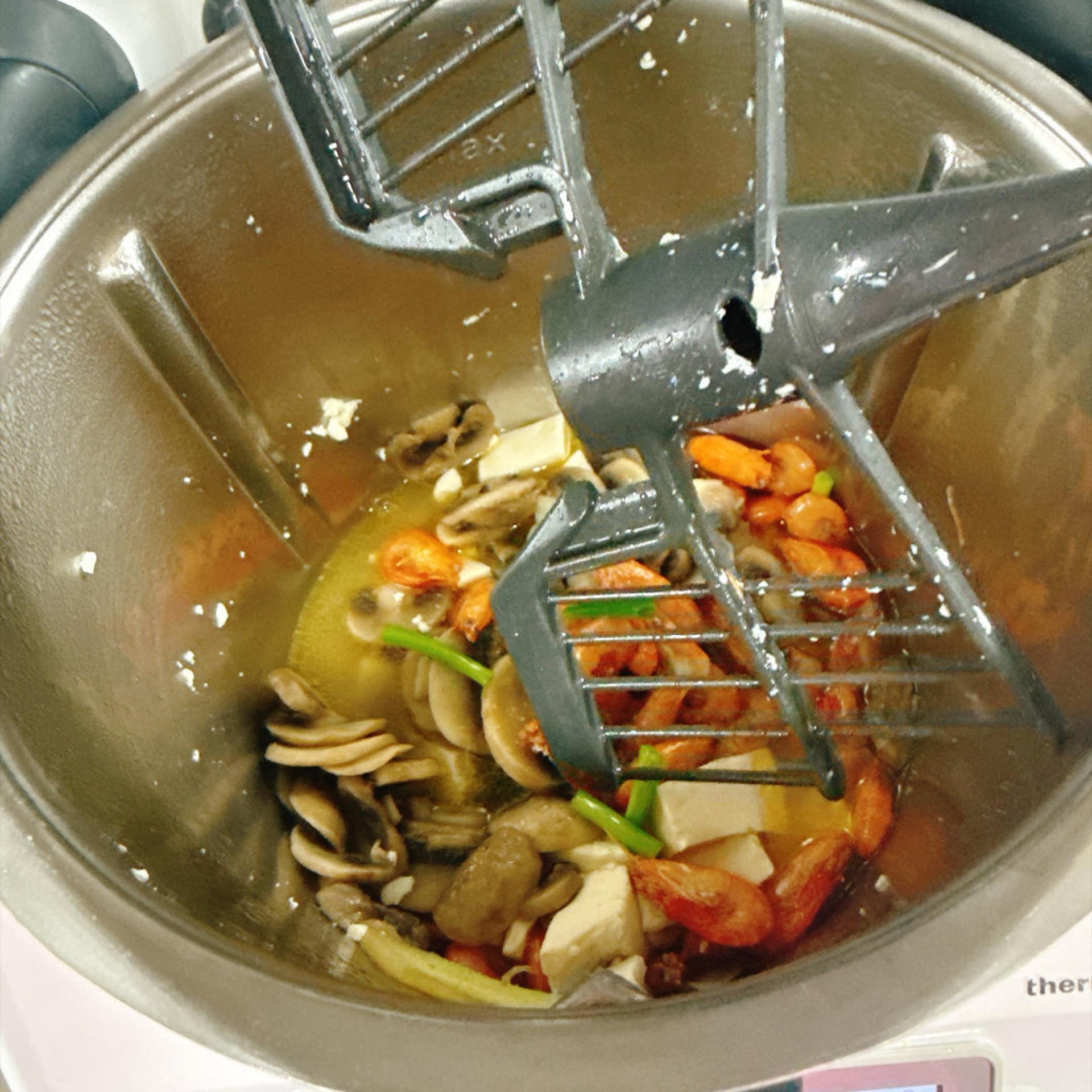
Step 16 — Take It Out of the Bowl
出锅。
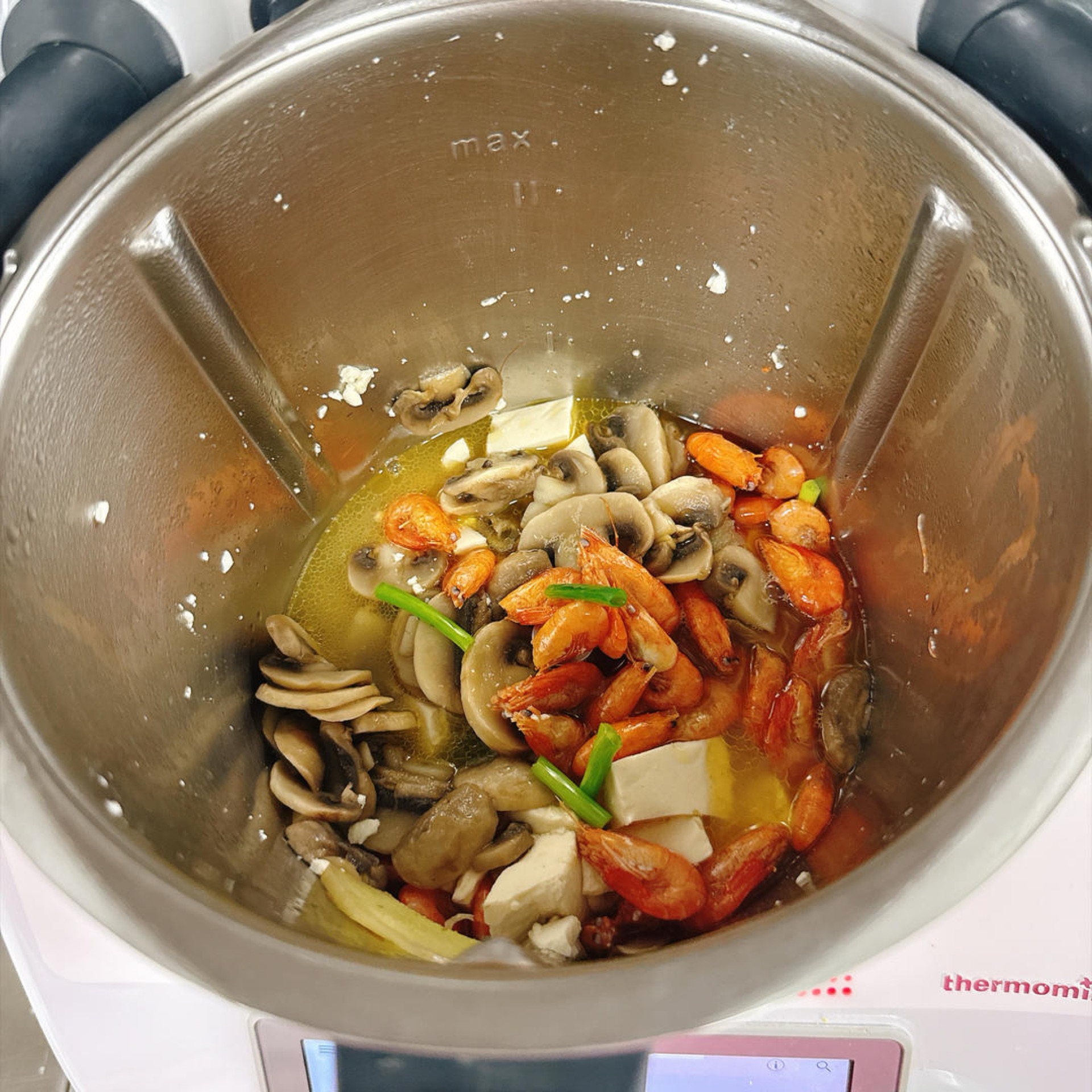
Step 17 — Plate It Up
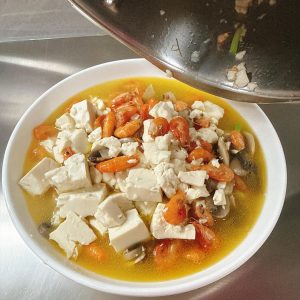
盛入盘中。
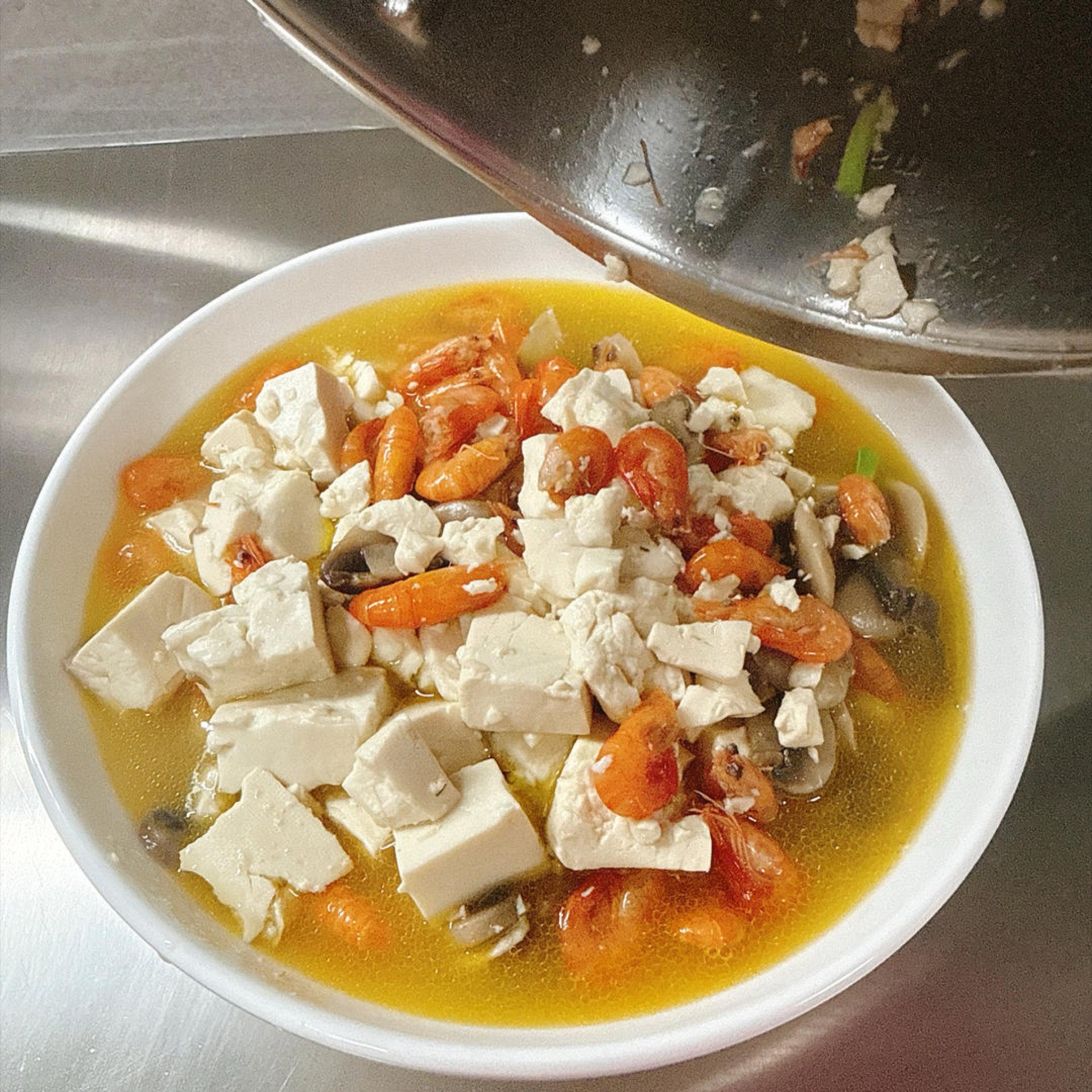
Step 18 — Garnish with Scallions
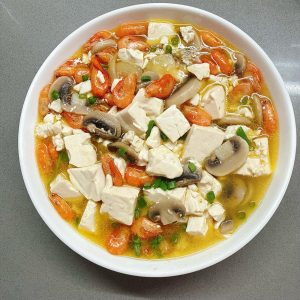
撒点葱花。
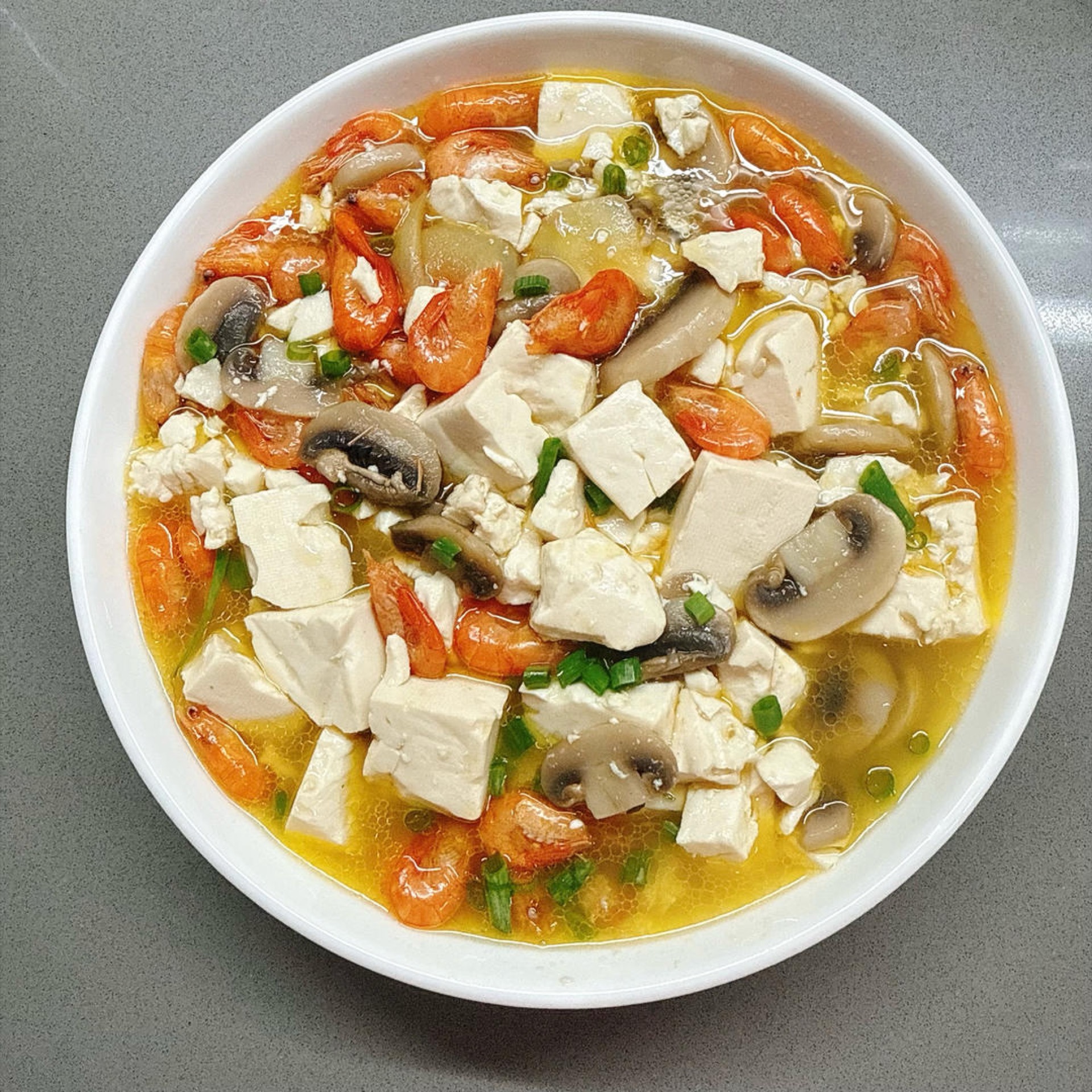
Step 19 — The Shrimp Brings the Freshness
🦐 鲜: 鲜甜的小河虾,煸出金黄澄亮的虾油,是这道菜的灵魂底色。
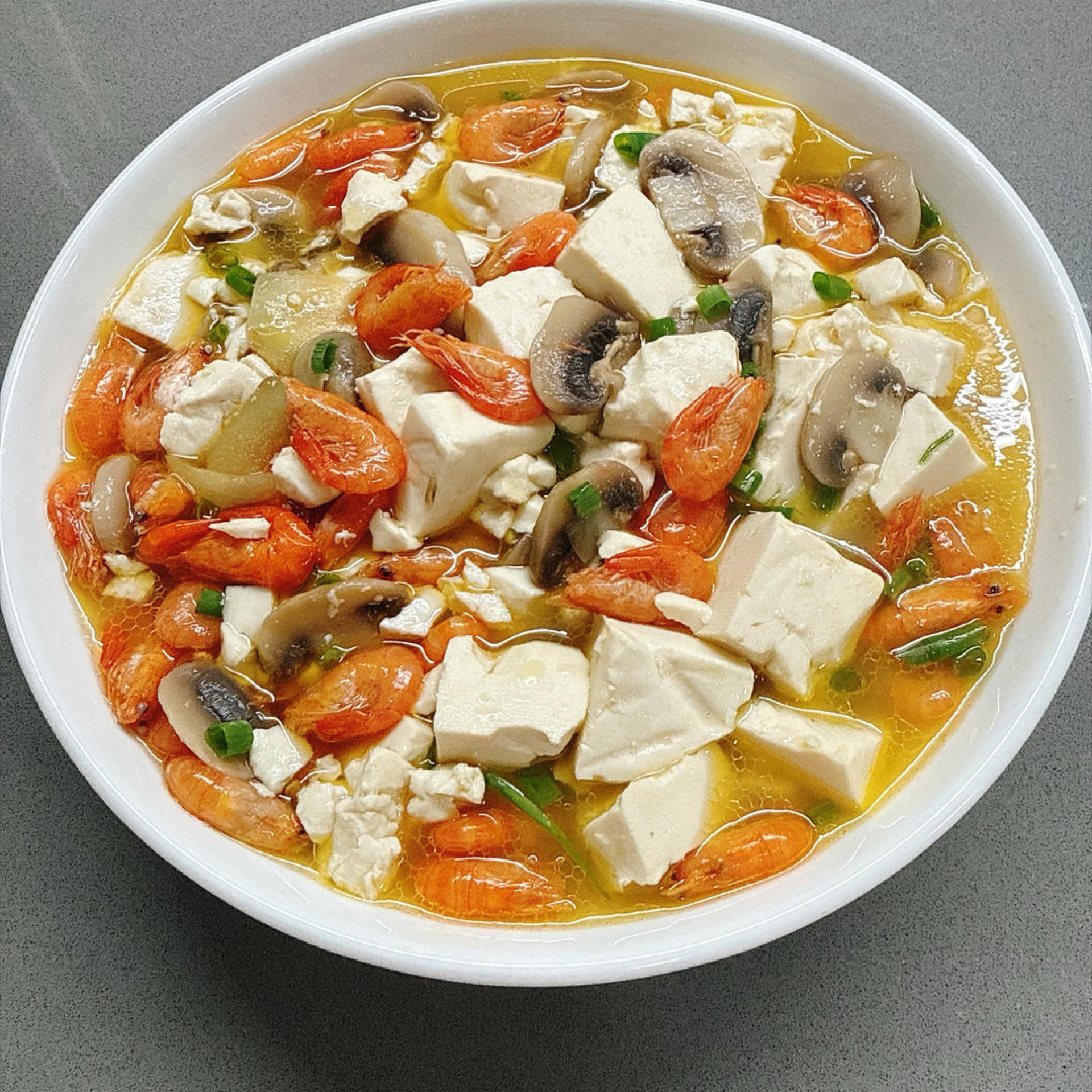
Step 20 — The Mushrooms Bring the Depth
🍄 醇: 口蘑自带的氨基酸,让汤汁的鲜味直接提升一个层次。
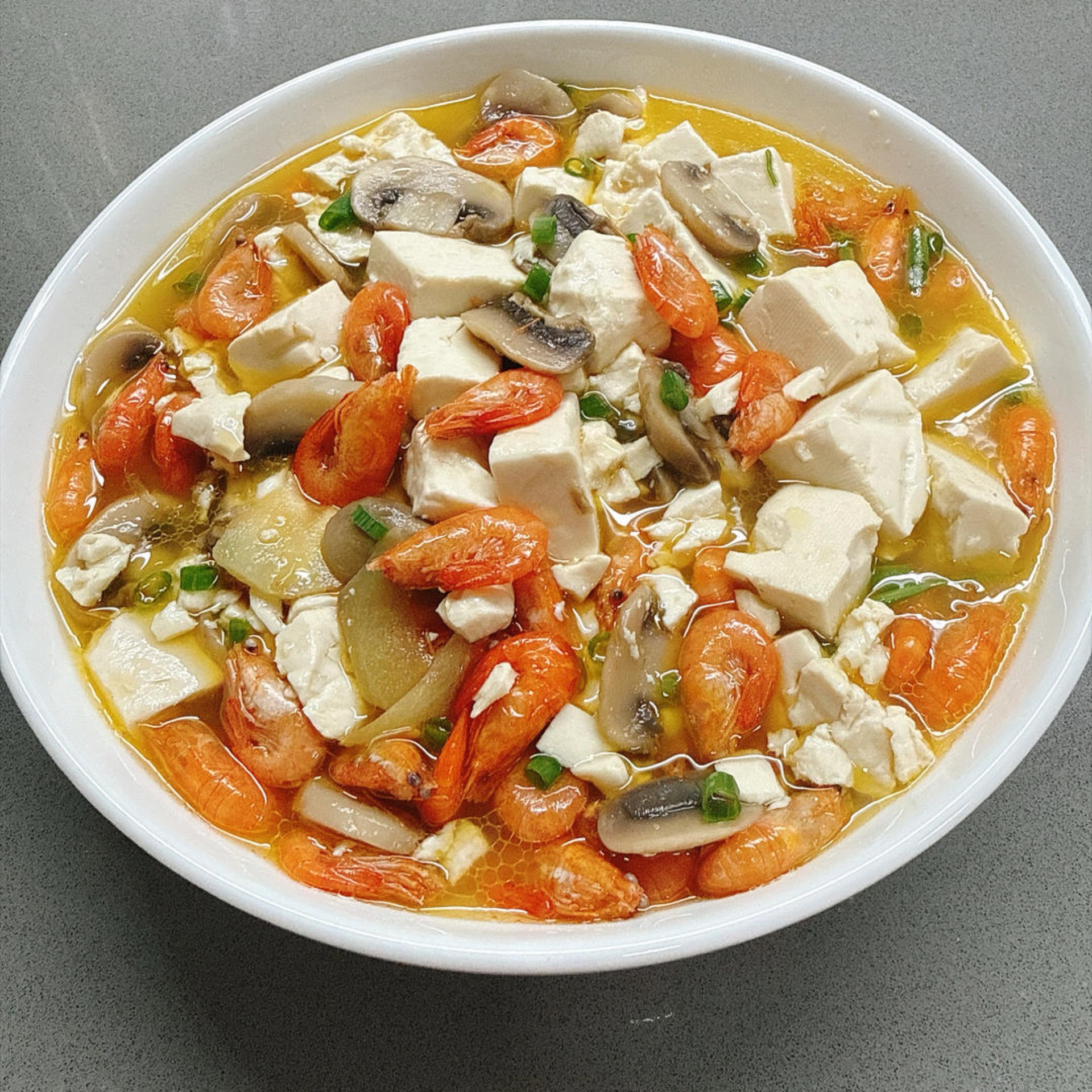
Step 21 — The Tofu Brings the Silk
🍲 滑: 柔嫩的豆腐像海绵一样,疯狂吸收虾与蘑的双重鲜味。
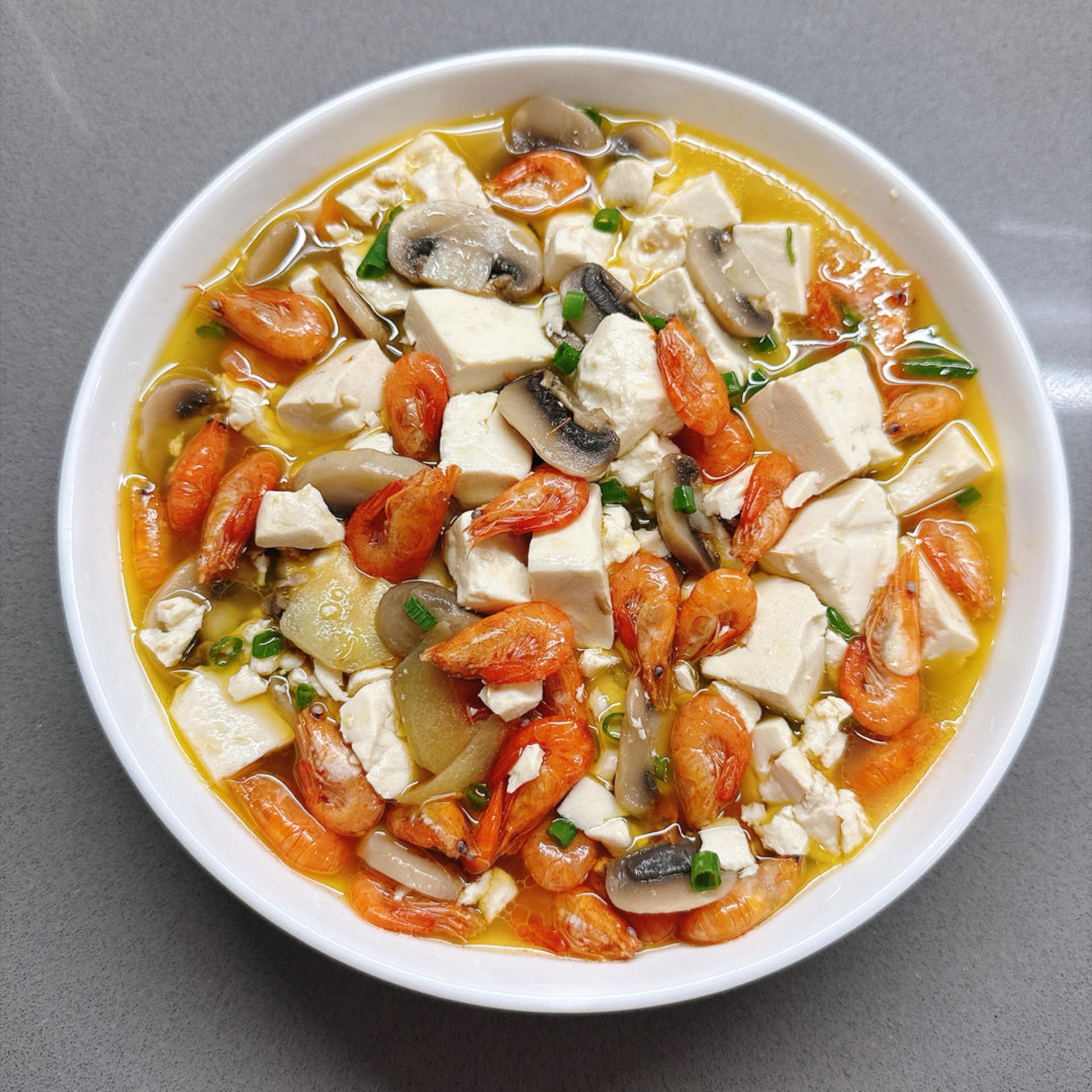
Step 22 — Silky, Golden, and Ready for Rice
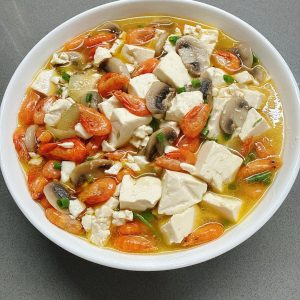
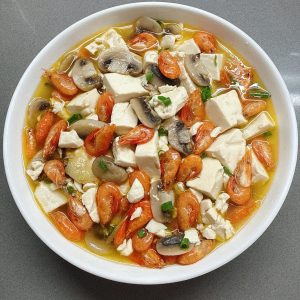
豆腐嫩到入口即化,边缘微微融化的部分让汤汁变得极其浓郁。这金灿灿的一锅端上桌,营养满分,拌饭更是无敌,谁吃谁知道!✨
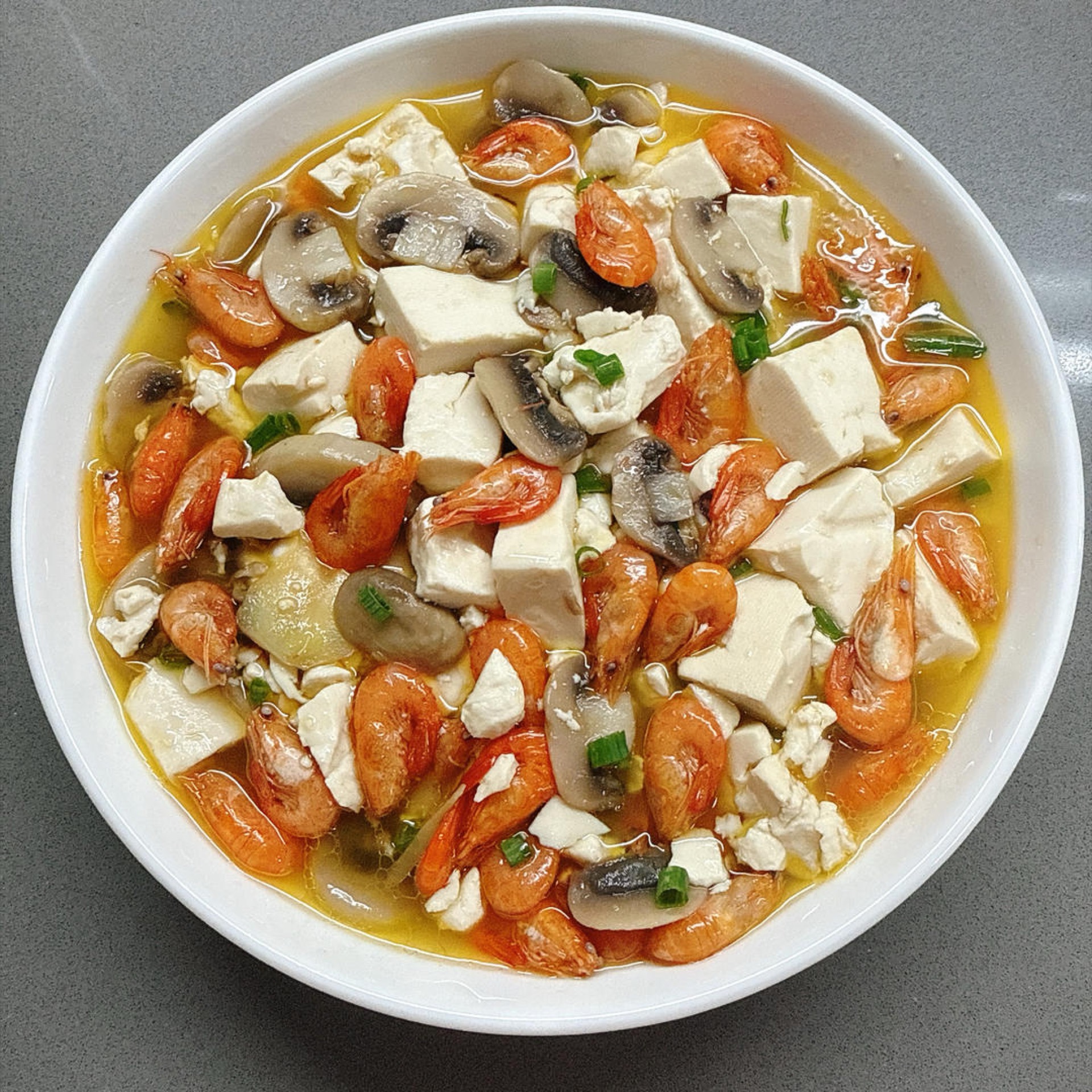
Step 23 — Fresh Enough to Raise Eyebrows
鲜掉眉毛!
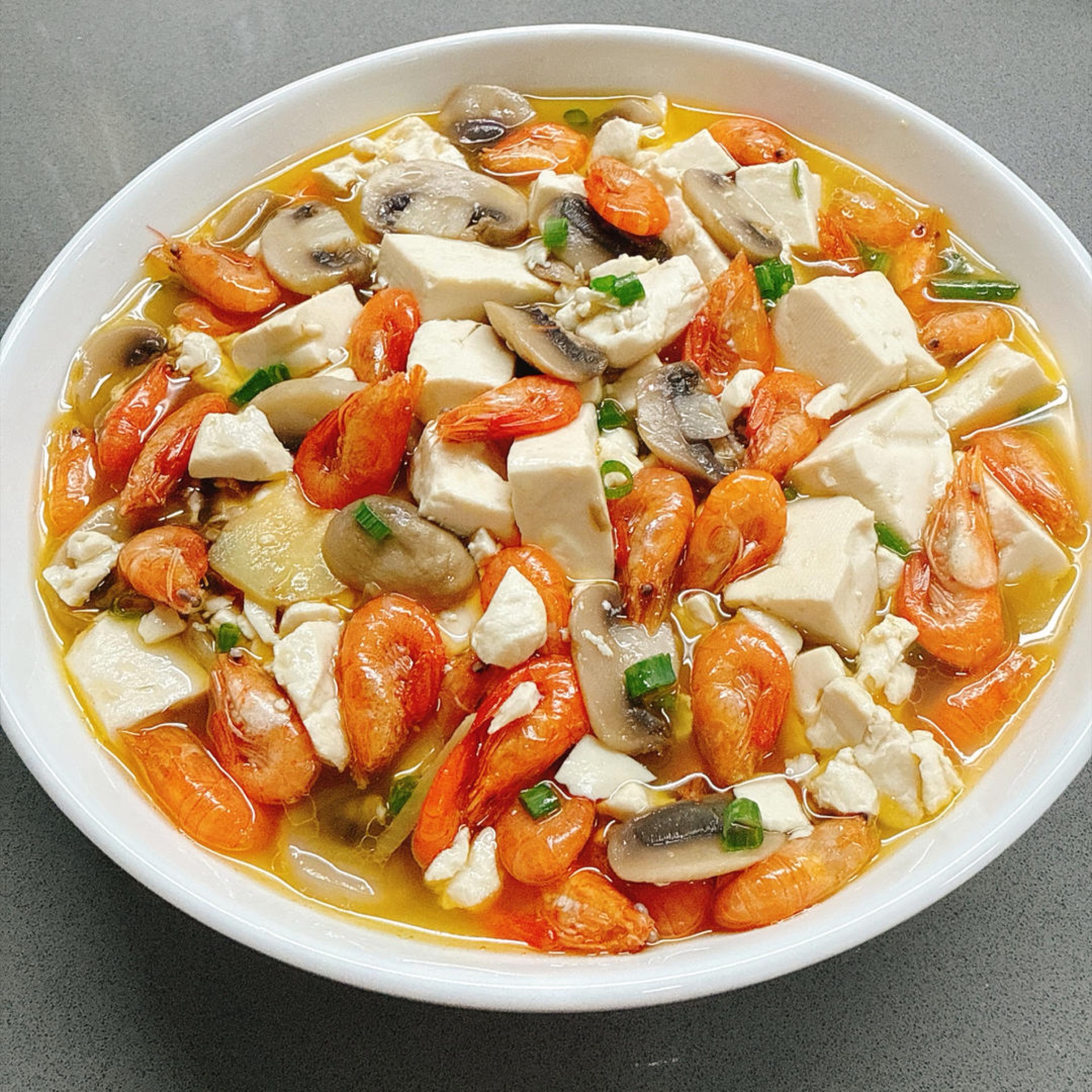
Common Mistakes When Making River Shrimp and Mushroom Braised Tofu
1. Forgetting the butterfly whisk. This is the classic Thermomix error, and I made it myself: you add the tofu, set the machine, and only then remember the whisk is still in the drawer. The blades chop soft tofu into curds within seconds. The fix is simple — insert the whisk before the tofu goes in, every time. If you do forget, pause immediately; some cubes will break, but the dish still works, as mine proved.
2. Using firm tofu. Firm tofu will not melt into the sauce and will taste like a separate ingredient rather than part of the braise. The cause is usually habit — people buy firm tofu because it is easier to handle. The fix is to buy soft or silken tofu and handle it gently instead; a slotted spoon or spatula does the job fine.
3. Wet mushrooms and wet shrimp. If either goes into the pan wet, the temperature drops and they steam rather than brown. You lose the golden color and much of the flavor. The fix is to wipe mushrooms with a damp cloth and pat the shrimp thoroughly dry before they hit the oil.
4. Overcooking the shrimp. Shrimp go from translucent to opaque in about 90 seconds at high heat, and from opaque to rubbery in another minute. The cause is usually trying to brown them deeply in one pass. The fix is to cook them just until they curl and turn pink, then pull them out and finish them in the sauce at the end.
5. Stirring the tofu like a stir-fry. Soft tofu breaks if you agitate it. The cause is muscle memory — we are trained to keep things moving. The fix is to let the sauce bubble around the tofu and only nudge it with a spatula, or use the reverse-spoon setting and trust it. A few broken cubes are fine and even desirable; a pot of tofu crumbs is not.
6. Skipping the salt until the end. Salt added early draws moisture from the tofu and seasons it from the inside out. If you salt only at the table, the tofu tastes bland and the sauce tastes salty. The fix is to add the salt with the water, as the recipe does, and taste the sauce before serving.
Variations
Wok version. Heat the wok until smoking, add half the oil, sear the mushrooms for 2–3 minutes, and remove. Add the remaining oil and ginger, then the shrimp, and stir-fry 60–90 seconds until pink; remove. Add the water, tofu, salt, and pepper, bring to a bare simmer, and cook 2 minutes. Return the mushrooms and shrimp, simmer 1 minute, add the slurry if using, and serve.
With a little pork. A tablespoon of minced pork, browned before the mushrooms, adds a savory backbone that many Jiangnan cooks consider essential. If you go this route, reduce the salt slightly, since pork releases its own seasoning.
With greens. A handful of baby bok choy or shelled edamame added with the tofu turns this into a fuller one-pot meal. Blanch the greens first if they are thick, so they do not water down the sauce.
With a chili note. A single dried chili, torn and added with the ginger, gives a gentle warmth without turning this into a spicy dish. Do not add chili oil — it overwhelms the delicate shrimp flavor.
With egg tofu. Substitute egg tofu (玉子豆腐) for the soft tofu for a firmer, custardy texture that slices beautifully and holds its shape. It browns well too, if you want to sear it first.
Frequently Asked Questions
Can I make this without a Thermomix? Yes — the stovetop version is in the Variations section and takes about the same time. The Thermomix mainly automates the stirring and holds a precise temperature, which is helpful for soft tofu but not essential.
Can I use frozen shrimp? Yes, but thaw them fully in the refrigerator and pat them very dry. Frozen shrimp release more water, so sear them a little longer and expect slightly less sweetness. Shell-on, head-on shrimp give the best flavor if you can find them.
Why did my sauce turn out watery? Either the mushrooms were wet, the tofu was not drained, or you skipped the slurry. All three add water to the pan. Wipe the mushrooms, let the tofu sit on a plate for a few minutes, and finish with the cornstarch slurry for a sauce that clings.
Is this dish spicy? No. White pepper is aromatic rather than hot, and there is no chili unless you add one. It is a mild, savory dish suitable for children and anyone who avoids heat.
Can I make it ahead? You can prep all the components a day ahead and assemble the braise just before serving, which is the better approach — the tofu softens further on standing. Reheating leftovers gently is fine, but the tofu will be even more delicate.
How to Serve
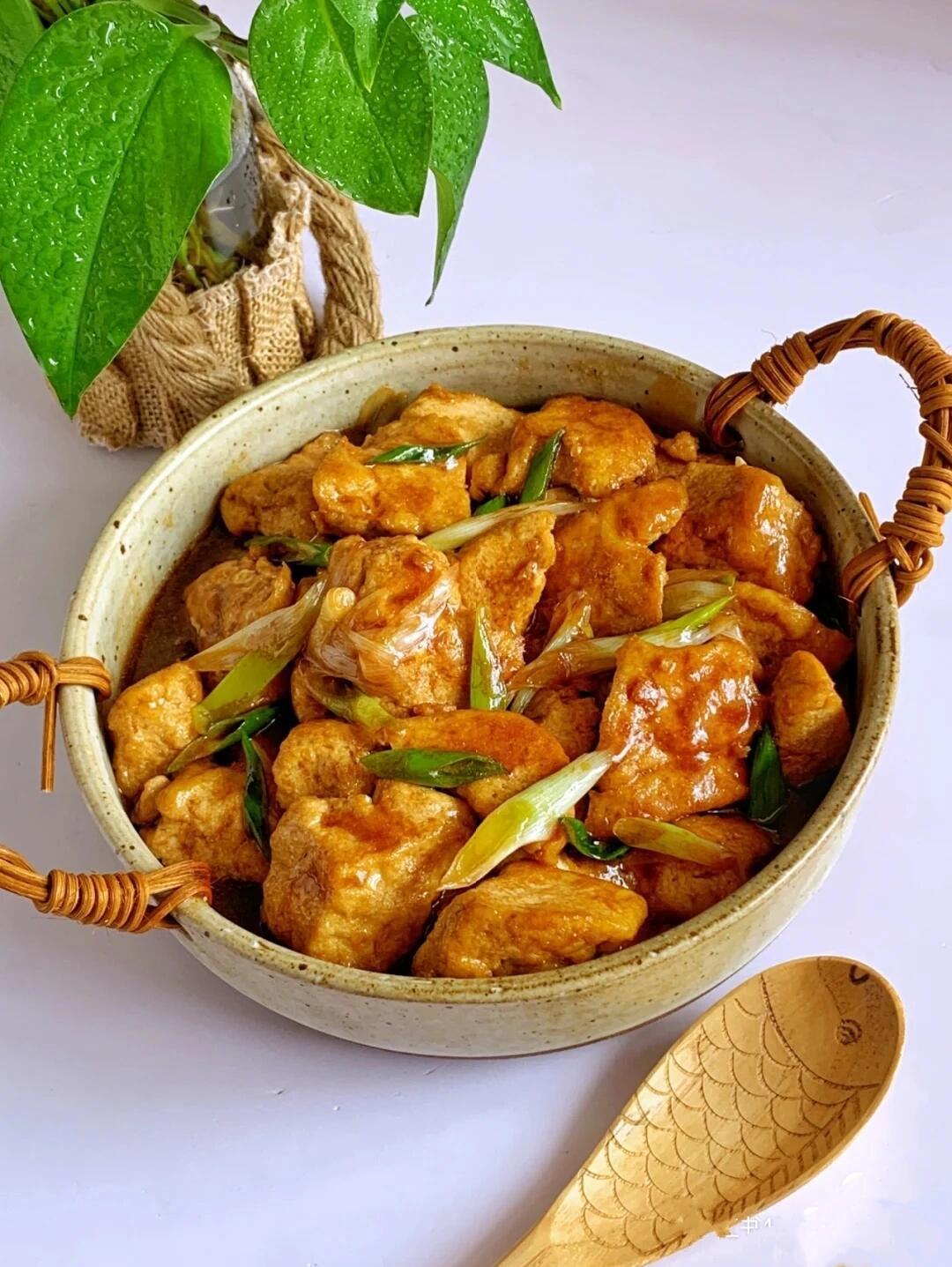
Serve this straight from the pot with steamed white rice, which is the classic pairing — the golden sauce is made for soaking into rice. A plate of simply blanched greens, dressed with a little oil and salt, keeps the meal balanced. If you want a second tofu dish on the table, the braised tofu with scallions is a good contrast: firmer, glossier, and more savory.
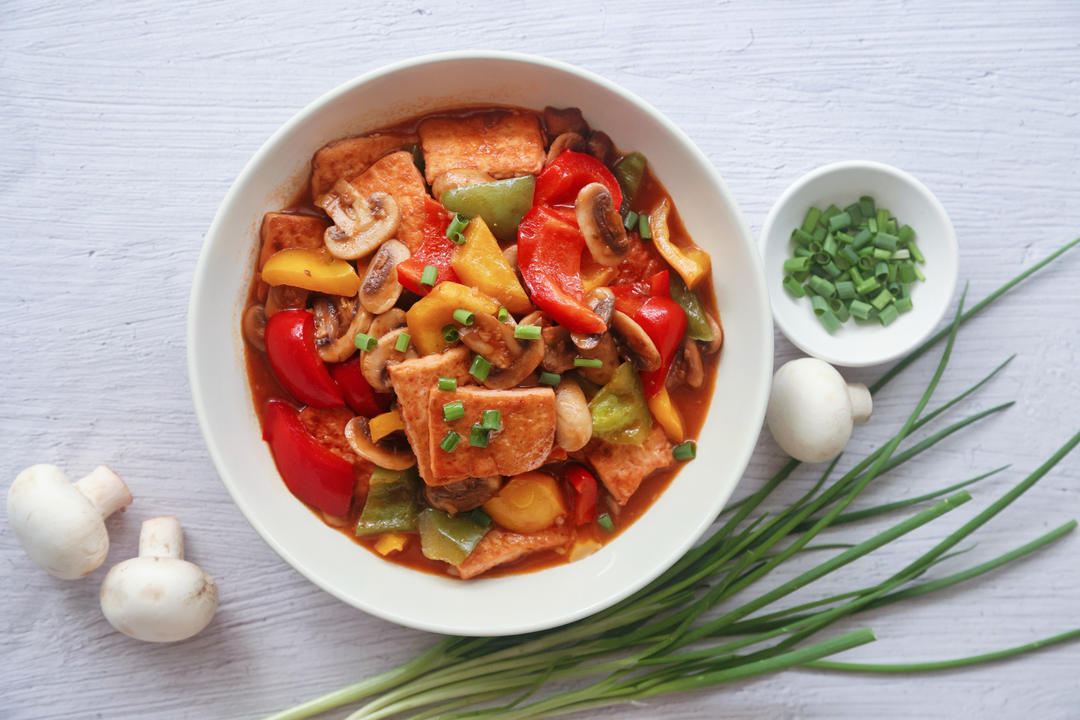
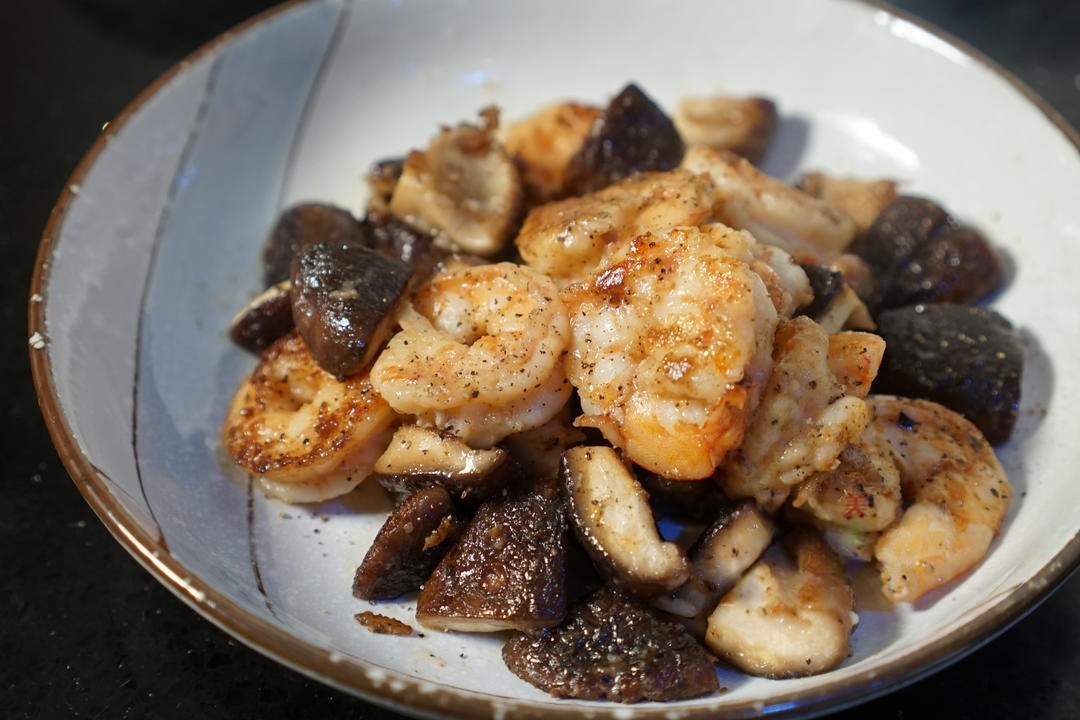
For a heartier spread, the braised tofu and mushrooms doubles down on the mushroom theme with a deeper sauce, and the black pepper shrimp and mushrooms pan seared brings the same shrimp-and-mushroom pairing in a punchier, drier form. Either makes a natural partner for this gentler braise.
For a family-style table, add a small dish of braised tofu with minced meat for anyone who wants more substance, and a plate of braised tofu with fresh chilis and minced pork if the table likes heat. Keep the river shrimp dish in the center — it is the quiet one that everyone finishes first.
One more idea: the braised tofu with mushrooms and pork is a good make-ahead companion if you are cooking for a crowd, since it holds well while this one comes together at the last minute.
Storage & Reheat
Cool leftovers quickly and store them in a sealed container in the refrigerator for up to 3 days. The tofu will absorb more of the sauce as it sits, which many people prefer — the second day is often better than the first. Keep the scallions separate if you can, and add fresh ones after reheating.
Reheat gently in a covered pan over low heat with a splash of water, or in the microwave in short bursts, stirring once. Do not boil it, or the tofu will break apart and the shrimp will toughen. Reheat to 165°F (74°C) and do not refreeze. This dish does not freeze well — the tofu becomes spongy and the sauce separates.
Allergen Notice
This recipe contains soy (from the tofu, and from soy sauce if you use it in place of salt) and crustacean shellfish (shrimp). It is naturally gluten-free only if you confirm your stock and any soy sauce are gluten-free. If you are cooking for someone with a shellfish allergy, do not substitute another protein casually — the whole flavor structure of the dish depends on the shrimp.
Nutrition Disclaimer
Nutrition information is calculated using an ingredient database and should be considered an estimate. In cases where multiple ingredient alternatives are given, the first listed is calculated for nutrition. Garnishes and optional ingredients are not included.
About the Author & Recipe Development
Hi, I’m Lin — I write Woks of Love from a home kitchen where Chinese home cooking is the everyday default, not a special occasion. This recipe came out of a run of testing the Thermomix version of classic Jiangnan braises, and the butterfly-whisk mistake in step 13 is preserved exactly as it happened, because that is the kind of thing that actually happens in a real kitchen.
I tested this dish three times: once exactly as written, once on the stovetop in a wok, and once with the cornstarch slurry to check the sauce consistency. The version here reflects all three. If you cook it, I would love to hear whether you used river shrimp or the smallest shrimp you could find — that choice changes the dish more than anything else.
If you liked this, braised tofu and mushrooms is worth cooking next.
If you liked this, braised tofu with fresh chilis and minced pork is worth cooking next.
Authoritative References
For safe handling and cooking temperatures for shrimp and shellfish, see the FDA food safety guidance for home cooks. For storage times and refrigeration guidance, the FoodSafety.gov cold storage charts are a reliable reference. For the science behind browning and savory flavor development in mushrooms and shrimp, see Serious Eats on the Maillard reaction.
River Shrimp and Mushroom Braised Tofu (河虾口蘑烩豆腐小美版): Silky Tofu,

Equipment
- Wok
- Cutting Board
- Slotted Spoon
Ingredients
Main
- 150 g river shrimp small, live or fresh, rinsed
- 300 g soft tofu cut into 2 cm cubes
- 100 g button mushrooms sliced
- 20 g cooking oil divided
- 2 slices ginger fresh
- ½ tsp salt fine salt
- 1 pinch white pepper ground
- 50 g water or light stock
- 1 stalk scallion finely chopped, for garnish
Optional
- 1 tsp cornstarch mixed with 1 tbsp water, for a light slurry
Instructions
- 准备食材!

- 口蘑切片!豆腐切2厘米块!
- 主锅加10克油。
- 放入口蘑片。
- 设定5分钟 / 120℃ / 反转小勺,把口蘑煎到微微收缩、出香味。
- 盛出备用!
- 主锅加剩余10克油和姜片。
- 设定2分钟 / 120℃ / 反转小勺爆香。
- 放入小河虾。
- 设定2分钟 / 120℃ / 反转小勺。
- 炒到虾变色出香,盛出备用。
- 主锅加入水(或高汤)50克、豆腐块、盐、白胡椒粉。
- 设定3分钟 / 100℃ / 反转小勺,让豆腐初步入味。突然想到应该插蝴蝶棒,立即暂停,已经有些豆腐碎了,还好没全碎。
- 3分钟后把煎好的口蘑和炒好的河虾倒回主锅,设定3分钟 / 100℃ / 反转小勺,混合烧入味。 喜欢汤汁浓一点,可以用少量水调一点淀粉从主锅孔淋入,勾薄芡。
- 取下蝴蝶棒。
- 出锅。
- 盛入盘中。
- 撒点葱花。
- 🦐 鲜: 鲜甜的小河虾,煸出金黄澄亮的虾油,是这道菜的灵魂底色。
- 🍄 醇: 口蘑自带的氨基酸,让汤汁的鲜味直接提升一个层次。
- 🍲 滑: 柔嫩的豆腐像海绵一样,疯狂吸收虾与蘑的双重鲜味。
- 豆腐嫩到入口即化,边缘微微融化的部分让汤汁变得极其浓郁。这金灿灿的一锅端上桌,营养满分,拌饭更是无敌,谁吃谁知道!✨
- 鲜掉眉毛!


Leave a Reply