If you have ever wandered through the bustling street markets of Xi’an or the traditional neighborhoods of northern China, you have likely encountered Yellow Millet Sticky Rice Cake (黄米凉糕). This dish is a masterclass in texture—cool, remarkably chewy, and naturally sweet. While many people find the layered appearance intimidating, I can tell you from my years in professional kitchens that it is one of the most foolproof desserts you can make at home, provided you respect the time it takes for the grains to hydrate.

I am a professional chef born and raised in Sichuan, where I spent my childhood helping in my family’s restaurant. Later, I underwent formal training at the Sichuan Higher Institute of Cuisine. Throughout my 10-year career in various regional kitchens, I learned that the secret to “simple” dishes often lies in the quality of the prep. I have tested this specific recipe four times in a standard home kitchen to ensure the ratios of millet to glutinous rice provide the perfect “Q-texture” (chewy bounce) without becoming mushy.
Why This Recipe Works
- Optimal Hydration: The 12-hour soak ensures that every grain of rice and millet steams through to the core, preventing the dreaded “hard center.”
- Natural Color and Flavor: Using Kabocha or traditional pumpkin provides a vibrant yellow hue and an earthy sweetness that refined sugar alone cannot replicate.
- Quantifiable Success: We use a precise 1:2 ratio of millet to glutinous rice, which is the gold standard for structural integrity in chilled rice cakes.
What Is Yellow Millet Sticky Rice Cake?
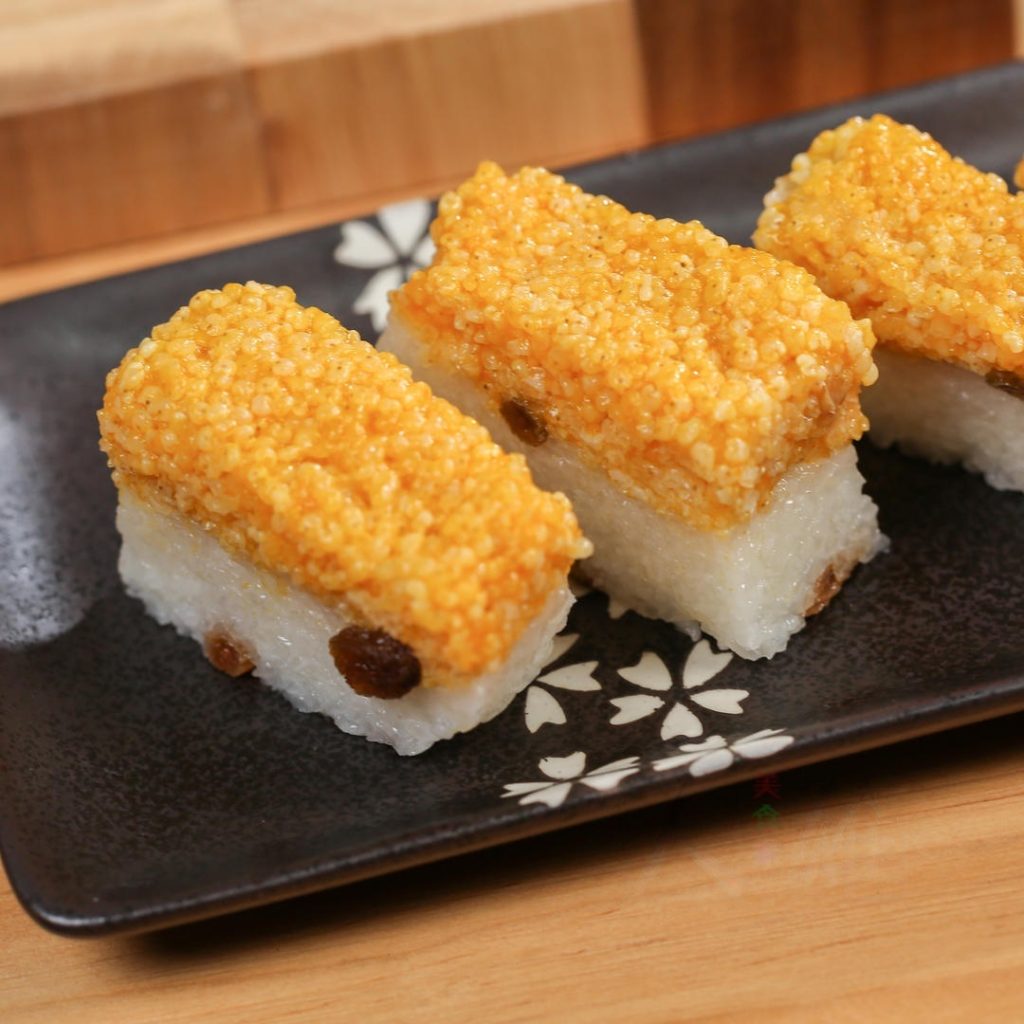
Huang Mi Liang Gao is a traditional chilled dessert popular in Northern and Western China. Unlike the savory Shumai you might find in the South, this dish focuses on the inherent sweetness of the grains. It consists of two distinct layers: a golden top layer of proso millet infused with pumpkin and a snow-white bottom layer of sweet glutinous rice. It is traditionally served cold, often drizzled with osmanthus honey for an aromatic finish.
Key Ingredients & Substitutions
- Yellow Millet (黄米): Use Proso Millet (Glutinous Millet), which is stickier than the foxtail millet often found in birdseed. Look for labels that say “Glutinous” or “Sticky.”
- Glutinous Rice (糯米): Also known as “sweet rice.” This provides the structural foundation.
- Pumpkin: I highly recommend Kabocha squash for its low water content and intense sweetness. If using standard pumpkin, ensure you drain any excess liquid after mashing.
- Osmanthus Honey: If unavailable, you can substitute with a light wildflower honey or a simple syrup infused with dried rose petals.
Ingredients

Yields: 1 medium tray (approx. 8–10 slices)
- For the Yellow Layer: 1/2 cup (100g) Yellow Glutinous Millet (soaked for 12 hours)
- For the White Layer: 1 cup (200g) Long-grain or Short-grain Glutinous Rice (soaked for 12 hours)
- Sweeteners: 2 tbsp (25g) Granulated sugar (divided)
- Flavor/Texture: 3.5 oz (100g) Pumpkin or Kabocha squash, peeled and cubed
- Optional: 1 tbsp Raisins or dried cranberries; Osmanthus honey for drizzling
- Safety Note: This recipe is naturally Gluten-Free, but always check your grain packaging for cross-contamination warnings.
Recipe Notes Before You Start
- The 12-Hour Rule: Do not skip the 12-hour soak. Glutinous grains have a dense starch structure that requires slow hydration to gelatinize properly during steaming.
- Water Levels: When steaming, use just enough water to “kiss” the top of the grains. Excess water will result in a rice porridge rather than a firm cake.
- Equipment: You will need a tiered steamer and a rectangular glass or ceramic container (approx. 6×6 inches) for molding.
Mise en Place / Prep
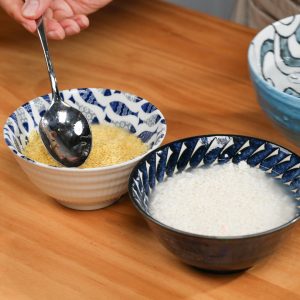
- Soaking: Place the millet and glutinous rice in separate bowls. Cover with 2 inches of cold water and soak for 12 hours at room temperature (or in the fridge if your kitchen is above 75°F/24°C).
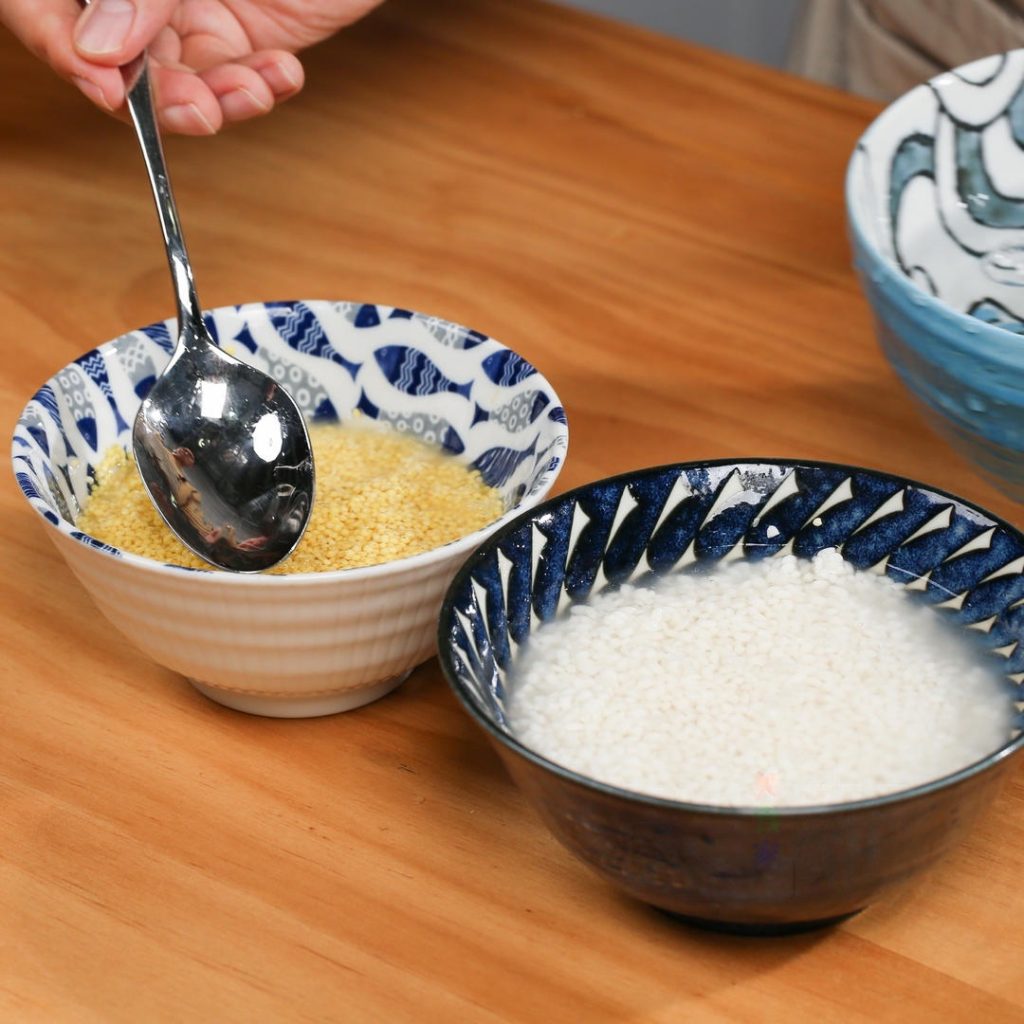
- Drain & Rinse: After 12 hours, drain the water. The grains should feel soft when pressed between your fingers.
- Pumpkin Prep: Peel the pumpkin and cut into small 1-inch cubes to ensure they soften at the same rate as the rice.
How to Make Yellow Millet Sticky Rice Cake
- Steaming the Grains: Place the soaked millet in one heat-proof bowl and the soaked glutinous rice in another. Add just enough fresh cold water to each bowl to barely cover the surface of the grains. Place the pumpkin cubes on top of the millet.
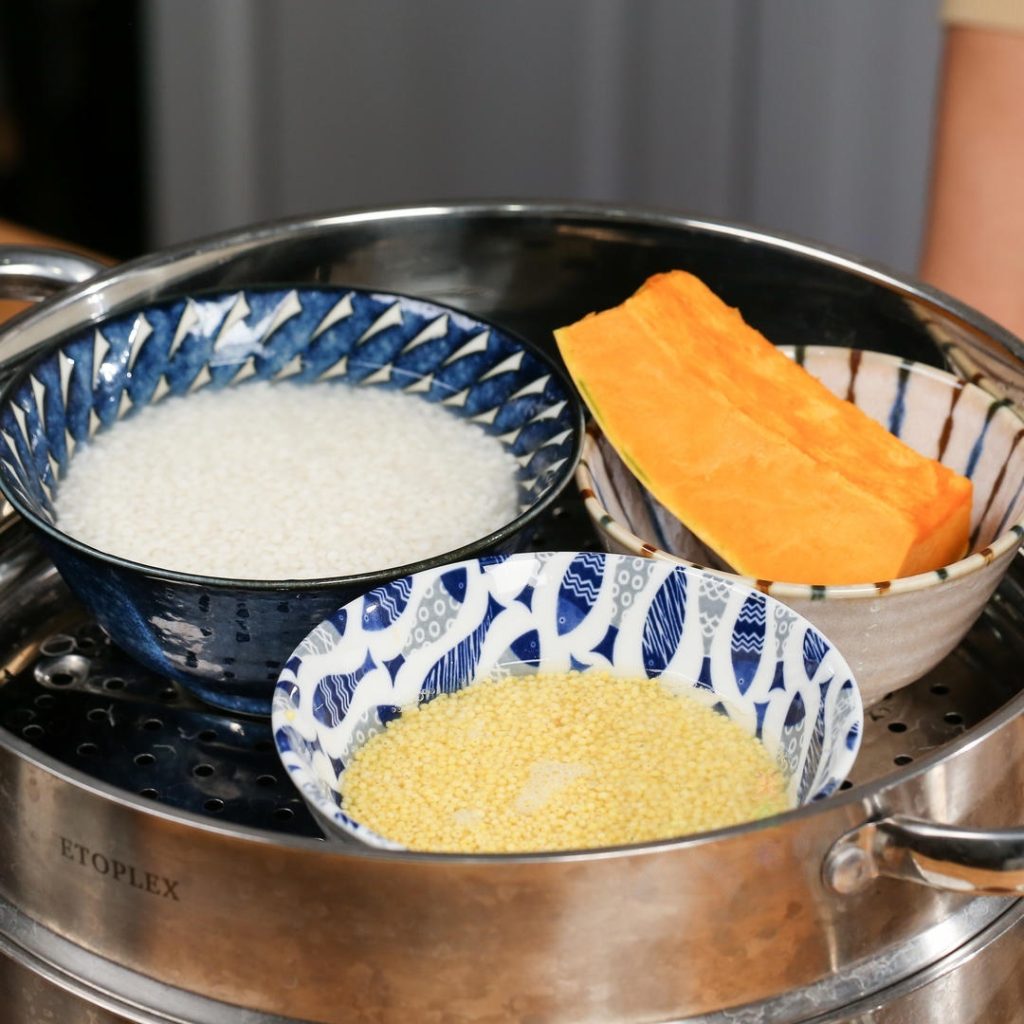
- The 40-Minute Steam: Bring your steamer to a rolling boil. Place both bowls inside. Cover and steam over medium-high heat for 40 minutes.”NOTE: After 40 minutes, the rice should be translucent and the pumpkin should mash easily with a fork. If the center of the rice grains still looks opaque/white, steam for another 5–10 minutes.”
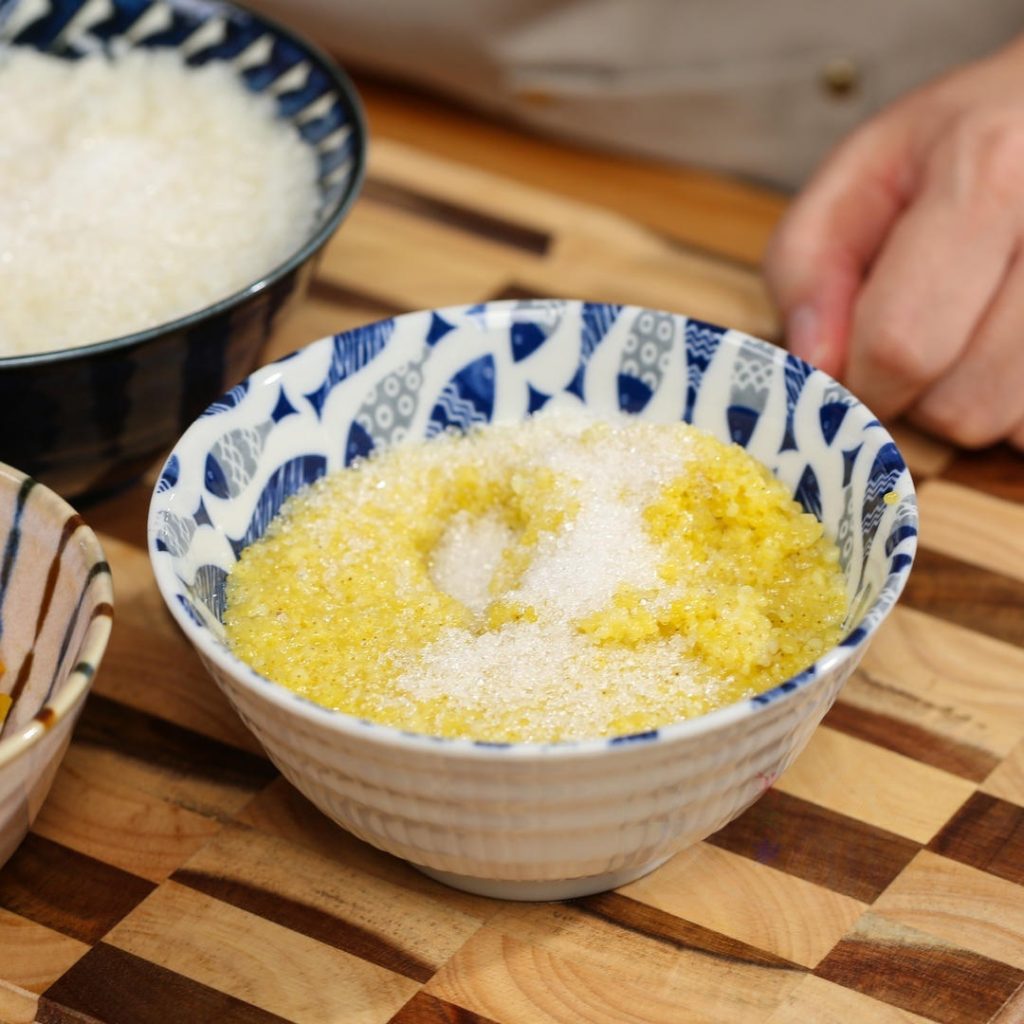
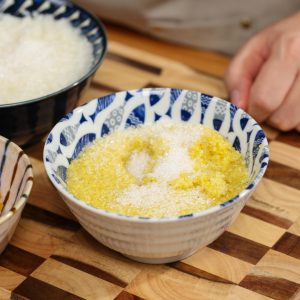
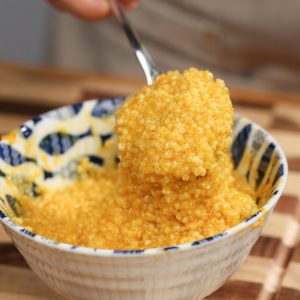
- Mixing the Yellow Layer: While hot, add 1 tbsp of sugar to the millet and pumpkin bowl. Use a heavy spoon to mash the pumpkin into the millet until it forms a smooth, vibrant yellow paste.
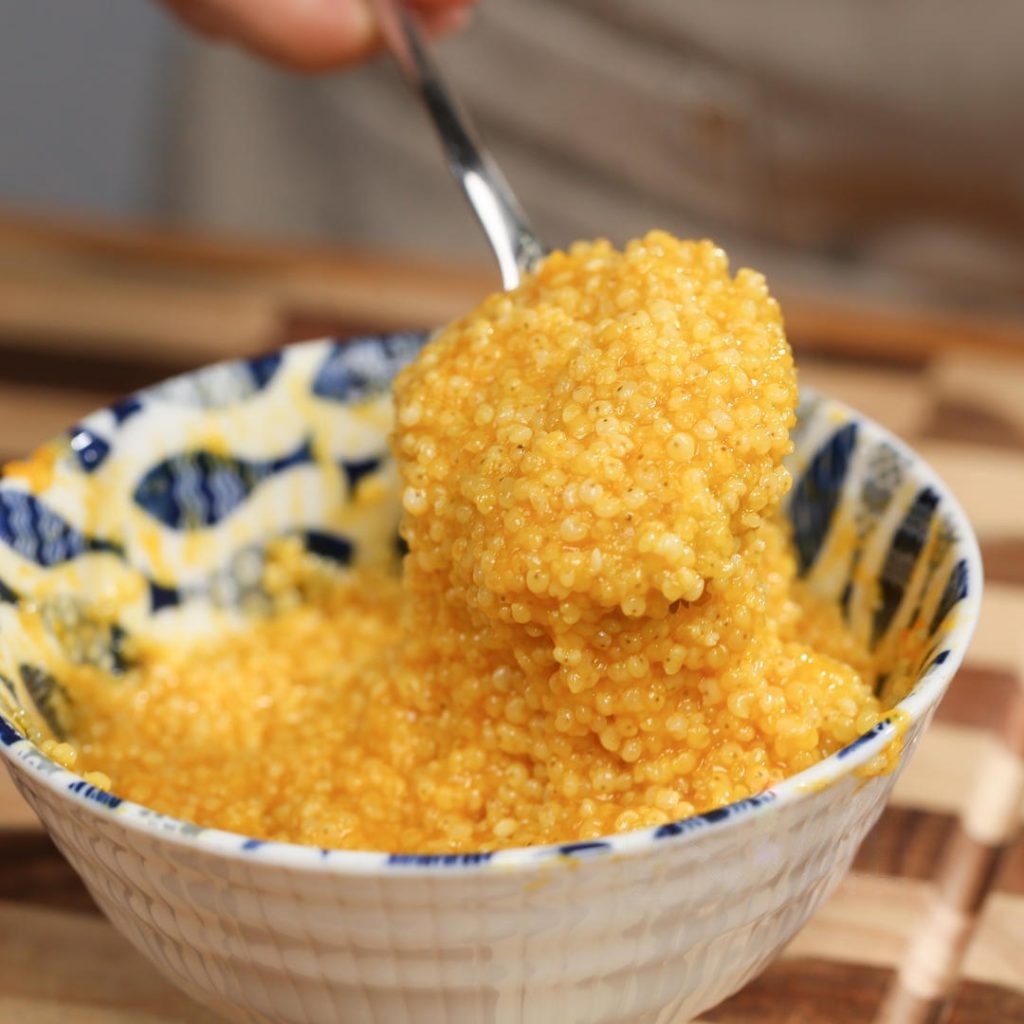
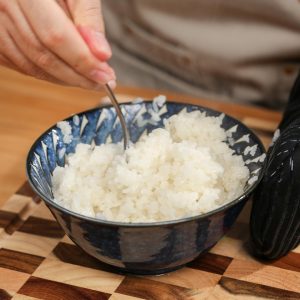
- Mixing the White Layer: Add the remaining 1 tbsp of sugar to the glutinous rice. Stir vigorously. The agitation helps release the starches, making the cake stickier and more cohesive.
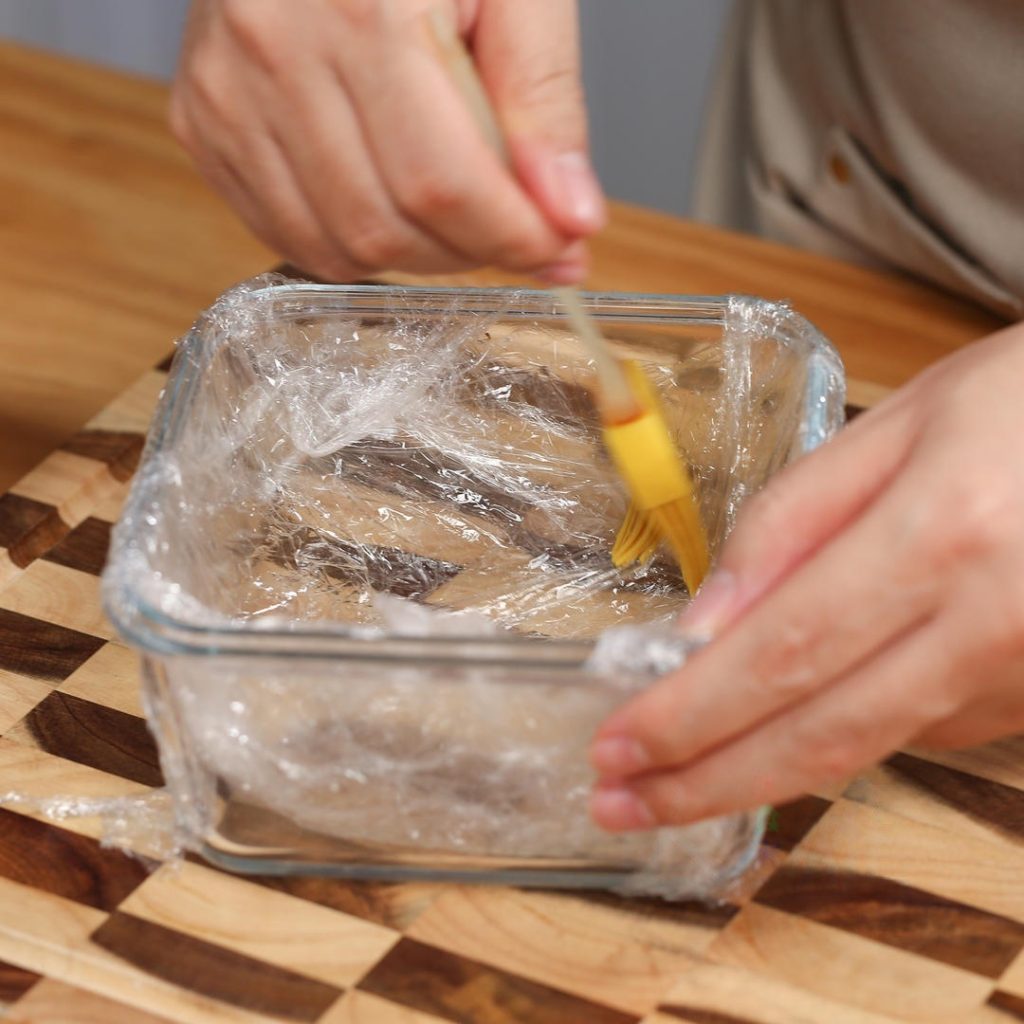
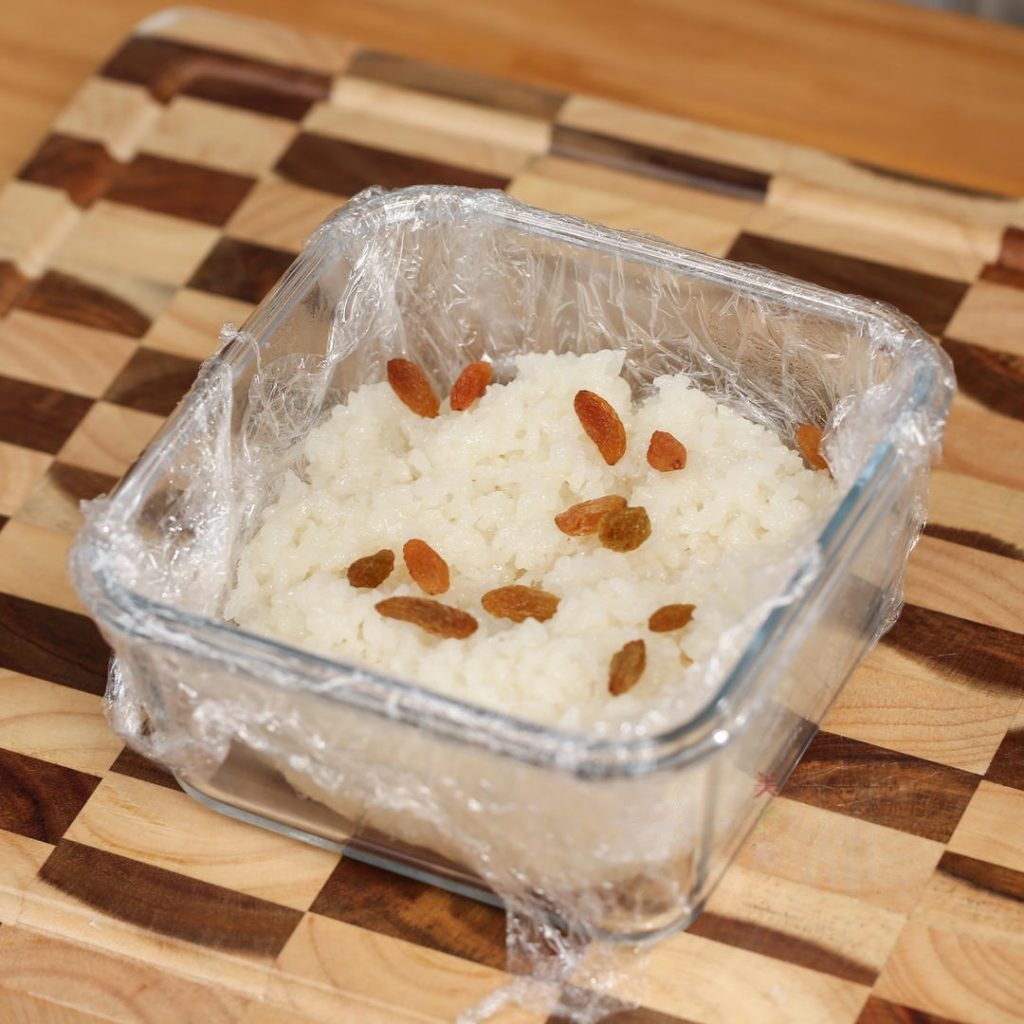
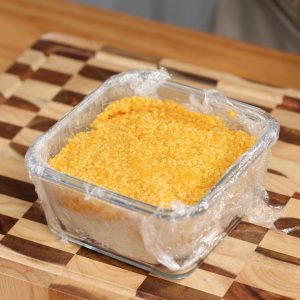
- Layering and Assembly: Line your container with plastic wrap and lightly brush with a neutral oil (like grapeseed). Sprinkle raisins at the bottom. Spread the white glutinous rice into an even layer, pressing down firmly with a wet spatula. Spread the yellow millet-pumpkin mixture on top, smoothing the surface.
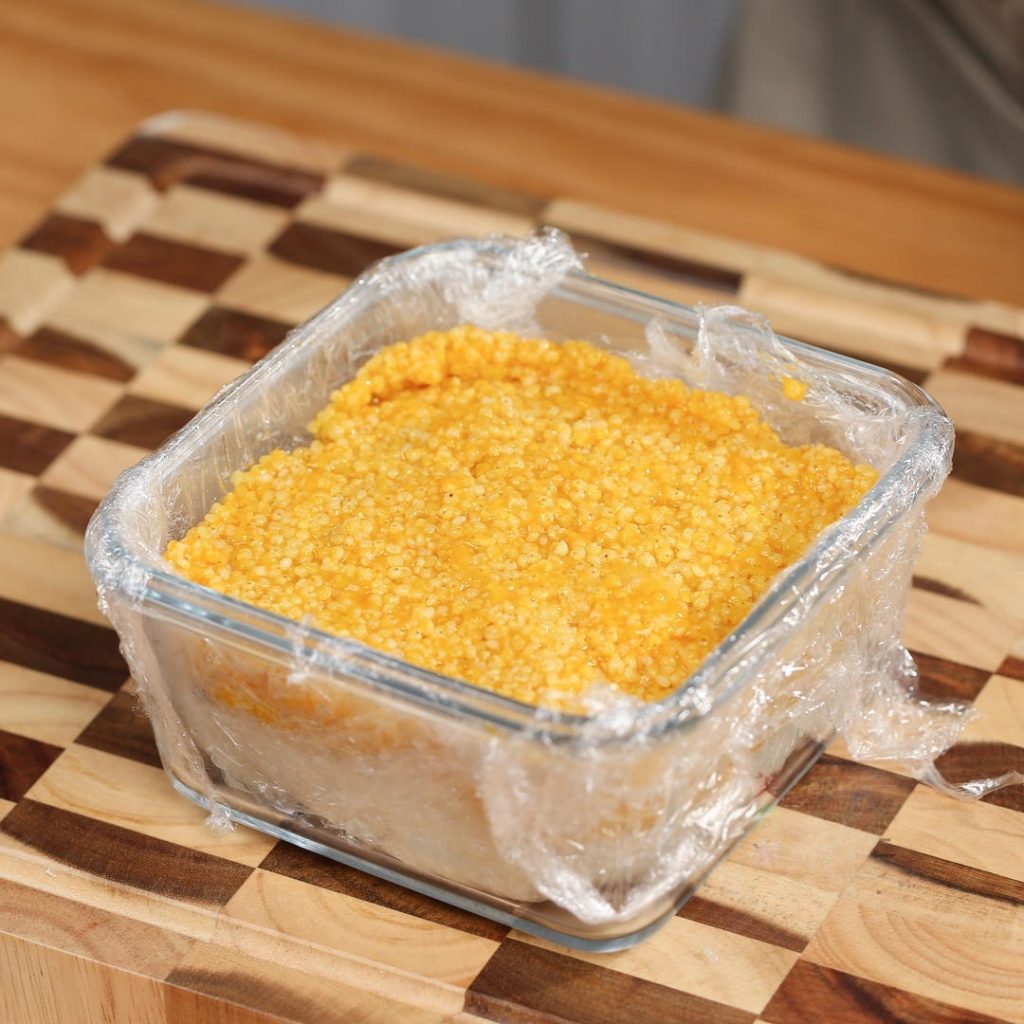

- Chilling: Fold the excess plastic wrap over the top to seal. Once it reaches room temperature, place it in the refrigerator for at least 4 hours.”NOTE: Proper chilling is crucial. The starches need to ‘set’ to allow for clean slicing. If you try to cut it while warm, it will stick to everything.”
FAQ / Troubleshooting
- Why is my rice cake falling apart? This usually happens if the grains weren’t pressed down firmly enough during assembly or if the soaking time was too short.
- Why is it so sticky when I try to cut it? This is a high-starch dessert. Tip: Dip your knife in hot water before every single cut to ensure a clean edge.
- Can I use a rice cooker? While possible, a steamer is preferred for better control over the moisture level. If using a rice cooker, use the “Sticky Rice” setting with the same minimal water ratio.
- Is it safe to eat cold rice? Yes, as long as it was cooled and refrigerated promptly. However, do not leave the cake at room temperature for more than 2 hours.
Tips for Success
- The Agitation Technique: In professional Sichuan cooking, we “beat” the steamed rice with a wooden paddle. This mechanical action creates a much “chewier” texture than simply stirring.
- Sweetness Control: Chinese desserts are often less sweet than Western ones. Feel free to increase the sugar to 3 tbsp if you prefer a more dessert-forward profile.
- Internal Link Suggestion: If you enjoy the texture of glutinous rice, try our Vegetable Steamed Dumplings for a savory alternative.
Serving Suggestions
Take the cake out of the mold by lifting the plastic wrap. Invert it onto a cutting board so the raisins are on top. Slice into 2-inch squares. For the most authentic experience, drizzle with Osmanthus honey or a bit of condensed milk. It pairs beautifully with a pot of hot Pu-erh or Oolong tea to balance the stickiness.
How to Store
- Fridge: Store in an airtight container for up to 3 days. The rice will gradually harden in the fridge; if it becomes too firm, you can microwave it for 15 seconds to soften the starches.
- Freezer: Not recommended, as the freezing process breaks the delicate starch bonds, causing the cake to become grainy upon thawing.
Nutrition Information (Estimate)
- Serves: 8 | Serving Size: 1 piece (approx. 80g)
- Calories: 165 kcal
- Total Carbohydrates: 38g
- Dietary Fiber: 1.5g
- Sugars: 6g
- Protein: 3g
- Sodium: 5mg
- Allergens: None (Naturally Vegan & Gluten-Free).
“DISCLAIMER: Nutrition information is calculated using an ingredient database and should be considered an estimate. Garnishes and optional items are not included. Actual values vary depending on the specific brand of grains used.”
Authoritative References
- USDA FoodData Central: For nutritional benchmarks of proso millet and glutinous rice. Link
- Food Safety Guidelines: Regarding the storage of cooked rice (Bacillus cereus prevention). Link to FDA Rice Safety
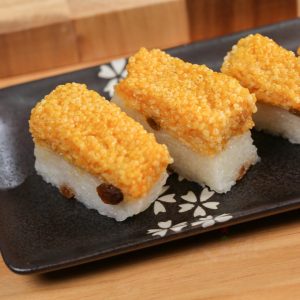
Yellow Millet Sticky Rice Cake (Huang Mi Liang Gao)

Equipment
- 1 Tiered Steamer Used to steam rice and millet simultaneously.
- 1 Rectangular Container Used for molding the cake (approx 6×6 inches).
Ingredients
- 1/2 cup Yellow Proso Millet Soaked 12 hours
- 1 cup Glutinous Rice Soaked 12 hours
- 2 tbsp Granulated Sugar Adjust to taste
- 3.5 oz Pumpkin Peeled and cubed
- 1 tbsp Raisins Optional
Instructions
- Soak millet and glutinous rice separately in cold water for 12 hours. Drain well before cooking.

- Place millet and pumpkin in one bowl, and glutinous rice in another. Add just enough water to barely cover the grains in both bowls.
- Steam both bowls in a tiered steamer over medium-high heat for 40 minutes until the rice is translucent.
- Add 1 tbsp sugar to the millet bowl and mash the pumpkin into the millet to create a smooth yellow paste.
- Add 1 tbsp sugar to the glutinous rice and stir vigorously to develop stickiness.
- Line a container with oiled plastic wrap. Sprinkle raisins, layer the white rice first, followed by the yellow millet. Press firmly.
- Cover and refrigerate for 4 hours. Slice with a wet knife and serve with honey.



Leave a Reply