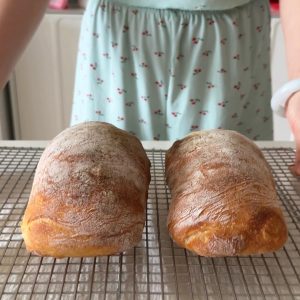
World's Easiest Ciabatta (Qia Ba Ta)

A same-day, no-knead ciabatta with six ingredients and two stretch-and-folds: a crackling crust over a soft, holey crumb, baked at 230°C with a water spray. Beginner-proof and genuinely simple.
Equipment
- Large Mixing Bowl
- Baking Tray
- Spray Bottle with Water
- Bench Scraper
- Tea Towel
Ingredients
For the Dough
- 2 cup bread flour (high-gluten flour) 262 g, plus 2 tbsp
- 1 cup room-temperature water 223 g
- 3 tbsp warm water 40 g, for the yeast
- 1.25 tsp instant dry yeast 4 g
- 0.75 tsp sugar 3 g
- 1 tsp salt 5 g
- 1 tbsp olive oil 15 g, plus 1 tsp
Instructions
- Stir the sugar and yeast into 40 g warm water and let it sit for 10 minutes until foamy.
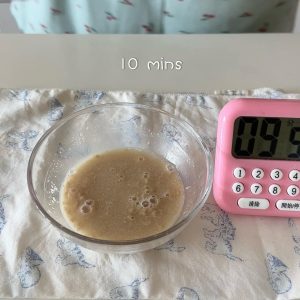
- Combine the remaining water with the dry ingredients and the yeast, mixing with a spatula.
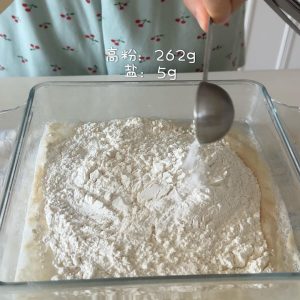
- Mix until no dry flour remains, then pour in the olive oil - the dough will be shaggy and wet.
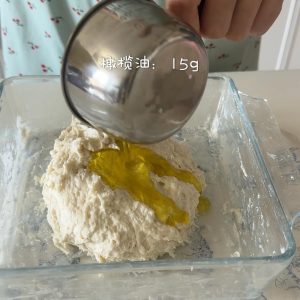
- Fold until the oil is absorbed and the dough becomes a sticky, elastic mass.
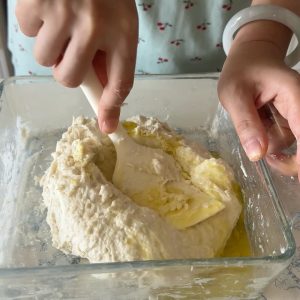
- Cover and rest 15 minutes so the flour hydrates.
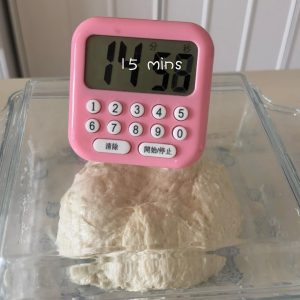
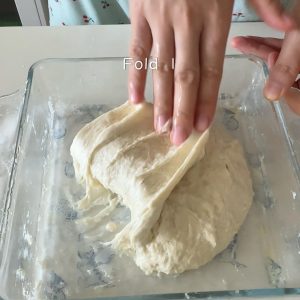
- Stretch one edge up and fold over the center, turning the bowl a quarter turn each time - four folds total.
- Cover and rest another 15 minutes - the dough will feel stronger.
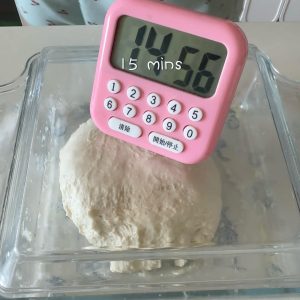
- Repeat the stretch-and-fold all the way around one final time.
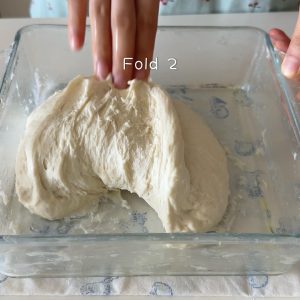
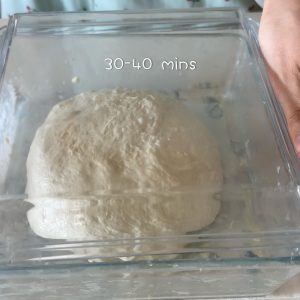
- Tuck into a ball and ferment in a warm spot for about 40 minutes until puffed.
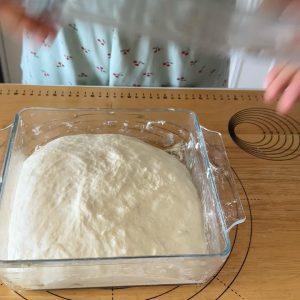
- Dust the surface generously and turn the dough out without deflating it.
- Gently coax the dough into a rectangle with floured hands.
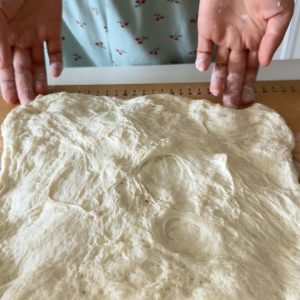
- Fold the bottom edge up over the middle, like folding a blanket.
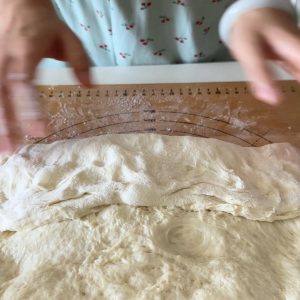
- Fold the top edge down to overlap into a long, soft log.
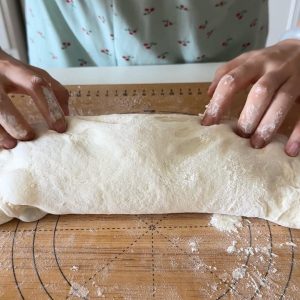
- Cut the log into 2 large loaves, or 4 smaller ones.
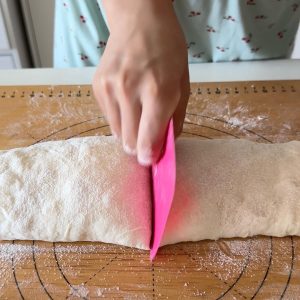
- Place on a floured tray, cover, and proof 30 minutes while the oven preheats to 230°C (446°F).
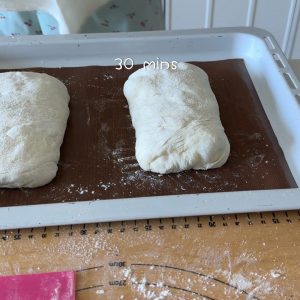
- After 30 minutes the loaves should be puffy, soft and slightly jiggly.
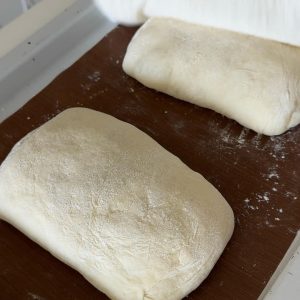
- Spray the loaves and oven walls with water, then bake at 230°C (446°F) for about 20 minutes.
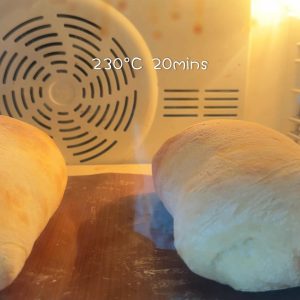
- Bake until the crust is deep, even gold and the bottom sounds hollow when tapped.
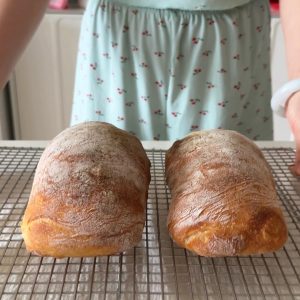
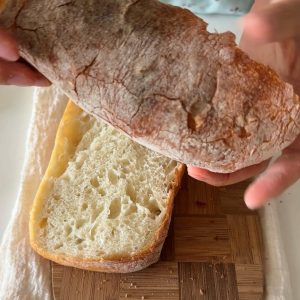
- Cool on a rack at least 20 minutes - the crust crisps as it cools. Slice and enjoy.
Notes
Tips: Do not add flour to the wet dough - it is supposed to be sticky. The two stretch-and-folds are the non-negotiables. Spray water for the first minutes of baking to get the crackling crust. Slice rather than tear when dividing to keep the bubbles intact.
Food Safety: Bread made with flour should be baked to an internal temperature of at least 93°C (200°F). Handle raw flour carefully - it can carry pathogens and should not be tasted raw.
Allergen Notice: Contains gluten (bread flour). Vegan and dairy-free as written.
Nutrition Disclaimer: Nutrition information is calculated using an ingredient database and should be considered an estimate. In cases where multiple ingredient alternatives are given, the first listed is calculated for nutrition. Garnishes and optional ingredients are not included. Nutrition information is an estimate and provided for informational purposes only.