There is an old saying in the culinary world of Zhejiang province: a chef’s skill is judged by their Xishi Tofu. This dish, hailing from the hometown of Xishi (one of the Four Beauties of ancient China), is a staple at every wedding, funeral, and family reunion in the region.
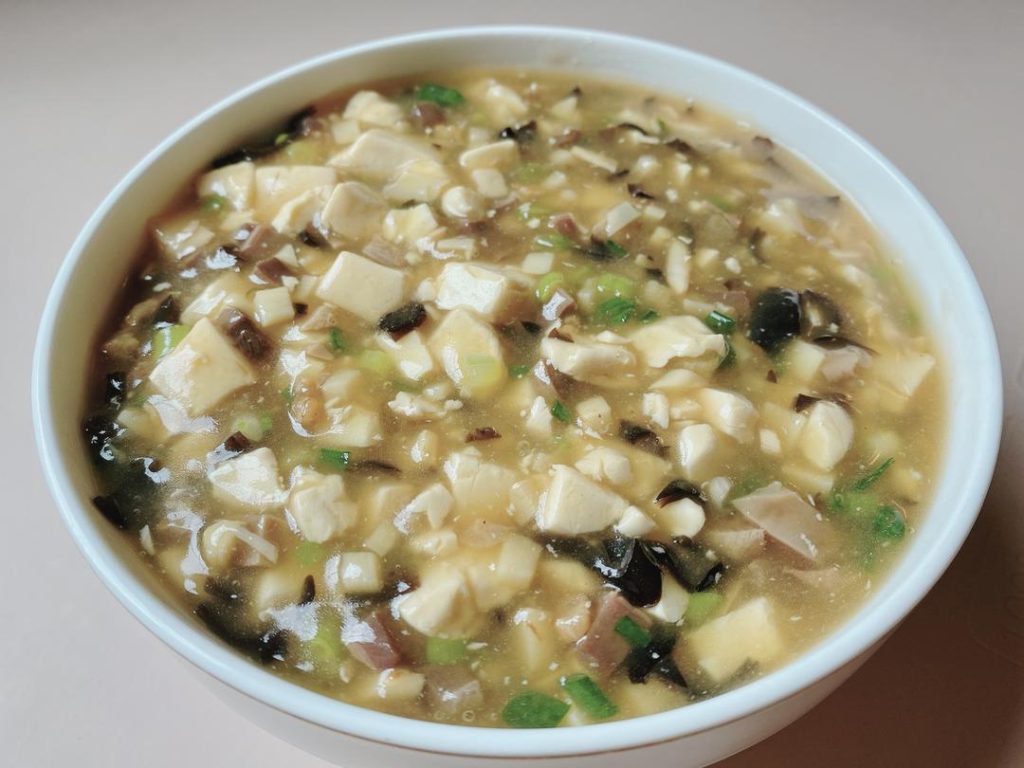
I remember the first time I attempted this dish in my own kitchen. I was trying to recreate that specific “mouthfeel”—a luxurious silkiness that isn’t quite a soup, but not quite a stir-fry either. It serves as a perfect comfort food, warm and binding, capable of convincing even the pickiest “rice-hating” child to finish a full bowl.
While I grew up with the bold spices of Sichuan, I have a deep appreciation for the delicate, texture-focused cuisine of the Jiangnan region. This recipe is my homage to that tradition, adapted for the home kitchen but keeping the soul of the dish intact.
What is Xishi Tofu?
Xishi Tofu is essentially a thick, savory tofu chowder. Unlike the famous Mapo Tofu which relies on spicy chili bean paste, Xishi Tofu relies on a high-quality stock and a interplay of textures.

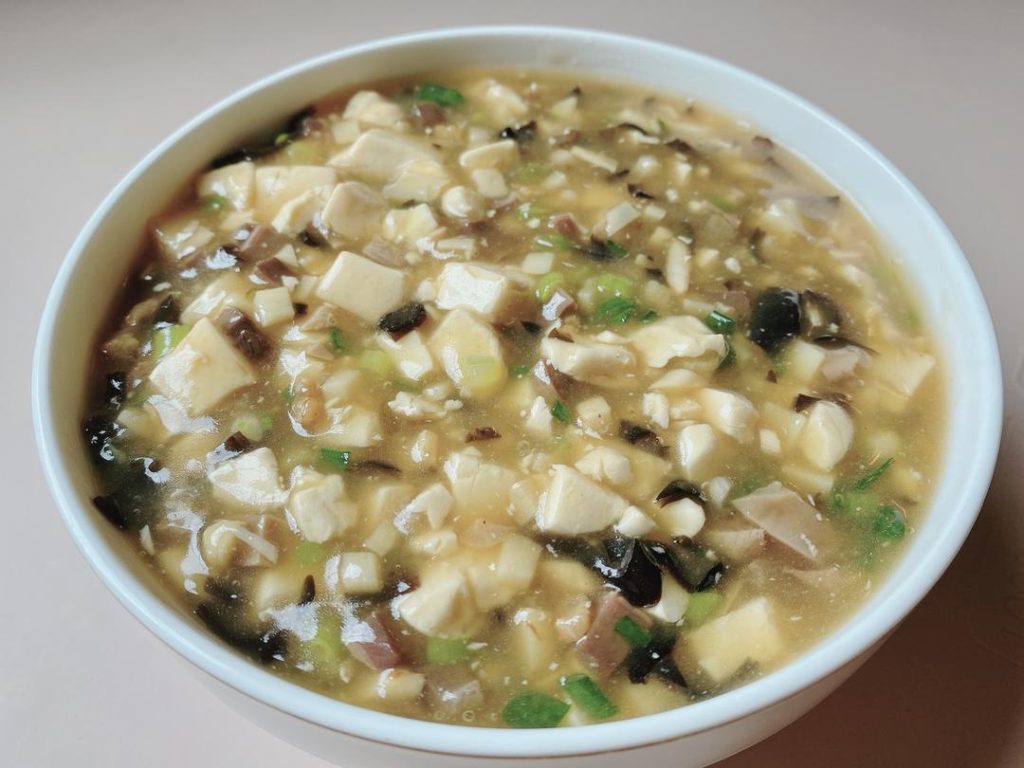
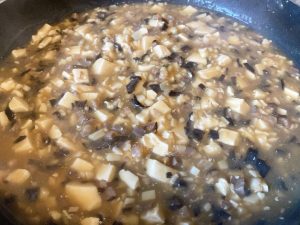
The legendary beauty Xishi was said to have skin as white and smooth as tofu, hence the name. The dish features cubes of soft tofu suspended in a savory, thickened broth, studded with crunchy elements like bamboo shoots, wood ear mushrooms, and gizzards.
Craving more silky, comforting textures? If you fell in love with the delicate, melt-in-your-mouth consistency of this Xishi Tofu, I highly recommend trying my . It shares that same beautiful, tender bite but offers a deeply savory, iron-rich profile that is an absolute staple in traditional Chinese home cooking. Plus, it comes together in just 20 minutes for a perfect weeknight dinner!
1Authentic Pig Blood Curd with Tofu (Zhu Xue Dou Fu)Learn two homestyle ways to cook authentic Pig Blood Curd with Tofu (Zhu Xue Dou Fu)—a nutrient-packed, comforting Chinese dish ready in 20 minutes.Check out this recipe

Why This Recipe Works
- Texture Contrast: The magic lies in the contrast between the cloud-like soft tofu and the crunch of bamboo shoots and wood ear mushrooms.
- Savory Depth: By using a combination of pork belly and chicken/duck gizzards, we create a layered savory profile that goes beyond simple ground meat.
- Sauce Consistency: The precise starch slurry (gouqian) technique ensures the ingredients are suspended evenly in the broth rather than sinking to the bottom.
Key Ingredients & Substitutions
To achieve the authentic taste in a Western kitchen, you need to select your ingredients carefully.
- Tofu: Use Soft Tofu or Medium Tofu (often labeled as “Regular” in US grocery stores). Do not use Firm or Extra Firm tofu, as it lacks the necessary silkiness. Do not use Silken tofu in a tube, as it may disintegrate too easily.
- Bamboo Shoots: The original calls for “whip shoots” (bian sun). In the US, you can substitute with canned winter bamboo shoots or fresh bamboo tips found in Asian markets.
- Expert Tip: If using fresh or canned bamboo, always blanch them first to remove any tinny taste or natural bitterness (oxalates).
- Chicken or Duck Gizzards: These add a specific “bouncy” crunch. If you are adventurous, buy them fresh at an Asian butcher.
- Substitution: If offal isn’t your thing, you can substitute with diced chicken thigh or even diced ham for a similar texture contrast.
- Stock: This is the soul of the dish. A high-quality Chinese Chicken Stock is best. If you are short on time, a high-quality store-bought broth or bouillon paste works.
- Wood Ear Mushrooms: These dried fungi need to be rehydrated. They add a snap to every bite.
Recipe Notes Before You Start
- Uniformity is Key: Because this is a spoonable dish, take care to dice all your ingredients (pork, bamboo, gizzards) to roughly the same size as your tofu cubes (about 1cm).
- Pre-boiling Gizzards: Gizzards are tough muscles. They must be boiled until fully cooked before being diced and added to the stir-fry.
- Mise en Place: Once the cooking starts, it moves fast. Have your starch slurry mixed and ready.
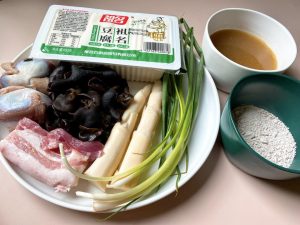
Mise en Place / Prep
Hydrate and Chop: Soak the dried wood ear mushrooms in warm water for 20 minutes until soft. Wash thoroughly to remove grit, then chop finely.
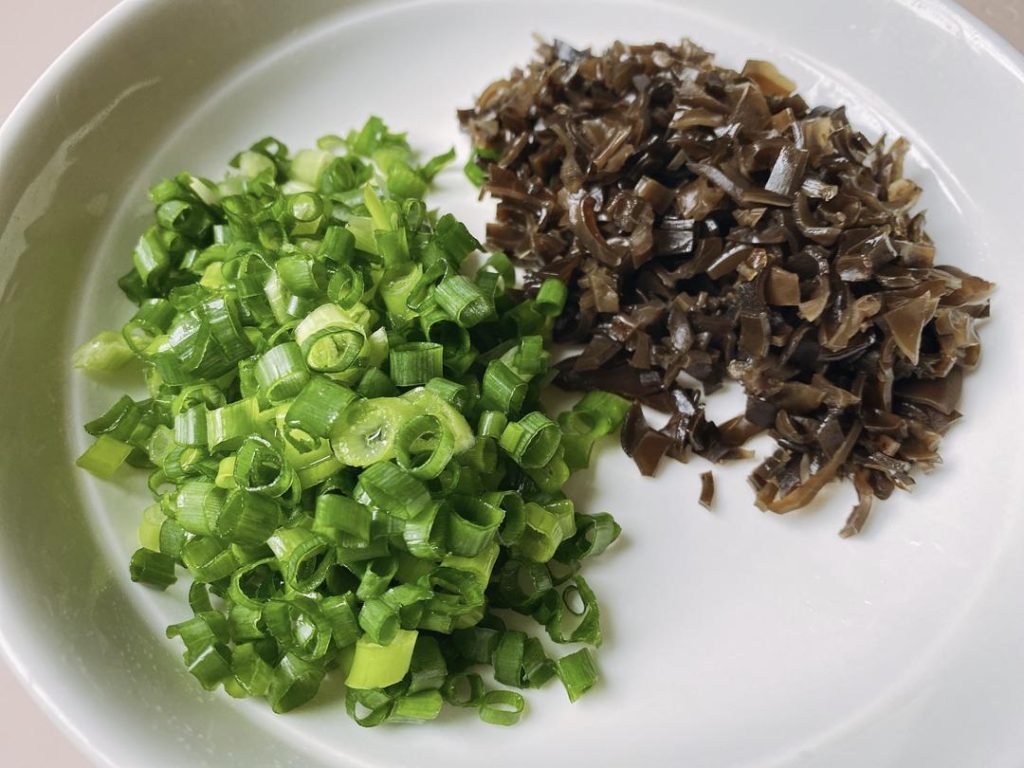
Blanch the Bamboo: Dice the bamboo shoots. Bring a small pot of water to a boil and blanch the shoots for 5–10 minutes. Drain and set aside. This is crucial for removing astringency.
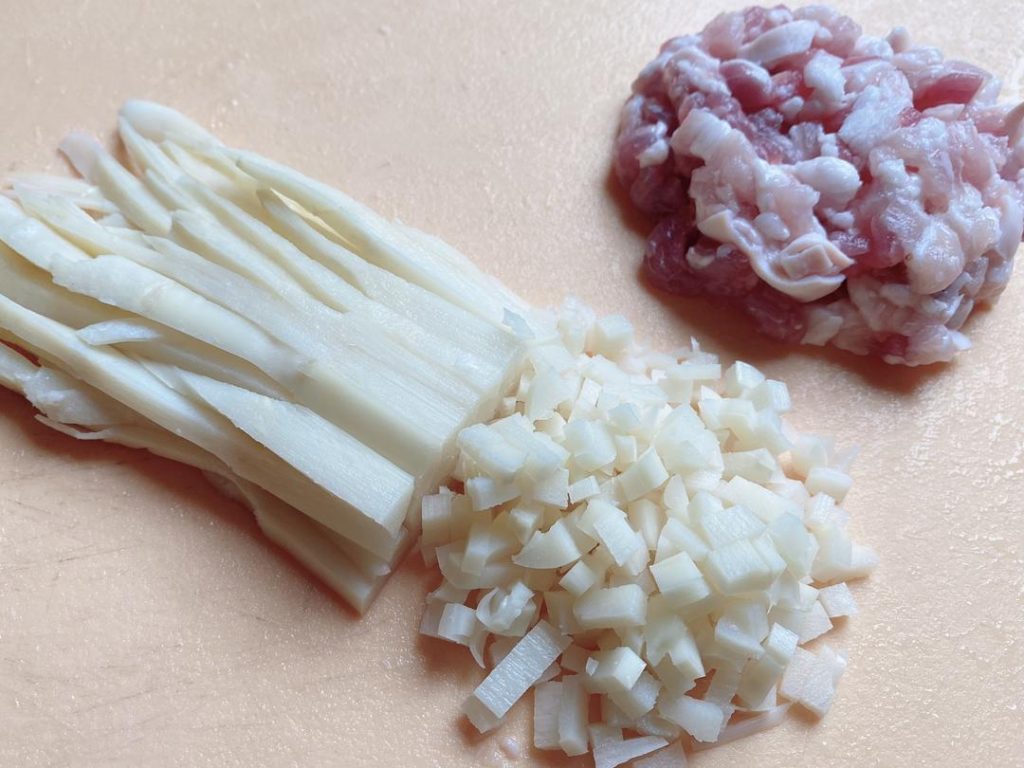
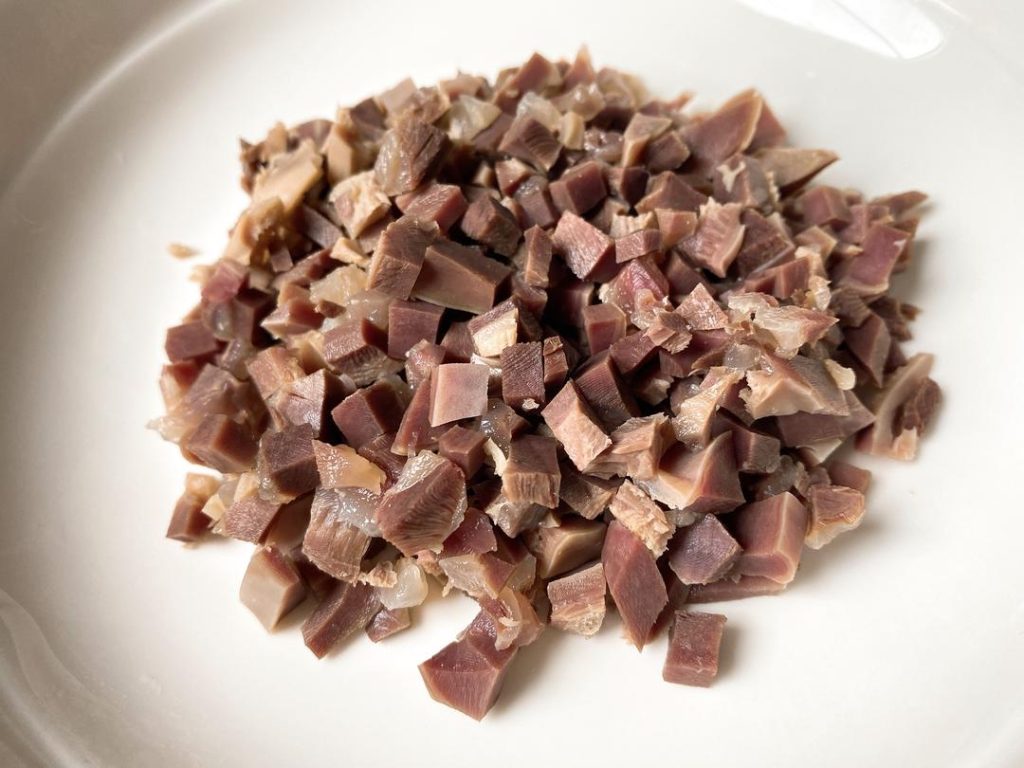
Prep the Meat: Dice the pork belly (or fatty pork shoulder) into small cubes. Boil the gizzards until tender, then dice them.
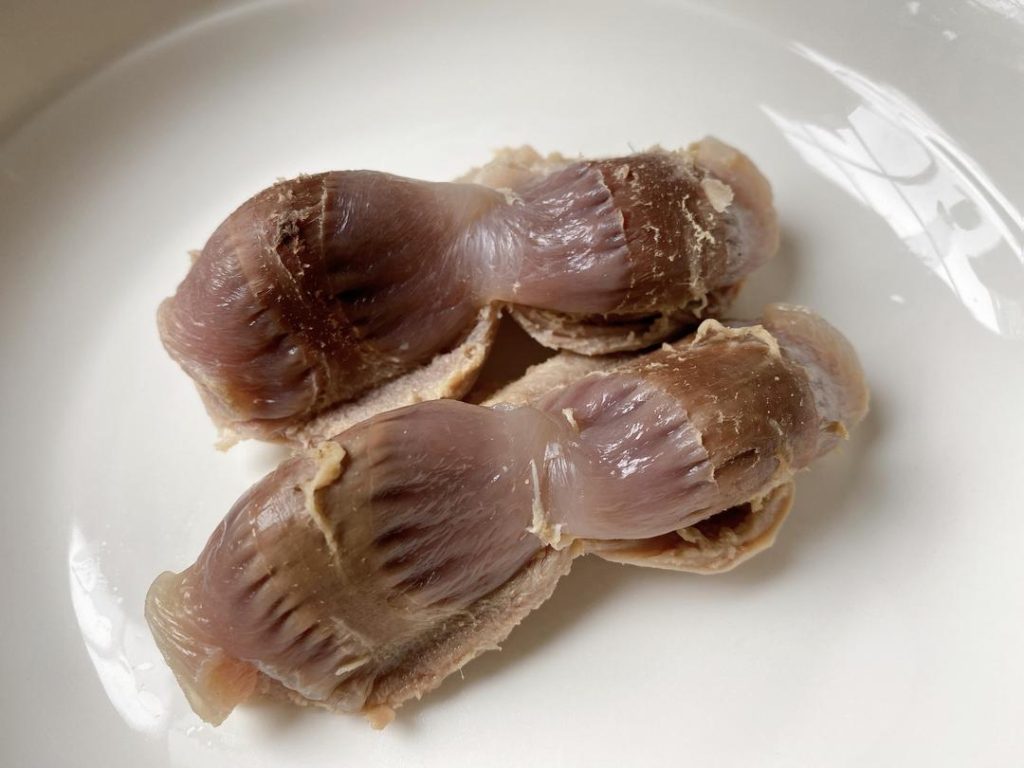
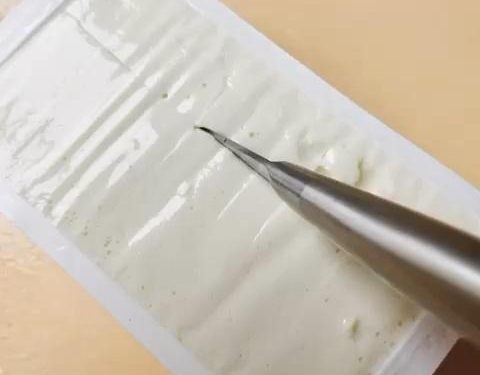
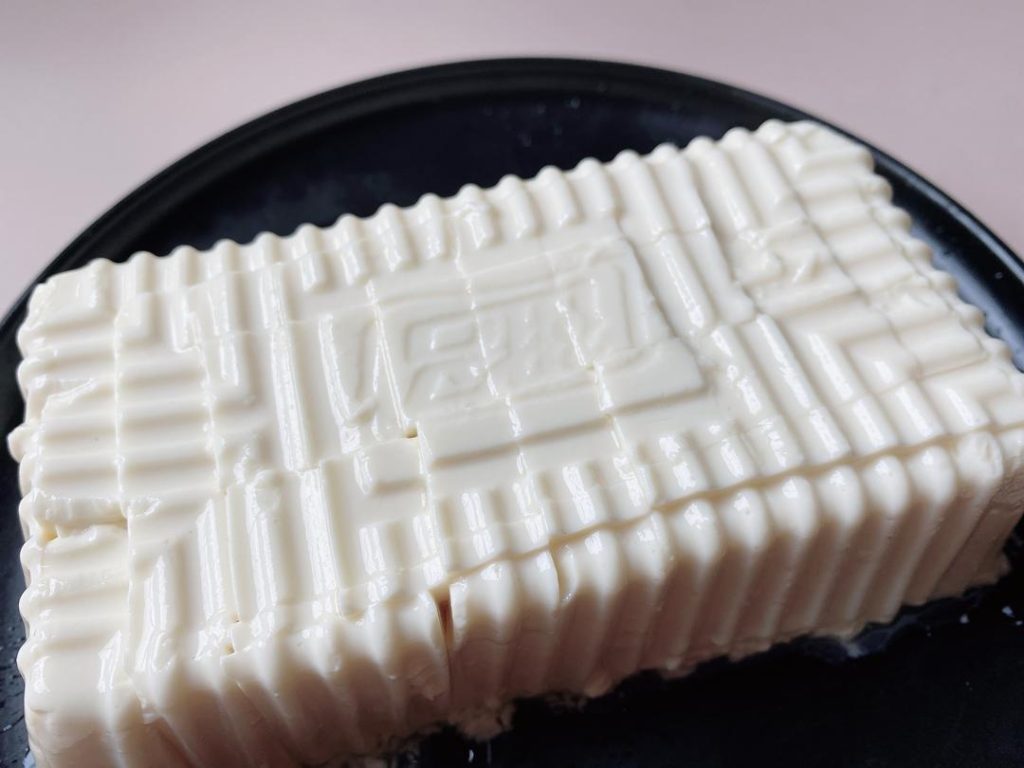
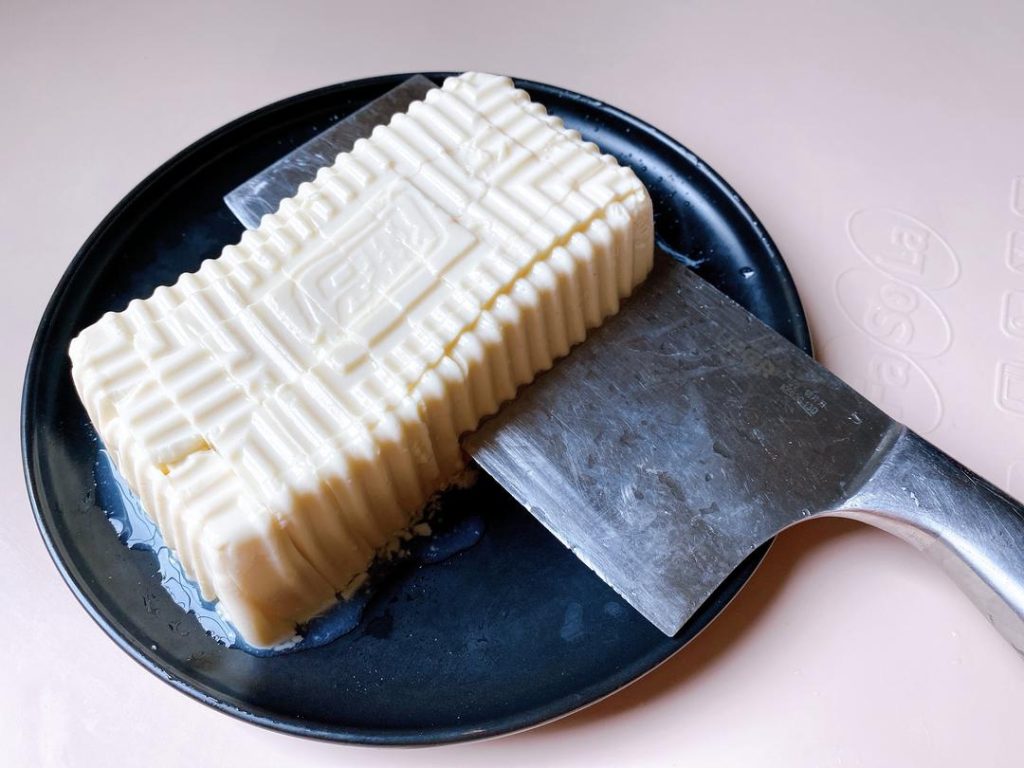
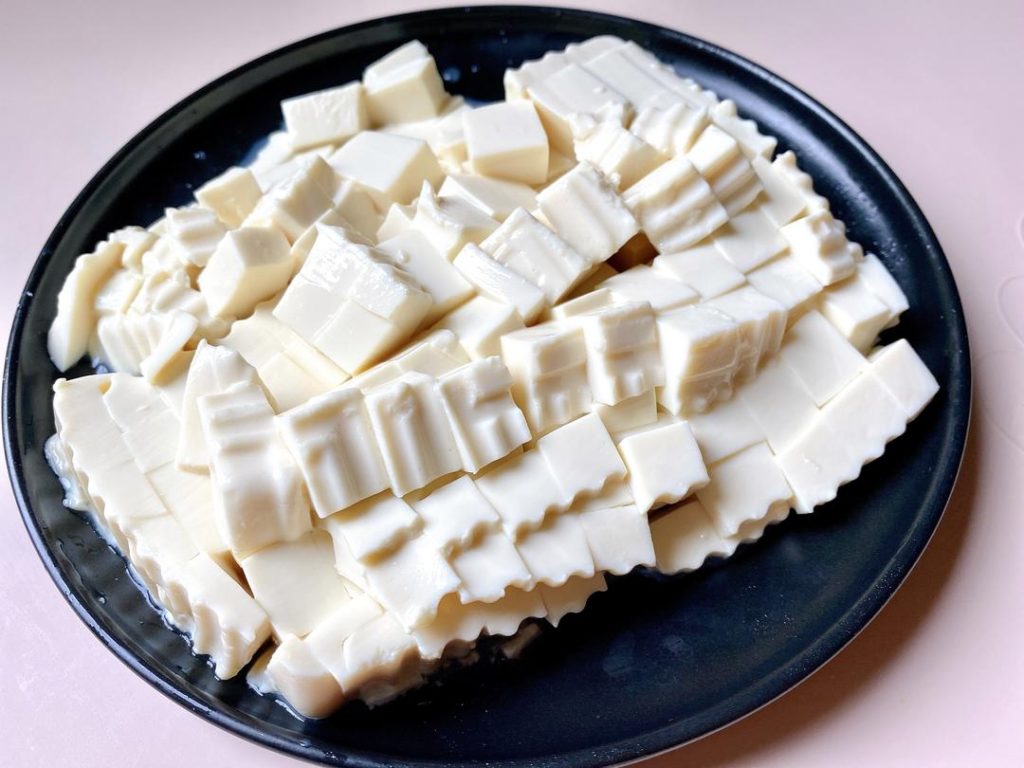
Cut the Tofu: Drain the water from the tofu box. Carefully cut the tofu into small cubes.
How to Make Xishi Tofu
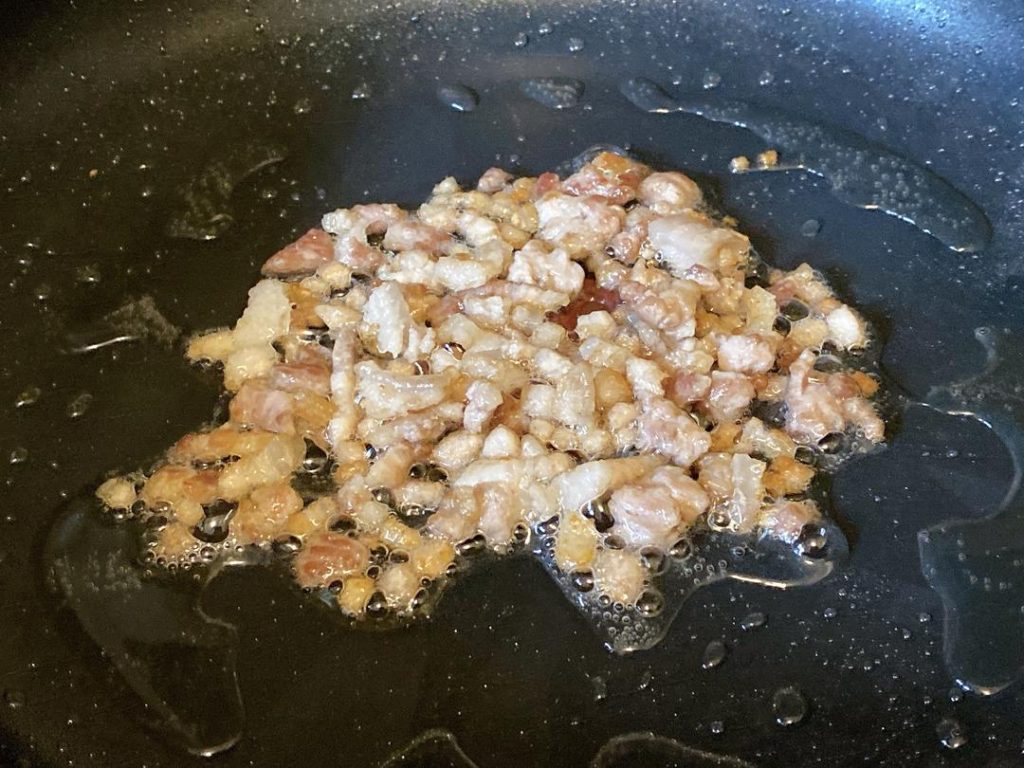
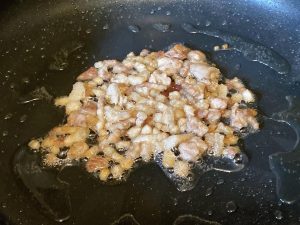
Step 1: Render the Pork Heat your wok or heavy skillet over medium heat. Add the diced pork belly. Stir-fry slowly until the fat renders out and the meat turns golden. This animal fat will form the flavor base of your soup.
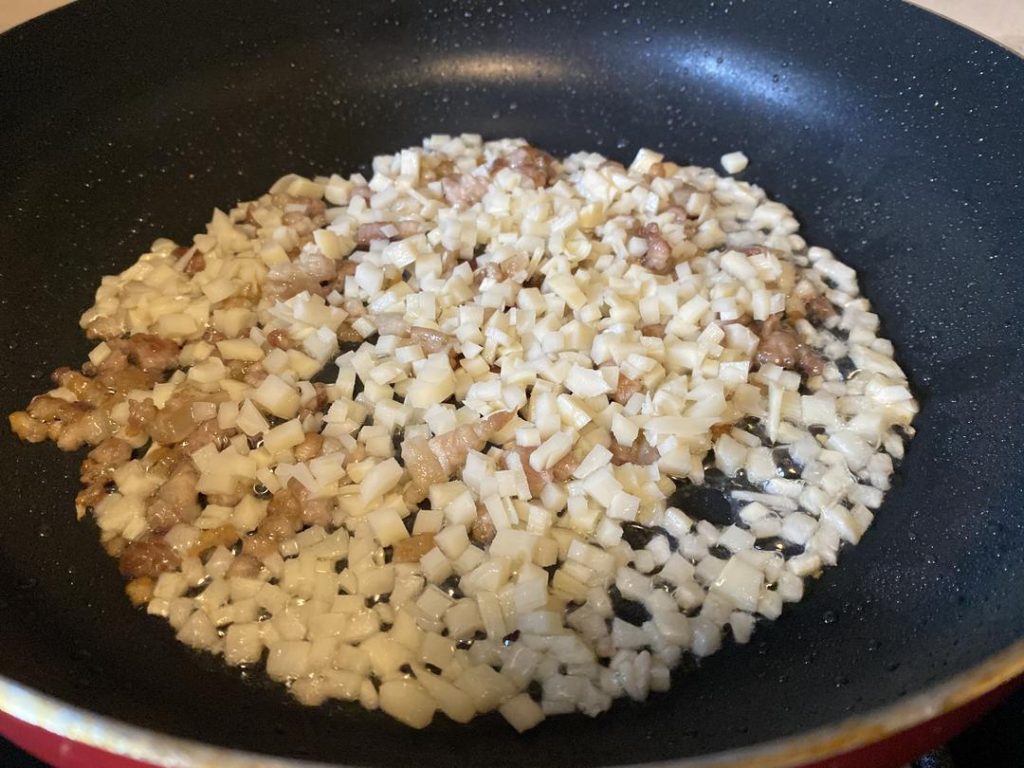
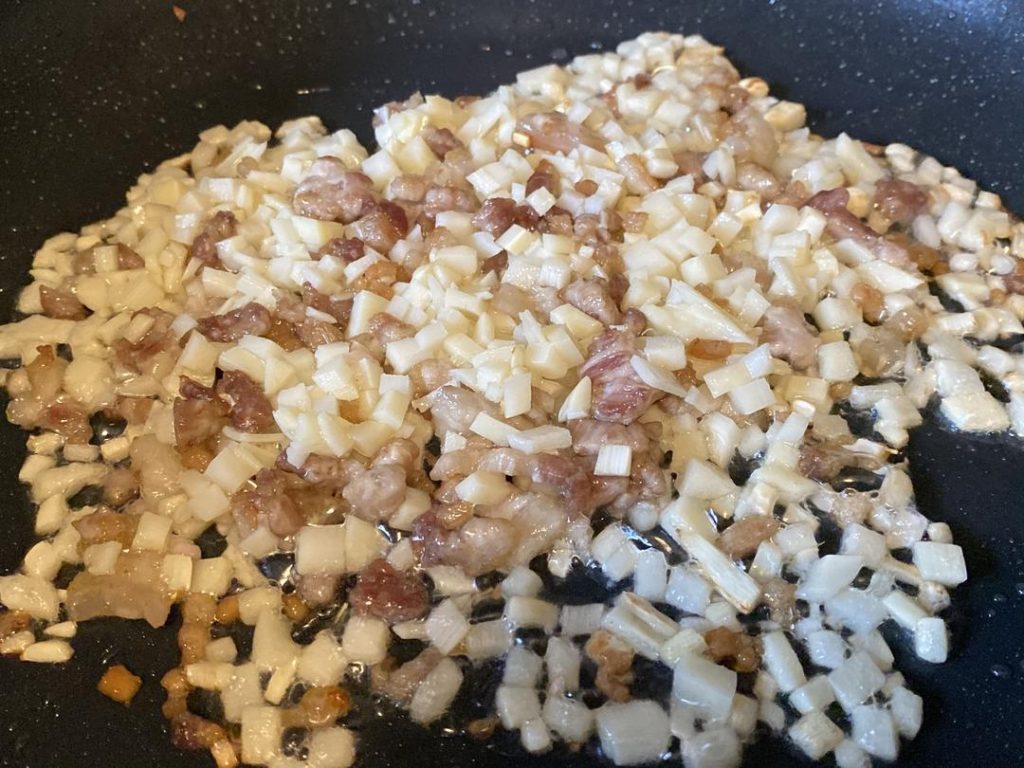
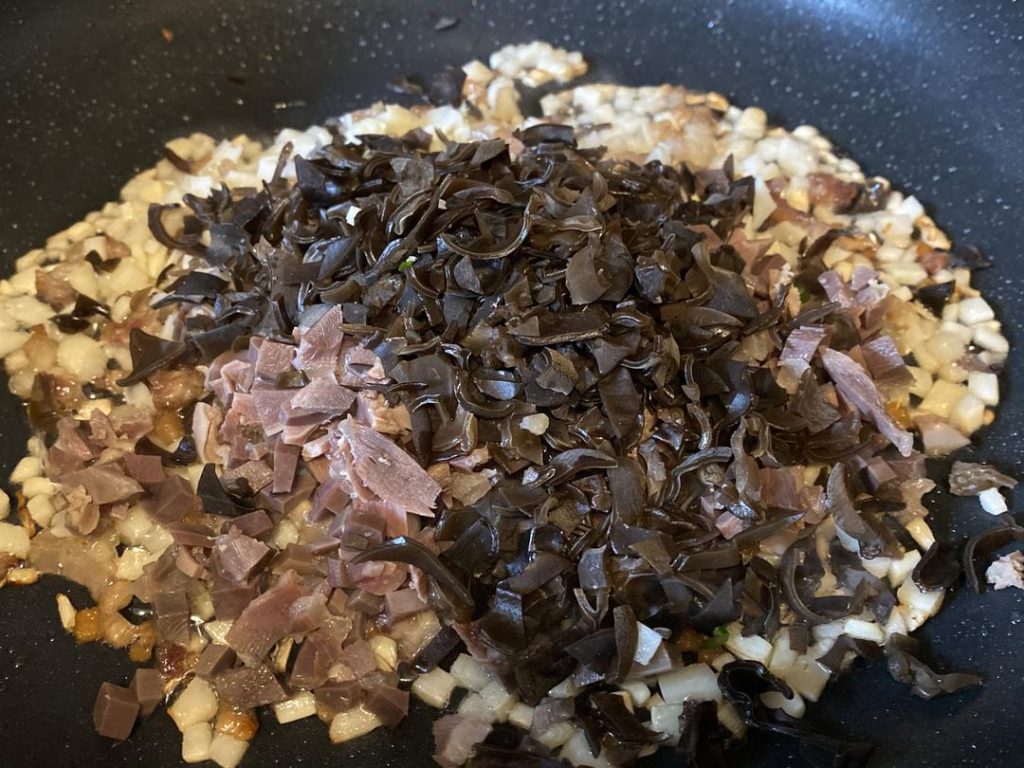
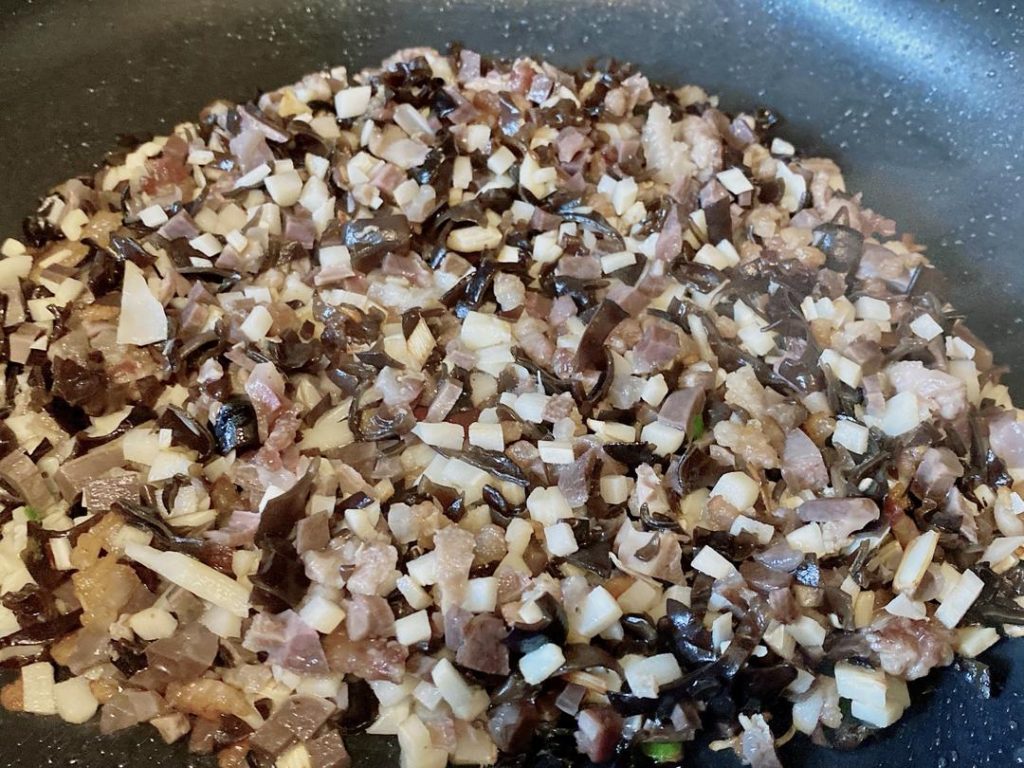
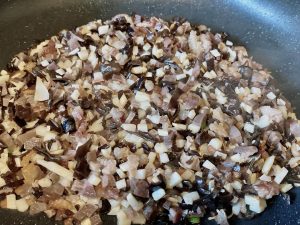
Step 2: Sauté the Aromatics and Veggies Add the blanched bamboo shoots to the pork fat. Stir-fry for 2–3 minutes. As mentioned in professional kitchens, frying the bamboo in fat helps unlock its aroma. Add the diced gizzards and wood ear mushrooms. Stir-fry for another minute until fragrant.
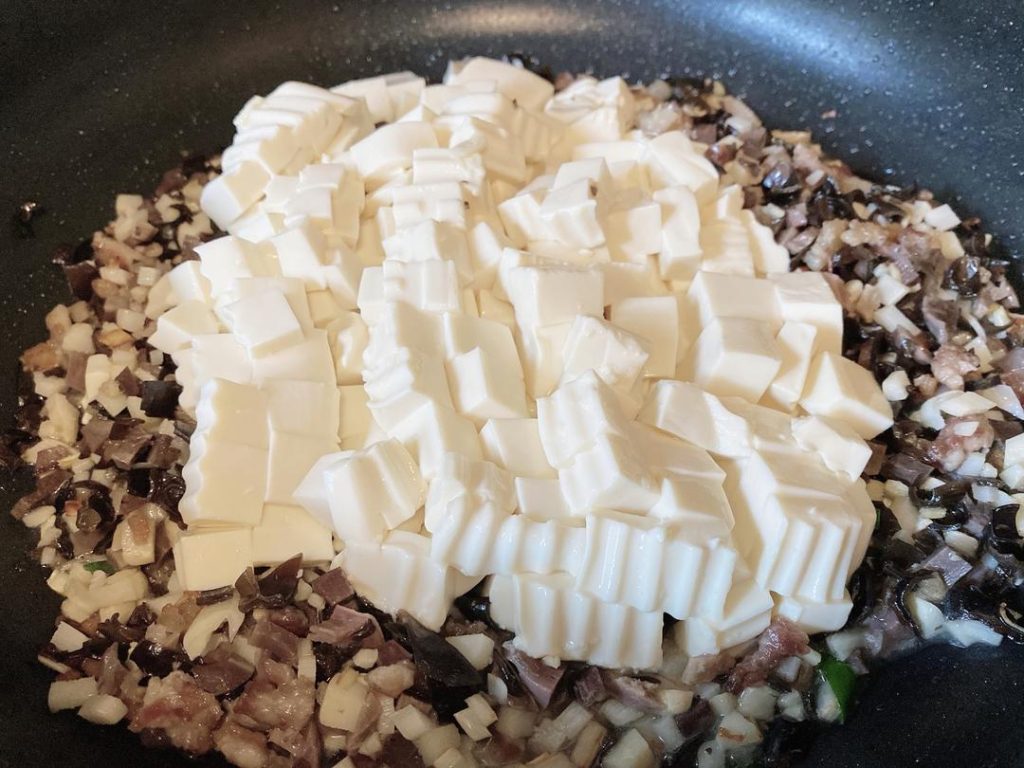
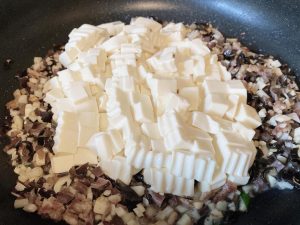
Step 3: Add Tofu and Braise Gently slide the cubed tofu into the wok. Stir very gently—I recommend using the back of your ladle to push the ingredients rather than a sharp spatula that might break the tofu.
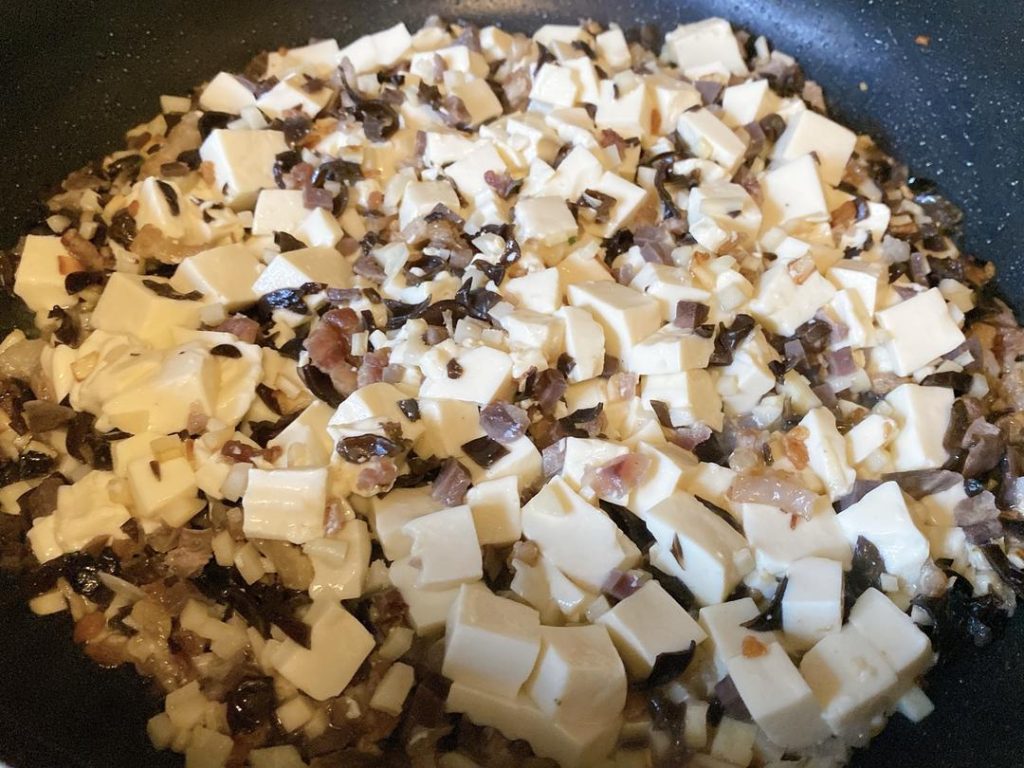
Pour in the stock (chicken or duck stock is preferred). The liquid should just cover the ingredients. Add the soy sauce, oyster sauce, sugar, and salt.
Step 4: Simmer Bring to a boil, then reduce heat to medium. Cover and simmer for 3–5 minutes. This allows the tofu to absorb the savory flavors of the broth and meat.
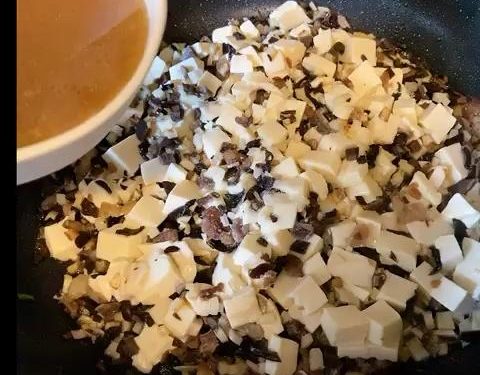
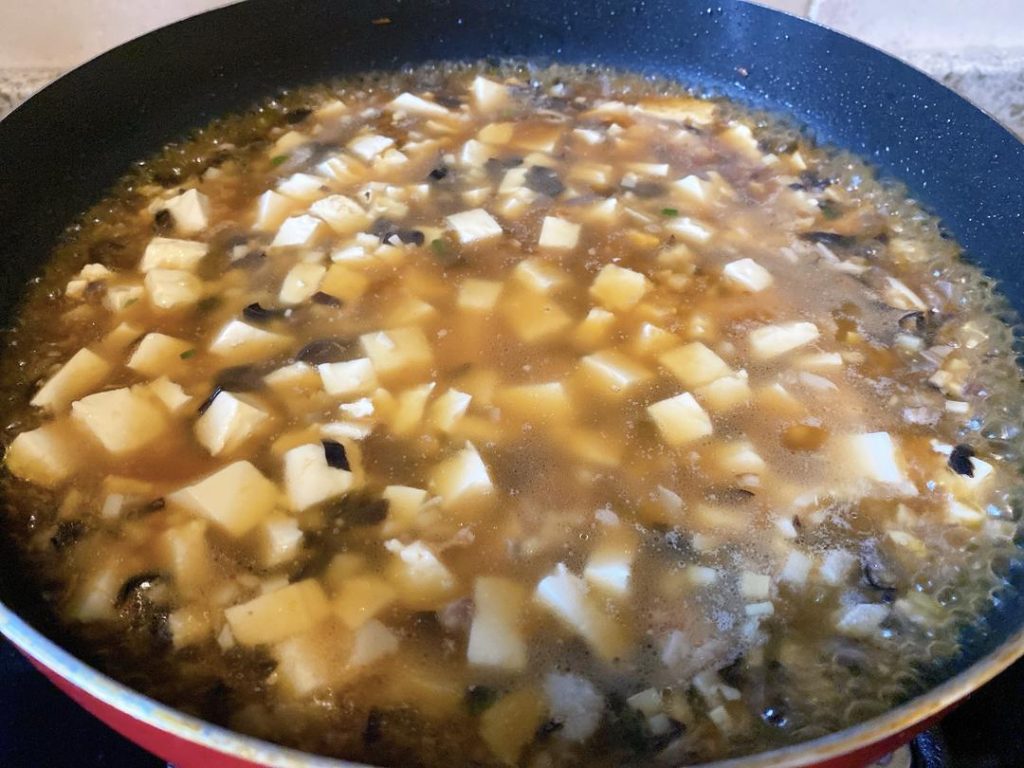
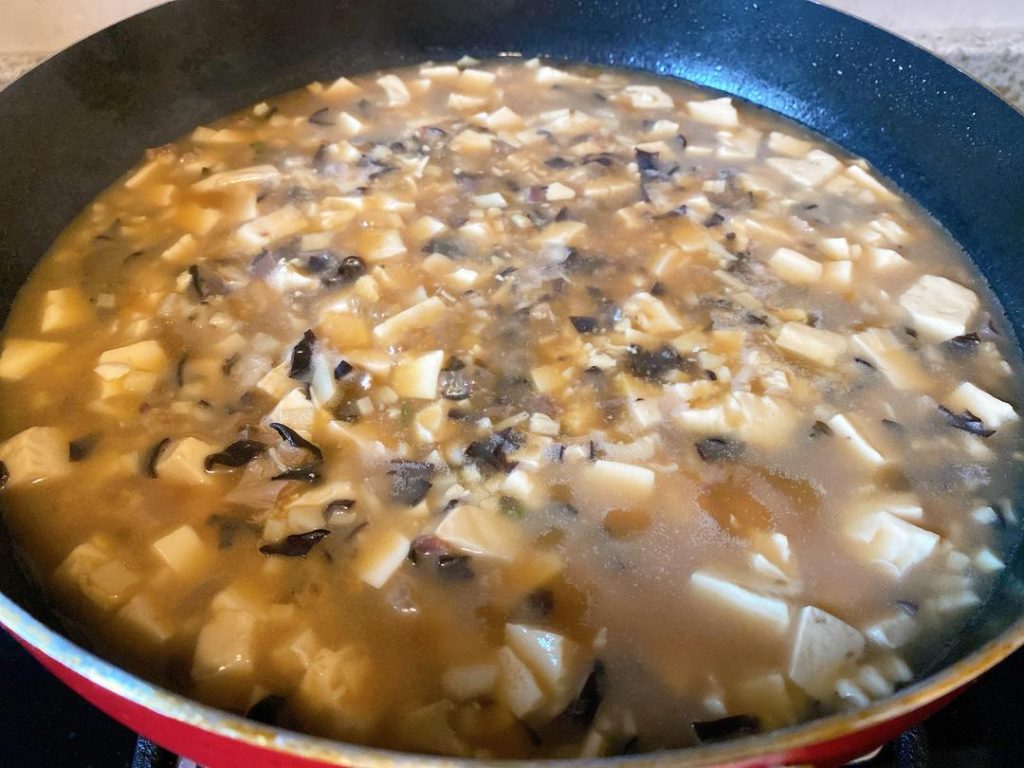
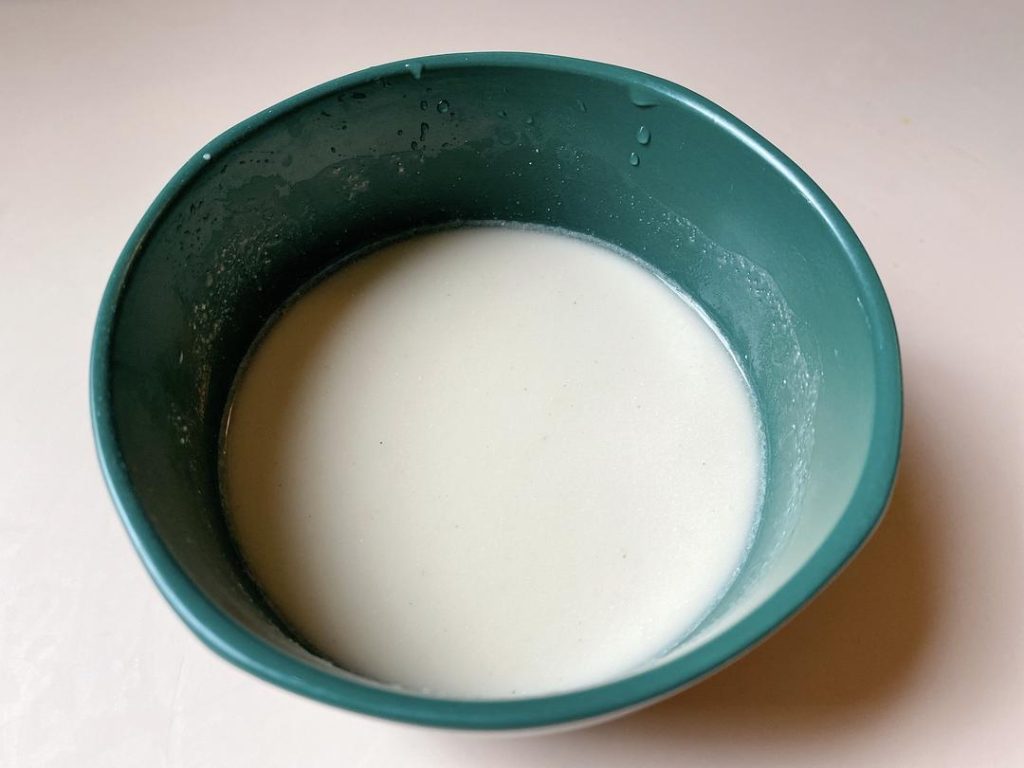
Step 5: Thicken (Gouqian) This is the most critical technical step. Stir your cornstarch and water mixture again to ensure it hasn’t settled. Turn the heat up slightly. Slowly drizzle the starch slurry into the wok while gently stirring in one direction.
- Why do we do this? You want a consistency that is thick enough to suspend the heavy ingredients (meat and bamboo) so they don’t sink, but not so thick that it becomes a gloopy paste. Stop adding starch when the soup coats the back of a spoon.
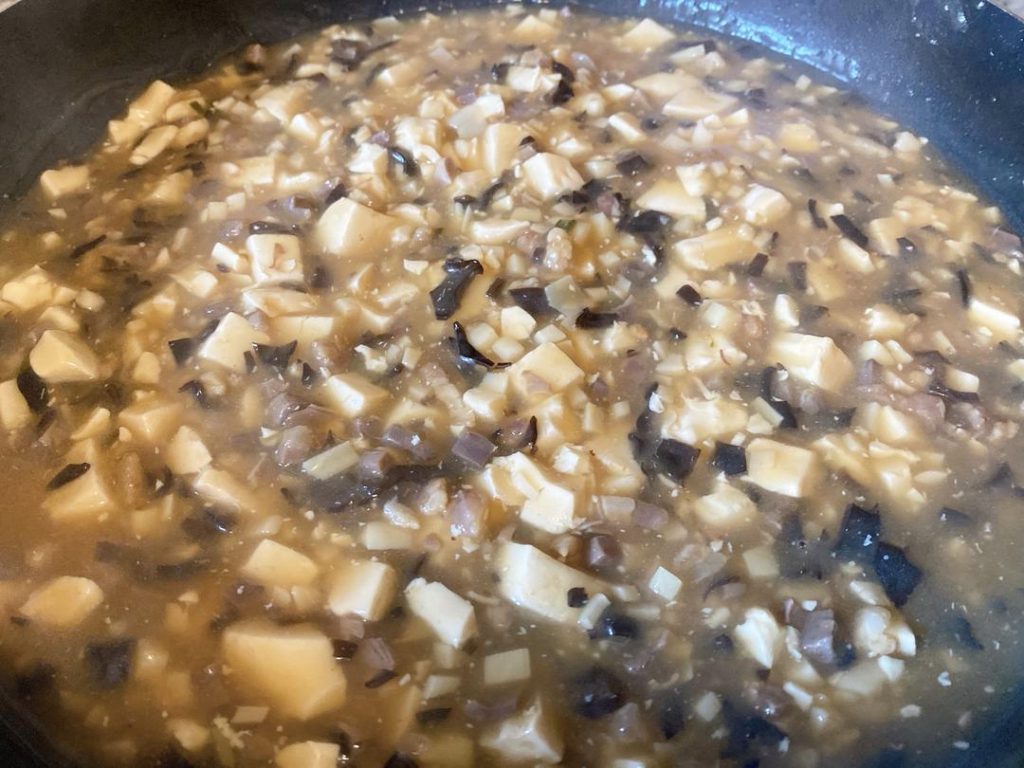
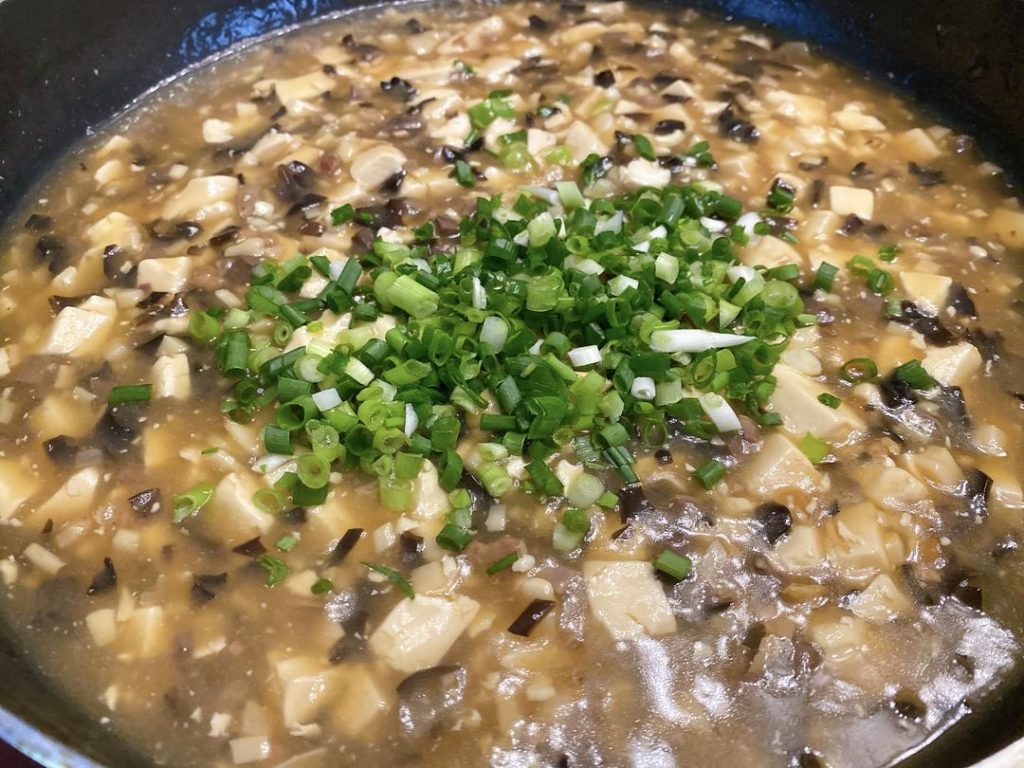
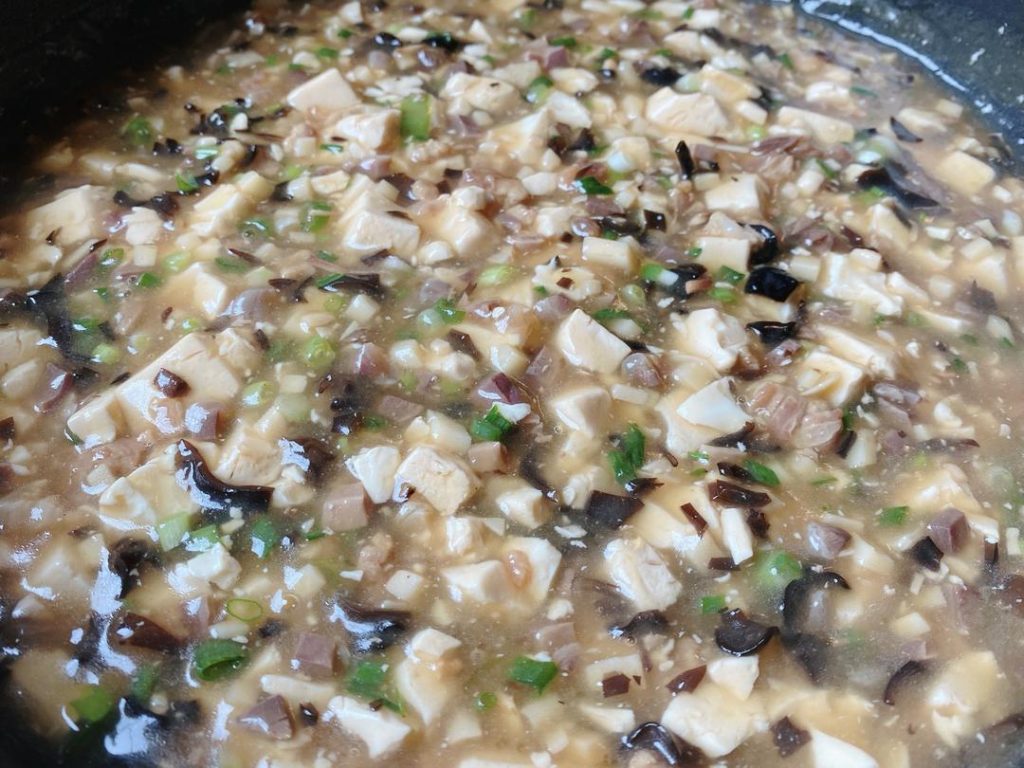
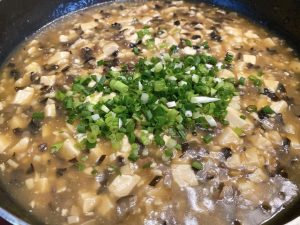
Step 6: Finish Toss in the chopped scallions (green onions). Give it one final gentle stir and remove from heat immediately.
FAQ / Troubleshooting
Q: Why did my tofu break into a mush?
A: You likely used silken tofu (too fragile) or stirred too aggressively. Use the “pushing” motion with the back of a ladle, or simply shake the pan to mix ingredients.
Q: Can I make this vegetarian?
A: Yes! Omit the pork and gizzards. Use shiitake mushrooms for the meaty texture and swap the chicken stock for a robust vegetable stock. You might want to add a little more oil to compensate for the lack of pork fat.
Q: My soup turned watery after serving?
A: This happens if the starch wasn’t cooked through or if you stir it too much after it cools. Make sure the soup comes to a full bubble after adding the starch to fully activate the thickening agents.
Recipe Notes
- Tofu Selection is Critical: For the authentic Xishi Tofu mouthfeel, avoid “Firm” or “Extra Firm” tofu, as they are too grainy. Do not use “Silken” tofu in a tube, as it will disintegrate into water. Look for boxed tofu labeled “Soft” or “Medium” (or “Regular” in some US markets).
- The Art of “Gouqian” (Thickening): The consistency of the sauce is the soul of this dish. The starch slurry should be added slowly while the soup is bubbling. You are looking for a texture that is thick enough to suspend the minced ingredients evenly throughout the broth, rather than letting them sink to the bottom, but not so thick that it becomes a paste.
- Gizzard Preparation: Gizzards are a dense muscle and can be tough if not prepped correctly. Make sure to boil them until fully cooked and tender before dicing them for the stir-fry. Their role here is to provide a crunchy texture contrast to the soft tofu.
- Vegetarian Adaptation: To make this vegetarian, omit the pork and gizzards. Sauté dried shiitake mushrooms (rehydrated) for a meaty texture, and use a robust vegetable stock instead of chicken stock.
Serving Suggestions
Xishi Tofu is best served piping hot over a bowl of short-grain white rice. It acts almost like a gravy. For a complete meal, I recommend pairing it with a crunchy green vegetable like Stir-fried Lettuce with Garlic or a cold appetizer like Smashed Cucumber Salad.
Nutrition Information (Estimate per serving)
- Calories: 280 kcal
- Protein: 18 g
- Fat: 16 g
- Carbohydrates: 12 g
- Sodium: 850 mg
- Fiber: 3 g
- Sugar: 2 g
Safety Reminders
- Internal Temperature: Ensure that the pork belly and chicken/duck gizzards reach a minimum internal temperature of 165°F (74°C) to prevent foodborne illness.
- Allergen Warning: This dish contains Soy (tofu, soy sauce), Gluten (soy sauce, unless a gluten-free alternative is used), and Shellfish (oyster sauce). If you have a shellfish allergy, substitute with a vegetarian mushroom stir-fry sauce.
- Bamboo Shoots: If using fresh bamboo shoots, they must be boiled thoroughly (blanched) for at least 10 minutes before stir-frying to remove natural toxins (cyanogenic glycosides) and bitterness. Canned bamboo shoots are pre-cooked but should still be rinsed well.
- Nutrition Disclaimer: Nutrition information is calculated using an ingredient database and should be considered an estimate. Garnishes and optional ingredients are not included. Actual values may vary depending on the specific brands of condiments and tofu used.
Authoritative References
CFS: Natural Toxins in Foodent database and should be considered an estimate. Garnishes and optional items are not included. Actual values vary.)
Food Safety Standards: For guidelines on safe minimum internal temperatures for cooking pork and poultry (gizzards), refer to the U.S. Department of Agriculture (USDA) Safe Minimum Internal Temperature Chart.
USDA Safe Minimum Internal Temperature Chart
Tofu Varieties & Textures: To understand the scientific differences between coagulation methods for soft vs. firm tofu, consult Serious Eats’ Guide to Tofu Types.
Serious Eats: Shopping for Tofu
Bamboo Shoot Preparation: For information on the importance of preparing fresh bamboo shoots safely to remove taxiphyllin, refer to The Centre for Food Safety’s Risk Assessment.

Xishi Tofu (西施豆腐)

Equipment
- Wok or large skillet Essential for stir-frying aromatics and simmering the stew.
- Pot For blanching bamboo shoots and boiling gizzards.
- Kitchen Scale Useful for measuring pork and vegetables accurately.
Ingredients
Main Ingredients
- 1 block Soft or Medium Tofu approx 14oz/400g; do not use extra firm
- 2.5 oz Pork belly or fatty ground pork (approx. 70g)
- 1/2 cup Bamboo shoots winter or canned, diced (blanched)
- 1/3 cup Wood ear mushrooms dried weight 5g, rehydrated and finely chopped
- 2 Chicken or Duck gizzards fully boiled and diced (optional)
- 2 cups Chicken stock unsalted preferred (or duck stock)
Seasonings & Aromatics
- 3 Scallions finely chopped
- 1 tbsp Light soy sauce
- 1 tbsp Oyster sauce
- 1 tsp Salt adjust to taste
- 1 tsp Sugar
- 3 tbsp Cornstarch mixed with 3 tbsp water (slurry)
- 1 tbsp Neutral oil vegetable or canola oil
Instructions
- Prep Ingredients: Rehydrate the wood ear mushrooms in warm water until soft, then wash and chop finely. Boil the gizzards in a small pot until fully cooked and tender, then dice them. Dice the pork belly into small cubes. Dice the bamboo shoots and blanch them in boiling water for 5-10 minutes to remove any astringency. Remove the tofu from the package, drain water, and cut into 1cm cubes.

- Render Pork: Heat 1 tablespoon of neutral oil in a wok or heavy skillet over medium heat. Add the diced pork belly and stir-fry patiently until the fat renders out and the meat turns golden brown.
- Sauté Aromatics: Add the blanched bamboo shoots to the pork fat and stir-fry for 2-3 minutes. Then add the diced gizzards and chopped wood ear mushrooms. Stir-fry for another minute until the mixture is fragrant.
- Braise Tofu: Gently slide the cubed tofu into the wok. Pour in the chicken stock (it should just cover the ingredients). Add the light soy sauce, oyster sauce, sugar, and salt. Bring the mixture to a boil, then reduce the heat to medium. Cover and simmer for 3-5 minutes to let the tofu absorb the flavors.
- Thicken (Gouqian): Increase the heat slightly to bring the soup to a bubble. Give your cornstarch slurry a stir to recombine it. Slowly drizzle the slurry into the wok while gently pushing the tofu with the back of a ladle (avoid stirring vigorously to prevent breaking the tofu). Cook until the sauce thickens enough to suspend the ingredients evenly.
- Finish and Serve: Stir in the chopped scallions and give it one final gentle mix. Remove from heat immediately and serve piping hot over steamed rice.



Leave a Reply