The difference between a bowl of wontons and a bowl of wonton soup is a tablespoon of this and a pinch of that, added to a bowl before the hot water. This home cook from a Chinese recipe site has written down the exact mix her family uses – scallion, seaweed, dried shrimp, two spoons of soy, one of oyster sauce, one of sesame oil, and a spoon of white pepper – and the whole thing takes about a minute. I have made some version of this base my whole life; seeing it written out as a recipe felt like finding a family secret published in a cookbook.
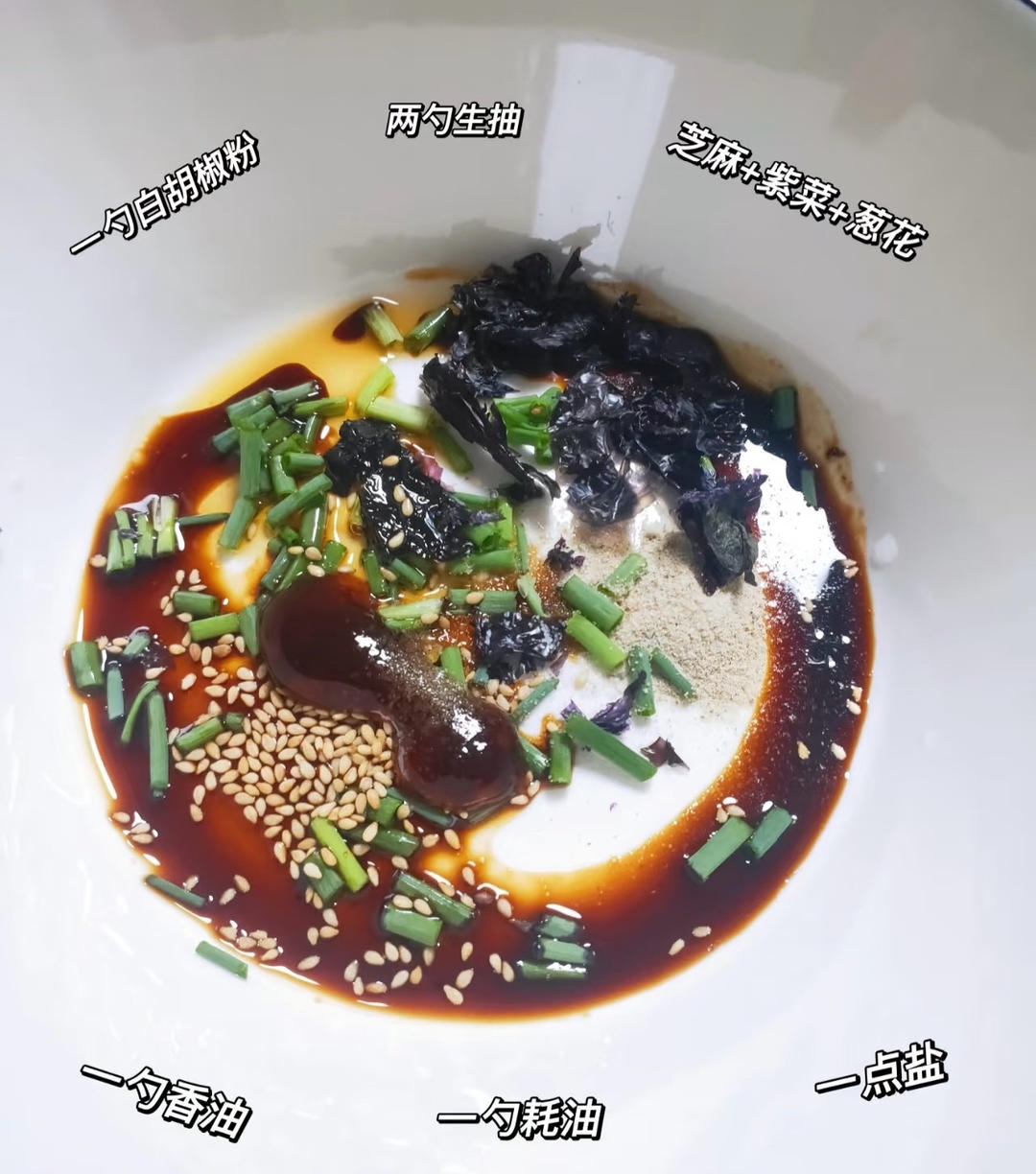
Hun tun tang di (馄饨汤底) is the wonton soup base – the seasoned bowl that becomes the broth when boiling water is poured over it. The recipe is one step long: put everything in a bowl, pour boiling water over it, done. It is the quiet foundation of a thousand quick meals, and this version is the one worth memorizing.
What Is a Wonton Soup Base (Hun Tun Tang Di)?
Hun tun tang di (馄饨汤底) is the seasoning base for wonton soup: a measured mix of aromatics and sauces – scallion, dried seaweed (zi cai), dried shrimp (xia pi), light soy, oyster sauce, sesame oil, and white pepper – placed in a bowl and bloomed with boiling water. The cooked wontons are added on top, and the base does the rest.
This is the everyday shortcut of Chinese home cooking: instead of simmering a stock, the base relies on umami-packed ingredients that release their flavor instantly in hot water. The dried shrimp and seaweed provide the oceanic depth, the soy and oyster sauce the savory body, the sesame oil the fragrance, and the white pepper a gentle warmth. It is the same principle as the more elaborate 5-minute wonton broth – a broth built from a few powerful ingredients rather than hours.
For the full broth treatment with more depth, my 5-minute wonton soup broth is the restaurant-secret version of this base.
15-Minute Wonton Soup Broth (Restaurant Secret)Learn the 5-minute restaurant secret to an amazing Wonton Soup Broth! This quick, “in-the-bowl” recipe uses pantry staples like dried shrimp, lard, and seaweed to create a rich, savory soup base in seconds. Tastes just like your favorite takeout!Check out this recipe
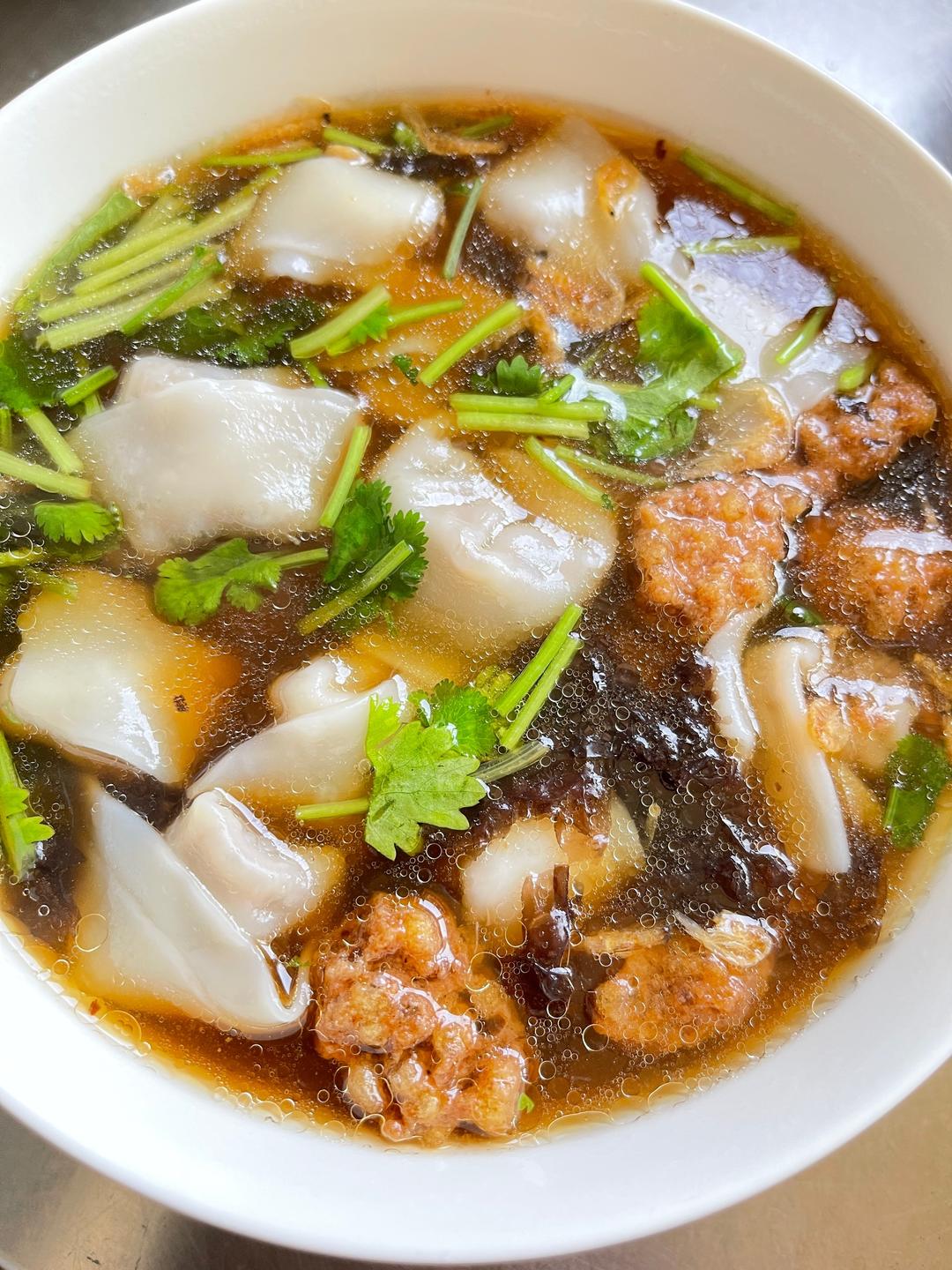
Why This Version Works
- Every ingredient earns its place. Scallion for freshness, seaweed for ocean, dried shrimp for umami, soy and oyster sauce for body, sesame oil for aroma, white pepper for warmth – nothing is decorative.
- Boiling water is the only cooking. The base ingredients are all pantry-stable and release their flavor instantly; no stock, no simmering.
- The ratios are memorizable. Two spoons soy, one spoon each of oyster sauce, sesame oil, and white pepper – the base is a two-two-one-one-one rhythm.
- It scales to any serving. Make one bowl or six; the proportions are the same, and each bowl gets its own base so everyone seasons to taste.
- It is the wonton’s best friend. The base turns a bowl of boiled wontons into a proper soup – the difference between a snack and a meal.
Equipment Needed
- A soup bowl per serving
- A kettle or pot for the boiling water
- A spoon for measuring
Ingredients (per bowl)
- 1 tbsp chopped scallion
- 1 small pinch dried seaweed (zi cai)
- 1 tsp dried shrimp (xia pi)
- 2 tbsp (30 ml) light soy sauce
- 1 tbsp (15 ml) oyster sauce
- 1 tbsp (15 ml) toasted sesame oil
- 1 tbsp (8 g) white pepper
- Salt, to taste
- Boiling water, to fill
Ingredient Notes
Dried seaweed (zi cai): The thin, dark sheets of dried laver used in Chinese soups – it blooms instantly in hot water into tender green ribbons. It is the base’s ocean note; a small pinch per bowl is plenty.
Dried shrimp (xia pi): The tiny dried shrimp that are a cornerstone of Chinese soup bases. They add a deep, briny umami that no fresh shrimp can match in this context. My easy Cantonese wonton soup uses them too.
White pepper: A full spoon per bowl is the recipe’s stated amount – it gives the soup its gentle, warming heat. White pepper is milder and more floral than black; it is correct here.
Sesame oil: Toasted sesame oil, added last for its fragrance. A spoon per bowl is the recipe’s amount, which is generous but balanced by the soy’s salt.
Prep & Mise en Place
This is a mise-en-place recipe by nature: measure everything into the bowl before the water boils. Chop the scallion, and have the seaweed, dried shrimp, soy, oyster sauce, sesame oil, and white pepper ready.
Bring the water to a rolling boil, pour it over the base, stir once, and add the cooked wontons – or ladle the wontons and their cooking water straight in, adjusting the salt after tasting. The whole process is under two minutes.
Cooking Process
Step 1 – Build the Base and Bloom With Boiling Water
In each soup bowl, combine the chopped scallion, a pinch of dried seaweed, the dried shrimp, 2 spoons of light soy, 1 spoon each of oyster sauce, sesame oil, and white pepper, and salt to taste. Pour boiling water over the base and stir – the seaweed blooms, the shrimp plumps, and the seasonings dissolve into an instant broth. Add your cooked wontons, and the soup is done.
Why this works without a stock: the base ingredients are concentrated flavor reservoirs. Dried shrimp and seaweed carry free glutamates that dissolve instantly in hot water; the soy and oyster sauces add their own umami and salt; and the hot pour releases the sesame oil’s volatile aromatics. A broth built on umami-dense pantry staples needs no simmering.
Common Mistakes When Making Wonton Soup Base
1. A bland, watery soup. Cause: skimping on the base ingredients. Fix: the two-two-one-one-one ratios are the recipe – use the full amounts per bowl.
2. Over-salted soup. Cause: adding salt before tasting, on top of the salty soy and oyster sauce. Fix: taste first; the salt is optional and often unnecessary.
3. Lukewarm water. Cause: not boiling it. Fix: the base needs a rolling boil to bloom – hot-but-not-boiling water leaves the seaweed stiff and the flavors flat.
4. Soggy wontons. Cause: adding them to the base too early. Fix: cook the wontons, then assemble – the base is fast, so make it last.
5. A greasy surface. Cause: too much sesame oil. Fix: one spoon per bowl is the balance; more turns it oily.
6. Clumpy dried shrimp. Cause: pouring water straight onto the pile. Fix: pour and stir immediately so the shrimp separates into the broth.
Variations
More depth: A splash of the wonton cooking water instead of plain boiling water adds starch and flavor – my Shanghai wonton soup shows the full bowl.
Spicier: A spoon of chili oil or chili crisp with the base turns it into a spicy wonton soup – my sour soup dumplings are the hot-and-sour direction.
Other noodles: The same base works for any dumpling or noodle soup – my tomato beef noodle soup is a very different broth, but the base habit transfers.
Vegetarian: Skip the dried shrimp and add a spoon of mushroom powder – an easy swap I have tested.
Frequently Asked Questions
Can I use the wonton cooking water? Yes – it is a small upgrade; the starch from the wontons gives the broth a silky body.
How much does this make? The recipe is per bowl – scale it directly for more servings.
Can I make the base ahead? You can mix the dry and sauce ingredients ahead in a jar, but the water must be freshly boiled at serving.
Is this spicy? Not really – the white pepper adds warmth, not heat. Add chili for spice.
What if I do not have dried shrimp? The soup will still work, just with less oceanic depth – a splash of fish sauce can partially replace it.
How to Serve
Serve the wonton soup hot, immediately after assembling – the base is at its best the moment the water blooms. It is a complete meal in a bowl, and it pairs with a side of tomato egg drop soup for a soup course, or a bowl of braised beef noodle soup for a noodle night. For the dumpling family, my sour soup dumplings are the spicy sibling.
Storage & Reheat
This is a build-fresh recipe – the base ingredients keep indefinitely in the pantry, but the assembled soup should be eaten immediately. Leftover soup keeps refrigerated for a day but the wontons soften; reheat to a rolling boil. Never leave the soup out for more than 2 hours.
Allergen Notice
This recipe contains shellfish (dried shrimp), soy (light soy, oyster sauce), sesame (sesame oil), and may contain gluten and shellfish in the sauces – check labels. It is free of nuts, eggs, and dairy.
Nutrition Disclaimer
Nutrition information is calculated using an ingredient database and should be considered an estimate. In cases where multiple ingredient alternatives are given, the first listed is calculated for nutrition. Garnishes and optional ingredients are not included.
About the Author & Recipe Development
I am Lin, a professional Chinese chef and food writer with a decade in restaurant kitchens before turning to recipes. Wonton soup base is the recipe my family never wrote down – it was “a little of this, a little of that” until this xiachufang cook published the exact two-two-one-one-one version. I tested it as written, confirmed the boiling-water bloom is non-negotiable, and kept the generous white pepper, which is the bowl’s quiet signature. I have not tested every seaweed or shrimp brand, so treat those as your own adjustments.
Authoritative References
USDA Food Safety and Inspection Service – Safe Temperature Chart for soup-handling and storage guidance.
Wonton Soup Base (Hun Tun Tang Di): The 1-Minute Broth

Equipment
- Soup Bowl
- Kettle or pot
Ingredients
For One Bowl
- 1 tbsp chopped scallion
- 1 small pinch dried seaweed (zi cai)
- 1 tsp dried shrimp (xia pi)
- 2 tbsp light soy sauce 30 ml
- 1 tbsp oyster sauce 15 ml
- 1 tbsp toasted sesame oil 15 ml
- 1 tbsp white pepper 8 g
- salt, to taste often unnecessary
- boiling water, to fill
Instructions
- Combine all the base ingredients in a bowl, pour boiling water over, stir once, and add cooked wontons. Serve immediately.





Leave a Reply