Sticky, clumped fried rice is the most common failure in home Chinese cooking. In a professional kitchen, fried rice is defined by chuandian (the point of separation), where every grain is distinct, slightly chewy, and coated in a thin layer of aromatic oil. Stickiness occurs when the starch on the exterior of the rice hydrates into a gel or when the structural integrity of the grain collapses under heat and moisture.

The Root Cause: Starch Gelatinization and Retrogradation
The primary reason fried rice turns sticky is the presence of surface starch and excess moisture. When rice is freshly cooked, the starch molecules (amylose and amylopectin) are fully hydrated and “sticky.” To achieve the professional “grain-by-grain” texture, you must manage the rice’s state through a process called retrogradation. Understanding the day-old rice science is crucial here: the recrystallization of starch molecules that occurs as rice cools is what allows grains to remain separate under the mechanical stress of stir-frying.
Most Common Causes of Sticky Fried Rice
| Variable | The “Sticky” Mistake | The Professional Standard |
| Rice Type | Using short-grain or glutinous rice. | Using long-grain (Jasmine) or medium-grain rice. |
| Preparation | Using freshly cooked, hot, moist rice. | Using refrigerated or “low-moisture” rice. |
| Moisture Control | Adding too much liquid sauce at once. | Seasoning with dry aromatics or concentrated sauces. |
| Wok Temperature | Crowding a cold pan, causing “stewing.” | High-heat searing to evaporate surface moisture. |
Detailed Fixes and Prevention Framework
1. The Foundation: Grain Selection
Freshly cooked rice contains roughly 60–65% moisture, which is too high for stir-frying. To prevent a gummy texture, choosing the best rice for fried rice is the first step. Long-grain varieties like Jasmine rice have a higher amylose content (roughly 20-22%), staying firm and separate when cooked. If you are starting from scratch, ensure you cook jasmine rice perfectly by slightly reducing the standard water-to-rice ratio.
2. Temperature Management and Wok Hei
A common home kitchen error is overcrowding. When too much rice is added to a standard home burner (typically 10,000–18,000 BTU), the pan temperature drops. In contrast, a professional wok burner reaches 80,000–120,000 BTU, allowing for instant moisture evaporation. To mimic this at home, you must learn how to control wok hei by cooking in smaller batches (2–3 cups) and maintaining a pan temperature of 380–420°F (193–215°C).
3. The “Oil-Coating” Technique
In professional Cantonese kitchens, chefs often “break” the rice clumps by hand before it hits the wok.
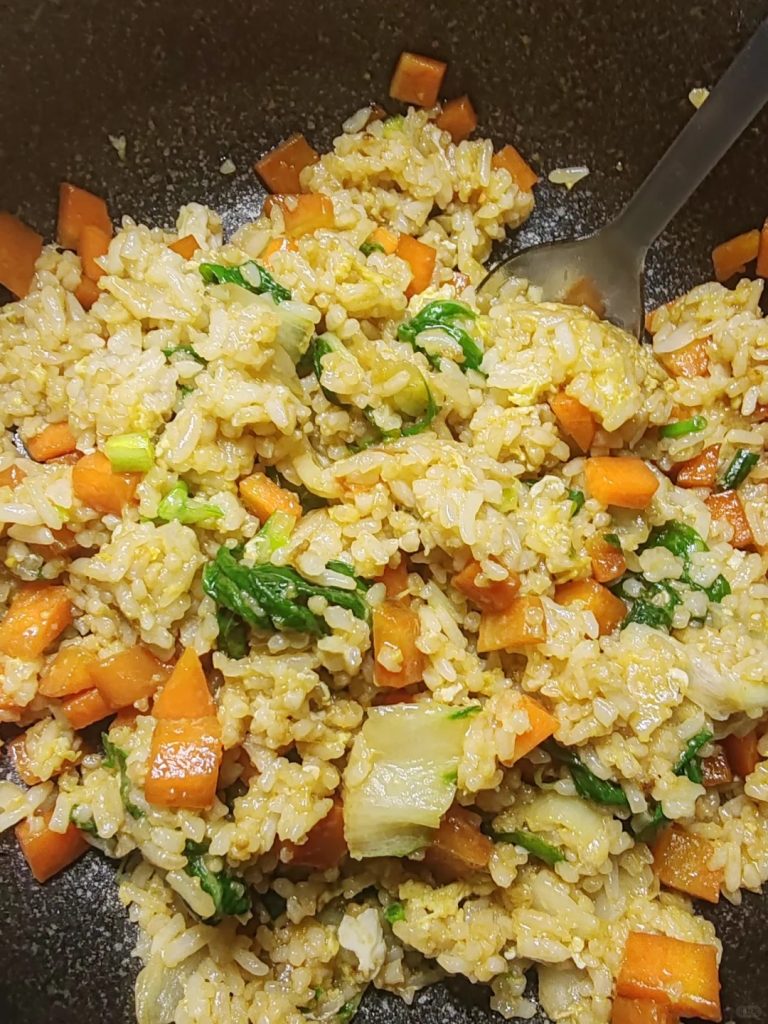
- Pro Tip: Mix a tablespoon of neutral oil or a beaten egg into the cold rice before frying. This creates a hydrophobic barrier around each grain, preventing them from fusing together when the starch begins to soften under heat.
When It Cannot Be Fixed
If the rice has already turned into a unified, gummy mass, the structural starch has collapsed. Attempting to fix it by adding more oil will only result in “greasy-sticky” rice. In this scenario, it is better to repurpose the ingredients into a different dish rather than serving a failed stir-fry.
Sources & Standards Referenced
- Harvard T.H. Chan School of Public Health – Cooking Oils and Smoke Points
- USDA Food Safety and Inspection Service – Safe Handling of Leftover Rice (Bacillus cereus prevention)
FAQ
Can I use brown rice for fried rice?
Yes. Brown rice has an even higher fiber content and lower surface starch than white rice, making it naturally more resistant to sticking.
Why does my rice stick to the bottom of the pan?
This is usually due to a “sticky” pan or adding rice before the pan has reached the Leidenfrost point. Properly seasoned carbon steel is the best defense.
Is there a classic recipe for practicing these techniques? For beginners, I recommend trying Yangzhou Fried Rice, as its diverse ingredients require precise moisture management, providing excellent practice for grain separation.












Leave a Reply