You’ve seen it a hundred times: you prep your ingredients, get the pan hot, and toss in those beautiful red strips of steak. But instead of a satisfying crackle and a deep mahogany sear, you hear a sad, wet hiss. Within seconds, a puddle of cloudy liquid fills the pan, and your beef turns a depressing, rubbery shade of grey. It looks more like it was boiled in a hospital cafeteria than stir-fried in a professional kitchen. This is the most common frustration for home cooks, and it usually ends with a plate of tough meat and a watery sauce.

The 30-Second Fix
To stop beef from turning grey, you must eliminate surface moisture and maintain high heat. Pat the beef bone-dry with paper towels, use the best oil for stir frying with a high smoke point, and—most importantly—cook in small batches. If the pan temperature drops, the meat releases juices faster than they can evaporate, causing it to steam rather than sear.
The Science of the Sear: Maillard vs. Steam
The transformation from red to brown is called the Maillard reaction. This chemical dance between amino acids and sugars creates the complex, savory flavors we crave. However, this reaction only happens at temperatures above 300∘F(150∘C). Water, on the other hand, boils at 212∘F (100∘C). If your meat is wet or your pan is overcrowded, the temperature gets stuck at the boiling point of water. You aren’t frying; you are effectively poaching the beef in its own internal fluids.
In My Experience: The Home Stove “Cheat”
In a restaurant kitchen, we have “jet engine” burners that can recover heat in seconds. What most beginners don’t realize is that a standard home stove simply doesn’t have the BTU power to handle a pound of cold beef all at once. When I cook at home, I treat my skillet like a stage—only a few performers are allowed on at a time. If I put too many strips in, the “stage” collapses, the temperature plunges, and the beef starts “weeping.” To get that restaurant look, you have to work in batches, letting the pan regain its shimmering heat between each round.
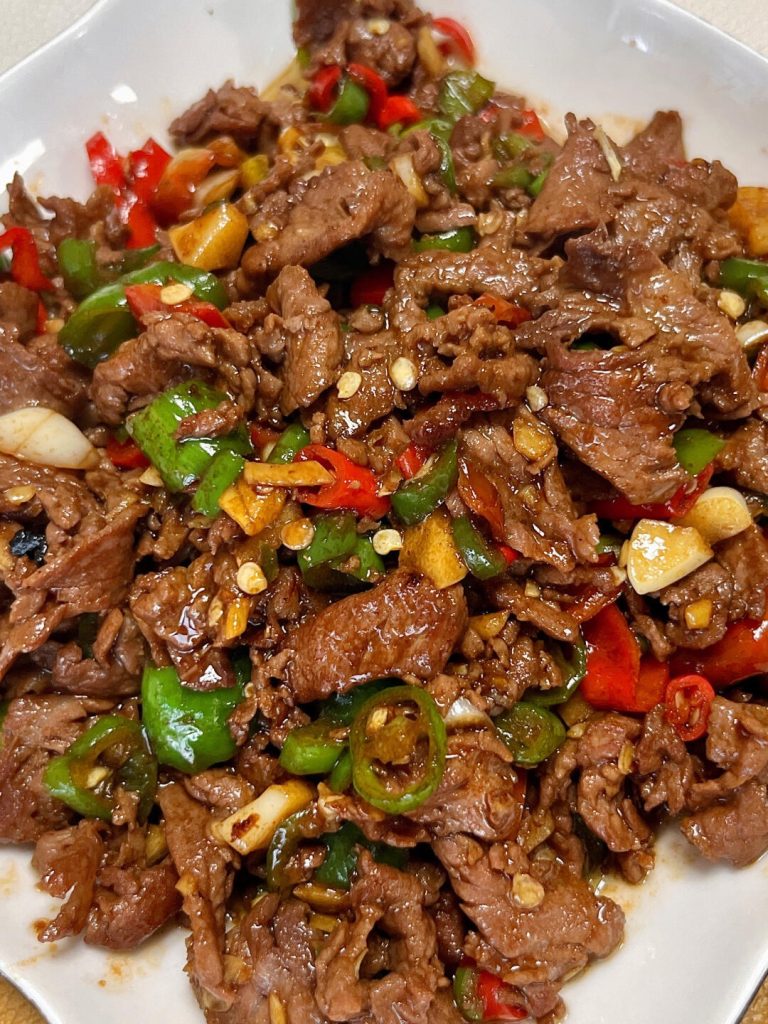
Essential Ingredients for a Perfect Sear
- The Right Cut: Use flank steak, top sirloin, or even pork neck if you’re swapping proteins; you need something with lean muscle that responds well to quick heat.
- Cornstarch (The Secret Shield): A tiny bit of cornstarch in your marinade helps absorb excess moisture and creates a thin “crust” that browns instantly. This is a core part of how to velvet chicken for stir fry, and it works just as well for beef.
- High-Smoke Point Oil: Use grapeseed, canola, or peanut oil. Avoid extra virgin olive oil or butter, which will burn and turn bitter before the beef even thinks about browning.
- A Punchy Finish: Once seared, a splash of light soy sauce adds color and saltiness without watering down the dish.
The Prep Strategy: Dry and Defined
- Slice Against the Grain: Properly slicing meat for stir fry is non-negotiable. It shortens the muscle fibers so they don’t squeeze out all their moisture like a sponge when they hit the heat.
- The Paper Towel Trick: Even after marinating, if the meat looks “wet,” pat it again. You want the surface to feel tacky, not slippery.
- Room Temperature: If you have time, let the beef sit out for 15 minutes. Cold beef acts like an ice cube, instantly killing your pan’s heat.
Step-by-Step: From Grey to Gold
- Heat the Pan: Set your burner to high. Add the oil only when the pan starts to wisps with a tiny bit of smoke.
- The Single Layer Rule: Lay the beef strips in the pan so they aren’t touching. You should hear a loud, aggressive snap-crackle.
- The “Leave It Alone” Phase: Don’t stir immediately. Let the beef sit for 30–45 seconds. Look for light browning and a toasted smell. If you move it too soon, you break the contact needed for the sear.
- The Quick Flip: Flip the pieces. They should release easily from the pan. If they stick, the sear isn’t done yet.
- Remove and Reserve: Take the beef out while it’s still slightly pink in the middle. It will finish cooking later when you toss it back with your Chinese brown sauce.
Common Mistakes & Easy Fixes
| Mistake | Why it happens | The Professional Fix |
|---|---|---|
| Overcrowding | Too much cold meat drops the pan temp. | Cook in 2–3 small batches. |
| Wet Marinade | Excess liquid turns into steam. | Add cornstarch to “bind” the marinade. |
| Low Heat | The oil isn’t hot enough to sear. | Wait for the “shimmer” and light smoke. |
| Moving too much | Constant stirring prevents crust formation. | Let it sear undisturbed for 45 seconds. |
| Frozen Center | Ice crystals release tons of water. | Ensure meat is fully thawed and patted dry. |
导出到 Google 表格
Pro Tips for the Home Wok
If you find that your stir-fry is watery, it’s often because the vegetables were added at the wrong time. In a professional kitchen, we always sear the meat first, remove it, cook the veggies, and then bring them together at the very end. This maintains the integrity of the stir fry order of ingredients, ensuring the beef stays brown and the vegetables stay crisp.
Variations: Swapping the Protein
If beef isn’t on the menu, this “high-heat, dry-surface” logic applies to everything. For a lighter meal, try this method with shrimp or chicken. If you are making authentic beef and broccoli, the same rules apply—the broccoli provides the crunch, but the beef provides the soul, and that soul only comes from a proper sear.
Mini Recipe: The “Perfect Sear” Pepper Beef
- Beef: 1/2 lb flank steak, sliced thin.
- Marinade: 1 tsp light soy sauce, 1/2 tsp cornstarch, 1 tsp oil.
- Execution: Get your skillet screaming hot with 2 tbsp of oil. Spread the beef in one flat layer. Let it sear for 60 seconds without touching. Flip, add a handful of sliced onions and peppers, toss for 30 seconds, and deglaze with a spoonful of oyster sauce. Serve immediately over hot rice.
FAQ: Troubleshooting Your Sear
Q: Can I use a non-stick pan? A: You can, but it’s harder. Non-stick coatings aren’t meant for the extreme heat required for a deep sear. A cast iron or carbon steel skillet is much better.
Q: Why does my garlic burn while the beef is still grey? A: You’re adding the garlic too early! The beef needs high heat and time; garlic burns in seconds. Sear the beef first, then add aromatics in the last 30 seconds.
Q: Does salt make the meat grey? A: If you salt the meat too far in advance, it draws moisture to the surface. Salt right before the meat hits the pan, or include it in a cornstarch-based marinade.
Q: My beef is brown but very tough. What happened? A: You likely overcooked it trying to get the color. If the heat is high enough, the color should happen in under 2 minutes. Also, ensure you sliced against the grain.
Q: Can I use frozen beef? A: Yes, but it must be completely thawed. Frozen beef contains more internal moisture, so you’ll need to be extra diligent about patting it dry.








Leave a Reply