About the Author & Recipe Development I’m Lin, a chef born and raised in Sichuan with over a decade of professional kitchen experience. While my roots are in spicy Sichuan cuisine, my culinary training and travels across China taught me to appreciate the comforting, savory-sweet profiles of Taiwanese cooking. This recipe was developed in my home kitchen, testing various ratios of soy sauce and sugar to replicate the deep, gelatinous texture I tasted in Taipei night markets, while adapting it for ingredients accessible in Western and European supermarkets.

Why This Recipe
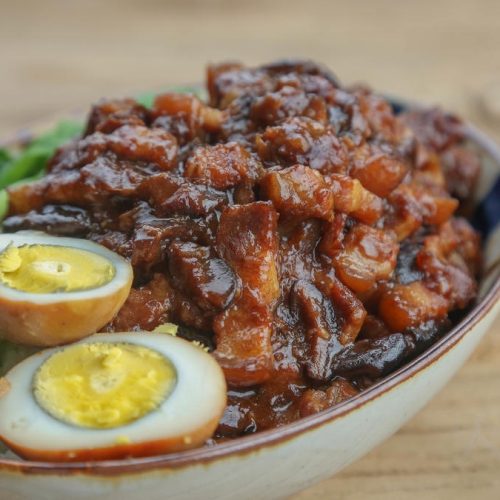
If you ask me what defines pure comfort in a bowl, Braised Pork Rice (Lu Rou Fan) is often the answer. While it can look a bit rich or oily at first glance, a well-made bowl is savory, deeply aromatic, and surprisingly balanced.
I love this recipe because it transforms humble ingredients—pork belly, eggs, and rice—into a meal that feels luxurious. It solves the “what’s for lunch?” dilemma perfectly: you get your protein, your vegetables (I always toss in some bok choy), and your carbs all in one bowl. Plus, the longer it sits, the better it tastes, making it excellent for meal prep.
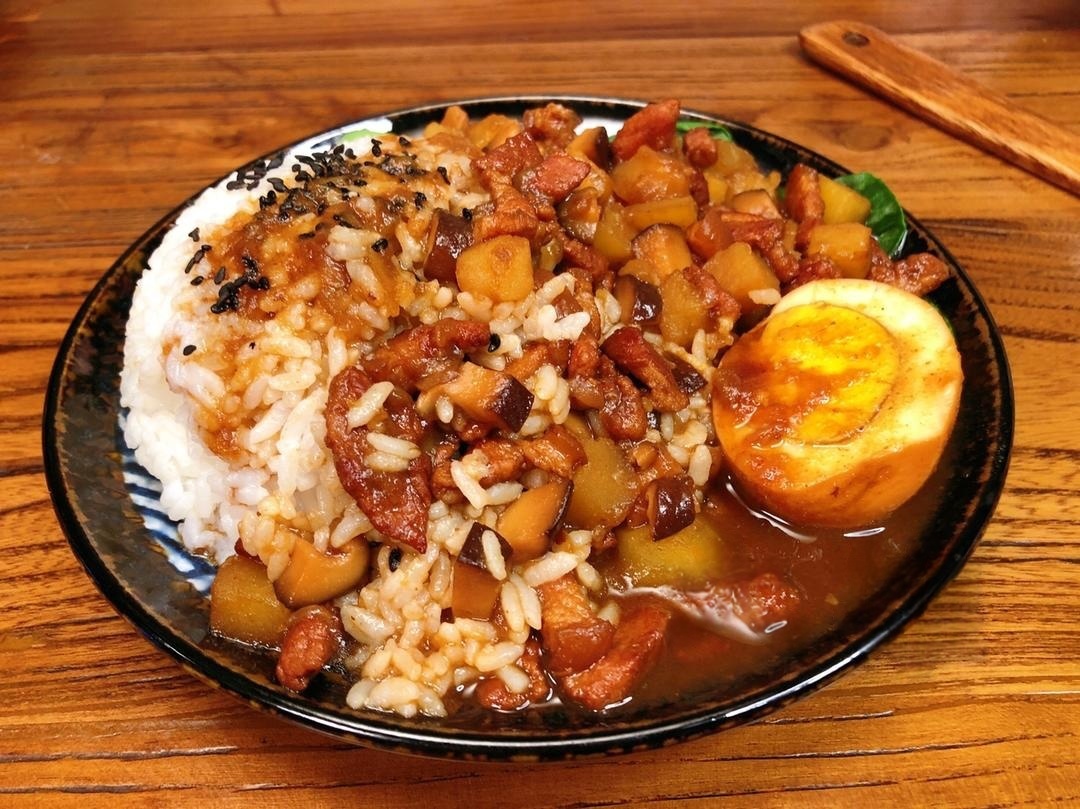
Looking for a Heartier Variation? While this authentic recipe focuses purely on the rich, gelatinous texture of the pork skin and meat, there is another beloved homestyle version that I cook often for my family. If you love the idea of soft, fluffy chunks of potato soaking up that savory braising liquid, you must try our Braised Pork Rice with Potatoes. It transforms the dish into an even heartier stew that acts like a flavor sponge—perfect for stretching the meal or simply adding another layer of texture to your bowl.
1Easy Braised Pork Rice (Lu Rou Fan) with PotatoesA simplified, home-style version of the classic Taiwanese Braised Pork Rice (Lu Rou Fan). This recipe skips the deep-fried shallots for ease and adds potatoes for a hearty, velvety sauce. Perfect for meal prep and freezing.Check out this recipe
What Is Braised Pork Rice (Lu Rou Fan)?
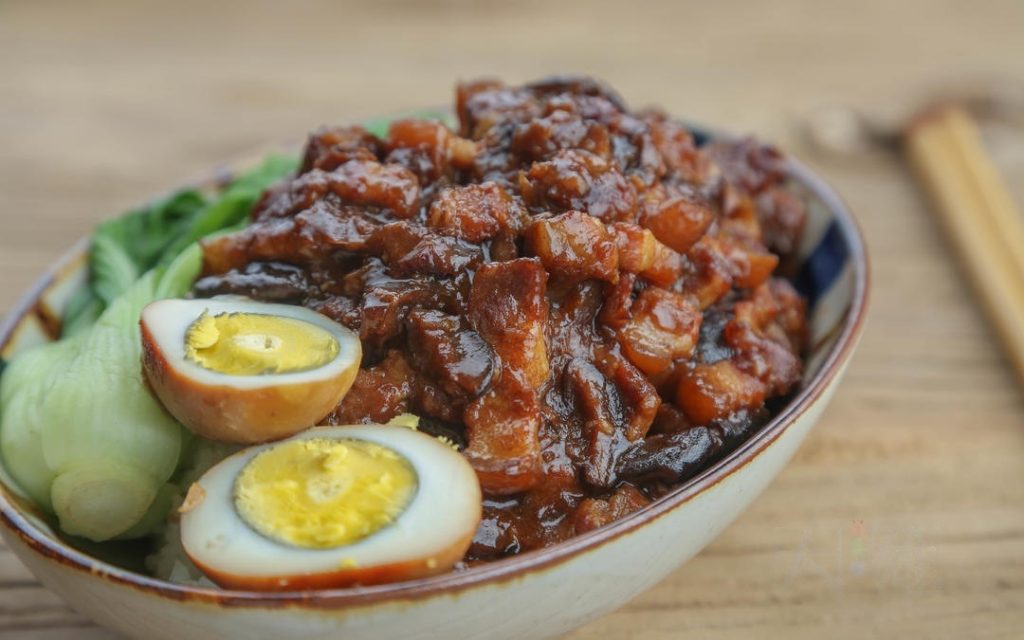
Lu Rou Fan (卤肉饭) is arguably the most beloved comfort food in Taiwan. It consists of minced pork belly that has been slow-braised in a soy sauce-based liquid with aromatics—specifically fried shallots—until it is melt-in-your-mouth tender.
Unlike the famous Braised Pork Belly (Hong Shao Rou) which features large, chunky blocks of meat, Lu Rou Fan requires the meat to be cut into small strips or cubes. This allows the collagen from the skin to dissolve into the sauce, creating a thick, sticky lip-smacking texture that coats every grain of steamed rice.
Why This Recipe Works
- Rendered Fat: We slowly render the pork fat before braising. This ensures the final dish is rich and flavorful without being greasy or heavy on the palate.
- Fried Shallots: This is the secret weapon. We use ready-made fried shallots (essential for that authentic aroma) to save time without sacrificing flavor.
- Skin-On Pork: Using skin-on belly provides natural gelatin, thickening the sauce naturally without needing cornstarch.
Key Ingredients & Substitutions
Before we head to the stove, let’s look at the critical components.
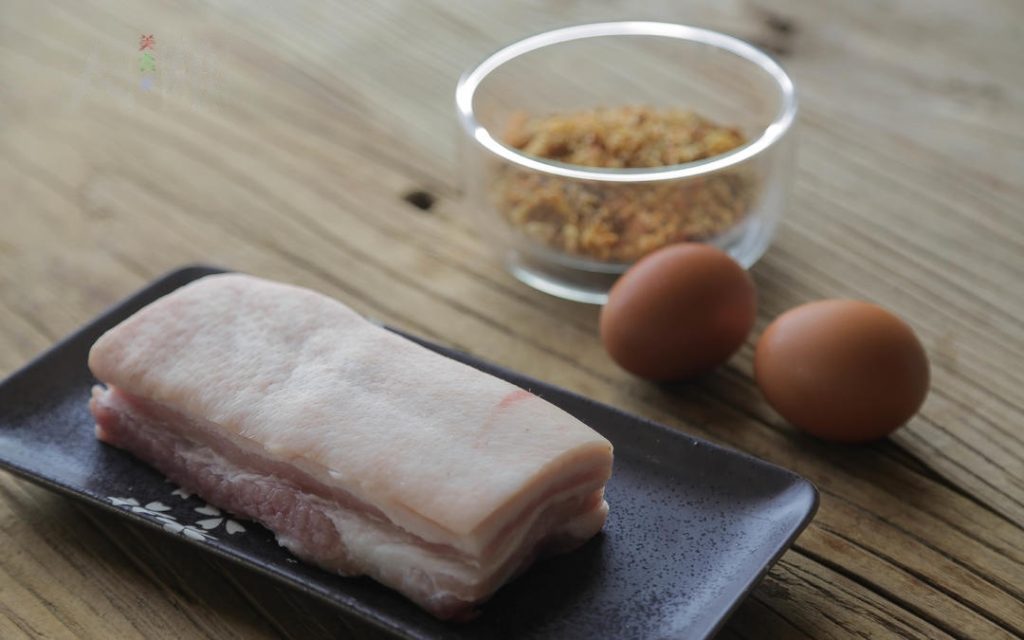
- Pork Belly: You must use Pork Belly for this dish. Specifically, look for skin-on pork belly. The skin is essential because as it braises, it releases gelatin, which gives the sauce its signature “sticky” texture (Q-tan). If you can’t find it skin-on, you can use regular pork belly, but the sauce will be thinner.
- Fried Shallots (Oil Onion Crisp): In Chinese, this is You Cong Su. It is the soul of Lu Rou Fan. You can buy bags of fried red shallots at Asian grocers. Substitutions: If you cannot find them, thinly slice 3-4 fresh shallots or red onions and fry them in oil until crispy and golden brown before starting the recipe.
- Dried Shiitake Mushrooms: These provide a deep, earthy umami that fresh mushrooms cannot replicate.
- Soy Sauce: We use a combination. Light Soy Sauce provides the salty, savory flavor (umami), while Dark Soy Sauce is primarily used for that appetizing deep amber color.
- Wine: The traditional recipe uses Michiu (rice wine), but I use Huadiao wine (a type of high-quality Shaoxing Wine ) for a deeper, nuttier aroma. Dry sherry is an acceptable Western substitute.
- Sugar: ** Chinese Rock Sugar** is preferred as it gives the meat a glossy sheen (the “fox color”) and a mellow sweetness. Regular granulated sugar or brown sugar works in a pinch.
Ingredients
The Main Components:
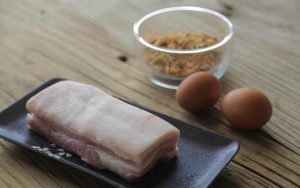
- 0.7 lb (300g) ** Pork Belly**, skin-on is best
- 0.7 oz (20g) Dried shiitake mushrooms
- 2 to 3 Eggs (medium to large)
- 1 oz (30g) Fried shallots (store-bought or homemade)
- 3-4 stalks Baby bok choy (or any leafy green)
- 400ml (approx. 1 ¾ cups) Warm water
The Seasonings:
- 0.7 oz (20g) ** Chinese Rock Sugar** (about small handful)
- 1 tbsp Huadiao Wine or ** Shaoxing Wine**
- 3 tbsp ** Light Soy Sauce**
- 1 tbsp ** Dark Soy Sauce**
- 2 whole ** Star Anise**
Recipe Notes Before We Begin
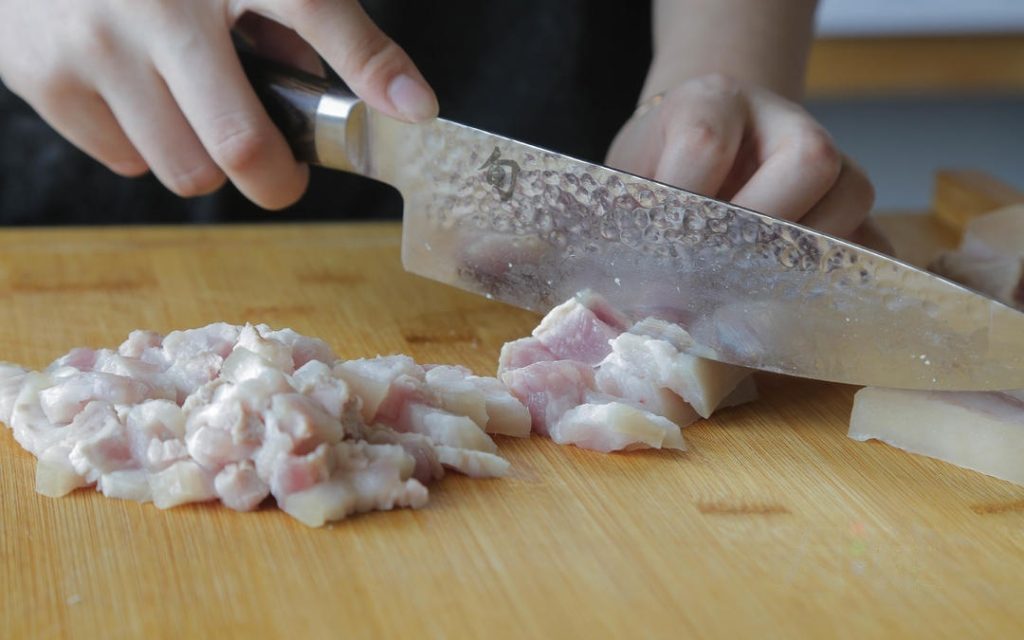
- Knife Skills: Cutting raw pork belly, especially the skin, can be slippery and difficult. I recommend blanching the whole block of meat first (as described in the steps). This firms up the meat, making it much safer and easier to cut into uniform strips.
- Cookware: A heavy-bottomed Dutch oven, a clay pot, or a deep wok works best for braising. You can also transfer everything to a rice cooker for the simmering stage if you prefer a hands-off approach.
Mise en Place (Prep Work)
- Rehydrate Mushrooms: Soak the dried shiitake mushrooms in warm water for at least 20-30 minutes until soft. Squeeze out the excess water and dice them into small cubes. (Tip: You can save a bit of the soaking water to add to the braise for extra flavor!).
- Boil Eggs: Place eggs in a pot of cold water. Bring to a boil, then turn the heat down to medium and simmer for 6–7 minutes. Transfer immediately to an ice bath. Once cool, peel the shells and set aside.
- Blanch the Pork: Place the whole piece of pork belly into a pot of cold water. Bring to a boil over high heat and cook for about 10 minutes. Remove the pork and rinse it under cold water. This removes impurities and tightens the texture, making the meat more “Q” (bouncy).
How to Make Braised Pork Rice (Lu Rou Fan)
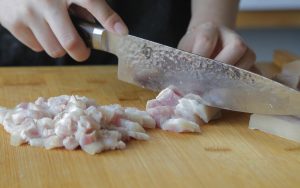
Step 1: Process the Pork Once the blanched pork has cooled down, slice it into thick slabs, and then cut those slabs vertically into strips (about 1cm or ½ inch thick).
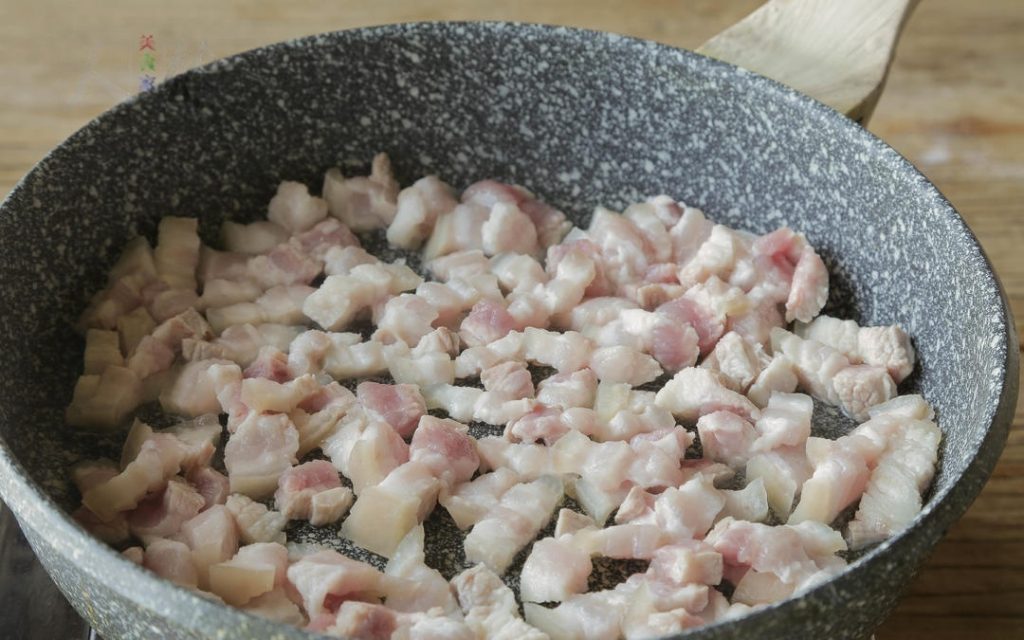
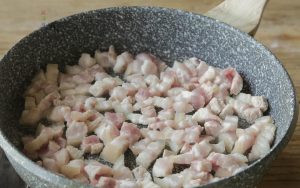
Step 2: Render the Fat Heat your wok or pot over high heat and add a very small amount of oil. Add the pork strips and stir-fry for a few minutes.
- Chef’s Tip: Turn the heat down to medium and gently pan-fry the pork for a bit longer. The goal is to render out some of the excess lard so the dish isn’t greasy. Pour out the excess fat into a small bowl—you can save this to Render Lard or use it for stir-frying veggies later.
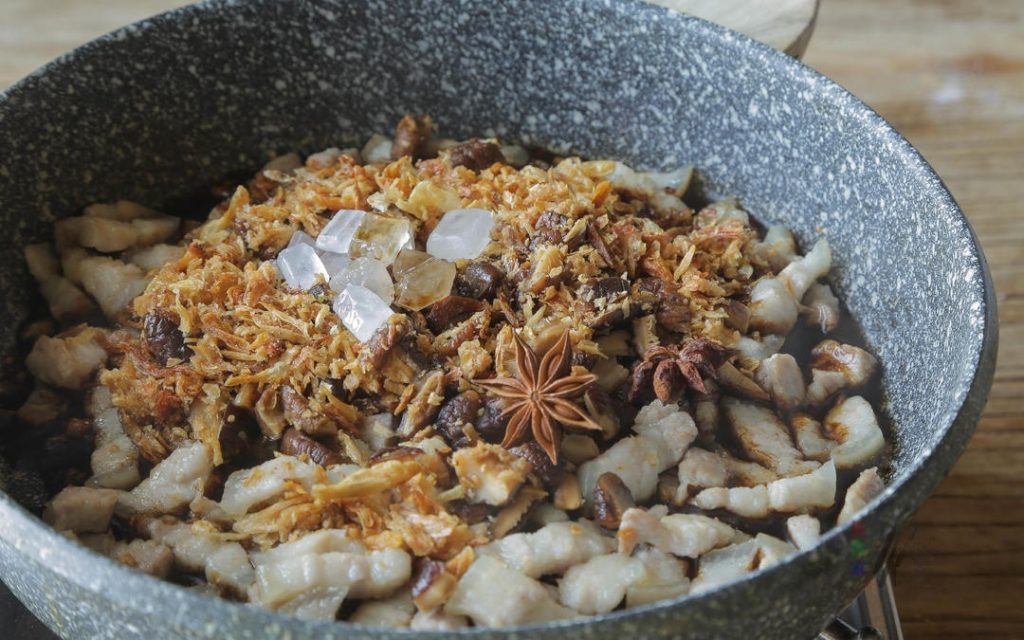
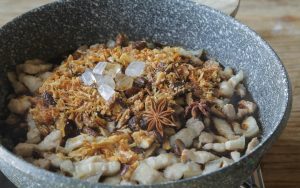
Step 3: Aromatics Add the diced shiitake mushrooms, fried shallots, rock sugar, and ** Star Anise** to the pork in the pot. Stir-fry everything together until fragrant and the sugar begins to melt.
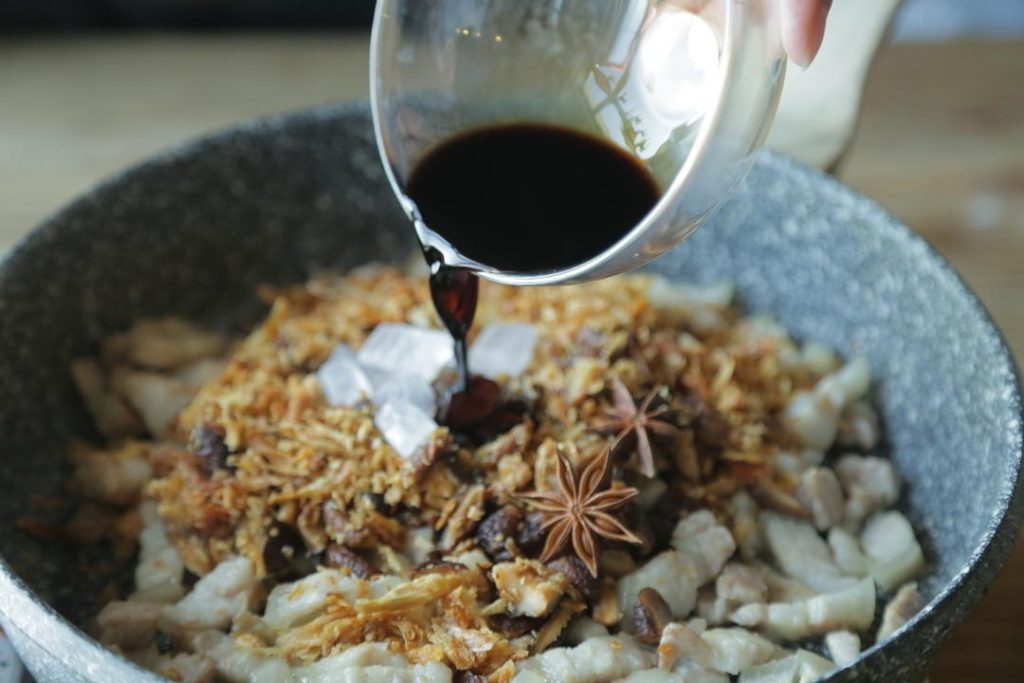
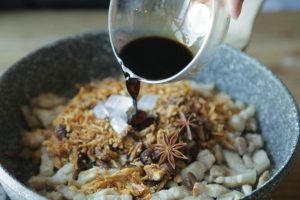
Step 4: Create the Braising Liquid In a small bowl, mix the Huadiao wine (or Shaoxing wine), light soy sauce, and dark soy sauce. Pour this mixture into the pot. Stir well to coat the meat. Next, pour in about 400ml (1 ¾ cups) of warm water. The water should just barely cover the ingredients. Bring everything to a rolling boil over high heat.
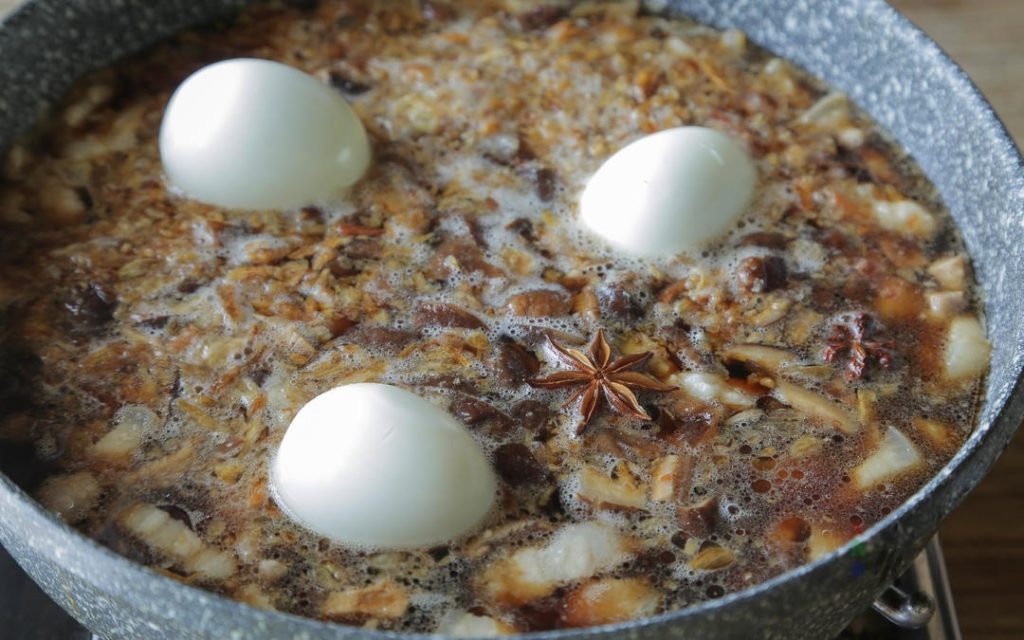
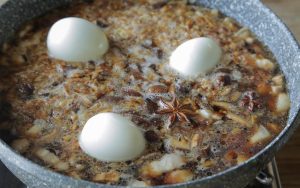
Step 5: The Braise Add the peeled hard-boiled eggs into the pot. Reduce the heat to medium-low, cover, and simmer gently.
- Time: Braise for about 1 hour.
- Maintenance: Halfway through, gently flip the eggs so they color evenly.
Step 6: Thicken and Serve After an hour, the pork should be tender and the sauce reduced. If the sauce is still too thin, turn the heat up to high and stir constantly to reduce the liquid until it becomes thick, glossy, and sticky.
Step 7: blanch Vegetables While the sauce reduces, quickly blanch your bok choy in boiling water for 1-2 minutes until tender-crisp.
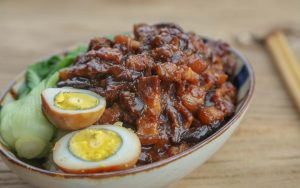
Step 8: Assembly Ladle the luscious braised pork and sauce over a bowl of steaming hot white rice. Slice the soy-braised egg in half and place it on the side along with the green vegetables. Enjoy!
Common Mistakes When Making Lu Rou Fan
- Cutting the meat too large: Unlike standard braised pork, Lu Rou Fan is a sauce meant to be mixed with rice. If the pieces are too big, they won’t release enough collagen to thicken the sauce properly.
- Skipping the Fried Shallots: I cannot stress this enough—if you skip the fried shallots, you are making braised pork, but you are not making Taiwanese braised pork. The flavor will be completely different.
- Rushing the Braise: Collagen takes time to break down. If you rush it, the skin will be rubbery rather than gelatinous.
Variations
If you enjoy potatoes in your stew, you might also like our Braised Pork Rice with Potatoes, which adds chunks of potato that soak up the delicious gravy.
Serving Suggestions
This dish is rich, so it pairs perfectly with refreshing sides to cut through the fattiness.
- Pickles: A side of Smashed Cucumber Salad provides a perfect acidic crunch.
- Soup: A light soup is traditional. Try a simple Seaweed Egg Drop Soup to balance the meal.
- Greens: If you want something more flavorful than blanched bok choy, try Stir-fried Lettuce with Garlic for a garlicky kick.
How to Store & Reheat
- Storage: Store the braised pork and sauce in an airtight container in the refrigerator for up to 3-4 days. The flavor actually improves overnight!
- Freezing: You can freeze the sauce (without the eggs and vegetables) for up to 2 months.
- Reheating: Reheat in a saucepan over low heat. You may need to add a splash of water as the gelatin will have solidified the sauce into a jelly (this is a good sign!). Ensure the pork reaches 165°F (74°C) before serving.
Authoritative References
For further reading on the ingredients and safety standards used in this recipe:
- Food Safety: For guidelines on safe pork cooking temperatures, refer to the USDA Food Safety and Inspection Service.
- Ingredient Insight: To understand the fermentation process of the soy sauces used, you can read more at Kikkoman’s Soy Sauce Museum.
Nutrition Information (Estimate)
- Calories: ~650 kcal per serving (with rice)
- Protein: 25g
- Carbohydrates: 55g
- Fat: 35g
- Sodium: 980mg
- Allergens: Soy, Egg, Gluten (in soy sauce/wine), Wheat.
Disclaimer: Nutrition information is calculated using an ingredient database and should be considered an estimate. In cases where multiple ingredient alternatives are given, the first listed is calculated for nutrition. Garnishes and optional ingredients are not included.
Taiwanese Braised Pork Rice (Lu Rou Fan)

Equipment
- Dutch Oven or Wok
- Pot for boiling
Ingredients
The Main Ingredients
- 300 g pork belly skin-on (approx 0.7 lb)
- 20 g dried shiitake mushrooms soaked and diced
- 3 eggs medium to large
- 30 g fried shallots store-bought or homemade
The Braising Sauce
- 20 g rock sugar or brown sugar
- 1 tbsp Huadiao wine or Shaoxing wine
- 3 tbsp light soy sauce
- 1 tbsp dark soy sauce
- 2 star anise
- 400 ml warm water approx 1.75 cups
To Serve
- 3 baby bok choy blanched
- steamed rice
Instructions
- Prep Work: Soak dried mushrooms in warm water until soft, then dice. Boil eggs for 6-7 minutes, cool in ice water, and peel.

- Blanch Pork: Place the block of pork belly in a pot of cold water. Bring to a boil and cook for 10 minutes. Remove and rinse under cold water.
- Cut Pork: Slice the cooled pork into thick slabs, then cut vertically into strips (about 1cm thick).
- Render Fat: In a wok or pot over medium heat, add a splash of oil and the pork strips. Stir-fry to render out excess fat. Drain excess oil into a small bowl (optional but recommended to reduce greasiness).
- Aromatics: Add diced mushrooms, fried shallots, rock sugar, and star anise to the pork. Stir-fry until fragrant.
- Season: Mix wine, light soy sauce, and dark soy sauce. Pour over the pork. Add warm water to just cover the ingredients. Bring to a boil.

- Braise: Add the peeled eggs. Reduce heat to medium-low, cover, and simmer for 1 hour. Stir occasionally and flip eggs halfway through.
- Thicken & Serve: Uncover and increase heat to reduce the sauce until it is sticky and glossy. Blanch the bok choy separately. Serve pork and egg over steamed rice with greens.




Leave a Reply