My son keeps asking for “that ketchup meat.” It’s become a bit of a running joke in our house, but honestly, he has a point. While traditional Chinese cooking often relies on melted sugar and black vinegar for that iconic red glaze, sometimes the home-style version using ketchup is just… comforting. And yes, ketchup is practically a universal “cheat code” for flavor!

Today I’m sharing my Sweet and Sour Pork (Tang Cu Li Ji / 糖醋里脊) recipe. This isn’t the complex restaurant version that requires a master’s degree in batter consistency. This is the beginner-friendly, “can’t-fail” method I use on busy weeknights. Instead of a messy wet batter, we marinate the meat and coat it in dry starch. It’s easier to handle, less messy, and guarantees a crispy result that my family—especially my son—absolutely devours.
Why This Recipe Works
- The Dry Starch Method: Many beginners struggle with the consistency of a wet batter (too thin and it slides off; too thick and it’s doughy). By marinating the meat first and then dredging it in dry starch, we ensure a coating that clings tight and crisps up beautifully.
- The Double Fry: We use the classic Chinese technique of frying twice. The first fry cooks the meat through; the second “flash fry” at a higher temperature drives out excess oil and solidifies the crust.
- Ketchup Base: Ketchup provides a consistent acidity, sweetness, and that vibrant red color without needing food coloring. It simplifies the sauce balancing act significantly.
What You Will Need
We are keeping this simple. You likely have most of these in your pantry already.
The Pork:
- Pork Tenderloin (300g / ~10 oz): This is the “Li Ji” in the name. It is lean, tender, and cooks quickly.
- Substitution: If you can’t find tenderloin, you can use pork loin or even pork butt, but you must trim the gristle. For a different protein, this batter works famously for [Sweet and Sour Chicken].
The Marinade:
- Cooking Wine (Shaoxing Wine): Essential for removing any “porky” odor.
- Light Soy Sauce & Oyster Sauce: For savory depth (umami).
- White Pepper & Salt: Basic seasoning.
- Egg: We use one egg to help the starch adhere to the meat.
The Coating:
- Starch: You can use Cornstarch, Potato Starch, or Sweet Potato Starch. I find a mix of Cornstarch and Potato starch gives a great crunch, but plain Cornstarch works perfectly for this home-style version.
The Sauce:
- Ketchup (3 tbsp): The star of the show.
- Sugar (1 tbsp) & White Vinegar (1 tbsp): To balance the sweet and sour profile.
- Starch Water: A mix of starch and water to thicken the glaze so it hugs the meat.
💡 Chef’s Note: If you are a fan of sweet and sour flavors but prefer ribs, you should definitely check out my guide on [Sweet and Sour Pork Ribs] for the golden ratio of seasonings!
Recipe Notes Before You Start
1. Tenderizing is Key Even though tenderloin is already soft, I always use the back of my knife to gently bang the meat slices before cutting them into strips. This breaks down the muscle fibers, ensuring the pork melts in your mouth rather than being chewy.
2. Oil Temperature Matters We will fry at two different temperatures. If you have a kitchen thermometer, use it!
- First Fry: ~320°F (160°C).
- Second Fry: ~390°F (200°C). If you don’t have a thermometer, stick a dry wooden chopstick into the oil. For the first fry, gentle bubbles should form around the stick. For the second fry, the bubbles should be vigorous and rapid.
3. Safety First When pouring the sauce into the hot pan, it will bubble up aggressively. Stand back slightly and have your fried pork ready to toss immediately.
How to Make Sweet and Sour Pork
Step 1: Prep and Marinate the Pork
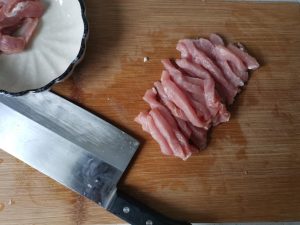
Slice the pork tenderloin into thick slices. Use the back of your cleaver or knife to pound the meat gently to loosen the fibers. Then, cut the meat into strips about the thickness of your finger.
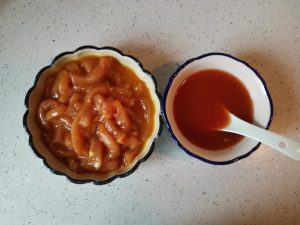
In a bowl, combine the pork strips with cooking wine, light soy sauce, oyster sauce, a pinch of salt, white pepper, and one egg (or just the egg white). Massage the meat with your hands until the liquid is absorbed. Let it marinate for at least 20 minutes.

Why this helps: This process, often called “velveting,” ensures the meat stays juicy inside even after deep frying.
Step 2: Make the Sauce
While the meat marinates, prepare your sauce. In a small bowl, mix:
- 3 tbsp Ketchup (Tomato Sauce)
- 1 tbsp White Vinegar
- 1 tbsp Sugar
- 1 tbsp Starch (Cornstarch)
- ½ small bowl of Water (about 1/2 cup)
Stir until the sugar and starch are completely dissolved. Set aside.
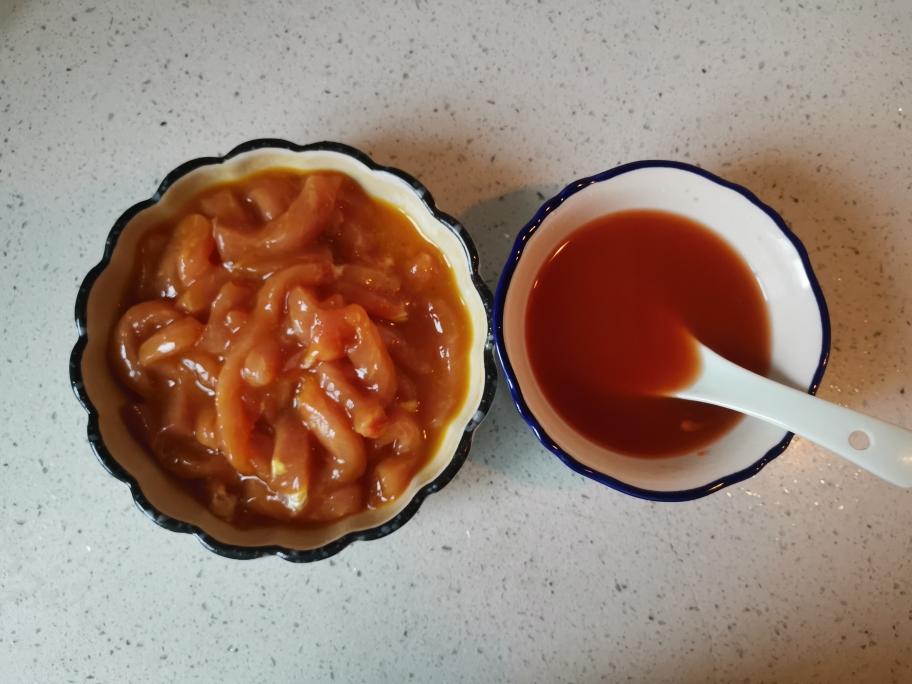
Step 3: Coat the Pork (The Dry Method)
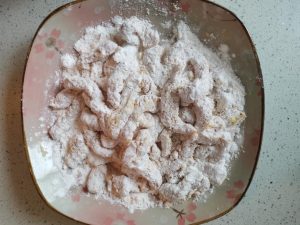
Prepare a large plate or bowl with dry starch. Take your marinated pork strips and coat them thoroughly in the starch. Press the starch into the meat slightly to ensure it adheres.
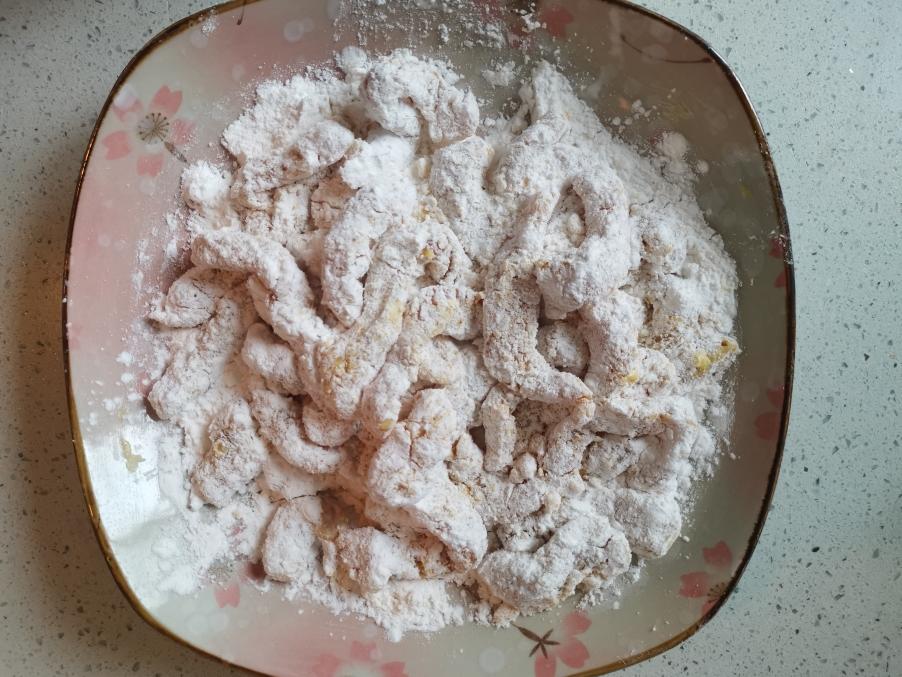
Expert Tip: Shake off excess starch before frying. This keeps your oil cleaner. If you want a thicker crust, you can dip the meat in a little water and coat it a second time (optional).
Step 4: The First Fry (Cook Through)
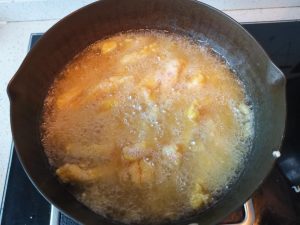
Heat oil in a wok or deep pot to about 320°F (160°C). Carefully slide the pork strips in one by one so they don’t clump together. Fry over medium heat until the coating is set and slightly pale yellow. This cooks the meat through. Remove and drain.
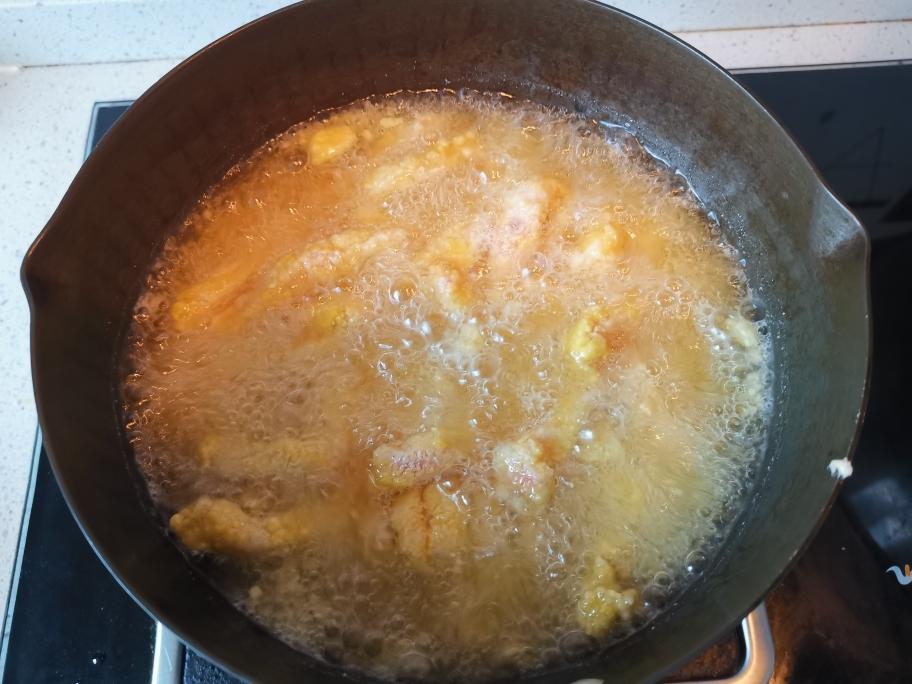
Step 5: The Second Fry (Crisp Up)
Increase the heat. Bring the oil temperature up to about 390°F (200°C). Add the pork back into the oil. Flash fry for just 40 seconds. The high heat drives out the excess oil and makes the crust incredibly crispy and golden. Remove immediately.
Science of Cooking: The rapid expansion of steam during the second high-heat fry creates a porous, crunchy structure in the starch coating.
Step 6: Coat with Sauce
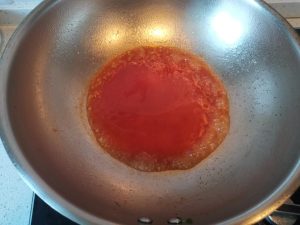
In a clean wok or pan, add a tiny bit of oil. Give your sauce mixture a stir (starch tends to settle) and pour it into the pan. Cook until it bubbles and thickens into a glaze.
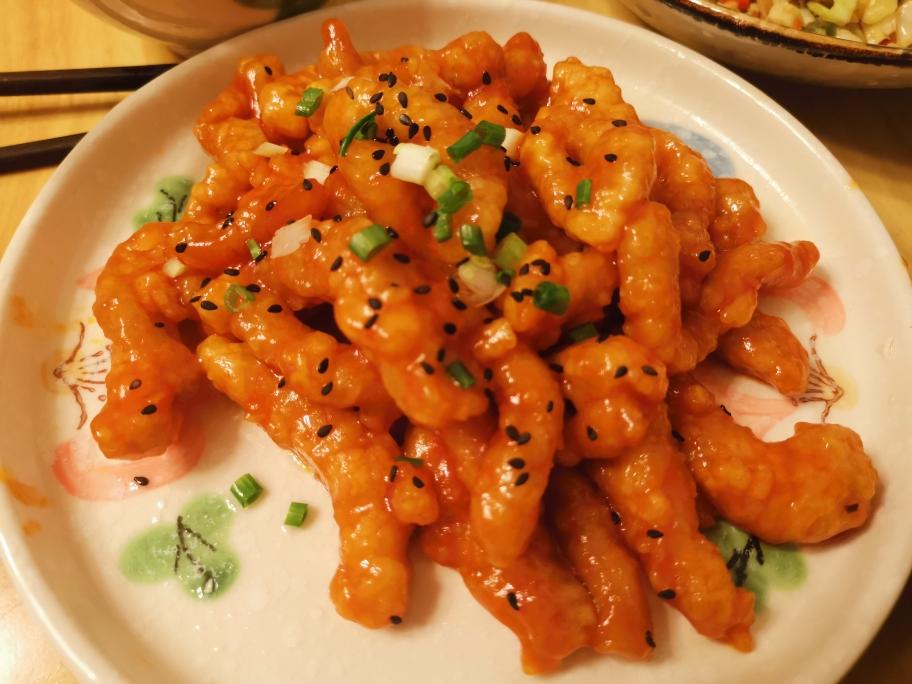
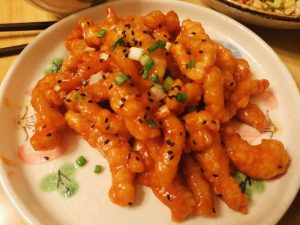
Toss the fried pork into the pan. Stir-fry quickly—just enough to coat every piece with the red sauce. Do not cook it too long, or the crust will get soggy!

Step 7: Serve
Transfer to a plate immediately. Garnish with toasted white sesame seeds and chopped green onions (scallions) for a pop of color and nuttiness. Serve hot with steamed rice!
For a complete meal, I love pairing this with a simple vegetable side like [Stir-Fried Lettuce with Garlic] or a refreshing [Smashed Cucumber Salad] to cut through the richness.
Troubleshooting & FAQ
Q: Why is my coating falling off?
A: This usually happens if the oil wasn’t hot enough when you added the meat, or if the meat was too wet before coating. Make sure to press the dry starch firmly onto the marinated meat.
Q: Can I use an Air Fryer?
A: For this specific “dry starch” recipe, an Air Fryer can be tricky as the loose flour might blow around. However, you can spray the coated meat generously with oil and air fry at 400°F for 10-12 minutes, shaking halfway. It won’t be quite the same as deep-frying, but it’s a lighter alternative.
Q: Is this gluten-free?
A: The starch coating is gluten-free (if using cornstarch), but you must ensure your Soy Sauce, Oyster Sauce, and Vinegar are certified gluten-free.
Nutrition Information (Estimate per serving):
- Calories: 380 kcal
- Carbohydrates: 32g
- Protein: 24g
- Fat: 16g
- Saturated Fat: 3g
- Sodium: 920mg
- Sugar: 14g
- Fiber: 1g
Disclaimer: Nutrition information is calculated using an ingredient database and should be considered an estimate. Garnishes and optional items are not included. Actual values vary depending on the specific brands of ingredients and the amount of oil absorbed during frying.
Safety Tips:
- Hot Oil Warning: This recipe involves deep-frying at high temperatures (up to 200°C/390°F). Use a heavy-bottomed pot or wok and ensure it is stable. Slide the meat in gently away from you to prevent hot oil splashes. Keep children away from the stove during the frying process.
- Internal Temperature: Ensure the pork reaches a safe internal temperature of 145°F (63°C). The double-frying method usually ensures this, but a meat thermometer is the most accurate way to check.
- Sugar Burns: The sauce contains sugar and starch which can thicken and burn quickly. Stir constantly once the sauce hits the hot pan and lower the heat if necessary to avoid scorching.
Recipe Notes
The Secret to the “Crunch”: Double Frying You might be tempted to fry the pork just once, but the double-fry technique is the non-negotiable secret to that restaurant-quality crunch. The first fry (at a lower temperature, ~160°C) cooks the meat through without burning the coating. The second flash-fry (at a higher temperature, ~200°C) drives out the excess oil absorbed in the coating and hardens the starch shell. If you skip this, the pork will be greasy and soft.
Why the “Dry Starch” Method? Many Sweet and Sour Pork recipes call for a wet batter, which can be tricky for beginners to get right (too thin and it slides off; too thick and it’s doughy). This recipe uses the dry starch method: marinating the meat so it’s sticky, then dredging it in dry cornstarch or potato starch. This guarantees the coating clings tightly to the meat and creates a distinct, craggy texture that holds the sauce beautifully.
Choosing the Right Cut Pork tenderloin (Li Ji) is the traditional choice because it is lean and very tender. However, if you cannot find it, pork loin works well too. Just be sure to pound the meat with the back of your knife before slicing; this breaks down the muscle fibers and ensures every bite is melt-in-your-mouth tender.
Allergen Warning: Contains Egg, Soy, and Shellfish (Oyster Sauce). Check your ketchup labels for hidden allergens.
References: For safe meat preparation guidelines, please refer to the USDA Food Safety and Inspection Service.
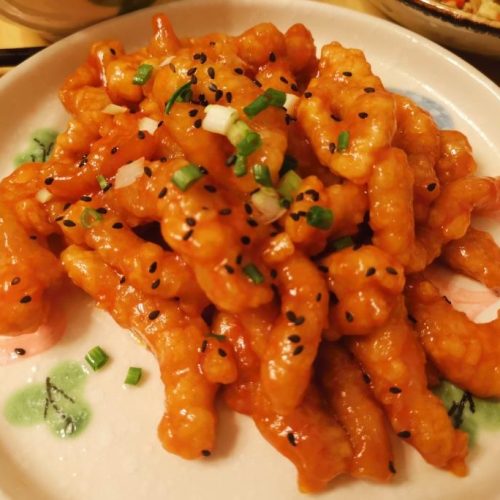
Sweet and Sour Pork (Tang Cu Li Ji)

Equipment
- Wok or Heavy Pot
- Kitchen Thermometer
Ingredients
The Pork
- 300 g pork tenderloin approx 10 oz, sliced into strips
The Marinade
- 1 tbsp cooking wine Shaoxing wine
- 0.5 tbsp light soy sauce
- 0.5 tbsp oyster sauce
- 1 pinch salt
- 1 pinch white pepper powder
- 1 egg (or just the egg white)
The Coating
- 1 cup starch Cornstarch or Potato Starch, enough to coat
The Sauce
- 3 tbsp ketchup Tomato sauce
- 1 tbsp white vinegar
- 1 tbsp sugar
- 1 tbsp starch for thickening
- 0.5 cup water
Garnish
- 1 tsp toasted sesame seeds white or black
- 1 tbsp scallions finely chopped
Instructions
- Prep the Pork: Slice the pork tenderloin into thick slices. Use the back of a knife to gently pound the meat to loosen the fibers, then cut into finger-thick strips.

- Marinate: In a bowl, mix the pork strips with cooking wine, light soy sauce, oyster sauce, salt, white pepper, and egg. Massage well with your hands and let marinate for at least 20 minutes to absorb the flavors.
- Make the Sauce: Prepare the sauce by mixing ketchup, white vinegar, sugar, 1 tablespoon starch, and water in a small bowl. Stir until the sugar and starch completely dissolve. Set aside.
- Coat the Pork: Prepare a large bowl with dry starch. Coat each marinated pork strip thoroughly in the dry starch, pressing gently to ensure full coverage.
- First Fry: Heat oil in a wok to about 160°C (320°F). You can test this by inserting a dry chopstick; small bubbles should form around it. Fry the pork strips over medium heat until the coating sets and turns pale yellow (about 2-3 minutes). Remove and drain.
- Second Fry: Increase the heat to bring the oil temperature to 200°C (390°F). Return the pork to the oil for a second fry (flash fry) for just 40 seconds. This makes the crust golden and crispy. Remove immediately.
- Glaze: Leave a small amount of oil in a clean pan. Pour in the sauce mixture and cook until it bubbles and thickens. Add the fried pork and toss quickly to coat every piece evenly.
- Serve: Garnish with toasted sesame seeds and chopped scallions. Serve hot with steamed rice.
Notes
- The Secret to the "Crunch": Do not skip the double-fry technique. The first fry cooks the meat, while the second high-heat fry drives out excess oil and hardens the starch shell.
- Dry Starch Method: Coating the marinated meat in dry starch is easier than making a wet batter and ensures a crispy texture that holds the sauce well.
- Tenderizing: Pounding the meat with the back of a knife is crucial for breaking down muscle fibers, ensuring the pork is tender.
- Hot Oil Warning: The oil reaches 390°F (200°C) during the second fry. Use a stable wok or pot and slide meat in gently to avoid burns.
- Internal Temp: Ensure pork reaches an internal temperature of 145°F (63°C).
Calories: 380 kcal | Carbohydrates: 32g | Protein: 24g | Fat: 16g | Sodium: 920mg | Sugar: 14g
Disclaimer: Nutrition information is calculated using an ingredient database and should be considered an estimate. Garnishes and optional items are not included. Actual values vary.







Leave a Reply