The Master Stir Fry Sauce Ratio
The “Golden Ratio” for a standard Chinese stir-fry sauce is built on a 1:1:2:4 structure. For a single dish serving 2–3 people (using approximately 12–16 oz of protein and vegetables), the measurements are as follows:
| Ingredient Category | Component | Standard Measurement |
| Aromatic/Base | Sesame Oil | 1 tsp |
| Binder/Sweetener | Sugar or Honey | 1 tsp |
| Thickener | Cornstarch | 2 tsp |
| Liquid/Umami | Soy Sauce (Light + Dark) | 4 tbsp (1/4 cup) |

Flavor Structure Breakdown
A professional stir-fry sauce is not just “salty.” It is a balanced chemical equation of four pillars:
1. The Umami Foundation (Salty)
This is the bulk of your liquid. While Light Soy Sauce provides the primary saltiness, Dark Soy Sauce is essential for that deep, mahogany restaurant color without making the dish inedibly salty.
2. The Acidic Brightener
Acid cuts through the fat of the oil and the protein. A splash of Shaoxing Wine or Chinese Black Vinegar (Chinkiang) provides complexity. If your sauce tastes “flat,” it almost always lacks acidity.
3. The Sweet Balancer
Sugar isn’t just for sweetness; it rounds out the sharp edges of the soy sauce and vinegar. It also aids in Maillard browning when the sauce hits the hot metal of the wok.
4. The Thickening Agent
Cornstarch (or potato starch) is the “glue” that allows the liquid to cling to the ingredients rather than pooling at the bottom of the plate.
Step-by-Step Formula Implementation
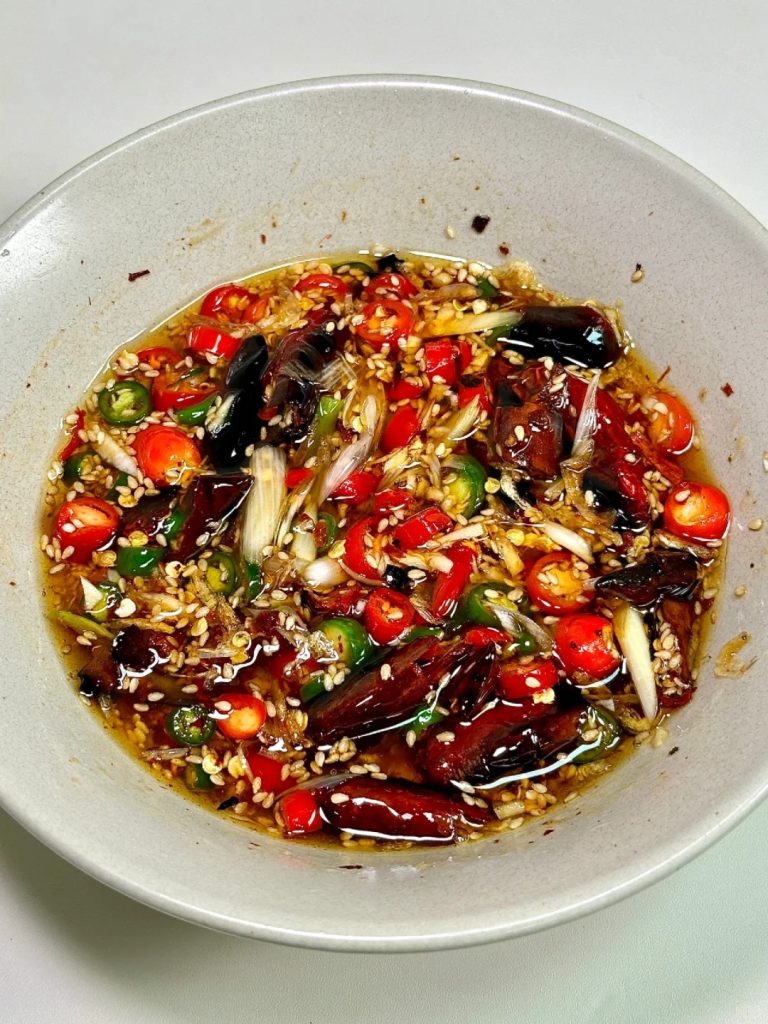
Step 1: The Cold Mix
Rule: Always whisk your sauce in a bowl before it touches the heat.
Adding cornstarch directly to a hot wok will result in immediate, gummy lumps. Dissolve the starch into your Soy Sauce and water/broth first to create a “slurry” base.
Step 2: The Aromatic Bloom
Before adding the liquid, sear your ginger and garlic in the oil. This infuses the fat with flavor, which then emulsifies into the sauce later.
Step 3: The “Wok Ring” Pour
Do not pour the sauce directly onto the meat. Pour it around the perimeter of the wok. This allows the liquid to heat up and “cook” for 2–3 seconds before it hits the ingredients, intensifying the flavor and triggering the Wok Hei effect.
Step 4: The 10-Second Thickening
Once the sauce begins to bubble, it will turn from opaque to translucent. This is the gelatinization point. Toss the ingredients vigorously for exactly 5–10 seconds to glaze everything evenly.
Technical Boundaries & Ratios
To achieve consistent results, follow these specific kitchen boundaries:
- Temperature: Your wok must be at least 400°F (200°C) before adding the sauce. If the temperature is too low, the starch will hydrate slowly, creating a “slimy” rather than “crispy” coating.
- Liquid-to-Starch Ratio: Never exceed a 6:1 ratio of liquid to starch. If you use more than 6 parts liquid to 1 part starch, the sauce will remain watery and fail to coat the back of a spoon.
- Protein Thickness: For optimal sauce adherence, slice proteins (like Pork Loin) to exactly 1/8-inch thickness. This provides maximum surface area for the sauce to grip.
When This Formula Does NOT Work
While this master ratio is versatile, it fails in two specific scenarios:
- High-Water Vegetables: If you are cooking Smashed Cucumber Salad or bok choy, do not use a cornstarch-heavy sauce. These vegetables release their own water upon salting, which will break the starch bonds and turn the dish into a soupy mess. For these, use a “Dry Stir-Fry” method with only oil and aromatics.
- Extended Braising: This sauce is for high-heat, fast cooking (under 2 minutes of sauce contact). If you try to use this ratio for a slow-cooked dish like Braised Beef Noodle Soup, the starch will over-thicken and eventually burn at the bottom of the pot.
Professional Tips for Success
- The “Vessel” Secret: Use a small amount of Oyster Sauce to add “body.” It has a natural viscosity that helps the thinner liquids stay attached to smooth ingredients like shrimp or tofu.
- The Luster Finish: For that high-gloss restaurant look, swirl in 1/2 teaspoon of cold oil right at the very end. This creates a reflective sheen on the sauce.
- The Pepper Kick: Always use freshly ground White Pepper rather than black. It provides a floral, sharp heat that complements fermented soy products much better than the woody notes of black pepper.
Troubleshooting Common Errors
| Issue | Cause | Fix |
| Sauce is “Gloopish” | Too much starch or sauce cooked too long. | Splash in 1 tbsp of water or broth and toss immediately. |
| Sauce is Watery | Wok wasn’t hot enough or too many wet veggies added at once. | Remove ingredients, boil the liquid down for 30 seconds, then re-incorporate. |
| Tastes Too Salty | Over-reduction of Light Soy Sauce. | Add a pinch of Sugar and a squeeze of lime or rice vinegar to mask the salt. |
Related Master Recipes
Once you have mastered the ratio, apply it to these classic variations:
- For Heat: Use the base ratio but swap 1 tbsp of soy for 1 tbsp of Doubanjiang (Spicy Bean Paste).
- For Tang: Double the Chinese Black Vinegar and sugar portions for a classic “Fish-Fragrant” profile.
- For Depth: Replace half the soy sauce with Sweet Bean Sauce for a richer, more fermented flavor.



Leave a Reply