In the vast universe of Chinese culinary ingredients, some items are flavor enhancers (like soy sauce), while others are textual transformers. Steamed Meat Rice Powder, known in Chinese as Zhēng ròufěn (蒸肉粉), falls into the latter category—though it packs a serious flavor punch, too.

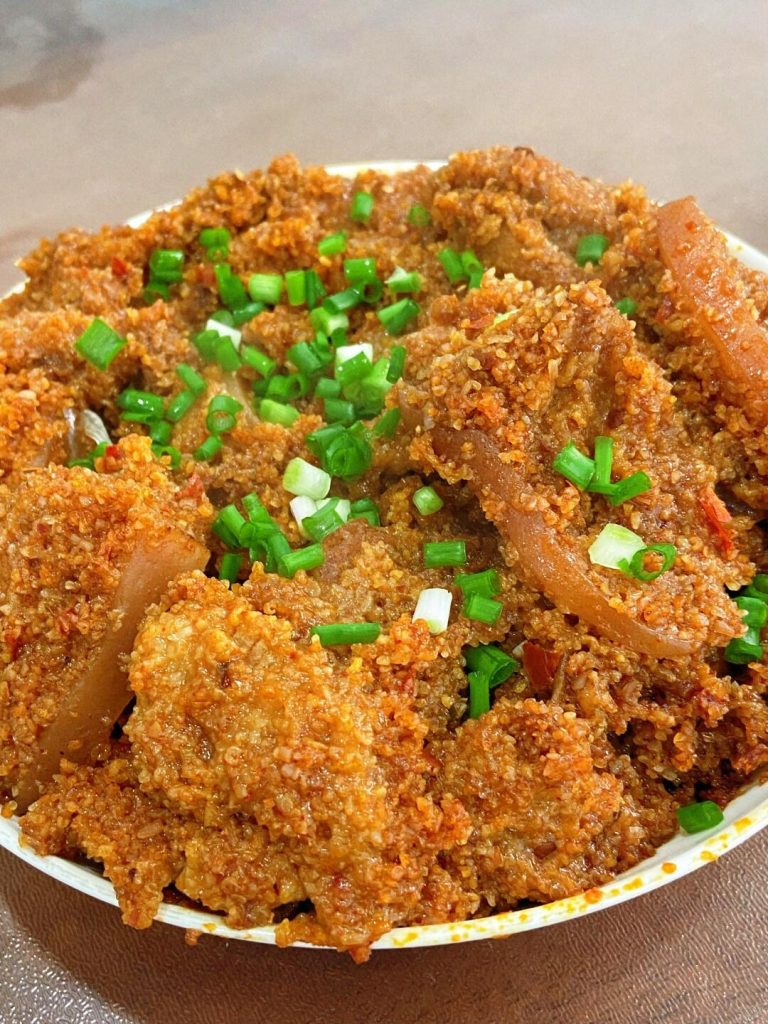
If you have ever encountered a Chinese dish where slices of pork or ribs are coated in a soft, nubby, flavorful crust that melts in your mouth, you have tasted the magic of this ingredient. It is the heart and soul of the classic dish Fen Zheng Rou (粉蒸肉), a comfort food staple particularly beloved in Sichuan, Jiangxi, and Hubei provinces.
What Is Steamed Meat Rice Powder?
At its core, Steamed Meat Rice Powder is coarse rice flour made from toasted rice. Unlike the fine white rice flour used for baking or noodles, Zhēng ròufěn is intentionally gritty and textured.
- Chinese Name: 蒸肉粉 (Zhēng ròufěn)
- Components: It is typically made from a blend of regular rice and glutinous rice (sticky rice). The rice is dry-roasted in a wok until golden and nutty, often with aromatic spices like star anise and Sichuan peppercorns, before being coarsely ground.
- Appearance: It looks like coarse sand or cornmeal, ranging in color from beige to light brown depending on how long the rice was toasted and what spices were added.
The Science of Texture
Why coat meat in rice? When steamed for a long period, the toasted rice granules absorb the juices and rendered fat from the meat. The rice expands and becomes fluffy and soft, while the meat remains incredibly moist because the starch creates a protective barrier. This is a brilliant culinary example of starch retrogradation and moisture retention.
Note on Varieties: In Asian supermarkets, you will often find this sold in boxes. As you mentioned, they usually come in two main flavor profiles: Five Spice (non-spicy, savory) and Spicy (usually containing chili powder or paprika).
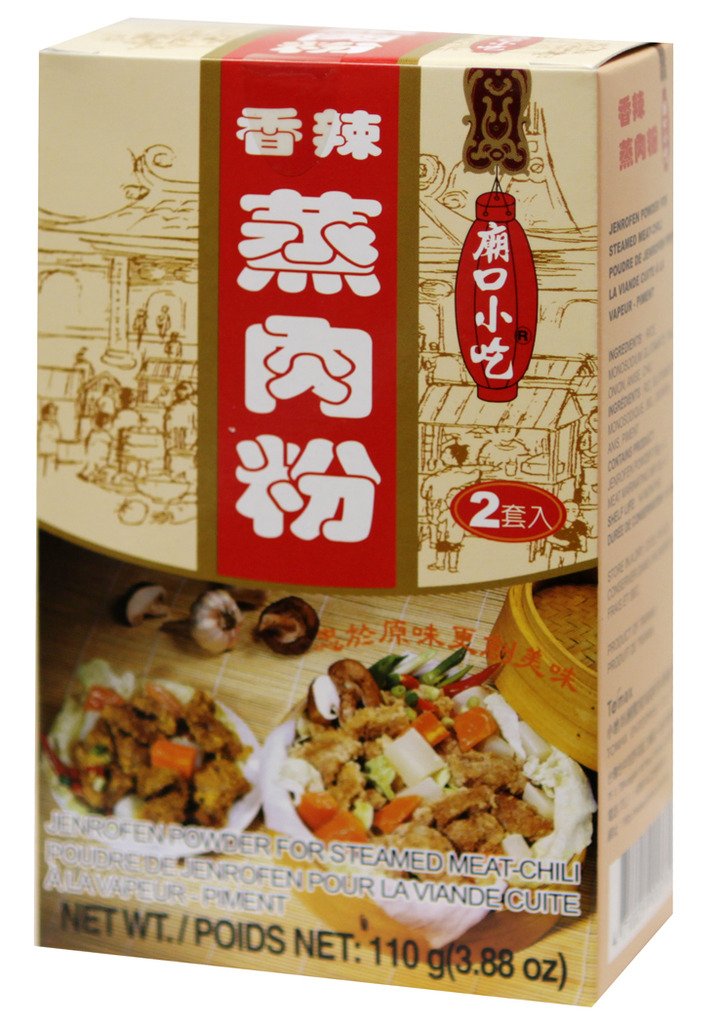
Flavor Profile and Aroma
The defining characteristic of Steamed Meat Rice Powder is the toasted aroma. The dry-roasting process triggers the Maillard reaction, creating nutty, popcorn-like notes that plain rice simply doesn’t have.
- Taste: Savory, nutty, and earthy. If store-bought, it is often pre-seasoned with salt and MSG.
- Aroma: Intense fragrance of roasted grain, usually accompanied by the licorice notes of star anise or the citrusy numbing scent of Sichuan Peppercorns.
Culinary Applications: How to Use It
The most famous application is, without a doubt, Steamed Pork with Rice Powder (Fen Zheng Rou). However, its use extends beyond just pork belly.
1. The Classic: Fen Zheng Rou
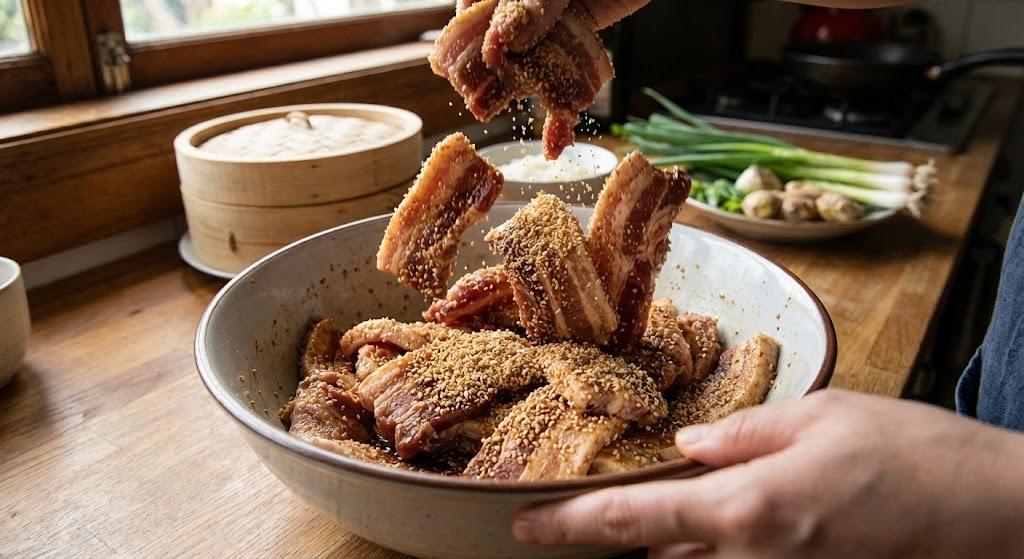
This dish typically features sliced Pork Belly marinated in soy sauce and fermented bean paste, then dredged in the rice powder and steamed. The fat from the pork belly renders into the rice, making the coating rich and flavorful without being greasy.
2. Beef and Ribs
For those who prefer a meatier bite, this powder works exceptionally well with beef or ribs. The method is identical to the pork version. If you enjoy the tender fall-off-the-bone texture of Steamed Pork Ribs with Black Bean Sauce, you will love the rice-coated version, which is heartier and more filling.
3. The “Bedding” (Vegetables)
In traditional preparation, the meat is rarely steamed alone. It is usually placed on top of a bed of root vegetables. As the meat steams, its juices drip down, seasoning the vegetables below. Common bases include:
- Sweet Potato (the most popular pairing)
- Taro root
- Pumpkin or Kabocha Squash
- Potatoes
4. Vegetarian Options
You can toss chunks of firm tofu, king oyster mushrooms, or potatoes in the marinade and rice powder. It mimics the mouthfeel of the meat version surprisingly well.
Homemade vs. Store-Bought
You can easily find commercial boxes of Zhēng ròufěn in the dried goods aisle of Asian grocers (brands like Kong Yen or Qiao Tou are common). However, making it at home elevates the dish to restaurant quality.
Why Make It Homemade?
- Freshness: The toasted rice aroma fades over time. Freshly toasted rice is significantly more fragrant.
- Texture Control: Store-bought versions can sometimes be too fine (mushy) or too hard. Home grinding lets you achieve that perfect coarse sand texture.
- Additive-Free: Commercial packets often contain preservatives or high amounts of sodium.
How to Make Homemade Steamed Meat Rice Powder
If you want to try this from scratch, here is a simple method using pantry staples:
- The Mix: Combine 50% glutinous rice and 50% regular jasmine rice. The glutinous rice provides stickiness, while regular rice provides structure.
- The Toast: Place the rice in a dry wok (no oil) over medium-low heat. Add whole Star Anise and a teaspoon of Sichuan peppercorns.
- The Stir: Stir constantly for 10-15 minutes until the rice turns golden brown and smells like popcorn.
- The Grind: Let it cool completely. Remove the spices (or leave them in for stronger flavor) and pulse in a spice grinder or food processor. Crucial: Do not grind it into a fine flour. It should look like coarse polenta or couscous.
- The Seasoning: Mix in a dash of Five Spice Powder and a pinch of salt.
Perfect Pairings and Seasoning
To get the best results when using Steamed Meat Rice Powder, the liquid marinade for the meat is critical. The rice powder needs moisture to hydrate, or it will be dry and sandy.
- Essential Marinades: Always marinate your meat with ample liquid. A combination of Light Soy Sauce for saltiness, dark soy sauce for color, and Shaoxing Wine to remove gaminess is standard.
- For the Spicy Version: If you want the Sichuan style Fen Zheng Rou, add a tablespoon of Doubanjiang (Pixian chili bean paste) to your meat marinade before coating it in the rice powder.
- Vegetable Harmony: If you are using sweet potatoes or pumpkin as a base, their natural sweetness pairs beautifully with the savory, salty rice coating. It creates a balance similar to the sweet and savory notes in Braised Pork Belly with Potatoes.
Authoritative References
For further reading on the ingredients and food science mentioned in this article, please refer to these authoritative sources:
- Maillard Reaction: For a deeper understanding of why toasting the rice creates flavor, see the Science Direct overview on the Maillard Reaction.
- Glutinous Rice Properties: To understand the amylopectin content that makes the rice sticky and soft, refer to the Encyclopedia of Food Sciences and Nutrition entry on Glutinous Rice.
- Sichuan Cuisine History: For context on the origins of steaming techniques in Sichuan cooking, UNESCO provides documentation on Sichuan Culinary Traditions.
Final Thoughts
Steamed Meat Rice Powder is a humble ingredient that transforms simple cuts of meat into a feast of textures. It represents the wisdom of Chinese home cooking: using grains to stretch meat further and capture every drop of flavor. Whether you buy the box for a quick weeknight meal or toast your own rice for a special occasion, this ingredient adds a cozy, warming dimension to your kitchen repertoire.
If you are looking for other ways to enjoy tender pork ribs, you might also enjoy our recipe for One Pot Rice Cooker Pork Ribs and Rice, which shares that delightful integration of meat juices and grains.




Leave a Reply