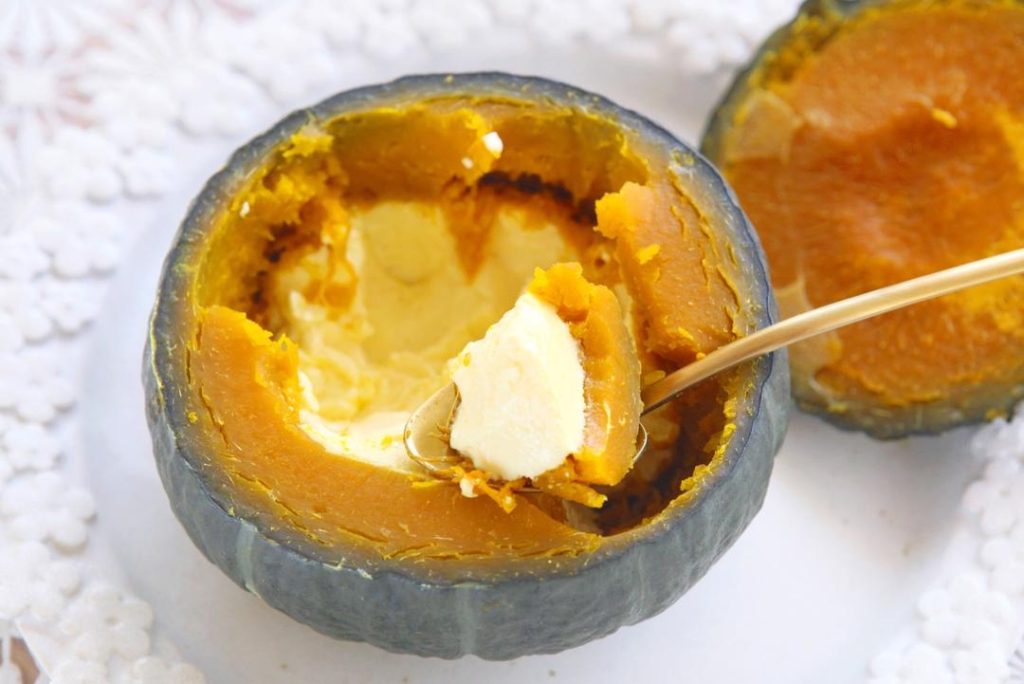
There is a concept in Chinese textures called fen nuo (粉糯). It describes something starchy, sweet, and soft—like a perfectly cooked chestnut or a dense sweet potato. When you combine that texture from a steamed pumpkin with the silky, slippery texture of a savory egg custard, you get a dish that is pure comfort.
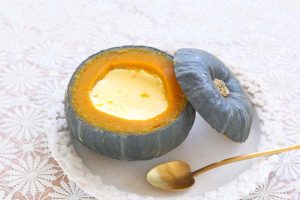
Steamed Egg in Pumpkin (Nan Gua Zheng Dan) is a dish I often make when I want something nutritious but gentle on the stomach. It’s visually stunning—a vibrant orange vessel holding a pale yellow custard—but it requires surprisingly little effort.

Growing up in Sichuan, my mother would often steam eggs when we were feeling under the weather or needed a quick protein boost. While a simple Silky Steamed Egg with Minced Pork is a staple, steaming the egg inside a sweet pumpkin transforms it into something special. The natural sweetness of the pumpkin seeps into the savory milk-egg mixture, and a pinch of sea salt bridges the two flavors perfectly.
What is Steamed Egg in Pumpkin?
This dish consists of a small, individual-sized pumpkin (typically a Kabocha or “Bei Bei” pumpkin) that is hollowed out, pre-steamed until tender, and then filled with a mixture of beaten egg and milk. It is steamed again until the custard sets.
Unlike the Western Baked Pumpkin Soufflé, which is often sweet and dessert-like, this Chinese version retains a savory profile thanks to the sea salt, making it suitable for breakfast, a light lunch, or a side dish. It highlights the natural flavor of the ingredients without heavy sauces or oils.
Another Version of Tomato and Egg Stir-fry
I know that taste is subjective, and the “sweet vs. savory” debate for this dish is a classic one in Chinese cuisine! We actually already have a recipe for Tomato and Egg Stir-fry on the site. That version leans into a more traditional, savory profile that lets the natural tartness of the tomatoes shine. If you are curious about different cooking methods or prefer your eggs without the added sugar and thickened sauce, I highly recommend checking out that recipe to compare the techniques. It is a great way to learn how versatile these two humble ingredients can be.
1Classic Stir-fried Tomato and Egg (西红柿炒鸡蛋)Learn the real homestyle secret to the perfect Stir-fried Tomato and Egg (西红柿炒鸡蛋). My family recipe guarantees incredibly tender, fluffy eggs and a rich, juicy tomato sauce in just 15 minutes. A Chinese comfort food classic!Check out this recipe

Why This Recipe Works
- Texture Contrast: The dense, creamy flesh of the Kabocha squash contrasts beautifully with the jiggly, pudding-like egg custard.
- Double Steaming Method: We steam the pumpkin before adding the egg. This is a crucial technique I learned in culinary school. Pumpkin takes much longer to cook than eggs; if you steam them together from the start, the egg will be rubbery and overcooked by the time the pumpkin is tender.
- Minimal Seasoning: We use just a pinch of sea salt. This minimalism allows the natural sweetness of the pumpkin (enhanced by the salt) to shine.
About the Author & Recipe Development
I’m Lin, a chef born and raised in Sichuan with over a decade of professional kitchen experience. Throughout my culinary training in China, I learned that the simplest dishes often require the most precision. For this recipe, I tested various ratios of liquid to egg. Too much milk, and the custard won’t set; too little, and it becomes hard. The ratio of roughly 1:1.5 (egg to liquid) provided the most reliable, silky results in our test kitchen.
Key Ingredients & Substitutions
- Pumpkin: The recipe calls for a “Bei Bei” pumpkin (贝贝南瓜). In the US and Europe, look for Kabocha Squash (green or red) or Buttercup Squash. These varieties have the necessary starchiness and sweetness.
- Avoid: Standard carving pumpkins or Jack-o’-lantern pumpkins, which are watery and stringy.
- Eggs: Use standard large eggs. The recipe uses 50-55g of egg liquid, which is roughly the content of one large egg.
- Milk: Whole milk provides the richest flavor and best texture.
- Substitution: You can use unsweetened soy milk or oat milk for a dairy-free version, or even Creamy Chinese Corn Juice for a sweeter corn flavor profile.
- Sea Salt: A small pinch of high-quality sea salt makes the pumpkin taste sweeter by contrast.
Ingredients
- 1 small Kabocha squash (Bei Bei pumpkin) (approx. 400-500g whole weight)
- 1 large egg (approx. 50-55g cracked weight)
- 1/3 cup (75ml) whole milk
- 1 pinch sea salt
Mise en Place
- Wash the Pumpkin: Scrub the skin thoroughly as you can eat the skin of a Kabocha squash if it’s tender enough.
- Measure Liquid: Have your milk measured out.
- Setup Steamer: Get your wok or steamer pot ready with water.
How to Make Steamed Egg in Pumpkin
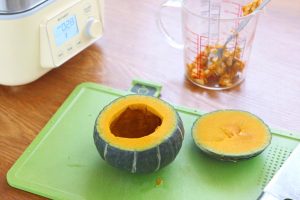
1. Prepare the Pumpkin Slice the top off the pumpkin (about 1/4 of the way down) to create a lid. Use a spoon to scrape out the seeds and fibrous innards.
- Chef’s Tip: If the pumpkin is too hard to cut, microwave it for 1-2 minutes first to soften the skin. This makes it safer to slice.
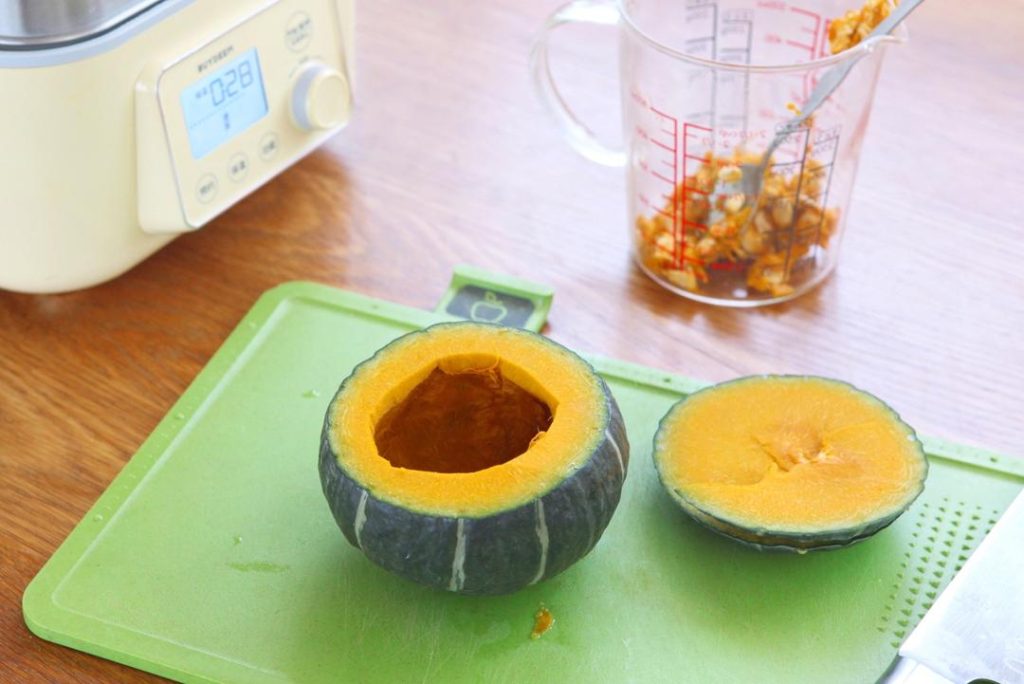
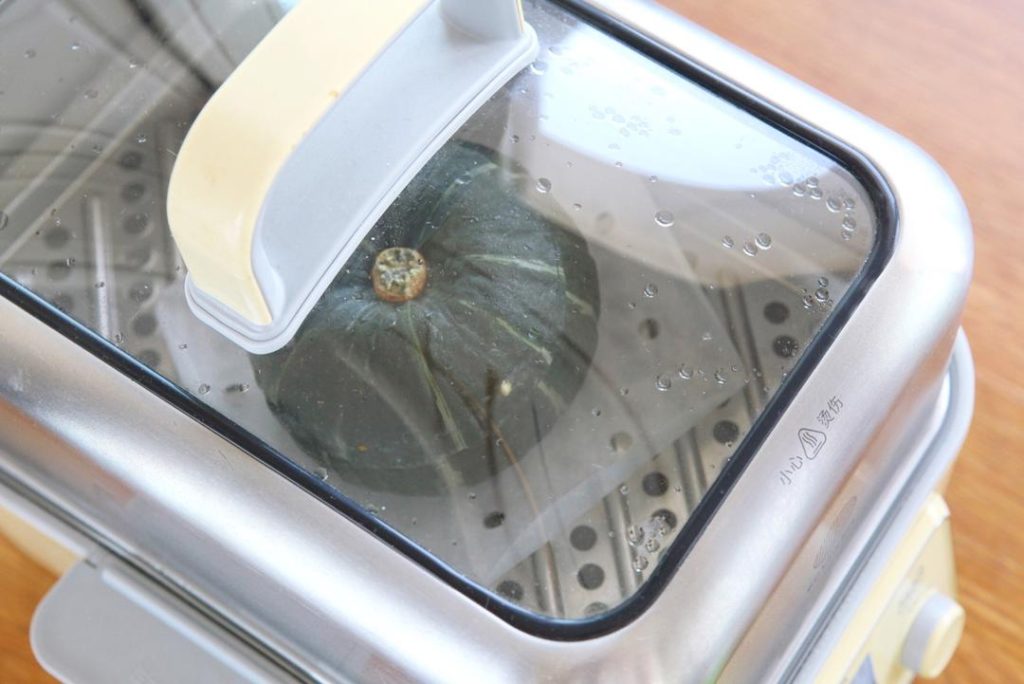
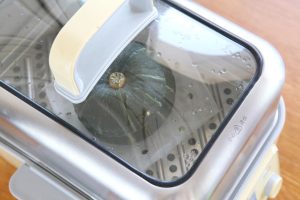
2. First Steam (The Pumpkin) Place the hollowed-out pumpkin (without the lid) into your steamer. Steam over medium-high heat for 10 minutes.
- Why? This softens the pumpkin flesh. If we skip this, the egg will overcook before the pumpkin is edible.
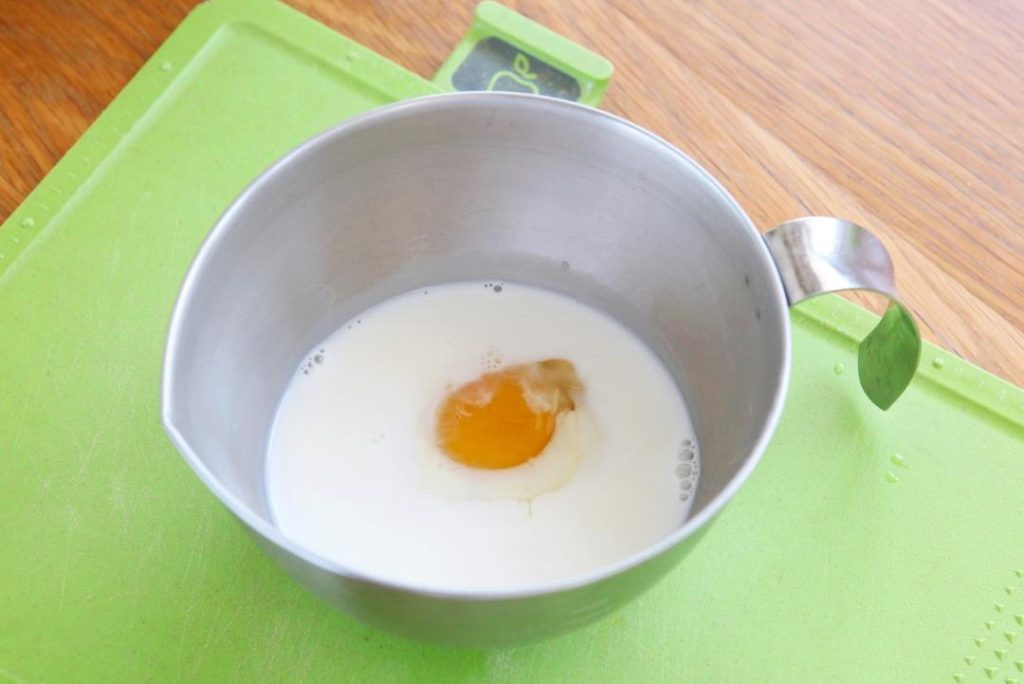
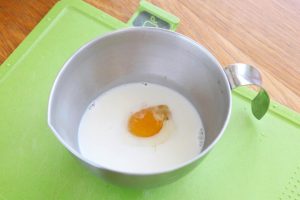
3. Prepare the Egg Liquid While the pumpkin steams, crack the egg into a bowl. Add the milk and the pinch of sea salt. Whisk thoroughly until well combined.
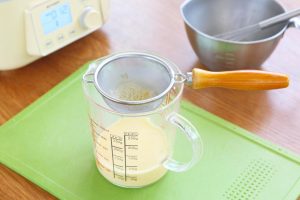
4. Strain the Mixture Pour the egg mixture through a fine-mesh sieve at least 2 to 3 times.
- Why? Straining removes air bubbles and chalaza (the white stringy bit), ensuring the final custard is perfectly smooth and free of “craters.”
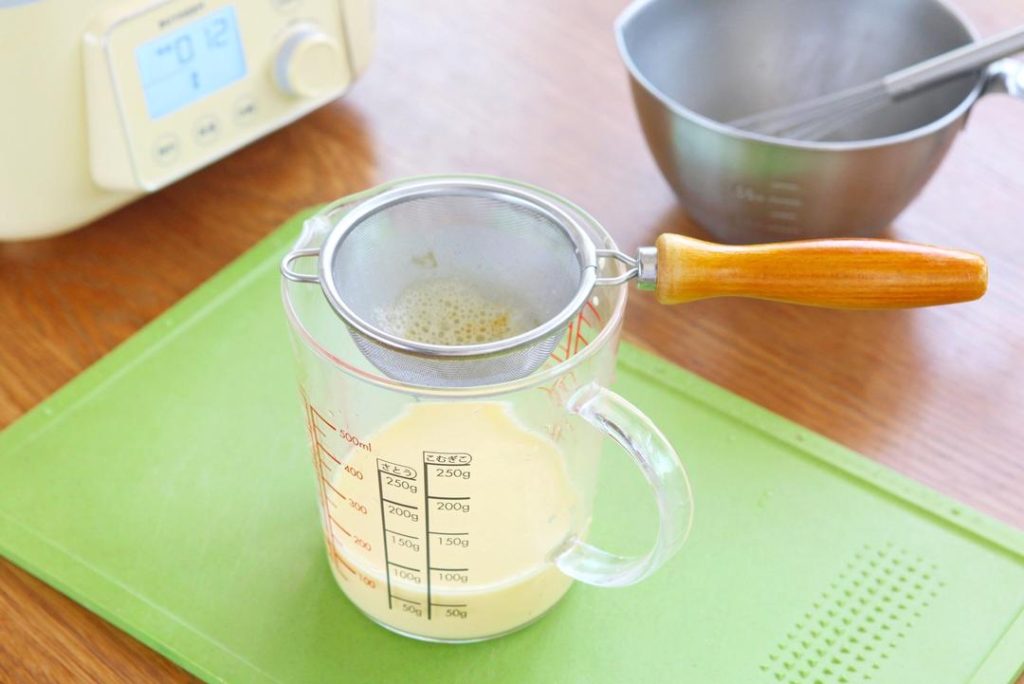
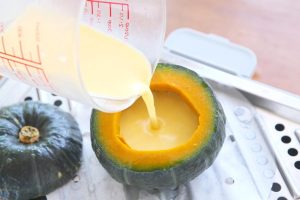
5. Fill and Steam Again Remove the pumpkin from the steamer (be careful, it will be hot). Pour the strained egg liquid into the pumpkin, filling it about 90% full.
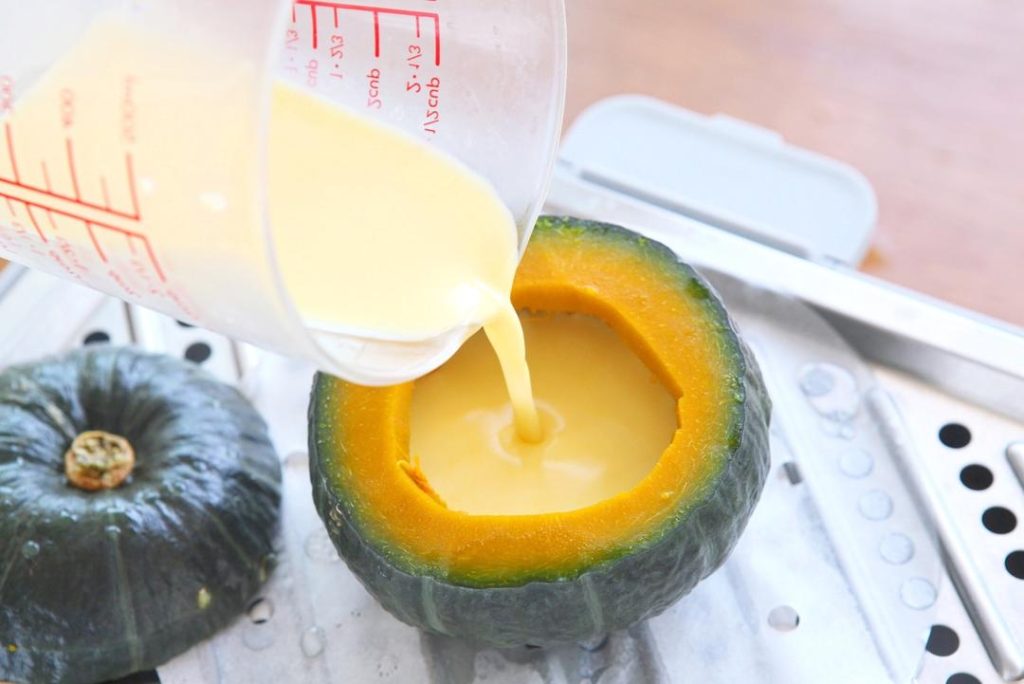
6. Final Steam Place the pumpkin back into the steamer. You can place the pumpkin lid next to it or on top (if on top, it might take slightly longer). Steam on medium-low heat for 15 minutes.
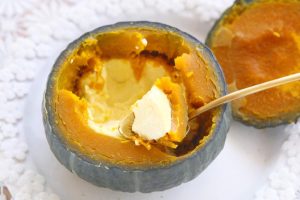
- Visual Cue: The egg should be set but still jiggle slightly in the center, like gelatin. If it’s still liquid, steam for another 2-3 minutes.
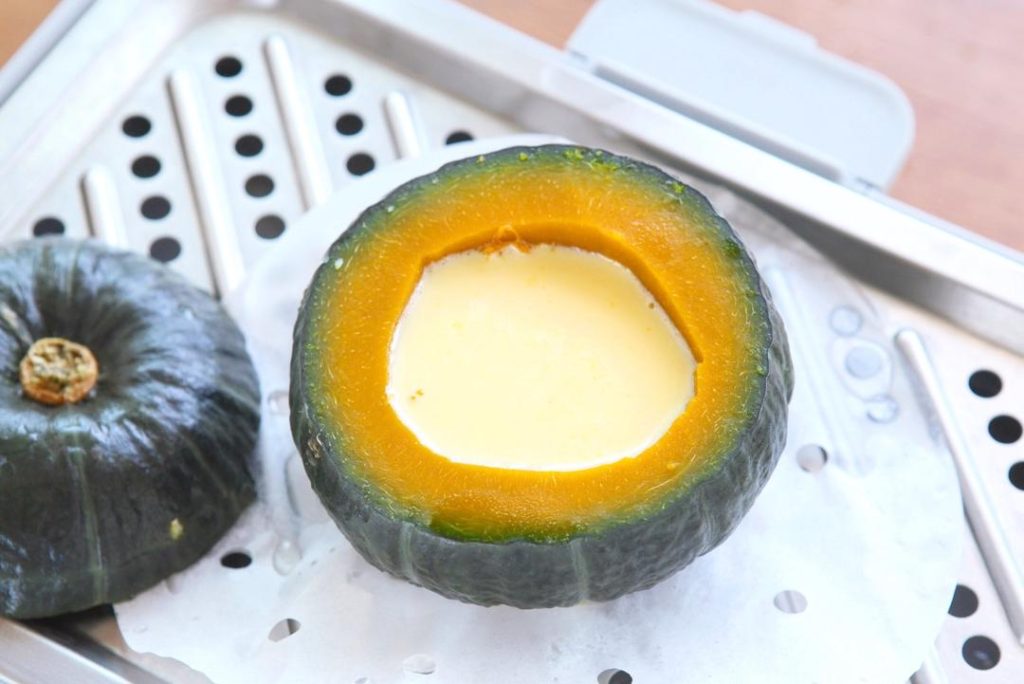
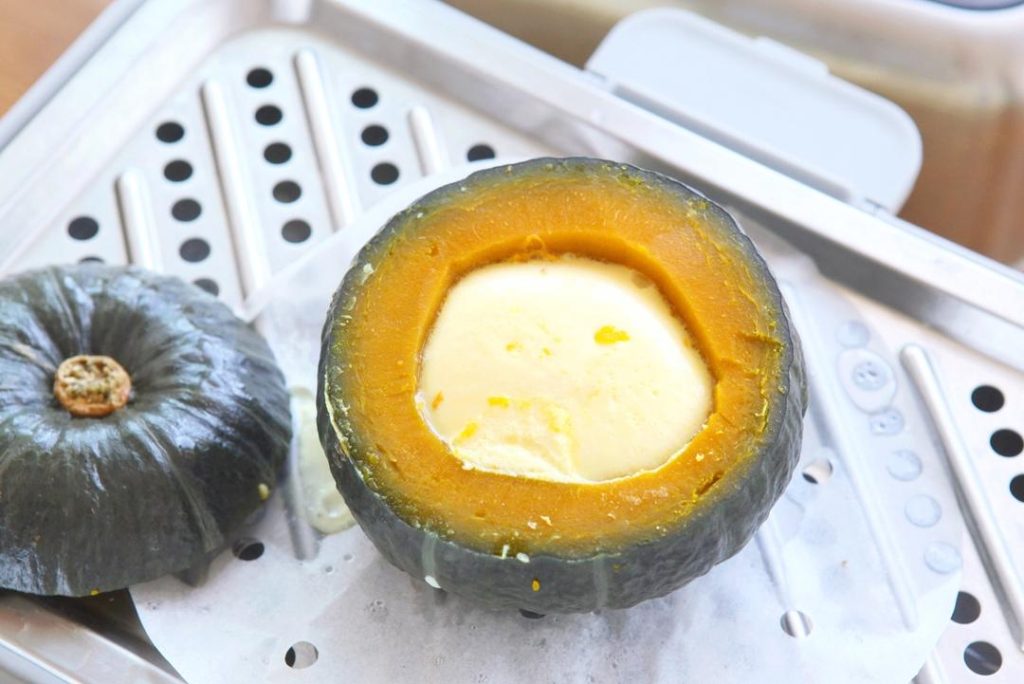
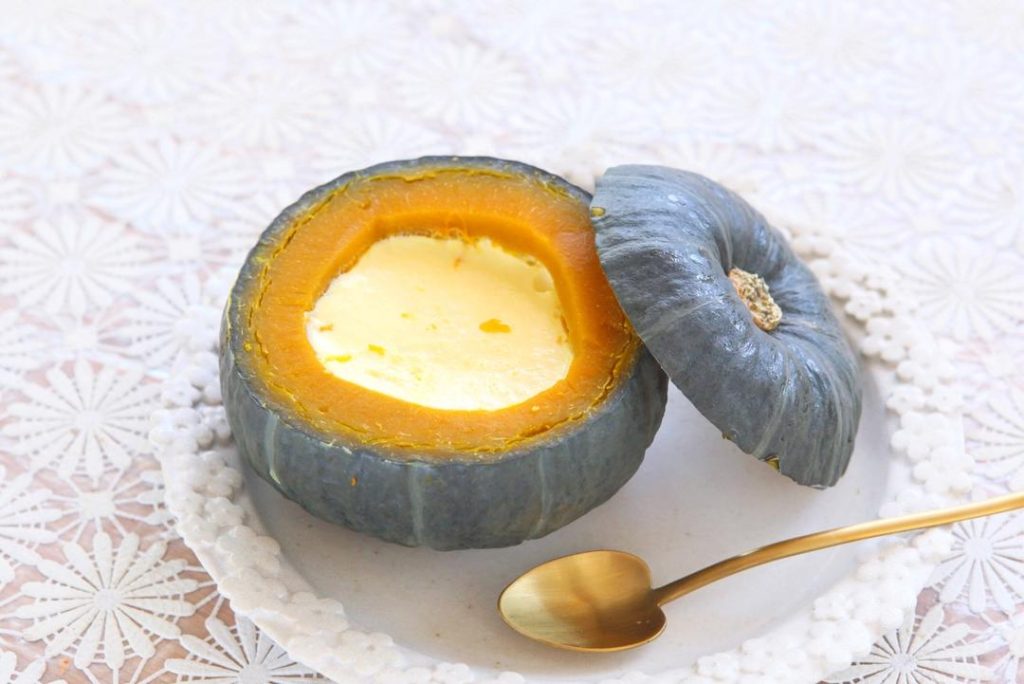
7. Serve Remove carefully. The pumpkin skin might crack slightly as it cools because varieties like Kabocha have low water content—this is normal and indicates a fluffy texture. Serve hot.
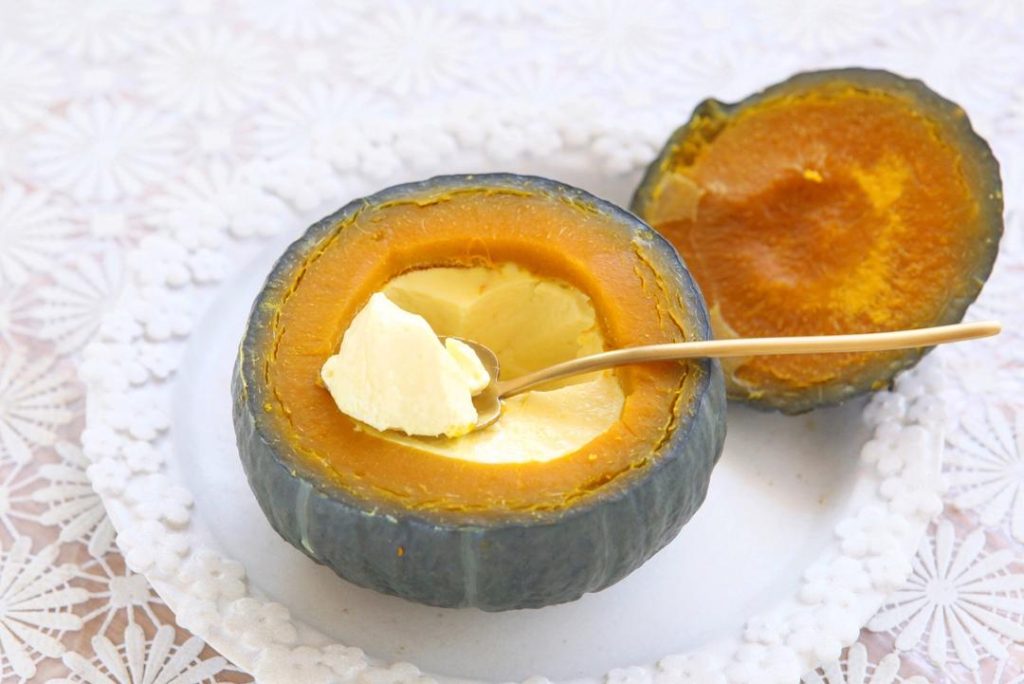
Common Mistakes When Making Steamed Egg
- Heat Too High: Steaming eggs on high heat causes the protein to tighten too fast, resulting in a honeycomb texture (bubbles) and a rough mouthfeel. Always use medium-low heat for the egg stage.
- Skipping the Strainer: If you don’t strain the egg mixture, you won’t get that glass-like, silky surface.
- Overfilling: The egg mixture expands slightly. Filling it to the brim usually results in a spillover.
Serving Suggestions
This dish is fantastic on its own, eaten with a spoon, scooping bits of sweet pumpkin flesh with the savory custard.
- Pairing: It pairs beautifully with a light soup like Easy Chinese Mushroom Soup or a refreshing cold dish like Smashed Cucumber Salad.
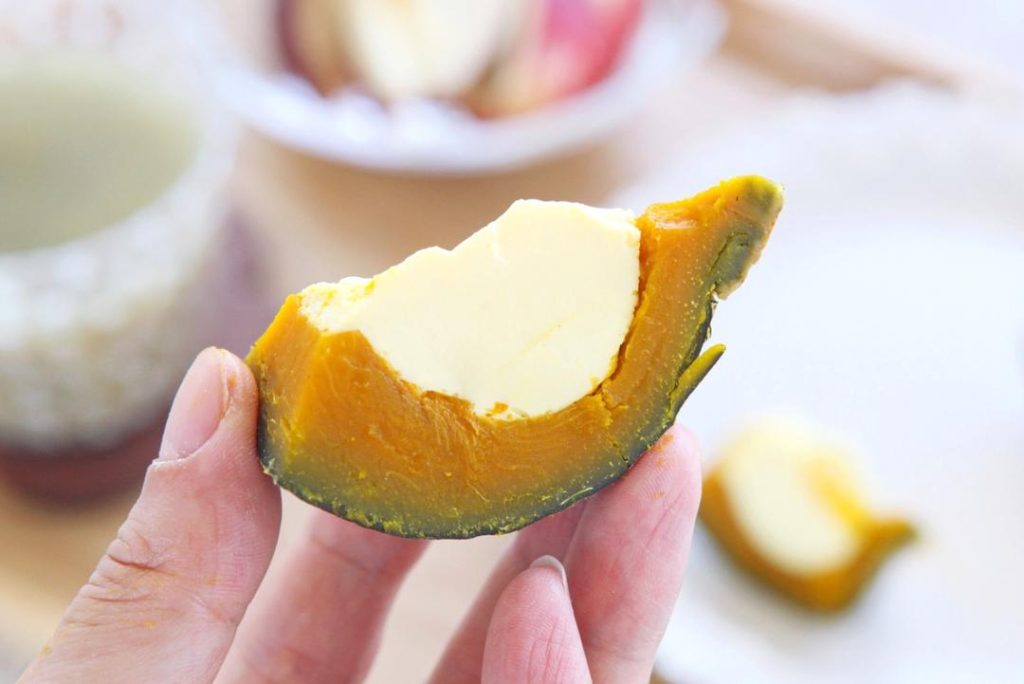
- For Kids: This is a favorite for children. You can even cut it into wedges once cooled for easier handling.
- Variation: For a savory dinner version, you could top the finished egg with a little cooked Steamed Pork Ribs with Black Bean Sauce sauce for extra umami.
Authoritative References
For more information on the nutritional benefits of winter squash varieties like Kabocha, you can refer to the USDA FoodData Central. Additionally, understanding the science of egg coagulation is helpful for perfecting custard textures; Serious Eats offers a deep dive into The Science of Cooking Eggs.
How to Store & Reheat
- Fridge: Store leftovers in an airtight container for up to 2 days. The pumpkin texture may become denser.
- Reheating: Steam for 5-8 minutes until warmed through. Do not microwave on high power, as the egg might explode or become rubbery.
- Freezing: Not recommended. Steamed egg custard releases water and becomes spongy when thawed.
Nutrition Information (Estimate)
- Calories: ~220 kcal
- Protein: 12g
- Carbohydrates: 30g
- Fat: 8g
- Disclaimer: Nutrition information is calculated using an ingredient database and should be considered an estimate. Actual values vary based on the size of the pumpkin and specific milk used.
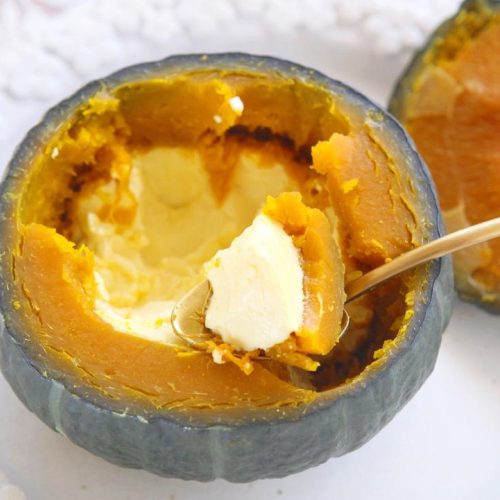
Steamed Egg in Pumpkin (Nan Gua Zheng Dan)

Equipment
- 1 Steamer or Wok with Rack Essential for cooking the pumpkin gently.
- 1 Fine-mesh strainer Crucial for silky egg texture.
Ingredients
Main Ingredients
- 1 Kabocha Squash (Bei Bei Pumpkin) Small size, approx 400-500g
- 1 large egg approx 50-55g liquid
- 75 ml whole milk can substitute with soy milk
- 1 pinch sea salt to taste
Instructions
- Slice the top off the pumpkin to create a lid. Use a spoon to scrape out the seeds and inner core completely.

- Place the hollowed pumpkin in a steamer. Steam on medium-high heat for 10 minutes to soften the flesh.
- While the pumpkin steams, prepare the filling. In a bowl, whisk together the egg, milk, and sea salt.
- Strain the egg mixture through a fine-mesh sieve 2 to 3 times. This ensures the custard is silky and smooth.
- Remove the pumpkin from the steamer. Pour the strained egg liquid into the pumpkin, filling it about 90% full.
- Return the pumpkin to the steamer. Cover and steam on medium-low heat for 15 minutes. Check if the egg is set (it should jiggle slightly but not be liquid). Adjust time based on pumpkin size.
- Remove carefully and serve hot. The skin may crack slightly upon cooling, which is normal for this variety.







Leave a Reply