In the pantheon of Chinese aromatics, few spices command as much visual and olfactory attention as star anise. With its striking eight-pointed symmetry and intoxicatingly sweet, woody perfume, it is the secret behind the “haunting” aroma of traditional Chinese kitchens. Historically, star anise has been a prized commodity since the Song Dynasty, traveling along the ancient maritime Silk Road to become a global staple. Today, it stands as a cornerstone of the Chinese “Great Four” spices, acting as the backbone for the most iconic savory dishes in the East.

What Is Star Anise?
Star anise is the seed pod harvested from the Illicium verum tree, a small evergreen native to the mountainous regions of Southern China (specifically Guangxi province) and Northern Vietnam. According to the Kew Royal Botanic Gardens, this tree belongs to the Schisandraceae family and can bear fruit for over a hundred years.
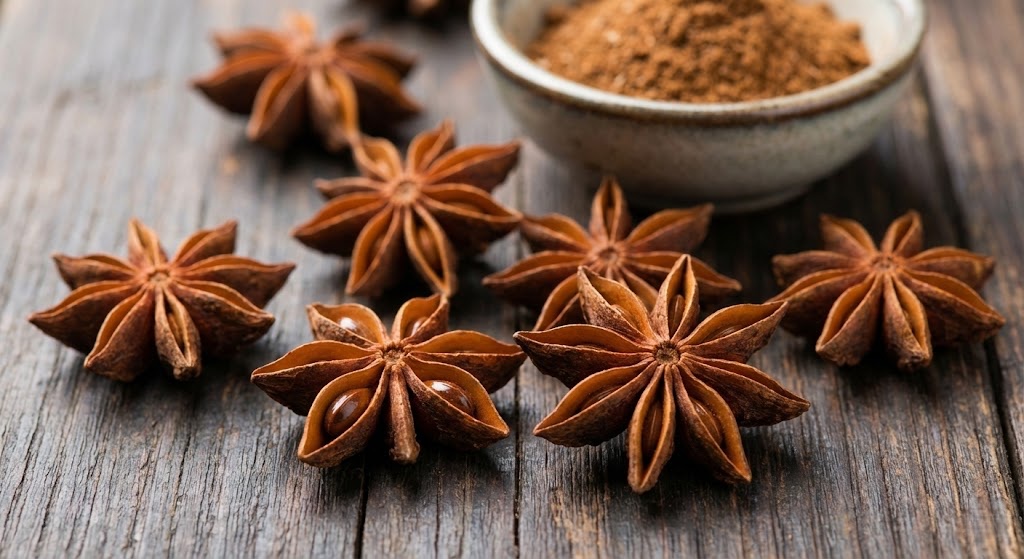
In Mandarin, it is called Bājiǎo (八角), which literally translates to “eight horns” or “eight corners,” referring to its characteristic shape. The fruit is picked while still green and sun-dried until it hardens into a rusty-brown, woody texture. Each “arm” of the star contains a small, shiny seed that holds a concentrated amount of essential oils.
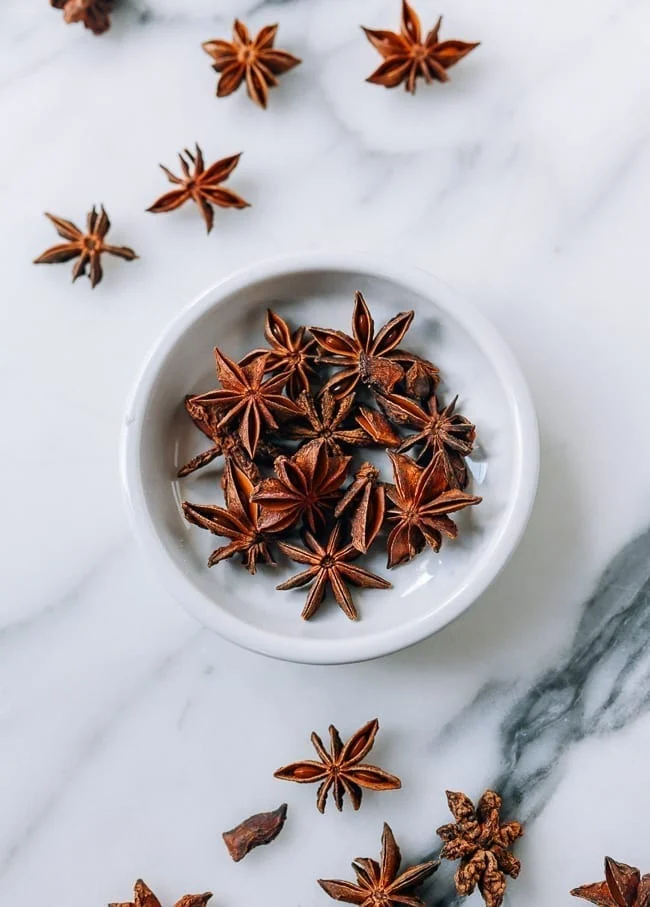
⚠️ Critical Safety Note: It is vital to distinguish between Chinese Star Anise (Illicium verum) and Japanese Star Anise (Illicium religiosum). While they look nearly identical, the Japanese variety contains potent neurotoxins and is strictly used for incense, never food. Always purchase from reputable sources to ensure you are getting the culinary-grade Chinese variety. The U.S. Food and Drug Administration (FDA) has previously issued advisories regarding this distinction to protect consumers.
Flavor Profile: Beyond Licorice
Star anise is defined by its high concentration of anethole, the same aromatic compound found in fennel and aniseed. However, star anise is significantly more potent and complex.
- Aroma: Pungent, sweet, and penetrating. It has a “cool” scent that clears the sinuses.
- Taste: It offers a deep licorice sweetness followed by a slight numbing bitterness and a warm, woody finish.
- The Role: In Chinese cooking, it is rarely the “lead singer” but rather the “producer” that enhances the savory (umami) depth of meats. It works particularly well at neutralizing the gamey odors of lamb or the “fishiness” of certain seafoods.
Culinary Applications & Beginner Tips
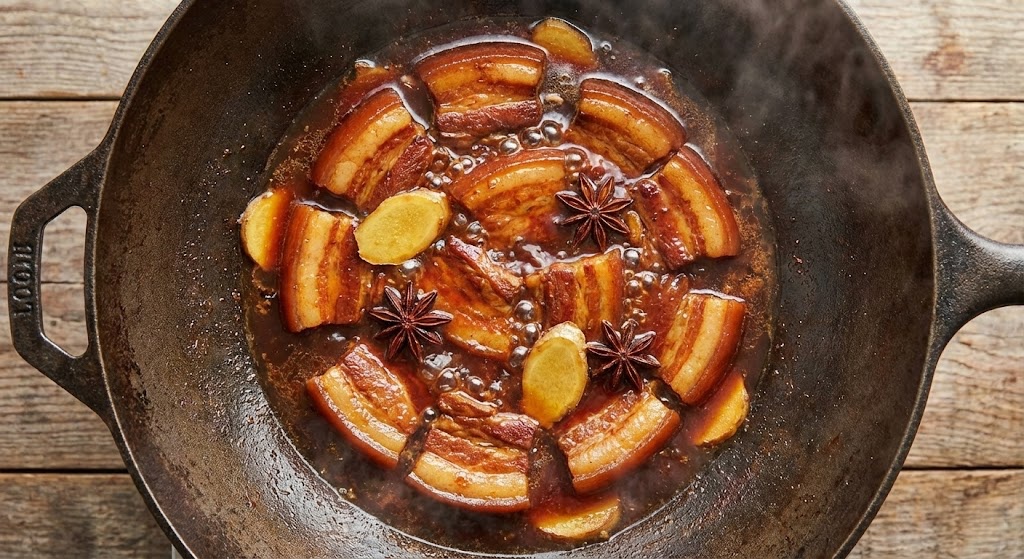
Star anise is most famous for its role in “Red Braising” (Hong Shao), a technique where meat is slow-cooked in a mixture of soy sauce, sugar, and aromatics.
Traditional Chinese Uses:
- Composite Spices: It is the primary ingredient in Five Spice Powder, providing the sweet top note that balances earthy cloves and numbing Szechuan peppercorns.
- Meat & Poultry: The spice’s sweetness is a perfect foil for fatty cuts. It is indispensable for Braised Pork Belly and provides the characteristic fragrance in Cantonese Soy Sauce Chicken.
- Beef Stews: It adds a “meaty” complexity to Braised Beef Brisket with Daikon Radish, making the broth taste richer and more developed.
Beginner’s Guide: The “Spice Harmony”
For those new to Chinese aromatics, star anise rarely works alone. To achieve a restaurant-quality flavor profile, pair it with these “supporting actors”:
- Ginger & Scallion: The “holy trinity” of Chinese cooking. Always sauté ginger and scallions first, then add star anise to the hot oil to release its fat-soluble oils.
- Cinnamon & Cloves: These add warmth. When combined with star anise, they create a “sweet-savory” bridge that makes Sweet and Sour Pork Ribs so addictive.
Buying and Storing Guide
To ensure you are getting the most potent spice, follow these professional selection criteria:
- Look for Whole Stars: Avoid bags with mostly broken pieces. Whole stars retain their volatile oils much longer.
- The Scent Test: Even through the packaging, a fresh batch of star anise should have a strong, clear licorice aroma. If it smells like dusty wood, it is past its prime.
- Color: Look for a vibrant rusty-brown. Dark, almost black stars are likely old or over-dried.
- Form: For braising, use whole pods. For rubs or marinades, use ground powder.
Storage: Store in an airtight glass jar in a cool, dark cupboard. Whole pods will maintain their peak flavor for 2–3 years, while ground star anise fades after 6–12 months.
Substitutes: What to do if you run out?
If a recipe calls for star anise and your pantry is bare, try these alternatives:
- Aniseed (Common Anise): Use about 1/2 teaspoon for every whole star anise. The flavor is similar but less woody.
- Fennel Seeds: Use 1 teaspoon per star anise. It provides the licorice note but lacks the deep “spice” kick.
- Five Spice Powder: Since star anise is a main component, you can use 1/4 teaspoon of the powder to replace one star. Note that this will add other flavors like cinnamon and clove to your dish.
Authoritative References
- Kew Royal Botanic Gardens: Illicium verum (Star Anise) Profile
- Journal of Food Science: Antioxidant and Antimicrobial Properties of Star Anise
Recommended Recipes
If you’re ready to start cooking with star anise, these tested recipes are the perfect place to begin:
- Five Spice Powder – Learn to make your own aromatic blend.
- Braised Pork Belly – The ultimate expression of the “Red Braise” technique.
- Cantonese Soy Sauce Chicken – A delicate, fragrant bird infused with aromatics.
- Braised Beef Brisket with Daikon Radish – A hearty, comforting winter stew.
- Sweet and Sour Pork Ribs – A masterclass in balancing spice and acidity.
Related Articles
- Chinese Pork Ribs Guide – Choose the right cut for your braise.
- Light vs. Dark Soy Sauce – Understanding the base of your braising liquid.
- Essential Chinese Sauces – Build your pantry for authentic flavor.
About Woks of Love We are a team of culinary enthusiasts dedicated to demystifying traditional Chinese ingredients. Our mission is to provide home cooks with the expertise, cultural context, and “EEAT” (Experience, Expertise, Authoritativeness, and Trustworthiness) required to master the art of the Chinese kitchen.








Leave a Reply