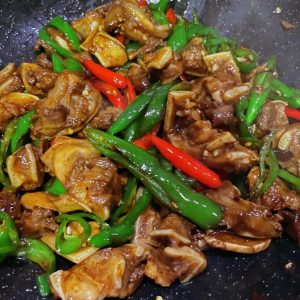
There is a cut my father buys whenever the local butcher in Chengdu has it, a tray of white cartilage with a rim of dark pork, and he treats it like treasure. He calls it zhu cui gu, and his version never leaves the wok long enough to soften into something polite. It comes out chewy-crunchy, lacquered with soy and oyster sauce, blazing with green chilies and bird’s eye, and it is the fastest way I know to turn a bowl of rice into a whole meal. One plate, two bowls of rice, zero leftovers.
This Hunan-style stir-fry is the xiachufang recipe I now make when I want that same energy at home. The cartilage is soaked to draw out blood, dried, and stir-fried over real heat until the surface turns glossy with its own fat. Then come the aromatics, three sauces in circles around the wok, and a final blast of chilies that the recipe’s author calls a rice-killer for a reason. It is not subtle, and it is not supposed to be.
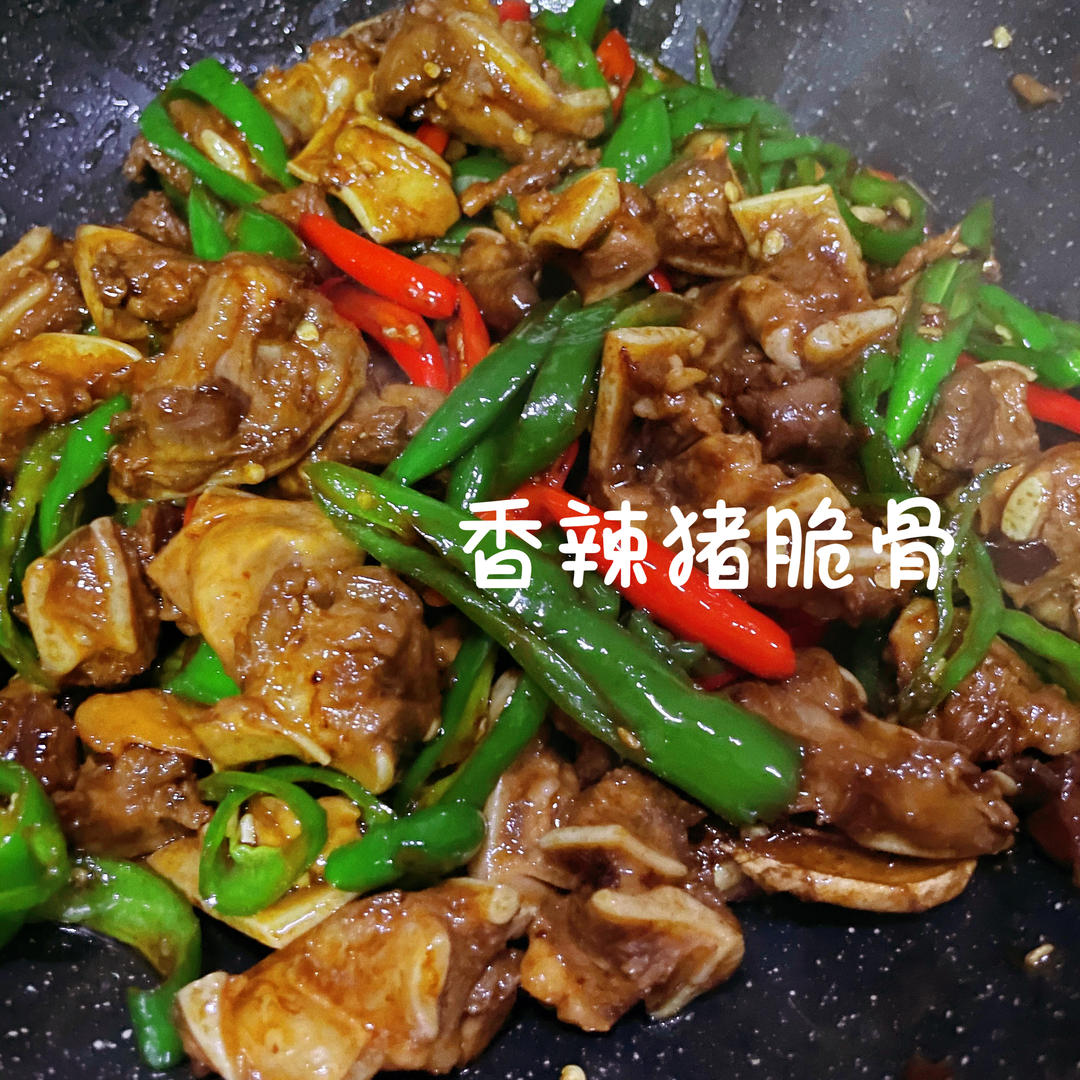
What Is Spicy Stir-Fried Pork Cartilage (Zhu Cui Gu)?
Pork cartilage is the soft, chewy cartilage found along the breastbone and rib tips of the pig, usually sold with a thin strip of meat attached. Stir-fried fast and hot, it does not go soft like braised pork; instead it keeps a springy crunch that Chinese cooks love, a texture that sits between meat and bone and makes every bite interesting. In Hunan home cooking, it is often cooked the way this recipe does: dried out in the wok, seasoned hard, and finished with an avalanche of fresh chilies.
At an American butcher you may need to ask for pork cartilage or soft bone specifically, and an Asian market will usually sell it labeled in Chinese. If your market only has meaty spare rib tips, those cook the same way, though with more meat and less crunch. The dish is best treated as a stir-fry with a chewy character, not a slow-braised one, and that is exactly what makes it fast.
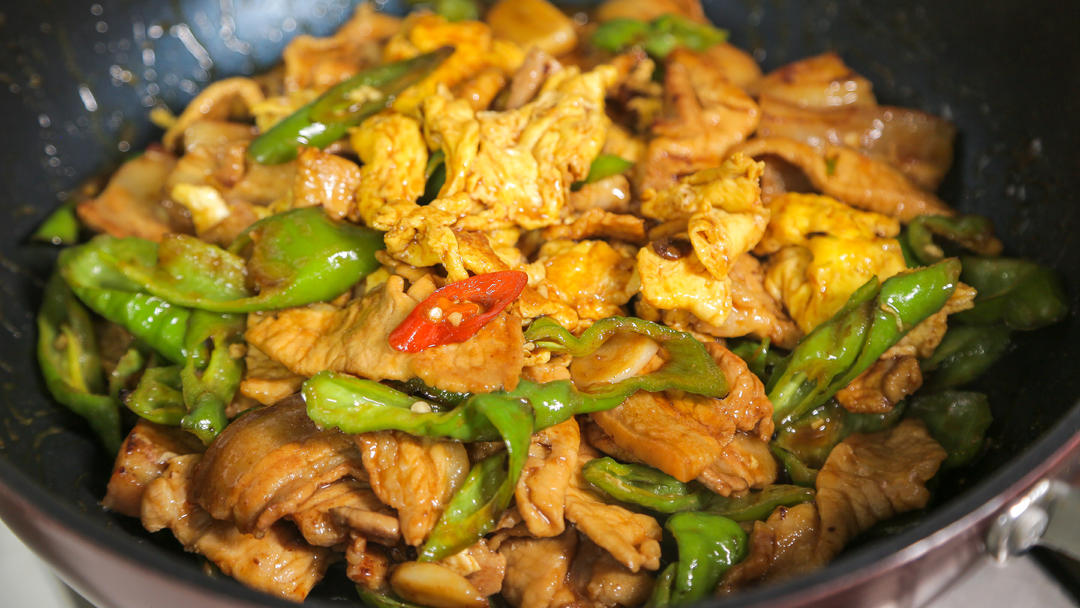
If you love that Hunan heat on pork, my Hunan pork and egg stir fry with peppers is the same no-nonsense energy from the same school of cooking.
1Hunan Pork and Egg Stir Fry with Peppers (La Jiao Chao Rou)This authentic Hunan-style stir-fry combines tender pork loin, rich pork belly, fluffy eggs, and blistered peppers in a savory, slightly spicy sauce. It is known as a ‘rice killer’ because it pairs perfectly with steamed rice.Check out this recipe
Why This Recipe Works
- Soaking and drying do the heavy lifting. Cold water pulls out the blood, and drying the pieces before they hit oil means the cartilage sears instead of stewing in its own juice.
- The wok does the “dry-fry” first. Stir-frying the cartilage until its surface glistens with oil drives off moisture and starts the browning, which is where the deep meaty flavor comes from.
- Three sauces build a lacquered glaze. Light soy for salt and umami, dark soy for color, oyster sauce for gloss and sweetness, added in that order so each one caramelizes briefly against the hot meat.
- Chilies go in last and stay bright. Green chilies and bird’s eye hit the wok at the end for a short, violent toss, so they keep their crunch and fresh heat instead of turning to mush.
- Nothing is marinated or wasted. No waiting, no velveting, no extra bowl. This is a straight-line stir-fry that goes from cutting board to table in about twenty minutes.
Equipment Needed
- A 12 in (30 cm) carbon steel wok (or the largest skillet you own)
- High-output home burner; if your stove is weak, preheat the wok longer and cook in smaller batches
- Sharp cleaver or chef’s knife for the cartilage and chilies
- Cutting board, mixing bowl for soaking
- Wok spatula or long-handled spoon
- Instant-read thermometer (optional, for checking the pork is cooked through at 145°F / 63°C minimum, with rest time to 150°F / 66°C for safety and tenderness)
Ingredients
- 1.75 lb (800 g) pork cartilage (soft bone), cut into bite-size pieces
- 4 cloves garlic, sliced
- 4 slices fresh ginger
- 1 1/2 tsp (2 g) Sichuan peppercorns
- 2 whole star anise
- 2 tbsp Shaoxing wine (can substitute with dry sherry)
- 2 tbsp light soy sauce
- 1 tbsp dark soy sauce
- 1 tbsp oyster sauce
- 8 green chilies (long, mild to medium), cut into segments
- 10 bird’s eye chilies, sliced (see notes to tune the heat)
- 1 tsp (5 g) fine salt, or to your salt preference
- 2 to 3 tbsp neutral oil, for the wok
Ingredient Notes
Pork cartilage. Sold as soft bone or cartilage at Asian butchers; in Chinese markets look for 猪软骨 or 脆骨. It keeps a satisfying crunch after a quick stir-fry. If cartilage is unavailable, chicken cartilage (掌中宝) is the closest texture and is often easier to find at Asian grocers.
Chilies. The recipe calls for 8 long green chilies and 10 bird’s eye chilies, which is genuinely spicy. Long green chilies give flavor and body; bird’s eye (Thai) chilies bring the burn. To tame it, reduce the bird’s eye to 3 or 4 and seed them, or swap in a milder red chili. For another of my favorite ways to treat hot chilies with pork, this stir-fried minced pork with chili peppers is a close cousin.
Sichuan peppercorns. These add the numbing floral note, not heat. If you cannot find them, they are optional, but the dish loses a layer. Star anise sits in the oil with them and is best fished out before serving or left as a whole pod to avoid biting into it.
The three sauces. Light soy for salt and fragrance, dark soy purely for color, and oyster sauce for sweetness and gloss. If you are cooking gluten-free, use tamari and a gluten-free oyster sauce, and check the dark soy label.
Prep & Mise en Place
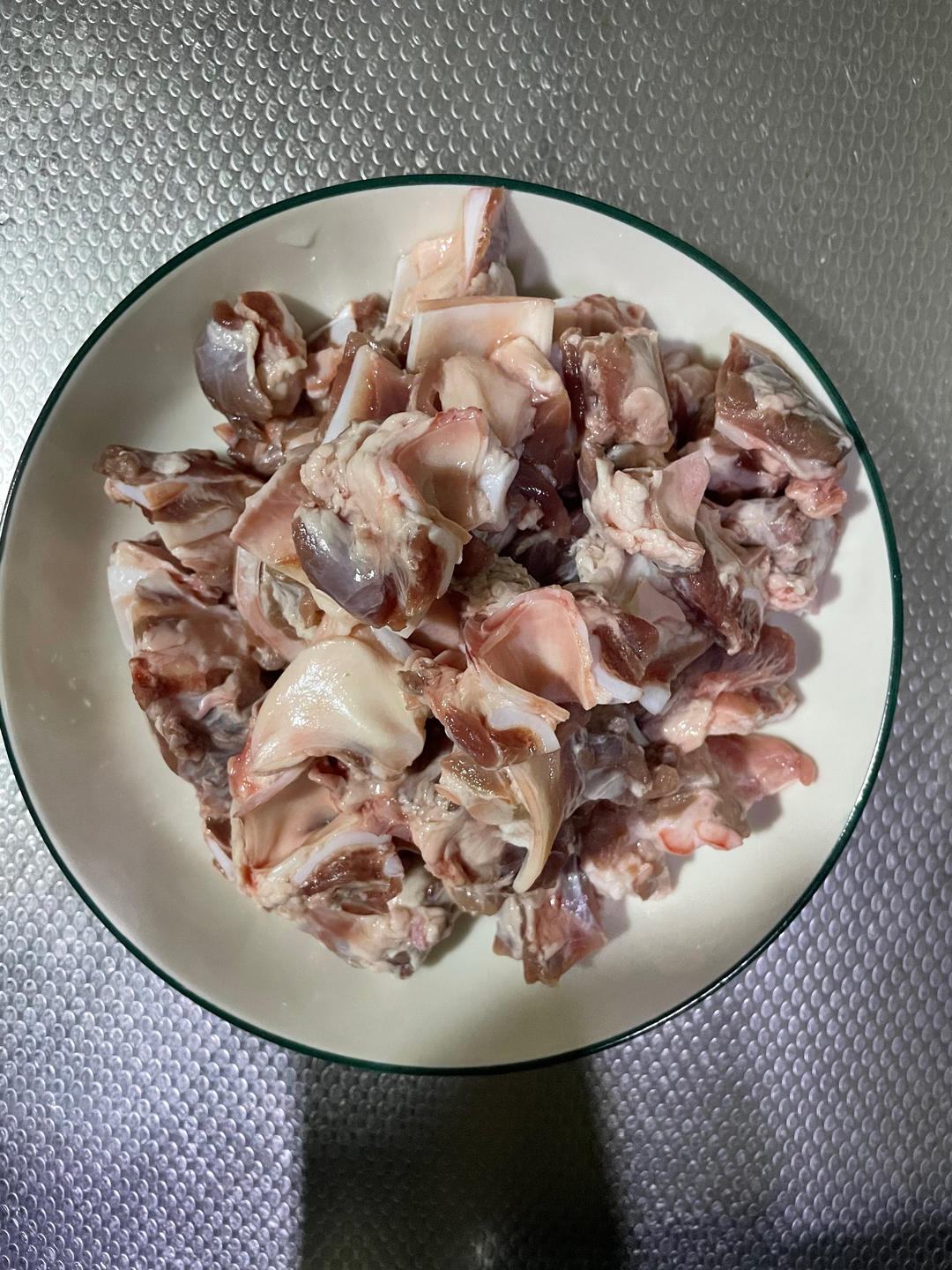
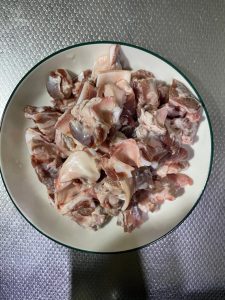
Soak the cartilage in cold water for about 20 to 30 minutes to draw out the blood, then rinse under running water, drain well, and pat completely dry. Drying matters more than it looks: wet cartilage lowers the wok temperature and steams instead of sears. Cut the pieces into bite-size chunks, each with a bit of meat and a bit of cartilage.
Set up the aromatics before you light the stove, because once the wok is hot this recipe does not pause. Slice the garlic and ginger, measure the peppercorns and star anise, and line up the wine and three sauces beside the stove. Cut the green chilies into segments and slice the bird’s eye chilies, keeping them separate. Have your serving plate ready, and if you eat rice, start it first, because this dish will be done before you expect it.
Cooking Process
Step 1 — Soak, Rinse, and Cut the Cartilage
Soak the pork cartilage in cold water for 20 to 30 minutes, rinse well, and drain. Cut it into small bite-size pieces, and set out 4 slices of ginger, 4 sliced garlic cloves, the Sichuan peppercorns, and star anise.
Step 2 — Fry the Aromatics, Then Dry Out the Cartilage
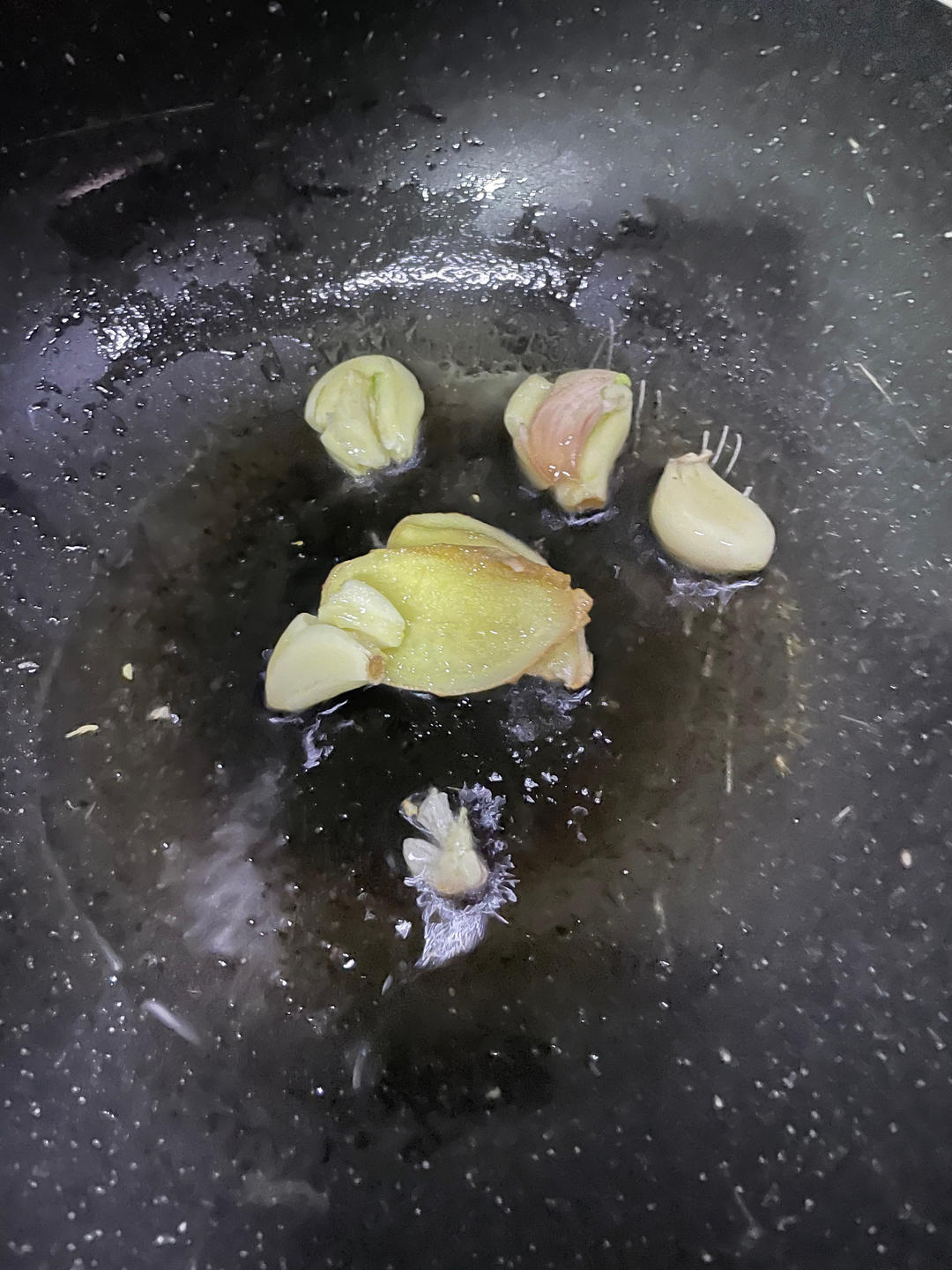
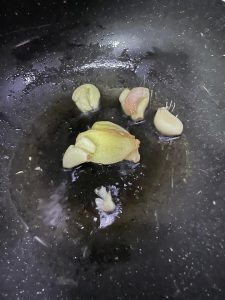
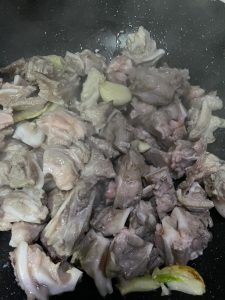
Heat the wok over high heat until a drop of water sizzles away instantly, then add 2 to 3 tbsp oil and swirl to coat. Add the ginger, garlic, Sichuan peppercorns, and star anise and stir-fry until fragrant, about 20 to 30 seconds. Add the cartilage and keep it moving, stir-frying until the pieces release their liquid and the wok goes from steamy to sizzling, about 5 to 7 minutes. Splash in the Shaoxing wine and continue until the surface of the meat turns glossy with rendered fat and the edges start to brown, another 3 to 4 minutes.
That shift from cloudy steam to clear sizzling is moisture evaporating from the surface of the meat. Only after the water is gone does the temperature climb above the boiling point of water, which is when the Maillard reaction can brown the cartilage and build the roasted, meaty flavor no braise can copy. If you crowd the wok or skip the drying step, the pieces steam and the dish turns gray instead of glossy.
Step 3 — Watch for the Oil-Slick Gloss
Cook until the cartilage looks glazed and the pan bottom shows a thin sheen of rendered fat, with no cloudy water pooling between the pieces. This is the signal that the meat is properly dry-fried and ready for the sauces.
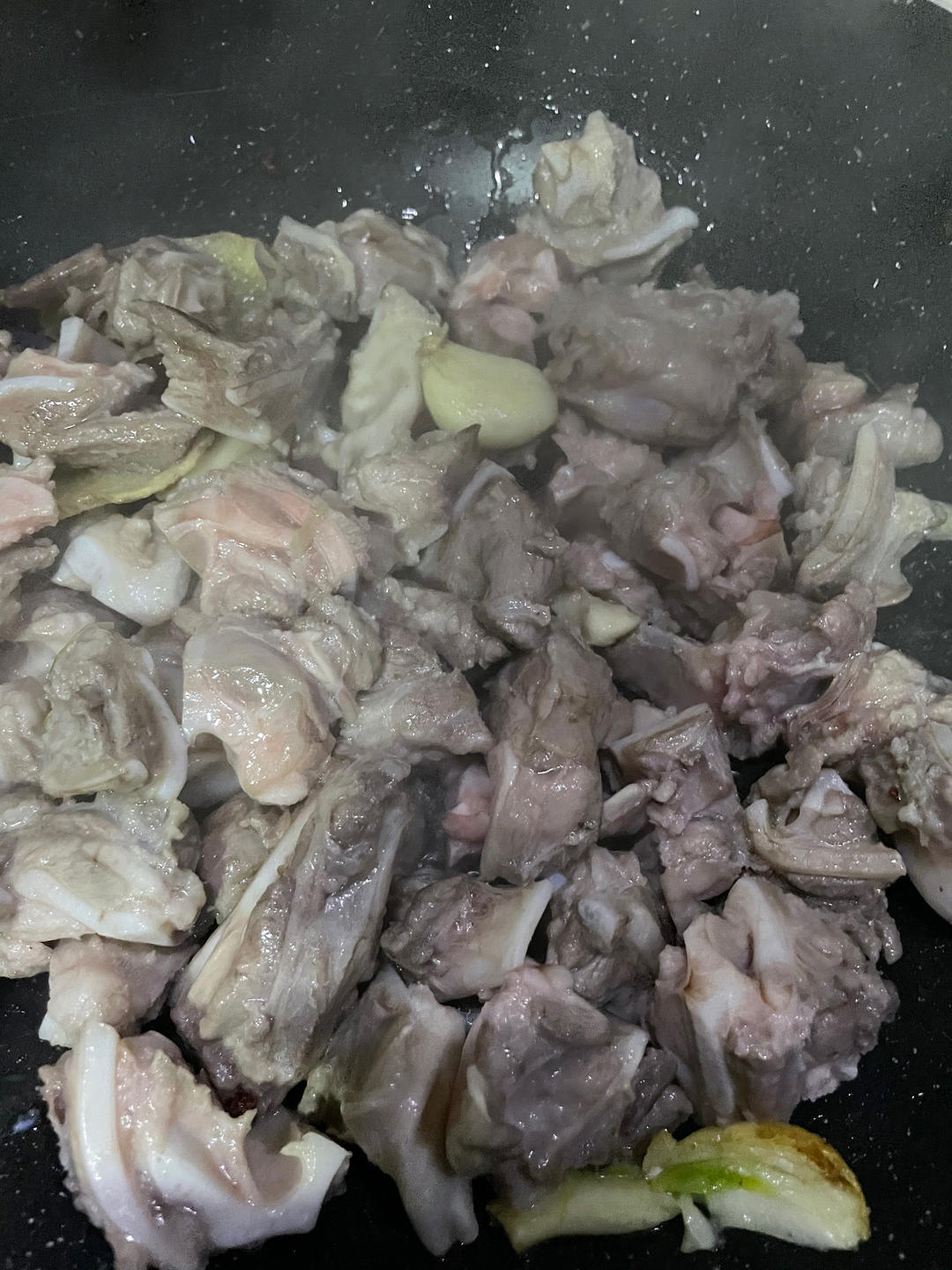
Step 4 — Add the Three Sauces, Then the Chilies, and Toss Hard
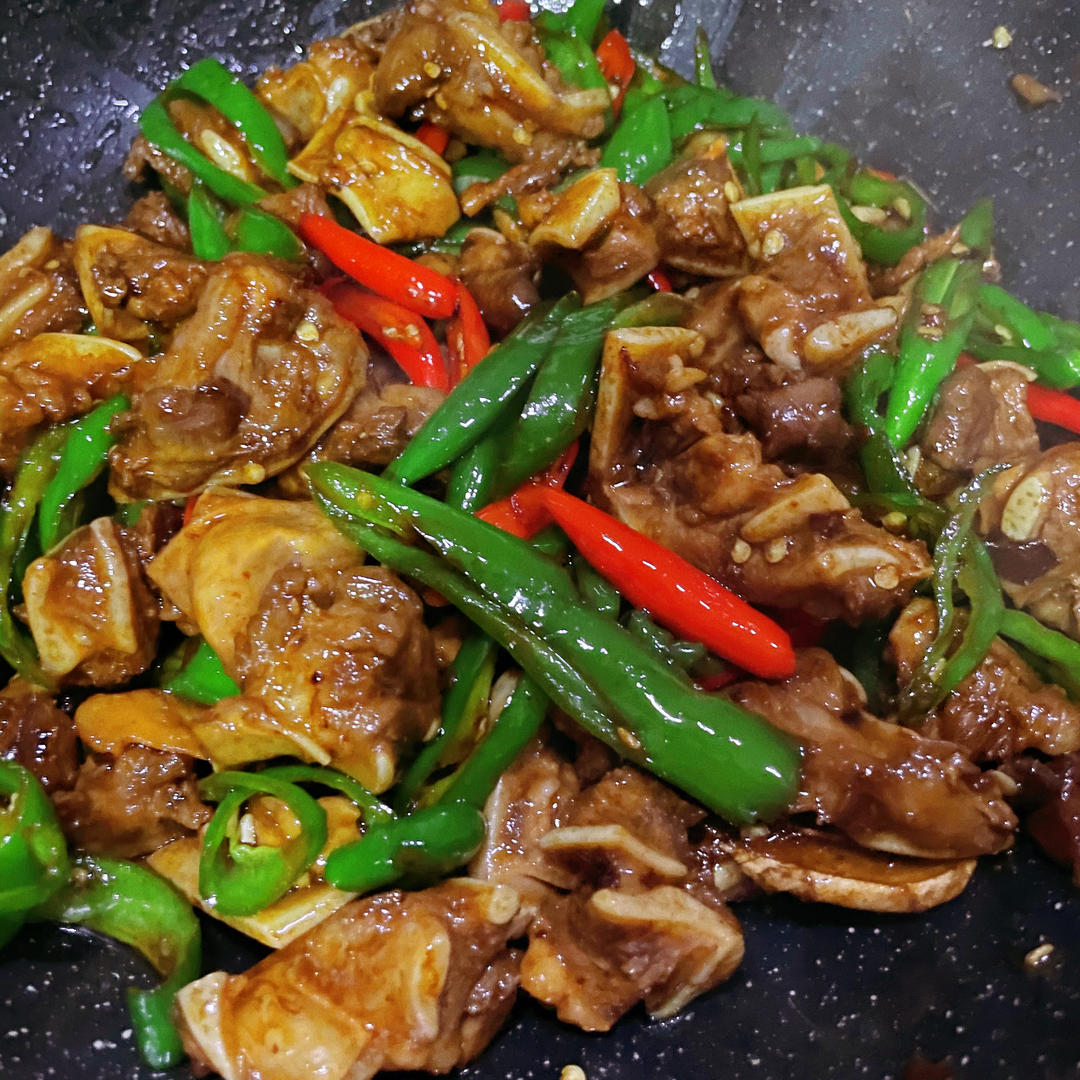
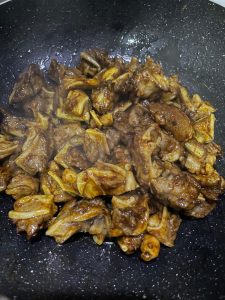
Pour in 2 tbsp light soy sauce in a circle, then 1 tbsp dark soy, then 1 tbsp oyster sauce, stirring each in so it sizzles against the meat. Do not panic if the bottom darkens; keep the wok moving and the meat will keep getting more fragrant. When the sauce has coated every piece, add the green chili segments and bird’s eye chili slices with the salt and stir-fry over high heat for 1 to 2 minutes until the chilies are bright and just tender.
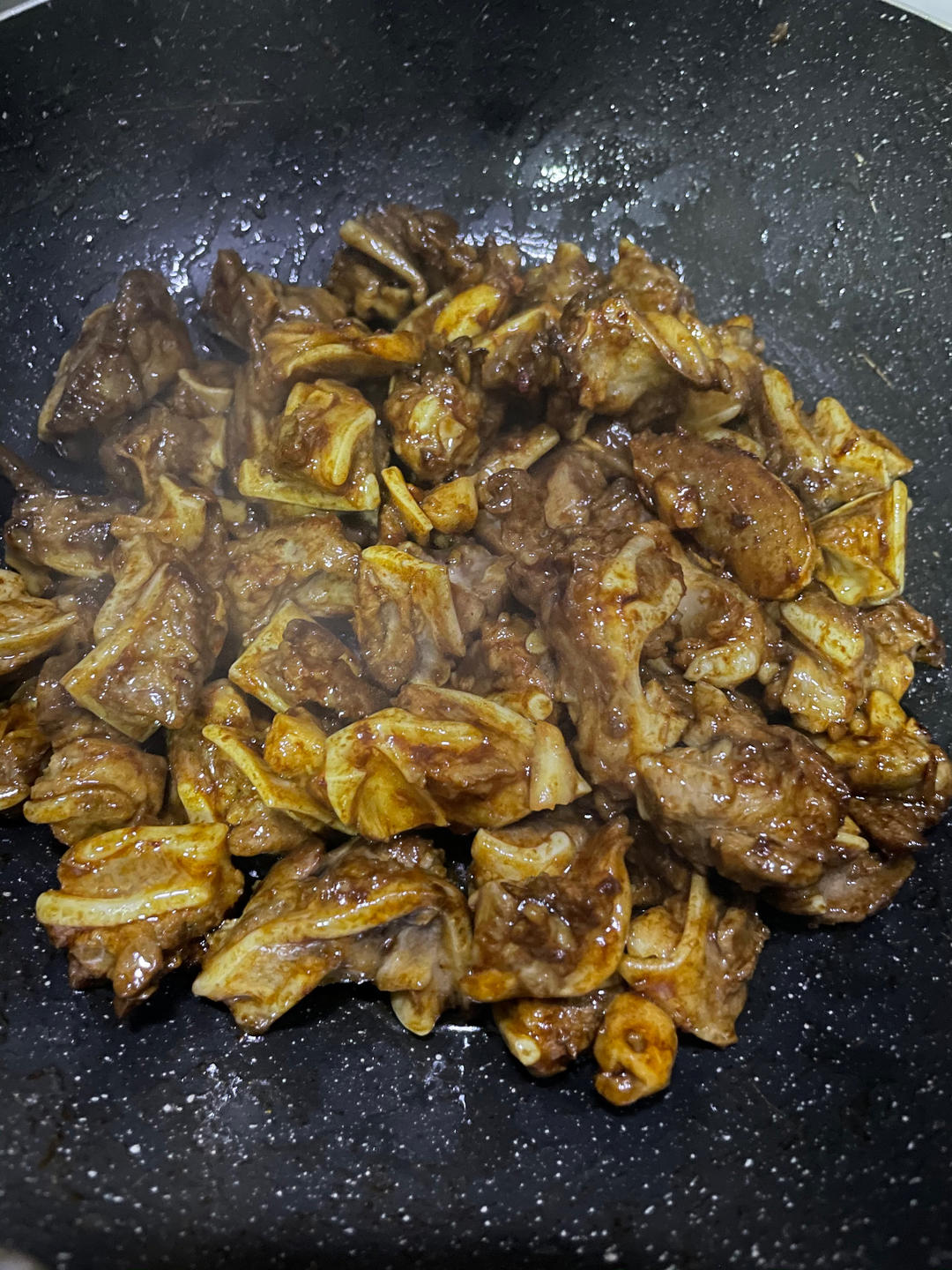
Adding sauces in circles against the side of the wok, not into a pile of meat, is the classic technique that lets each sauce hit the hot metal, caramelize for a second, and turn glossy before it is tossed through. Fresh chilies go in last because they are mostly water; a long cook would steam them soft and wash away their heat into the sauce.
Step 5 — Plate and Eat Over Rice
Scoop the cartilage onto a plate immediately and serve with steamed rice. The recipe’s author calls it a proper rice-killer: very spicy, fully flavored, and gone fast.
Common Mistakes When Making Spicy Pork Cartilage
1. The cartilage stews instead of crisping. Cause: it went into the wok wet, or the pan was crowded. Fix: dry the pieces thoroughly after soaking and cook in two batches if your wok is small; the wok should sizzle, not simmer.
2. The aromatics burn before the meat cooks. Cause: garlic and peppercorns hit the oil too early and sat too long. Fix: fry them only until fragrant, about 20 to 30 seconds, then add the cartilage right away to drop the pan temperature.
3. The sauce turns the dish muddy instead of glossy. Cause: the sauces went in while water still pooled in the wok. Fix: wait for the oil-slick moment in Step 3, when the pan is dry enough for each sauce to caramelize on contact.
4. The meat is tough and dry, not springy. Cause: cooking too long after the sauces went in, or heat too low so the cartilage simmered rather than seared. Fix: keep the post-sauce time short and the heat high; cartilage should stay chewy-crunchy, never dry. Cook it through to at least 145°F (63°C), rest it, then serve. My guide to why pork turns dry in stir-fry walks through the full mechanics.
5. It is too salty. Cause: three salty sauces plus a spoon of salt. Fix: hold the salt until the end, taste a piece, and add only what it needs; soy and oyster sauces already carry a lot of salt.
6. The chilies burn black. Cause: they were added to a screaming-hot wok and left too long. Fix: add them, toss 1 to 2 minutes, and pull the dish off the heat while they are still bright green.
Variations
Milder heat. Halve the bird’s eye chilies and seed them, or swap in 2 mild red bell peppers for part of the green chilies. The dish still tastes like itself, just friendlier.
Extra aroma. Add a pinch of cumin seeds with the aromatics, a nod to the cumin-spiced cartilage sold at Xinjiang stalls. Cumin and Sichuan pepper together are a classic pairing.
Chicken cartilage. Substitute the same weight of chicken cartilage (掌中宝), which needs a slightly shorter dry-fry, about 4 to 5 minutes before the wine goes in.
More of the family. The same three-sauce, chili-finish rhythm powers much of my pork wok cooking: pork and garlic scape stir-fry, pork and enoki mushroom stir-fry, and the classic pork stir-fry with green peppers.
Frequently Asked Questions
What exactly is pork cartilage, and where do I buy it? It is the soft cartilage from the pig’s breastbone and rib tips, usually sold with some meat attached. Ask an Asian butcher for pork cartilage or soft bone; many will set it aside if you call ahead. In a pinch, meaty rib tips cook the same way.
Can I make this less spicy? Yes. Reduce the bird’s eye chilies to 3 or 4, remove their seeds, and keep the green chilies whole instead of sliced. The soy and oyster glaze stays the same, so it still tastes like the original, just with less burn.
Is pork cartilage supposed to be this chewy? Yes. It is a cartilage stir-fry, not a braise; the crunch is the point. If you want it softer, simmer the soaked cartilage in water for 20 minutes before stir-frying, though that moves away from the original technique.
Why does my wok version turn watery? Wet cartilage and a crowded pan release too much liquid. Dry the pieces well, use high heat, and cook in two batches if needed so the wok stays hot enough to evaporate moisture.
Can I use chicken instead? Chicken cartilage (掌中宝) is the closest substitute, but skinless chicken thigh or even a pork shoulder stir-fry works as a non-cartilage version. For a pork stir-fry with a completely different flavor direction, my Sichuan fish-fragrant pork is the one to try, and scallion pork belly stir-fry shows how gentle and sweet this wok can also go.
How to Serve
Serve the cartilage straight over steamed rice, with the glossy sauce spooned over the top; this is a rice-killer by design. For a Hunan-style table, add a cooling vegetable and a soup, and for another spicy, deeply savory protein, my spicy chicken stir-fry fits right in. A cold beer or a glass of iced tea stands up to the heat better than water does.
Storage & Reheat
Refrigerate leftovers in an airtight container for up to 3 days. Reheat in a wok over high heat with a splash of water or in the microwave; the cartilage will soften slightly on reheating, which is normal. For food safety, cook pork to a minimum internal temperature of 145°F (63°C) and rest 3 minutes before serving, and reheat leftovers to 165°F (74°C). Do not leave cooked pork at room temperature for more than 2 hours.
Allergen Notice
Contains soy (light and dark soy sauce) and gluten in the soy and oyster sauces; use tamari and a gluten-free oyster sauce for a gluten-free version. Oyster sauce is made from oysters; avoid it for shellfish-allergic guests and substitute a mushroom-based sauce.
Nutrition Disclaimer
Nutrition information is calculated using an ingredient database and should be considered an estimate. In cases where multiple ingredient alternatives are given, the first listed is calculated for nutrition. Garnishes and optional ingredients are not included.
About the Author & Recipe Development
I am Lin, and I grew up in my parents’ Sichuan restaurant in Chengdu before spending a decade in professional kitchens. Cartilage stir-fries were never on our menu, but they were on our home table, and the version here comes from a xiachufang home cook who understands the cut the way my father does. I tested it three times, once on a weak electric stove where the cartilage steamed instead of searing until I learned to dry it harder, and the notes in this article are the corrections that fixed each batch.
Authoritative References
USDA Safe Temperature Chart for pork cooking and reheating temperatures, and USDA Leftovers and Food Safety for storage guidance.
Spicy Stir-Fried Pork Cartilage (Zhu Cui Gu): The Rice-Killer

Equipment
- Carbon Steel Wok
- Cleaver or Chef’s Knife
- Wok spatula
Ingredients
For the Dish
- 1.75 lb pork cartilage (soft bone), cut into bite-size pieces
- 4 cloves garlic, sliced
- 4 slices fresh ginger
- 1.5 tsp Sichuan peppercorns
- 2 whole star anise
- 2 tbsp Shaoxing wine can substitute with dry sherry
- 2 tbsp light soy sauce
- 1 tbsp dark soy sauce
- 1 tbsp oyster sauce
- 8 green chilies, cut into segments long, mild to medium
- 10 bird’s eye chilies, sliced reduce for milder heat
- 1 tsp fine salt add at the end, to taste
- 2 to 3 tbsp neutral oil
Instructions
- Soak the pork cartilage in cold water for 20 to 30 minutes, rinse, drain, and cut into bite-size pieces. Prepare the ginger, garlic, Sichuan peppercorns, and star anise.

- Heat the wok over high heat, add the oil, and fry the ginger, garlic, Sichuan peppercorns, and star anise until fragrant, about 20 to 30 seconds. Add the cartilage and stir-fry 5 to 7 minutes until the liquid evaporates, then add the wine and continue until the surface turns glossy, 3 to 4 minutes more.
- Cook until the cartilage is glazed with rendered fat and no water pools in the wok.
- Pour in the light soy, dark soy, and oyster sauce, stirring each in until the meat is coated. Add the green chilies and bird’s eye chilies with the salt and stir-fry over high heat for 1 to 2 minutes.
- Plate immediately and serve over steamed rice.





Leave a Reply