The first time I tried to make a noodle sauce from a random jar in the pantry, I ended up with something that tasted like salty bean water and cried through dinner. That was before I understood the real job of a Chinese meat sauce: it has to be chunky enough to eat like a side dish, salty enough to season a whole bowl of noodles, and sturdy enough to live in the fridge for a week. A proper xiang la zhu rou jiang does all three.
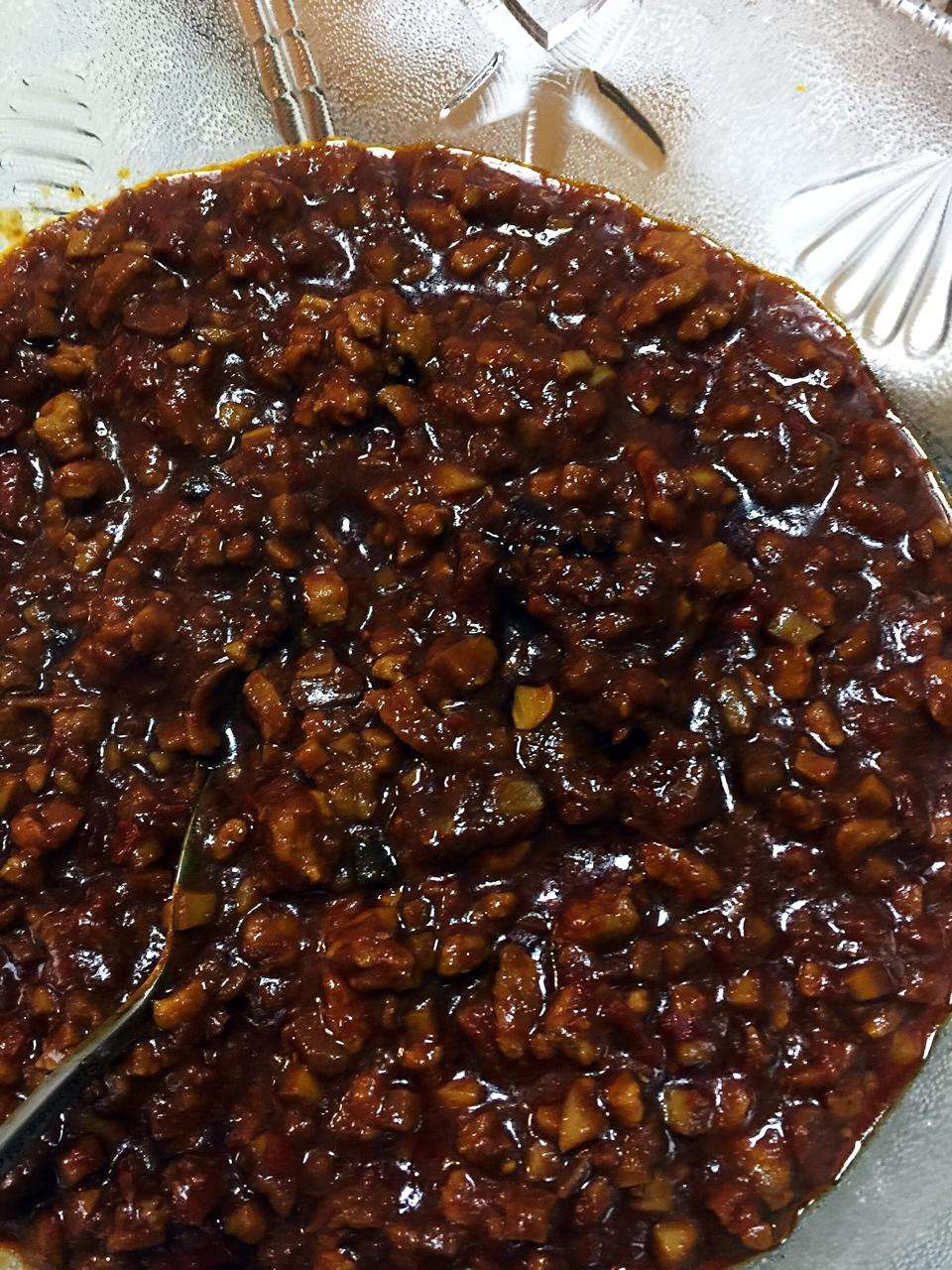
When I ran a home-style noodle shop years ago, we went through a wok of this sauce every single day. The beauty of it is the structure: firm cubes of pork, chewy five-spice dried tofu, and a slow-simmered chili bean paste that turns everything glossy. It is not a quick toss-and-serve sauce – it is a small batch project that pays you back all week.
What Is Spicy Pork Sauce (Xiang La Zhu Rou Jiang)?
Xiang la zhu rou jiang (香辣猪肉酱) translates literally as “spicy pork sauce,” but that undersells it. It is a home-cooked Chinese condiment where diced pork and five-spice dried tofu are stir-fried with doubanjiang (fermented chili bean paste), chili paste, and fresh aromatics, then slowly simmered in water until the liquid concentrates into a thick, spoonable topping. Think of it as a cross between a braise and a paste – loose enough to coat noodles, dense enough to heap on rice.
Unlike the oily zhajiang (fried sauce) used for Beijing-style noodles, this version is simmered rather than reduced purely in oil, so the texture stays soft and the chili flavor mellows. Home cooks make it in big batches and keep it in the fridge; restaurant versions often skip the tofu and add more oil for shelf life. For weeknight noodles, the home style wins on flavor and ease.
If you like the idea of a jar-ready all-purpose meat sauce, my savory minced pork sauce (wan neng rou mo jiang) is the no-chili sibling to this recipe – a great second jar to keep on hand.
1Savory Minced Pork Sauce (Wan Neng Rou Mo Jiang)This “Universal” Minced Pork Sauce (Wan Neng Rou Mo Jiang) is the ultimate 15-minute meal saver. Savory, glossy, and packed with aromatics, it turns plain rice, noodles, or buns into a feast. Based on a classic Chinese home-cooking staple.Check out this recipe
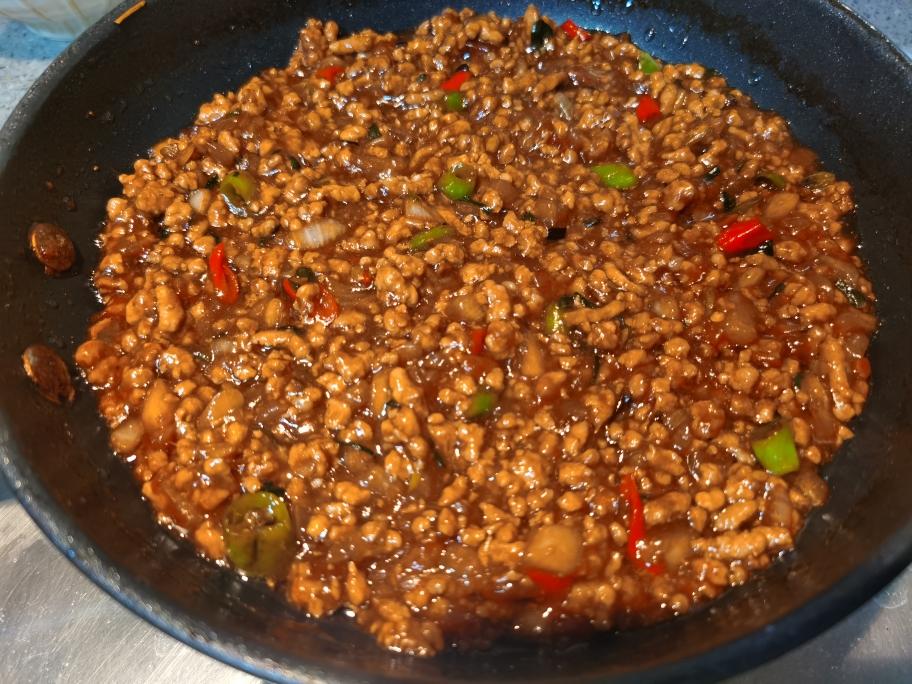
Why This Recipe Works
- A strict 3:1:1 ratio. Three parts pork, one part five-spice tofu, one part aromatics (bird’s eye chilies, garlic, ginger). This keeps the sauce meaty without letting the tofu or the aromatics dominate, and it guarantees the paste seasons every bite evenly.
- Moisture is cooked out on purpose. The pork cubes are stir-fried until the surface liquid evaporates and the meat tightens, which firms the texture before the simmer. No watery, gray crumbles.
- A long, low simmer builds depth. The 200 ml (3/4 cup plus 2 tablespoons) of water slowly reduces, drawing flavor out of the doubanjiang and letting the chili oils emulsify into the sauce.
- Salt comes from the pastes, not the shaker. Doubanjiang and chili paste are salty enough on their own; the recipe needs no added salt at all.
- It stores and reheats beautifully. The oil from the pastes acts as a natural preservative layer, and the sauce keeps a week refrigerated without losing texture.
Equipment Needed
- A wok or a wide 12-inch (30 cm) skillet – you need surface area so the moisture evaporates instead of steaming the meat
- A sharp chef’s knife for even dicing
- A wooden or silicone spatula for the long simmer (a metal spoon will scrape the chili paste into clumps)
- Two clean glass jars with lids, sterilized, for storing
Ingredients
- 300 g (10.5 oz) pork shoulder or pork belly, cut into 1 cm (3/8 in) cubes
- 100 g (3.5 oz) five-spice dried tofu (wu xiang dou gan), cut into 1 cm (3/8 in) cubes
- 60 g (2 oz) bird’s eye chilies (xiao mi jiao), minced
- 20 g (0.7 oz) fresh ginger, minced
- 20 g (0.7 oz) garlic, minced
- 2 tbsp (30 g) doubanjiang (fermented chili bean paste)
- 1 tbsp (15 g) Chinese chili paste (la jiao jiang), or extra doubanjiang
- 200 ml (3/4 cup plus 2 tbsp) water
- 1 tbsp (15 ml) toasted sesame oil
- 2 tbsp (30 ml) neutral cooking oil
Ingredient Notes
Doubanjiang (fermented chili bean paste): This is the backbone of the sauce – a fermented paste of broad beans and chilies, salty and deeply savory. Look for it in the Asian grocery aisle; Pixian doubanjiang is the most famous regional version. Korean gochujang can stand in, but expect a rounder, less sharp flavor.
Five-spice dried tofu (wu xiang dou gan): A firm, pressed tofu seasoned with star anise, cinnamon, and other five-spice aromatics. It is sold refrigerated in Asian markets, often in vacuum packs. It gives the sauce its signature chew and soaks up the chili oil without falling apart. If unavailable, firm tofu pressed for 30 minutes works, but the flavor will be blander – add a pinch of five-spice powder to the simmer.
Bird’s eye chilies: Small, fiery Thai-style chilies. Use fewer for a milder batch; the heat is entirely your call. Fresno or serrano chilies are a gentler Western substitute. Like any chili-based condiment, this also pairs well with a homemade chili-garlic sauce spooned over the top at the table.
One note on the ratio: the amounts above are a single tested batch, but the recipe scales – keep the 3:1:1 pork-to-tofu-to-aromatics ratio and adjust the paste and water proportionally.
Prep & Mise en Place
Everything in this sauce moves quickly once the wok is hot, so prep every component before lighting the burner. Cut the pork into 1 cm (3/8 in) cubes – smaller than a thumbnail, large enough to stay distinct after the simmer. Cut the five-spice tofu to the same size so the two proteins cook at the same rate; a mismatch here is the most common reason the sauce turns out lopsided.
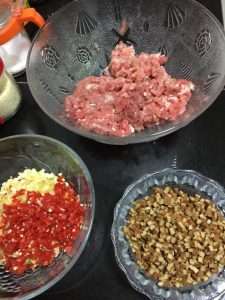
Mince the bird’s eye chilies, ginger, and garlic into one aromatics pile. The total weight should be about one-third of the pork weight. Keep the doubanjiang and chili paste together in a small bowl so you can add them in one motion at the paste stage – the wok does not wait.
Cooking Process
Step 1 – Cut the Pork Into Even Cubes
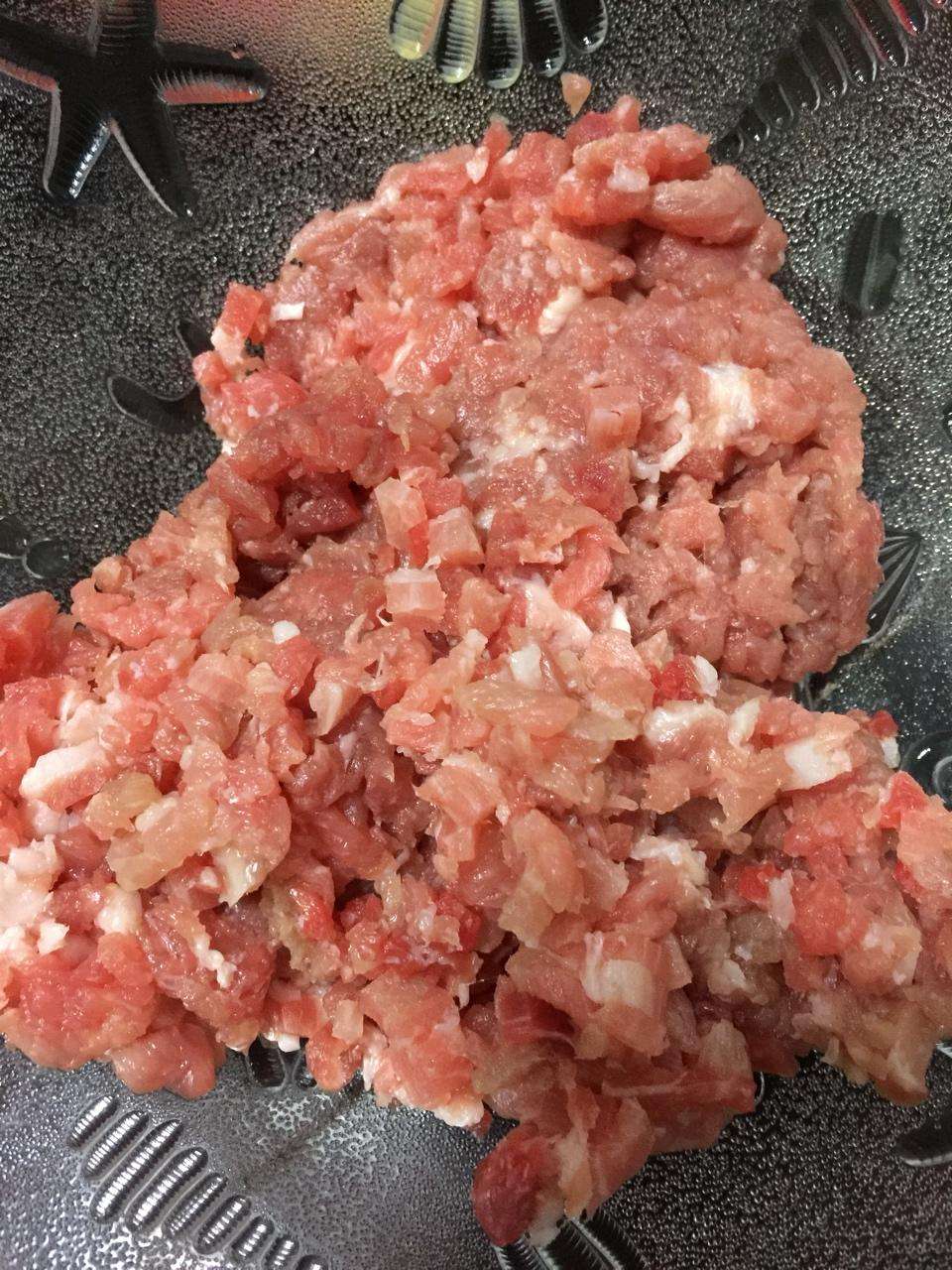
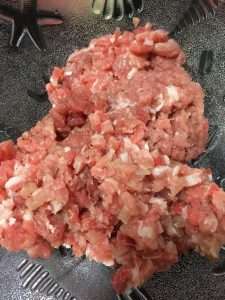
Trim the pork shoulder of excess gristle and cut it into 1 cm (3/8 in) cubes. Keeping the cubes uniform matters: uneven pieces mean some will tighten into dry nuggets while others stay soft. Pat the cubes dry with a paper towel so the surface sears instead of steaming.
Step 2 – Dice the Five-Spice Dried Tofu
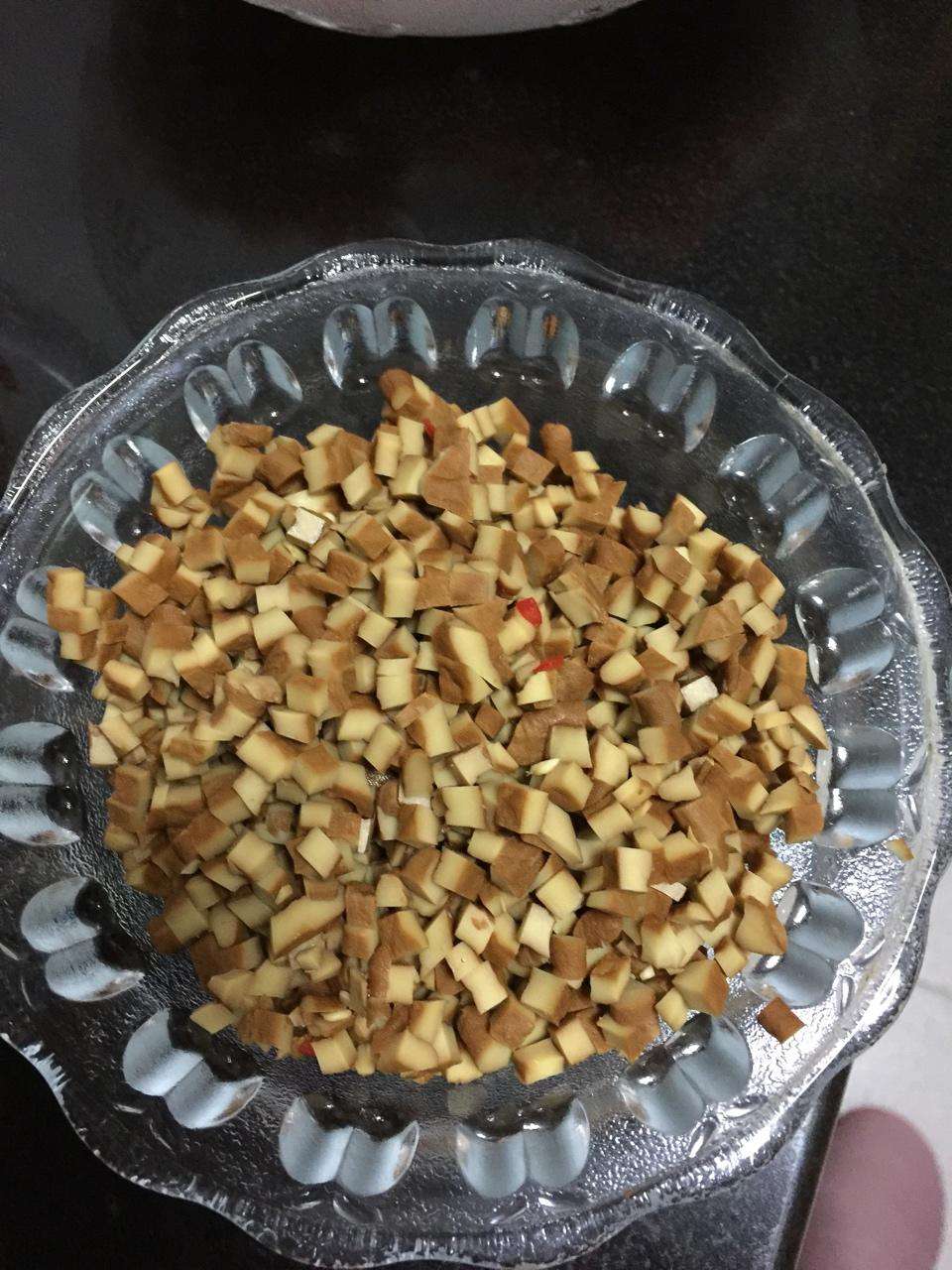
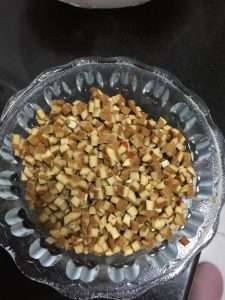
Cut the five-spice dried tofu into cubes the same size as the pork, about 1 cm (3/8 in). The tofu is dense, so a sharp knife matters – a dull blade crushes it and you lose the clean chew.
Step 3 – Mince the Aromatics
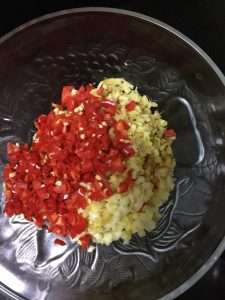
Mince the bird’s eye chilies, ginger, and garlic together into one pile. The finer the mince, the more evenly the aromatics perfume the oil in the next step.
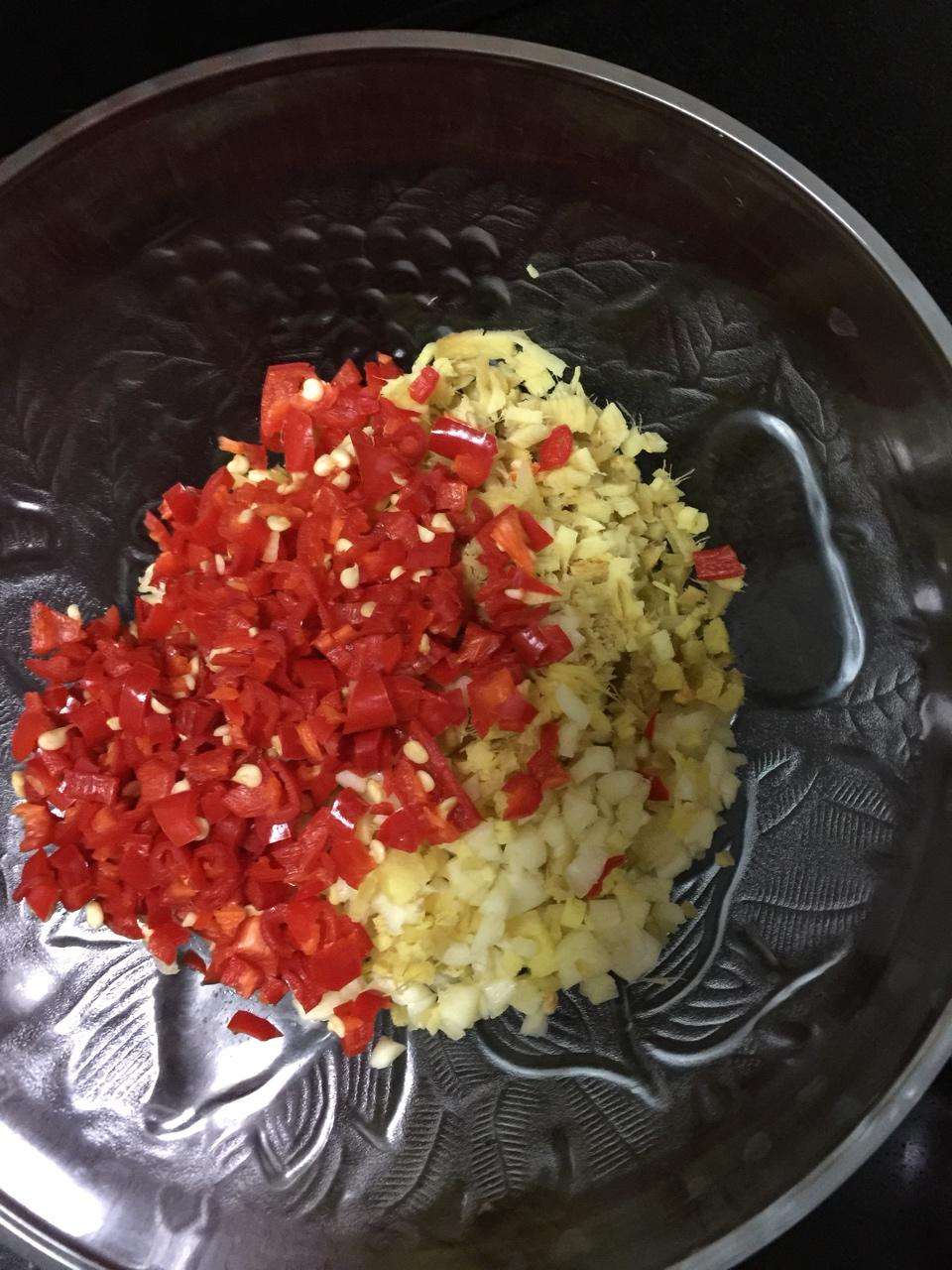
Step 4 – Weigh the 3:1:1 Ratio
Pork, tofu, and aromatics sit at a 3:1:1 ratio by weight: 300 g pork, 100 g tofu, 100 g aromatics. This is the recipe’s internal logic – keep it when you scale.
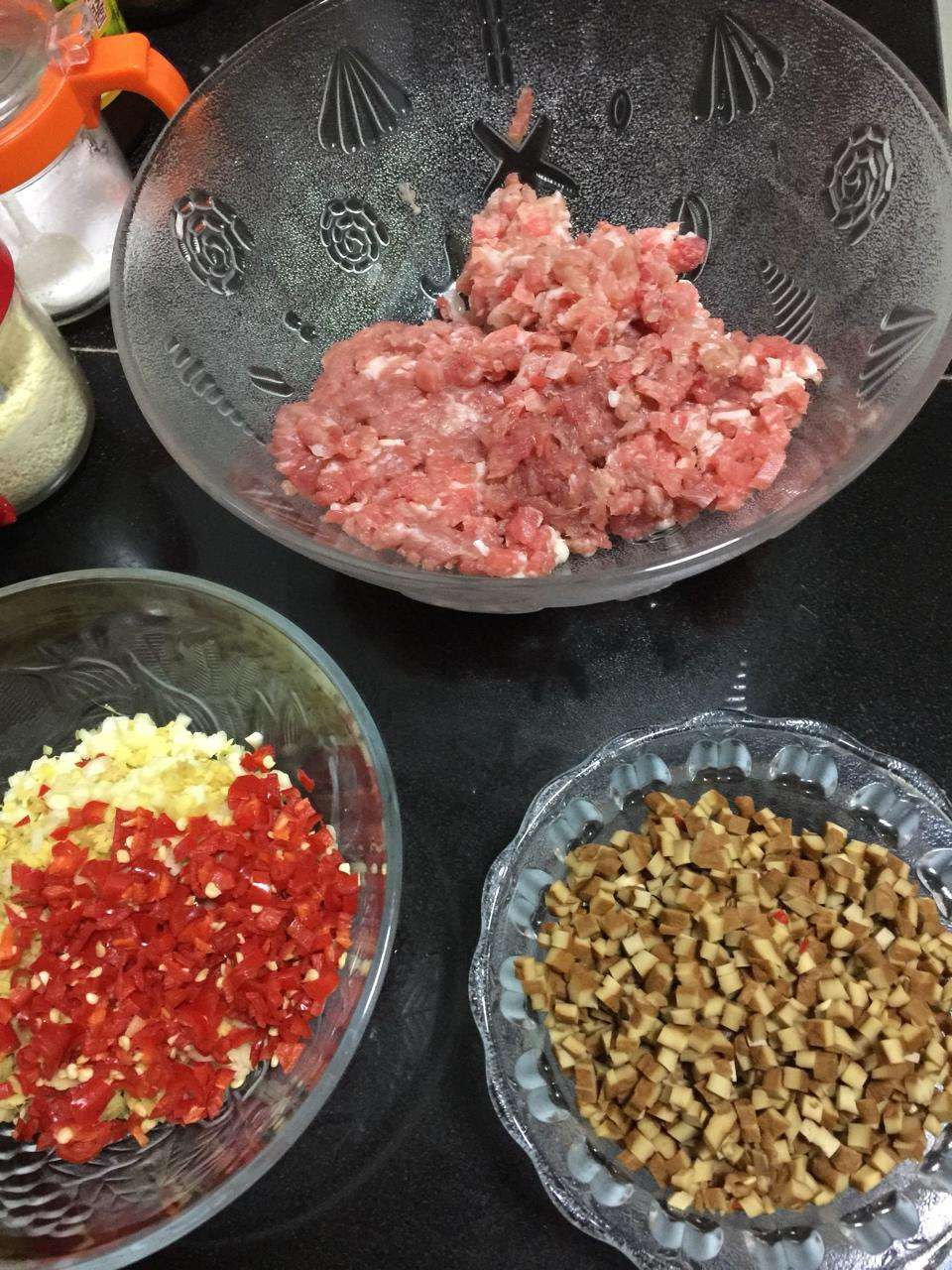
Step 5 – Bloom the Aromatics in Hot Oil
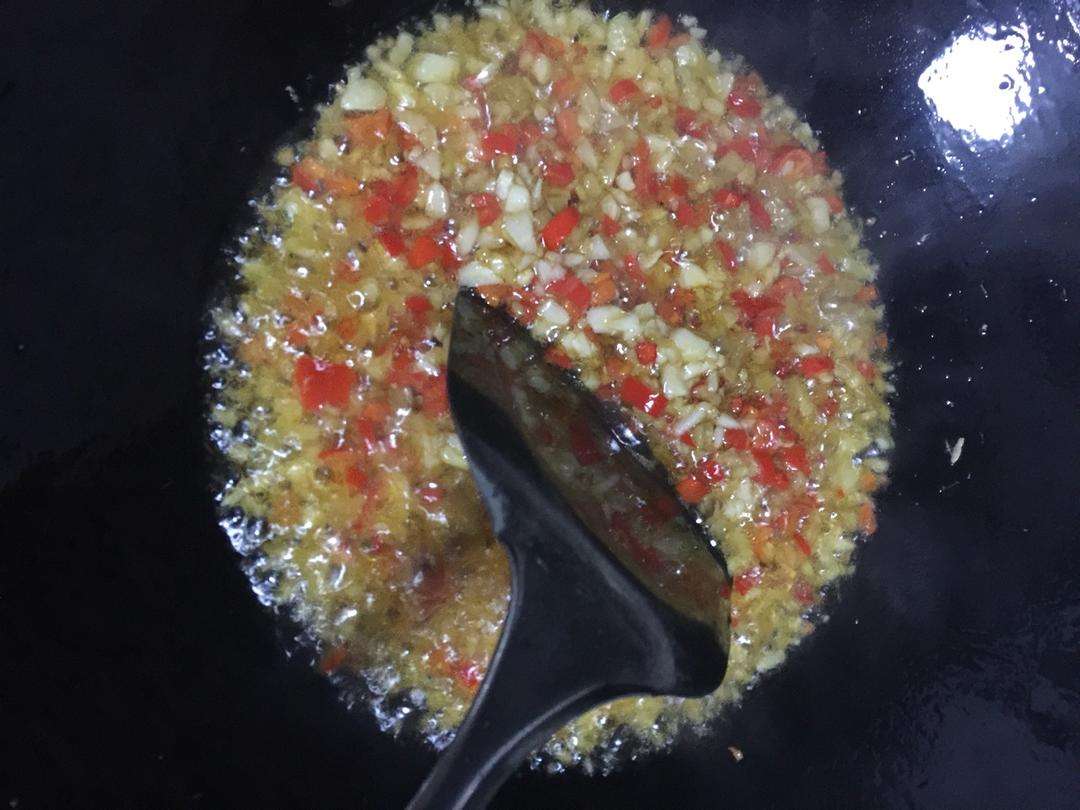
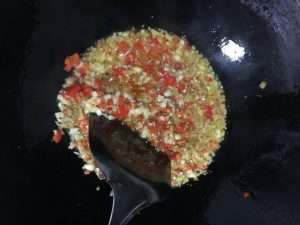
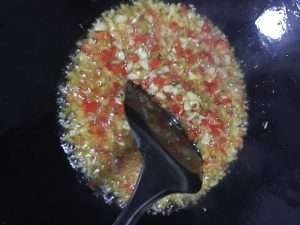
Heat the neutral oil in the wok over medium-high heat until it shimmers (about 160°C / 320°F). Add the minced aromatics and stir-fry for 30-45 seconds until fragrant – the oil should smell sharp and chili-forward. The goal is perfume, not color.
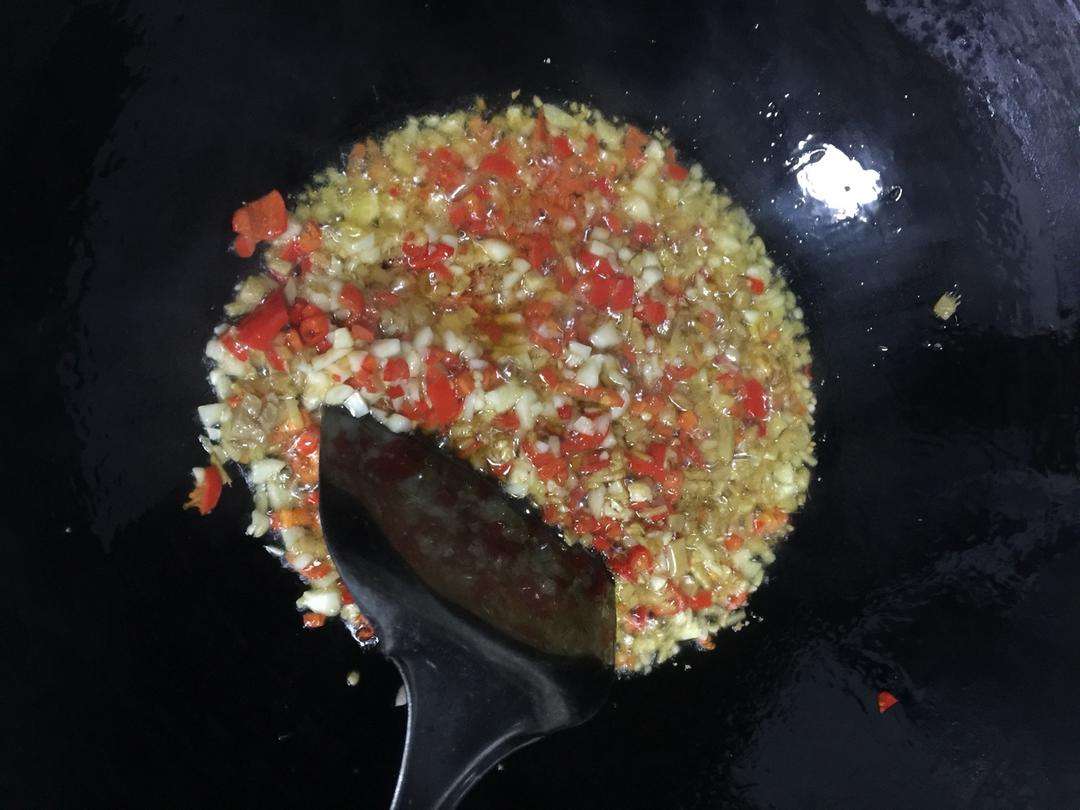
Blooming aromatics in oil is a flavor-extraction step: the chili compounds (capsaicinoids) and garlic’s sulfur aromatics dissolve into the hot fat, where they will later coat every solid in the sauce. Stop as soon as they smell fragrant – scorched garlic turns bitter and there is no fixing it.
Step 6 – Do Not Scorch the Aromatics
Watch the pan closely for the next 30 seconds. If the aromatics start to brown at the edges, drop the heat immediately. The line between fragrant and burnt is thin, and a burnt batch cannot be saved – the sauce will taste acrid no matter how long it simmers.
Step 7 – Add the Pork and Evaporate the Moisture
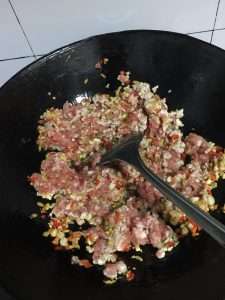
Add the pork cubes and stir-fry over medium-high heat for 4-5 minutes, tossing constantly. The cubes release liquid; keep cooking until it evaporates and the meat visibly tightens and turns opaque – this gives the sauce its firm, biteable texture.
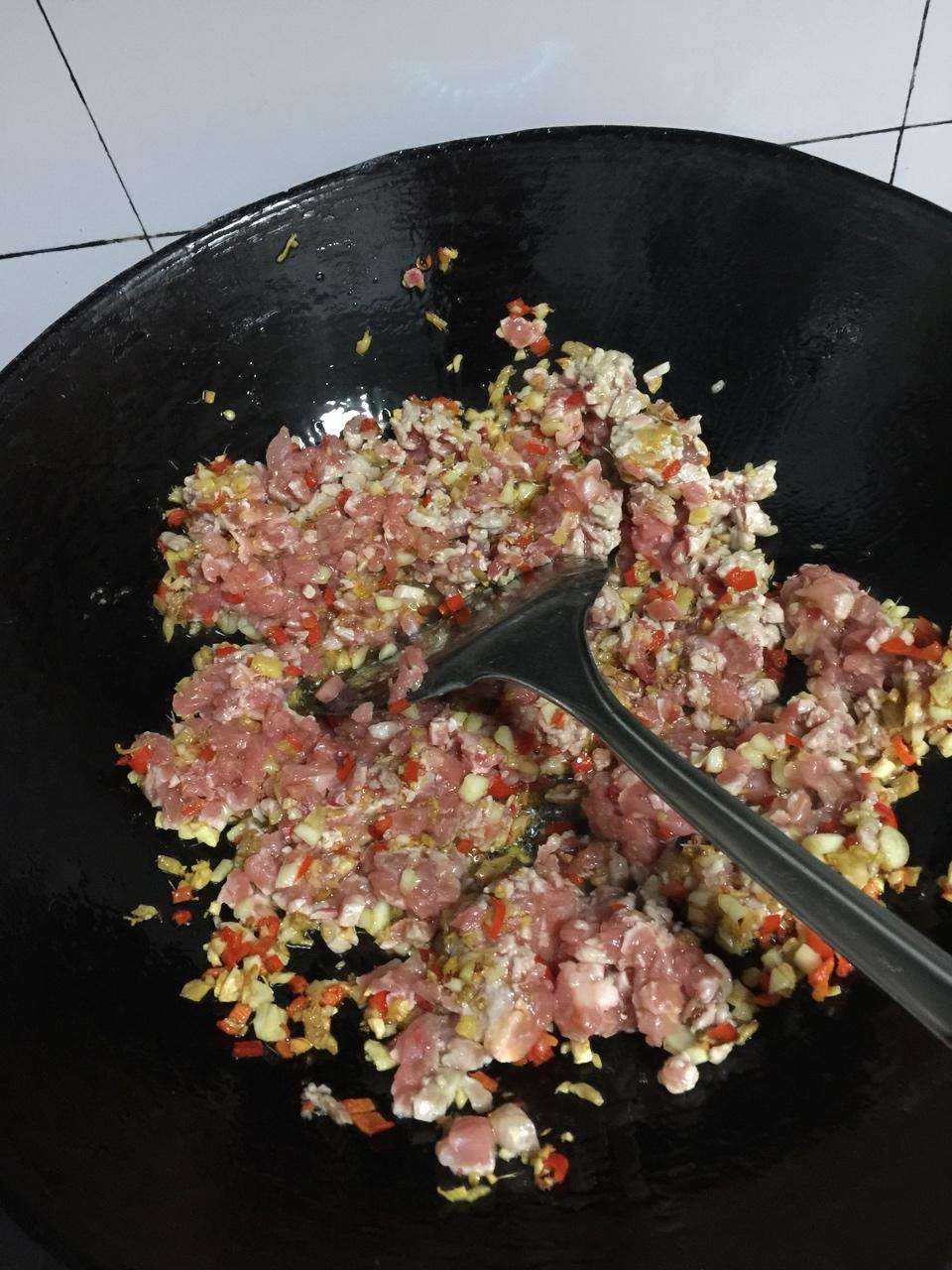
Step 8 – Cook Until Whitened and Half Done
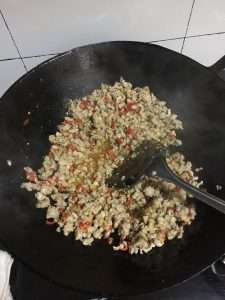
Continue stir-frying until every pork cube turns pale white with no pink remaining – roughly 2 more minutes. The cubes are only about halfway to done; the simmer will finish them. Do not rush to the paste stage while the meat still weeps moisture, or the sauce will end up watery.
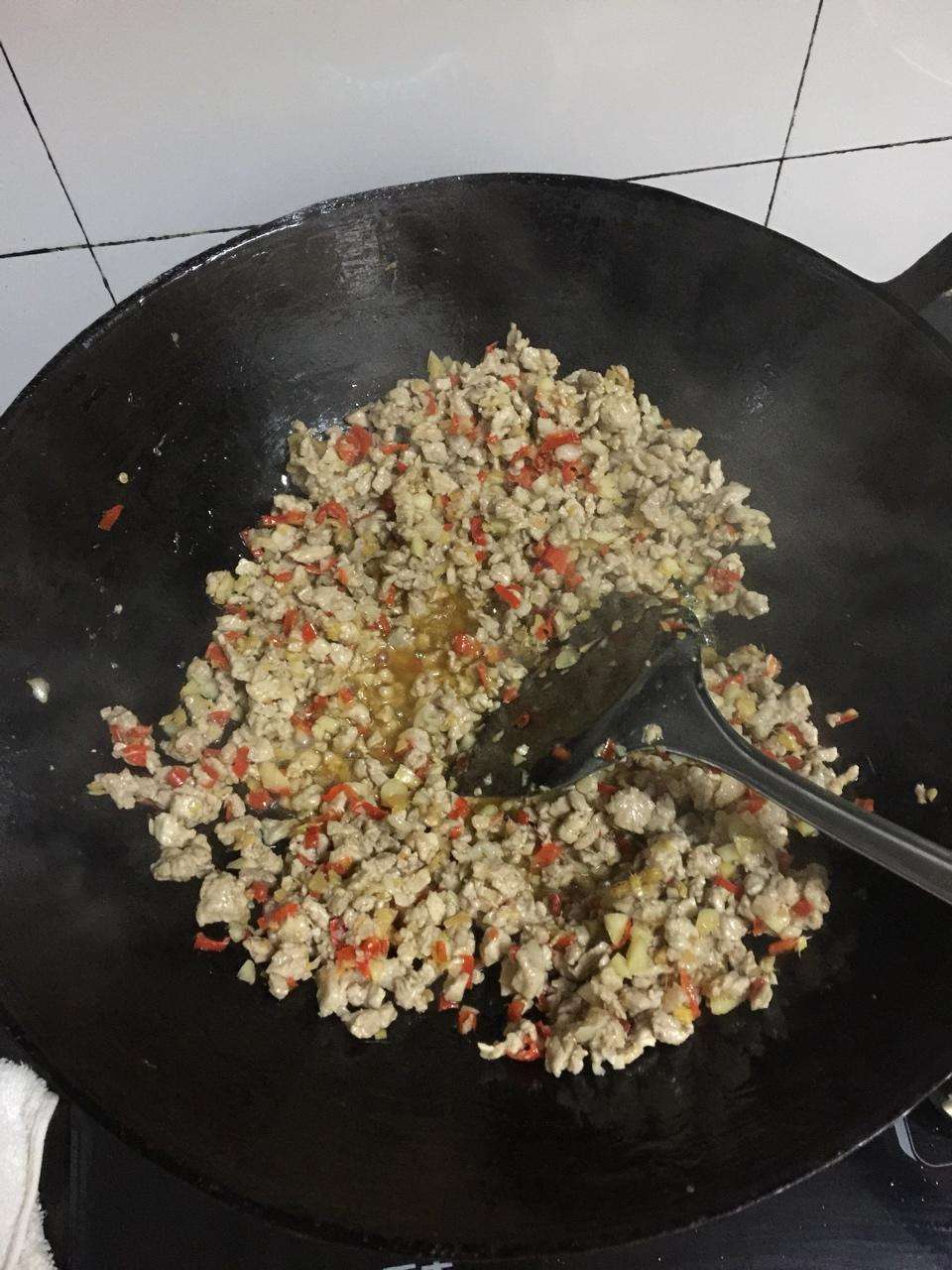
Step 9 – Add the Five-Spice Tofu
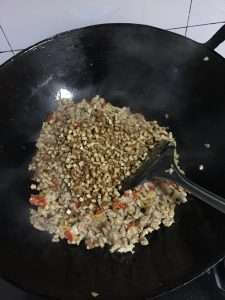
Add the diced five-spice tofu and stir-fry for 1-2 minutes until every cube is glossy and warmed through before the pastes go in.
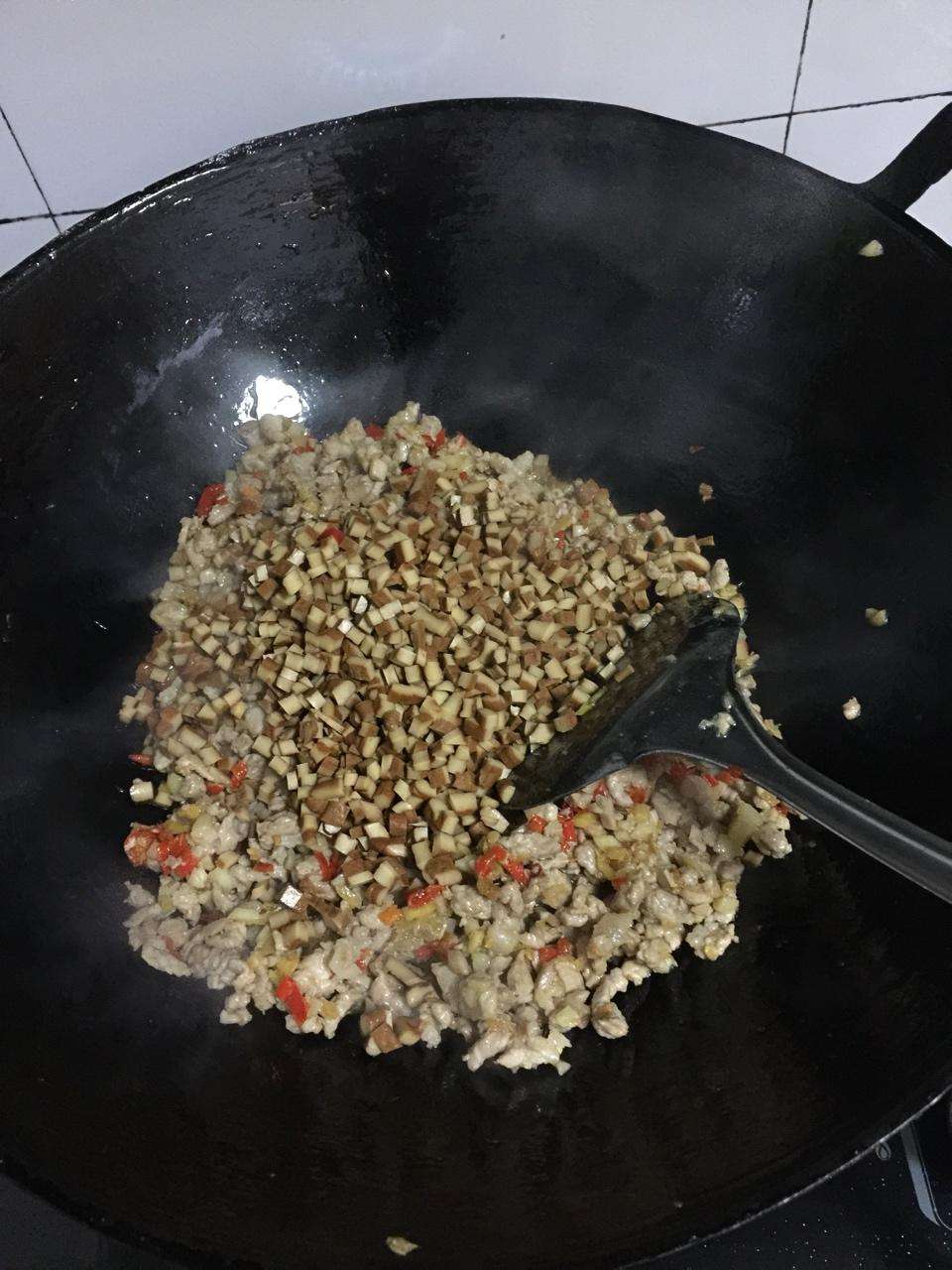
Step 10 – Stir In the Doubanjiang and Chili Paste
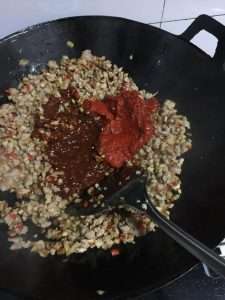
Add the doubanjiang and chili paste, then stir-fry for 2-3 minutes so the pastes fry in the oil and the whole batch turns a deep brick-red. This “frying the paste” stage is where most of the sauce’s complexity is born.
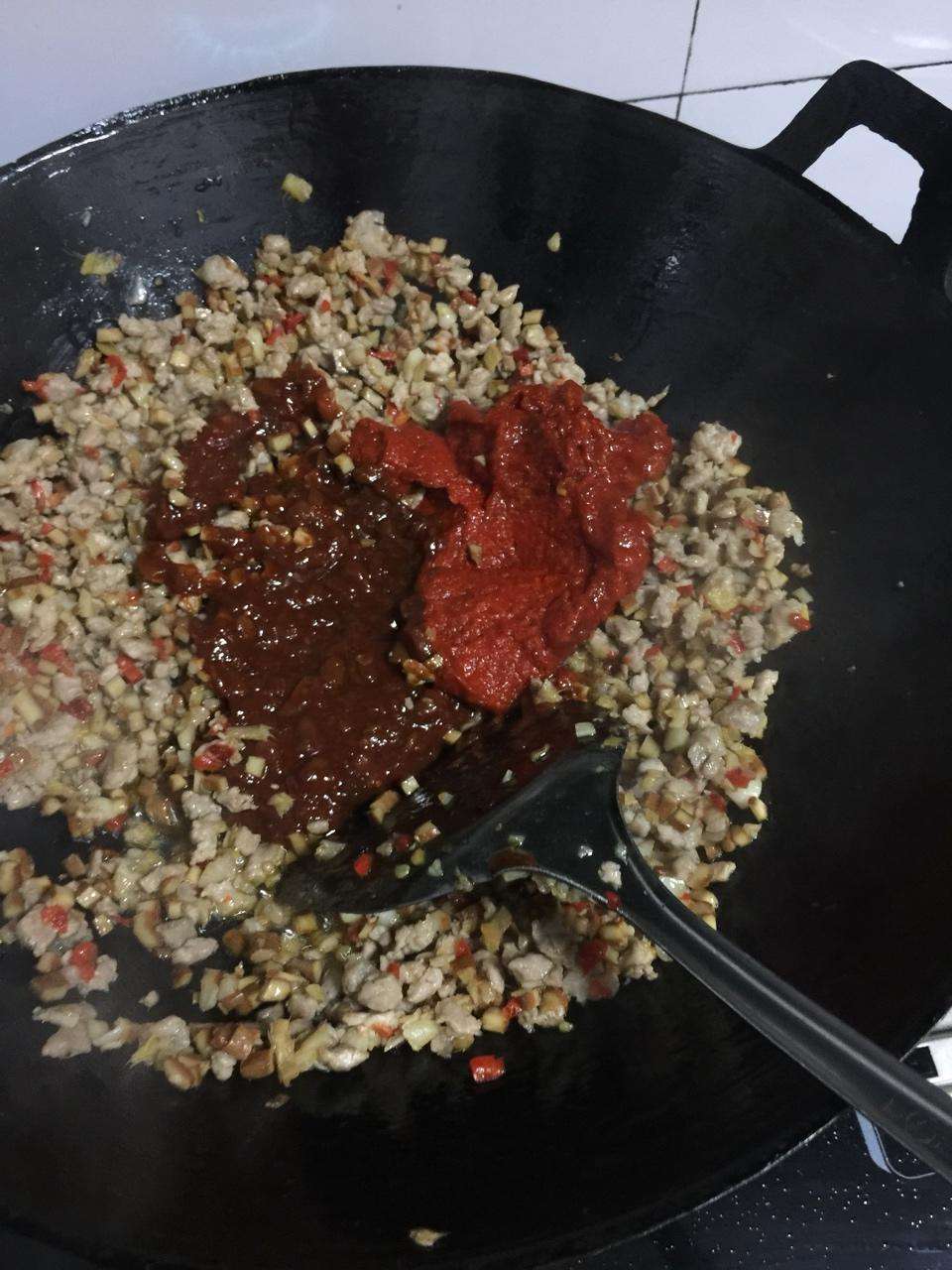
Frying fermented pastes in oil before adding liquid is the classic Chinese move. The heat releases volatile aroma compounds trapped in the fermentation and deepens the umami – the same reason a stir-fry sauce built on a fried base always tastes rounder than one simply stirred in at the end.
Step 11 – Add Water and Simmer Slowly
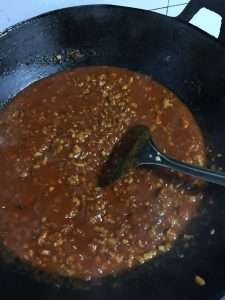
Pour in the 200 ml (3/4 cup plus 2 tbsp) water and bring it to a gentle boil, then drop the heat to low. Simmer uncovered for 15-20 minutes, stirring every couple of minutes with a spatula to keep the bottom from catching and burning. The sauce is done when the liquid has reduced to a thick, glossy coating that barely drips off a lifted spoon.
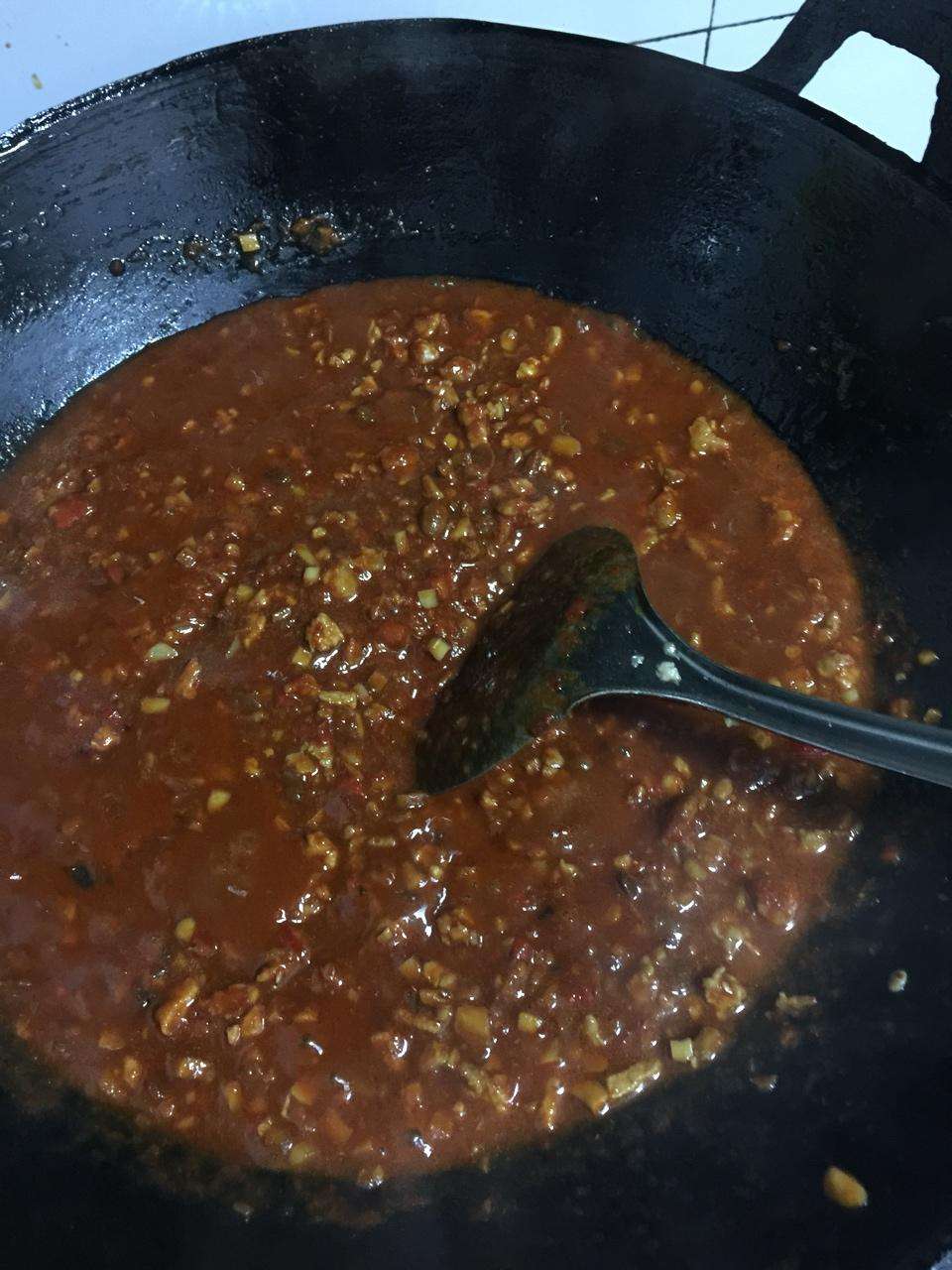
The low, slow simmer does two jobs at once: it hydrates the dried-tofu cubes so they soften to a pleasant chew, and it concentrates the sauce through evaporation. Stirring is non-negotiable – doubanjiang settles, and a scorched bottom will taint the entire batch.
Step 12 – Finish With Sesame Oil and Jar It
When the sauce has thickened, kill the heat and drizzle in the toasted sesame oil. Taste – the pastes are salty enough that no salt is needed; if you want a touch of sweetness, a small pinch of sugar or chicken bouillon powder is the traditional option. Cool completely, then spoon into clean jars and seal. It keeps refrigerated for up to a week.
Common Mistakes When Making Spicy Pork Sauce
1. Dicing everything unevenly. Cause: rushing the knife work and cutting pork, tofu, and aromatics to different sizes. Fix: keep all cubes at about 1 cm (3/8 in) and keep the aromatics finely minced – consistent pieces cook and absorb sauce at the same rate.
2. Scorching the aromatics. Cause: the wok is too hot or the aromatics sit in the oil while you grab another ingredient. Fix: have everything measured before the burner comes on, and pull the wok off the heat the moment the aroma blooms.
3. Skipping the moisture-evaporation stage. Cause: adding the pastes while the pork still weeps liquid. Fix: keep stir-frying the pork until the pan goes from cloudy-wet to shiny-oily and the cubes tighten – the sauce will never properly thicken otherwise.
4. Adding salt. Cause: assuming a meat sauce needs table salt. Fix: doubanjiang and chili paste are heavily salted; taste before adding anything. If it tastes flat, it wants more simmer time or a pinch of sugar, not salt.
5. Letting the bottom scorch during the simmer. Cause: walking away on low heat – low heat still catches if the paste settles. Fix: stir every 2 minutes with a spatula, scraping the bottom each pass, and keep the heat at the lowest setting that maintains a lazy bubble.
6. Jarring the sauce while it is hot. Cause: impatience after a long cook. Fix: cool the sauce completely first – hot sauce steams inside the jar, and the trapped condensation thins the sauce and shortens its fridge life.
Variations
Heat level: Cut the bird’s eye chilies in half for a mild batch, or double them for a serious one. The simmer mellows heat, so taste after step 11 rather than judging from the raw chilies.
Meat swap: Ground pork works in a pinch, collapsing into a ragu-like texture that is excellent on rice. Diced chicken thigh is a lighter option; the beef version over noodles follows the same method as my spicy beef sauce.
Extra aromatics: A handful of chopped scallions stirred in at the very end adds a fresh, bright note that contrasts the deep chili paste – many home cooks do this right before serving rather than before jarring.
Sauce-thickener style: For a glossier, lacquered finish like restaurant noodle toppings, whisk 1 teaspoon cornstarch with 2 tablespoons cold water and stir it in during the last minute of the simmer. The original home version relies on reduction alone, so this is optional.
Frequently Asked Questions
Can I substitute the five-spice dried tofu? Firm tofu pressed for 30 minutes will work structurally but is blander; add a pinch of five-spice powder to the simmer. Smoked tofu is the best flavor match if you can find it.
How long does this sauce keep? Stored in a sealed jar in the fridge, it keeps for about a week. The chili oil layer on top helps preserve it – do not scrape it off until you use the sauce.
Can I freeze it? Yes. Portion into small containers and freeze for up to 3 months; thaw overnight in the fridge and reheat gently in a pan.
Why is my sauce watery? Either the pork moisture was not evaporated before the pastes went in, or the simmer was cut short. Cook it longer over low heat, stirring, until the liquid reduces to a glossy coating – the same logic as fixing any sauce that will not thicken.
Is this the same as zhajiang? Not quite. Zhajiang is typically a drier, oilier fried sauce used for Beijing-style noodles. This xiang la zhu rou jiang is simmered with water, chunkier, and carries the five-spice tofu. If you want the classic fried version, see my universal Chinese meat sauce guide.
How to Serve
Spoon a generous two tablespoons over hot noodles with a handful of shredded cucumber and you have a weeknight dinner that beats takeout. It also shines over plain steamed rice, as a filling for savory sauce pork buns, or as a dip for blanched greens. For a spicy-meat-lover’s table, pair it with stir-fried minced pork with chili peppers and a bowl of zhajiang noodles – the classic noodle-sauce double act.
Storage & Reheat
Refrigerate the cooled sauce in sealed glass jars for up to 7 days; the surface oil layer acts as a natural barrier. For longer storage, freeze portions for up to 3 months. Reheat only what you need over medium-low heat, adding a teaspoon of water if it has thickened too much. Always use a clean, dry spoon to scoop from the jar – any water introduced shortens shelf life. Never leave the jar out of the fridge for more than 2 hours. For more on keeping sauces at their best, see my guide on how to store Chinese sauces.
Allergen Notice
This recipe contains soy (doubanjiang, five-spice tofu, soy-based pastes) and sesame (toasted sesame oil). Doubanjiang may also contain wheat-based components in some brands; check the label if gluten is a concern. It is naturally free of nuts, eggs, and dairy.
Nutrition Disclaimer
Nutrition information is calculated using an ingredient database and should be considered an estimate. In cases where multiple ingredient alternatives are given, the first listed is calculated for nutrition. Garnishes and optional ingredients are not included.
About the Author & Recipe Development
I am Lin, a professional Chinese chef who spent a decade in high-volume restaurant kitchens before writing about Chinese cooking. This sauce is adapted from a home-style recipe that appeared on a popular Chinese recipe site, and I tested it against the way I used to build noodle toppings in the shop: aromatics bloomed in oil, moisture driven off the protein, pastes fried until they darkened, then a patient simmer. The 3:1:1 ratio is the piece I kept from the original cook – it is the single most useful scaling rule for this kind of sauce, and it survives every batch I have made since.
Authoritative References
USDA Food Safety and Inspection Service – Safe Temperature Chart for ground and cubed meat handling and storage guidance.
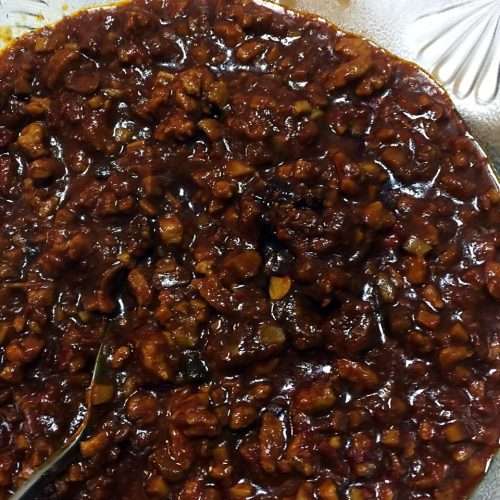
Foolproof Spicy Pork Sauce (Xiang La Zhu Rou Jiang) for Noodles

Equipment
- Wok or wide skillet
- Chef’s knife
- Glass Jars
Ingredients
For the Sauce
- 300 g pork shoulder or pork belly, cut into 1 cm cubes 10.5 oz
- 100 g five-spice dried tofu, cut into 1 cm cubes 3.5 oz
- 60 g bird’s eye chilies, minced 2 oz, adjust for heat
- 20 g fresh ginger, minced 0.7 oz
- 20 g garlic, minced 0.7 oz, about 4 cloves
- 2 tbsp doubanjiang (fermented chili bean paste) 30 g
- 1 tbsp Chinese chili paste, or extra doubanjiang 15 g
- 200 ml water 3/4 cup plus 2 tbsp
- 1 tbsp toasted sesame oil 15 ml
- 2 tbsp neutral cooking oil 30 ml
Instructions
- Trim the pork shoulder and cut it into 1 cm (3/8 in) cubes. Pat dry so the surface sears instead of steaming.

- Cut the five-spice dried tofu into cubes the same size as the pork, about 1 cm (3/8 in).
- Mince the bird’s eye chilies, ginger, and garlic together into one pile.
- Weigh the components to keep the 3:1:1 ratio: 300 g pork, 100 g tofu, 100 g aromatics.
- Heat the neutral oil in a wok over medium-high heat until shimmering (about 160°C / 320°F). Add the minced aromatics and stir-fry 30-45 seconds until fragrant.

- Do not scorch the aromatics – if they start to brown at the edges, lower the heat immediately.
- Add the pork cubes and stir-fry over medium-high heat for 4-5 minutes until the released moisture evaporates and the meat tightens and turns opaque.
- Continue stir-frying until every cube is pale white with no pink, about 2 more minutes – the meat is only half cooked at this point.
- Add the diced five-spice tofu and stir-fry 1-2 minutes until glossy and warmed through.
- Add the doubanjiang and chili paste; stir-fry 2-3 minutes until the whole batch turns a deep brick red and smells deeply fermented.
- Pour in 200 ml (3/4 cup plus 2 tbsp) water, bring to a gentle boil, then simmer uncovered on low for 15-20 minutes, stirring every couple of minutes, until the sauce is thick and glossy.
- Off heat, stir in the toasted sesame oil. Cool completely, spoon into clean jars, and seal. Keep refrigerated up to 7 days.












Leave a Reply