If you have ever eaten dumplings on the Shandong coast, you have probably met 鲅鱼水饺 — Spanish mackerel dumplings. They are not delicate little seafood purses. They are big, pale, almost cloud-like dumplings with a filling so bouncy it springs back at the chopstick, and so juicy that the first bite always threatens your shirt.
The trick is not the fish itself. It is the water. A full rice bowl of chilled Sichuan peppercorn water gets beaten into the mackerel paste, drop by drop, until the filling turns glossy and light. That is what keeps the fish from tasting dry or fishy, and it is why the dumplings stay tender even after they cool. Learn this one technique and you can apply it to any seafood filling you like.
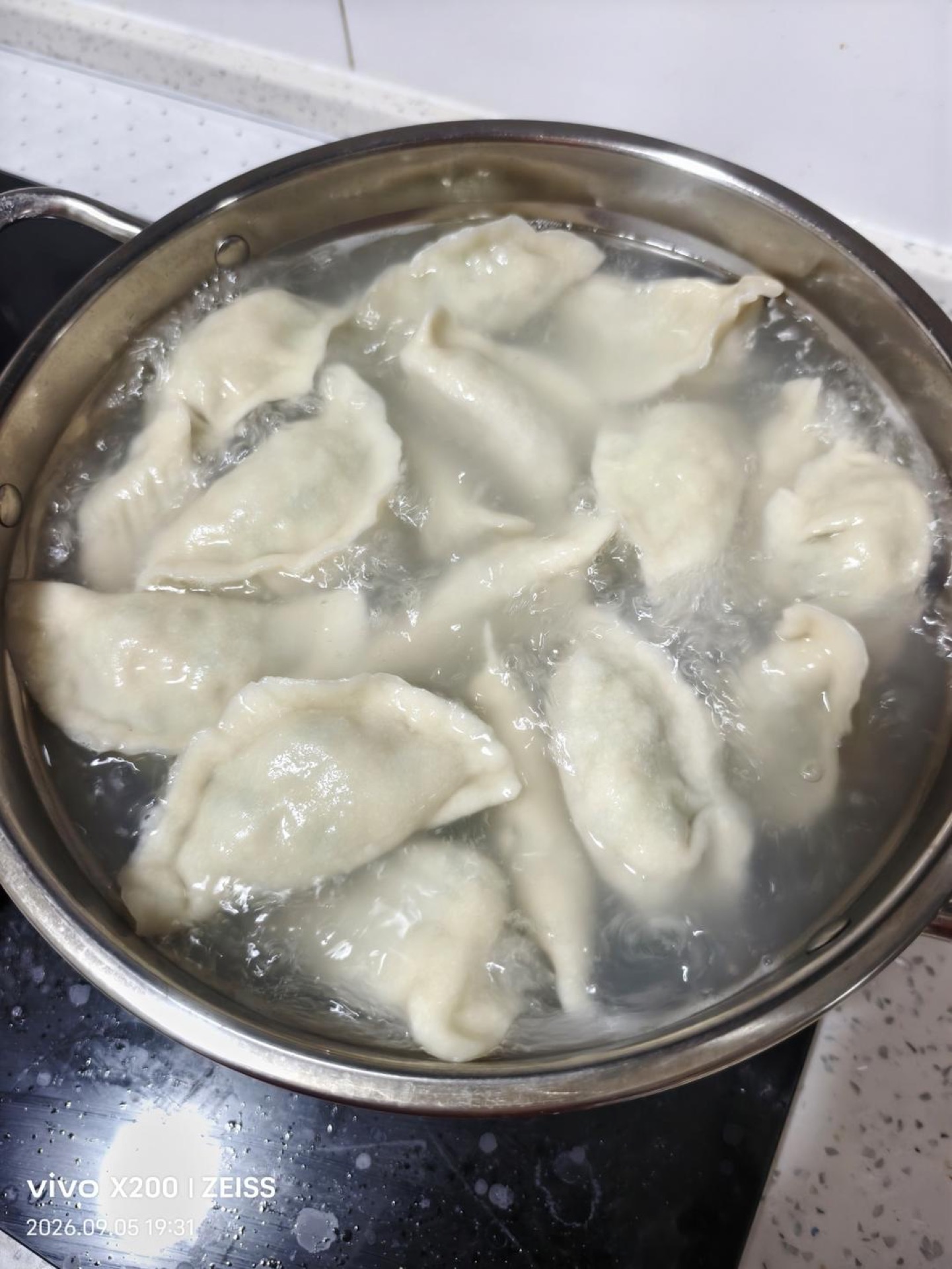
What Is 鲅鱼水饺?
鲅鱼 (bà yú) is Spanish mackerel, and 水饺 (shuǐ jiǎo) are boiled dumplings. Along the Jiaodong Peninsula — Yantai, Weihai, Qingdao — this is the dumpling that shows up for New Year, for a son-in-law’s first visit to his in-laws, and for any table where someone wants to show off. Restaurants there sell them by the piece, not by the plate, because each one is genuinely large.
In coastal Shandong, a plate of mackerel dumplings is a measure of the cook’s patience. The fish is cheap; the technique is not.
The filling is mackerel scraped from the bone, mixed with pork fat for richness, bound with egg white, and loosened with peppercorn water. Scallion or chive goes in at the very end, and nothing else — no soy sauce, no ginger chunks, no five-spice. The flavor is clean, sweet, and unmistakably oceanic.
One honest caveat up front: scraping mackerel off the bone takes about twenty minutes of quiet work. If that sounds tedious, buy skinless mackerel fillets and scrape those — you lose a little bounce but you keep your evening.
Why This Recipe Works
- Peppercorn water, not plain water. A full bowl of chilled Sichuan peppercorn infusion goes into the fish, which is what makes the filling juicy and cuts any fishiness.
- Pork fat, not lean pork. Mackerel is lean. Fatback or fatty pork shoulder gives the filling its silky body.
- One-direction stirring. Stirring the paste in a single direction develops the protein strands that make the filling bouncy. Changing direction breaks them.
- Chives go in last, and sparingly. About 100 g of chives to 1 kg of filling is enough — more and the dumplings taste like a vegetable dish.
- Big wrappers, big dumplings. These are meant to be generous. A small dumpling dries out before it reaches the table.
Equipment Needed
- A large mixing bowl (stainless is easiest to clean after fish)
- A food processor or meat grinder, or a heavy cleaver and strong wrists
- A stiff spoon or silicone spatula for scraping fish off the skin
- A fine-mesh strainer for the peppercorn and ginger water
- A rolling pin and a clean work surface for wrappers
- A wide pot or wok for boiling
- A slotted spoon or spider
Ingredients
- 1 kg (2 jin) Spanish mackerel, whole, head removed
- 5 g fresh ginger, minced
- 4–5 g Sichuan peppercorns
- 1 tbsp toasted sesame oil
- 1 egg white
- 300 g pork fatback or very fatty pork shoulder
- About 10 g salt, to taste
- 10 tbsp peanut oil
- 250 g Chinese chives (韭菜), untrimmed weight
- Dumpling wrappers, or flour and water to make your own
Ingredient Notes
Spanish mackerel. Look for clear eyes, firm flesh, and a clean, mild smell. If you can only find fillets, that is fine — scrape them the same way. Frozen mackerel works, but thaw it slowly in the refrigerator overnight; a fast thaw leaves the flesh watery and dull.
Pork fat. Straight fatback gives the cleanest result. Some cooks prefer a 70/30 pork shoulder so the filling has a bit more texture. Either works — the goal is roughly 30% fat by weight against the fish.
Sichuan peppercorns. Use red Sichuan peppercorns, not green. Green ones are more floral and will fight the mackerel. If your peppercorns are old, toast them briefly in a dry pan first to wake them up. A good reference for pantry choices is our guide to buying Chinese pantry staples.
Chives. Chinese chives (韭菜) are flat and pungent, not the same as Western chives. If you cannot find them, garlic chives are the closest substitute. Do not use scallions as a direct swap — they are sweeter and add too much moisture.
Peanut oil. This is the oil the filling is finished with. It is not optional; it is what carries the aroma of the chives through the whole dumpling.
Prep & Mise en Place
Before you touch the fish, get all the liquids ready, because the filling comes together quickly once the mackerel is scraped.
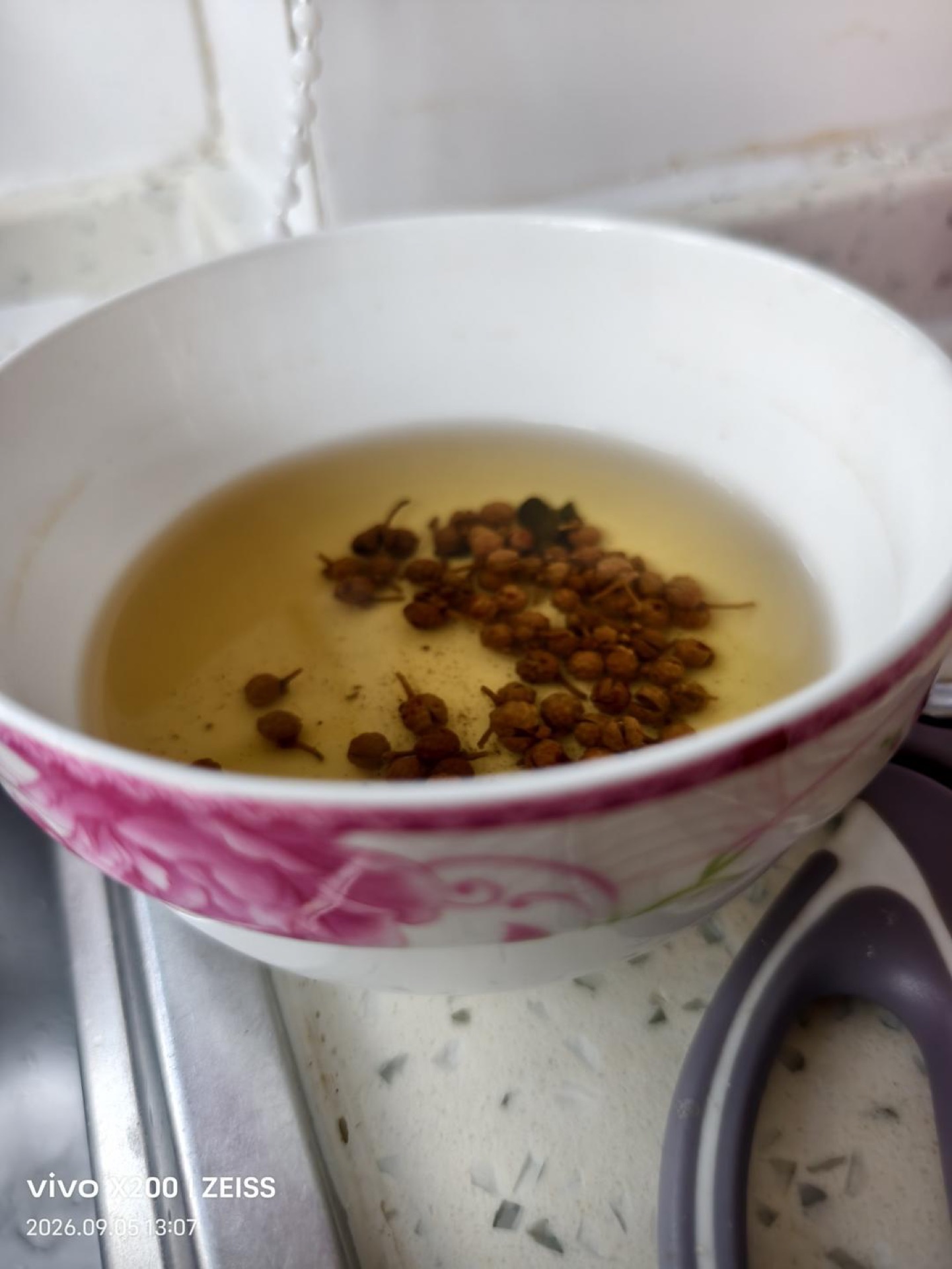
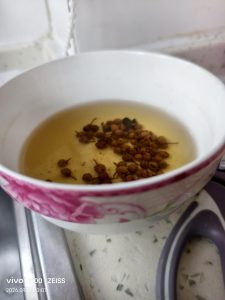
- Peppercorn water: Put 4–5 g Sichuan peppercorns in a heatproof bowl and pour over boiling water to fill a standard rice bowl. Let steep for at least one hour, then strain. You need the full bowl — around 250 ml.
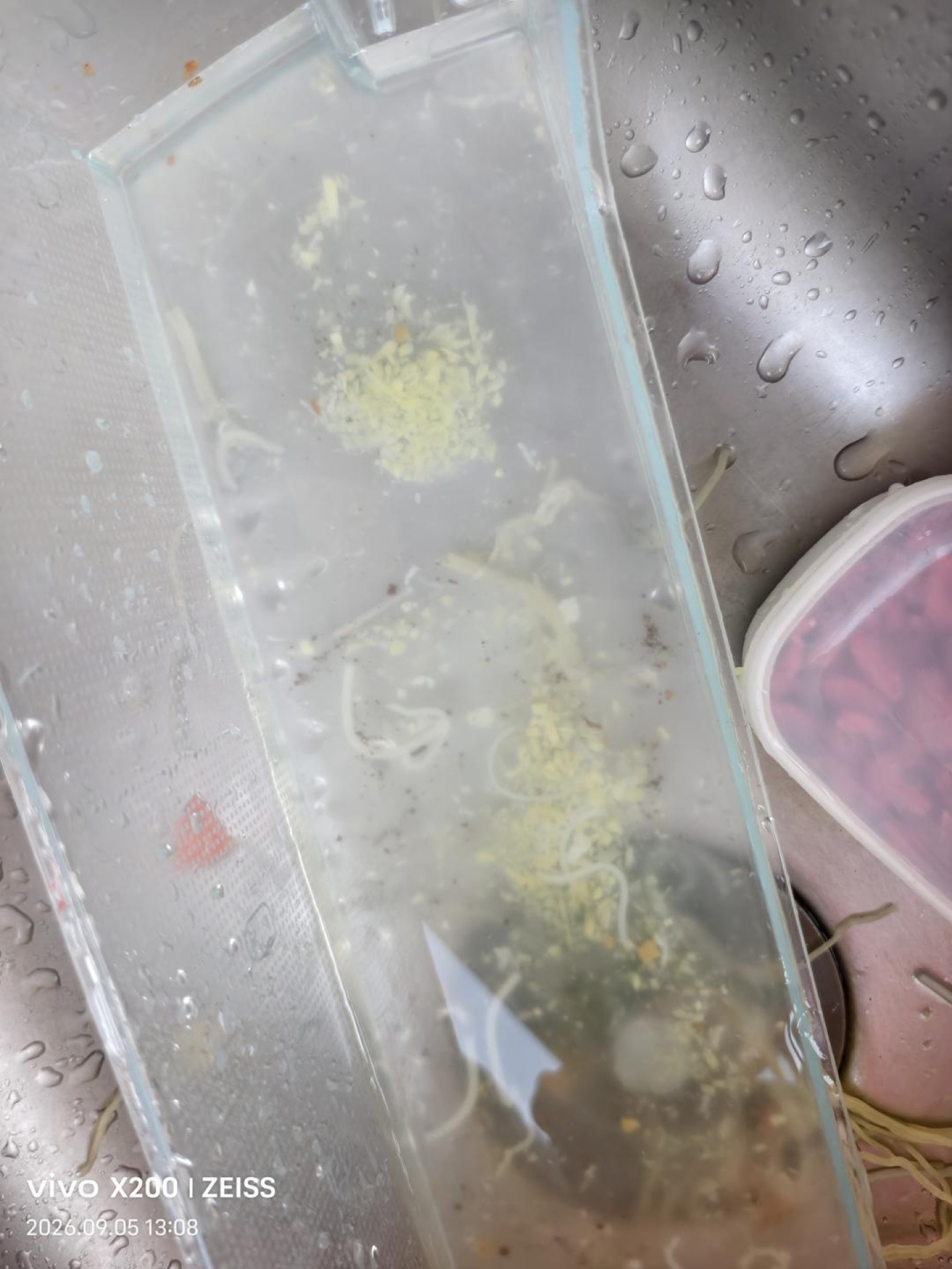
- Ginger water: Mince 5 g ginger and cover with just enough hot water to reach the bottom of the bowl, about 2 tbsp. Steep 30 minutes, then strain and discard the minced ginger.
- Chives: Rinse, dry thoroughly, and cut into 3–4 mm pieces. Wet chives will water down the filling.
- Pork fat: Cut into cubes small enough to fit your grinder or processor.
If you are making wrappers from scratch, mix and rest the dough now so it has time to relax while you work on the fish. A soft, slightly under-kneaded dough rolls out more easily than a stiff one — the same principle behind our paper-thin spring pancake dough.
Cooking Process
Step 1: Make the peppercorn water
Put 4–5 g Sichuan peppercorns in a heatproof bowl and pour over boiling water to fill a standard rice bowl. Steep for one hour, then strain. This is the liquid that will go into the fish — the whole bowl, all of it, must be beaten into the filling. There is no shortcut here and no partial measure; the filling will be tough and dry if you stop early.
Step 2: Make the ginger water
Mince the ginger finely, cover with about 2 tbsp hot water, and let sit 30 minutes. Strain and keep only the liquid — discard the minced ginger. This gives the aromatic lift of ginger without any fibrous pieces in the filling.
Step 3: Break down the mackerel
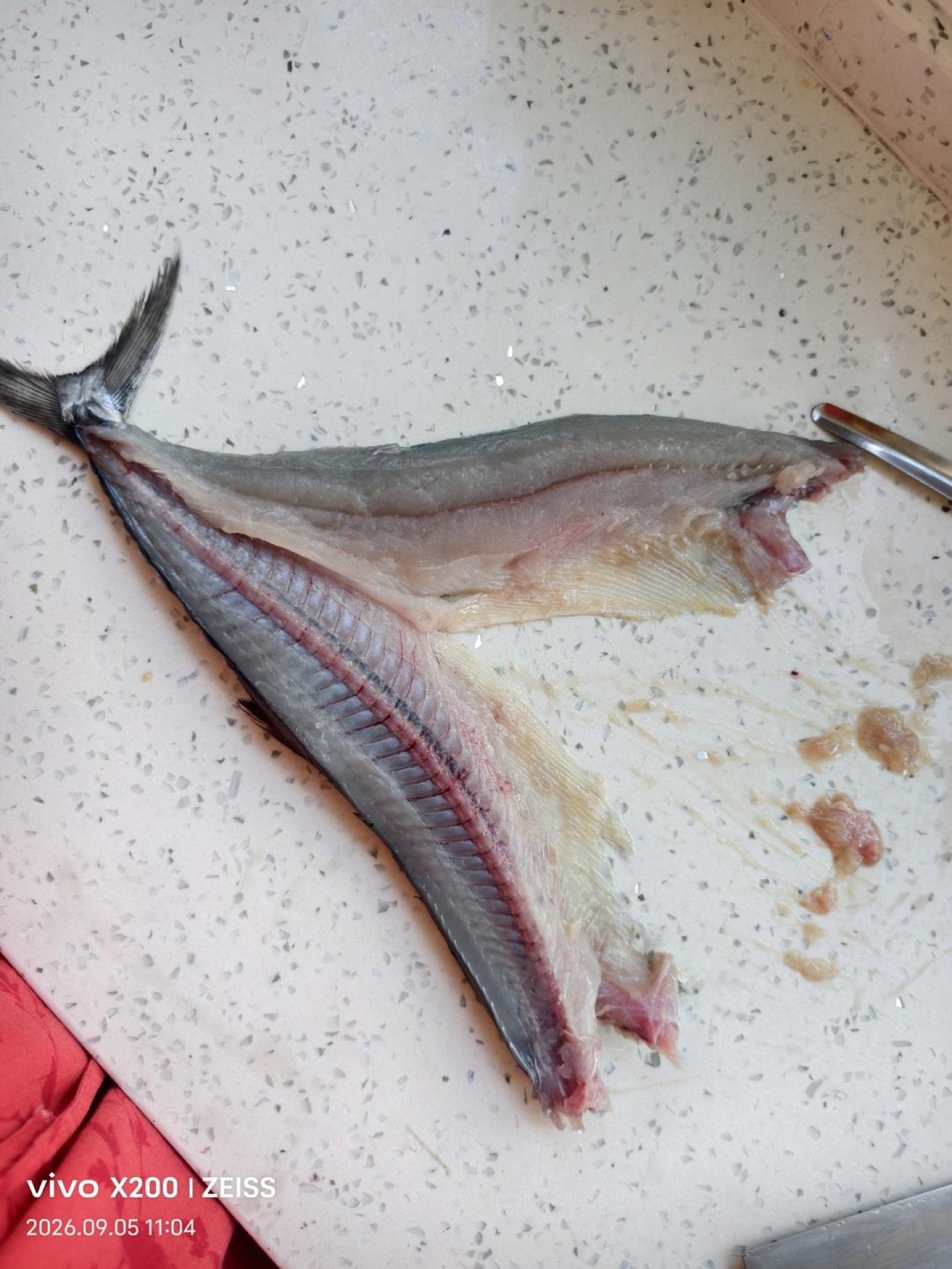
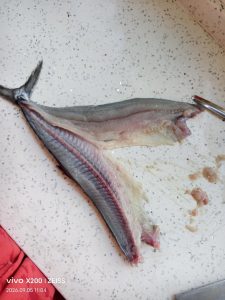
Rinse the mackerel and remove the head. Lay it on a clean, disposable surface — I use a sheet of baking paper or a plastic bag, because a cutting board picks up fish smell that is hard to wash out. Split the fish open along the back and open it flat, skin side down.
Step 4: Scrape the flesh
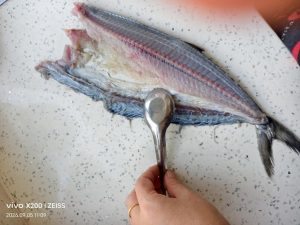
Use a stainless steel spoon to scrape the flesh off the skin, working from tail to head. When you reach the pin bones along the center, slow down and feel carefully with your fingers — a single stray bone in a dumpling is a genuinely unpleasant surprise. Scrape around the bones, not through them.
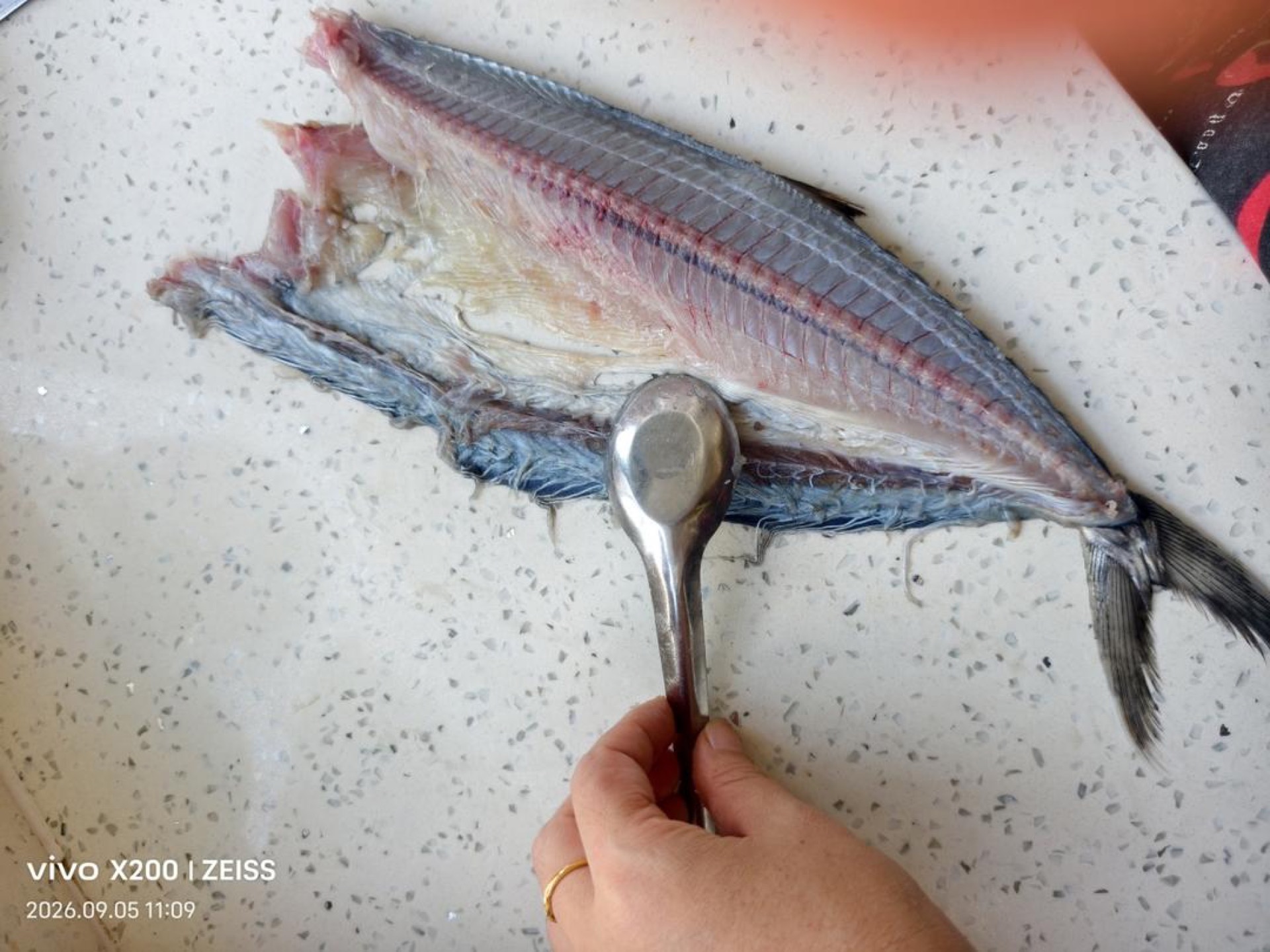
Step 5: Discard the bones and skin
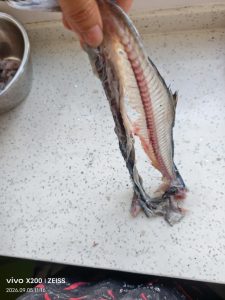
Once the flesh is scraped away, discard the bones and skin — or save them for fish stock if you are the sort of cook who does that. The scraped flesh should be pale, slightly sticky, and free of any dark blood lines.
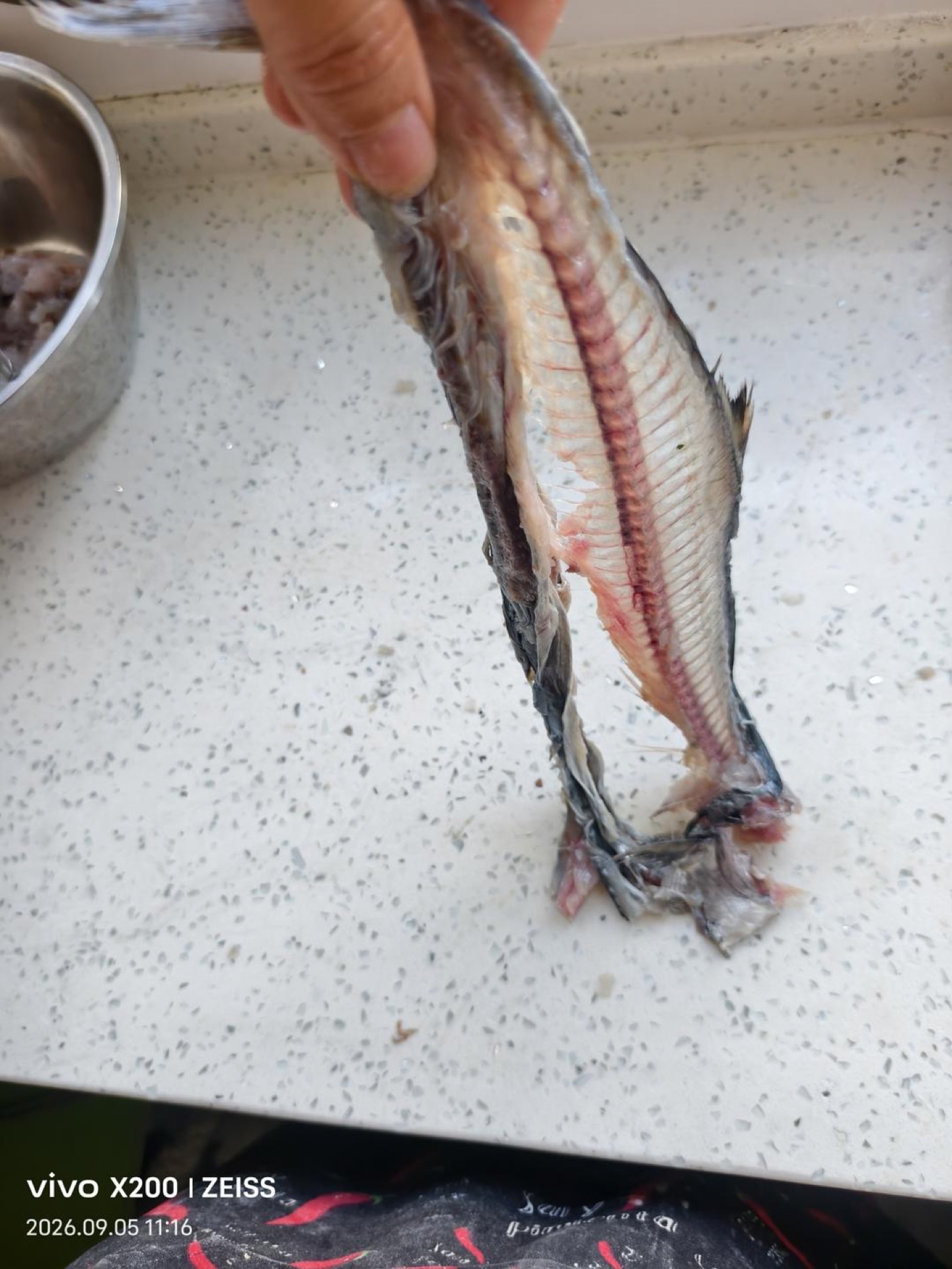
Step 6: Beat in the water
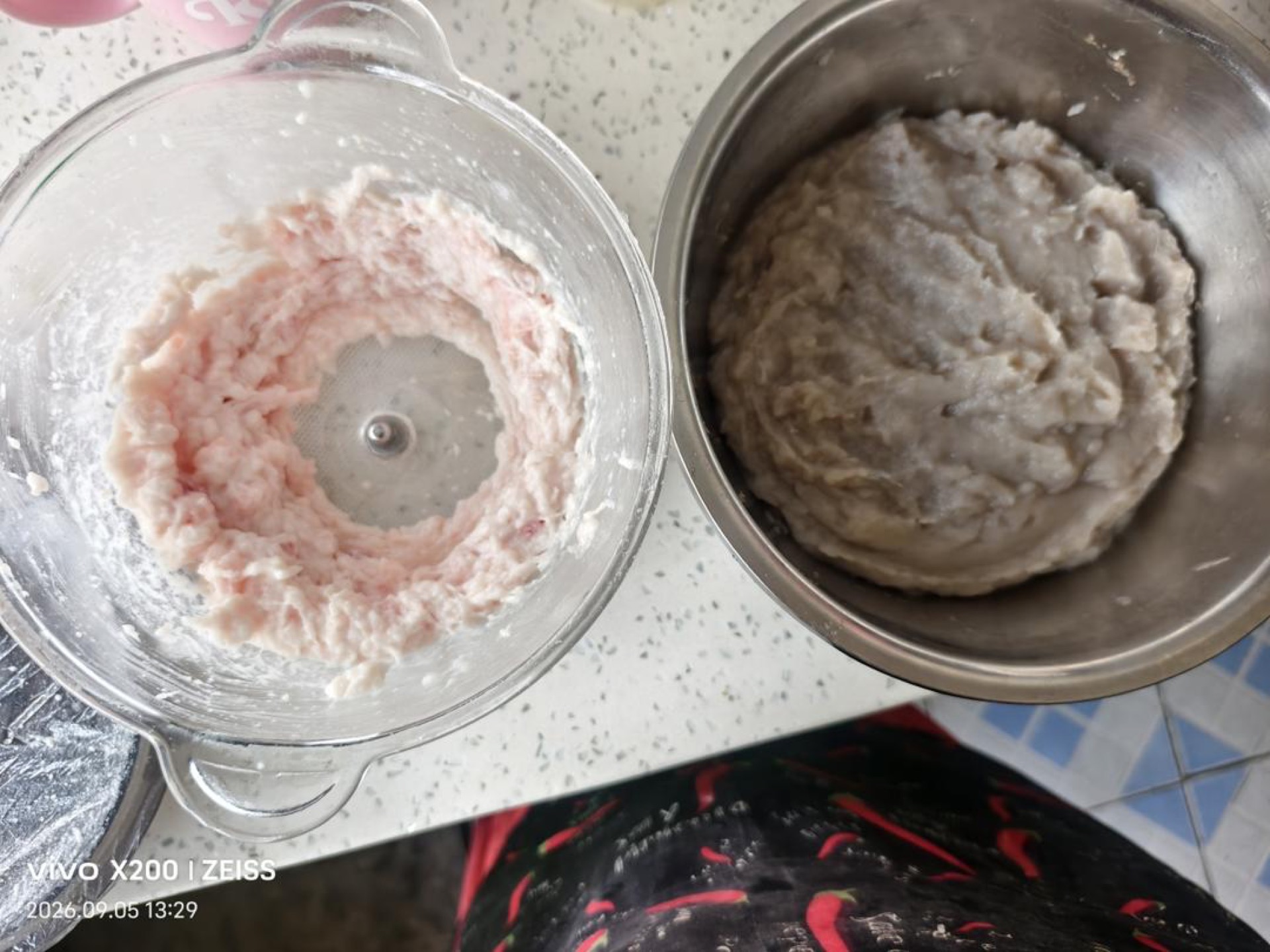
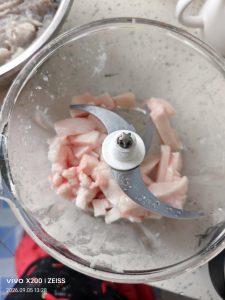
Put the scraped fish into a food processor, add the ginger water, and pulse three times for three seconds each. Open the lid, add a splash of peppercorn water, and pulse again for the same count. Repeat once more. The paste should look smooth but still hold its shape.
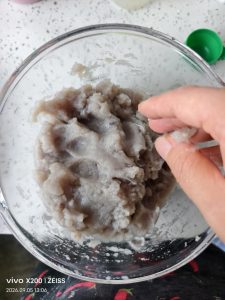
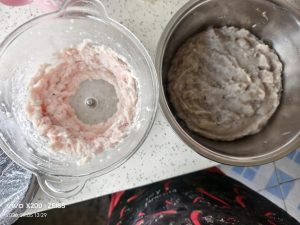
Scrape it into a large bowl. Now, using a stiff spoon or spatula, stir in one direction — always the same direction, never reversing — while adding the remaining peppercorn water a little at a time. Keep going until the entire bowl of peppercorn water has been absorbed and the paste looks glossy, pale, and slightly tacky. This is the most important step in the whole recipe.
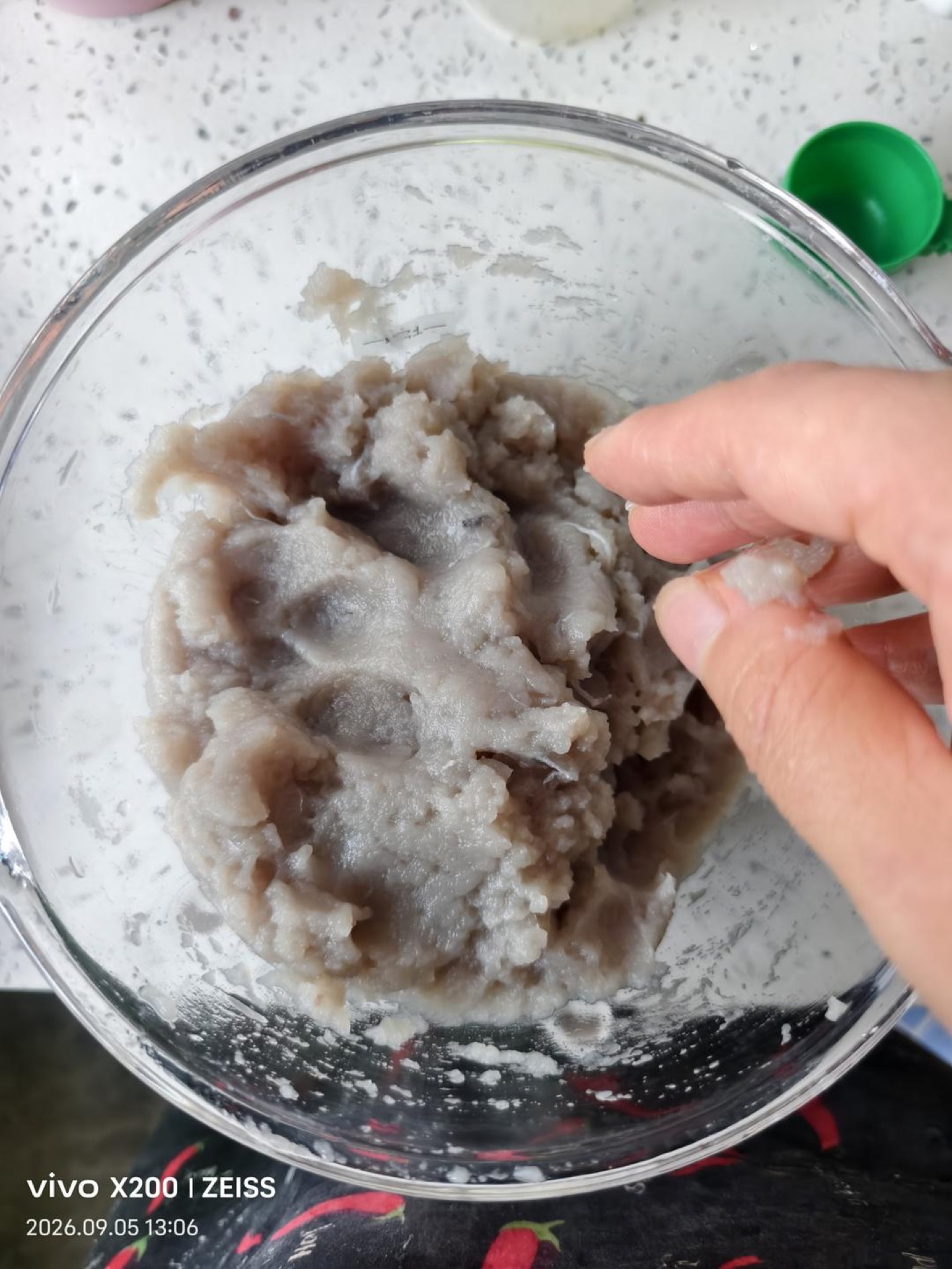
Step 7: Grind the pork fat
No need to wash the food processor — just tip the cubed pork fat in and grind it to a coarse paste. The residual fish flavor in the bowl is fine; it is going back into the same filling anyway.
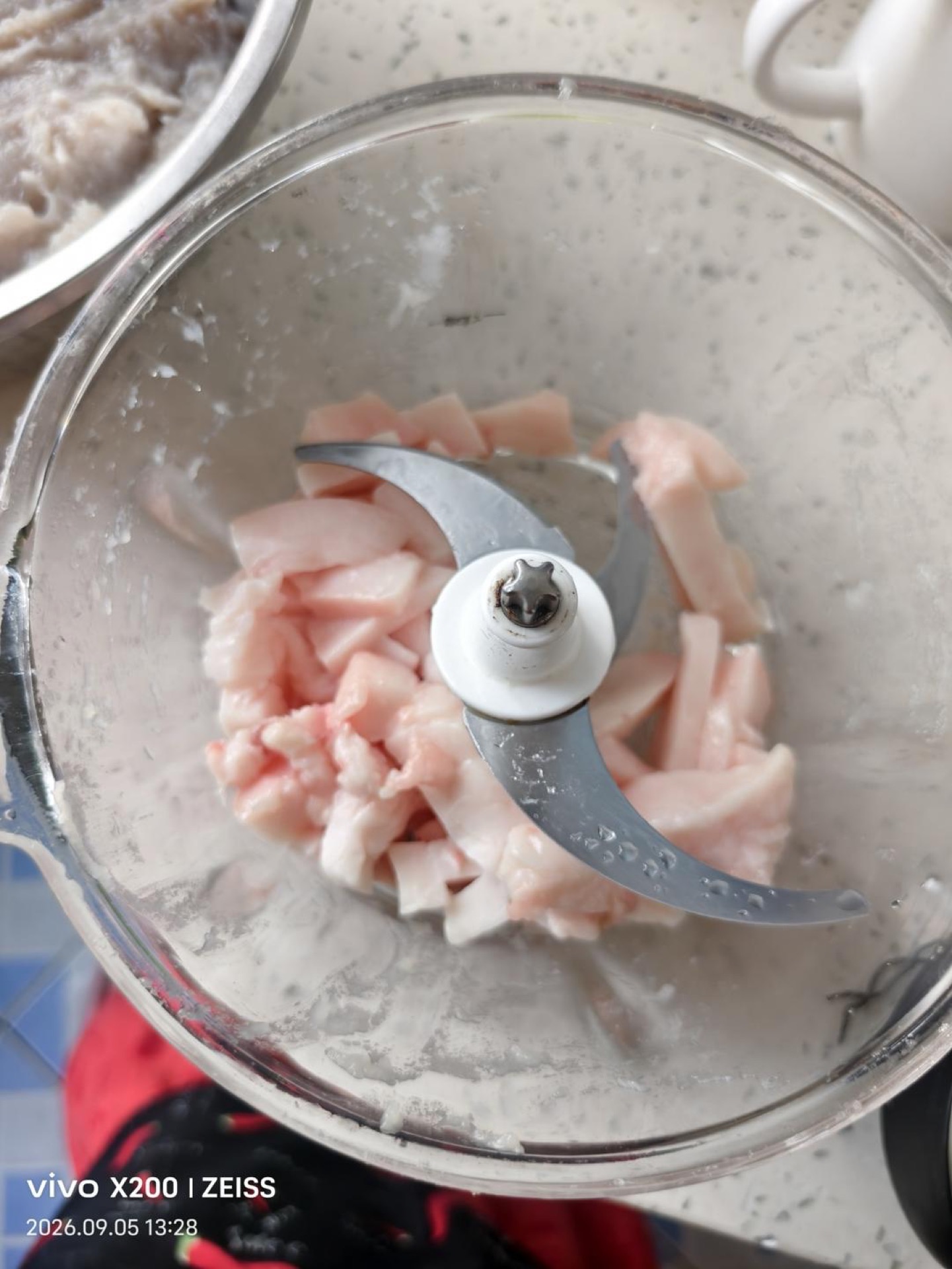
Step 8: Combine the pork fat with the fish
Scrape the ground pork fat directly into the mackerel paste. The mixture will look loose and slightly separated at this point — that is exactly right.
Step 9: Season and finish the filling
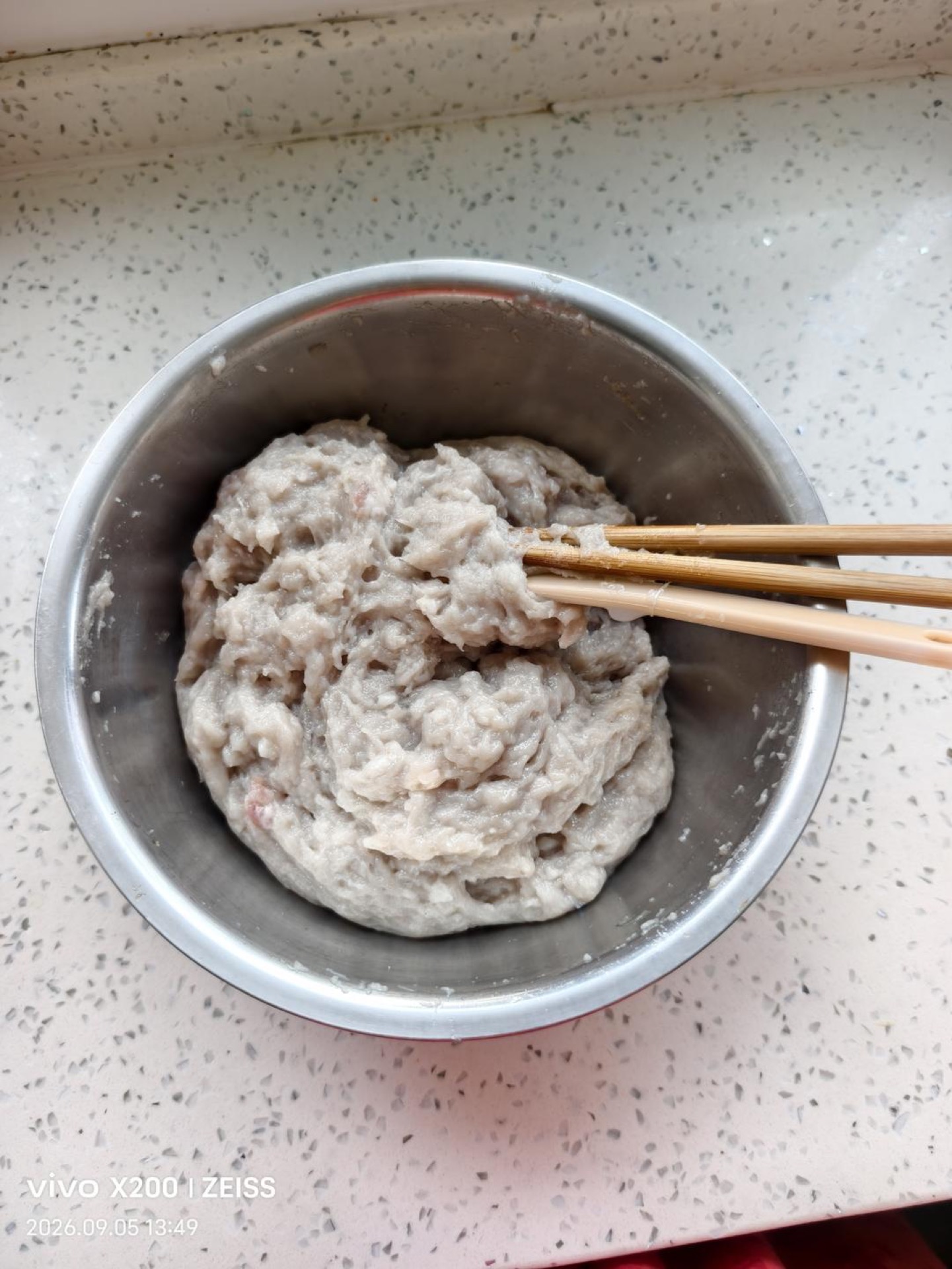
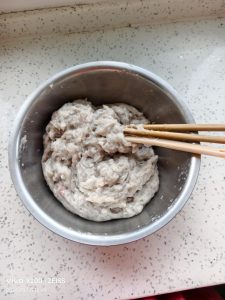
Stir everything together in the same direction. One pair of chopsticks is not enough for this volume — use two chopsticks plus a silicone spatula, or three chopsticks, and keep going until the filling is uniform and springy. Add the salt, the egg white, the toasted sesame oil, and the peanut oil, and stir again until fully absorbed.
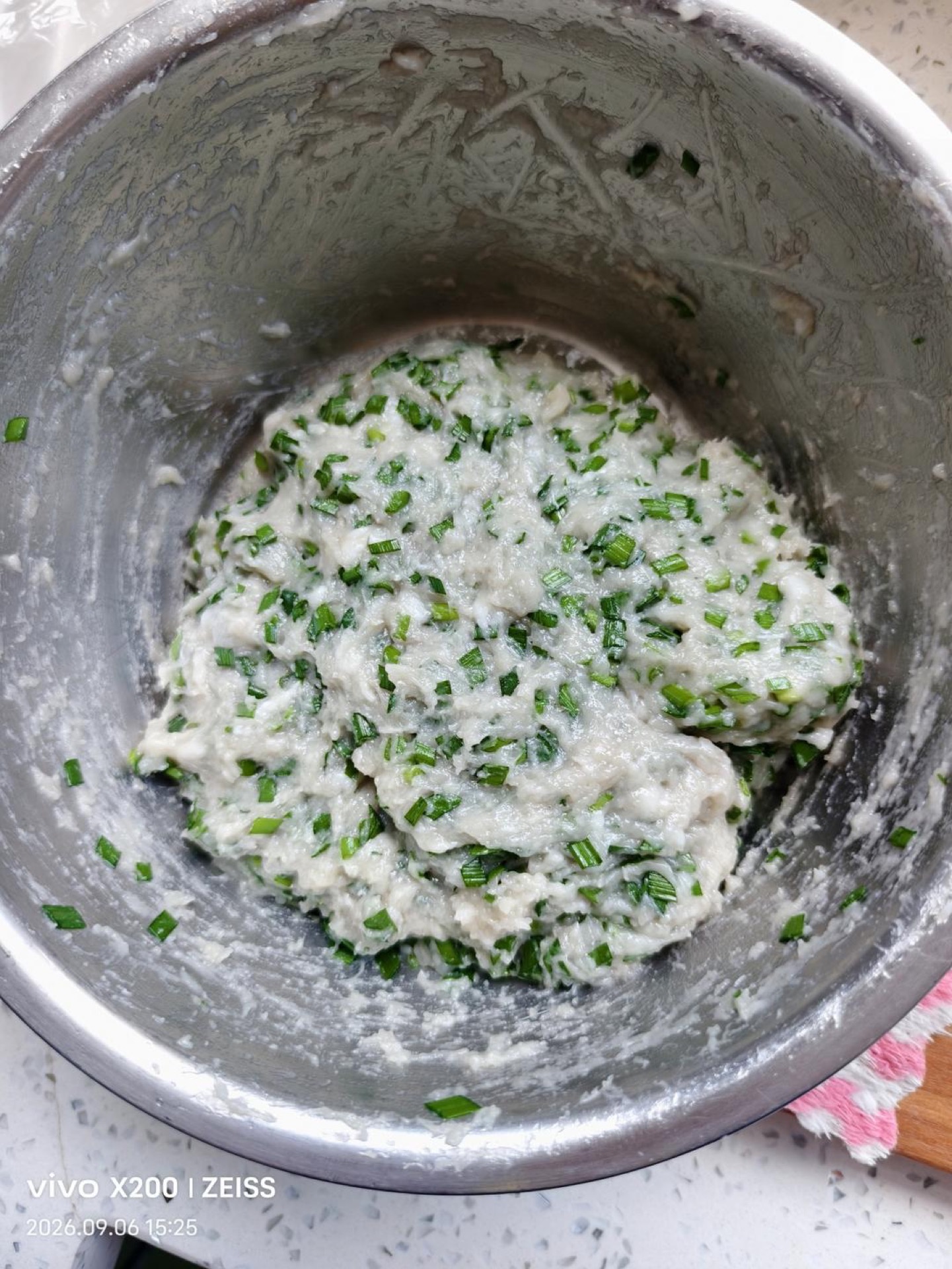
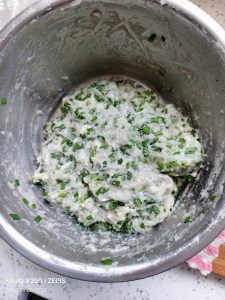
At this point you have roughly four to five servings of filling. If you are cooking for two, freeze half now — it freezes well for up to a month. To the remaining filling, fold in about 100 g of the cut chives. Nothing else goes in: no soy sauce, no extra salt, no aromatics.
Step 10: Add the chives — but not too many
Use restraint here. The chives should fleck the filling, not dominate it. If the filling looks mostly green, you have overdone it, and the dumplings will taste vegetal rather than oceanic.
Step 11: Wrap, boil, and serve them big
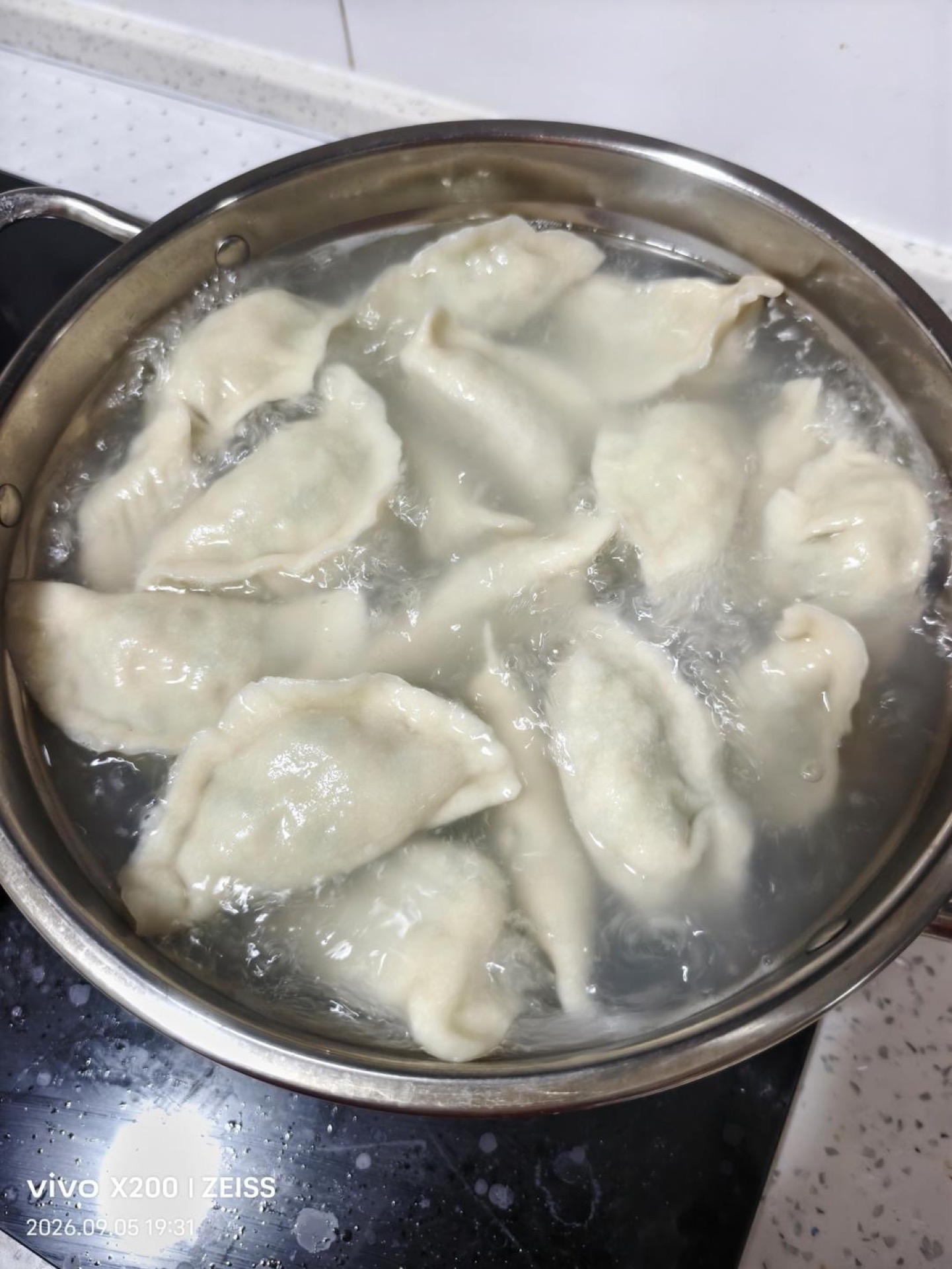
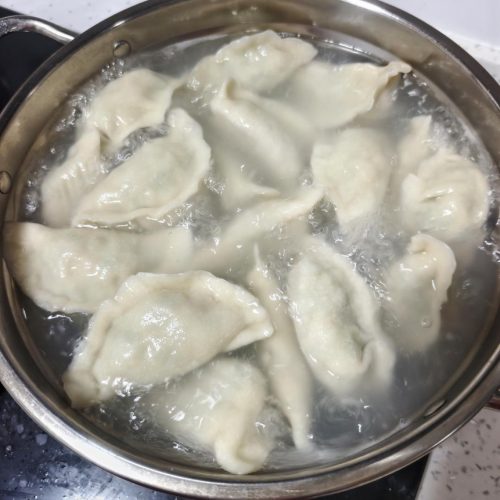
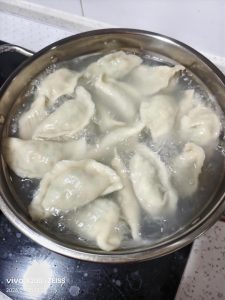
Roll wrappers a touch larger than usual and fill them generously — these dumplings are supposed to be substantial. Boil in plenty of water, adding a splash of cold water each time the pot comes back to a rolling boil, and pull them out when they float and the wrappers look translucent, about 6–8 minutes total. Serve immediately with black vinegar and a little sesame oil.
Common Mistakes When Making 鲅鱼水饺
1. Not adding enough water. The single most common failure. The full bowl of peppercorn water has to go in. If you stop at half because the filling looks wet, you will end up with a dense, dry dumpling once it cooks.
2. Reversing the stir direction. Protein strands in the fish paste align in one direction as you stir. Change direction and you break them, and the filling loses its bounce. Pick a direction and commit.
3. Using lean pork instead of fat. Mackerel is a lean fish. Without fat, the filling tastes flat and slightly chalky. Fatback is not a mistake — it is the point.
4. Adding too many chives. Chives are pungent and they release water. More than about 10% of the filling by weight and the dumplings turn vegetal and soggy.
5. Making small dumplings. A small mackerel dumpling overcooks before the filling sets, and the wrapper tears. Go bigger than feels natural.
Variations
With scallion instead of chive. Some cooks in Qingdao use scallion whites only, finely minced and squeezed dry. The result is sweeter and milder.
With a little pork belly. Replace half the fatback with finely chopped pork belly for a slightly more textured filling.
Pan-fried. The same filling works beautifully as 锅贴 — pan-fried dumplings with a crisp bottom and a splash of water to steam the tops. Follow the same method as our crispy pan-fried tofu — hot pan, thin oil, then steam, then uncover to crisp.
With other fish. Any firm white fish works, but mackerel is the classic. If you use a milder fish, increase the peppercorn water slightly.
Frequently Asked Questions
Can I use frozen mackerel? Yes, but thaw it overnight in the refrigerator. A fast thaw in warm water leaves the flesh watery and dull, and the filling will not bind as well.
Why does my filling taste fishy? Usually because the fish was not fresh, or because not enough peppercorn water went in. The peppercorn water is doing real work here — it dilutes and perfumes the paste at the same time.
Can I make the filling ahead? Yes. The filling keeps in the refrigerator for up to 24 hours before the chives are added. Add the chives just before wrapping, or they will go dark and bitter.
Can I freeze the dumplings? Absolutely. Freeze them on a tray, then bag them. Boil from frozen, adding an extra minute or two. The filling freezes better than most dumpling fillings because of the fat content.
How do I know when they are done? They float, the wrappers turn slightly translucent, and the filling feels firm when you press one gently with a spoon. For a big dumpling, that is usually 6–8 minutes from the second boil.
How to Serve
Serve them hot, in a shallow bowl, with a dipping sauce of black vinegar, a few drops of toasted sesame oil, and a pinch of chili oil if you like heat. A small dish of raw garlic mashed with vinegar is traditional in Shandong. On the side, a light soup — something like our cooling mung bean congee in summer, or a plain clear broth in winter. A simple cucumber salad also works well to cut the richness.
If you are building a larger table, these dumplings pair well with hot and sour chicken feet as a cold starter, or a plate of boneless spare ribs if you want something meaty alongside.
Storage & Reheat
Raw dumplings: Freeze on a tray until solid, then transfer to a zip-top bag. They keep for up to two months. Boil from frozen without thawing.
Cooked dumplings: Refrigerate for up to two days. Reheat by pan-frying in a little oil with a splash of water and a lid, which restores the wrapper better than boiling.
Filling: The filling alone freezes well for up to a month, before the chives go in. Thaw overnight in the refrigerator and fold in the chives just before wrapping.
Allergen Notice
This recipe contains fish (mackerel), egg (egg white), and wheat (dumpling wrappers). It is not suitable for anyone with a fish, egg, or gluten allergy. If you are making wrappers from scratch, check your flour for cross-contamination warnings. Sesame oil is also present; those with sesame allergies should substitute a neutral oil.
Nutrition Disclaimer
Nutrition information is estimated and provided for general reference only. Actual values will vary depending on the size of your dumplings, the fat content of your pork, and the brand of wrappers you use. This is not medical or dietary advice.
About the Author & Recipe Development
I am Lin, and I grew up in my parents’ restaurant kitchen in Chengdu, where every dish on the menu had to earn its place. That meant learning early that a recipe is not a list of ingredients — it is a set of decisions. This mackerel dumpling recipe came to me through a friend from Yantai, who taught me the peppercorn water technique over a long afternoon of scraping fish. I have kept her proportions and her insistence on one-direction stirring, and I have written down the parts she did by feel. If you have ever wondered why your own dumpling fillings turn out dense, this is the recipe to practice on. For more technique-driven cooking, see our notes on why stir-fries lose their flavor and why lo mein turns sticky.
Authoritative References
- Chinese culinary technique references on protein binding in fish pastes
- Shandong regional cookbooks documenting Jiaodong Peninsula dumpling traditions
- Food safety guidelines for handling and storing raw fish at home
Spanish Mackerel Dumplings (鲅鱼水饺): Juicy, Bouncy, No Fishy Smell

Equipment
- Large Mixing Bowl
- Food processor or meat grinder
- Stainless steel spoon
- Fine-mesh strainer
- Rolling Pin
- Large pot or wok
- Slotted Spoon
Ingredients
Fish and Aromatics
- 1 kg Spanish mackerel whole, head removed, about 2 jin
- 5 g fresh ginger minced, for ginger water
- 5 g Sichuan peppercorns red, for peppercorn water
Filling
- 300 g pork fatback or very fatty pork shoulder
- 1 piece egg white from one large egg
- 10 g salt to taste
- 1 tbsp toasted sesame oil
- 10 tbsp peanut oil
- 250 g Chinese chives untrimmed weight, finely cut
- dumpling wrappers or flour and water to make your own
Instructions
- Put 4–5 g Sichuan peppercorns in a heatproof bowl and pour over boiling water to fill a standard rice bowl. Steep for one hour, then strain. This is the liquid that will go into the fish — the whole bowl must be beaten into the filling.

- Mince the ginger finely, cover with about 2 tbsp hot water, and let sit 30 minutes. Strain and keep only the liquid.
- Rinse the mackerel and remove the head. Split the fish open along the back and open it flat, skin side down, on a disposable surface.
- Use a stainless steel spoon to scrape the flesh off the skin, working from tail to head. Feel carefully for pin bones and scrape around them — a stray bone in a dumpling is very unpleasant.

- Discard the bones and skin, or save them for fish stock. The scraped flesh should be pale, slightly sticky, and free of dark blood lines.
- Put the scraped fish into a food processor, add the ginger water, and pulse three times for three seconds each. Add a splash of peppercorn water and pulse again. Repeat once more, then scrape into a large bowl. Stir in one direction only while adding the remaining peppercorn water a little at a time, until the whole bowl has been absorbed and the paste is glossy and tacky.
- Without washing the food processor, grind the cubed pork fat to a coarse paste.
- Scrape the ground pork fat directly into the mackerel paste. The mixture will look loose and slightly separated — that is exactly right.
- Stir everything together in the same direction until uniform and springy. Add the salt, egg white, sesame oil, and peanut oil and stir until absorbed. Freeze half the filling if cooking for two. Fold in about 100 g of the cut chives — nothing else.
- Use restraint with the chives. They should fleck the filling, not dominate it — if the filling looks mostly green, you have overdone it.
- Roll wrappers a touch larger than usual and fill generously. Boil in plenty of water, adding a splash of cold water each time the pot returns to a rolling boil. Pull them out when they float and the wrappers look translucent, about 6–8 minutes. Serve immediately with black vinegar and sesame oil.





Leave a Reply