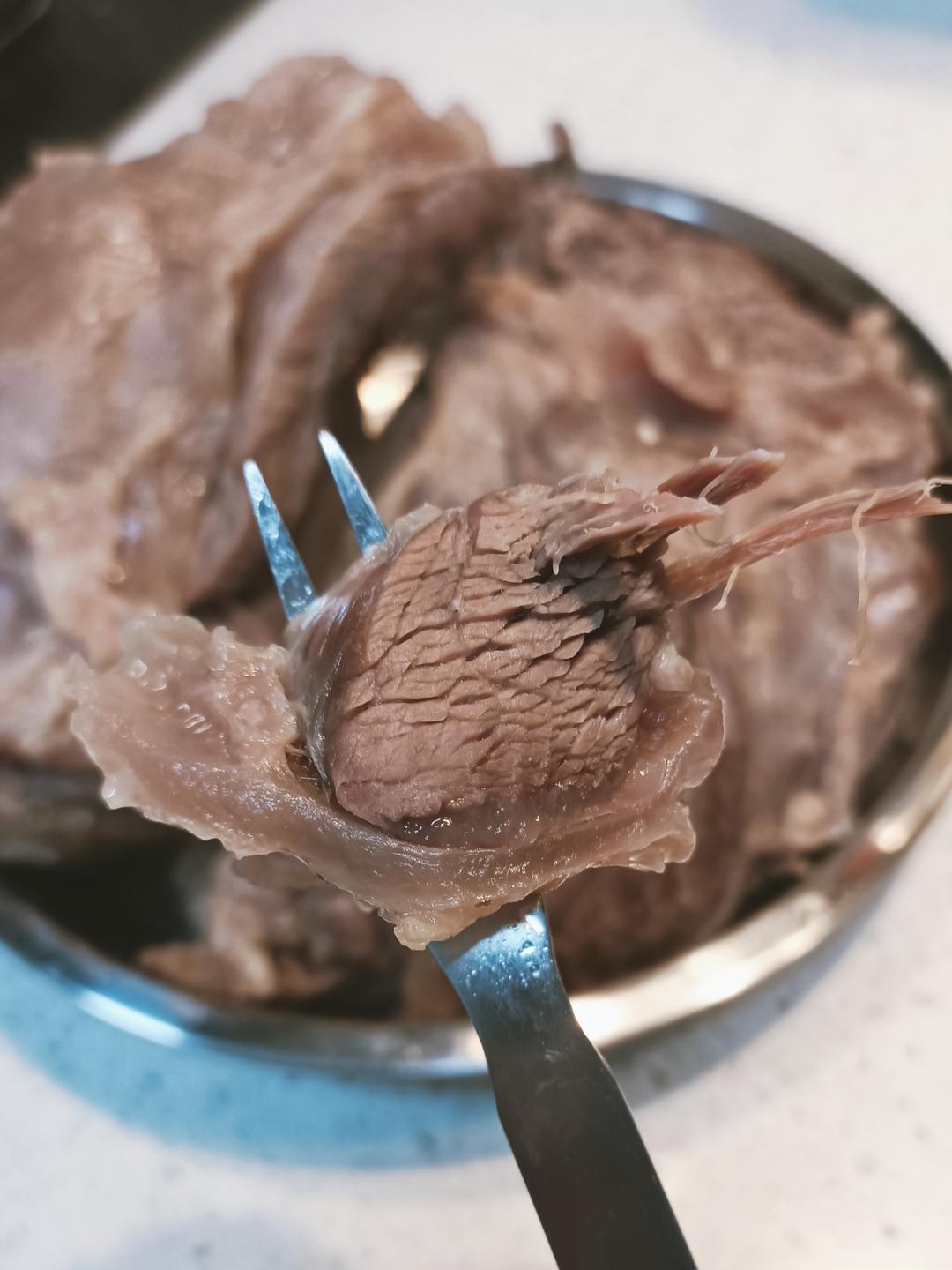
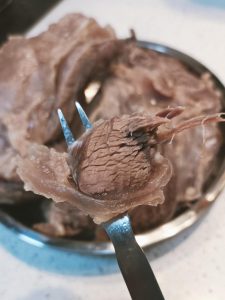
Beef shank was the dish my father reserved for holidays – the whole tendon-cased joint that appeared at the table sliced thin, its cross-section a mosaic of lean meat and translucent gelatin. He never measured anything, but this xiachufang home cook has written the process down with unusual care, including the warnings nobody else bothers to give: do not wash the beef, use the full amount of salt, wait the full three hours. I tested it exactly as written, and it made the shank my father used to buy.
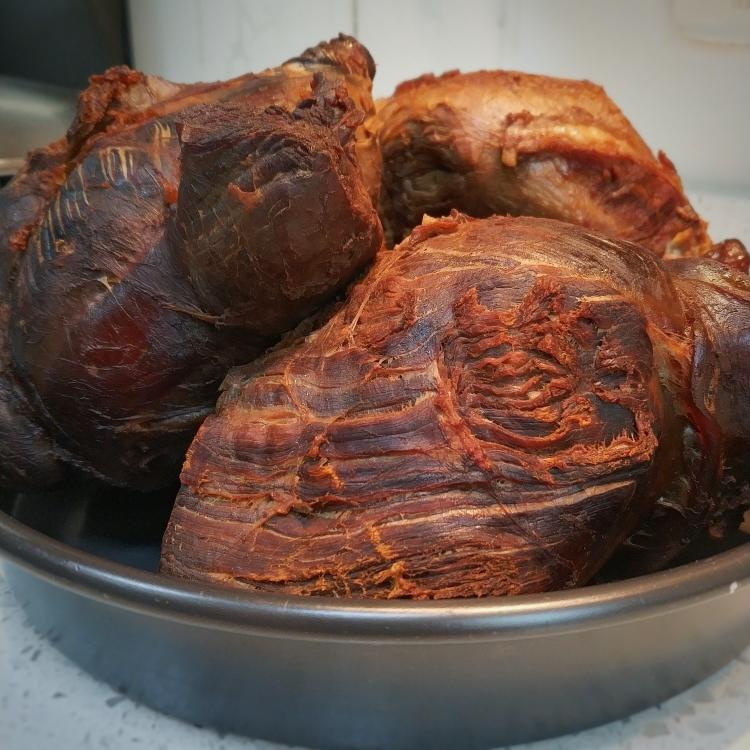
Jiang niu rou (酱牛肉) is soy-braised beef shank – the Chinese deli classic where a whole beef shank is salt-cured with peppercorns and fennel, coated in soybean paste, blanched, and simmered until tender enough to slice paper-thin. This version is written by a cook who calls himself “Kakababa, no secrets” – and the recipe is exactly that, with the traditional steps laid out openly.
What Is Soy-Braised Beef Shank (Jiang Niu Rou)?
Jiang niu rou (酱牛肉) is a Chinese braised beef dish: a whole beef shank (niu jian) cured with salt, Sichuan peppercorns, and fennel seeds, coated in soybean paste, then blanched and simmered until tender. The name jiang (酱) refers to the soybean-paste step that gives the beef its deep savory character and dark color – distinct from a plain lu (soy-braise), though the two are cousins.
The traditional method is a three-stage process. First, the cure: the shank is rubbed with salt and toasted spices and rested three hours (or overnight), which seasons it through and firms the meat. Second, the paste: soybean paste is smeared over the beef and rested again, adding the jiang character. Third, the cook: a gentle cold-water blanch, then a long simmer with clove, bay leaves, and dried tangerine peel until a skewer pierces it cleanly. The finished shank slices into the beautiful mosaic that Chinese delis sell by the pound.
For another braised beef classic, my red wine braised beef is the modern, wine-forward cousin of this traditional shank.
1Red Wine Braised Beef (Pressure Cooker)A simplified, home-style take on Beef Bourguignon using a pressure cooker. Tender beef brisket, carrots, and mushrooms are braised in a rich red wine sauce. Perfect for weeknight dinners.Check out this recipe

Why This Version Works
- The salt cure is the flavor foundation. A whole shank rubbed with salt, peppercorns, and fennel and rested three hours seasons deep into the meat – and firms it so it slices cleanly.
- Do not wash the beef first. The original’s counterintuitive instruction: unless visibly dirty, skip the rinse – the cure needs the surface moisture, and the cooking handles any concerns.
- The soybean paste adds the jiang character. A thin coat of yellow soybean paste (the original uses a paste that is in the huang dou jiang family, not Sichuan doubanjiang) rested for an hour or overnight gives the beef its signature savory depth.
- A gentle cold-water blanch first. Starting the beef in cold water and heating slowly lets impurities rise gradually; then the pot is refilled fresh for the actual braise.
- 80-100 minutes, then a skewer test. The braise runs until a chopstick or skewer pierces the shank with little resistance – the definitive doneness cue, better than any timer.
Equipment Needed
- A large pot for the braise
- A heavy skillet for toasting the salt and spices
- A roasting or baking tray for the curing
- A skewer or chopstick for the doneness test
- A sharp knife for slicing
Ingredients
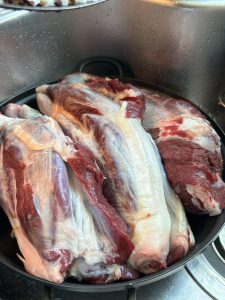
- 1 kg (2.2 lb) whole beef shank (niu jian), kept whole
- At least 80 g (1/3 cup) coarse salt – more is fine, this is a cure
- About 50 Sichuan peppercorns
- About 50 fennel seeds (xiaohuixiang)
- 2 tbsp (30 g) yellow soybean paste (huang dou jiang) – enough to coat the meat thinly
- 1 clove (ding xiang)
- 1 large (or 2 small) bay leaves
- 1 piece dried tangerine peel (chen pi), about the size of a bay leaf
- Water, for the blanching and braising
Ingredient Notes
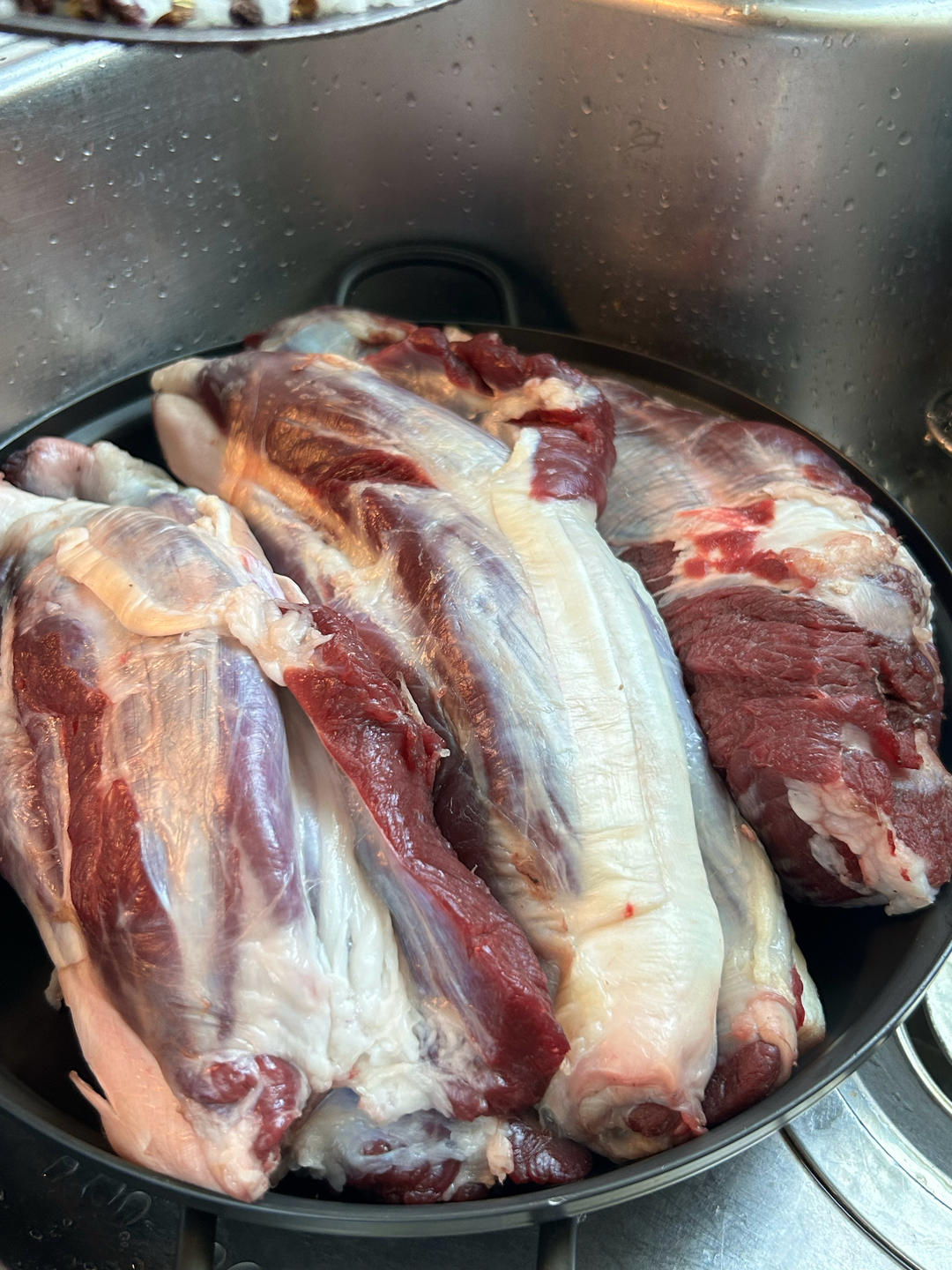
Beef shank (niu jian): The whole, tendon-cased shank – the original is explicit: buy it whole, do not cut it. The tendon is what gives the sliced beef its translucent gelatin mosaic and keeps the meat moist. My clear stewed beef shank is the un-sauced sibling of this dish.
Coarse salt: At least 80 g (1/3 cup) for the cure – the original says “at least, no upper limit, preferably coarse salt.” The salt both seasons and firms the meat; this is not the time to be shy.
Yellow soybean paste (huang dou jiang): The original clarifies that the paste used is in the yellow-bean-paste family – not the Sichuan Pixian doubanjiang. Two spoons, enough to coat the meat thinly.
The aromatics: One clove (a “male” clove, the original says, referring to whole cloves), bay leaves, and a piece of dried tangerine peel – the original is careful to note chen pi (tangerine peel), not cassia bark.
Prep & Mise en Place
This recipe runs over a day, so plan it in stages. Stage one (day before or morning): toast the salt, peppercorns, and fennel in a dry skillet until fragrant, then rub the mixture over the whole shank. Rest 3 hours at room temperature, turning and massaging every 30 minutes – or refrigerate overnight if the cook is done for the day.
Stage two: rinse the salt off the beef, dry it thoroughly, coat it thinly with the soybean paste, and rest 1+ hours (or overnight in the fridge in a sealed bag). Stage three: blanch gently from cold water, then braise in fresh water with the aromatics until a skewer pierces it cleanly.
Cooking Process
Step 1 – Buy the Right Beef, and Do Not Wash It
Buy the shank from a reputable source, the original insists – food-safety-standard beef. And unless the meat is visibly dirty from the butcher’s counter, do not wash it; the cure needs the surface moisture, and the later cooking handles any concerns.
Step 2 – Toast the Salt and Spices
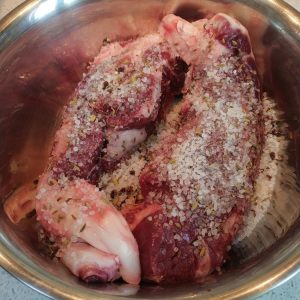
Put at least half a rice-measuring-cup of coarse salt in a dry skillet with the peppercorns and fennel seeds. Toast over high heat until fragrant – this wakes the spices and seasons the salt itself.
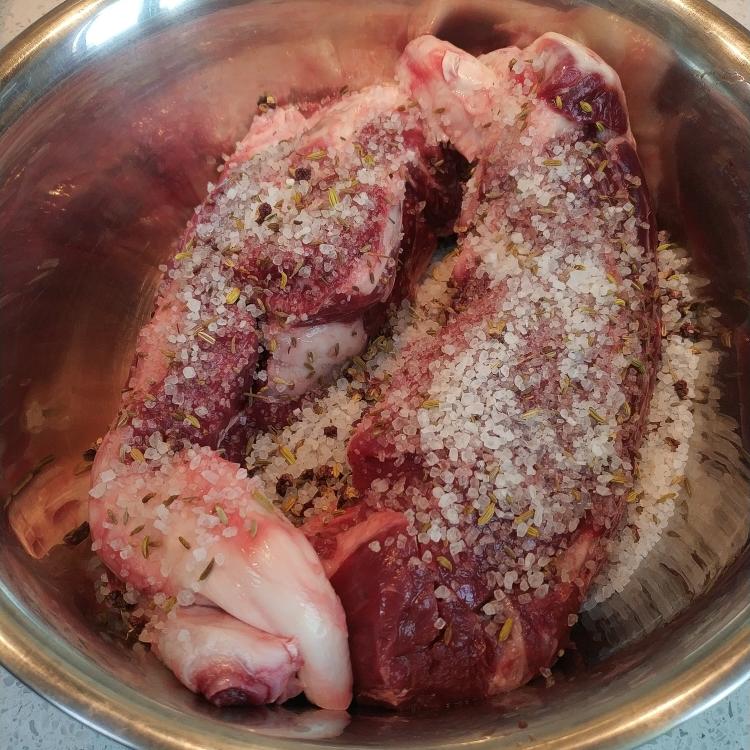
Step 3 – Rub and Cure for 3 Hours
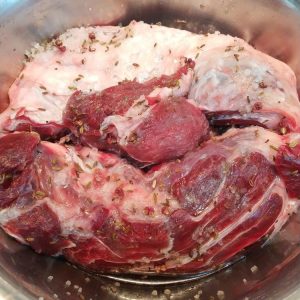
Rub the toasted salt and spices all over the shank. Every 30 minutes, turn the beef and massage it so the surface stays fully coated with the salt, peppercorns, and fennel. Cure for 3 hours at room temperature – or longer if the meat is ordered online and needs the extra time.
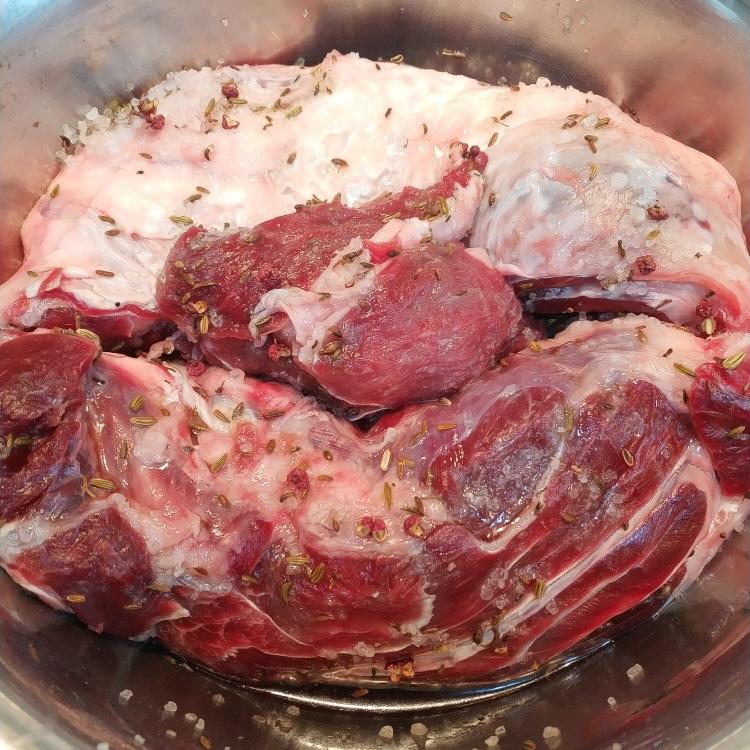
The salt cure is osmotic seasoning plus protein firming: the salt draws moisture from the surface, seasons the meat deep, and tightens the protein structure so the finished shank slices cleanly instead of shredding. This is the step that separates a professional deli slice from a home-cooked crumble.
Step 4 – Rinse Off the Salt
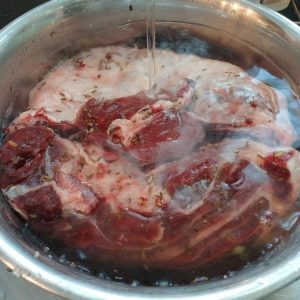
After the cure, rinse the beef under cold water to remove the surface salt and anything you consider dirty. The original, who now cures regularly, often just rubs the surface salt off by hand.
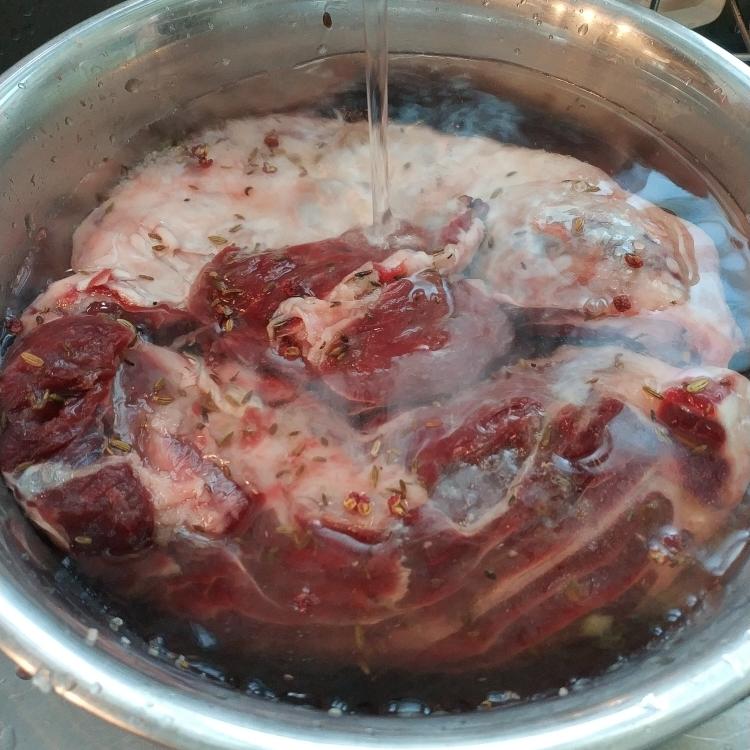
Step 5 – Dry the Surface
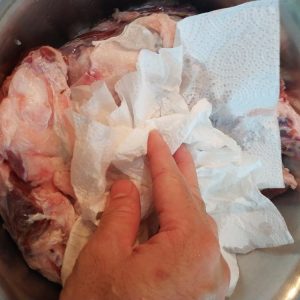
If you washed the beef, pat it completely dry with paper towels. The meat should now be a vivid, fresh pink – the original notes that well-bred beef shows this brighter color after curing.
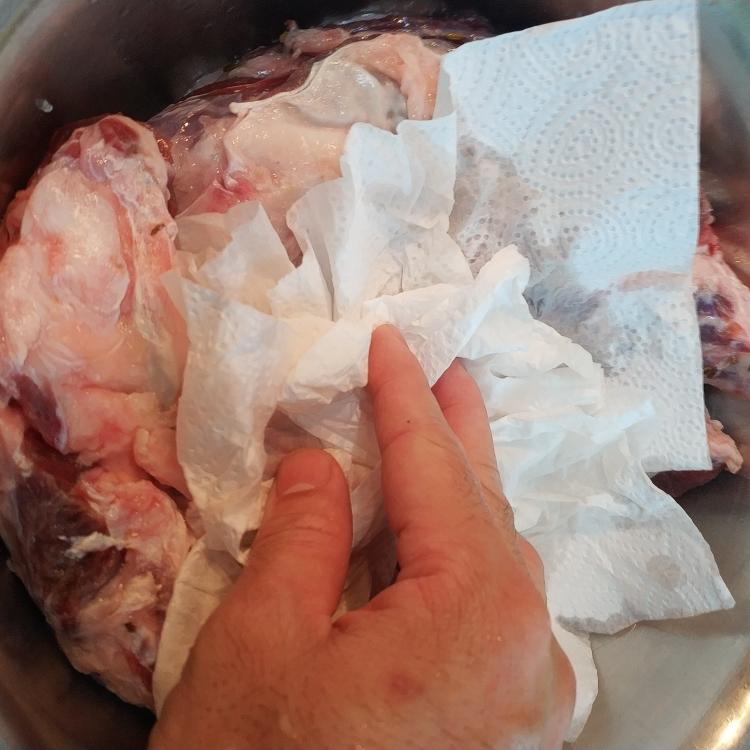
Step 6 – Coat With Soybean Paste
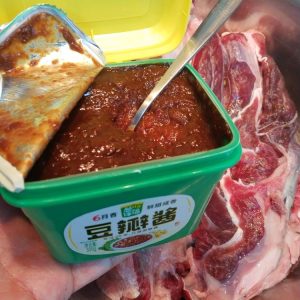
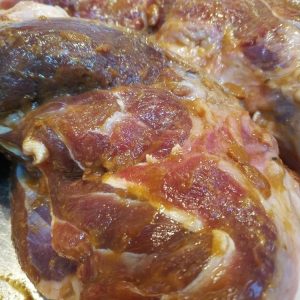
Spread a thin coat of yellow soybean paste over the beef. The original clarifies: this paste is in the huang dou jiang family, not Sichuan Pixian doubanjiang – it adds the jiang fragrance and helps color the meat.
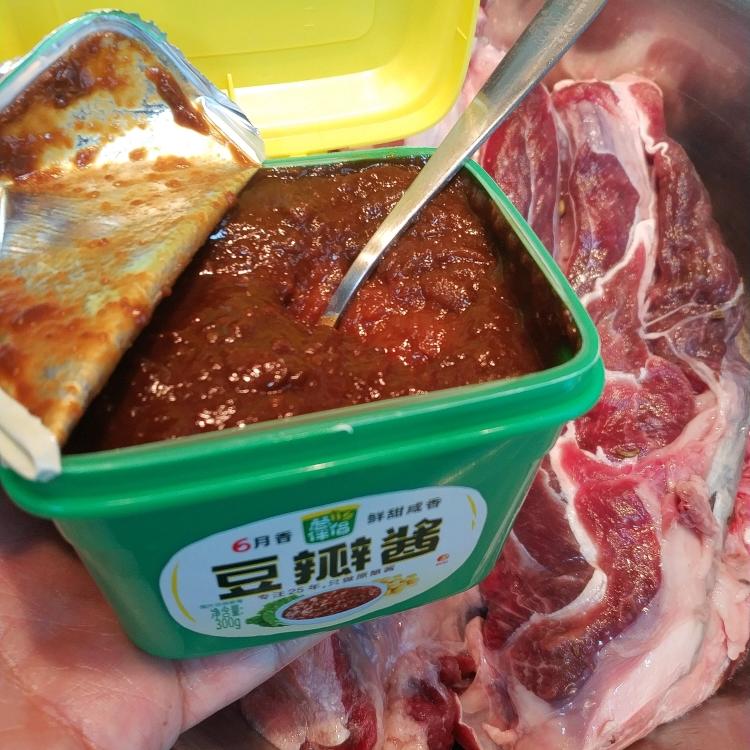
Step 7 – Rest the Paste for 1+ Hours
Rest the paste-coated beef at room temperature for at least an hour. If you are short on time, seal it in a bag and refrigerate overnight – the longer the paste works, the deeper the jiang flavor.
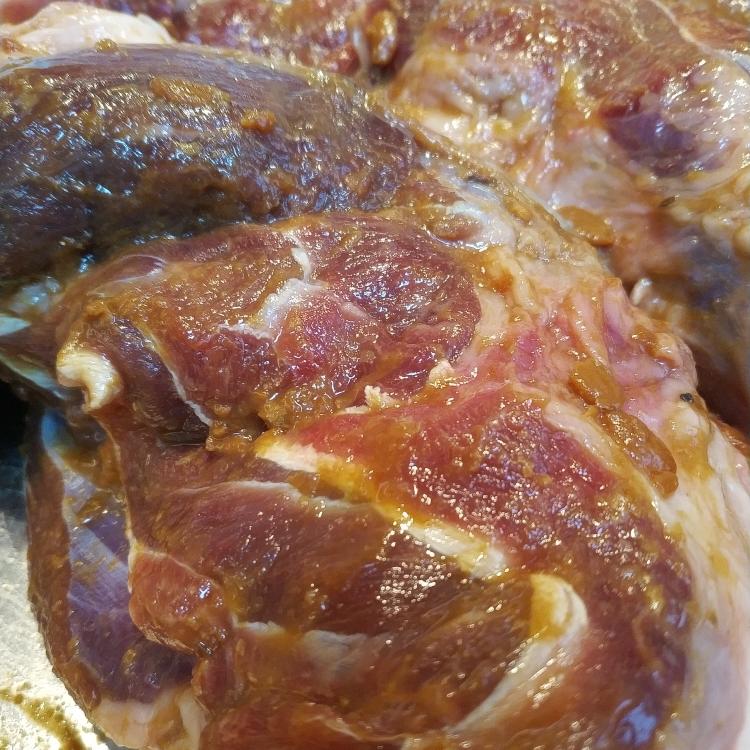
Step 8 – Blanch From Cold Water, Gently
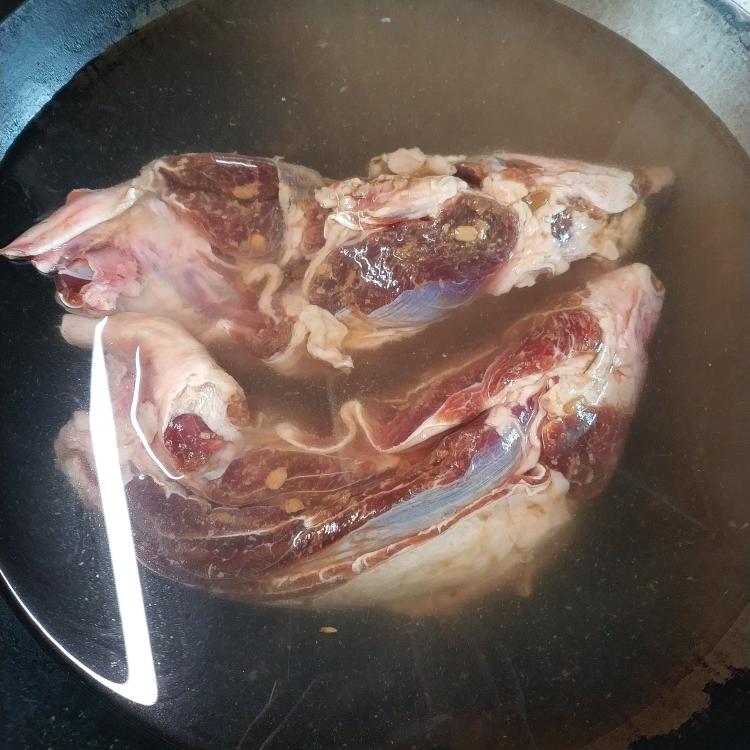
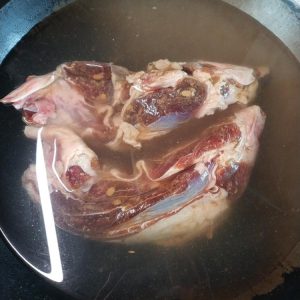
Put the paste-coated beef in a large pot and add enough cold water to cover. Heat over medium, starting gently so the heat reaches the center gradually; once the water turns cloudy, turn the heat up. After it boils, keep it at a medium boil for 3-5 minutes, skimming as needed.
Step 9 – Skim and Manage the Heat
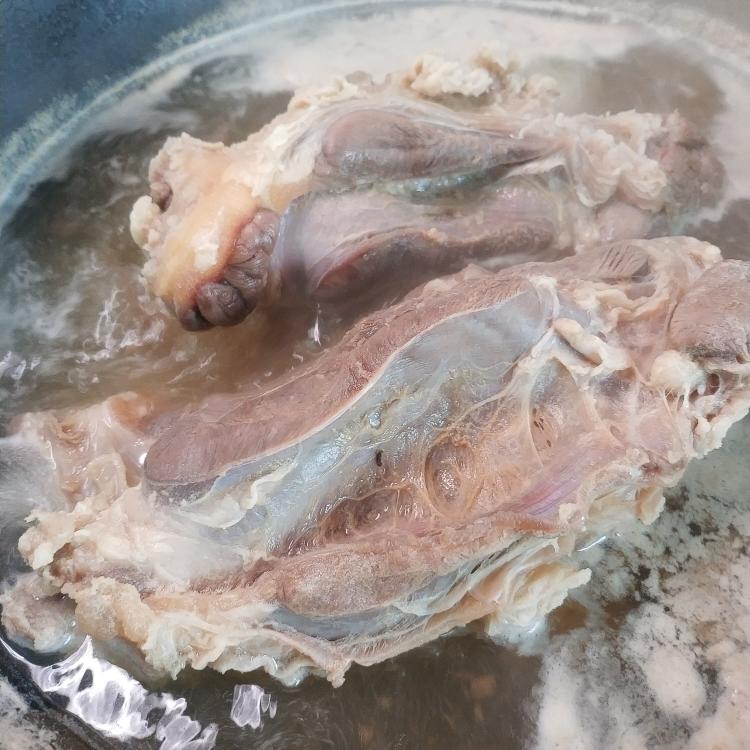
Start with a small flame so the heat enters the meat slowly; once the water clouds, go full heat, and after boiling keep a medium boil 3-5 minutes while skimming the surface.
Step 10 – Refresh the Water and Start the Braise
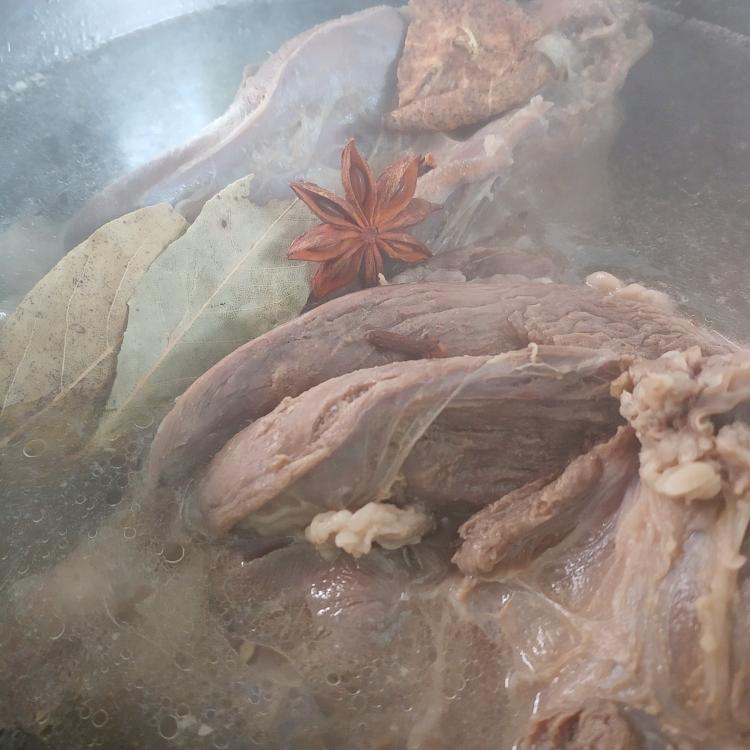
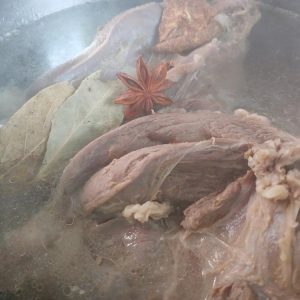
Remove the beef, pour out the blanching water, clean the pot, and add fresh water (cold or hot, either works). Return the beef and add the clove, bay leaves, and dried tangerine peel. The water must cover the beef.
Step 11 – Simmer 80-100 Minutes Until a Skewer Pierces Cleanly
Simmer for 80-100 minutes, until a chopstick or skewer pierces the beef with little resistance – the doneness test that beats any timer. A pressure cooker works for cooks who prefer it, per the original.
Step 12 – The Cross-Section
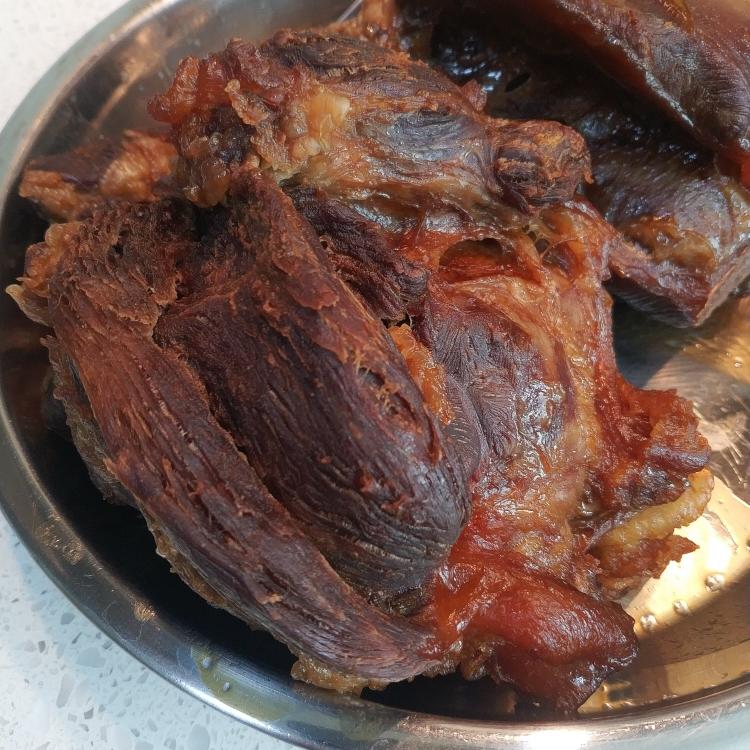
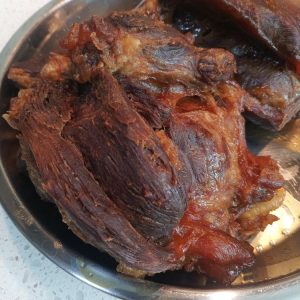
Let the beef cool in the liquid, then slice it thin. The cross-section should show the beautiful mosaic of lean meat and translucent tendon – the deli look that makes this dish worth the day.
Step 13 – The Comparison and the Bonus
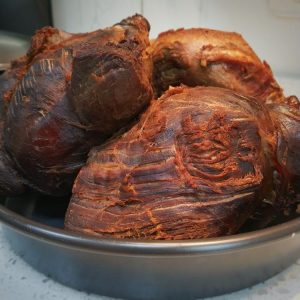
The original’s final note: for contrast, here is beef cured only with salt for 3 hours and boiled in plain water – its broth makes an excellent beef noodle soup, and the sliced beef served over the noodles is the “dry-cut beef” style. Two beefs, two ways, from one patient afternoon.
Common Mistakes When Making Soy-Braised Beef Shank
1. Bland, under-seasoned meat. Cause: skimping on the salt cure. Fix: the original is explicit – at least 80 g (1/3 cup) of salt, no upper limit, and the full 3-hour cure with regular turning.
2. Meat that crumbles when sliced. Cause: skipping the cure or slicing hot. Fix: the salt cure firms the meat, and cooling it in the liquid before slicing keeps the slices intact.
3. A murky, gray result. Cause: skipping the gentle cold-water blanch or the fresh-water refresh. Fix: the two-stage water (blanch, then fresh) is what gives the clean result.
4. The wrong paste. Cause: using Sichuan doubanjiang instead of yellow soybean paste. Fix: the original clarifies – this is the huang dou jiang family, not the chili paste.
5. Tough, chewy shank. Cause: not enough braising time. Fix: 80-100 minutes until a skewer pierces cleanly – judge by the test, not the clock.
6. Washing away the cure. Cause: rinsing the beef before salting. Fix: skip the pre-wash unless visibly dirty – the cure needs the surface moisture.
Variations
Spiced lu style: Add star anise, cassia, and ginger to the braise for a more complex lu flavor – the bridge toward braised beef brisket with daikon.
Noodle soup: The salt-only comparison version in the original makes a superb braised beef noodle soup – the broth is the bonus.
Pressure cooker: The original mentions it works; cook 40-50 minutes under pressure, then cool in the liquid.
Gluten-free soy note: If you use soy in any variation, my gluten-free soy alternatives have the swaps.
Frequently Asked Questions
Can I cut the shank before curing? No – the original is explicit: keep it whole. The whole shank cooks and slices better.
How long does it keep? Refrigerated in the braising liquid, 4-5 days – and it slices best cold. It also freezes well for up to 2 months.
Do I have to rest the paste overnight? An hour is the minimum; overnight in the fridge deepens it. The original offers both.
Can I skip the clove or tangerine peel? They are listed as non-essential (“no need if you do not have them”), but the flavor is better with them.
Why is my beef gray instead of red? The vivid color comes from well-bred beef and the cure; cooking temperature also matters – a gentle simmer, not a hard boil.
How to Serve
Slice the cold shank thin and serve with a dipping sauce of soy, vinegar, and chili – or over noodles with the braising liquid as soup, the original’s bonus idea. It is a cold-plate staple: serve with Wenzhou braised pork belly for a lu-meat spread, or Provence braised short ribs for the international braise table. For the sauce family behind the dish, my essential Chinese sauces guide covers the paste.
Storage & Reheat
Store the shank submerged in the strained braising liquid, refrigerated, for 4-5 days – the liquid keeps it moist and the flavor deepens. It slices best cold; for hot serving, slice first and warm gently in the liquid. Freeze in portions with some liquid for up to 2 months. Reheat to at least 74°C (165°F). Never leave the pot out for more than 2 hours.
Allergen Notice
This recipe contains soy (yellow soybean paste). It is free of gluten (verify your paste), nuts, eggs, dairy, and shellfish.
Nutrition Disclaimer
Nutrition information is calculated using an ingredient database and should be considered an estimate. In cases where multiple ingredient alternatives are given, the first listed is calculated for nutrition. Garnishes and optional ingredients are not included.
About the Author & Recipe Development
I am Lin, a professional Chinese chef and food writer with a decade in restaurant kitchens before turning to recipes. This xiachufang recipe is written by a cook who genuinely holds nothing back – the warnings about washing, the salt minimums, the skewer test – and it reads like a masterclass in the traditional method. I tested the full day-long process and confirmed every stage matters: the cure firms the meat, the paste colors it, the two-stage water cleans it. I have not tested the pressure-cooker timing myself, so that remains the original’s suggestion, not my verified number.
Authoritative References
USDA Food Safety and Inspection Service – Safe Temperature Chart for beef handling and storage guidance.
Soy-Braised Beef Shank (Jiang Niu Rou): The Traditional Way

Equipment
- Large Pot
- Heavy skillet
- Skewer
- Sharp Knife
Ingredients
For the Cure
- 1 kg whole beef shank (niu jian) 2.2 lb, kept whole
- 80 g coarse salt, at least 1/3 cup, no upper limit
- 50 Sichuan peppercorns about a small handful
- 50 fennel seeds about a small handful
- 2 tbsp yellow soybean paste (huang dou jiang) 30 g, to coat thinly
- 1 clove (ding xiang)
- 1-2 bay leaves 1 large or 2 small
- 1 piece dried tangerine peel (chen pi) about the size of a bay leaf
- water, for blanching and braising
Instructions
- Buy a whole, food-safety-standard shank and do not wash it unless visibly dirty – the cure needs the surface moisture.

- Toast the coarse salt with the peppercorns and fennel in a dry skillet until fragrant.

- Rub the salt and spices over the shank and cure 3 hours, turning and massaging every 30 minutes.
- Rinse or rub off the surface salt.
- Pat the beef dry – the cured meat should be vivid pink.
- Coat thinly with yellow soybean paste (huang dou jiang family, not Sichuan doubanjiang).
- Rest 1+ hours at room temperature, or overnight in the fridge in a sealed bag.
- Blanch from cold water, heating gently, then boil 3-5 minutes, skimming.
- Refresh the pot with clean water; add the beef, clove, bay leaves, and tangerine peel.
- Simmer 80-100 minutes until a skewer pierces cleanly. Cool in the liquid, then slice thin.
- The cross-section shows the mosaic of meat and tendon – the deli look worth the day.
- The cross-section shows the mosaic of meat and tendon – the deli look.
- Bonus: salt-only-cured beef boiled plain makes a fine beef noodle soup – the dry-cut style.


Leave a Reply