There is a specific “jiggle” that every Chinese chef looks for when taking a bowl of steamed eggs out of the steamer. It shouldn’t ripple like water, nor should it sit stiff like a hard-boiled egg. It should wobble gently, like a crème brûlée, promising a texture so smooth it barely needs chewing.

Growing up in my family’s restaurant in Sichuan, steamed egg (Zheng Ji Dan) was the ultimate comfort food. It was what my mother made for me when I was studying late, and it’s what I make for my own family now when we need something nourishing and gentle. While the traditional version uses just water or stock, this recipe—which I’ve adapted from a home-style favorite—incorporates milk. This isn’t just a modern twist; the fat and proteins in the milk interact with the egg to create an even more tender, “pudding-like” curd that is incredibly luxurious.
If you enjoy the comforting texture of this dish, you might also want to try our Steamed Egg with Minced Pork, which offers a heartier, meatier profile.
About the Author & Recipe Development
I’m Lin, and I have spent over a decade in professional kitchens, starting as a prep cook in my father’s Sichuan restaurant before attending culinary school. Throughout my career, I’ve learned that the simplest dishes—like fried rice or steamed eggs—are often the hardest to perfect because there is nowhere to hide.
For this recipe, I tested the ratio of liquid to egg extensively. While culinary school often taught a 1.5:1 ratio, this home-style version uses a 1:1 ratio (egg to liquid), with half of that liquid being milk. This results in a slightly firmer, glossy custard that can support the weight of the shrimp on top without them sinking to the bottom, while the milk ensures the mouthfeel remains velvety, not rubbery.
Why This Recipe Works
- The “Milk Hack”: Adding milk isn’t just for flavor; it stabilizes the egg protein network, preventing the custard from becoming tough even if your steamer runs a little hot.
- Two-Stage Steaming: By steaming the egg base first and adding the shrimp later, we prevent the shrimp from overcooking and becoming rubbery—a common flaw in home cooking.
- Pre-Blanching the Shrimp: This step removes impurities and “fishy” odors, ensuring the liquid released by the shrimp doesn’t cloud the beautiful surface of your custard.
Key Ingredients & Substitutions
- Eggs: Use large, fresh eggs. The freshness affects the structural integrity of the custard.
- Shrimp: Fresh shrimp are best for sweetness, but frozen, thawed shrimp work well too. If you love shrimp dishes, check out our Scrambled Eggs with Shrimp for a quicker stir-fry option.
- Milk: Whole milk provides the best texture due to the fat content. If you are dairy-free, you can substitute with unsweetened soy milk or simply use more water or chicken stock, though the color will be less white.
- Shaoxing Wine: Essential for marinating the shrimp to remove gamey odors. If you cannot find Shaoxing Wine, dry sherry is an acceptable substitute.
- Sesame Oil: A finishing oil that adds a nutty aroma. A high-quality Sesame Oil makes a huge difference here.
- Light Soy Sauce: Used for seasoning the shrimp and the final drizzle. We recommend a premium Light Soy Sauce for a balanced salty-savory flavor.
Ingredients

For the Custard:
- 2 large eggs
- ¼ cup (60ml) cold water
- ¼ cup (60ml) milk (whole milk preferred)
- ⅛ tsp salt
For the Topping:
- 5 medium shrimp, peeled and deveined
- 1 tsp Shaoxing Wine
- ½ tsp Light Soy Sauce (for marinade)
- 1 pinch salt
For Serving:
- 1 tsp Light Soy Sauce
- ½ tsp Sesame Oil
- 1 stalk scallion (green onion), finely chopped
Recipe Notes Before You Begin
- Equipment: You will need a steamer setup (a wok with a rack and lid, or a dedicated steamer). You also need a heat-proof bowl that fits inside your steamer with the lid closed.
- Plastic Wrap: We will cover the bowl with plastic wrap (cling film). Ensure your brand is microwave/heat safe (look for PVC-free or labeled for heating). This is crucial for a smooth surface.
How to Make Silky Steamed Egg with Shrimp
Step 1: Create the Egg Mixture
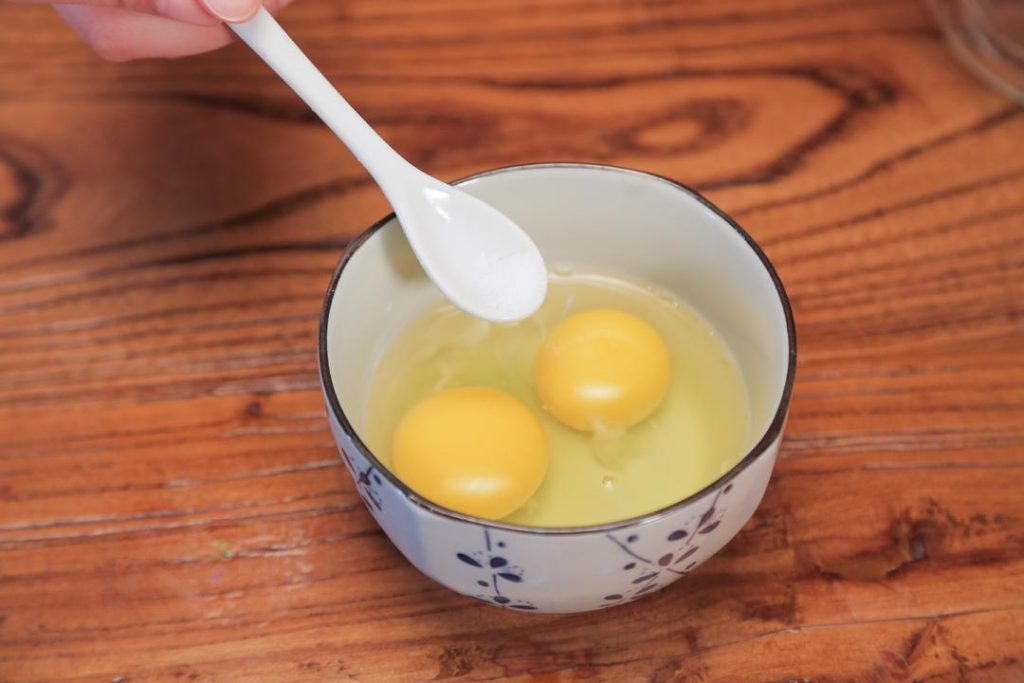
Crack 2 eggs into a mixing bowl. Add the salt. Beat with chopsticks or a whisk until the yolk and white are fully combined. Adding salt at this stage helps break down the egg proteins, allowing the mixture to stabilize faster during steaming.
Next, pour in the cold water and the milk. The ratio here is key: roughly 1:1 liquid to egg. The milk should be about half the volume of the eggs. Whisk thoroughly to combine.
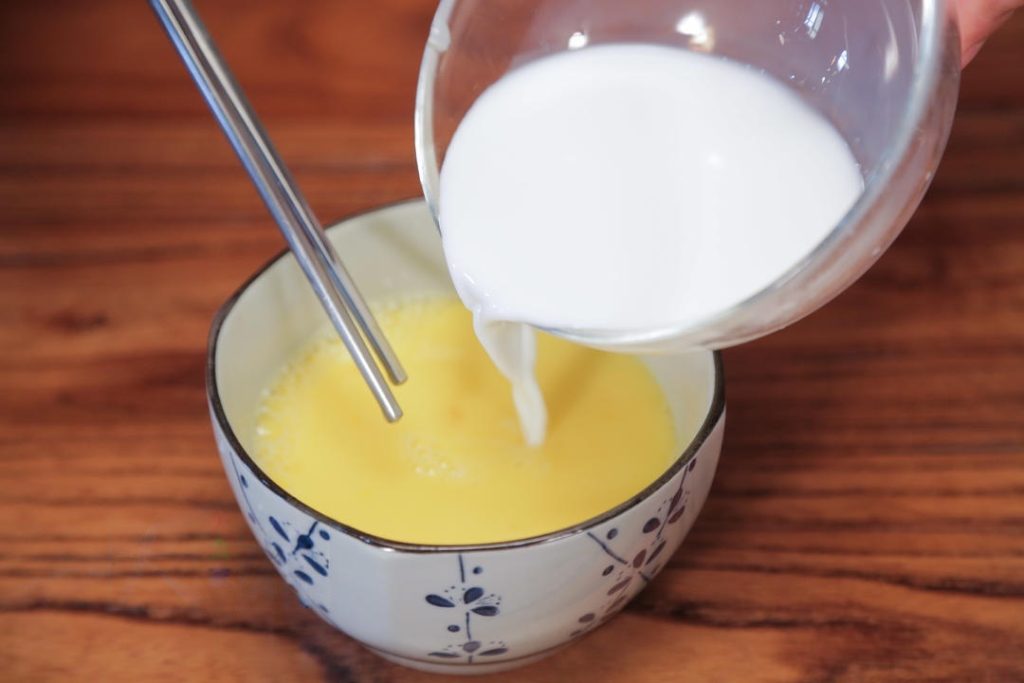
Chef’s Tip: For the absolute smoothest “glass-like” surface, you can strain this mixture through a fine-mesh sieve to remove air bubbles and chalaza (the white stringy bit), though for a rustic home-style version, you can skip this.
Step 2: First Steam
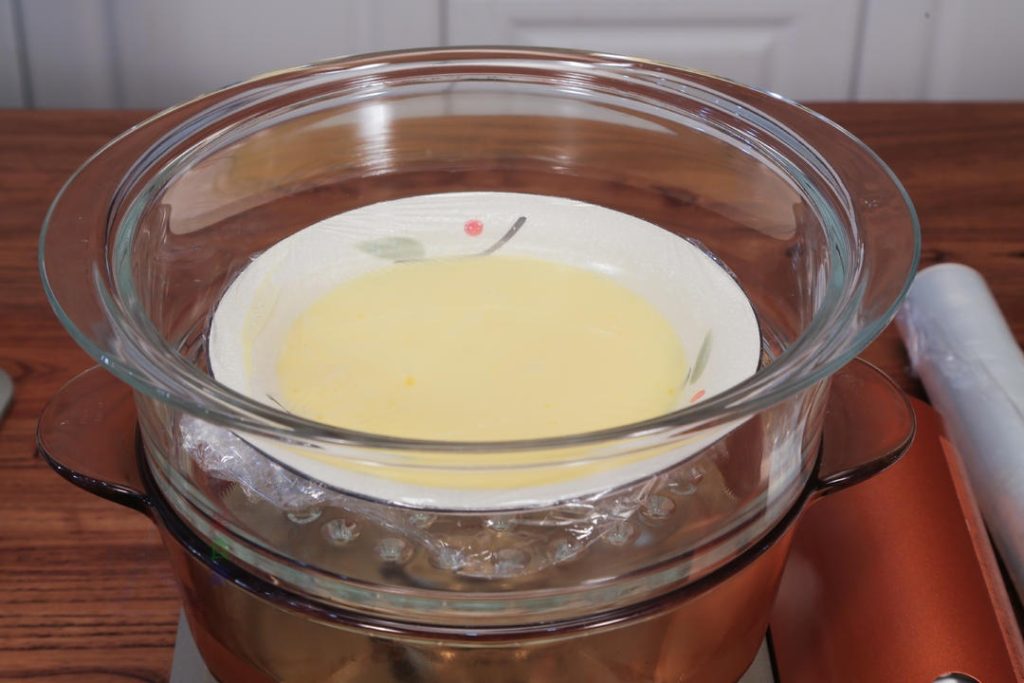
Pour the egg mixture into your heat-proof serving bowl or deep dish. Cover the bowl tightly with plastic wrap. Use a toothpick to poke 1 or 2 tiny holes in the wrap to release excess pressure.
Place the bowl into a steamer over boiling water. Steam on high heat for 7 to 8 minutes.
Why cover it? The plastic wrap prevents condensation from the steamer lid from dripping onto the egg surface, which creates craters and ruins the smooth texture.
Step 3: Prepare the Shrimp
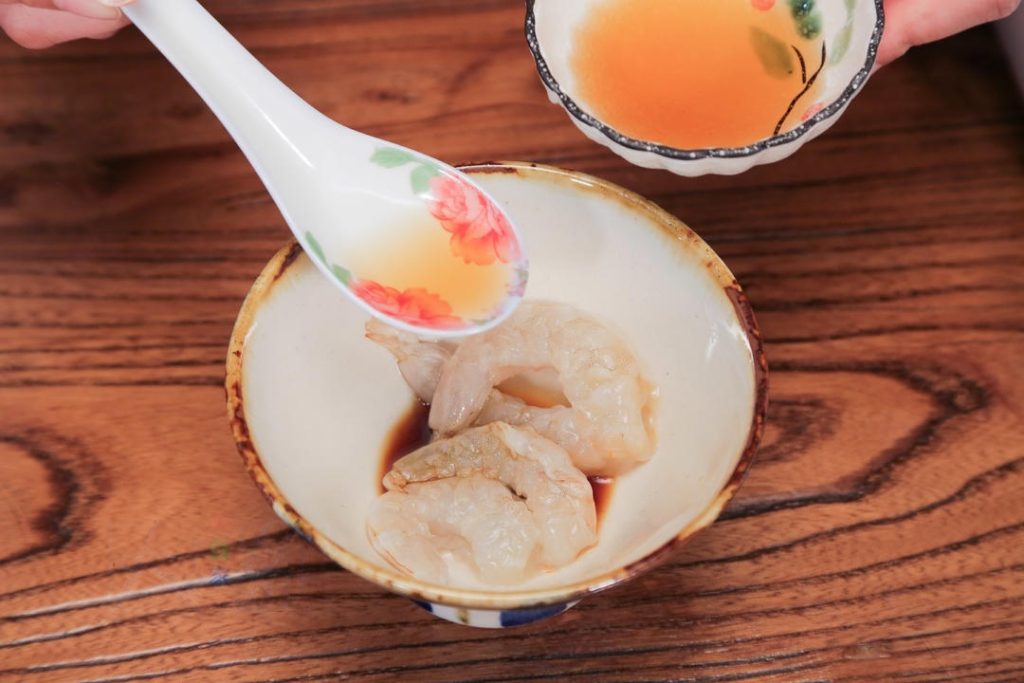
While the egg is steaming, prepare the shrimp. Remove the black vein (digestive tract). Bring a small pot of water to a boil and quickly blanch the shrimp for 10-15 seconds until they just turn pink. Drain immediately.
Place the blanched shrimp in a small bowl and toss with the Shaoxing wine, ½ tsp light soy sauce, and a pinch of salt.
Why blanch first? Blanching removes surface proteins and odors. If you put raw shrimp directly on the semi-set egg, they might release greyish fluids that mess up the aesthetics and flavor of the custard.
Step 4: Second Steam
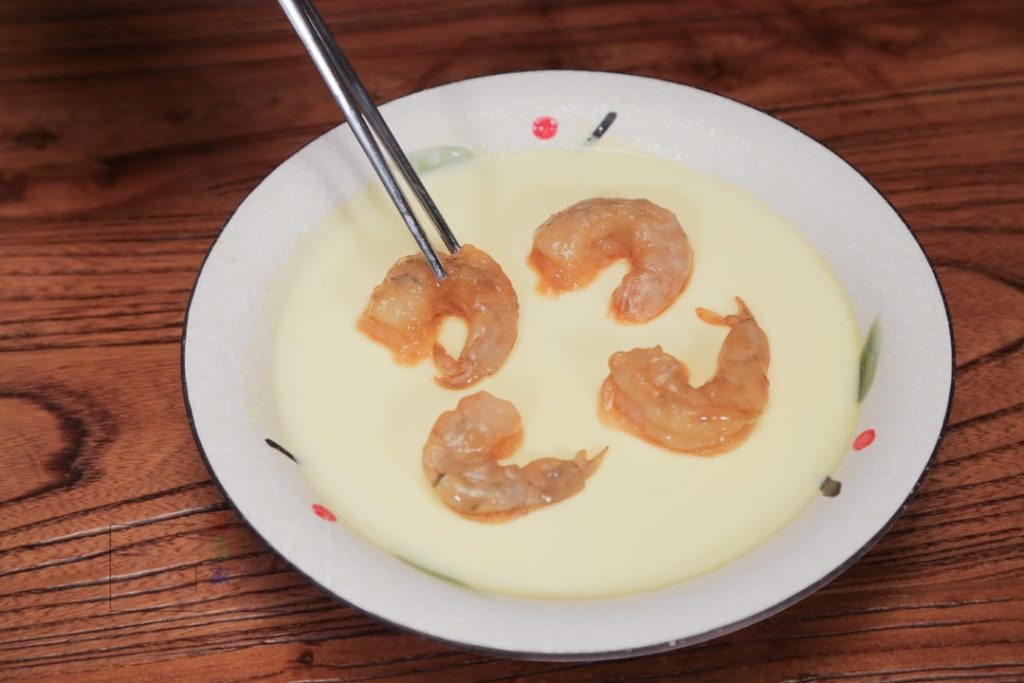
After the initial 7-8 minutes, carefully open the steamer (watch out for hot steam!). The egg should be mostly set but still soft. Remove the plastic wrap carefully.
Gently place the marinated shrimp on top of the custard. They should sit on the surface without sinking. Cover the steamer lid (you don’t need to put the plastic wrap back on) and steam for another 3 minutes.
Step 5: Season and Serve
Remove the bowl from the steamer. Mix the remaining 1 tsp of light soy sauce and ½ tsp of sesame oil together, then drizzle this mixture over the surface of the eggs and shrimp. Garnish with chopped scallions.
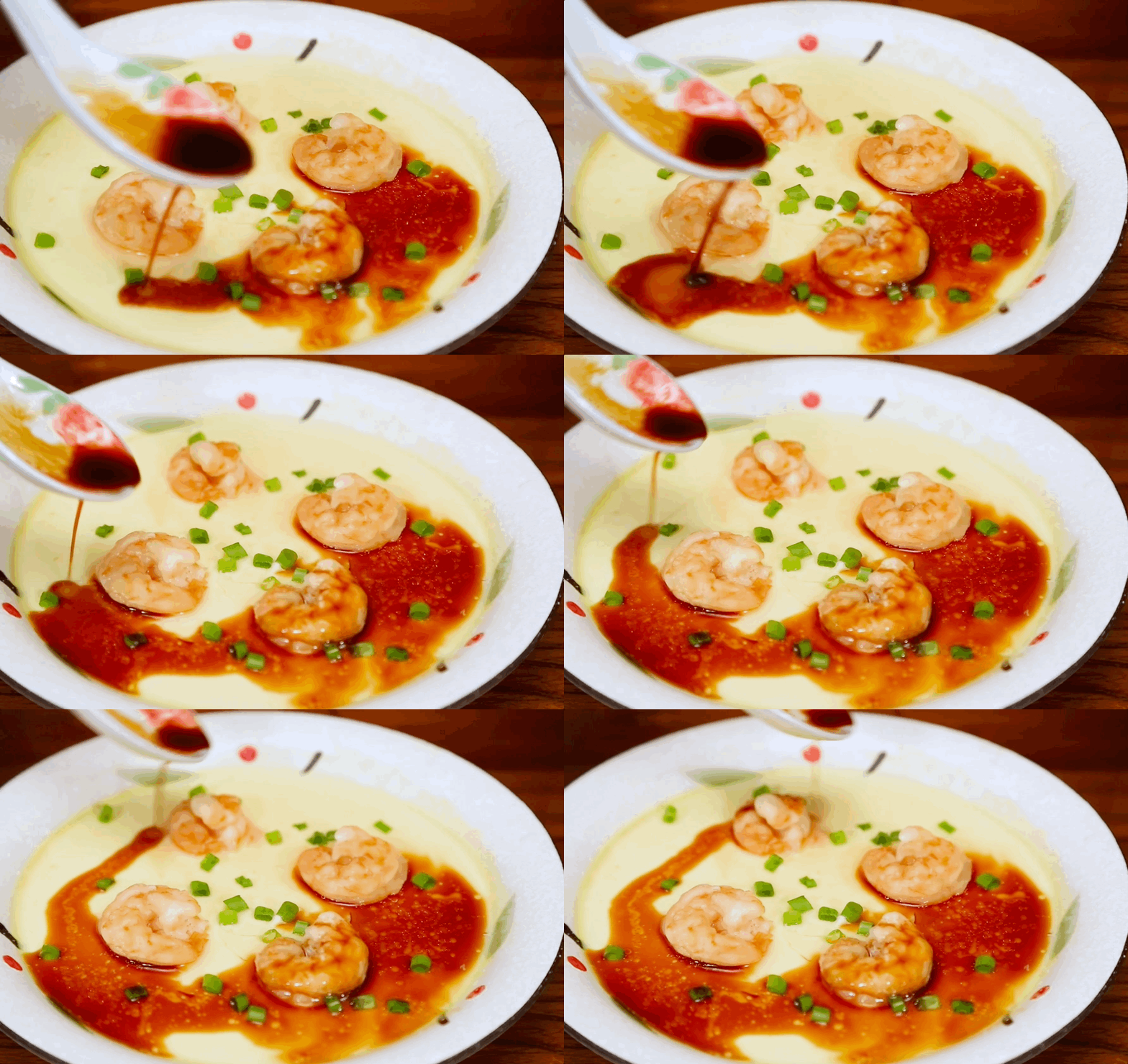
Serve immediately while hot!
Common Mistakes When Making Steamed Eggs
- The “Honeycomb” Texture: If your eggs look like a sponge with many holes inside, the heat was too high or you steamed it too long. This creates bubbles that get trapped as the egg hardens.
- Watery Surface: This usually happens if you didn’t cover the bowl, allowing steam condensation to drip back into the custard.
- Egg Not Setting: If you added too much water or milk (more than a 2:1 ratio), the egg protein structure won’t be strong enough to hold a shape. Stick to the 1:1 or 1:1.5 range.
Serving Suggestions
This dish is mild and savory, making it a perfect protein side dish. It goes beautifully with a bowl of white rice. Because the oven or stove is occupied, I recommend pairing this with a stir-fry that cooks quickly, such as Stir-fried Lettuce with Garlic or Shrimp and Broccoli Stir-Fry if you have extra shrimp.
Energy Saving Tip: As mentioned in the original family recipe, you can cook this in a “stack.” If you are boiling soup or making congee in a lower pot, you can place a steamer rack on top and steam the eggs simultaneously to save energy and time.
Food Safety & Preparation
- Egg Safety: According to the USDA, eggs should be cooked until both the yolk and white are firm to prevent Salmonella. Steaming for 10+ minutes total ensures the internal temperature reaches safe levels (160°F/71°C).
- Shellfish Safety: Ensure shrimp are opaque and firm before serving. If using frozen shrimp, thaw them safely in the refrigerator, not on the counter.
- Allergen Note: This recipe contains Eggs, Milk, Shellfish, Soy, and Sesame.
Nutrition Information (Estimate)
- Calories: 180 kcal
- Protein: 16g
- Fat: 11g
- Carbohydrates: 3g
- Sodium: 450mg (Disclaimer: Nutrition information is calculated using an ingredient database and should be considered an estimate. Garnishes and optional ingredients are not included. Different brands of soy sauce vary significantly in sodium content.)



Leave a Reply