The first time I stir-fried pasta in a wok, I treated it like a noodle dish and it came out gluey – the pasta had absorbed every drop of sauce and turned into a starchy brick. The fix, as with so many Chinese-Western fusion dishes, is sequencing: cook the pasta, sear the steak, then bring everything together at the last minute over gentle heat. This Sichuan-style steak pasta from a Chinese home cook gets that sequence exactly right, and the result is a dish that tastes like a Sichuan kitchen and an Italian one had a very happy meeting.
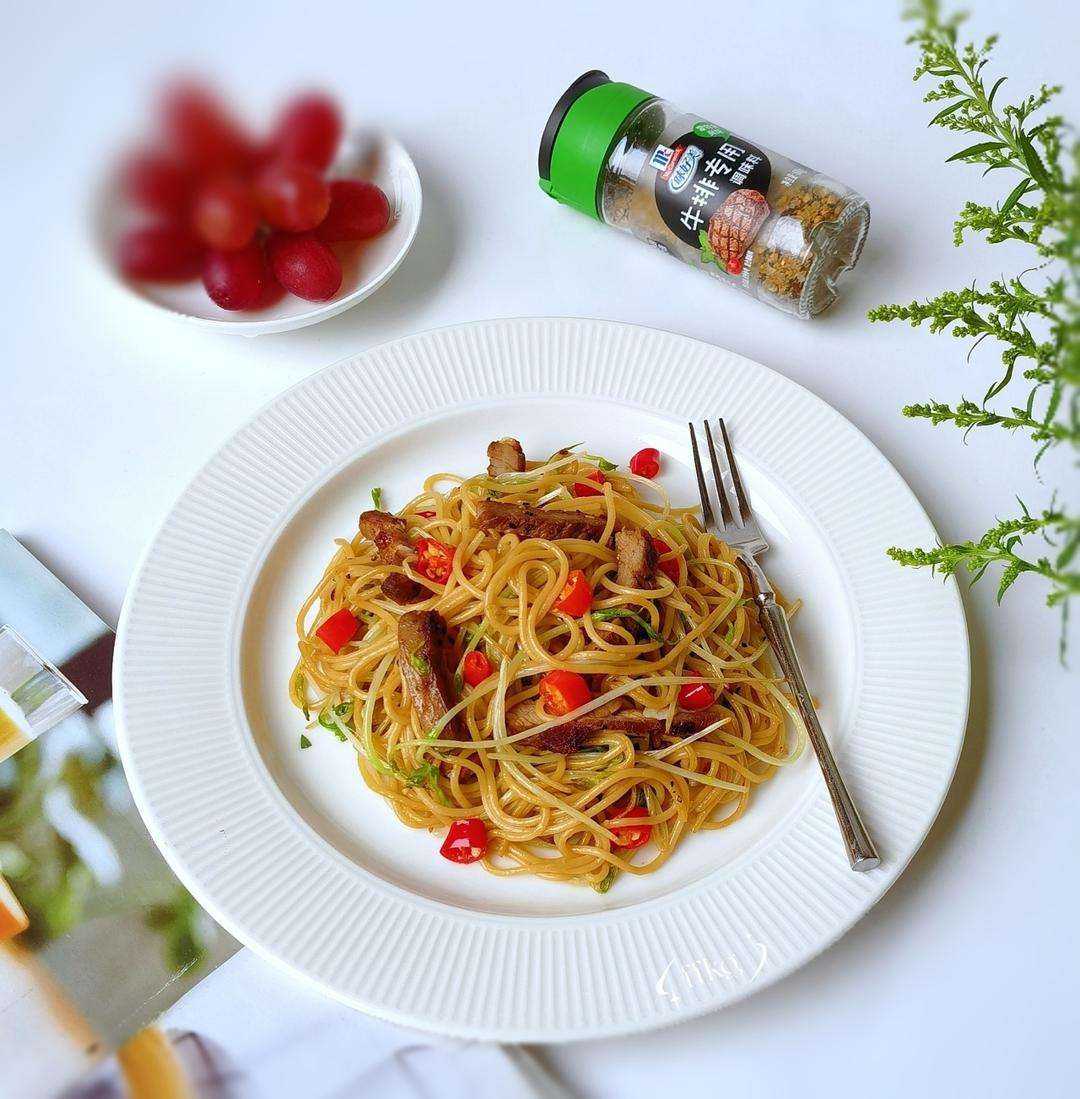
The whole dish rides on a steak seasoning blend – the original uses a store-bought “steak seasoning” that includes chilies and spices – plus fresh bird’s eye chilies and a handful of pea shoots. The steak is marinated for fifteen minutes, seared and sliced into strips, and tossed back in at the very end so it stays pink and tender. Thirty minutes, one pan, and a dinner that looks like a restaurant special.
What Is Sichuan Steak Stir-Fried Pasta (Chuan Wei Niu Pai Chao Yi Mian)?
Chuan wei niu pai chao yi mian (川味牛排炒意面) is Sichuan-style stir-fried pasta – a Chinese home-cooking fusion where beef steak, Italian pasta, and fresh pea shoots are combined with a spicy steak seasoning and bird’s eye chilies. It is the kind of dish that emerged from Chinese home kitchens playing with Western ingredients: the wok technique stays fully Chinese, while the steak and pasta are unapologetically Western.
The dish is built in three acts. The pasta boils in salted, oiled water and drains; the seasoned steak sears in a hot pan and rests before slicing; and the pasta is then stir-fried with soy sauce and seasoning over very low heat – the original recipe’s triple exclamation about the low flame is the single most important detail. Pea shoots and chili go in, the steak strips return, everything tosses together for seconds, and the plate looks like a magazine cover.
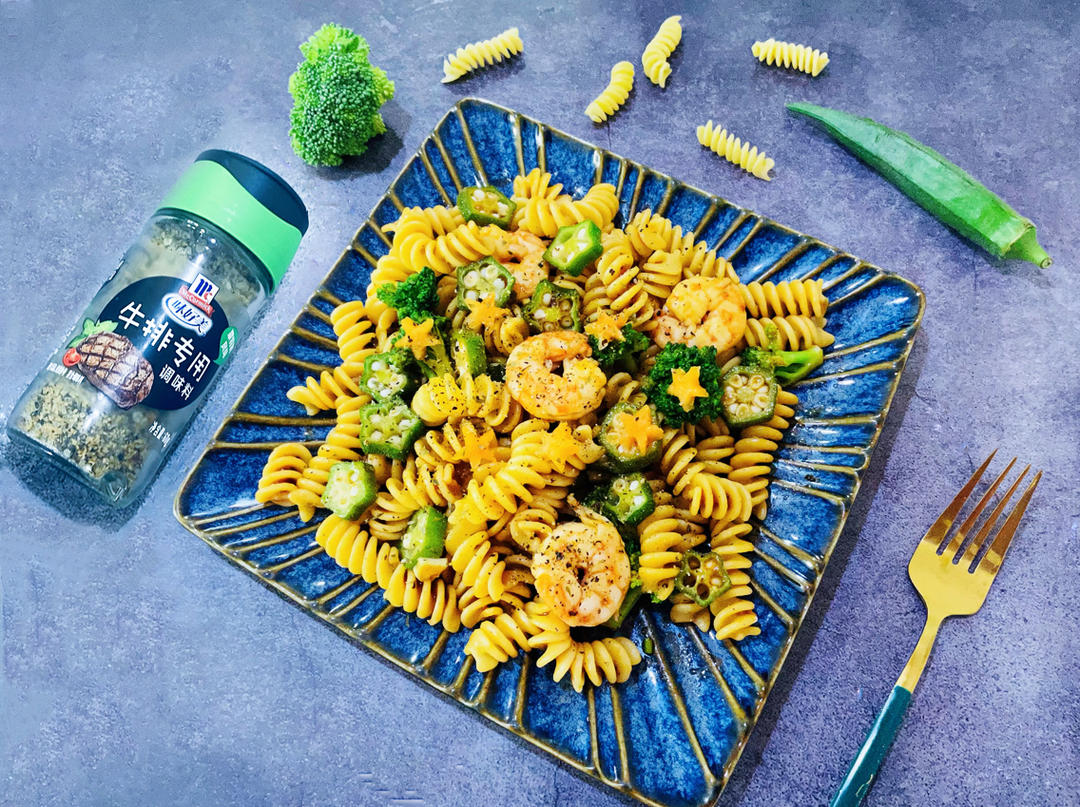
If you love the pasta-stir-fry idea, my Montreal-spiced shrimp pasta stir-fry is the seafood cousin of this recipe – same fusion logic, different protein.
1Montreal Spiced Shrimp Pasta Stir-Fry (Meng Te Li Feng Wei Xia Ren Yi Mian)A 20-minute healthy fusion dinner featuring juicy shrimp, tender fusilli, and crisp veggies tossed in bold Montreal steak seasoning. Simple, nutritious, and packed with flavor.Check out this recipe
Why This Recipe Works
- The low-heat toss is non-negotiable. Pasta is already cooked and delicate; a roaring wok would break it and scorch the soy. The original’s “low heat, always!” warning is the recipe’s core instruction.
- Steak seared, rested, then sliced. A hot pan builds a crust in 3-4 minutes per side, and the rest lets the juices settle so the slices stay pink instead of gray.
- The seasoning blend does double duty. It seasons the steak in the marinade and seasons the pasta in the pan – one ingredient, two jobs, perfect flavor harmony.
- Pea shoots add a fresh counterpoint. Their grassy sweetness cuts the chili heat and steak richness, and they wilt in seconds in the final toss.
- Olive oil in the pasta water. A splash keeps the strands from clumping while they wait for the pan – the classic Italian trick applied to a wok dish.
Equipment Needed
- A large pot for boiling the pasta
- A heavy skillet or nonstick pan for the steak
- A wok or large skillet for the final toss
- Kitchen paper for drying the steak
- Tongs for the steak
Ingredients
- 1 beef steak (about 200-250 g / 7-9 oz), such as sirloin or ribeye
- 120 g (4.2 oz) dried pasta (spaghetti or linguine)
- 1 handful pea shoots (about 50 g / 1.8 oz), washed
- 2-3 bird’s eye chilies, sliced (adjust to your heat preference)
- 2 tbsp (30 ml) olive oil, plus a splash for the pasta water
- 2 tbsp (30 ml) light soy sauce
- 2 tsp (10 g) steak seasoning blend (chili-spice blend; see notes)
- Salt, for the pasta water
Ingredient Notes
Steak seasoning blend: The original uses a store-bought Chinese “steak seasoning” (味好美 / McCormick-style) that typically combines salt, chili, black pepper, and aromatics. If you cannot find one, make your own: 1 tsp salt, 1/2 tsp chili powder, 1/2 tsp black pepper, 1/4 tsp garlic powder, and a pinch of cumin. It is the dish’s signature flavor, so do not skip it.
Pea shoots (dou miao): The tender tops of pea plants – sweet, grassy, and quick-wilting. They are the original’s vegetable of choice and are sold in Asian grocers. Snow pea leaves or even baby spinach are good substitutes; add them at the very end either way.
Steak: A tender, quick-cooking cut – sirloin, ribeye, or tenderloin. The steak is cut into strips after cooking, so buy a thick enough piece that the strips are substantial. Thaw frozen steak completely and pat it bone-dry before seasoning.
Pasta: Long shapes work best – spaghetti, linguine, or even fresh egg noodles in a pinch. Cook to just under al dente since the final toss adds a little more cooking.
Prep & Mise en Place
Take the steak out of the fridge, pat it completely dry with paper towels, and coat it evenly with the steak seasoning. Let it marinate for 15 minutes while you prep everything else – the original recipe is specific about this resting window.
Wash and drain the pea shoots, slice the bird’s eye chilies, and have the soy sauce measured. Bring a large pot of salted water to a boil. Because the final assembly is fast and hot, having every component ready before the steak hits the pan is what separates a clean toss from a frantic scramble.
Cooking Process
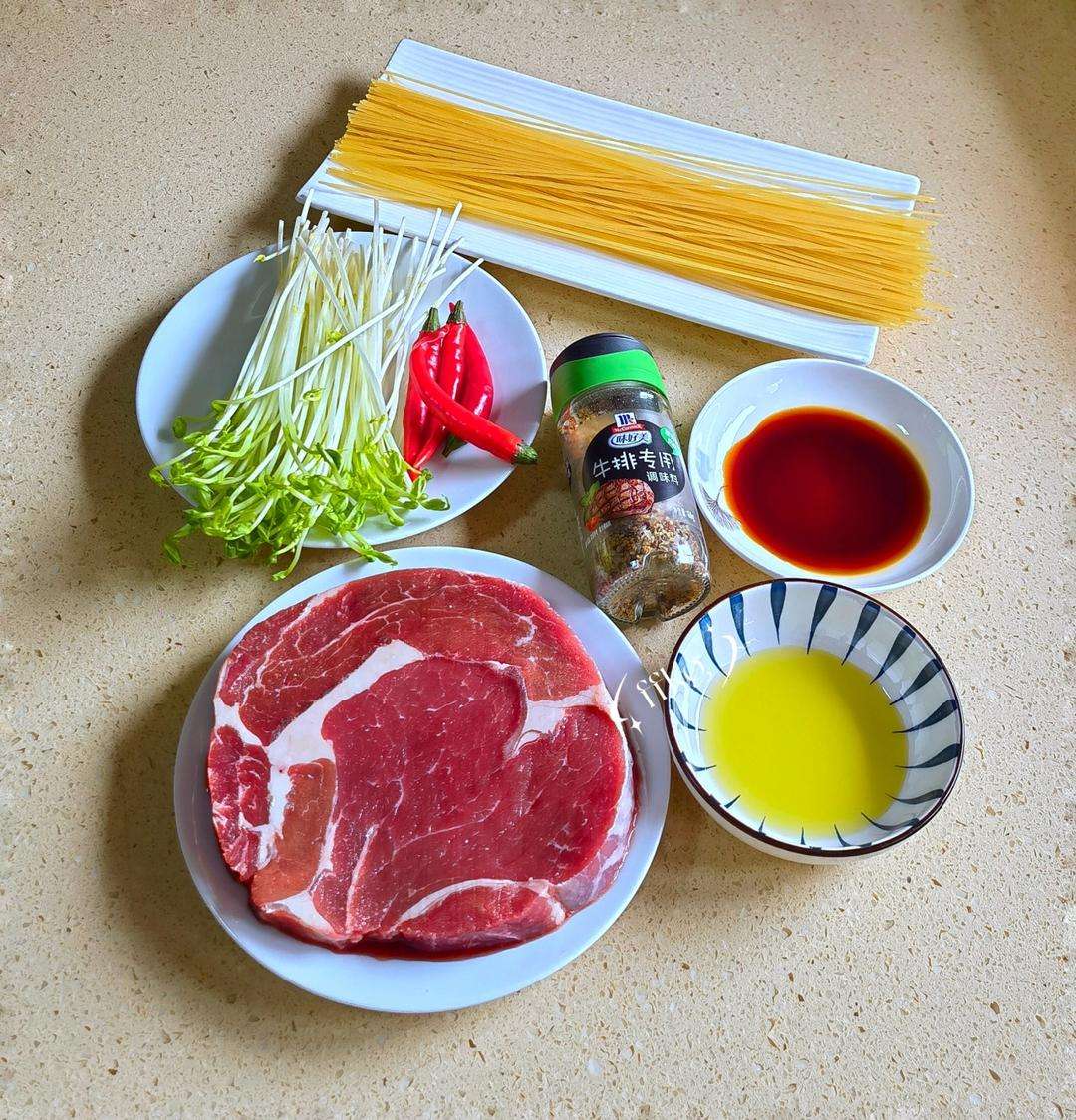
Step 1 – Lay Out the Ingredients
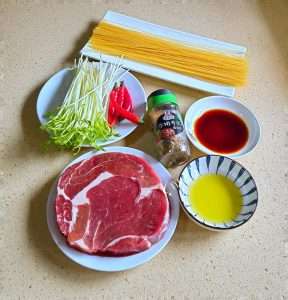
Set everything within reach: the seasoned steak, the dried pasta, washed pea shoots, sliced chilies, olive oil, and soy sauce. The cook is a tight sequence from here on – there is no time to search for an ingredient mid-wok.
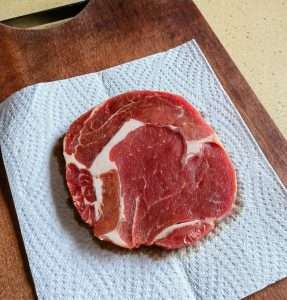
Step 2 – Thaw and Dry the Steak
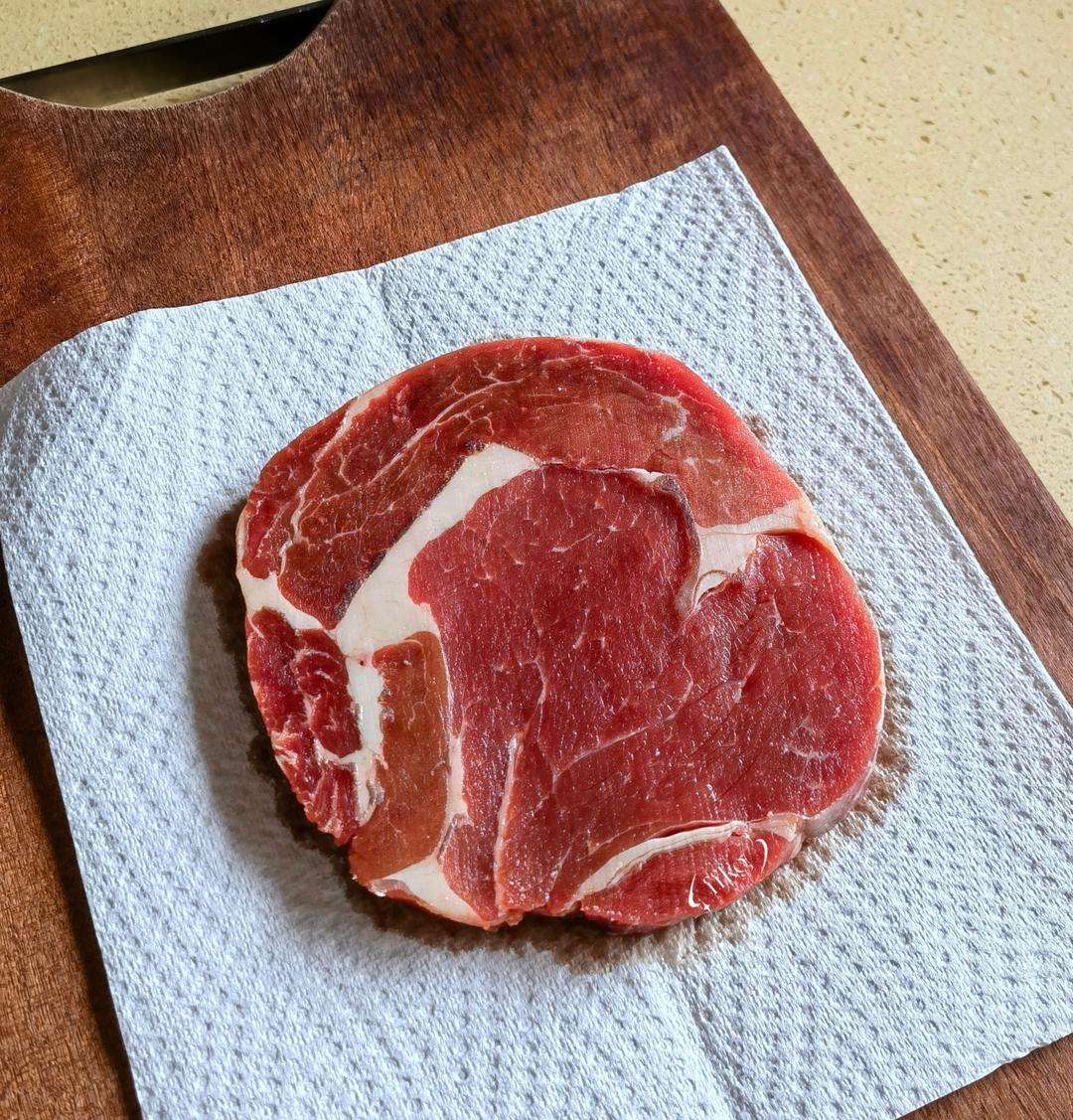
If the steak was frozen, thaw it completely in the fridge, then pat it bone-dry with paper towels. A dry surface is essential – moisture on the steak steams instead of searing and dilutes the seasoning crust.
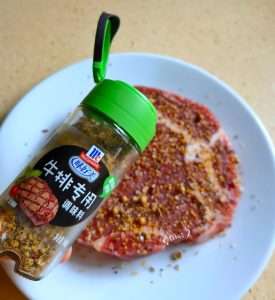
Step 3 – Coat the Steak With Seasoning
Sprinkle the steak seasoning blend evenly over both sides and rub it in with your fingers, covering every surface. Use the full amount – some of it will fall away in the pan, and the pasta needs its share of the flavor later.
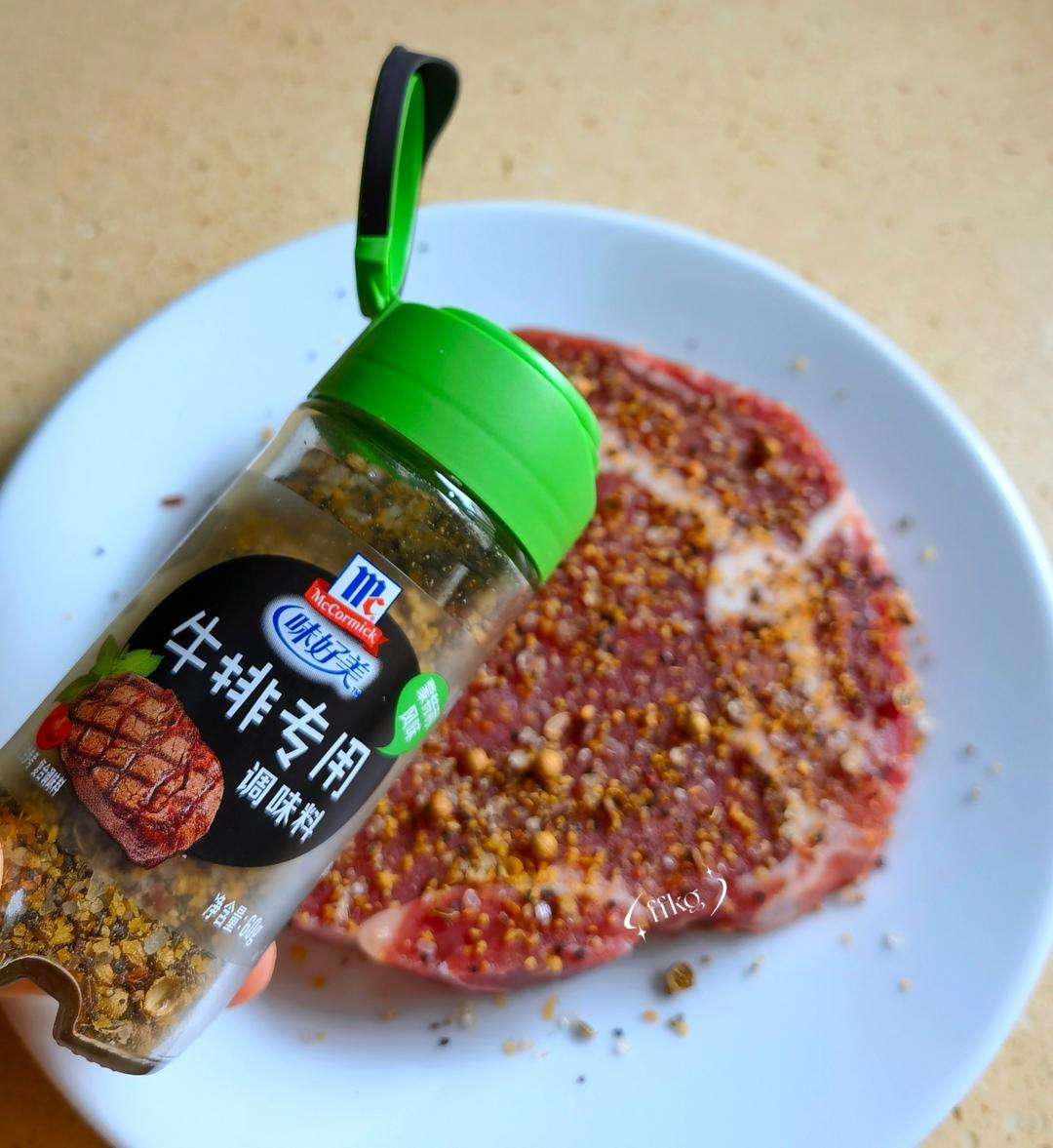
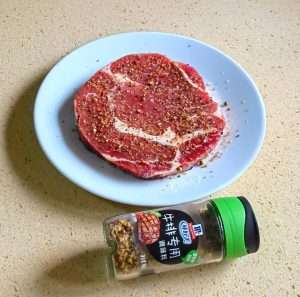
Step 4 – Marinate for 15 Minutes
Let the seasoned steak rest for 15 minutes at room temperature. This is not a deep marinade – it is a seasoning-set window that lets the salt penetrate the surface and the spices adhere before the heat hits them.
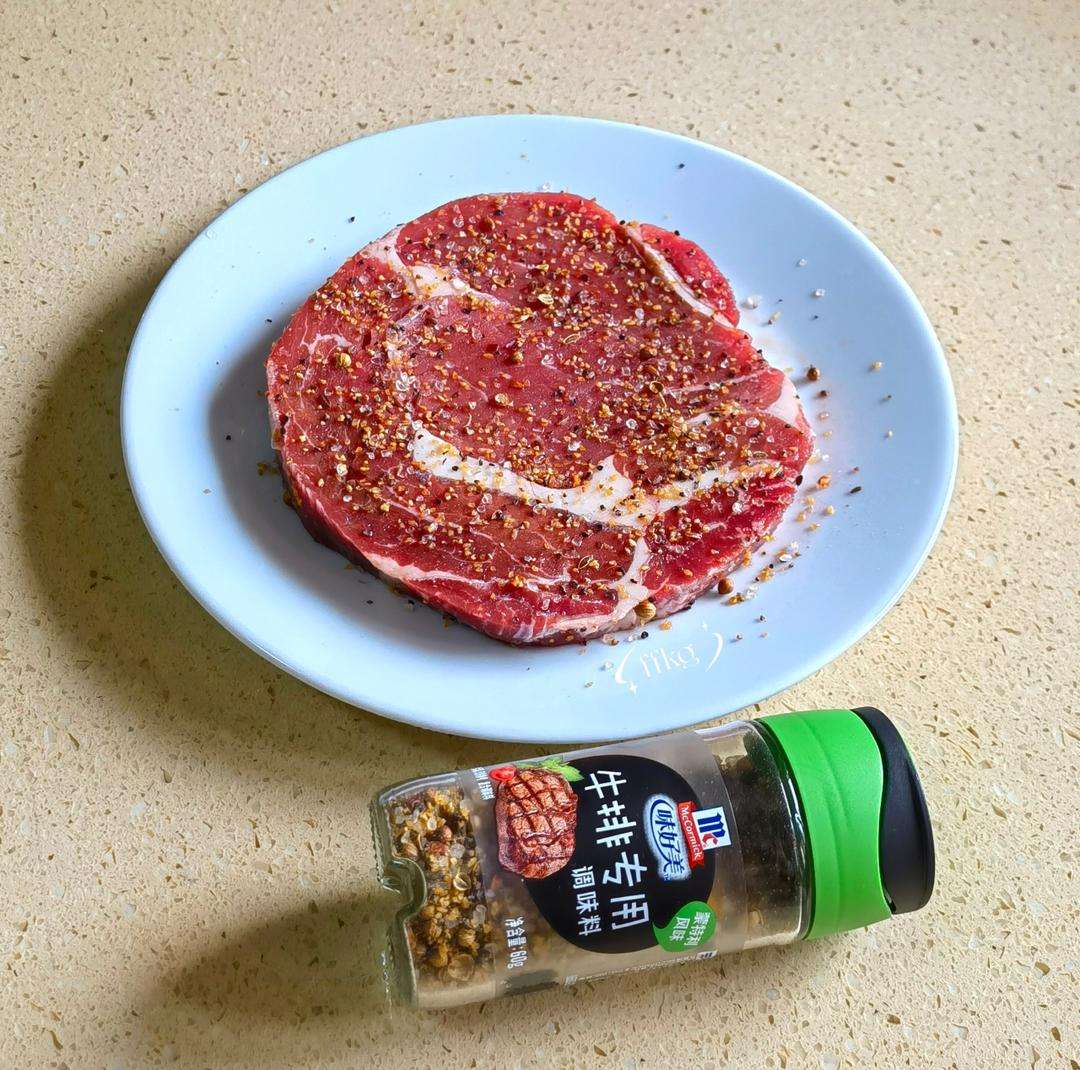
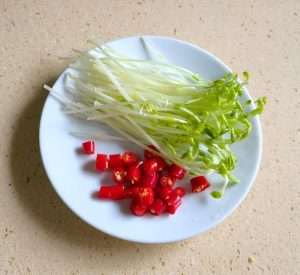
Step 5 – Prep the Pea Shoots and Chilies
Wash the pea shoots and shake off excess water. Slice the bird’s eye chilies into thin rings – adjust the count to your heat tolerance; the original suggests seasoning to your own chili preference.
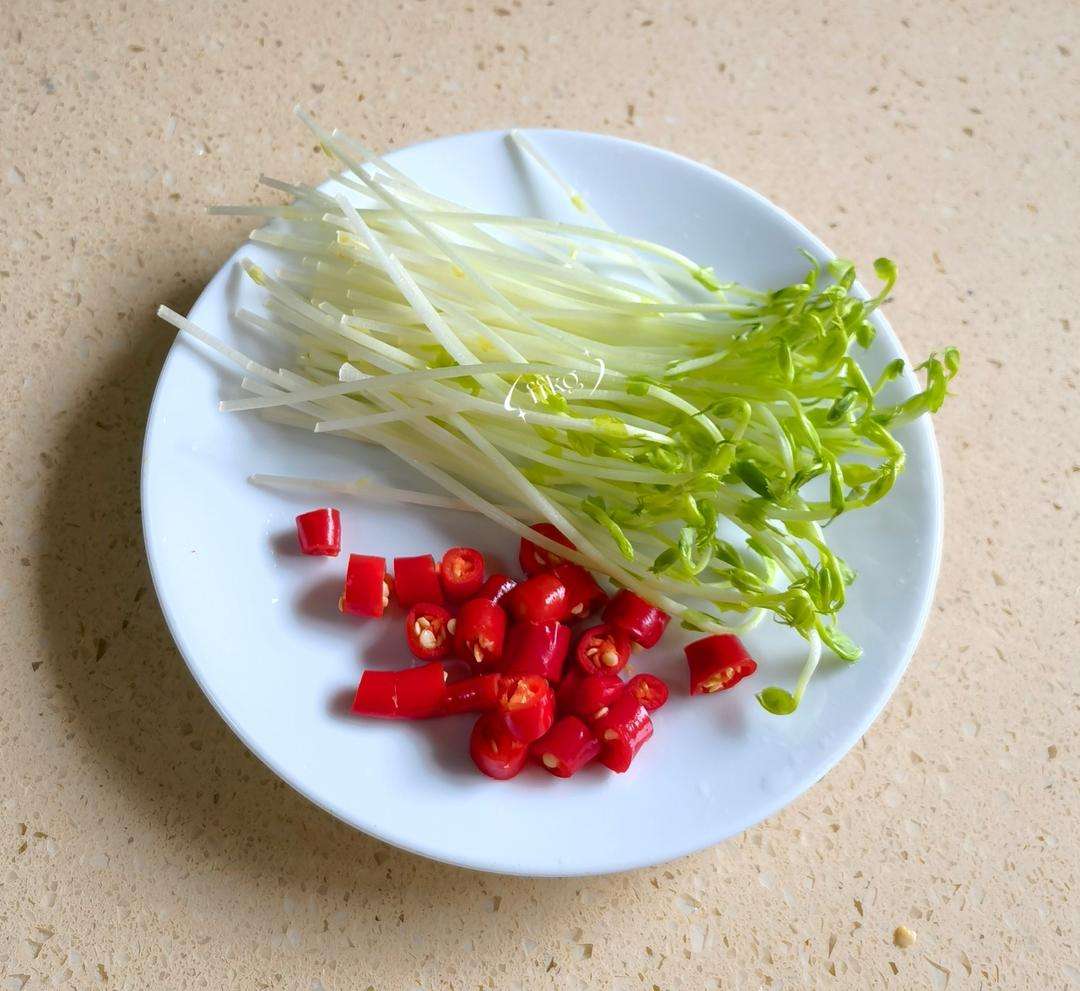
Step 6 – Boil the Pasta
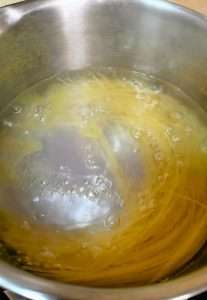
Bring a large pot of salted water to a boil and add a splash of olive oil. Cook the pasta to just under al dente (about 1 minute less than the package time), then drain well. The olive oil in the water keeps the strands from sticking together while they wait.
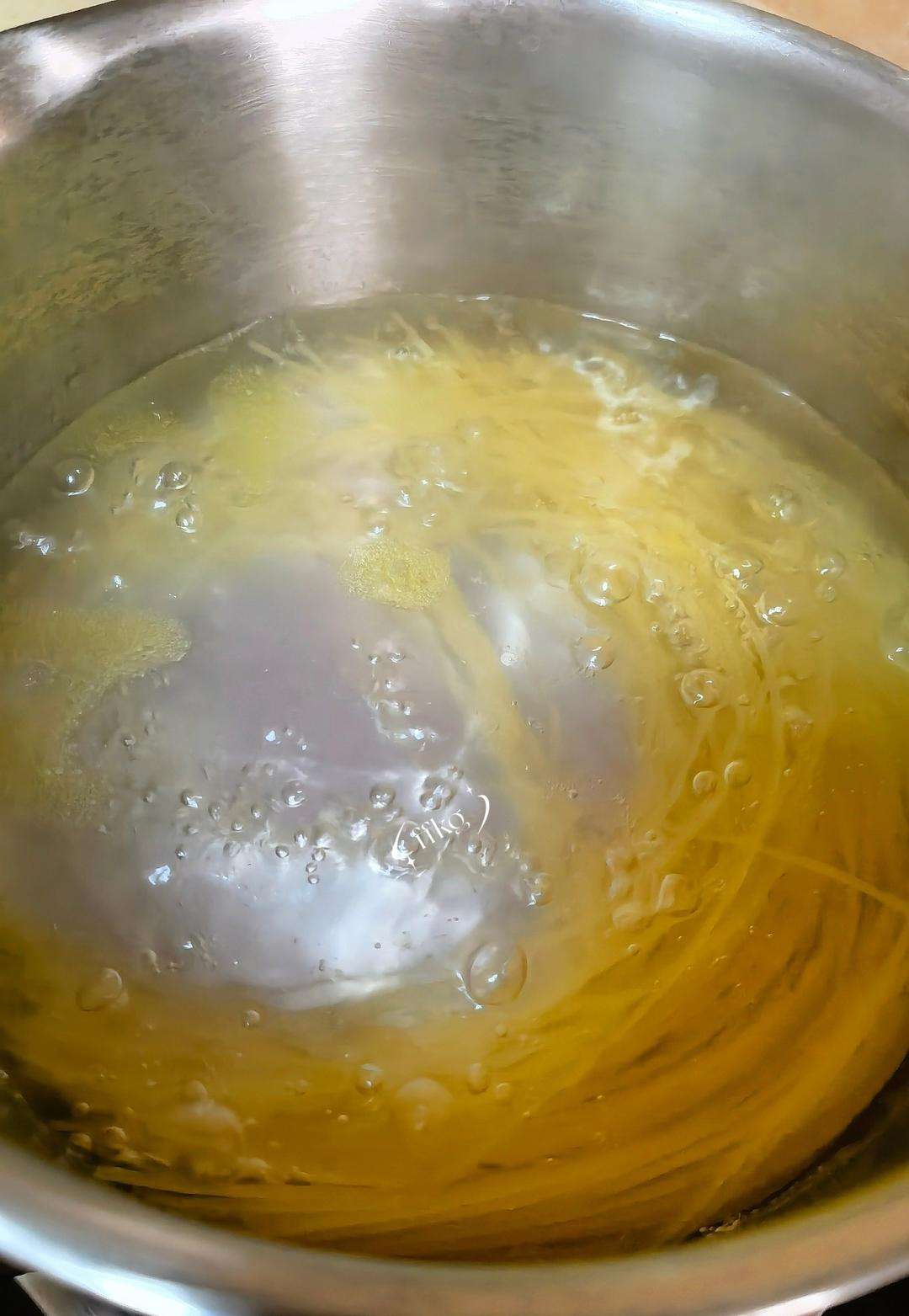
Step 7 – Sear the Steak and Slice Into Strips
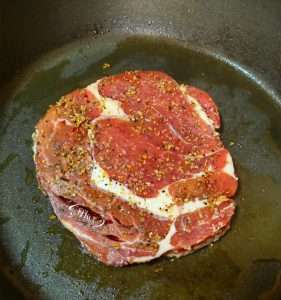
Heat a heavy skillet over medium-high heat with a little olive oil. Sear the steak 3-4 minutes per side until deeply browned and cooked to your preference (about 52-54°C / 126-129°F for medium-rare). Rest it on a cutting board for 3 minutes, then slice against the grain into 1 cm (3/8 in) strips.
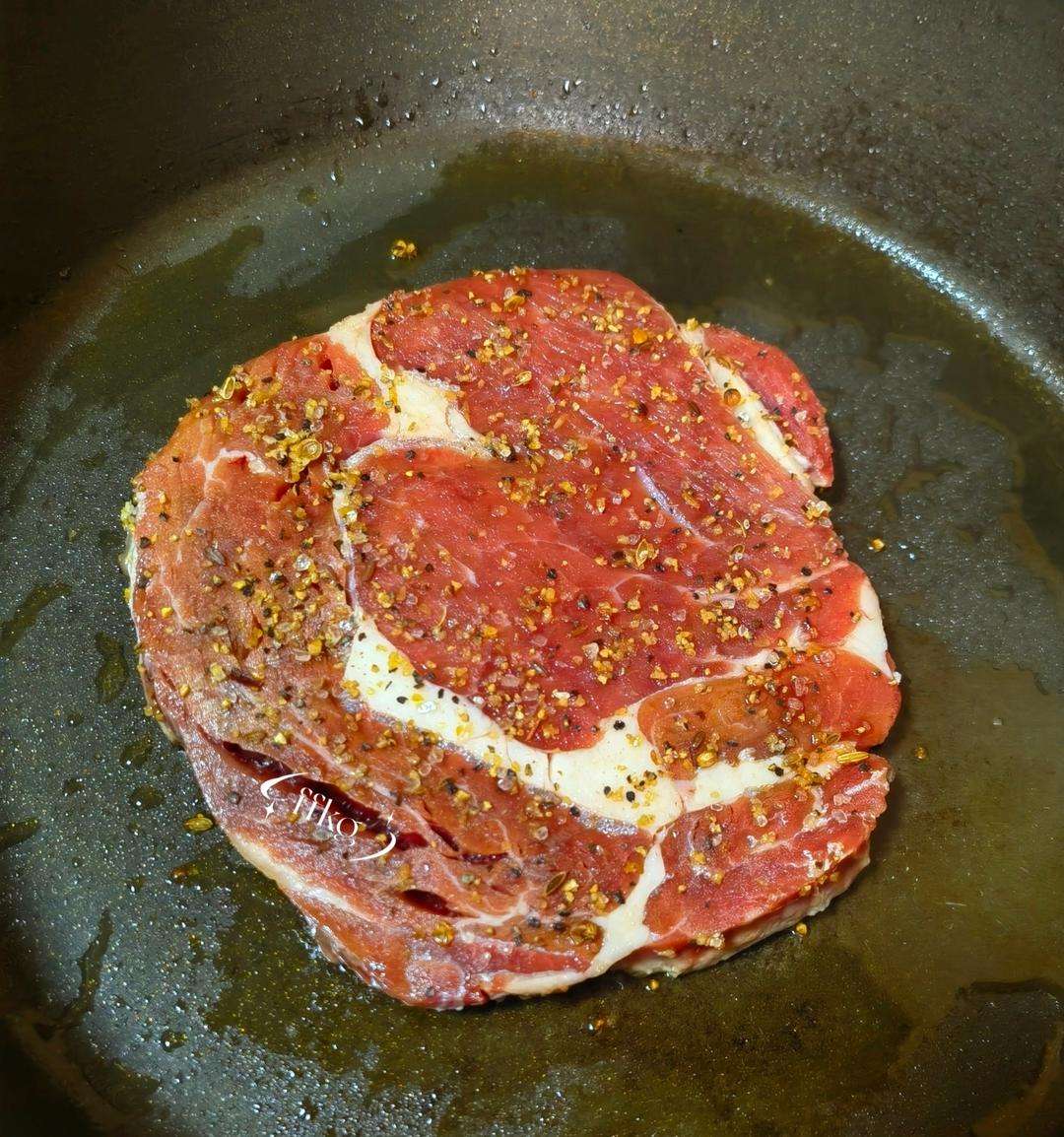
The sear is the Maillard reaction – surface proteins and sugars browning into hundreds of savory compounds. Resting after the sear lets the muscle fibers relax and the juices redistribute, so slicing immediately would lose them to the cutting board instead of the plate.
Step 8 – Stir-Fry the Pasta on Low Heat
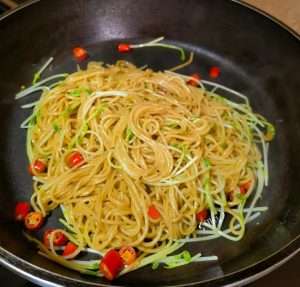
In a wok or large skillet, add a little olive oil and the drained pasta. Add the light soy sauce and a spoonful of the steak seasoning, and toss over the LOWEST heat – the original recipe emphasizes this with triple exclamation marks. Low heat lets the seasoning melt into the pasta without scorching it or breaking the strands.
Step 9 – Add the Greens, Chilies, and Steak Strips
Add the pea shoots and sliced bird’s eye chilies, and toss until the shoots just wilt, about 30 seconds. Add the sliced steak strips and toss once more to warm them through – the steak should rejoin the dish already cooked, so this is a warm-and-coat, not a cook.
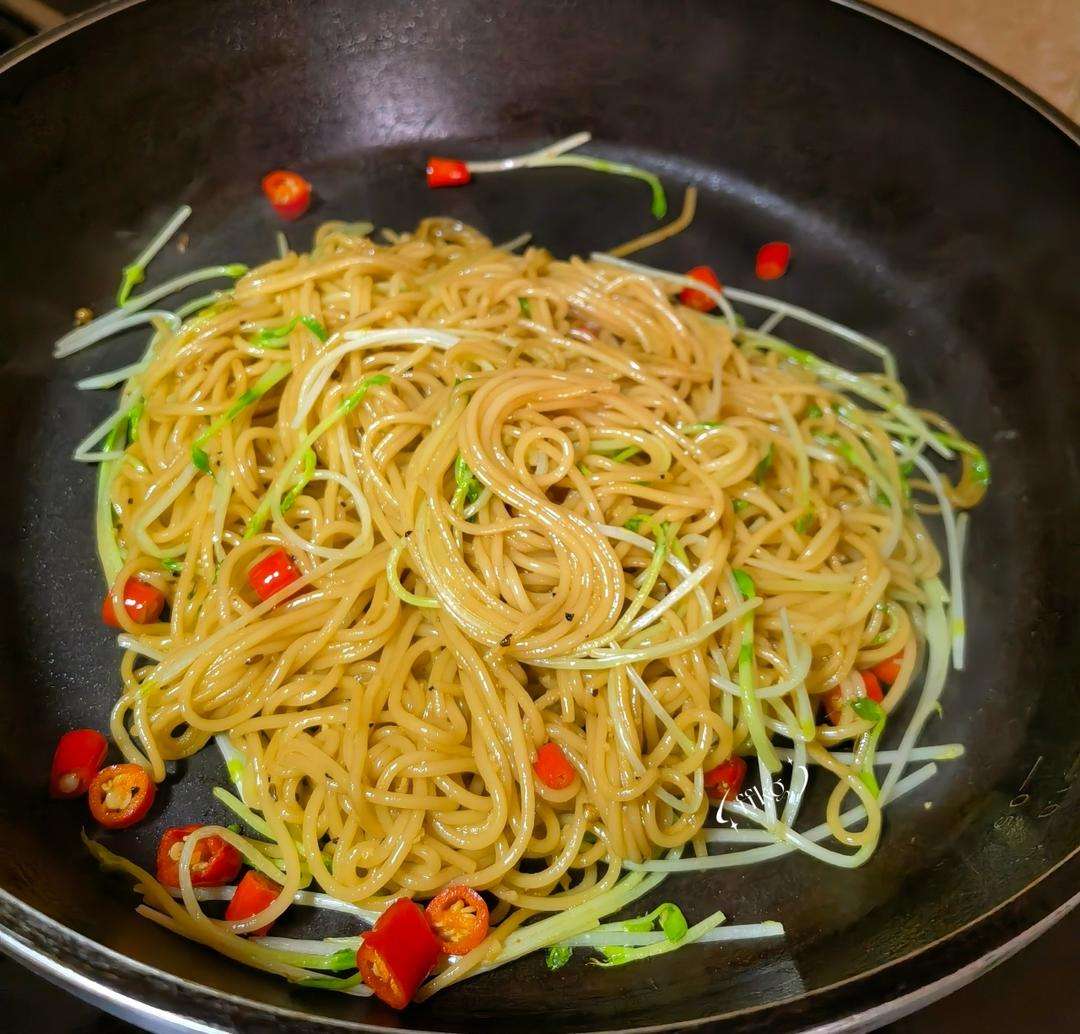
Step 10 – Plate and Serve
Transfer to plates or a serving bowl immediately – the dish is at its best the moment the pea shoots are wilted and the steak is still warm. The final plate should look like a restaurant special: glossy pasta, pink steak strips, and green shoots threaded through.
Common Mistakes When Making Sichuan Steak Pasta
1. Gluey, starchy pasta. Cause: cooking the pasta too soft, or tossing it over high heat. Fix: cook just under al dente, drain well, and stir-fry on the lowest heat – the pasta is already cooked; you are only coating it.
2. Gray, dry steak. Cause: slicing before the rest, or cooking over too-low heat. Fix: sear on medium-high for a proper crust, rest 3 minutes, then slice against the grain.
3. Burnt seasoning. Cause: high heat in the final toss scorches the soy and chili powder. Fix: keep the wok on the lowest flame; the seasoning needs to melt, not fry.
4. Wilted-to-death pea shoots. Cause: adding them early or tossing too long. Fix: add them in the last 30 seconds, just until they lose their raw stiffness.
5. Clumped pasta strands. Cause: skipping the olive oil in the pasta water or letting the pasta sit too long before the toss. Fix: oil the water and keep the drained pasta moving until it reaches the wok.
6. Bland, one-note flavor. Cause: skimping on the steak seasoning or adding it only to the meat. Fix: season both the steak and the pasta – the seasoning is the dish’s whole flavor architecture.
Variations
Protein swaps: Chicken breast, shrimp, or firm tofu all work in place of the steak – cook each to its own doneness and slice or leave whole before the final toss. See my braised beef noodle soup for another way to pair beef with noodles.
More Sichuan heat: Add a teaspoon of chili oil or a pinch of Sichuan peppercorn powder to the final toss for that signature numbing heat. For the full spectrum of the style, my sour and spicy beef noodle soup and clear beef noodle soup show two very different beef-noodle directions.
Vegetable swaps: Snow peas, broccoli florets, or shredded cabbage replace the pea shoots easily – firmer vegetables go in 1 minute earlier, soft greens at the very end.
Egg noodles: Swap the pasta for wide fresh egg noodles for a more Chinese texture. Skip the olive oil and use a neutral oil in the toss instead.
Frequently Asked Questions
Can I use any pasta shape? Long strands (spaghetti, linguine) work best for the toss; short shapes like penne work too but coat less evenly. Cook to just under al dente either way.
What if I do not have steak seasoning? Make the quick blend in the notes – salt, chili powder, black pepper, garlic powder, and a pinch of cumin. It approximates the store-bought blend closely.
Can I make this without pea shoots? Yes – snow pea leaves, baby spinach, or shredded bok choy all substitute well. Add them last, just until wilted.
How should the steak be cooked? Medium-rare is ideal (about 52-54°C / 126-129°F) since the strips warm only briefly in the final toss. Cook longer if you prefer, but the steak will firm up.
Is this dish very spicy? The heat comes from the bird’s eye chilies and the chili in the seasoning – use fewer chilies and a mild seasoning blend for a gentler version.
How to Serve
Serve the pasta in shallow bowls immediately, with extra chili on the side for the heat lovers. It is a complete meal on its own, but it shines alongside a bowl of tomato beef noodle soup for a beef-noodle double feature, or a plate of Xinjiang fried rice noodles if you want to explore more Chinese noodle-wok classics. For noodle education, my guide to types of Chinese noodles explains how this dish’s pasta compares to the traditional noodle families, and Yunnan small-pot rice noodles is a completely different, wonderful noodle adventure.
Storage & Reheat
Refrigerate leftovers in an airtight container for up to 2 days. Reheat in a wok over medium-low heat with a splash of water to loosen the sauce – the microwave turns the pasta rubbery and the steak tough. The pea shoots will lose their freshness on reheating, so expect a slightly softer texture. Cooked steak should be reheated to at least 63°C (145°F). Do not freeze; pasta and steak both degrade on thawing. Never leave the dish out for more than 2 hours.
Allergen Notice
This recipe contains gluten (pasta, and possibly in the seasoning blend – check labels) and soy (light soy sauce). It is free of nuts, eggs, dairy, and shellfish.
Nutrition Disclaimer
Nutrition information is calculated using an ingredient database and should be considered an estimate. In cases where multiple ingredient alternatives are given, the first listed is calculated for nutrition. Garnishes and optional ingredients are not included.
About the Author & Recipe Development
I am Lin, a professional Chinese chef and food writer with a decade in restaurant kitchens before turning to recipes. Fusion dishes like this one are a specialty of Chinese home cooking – the wok logic is ancient, the ingredients are modern. This xiachufang home recipe caught me with its tiny, emphatic detail: the triple warning to use the lowest heat when the pasta hits the pan. I tested it with my own blend of steak seasoning, kept the 15-minute marinade, and learned why the pea shoots go in dead last. It is proof that fusion cooking is just technique meeting ingredients with respect.
Authoritative References
USDA Food Safety and Inspection Service – Safe Temperature Chart for beef handling and storage guidance.
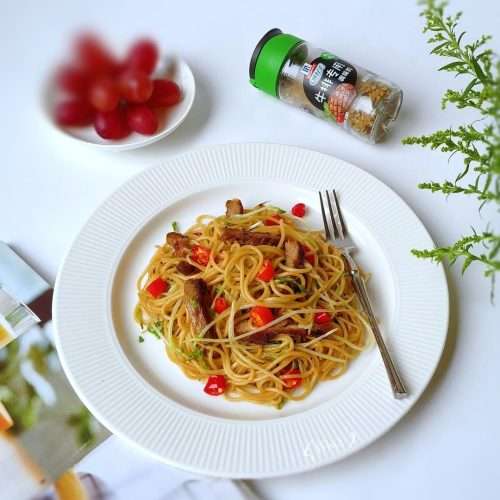
Sichuan Steak Stir-Fried Pasta (Chuan Wei Niu Pai Chao Yi Mian)

Equipment
- Large Pot
- Heavy skillet
- Wok or large skillet
Ingredients
For the Pasta
- 1 beef steak, such as sirloin or ribeye 200-250 g / 7-9 oz
- 120 g dried pasta (spaghetti or linguine) 4.2 oz
- 1 handful pea shoots, washed about 50 g / 1.8 oz
- 2-3 bird’s eye chilies, sliced adjust to heat preference
- 2 tbsp olive oil 30 ml, plus a splash for the pasta water
- 2 tbsp light soy sauce 30 ml
- 2 tsp steak seasoning blend 10 g; see notes for a homemade mix
- salt, for the pasta water
Instructions
- Lay out all the ingredients – steak, pasta, pea shoots, chilies, oil, and soy – before starting.

- Thaw the steak completely and pat it bone-dry with paper towels.

- Rub the steak seasoning evenly over both sides of the steak.

- Let the seasoned steak marinate for 15 minutes at room temperature.

- Wash the pea shoots and slice the bird’s eye chilies into rings.

- Boil the pasta in salted water with a splash of olive oil until just under al dente, then drain well.

- Sear the steak over medium-high heat 3-4 minutes per side, rest 3 minutes, and slice against the grain into strips.

- In a wok over the lowest heat, toss the drained pasta with olive oil, light soy sauce, and a spoonful of steak seasoning.
- Add the pea shoots and chilies, toss until just wilted, then add the steak strips and toss once more to warm through.

- Plate immediately and serve while the steak is still warm and the pea shoots are bright.


Leave a Reply