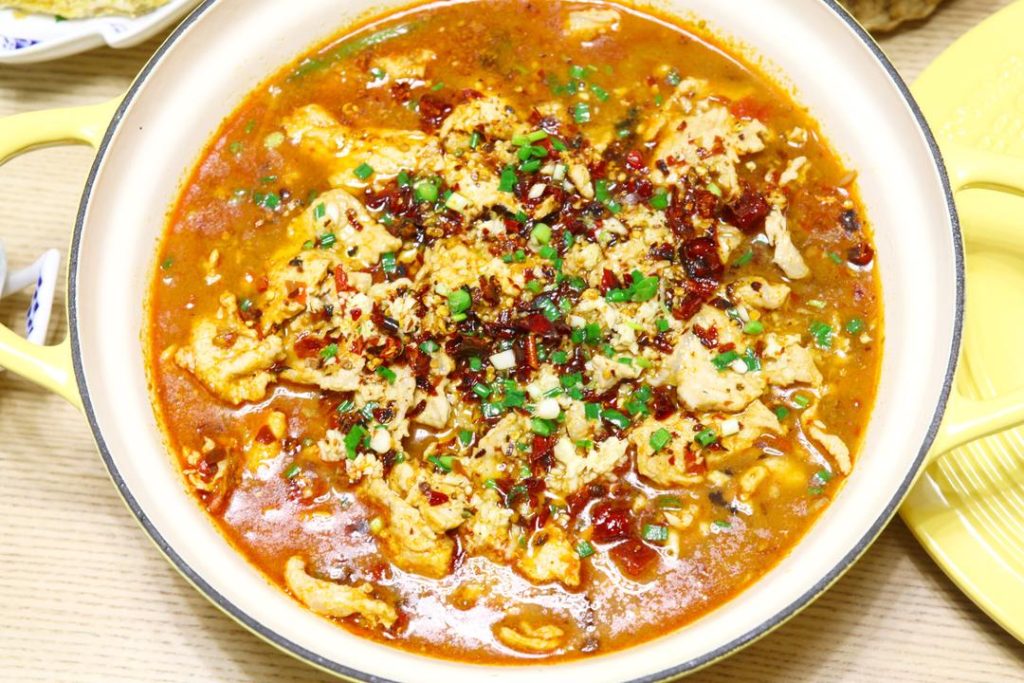
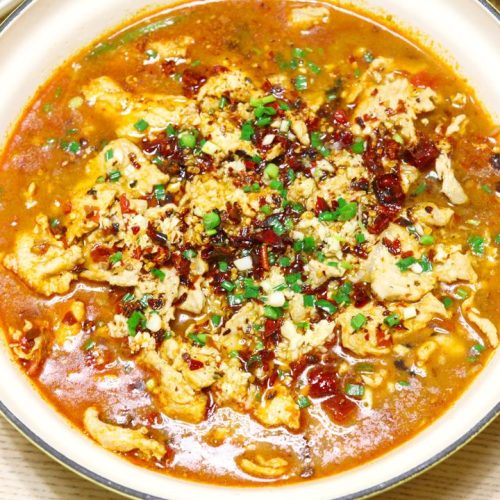
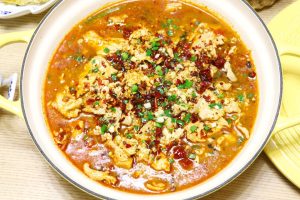
Growing up in Sichuan, the scent of dried chilies hitting hot oil was my alarm clock. “Shui Zhu Rou Pian” (水煮肉片), or Sichuan Boiled Pork Slices, is a dish that defines the region’s culinary spirit. Despite the humble name “Boiled Pork,” there is nothing bland about it. It features incredibly tender meat poached in a vibrant, spicy broth, finished with a sizzling splash of hot oil that awakens the garlic and spices.
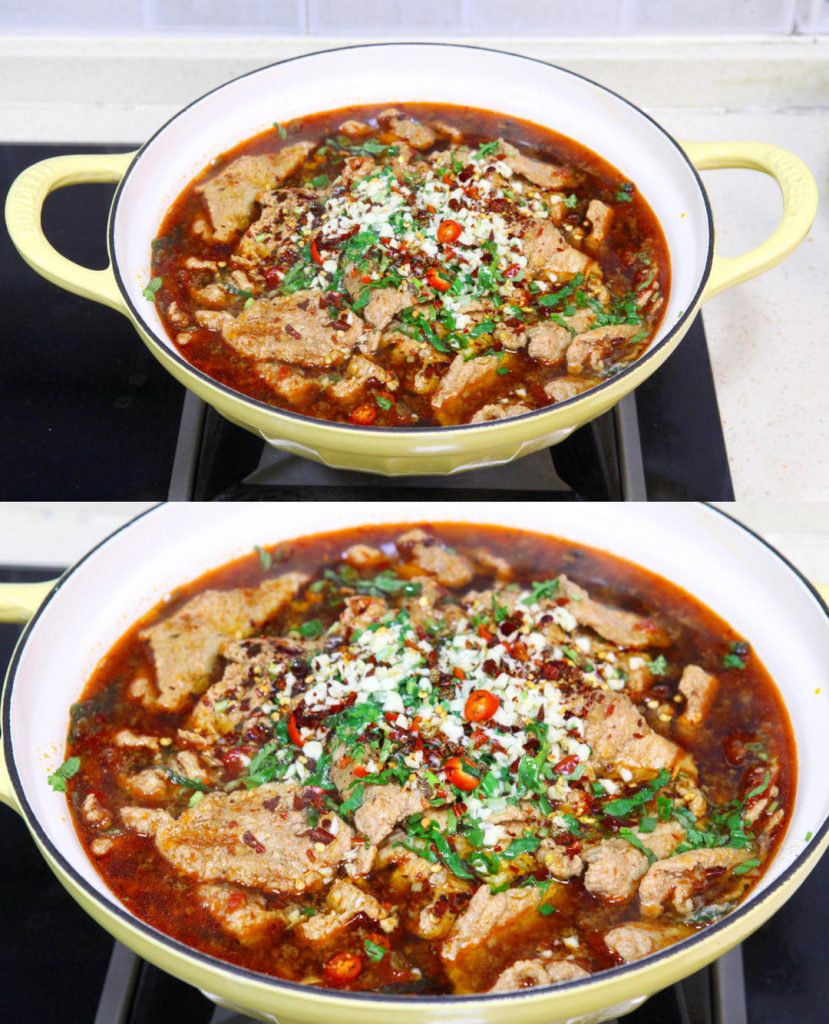
While I learned the foundations of this dish in my family’s restaurant kitchen, this specific version is inspired by the meticulous techniques of Chef Wang Gang, adapted for the home kitchen. It captures the “Mala” (numbing and spicy) profile perfectly while ensuring the pork remains silky and soft.
About the Author & Recipe Development
I’m Lin, a Sichuan-born culinary professional with over a decade of experience in professional kitchens. My journey began peeling garlic in my parents’ restaurant in Chengdu and led to formal training at the Sichuan Culinary Institute. This recipe has been tested four times in my home kitchen to ensure that the “knife-edge chili” technique and meat velveting process work on standard Western stovetops, not just high-BTU restaurant woks. My goal is to bridge the gap between professional Sichuan techniques and your dinner table.
What is Shui Zhu Rou Pian?
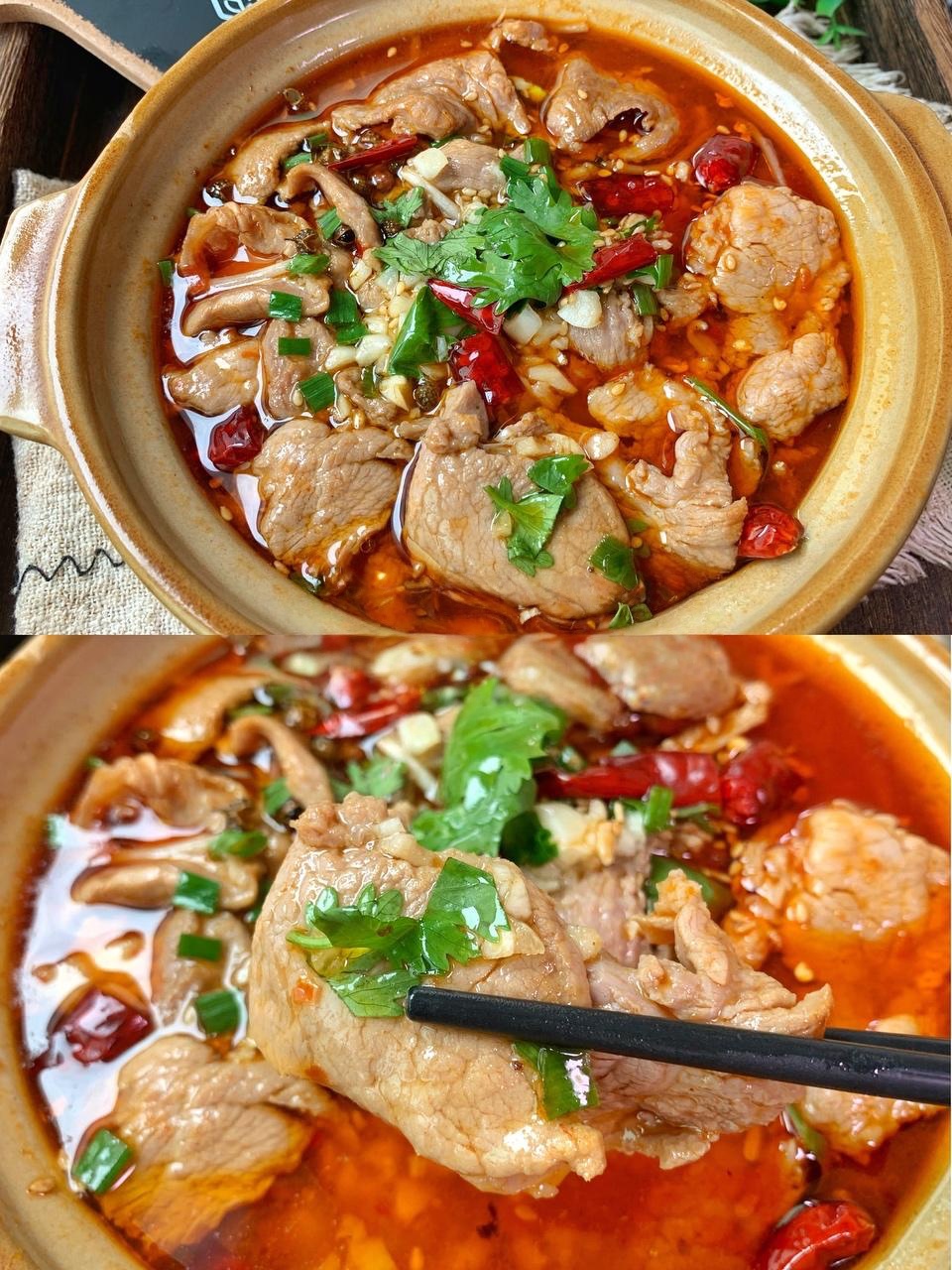
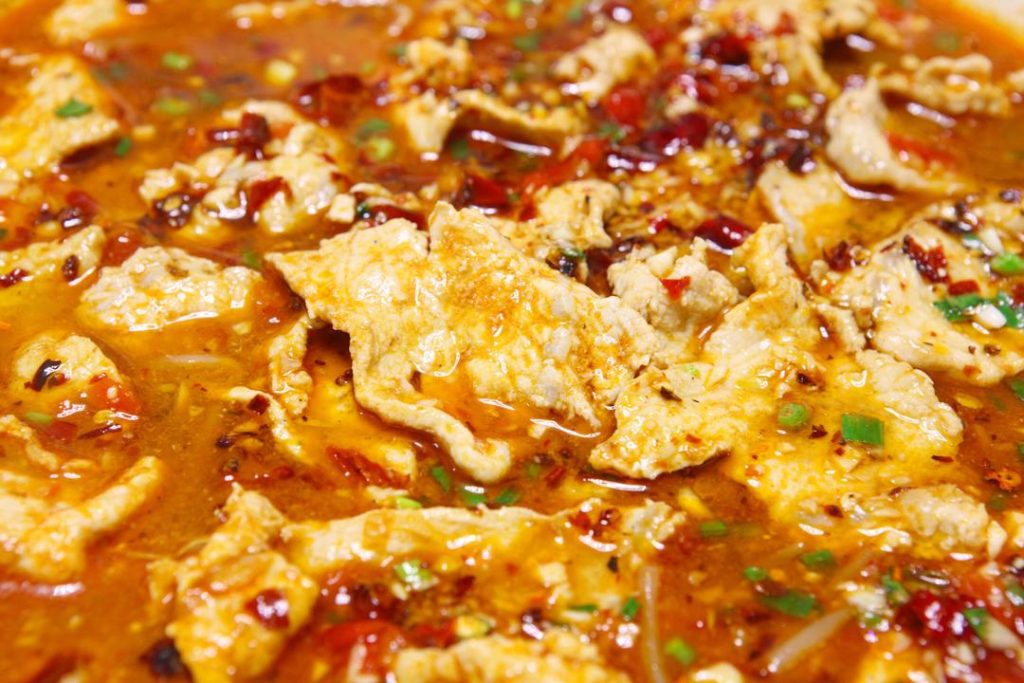
Shui Zhu Rou Pian literally translates to “Water Boiled Meat Slices.” It is a quintessential Sichuan dish consisting of lean pork slices coated in starch (velveted), poached briefly in a savory, spicy broth made from Doubanjiang (broad bean paste), and served over a bed of vegetables.
The defining characteristic is the finishing step: minced garlic, green onions, and chopped chilies are piled on top of the cooked meat, and smoking hot oil is poured over them. This flash-searing releases an explosion of aroma that defines the dish.
Note: We actually have another version of this dish on our site! If you are looking for a slightly different variation or want to compare methods, check out our other recipe for Boiled Pork Slices . The version I am sharing today focuses heavily on the “Knife-Edge Chili” technique for a more intense, roasted spice profile.
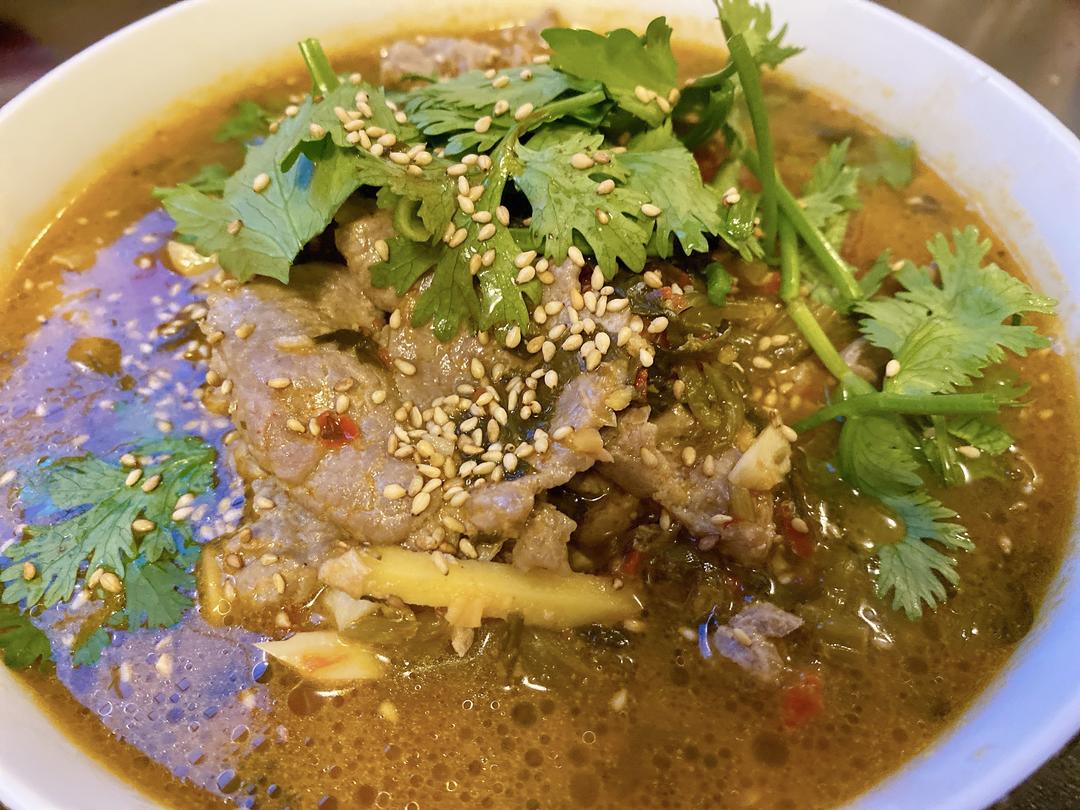
1Sichuan Boiled Pork Slices (Shui Zhu Rou Pian)Tender velveted pork poached in a rich, spicy broth with bean sprouts and enoki mushrooms, finished with a sizzling hot oil flash. A classic Sichuan restaurant dish made easy at home.Check out this recipeIf you love the silky, melt-in-your-mouth texture of this classic Shui Zhu method but are cooking for a crowd that can’t handle the fiery Sichuan heat—like my three-year-old son—I’ve got you covered! You can easily enjoy this technique without the spice by trying my Mild Homestyle Boiled Beef (Non-Spicy Shui Zhu Niu Rou). It uses the exact same velveting process to achieve incredibly tender meat, but swaps the intense chili oil for a rich, savory pork bone broth and tangy pickled greens that the whole family will love.
2Mild Homestyle Boiled Beef (Non-Spicy Shui Zhu Niu Rou)A comforting, family-friendly twist on the Sichuan classic. This mild Boiled Beef features melt-in-your-mouth beef shank, crisp vegetables, and a rich, savory broth without the fiery heat.Check out this recipeTry the Seafood Version! Now that you’ve mastered the “Shui Zhu” (water-boiling) technique with pork, why not try it with fish? My Easy Sichuan Boiled Fish (Shui Zhu Yu) follows the exact same poaching and sizzling oil logic but features melt-in-your-mouth Basa fillets. It’s arguably even more delicate than the pork version and is a fantastic way to impress guests with your Sichuan cooking skills in just 20 minutes.
3Easy Sichuan Boiled Fish (Shui Zhu Yu)A quick, restaurant-style Sichuan Boiled Fish using tender Basa fillets, blanched bean sprouts, and a signature sizzling chili oil finish.Check out this recipe

Why This Recipe Works
- Velveting Technique: By coating the pork in egg white and starch, we create a protective barrier that keeps the meat juicy even in boiling broth.
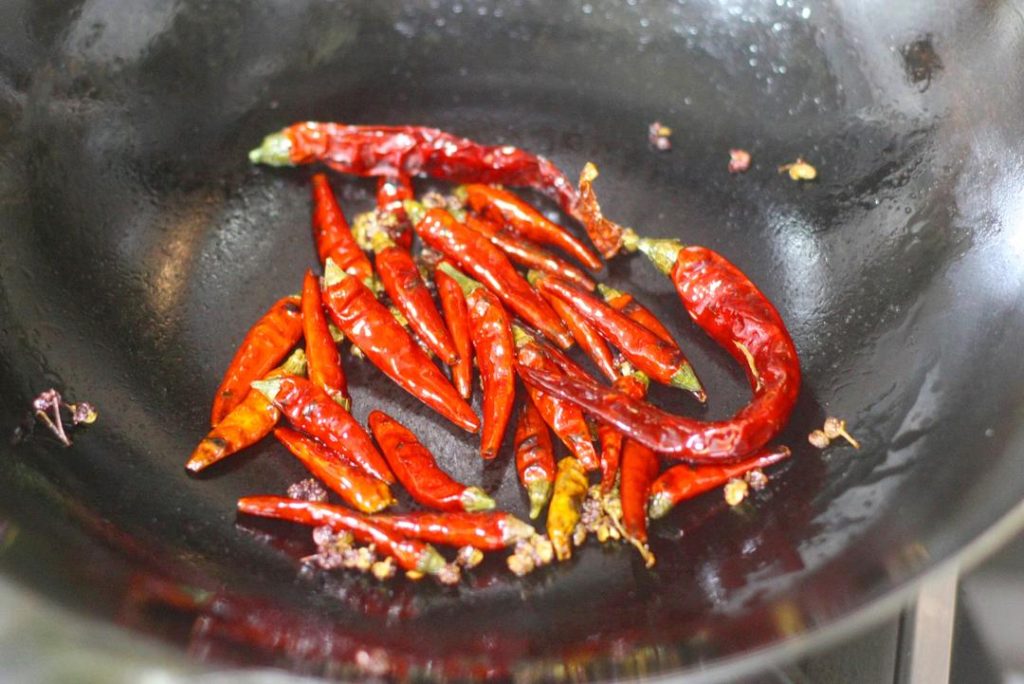
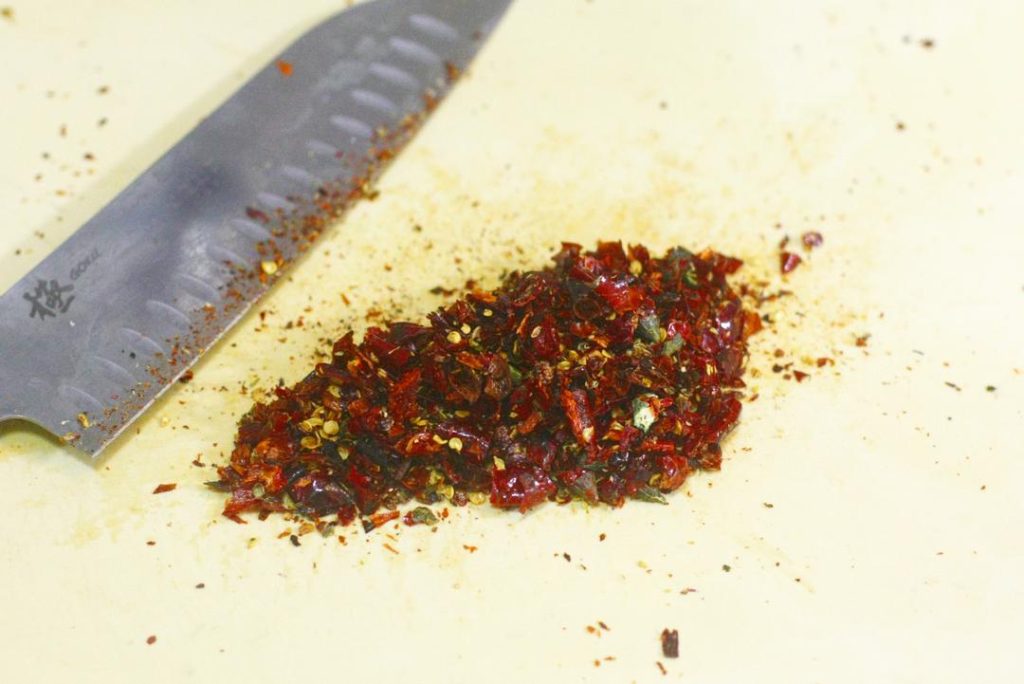
- Knife-Edge Chilies (Dao Kou La Jiao): We toast dried chilies and peppercorns before chopping them. This releases essential oils that raw spices simply don’t have.
- Layered Cooking: We cook the vegetables separately to keep them crisp-tender (duan sheng), providing a textural contrast to the soft pork.
Key Ingredients & Substitutions
- Pork Loin/Tenderloin: You need a lean cut. Pork Tenderloin: Proper Cutting and Common Mistakes is crucial here—you must slice against the grain to ensure tenderness.
- Pixian Doubanjiang: This is the soul of the dish. Doubanjiang (spicy fermented bean paste) provides the red color and savory base. There is no real substitute, but in a pinch, you could mix Sambal Oelek with soybean paste, though the flavor will differ.
- Sichuan Peppercorns: Essential for the numbing “Ma” sensation. Sichuan Peppercorns should be red for this recipe, though green can be used for a more citrusy note.
- Vegetables: The traditional choice is Celtuce leaves (Wosun) or bean sprouts. Since fresh celtuce leaves are hard to find in the West, you can substitute Romaine lettuce, Napa cabbage, or celery.
- Pickled Red Chilies (Pao Jiao): These add a fermented tang. If unavailable, pickled jalapeños or extra Doubanjiang can work.
Ingredients
The Meat & Marinade:
- 11 oz (300g) Pork loin or tenderloin
- 1/4 tsp Salt
- 1/4 tsp White Pepper
- 1 tsp Light Soy Sauce
- 1 tsp Shaoxing Wine
- 1 Egg white
- 1 tsp Potato starch (or cornstarch)
- 1 tsp Neutral oil
The “Knife-Edge” Spice Mix:
- 10g Dried red chilies (adjust for heat)
- 2g Sichuan peppercorns
The Vegetables:
- 3.5 oz (100g) Mung bean sprouts
- 2 heads Celtuce leaves (or substitute Romaine lettuce/Napa cabbage)
The Aromatics & Soup Base:
- 1 small piece Ginger (minced)
- 1 head Garlic (2/3 minced for sauce, 1/3 reserved for topping)
- 20g Pickled red chilies (chopped)
- 1 tbsp Pixian Doubanjiang (heaping tablespoon)
- 2 tsp Light Soy Sauce (for soup)
- Pinch of Salt, Sugar, and Chicken Essence (optional) to taste
- Cornstarch slurry (1 tbsp starch + 2 tbsp water)
- 1 stalk Green onion (chopped)
- 2 tbsp Cooking oil (for the final splash)
Recipe Notes Before You Start
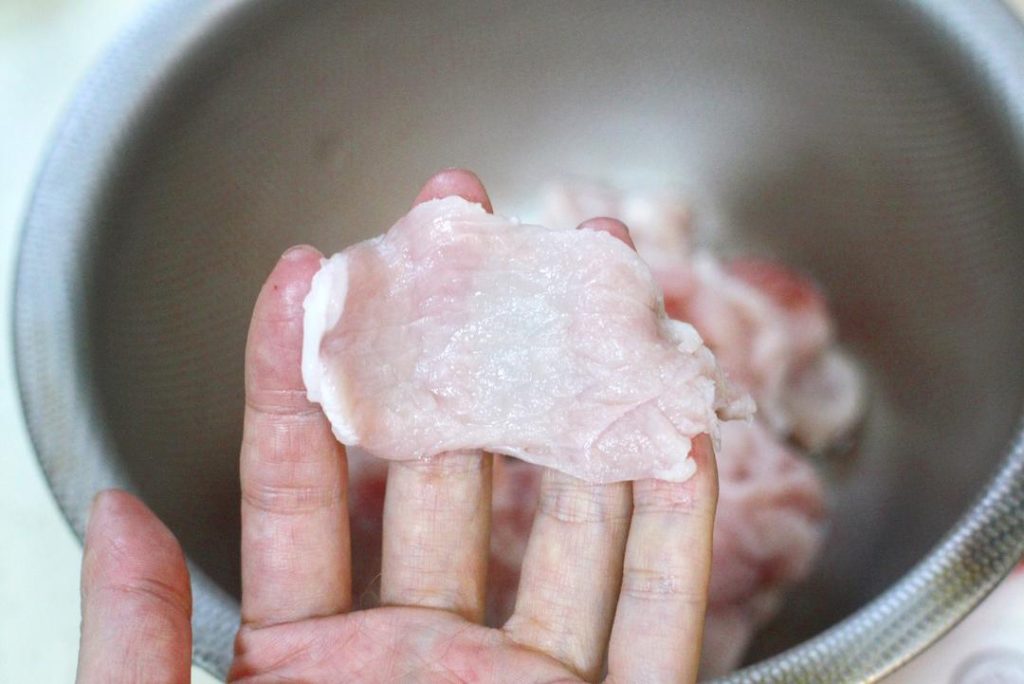
- Knife Skills: Slicing the meat thinly (about 3mm) and evenly is critical. Partially freezing the pork for 30 minutes makes this much easier.
- Ventilation: Toasting chilies and the final oil splash create smoke and spice fumes. Turn your exhaust fan to high!
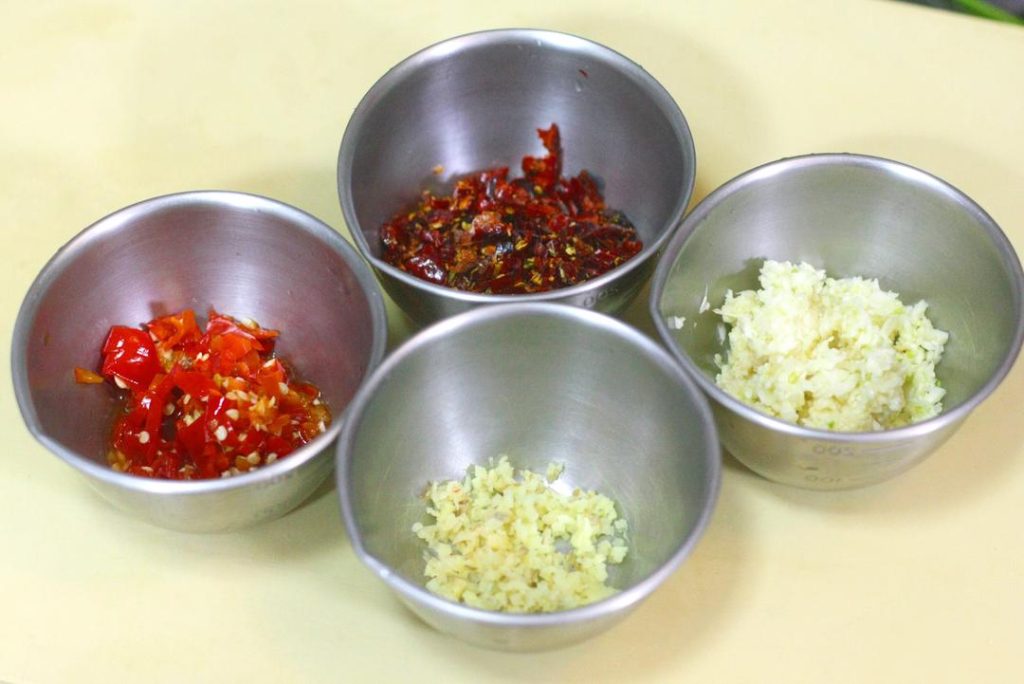
- Mise en Place: This dish moves fast once you start cooking. Have your ginger, garlic, and sauces pre-measured and within reach.
How to Make Sichuan Boiled Pork Slices
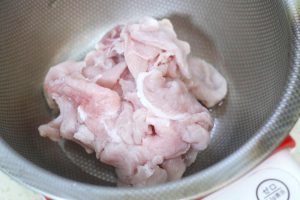
1. Prepare and Marinate the Pork Slice the pork loin against the grain into thin slices. Place them in a bowl and rinse them with cold water, then squeeze out the excess water.
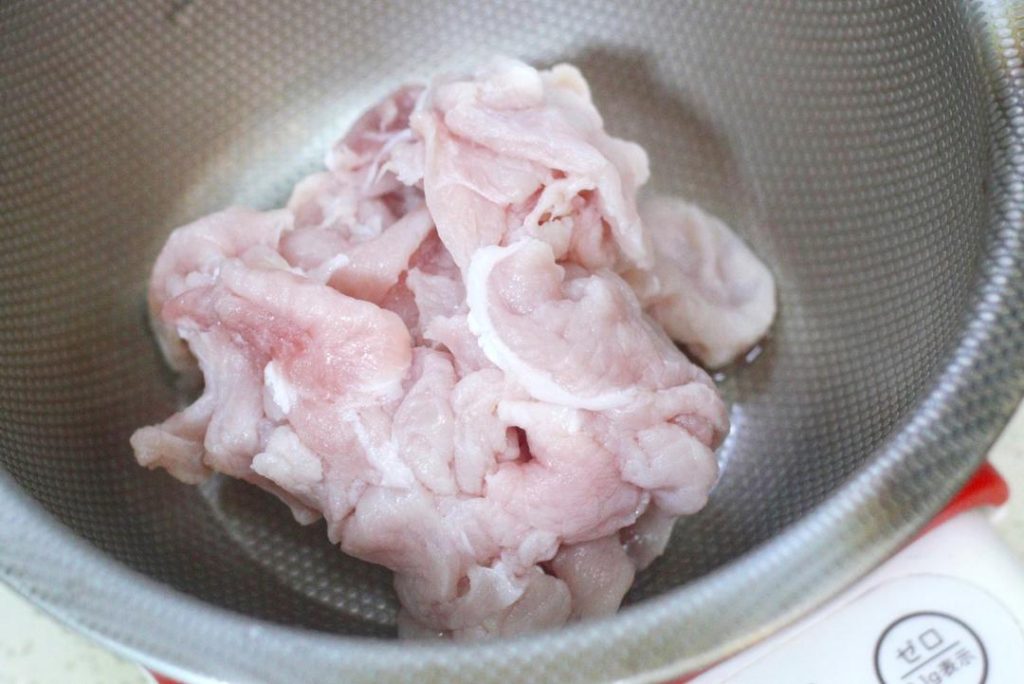
Why rinse? Rinsing removes excess myoglobin (blood) and fishy odors, and creates a “thirsty” meat that will absorb the marinade better.
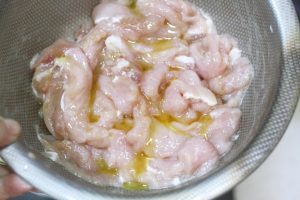
Add salt, white pepper, 1 tsp light soy sauce, and Shaoxing wine. Mix well with your hand until the liquid is absorbed. Add the egg white and potato starch. Mix vigorously until the pork feels sticky. Finally, add a teaspoon of oil to coat the meat (this prevents sticking later). Cover and let rest for 20-30 minutes.
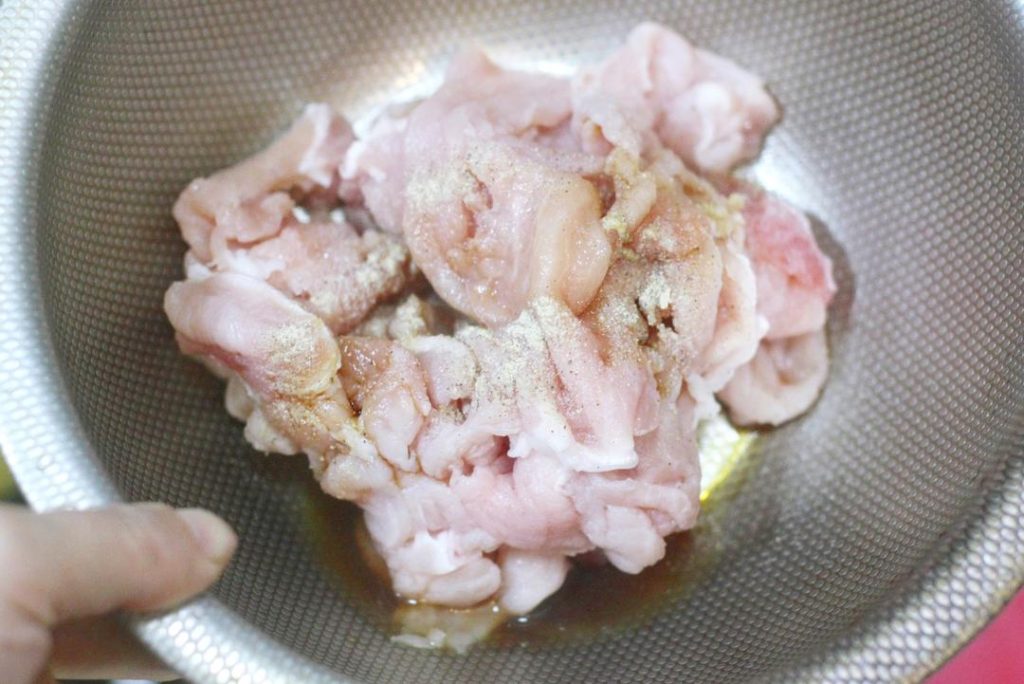
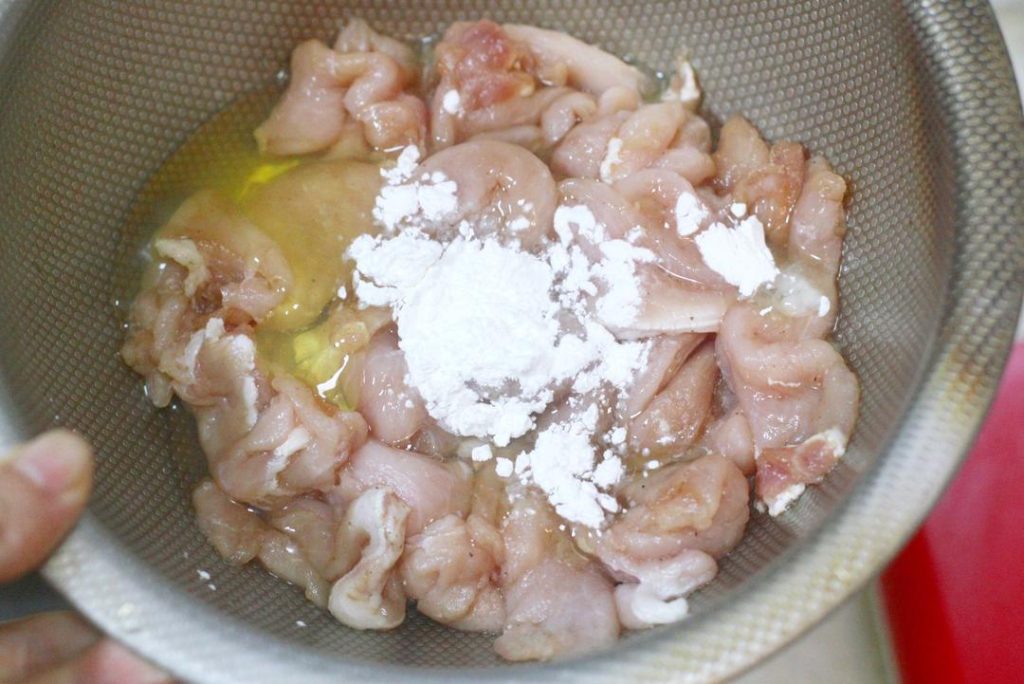
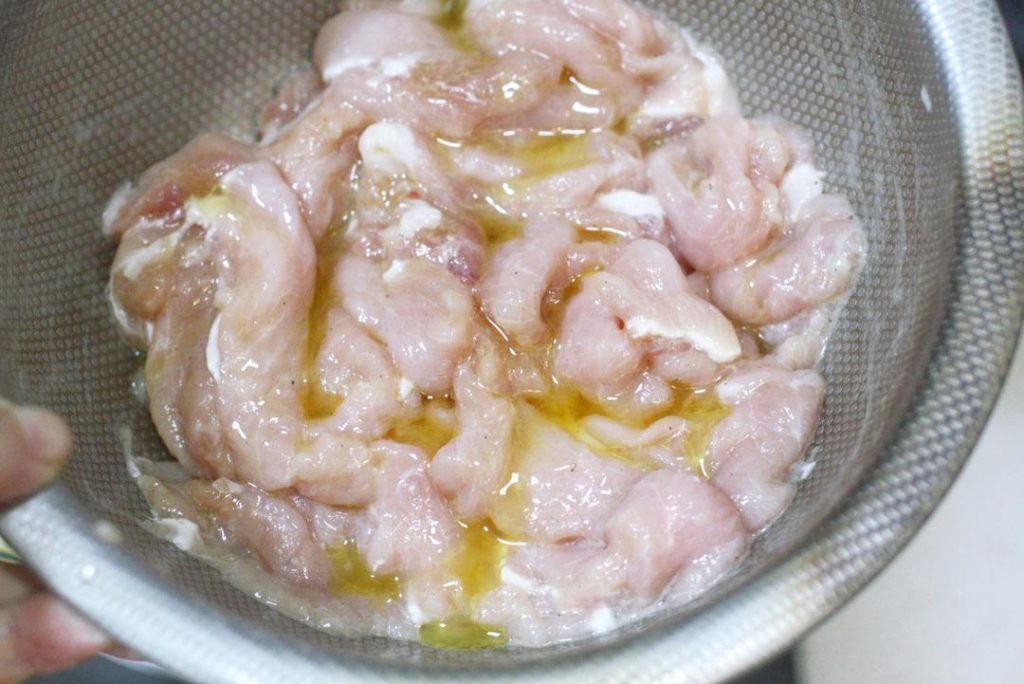
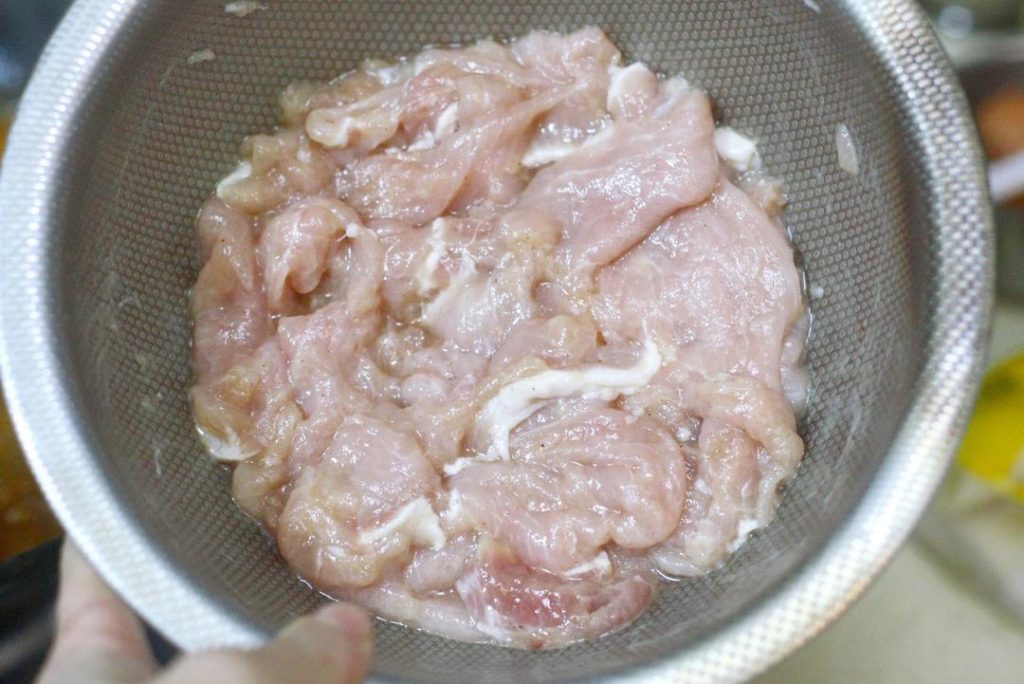
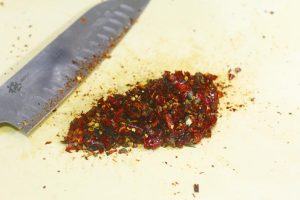
2. Make “Knife-Edge Chilies” (Dao Kou La Jiao) In a wok over low heat, add a tiny amount of oil. Add the dried chilies and Sichuan peppercorns. Toast them slowly, stirring constantly, until they are fragrant and crispy (dark red, not black). Remove and let cool. Once crisp, chop them into coarse flakes on a cutting board. Set aside.
3. Prep Aromatics and Vegetables Mince the ginger, garlic, and pickled chilies. Reserve about 1/3 of the minced garlic for the final topping. Wash the bean sprouts and leafy greens.
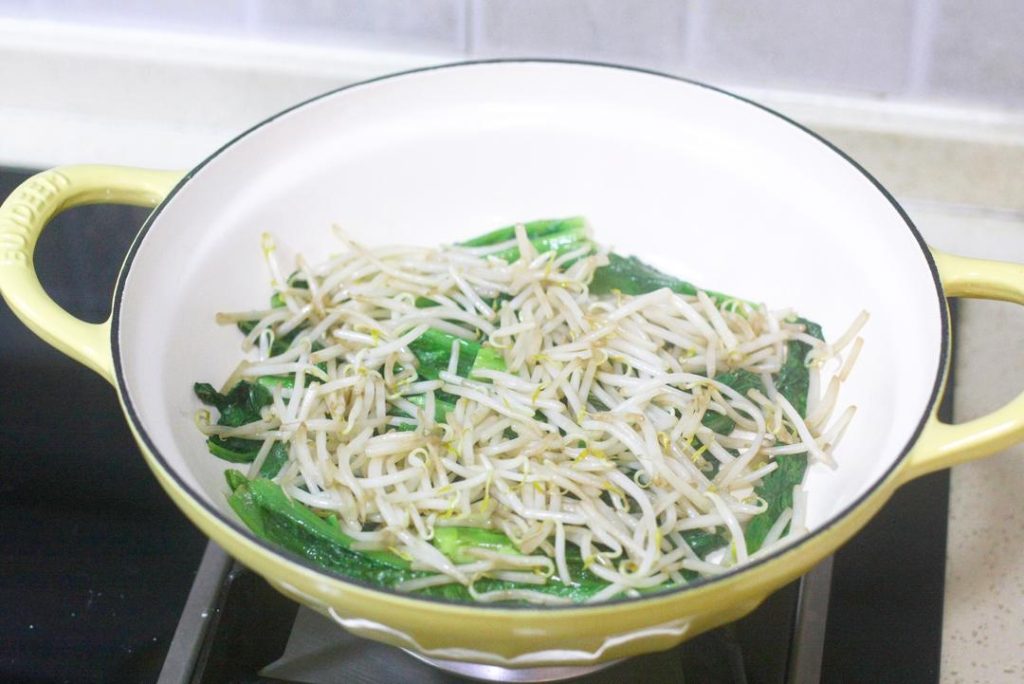
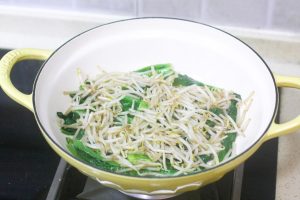
4. Stir-fry the Vegetables Heat a little oil in the wok. Stir-fry the leafy greens and bean sprouts until just wilted (断生 – duan sheng). Do not overcook; they should remain crunchy. Transfer them to the bottom of your serving bowl.
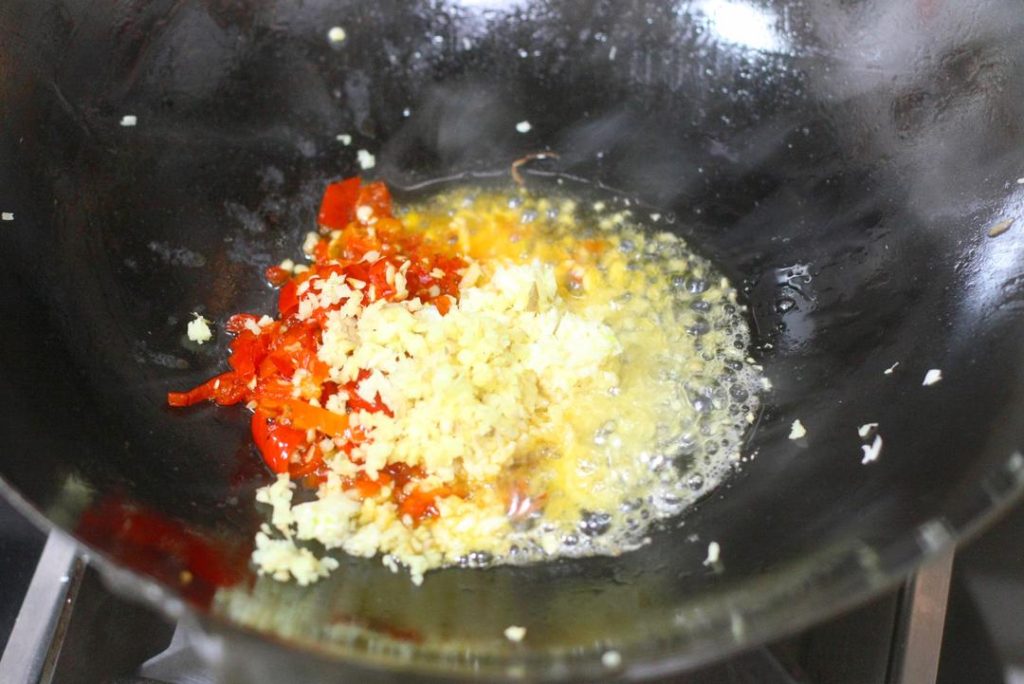
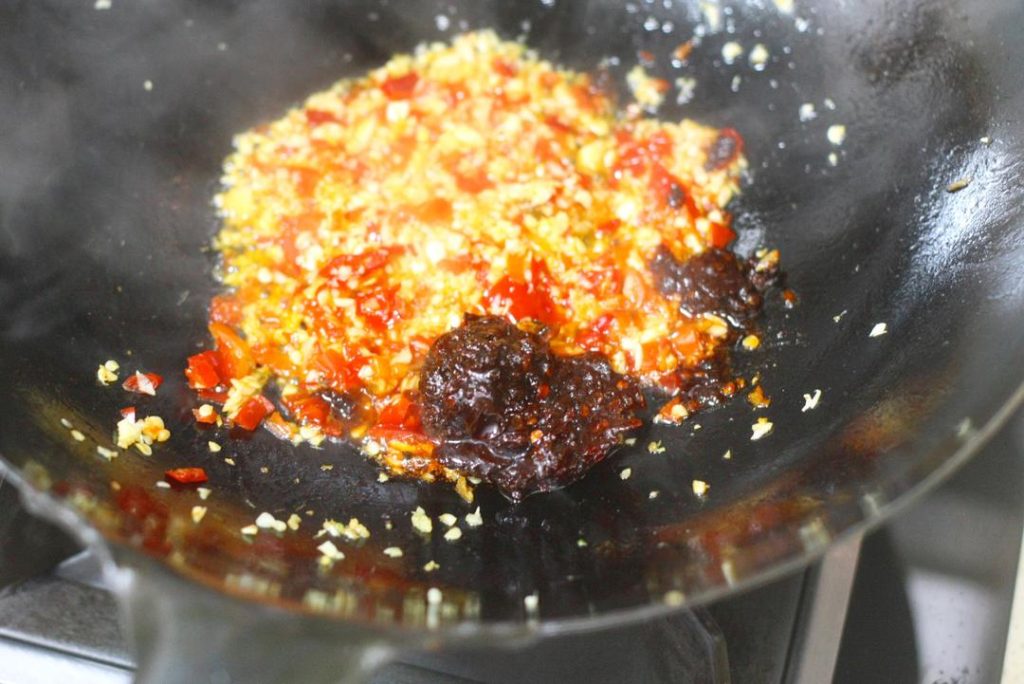
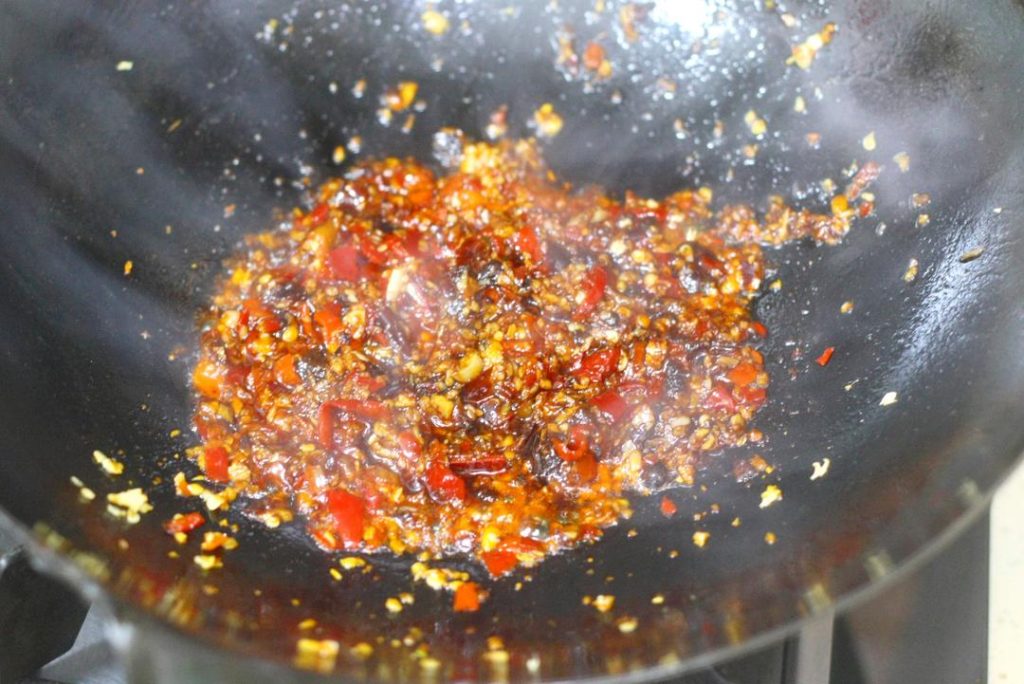
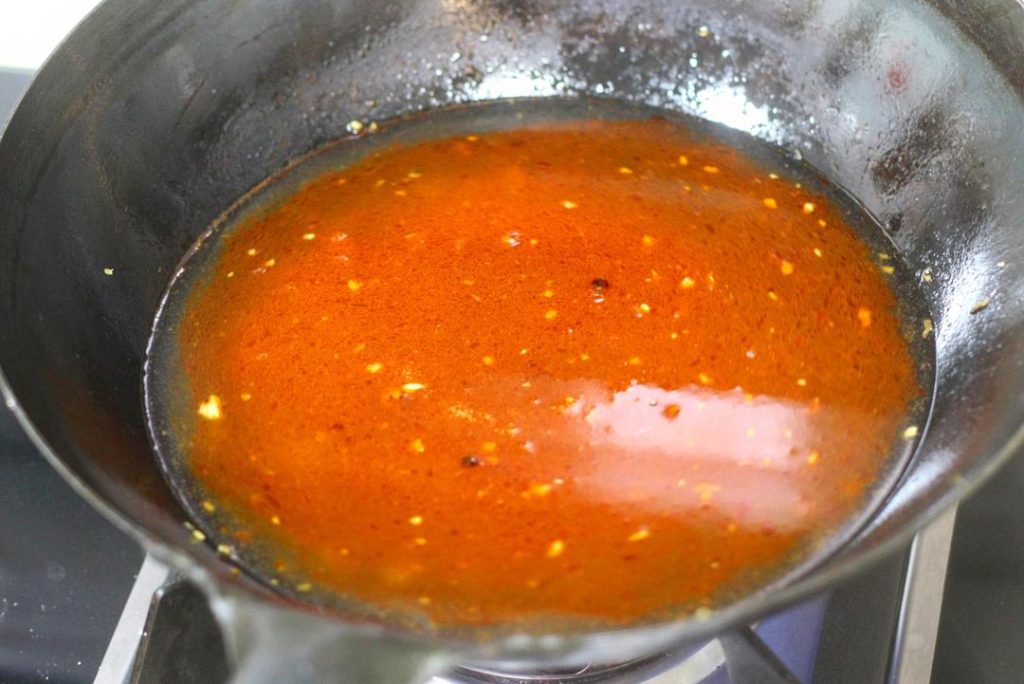
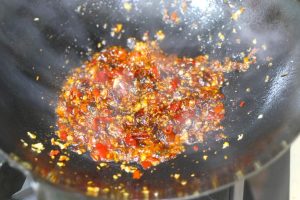
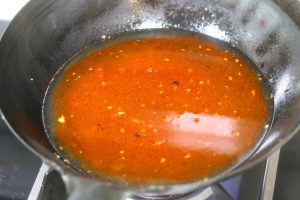
5. Create the Soup Base Add oil to the wok over medium heat. Add the minced pickled chilies, ginger, and the 2/3 portion of minced garlic. Stir-fry until fragrant. Add the tablespoon of Doubanjiang and stir-fry until the oil turns red (this releases the pigment and flavor). Pour in water (about 2-3 cups, enough to submerge meat). Season with 2 tsp light soy sauce, sugar, white pepper, and chicken essence. Bring to a boil. Add a little cornstarch slurry to slightly thicken the broth.
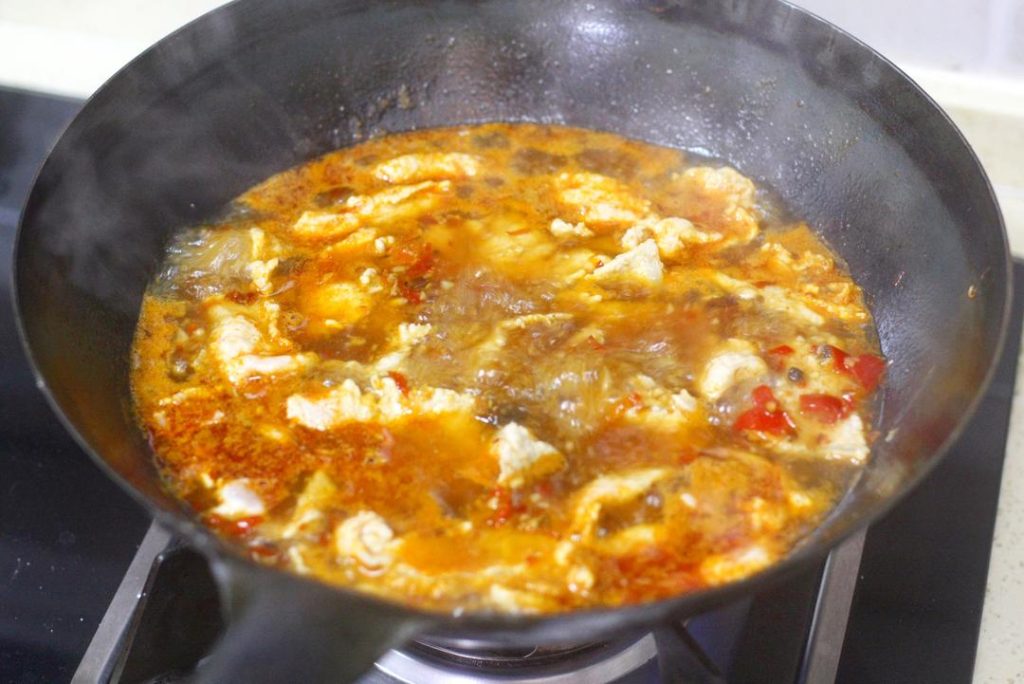
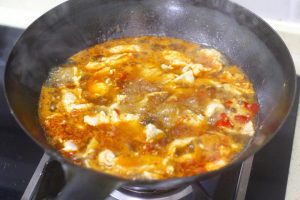
6. Poach the Meat Turn the heat down to a simmer. Gently place the pork slices into the broth one by one, spreading them out. Do not stir immediately, or the coating will fall off. Once the meat turns white and the starch sets (about 30 seconds), gently push them with a ladle. Cook for another 30-60 seconds until fully cooked.
Safety Tip: Pork needs to be cooked through, but thin slices cook very fast. Total cooking time usually doesn’t exceed 2 minutes.
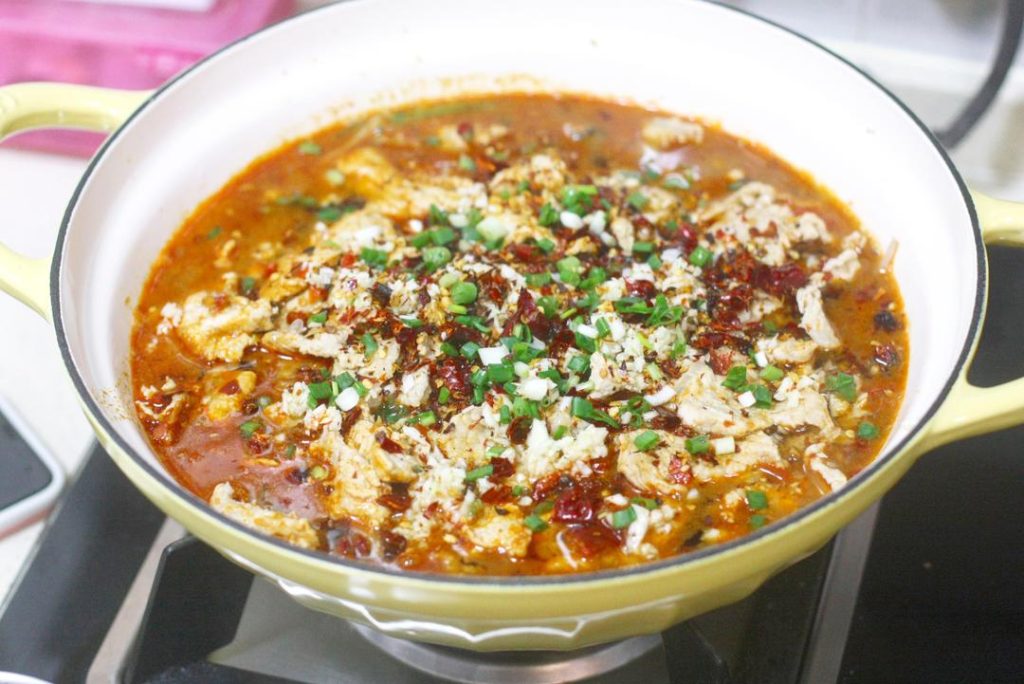
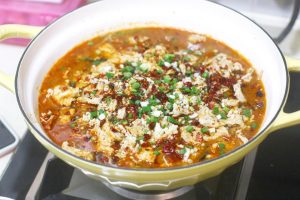
7. Assemble and The Final Splash Pour the meat and broth over the vegetables in the serving bowl. Now, pile the reserved minced garlic, the Knife-Edge Chilies you made earlier, and the chopped green onions directly on top of the meat mound.
Clean the wok and heat 2 tablespoons of oil until it is smoking hot. Carefully pour the hot oil directly over the garlic and spices. It should sizzle aggressively and release a massive aroma.
Serve immediately with steamed rice!
Common Mistakes When Making Shui Zhu Rou Pian
- Overcooking the Pork: The slices are thin. If you boil them for 5 minutes, they will be tough. They only need about 90 seconds to 2 minutes total.
- Burning the Chilies: When making the “Knife-Edge Chilies,” use low heat. If they turn black, they will taste bitter.
- Skipping the Starch: If you don’t velvet the meat with egg white and starch, the texture will be dry and fibrous rather than silky.
FAQ
Q: Is this dish extremely spicy? A: It looks spicier than it is because of the red oil, but yes, it packs a punch. You can reduce the dried chilies in the “Knife-Edge” mix to lower the heat while keeping the flavor.
Q: Can I use beef instead? A: Absolutely. If you use beef, it becomes “Shui Zhu Niu Rou.” The method is identical.
Q: My meat coating fell off, why? A: You likely stirred it too soon after putting it in the broth. Let it set for 30 seconds before touching it.
Serving Suggestions
This is a rich, spicy dish that demands white rice to soak up the flavors. To create a balanced meal, pair it with milder dishes.
- Smashed Cucumber Salad: The cool, garlicky crunch cuts through the grease.
- Tomato and Egg Stir-fry: A classic comfort dish that balances the heat.
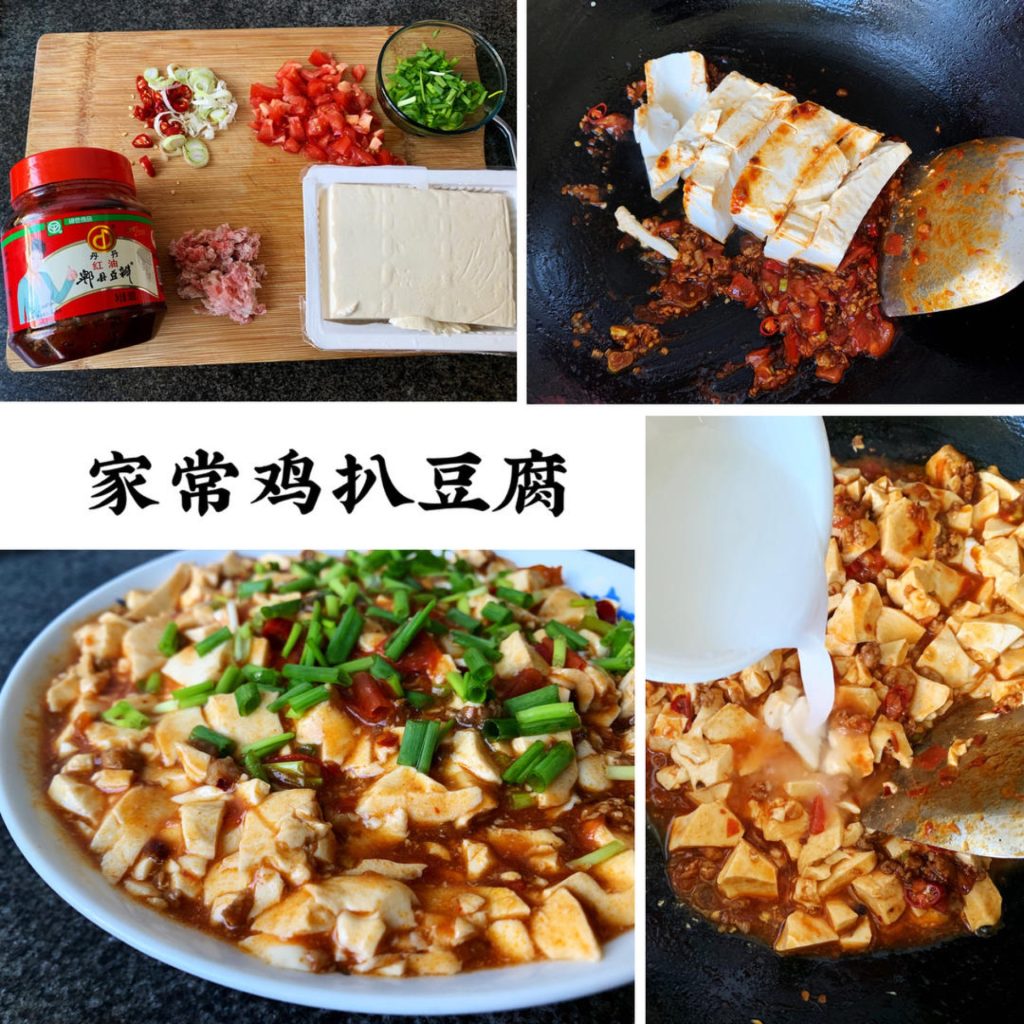
- Mapo Tofu: If you want a full Sichuan feast, check out our Mapo Tofu recipe.
Food Safety and Preparation
- Raw Meat: Wash hands and surfaces thoroughly after handling raw pork.
- Oil Safety: Be extremely careful when pouring hot oil over the damp aromatics at the end. It can splatter. Ensure children are away from the stove during this step.
- Gluten Warning: Soy sauce and Doubanjiang often contain wheat. Use gluten-free alternatives if necessary.
Authoritative References
For more information on the science of meat tenderness and food safety, you can refer to:
- USDA Food Safety and Inspection Service: Fresh Pork from Farm to Table
- The Woks of Life: How to Velvet Pork for Stir-fry (External Authority)
Nutrition Information (Estimate)
- Calories: ~450 kcal per serving
- Protein: 28g
- Carbohydrates: 12g
- Fat: 32g
- Sodium: 1200mg
- Fiber: 3g
- Allergens: Soy, Wheat (in sauces), Egg. (Disclaimer: Nutrition information is calculated using an ingredient database and should be considered an estimate. Garnishes and optional ingredients are not included.)
Sichuan Boiled Pork Slices (Shui Zhu Rou Pian)

Equipment
- Wok
- Chef’s knife
Ingredients
The Pork Marinade
- 300 g pork loin or tenderloin sliced thinly against the grain
- 2 g salt approx 1/4 tsp
- 1 g white pepper powder
- 5 g light soy sauce for marinade
- 5 g Shaoxing wine
- 1 egg white
- 5 g potato starch or cornstarch
The Vegetables
- 100 g mung bean sprouts
- 2 heads celtuce leaves or romaine lettuce/napa cabbage
Knife-Edge Chili Mix
- 10 g dried red chilies
- 2 g Sichuan peppercorns
The Soup & Aromatics
- 20 g pickled red chilies (pao jiao) chopped
- 1 piece ginger minced
- 1 head garlic minced (divided use)
- 1 tbsp Pixian Doubanjiang broad bean paste
- 10 ml light soy sauce for soup
- water starch cornstarch slurry for thickening
- 1 stalk green onion chopped
- 2 tbsp cooking oil for final splash
Instructions
- Slice the pork loin into thin slices. Rinse with water and squeeze dry.

- Marinate the pork with salt, white pepper, 5g light soy sauce, and cooking wine. Mix well. Add egg white and starch, mix until sticky. Coat with a little oil. Let rest for 30 mins.
- In a wok with a little oil, toast the dried chilies and Sichuan peppercorns over low heat until crisp and fragrant. Remove and chop into coarse flakes (Knife-Edge Chili).
- Stir-fry the bean sprouts and lettuce leaves until just wilted. Place them at the bottom of a serving bowl.
- Heat oil in the wok. Sauté pickled chilies, ginger, and 2/3 of the garlic. Add Doubanjiang and fry until red oil appears.
- Add water, season with 10ml soy sauce, sugar, and chicken essence. Bring to a boil. Add cornstarch slurry to thicken slightly.
- Lower heat. Add pork slices one by one. Simmer until meat turns white and is cooked through.
- Pour meat and soup over vegetables. Top with the remaining raw garlic, the chopped Knife-Edge Chili, and green onions.
- Heat 2 tbsp oil until smoking hot. Pour over the aromatics to release fragrance. Serve immediately.
Notes
1. Be careful when pouring hot oil; ensure the bowl is heat-proof.
2. If you cannot find Celtuce leaves, Romaine lettuce is a perfect substitute.
3. Nutrition Info (Estimate): Calories: 450, Protein: 28g, Fat: 32g, Carbs: 12g. (Disclaimer: Nutrition information is calculated using an ingredient database and should be considered an estimate. Garnishes and optional ingredients are not included.)






Leave a Reply